Hello, I am Dr. Peter C. Kang.
Today, I would like to share a rhinoplasty case of a patient who was concerned about a flat and long nose.
The patient had already undergone two prior nasal surgeries, and the main concern was that the nose appeared too long.
While desiring a shorter-looking nose, the patient also had noticeable nostril show, making this a case that required a delicate surgical approach.
1. Surgical history
- 2 years ago: Silicone implant placement + septal surgery + ear cartilage grafting
- 6 months later: Silicone implant exchange
2. Preoperative design consultation
Let us analyze the patient's preoperative condition in detail:
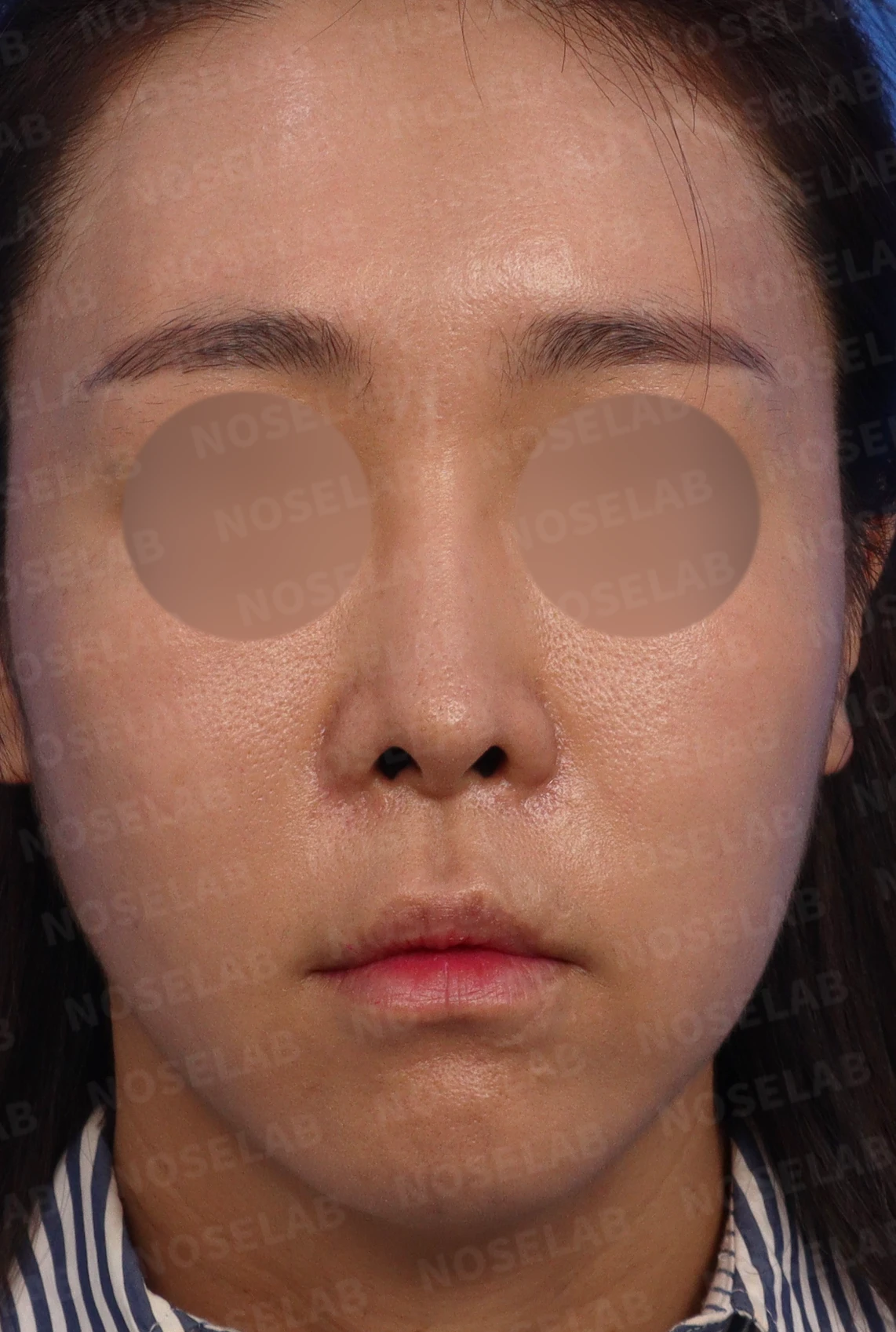
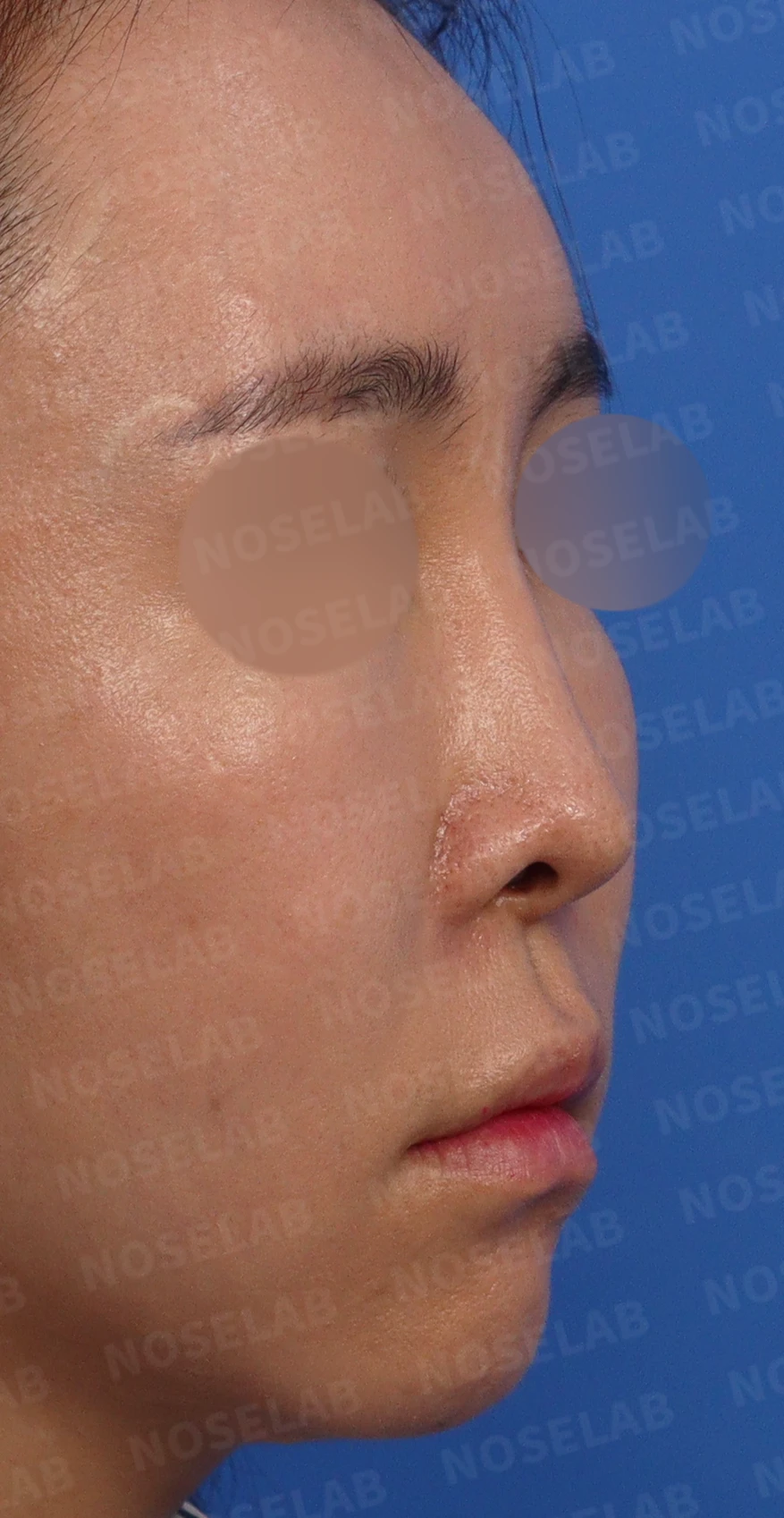
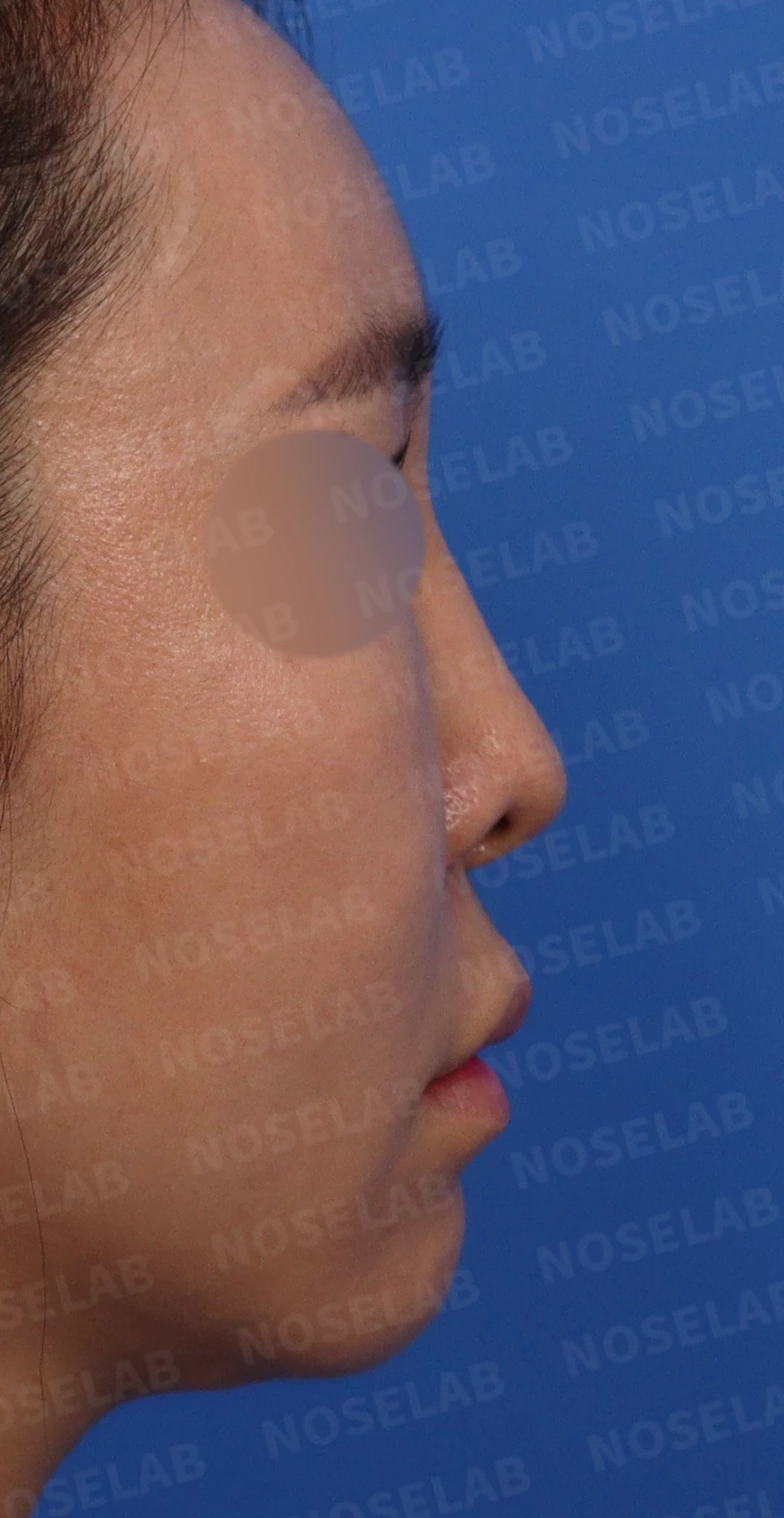
Front, right oblique, and right profile views from the preoperative design consultation.
Front view:
- Significant nostril show and asymmetry observed
- Nose appears deviated to the left
- High radix between the eyebrows
Oblique view:
- The nose appears long
- Drooping columella resulting in excessive nostril show
- The nasal bridge is uneven
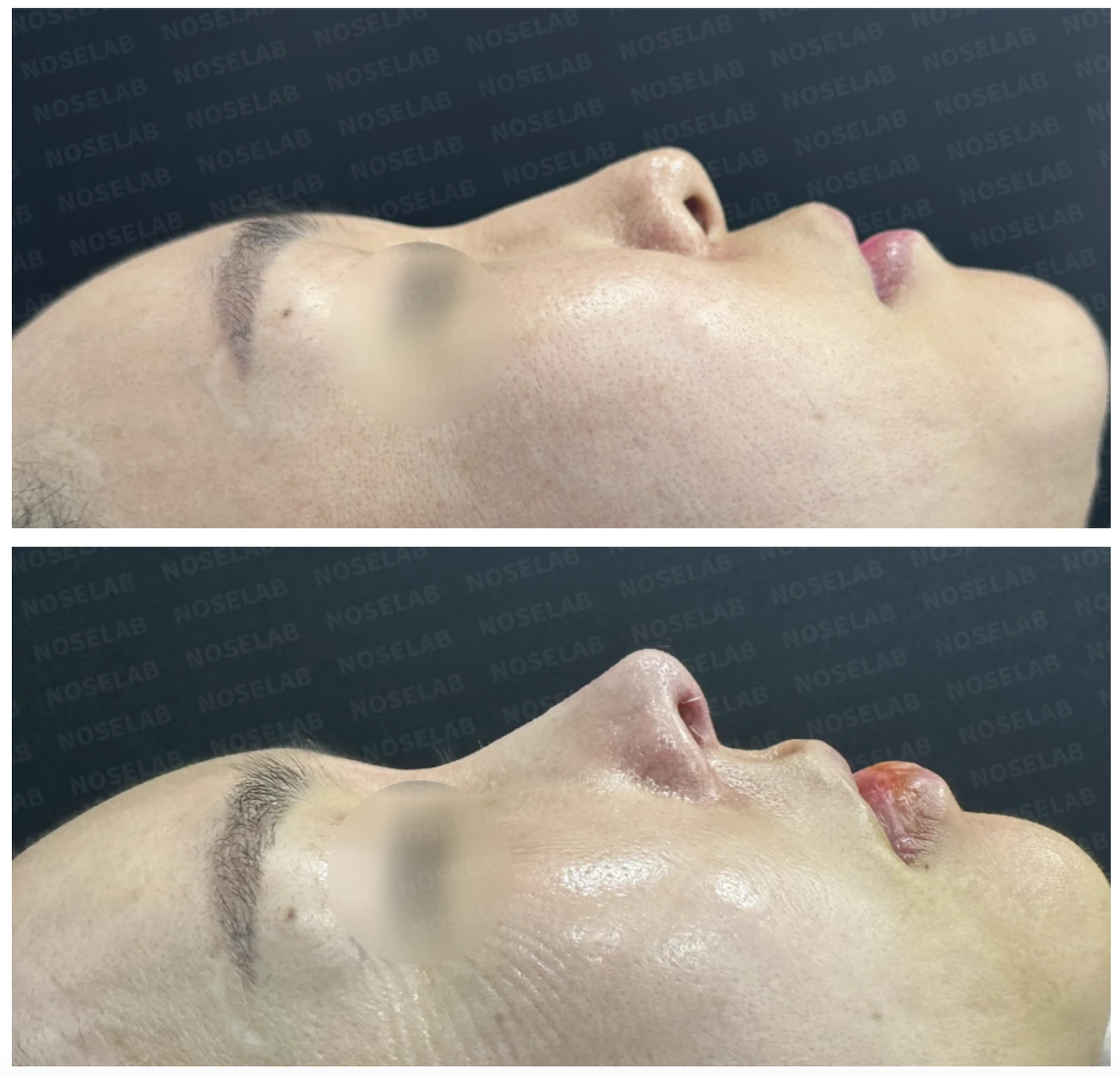
Profile view:
- The nose appears long and flat
- Lack of three-dimensional definition
- Nasolabial angle less than 90 degrees
- Protruding mouth and philtrum appear long
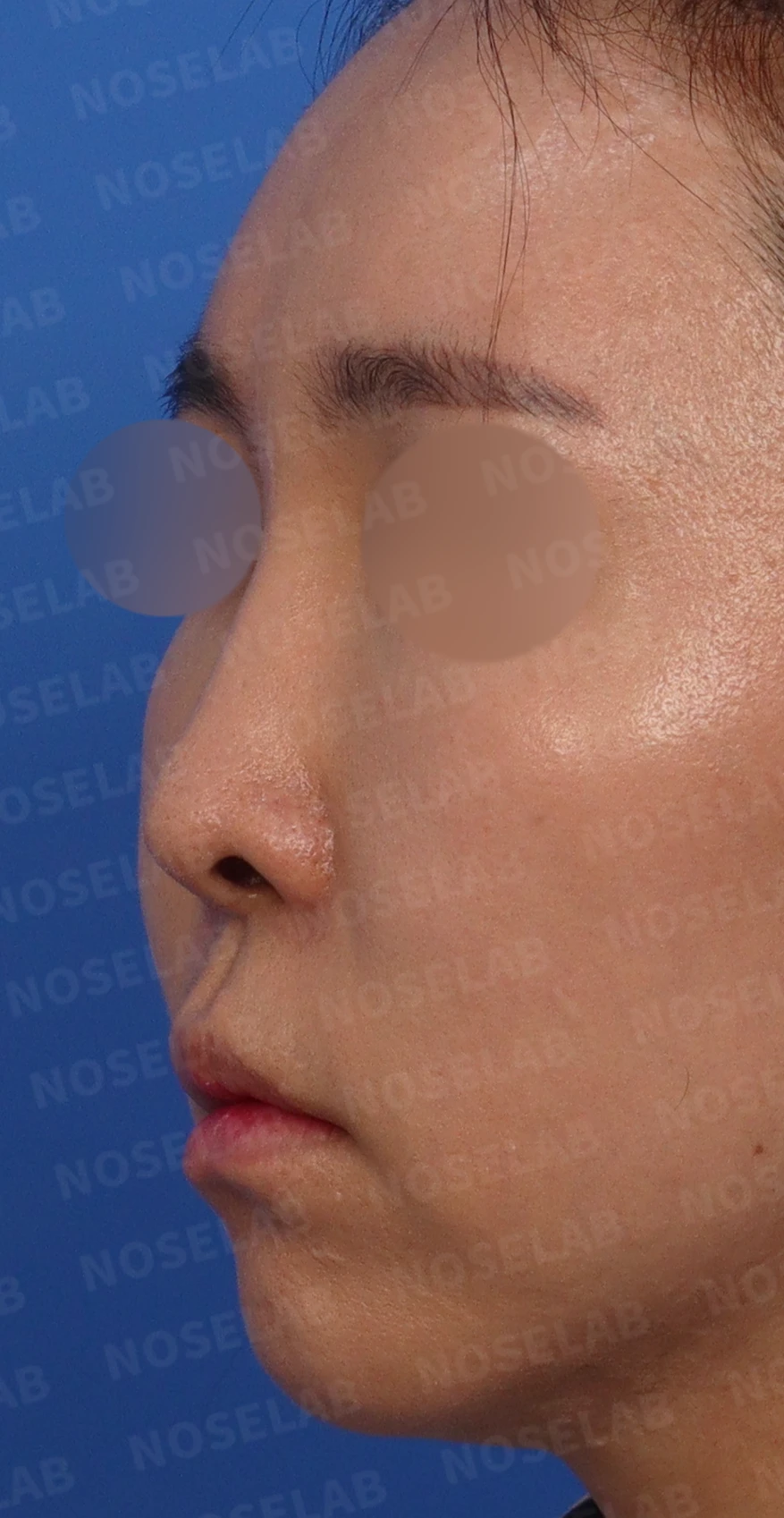
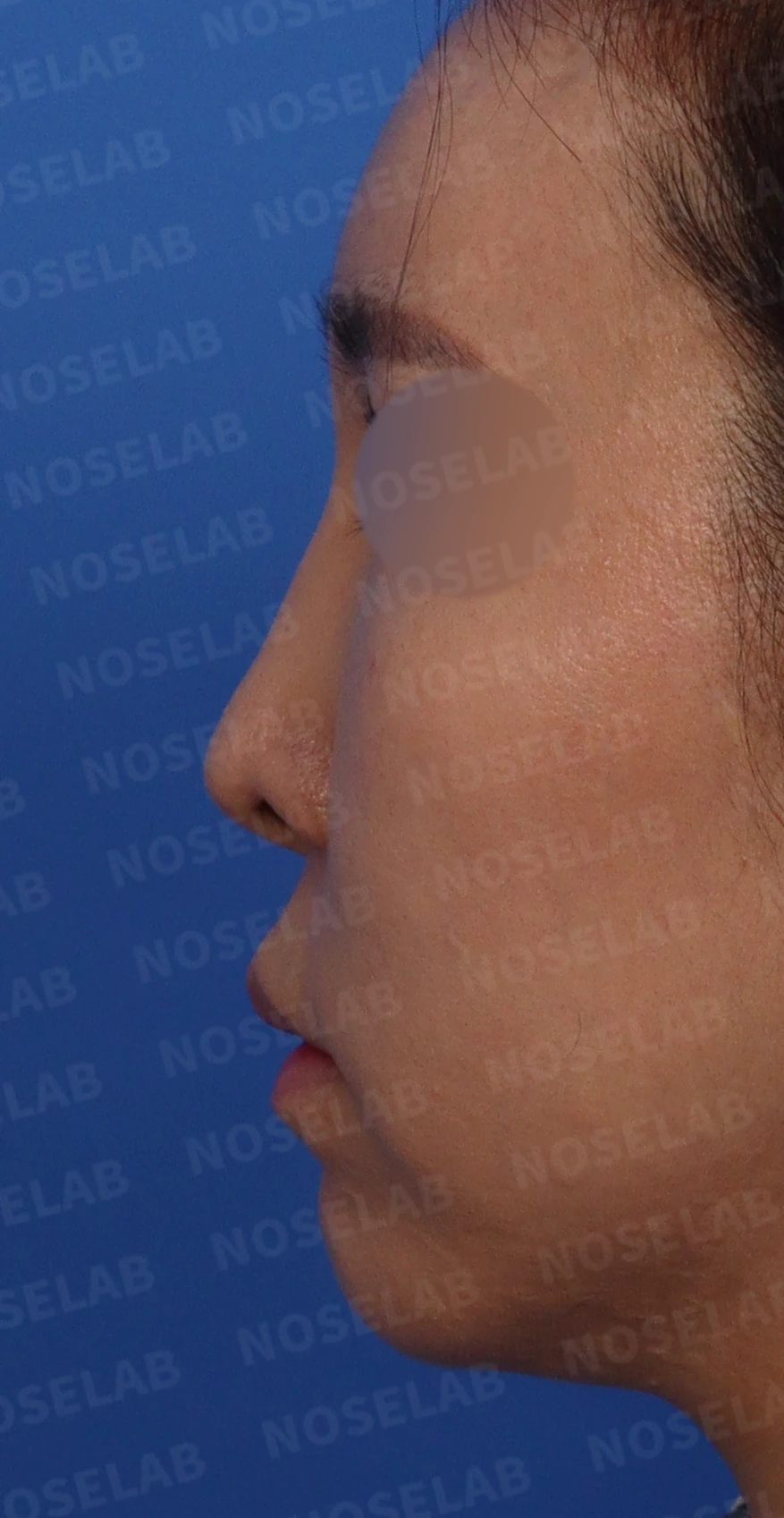
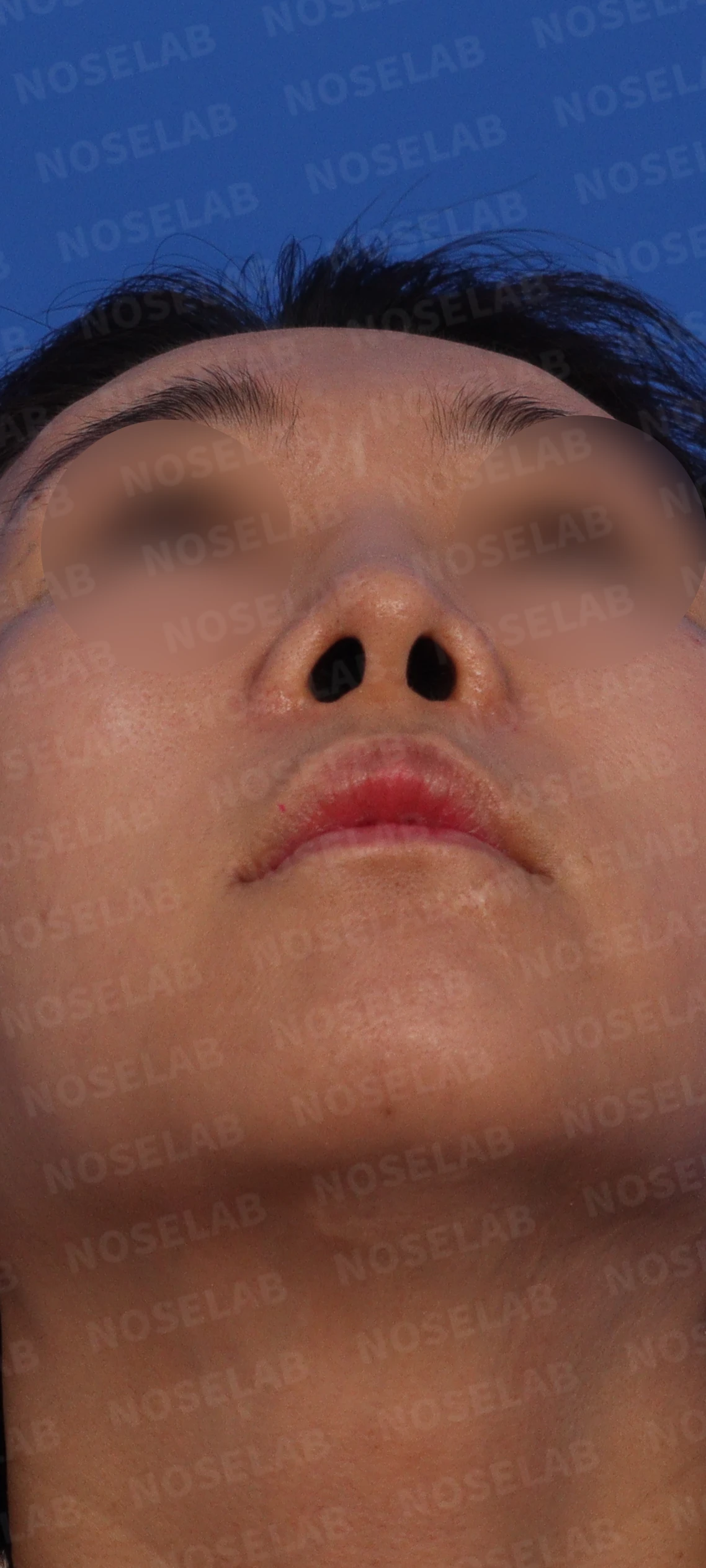
Left oblique, left profile, and basal (nostril) views from the preoperative design consultation.
Nostrils:
- Nostril asymmetry observed
- The columella appears tilted to the left
3. Patient requests and surgical plan
Primary patient request
The main request was to make the nose appear shorter. However, because there was significant nostril show from the front view, the standard correction would typically lengthen the nasal tip. Because the patient was very sensitive to any increase in nasal length, we decided to design a shorter nose, accepting that some nostril show would remain.
Based on this decision, the following surgical plan was established:
a) Septal extension using autologous rib cartilage (considering septal reconstruction if necessary)
b) Removal of the existing silicone implant and placement of a new silicone implant limited to necessary areas of the nasal dorsum
c) Nasolabial angle correction to improve the appearance of a protruding mouth
d) Septal extension, lower lateral cartilage repositioning, and cartilage suturing to correct nostril asymmetry
e) Lowering the radix to make the nose appear shorter
4. Procedure details
The following procedures were performed using a closed approach:
a) Autologous rib cartilage harvest and septal extension:
- The patient's rib cartilage was harvested to extend and reinforce the septum.
- This reinforced the tip support and improved nostril asymmetry.
b) Nasal bridge reconstruction:
- The existing silicone implant was removed, and a new silicone implant was inserted in a shorter configuration, limited only to the necessary areas of the dorsum.
- This smoothed out irregularities along the nasal bridge and improved the overall profile line.
c) Nasolabial angle correction:
- The nasolabial angle was adjusted appropriately to improve the appearance of a protruding mouth.
d) Nostril asymmetry correction:
- Symmetry was improved using septal extension, lower lateral cartilage repositioning, and cartilage suturing techniques.
e) Radix adjustment:
- Lowering the radix created an overall visual shortening of the nose.
All procedures were performed using a closed approach, completing the surgery without external scars.
5. Comparison of before-and-after photos
Comparing photos taken immediately after surgery on day 0 shows the following improvements: Photos taken immediately after surgery show swelling and may differ from the final result.
Front view:
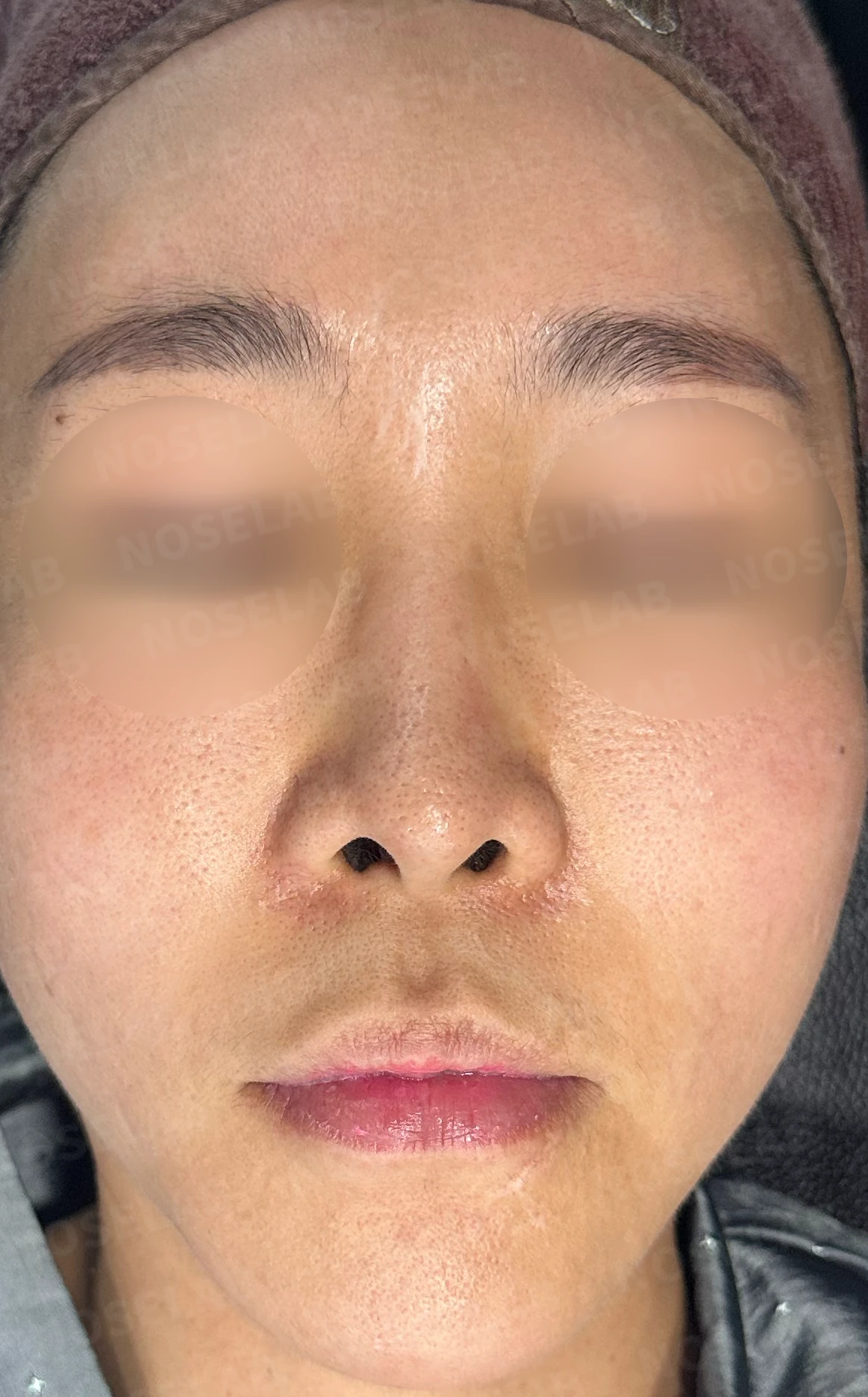
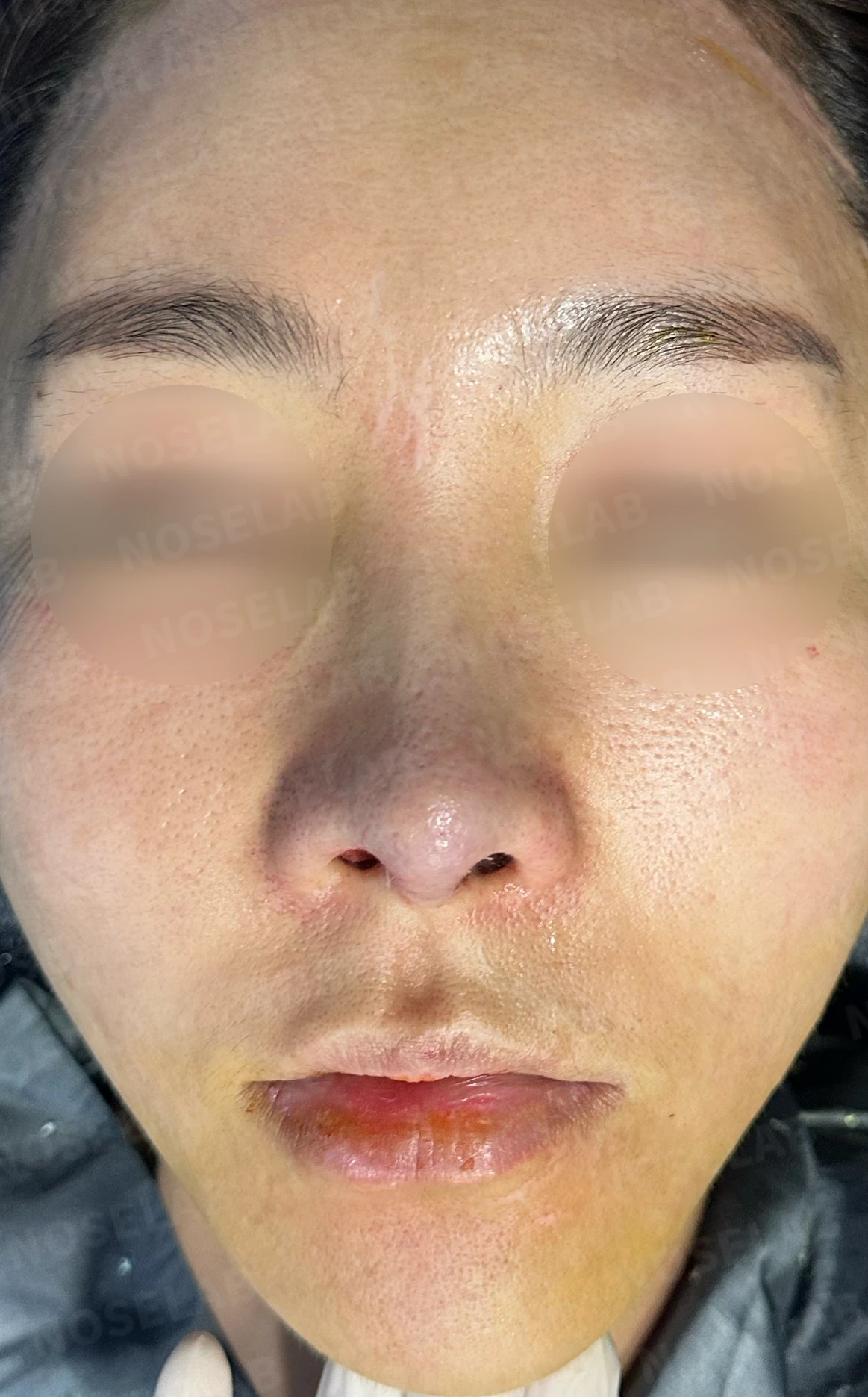
Before surgery / Day 0 immediately after surgery Photos taken immediately after surgery show swelling and may differ from the final result.
- Nostril asymmetry improved.
- The nose, which previously appeared deviated to the left, became straight.
- Lowering the radix made the entire nose appear shorter.
Oblique view:
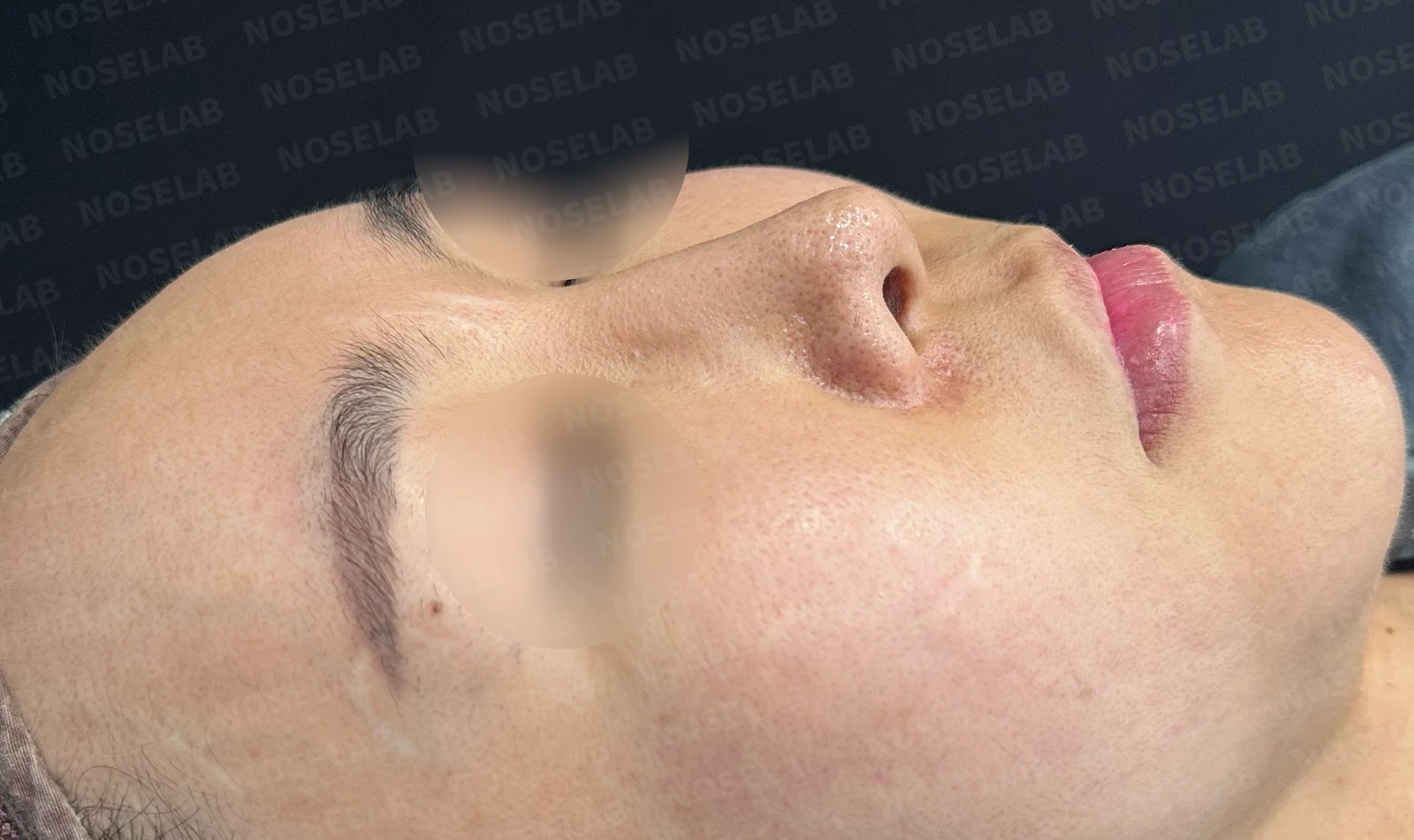
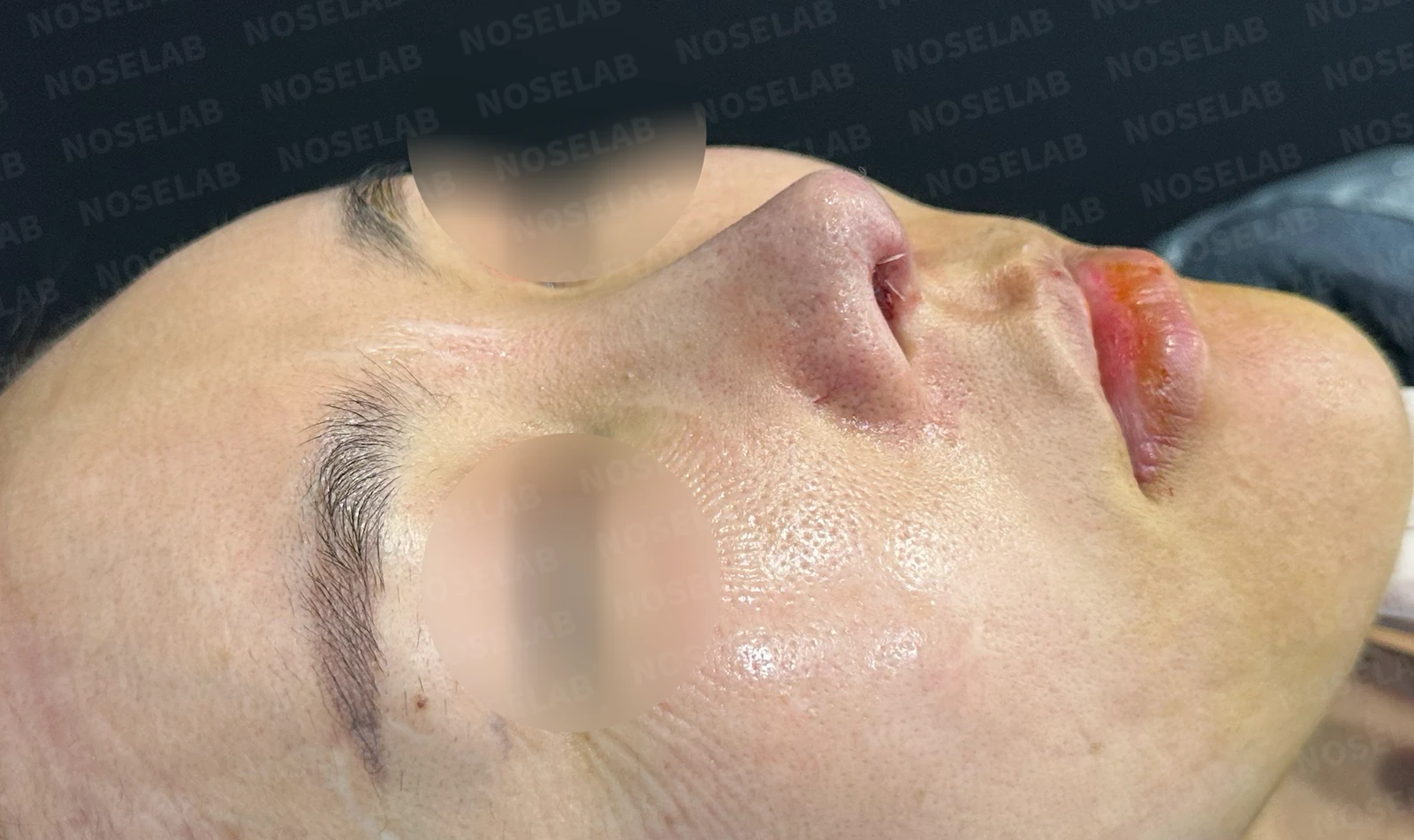
Before surgery / Day 0 immediately after surgery Photos taken immediately after surgery show swelling and may differ from the final result.
- The nose, which appeared long, was adjusted to an appropriate length.
- The drooping columella was elevated, reducing nostril show.
- The uneven nasal bridge is now smooth.
Profile view:
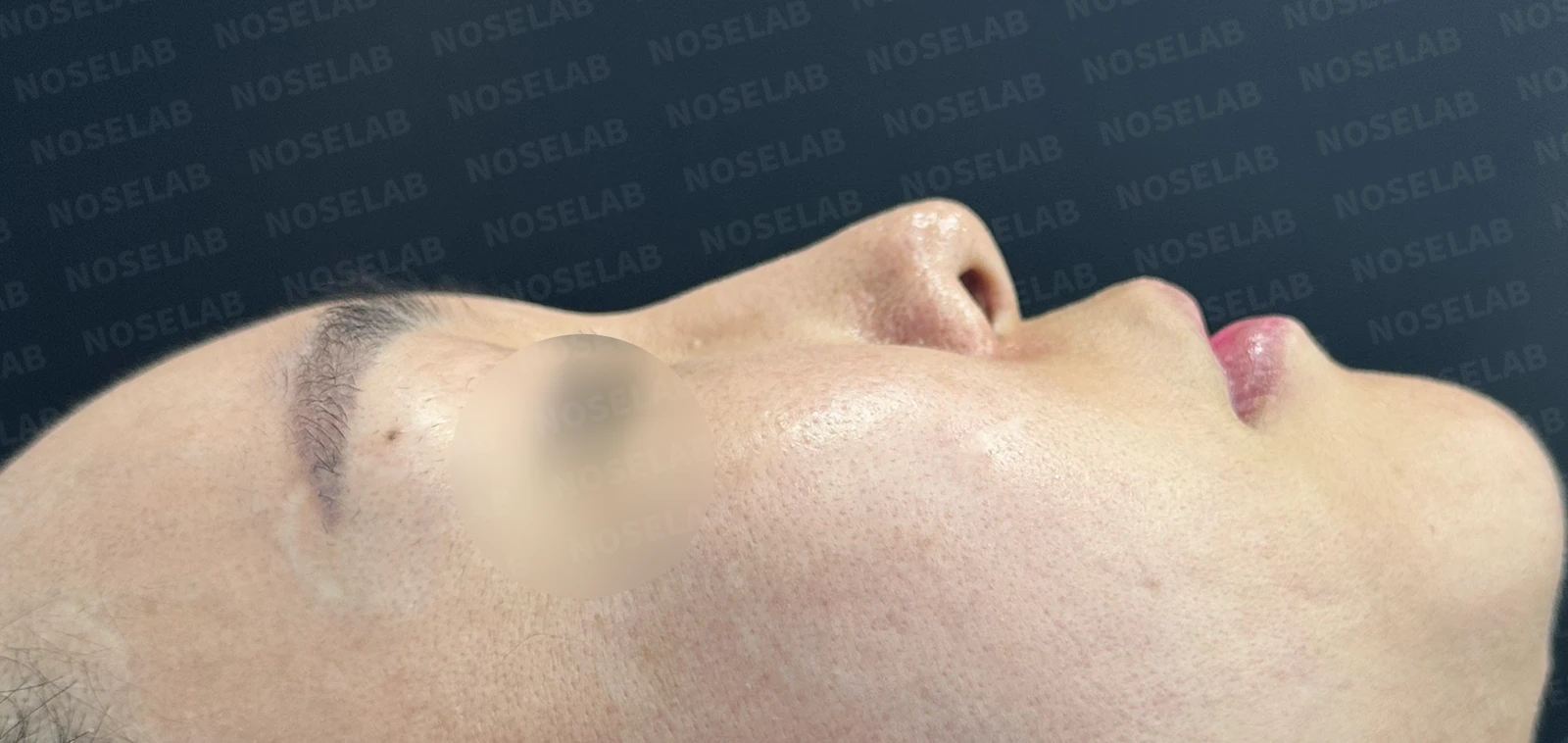
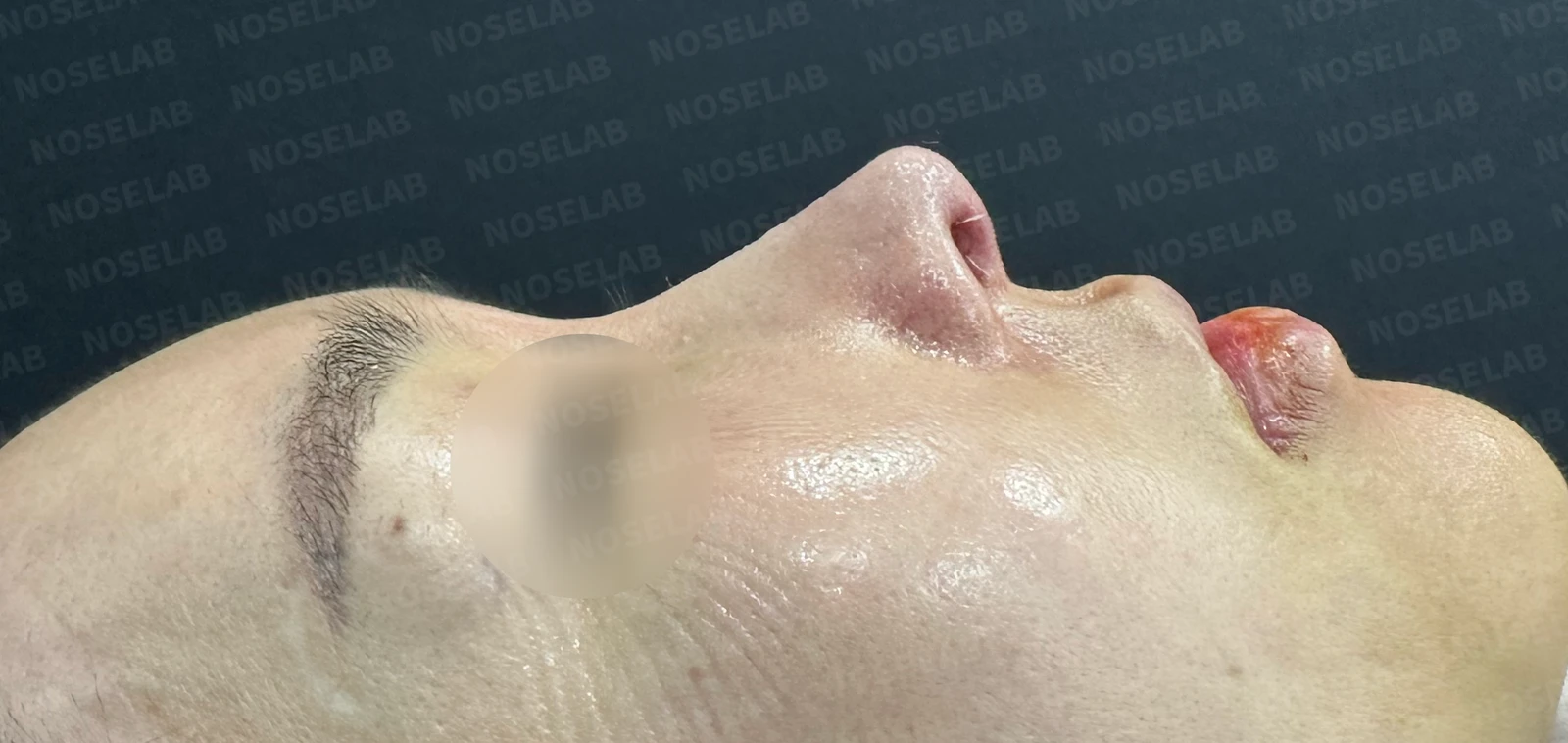
Before surgery / Day 0 immediately after surgery Photos taken immediately after surgery show swelling and may differ from the final result.
- The flat, undefined nose gained a natural straight bridge line.
- Improving the nasolabial angle softened the appearance of the protruding mouth.
- The appearance of an elongated philtrum was also improved.
Nostrils:
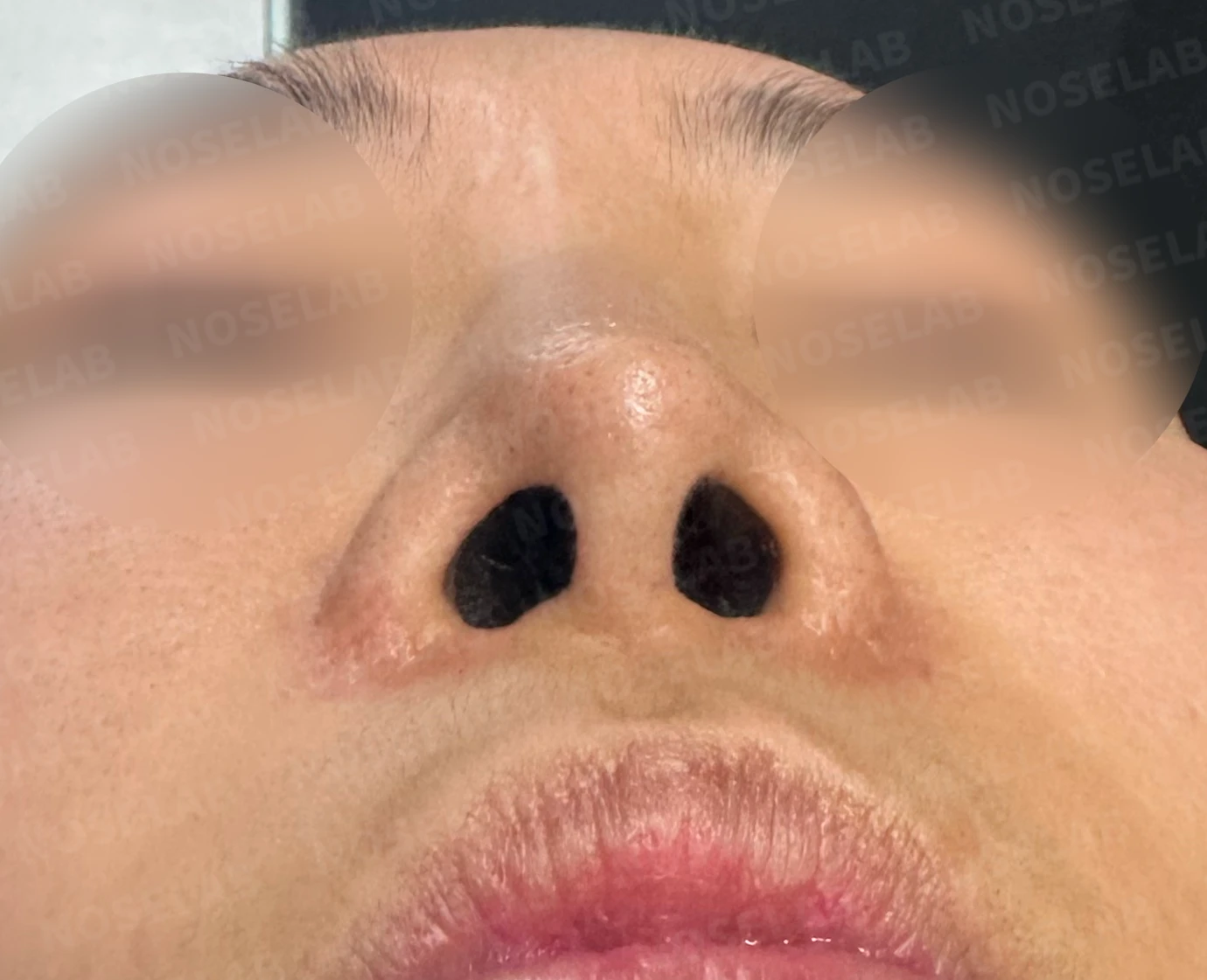
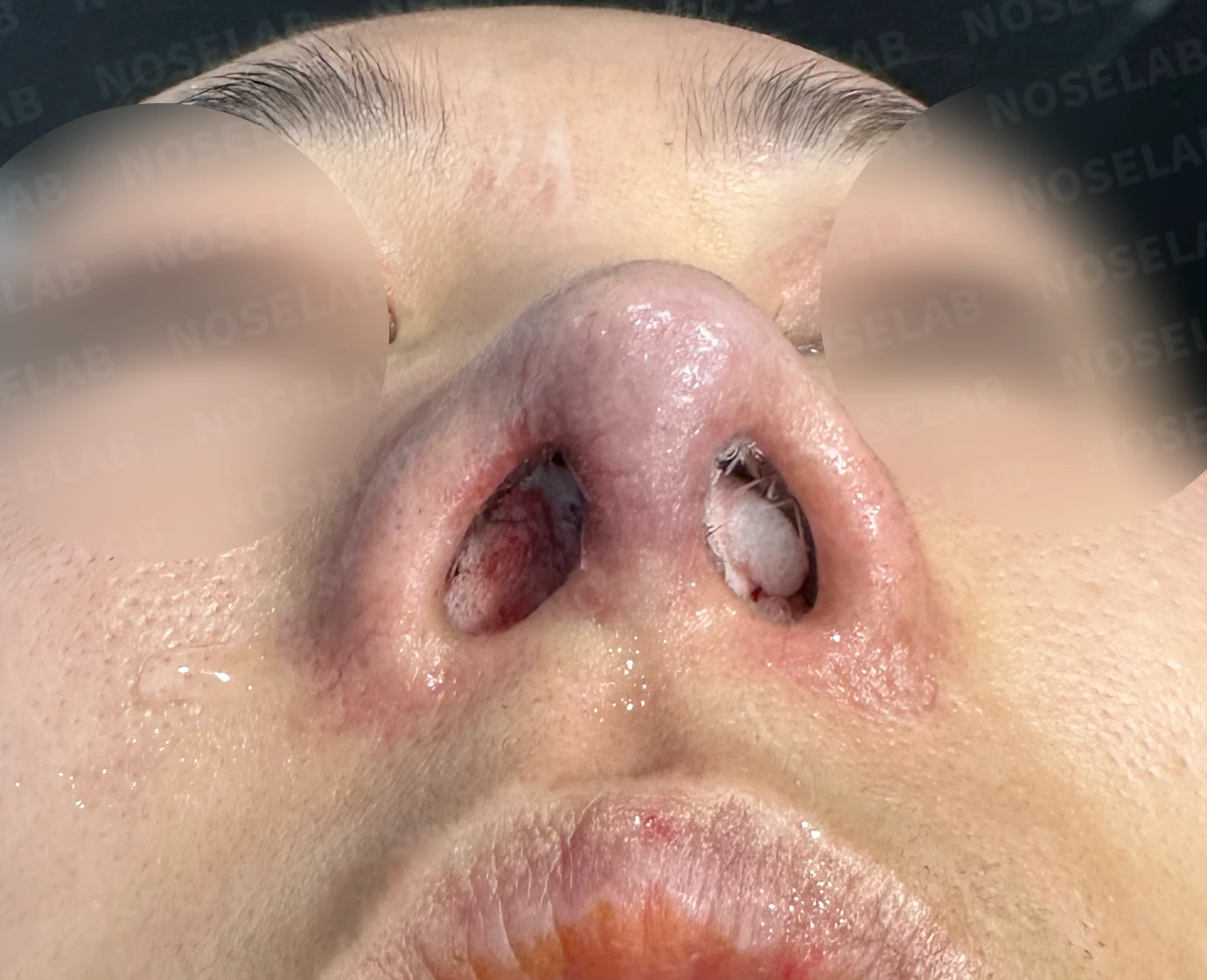
Before surgery / Day 0 immediately after surgery Photos taken immediately after surgery show swelling and may differ from the final result.
- Nostril asymmetry has been improved.
- The columella, which was tilted to the left, has been realigned to the center.
6. Photos taken immediately after surgery (day 0)Immediate postoperative photos show swelling and may differ from the final result.
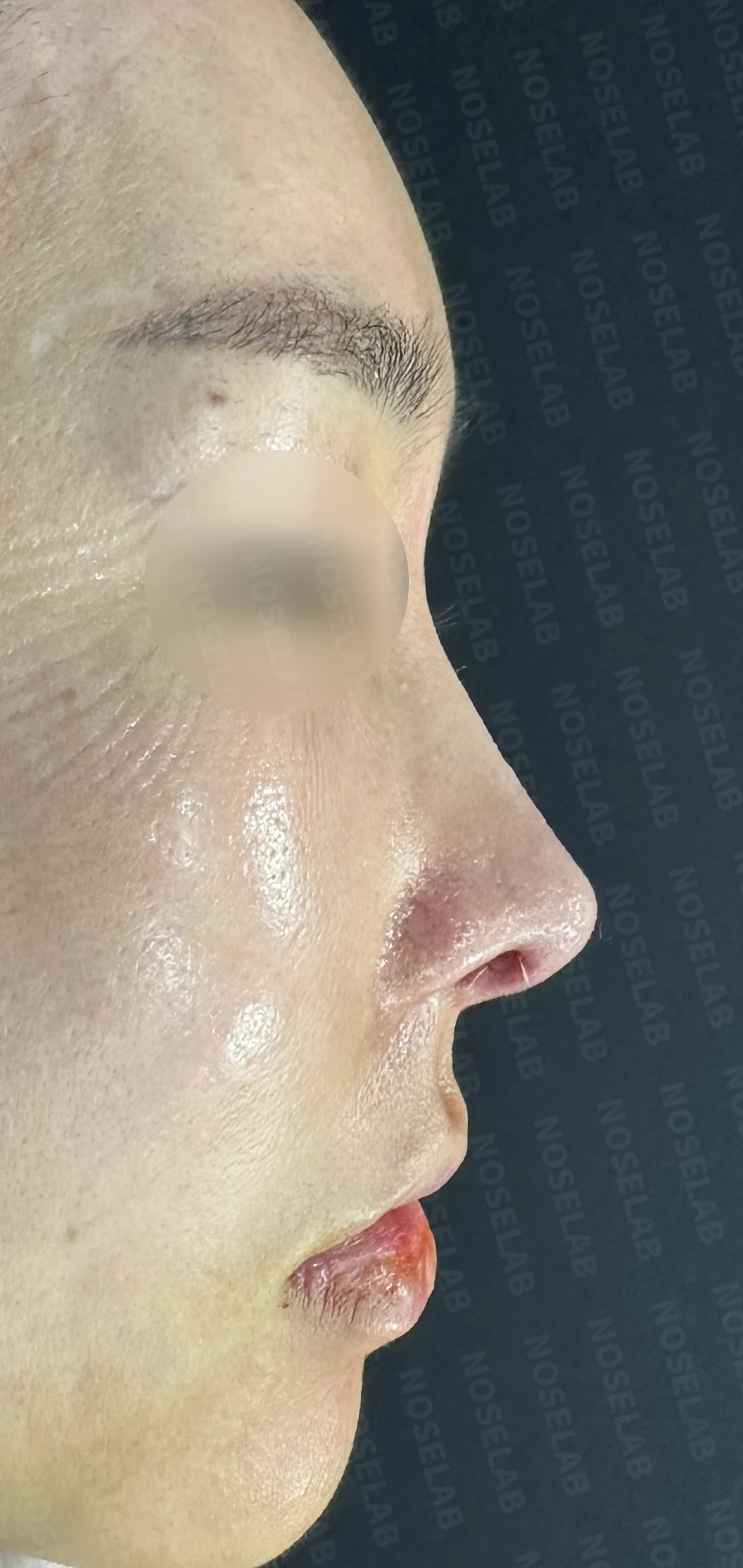
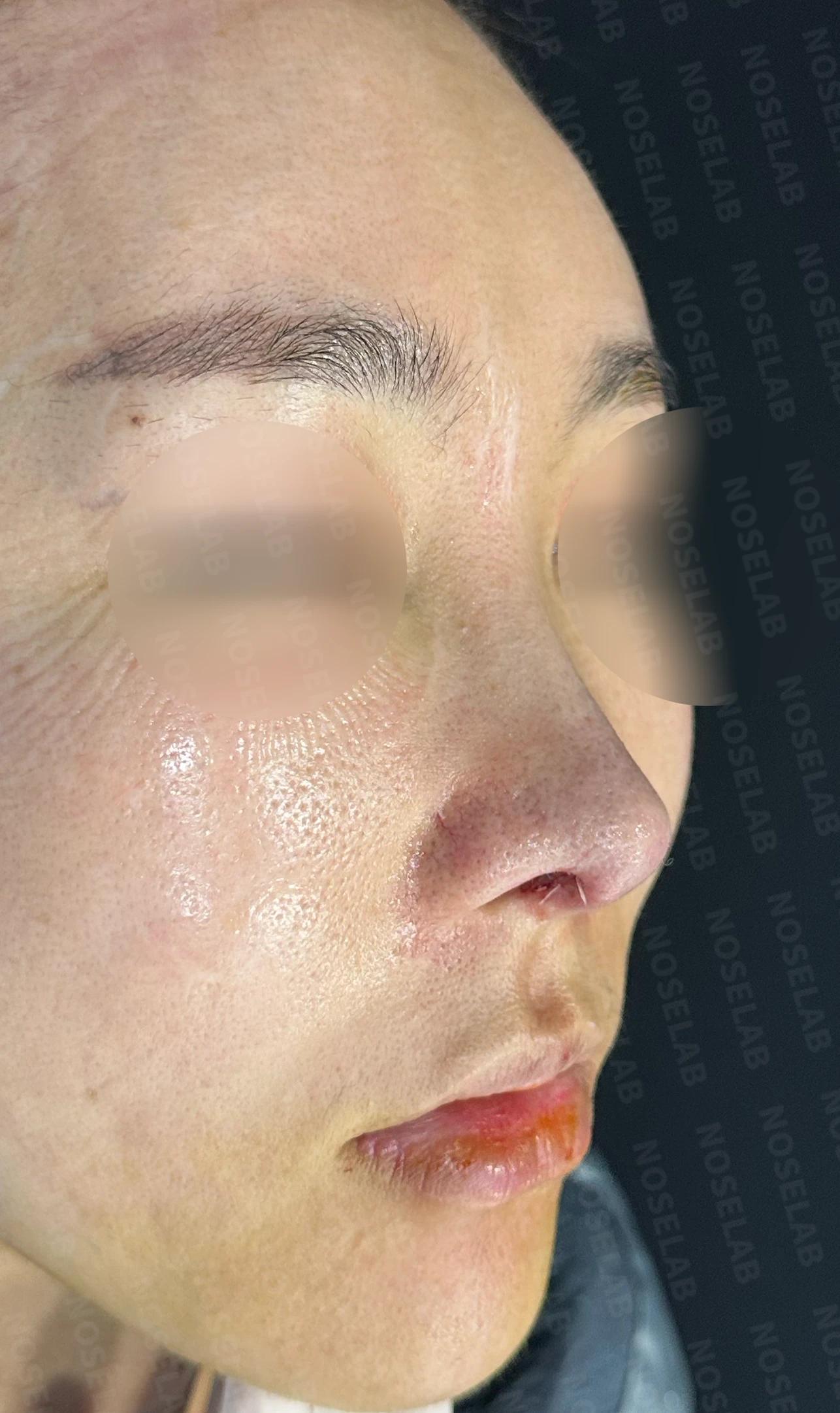
Front, profile, and oblique views taken immediately after surgery (day 0).Immediate postoperative photos show swelling and may differ from the final result.
This is the basal (nostril) view.
7. Overall assessment
This case illustrates the importance of balancing patient desires with medical judgment. When excessive nostril show is present from the front, it is generally advisable to extend the nasal tip. However, because this patient was extremely sensitive to any lengthening of the nose, we took a meticulous approach to reflect the patient's requests while achieving the intended result.
By lowering the radix, we achieved the visual effect of a shorter nose while simultaneously improving nostril asymmetry and the protruding mouth. Septal extension using autologous rib cartilage played a vital role in increasing structural stability and correcting nostril asymmetry.
This case reaffirms the importance of listening closely to the patient's requests and harmonizing them with sound medical assessment during rhinoplasty.
8. Concluding remarks
In cosmetic surgery, a common challenge arises when a patient's preferences diverge from standard surgical principles. Because substantial nostril show was present from the front, the conventional approach would be to lengthen the tip. Yet when a patient strongly opposes lengthening, whether to follow surgical doctrine or accommodate the patient's wishes remains an ongoing dilemma.
Whereas I might have adhered strictly to conventional standards in the past, I now listen more carefully to each patient's goals. At the same time, I make every effort to explain potential trade-offs and concerns in detail before surgery. Ultimately, the fundamental purpose of plastic surgery is to improve the patient's personal satisfaction.
I hope this case helps those concerned about a flat or long nose. Rhinoplasty is not merely about changing the shape of the nose; it is an intricate process that must harmonize with the entire face. Therefore, a thorough consultation with a specialist is essential to finding the most suitable surgical approach.
I always listen to my patients and strive to combine their goals with medical expertise to achieve the intended results. I am here to assist you in achieving a balanced and healthy nose. Thank you.
#rhinoplasty #flatnosecorrection #longnosecorrection #loweringradix #nostrilasymmetrycorrection #upturnednosecorrection #smallrhinoplasty #closedrhinoplasty #autologousribcartilagegraft #revisionrhinoplasty #entrhinoplasty #safesurgery #bridgeaugmentation #tiprhinoplasty

Limitations and risks
When autologous rib cartilage is used, scarring and pain may remain at the donor site on the chest, and pneumothorax (pleural injury) can occur rarely. Over time, the grafted cartilage may warp or undergo partial resorption.
When revising after implant removal, contracture may progress again after removal, the nasal height and length may decrease, and staged surgery may be necessary depending on the skin condition.
When the septum is corrected at the same time, nasal obstruction may persist or recur, and in rare cases, septal perforation or changes in smell may occur.
Common potential risks include infection, bleeding, asymmetry, scarring, skin necrosis, and insufficient improvement; results vary depending on individual skin condition and previous surgical history.