Hello, I am Dr. Peter C. Kang.
Today, I would like to share a case of corrective surgery for a patient presenting simultaneously with a bulbous, deviated, and upturned nose.
In this case, the patient wanted to improve a blunt tip that appeared deviated to the right and upturned, while also wishing to correct a high radix.
1. Preoperative design consultation
Let us analyze the patient's preoperative condition in detail:
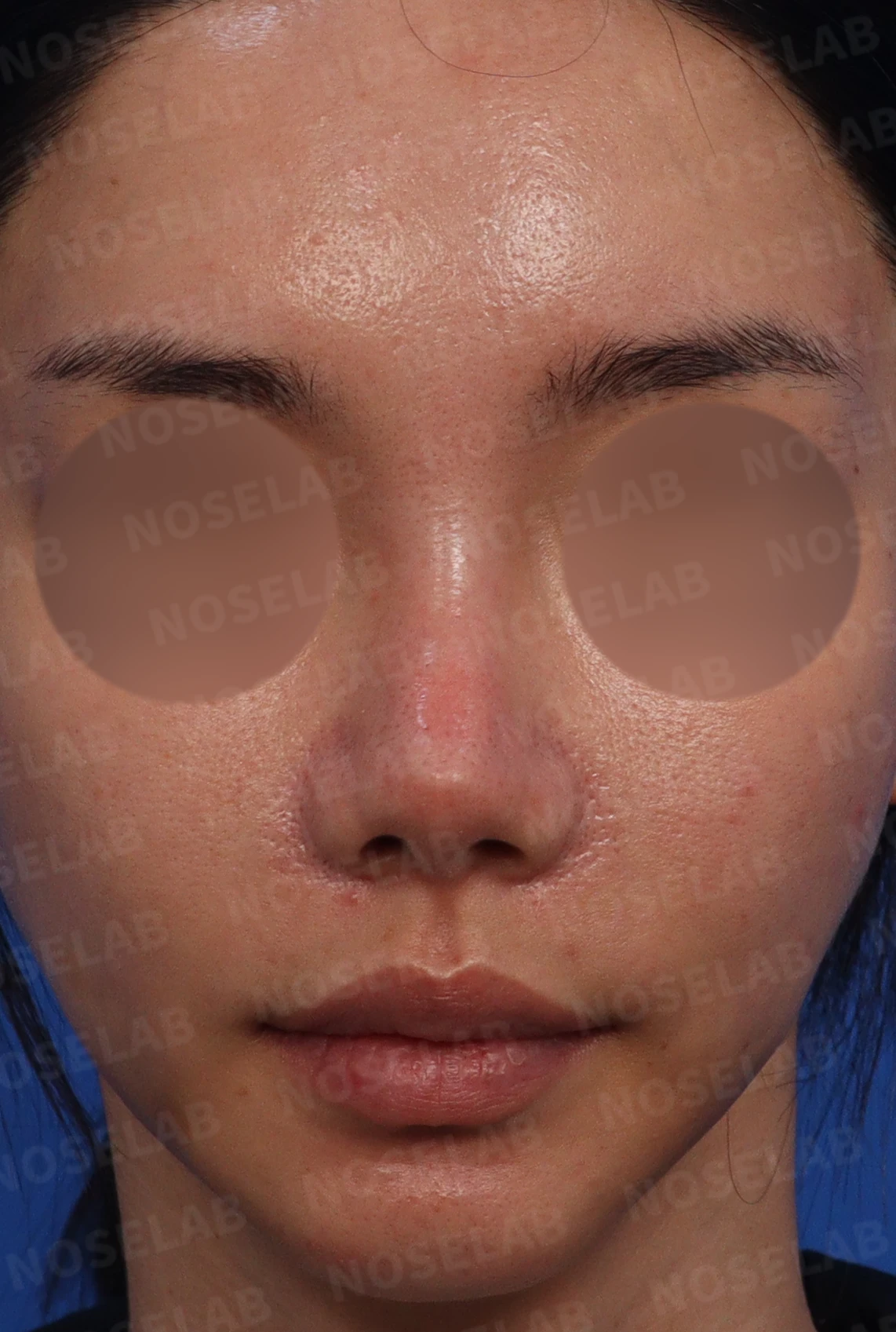
Front view:
Front view
- The nose appears overall blunt and wide (bulbous nose)
- The nose appears deviated to the right (deviated nose)
- Nostril asymmetry observed
- The nasal tip appears upturned (upturned nose)
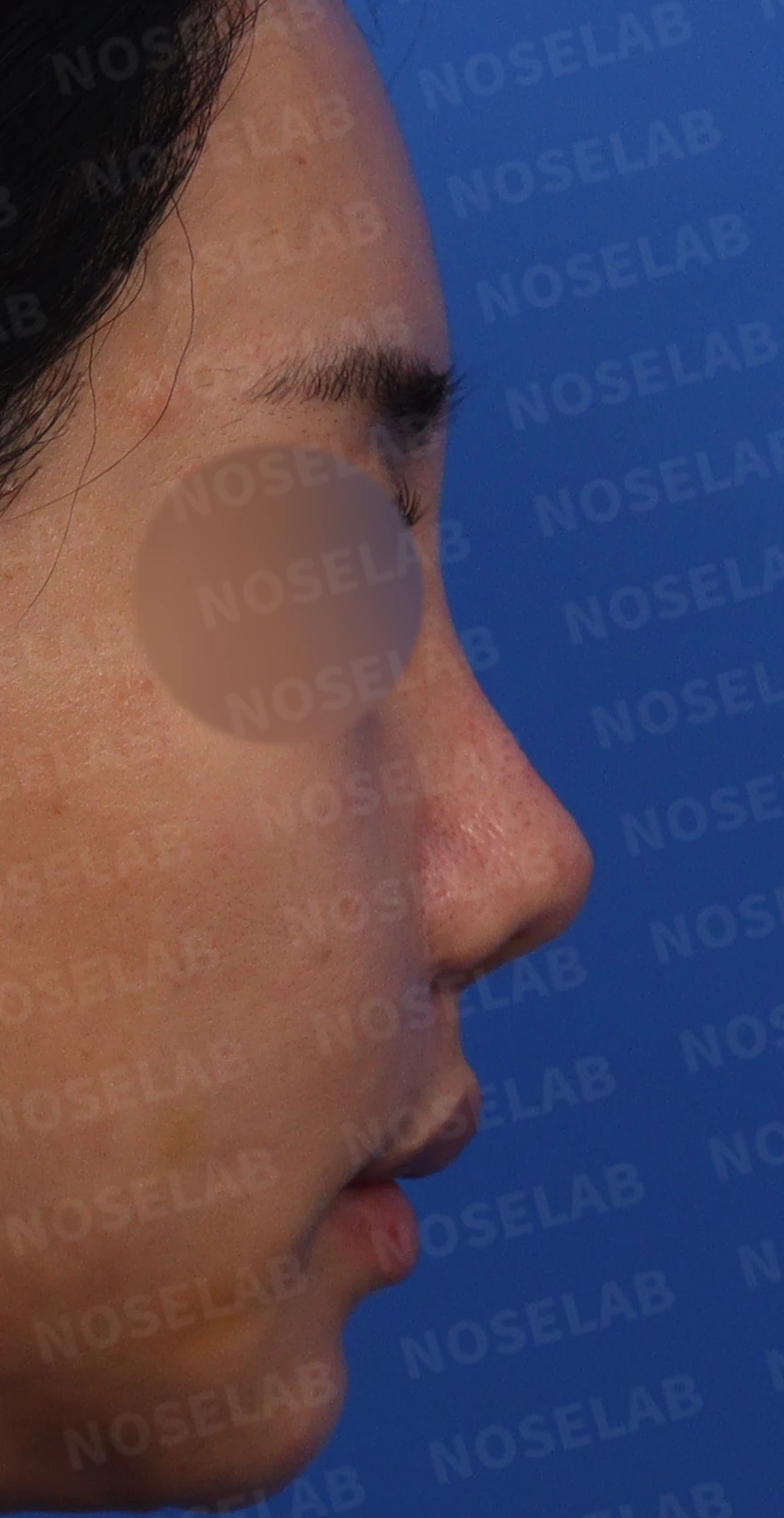
Profile view:
Profile view
- The radix appears high
- The nasolabial angle (angle between the nose and upper lip) appears inappropriate
- The nasal tip is upturned, creating an overall unnatural impression
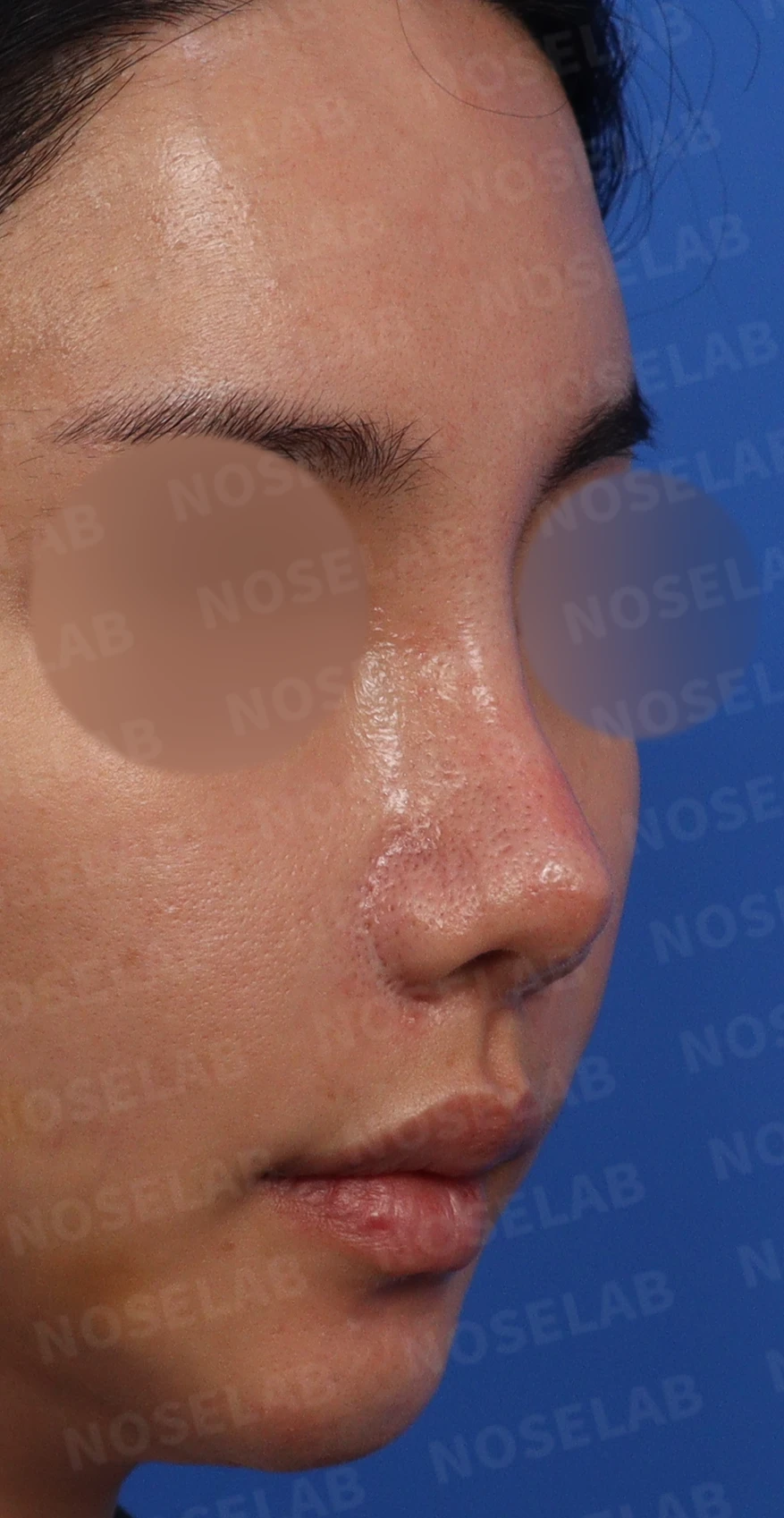
Oblique view:
Oblique view
- Nasal deviation is more pronounced
- Characteristics of a bulbous and upturned nose are clearly visible
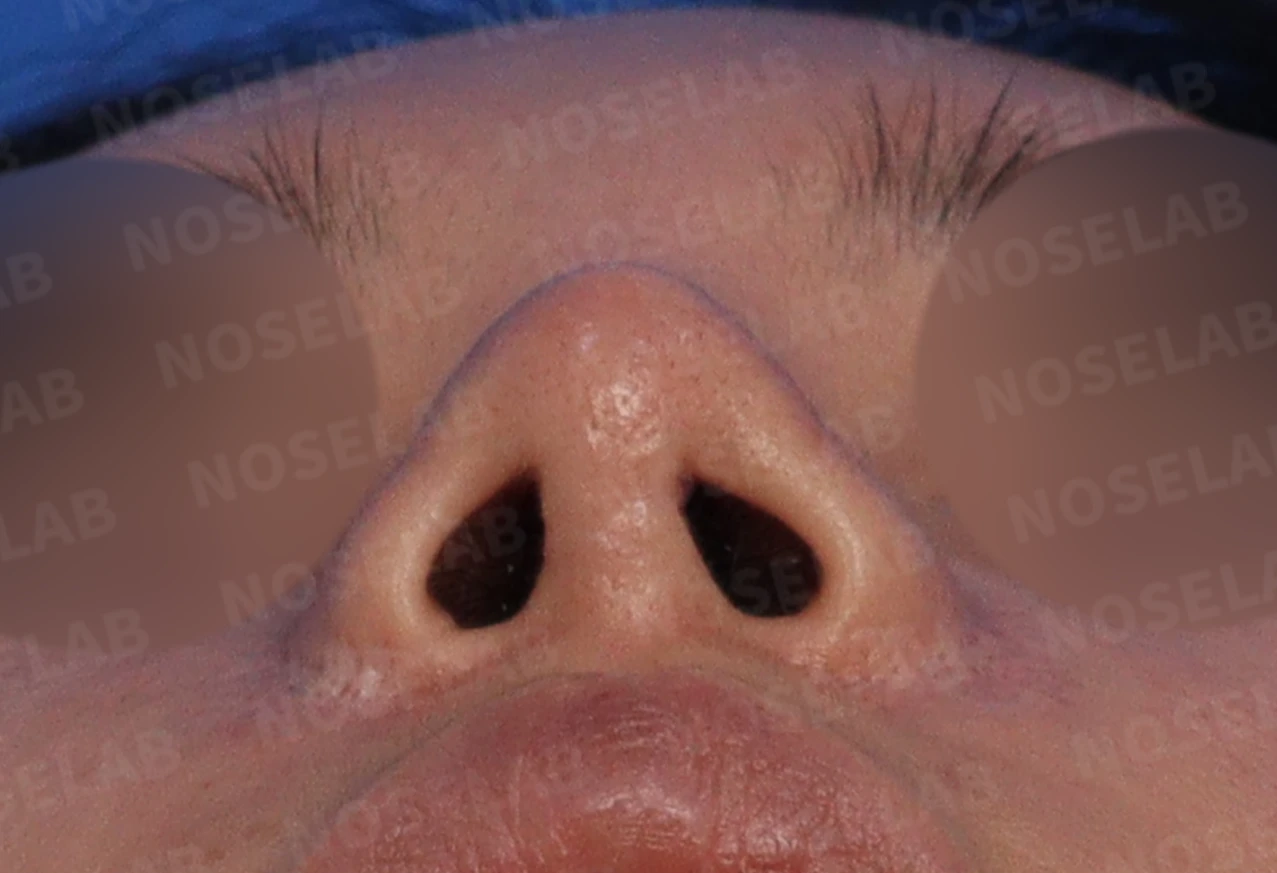
Nostrils:
Basal (nostril) view
- Nostril asymmetry due to deviation is distinct
- The nasal tip appears blunt
2. Surgical plan
Taking into account the patient's condition and requests, the following surgical plan was established:
a) Septal extension graft using autologous rib cartilage
b) Partial resection of subcutaneous tissue and projection of the nasal tip
c) Correction of the deviated septum
d) Lowering the radix
e) Correction of the nasolabial angle
3. Surgical procedure
a) Autologous rib cartilage harvest and grafting:
- The patient's rib cartilage was harvested to secure an adequate amount of cartilage for nasal reconstruction.
b) Septal extension graft:
- The septum was extended and reinforced using autologous rib cartilage.
- Through this, the upturned tip was naturally lowered and structural support was reinforced.
c) Nasal tip correction:
- The blunt tip was reshaped naturally through partial resection of subcutaneous tissue, along with repositioning and suturing of the lower lateral cartilages.
- The tip projection was appropriately adjusted to improve the bulbous appearance.
d) Correction of the deviated septum:
- By straightening the septum deviated to the right, the rightward deviation of the nasal tip was corrected, and the overall symmetry of the nose was improved.
- Through this, nostril asymmetry was also naturally corrected.
e) Lowering the radix:
- The radix, which appeared high, was appropriately lowered to create a natural transition from the glabella.
f) Correction of the nasolabial angle:
- The columella was lowered slightly to appropriately adjust the nasolabial angle.
- Through this, the unnatural and upturned appearance of the nose was naturally improved.
All procedures were performed using a closed approach, completing the surgery without external scars.
4. Comparison of before-and-after photos
Comparing photos taken immediately after surgery on day 0 shows the following improvements: Photos taken immediately after surgery show swelling and may differ from the final result.
Front view:
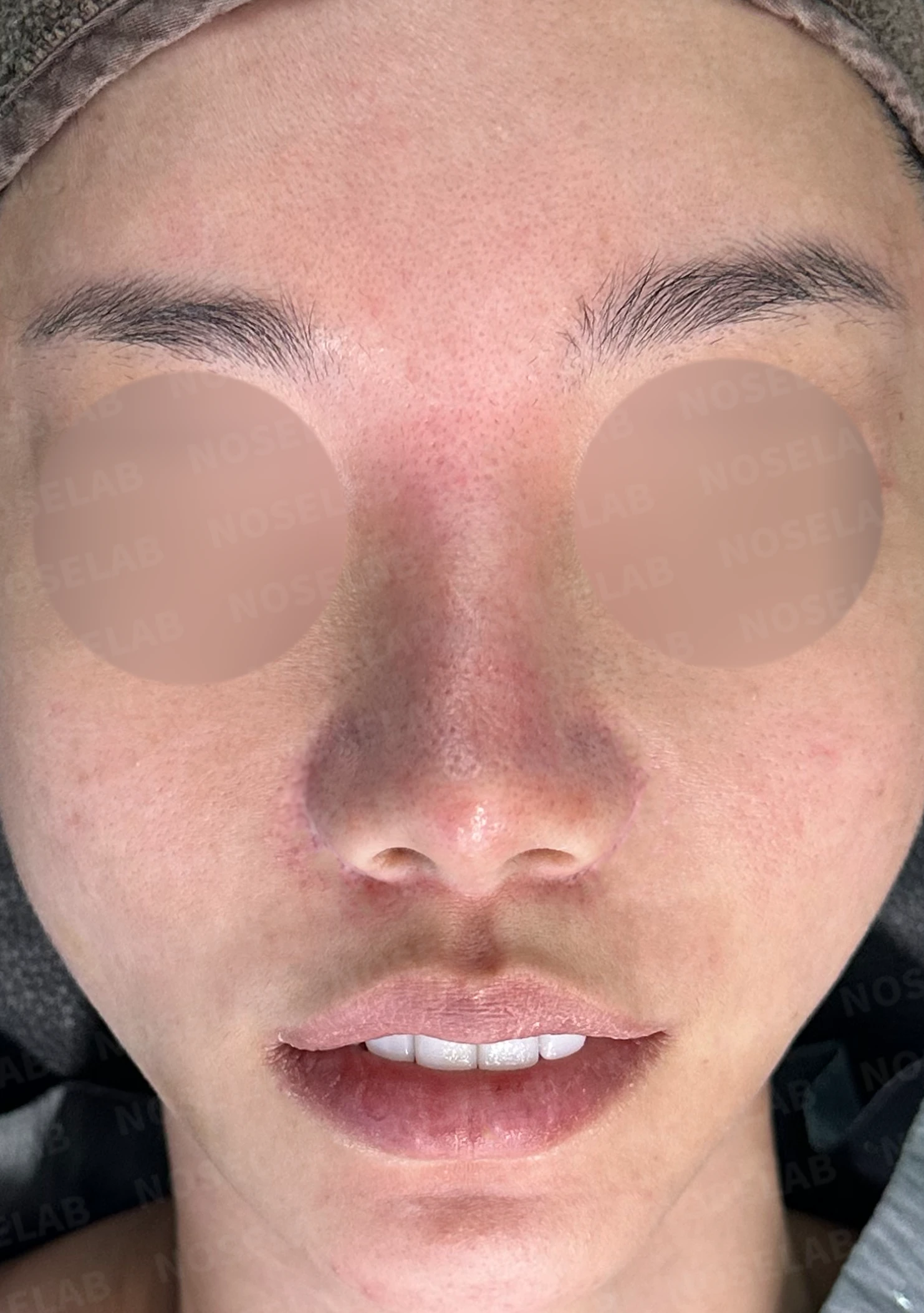
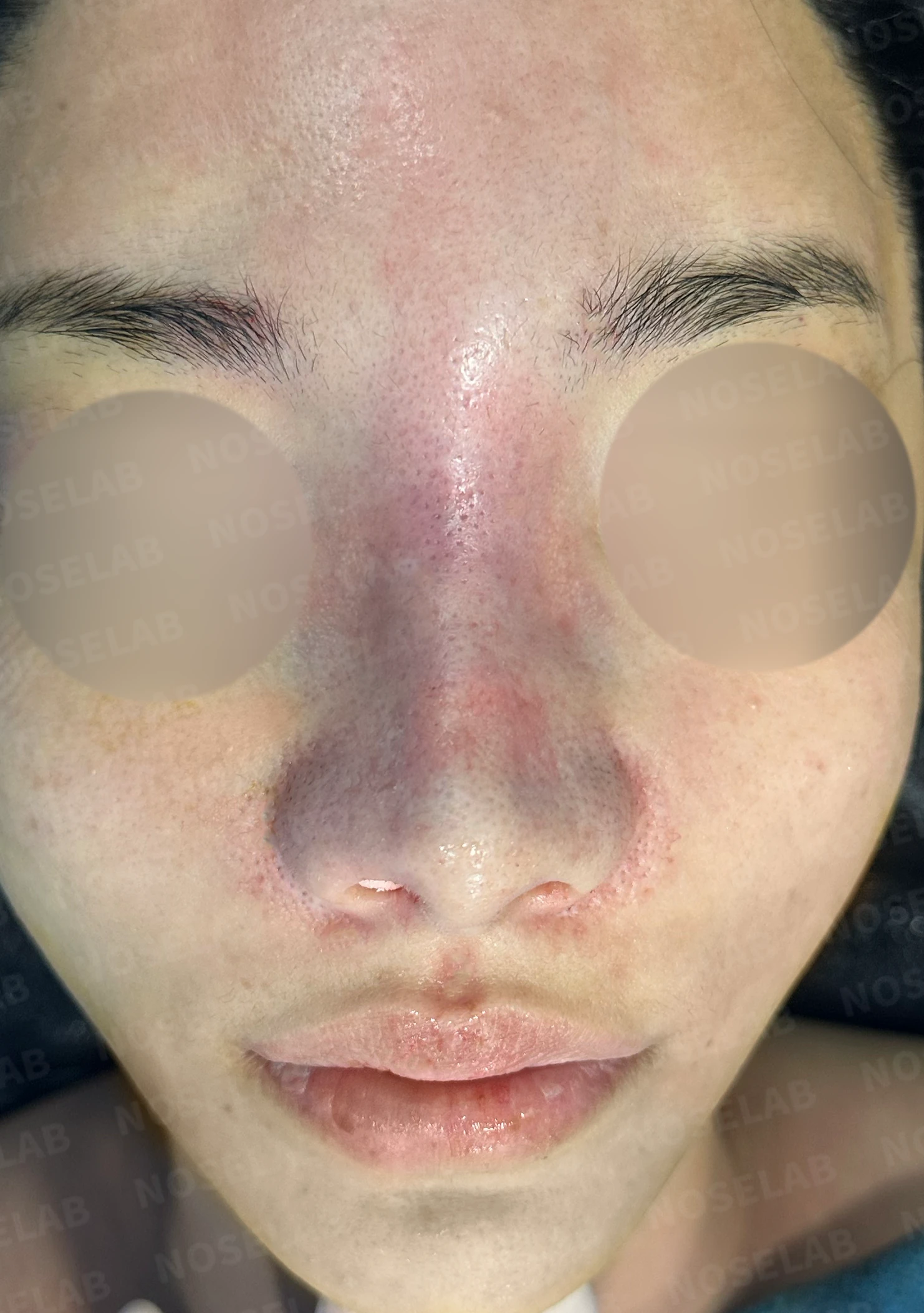
Before surgery / Day 0 immediately after surgery Photos taken immediately after surgery show swelling and may differ from the final result.
- The nose, which appeared bulbous and wide, was refined into a slimmer and more defined shape.
- The nose, which tilted to the right, was straightened.
- Nostril asymmetry improved significantly.
- The upturned nasal tip was lowered naturally, improving overall balance.
Profile view:
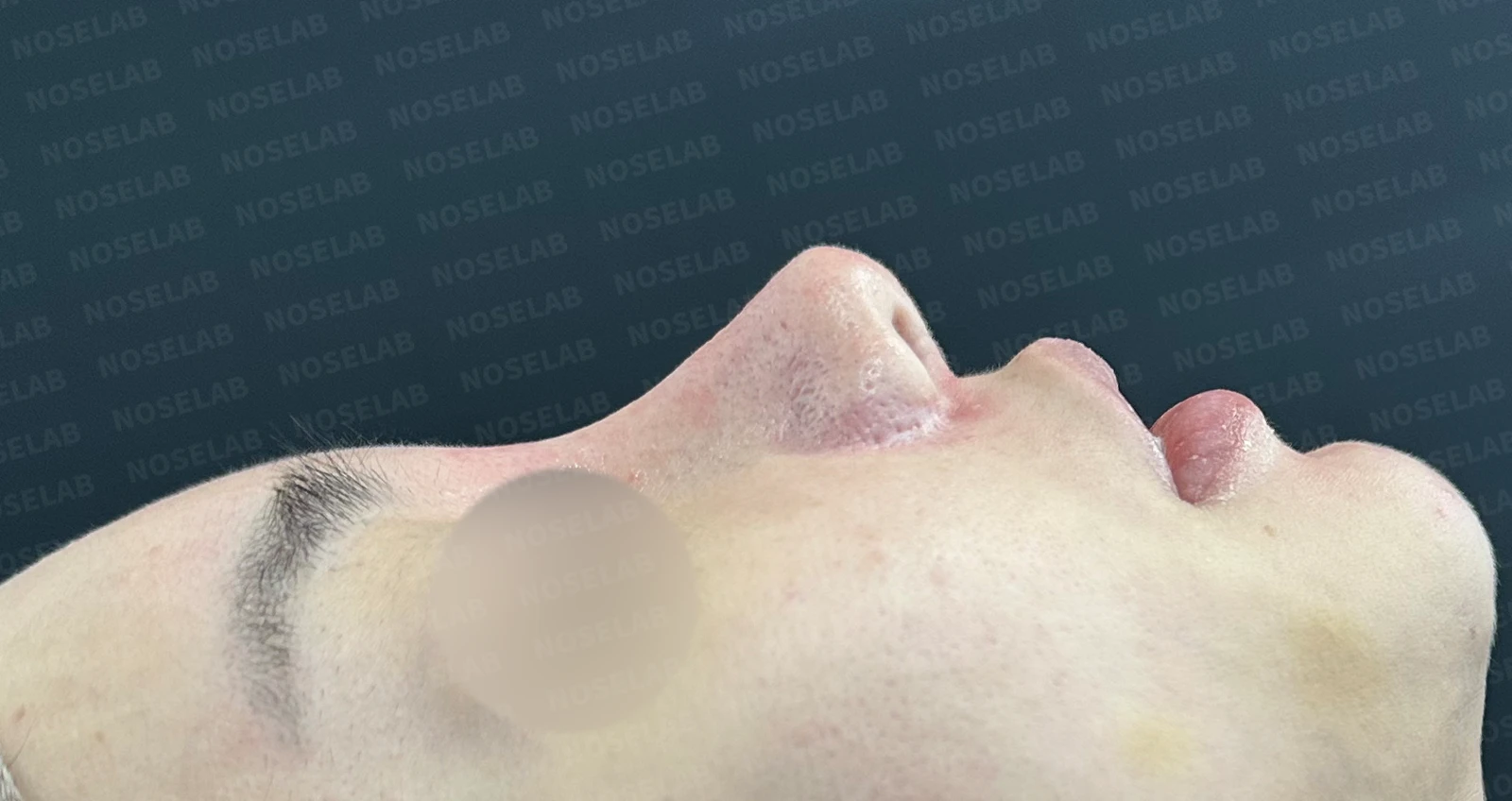
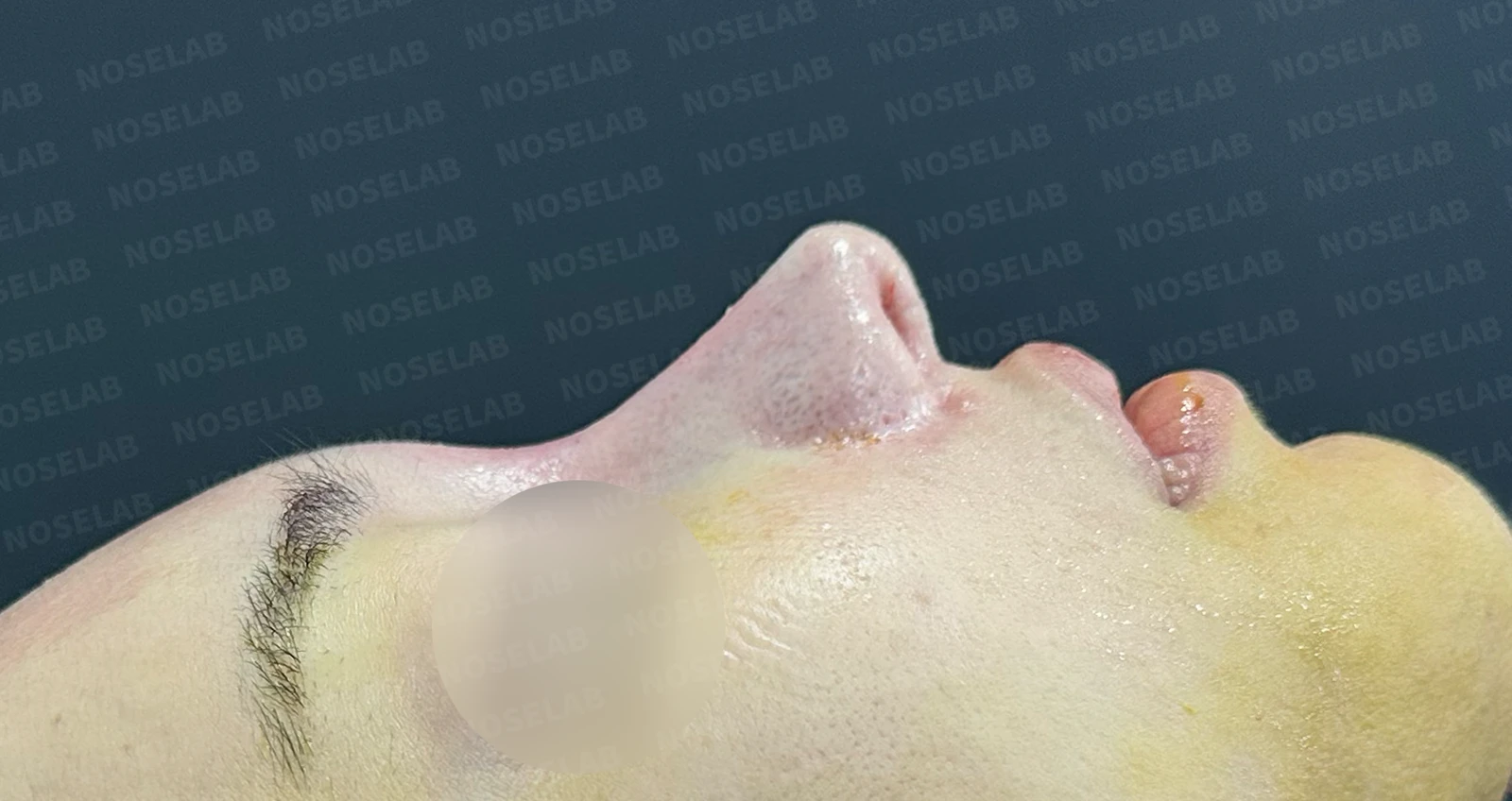
Before surgery / Day 0 immediately after surgery Photos taken immediately after surgery show swelling and may differ from the final result.
- The previously high radix was naturally lowered, improving its harmony with the glabella.
- The nasolabial angle was appropriately adjusted, improving the relationship between the nose and the lips.
- The upturned tip was naturally lowered, harmonizing the overall proportions.
Oblique view:
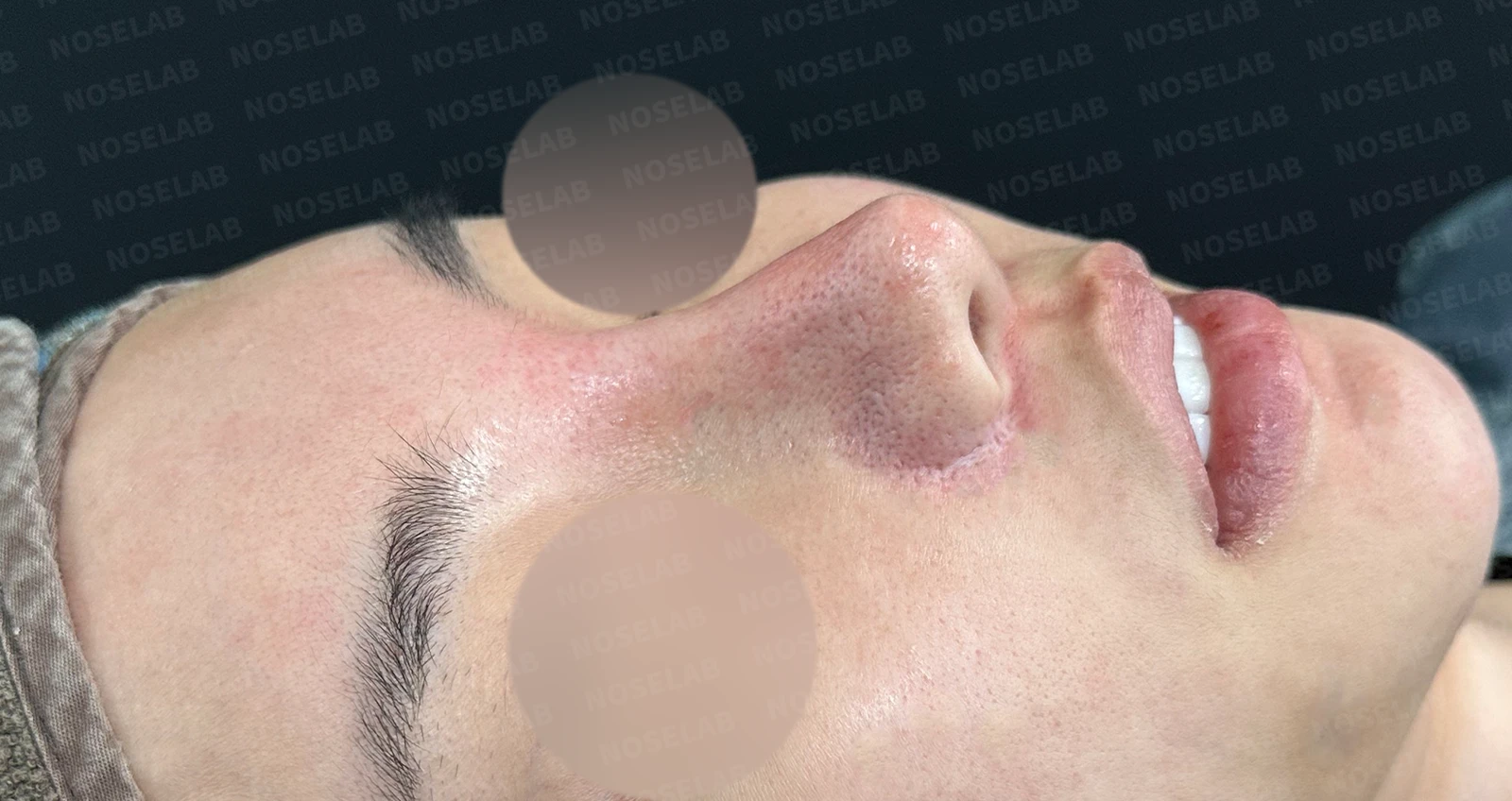
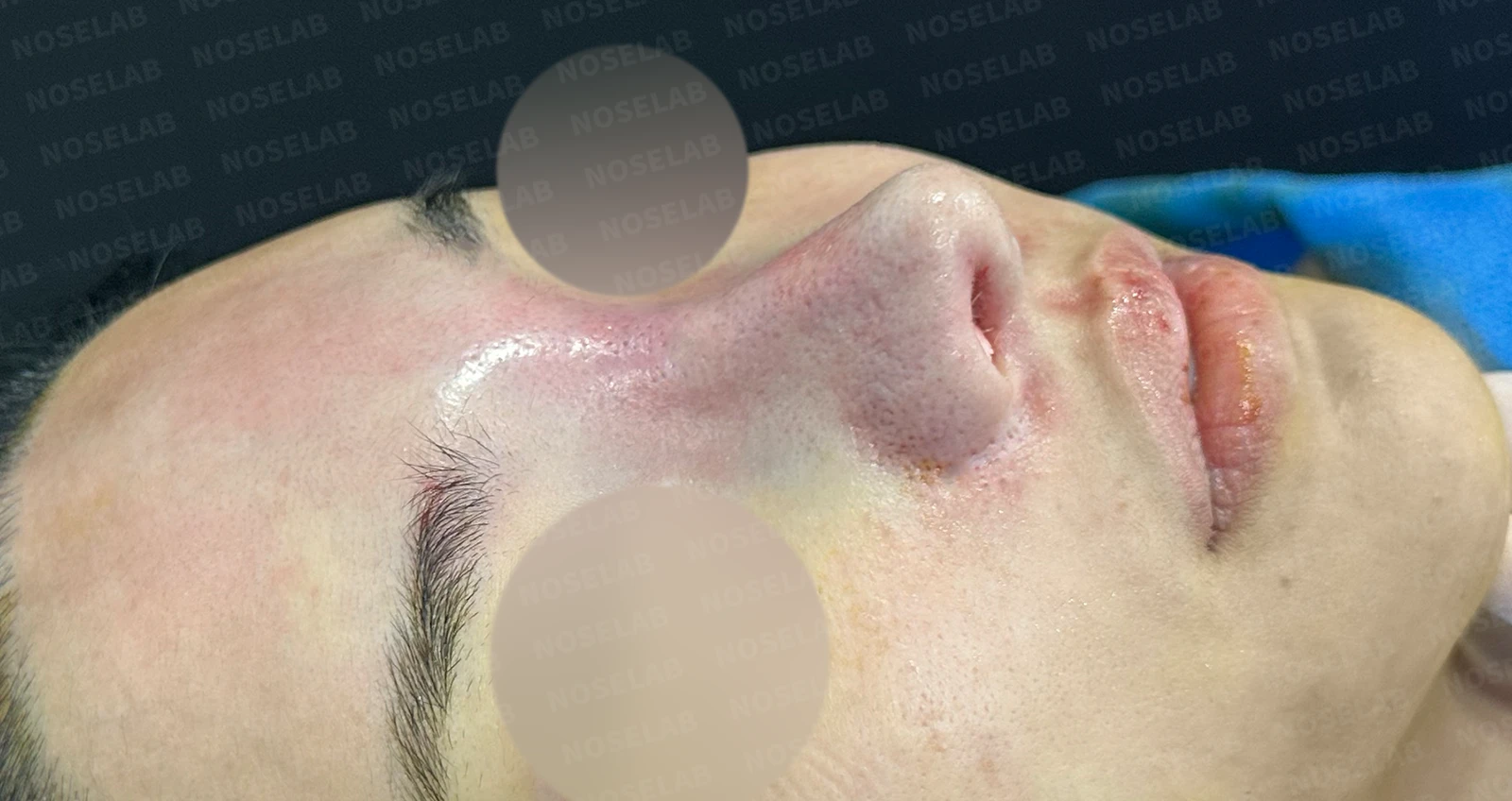
Before surgery / Day 0 immediately after surgery Photos taken immediately after surgery show swelling and may differ from the final result.
- Deviation was corrected, showing a smooth nasal line.
- The characteristics of the bulbous and upturned nose were improved, achieving a natural and refined appearance.
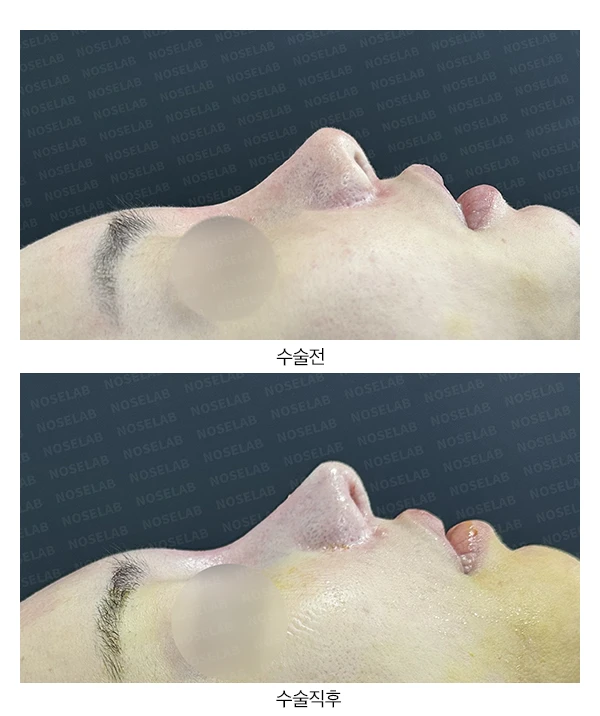
Nostrils:
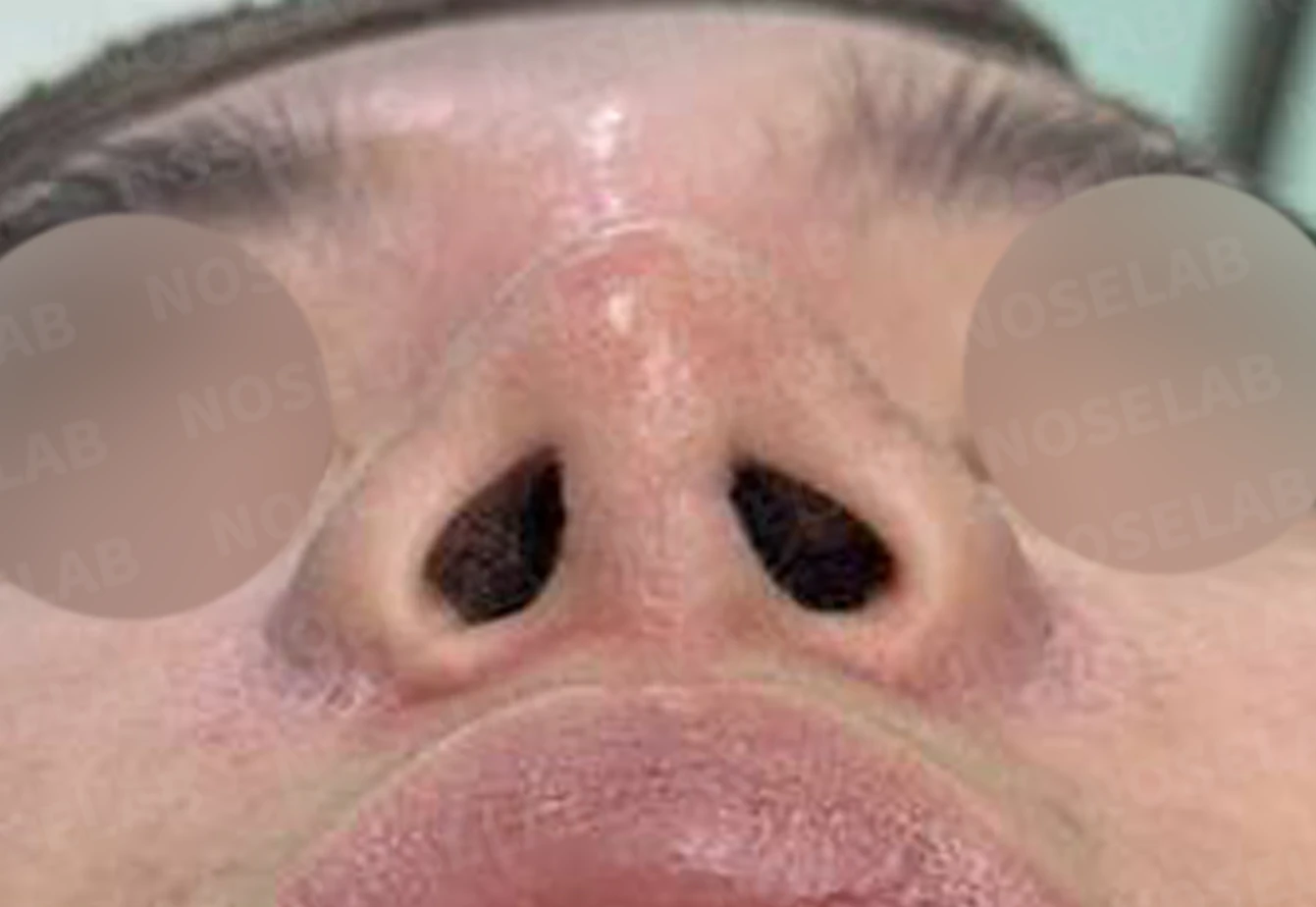
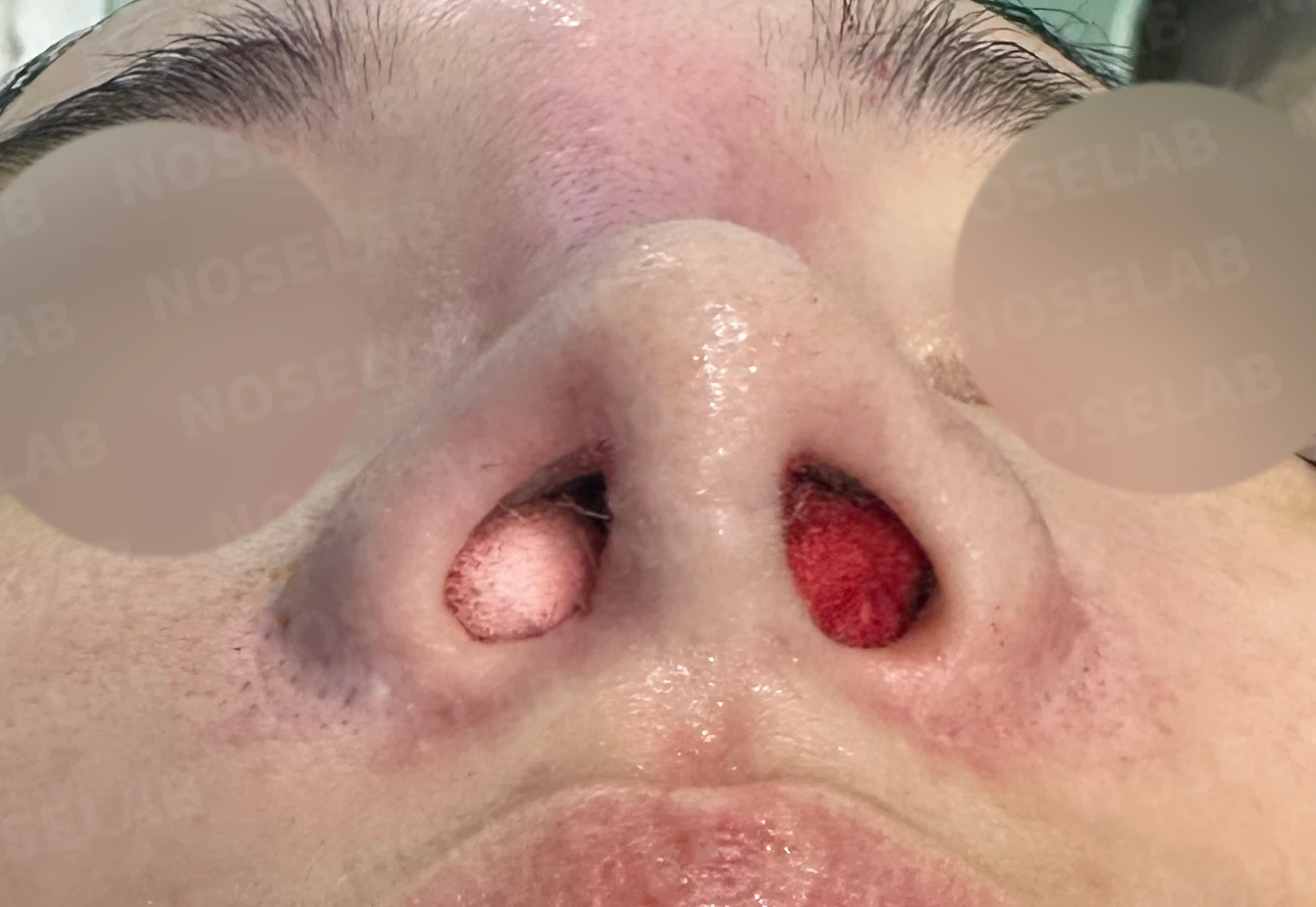
Before surgery / Day 0 immediately after surgery Photos taken immediately after surgery show swelling and may differ from the final result.
- Nostril asymmetry caused by the deviation was substantially improved.
- The blunt appearance of the nasal tip was noticeably improved.
5. Photos immediately after surgery on day 0 Photos taken immediately after surgery show swelling and may differ from the final result.
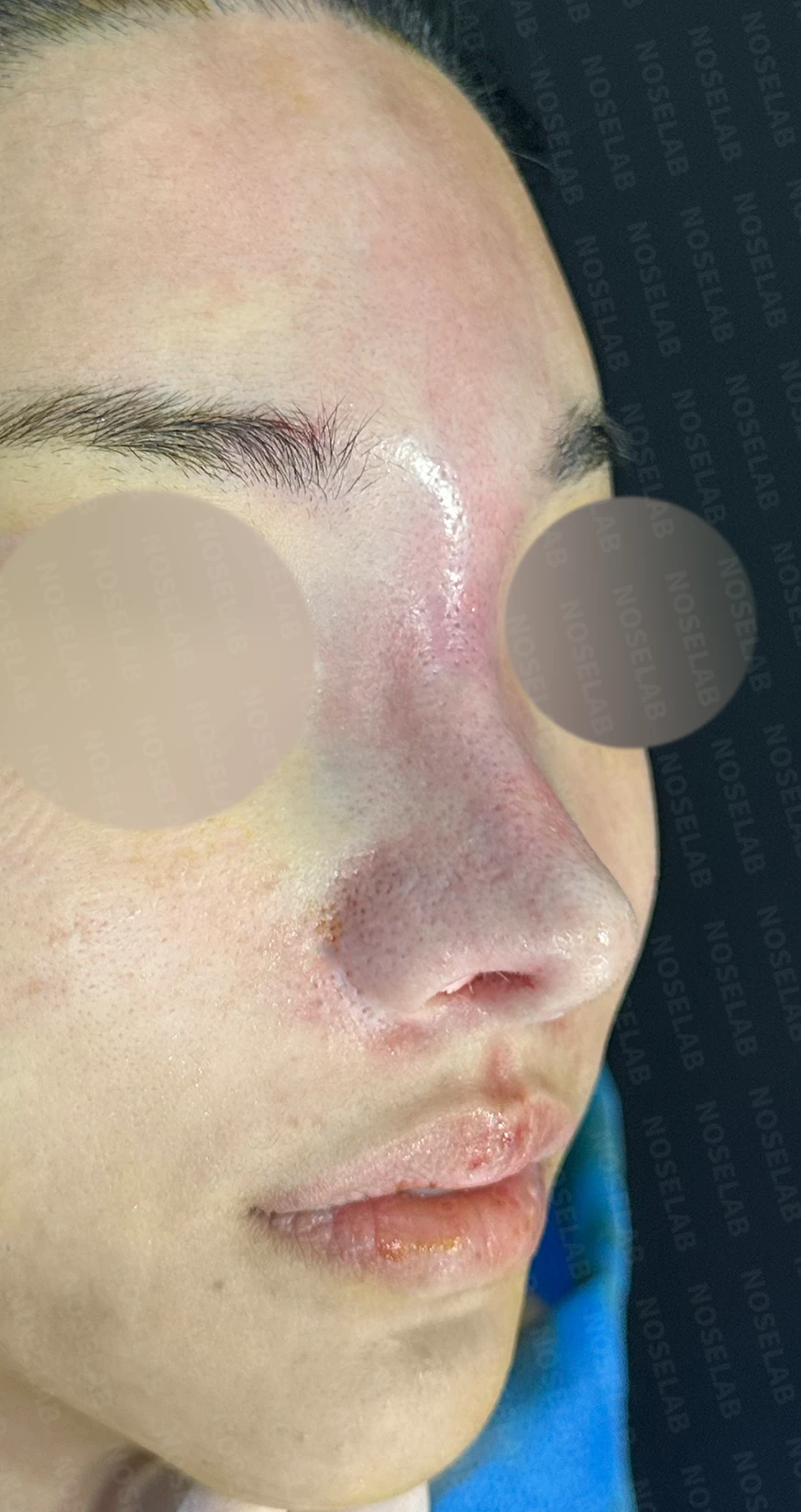
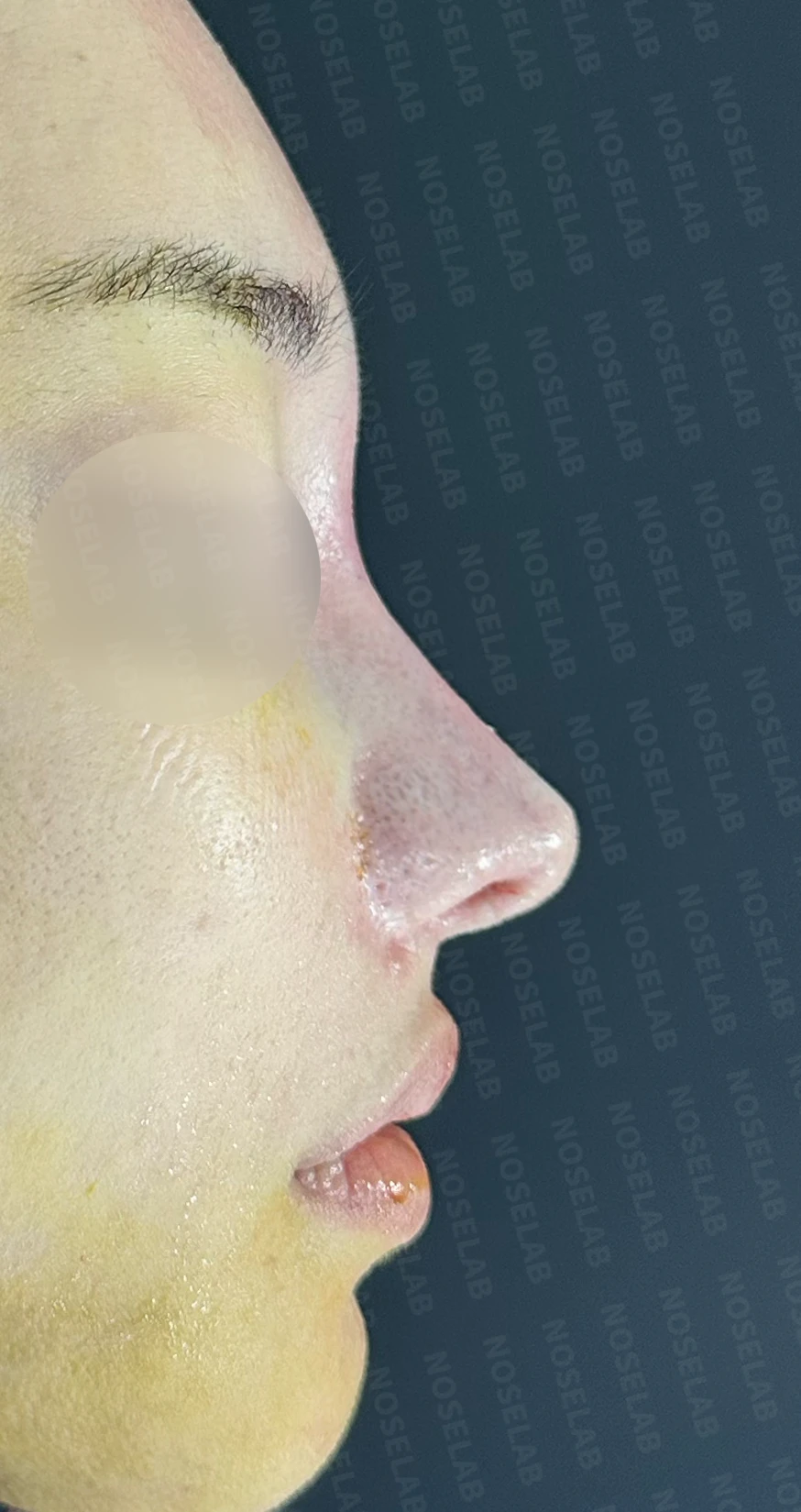
Photos immediately after surgery (Day 0): front, oblique, and profile viewsImmediate postoperative photos show swelling and may differ from the final result.
Basal (nostril) view immediately after surgery (Day 0)Immediate postoperative photos show swelling and may differ from the final result.
6. Overall evaluation
This case addressed multiple combined concerns: a bulbous nose, a deviated nose, and an upturned nose. Although the patient's nasal shape was not severely compromised before surgery, it had an overall unnatural and operated appearance.
Septal extension using autologous rib cartilage played a major role in correcting the upturned tip and reinforcing the overall nasal framework. In addition, by straightening the deviated septum, nostril asymmetry was naturally resolved as well.
Lowering the radix and appropriately adjusting the nasolabial angle were critical in resolving the unnatural appearance of the nose. Through this, an overall natural and harmonious nasal contour could be created.
Using a closed approach shortened the postoperative recovery period and allowed surgery to be completed without external scars. This contributed significantly to patient satisfaction.
7. Conclusion
I hope this case offers insight to those concerned about combined nasal issues such as a bulbous, deviated, or upturned nose. Because these issues are interrelated, correcting only one may not achieve a sufficient improvement. A comprehensive approach is therefore necessary, guided by an experienced and specialized surgeon.
Drawing on anatomical knowledge and extensive surgical experience as a board-certified otolaryngologist, I provide surgical plans tailored to each individual patient. Through a comprehensive approach that considers both functional and cosmetic improvement, I strive to create a beautiful and healthy nose.
NOSELAB is here to help you achieve a healthy, aesthetically pleasing nose. Thank you.
#rhinoplasty #bulbousnosecorrection #deviatednosecorrection #upturnednosecorrection #autologousribcartilagegraft #closedrhinoplasty #septalextension #entrhinoplasty #rhinoplastysafety #dorsumcorrection #tiprhinoplasty

Limitations and risks
When autologous rib cartilage is used, scarring and pain may remain at the donor site on the chest, and pneumothorax (pleural injury) can occur rarely. Over time, the grafted cartilage may warp or undergo partial resorption.
When the septum is corrected at the same time, nasal obstruction may persist or recur, and in rare cases, septal perforation or changes in smell may occur.
Common potential risks include infection, bleeding, asymmetry, scarring, skin necrosis, and insufficient improvement; results vary depending on individual skin condition and previous surgical history.