Hello.
I am Dr. Peter C. Kang, medical director.
Today, I will discuss the surgery of a patient who was experiencing significant stress due to nostril asymmetry.
Even if nostril asymmetry was present before surgery, it is naturally very distressing when something that was barely noticeable becomes more severe afterward. Today's patient presented with this exact issue, and we will look closely at everything from the causes of asymmetry to its treatment.
Preoperative design consultation
These photos were taken during the presurgical design consultation.
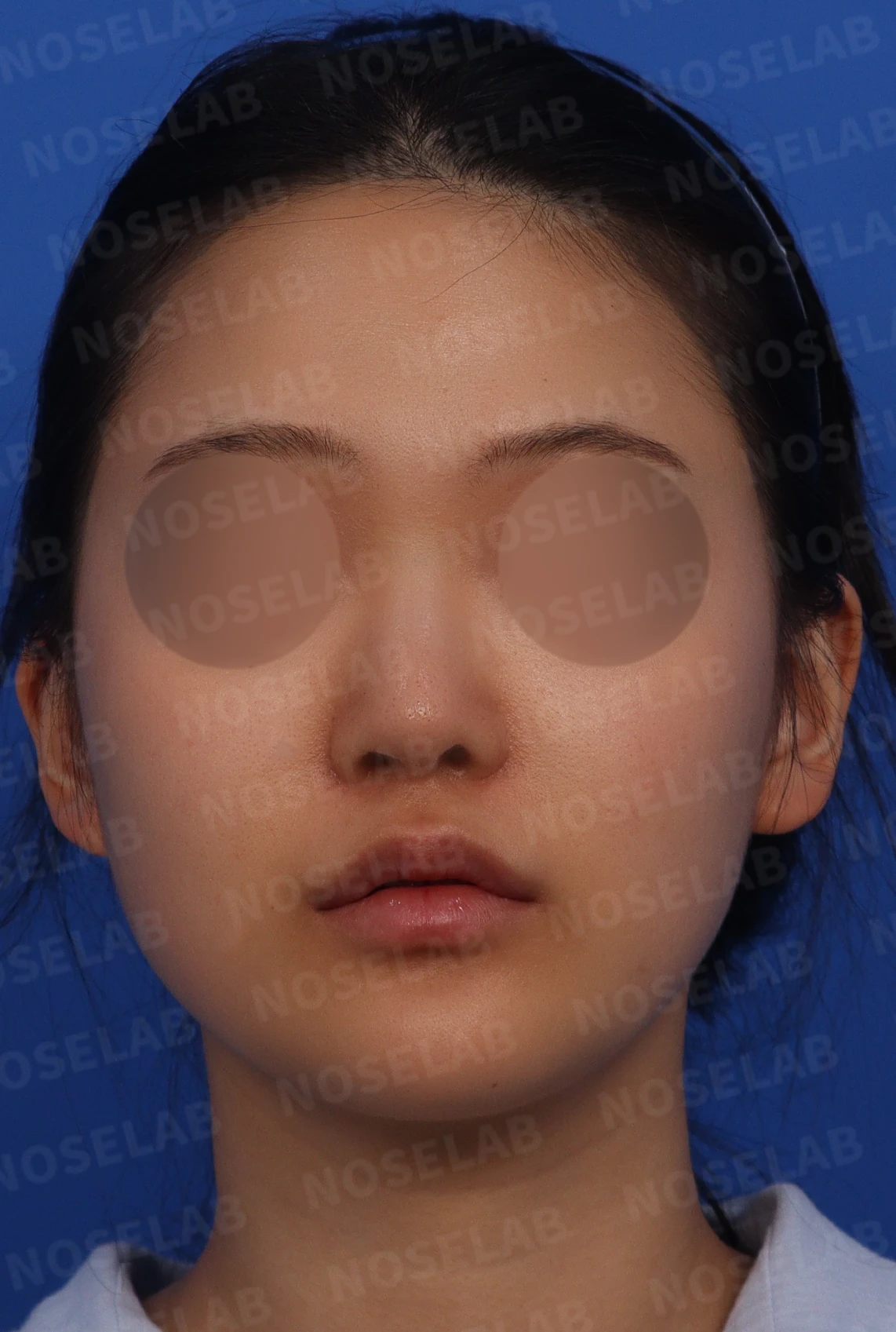
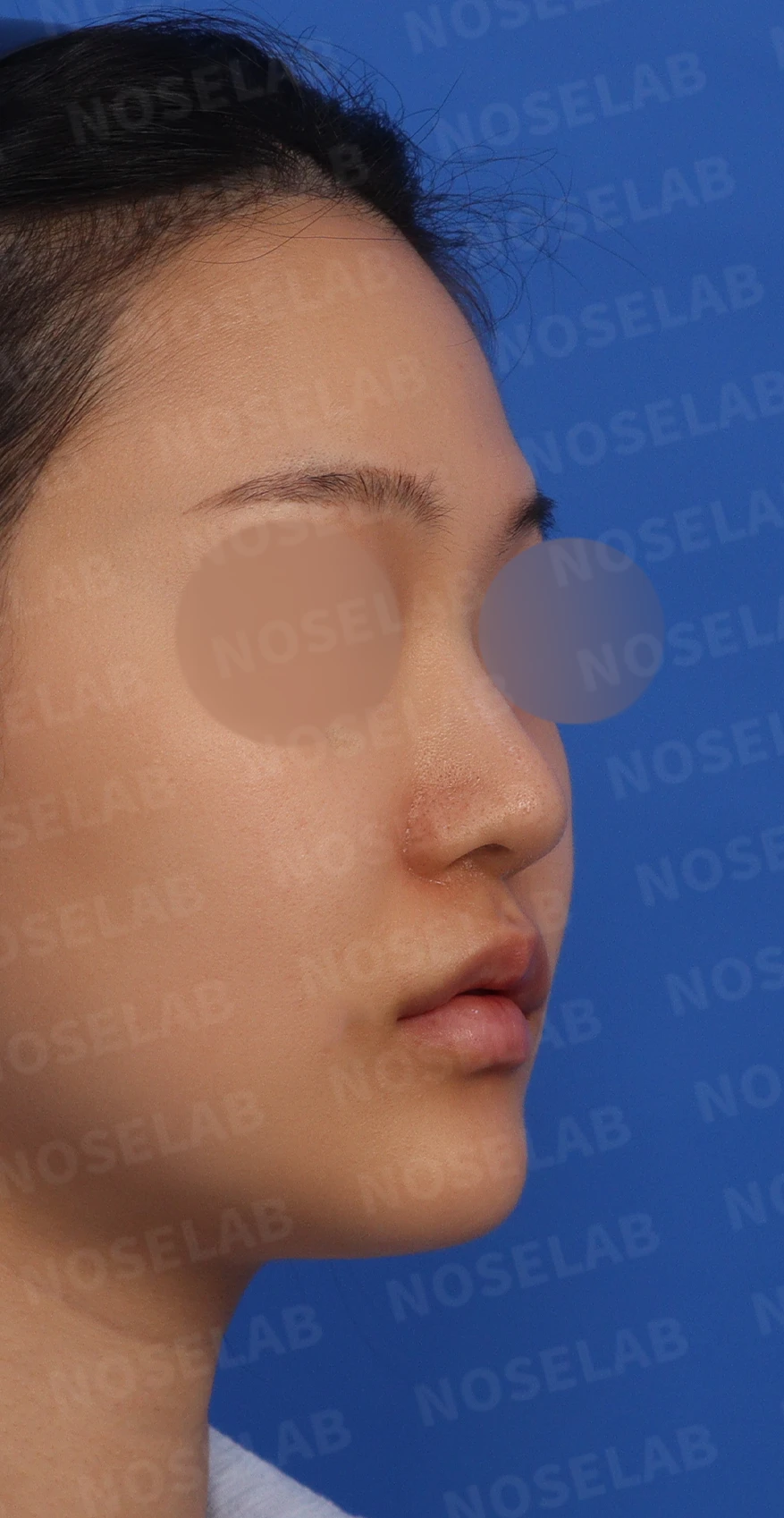
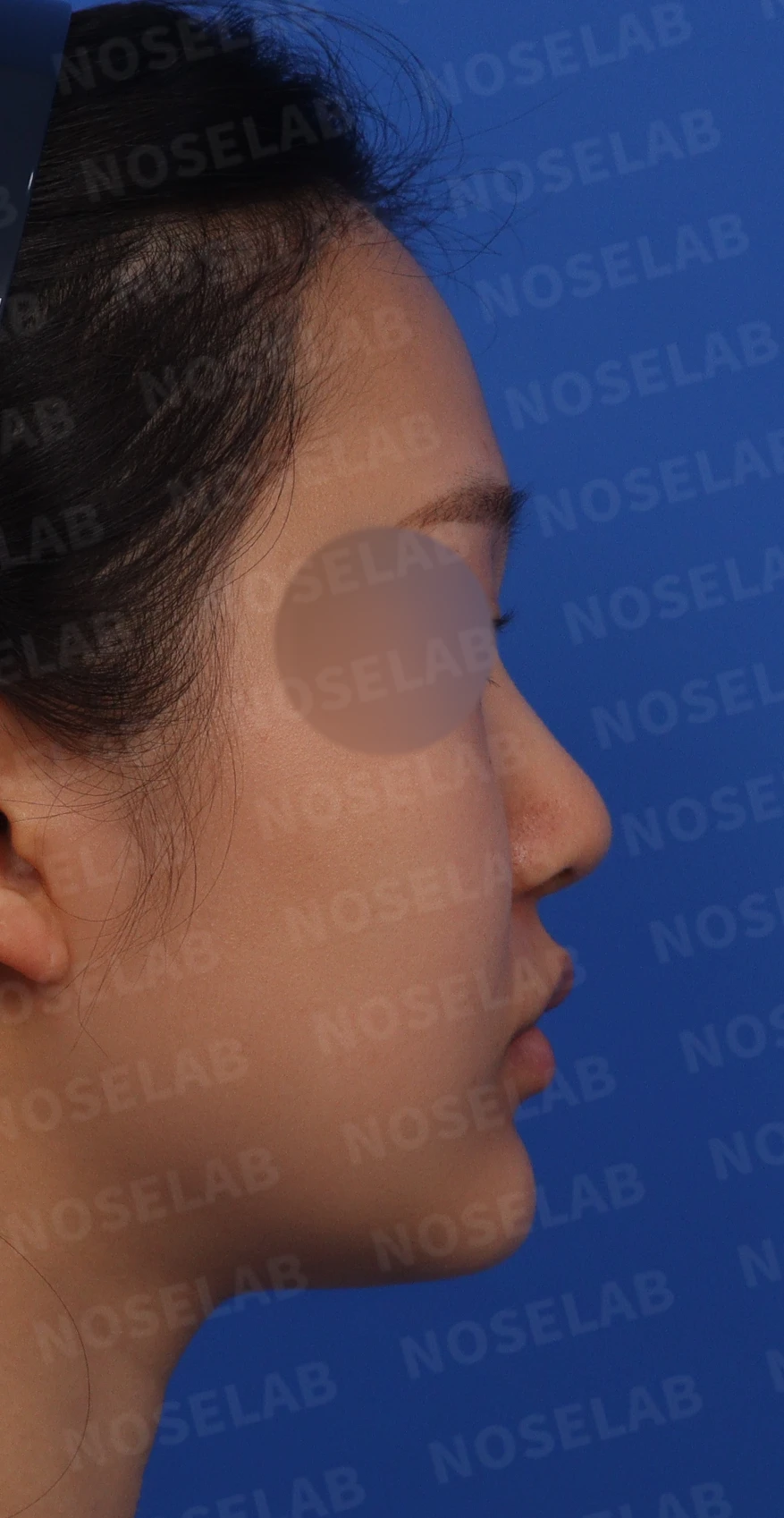
Preoperative design consultation: front, oblique, and profile views
From the front view, the left nostril shows more than the right, and its shape appears sharply pointed like a triangle. The nose appears deviated overall, with a blunt, wide shape. The nasolabial angle is acute, giving the appearance of a protruding mouth.
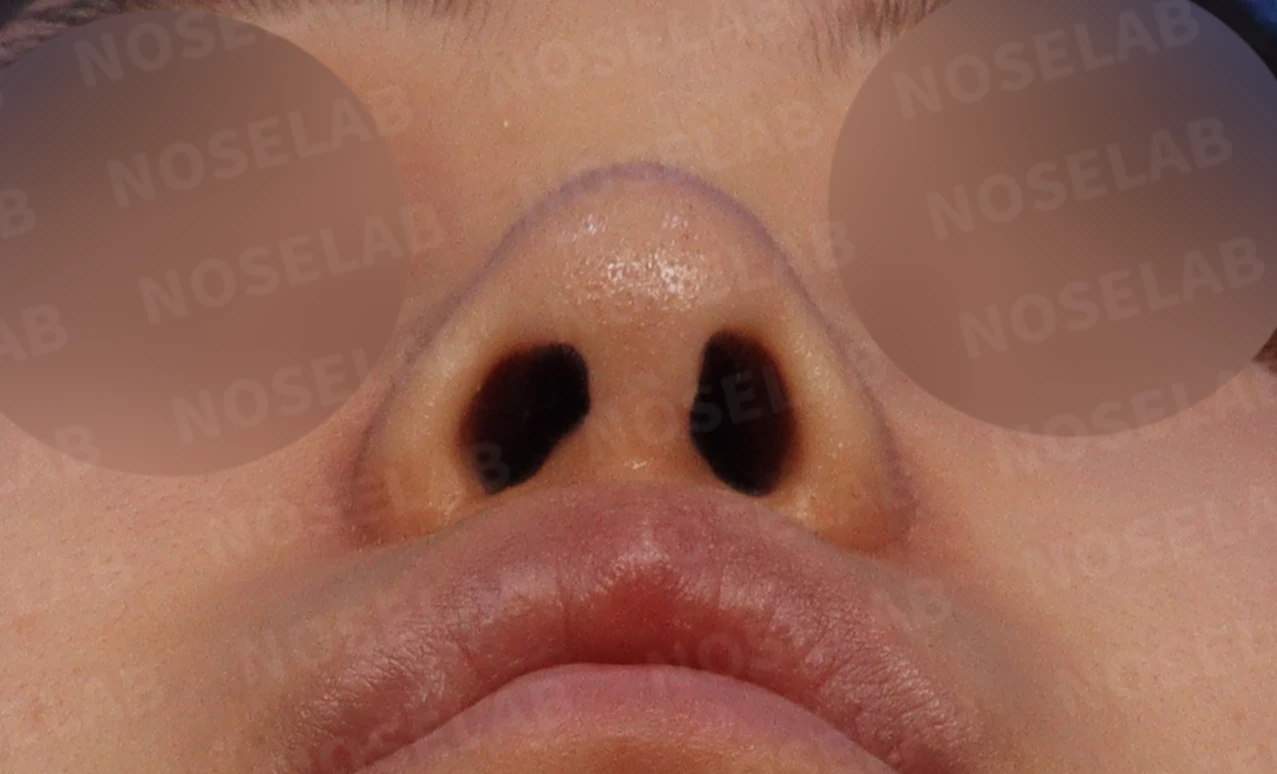
Preoperative design basal (nostril) view
Looking at the basal nostril view, the columella tilts to the left, and a scar from a previous open approach protrudes around the middle of the left side of the columella. We plan to correct this area as much as possible. The left nostril being larger than the right is a congenital difference, which is considered difficult to correct.
Surgical plan
Because the patient requested implant-free surgery, the entire procedure is planned using only autologous cartilage.
Depending on the condition of the septal cartilage during surgery, the use of autologous rib cartilage is also being considered.
The patient understood that only cartilage suturing had been performed in the previous surgery, so we plan to assess the condition of the cartilage during surgery and perform a septal extension.
The cause of the patient's nostril asymmetry was determined to be the columella deviating to the left, so surgery was planned to shift the columella to the right.
To correct a columella that tilts to the left, positioning the septal cartilage precisely in the midline is essential.
If the lower lateral cartilages are damaged, we plan to restore the cartilage shape as much as possible through partial reconstruction or repair, and then suture them symmetrically.
To correct the blunt nasal tip, we plan to slightly increase tip projection, and along that projection, fill the depressed area of the dorsum with some autologous rib cartilage to create a smooth transition.
Before surgery vs. immediately after surgery
Let us compare the preoperative photos with the photos immediately after surgery (Day 0).Immediate postoperative photos show swelling and may differ from the final result.
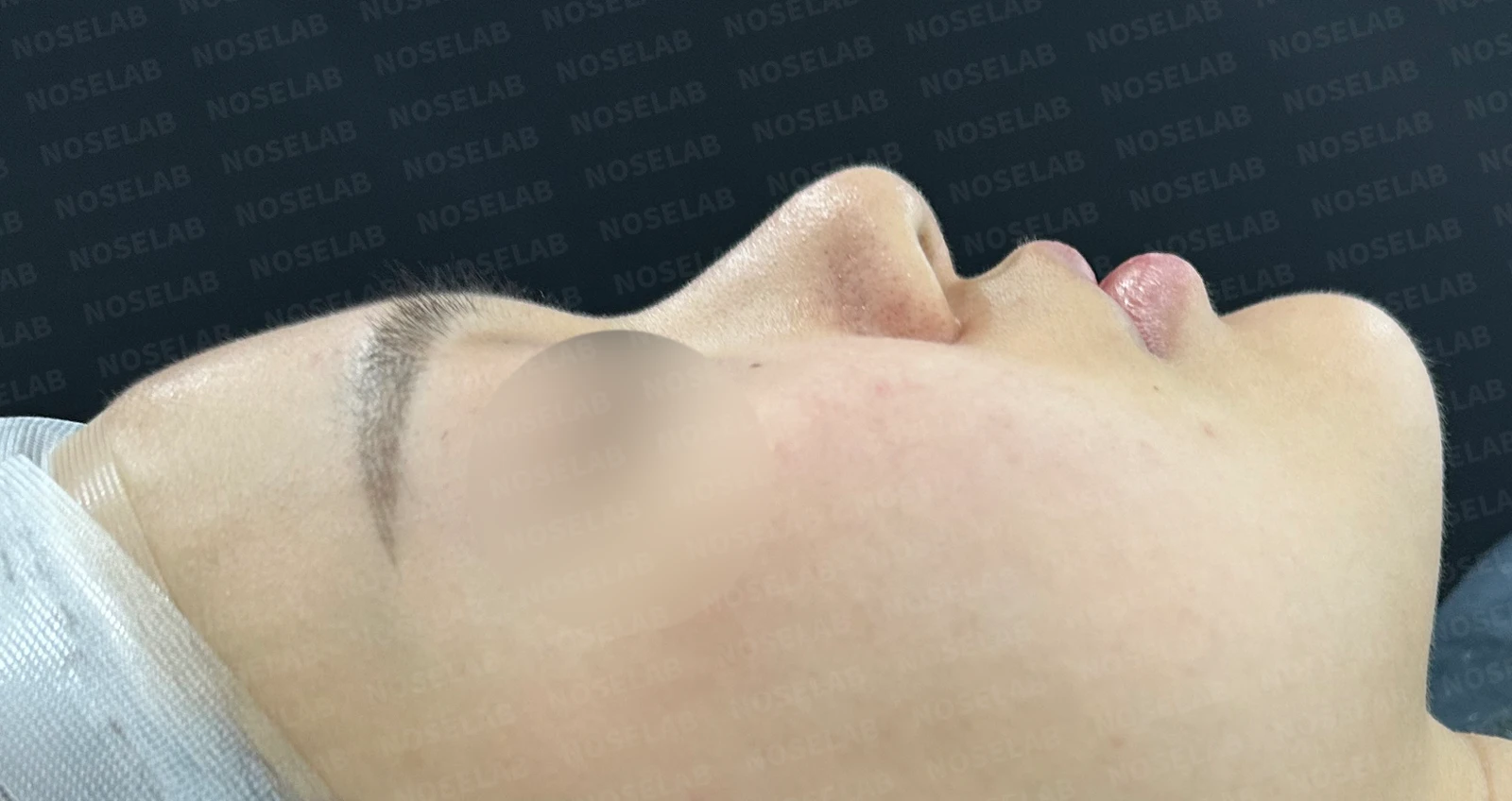
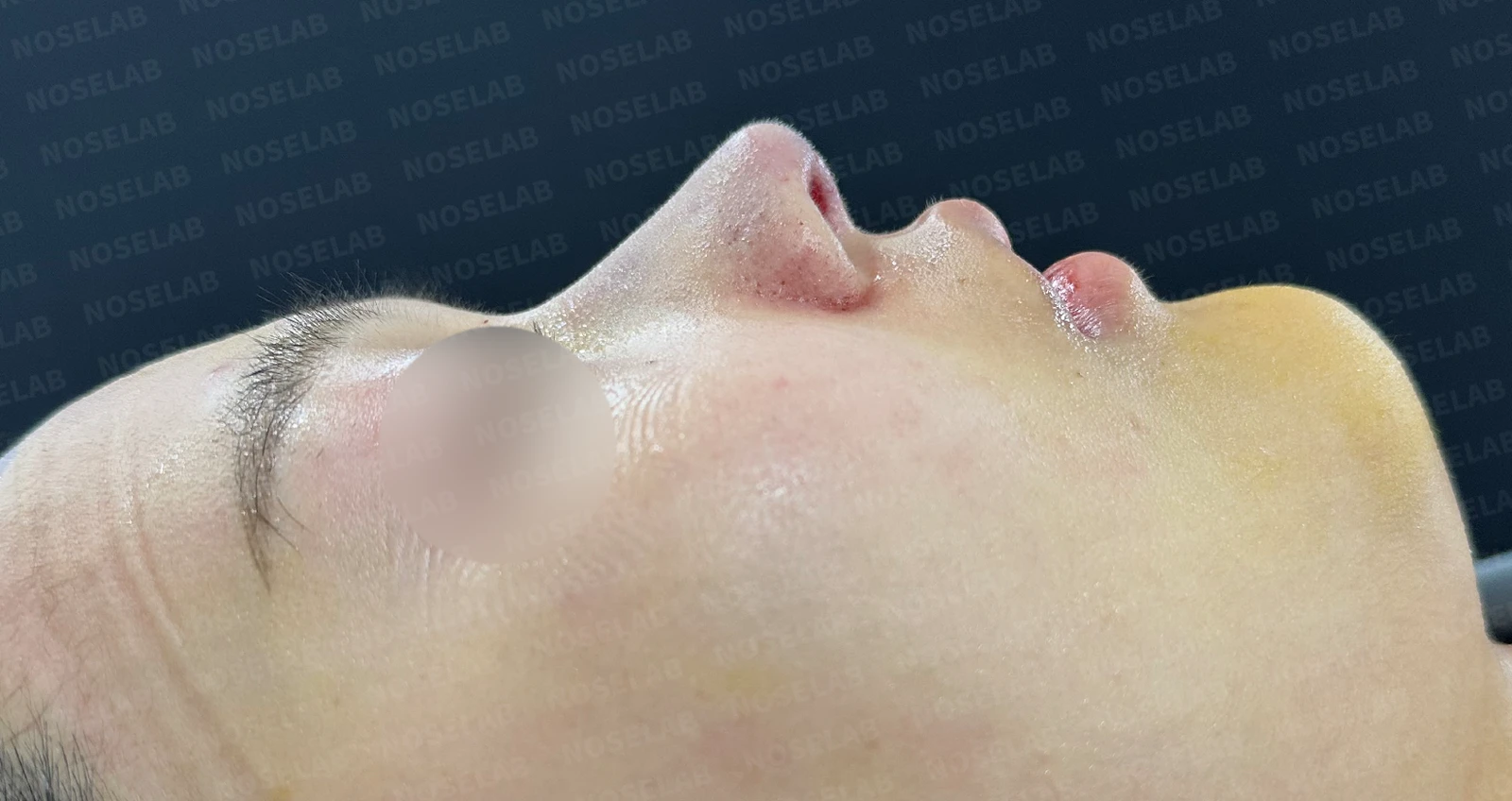
Before surgery / Day 0 immediately after surgery Photos taken immediately after surgery show swelling and may differ from the final result.
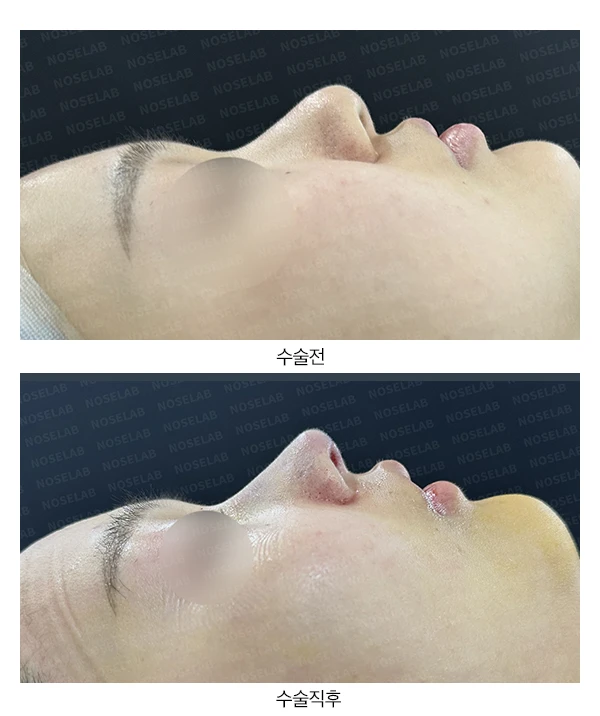
Looking at the profile view, the drooping, blunt appearance of the nasal tip has significantly improved, and correcting the nasolabial angle has also helped soften the look of the protruding mouth.
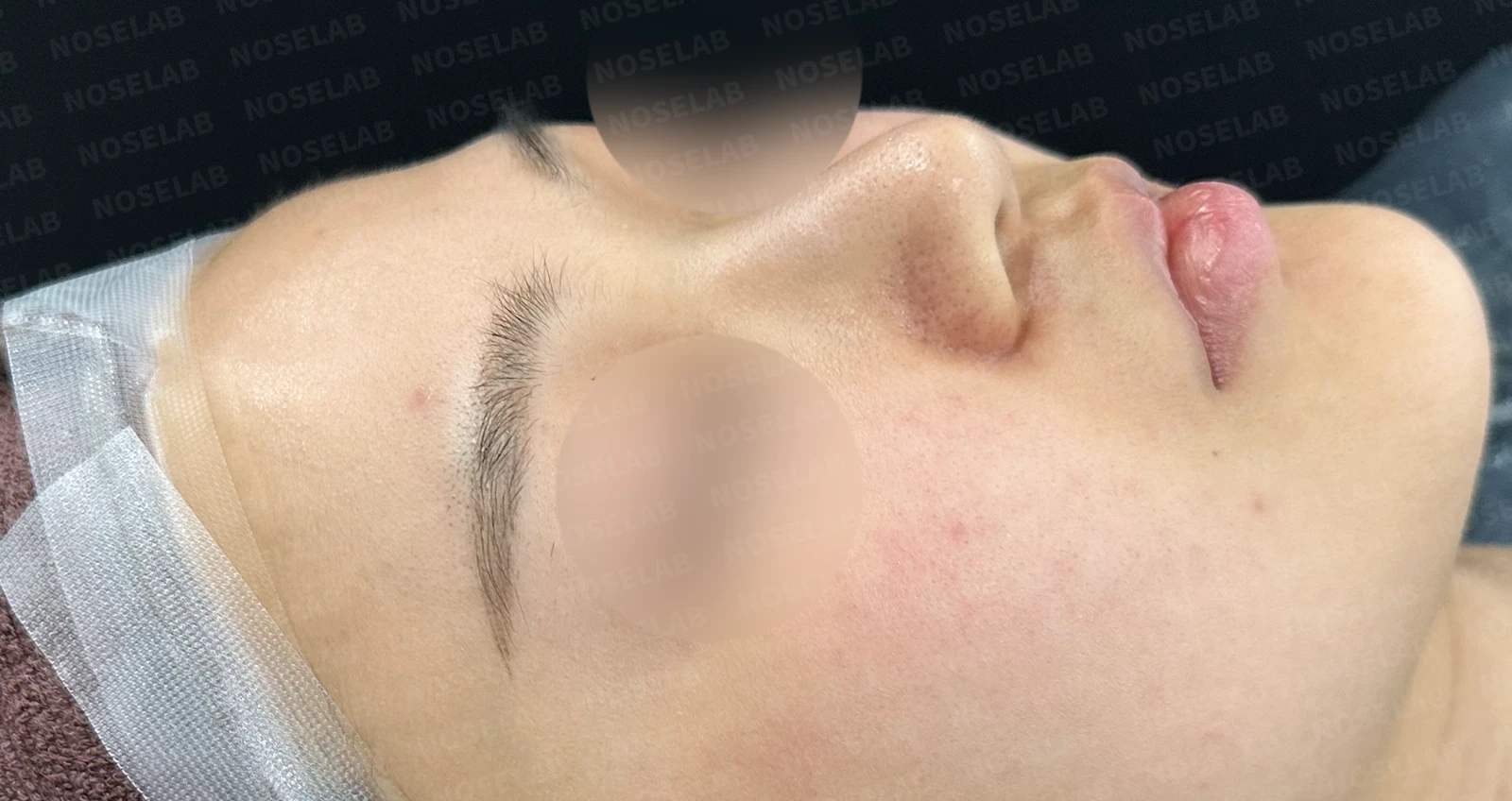
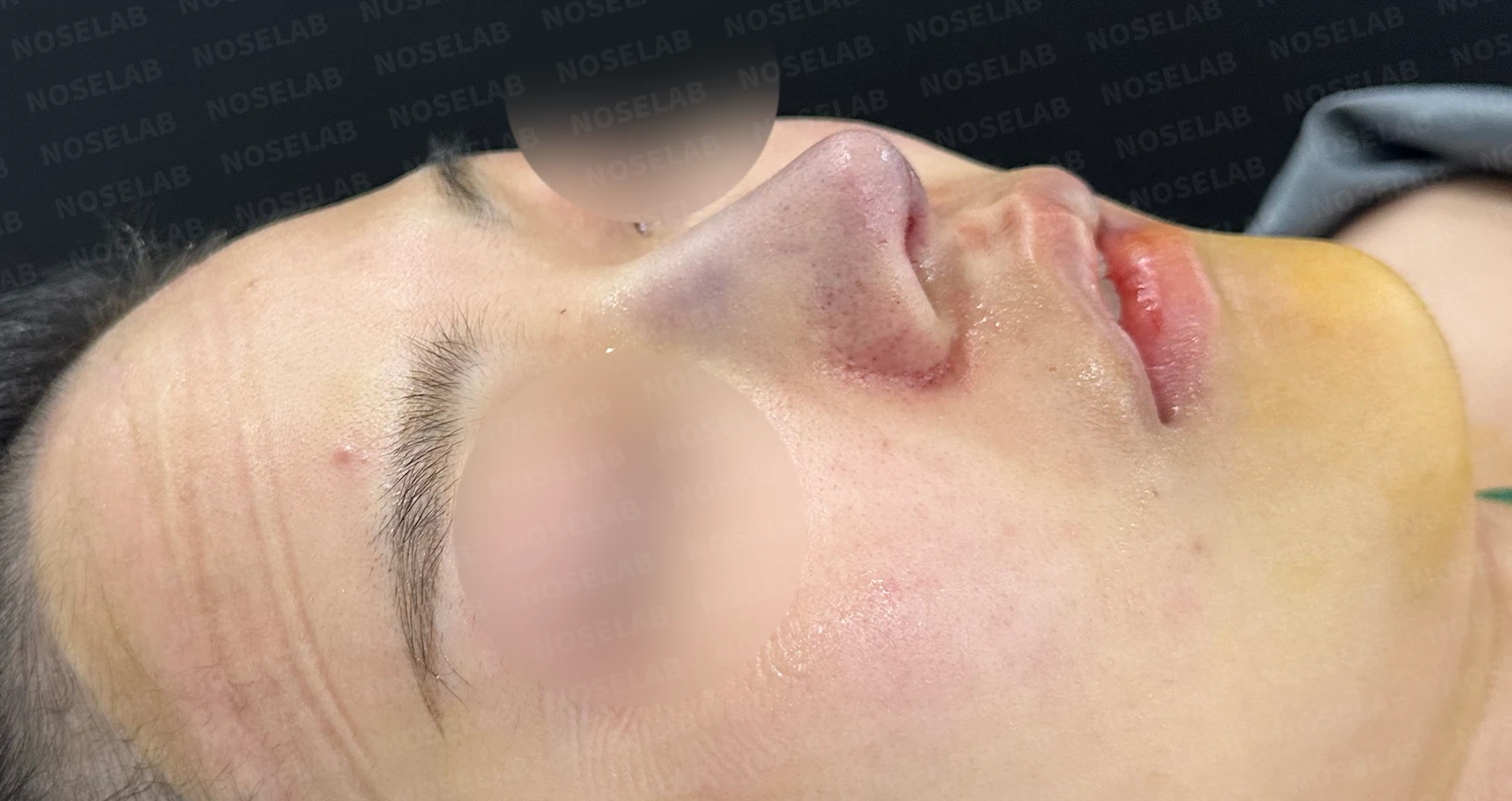
Before surgery / Day 0 immediately after surgery Photos taken immediately after surgery show swelling and may differ from the final result.
The overall drooping appearance has improved substantially.
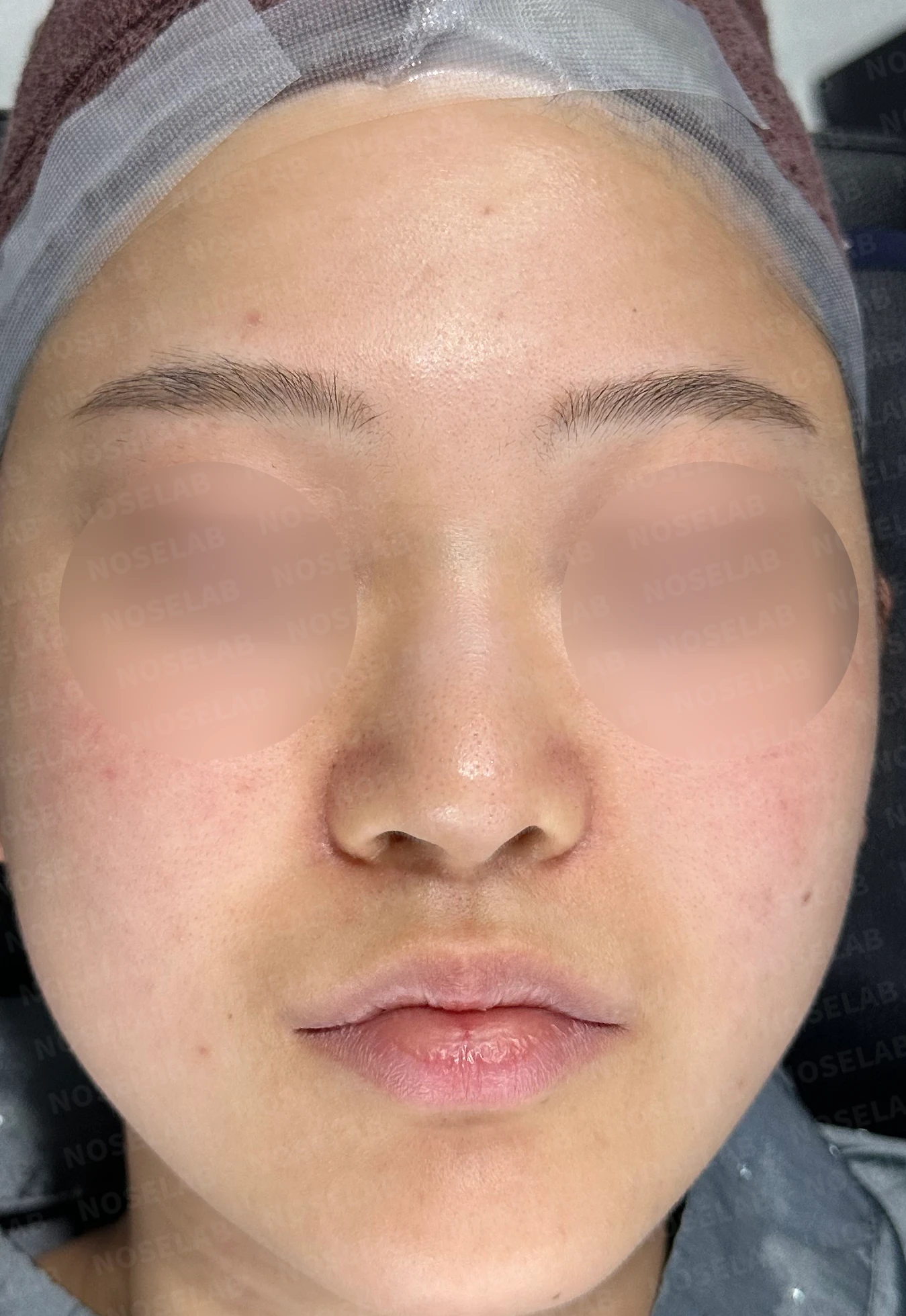
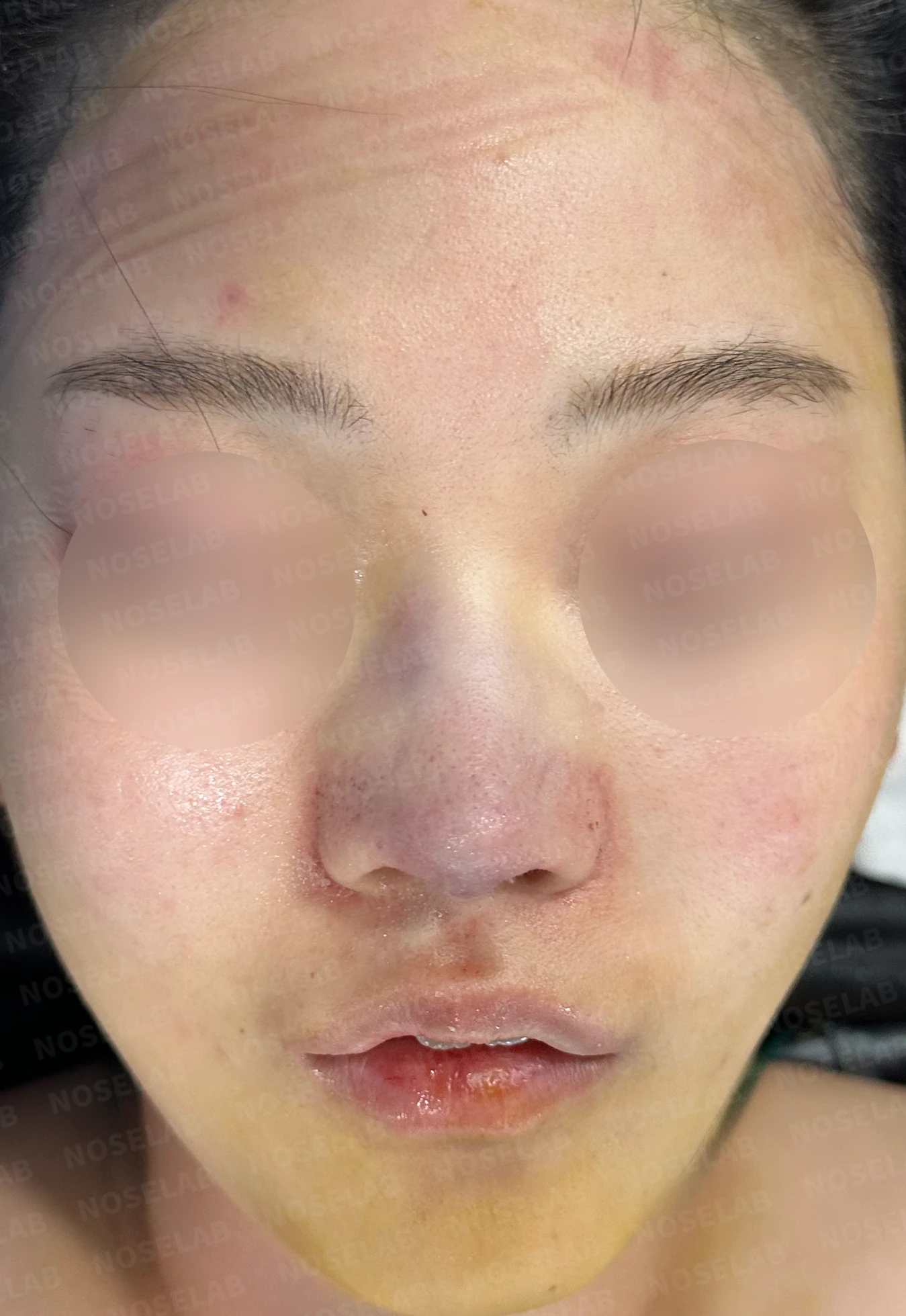
Before surgery / Day 0 immediately after surgery Photos taken immediately after surgery show swelling and may differ from the final result.
From the front view, the nostril asymmetry has noticeably decreased, and overall nostril show has been reduced. The marked reduction in asymmetry is clearly visible. Although swelling makes the nose appear larger right now, once the swelling subsides, the overall look is expected to become slimmer.
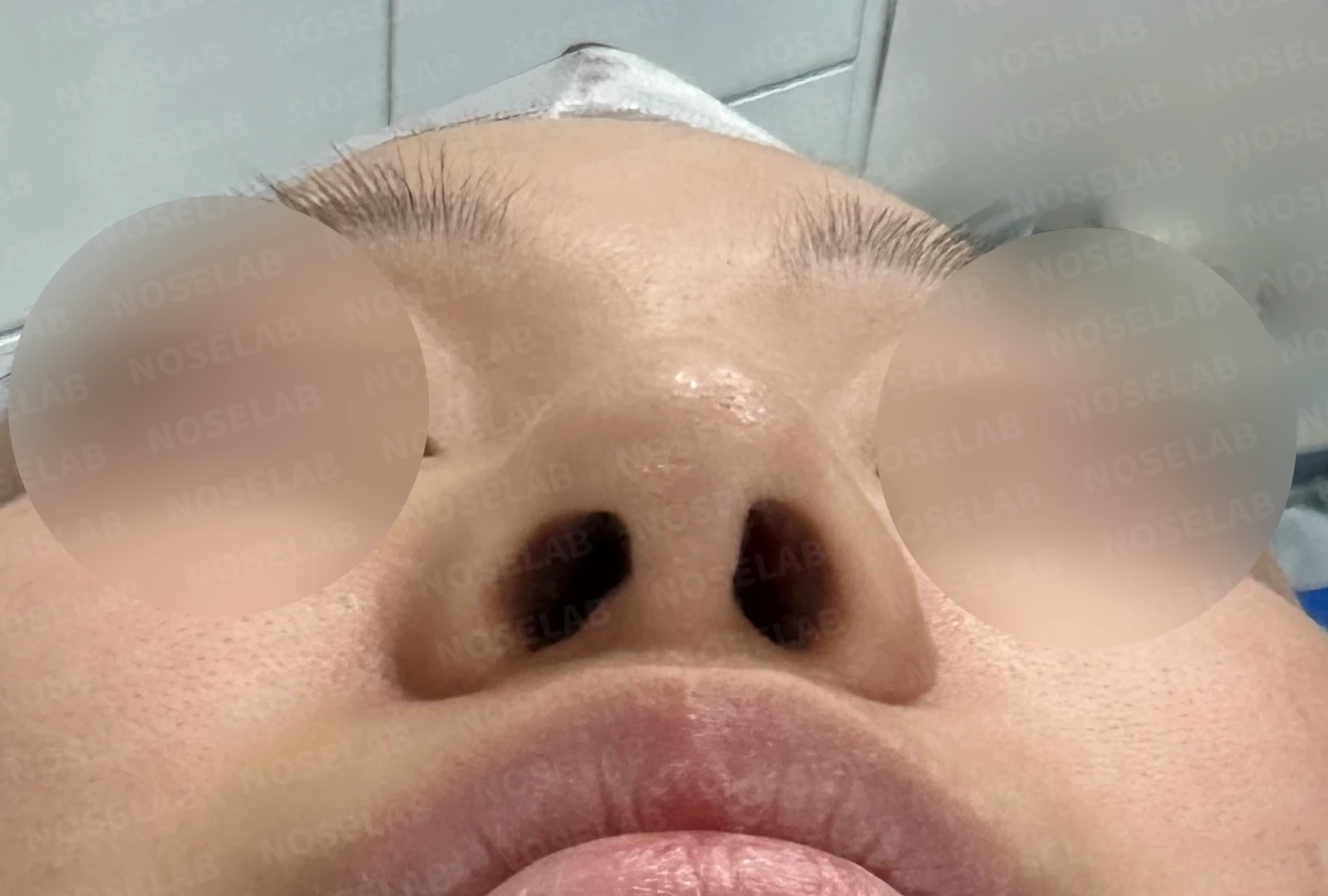
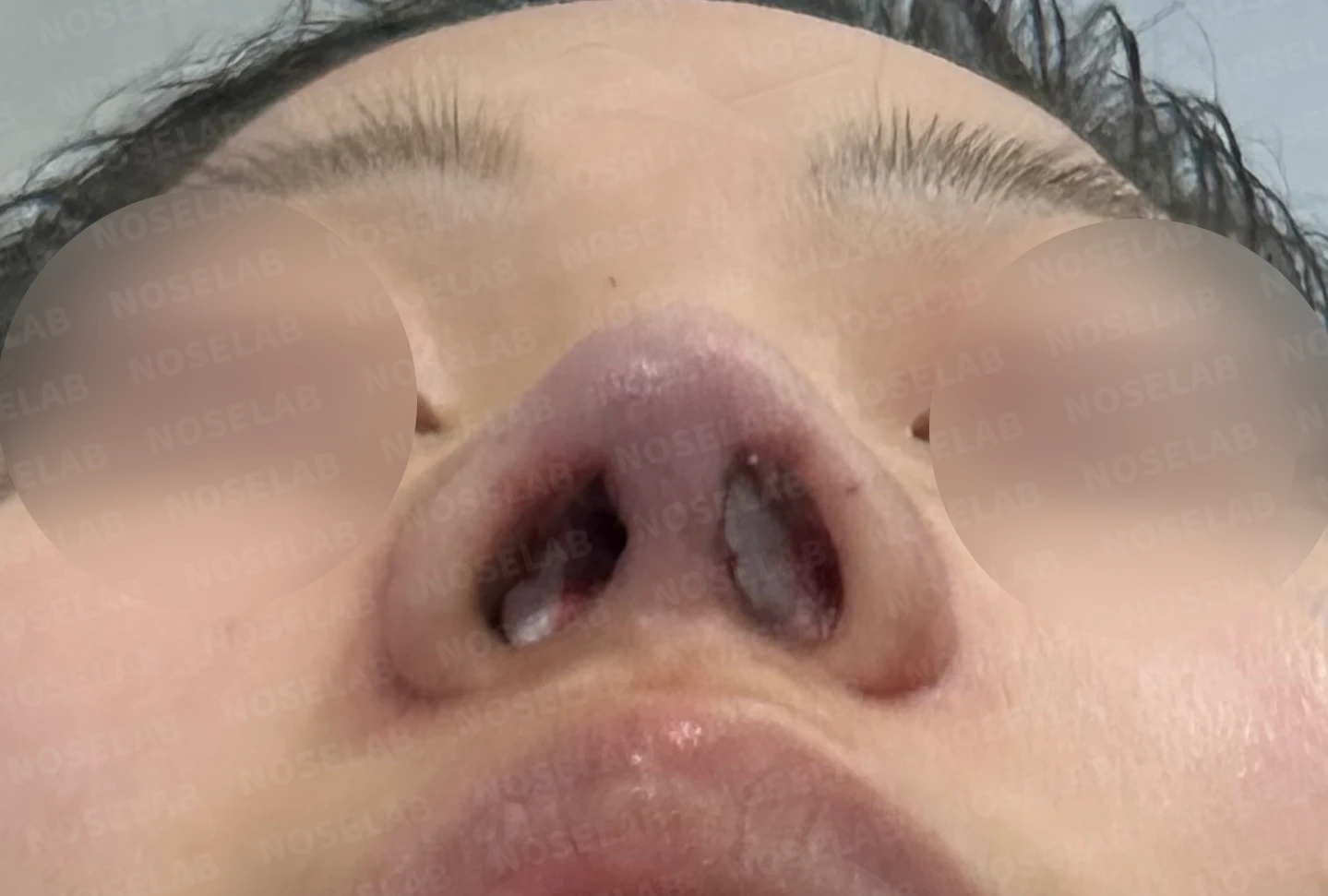
Before surgery / Day 0 immediately after surgery Photos taken immediately after surgery show swelling and may differ from the final result.
The columella was shifted to the right, and the leftward tilt has improved considerably. Because congenital differences in nostril size cannot be fully corrected, some overall asymmetry remains, but the difference in shape has been substantially reduced.
Photos immediately after surgery
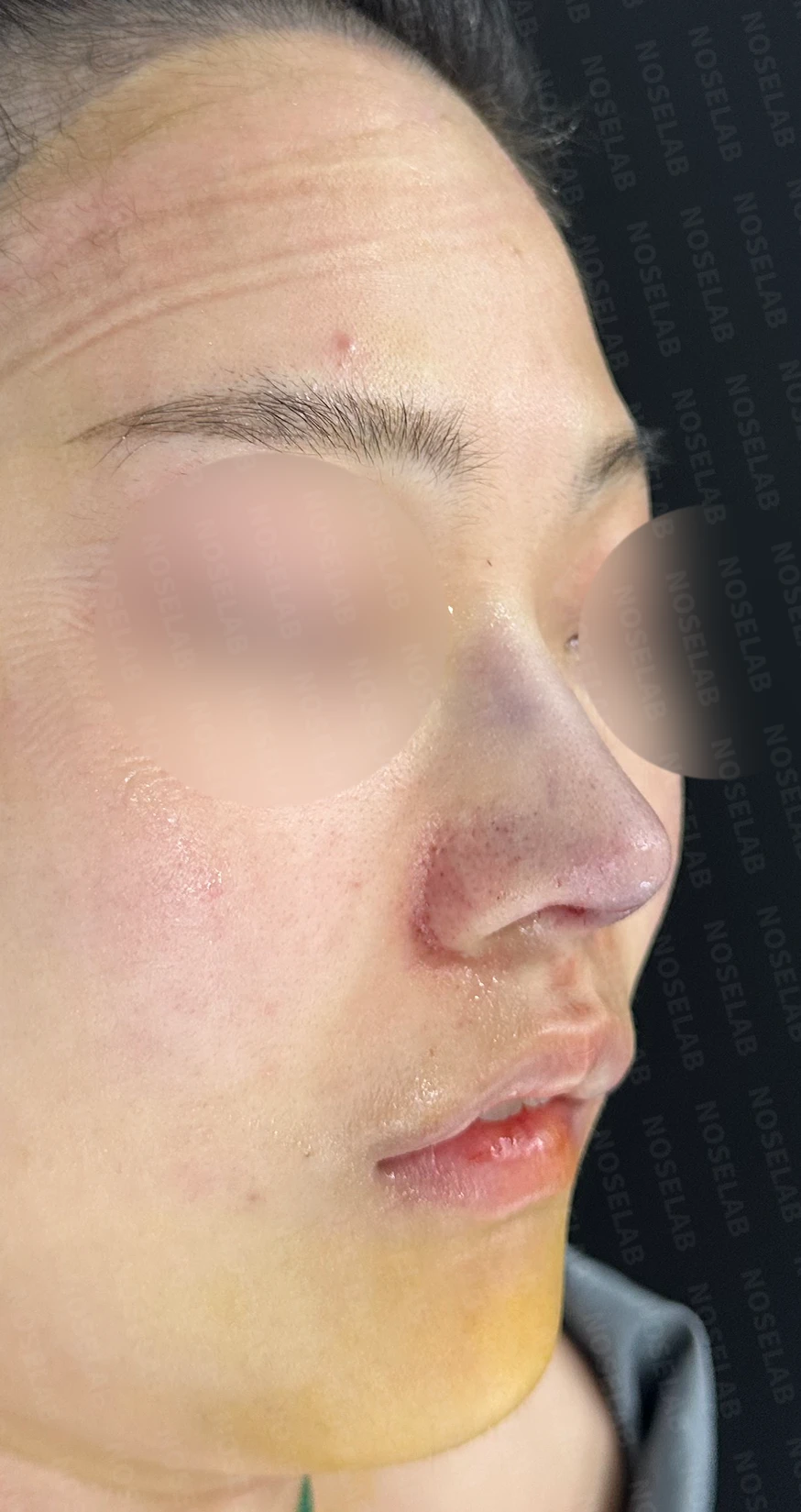
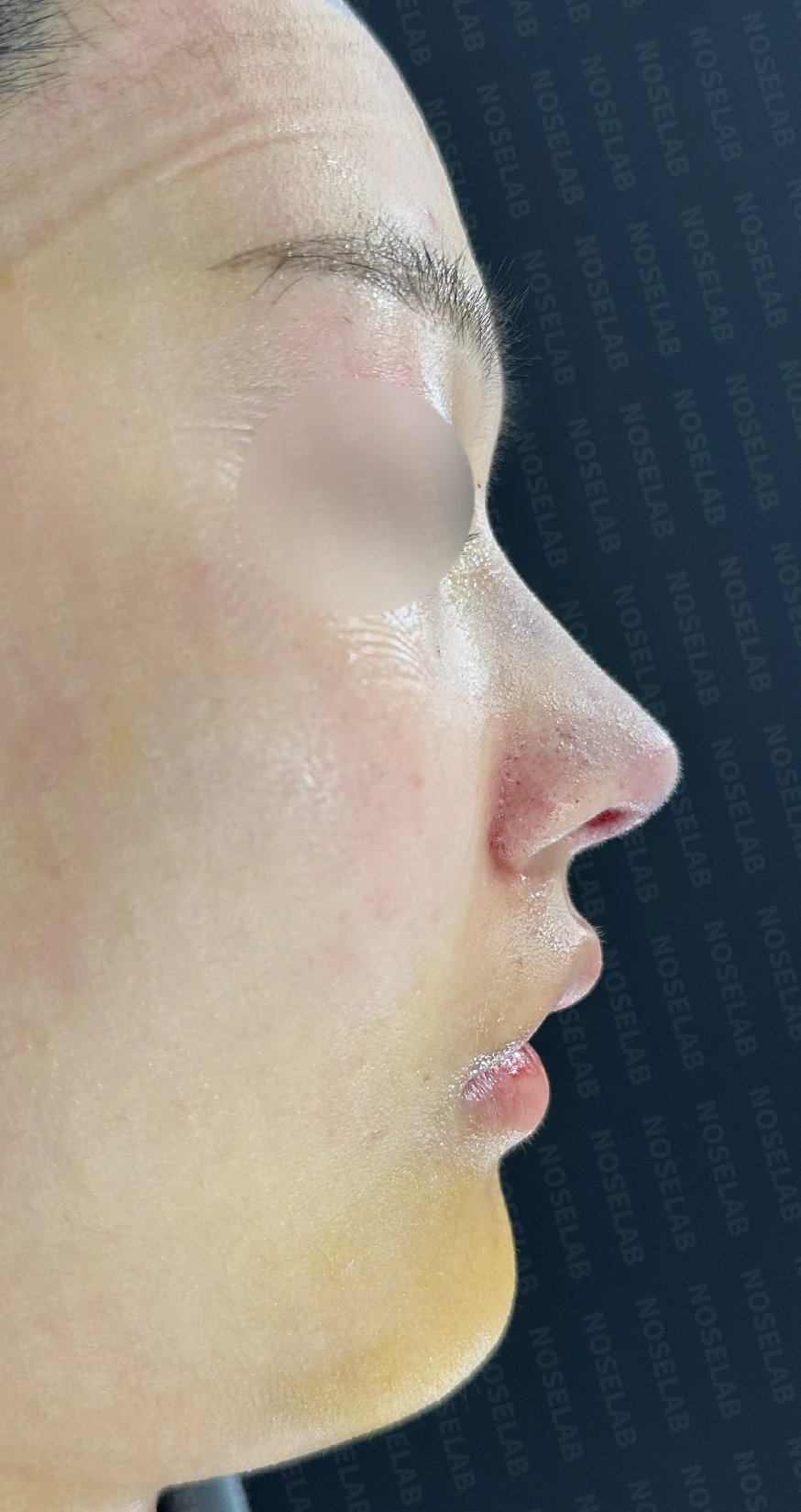
Photos immediately after surgery (Day 0): front, oblique, and profile viewsImmediate postoperative photos show swelling and may differ from the final result.
Basal (nostril) view immediately after surgery (Day 0)Immediate postoperative photos show swelling and may differ from the final result.
My thoughts on correcting nostril asymmetry
Today, I will discuss surgery to correct nostril asymmetry, a challenge even for rhinoplasty surgeons. The causes of nostril asymmetry are diverse. Many individuals have congenital asymmetry, and when an asymmetrical framework is elevated, that asymmetry inevitably becomes more visible. In some ways, worsening asymmetry can be an inevitable outcome. Even so, this does not mean nostril asymmetry cannot or should not be improved.
Furthermore, in rhinoplasty, nostril asymmetry is often not treated as a top priority. In other words, while achieving symmetry is important, the overall shape, proportions, bridge height, and tip projection take precedence. Patients are often told to simply give up, that symmetry cannot be achieved, or that improving the nostrils will compromise other features, leading most patients to resign themselves to the outcome.
However, becoming self-conscious about nostril asymmetry can cause severe distress. Here is my approach to addressing this issue.
First, there is a fundamental premise regarding nostril asymmetry.
Every person in the world has some degree of nostril asymmetry; it is only a matter of degree, and complete symmetry can never be achieved. Asymmetry can be improved and made less noticeable, but it can never be made completely symmetrical. It is essential to understand this point before planning surgery. What I consider crucial for nostril shape are two things: reconstructing the cartilage framework that forms the nostrils, and straightening the columellar pillar. When these two elements align properly, most nostril asymmetry improves.
However, variables such as alar reduction or philtrum reduction, which artificially alter the dimensions of the nasal skin, impose clear limits on correcting nostril asymmetry. Therefore, for patients who have undergone these procedures and present with severe asymmetry, the approach is to minimize nostril show from the front view as much as possible. When the nostrils are less visible, the asymmetry is concealed.
Today, we explored nostril asymmetry. I hope this discussion proves helpful to those who are troubled by asymmetrical nostrils.
This was Dr. Peter C. Kang. Thank you.
#closedrhinoplasty #closedrevisionrhinoplasty #closedautologousribrhinoplasty #closedribcartilagerhinoplasty #closedcomplexrhinoplasty #nostrilasymmetry #unevennostrils #deviatedcolumella

Limitations and risks
When autologous rib cartilage is used, scarring and pain may remain at the donor site on the chest, and pneumothorax (pleural injury) can occur rarely. Over time, the grafted cartilage may warp or undergo partial resorption.
When the septum is corrected at the same time, nasal obstruction may persist or recur, and in rare cases, septal perforation or changes in smell may occur.
Common potential risks include infection, bleeding, asymmetry, scarring, skin necrosis, and insufficient improvement; results vary depending on individual skin condition and previous surgical history.