Hello.
I am Dr. Peter C. Kang.
Today, I would like to talk about rhinoplasty in patients who face a high risk of trauma. For instance, I want to discuss whether rhinoplasty is possible for individuals who practice intense contact sports like boxing or mixed martial arts as a hobby or profession, and if so, how it differs from typical rhinoplasty.
This patient, who enjoys mixed martial arts as a hobby, had a previous nasal bone fracture and visited our clinic to correct a crooked nose and improve nasal obstruction. He had undergone closed reduction of the nasal bone at a university hospital, but nasal bone deformity developed afterward, leaving the nasal bone visibly crooked on the front view. He also had a dorsal hump and experienced breathing discomfort on the right side.
Let us examine the nasal obstruction evaluation and the preoperative consultation photos taken at our clinic.
Preoperative design consultation
These photos were taken during the preoperative design consultation.
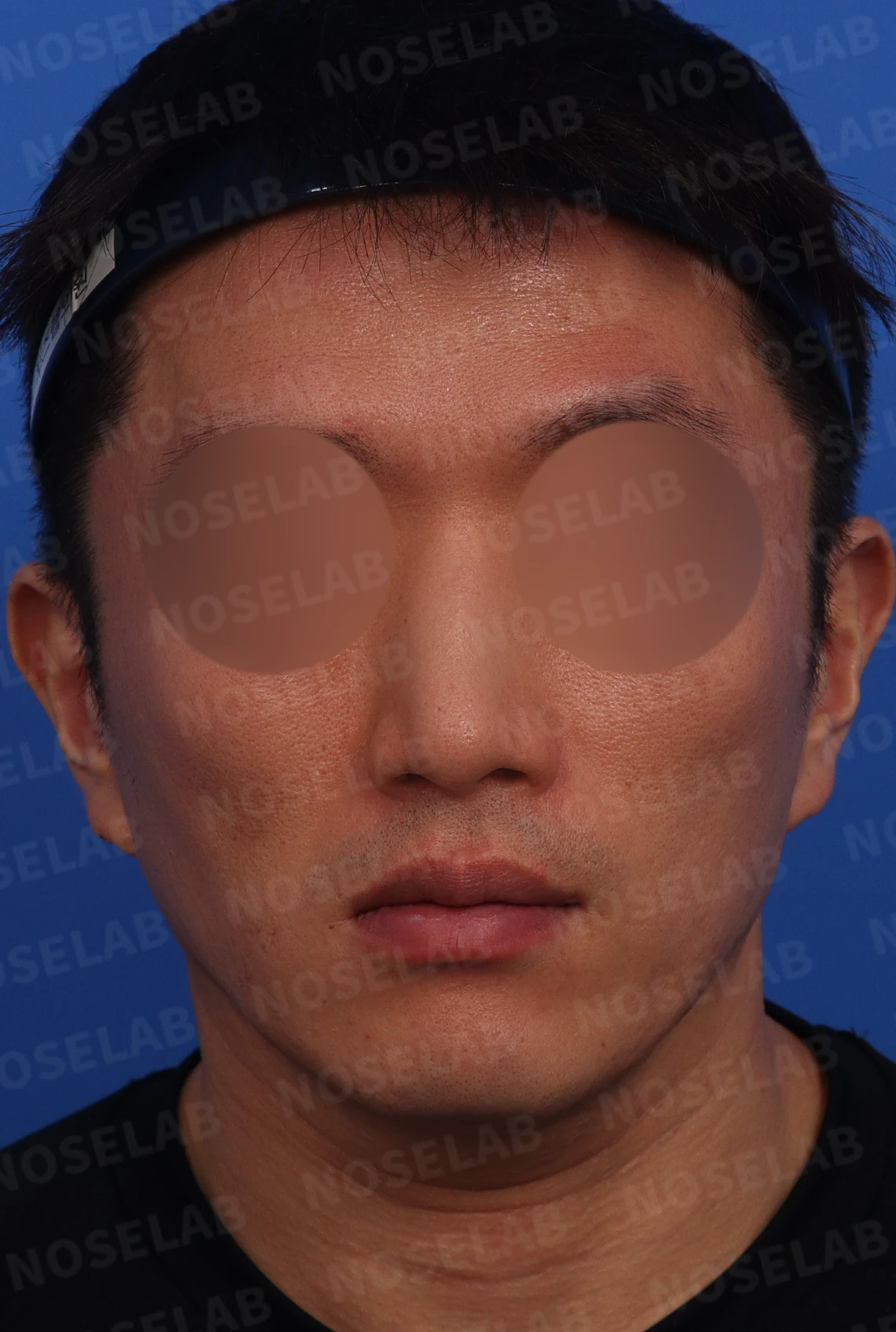
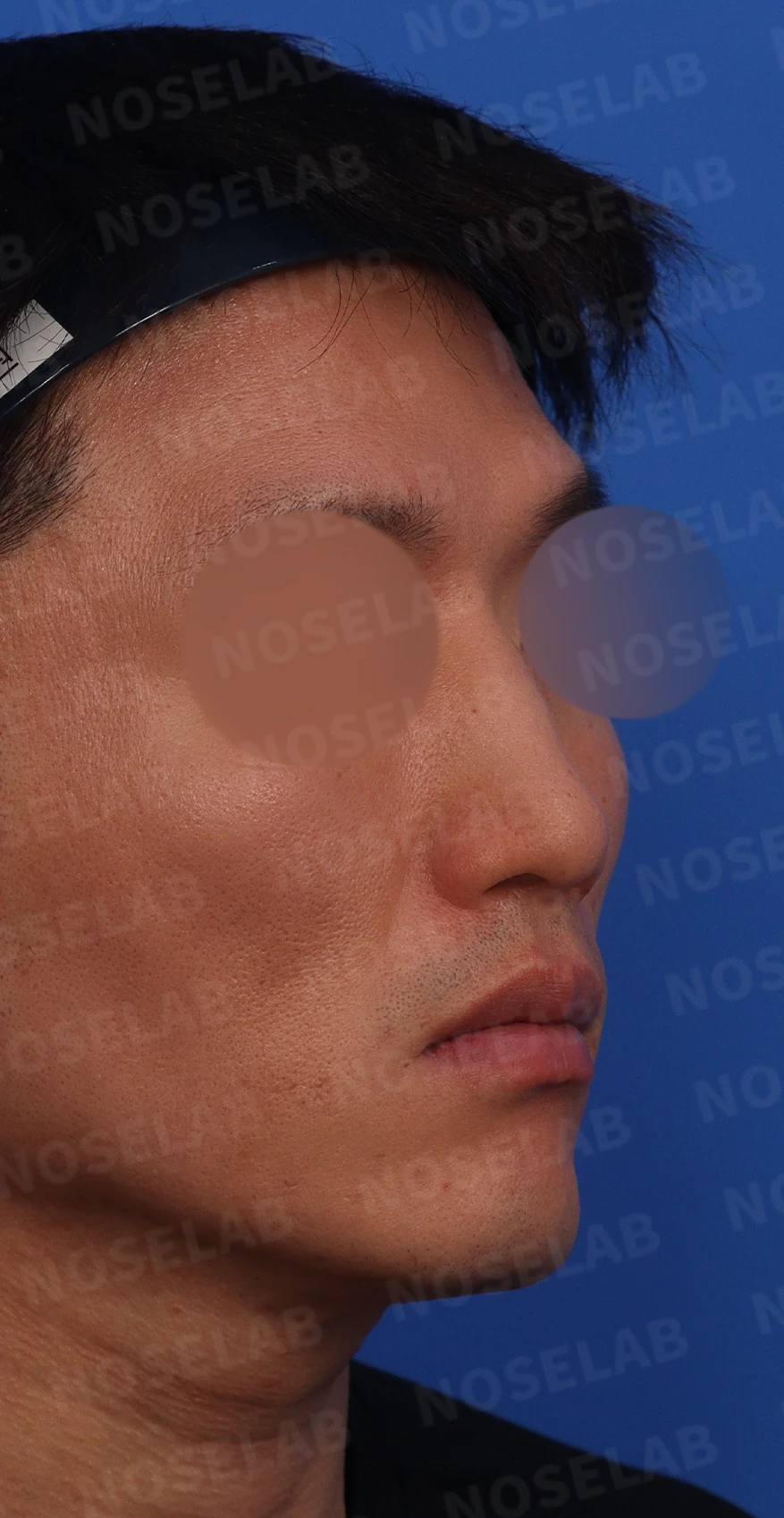
Preoperative front and oblique views.
From the front, the nose appears deviated to the right, and there is asymmetry of the alae and nostrils. On the profile view, a dorsal hump is visible, and the glabella appears depressed.
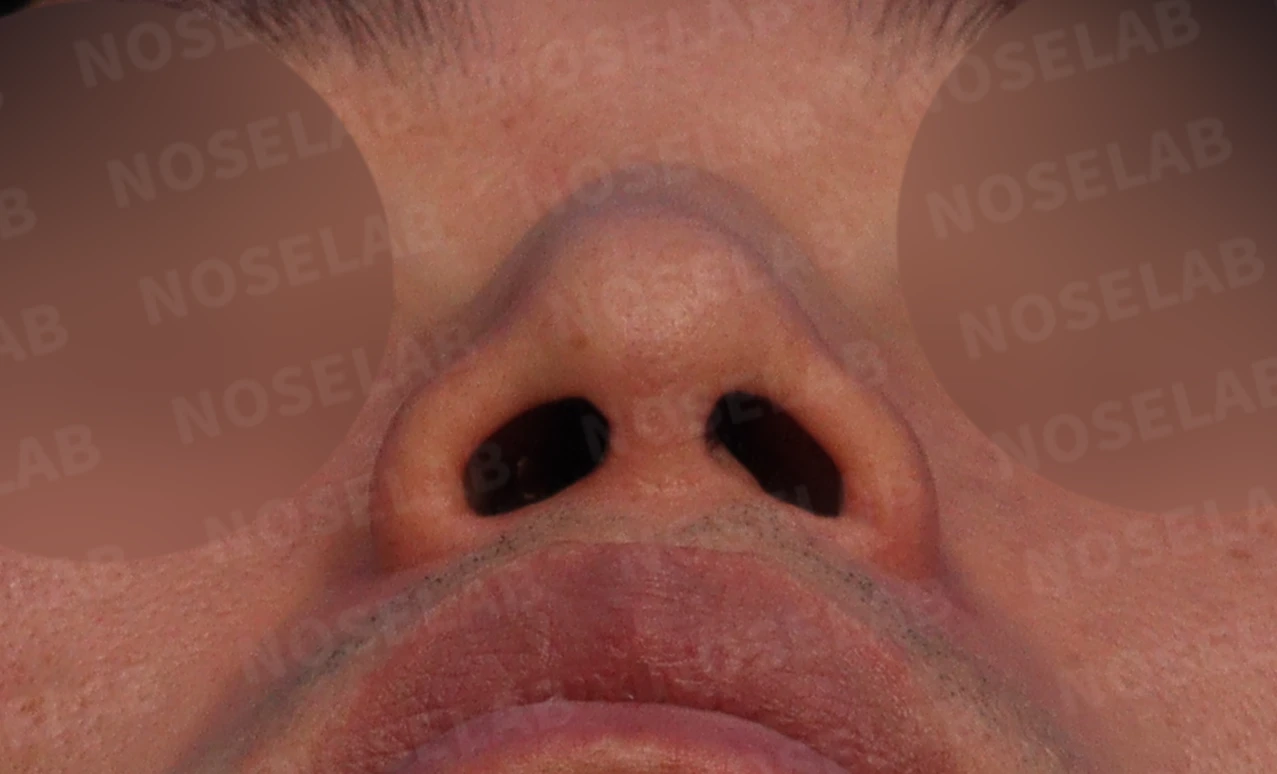
This is the preoperative basal (nostril) view.
Looking at the basal view, there is nostril asymmetry, and the columella appears slightly tilted to the right.
Surgical plan
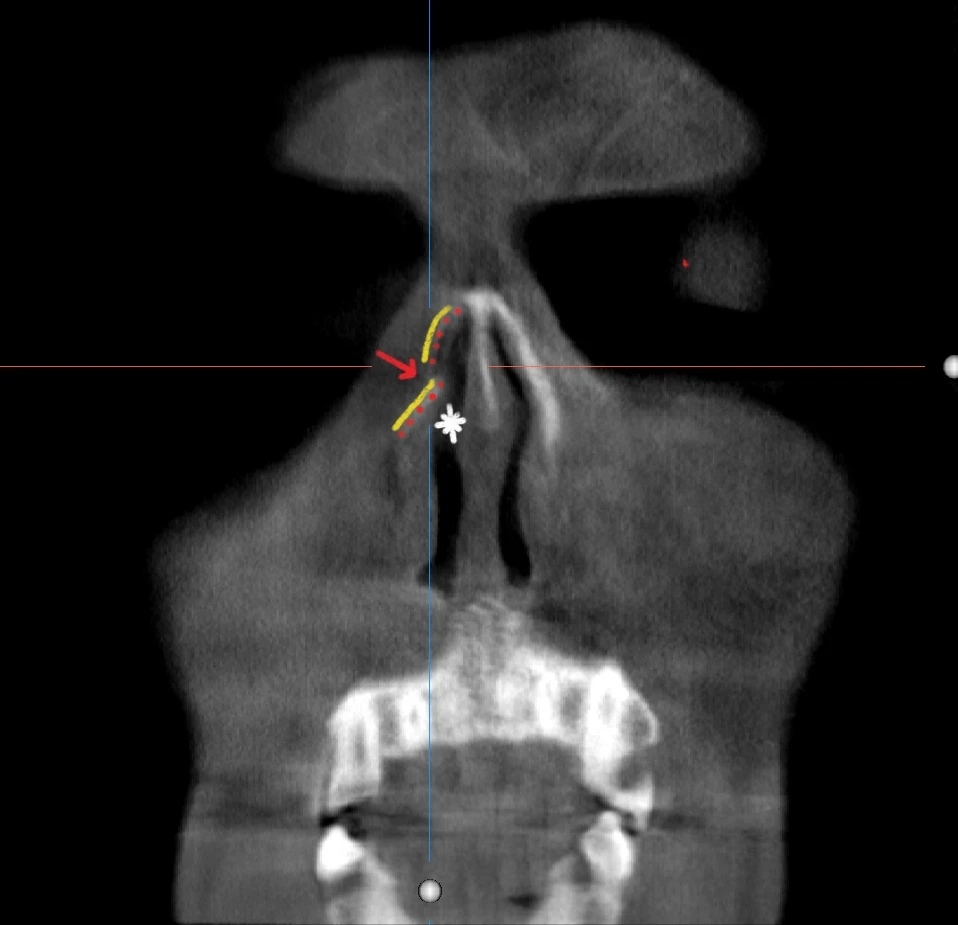
CT scan taken at our clinic.
On the nasal obstruction evaluation performed at our clinic, the suspected cause of the right-sided nasal obstruction was identified as follows. On the coronal CT image, the right nasal bone was observed to have collapsed inward toward the nasal airway, narrowing the internal nasal space, which corresponded exactly to the discomfort the patient reported. Therefore, we planned to correct the deviated septum and perform lateral osteotomy to cut the bone and reposition the nasal bones.
Lateral osteotomy was planned to correct the nasal bone asymmetry.
For the nasal tip, considering the patient's history of previous septal surgery, the septal cartilage was expected to be significantly weakened. Therefore, we planned to reconstruct a strong septum using autologous rib cartilage.
We planned to shave down the dorsal hump on the nasal bridge and augment the lowered bridge using autologous rib cartilage.
We planned to correct the nostril asymmetry by restoring and repositioning the damaged lower lateral alar cartilages.
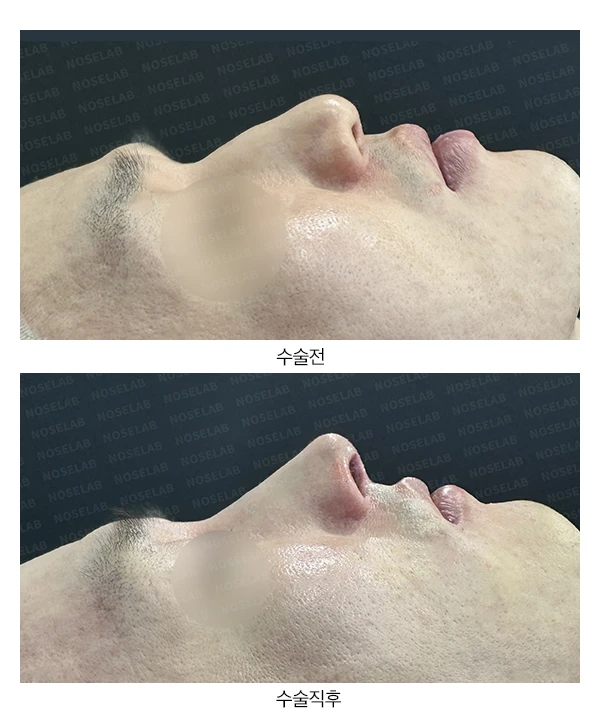
Before surgery vs. immediately after surgery
Let us compare the preoperative photos with the photos immediately after surgery (Day 0).Immediate postoperative photos show swelling and may differ from the final result.
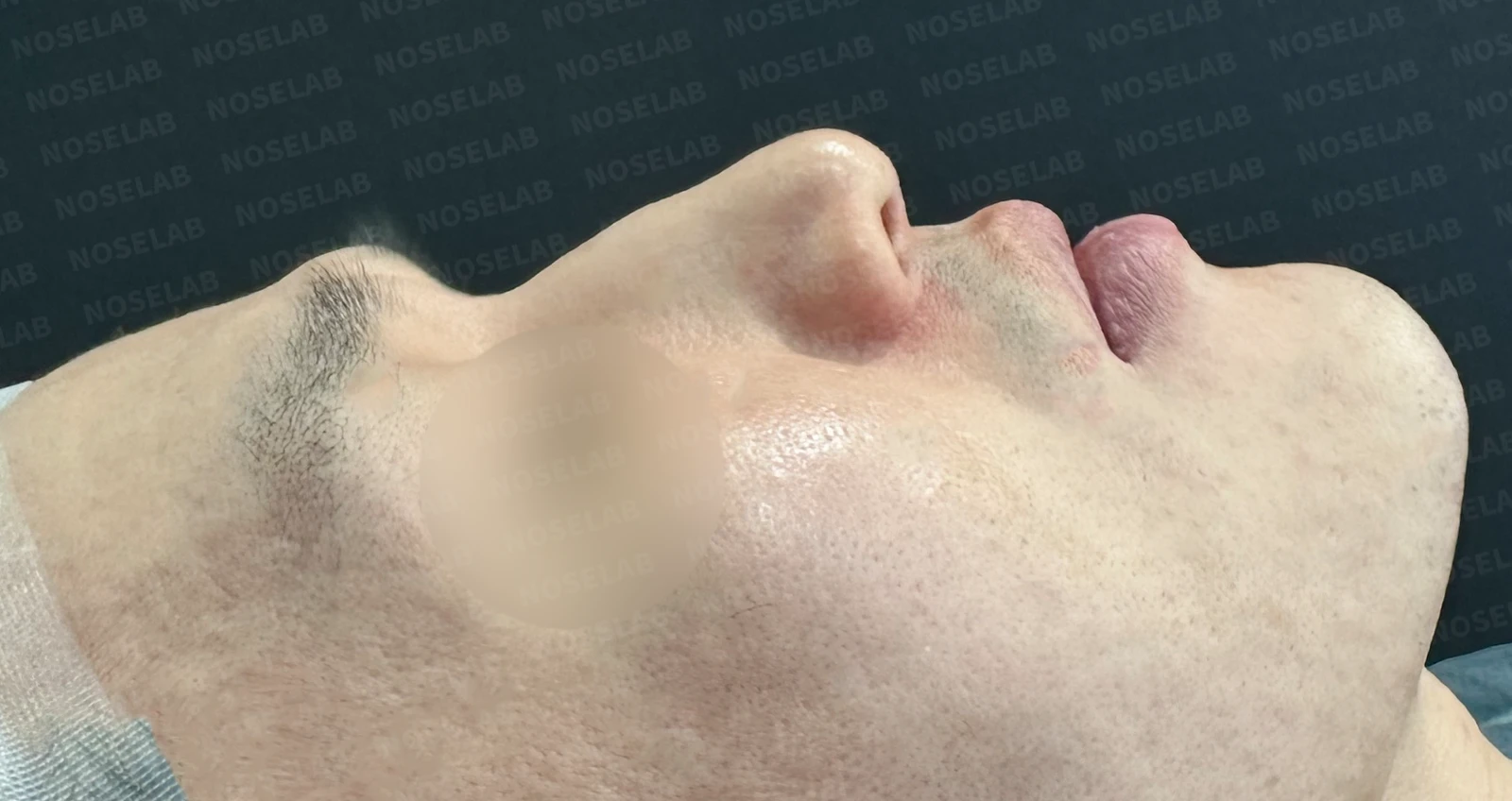
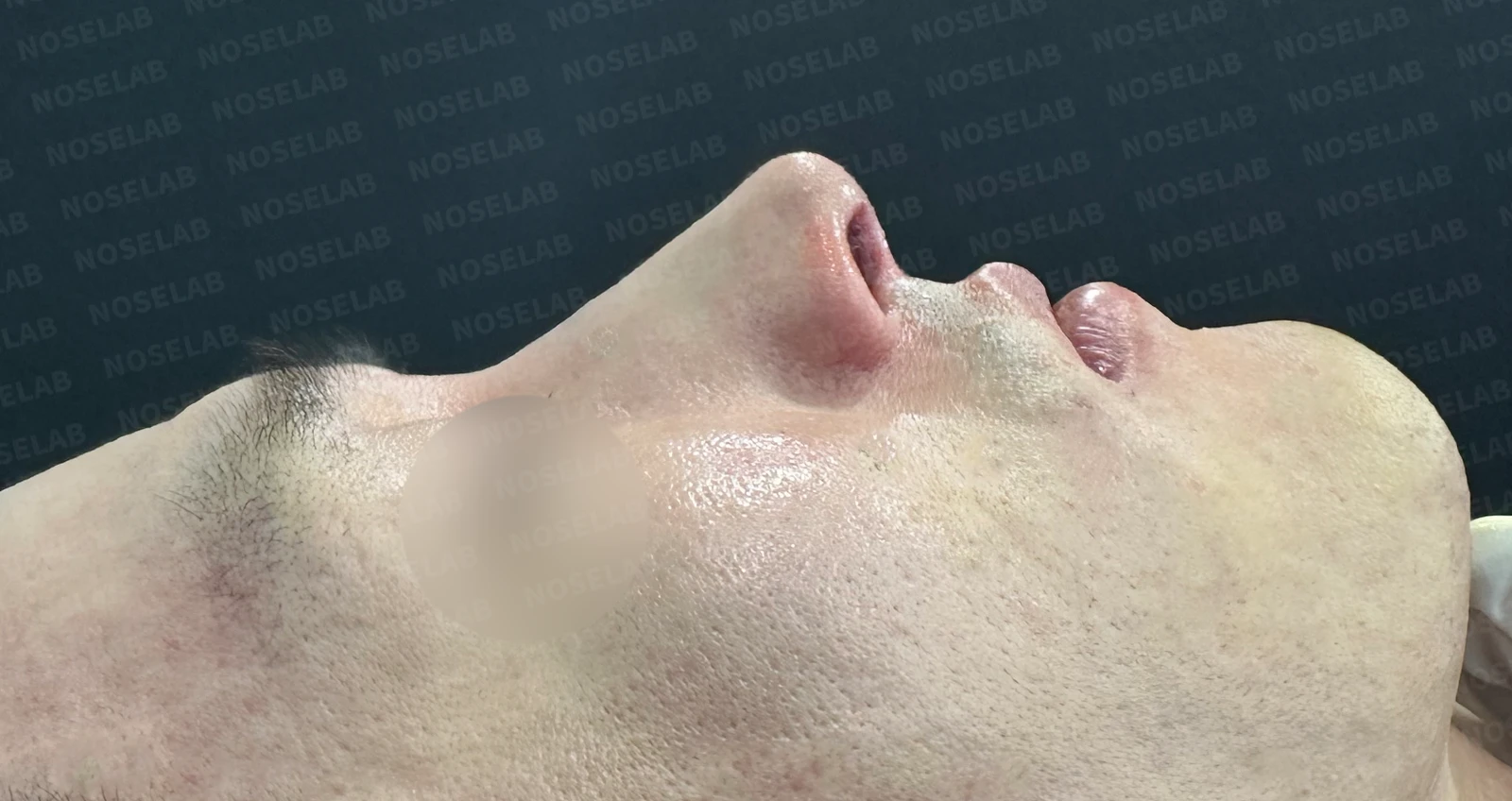
Before surgery / Day 0 immediately after surgery Photos taken immediately after surgery show swelling and may differ from the final result.
Looking at the profile view, the previously drooping tip and the dorsal hump were corrected naturally.
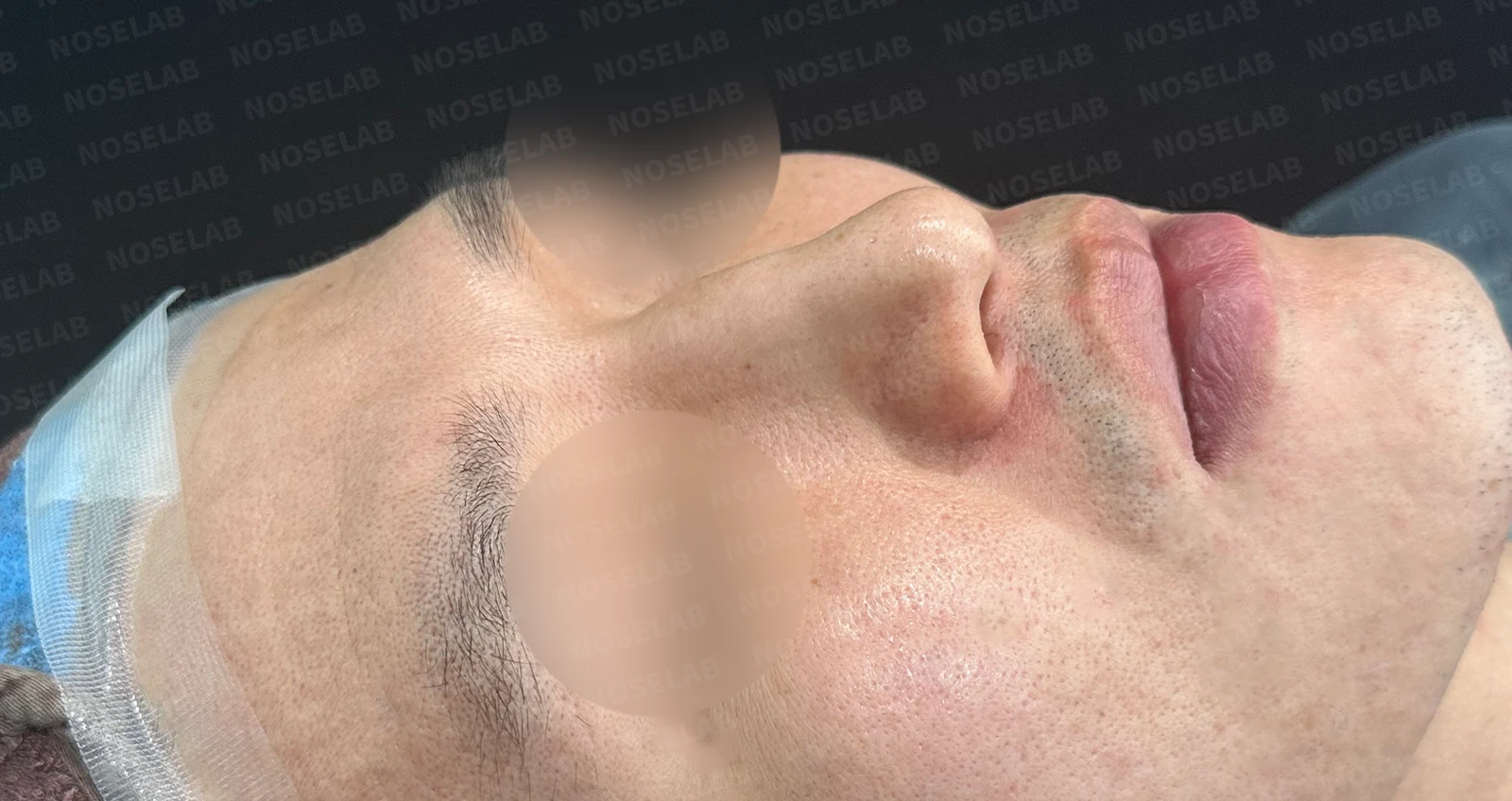
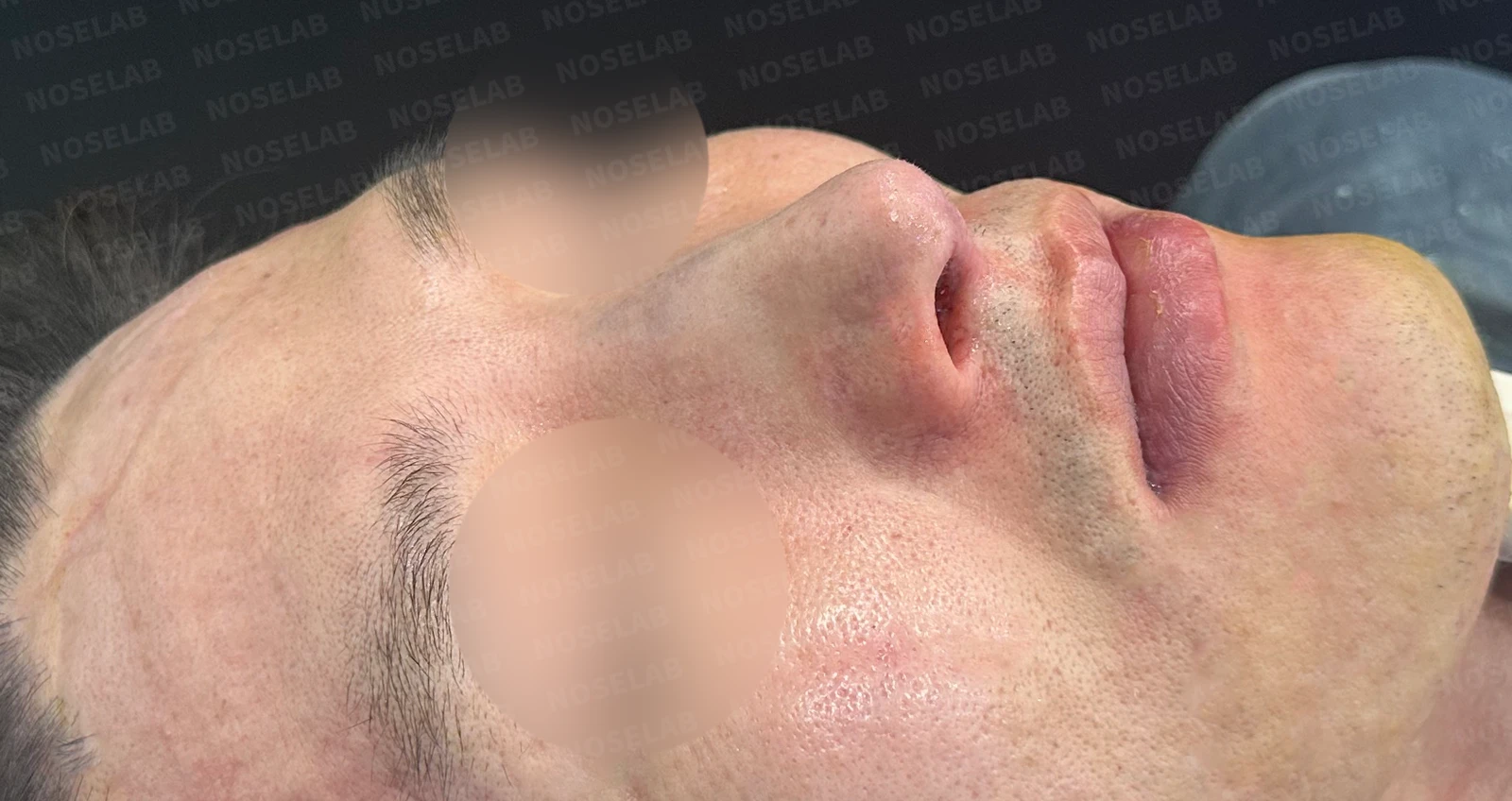
Before surgery / Day 0 immediately after surgery Photos taken immediately after surgery show swelling and may differ from the final result.
Looking at the oblique view, the appearance of a protruding mouth has significantly improved.
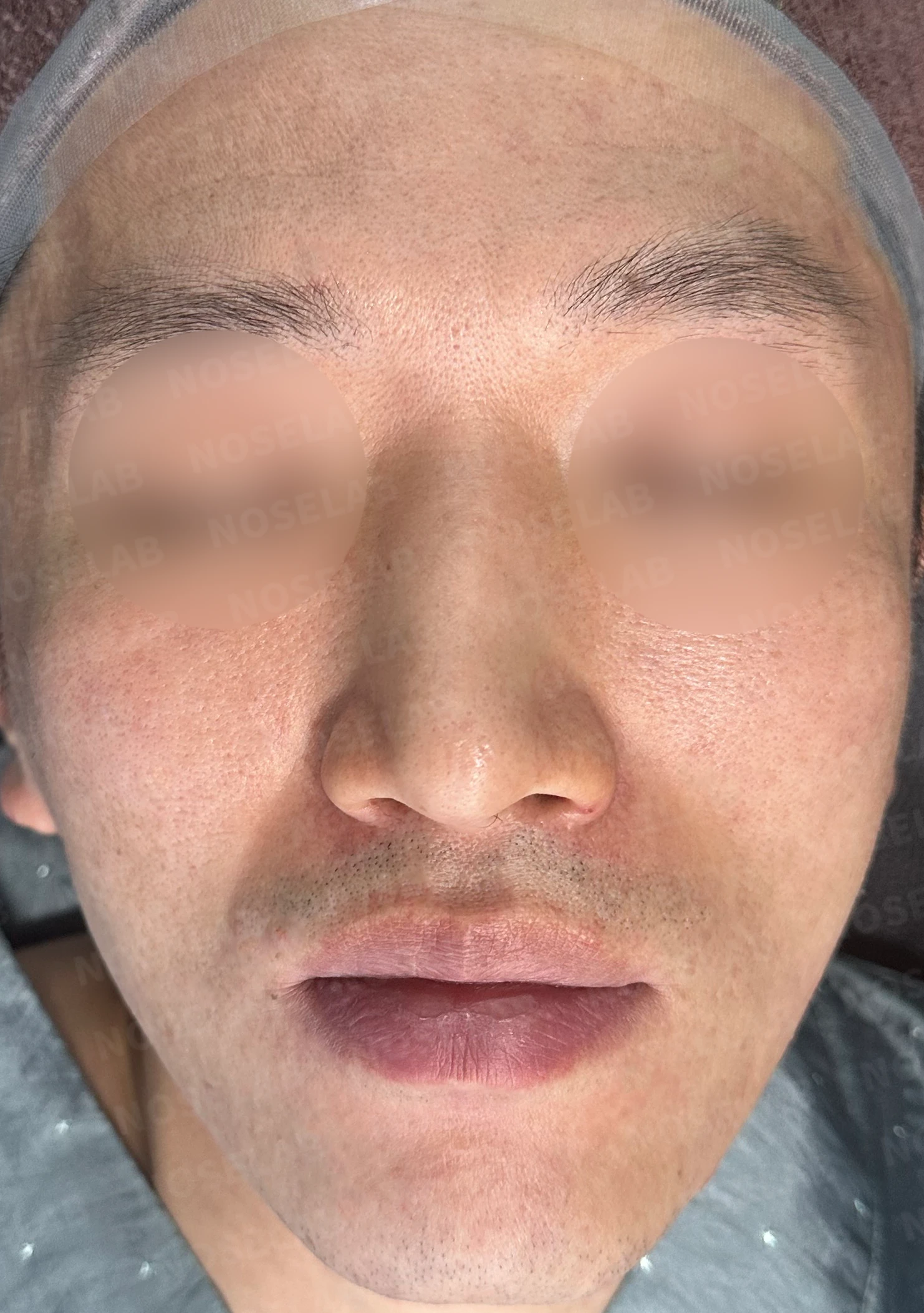
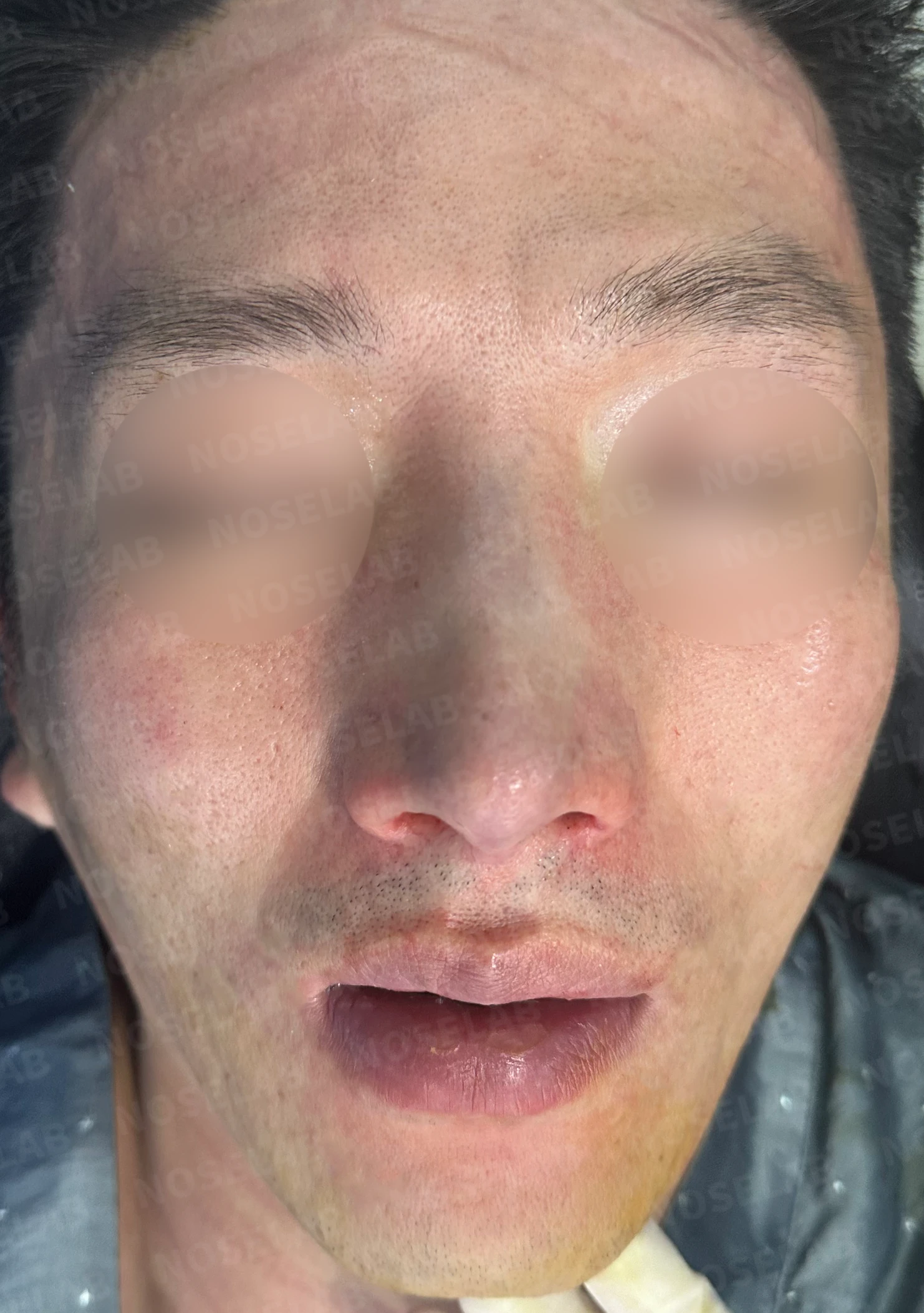
Before surgery / Day 0 immediately after surgery Photos taken immediately after surgery show swelling and may differ from the final result.
From the front, the rightward deviation and the appearance of a wide nasal bridge have notably improved. In addition, the asymmetry of the nasal tip is much improved.
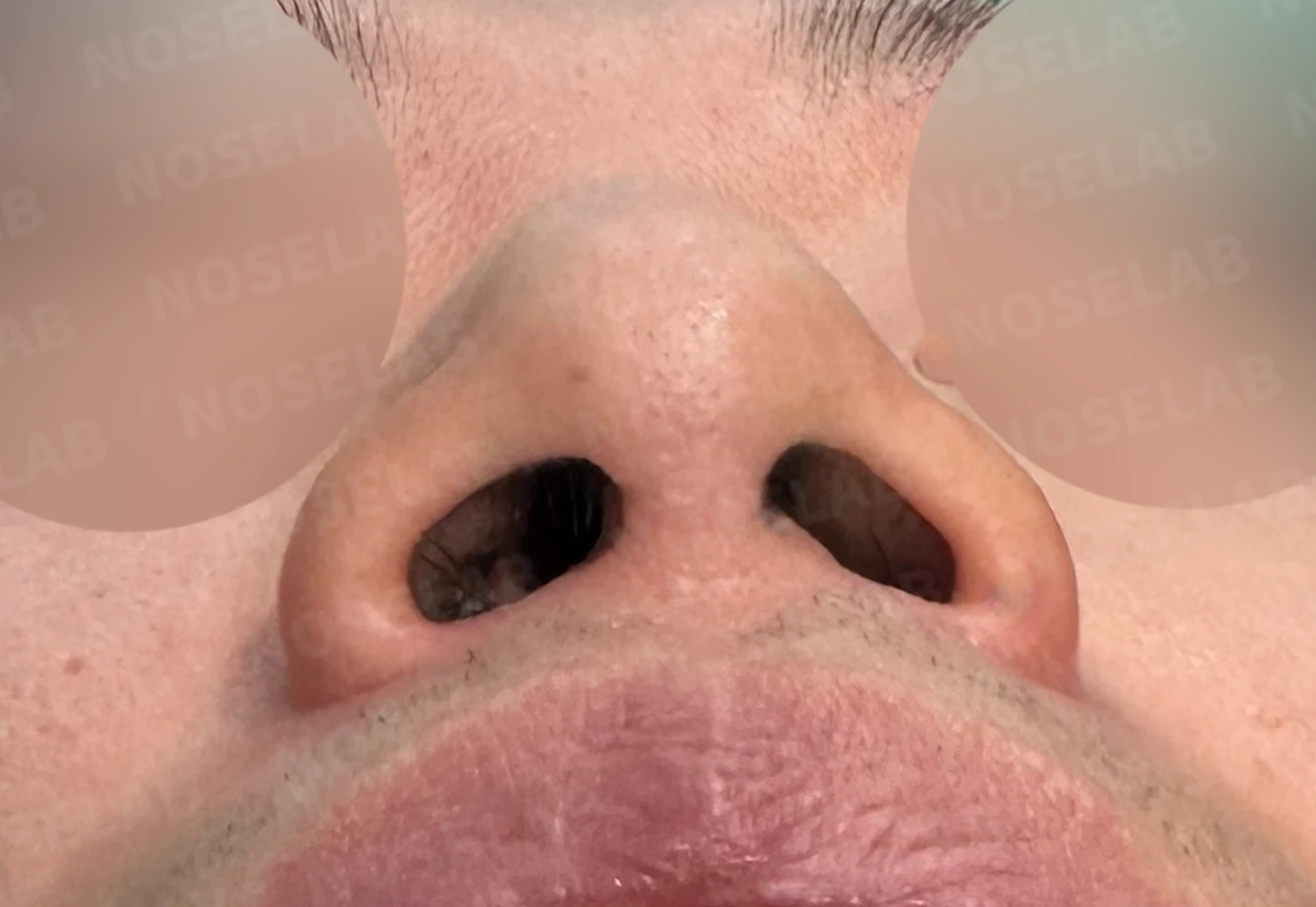
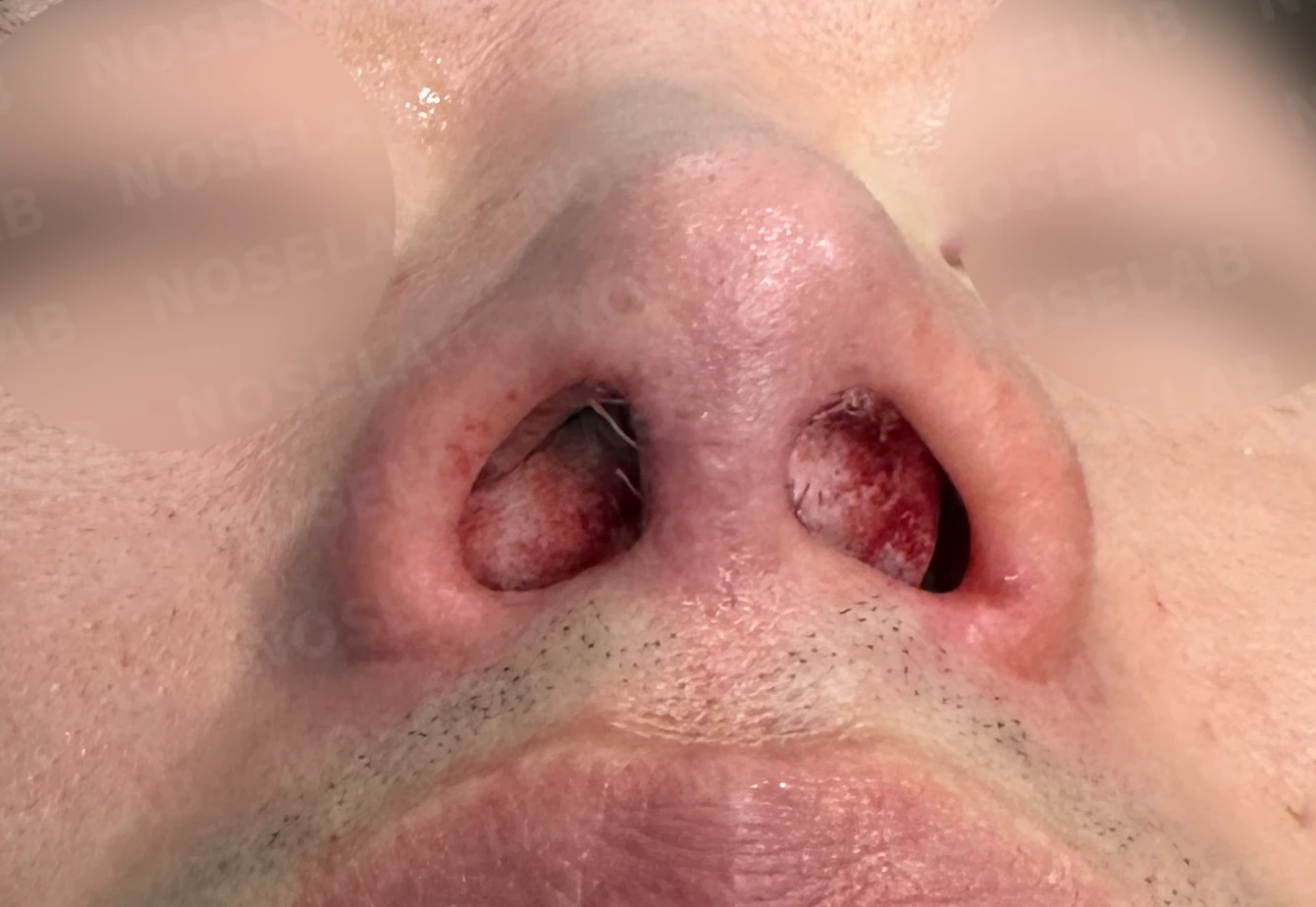
Before surgery / Day 0 immediately after surgery Photos taken immediately after surgery show swelling and may differ from the final result.
The significantly narrowed left nostril has markedly improved. The deviation of the columella toward the left has also been considerably corrected.
Photos immediately after surgery
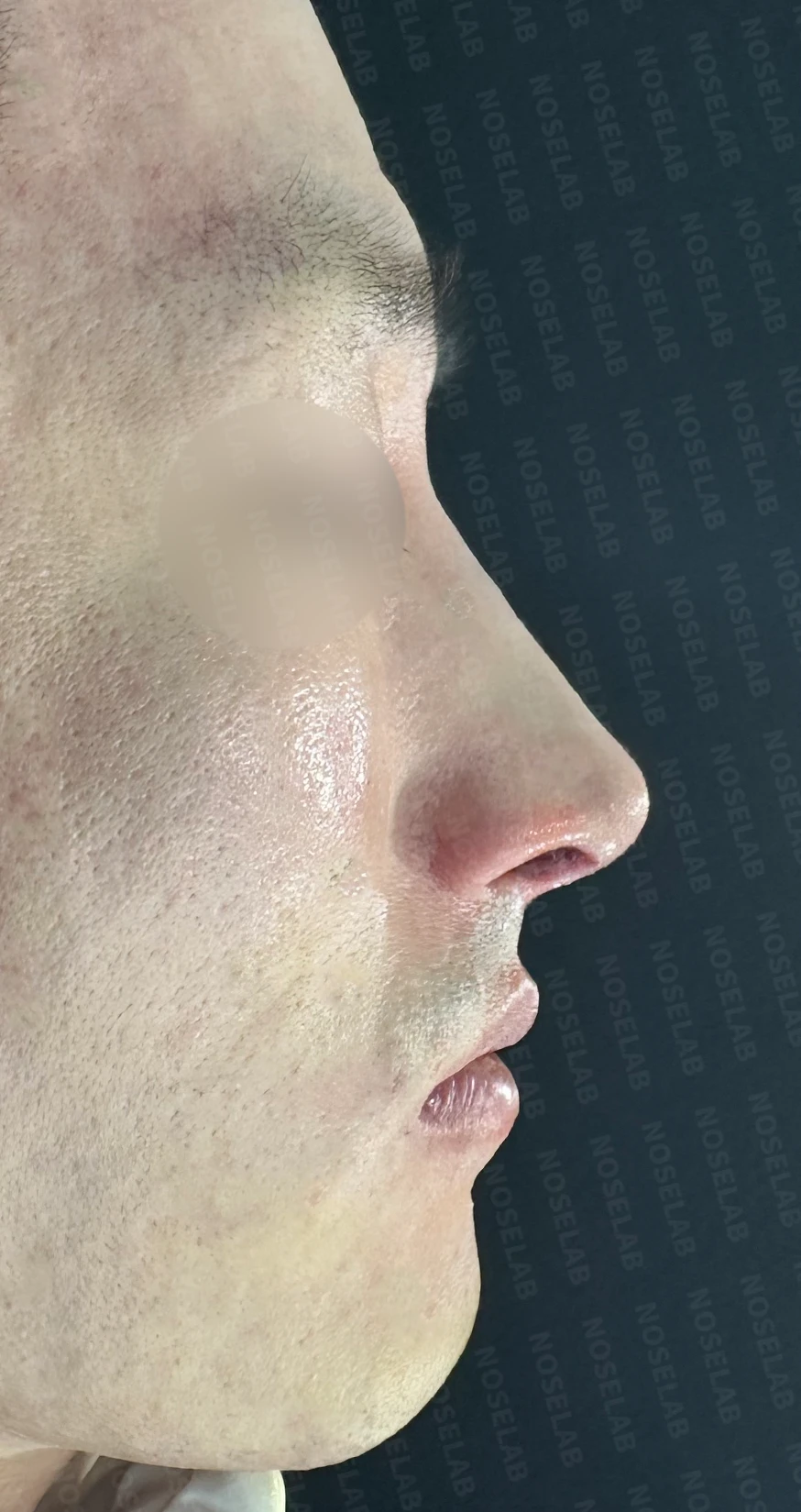
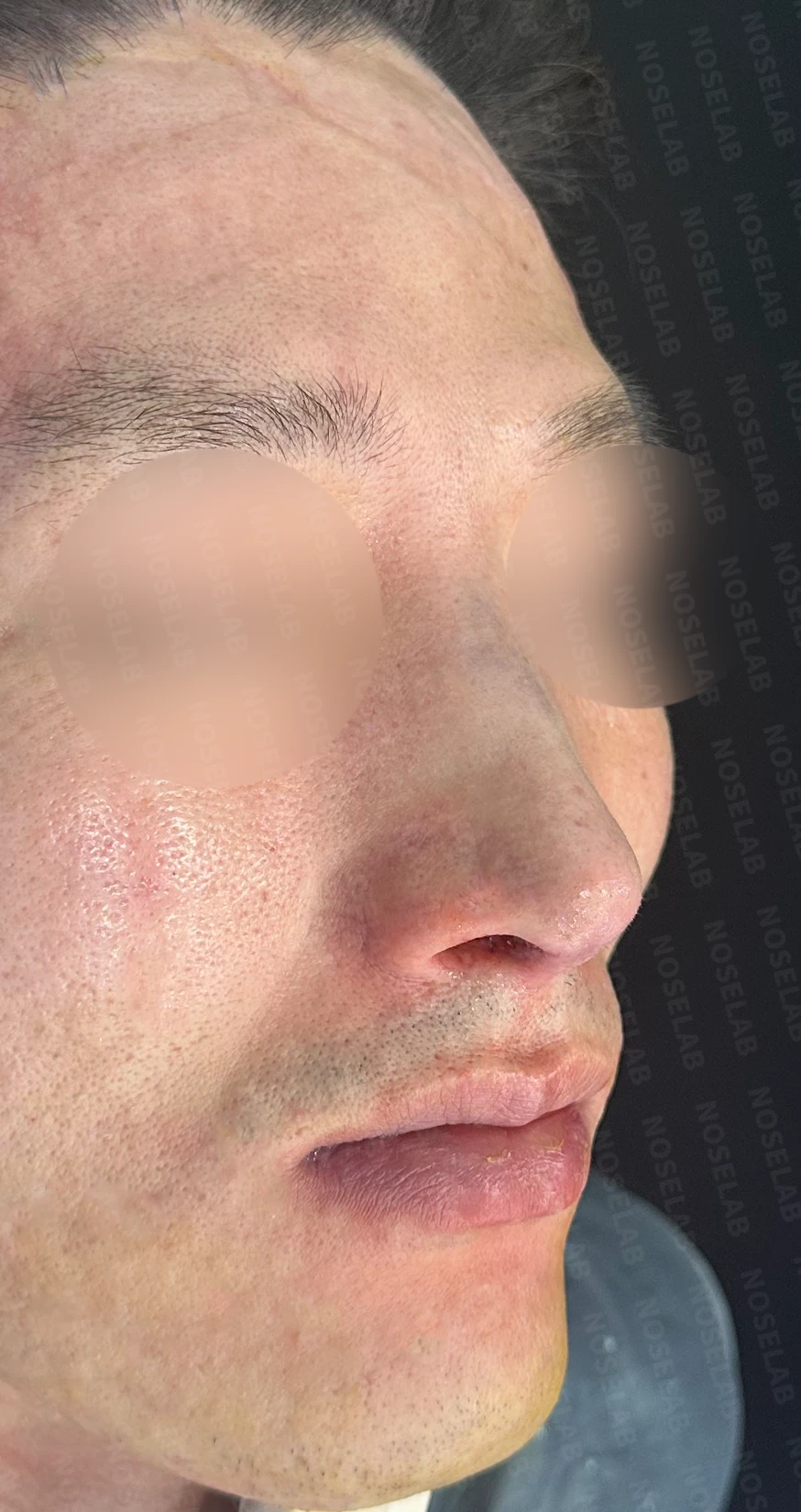
Immediately after surgery (Day 0) profile, oblique, and front views. Immediate postoperative photos show swelling and may differ from the final result.
Basal (nostril) view immediately after surgery (Day 0)Immediate postoperative photos show swelling and may differ from the final result.
My thoughts on boxing, mixed martial arts, and rhinoplasty
Today's topic is truly an important consideration. It is also a question I hear occasionally in the clinic. To start with the conclusion: rhinoplasty can indeed be performed. People who enjoy intense sports can certainly undergo rhinoplasty, and many do very well without major issues.
However, the surgical details differ slightly from standard rhinoplasty. From the perspective of a rhinoplasty surgeon, it is ideal for a patient to avoid trauma entirely. However, even general patients cannot go through life without occasionally bumping their noses. That is why I am among those who believe the nasal tip must be built very strong. While smoothly absorbing impact would be ideal, such a method does not currently exist, so I prefer to build it strong.
In particular, for the nose to withstand impacts such as facial strikes in boxing or mixed martial arts, the strongest cartilage in our body should be used for the nasal tip, and implants must not be used on the nasal bridge. Among patients who have undergone rhinoplasty with an implant, inflammation or contracture sometimes occurs after nasal bone fractures from trauma. When the nasal bone fractures, the capsule surrounding the implant above it can tear, exposing the implant into the nasal cavity, which can lead to infection and inflammation. Therefore, using an implant such as silicone on the bridge carries a high risk of inflammation, so I strongly advise against it.
I hope this is helpful to those who practice intense sports such as boxing or mixed martial arts as a hobby or profession and are considering rhinoplasty.
This was Dr. Peter C. Kang. Thank you.
#closedrhinoplasty #closedrevisionrhinoplasty #closedautologousribrhinoplasty #closedautologousribrevisionrhinoplasty #closedadvancedrevisionrhinoplasty #closedcrookednose #longnose #boxingrhinoplasty #nasalfracturerhinoplasty #mmarhinoplasty #dorsalhump #nostrilasymmetrysurgery

Limitations and risks
When autologous rib cartilage is used, scarring and pain may remain at the donor site on the chest, and pneumothorax (pleural injury) can occur rarely. Over time, the grafted cartilage may warp or undergo partial resorption.
When the septum is corrected at the same time, nasal obstruction may persist or recur, and in rare cases, septal perforation or changes in smell may occur.
Common potential risks include infection, bleeding, asymmetry, scarring, skin necrosis, and insufficient improvement; results vary depending on individual skin condition and previous surgical history.