Hello.
I am Dr. Peter C. Kang, medical director.
Today, I will discuss surgery that transforms a blunt, widened nose into a defined yet natural shape. This patient had received nasal filler injections about 5 times, and when visiting our clinic, the overall nasal shape was not poor.
However, the patient wanted to improve the overall widened and blunt appearance, hoping for a nose that felt natural yet slightly more defined.
Let us look at the photos taken during the preoperative design consultation.
Preoperative design consultation photo
Design consultation photos taken before surgery.
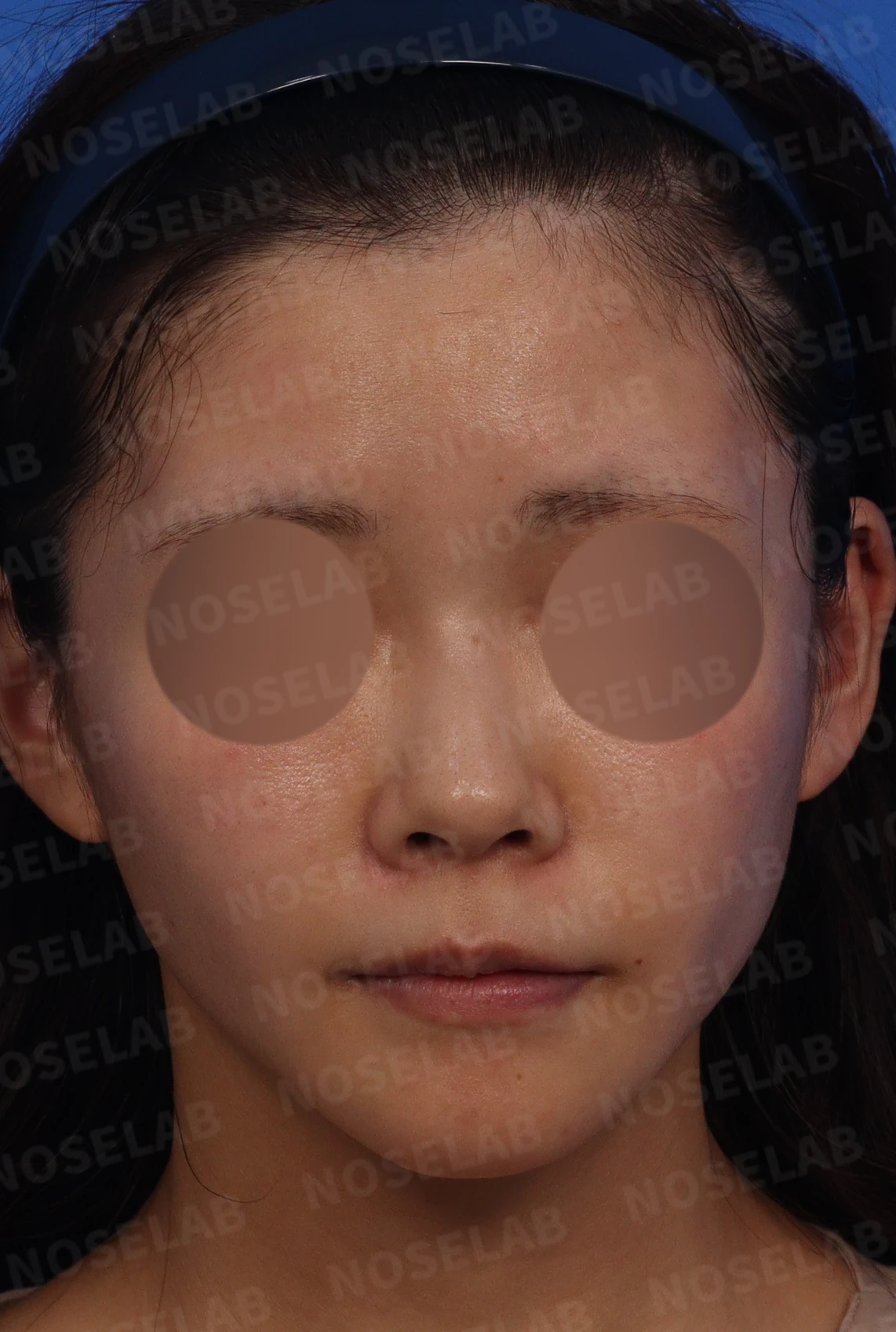
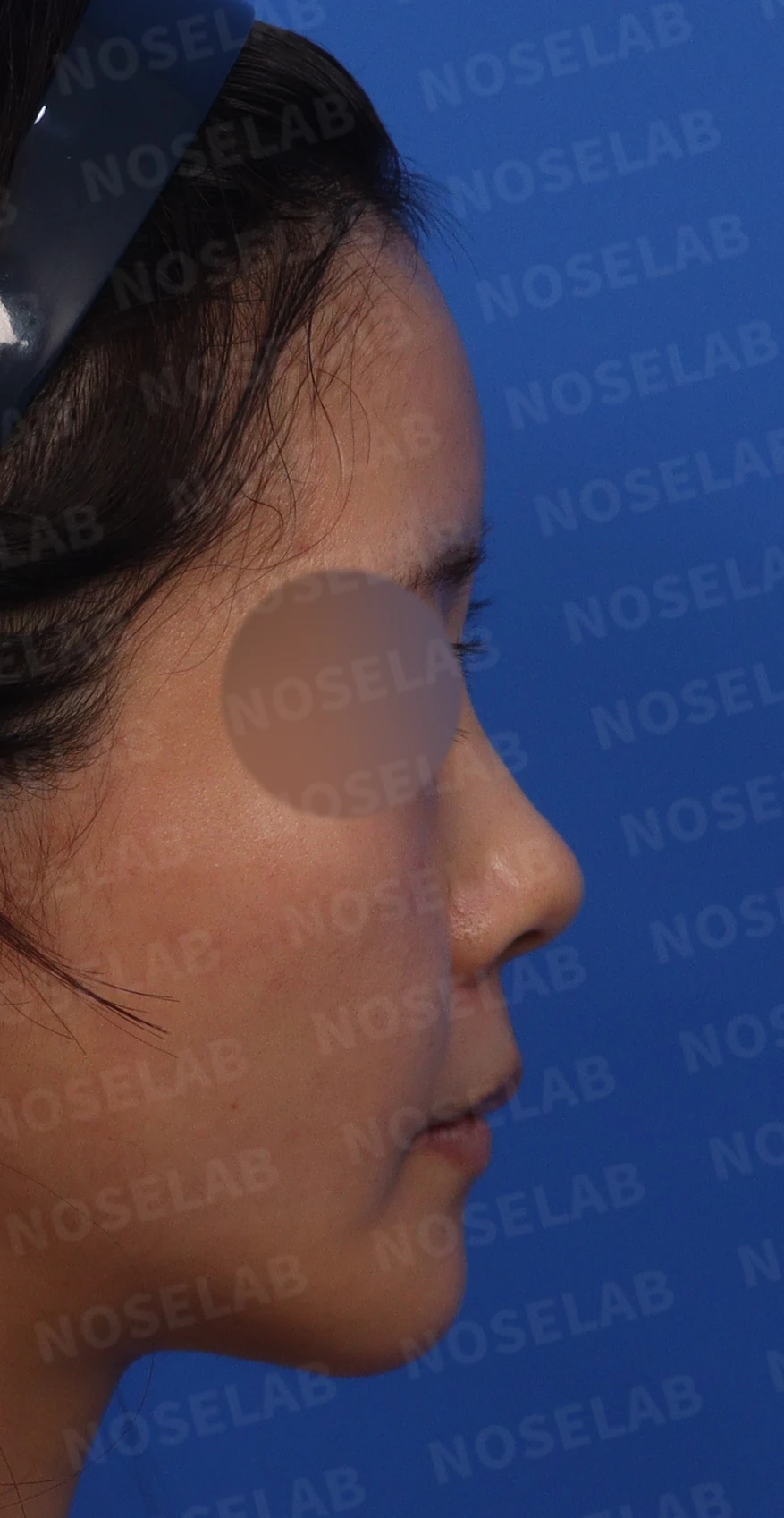
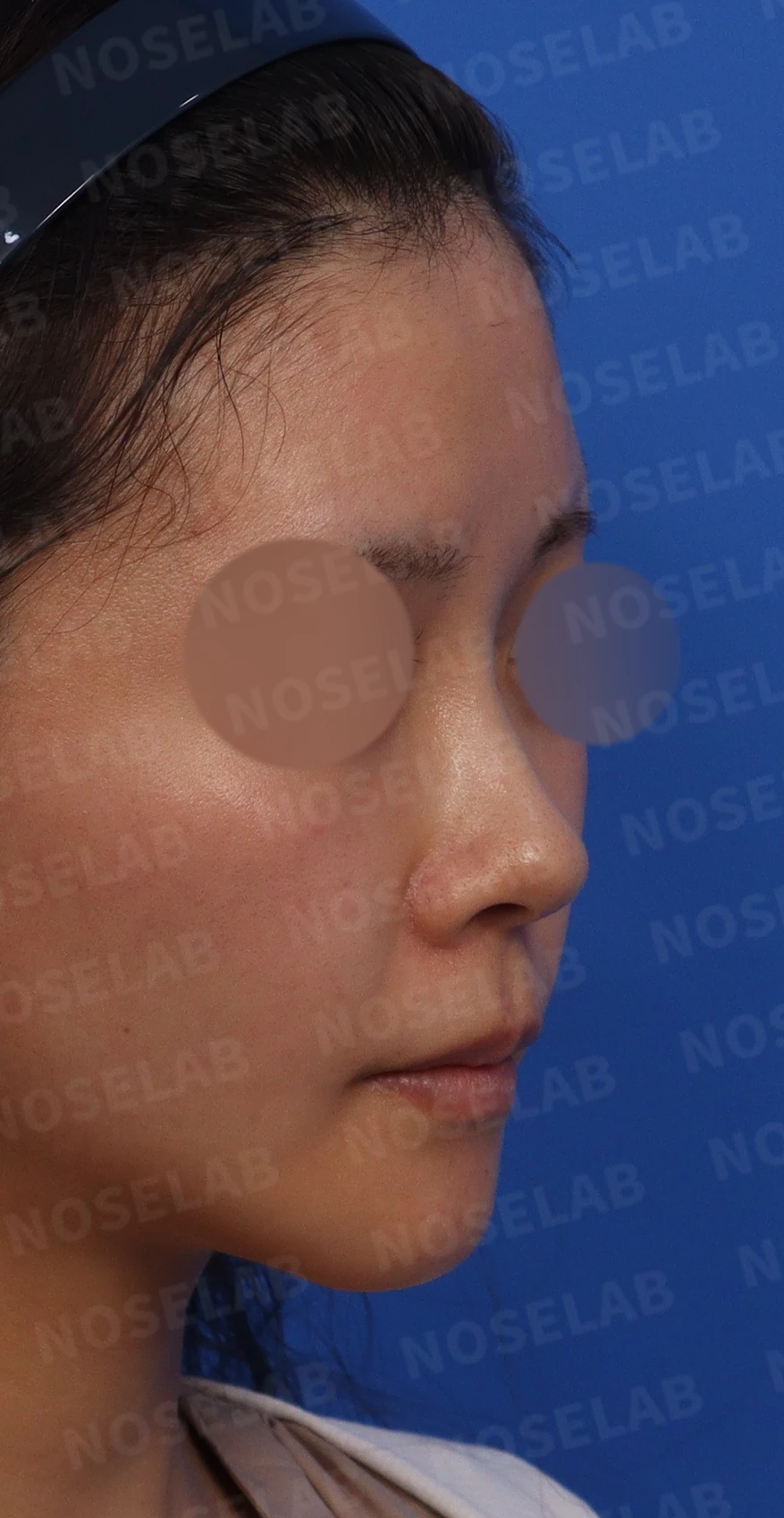
Preoperative consultation photos: front, profile (90-degree), and oblique (45-degree) views
The nasal tip is blunt and significantly widened. Filler has spread across the nasal bridge, and on the profile view, you can see filler filling the bridge line.
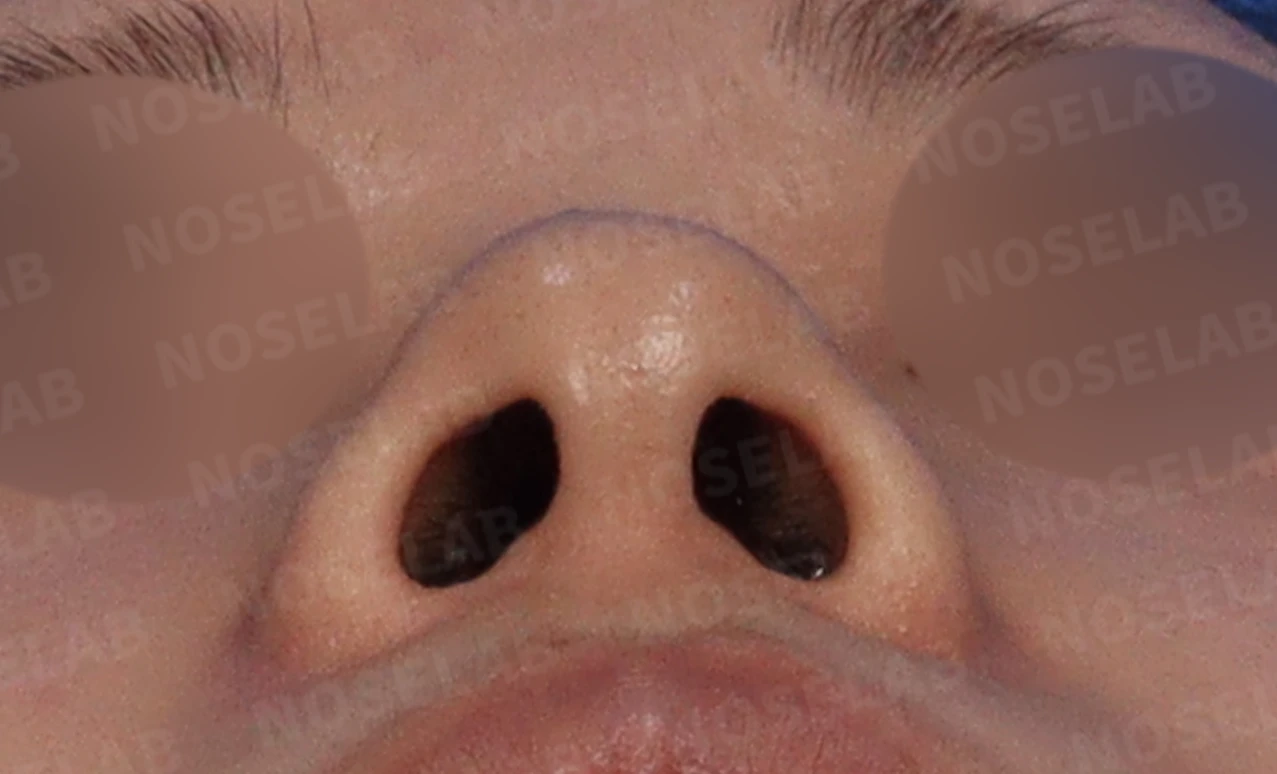
Preoperative consultation nostril view photo
You can see that the nasal tip is wide overall. In addition, the left nostril is larger than the right, and the nostrils appear round.
Surgical plan
A dissolving injection is administered for the filler in the nasal bridge, and any remaining filler is surgically removed.
The wide nasal bone is narrowed through lateral osteotomy and silicone implant placement.
The nasal tip is projected using autologous rib cartilage, and the lower lateral cartilages are repositioned and sutured together to correct tip widening.
The wide nasal base is expected to resolve naturally as the nasal tip is elevated.
The columella line is planned to be reinforced through cartilage repositioning.
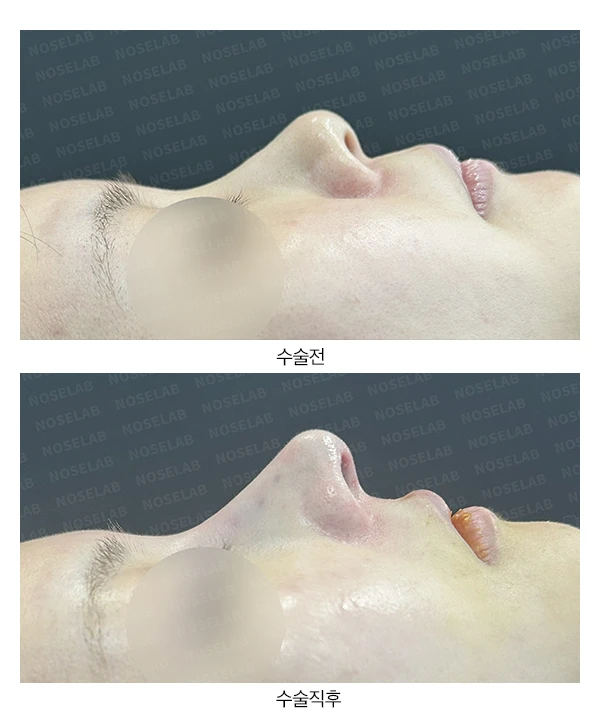
Before surgery vs. immediately after surgery
Let us compare the preoperative photos with the photos immediately after surgery (Day 0).Immediate postoperative photos show swelling and may differ from the final result.
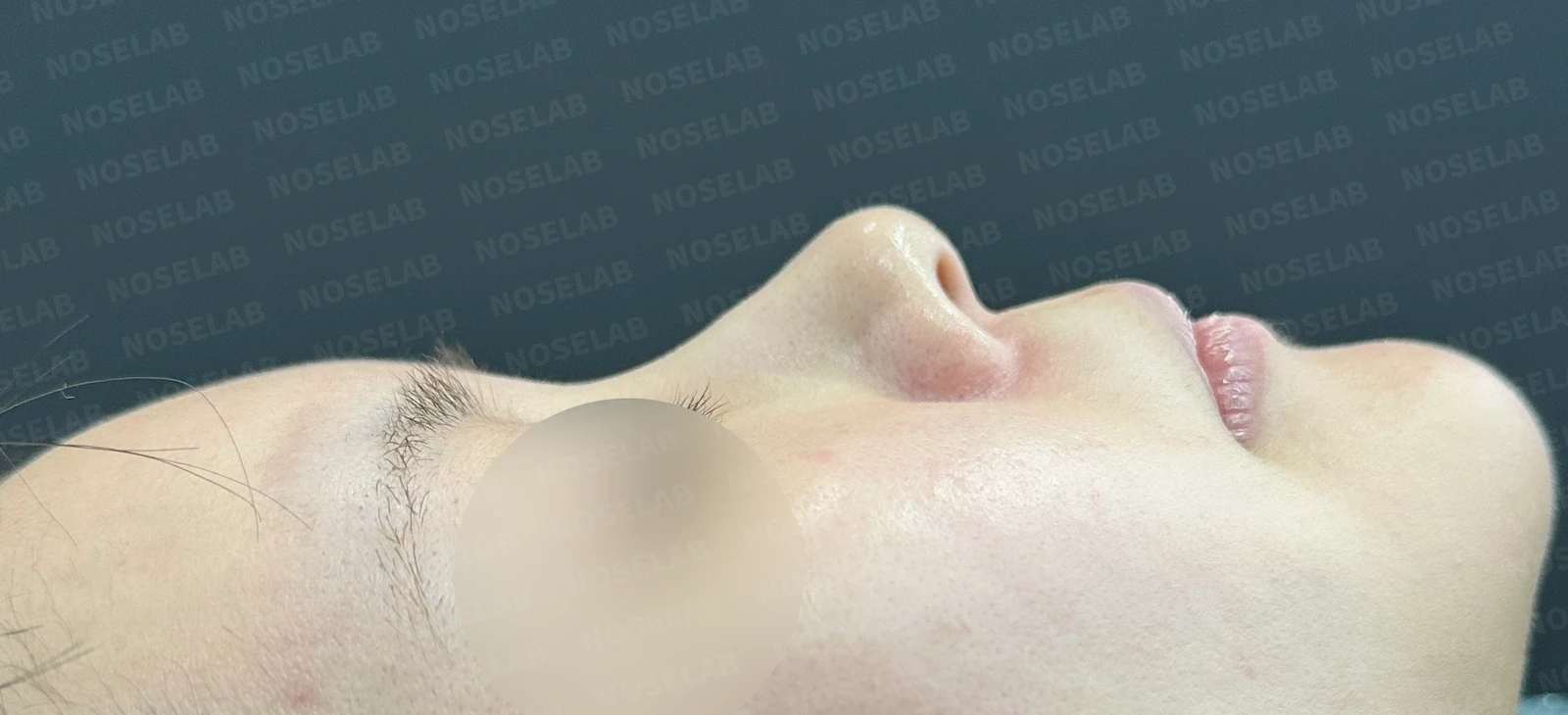
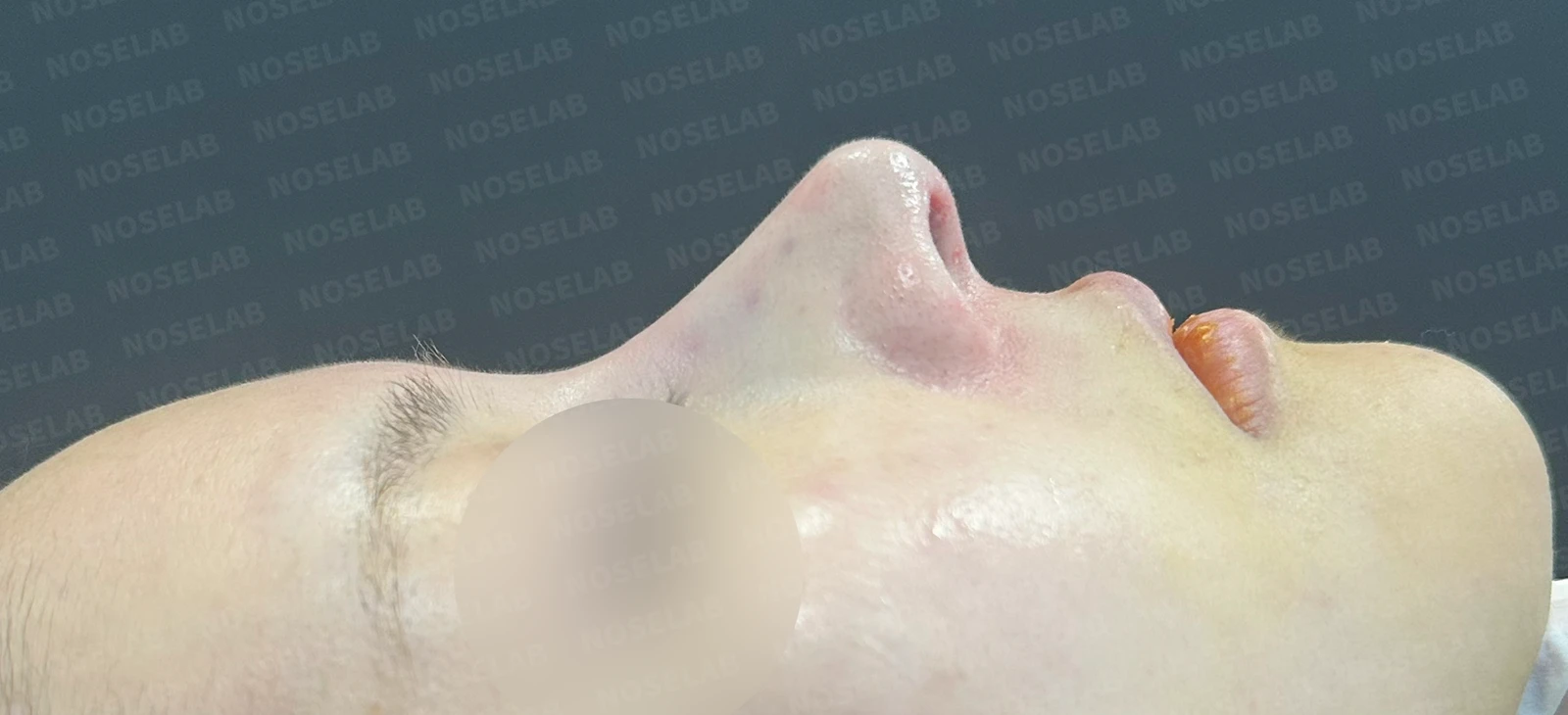
Before surgery / Day 0 immediately after surgery Photos taken immediately after surgery show swelling and may differ from the final result.
On the profile view, you can see that the nasal tip has become projected and elevated. With the correction of the nasolabial angle, the appearance of the protruding mouth has improved.
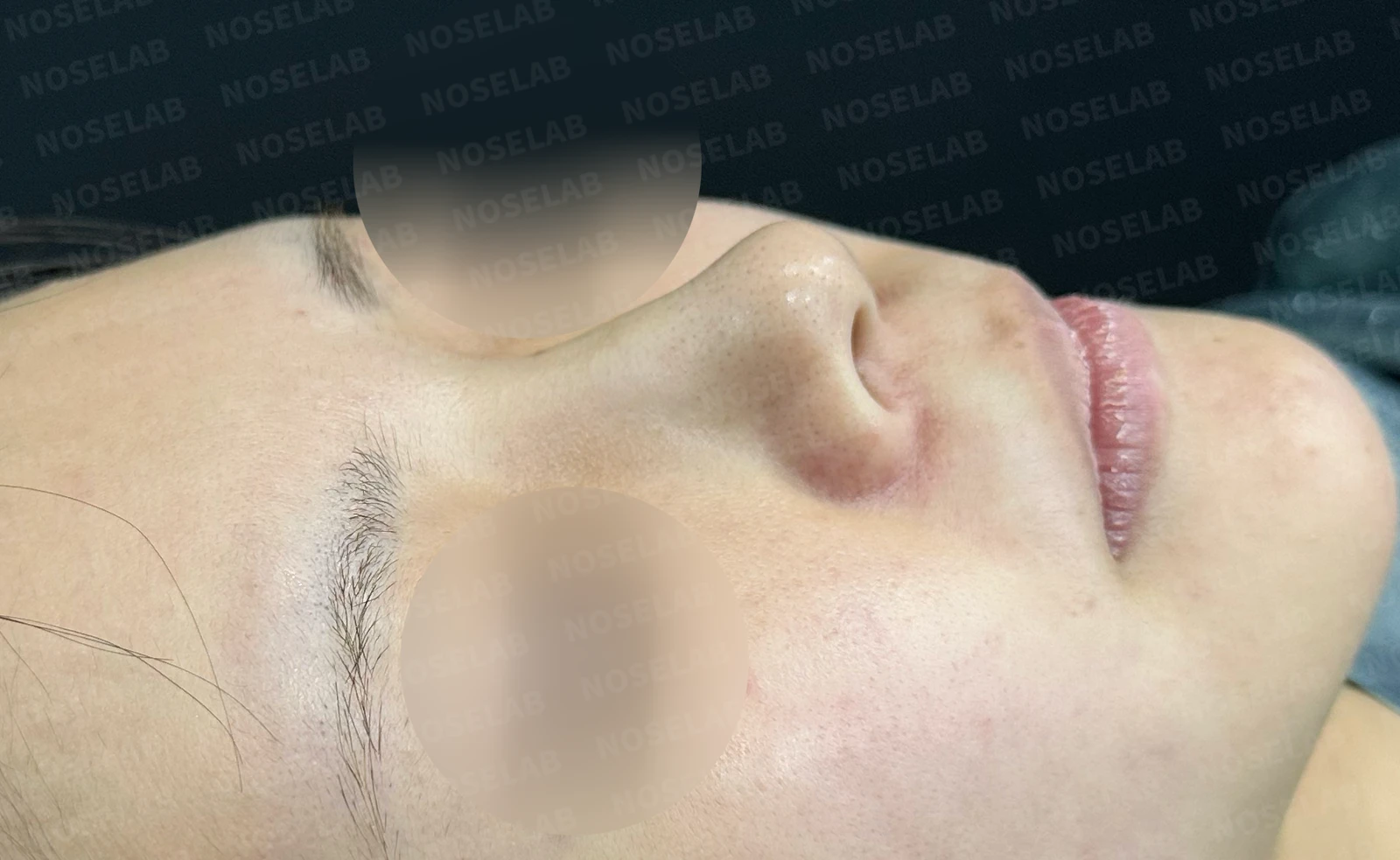
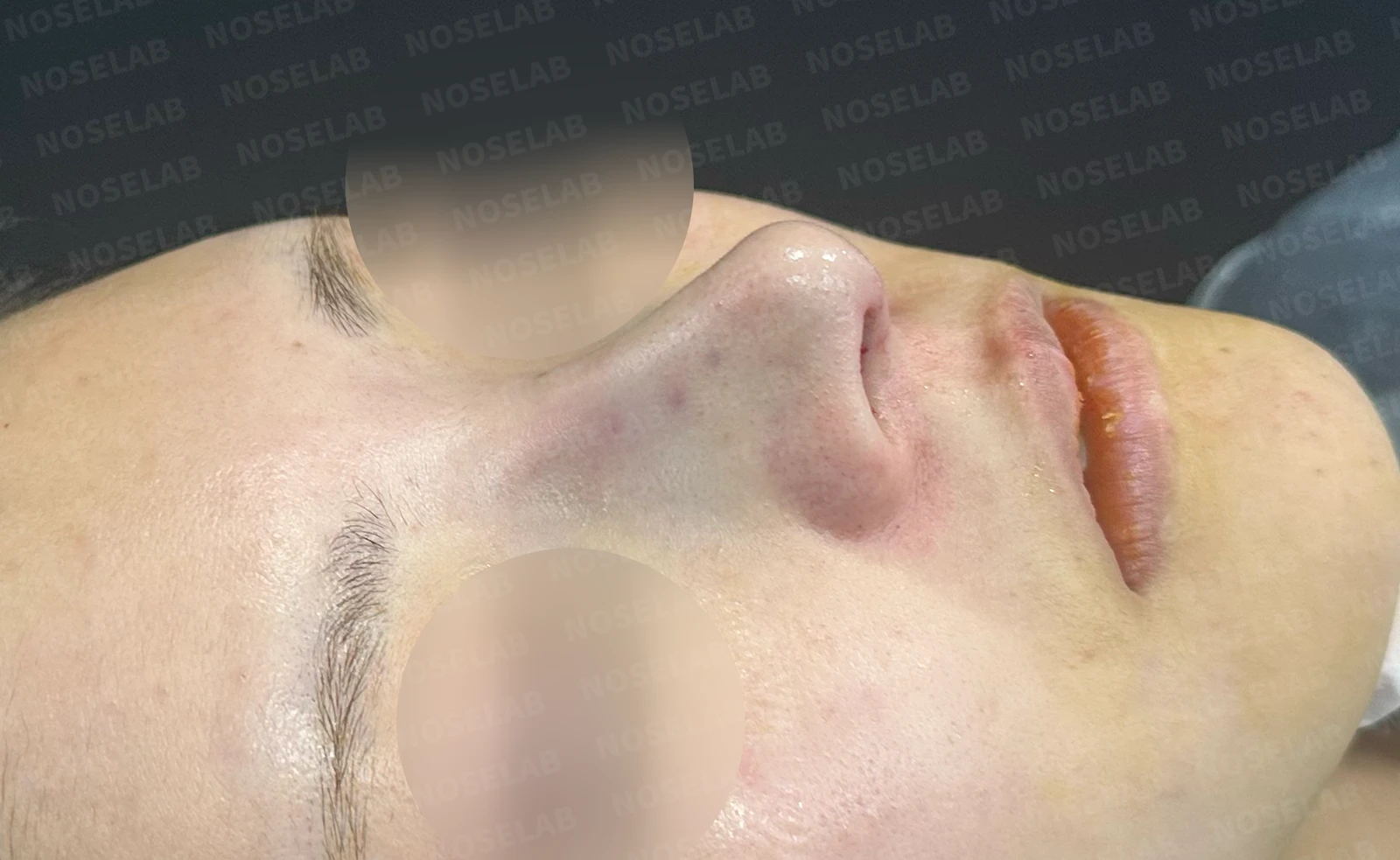
Before surgery / Day 0 immediately after surgery Photos taken immediately after surgery show swelling and may differ from the final result.
The nose has gained overall three-dimensional dimension, creating a more feminine impression.
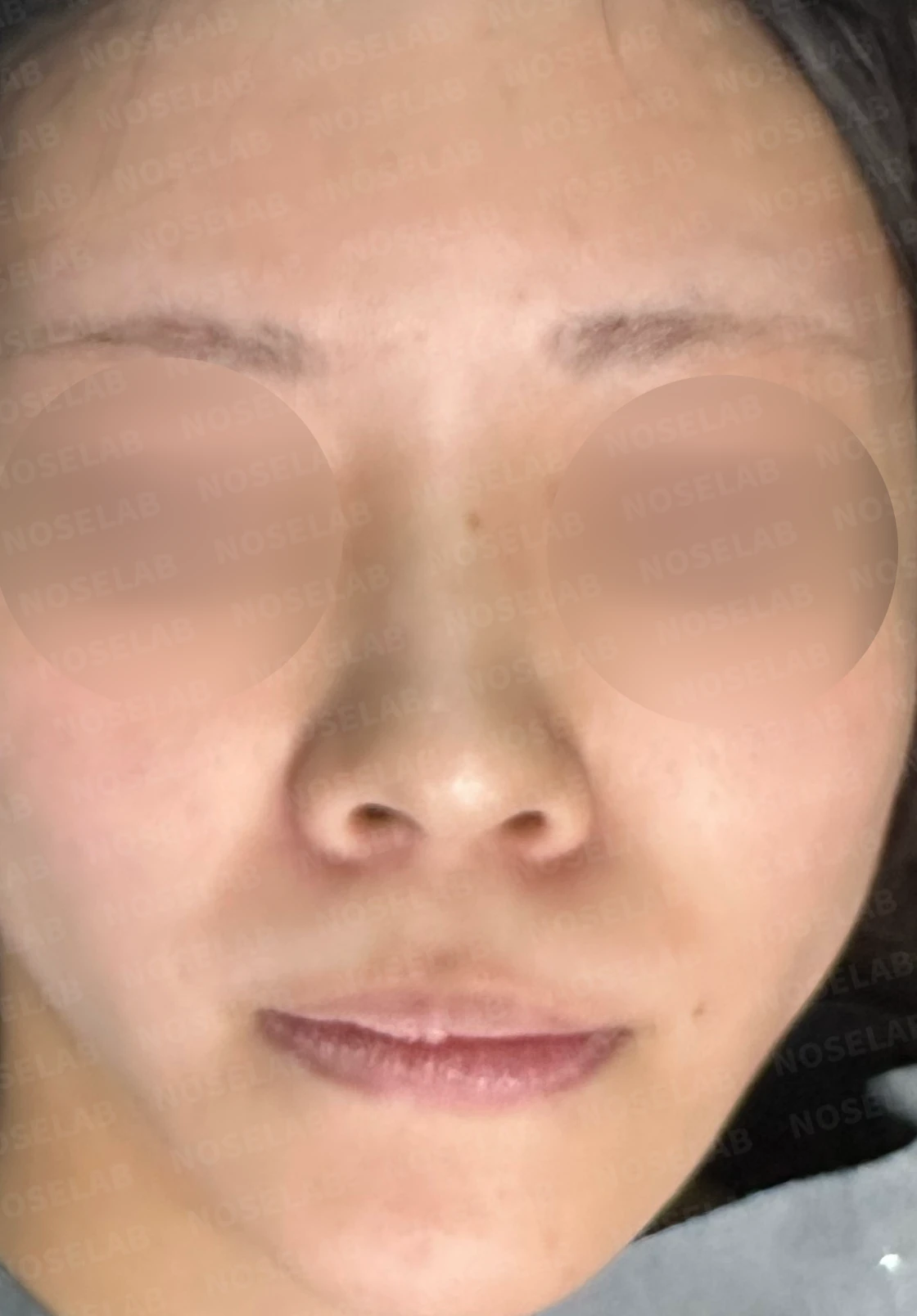
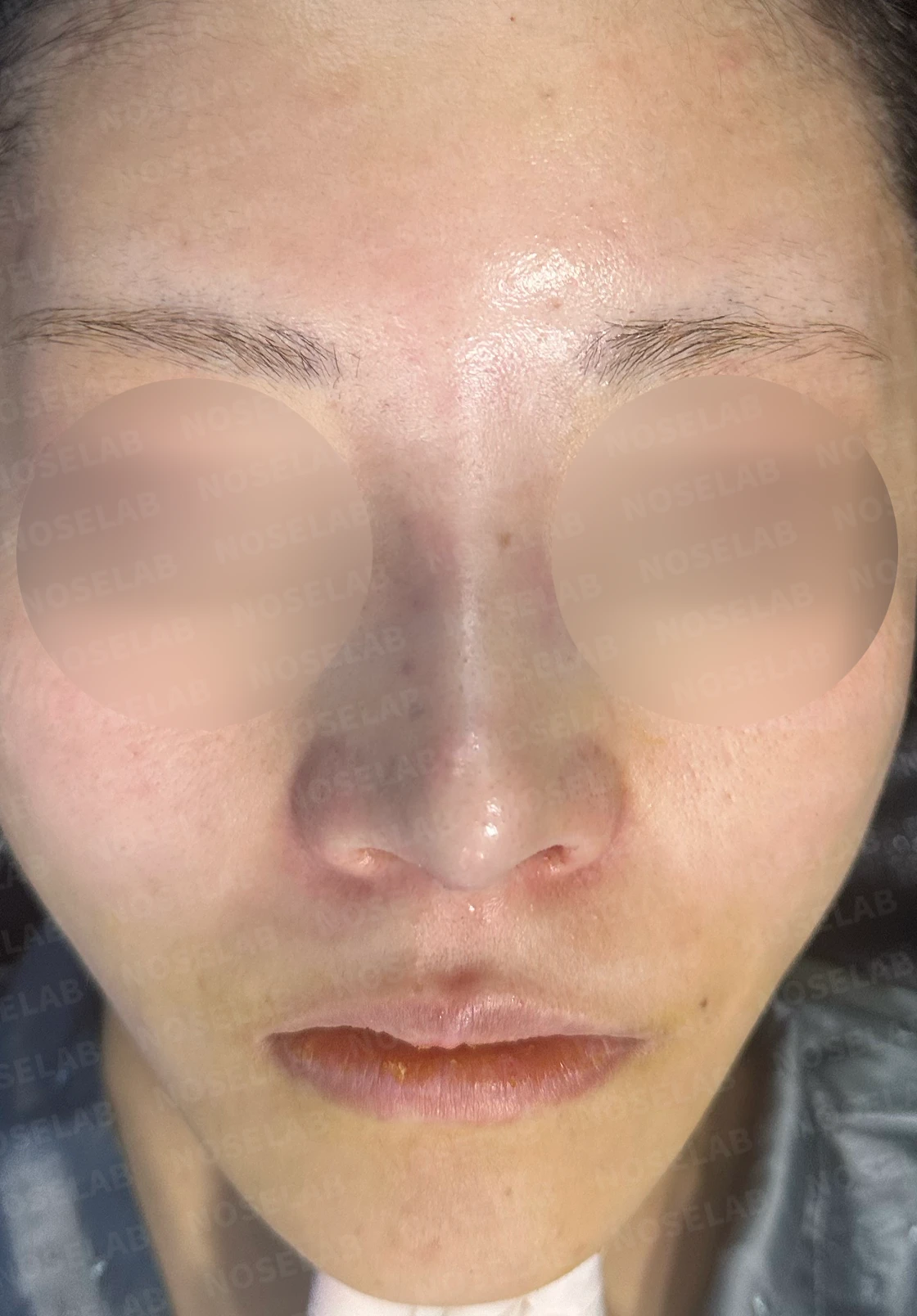
Before surgery / Day 0 immediately after surgery Photos taken immediately after surgery show swelling and may differ from the final result.
Where the nasal tip previously looked widened and upturned, the alar-columellar relationship (ACR) has become natural, and nostril show has decreased considerably.
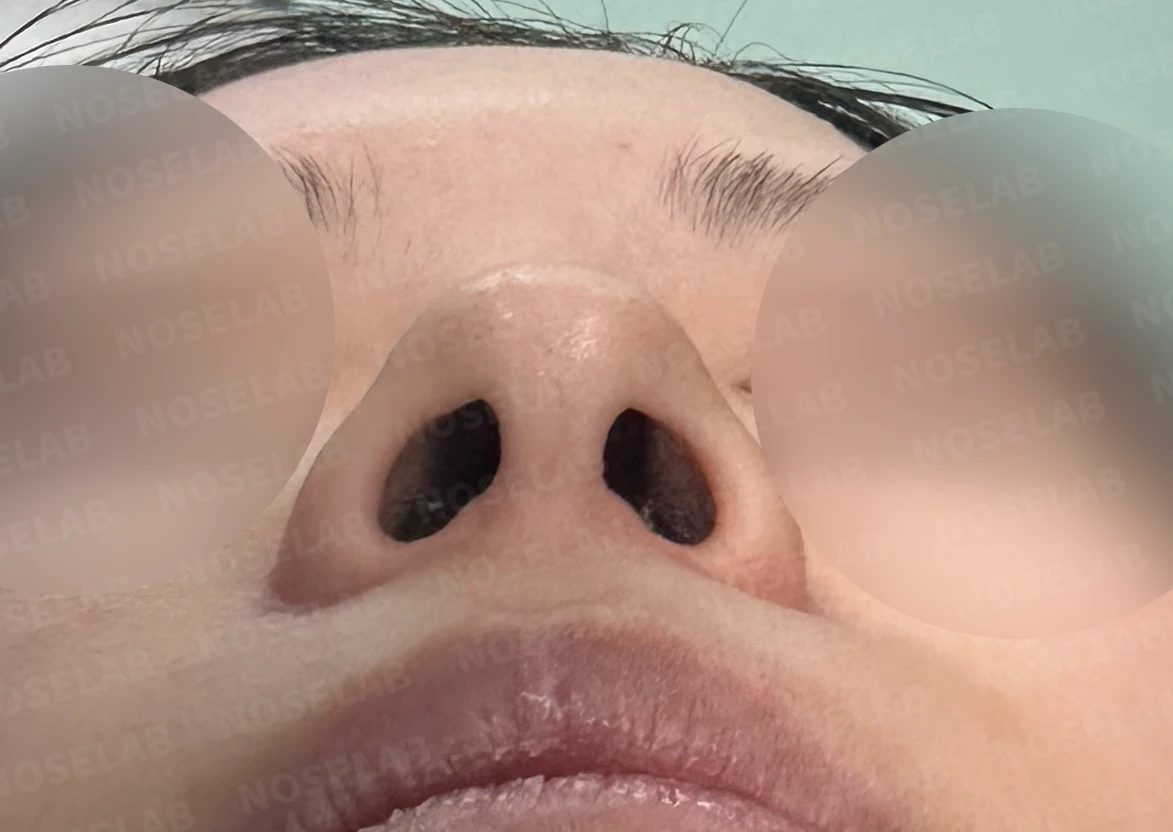
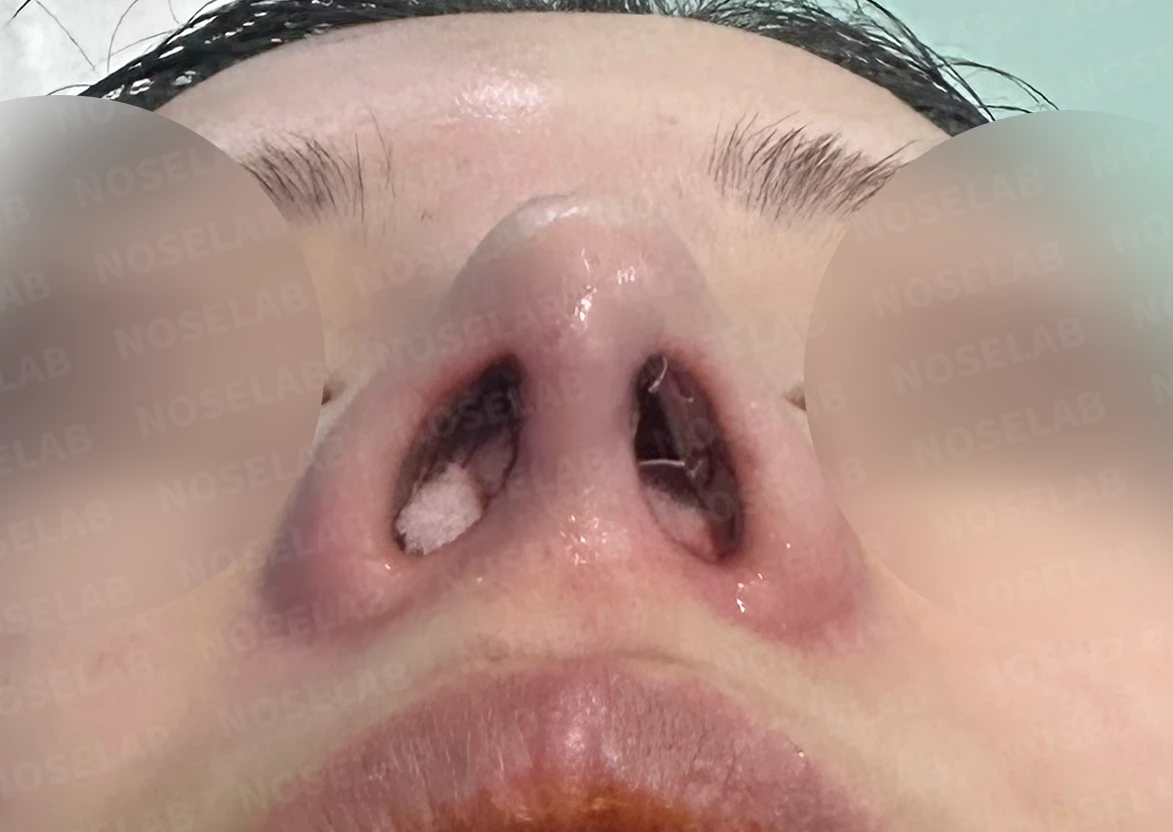
Before surgery / Day 0 immediately after surgery Photos taken immediately after surgery show swelling and may differ from the final result.
The widened appearance of the nasal tip has improved significantly.
Photos immediately after surgery
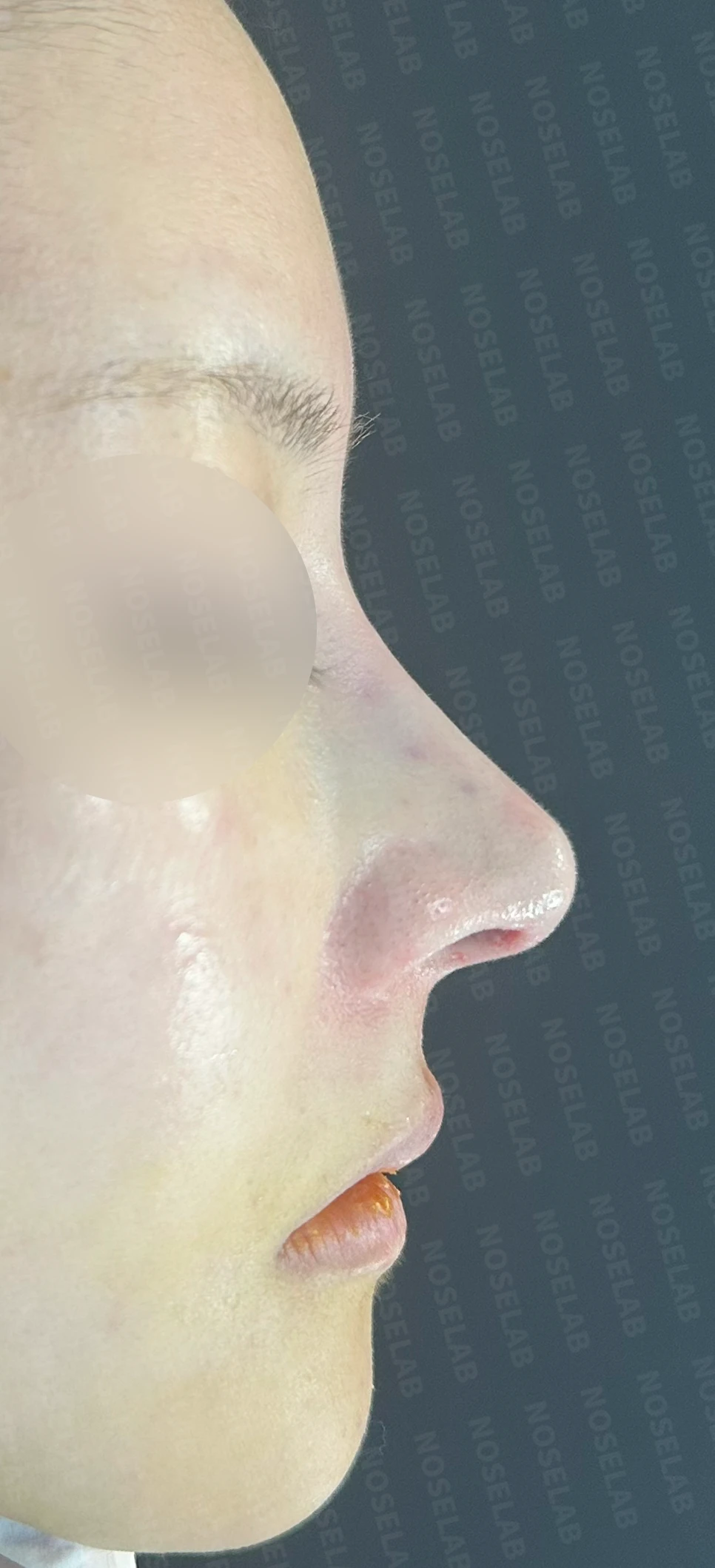
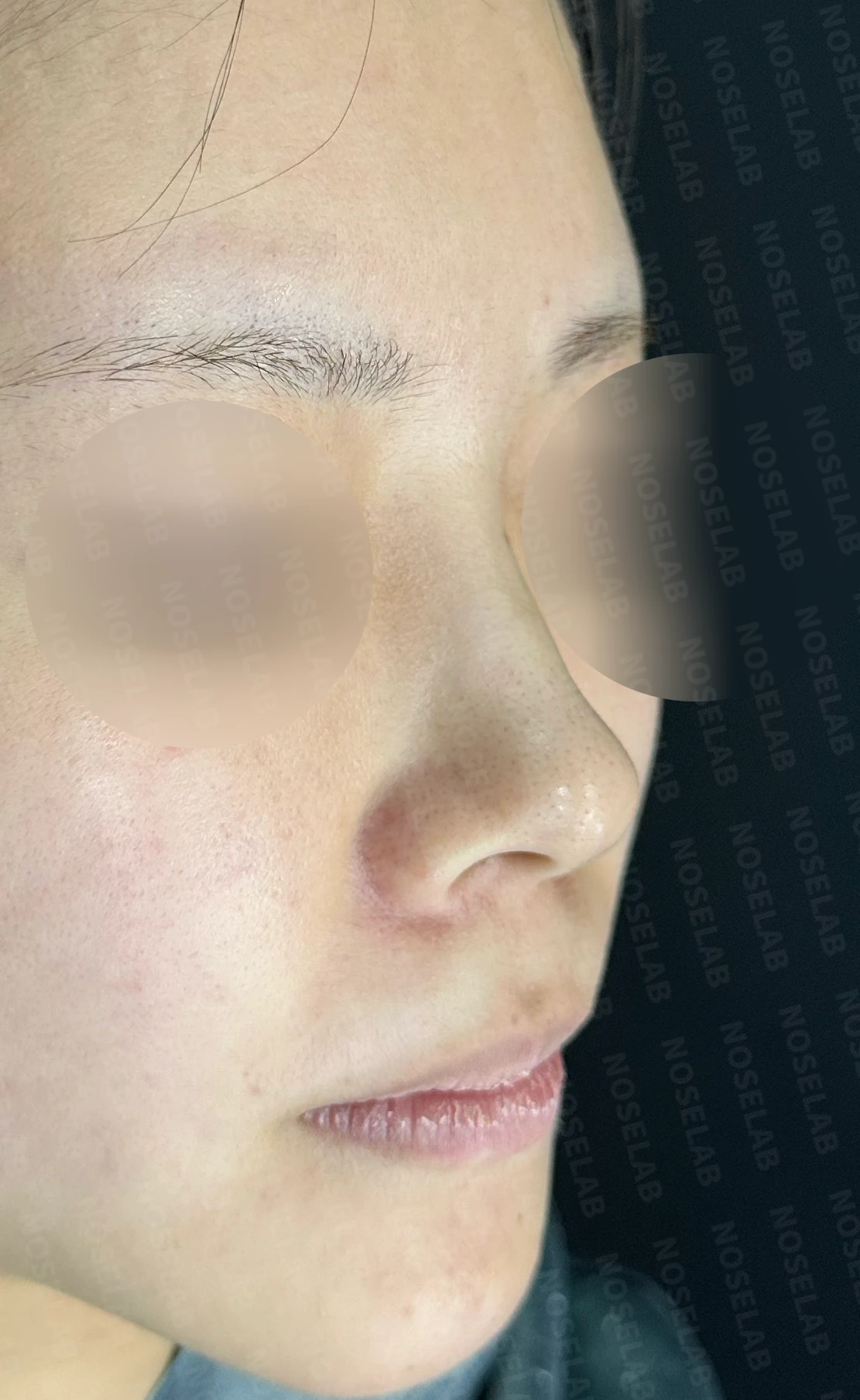
Photos immediately after surgery (Day 0): 90-degree profile, 45-degree oblique, and front viewImmediate postoperative photos show swelling and may differ from the final result.
Basal (nostril) view immediately after surgery (Day 0)Immediate postoperative photos show swelling and may differ from the final result.
Conclusion
Today, we looked at corrective surgery for a nose widened from frequent filler injections. Fillers can raise a low nasal bridge and smooth out an uneven bridge line. However, with repeated filler injections, one may notice the nasal bridge gradually spreading wider. Furthermore, fillers cannot effectively elevate the nasal tip or alter the tip shape.
Therefore, I suggest filler only as a 1-time option for those with a low or uneven nasal bridge. Fundamentally, however, surgery is needed to achieve an overall harmonious shape.
I hope this is helpful to those who have had fillers and are considering rhinoplasty.
This was Dr. Peter C. Kang. Thank you.
#closedrhinoplasty #fillerremoval #advancedclosedrhinoplasty #widenednose #bluntnose #rhinoplasty

Limitations and risks
When autologous rib cartilage is used, scarring and pain may remain at the donor site on the chest, and pneumothorax (pleural injury) can occur rarely. Over time, the grafted cartilage may warp or undergo partial resorption.
When foreign materials such as injected fillers are removed and reconstructed, contracture may recur, nasal height and length may decrease, and staged surgery may be necessary depending on the skin condition.
Common potential risks include infection, bleeding, asymmetry, scarring, skin necrosis, and insufficient improvement; results vary depending on individual skin condition and previous surgical history.