Hello.
I am Dr. Peter C. Kang, medical director.
Today, I would like to discuss the importance of three-dimensional definition in rhinoplasty.
This patient had undergone rhinoplasty with a silicone implant and ear cartilage 33 years ago.
Preoperative design
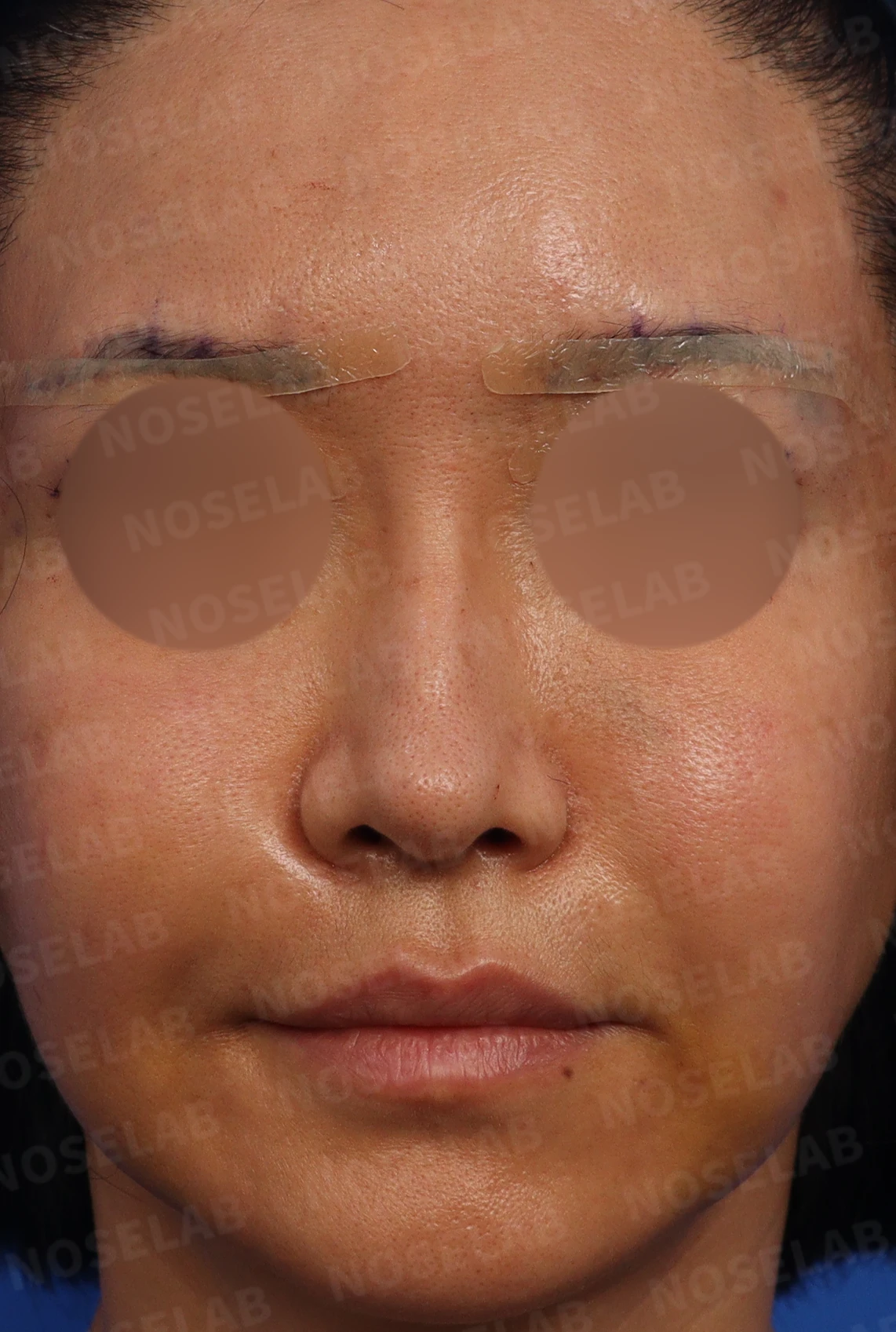
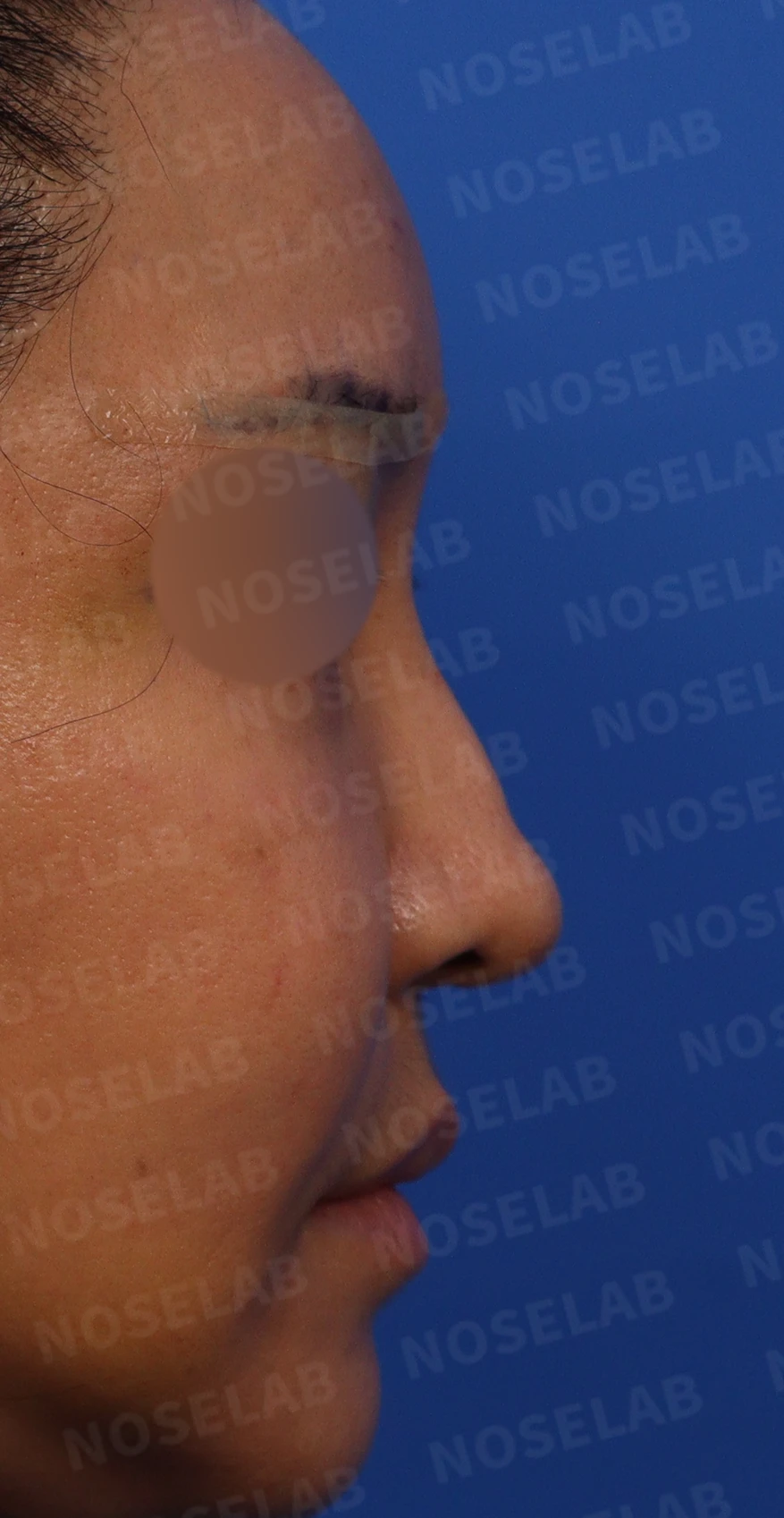
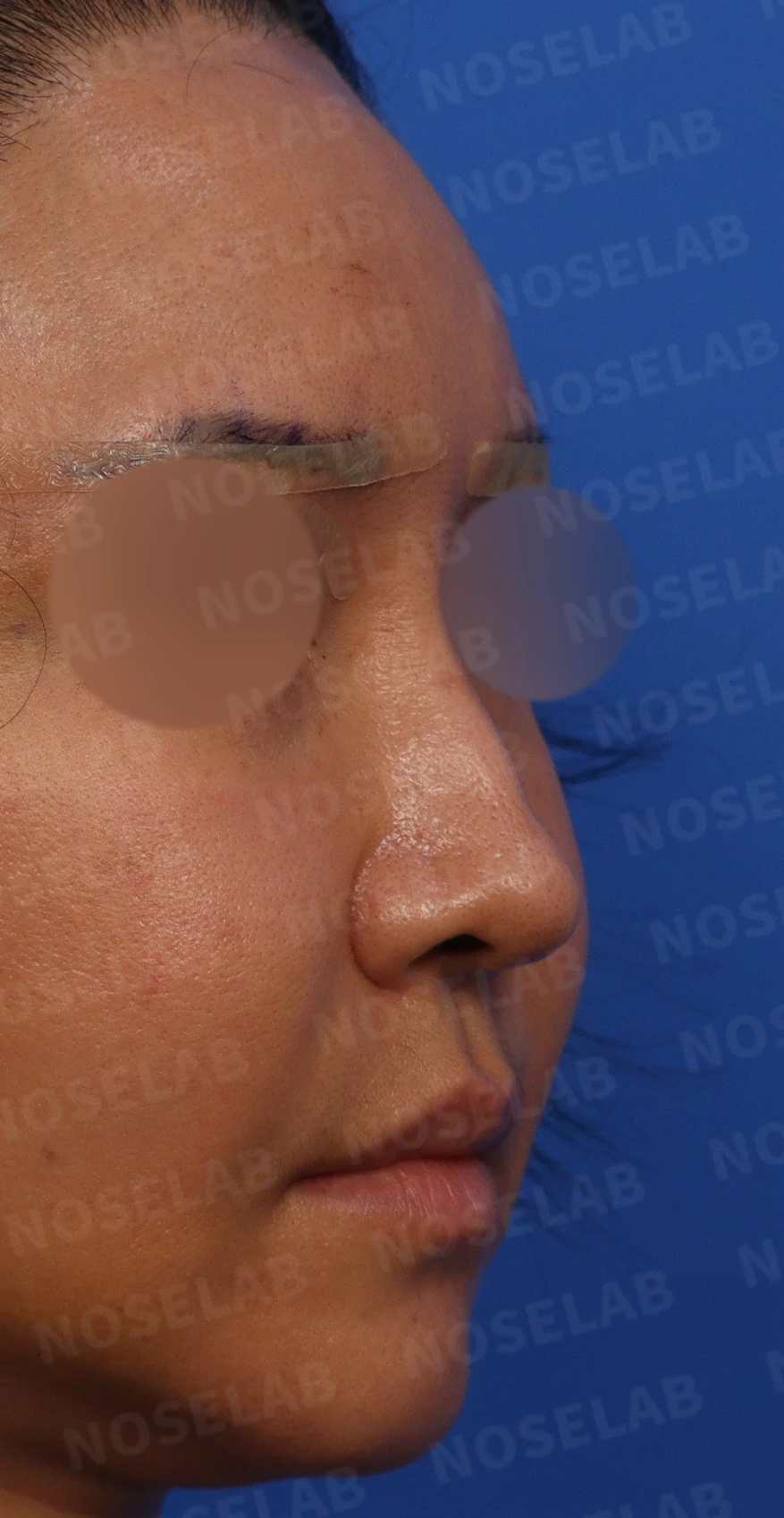
Preoperative front, 90-degree profile, and 45-degree oblique photos
The implant on the nasal bridge was clearly visible through the skin, and the bridge contour was very uneven. The nasal tip appeared blunt and spread out, and nostril asymmetry was present.
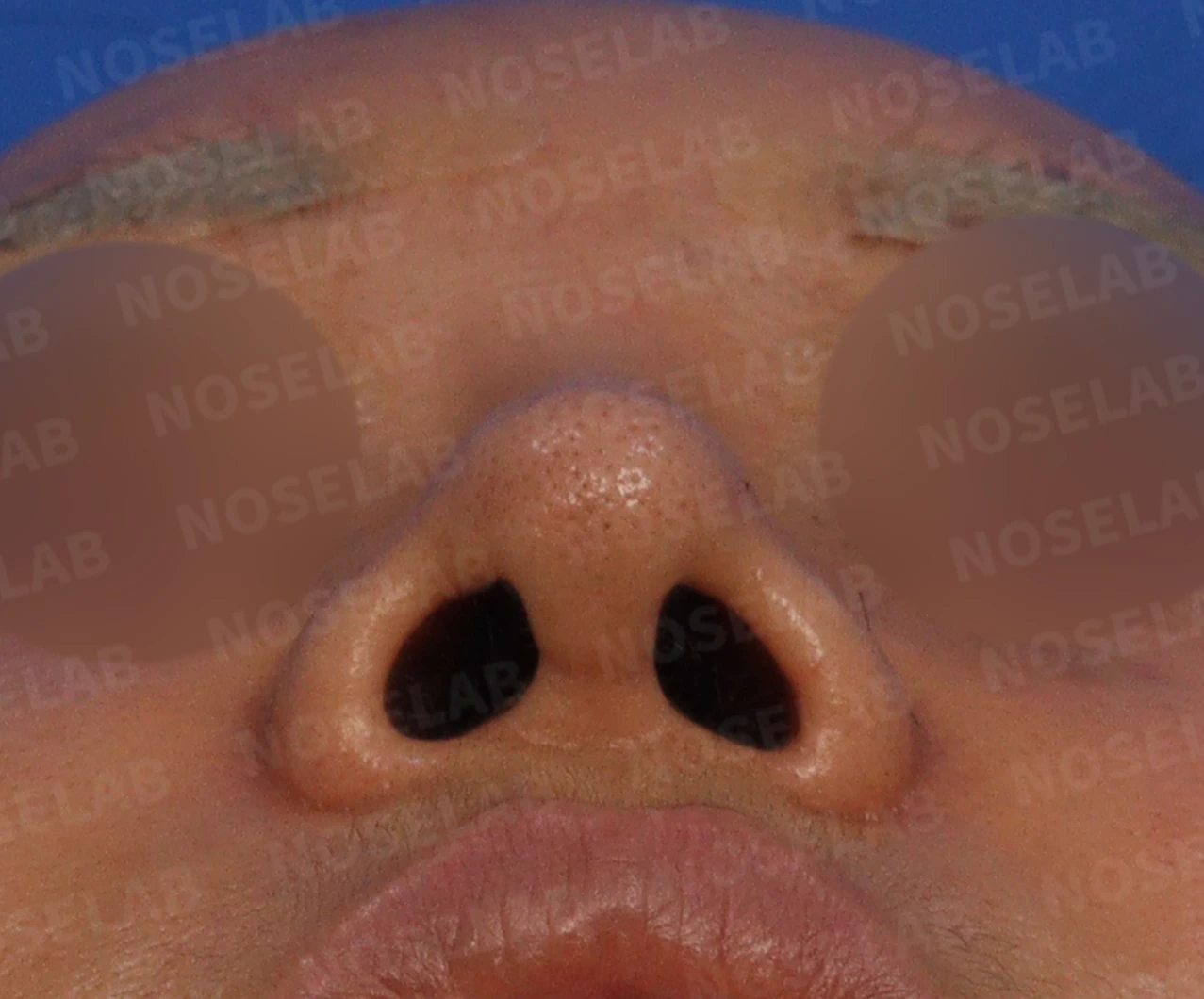
This is the preoperative basal (nostril) view.
The patient had two primary requests:
1. Lower the nasal bridge.
2. Raise the nasal tip.
Therefore, I decided that bringing natural three-dimensional definition to this nose, which appeared artificial and elongated, was the appropriate direction.
Surgical plan
On the preoperative CT scan, calcification was progressing within the capsule surrounding the implant. Anticipating significant adhesions to surrounding tissues, I planned to remove the implant together with the capsule.
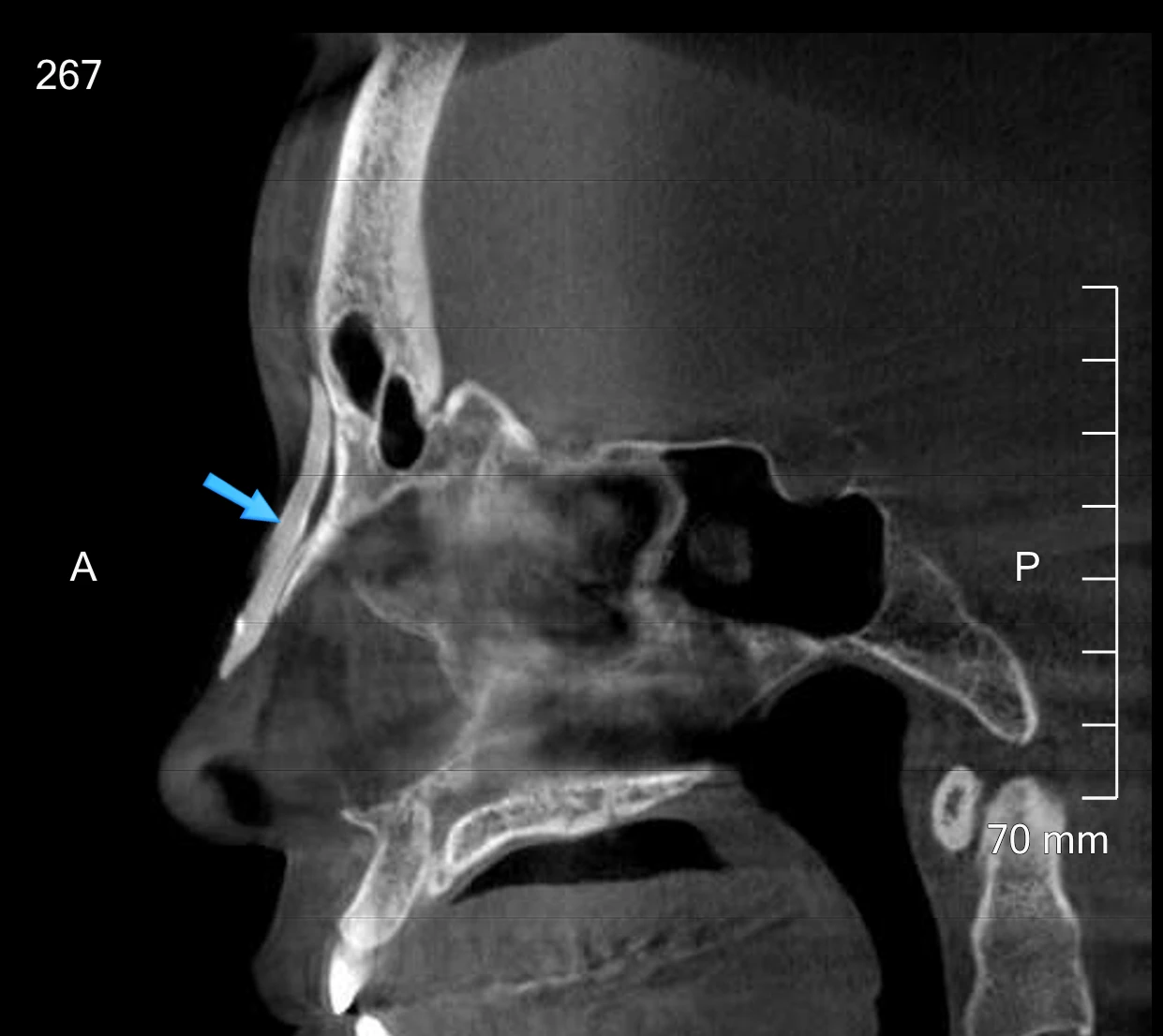
Sagittal CT view showing the silicone implant
Examining the implant removed during surgery revealed that the thickened capsule surrounding the silicone had become calcified.
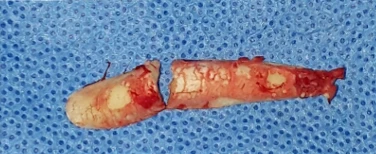
Photo of the removed silicone implant
In addition, I planned to reconstruct the blunt, spread-out nasal tip into a refined, well-projected shape using septal cartilage and donor rib cartilage.
Before surgery vs. immediately after surgery
Let us compare the preoperative photos with the photos immediately after surgery (Day 0).Immediate postoperative photos show swelling and may differ from the final result.
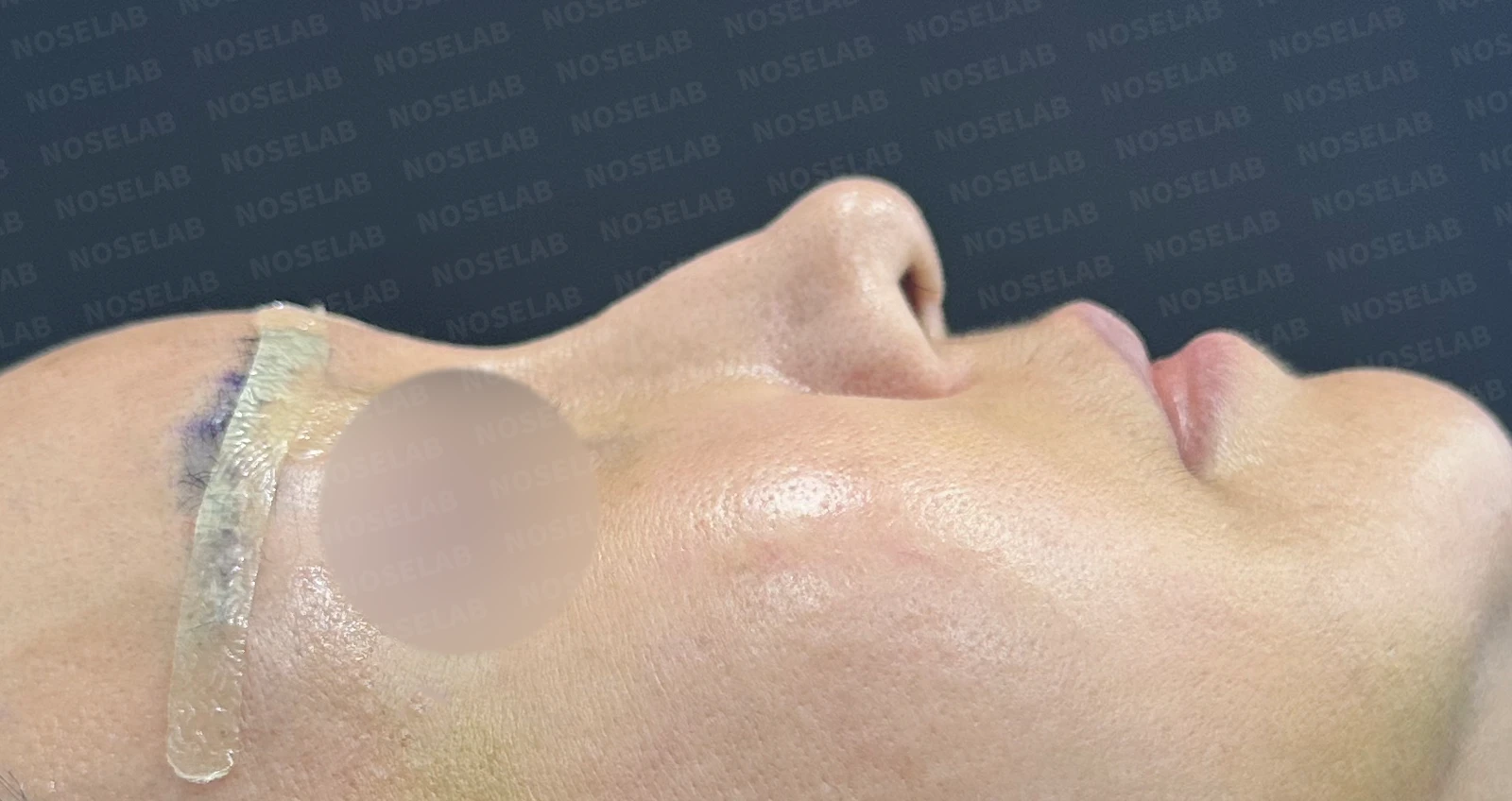
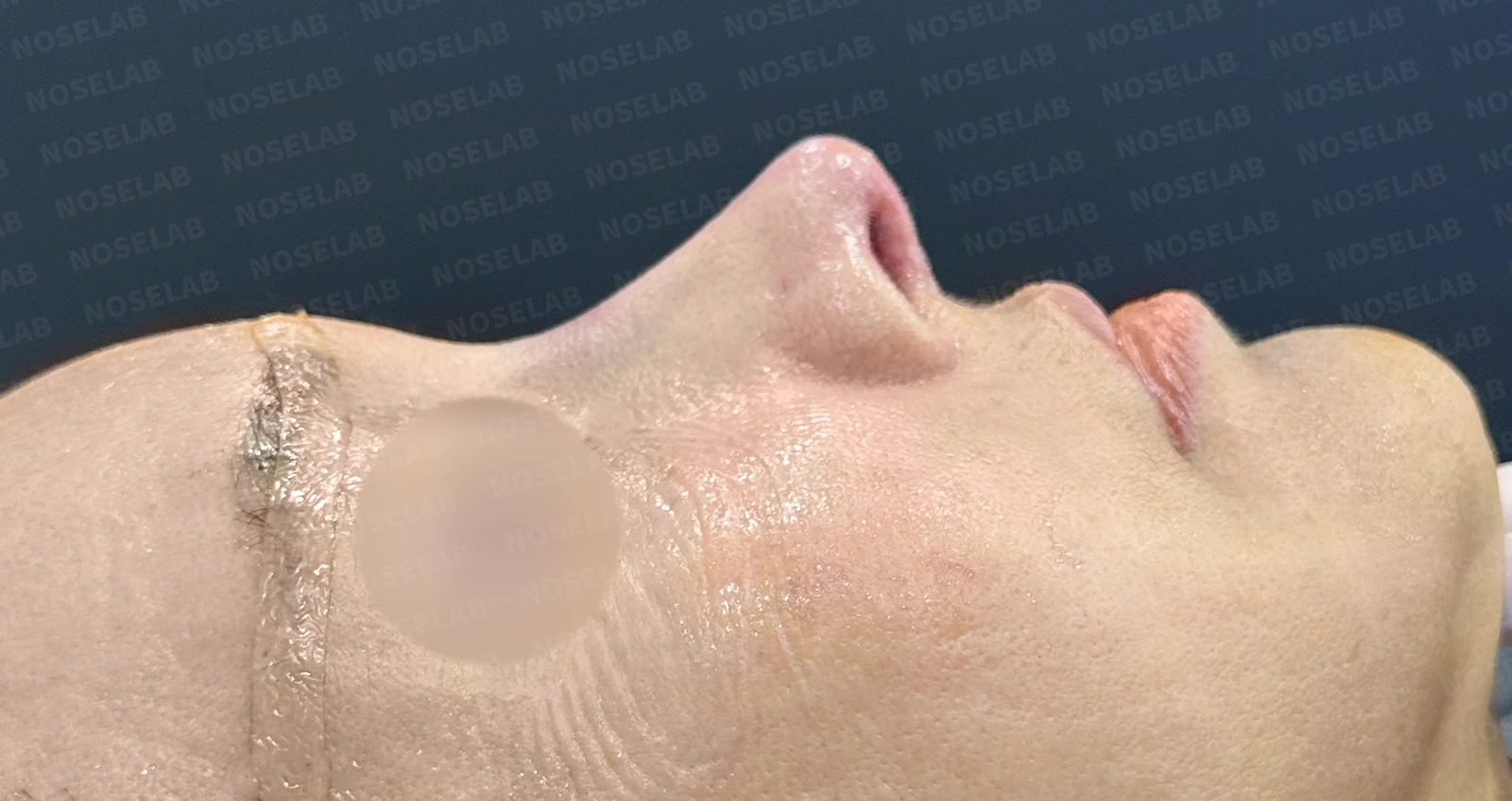
Before surgery / Day 0 immediately after surgery Photos taken immediately after surgery show swelling and may differ from the final result.
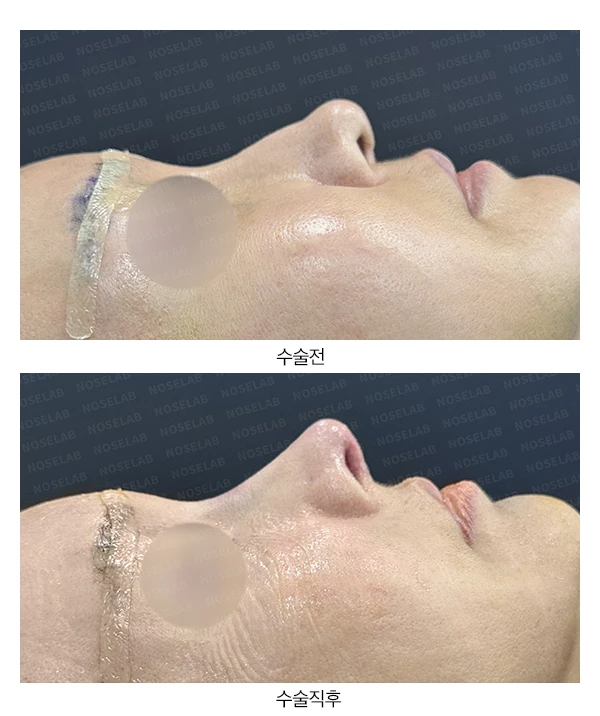
On the profile view, the radix is lower and the nasal tip is well-projected, creating clear three-dimensional definition.
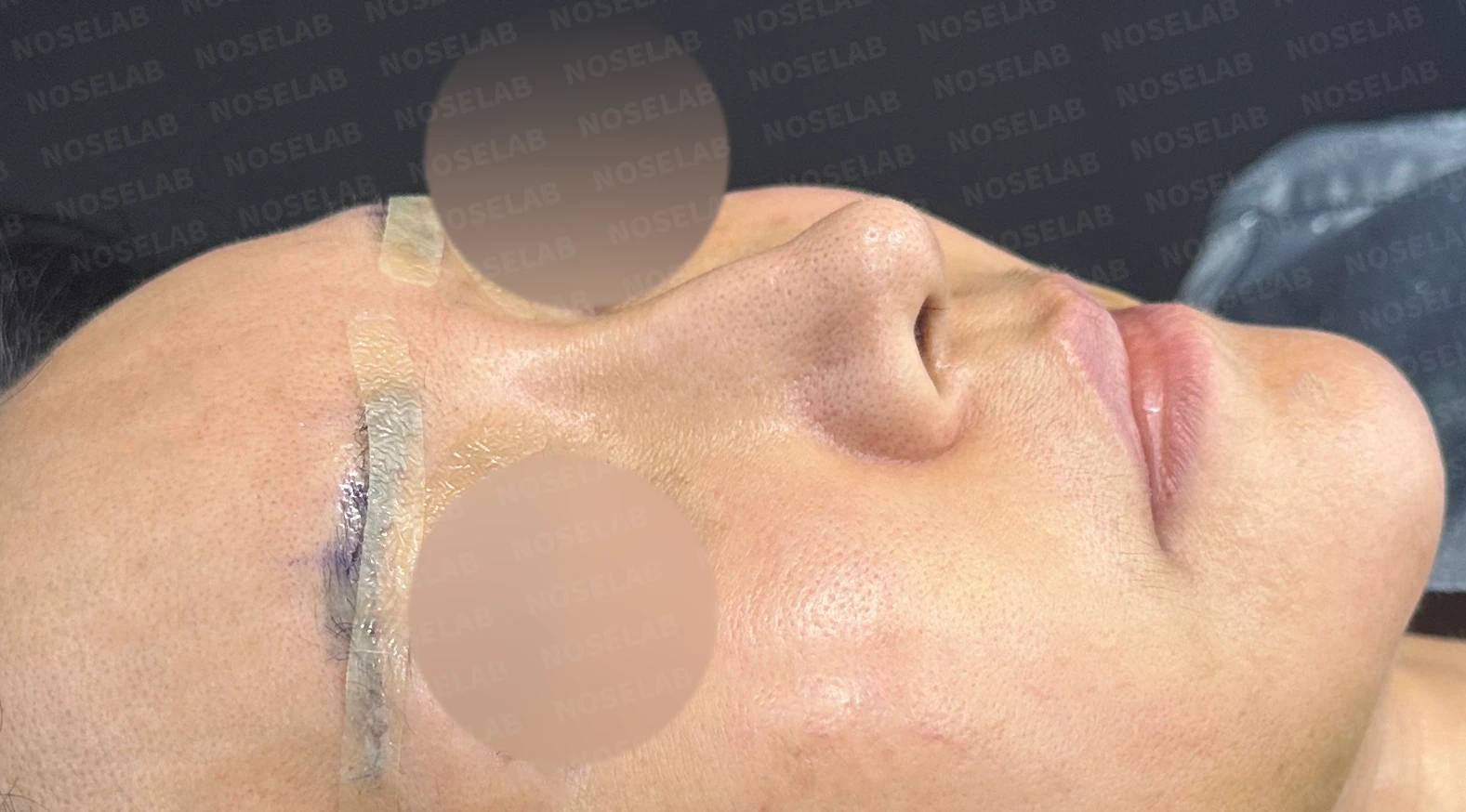
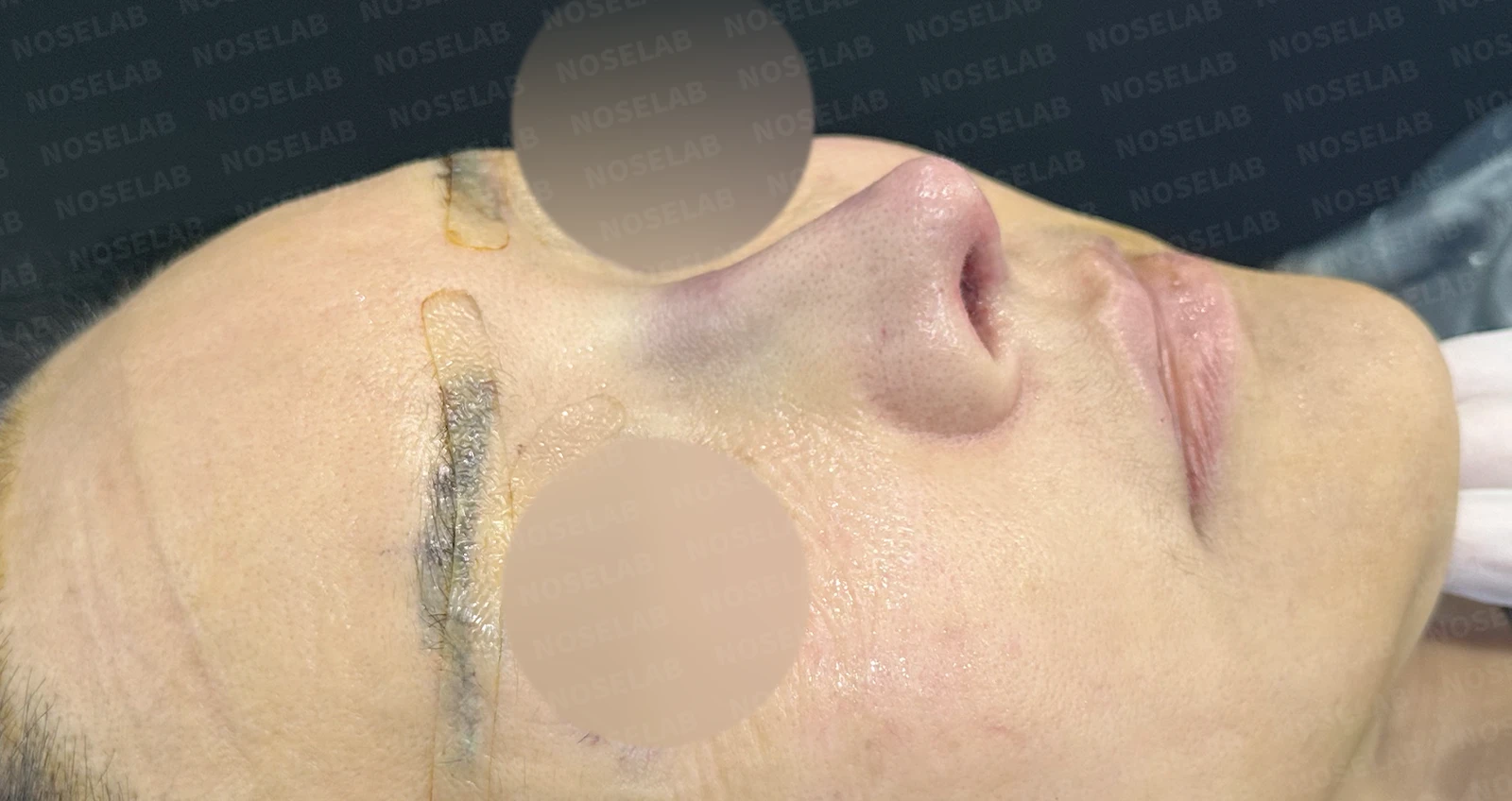
Before surgery / Day 0 immediately after surgery Photos taken immediately after surgery show swelling and may differ from the final result.
On the oblique view, the nose, which previously looked elongated, appears noticeably shorter.
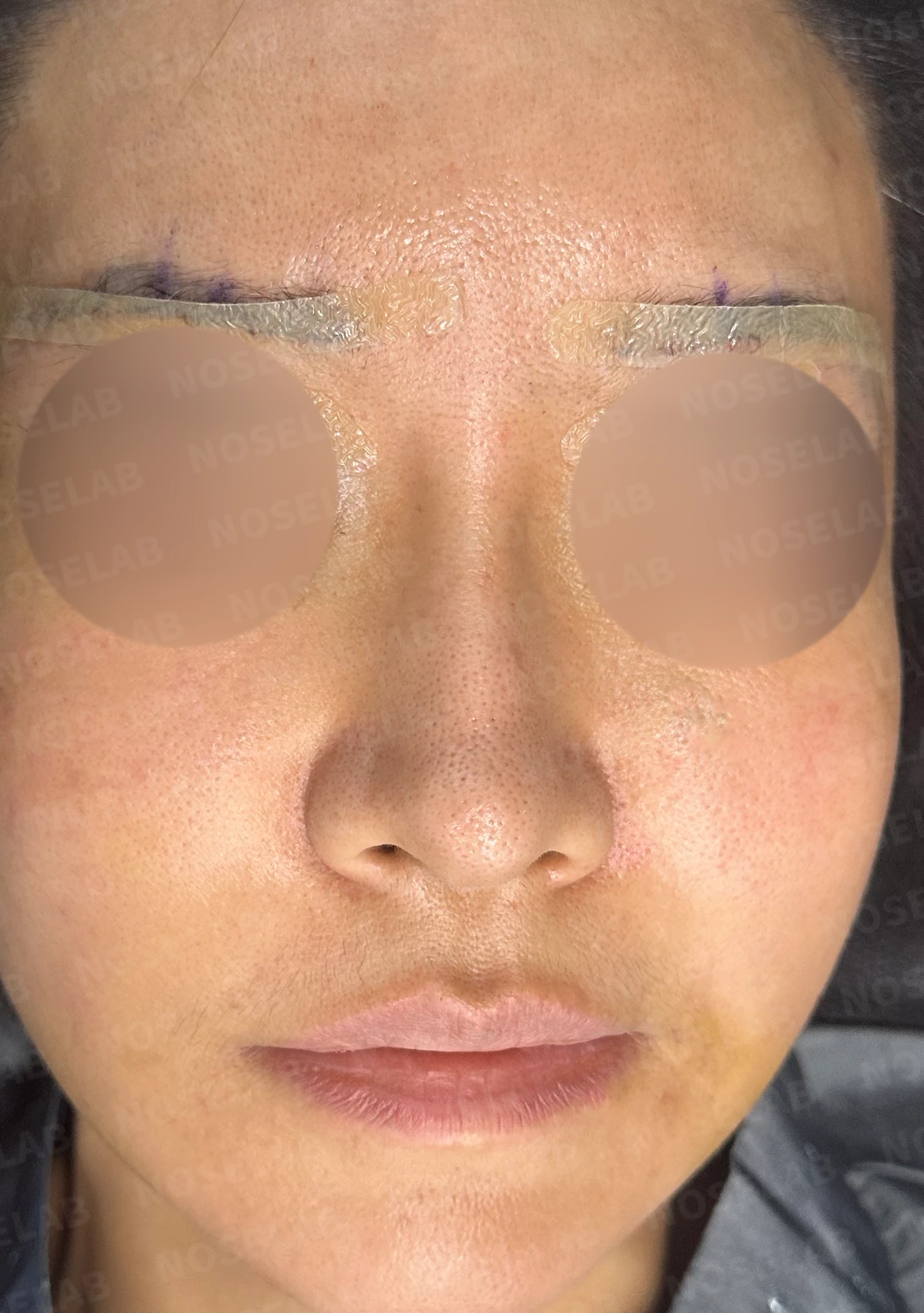
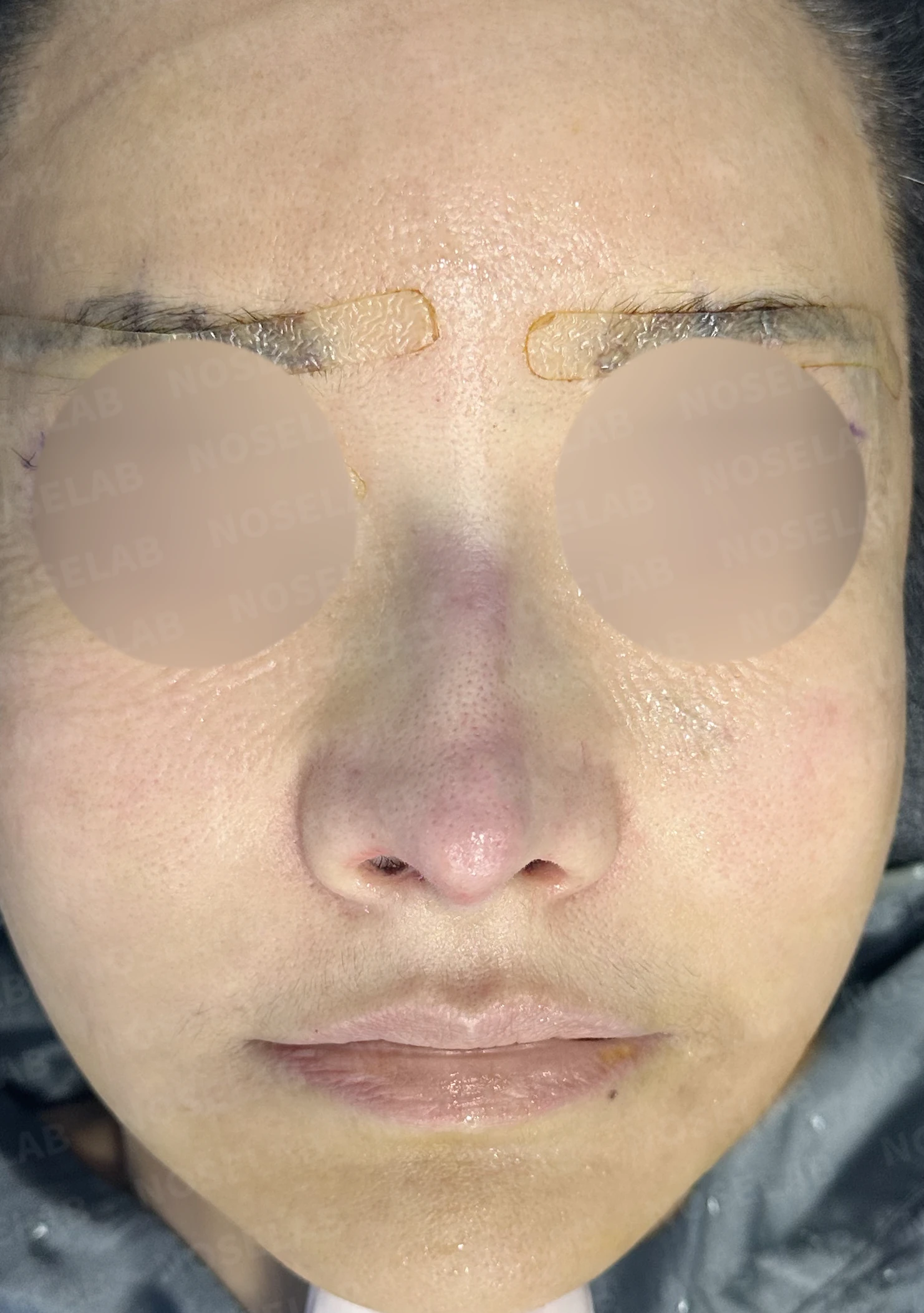
Before surgery / Day 0 immediately after surgery Photos taken immediately after surgery show swelling and may differ from the final result.
On the front view, the blunt and spread-out appearance has improved considerably, and the distinct show-through of the implant along the bridge has been addressed.
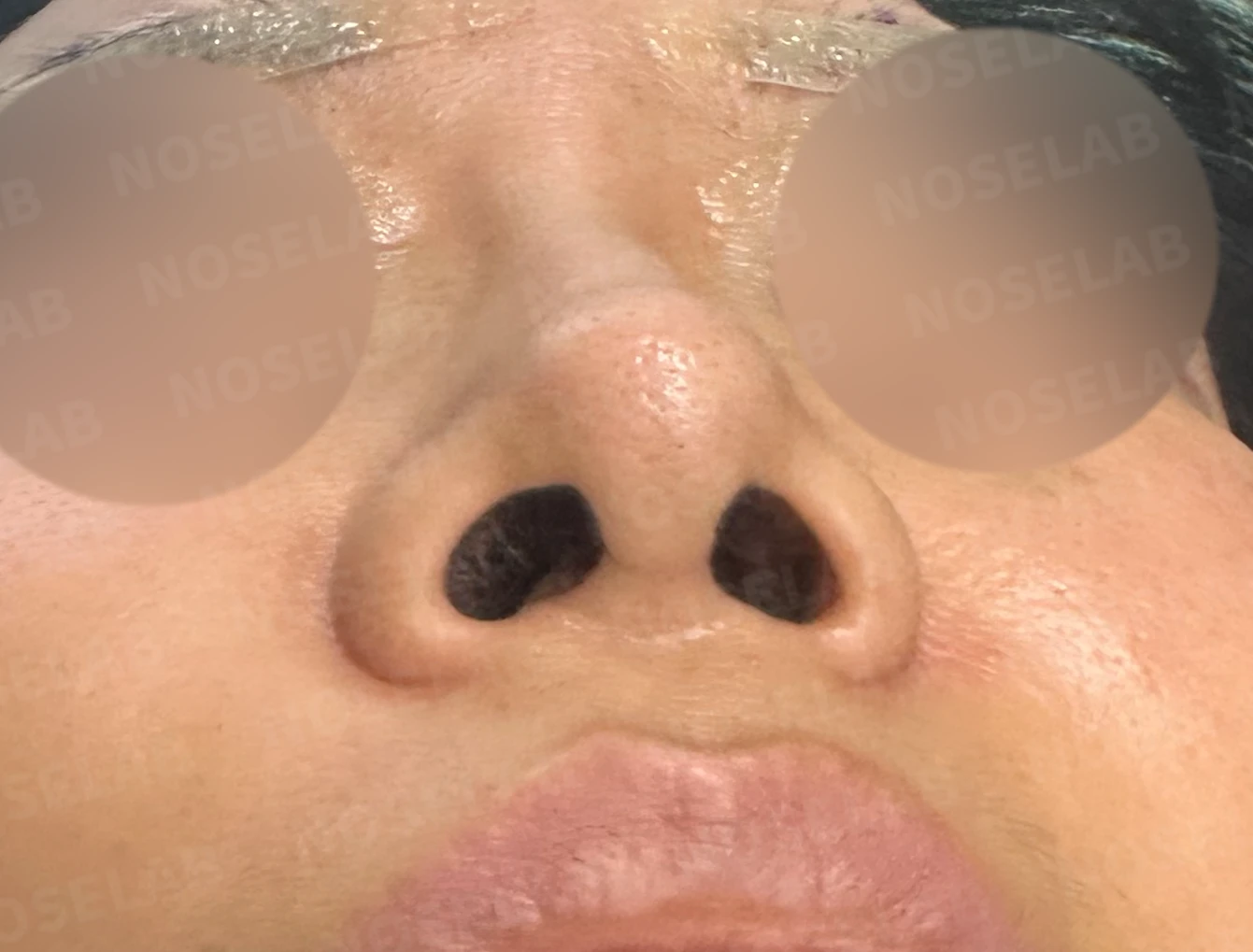
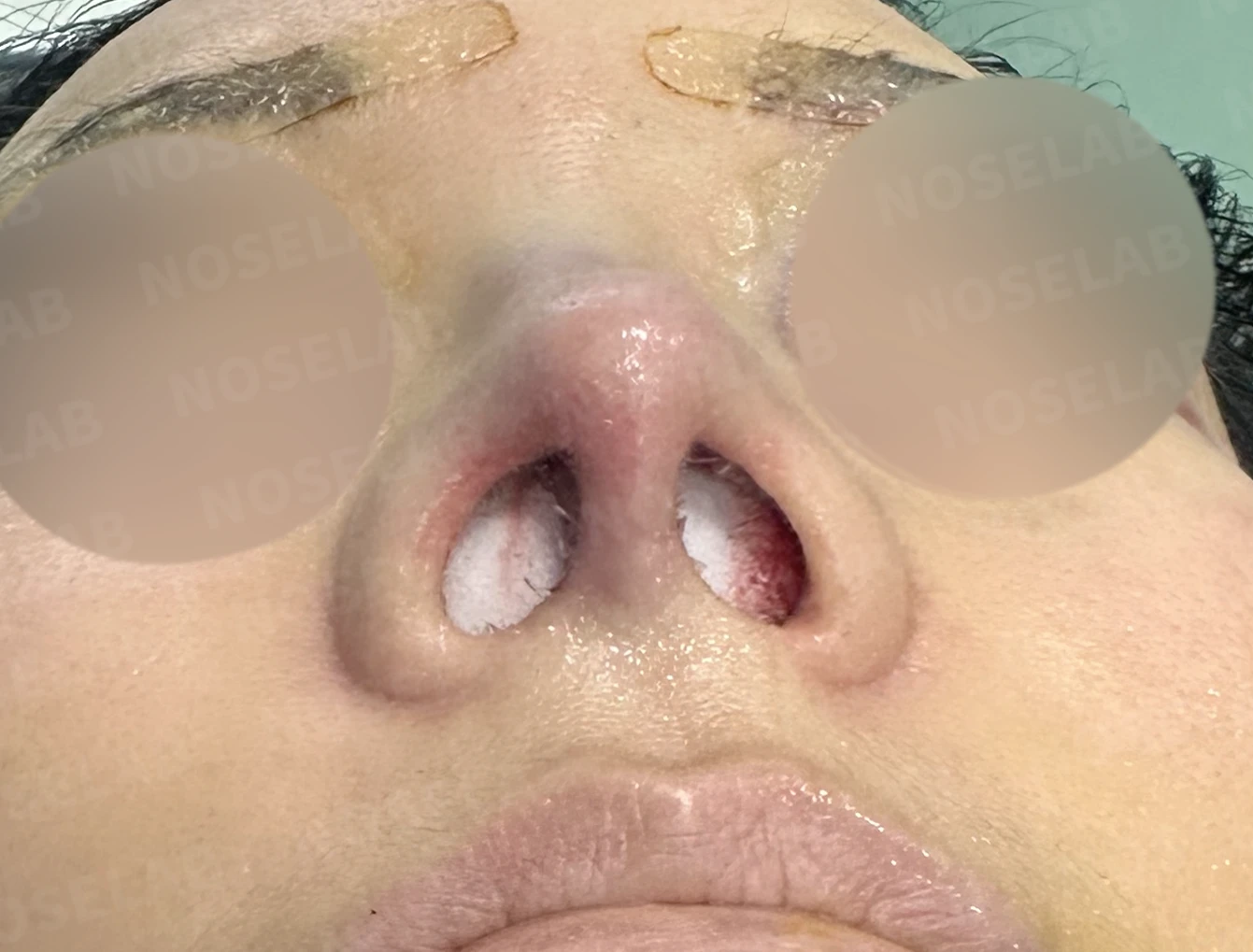
Before surgery / Day 0 immediately after surgery Photos taken immediately after surgery show swelling and may differ from the final result.
The basal view shows substantial improvement in the previously asymmetric nostrils.
Photos immediately after surgery
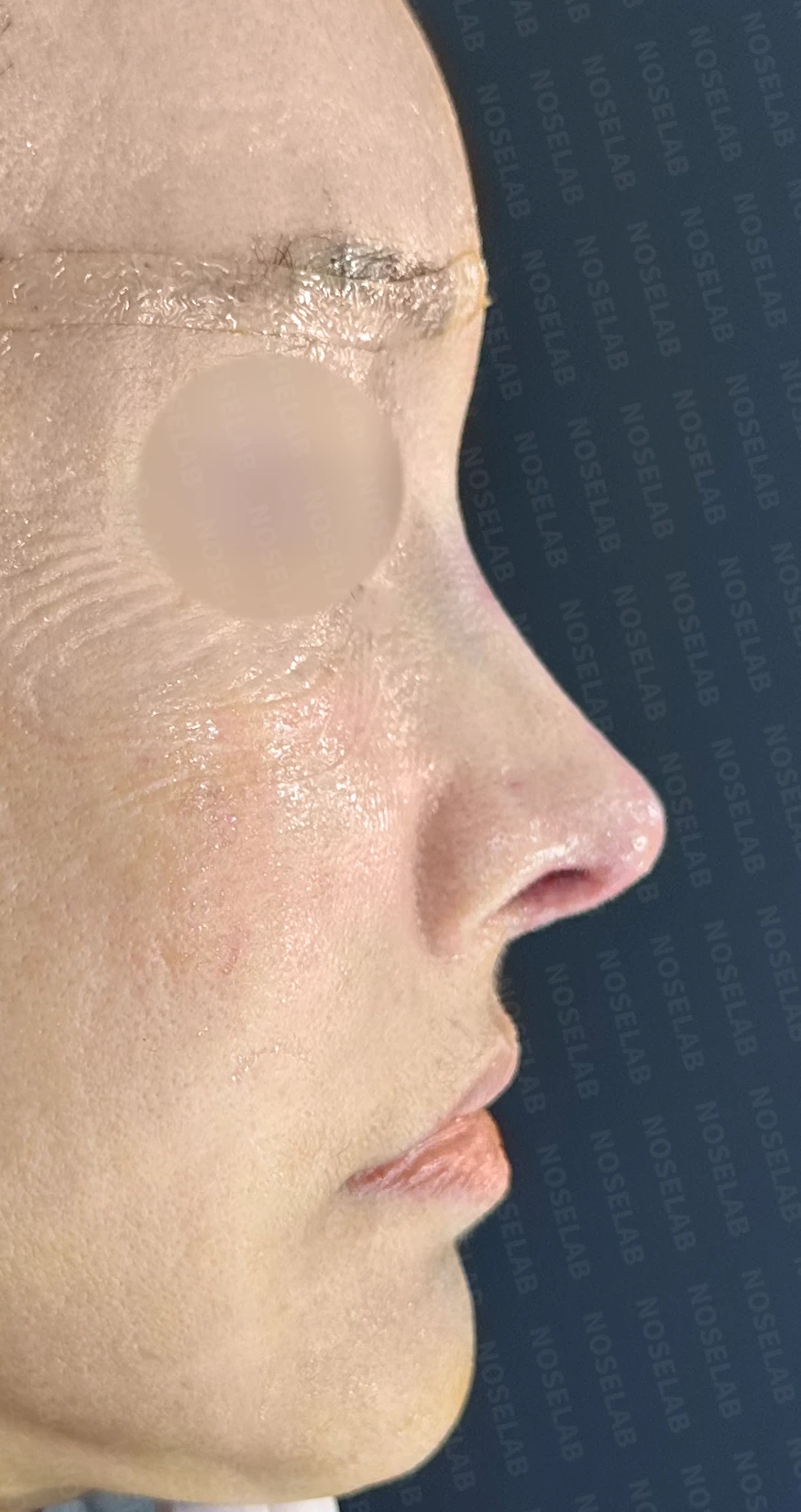
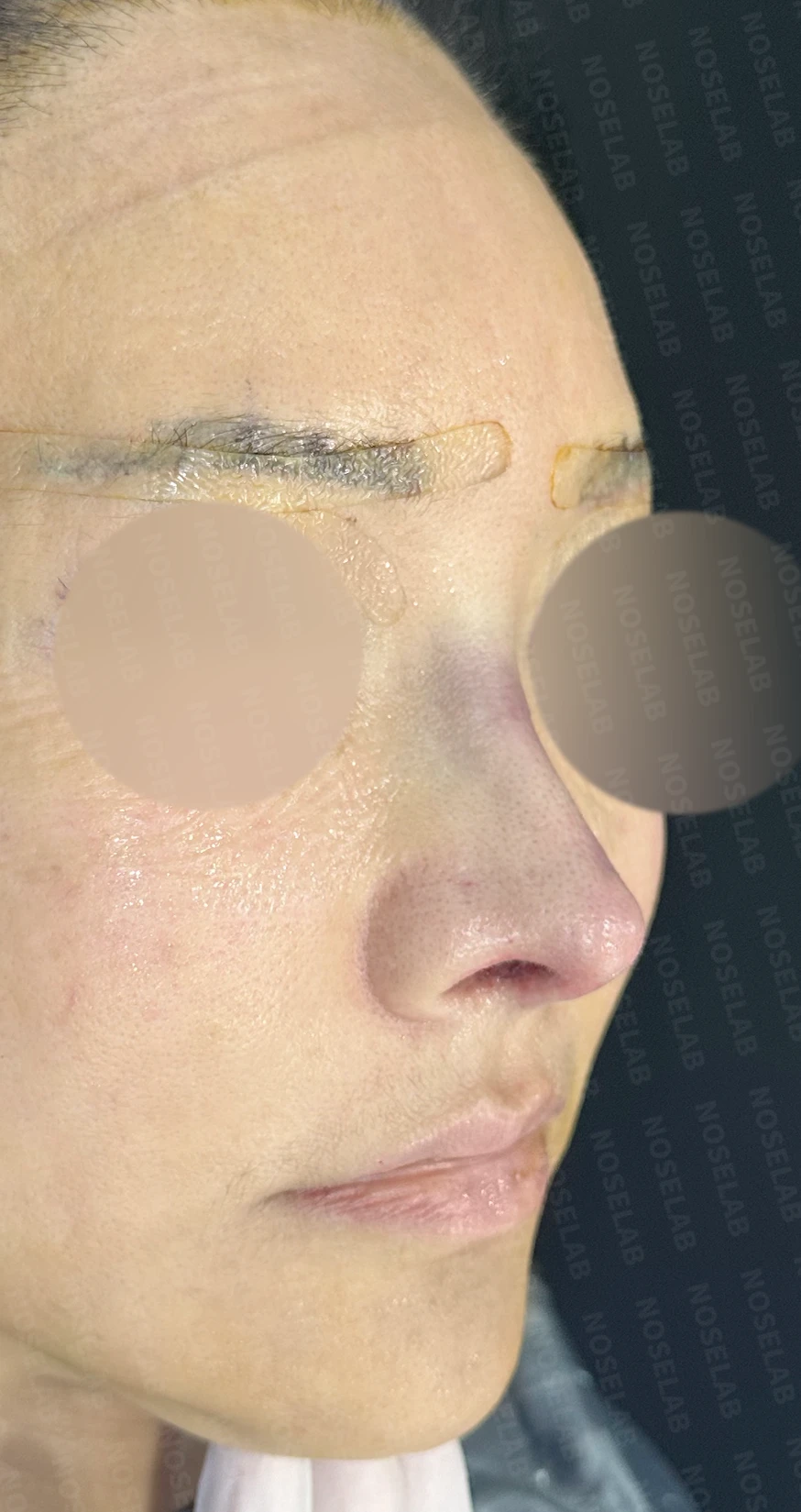
Immediate postoperative photos at day 0: 90-degree profile, 45-degree oblique, and front view Immediate postoperative photos show swelling and may differ from the final result.
Basal (nostril) view immediately after surgery (Day 0)Immediate postoperative photos show swelling and may differ from the final result.
My perspective on three-dimensional definition in rhinoplasty
People seek rhinoplasty for many reasons. The most fundamental reason, of course, is to enhance the appearance of the nose. However, even if the nose itself looks appealing, it will not enhance the overall look of the face if it does not fit the facial proportions or facial shape. Much like proportion, three-dimensional definition extends beyond nasal shape alone and significantly influences the entire face.
Three-dimensional definition becomes more pronounced when higher and lower contours coexist. In this sense, requesting a lower bridge and a higher tip essentially means aiming for greater dimensional balance in the nose.
What benefits does a nose with proper three-dimensional definition provide? First, the face appears smaller. Additionally, the mouth appears less prominent, and a shorter nasal appearance can create a more youthful impression. It also lends a softer, more feminine look.
I hope this information is helpful to those considering surgery for a flat, spread-out nose that lacks three-dimensional definition.
This was Dr. Peter C. Kang. Thank you.

Limitations and risks
When using donor rib cartilage, long-term follow-up is necessary because the grafted cartilage may resorb or warp.
When revising after implant removal, contracture may progress again after removal, the nasal height and length may decrease, and staged surgery may be necessary depending on the skin condition.
When the septum is corrected at the same time, nasal obstruction may persist or recur, and in rare cases, septal perforation or changes in smell may occur.
Common potential risks include infection, bleeding, asymmetry, scarring, skin necrosis, and insufficient improvement; results vary depending on individual skin condition and previous surgical history.