Hello.
I am Dr. Peter C. Kang, medical director of the Rhinoplasty Research Center.
Today, I will talk about early revision surgery. In this case, the patient had undergone surgery and even an attempted revision, but the nasal deviation remained uncorrected, leading the patient to come to NOSELAB urgently for revision surgery just 14 days later.
Early revision surgery can be performed within 2 weeks; once 2 weeks have passed, surgery is generally possible only after at least 3 months. Fortunately, the patient visited shortly after the prior surgery, allowing us to perform early revision rhinoplasty at the 14-day mark.
Surgical plan
The plan was to remove all silicone implants and tip cartilages placed at the previous clinic, and to correct the crooked nose while elevating the nasal tip stably using autologous rib cartilage. I anticipated that the deviation had likely been caused by asymmetrical suturing of the tip cartilage during the previous surgery, and planned accordingly. Considering that swelling had not yet subsided from the bridge and tip and that scar tissue begins to form rapidly around the tip cartilage at this stage, I planned a surgical approach aimed at minimizing tissue damage.
Before surgery vs. immediately after surgery
Let us compare the preoperative photos with the photos immediately after surgery (Day 0).Immediate postoperative photos show swelling and may differ from the final result.
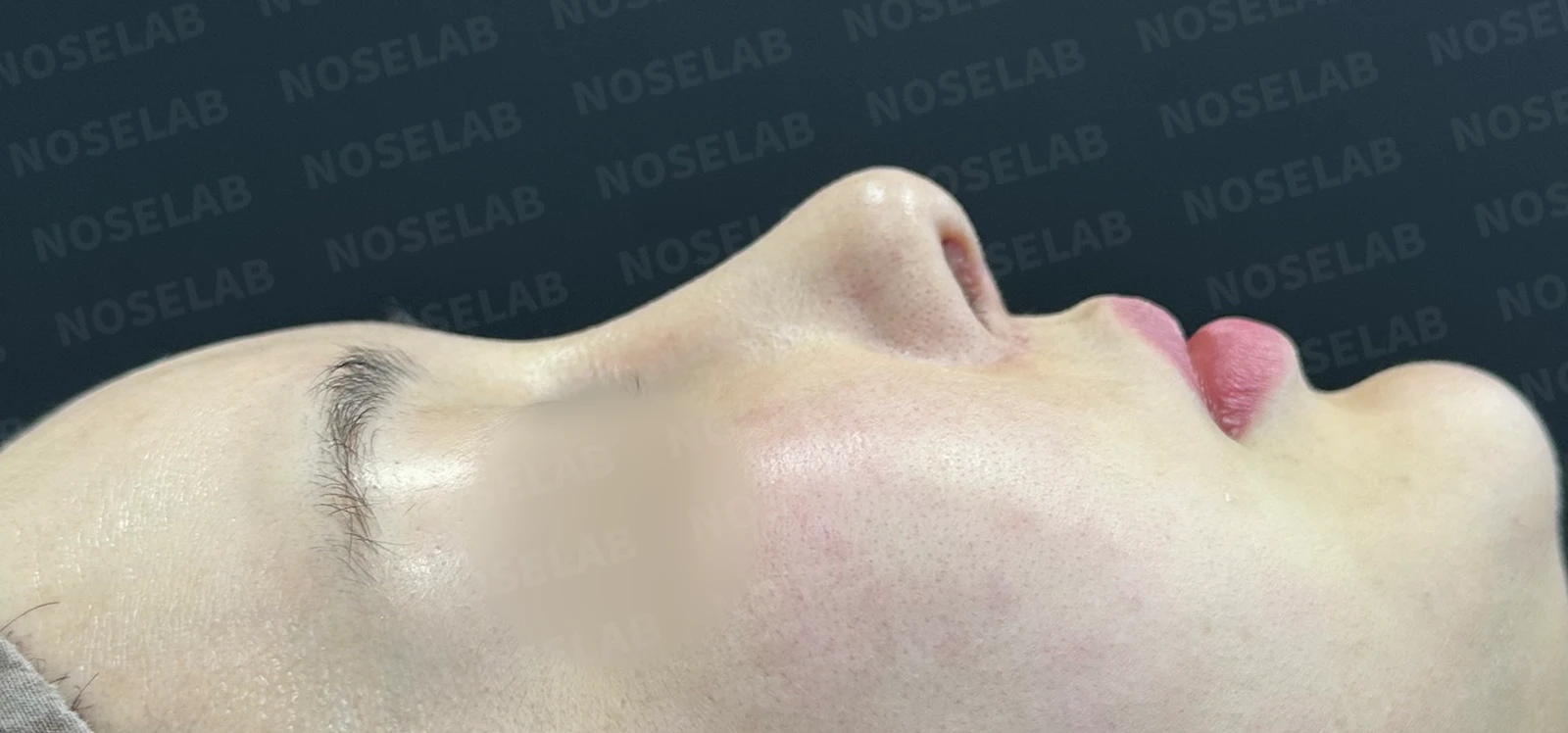
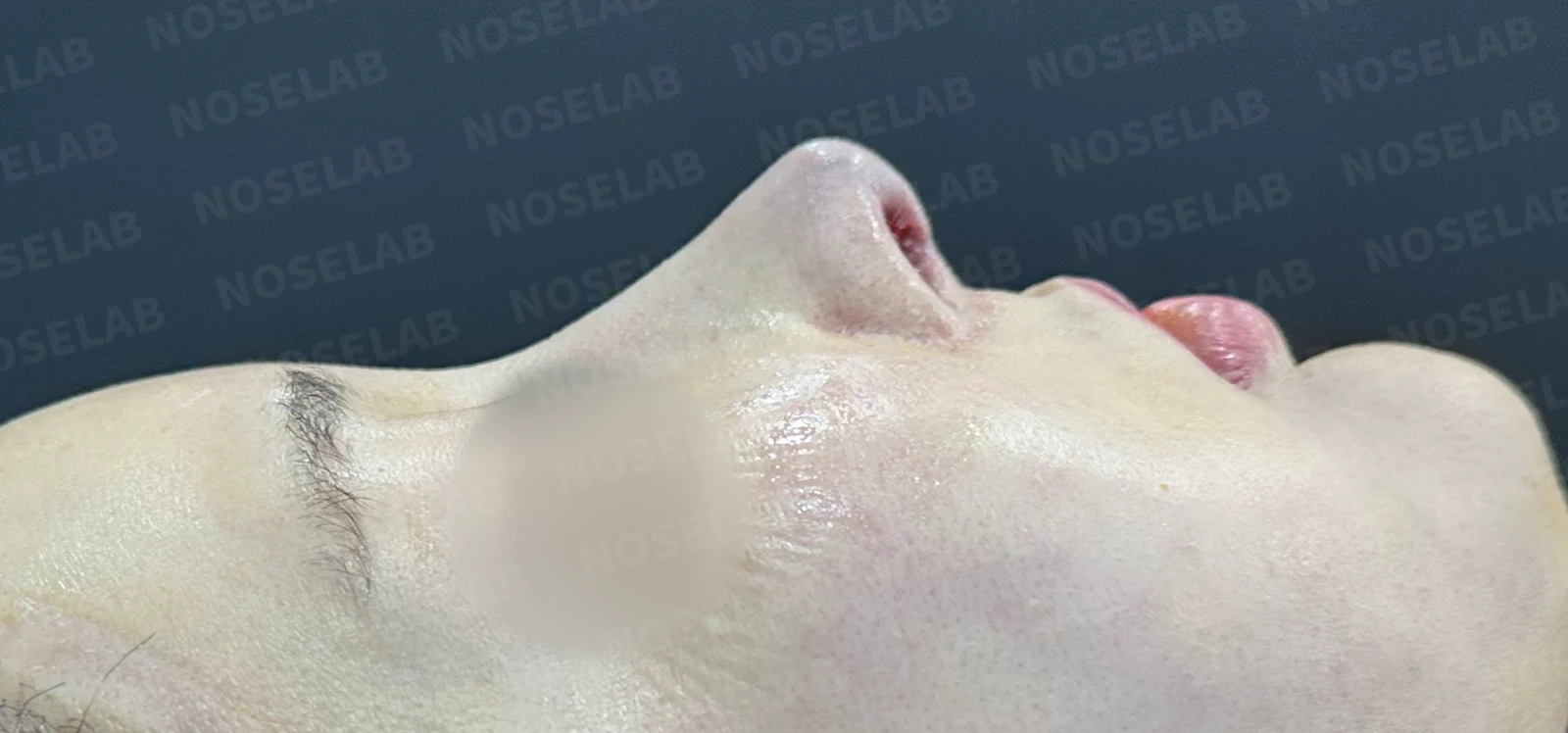
Before surgery / Day 0 immediately after surgery Photos taken immediately after surgery show swelling and may differ from the final result.
On the profile view, the radix was lowered, and the blunt, uneven contour of the nasal dorsum was refined.
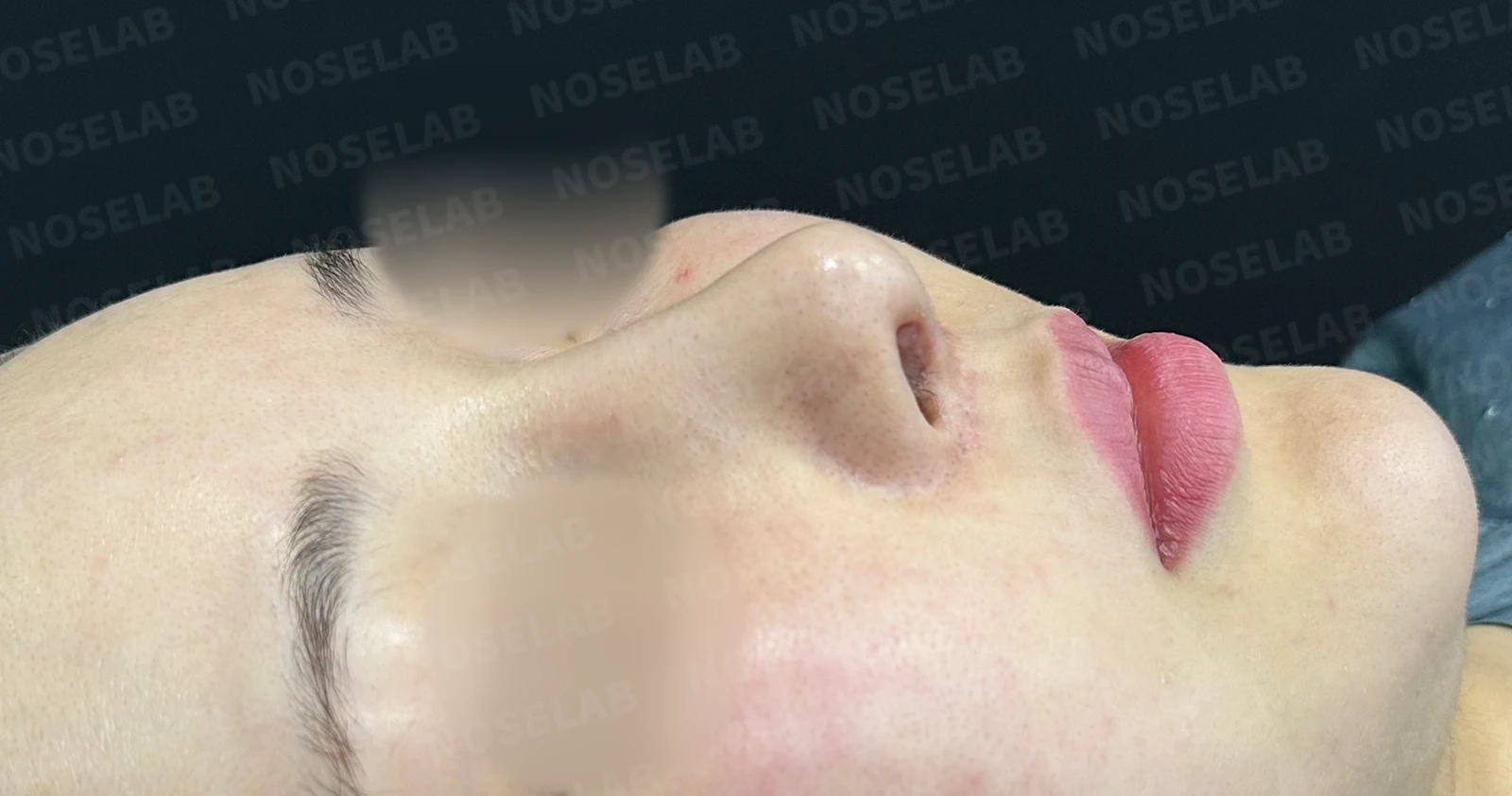
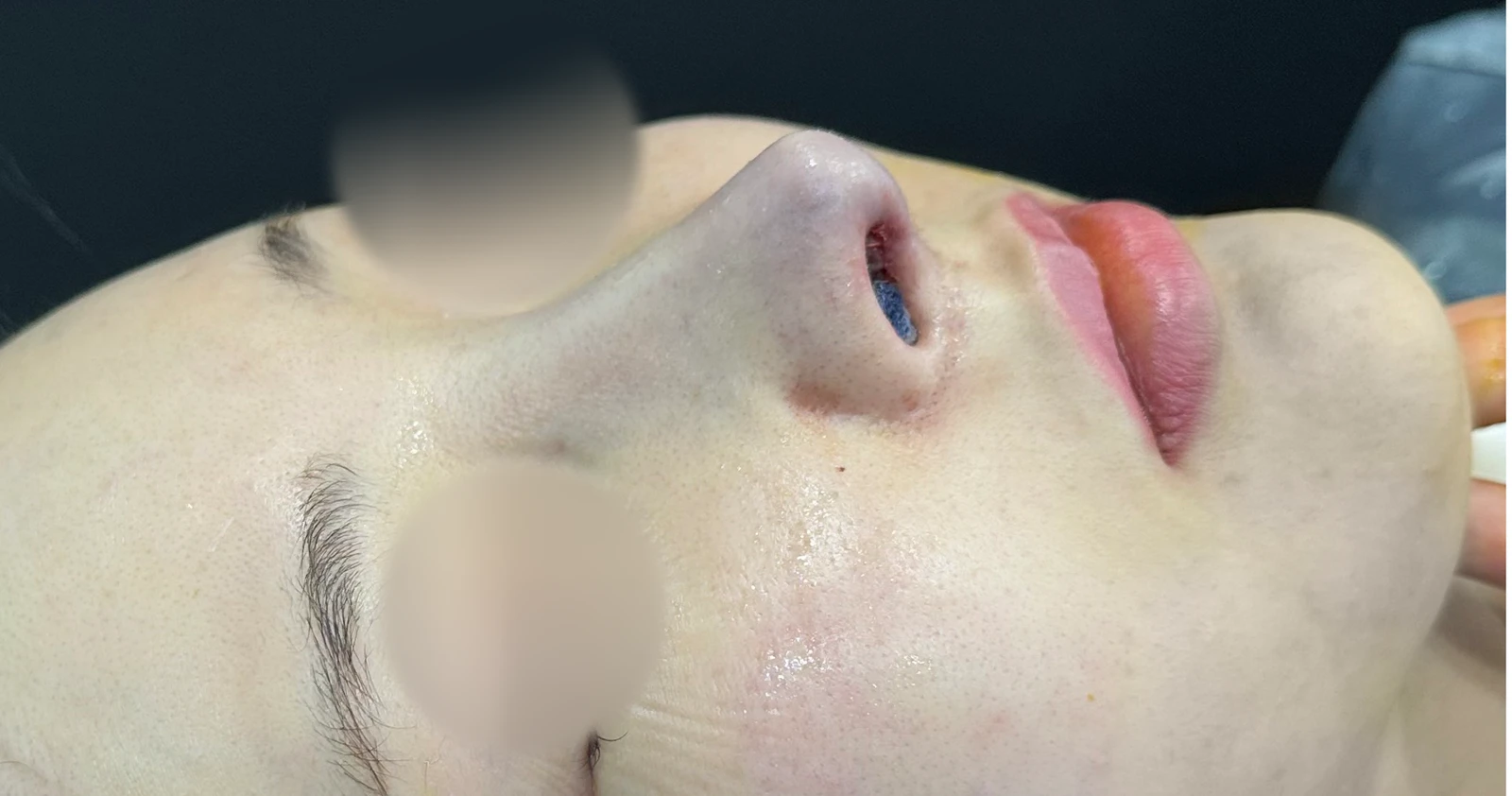
Before surgery / Day 0 immediately after surgery Photos taken immediately after surgery show swelling and may differ from the final result.
On the oblique view, a noticeable difference in the dorsal angle can be seen relative to the repositioned radix.
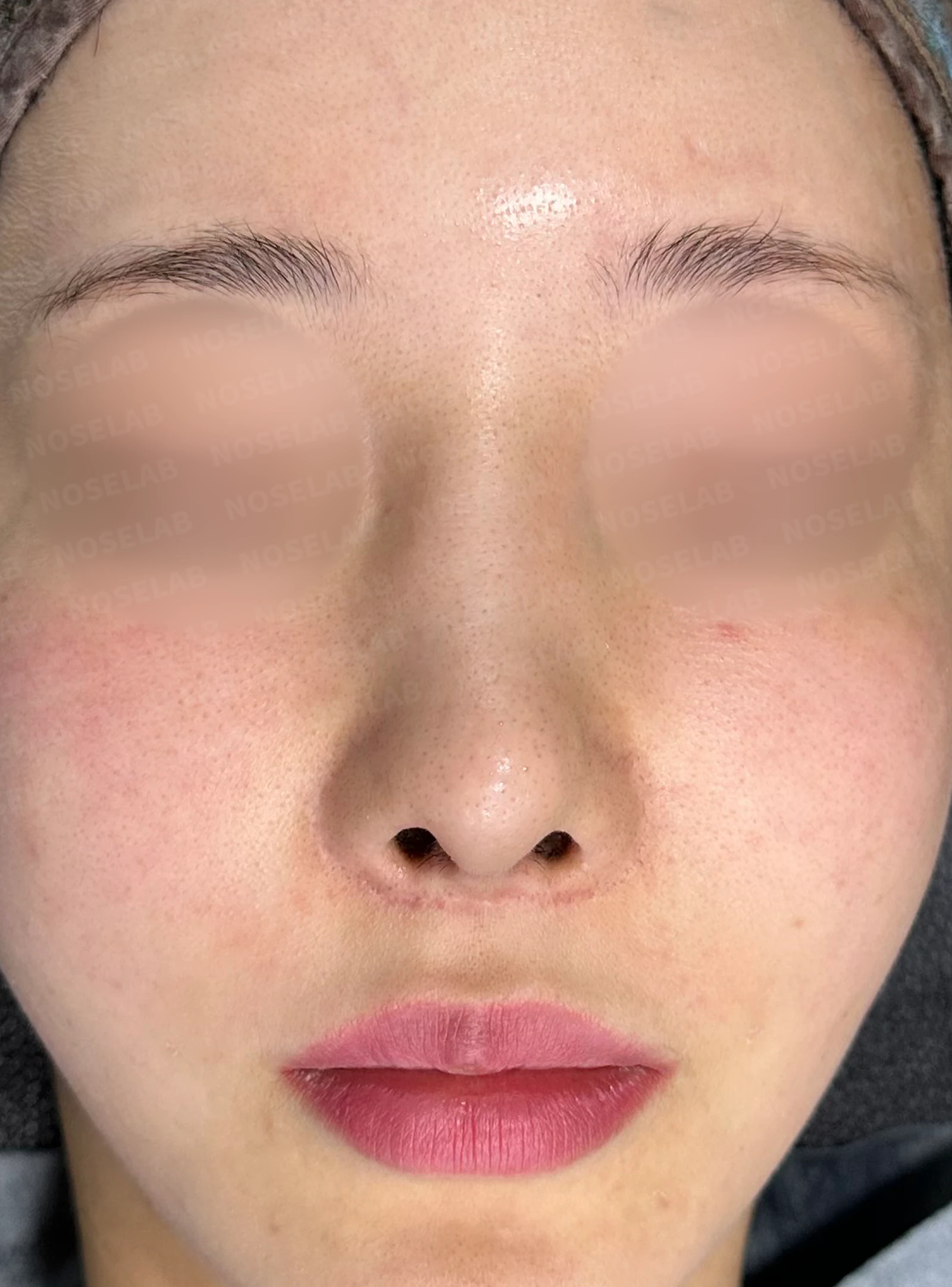
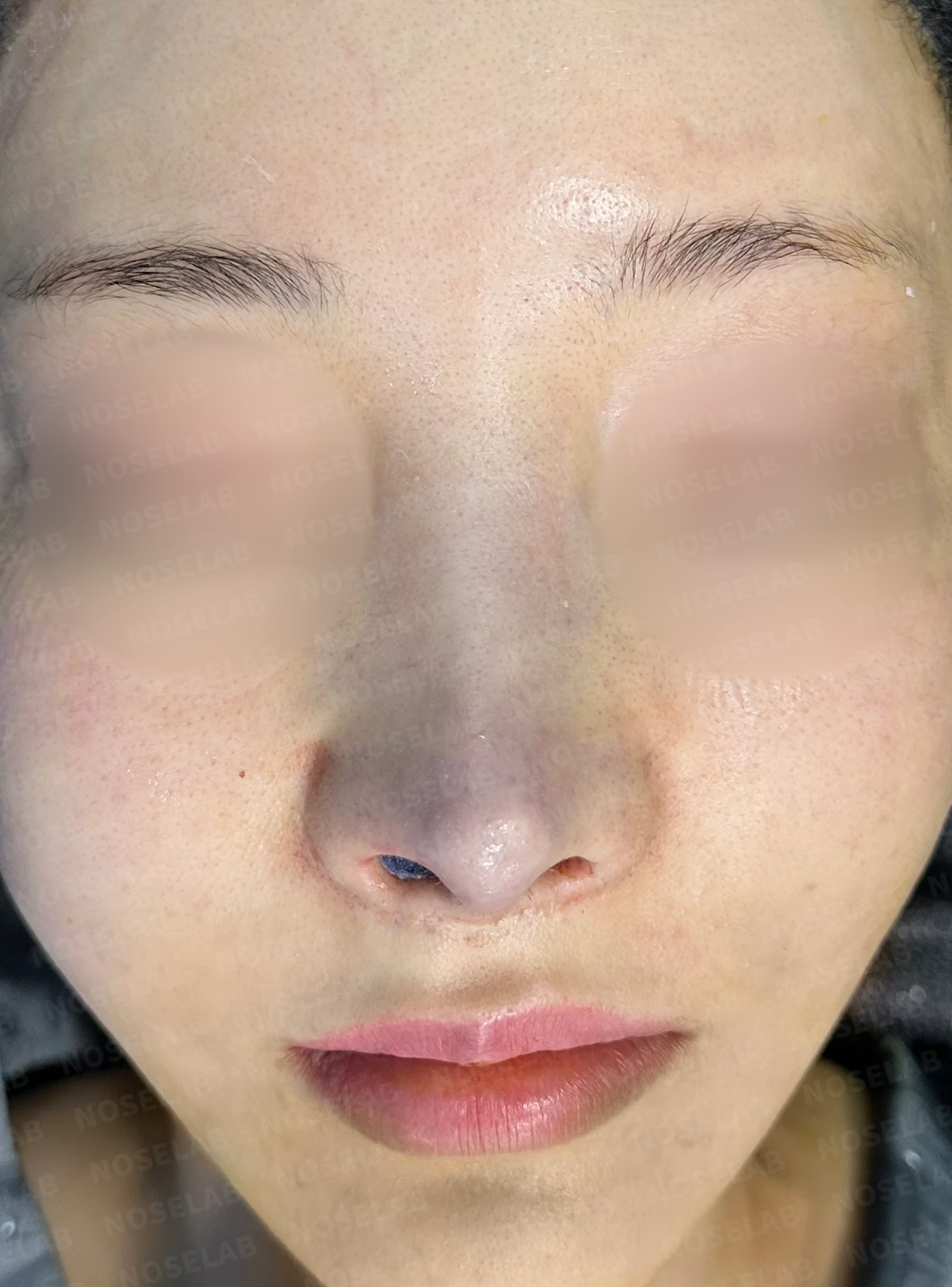
Before surgery / Day 0 immediately after surgery Photos taken immediately after surgery show swelling and may differ from the final result.
On the front view, the upturned appearance was resolved, and the C-shaped deviation showed marked improvement.
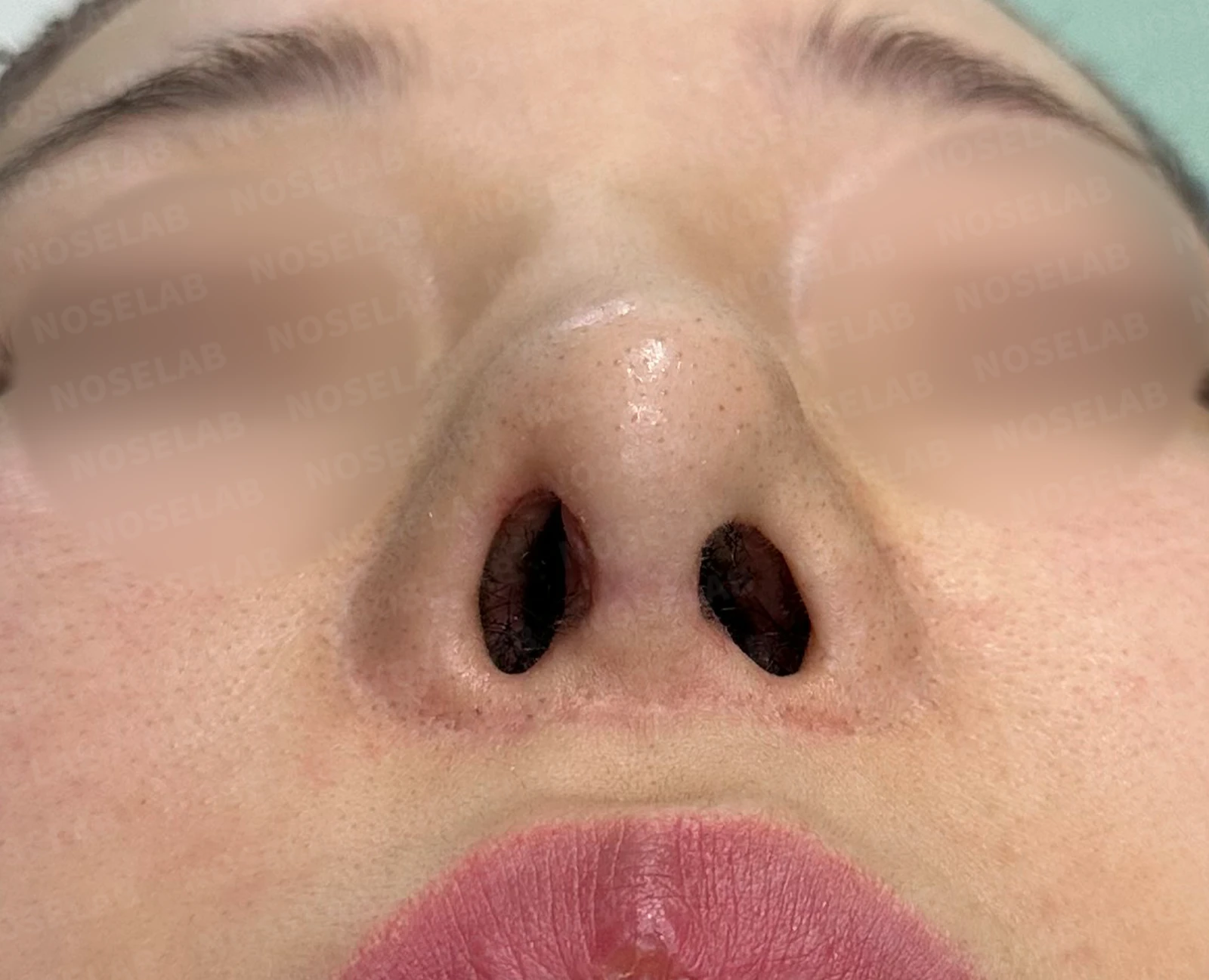
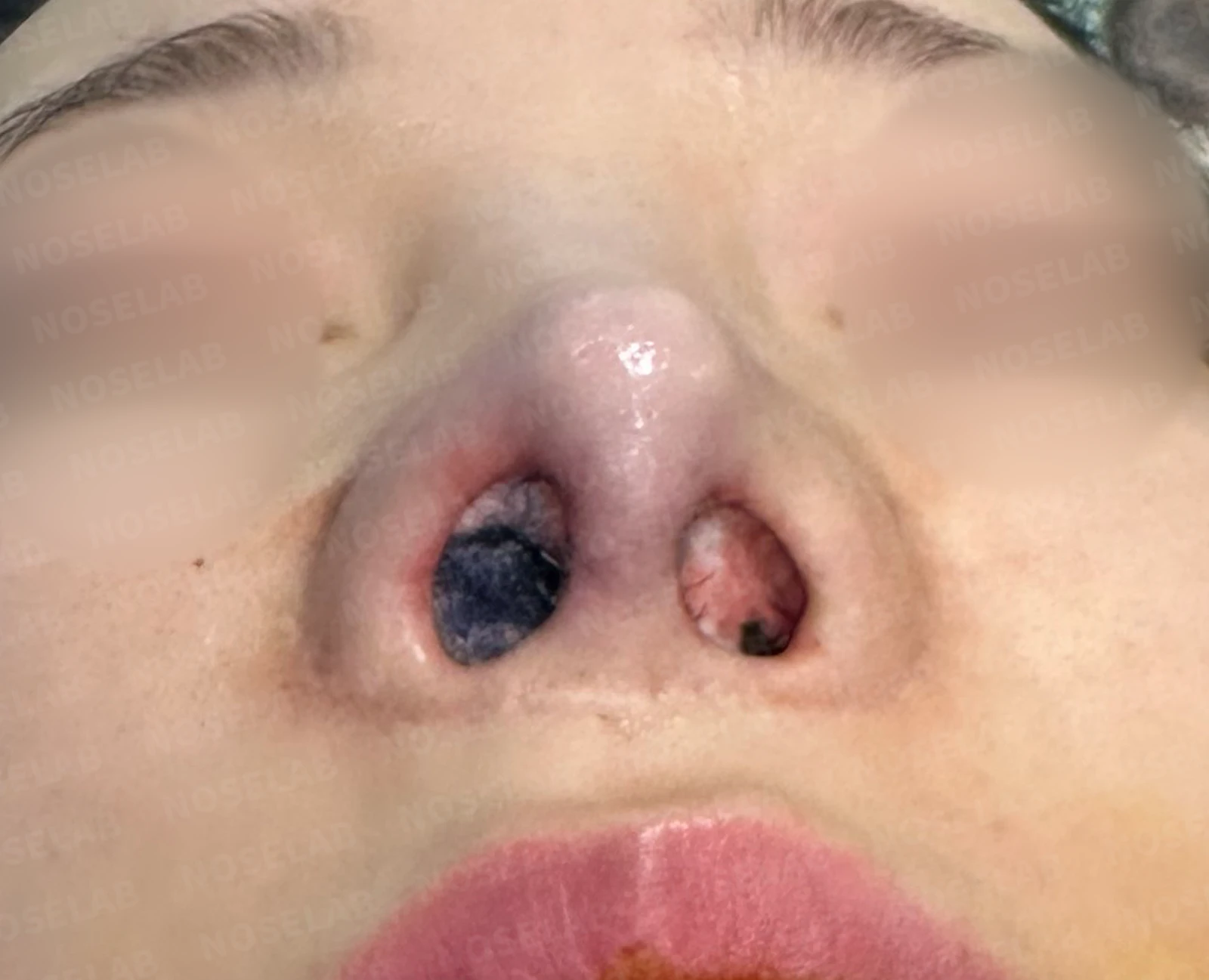
Before surgery / Day 0 immediately after surgery Photos taken immediately after surgery show swelling and may differ from the final result.
The bulbous appearance of the nasal tip was substantially refined. There was a significant amount of scar tissue at the tip, which was excised carefully with consideration for the possibility of recurrence.
Photos immediately after surgery
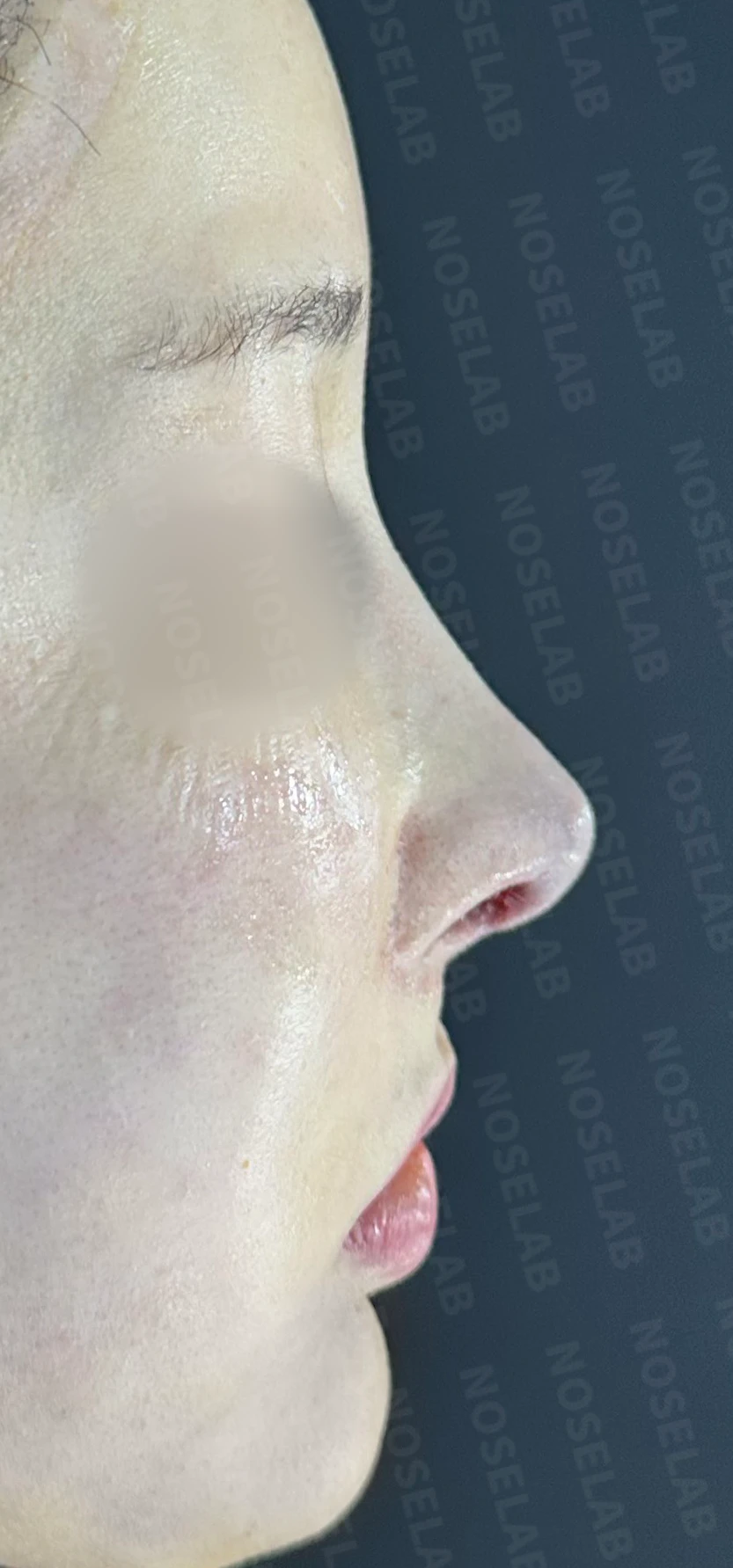
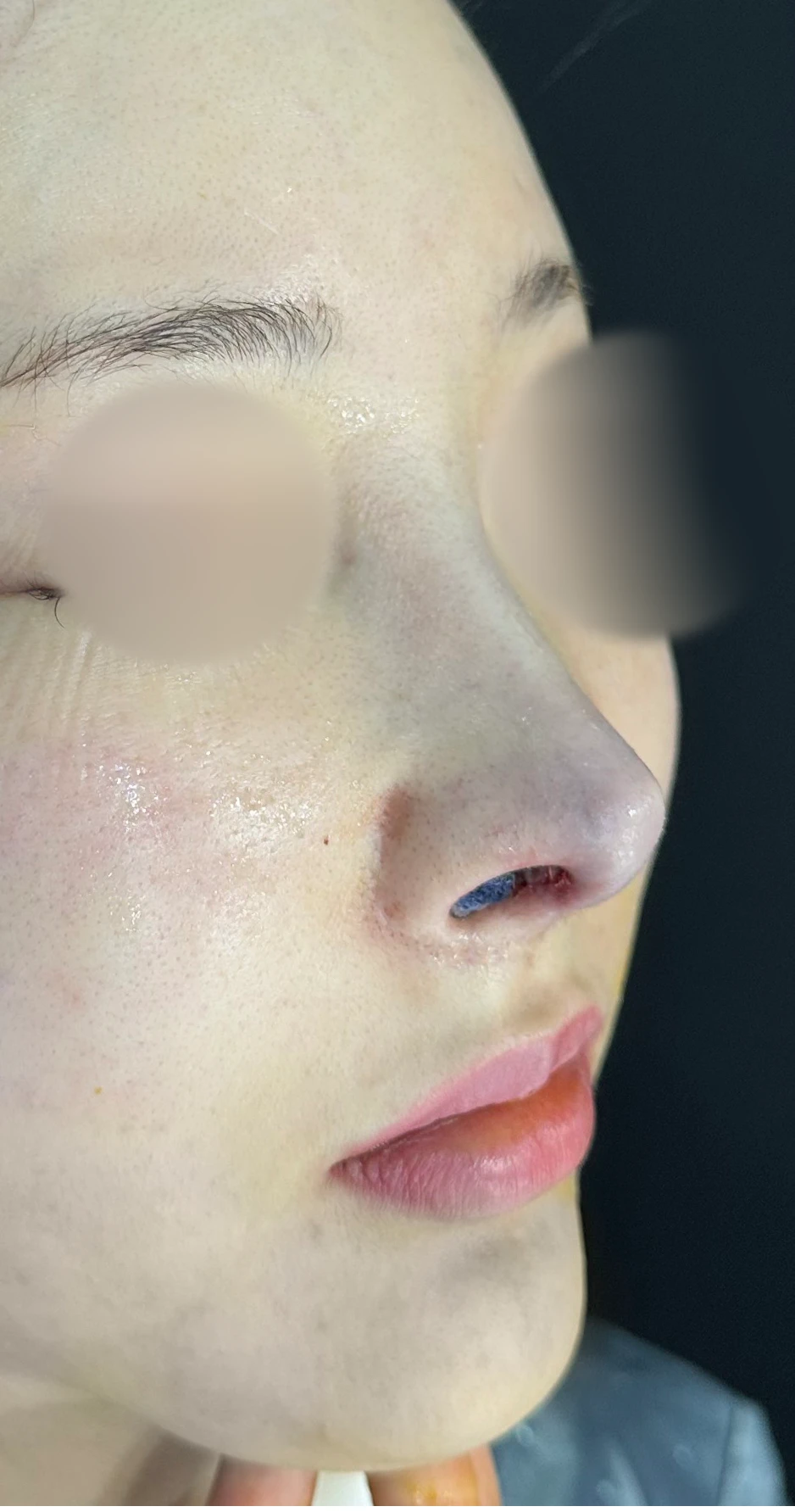
Photos immediately after surgery (Day 0): 90-degree profile, 45-degree oblique, and front view.Immediate postoperative photos show swelling and may differ from the final result.
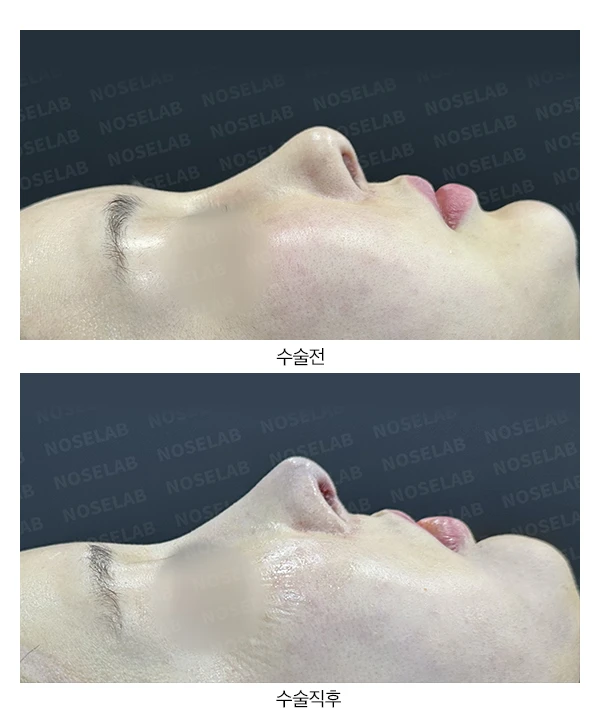
Basal (nostril) view immediately after surgery (Day 0).Immediate postoperative photos show swelling and may differ from the final result.
Conclusion
Early revision rhinoplasty is not a routine procedure. In other words, it is reserved strictly for cases where it is truly necessary. It should be considered only when a poor outcome is clear, or when it is evident that a surgical error occurred. It is not an operation to pursue simply out of dissatisfaction with the early post-operative appearance. In this case, the previous surgeon acknowledged the issue and mentioned that future correction might be difficult, so the patient decided to proceed after a consultation with us.
I advise patients to receive an accurate diagnosis to determine whether early revision is genuinely required within the first 14 days before deciding on surgery.
Today, we reviewed early revision rhinoplasty performed within 14 days after surgery. I hope this provides helpful insight for those considering early revision after surgery.
This was Dr. Peter C. Kang. Thank you.

Limitations and risks
When autologous rib cartilage is used, scarring and pain may remain at the donor site on the chest, and pneumothorax (pleural injury) can occur rarely. Over time, the grafted cartilage may warp or undergo partial resorption.
When revising after implant removal, contracture may progress again after removal, the nasal height and length may decrease, and staged surgery may be necessary depending on the skin condition.
Common potential risks include infection, bleeding, asymmetry, scarring, skin necrosis, and insufficient improvement; results vary depending on individual skin condition and previous surgical history.