Hello.
I am Dr. Peter C. Kang, medical director.
It is Saturday evening now. This week seemed to pass by before I even realized it. Next week is already May. Time truly flies.
Today, I will share the case of a male patient whose primary complaint was nasal obstruction, and who visited to correct a long nose, an arrow-shaped nose, and a crooked nose.
Preoperative design consultation
Let us take a look at the preoperative design consultation.
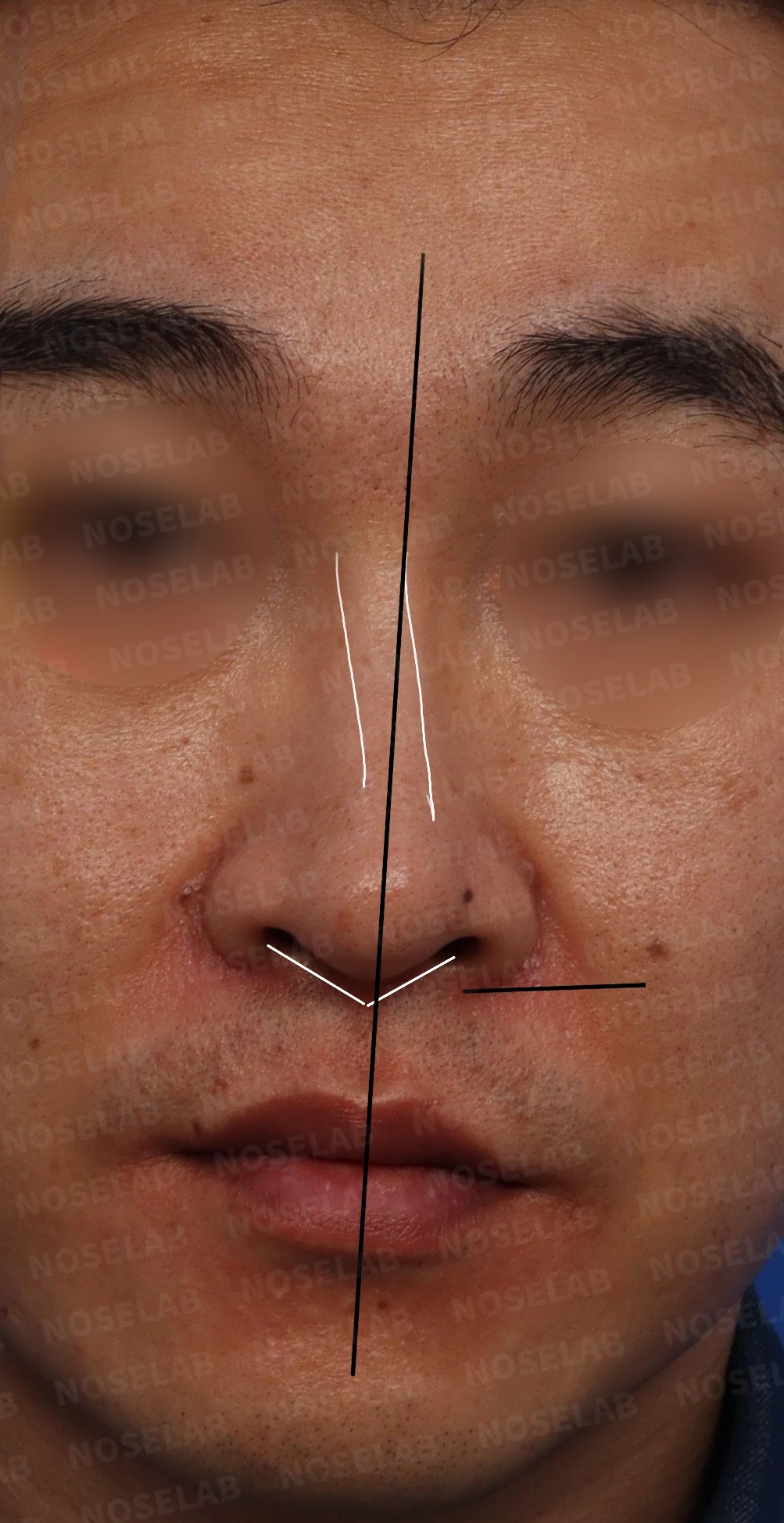
Preoperative front view photo
Front view
Arrow nose
Crooked nose
Long nose
Wide nose
From the front, the patient's nose appeared obliquely deviated, and the nasal tip was wide and spread out, forming an arrow-shaped long nose. It was a typical long nose appearance.
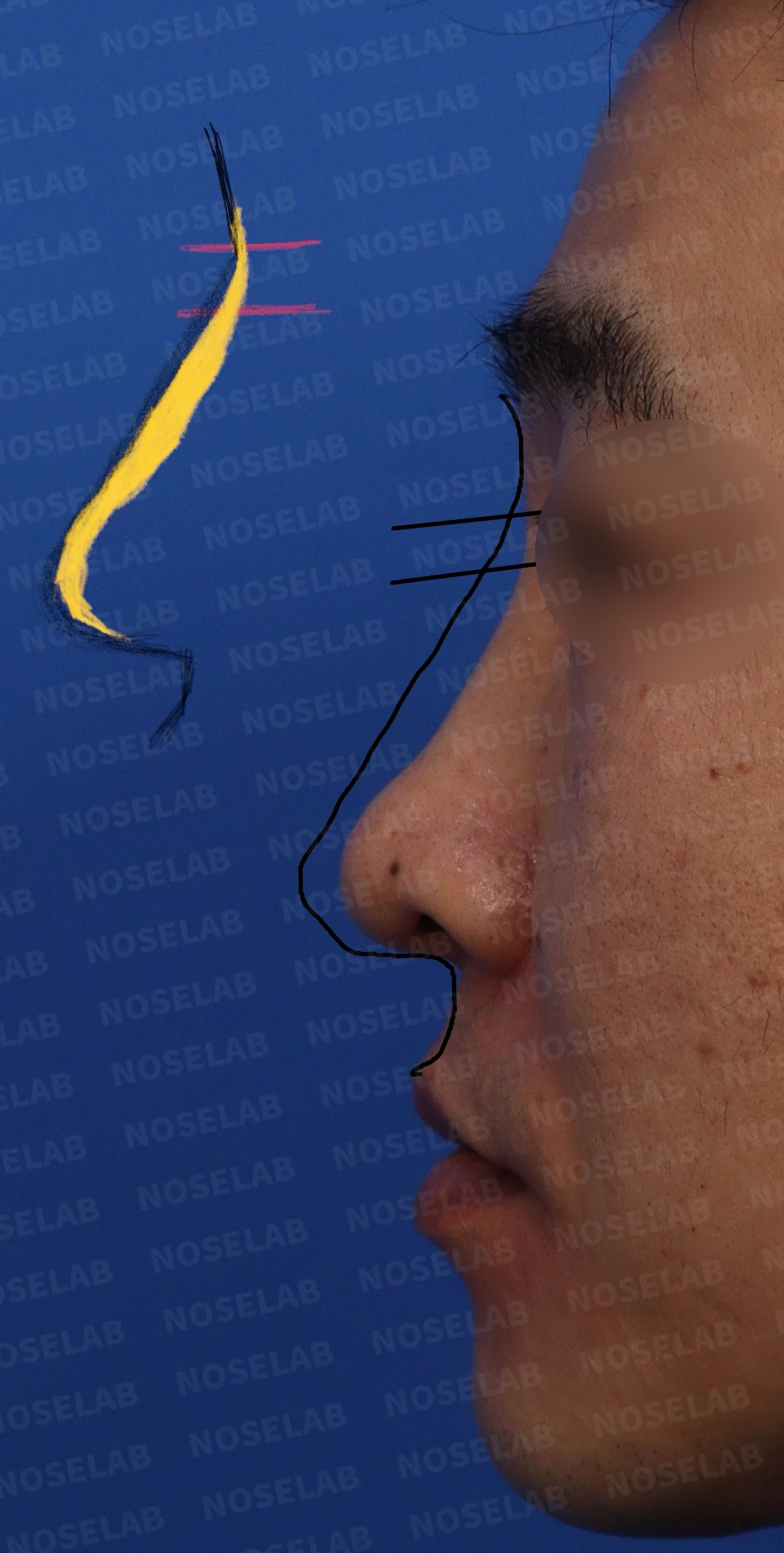
Preoperative profile view photo
Profile view
Low nasal bridge
Depressed nasal dorsum
Drooping alar wings
In the profile view, the nasal bridge was low with curvature along the dorsum, the transition between the bridge and tip was unnatural, and the alae appeared significantly drooping.
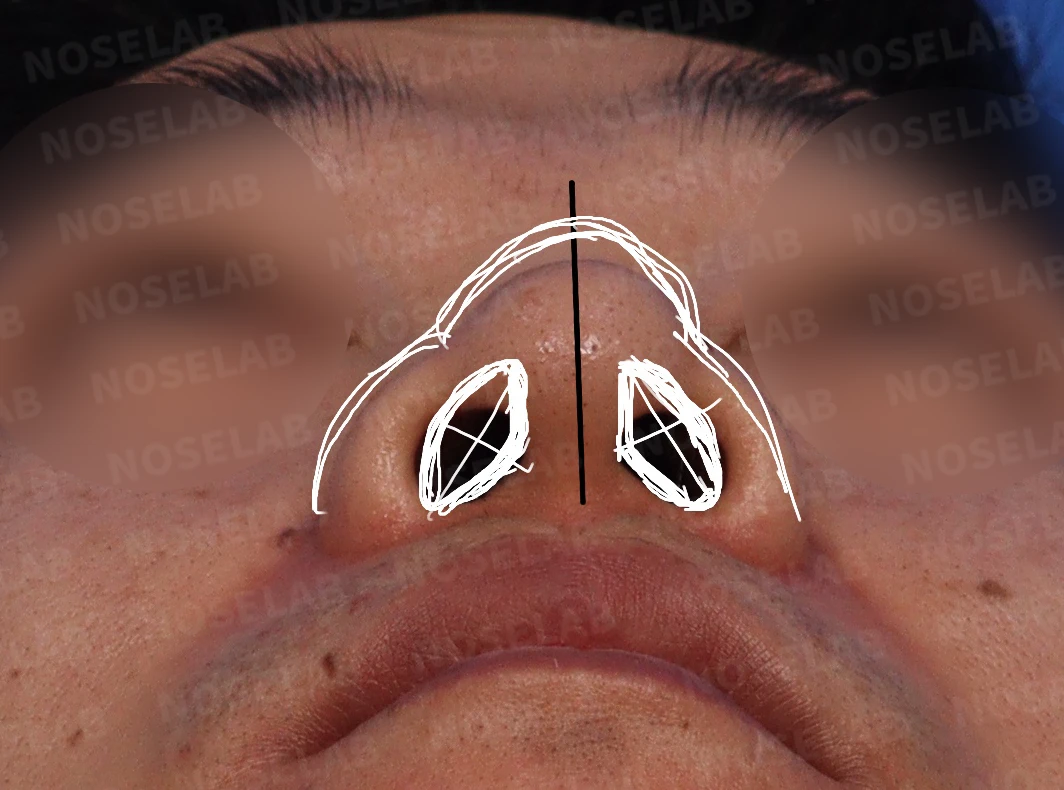
Preoperative basal (nostril) view
Nostrils
Nostril asymmetry
Bulbous nose
Wide nose
There was nostril asymmetry, and the tip looked blunt and spread out.
Surgical plan
The patient complained of nasal obstruction. On preoperative paranasal sinus computed tomography (CT), the septum was completely bent to the left, the right inferior turbinate was markedly hypertrophied, a cystic lesion was observed in the right maxillary sinus, and partial opacification was noted in the sphenoid sinus. Under diagnoses of deviated septum, hypertrophic rhinitis, and chronic rhinosinusitis, functional surgery (septoplasty and radiofrequency laser submucosal resection of the inferior turbinate) was planned.
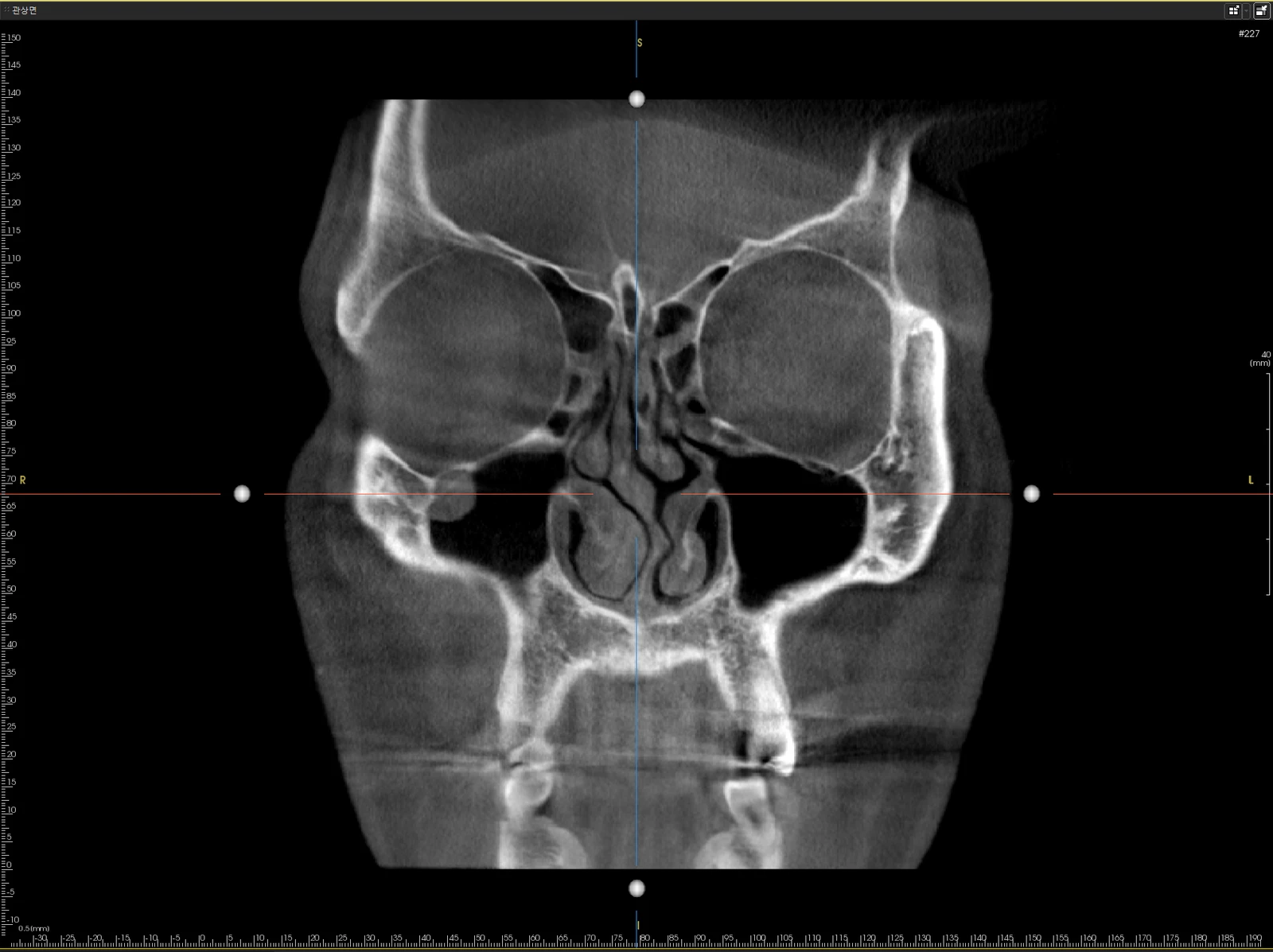
Preoperative computed tomography (CT) images.
Lateral osteotomy of the nasal bones was planned to correct the crooked nose, and a silicone implant was planned to improve the low nasal bridge.
For tip correction, septal extension was planned using septal cartilage and donor rib cartilage while simultaneously correcting the deviated septum.
Preoperative photo vs immediately after surgery photo
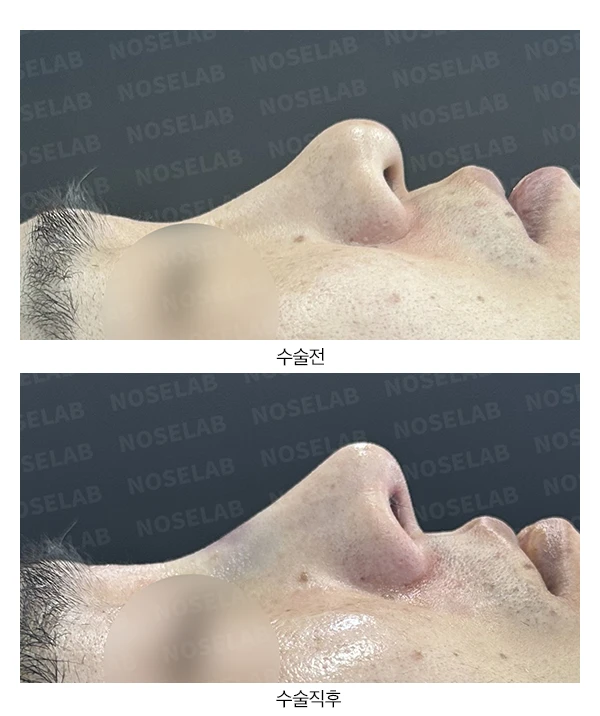
Let us compare the preoperative photo with the photo taken immediately after surgery on day 0. Photos taken immediately after surgery show swelling and may differ from the final result.
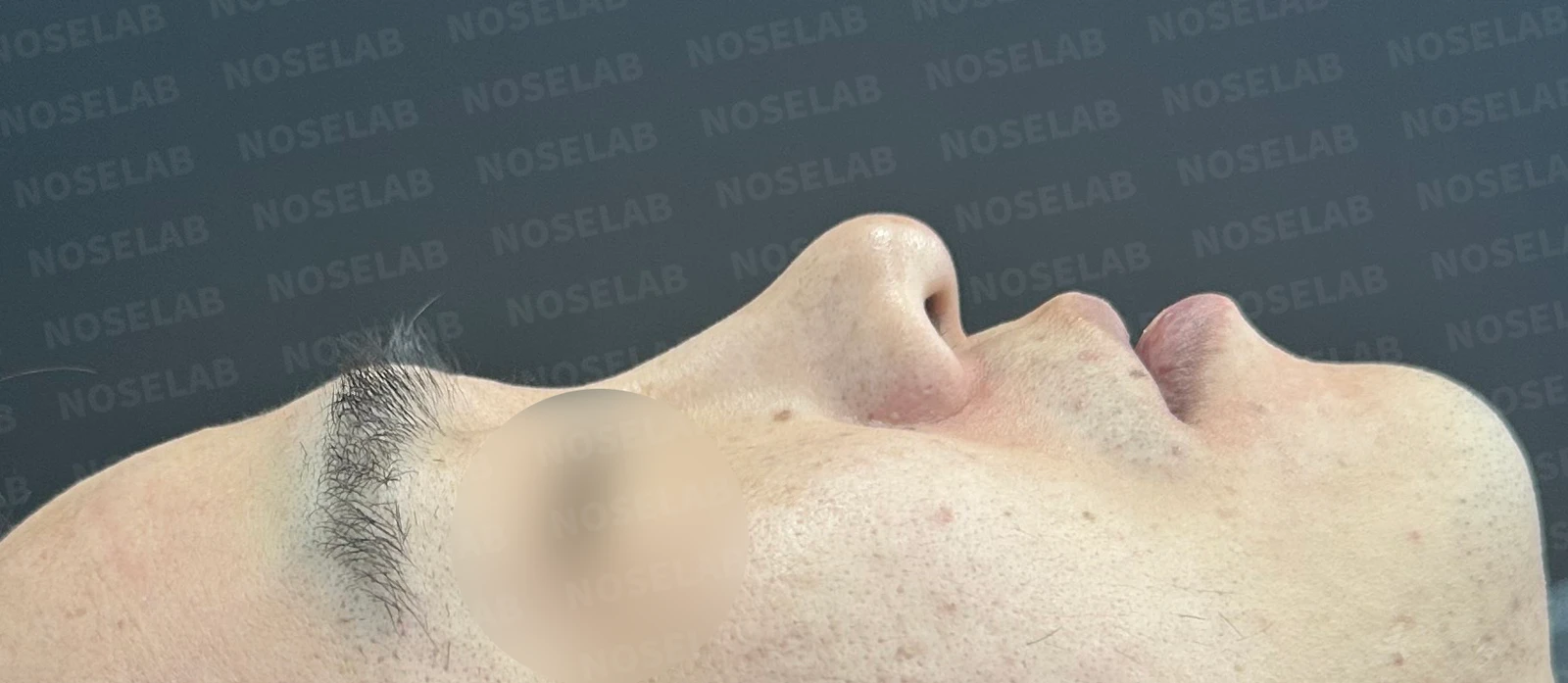
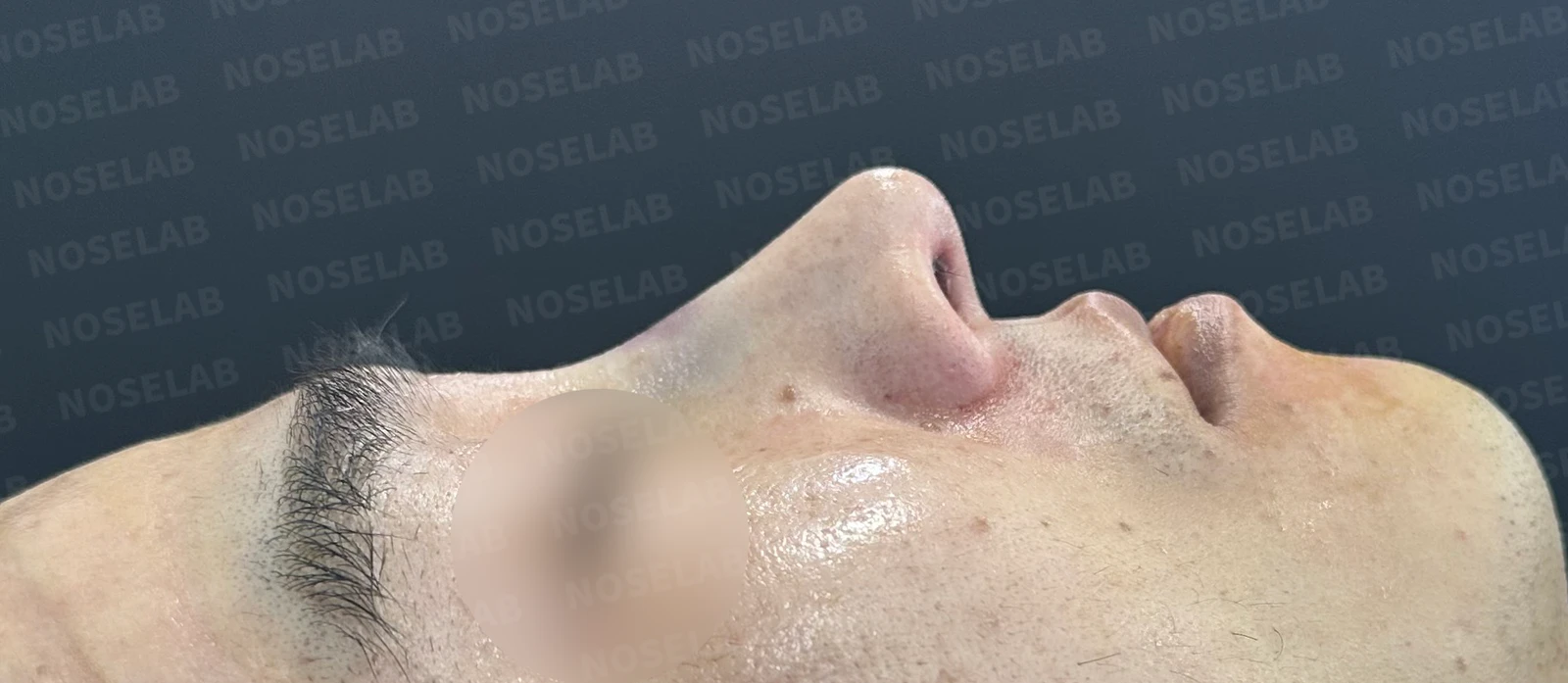
Before surgery / Day 0 immediately after surgery Photos taken immediately after surgery show swelling and may differ from the final result.
In the 90-degree profile view, the irregular curvature on the nasal dorsum was smoothed into a straight line, the height between the eyebrows was naturally elevated, and both the drooping tip sensation and the blunt appearance improved. The nasolabial angle was also corrected to approximately 90 degrees.
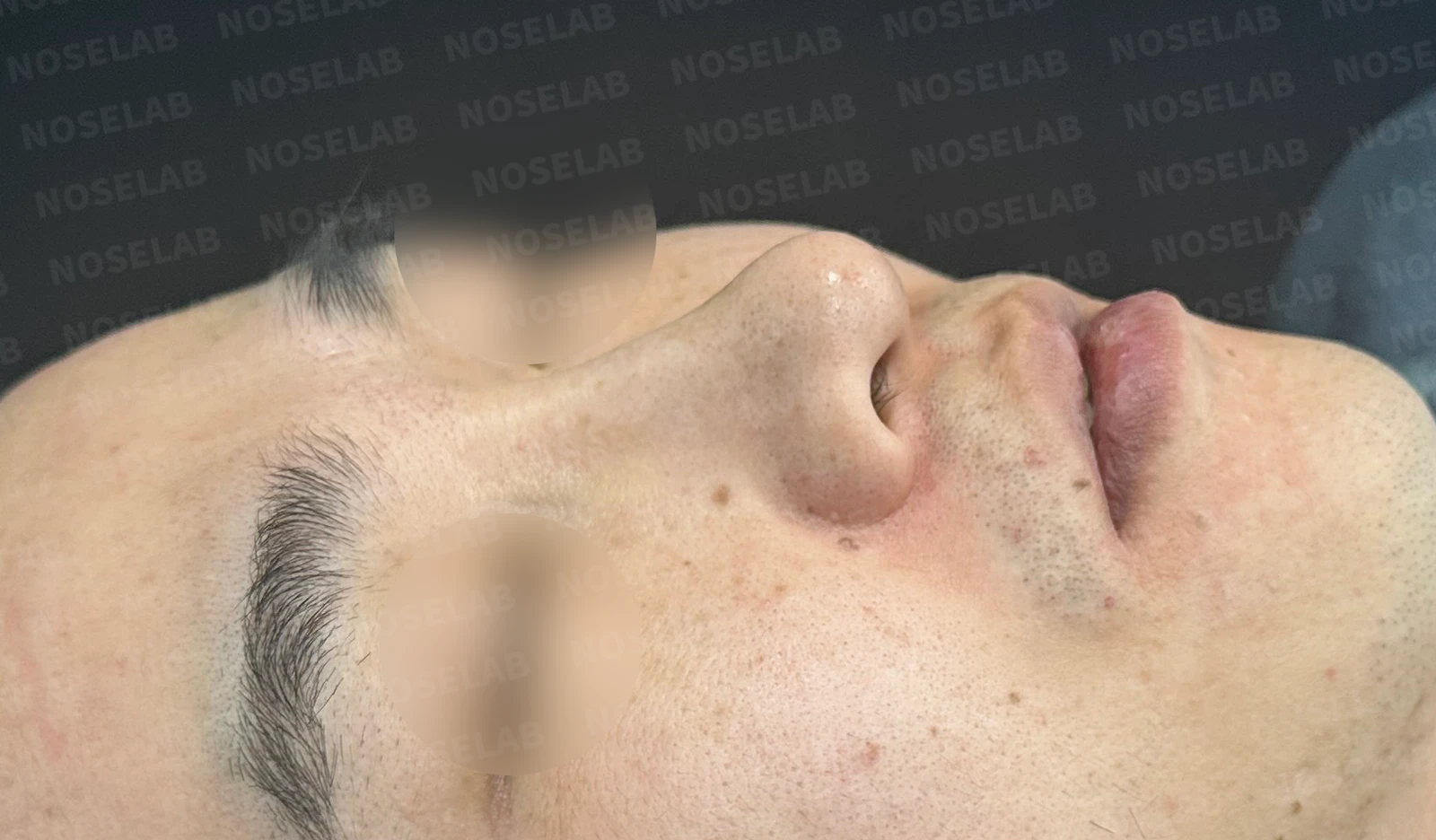
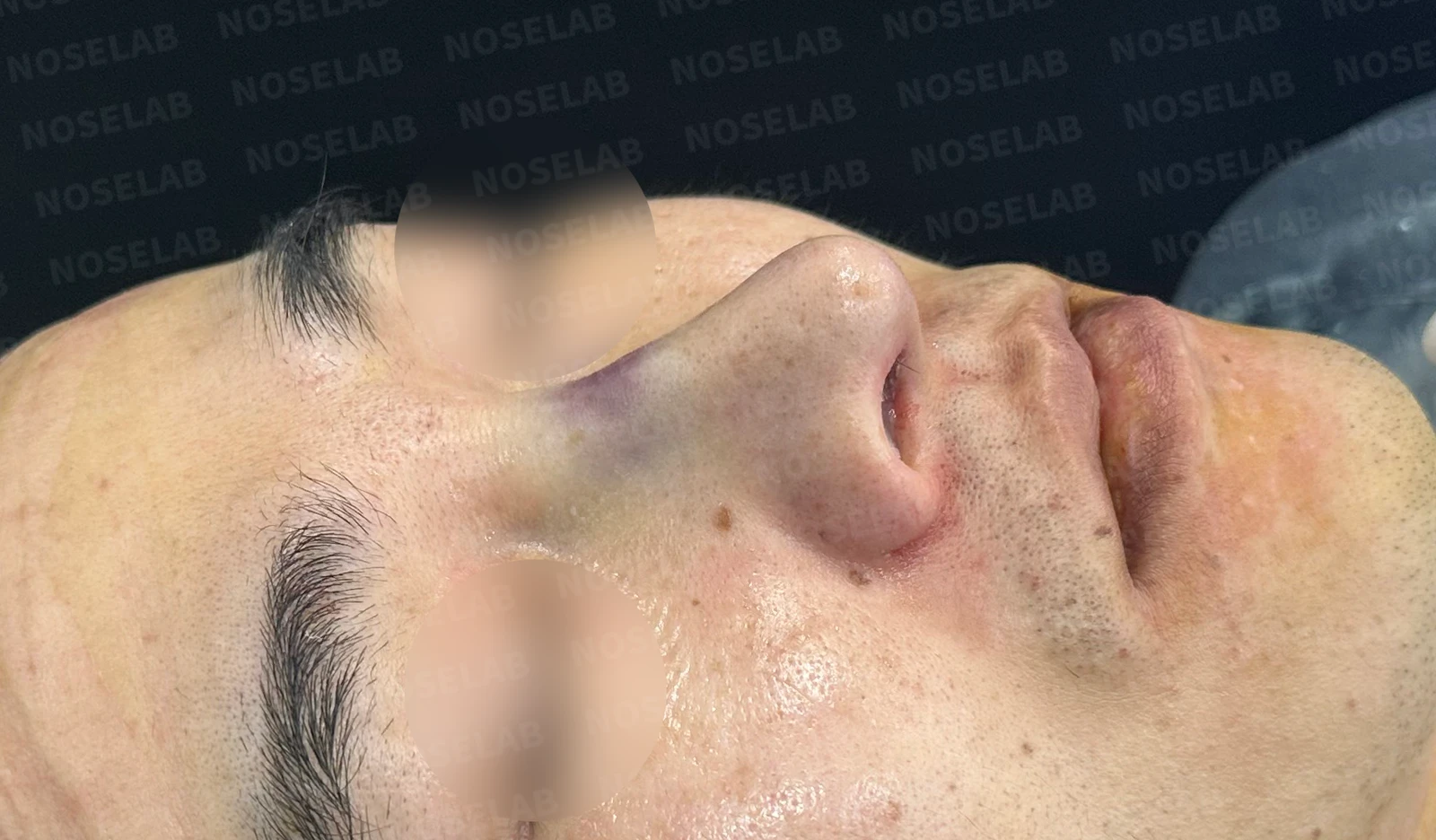
Before surgery / Day 0 immediately after surgery Photos taken immediately after surgery show swelling and may differ from the final result.
In the 45-degree oblique view, the previously depressed area of the nasal dorsum clearly appears corrected.
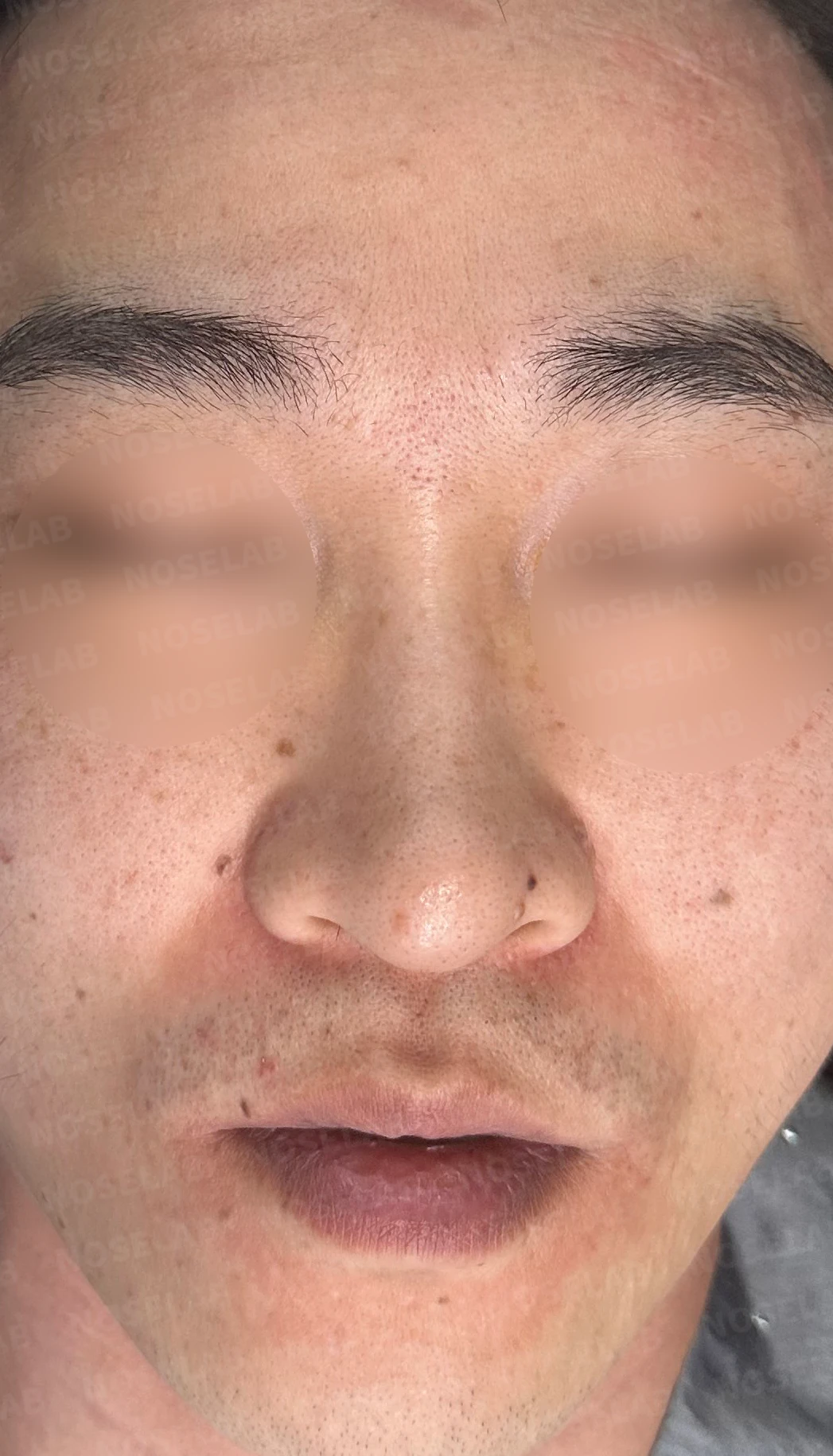
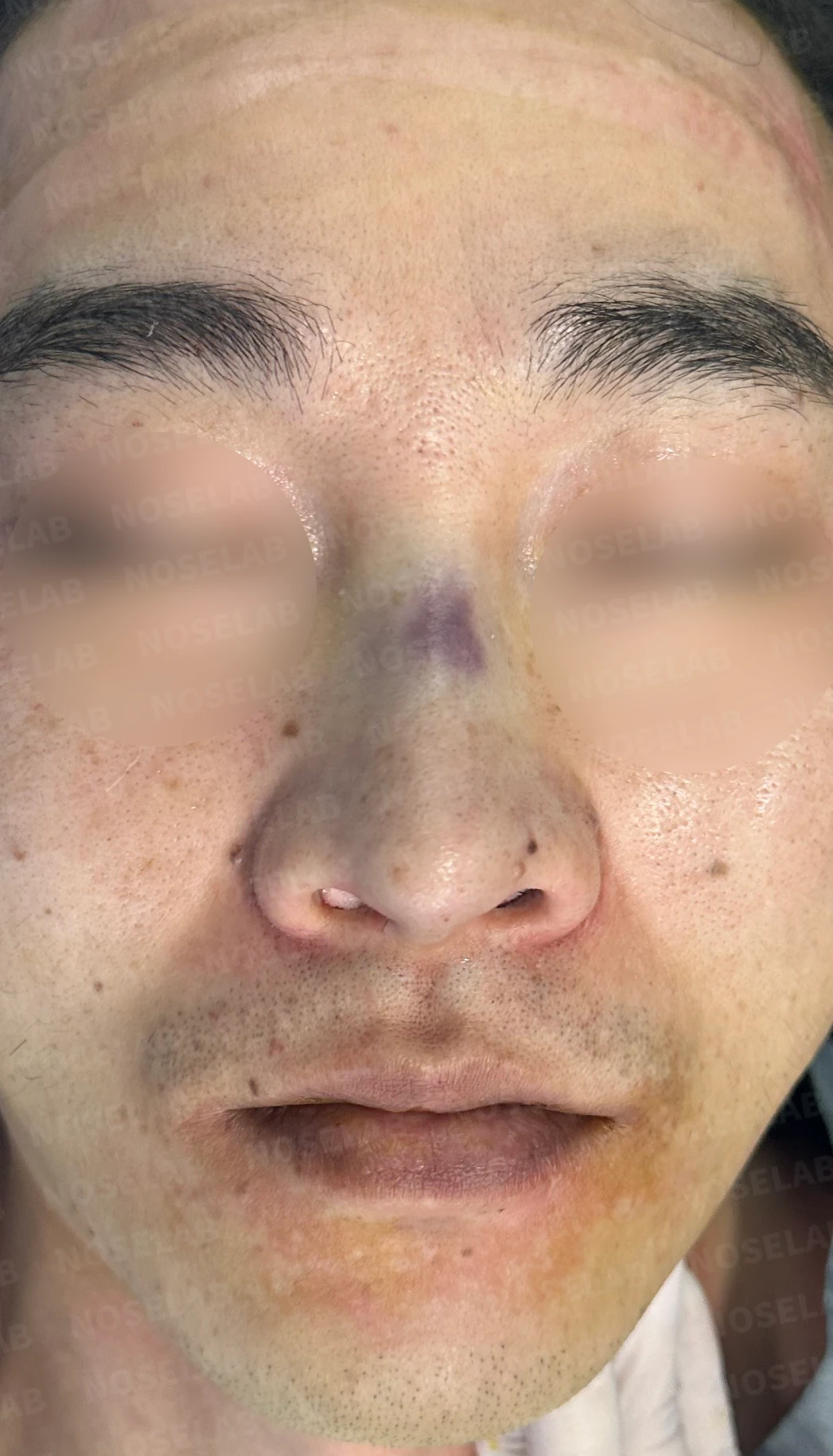
Before surgery / Day 0 immediately after surgery Photos taken immediately after surgery show swelling and may differ from the final result.
In the front view, the heavily drooping tip and arrow-like appearance are visibly corrected in a natural manner.
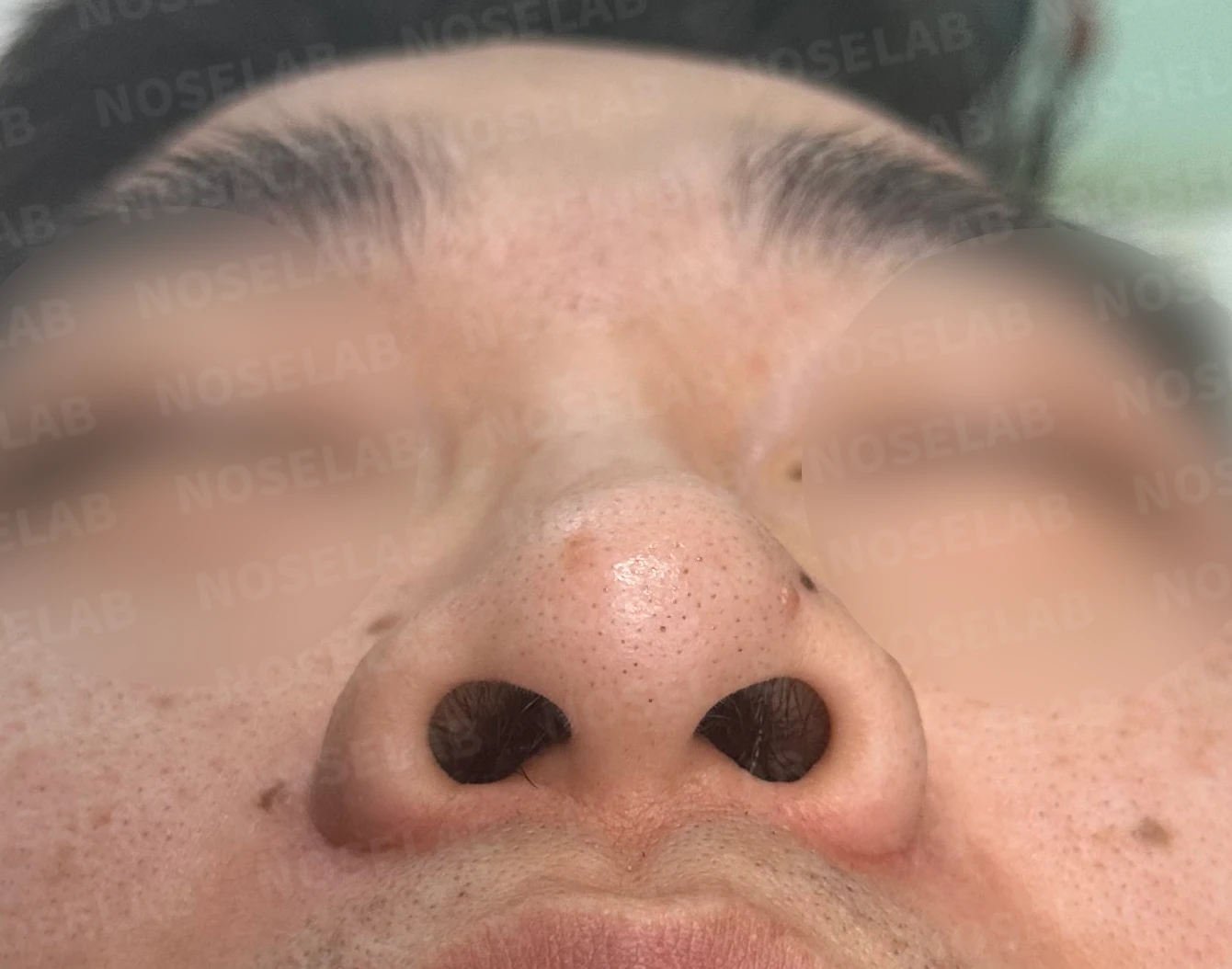
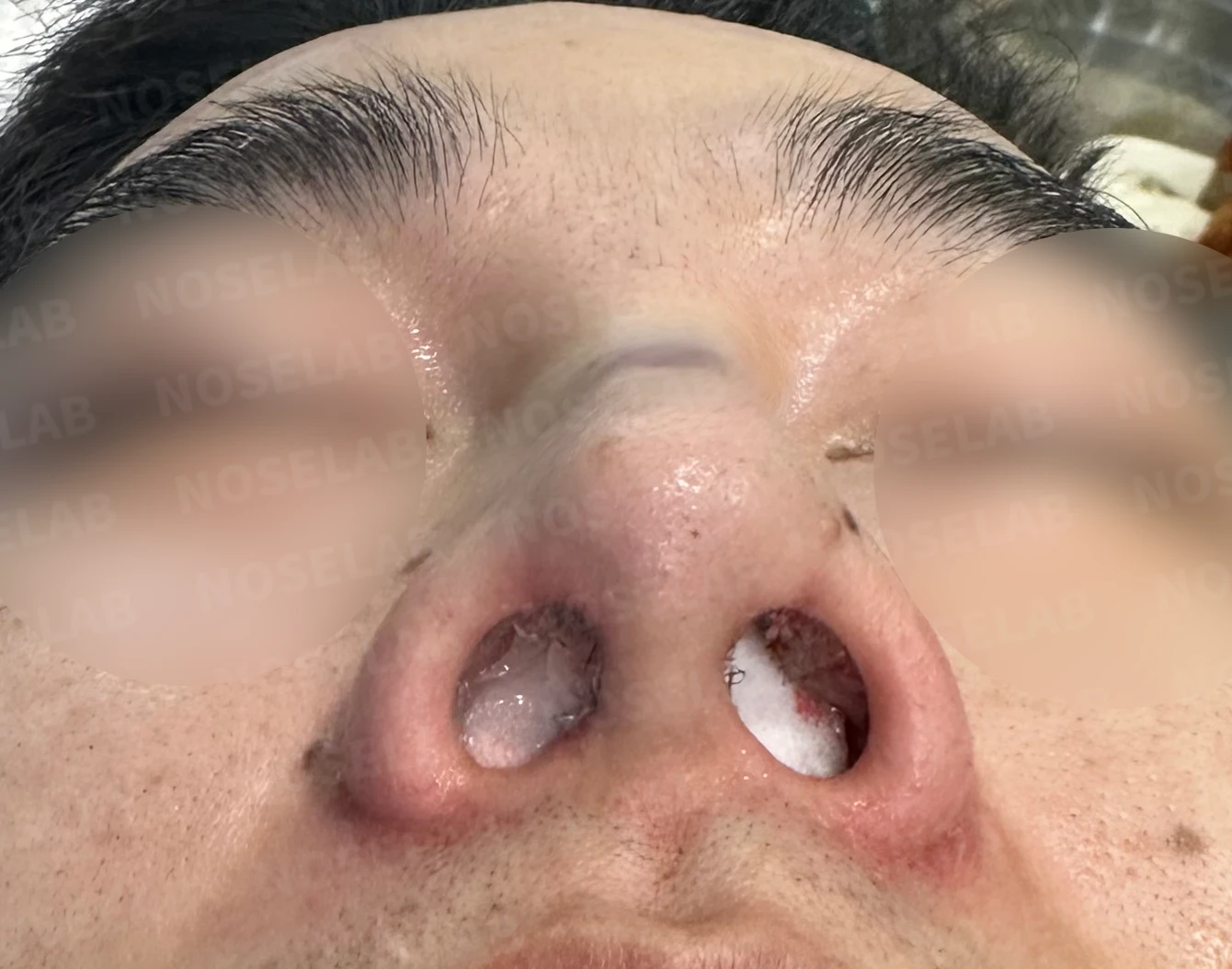
Before surgery / Day 0 immediately after surgery Photos taken immediately after surgery show swelling and may differ from the final result.
Looking at the nostril view, the laterally spread and asymmetric nostrils have become much more natural.
Photos immediately after surgery
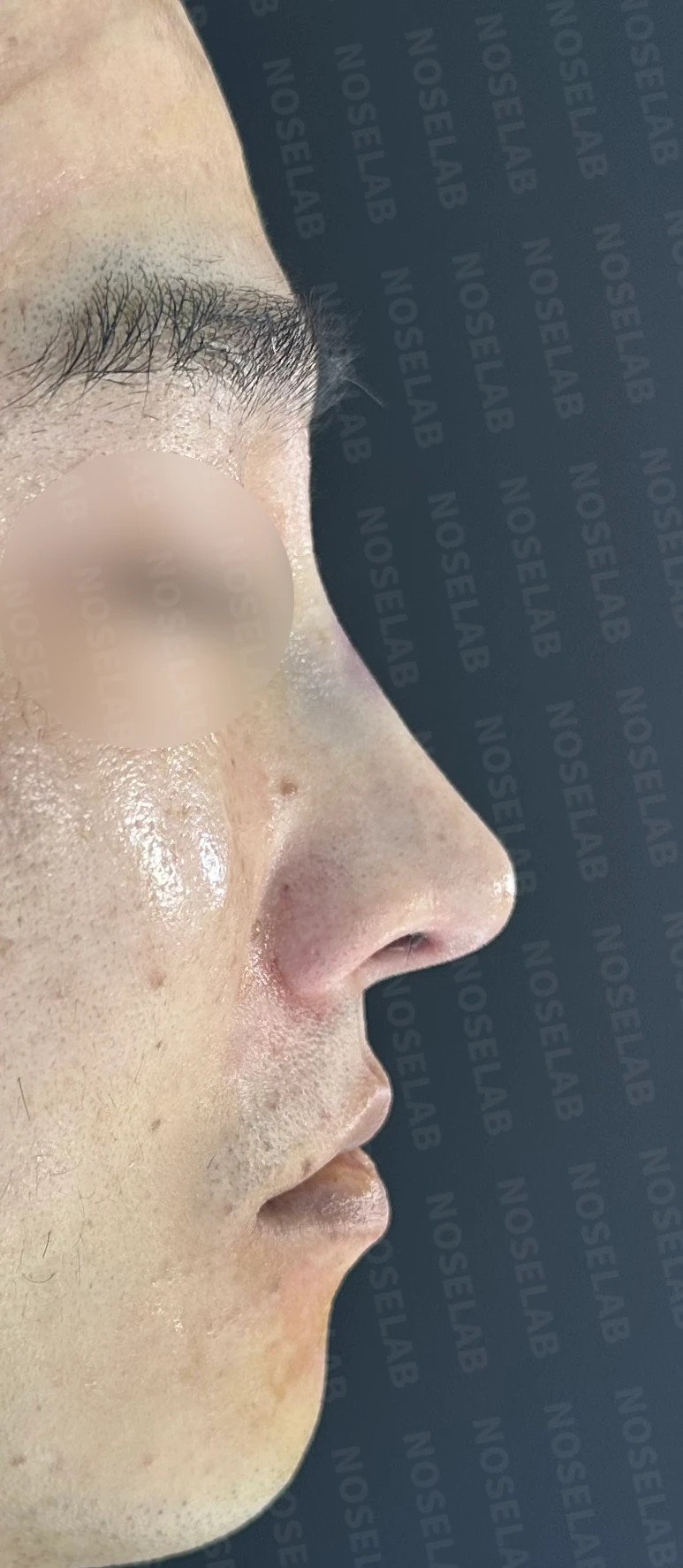
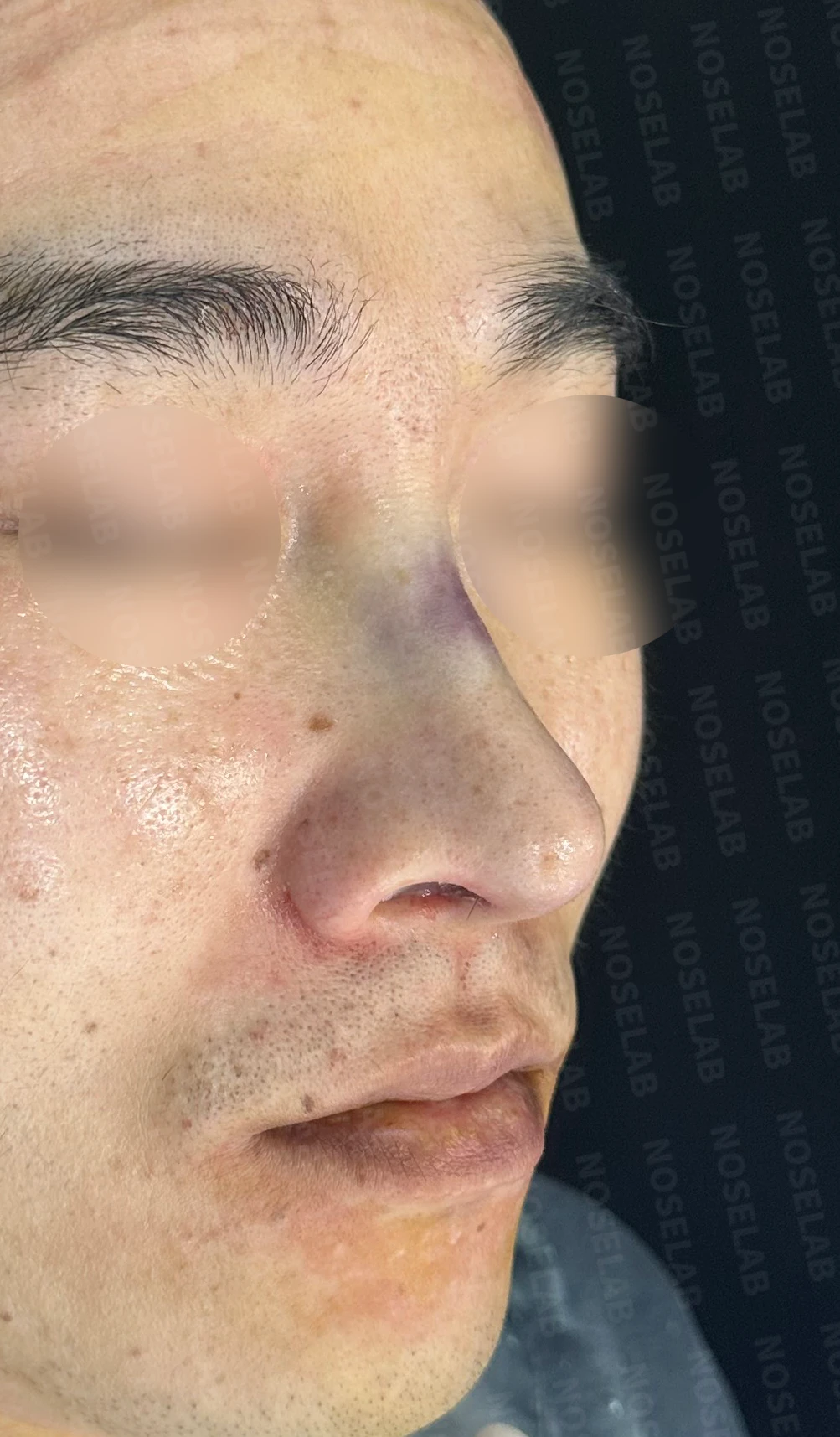
90-degree profile, 45-degree oblique, and front photos taken immediately after surgery on day 0. Photos taken immediately after surgery show swelling and may differ from the final result.
Basal (nostril) view immediately after surgery (Day 0).Immediate postoperative photos show swelling and may differ from the final result.
My thoughts on correcting an arrow-shaped nose
An arrow-shaped nose is symbolic of a long nose. When a nose is long with a dorsal hump and a drooping tip, it typically appears as an arrow shape from the front. In Korea, the term arrow-shaped nose became widely recognized thanks to a well-known comedian, making it very familiar to domestic patients. However, we treat many international patients at our clinic, and it can feel unfamiliar to see how many of them are not used to this term.
The most crucial aspect of correcting an arrow-shaped nose is building a sturdy nasal tip framework. To achieve this, the septal cartilage must first be straight and firm. The tip must then be supported using strong, adequately sized cartilage. At times, slight overcorrection toward an upturned appearance is necessary. In patients with large, arrow-shaped noses, the recoil forces pulling the tissues back to their original state are substantial; without appropriate overcorrection, the arrow-like appearance can recur. In arrow-shaped nose correction, the surgical materials can often be even more critical than the technique itself.
Today, we discussed the correction of an arrow-shaped nose. I hope this proves helpful to those concerned about an arrow-shaped nose.
This was Dr. Peter C. Kang. Thank you.

Limitations and risks
When using donor rib cartilage, long-term follow-up is necessary because the grafted cartilage may resorb or warp.
When the septum is corrected at the same time, nasal obstruction may persist or recur, and in rare cases, septal perforation or changes in smell may occur.
Common potential risks include infection, bleeding, asymmetry, scarring, skin necrosis, and insufficient improvement; results vary depending on individual skin condition and previous surgical history.