Hello.
I am Dr. Peter C. Kang, medical director.
Yesterday, I went for a brief run wearing a hoodie and a windbreaker, and it felt surprisingly hot. The mornings are chilly while the afternoons are warm, making it prime weather for catching a cold. I woke up this morning with a slightly hoarse throat. Usually, cold viruses tend to spare ENT specialists, but recent viruses seem unaware of that rule. Just a joke, of course. Please take good care of your health during this change of seasons.
Today, let us talk about the arrow-shaped nose. In Korea, when people think of an arrow-shaped nose, a certain well-known comedian often comes to mind. What we commonly call an arrow-shaped nose typically refers to a long, drooping nose. In practice, when I mention the concept of an arrow-shaped nose to international patients, many find the term unfamiliar.
The patient who underwent surgery today had this type of arrow-shaped, long, drooping nose. Here are the photos taken during the preoperative design consultation.
Preoperative design consultation
<Front view>
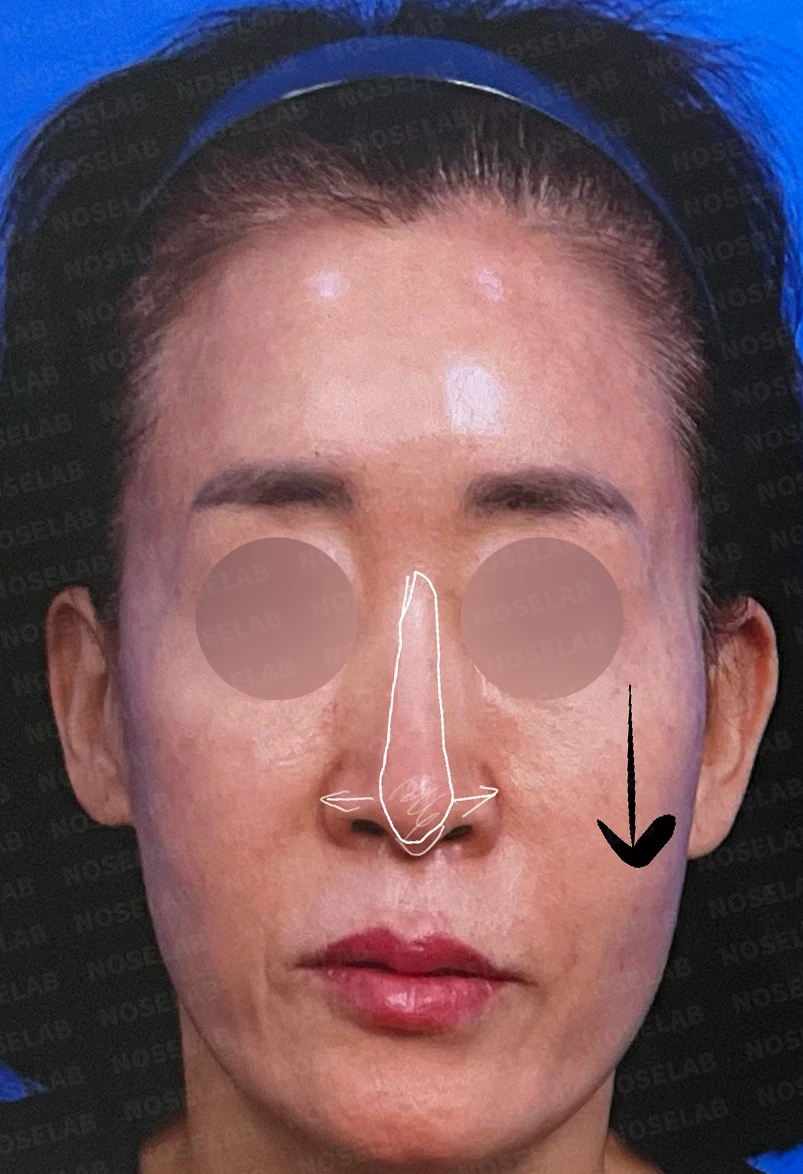
Preoperative design consultation front view.
Arrow-shaped nose, long nose
Crooked nose, nostril asymmetry, alar asymmetry
Wide nose
<Profile view>
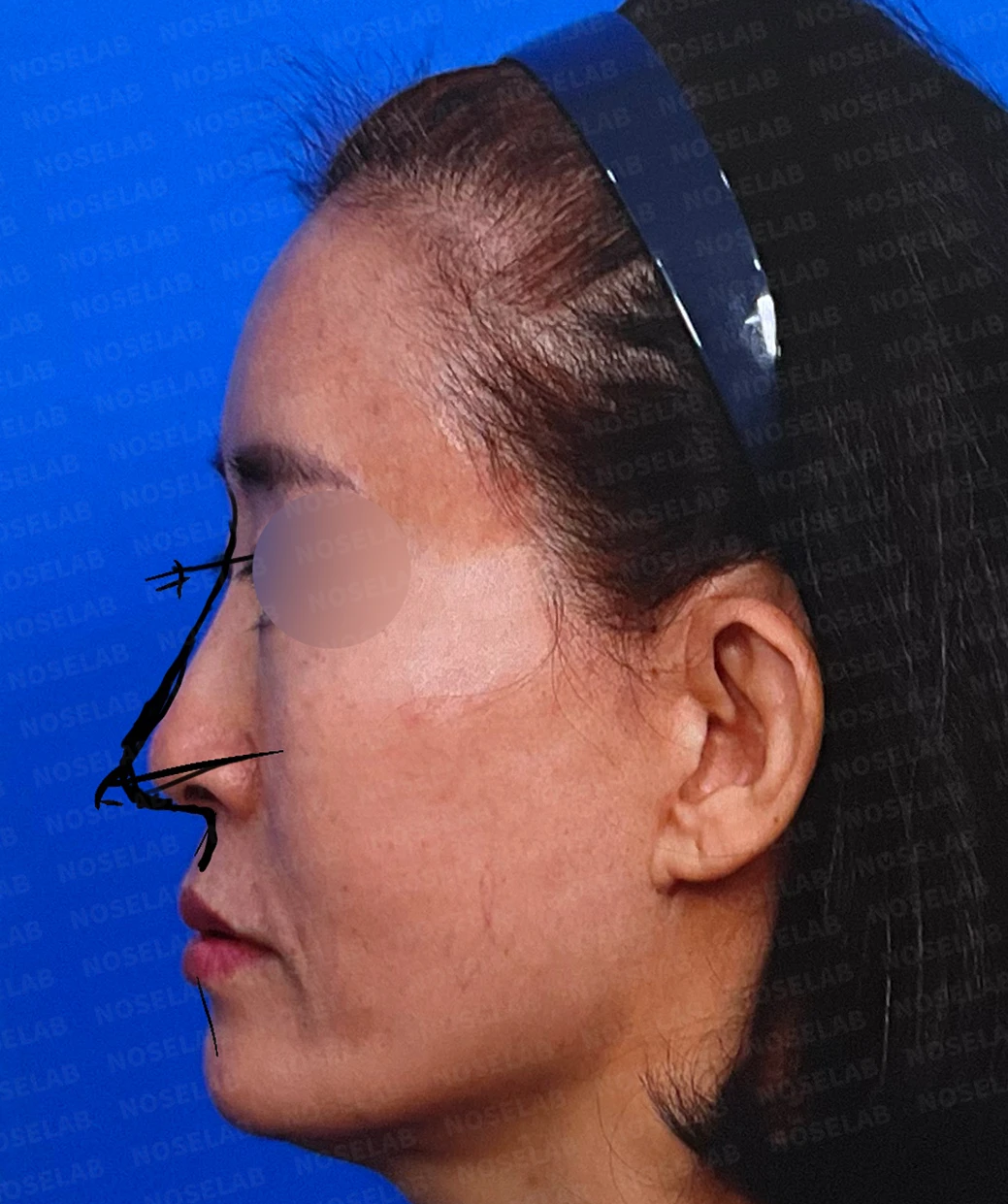
Preoperative design consultation profile view.
Drooping nose
Minor dorsal hump
High radix
Protruding mouth, narrow nasolabial angle
<Basal (nostril) view>
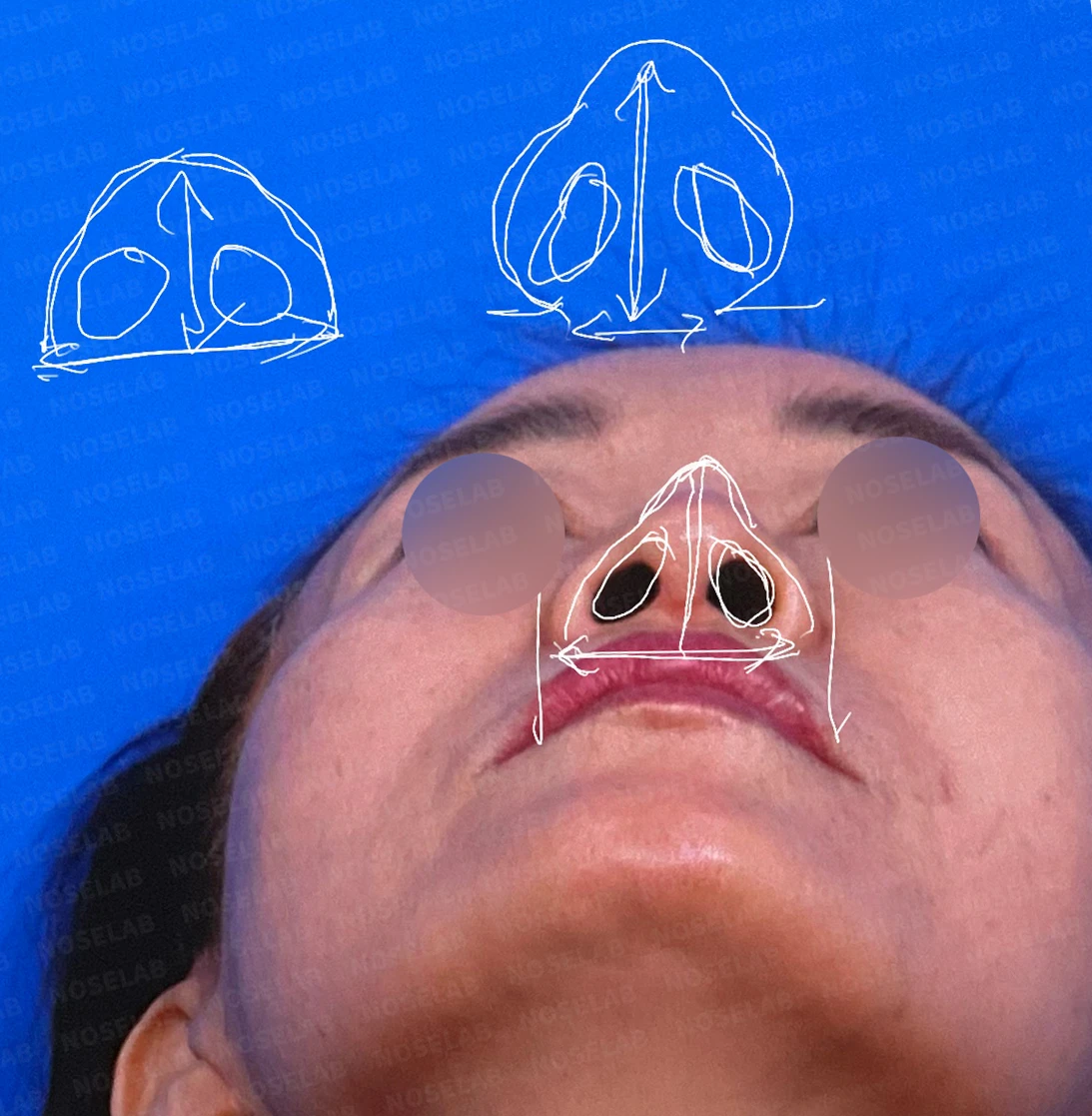
Preoperative design consultation basal (nostril) view.
Nostril asymmetry
Flared nose, wide nasal sill
Columella deviated to the right
What is the surgical plan?
Nasal tip:
Drooping tip, drooping columella, nasolabial angle → Septal extension performed using autologous rib cartilage
Flared nose → Nasal sill reduction
Nostril asymmetry → Lower lateral cartilage repositioning
Nasal bridge:
Deviation, dorsal hump → Nasal bone osteotomy
High radix → Silicone implant replacement
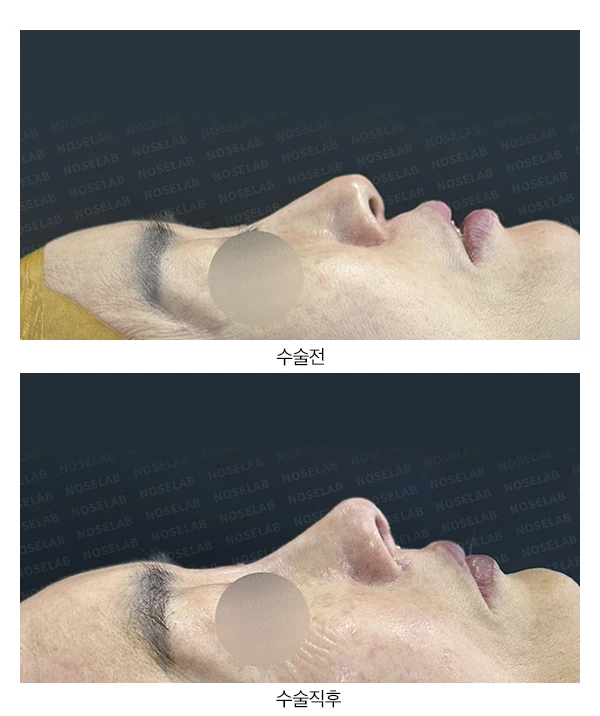
These photos were taken immediately after surgery.
In the profile view, the drooping nasal tip, drooping columella, and constricted nasolabial angle have been corrected. The irregularity along the nasal bridge has also significantly improved.
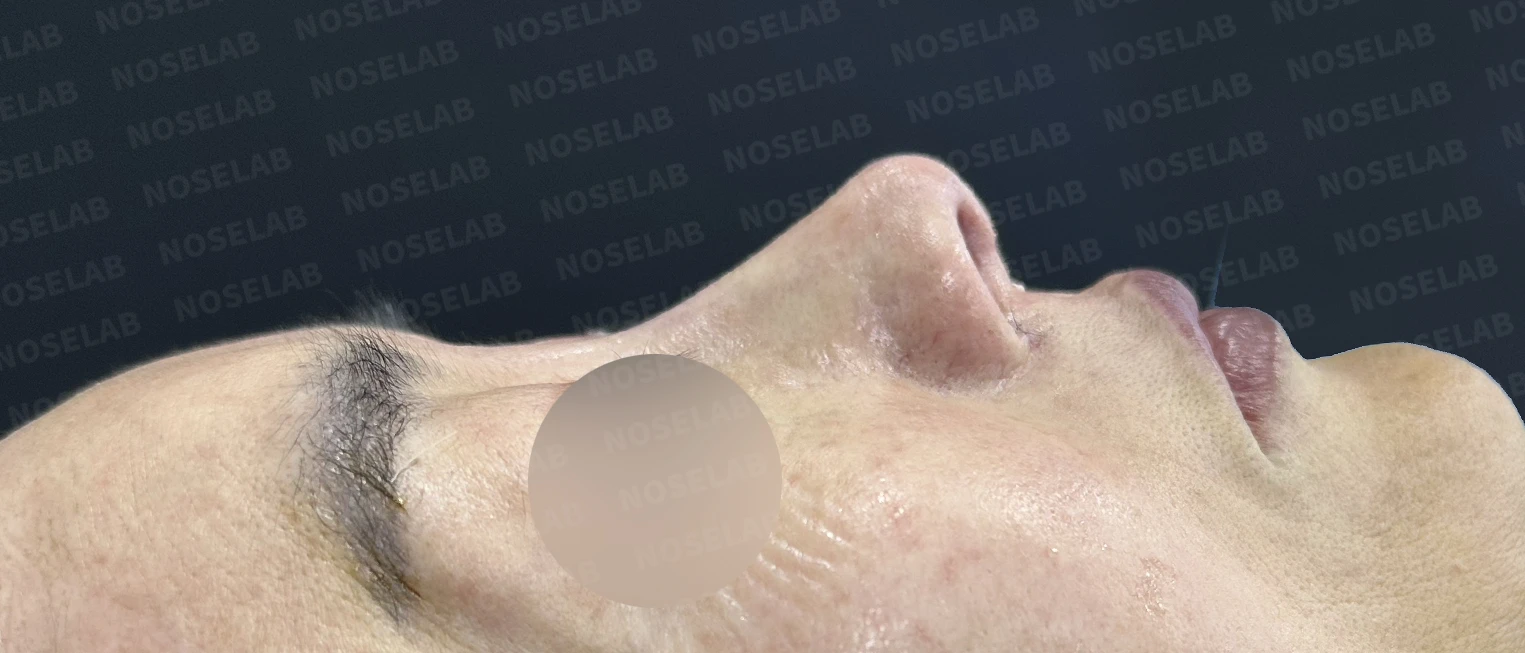
Before surgery / Day 0 immediately after surgery Photos taken immediately after surgery show swelling and may differ from the final result.
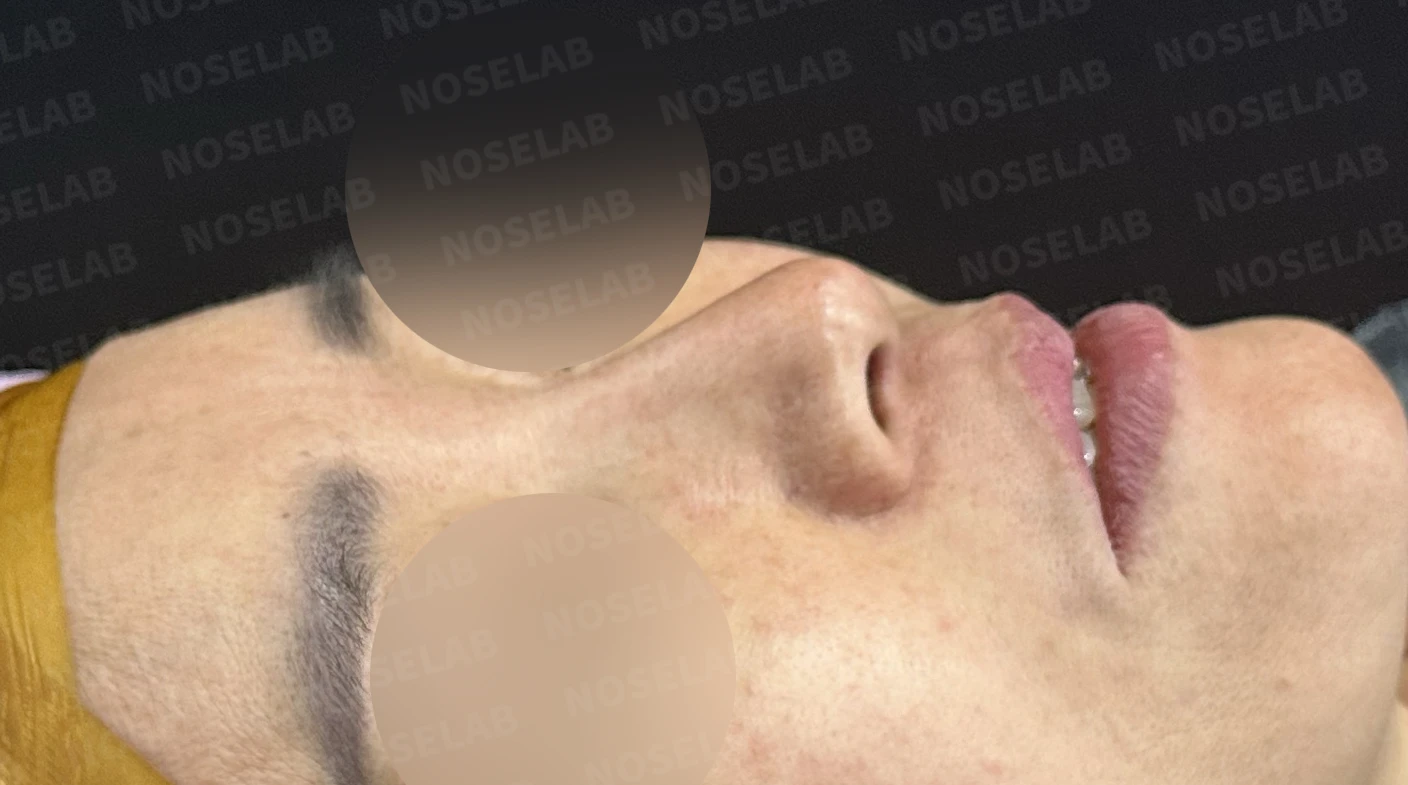
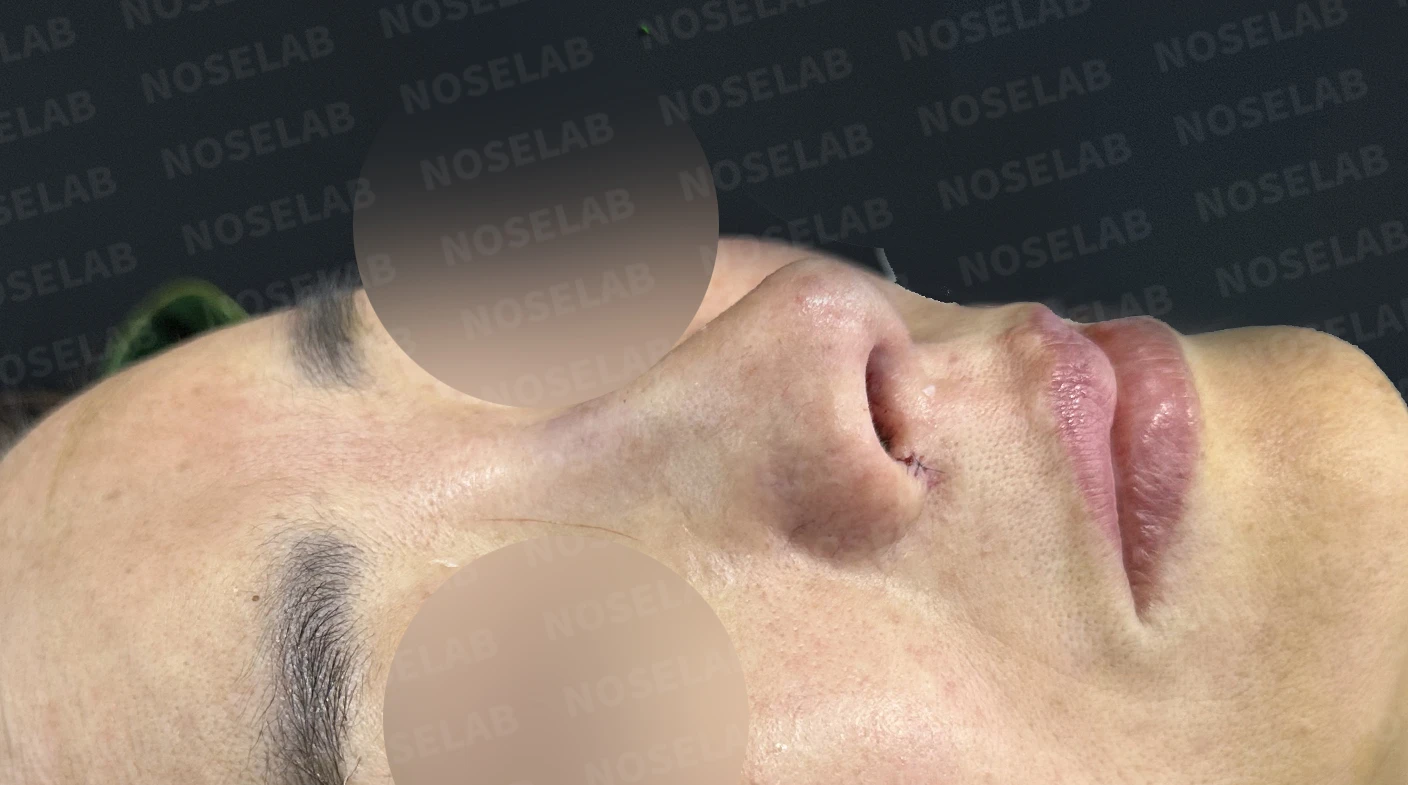
Before surgery / Day 0 immediately after surgery Photos taken immediately after surgery show swelling and may differ from the final result.
From the front view, the overall leftward deviation and the elongated arrow-shaped appearance have been addressed, and the noticeably wide nasal sill has been refined.
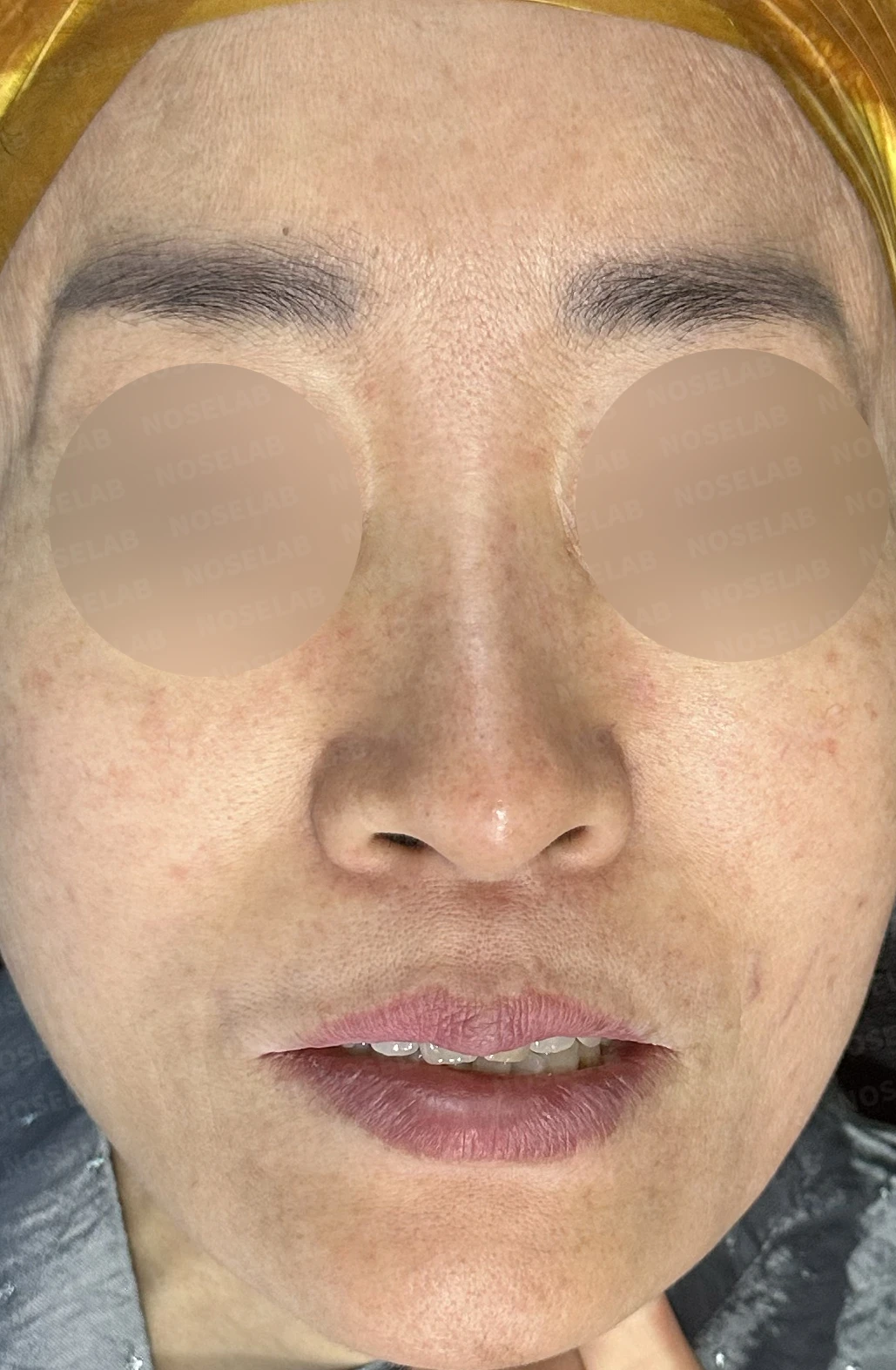
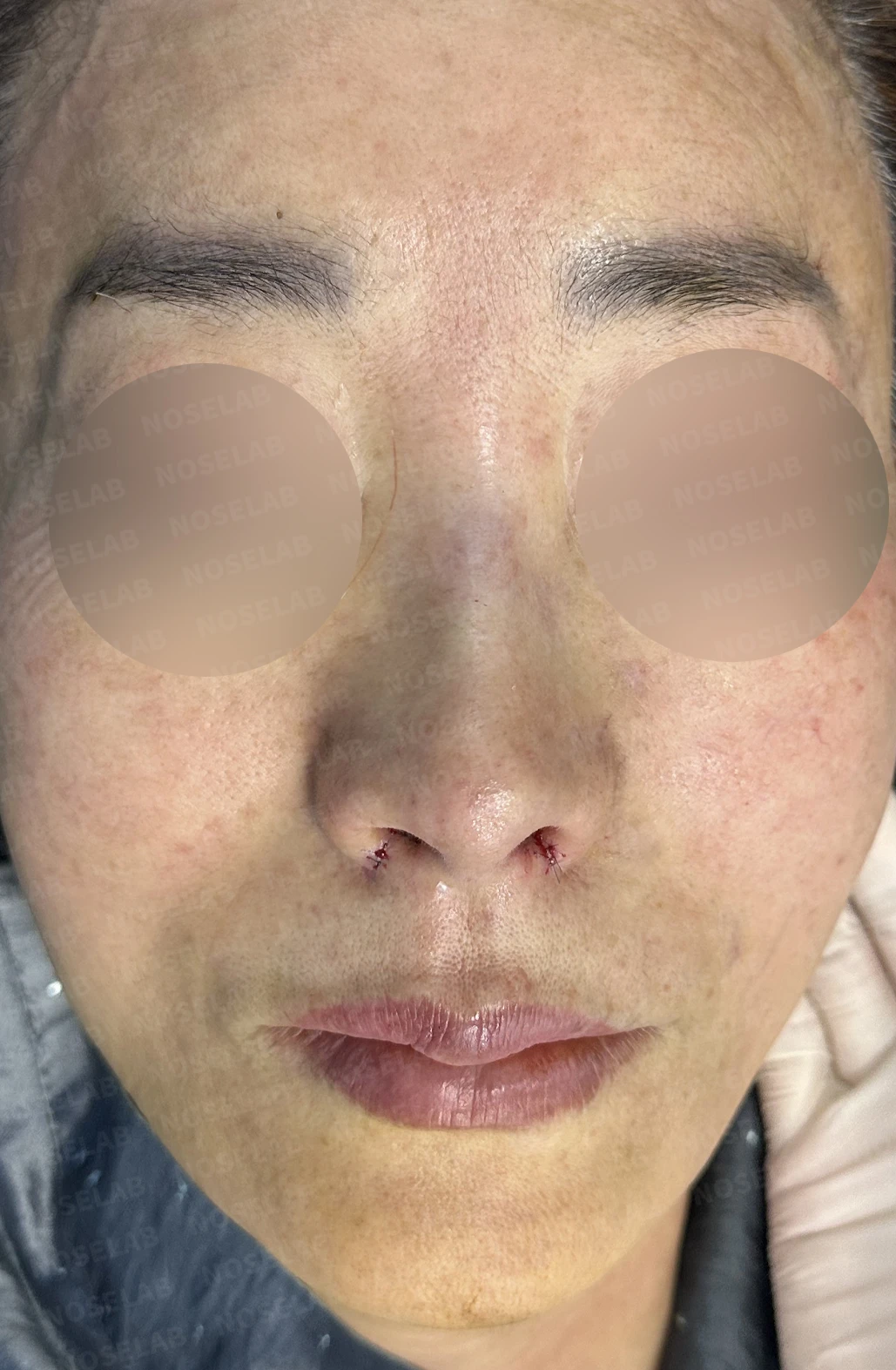
Before surgery / Day 0 immediately after surgery Photos taken immediately after surgery show swelling and may differ from the final result.
The leftward tilt of the nostrils was corrected. While a congenital size difference where the right nostril is larger than the left cannot be completely equalized, reshaping the nostrils similarly has helped make the discrepancy less noticeable.
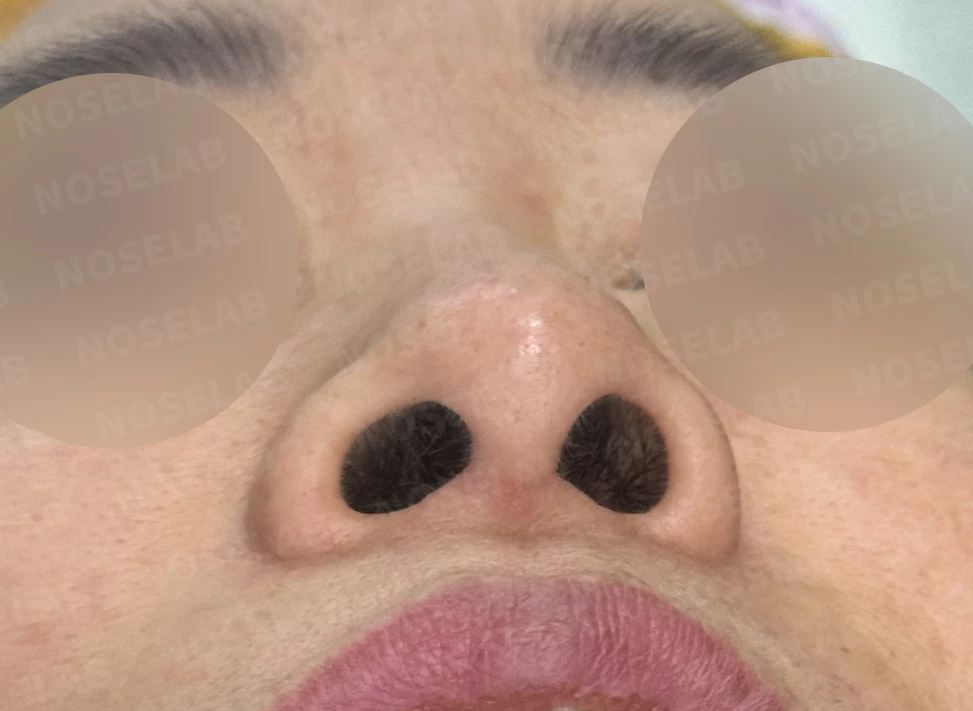
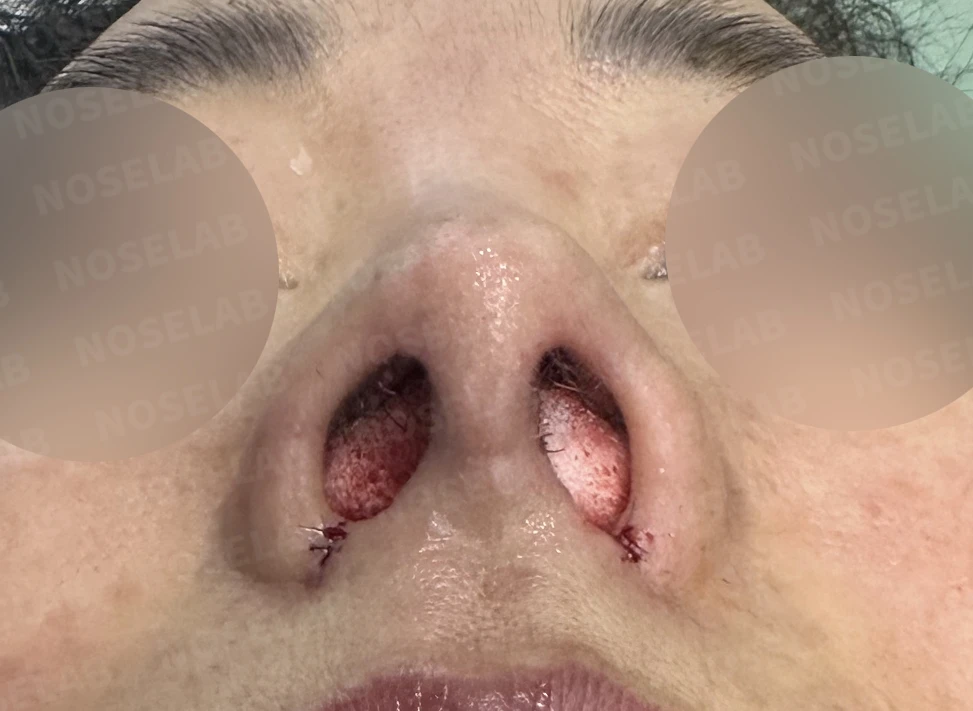
Before surgery / Day 0 immediately after surgery Photos taken immediately after surgery show swelling and may differ from the final result.
Looking at the photos taken on day 0 immediately after surgery, you can see a natural, balanced, and more feminine appearance without the previous elongated look. Photos taken immediately after surgery show swelling and may differ from the final result.
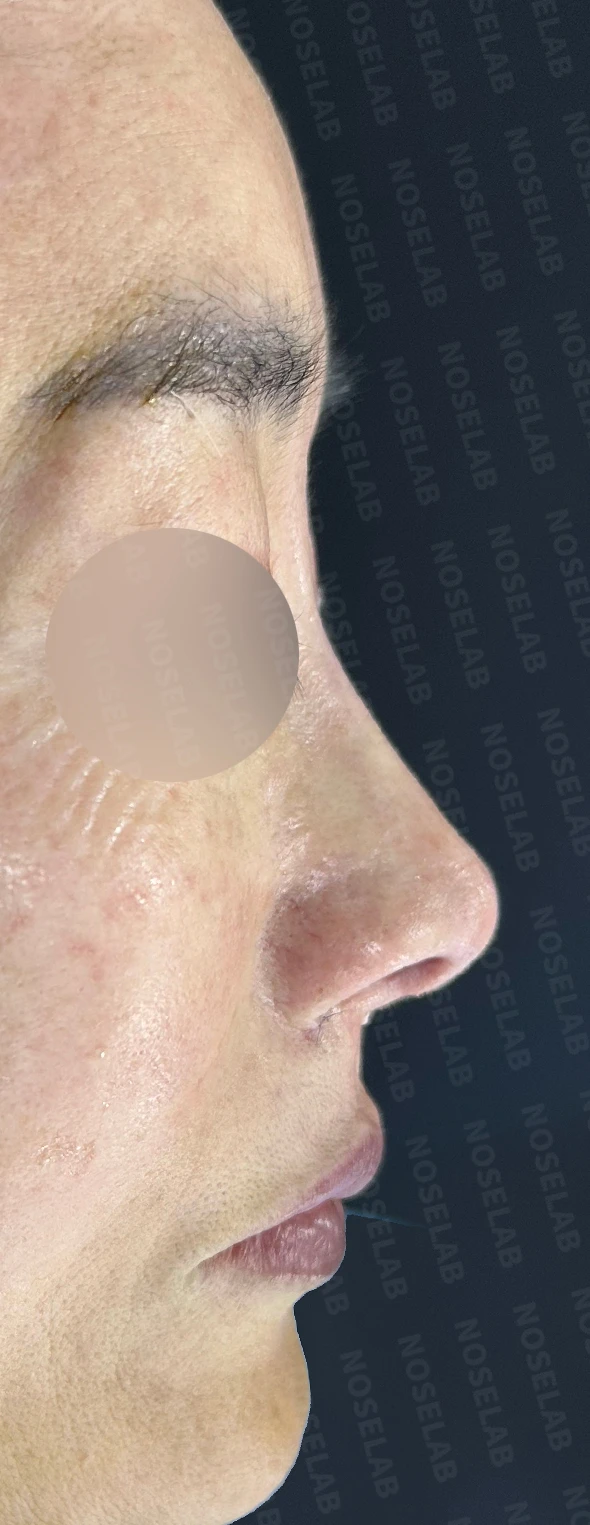
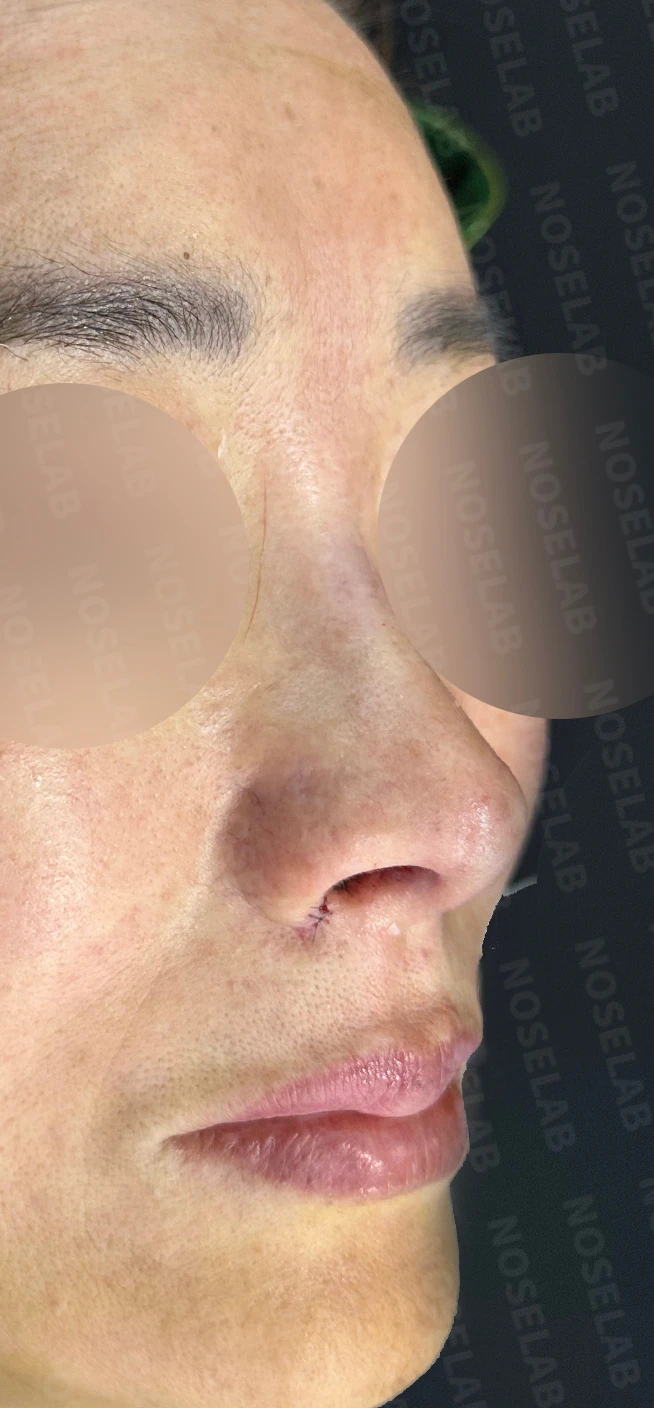
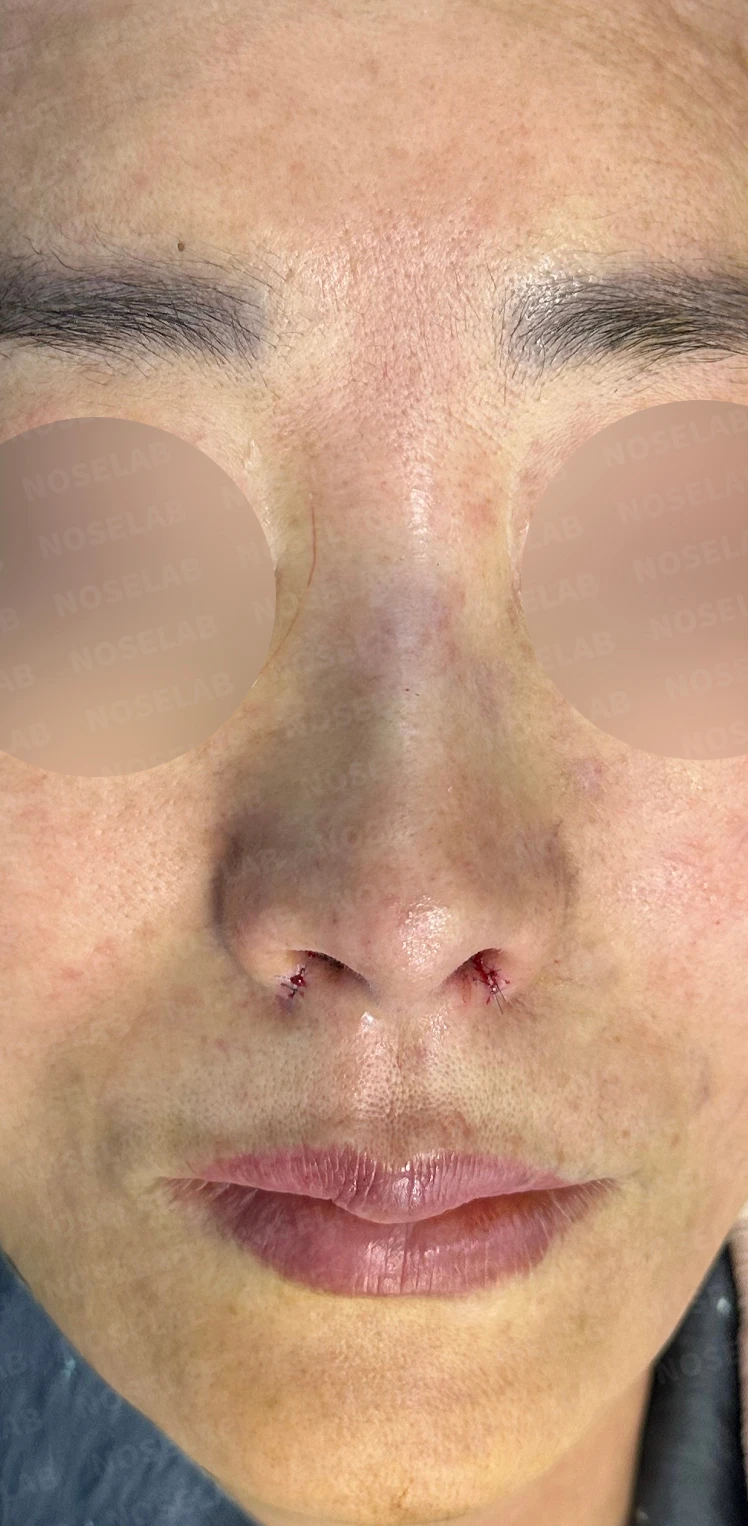
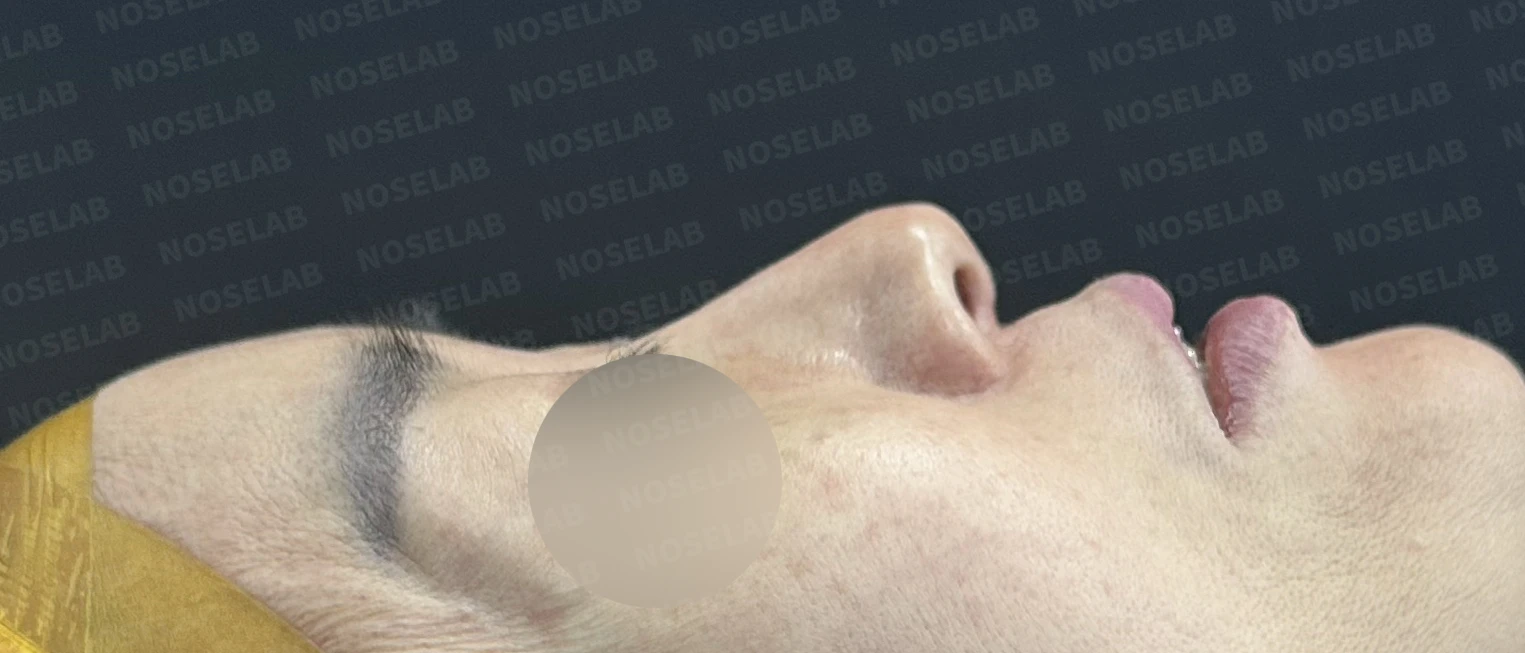
These are the photos after surgery: 90-degree profile, 45-degree oblique, and front views.
Basal (nostril) view immediately after surgery (Day 0).Immediate postoperative photos show swelling and may differ from the final result.
My thoughts on the arrow-shaped nose
An arrow-shaped nose refers to a long nose with a drooping tip. The fundamental principle in correcting a long or drooping nose is providing sturdy fixation for the nasal tip. Furthermore, a long, drooping nose frequently accompanies a dorsal hump, and due to its length, nasal deviation is also very common. As a result, osteotomy is often required on the bridge, and if the nasal bones are broad, a surgery without implants may be recommended. Therefore, in this procedure, firmly anchoring the tip using strong cartilage onto a straight and stable septum, performing osteotomy carefully when needed to avoid nasal obstruction, and considering a silicone implant as indicated helps maintain the intended result over the long term.
An arrow-shaped nose, long nose, and dorsal hump can be thoroughly improved to achieve a refined contour.
Today, we discussed the correction of arrow-shaped and long noses. I hope this information is helpful to those considering surgery for these concerns.
This was Dr. Peter C. Kang. Thank you.

Limitations and risks
When autologous rib cartilage is used, scarring and pain may remain at the donor site on the chest, and pneumothorax (pleural injury) can occur rarely. Over time, the grafted cartilage may warp or undergo partial resorption.
When revising after implant removal, contracture may progress again after removal, the nasal height and length may decrease, and staged surgery may be necessary depending on the skin condition.
When the septum is corrected at the same time, nasal obstruction may persist or recur, and in rare cases, septal perforation or changes in smell may occur.
Common potential risks include infection, bleeding, asymmetry, scarring, skin necrosis, and insufficient improvement; results vary depending on individual skin condition and previous surgical history.