Hello, I am Dr. Peter C. Kang.
Today, I would like to share a revision rhinoplasty case of a patient who visited our clinic concerned about a long nose and nostril asymmetry.
🔍 Surgical history
In this type of case, the patient had a history of three prior nose surgeries:
Around age 22: Alar reduction surgery
Around age 26: Nasal bone osteotomy and silicone implant placement
April 2023: Silicone implant replacement and nasal tip correction surgery
Through these repeated procedures, the nasal tip was excessively heightened, and excessive, asymmetrical alar reduction left the nostrils with a pinched appearance.
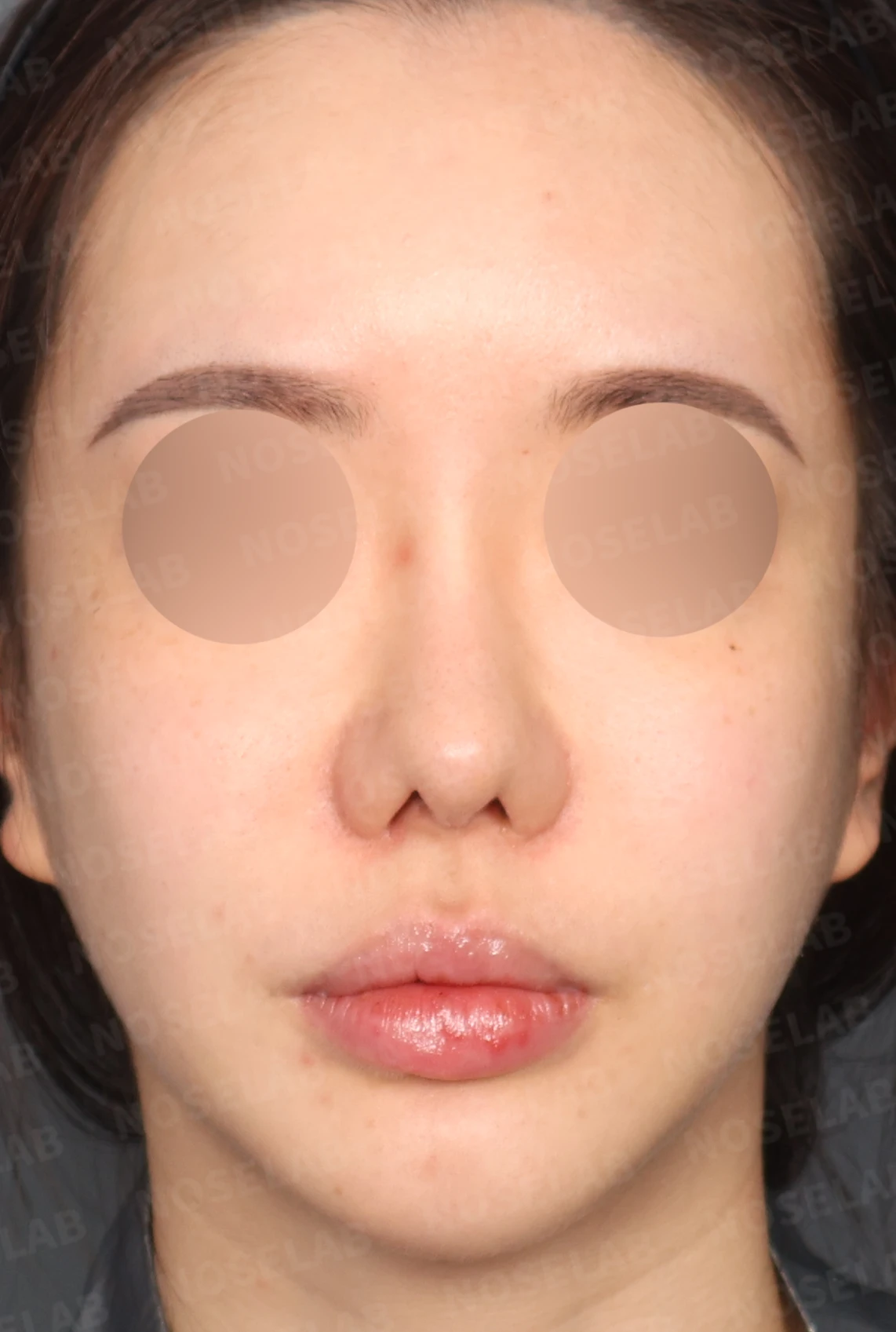
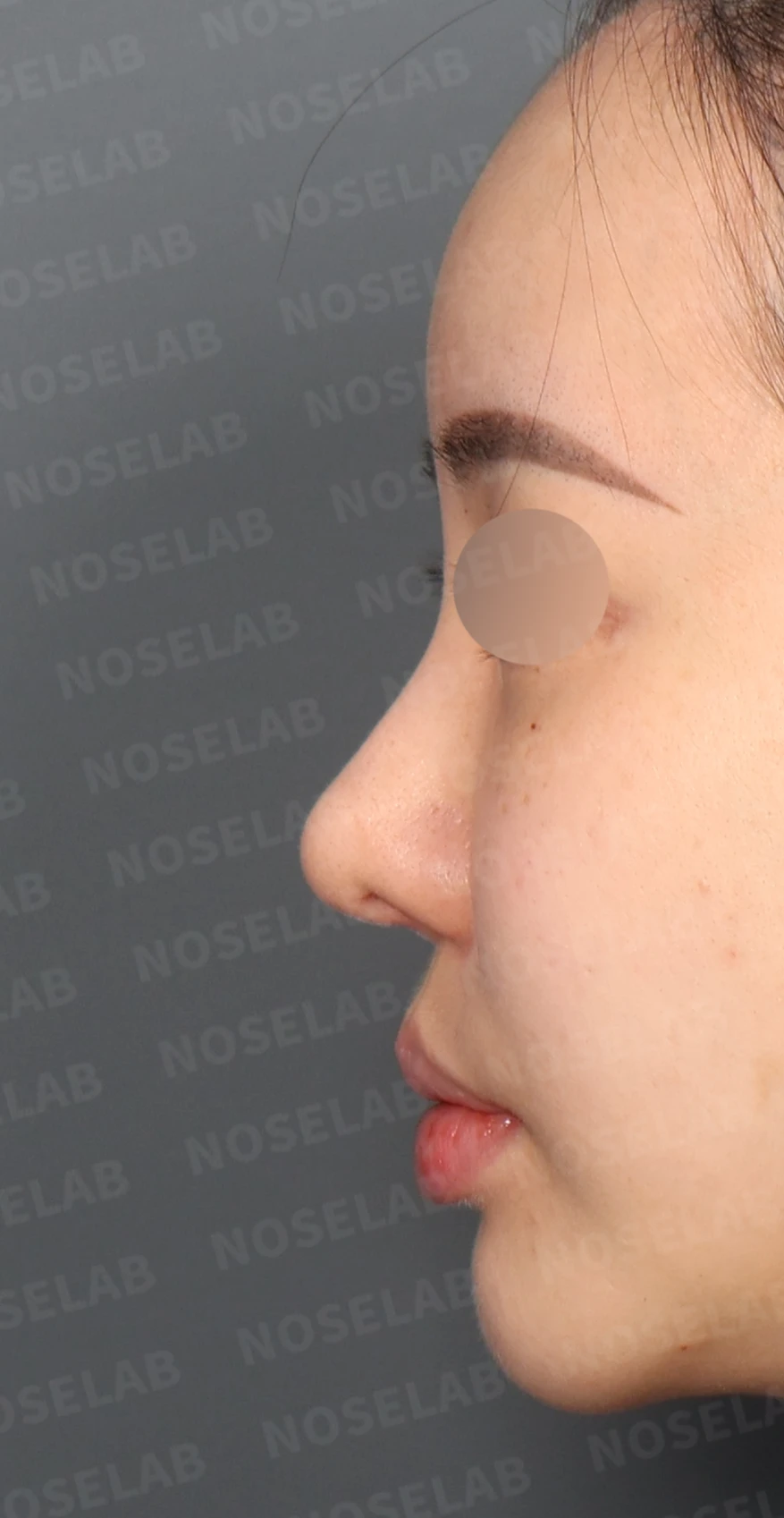
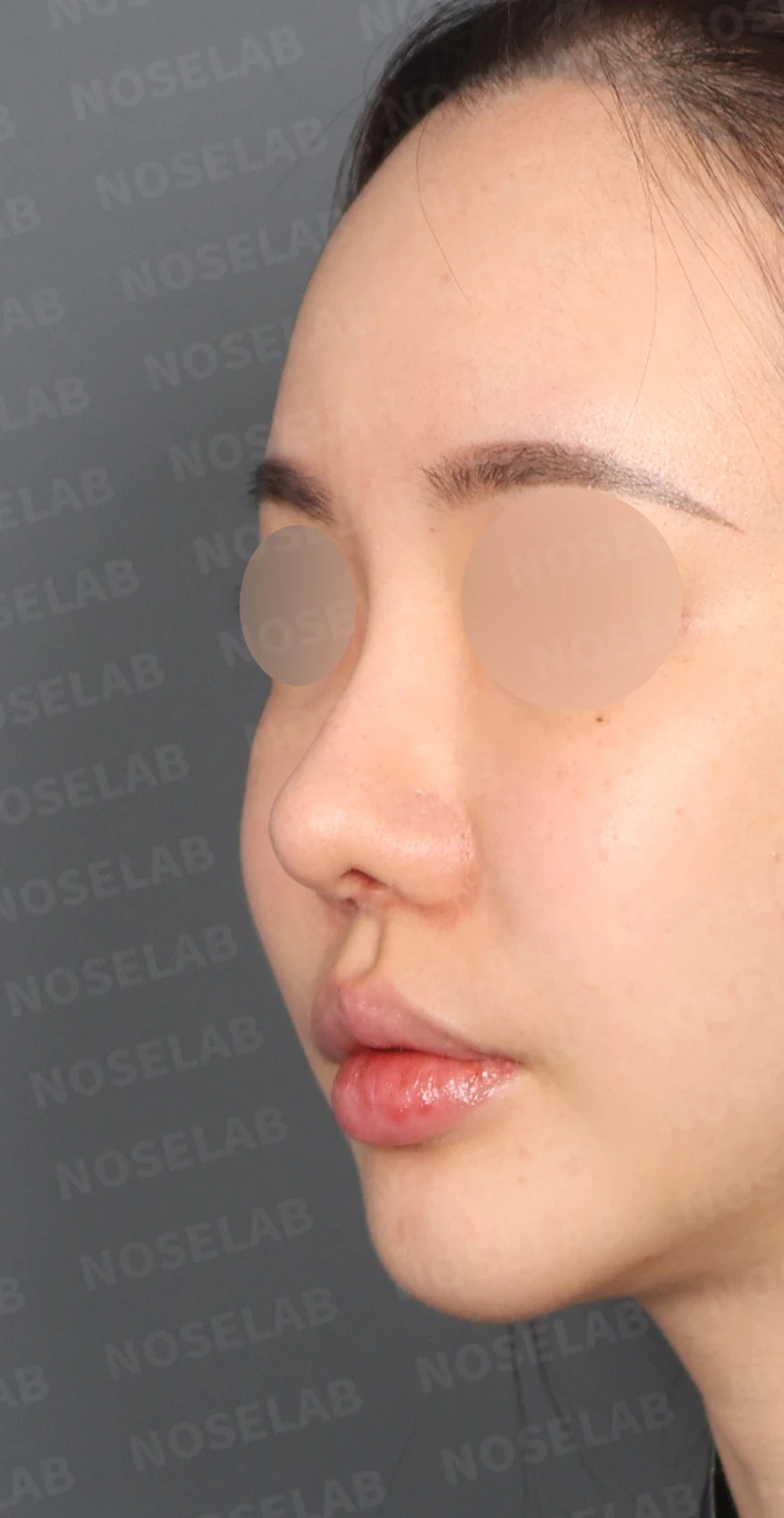
Design consultation: front, left profile, and oblique views
💉 Patient requests
The patient wished to undergo an overall revision of the nose while addressing functional concerns as well. Experiencing rhinitis and nasal obstruction, the patient wanted aesthetic correction performed together with functional improvement, including septal correction and inferior turbinate surgery. Correction of the nasolabial angle was also requested to improve the profile line.
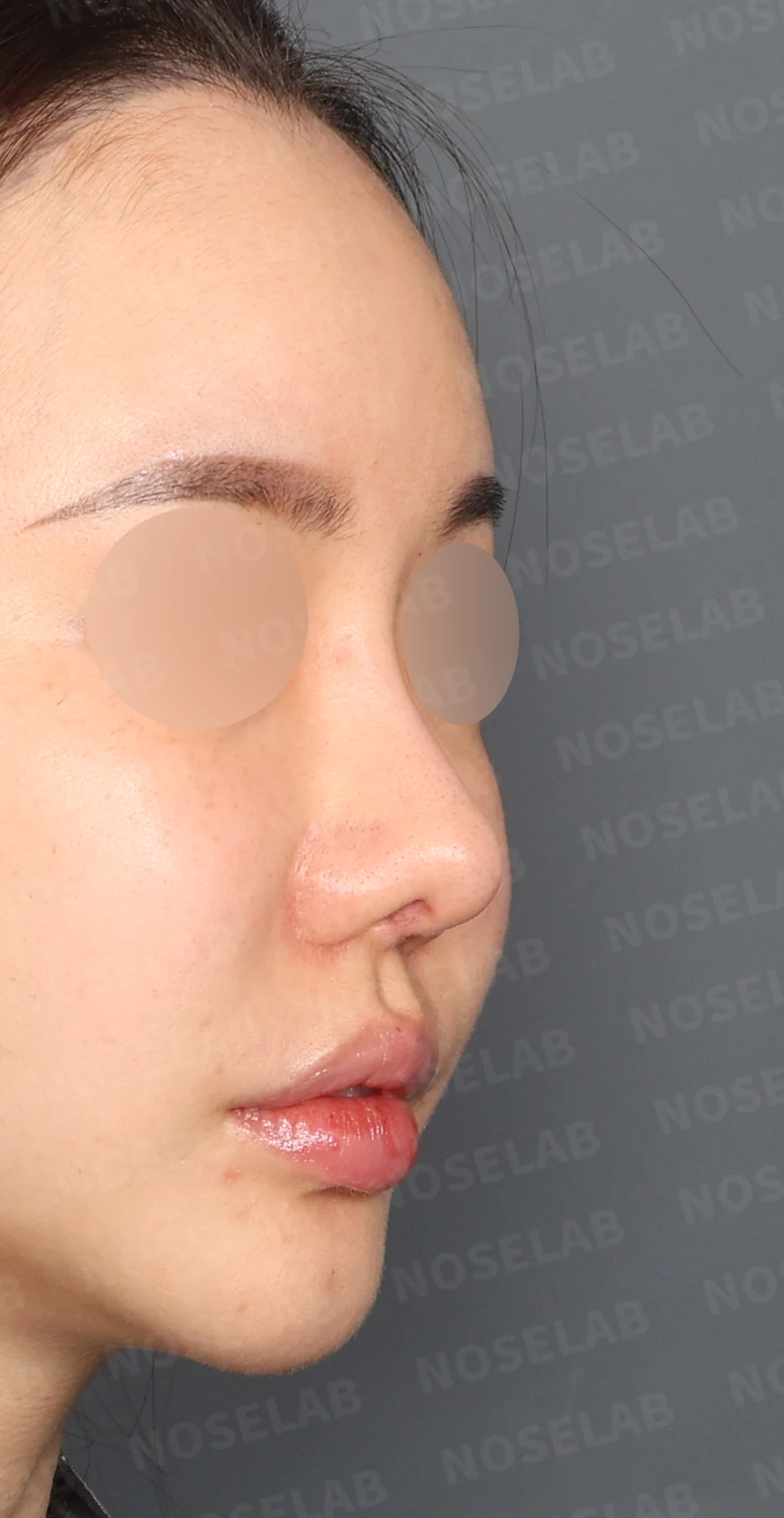
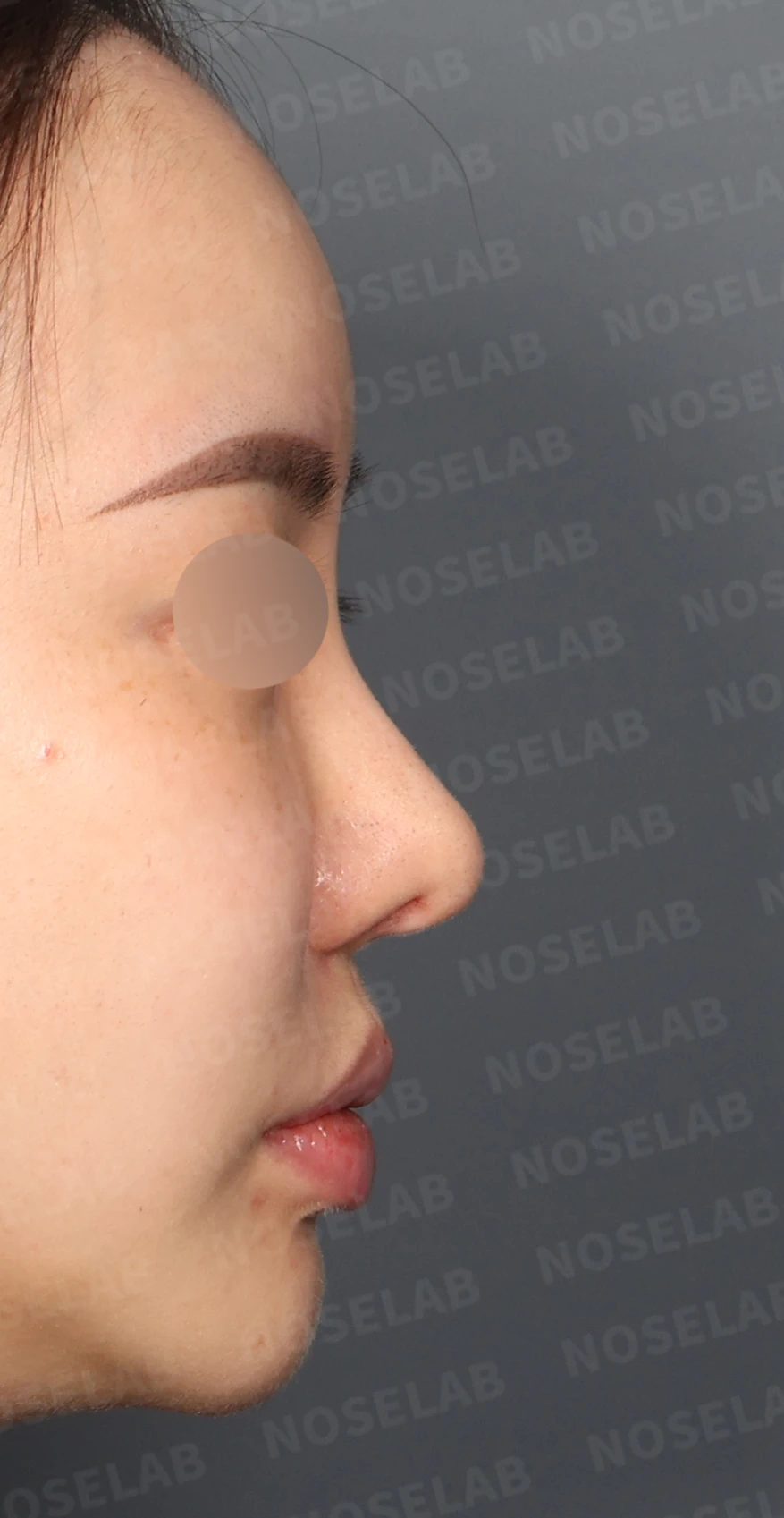
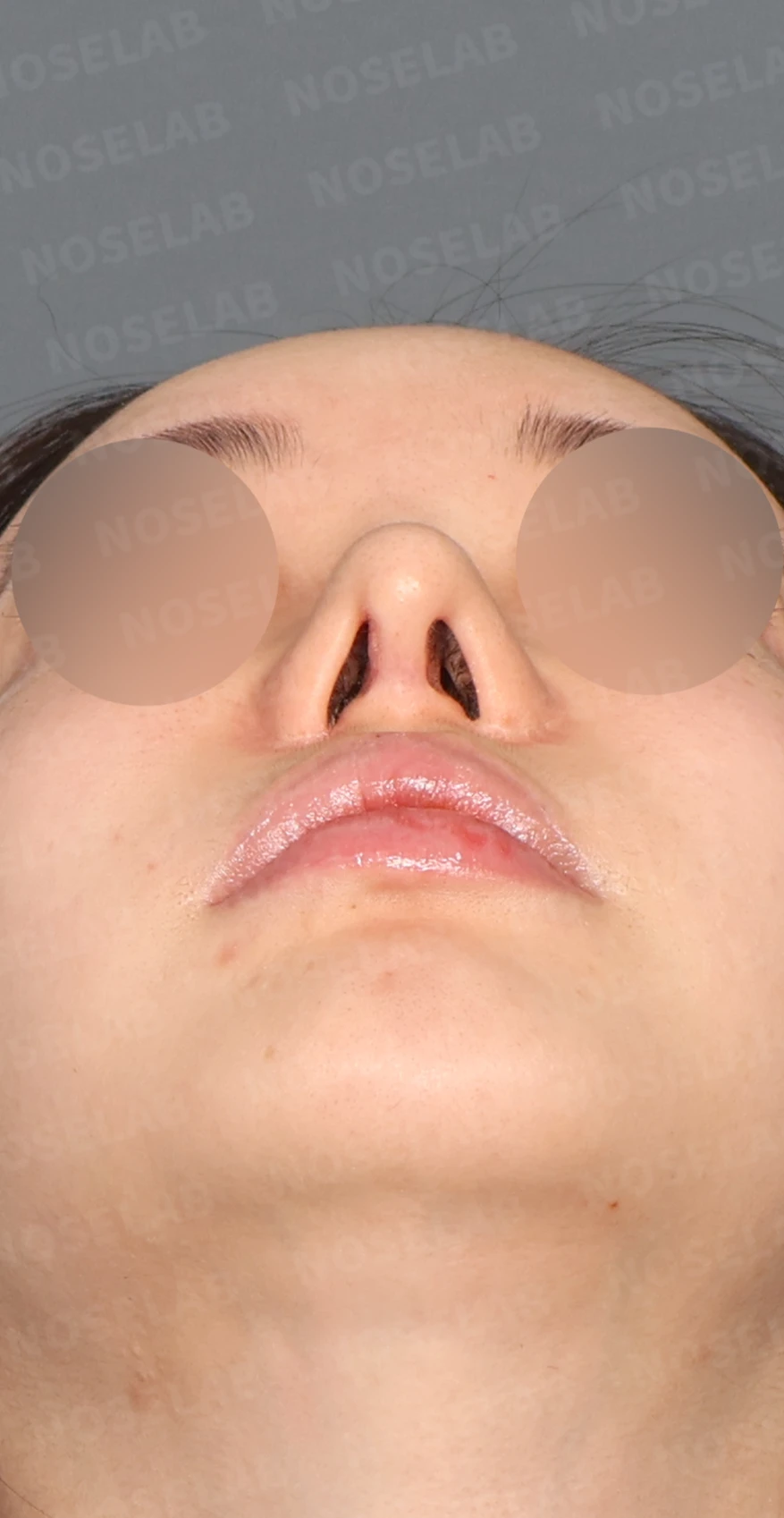
Design consultation: right oblique, profile, and basal (nostril) views
🔧 Surgical plan and procedure
The core focus of this surgery was correcting the long nose and nostril asymmetry.
1. Reconstruction of the lower lateral cartilages using autologous rib cartilage
Because both lower lateral cartilages had been removed in previous operations, autologous rib cartilage was harvested to reconstruct the lower lateral cartilages.
2. Adjusting nasal tip height and preventing a bulbous appearance
While lowering the excessively raised tip height, the design slightly widened the tip width to prevent worsening a bulbous look, drawing visual focus from the alae to the nasal tip.
3. Correction of nostril asymmetry
The nostril asymmetry caused by overly aggressive, asymmetrical alar reduction was corrected as much as possible.
4. Correction of the long nose
Lowering the radix corrected the elongated appearance, and the nasolabial angle was improved at the same time.
5. Functional surgery
Deviated septum and rhinitis were corrected, and right external nasal valve stenosis was relieved, improving symptoms of nasal obstruction simultaneously.
🌟 Surgical results
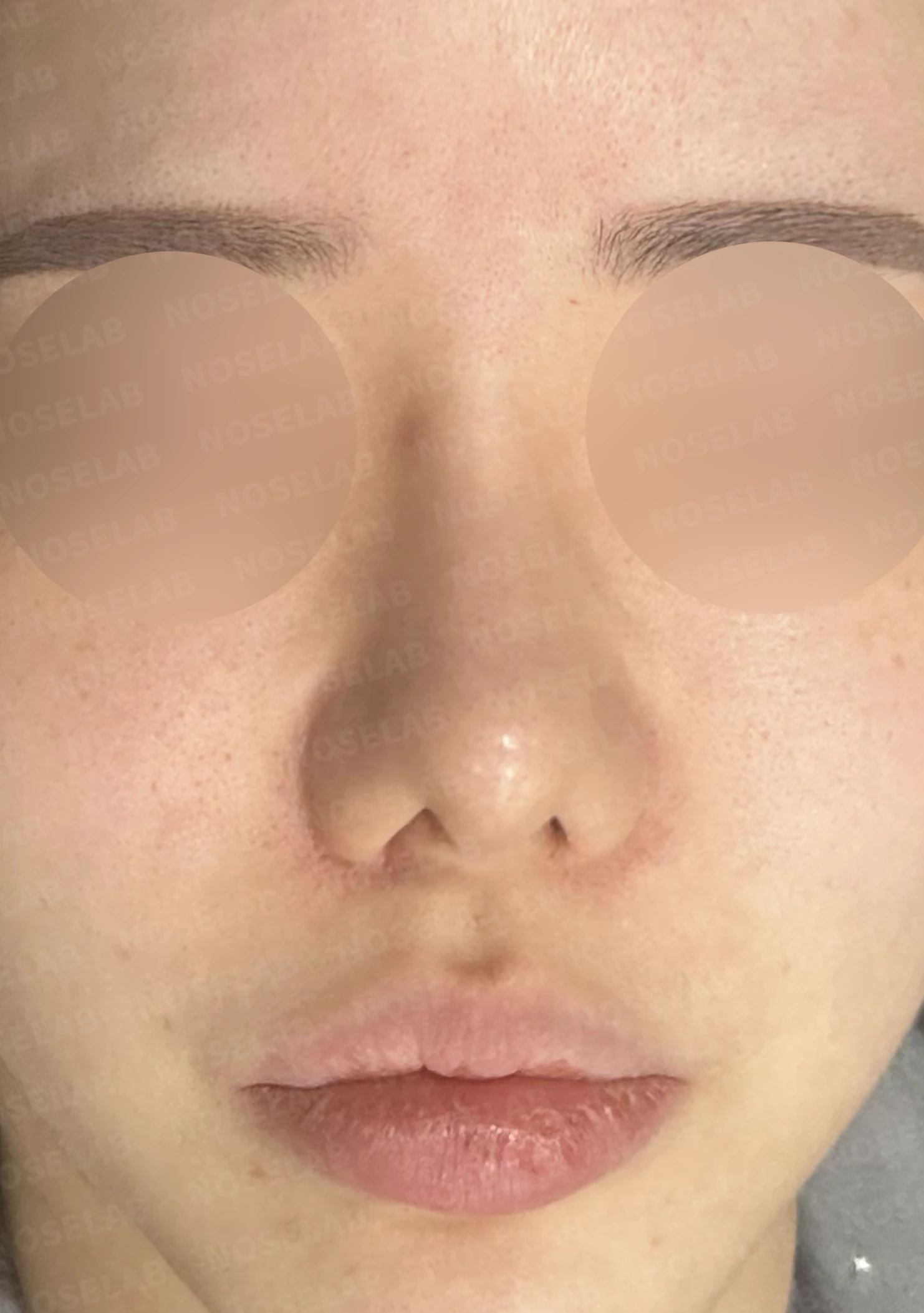
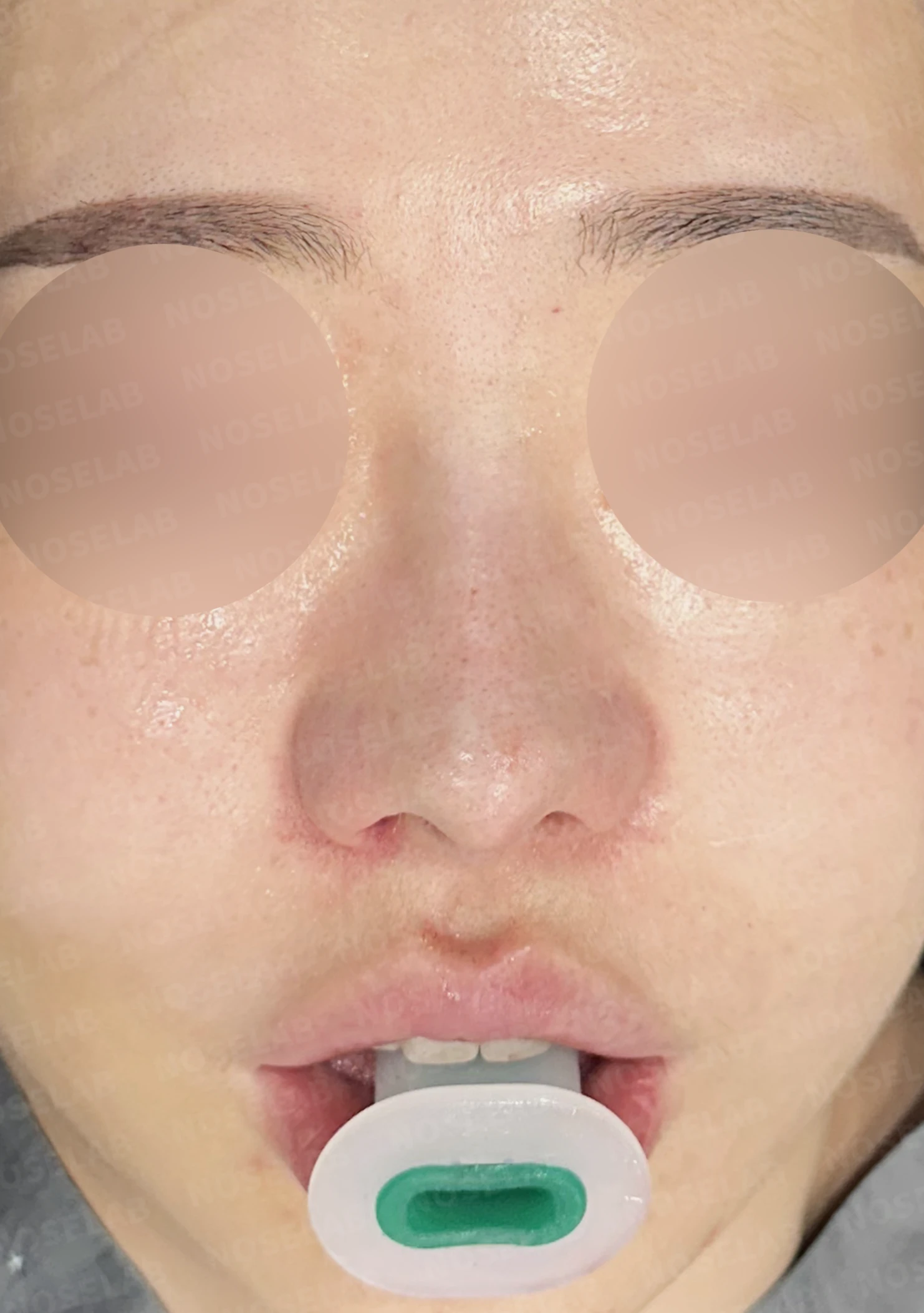
Before surgery / Day 0 immediately after surgery Photos taken immediately after surgery show swelling and may differ from the final result.
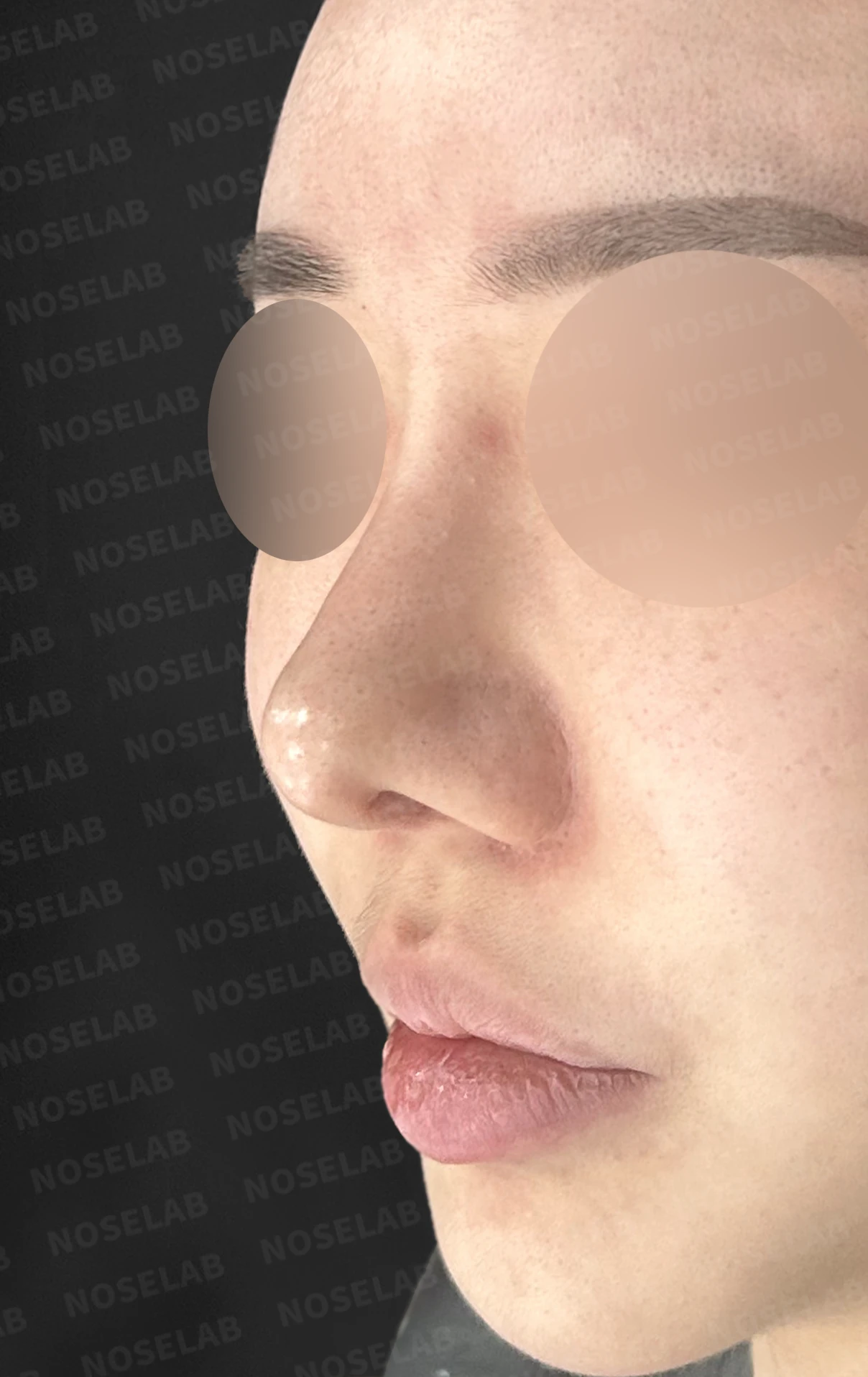
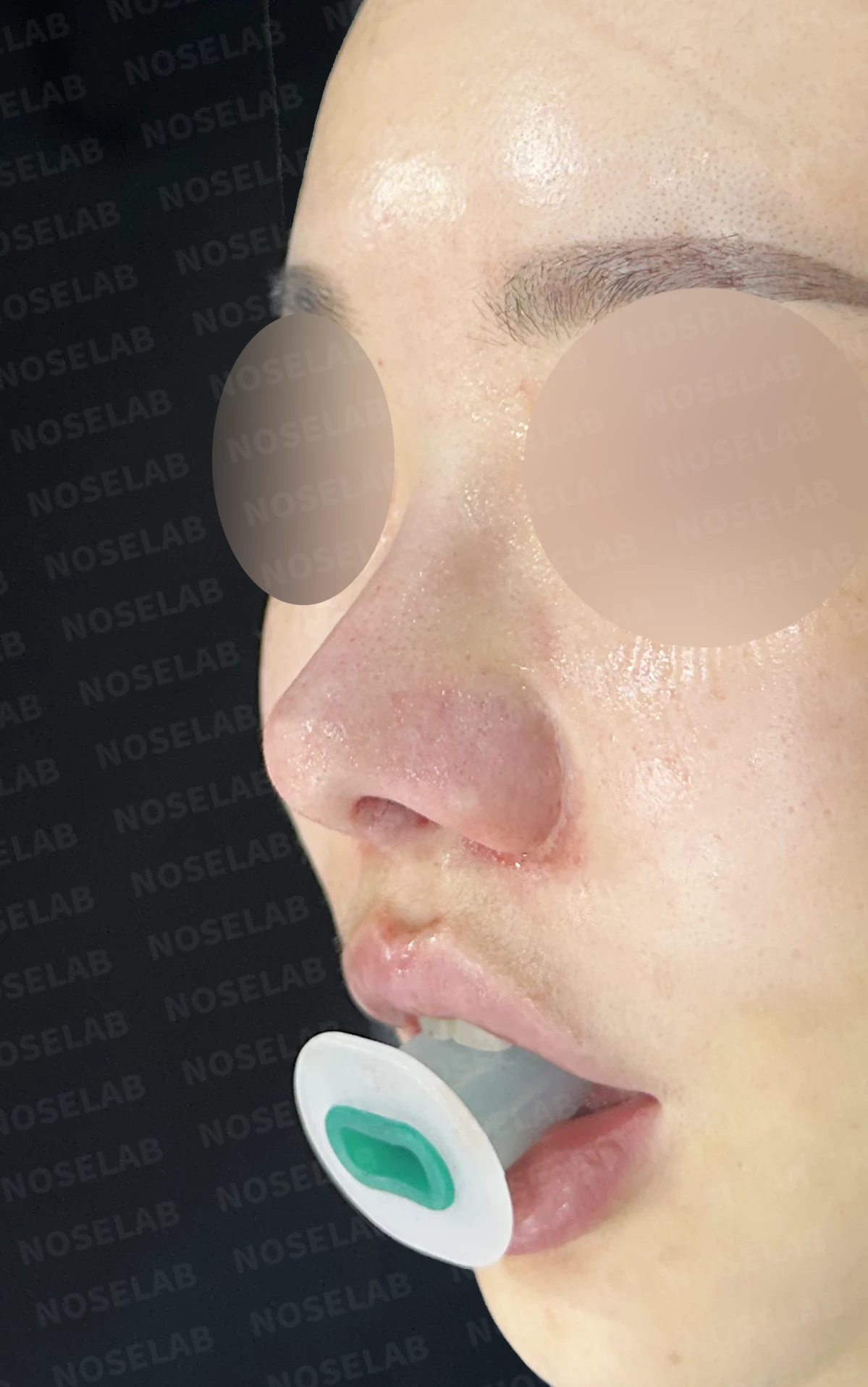
Front view changes:
Improvement in the asymmetry of the pinched nostrils
Improved balance with the nasal tip adjusted to a natural width
Before surgery / Day 0 immediately after surgery Photos taken immediately after surgery show swelling and may differ from the final result.
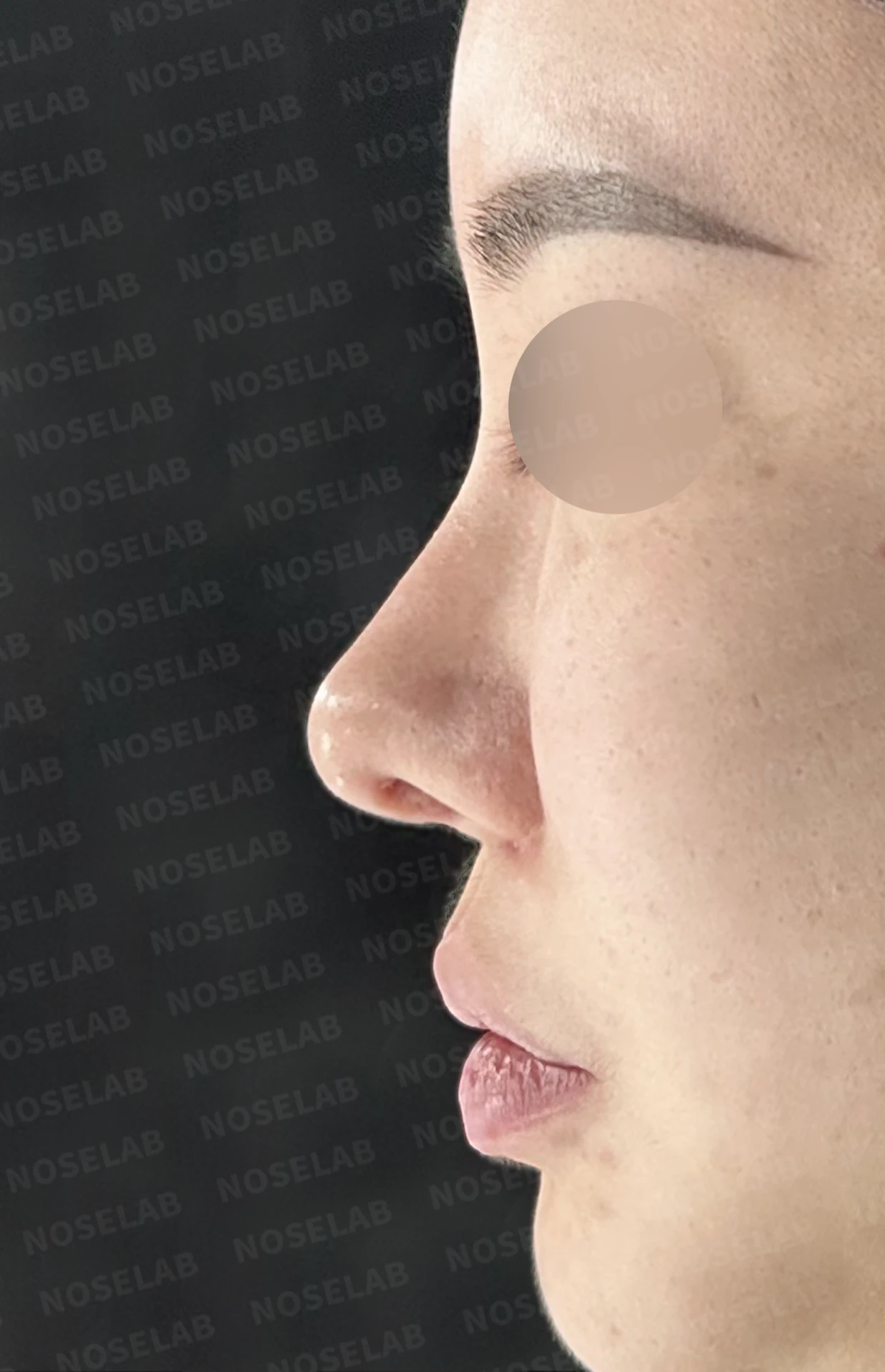
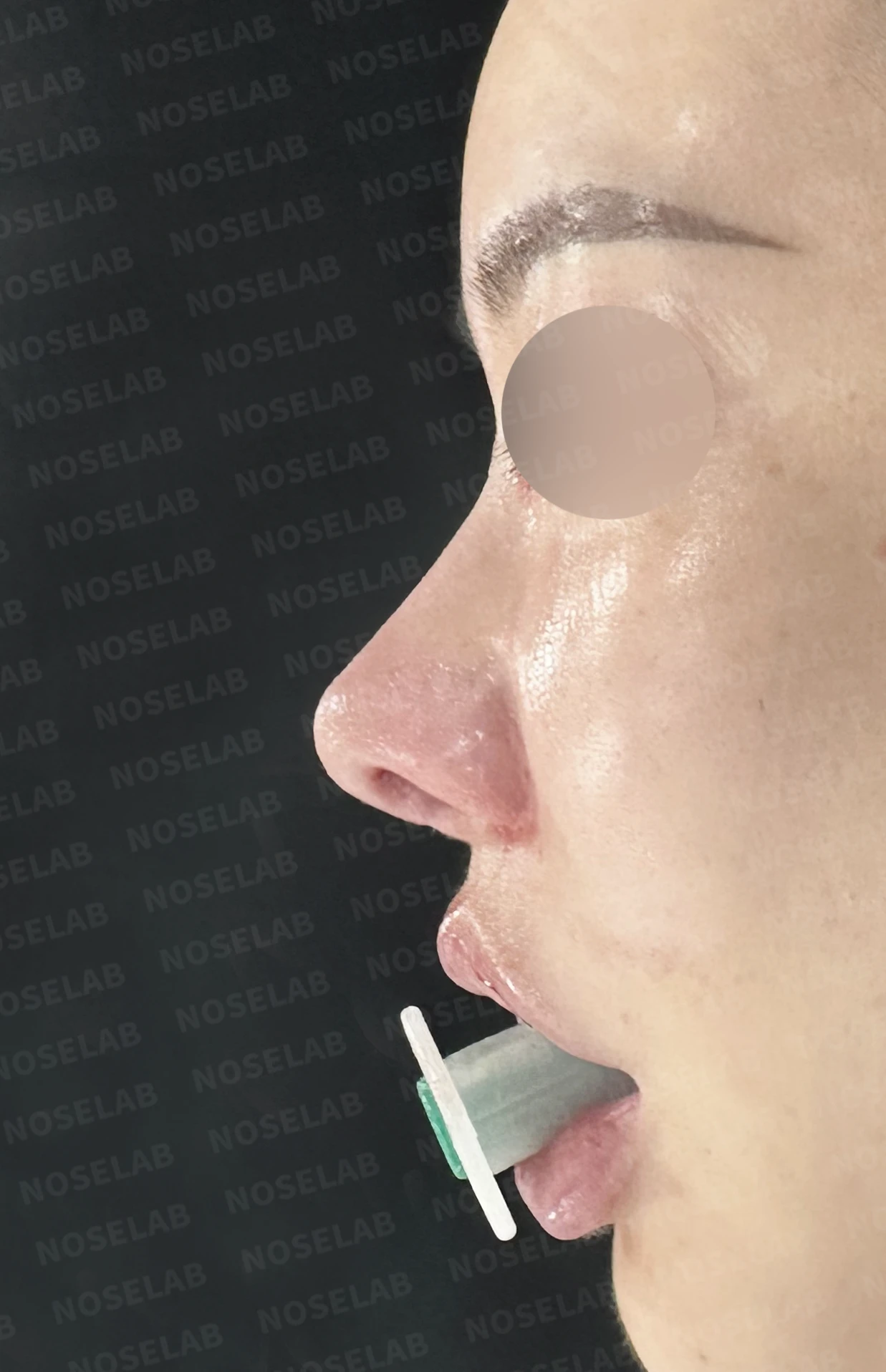
Profile view changes:
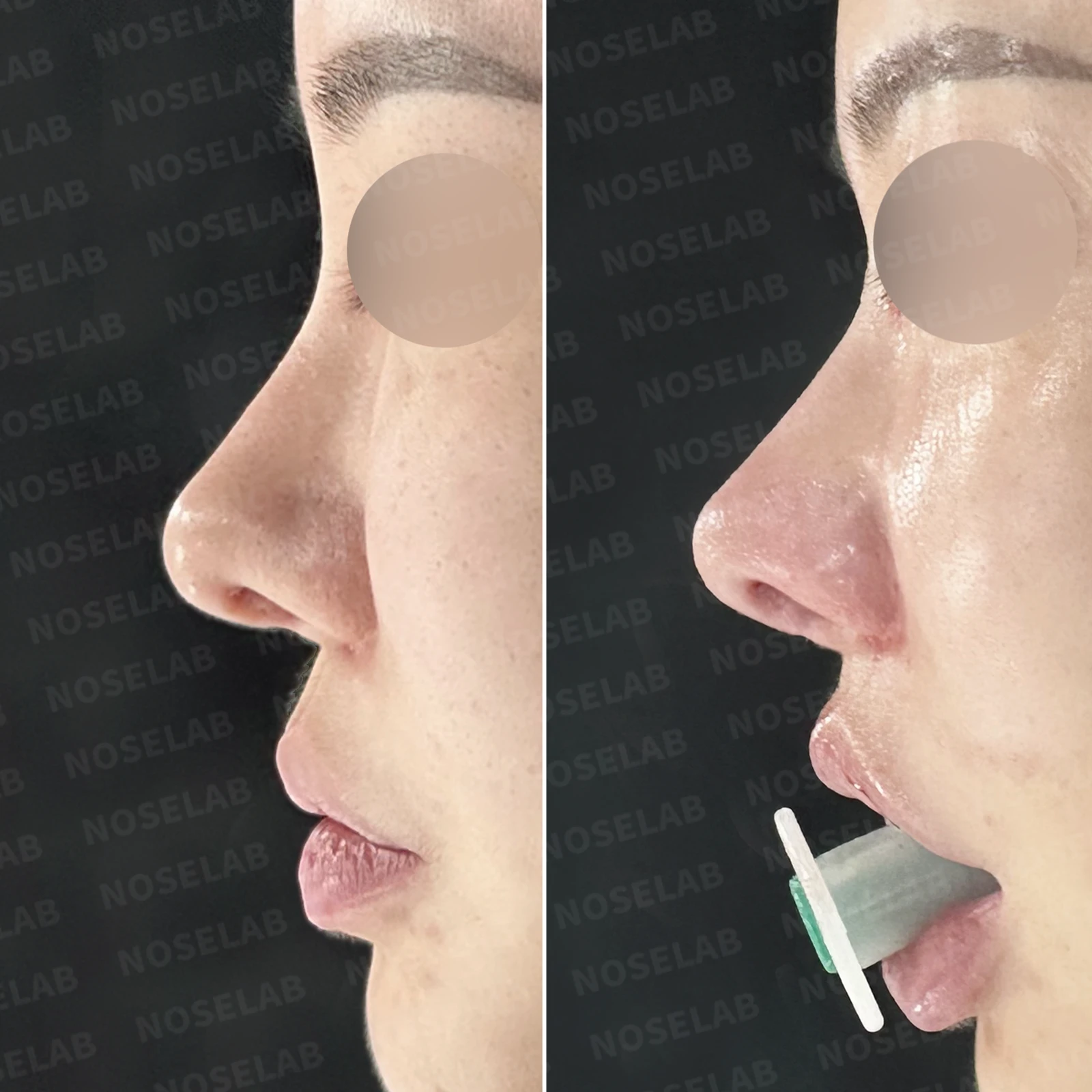
Excessively high nasal tip adjusted to an appropriate height
Refined profile silhouette achieved through nasolabial angle correction
Elongated impression resolved by adjusting the radix
Before surgery / Day 0 immediately after surgery Photos taken immediately after surgery show swelling and may differ from the final result.
Nostril view changes:
Natural nostril shape achieved through correction of left-right asymmetry
Softer impression with relief of the pinched appearance
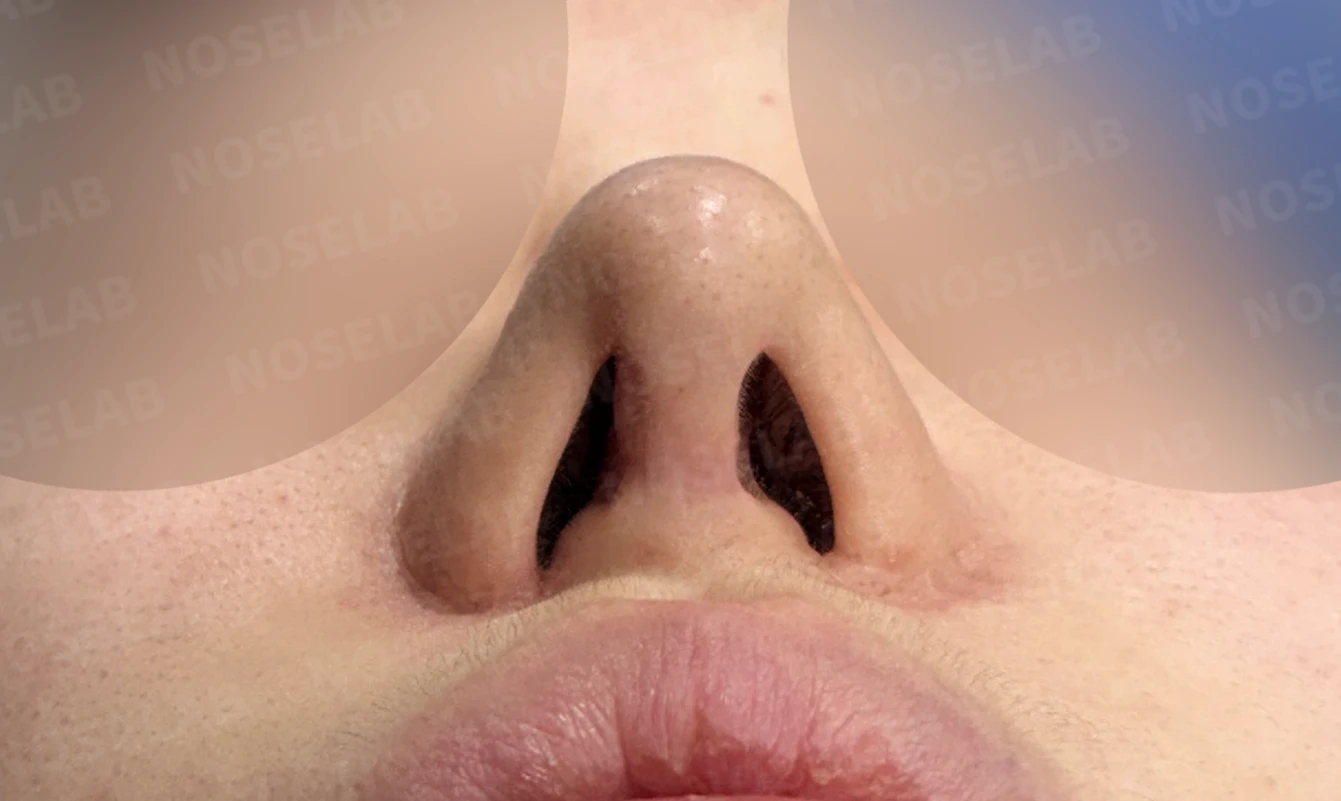
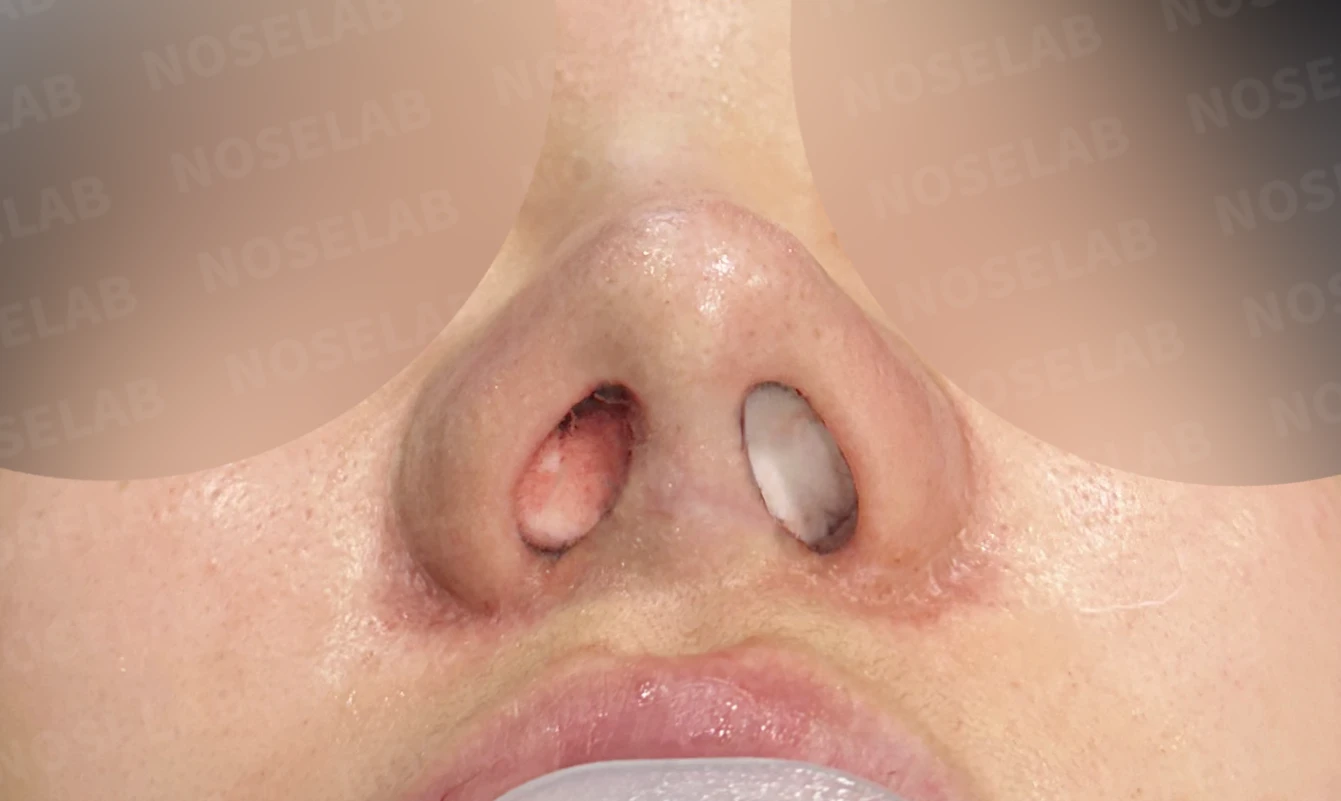
Before surgery / Day 0 immediately after surgery Photos taken immediately after surgery show swelling and may differ from the final result.
💡 Specialist opinion
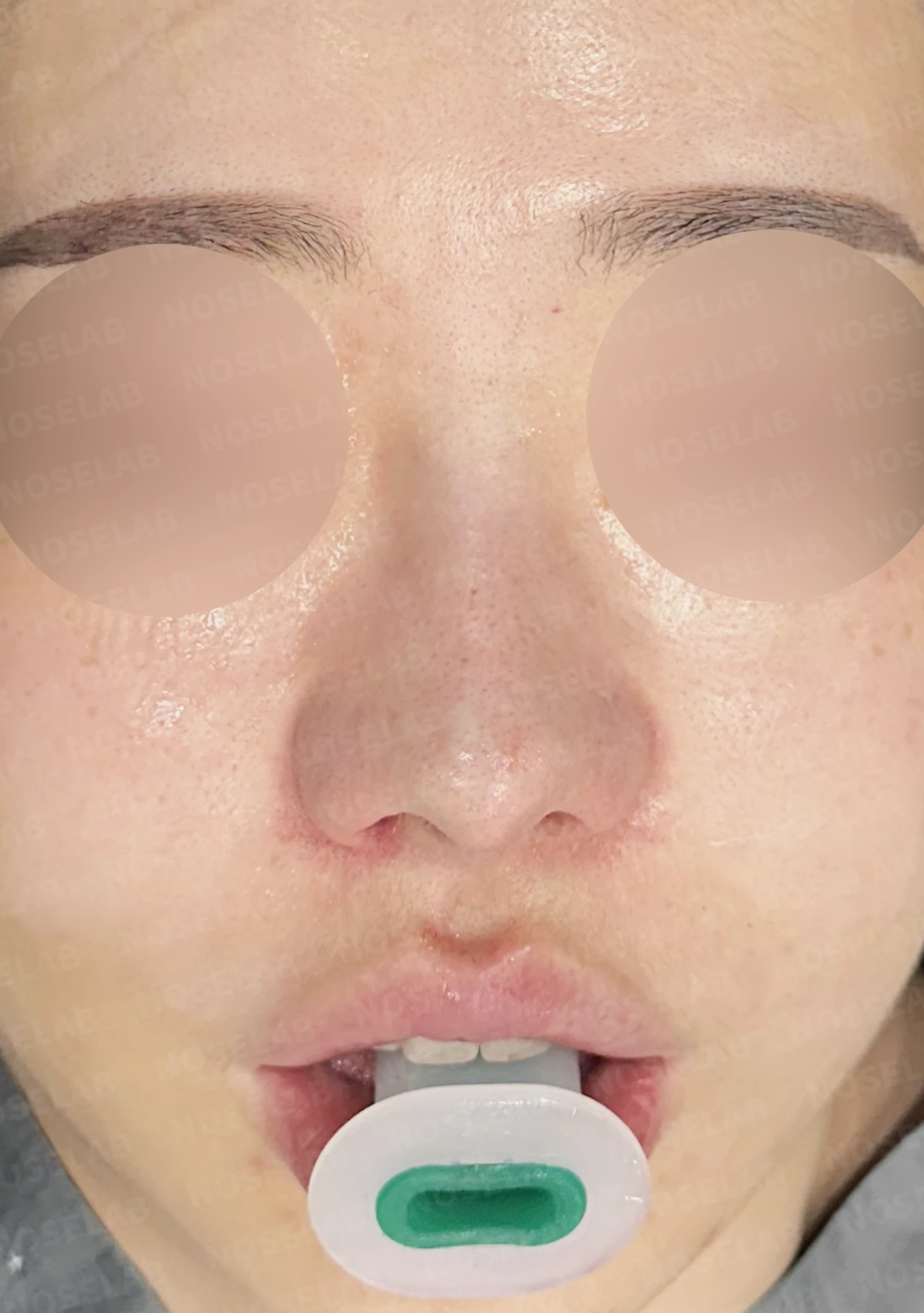
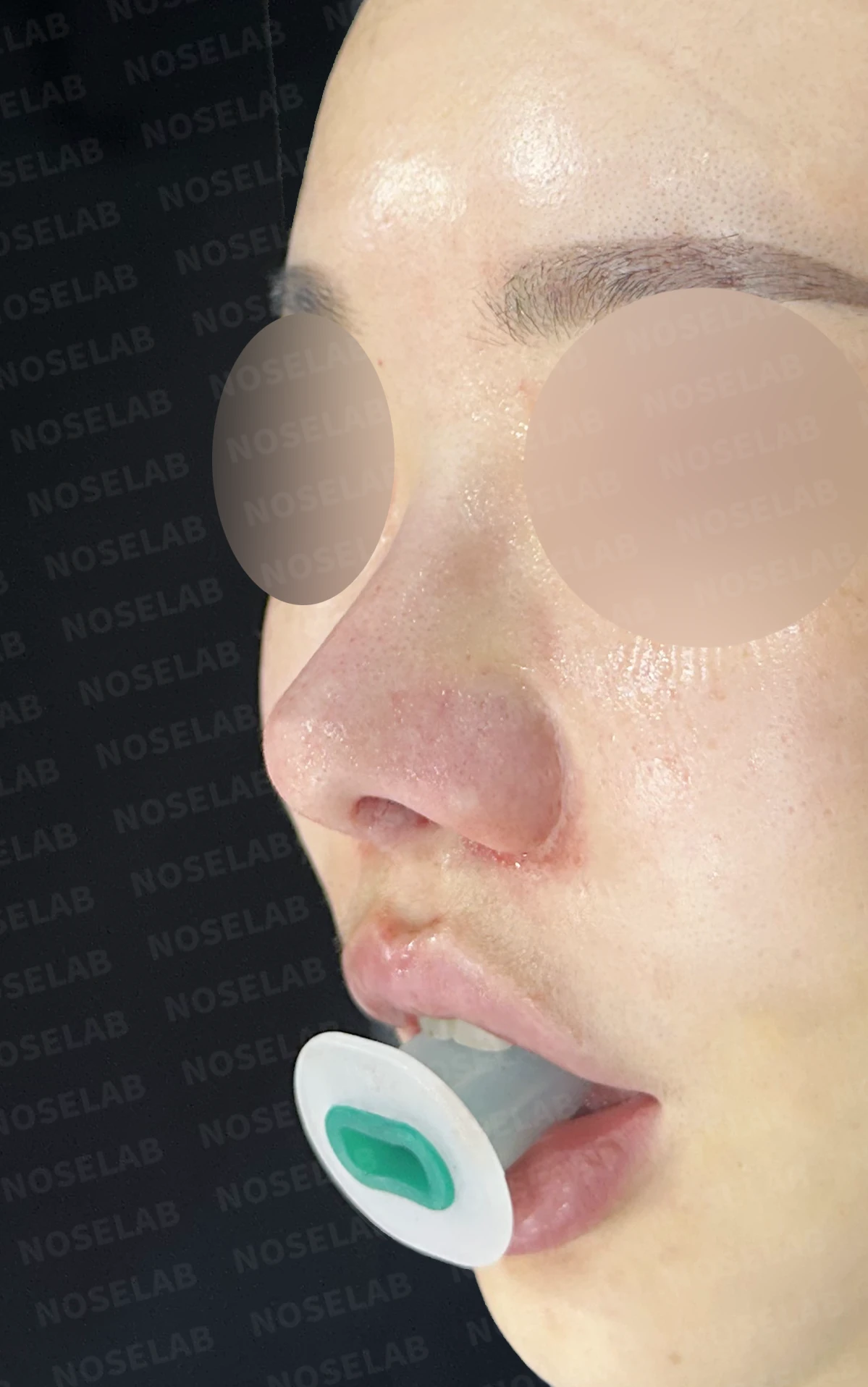
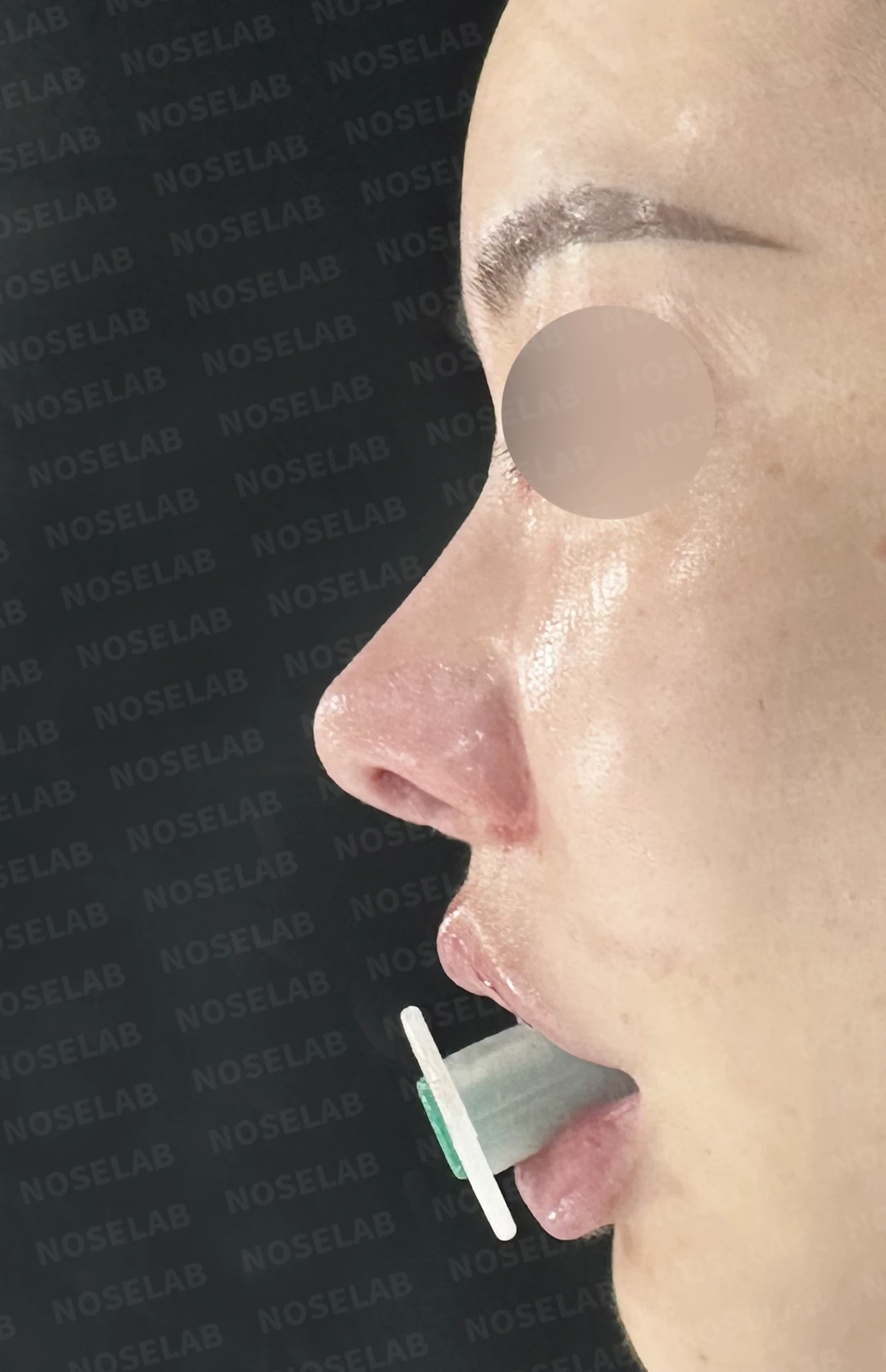
Front, oblique, and profile views on day 0 immediately after surgery Photos taken immediately after surgery show swelling and may differ from the final result.
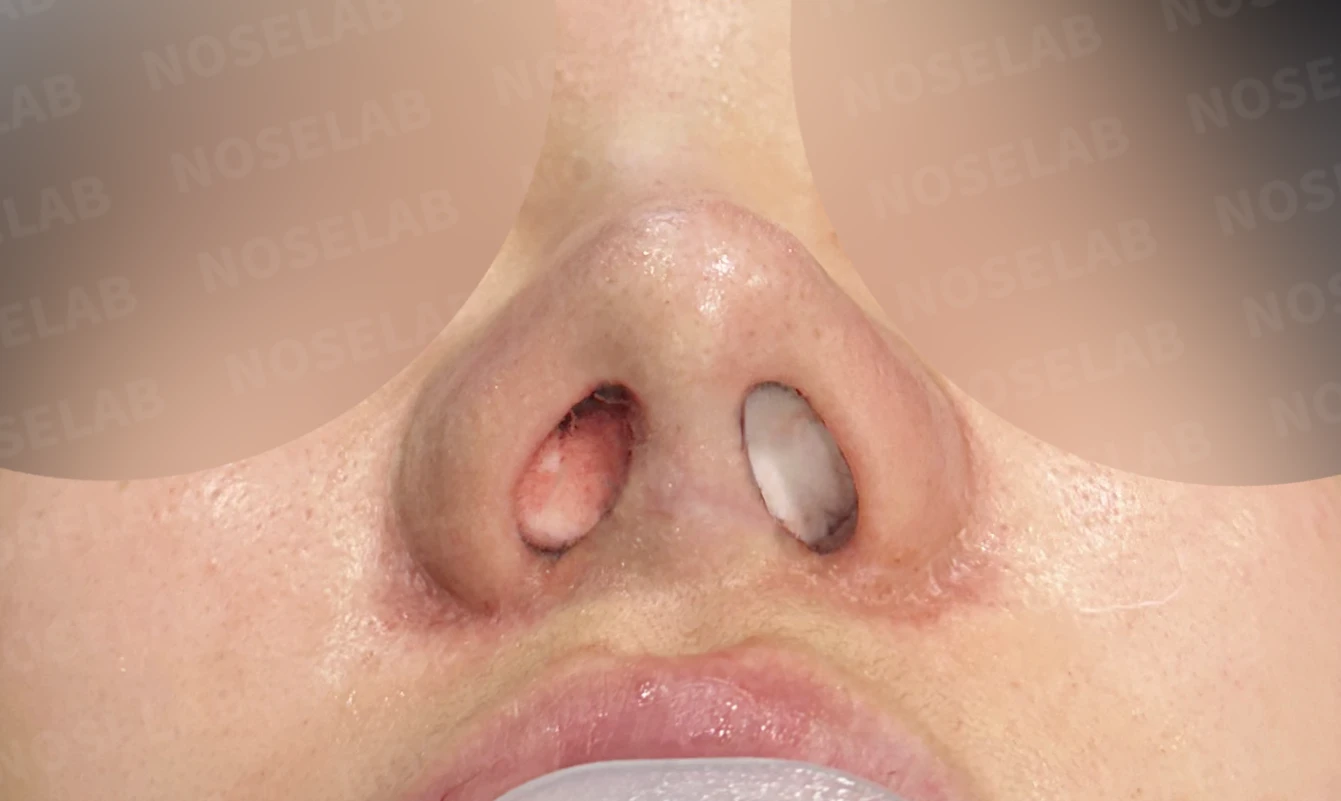
Nostril view on day 0 immediately after surgery Photos taken immediately after surgery show swelling and may differ from the final result.
Cases of revision rhinoplasty where the lower lateral cartilages have been lost from previous surgeries are among the most challenging. When structural support is absent, implants alone cannot support a stable result.
For this type of presentation, a structural approach was taken to reconstruct the lost cartilage using autologous rib cartilage. While lowering the nasal tip height, the tip width and visual focus were meticulously adjusted to prevent an accentuated bulbous look, and adjusting the radix addressed the appearance of an elongated nose.
In addition, resolving functional issues simultaneously—such as septal deviation, rhinitis, and external nasal valve stenosis—improved both form and function. In revision rhinoplasty, accurately assessing the status left by prior operations and establishing an appropriate reconstructive plan is paramount.
This was Dr. Peter C. Kang. Thank you.
#longnosecorrection #nostrilasymmetry #revisionrhinoplasty #autologousribcartilage #nasolabialanglecorrection #lowerlateralcartilagereconstruction #nasalobstructionsurgery #deviatedseptum #closedrhinoplasty #closedrevisionrhinoplasty

Limitations and risks
When autologous rib cartilage is used, scarring and pain may remain at the donor site on the chest, and pneumothorax (pleural injury) can occur rarely. Over time, the grafted cartilage may warp or undergo partial resorption.
When the septum is corrected at the same time, nasal obstruction may persist or recur, and in rare cases, septal perforation or changes in smell may occur.
Common potential risks include infection, bleeding, asymmetry, scarring, skin necrosis, and insufficient improvement; results vary depending on individual skin condition and previous surgical history.