Hello, I am Dr. Peter C. Kang.
Today, I would like to share a revision case of a patient who visited our clinic due to concerns about a bulbous and upturned-looking nose.
🔍 Surgical history
About 3 years ago, the patient had undergone nasal tip surgery using ear cartilage and alar reduction at another medical clinic. Even after the surgery, the bulbous appearance of the nasal tip remained, and because the upturned look on the profile view had not improved, the patient decided to undergo revision rhinoplasty.
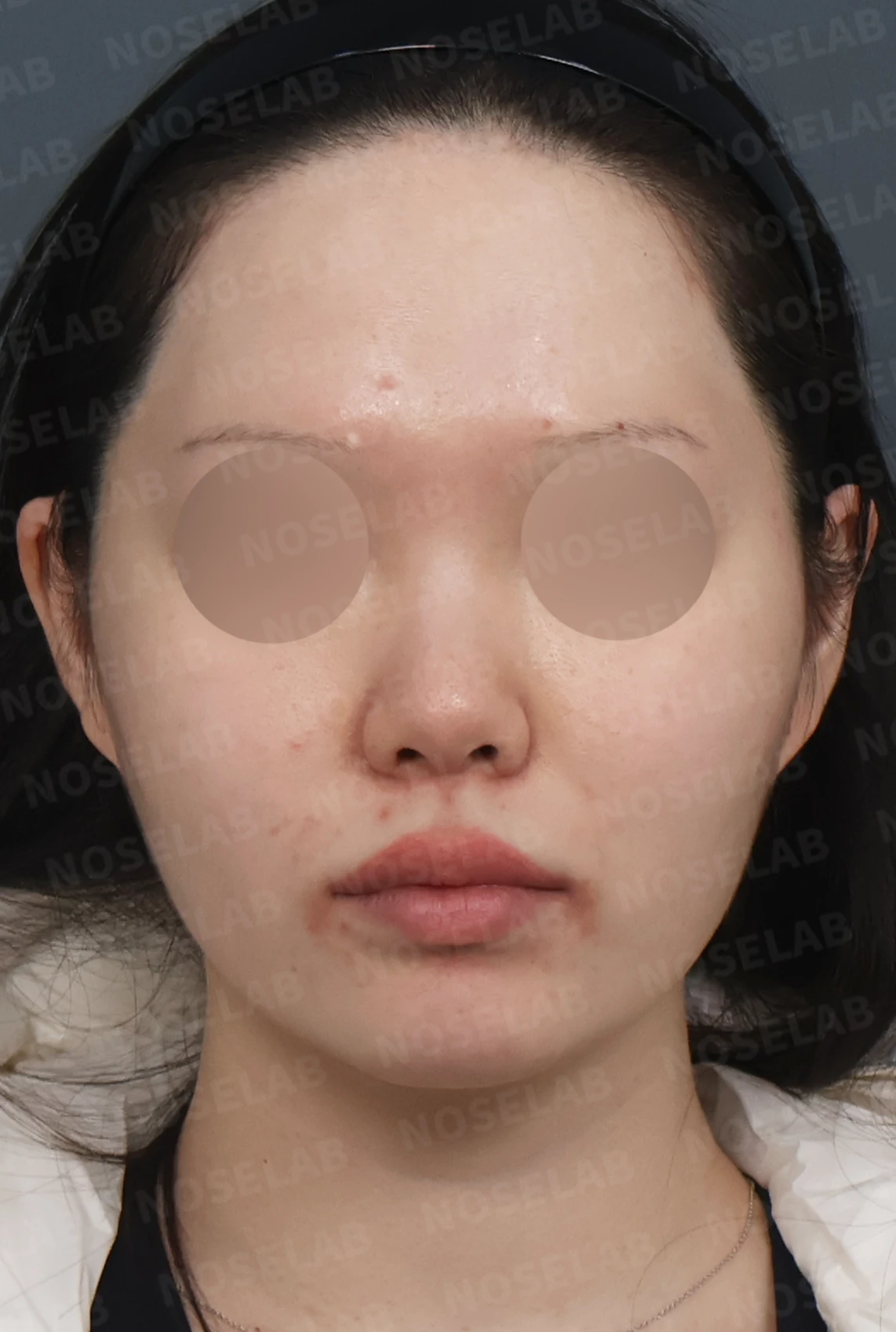
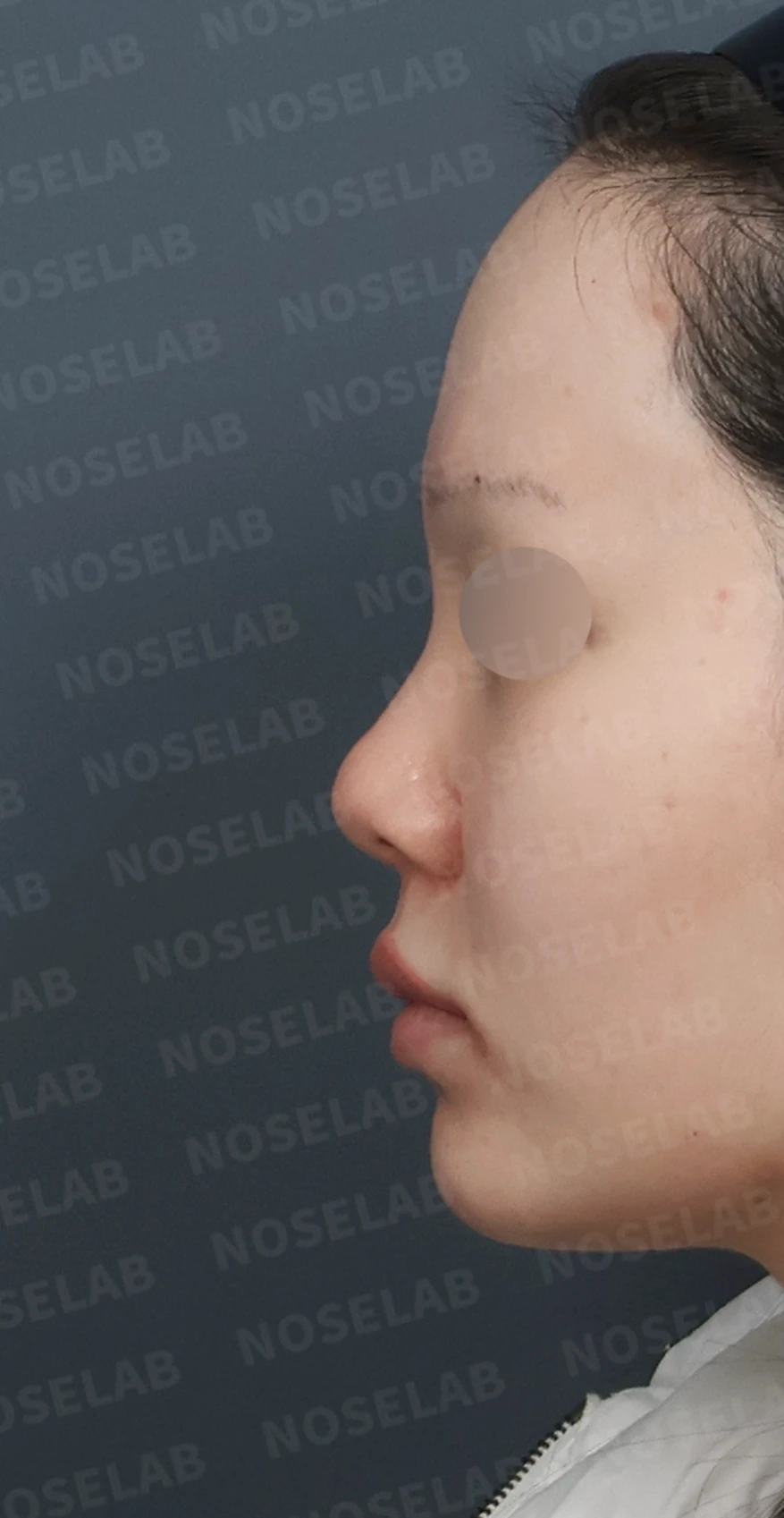
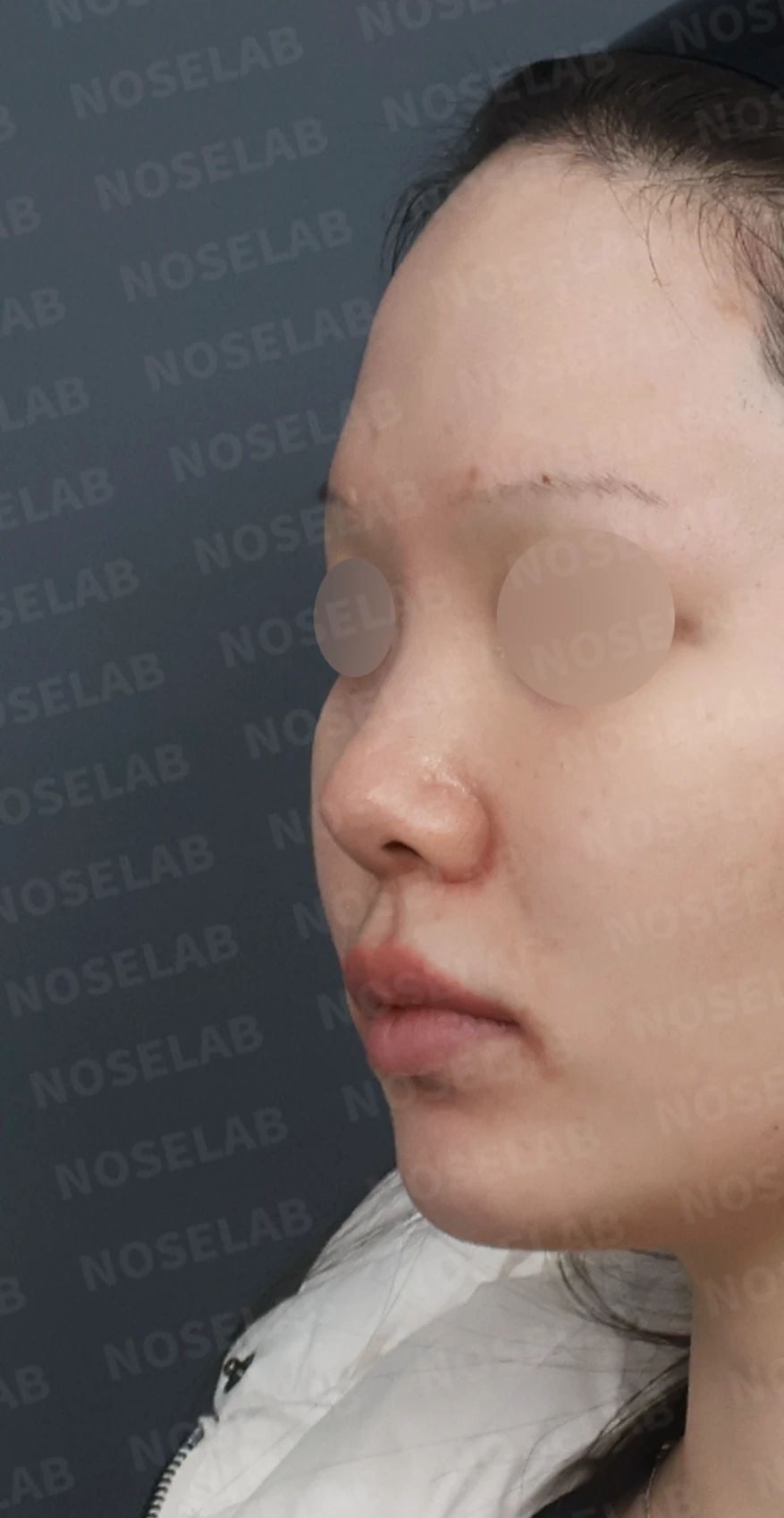
Front, left profile, and oblique views during design consultation.
💉 Patient requests
The patient stated wanting improvement in the following areas:
Improving the flared, wide appearance of the bulbous tip
Correcting the upturned appearance of the nasal tip from the profile view
Improving the overall nasal line
Achieving a feminine and refined straight bridge line
The patient requested the use of autologous rib cartilage for the nasal tip and agreed to the use of an implant for the nasal bridge.
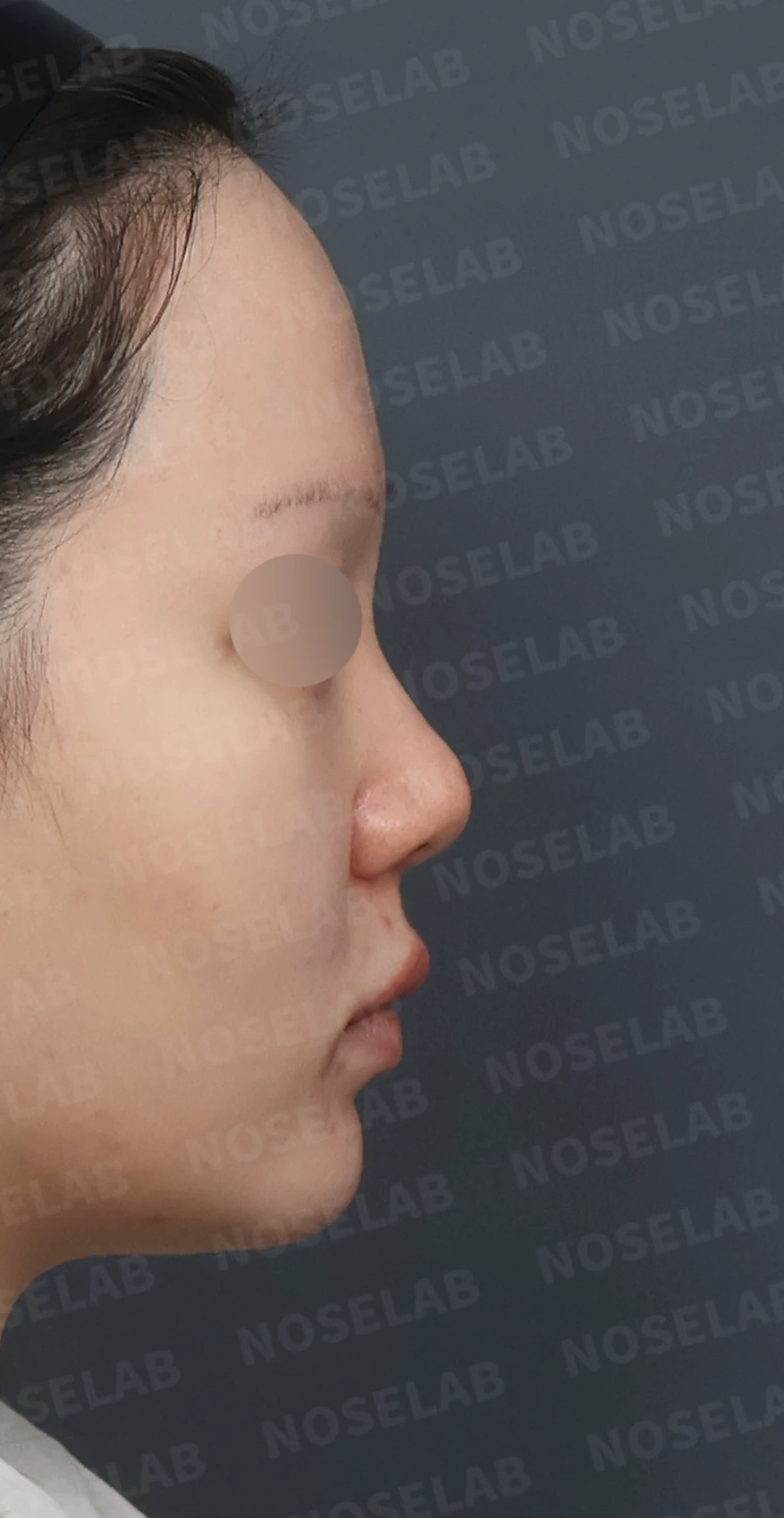
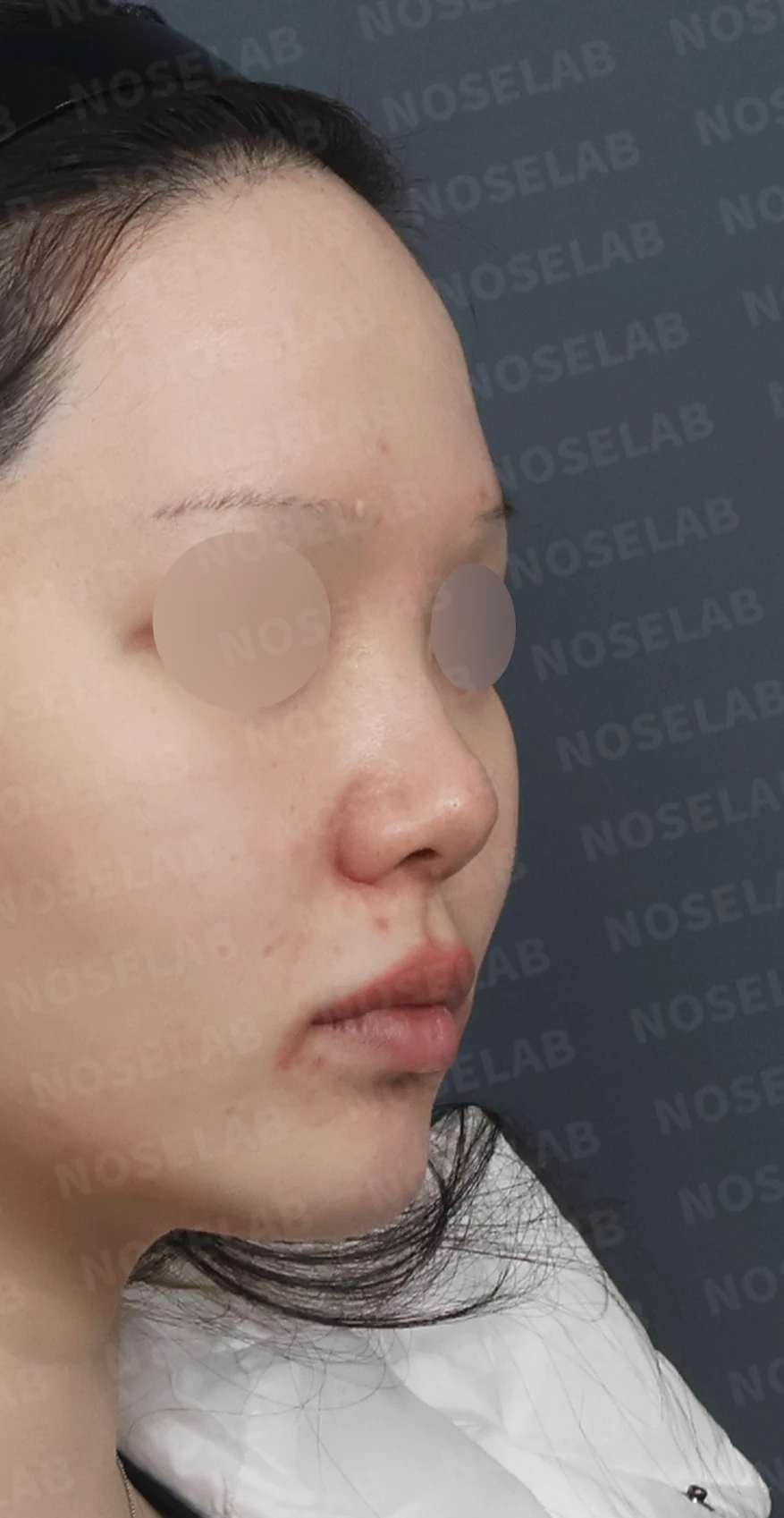
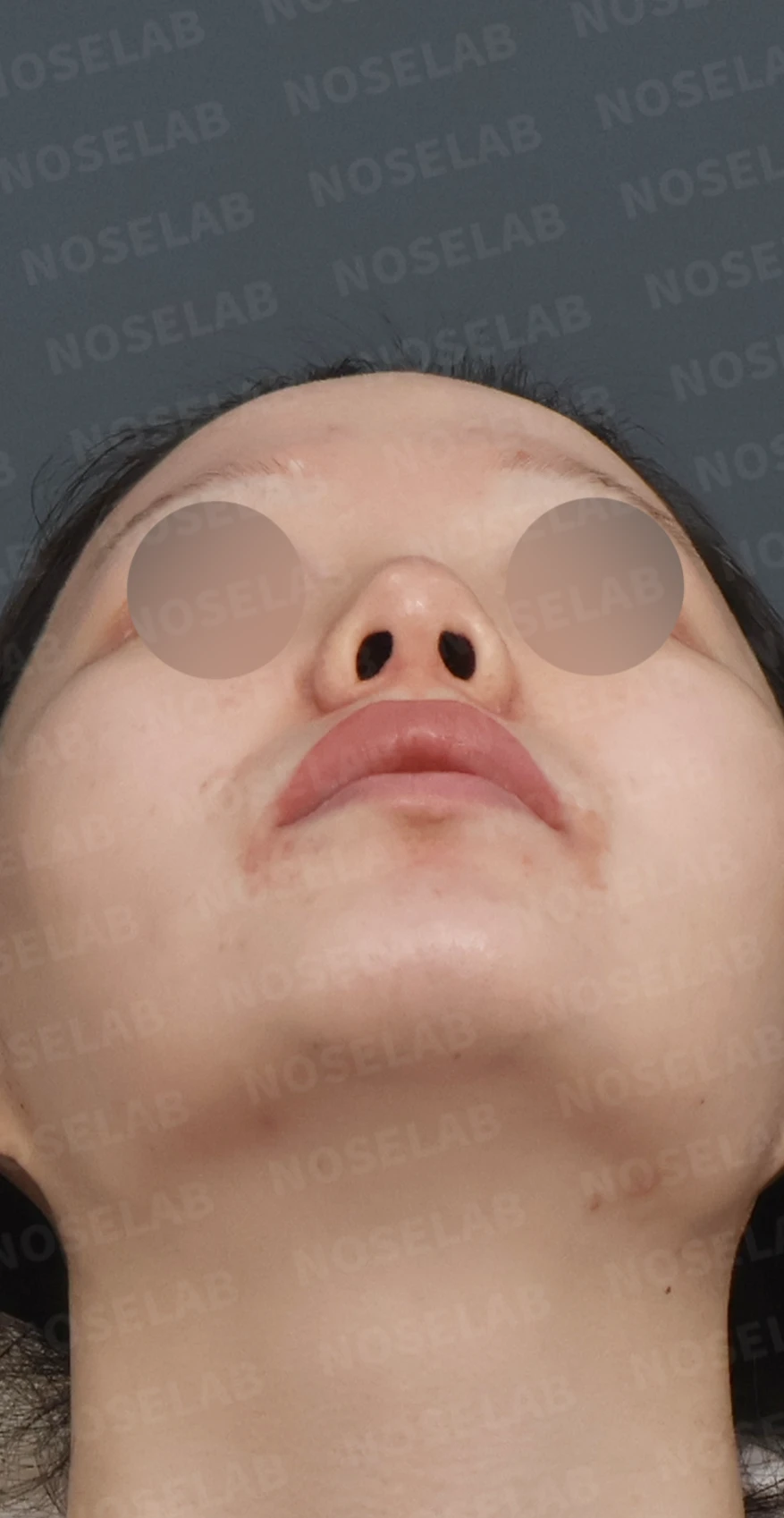
Right profile, oblique, and nostril views during design consultation.
🔧 Surgical plan and procedure
The key was reconstructing the nasal tip structure that was not adequately corrected in the previous surgery.
1. Septal extension using autologous rib cartilage
Reinforcing the nasal tip support structure weakened by the previous surgery
Stably securing nasal tip height and length
2. Structural approach for bulbous nose correction
Partially removing scar tissue remaining in the nasal tip
Repositioning and suturing the lower lateral cartilages to create a well-defined nasal tip
Bringing together the nasal tip that had appeared flared and bulbous
3. Forming the nasal bridge line
Finely carving the silicone implant to match the shape of the nasal bone
Naturally raising the nasal bridge to achieve a feminine straight bridge line
🌟 Surgical results
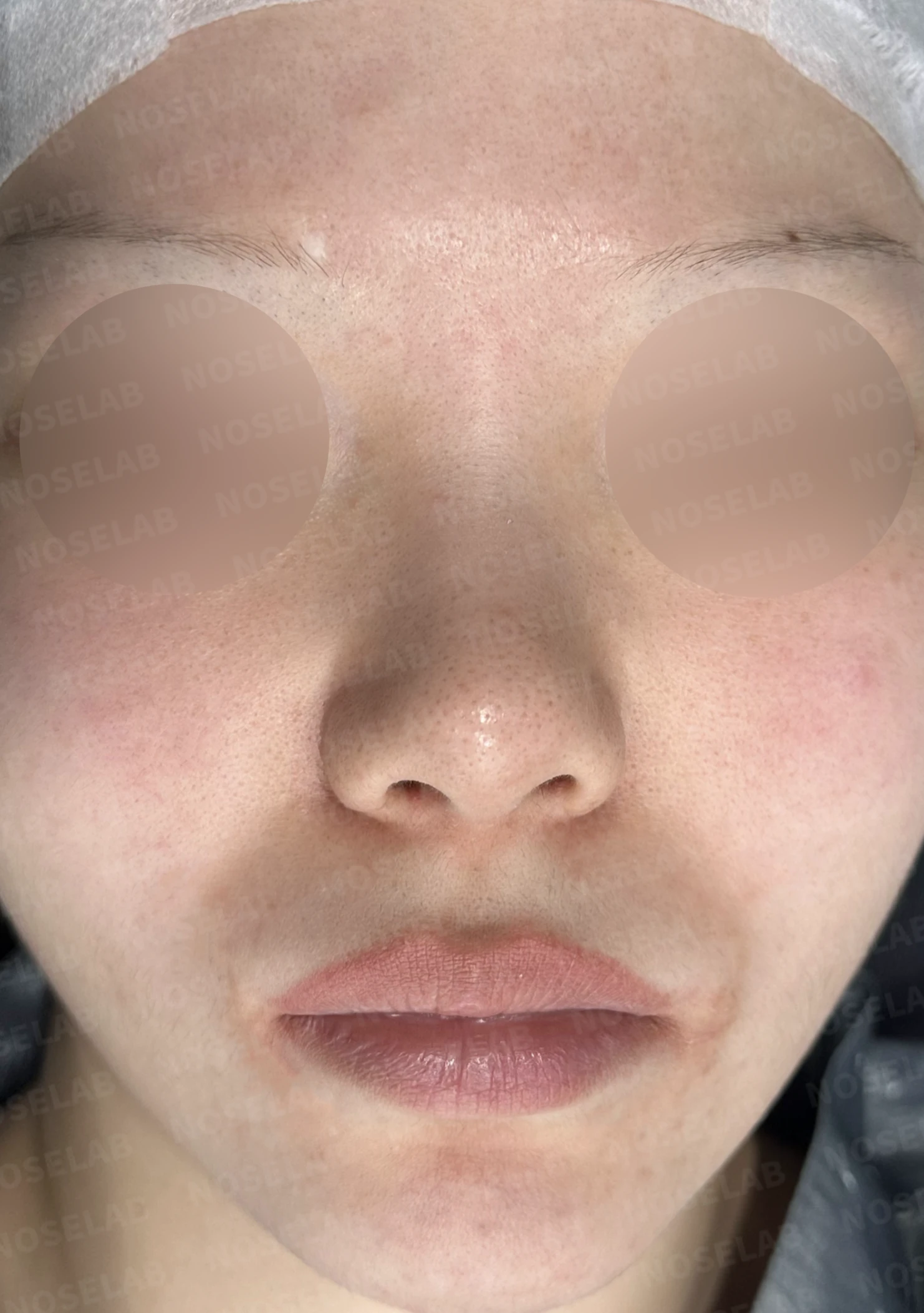
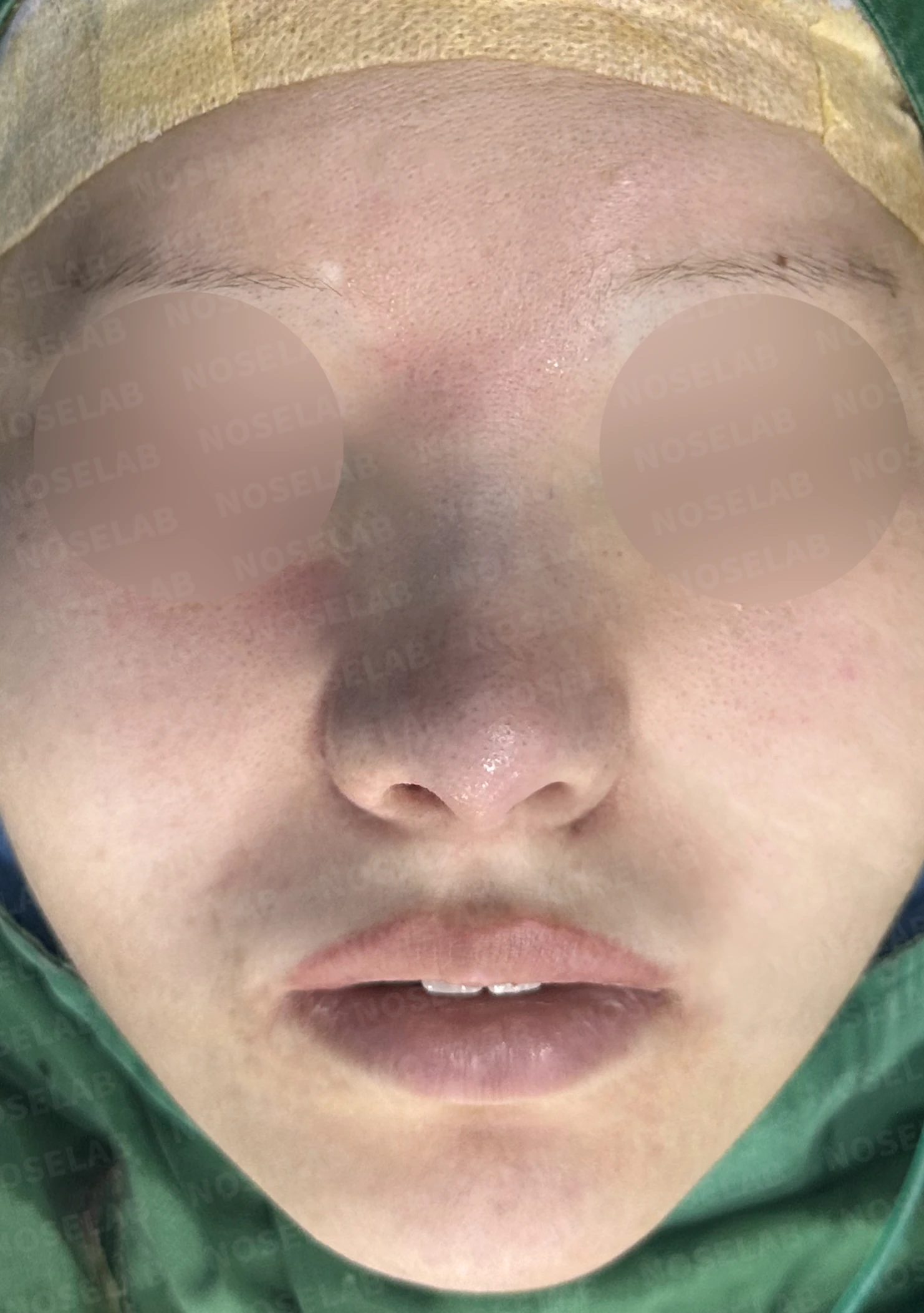
Before surgery / Day 0 immediately after surgery Photos taken immediately after surgery show swelling and may differ from the final result.
Front view changes
The flared, bulbous nasal tip was brought together into a defined shape
The bulbous impression significantly improved, creating a more refined look
The overall nasal width was reduced, enhancing balance with the face
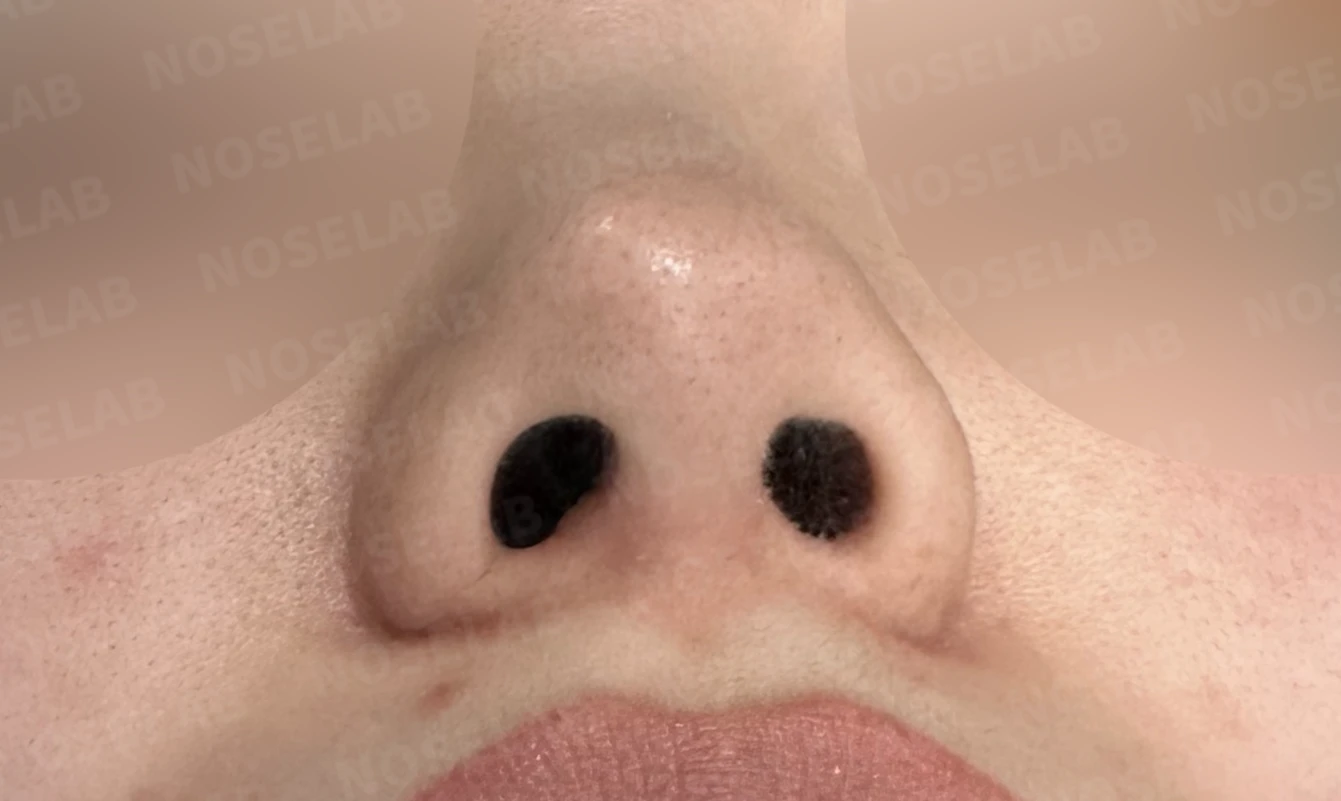
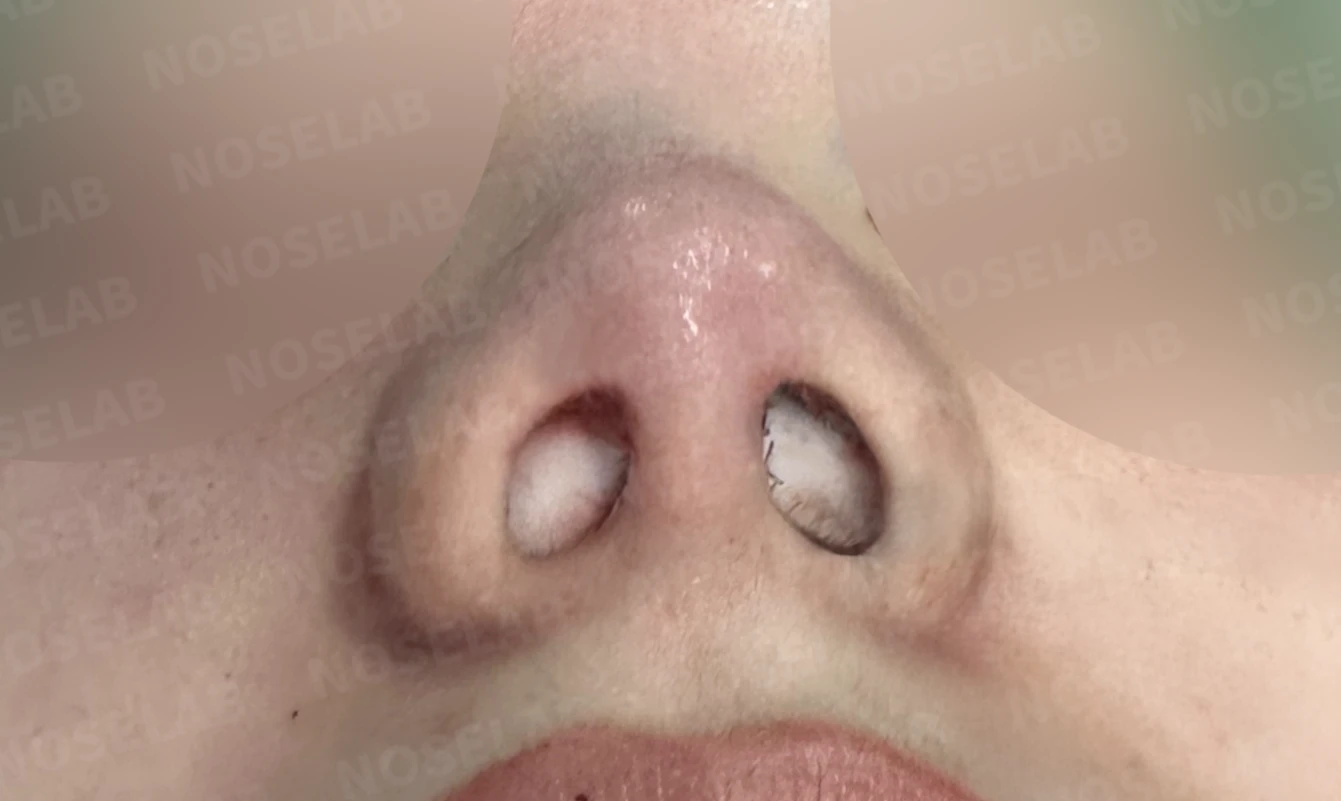
Before surgery / Day 0 immediately after surgery Photos taken immediately after surgery show swelling and may differ from the final result.
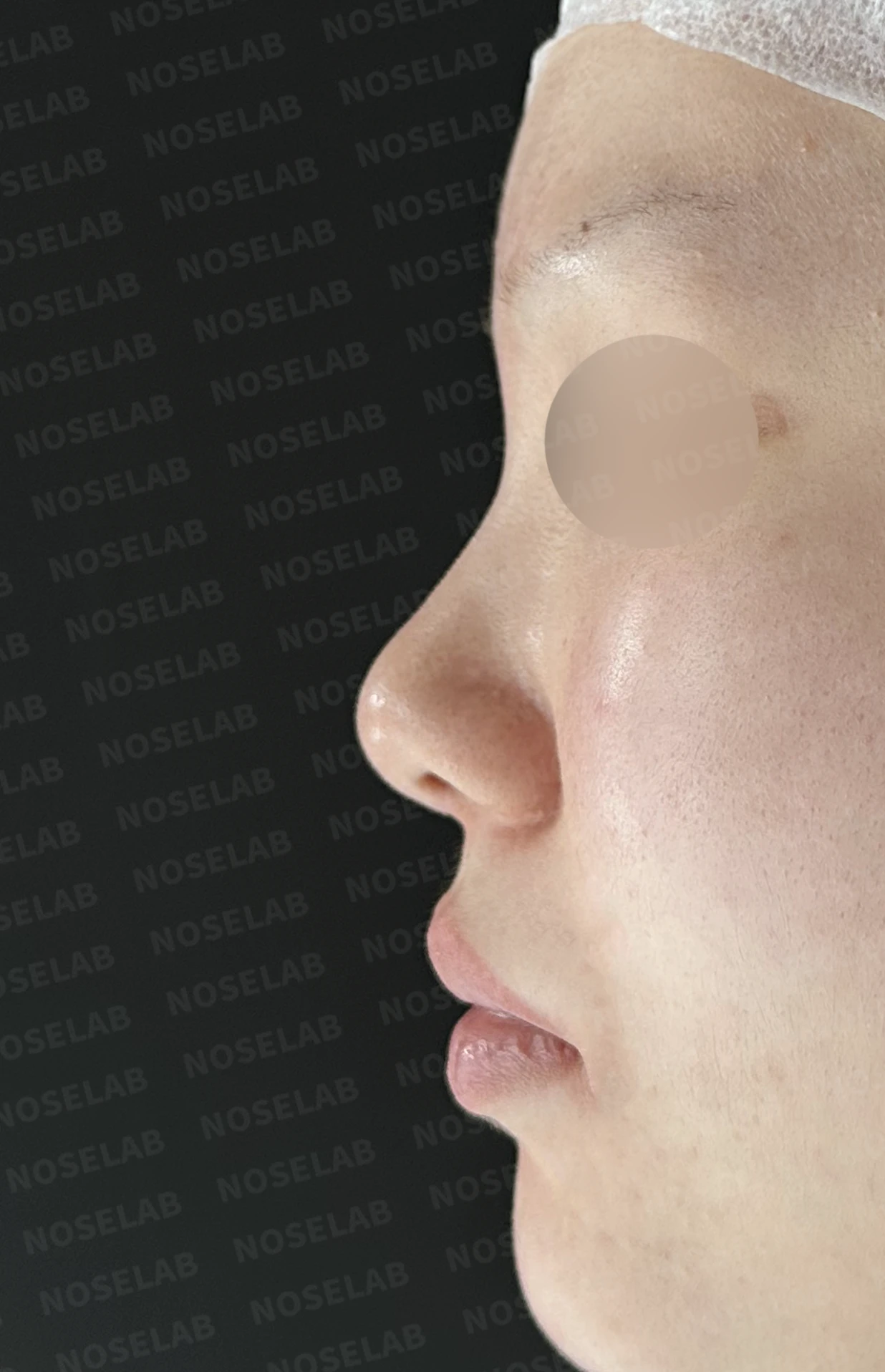
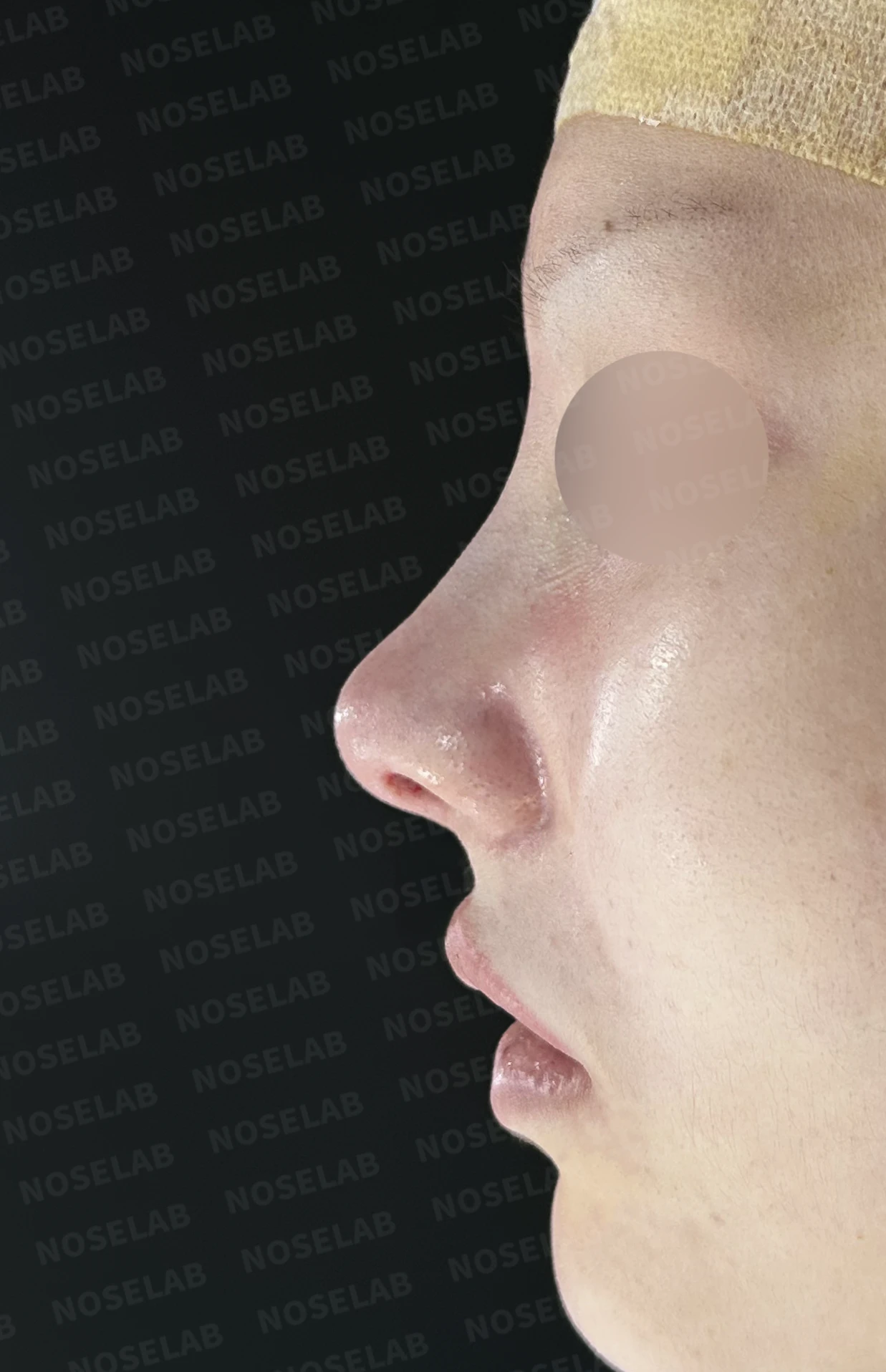
Before surgery / Day 0 immediately after surgery Photos taken immediately after surgery show swelling and may differ from the final result.
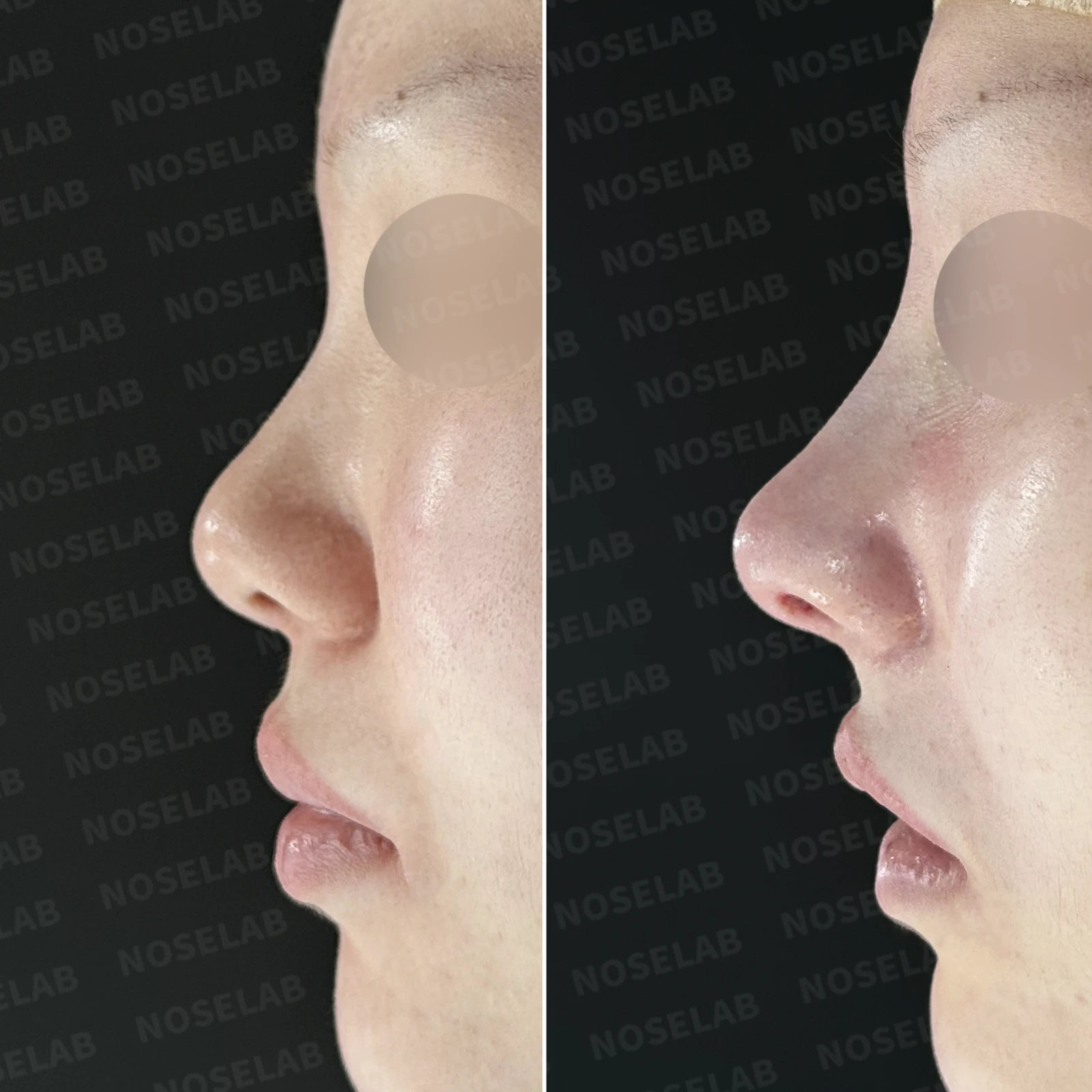
Profile view changes
The upturned nasal tip was corrected to an appropriate angle
Forming a smooth straight bridge line connecting the nasal bridge to the tip
Achieving a feminine and natural profile silhouette
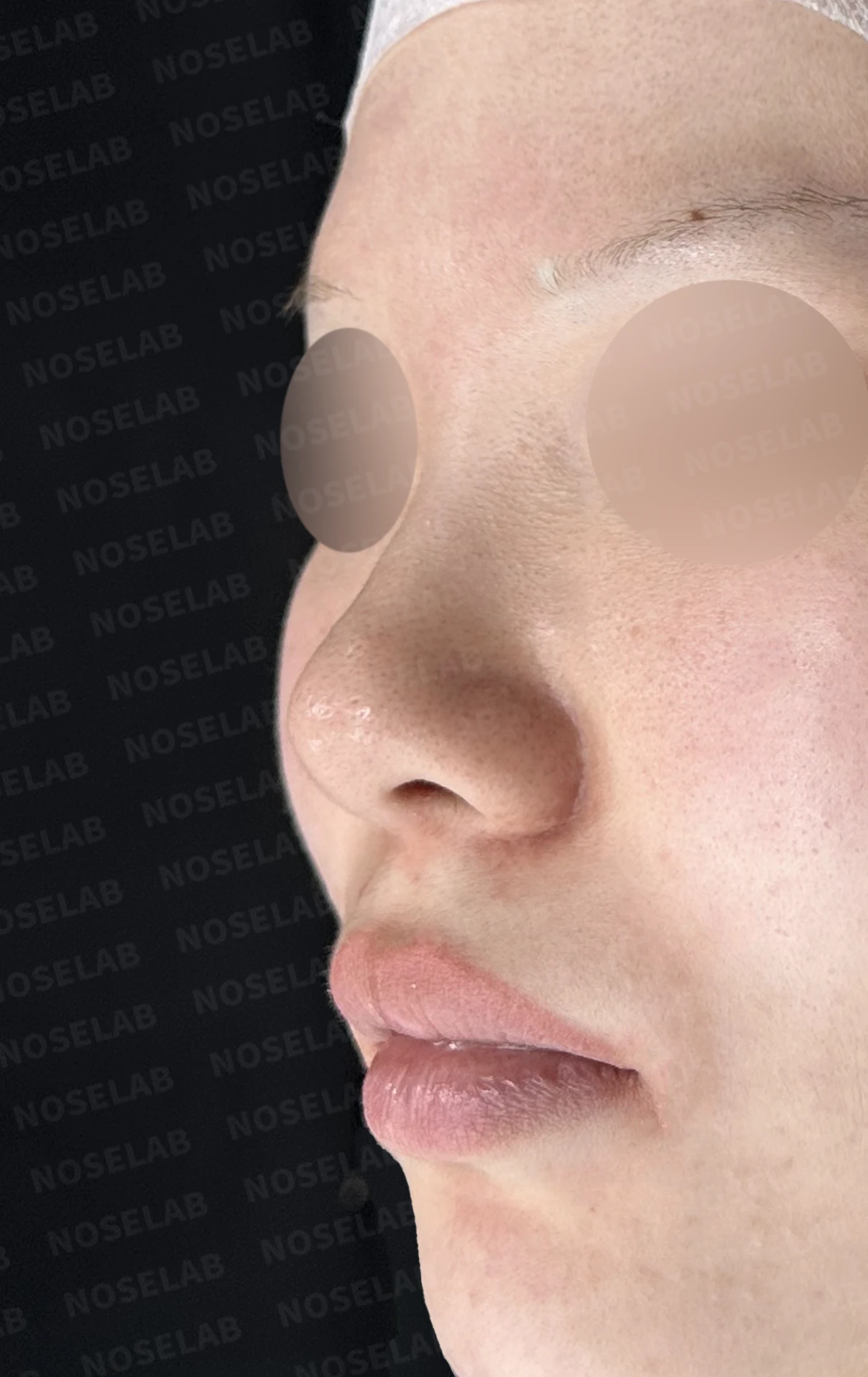
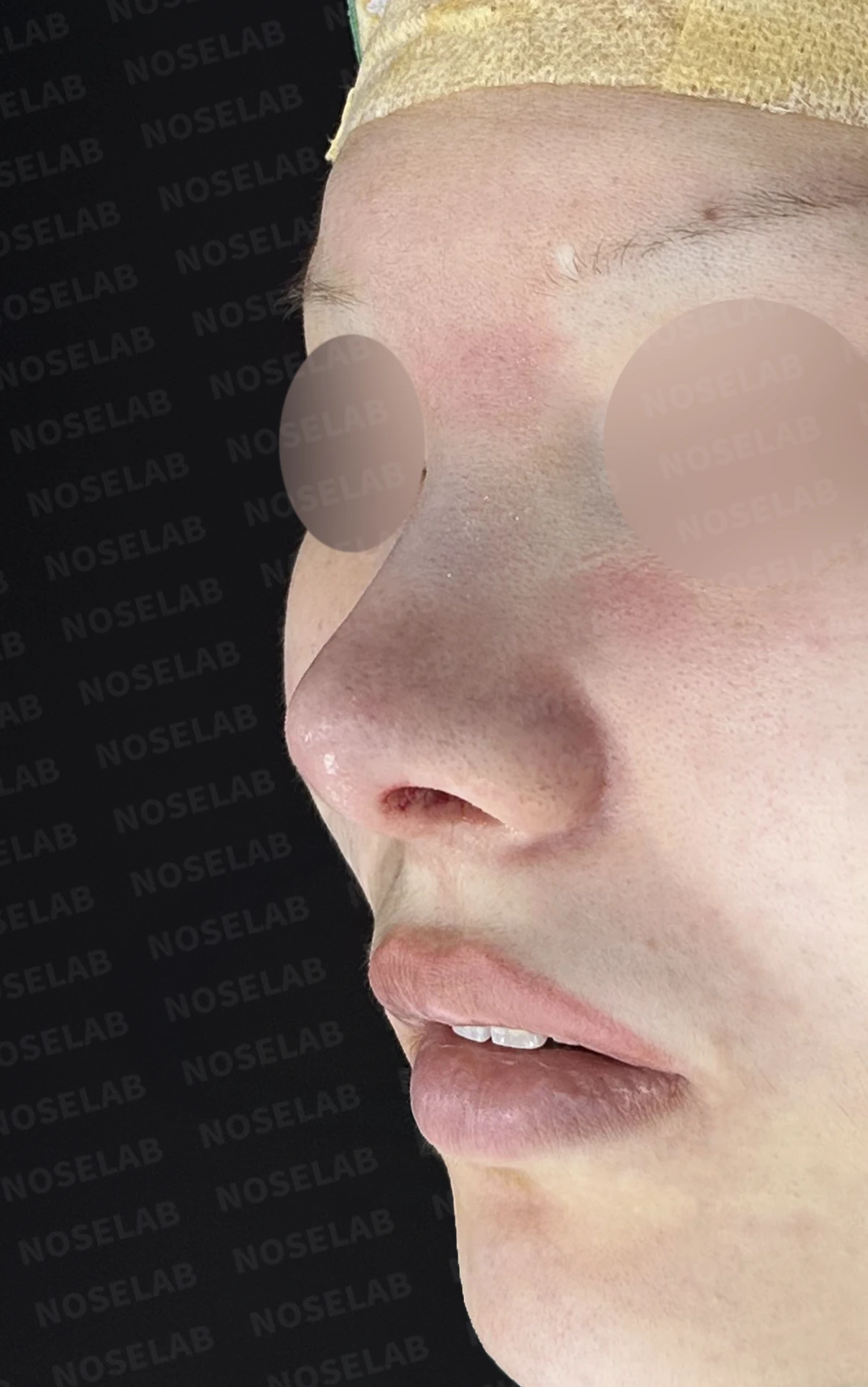
Before surgery / Day 0 immediately after surgery Photos taken immediately after surgery show swelling and may differ from the final result.
💡 Specialist opinion
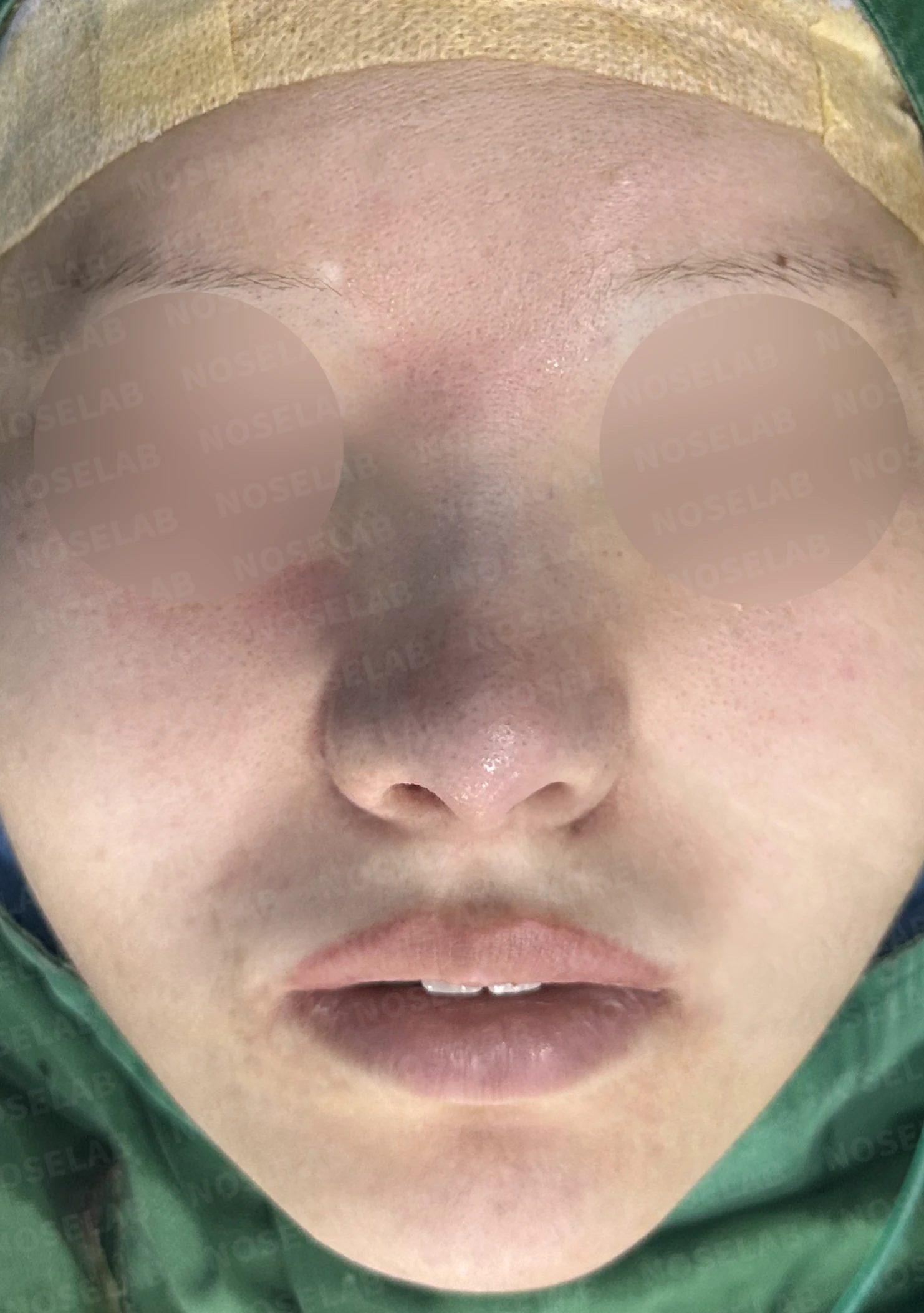
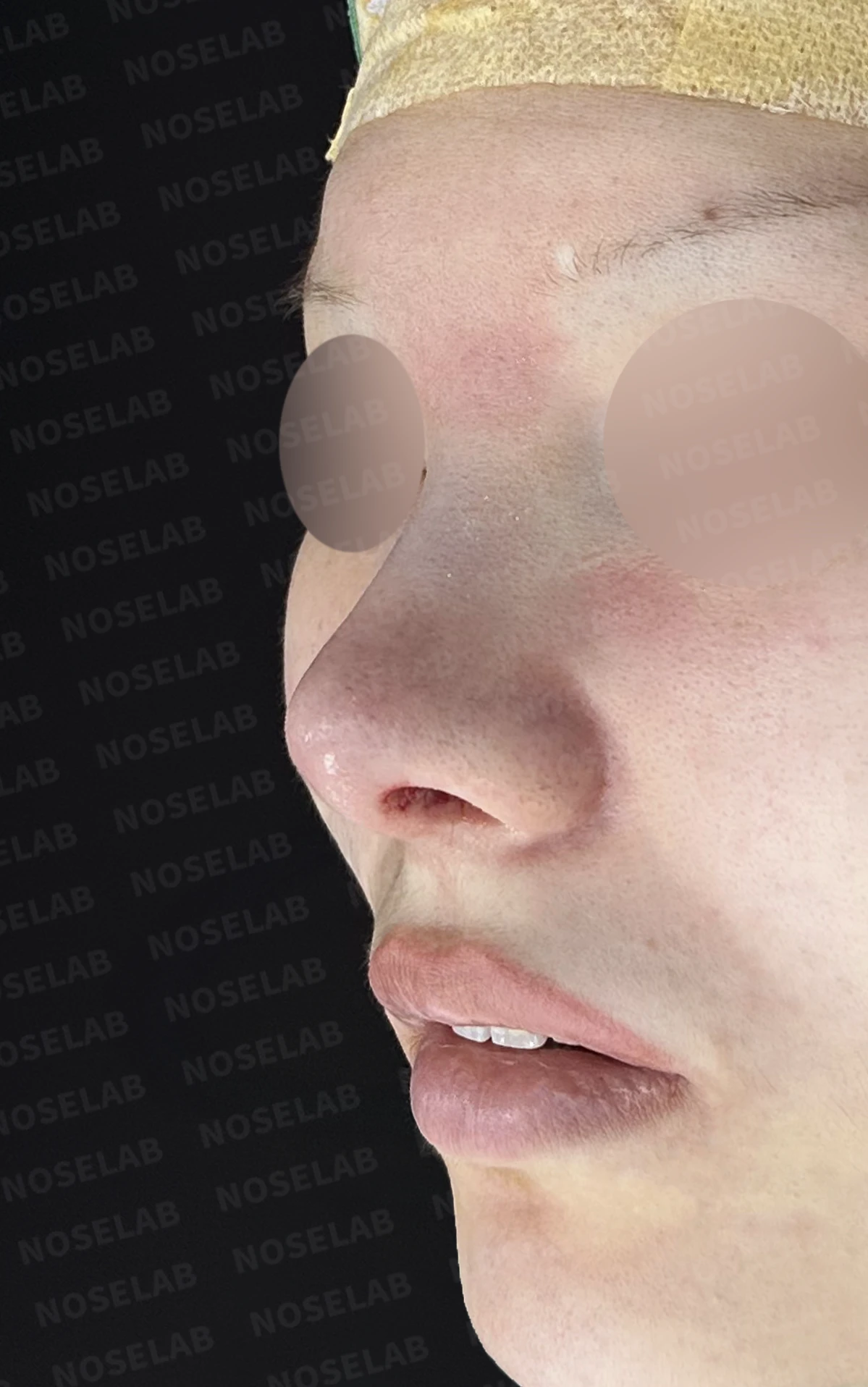
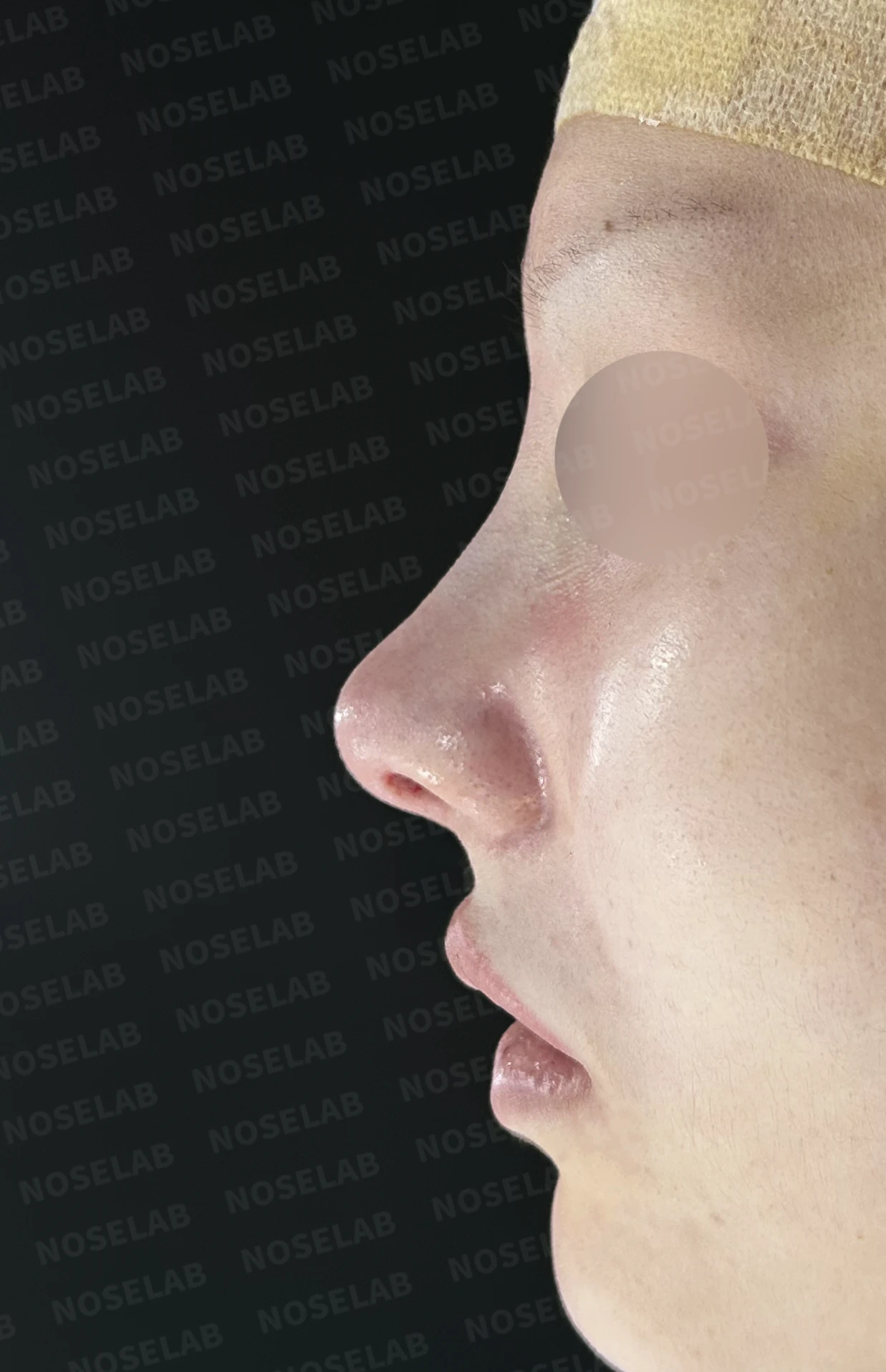
Front, oblique, and profile views on day 0 immediately after surgery. Photos taken immediately after surgery show swelling and may differ from the final result.
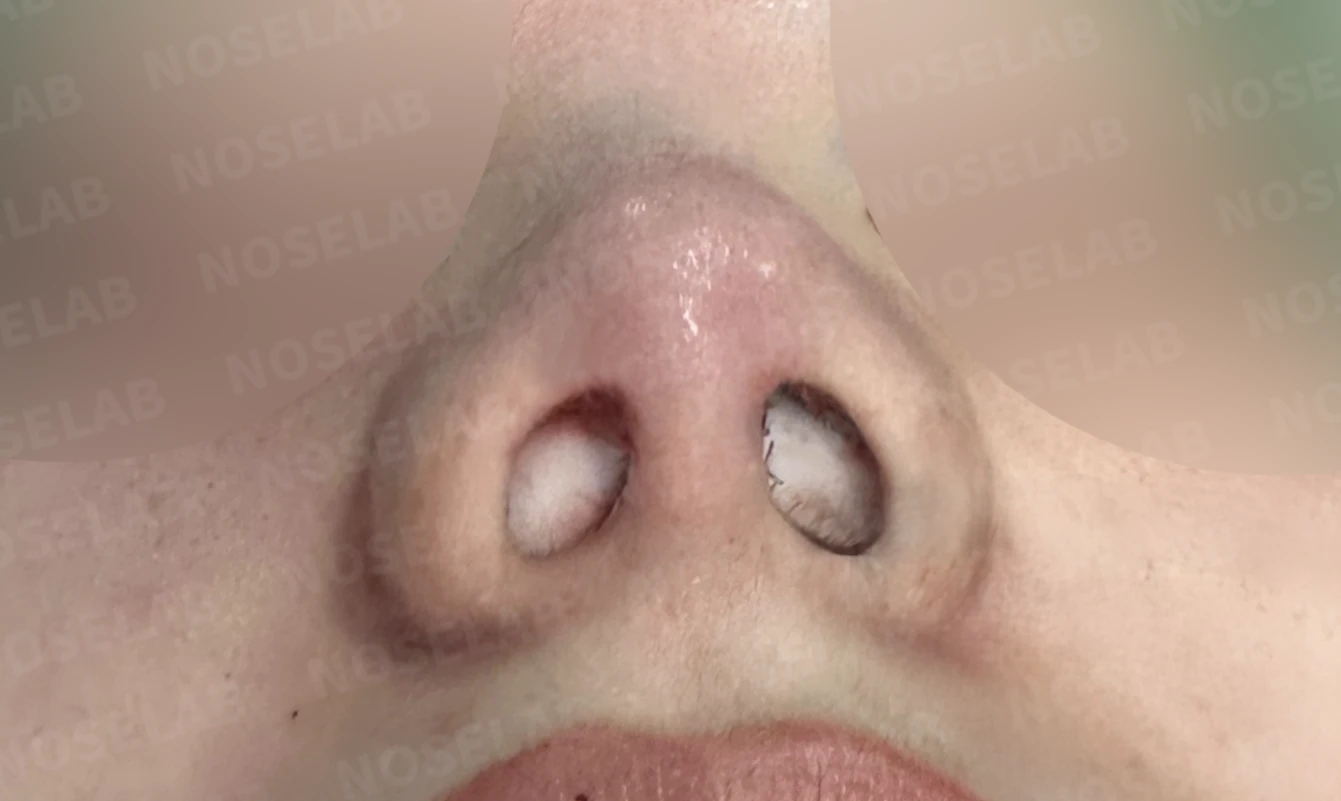
Nostril view on day 0 immediately after surgery. Photos taken immediately after surgery show swelling and may differ from the final result.
Revision surgery begins with accurately identifying the tissues and structures altered by previous surgeries. In particular, when the nasal tip is operated on using only ear cartilage, it is not uncommon for structural support to weaken over time, causing the nasal tip to revert to a bulbous shape.
In these cases, firmly reconstructing the nasal tip support structure using autologous rib cartilage was key. Rib cartilage has superior strength and support compared to ear cartilage, making it advantageous for maintaining the shape of the nasal tip over a long period. In addition, by complementing the nasal bridge line with an implant, we were able to naturally achieve the feminine straight bridge line the patient desired.
I hope this is helpful to those considering revision surgery. This was Dr. Peter C. Kang, Medical Director. Thank you.

#closedrhinoplasty #closedrevisionrhinoplasty #bulbousnosecorrection #upturnednosecorrection #autologousribrhinoplasty #septalextension #straightbridgeline #revisionrhinoplasty #tiprhinoplasty
Limitations and risks
When autologous rib cartilage is used, scarring and pain may remain at the donor site on the chest, and pneumothorax (pleural injury) can occur rarely. Over time, the grafted cartilage may warp or undergo partial resorption.
When the septum is corrected at the same time, nasal obstruction may persist or recur, and in rare cases, septal perforation or changes in smell may occur.
Common potential risks include infection, bleeding, asymmetry, scarring, skin necrosis, and insufficient improvement; results vary depending on individual skin condition and previous surgical history.