Hello, I am Dr. Peter C. Kang.
Today, I would like to share the case of a patient who visited our clinic concerned about a severe deviated septum and an unnatural nasal appearance caused by an excessively high radix.
🔍 Surgical history
About 5 years ago, the patient underwent a prior surgery involving nasal bridge augmentation with a silicone implant and nasal tip surgery using septal cartilage.
Approximately 5 years ago: silicone implant bridge surgery + septal cartilage tip surgery
Following the surgery, the septal deviation worsened, and the starting point of the bridge implant was placed excessively high, making the nasal bridge appear unnatural. In addition, the patient was dissatisfied with the overall nasal contour due to a crooked appearance. This was accompanied by nasal obstruction, causing functional difficulties as well.
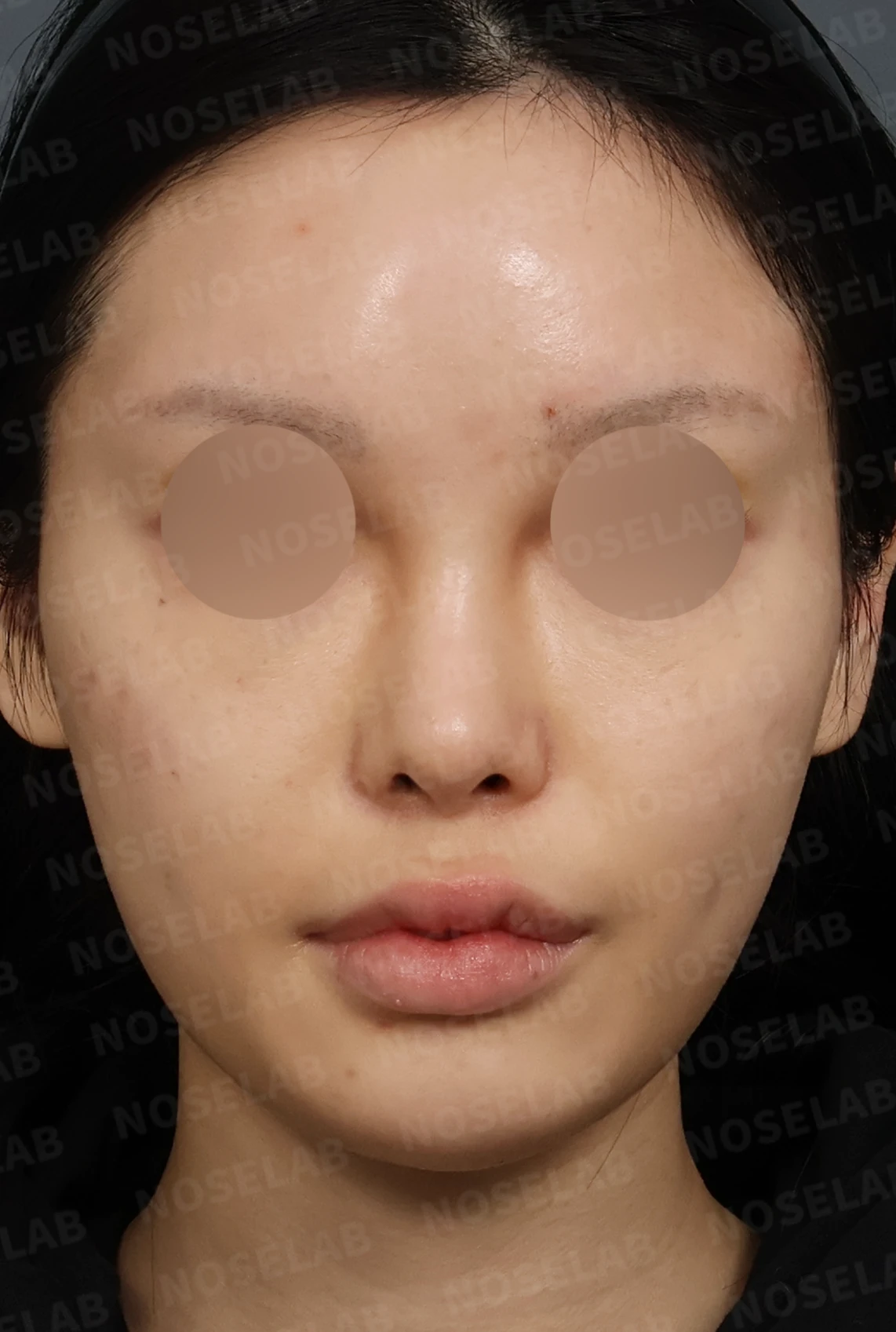
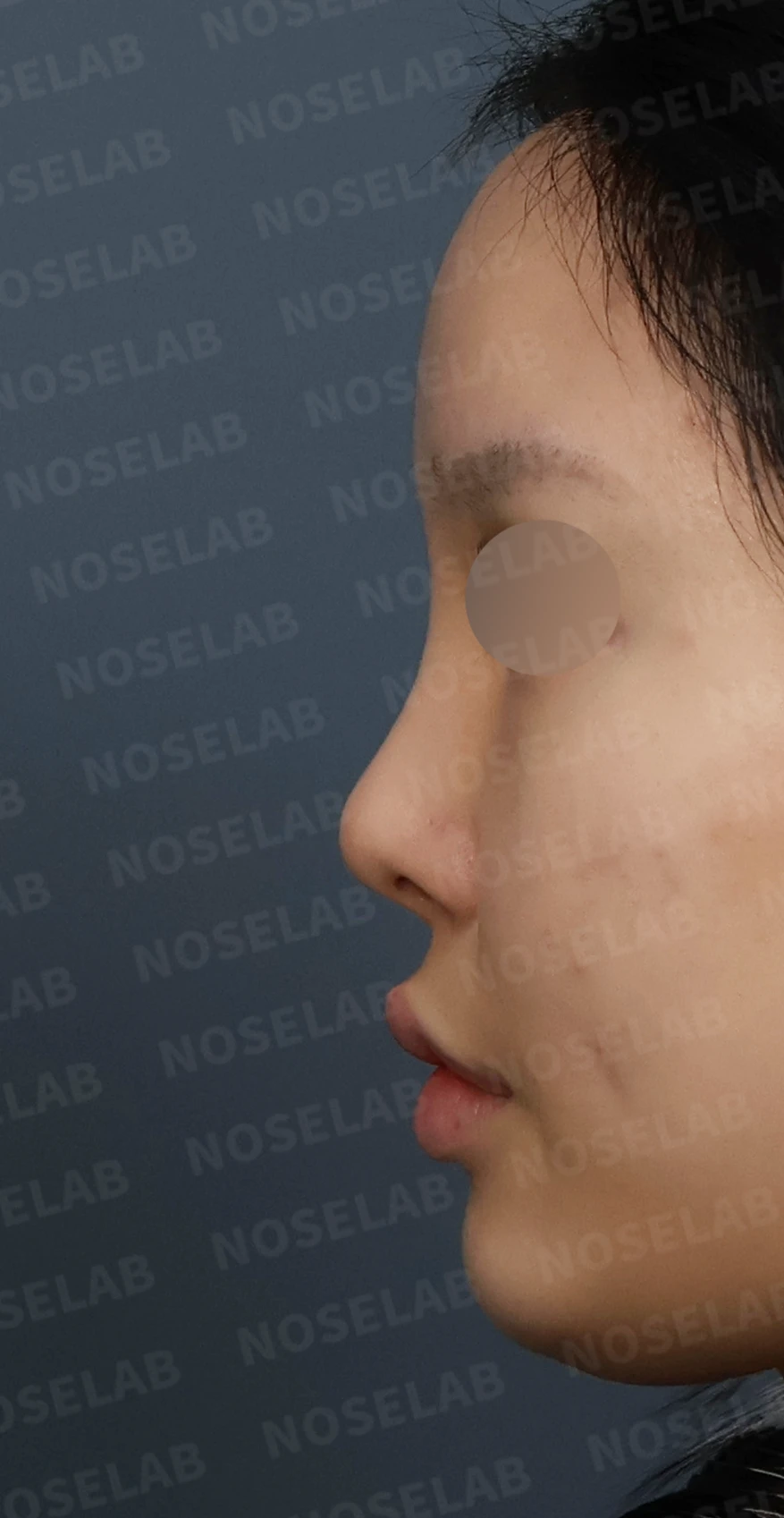
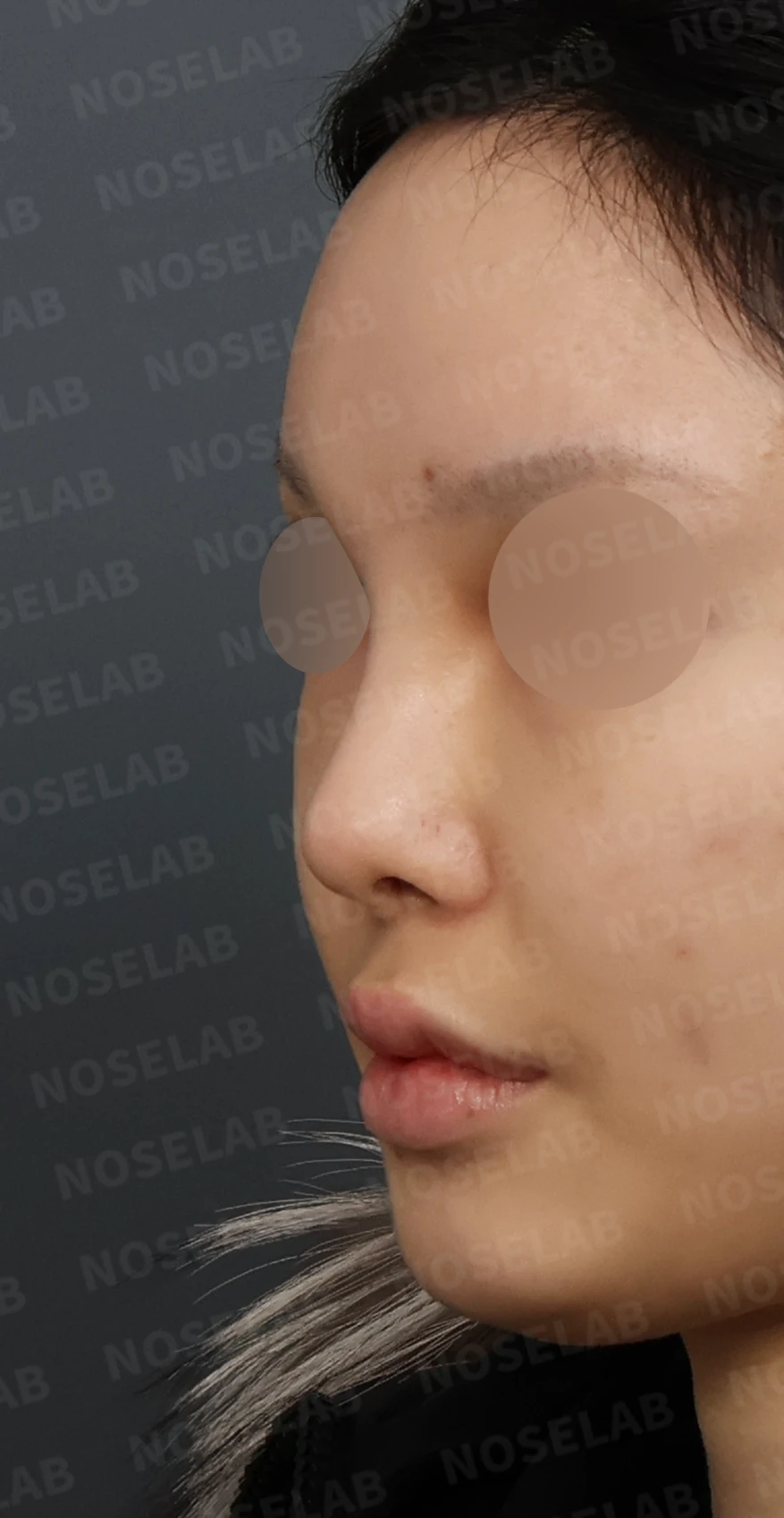
Front, left profile, and oblique views during design consultation.
💉 Patient requests
The patient's specific requests were as follows:
Desire to address both functional and aesthetic concerns simultaneously
Desire to lower the radix while achieving a natural dorsal line
A rounded yet well-defined nasal tip (without a sharp look)
Preventing the nose from appearing upturned from the front view
A feminine straight bridge line
Preference for using donor rib cartilage
In particular, the patient wished to improve the artificial appearance caused by the high radix and wanted a tip that looked softly rounded yet defined and natural, rather than sharp. Additionally, the patient hoped to resolve the nasal obstruction to achieve comfortable breathing functionally.
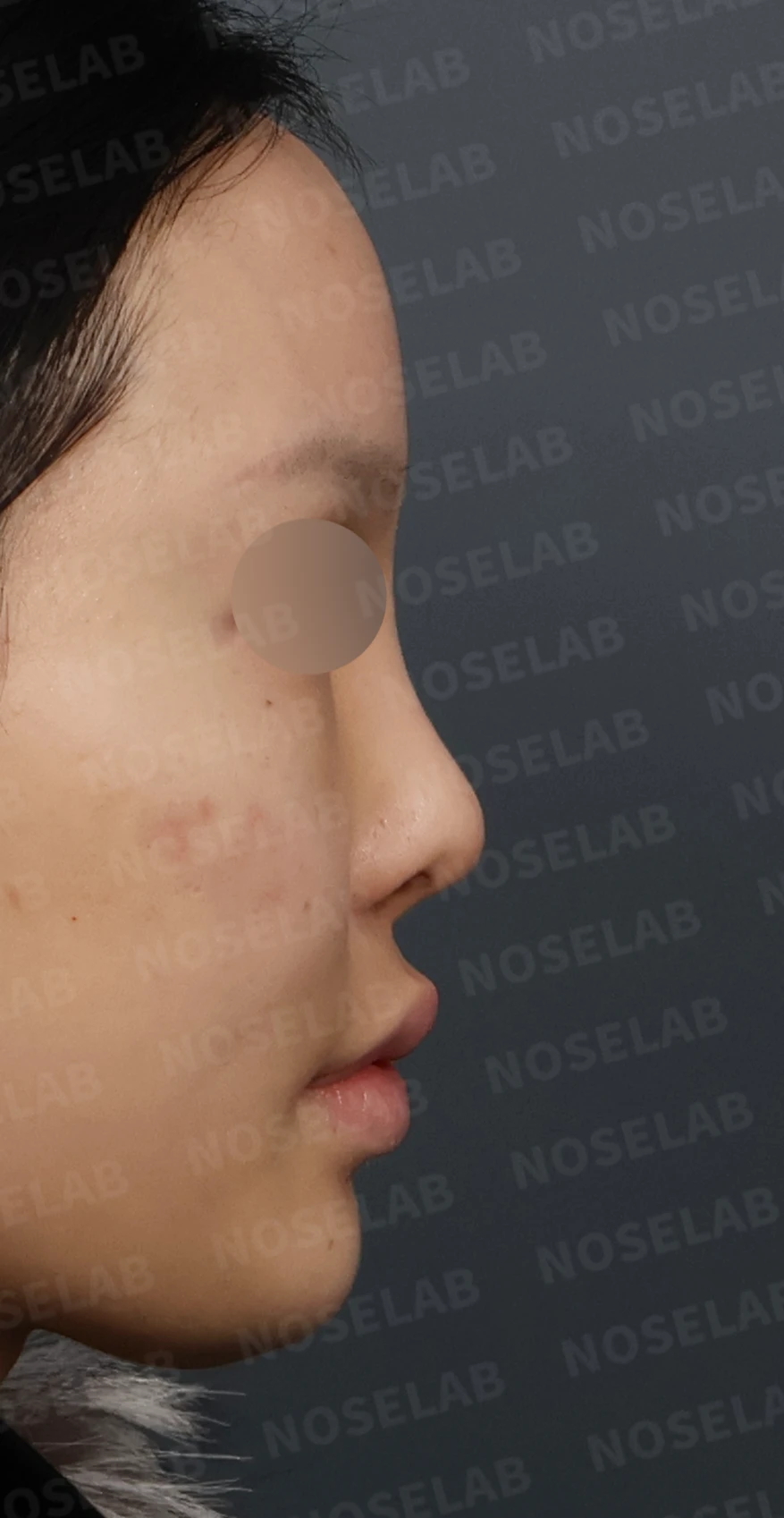
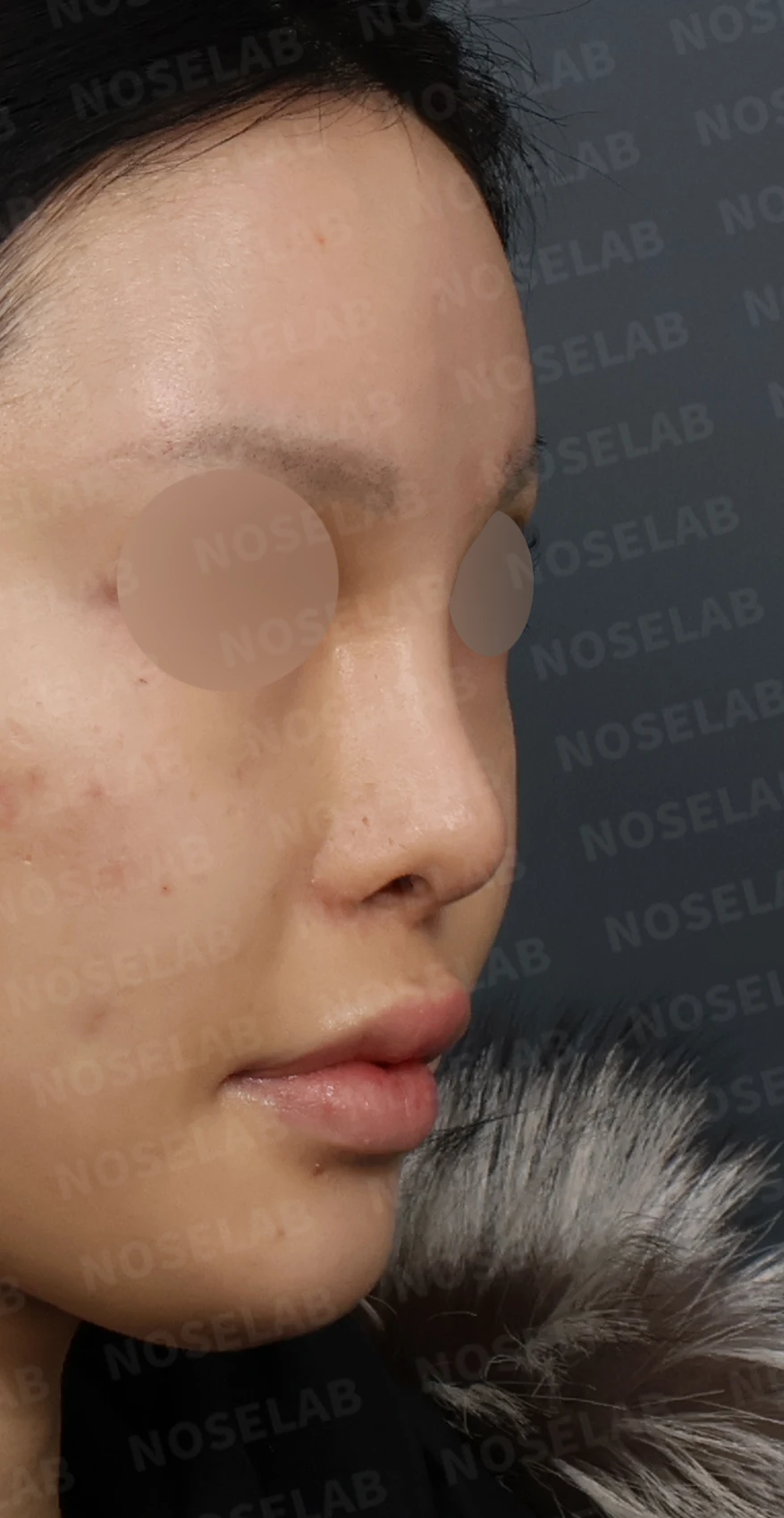
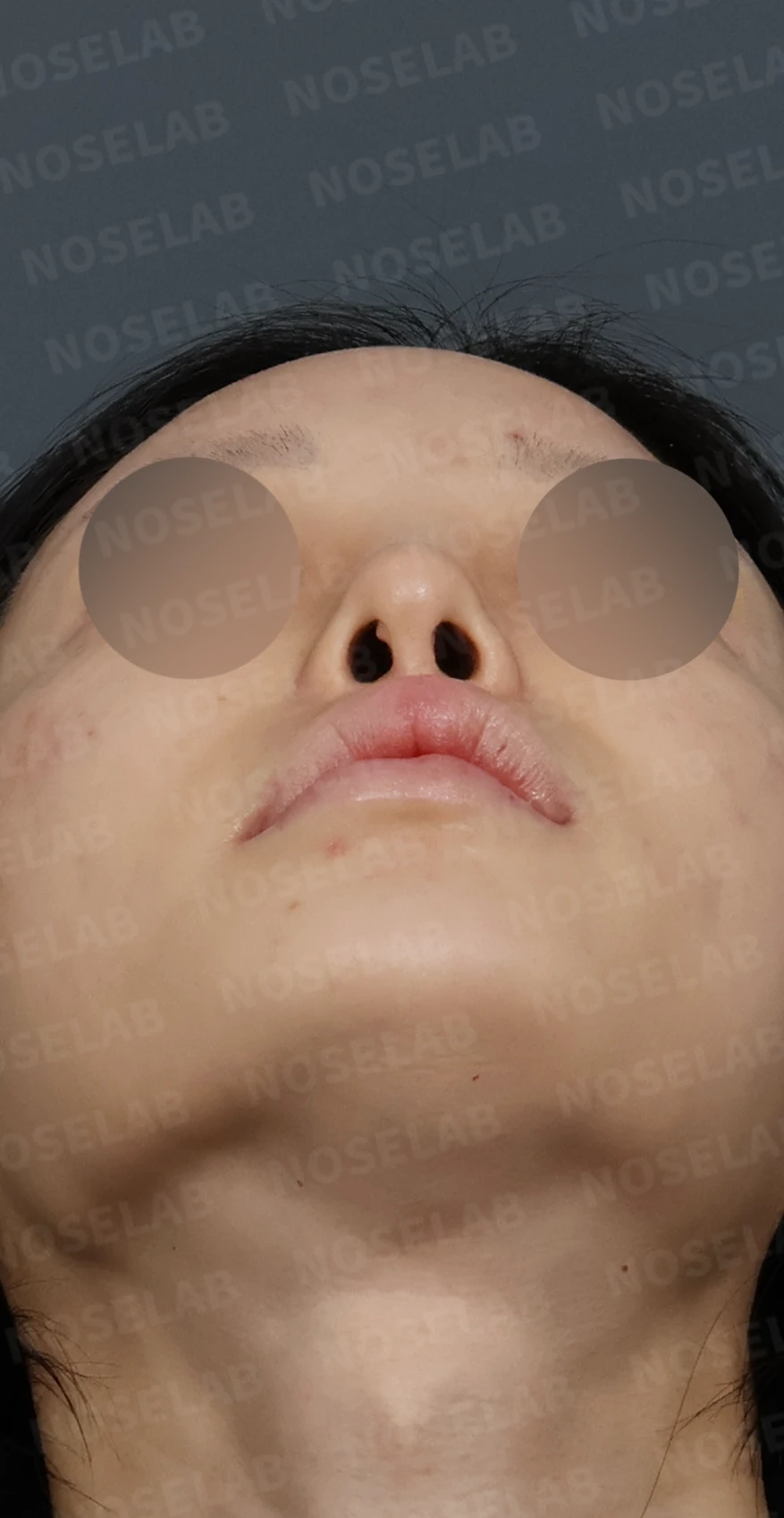
Right profile, oblique, and nostril views during design consultation.
🔧 Surgical plan and procedure
1. Septal reconstruction and correction using donor rib cartilage
Reconstruction of the severely deviated septum using donor rib cartilage
Restoration of structural stability in the septum
Fundamental relief of nasal obstruction by normalizing internal nasal airflow
2. Nasal bridge alignment via lateral osteotomy
Correction of a nasal bridge with a high radix and crooked appearance
Repositioning of the nasal bones to establish a natural radix
Straightening and refining the overall nasal bridge line
3. Silicone implant replacement
Removal of existing silicone implant
Precise carving of a new implant with a lowered radix to match the nasal bone
Setting a natural bridge height suited for a feminine straight bridge line
4. Corrective surgery for deviated septum and rhinitis
Straightening the deviated septum through septoplasty
Alleviating rhinitis symptoms through inferior turbinate reduction
Securing daily comfort through functional breathing improvement
🌟 Surgical results
Front view changes
The previously high radix is naturally lowered, creating a softer impression
The crooked nasal bridge is properly straightened
A stable shape where the nose no longer appears upturned from the front view
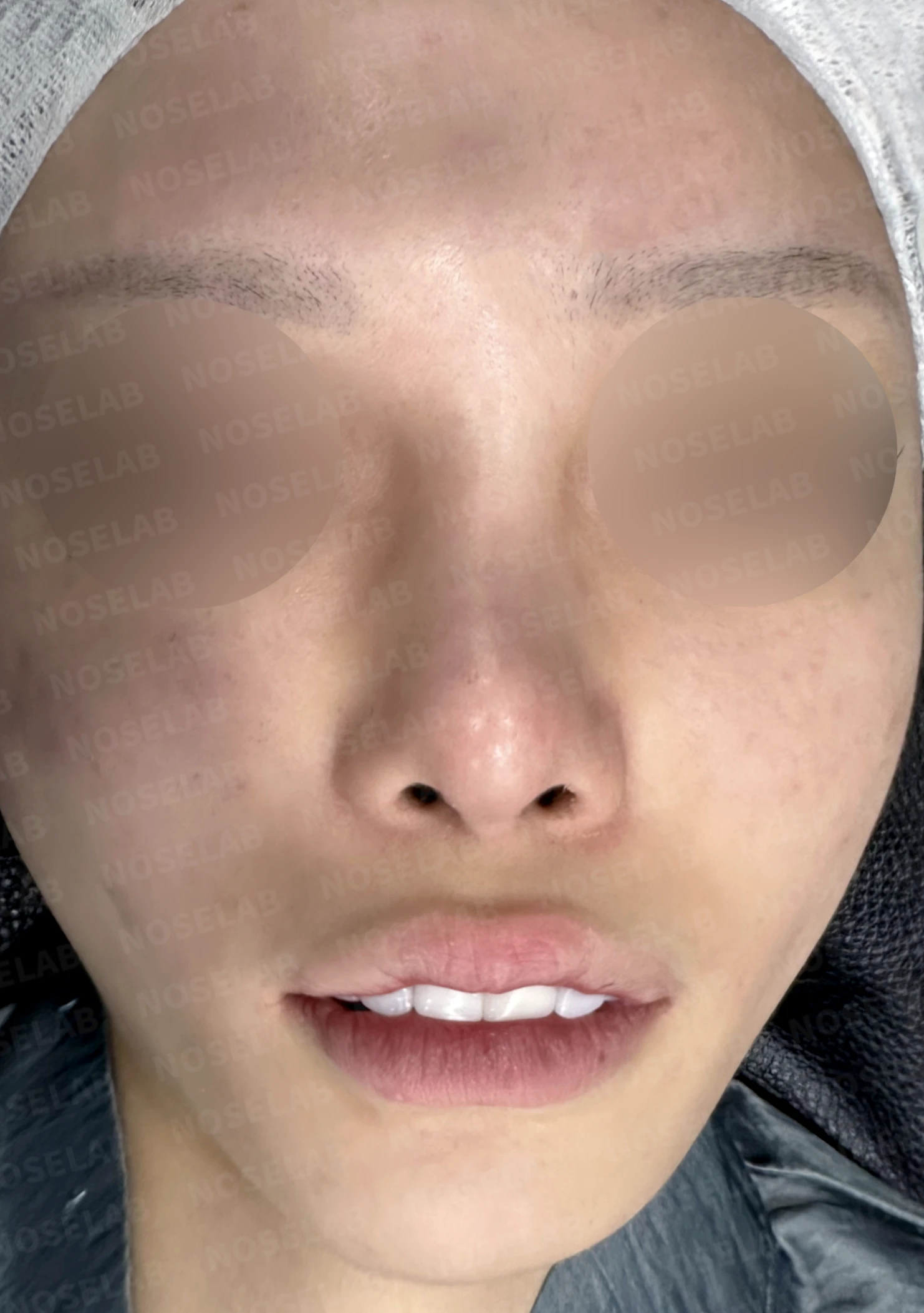
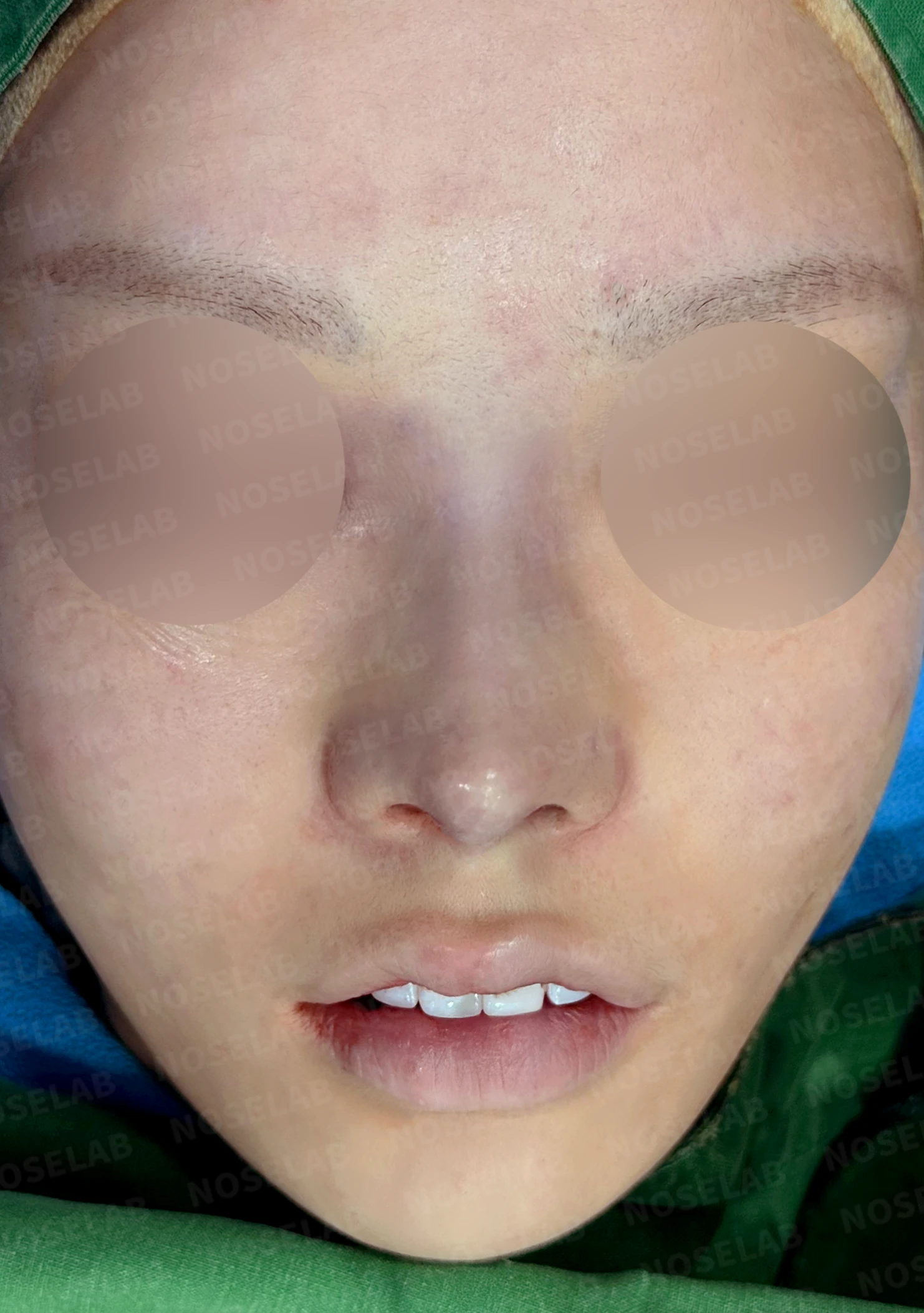
Before surgery / Day 0 immediately after surgery Photos taken immediately after surgery show swelling and may differ from the final result.
Profile view changes
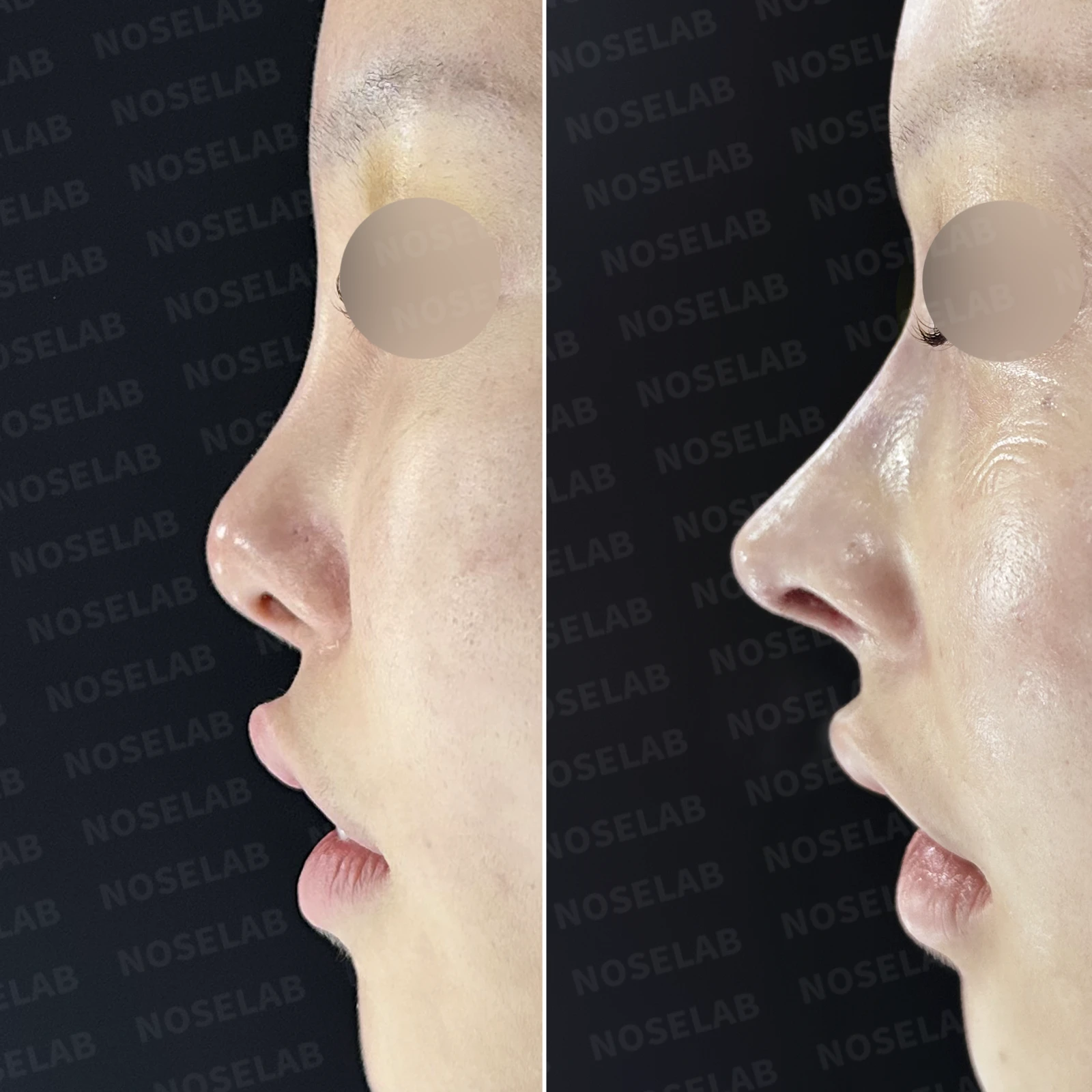
The radix is naturally lowered, forming a smooth transition from the forehead to the nose
Feminine straight bridge line achieved
A refined nasal tip that is rounded yet well-projected
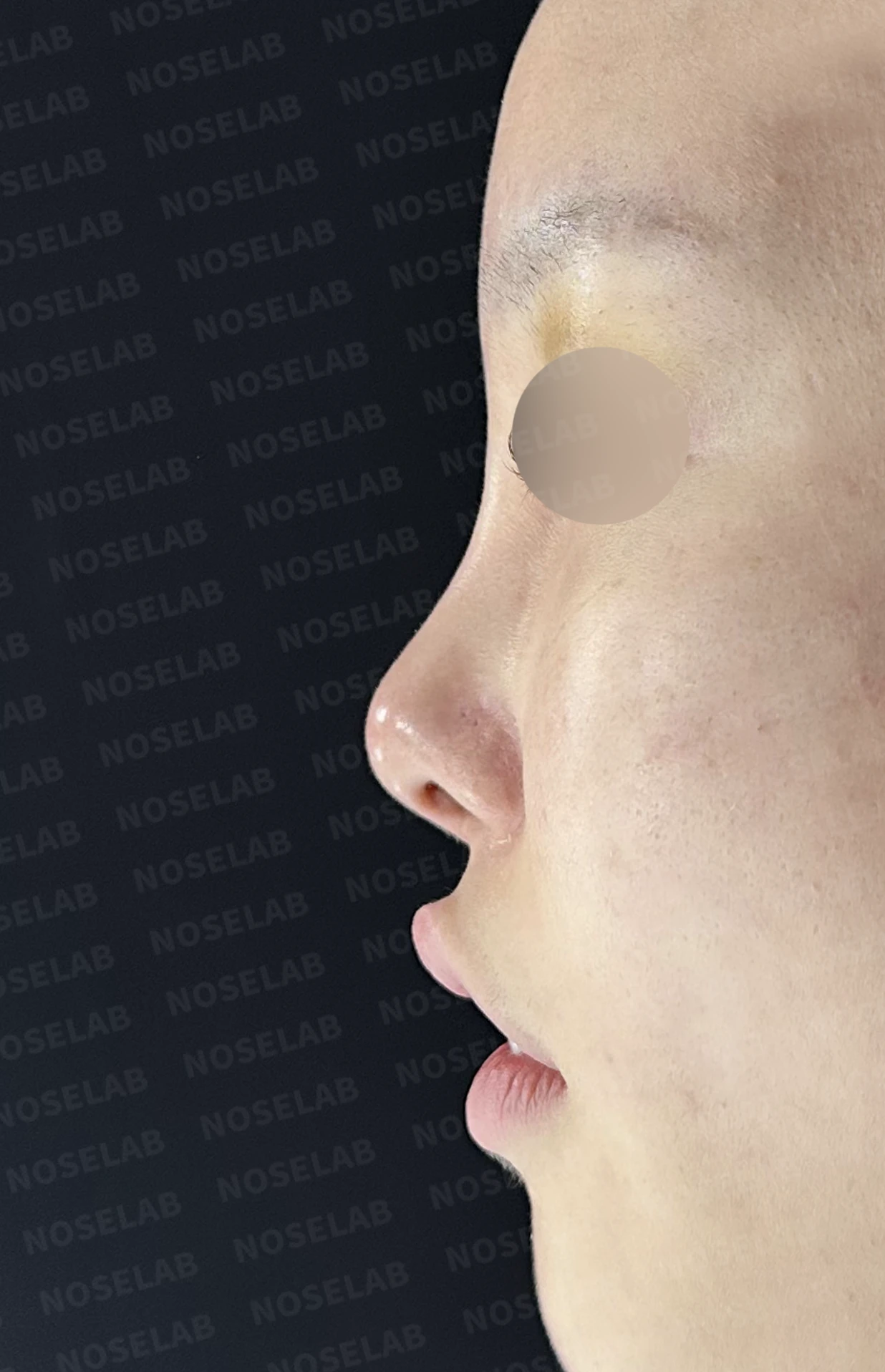
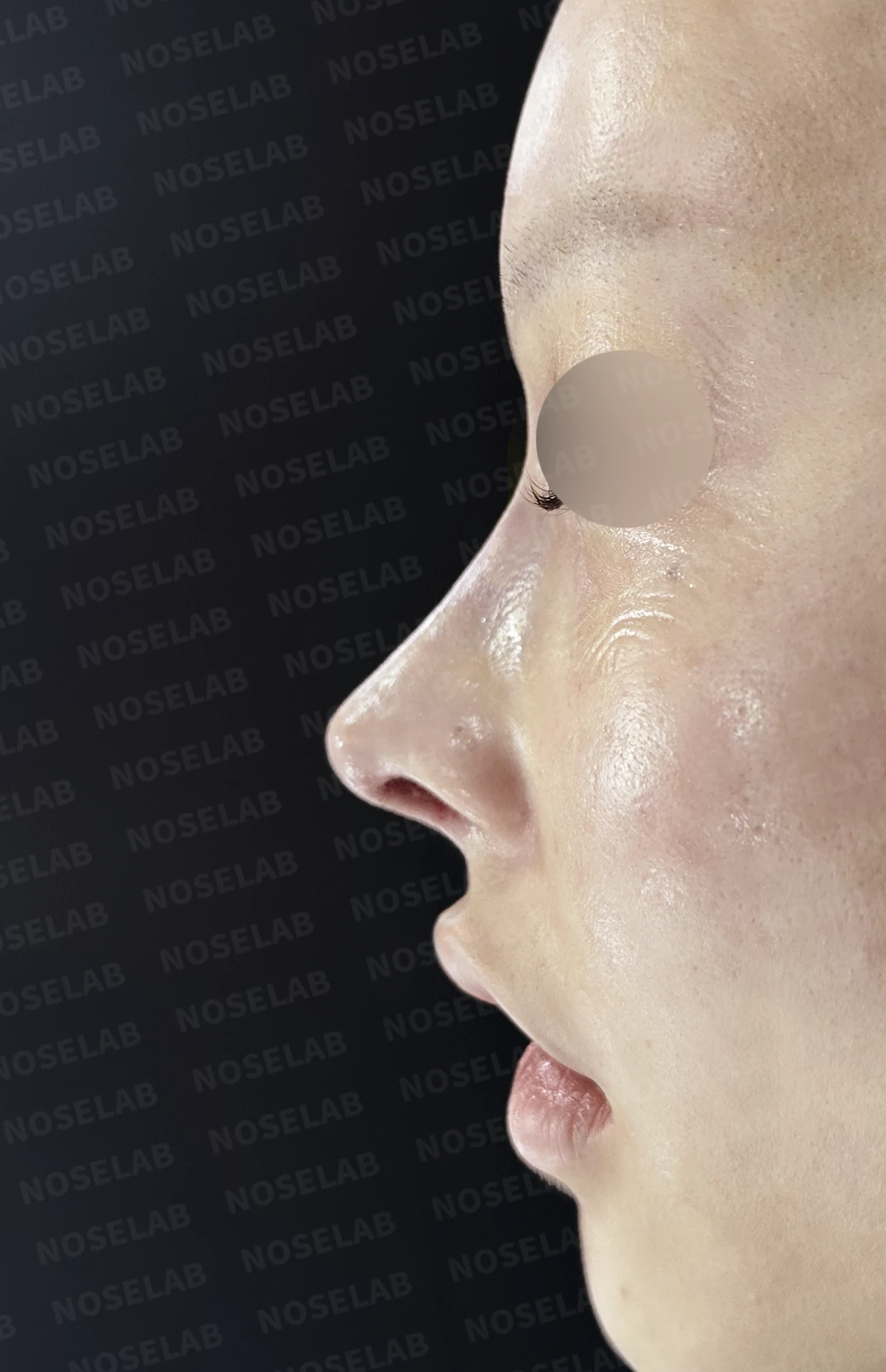
Before surgery / Day 0 immediately after surgery Photos taken immediately after surgery show swelling and may differ from the final result.
Changes on the oblique view
A natural, harmonious nasal contour seen at a 45-degree angle
A balanced line connecting the nasal bridge and tip
An overall refined nasal shape that complements the face
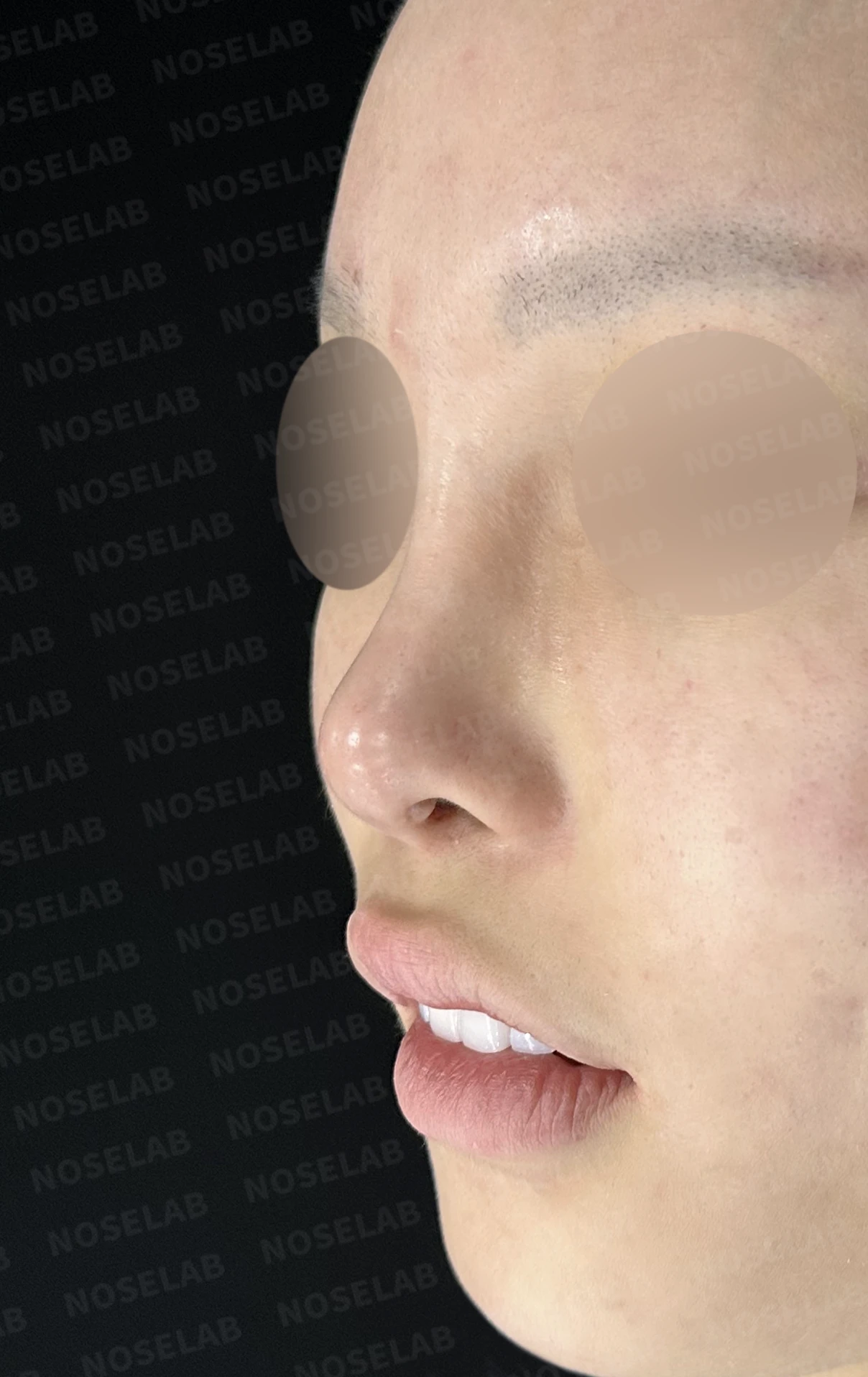
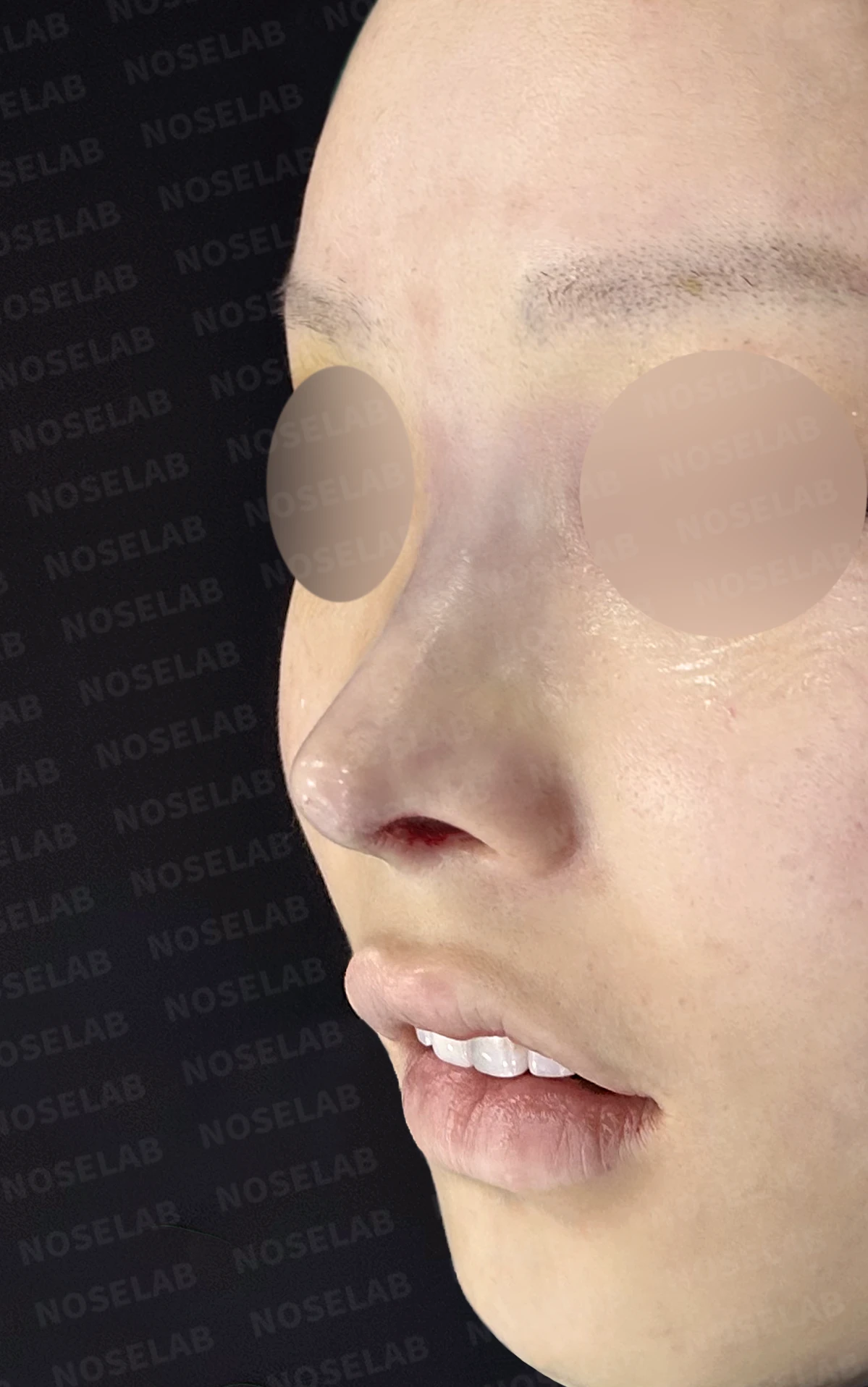
Before surgery / Day 0 immediately after surgery Photos taken immediately after surgery show swelling and may differ from the final result.
Changes in nostril shape
Nostril contours are naturally refined alongside tip improvement
Balanced, symmetric nostril shape
An overall stable nasal base contour
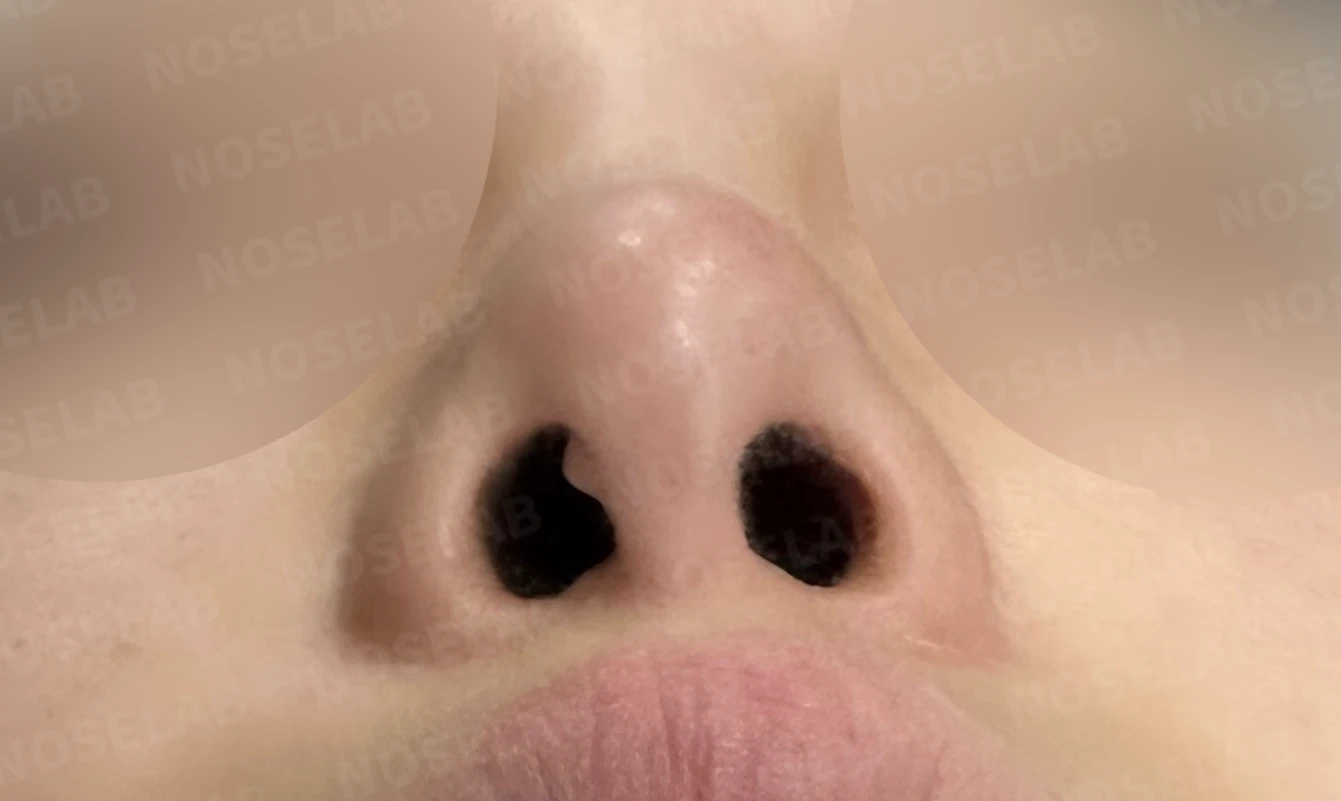
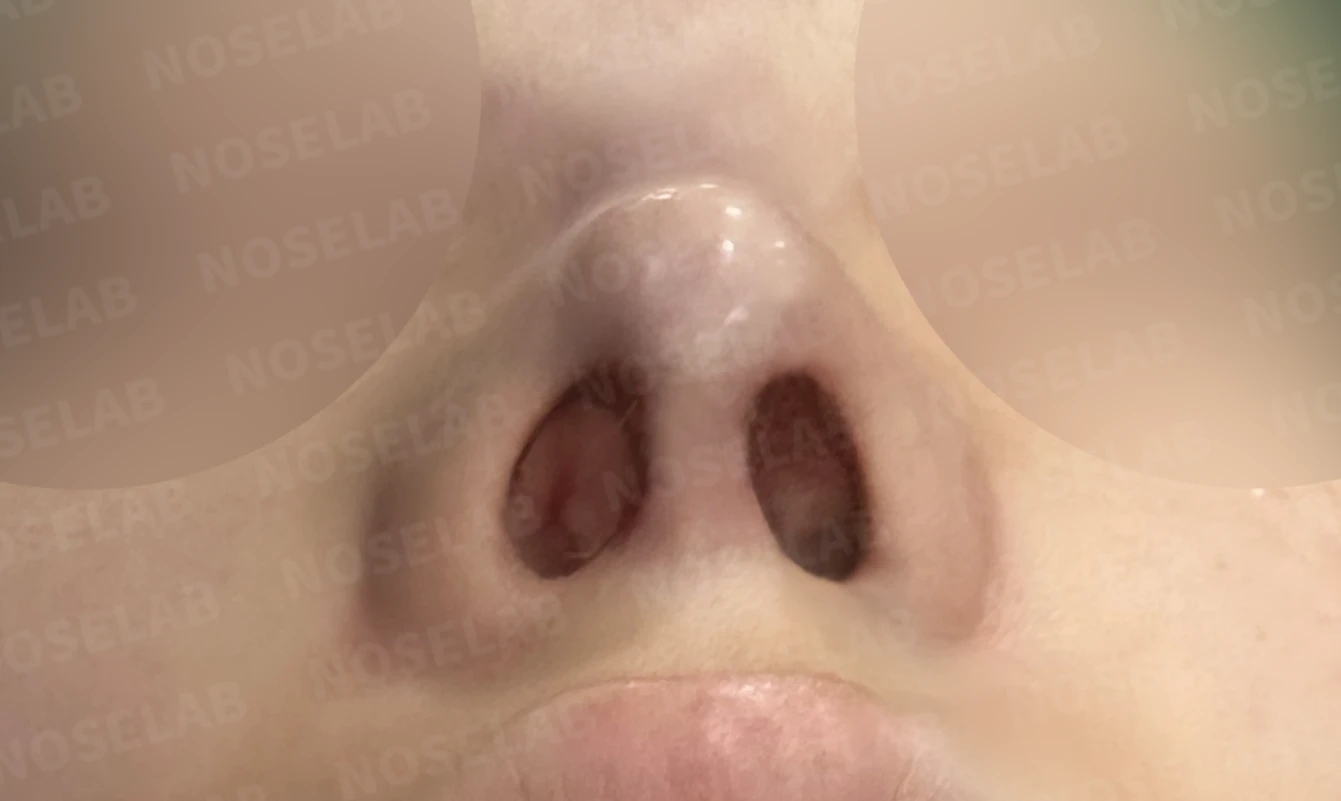
Before surgery / Day 0 immediately after surgery Photos taken immediately after surgery show swelling and may differ from the final result.
💡 Specialist opinion
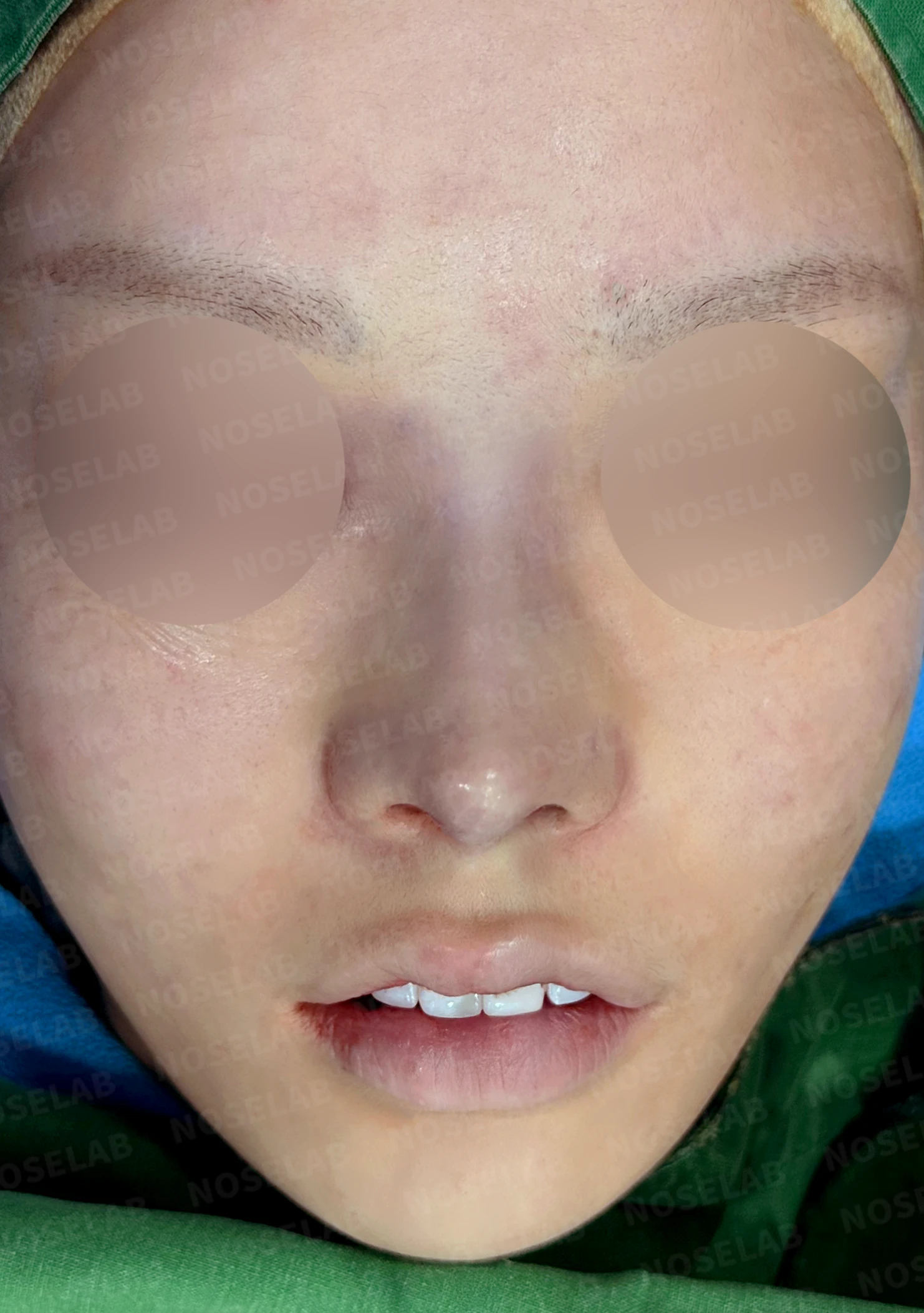
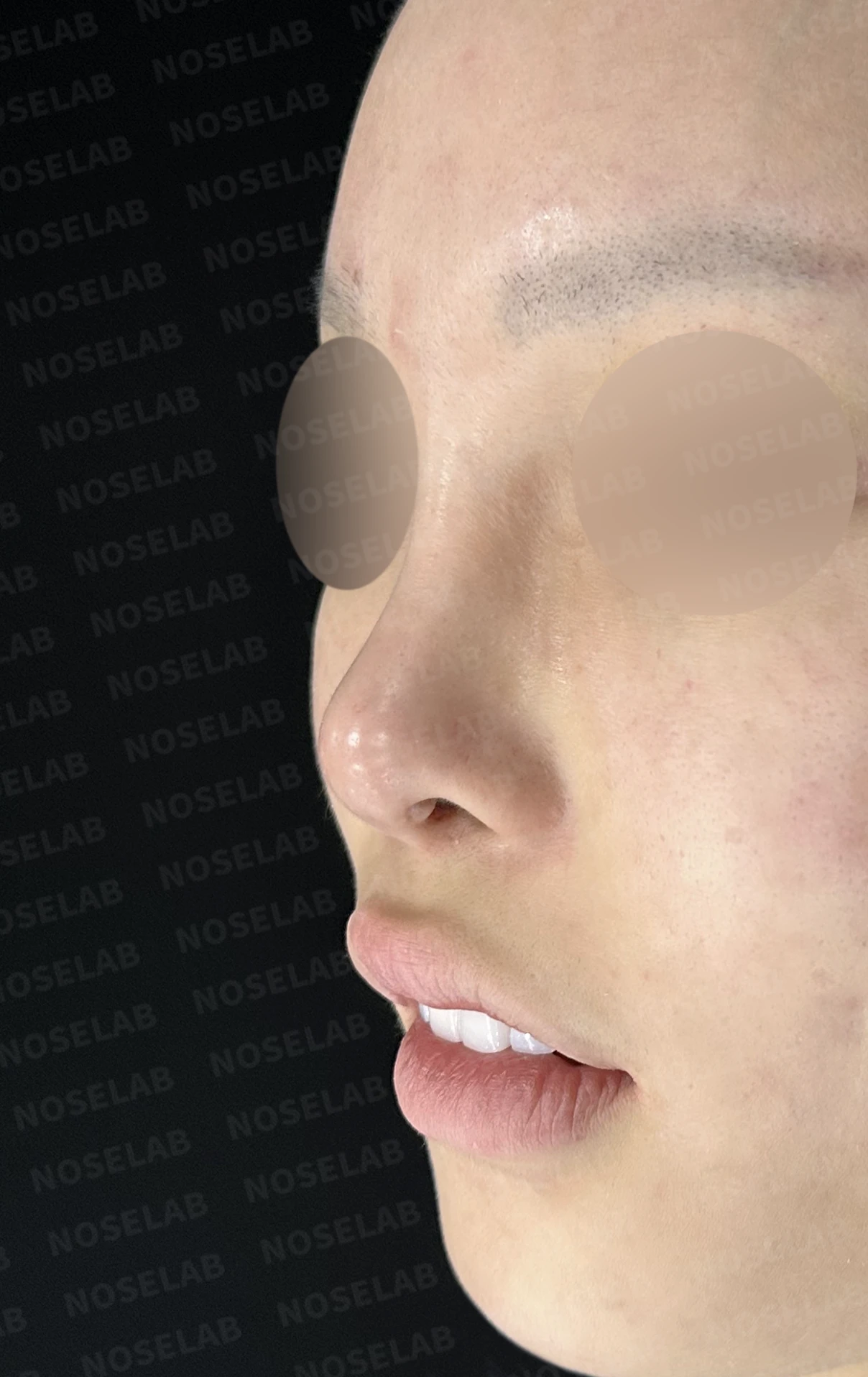
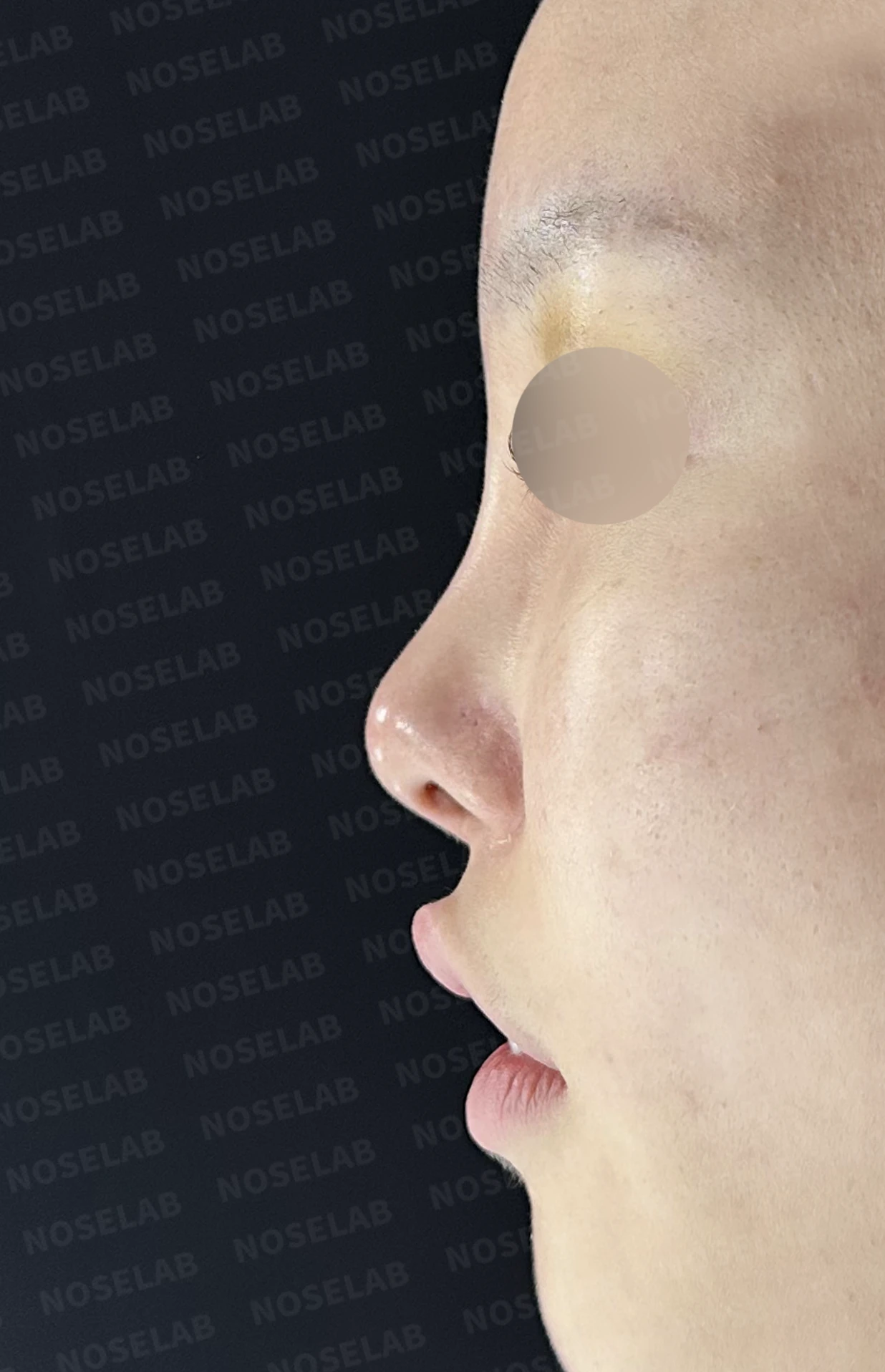
Front, oblique, and profile views on day 0 immediately after surgery. Photos taken immediately after surgery show swelling and may differ from the final result.
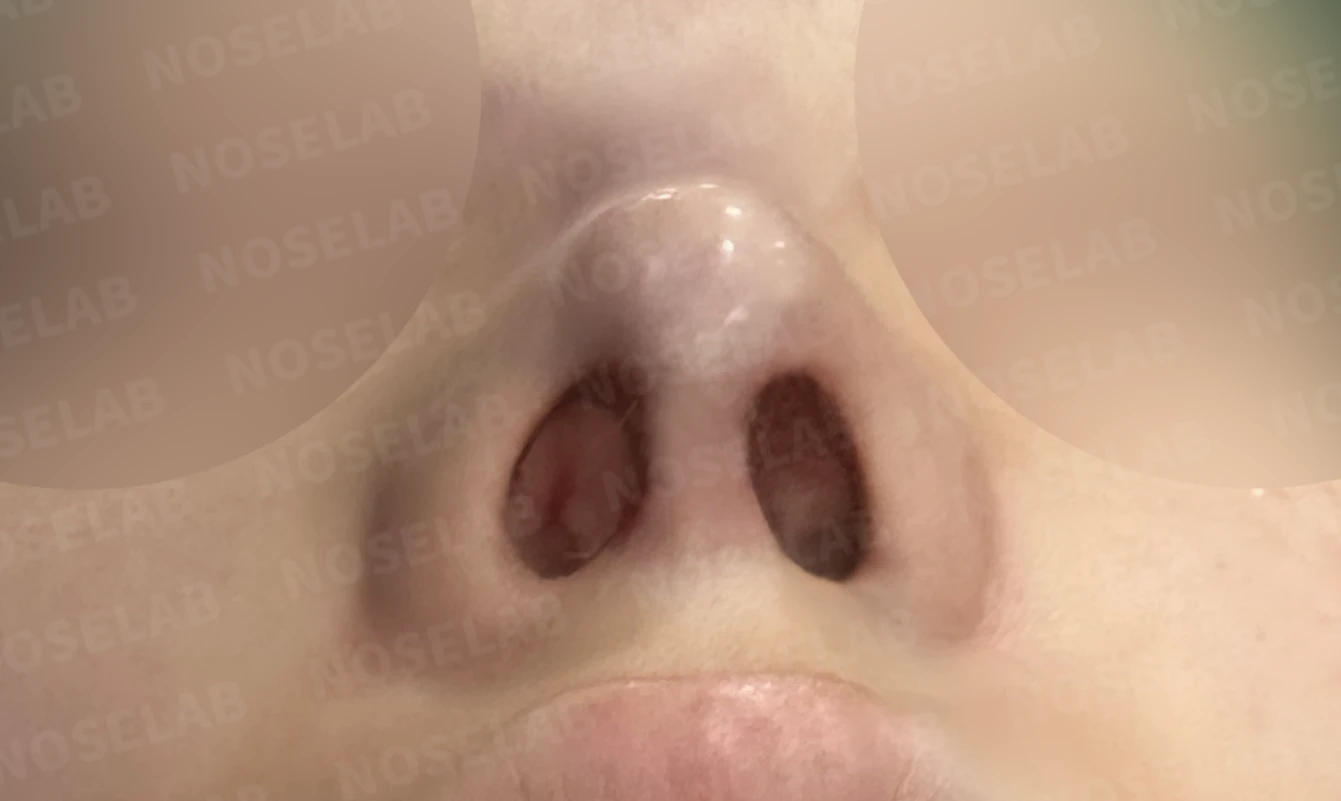
Nostril view on day 0 immediately after surgery. Photos taken immediately after surgery show swelling and may differ from the final result.
This presentation involves cases where septal deviation worsened after a prior surgery and the radix of the bridge implant was placed excessively high, resulting in an unnatural nasal shape. Resolving such complex concerns requires a systematic surgical plan that addresses both functional correction and aesthetic improvement at the same time.
Especially when septal deviation is severe, the remaining septal cartilage alone may be insufficient for reconstruction. In this procedure, donor rib cartilage was used to reconstruct the septum, securing adequate structural support while resolving the underlying cause of the nasal obstruction. Donor rib cartilage provides sufficient strength and support without the need to harvest autologous rib cartilage, reducing physical strain on the patient while enabling stable septal reconstruction.
A high radix is a relatively common concern encountered in revision rhinoplasty. When the starting point of the implant is positioned too high near the glabella, the nose can look artificial and unnatural. In this surgery, the existing implant was removed and the radix was lowered appropriately by precisely carving a new implant to match the nasal bones. This allowed us to create a smooth, natural transition from the forehead to the nasal bridge.
Furthermore, lateral osteotomy was performed to correct the crooked nasal bridge, and septoplasty was combined with inferior turbinate reduction to comprehensively resolve the nasal obstruction. Because revision rhinoplasty must account for scar tissue and altered structural anatomy from previous surgeries, it requires an even more meticulous approach than a primary procedure.
In complex revision rhinoplasty cases like this, I do my best to satisfy both the functional and aesthetic needs of the patient. I hope this case serves as a helpful reference for anyone experiencing similar concerns.
This was Dr. Peter C. Kang. Thank you.
#closedrhinoplasty #closedrevisionrhinoplasty #revisionrhinoplasty #deviatedseptum #septalreconstruction #donorribcartilage #lateralosteotomy #radixcorrection #implantreplacement #nasalobstructionsurgery

Limitations and risks
When autologous rib cartilage is used, scarring and pain may remain at the donor site on the chest, and pneumothorax (pleural injury) can occur rarely. Over time, the grafted cartilage may warp or undergo partial resorption.
When using donor rib cartilage, long-term follow-up is necessary because the grafted cartilage may resorb or warp.
When revising after implant removal, contracture may progress again after removal, the nasal height and length may decrease, and staged surgery may be necessary depending on the skin condition.
When the septum is corrected at the same time, nasal obstruction may persist or recur, and in rare cases, septal perforation or changes in smell may occur.
Common potential risks include infection, bleeding, asymmetry, scarring, skin necrosis, and insufficient improvement; results vary depending on individual skin condition and previous surgical history.