Hello, I am Dr. Peter C. Kang.
Today, I would like to introduce a revision rhinoplasty case of a patient who visited our clinic with concerns about severe nostril asymmetry.
🔍 Surgical history
Following a previous rhinoplasty, nostril asymmetry and a crooked nose remained, requiring corrective surgery.
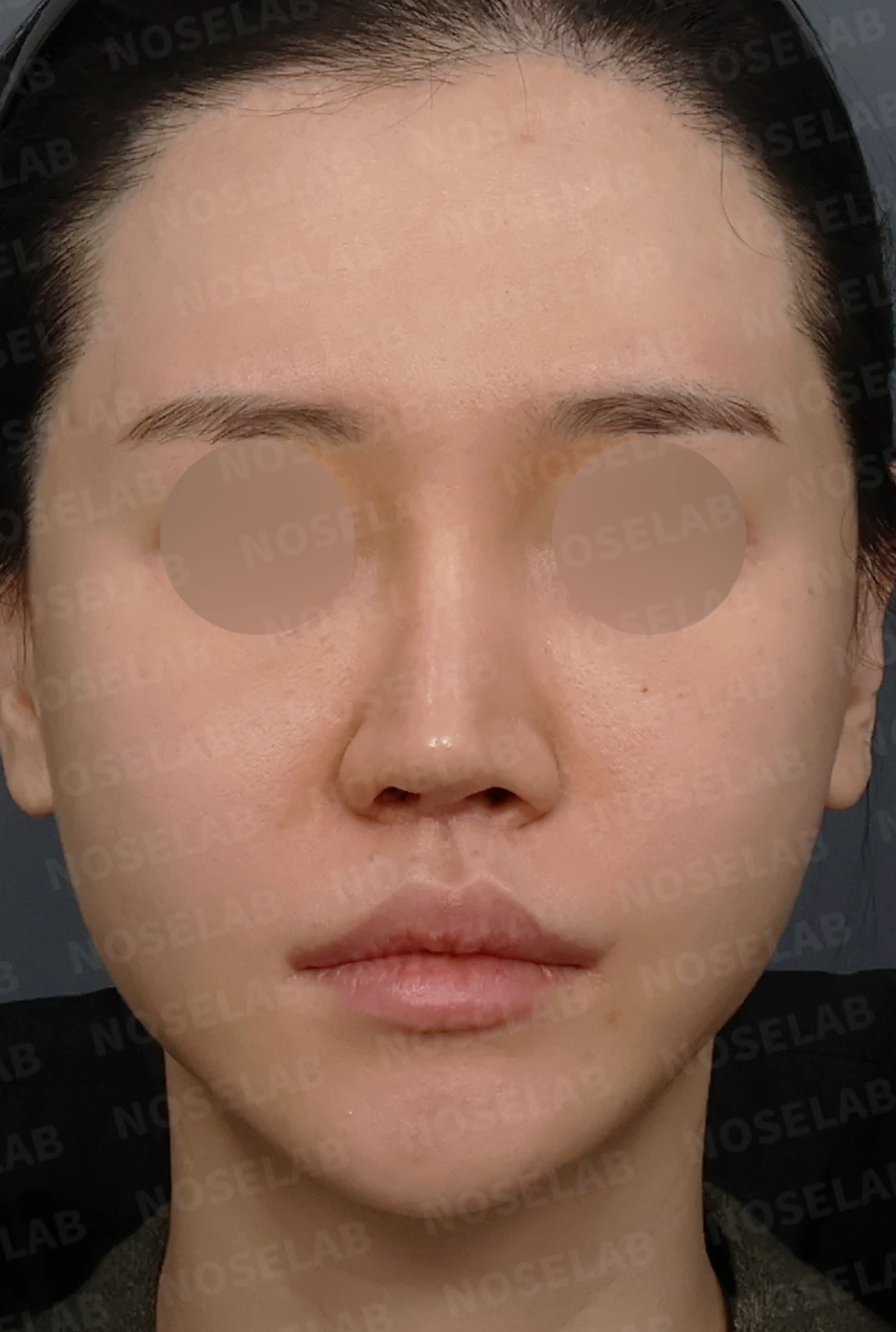
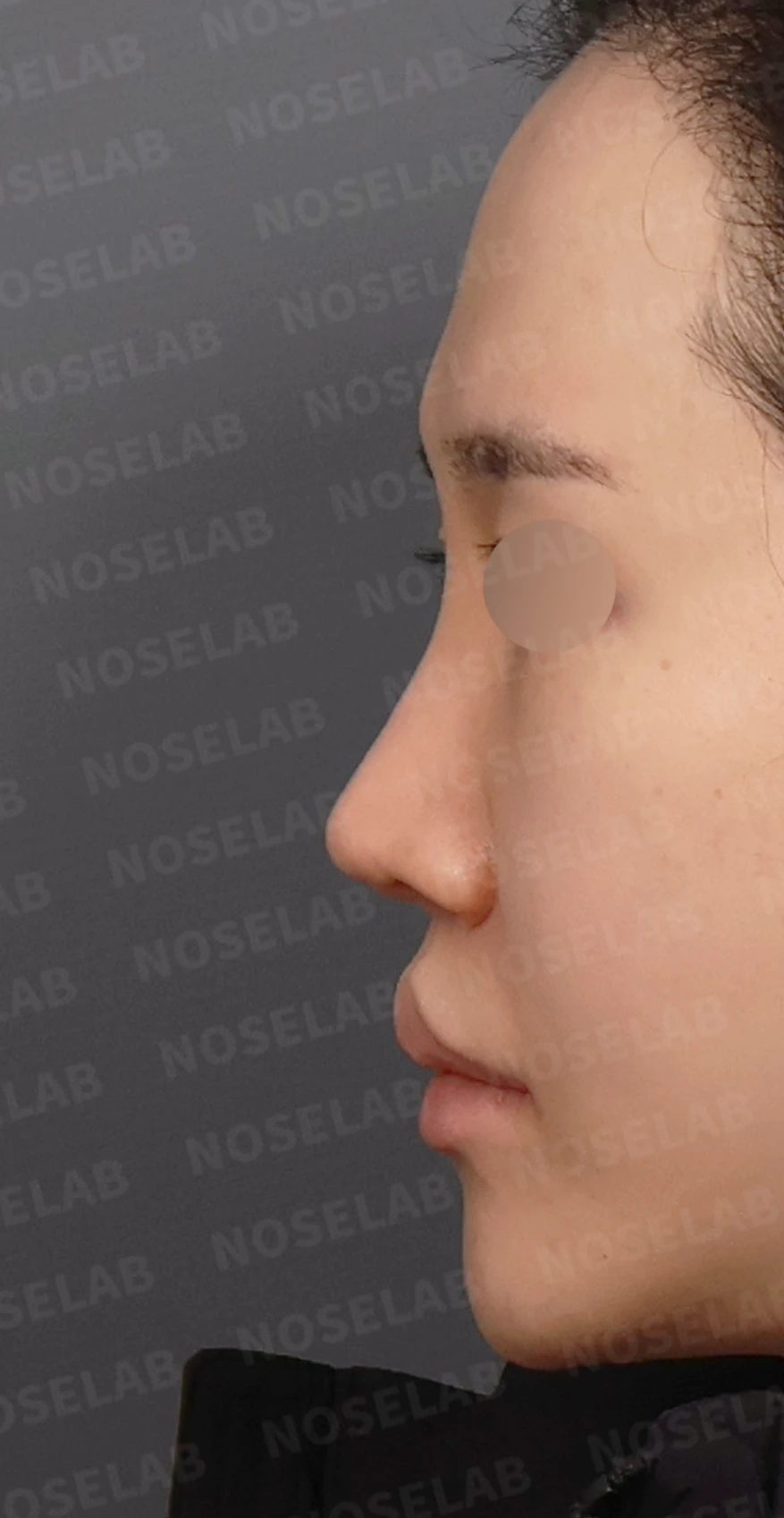
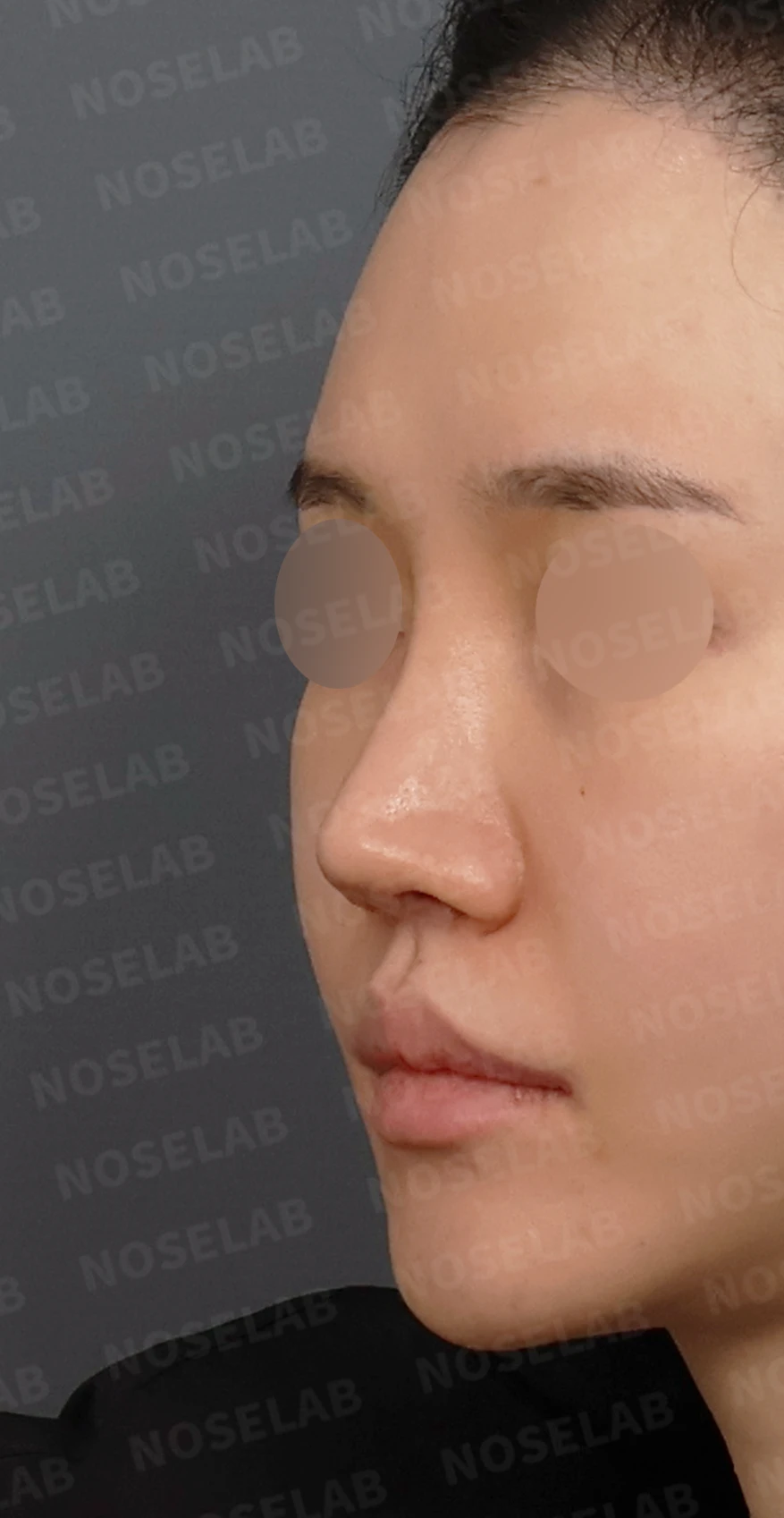
Front, left profile, and oblique views during design consultation.
💉 Patient requests
Correction of severe nostril asymmetry
Correction of deviated nose
Resolution of nasal obstruction symptoms
A natural and well-balanced nasal line
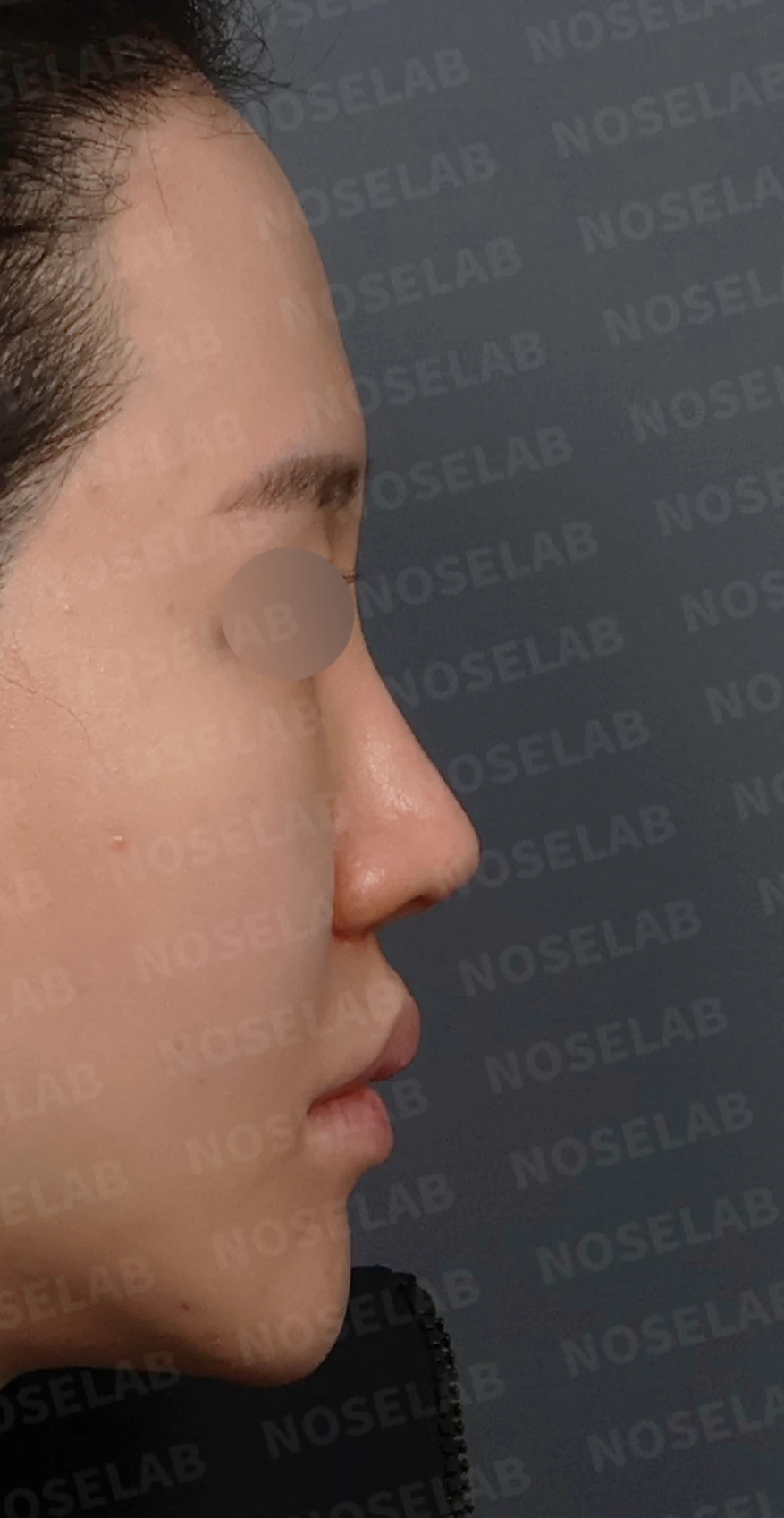
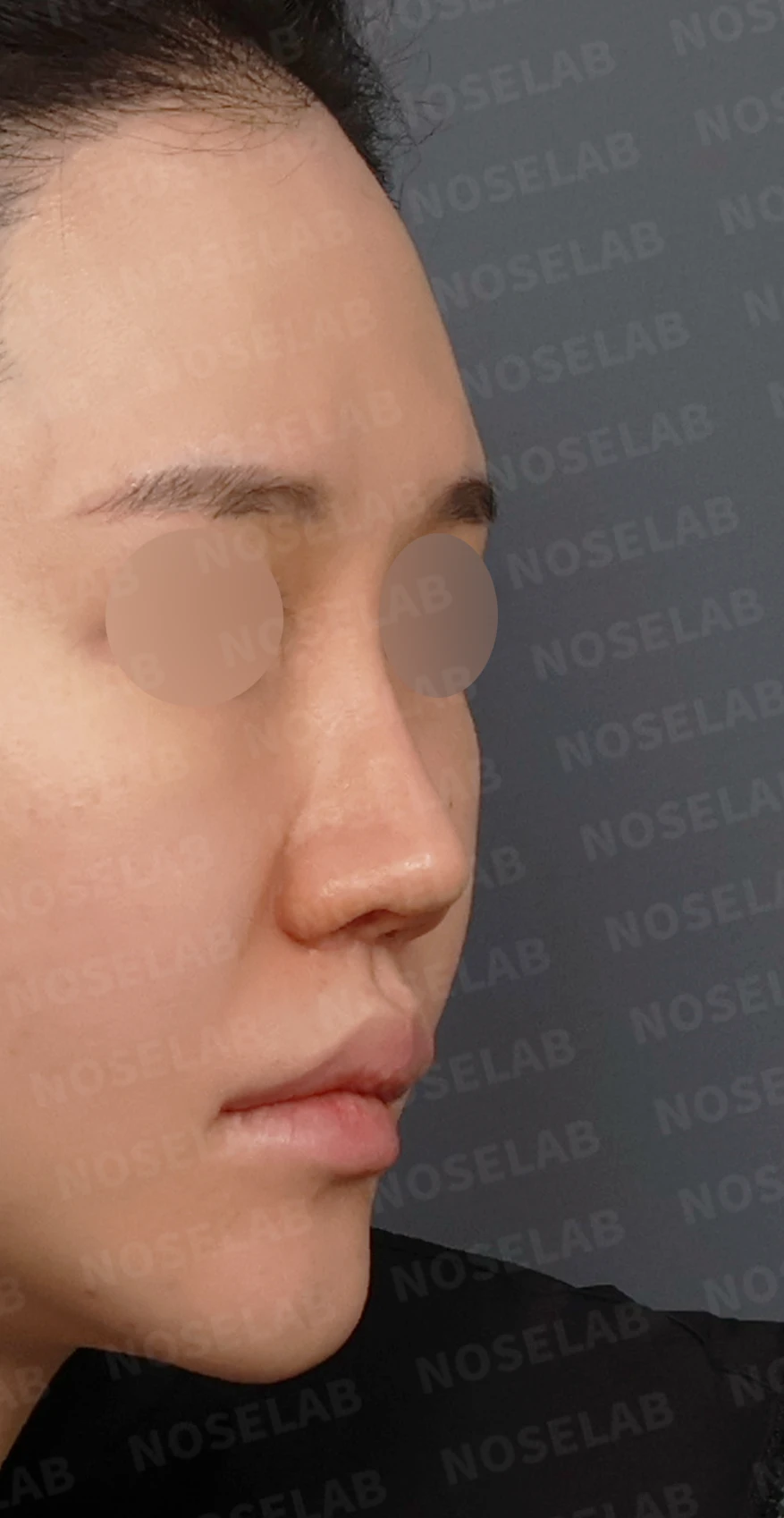
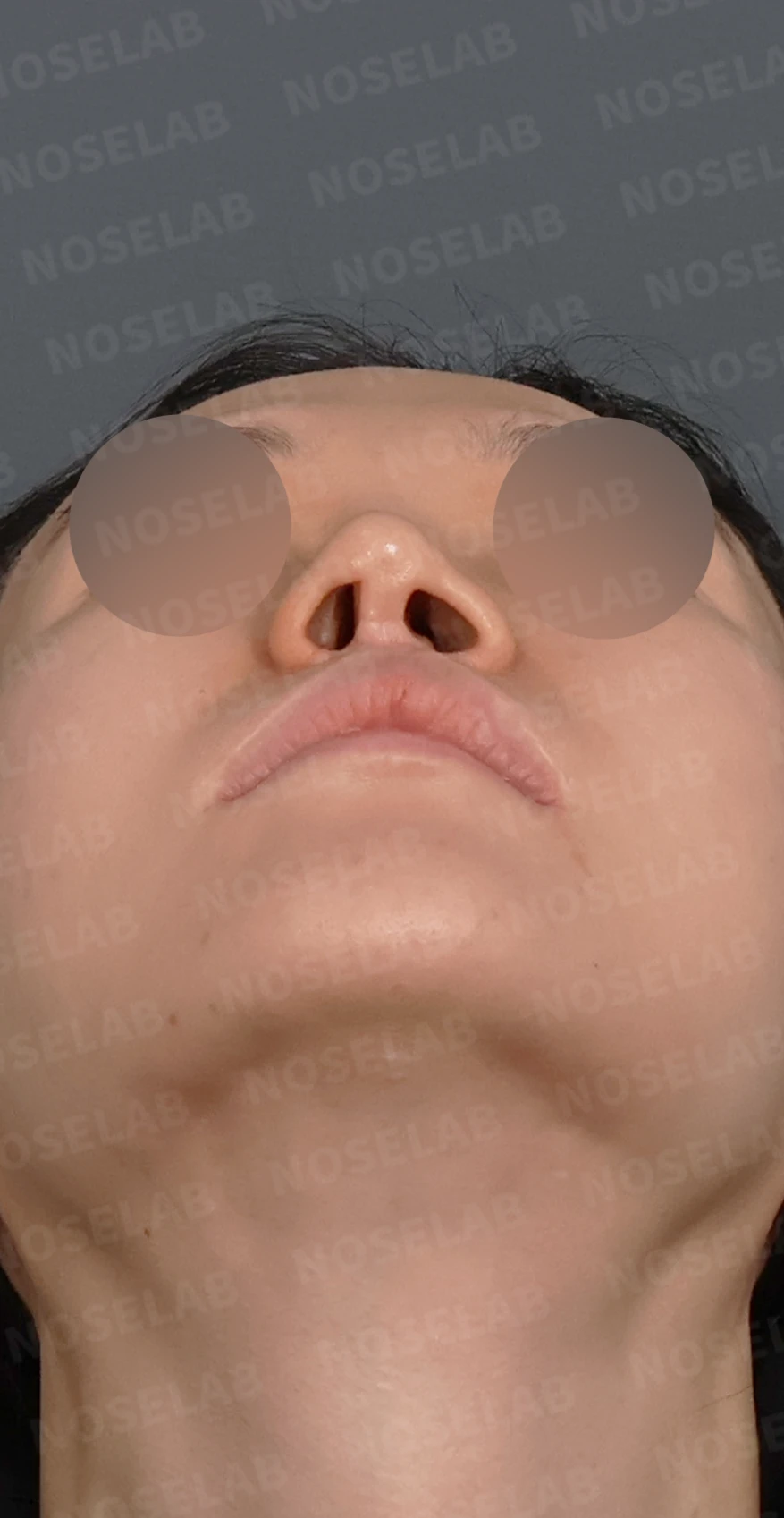
Right profile, oblique, and nostril views during design consultation.
🔧 Surgical plan and procedure
1. Correcting lower lateral cartilage asymmetry
Precise trimming of lower lateral cartilages that had marked congenital asymmetry
Refining the nasal tip shape using tip suturing
Reconstructing deficient cartilage to secure bilateral symmetry
2. Septal reconstruction to correct the crooked nose
Repositioning the nasal tip to the midline through septal reconstruction
Maintaining long-term results by securing structural stability
3. Nostril size adjustment: free composite graft
Performing a free composite graft to slightly enlarge the right nostril
Achieving a natural nostril contour via a skin graft inside the nostril
4. Implant exchange
Removal of existing silicone implant
Precisely carving a new silicone implant to fit the patient's nasal bone
Formation of a natural bridge line
5. Concurrent functional surgery
Performing deviated septum surgery to improve nasal obstruction
Improving breathing function through rhinitis surgery
🌟 Surgical results
Front view changes:
Severe nostril asymmetry was balanced and corrected
The crooked nose was realigned along the midline
An overall harmonious nasal shape was achieved
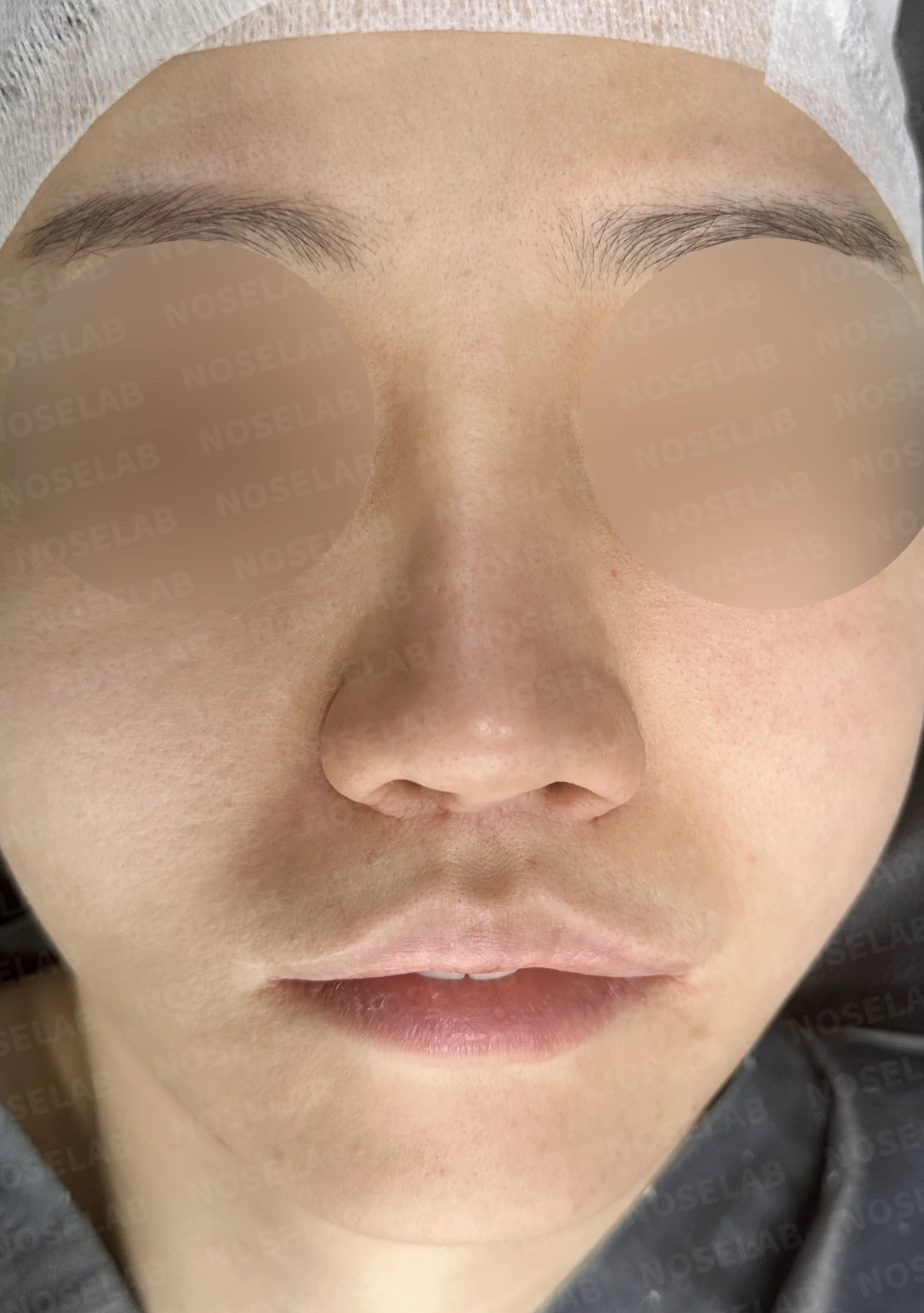
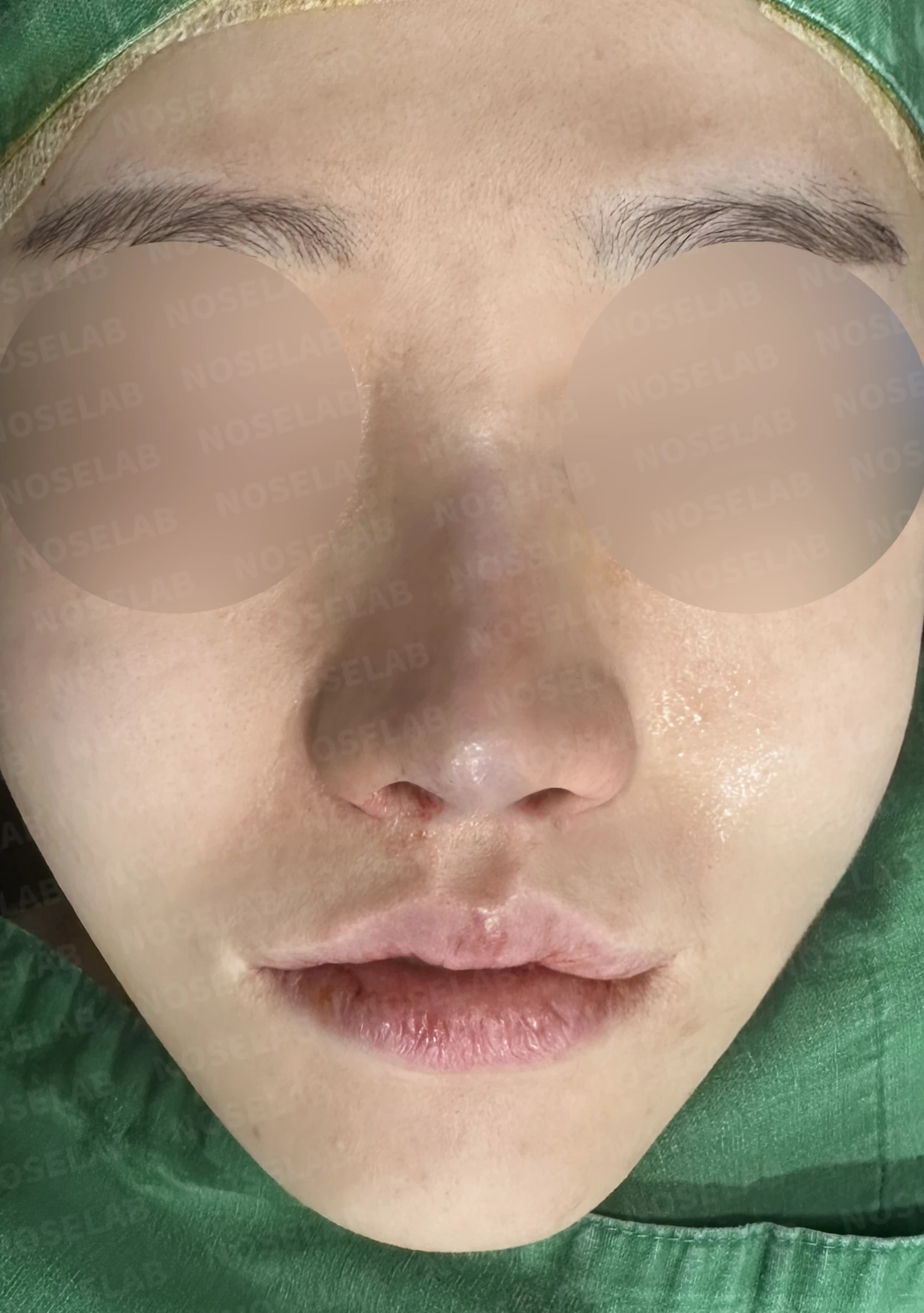
Before surgery / Day 0 immediately after surgery Photos taken immediately after surgery show swelling and may differ from the final result.
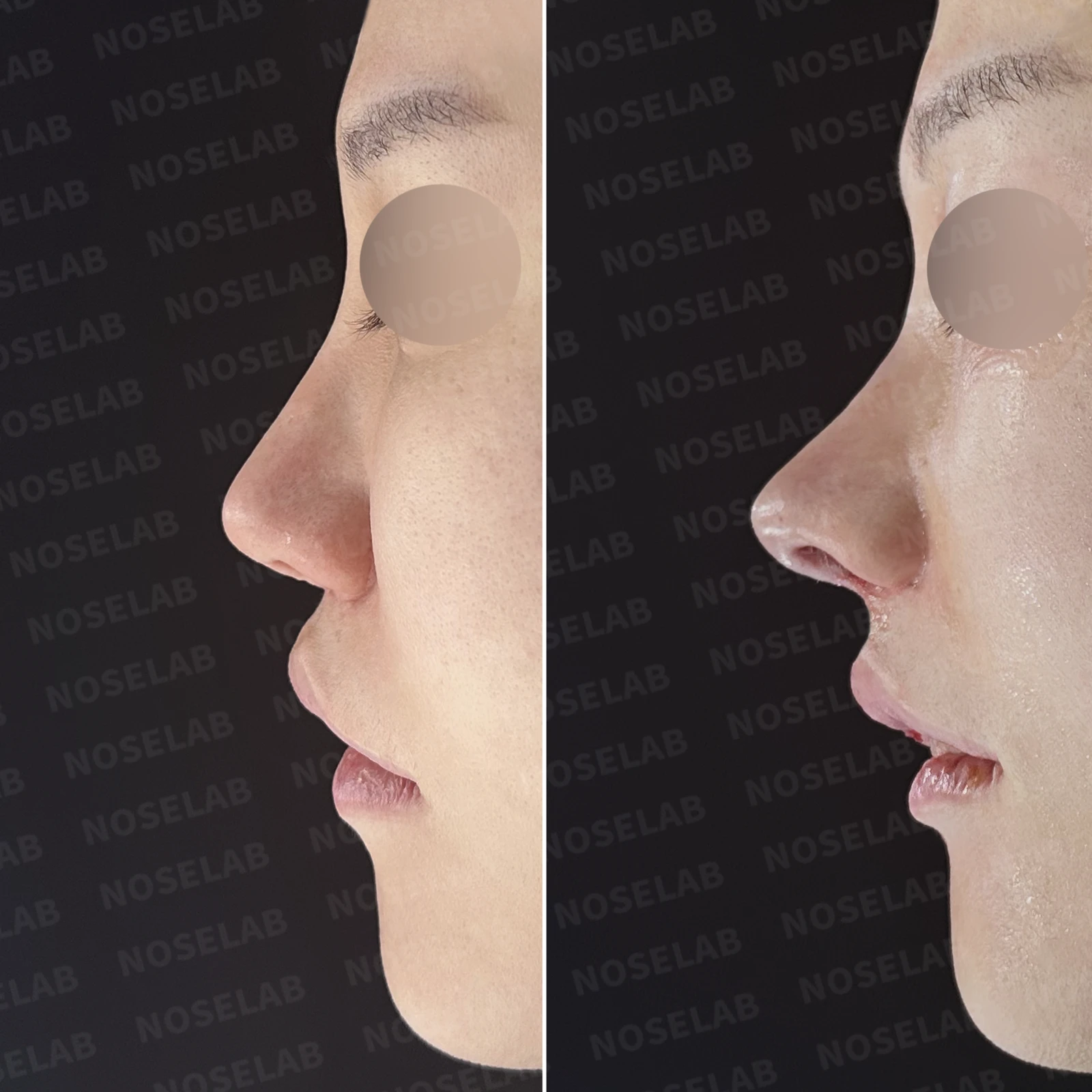
Profile view changes:
Natural bridge line
Stable positioning of the nasal tip
A smooth silhouette with the new implant
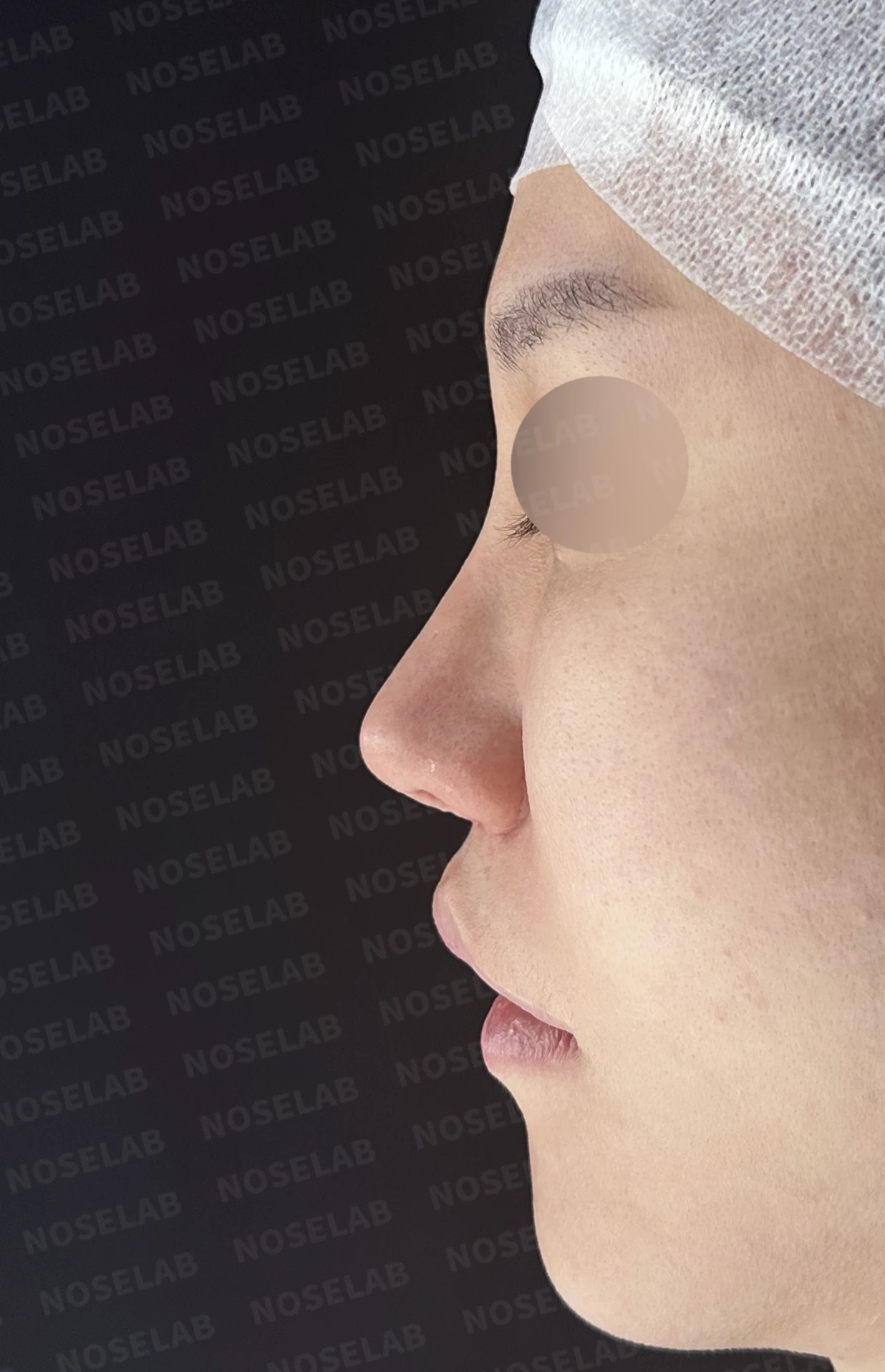
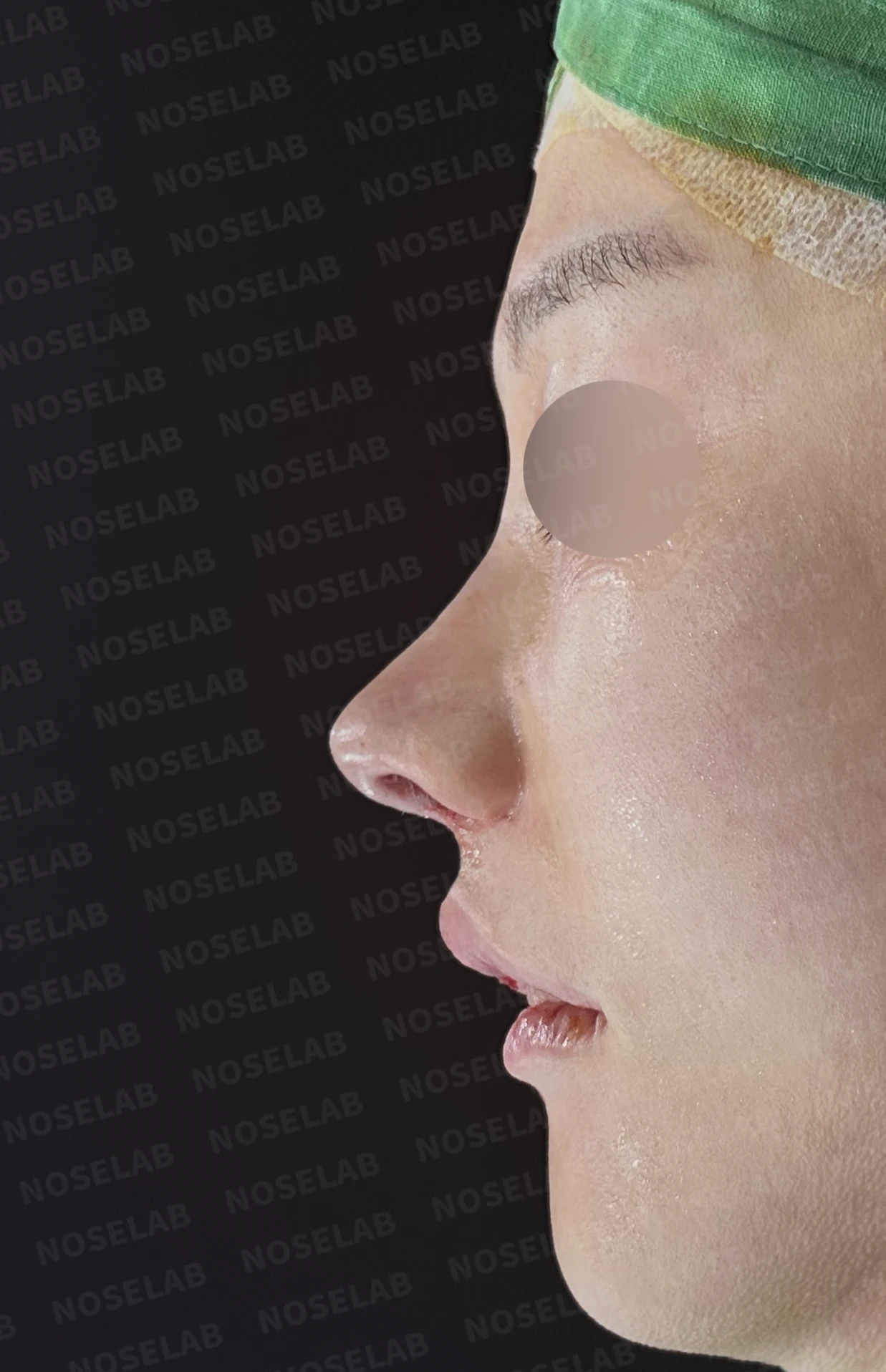
Before surgery / Day 0 immediately after surgery Photos taken immediately after surgery show swelling and may differ from the final result.
Functional improvement:
Relief of nasal obstruction through septoplasty
Improved breathing function through rhinitis surgery
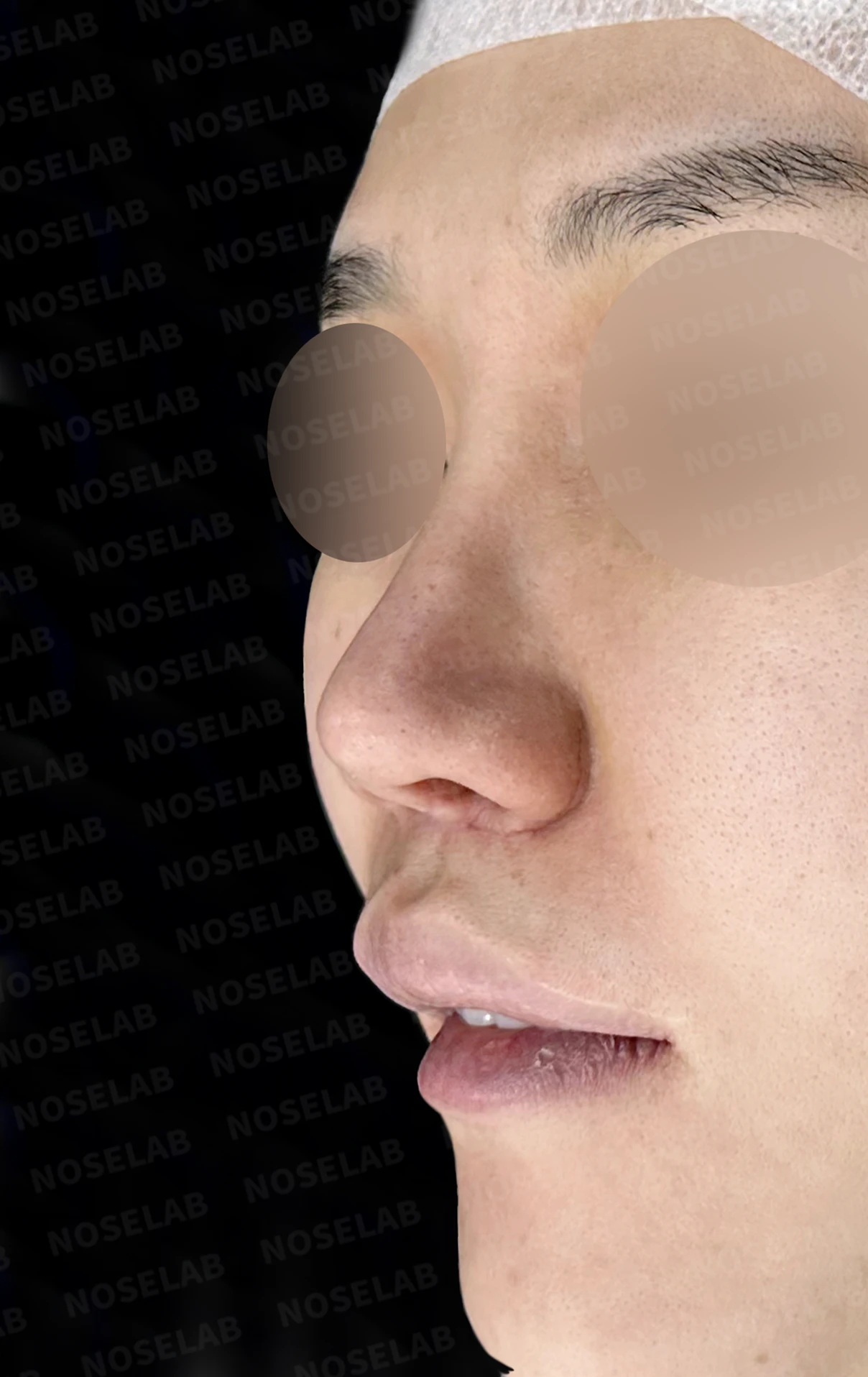
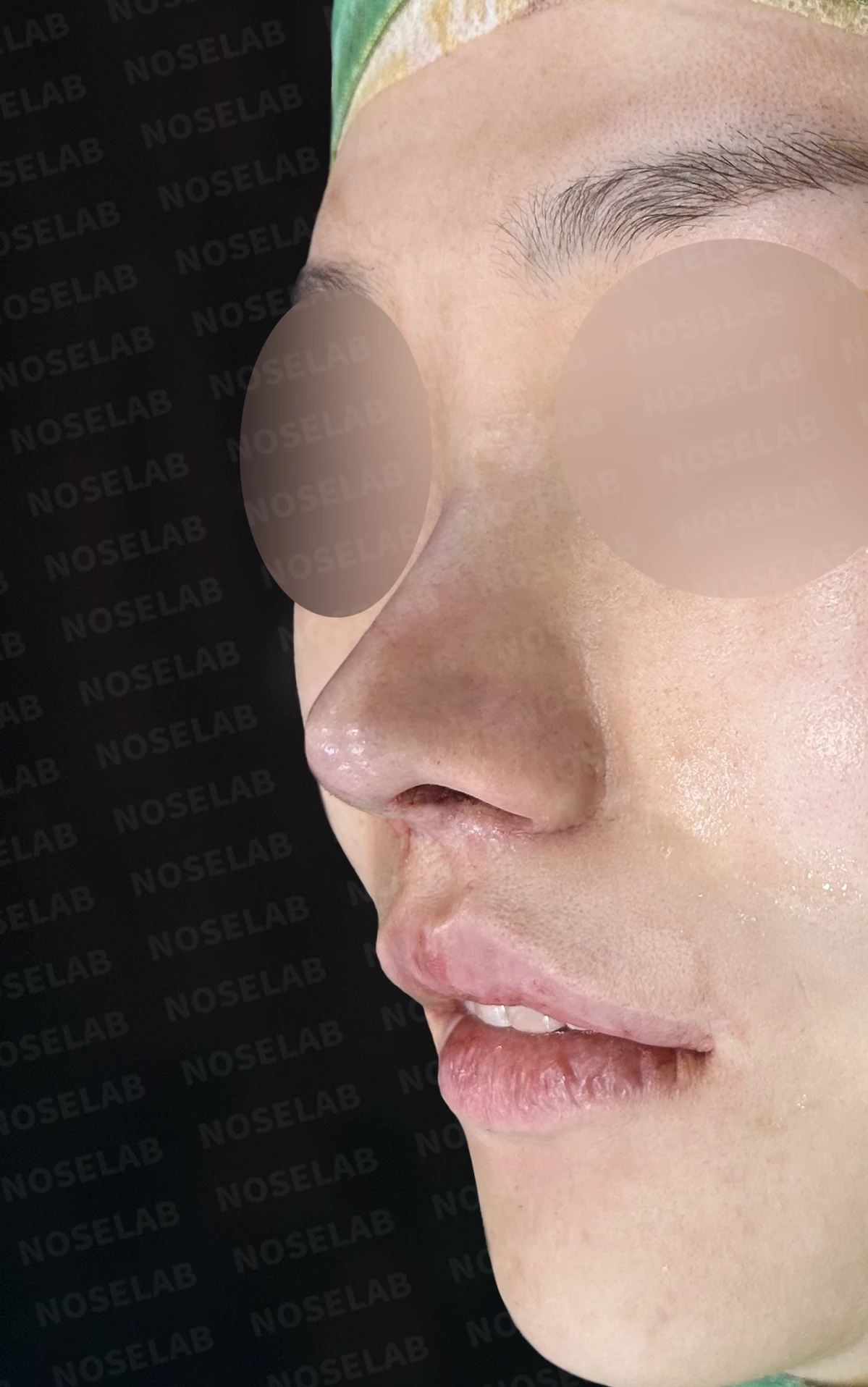
Before surgery / Day 0 immediately after surgery Photos taken immediately after surgery show swelling and may differ from the final result.
Nostril view changes:
Balanced nostril size on both sides
Natural inner nostril lining achieved with a free composite graft
Symmetric nostril shape
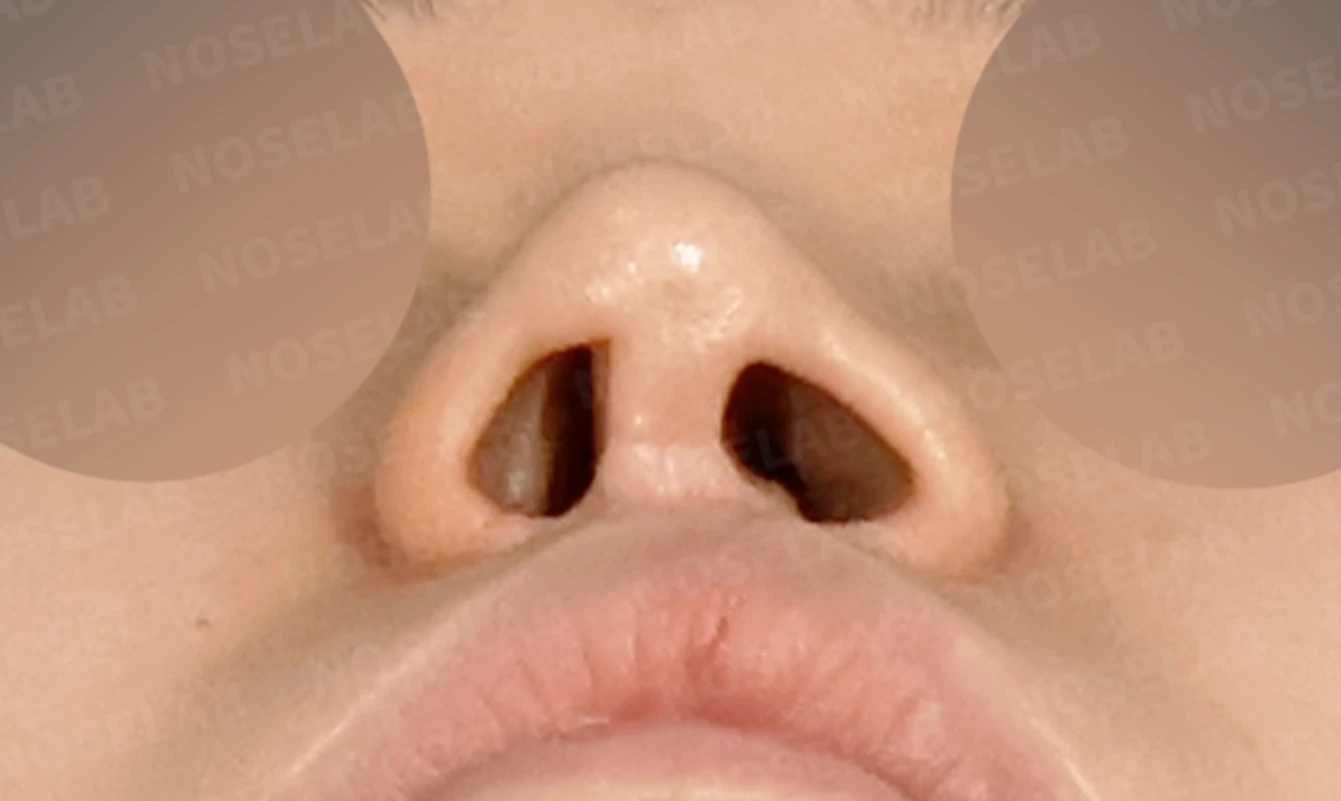
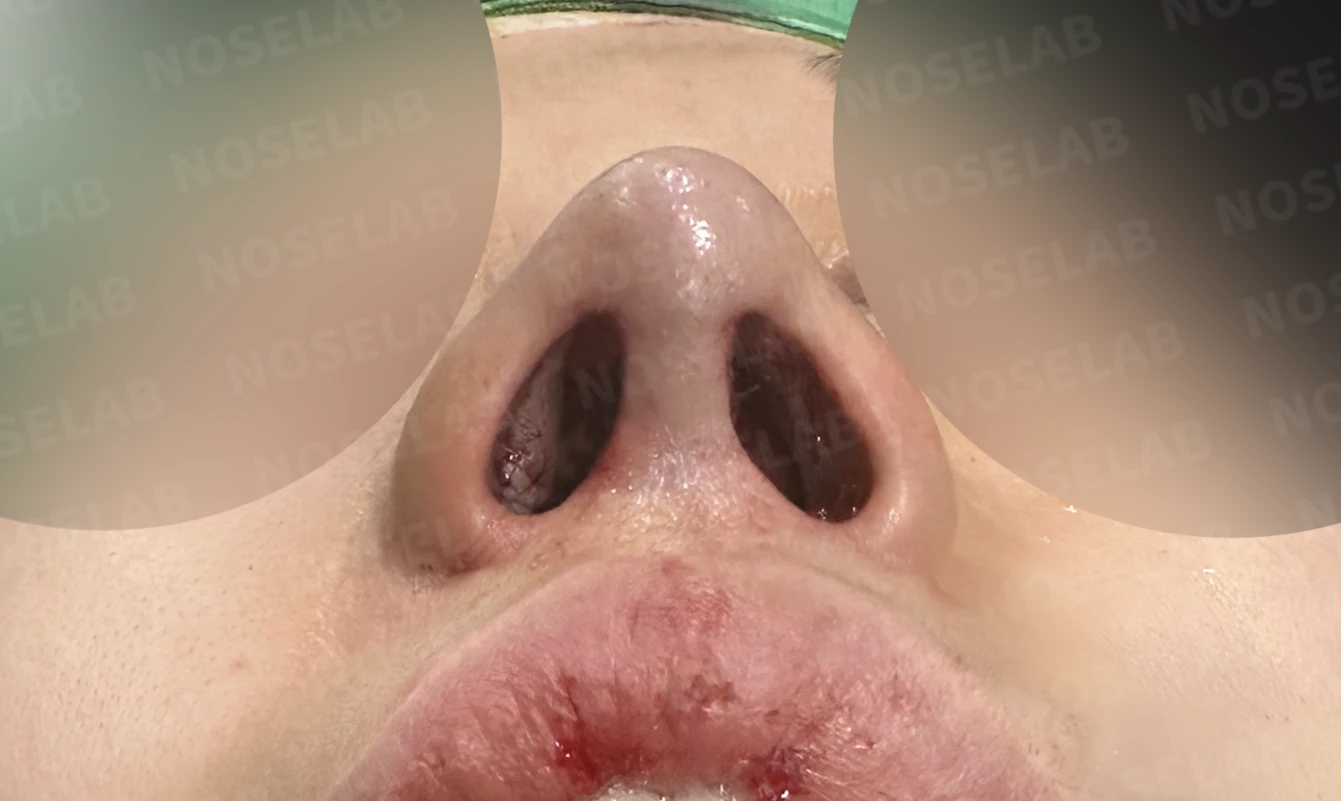
Before surgery / Day 0 immediately after surgery Photos taken immediately after surgery show swelling and may differ from the final result.
💡 Specialist opinion
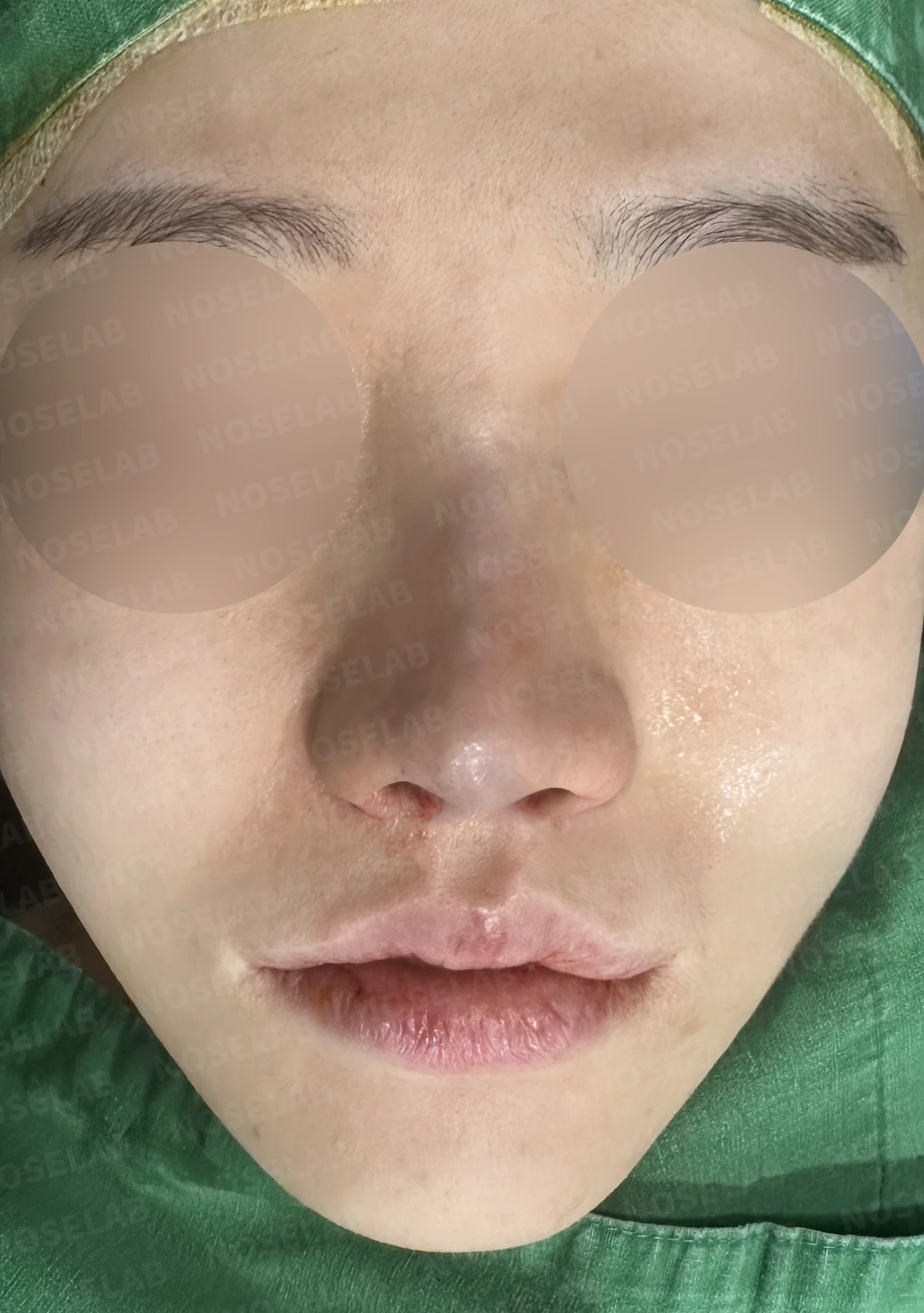
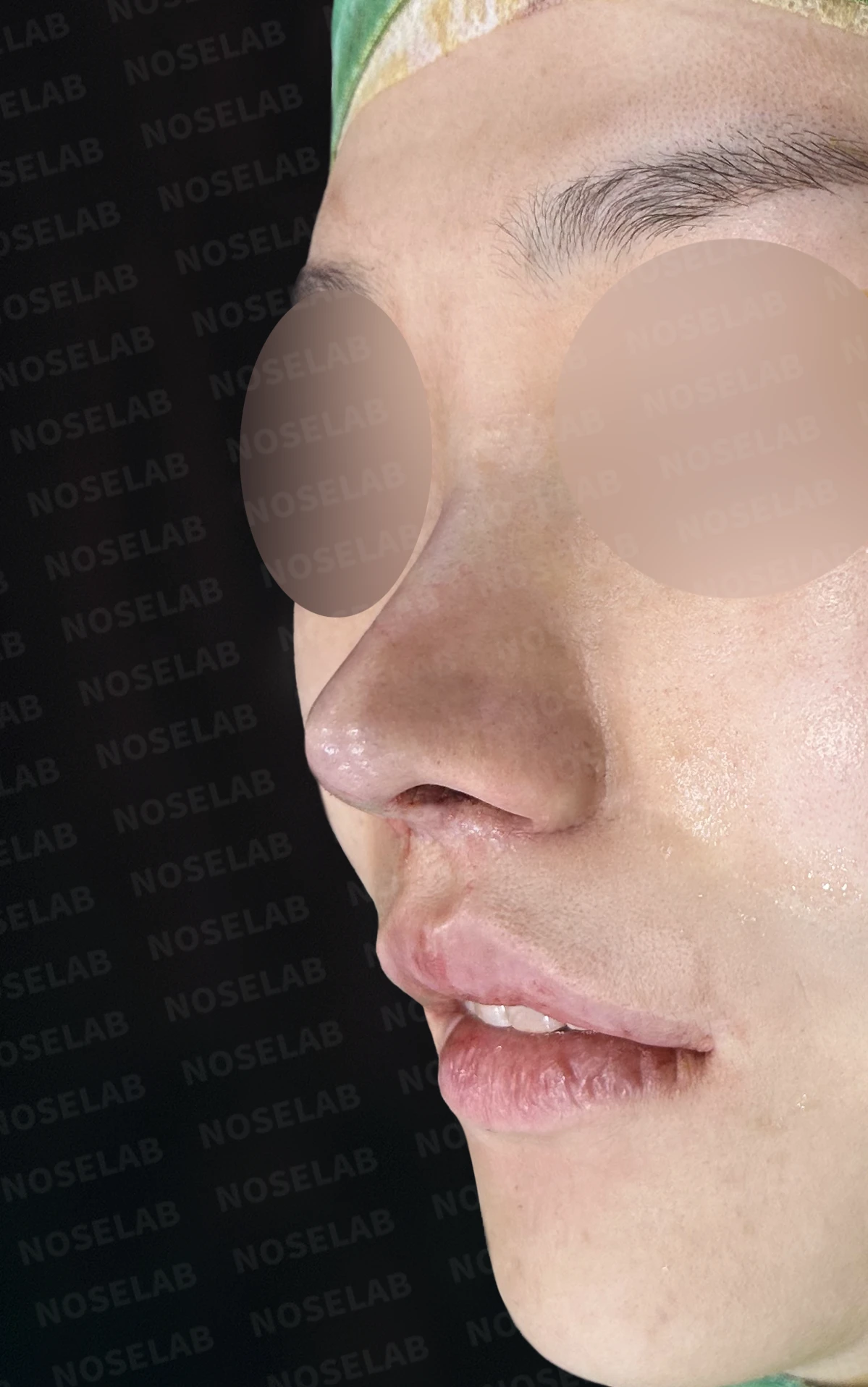
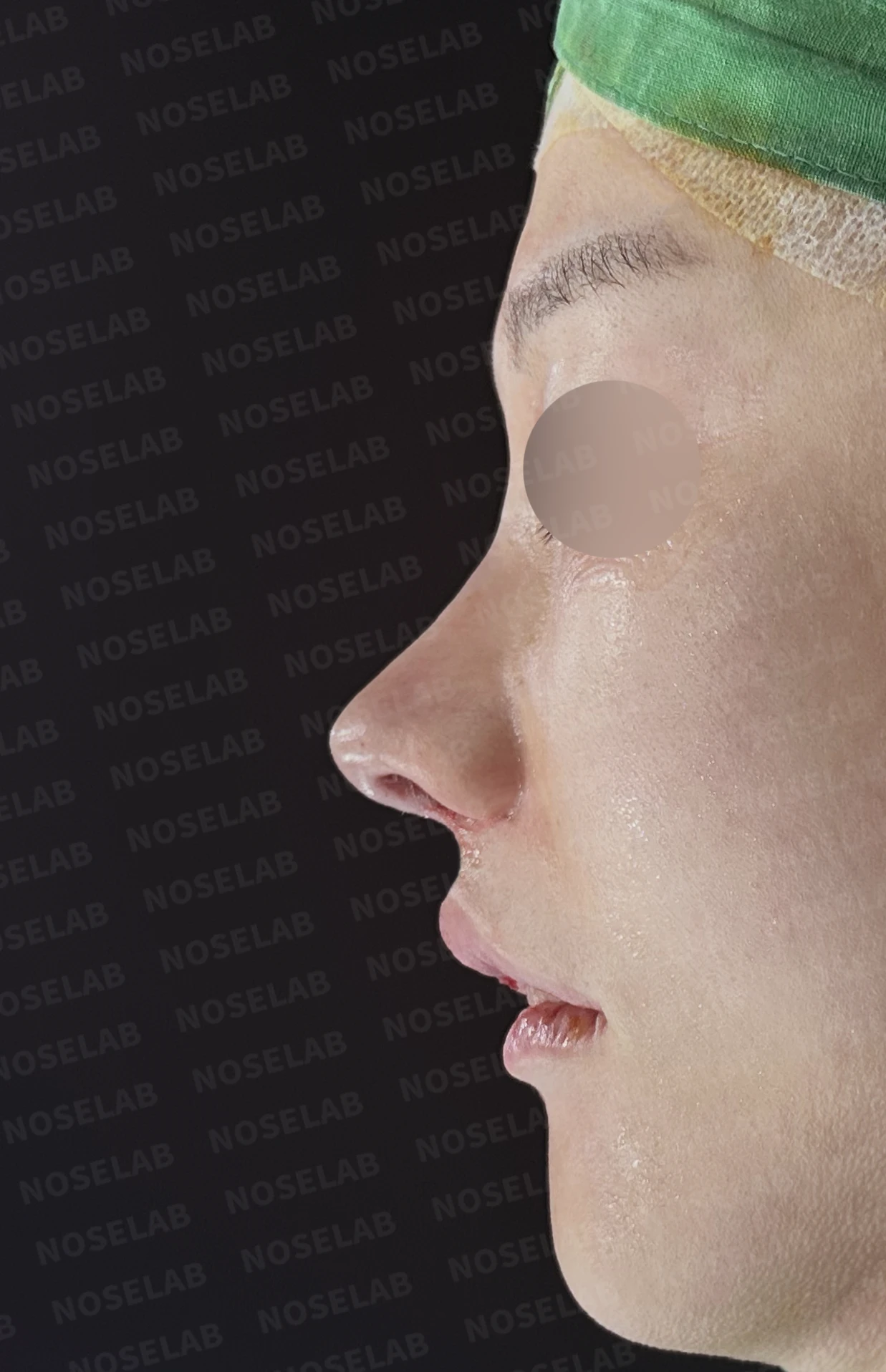
Front, oblique, and profile views on day 0 immediately after surgery. Photos taken immediately after surgery show swelling and may differ from the final result.
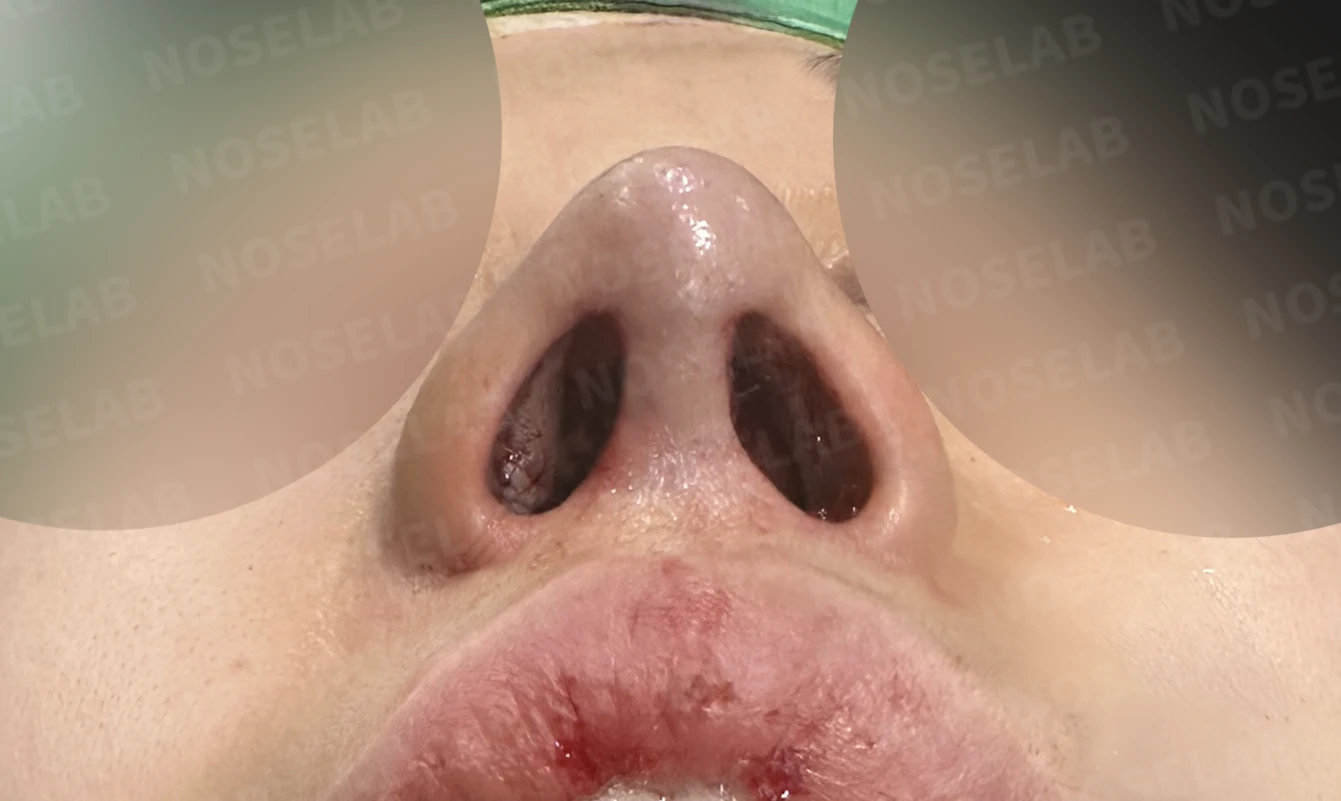
Nostril view on day 0 immediately after surgery. Photos taken immediately after surgery show swelling and may differ from the final result.
Correcting nostril asymmetry is one of the areas in rhinoplasty that requires the most delicate technique. In cases like this where severe congenital asymmetry of the lower lateral cartilages exists, simple cartilage suturing alone has clear limitations.
In this surgery, cartilage trimming, cartilage reconstruction, and a free composite graft were combined to balance both nostrils. A free composite graft is an advanced technique used when there is insufficient skin inside the nostril, regulating nostril size and contour through skin grafting.
In addition, septal reconstruction was performed to correct the crooked nose, and septoplasty and rhinitis surgery were carried out together to address nasal obstruction, achieving both aesthetic and functional improvements at the same time.
In revision rhinoplasty, it is essential to accurately assess the condition of existing tissues and the impact of previous procedures. Through a tailored approach suited to the patient's condition, we were able to achieve satisfying results. I hope this case helps those who share similar concerns. This has been Medical Director Dr. Peter C. Kang. Thank you.
#nostrilasymmetry #crookednosecorrection #septalreconstruction #freecompositegraft #deviatedseptum #rhinitissurgery #revisionrhinoplasty #closedrhinoplasty #closedrevisionrhinoplasty #DrPeterCKang #Gangnamrhinoplasty #Gangnamplasticsurgery

Limitations and risks
When revising after implant removal, contracture may progress again after removal, the nasal height and length may decrease, and staged surgery may be necessary depending on the skin condition.
When the septum is corrected at the same time, nasal obstruction may persist or recur, and in rare cases, septal perforation or changes in smell may occur.
Common potential risks include infection, bleeding, asymmetry, scarring, skin necrosis, and insufficient improvement; results vary depending on individual skin condition and previous surgical history.