Hello, I am Dr. Peter C. Kang.
Today, I would like to share a revision rhinoplasty case in which a crooked nose and over-resected nasal bone were restored simultaneously, while the nasal tip was refined using autologous rib cartilage.
🔍 Surgical history
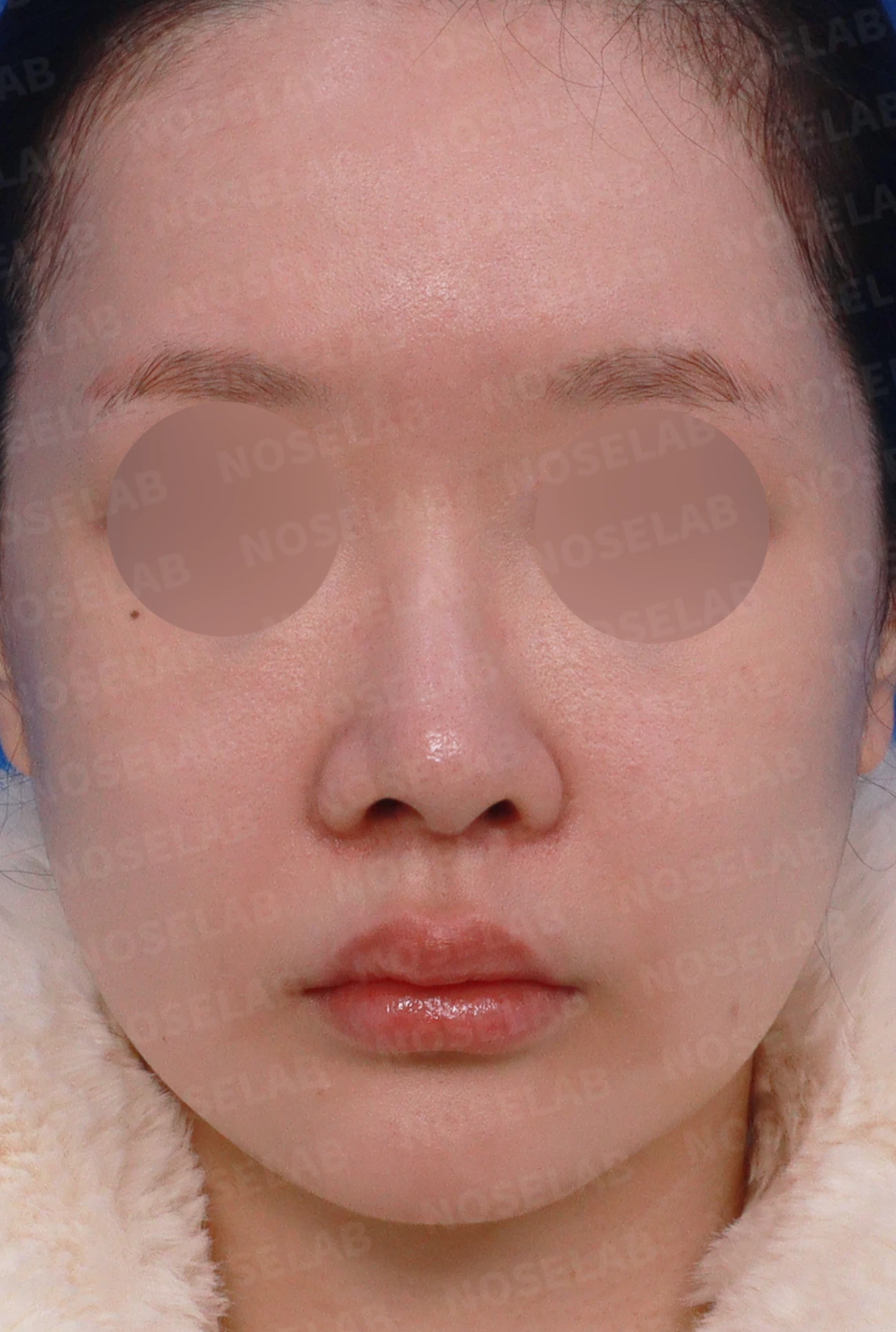
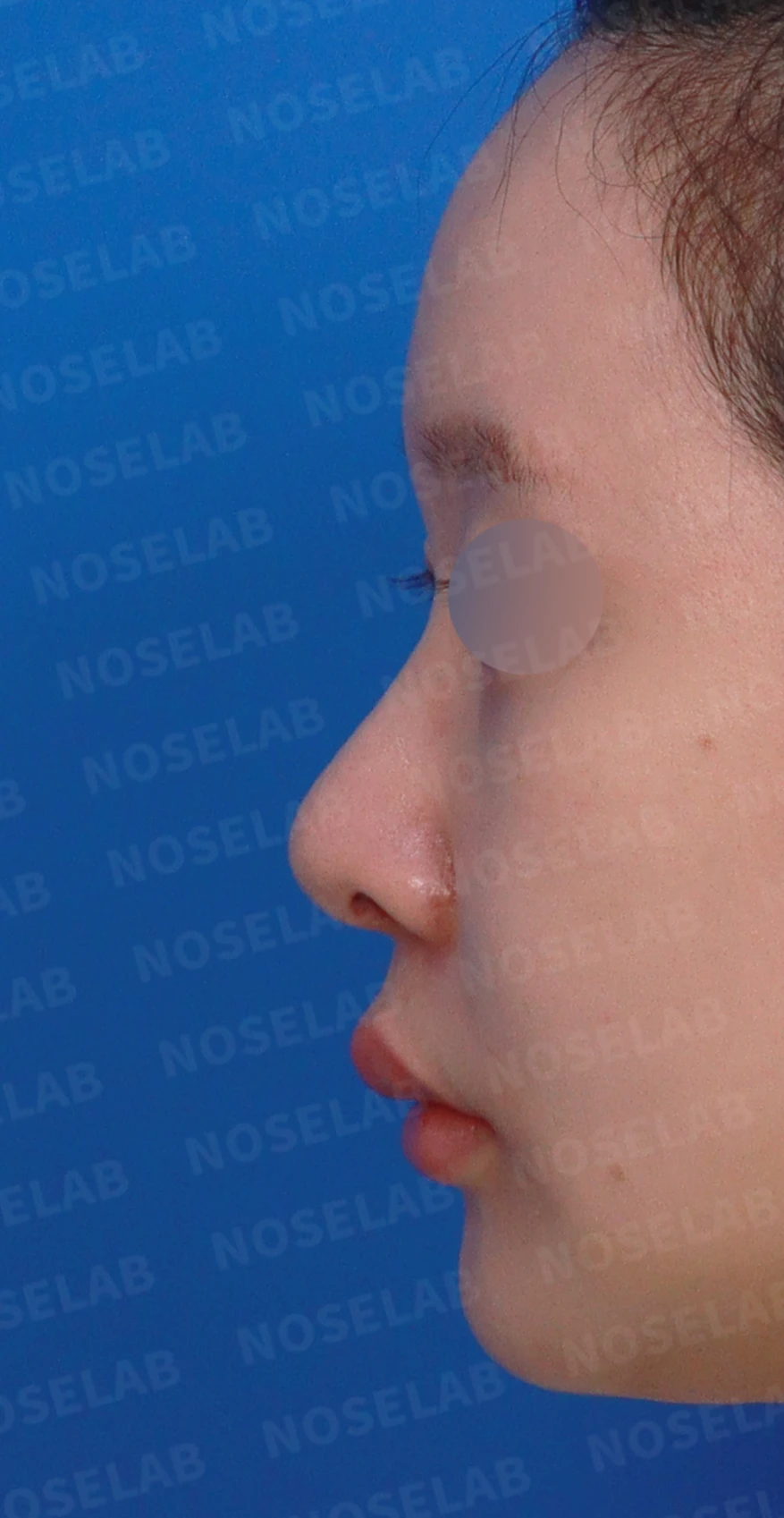
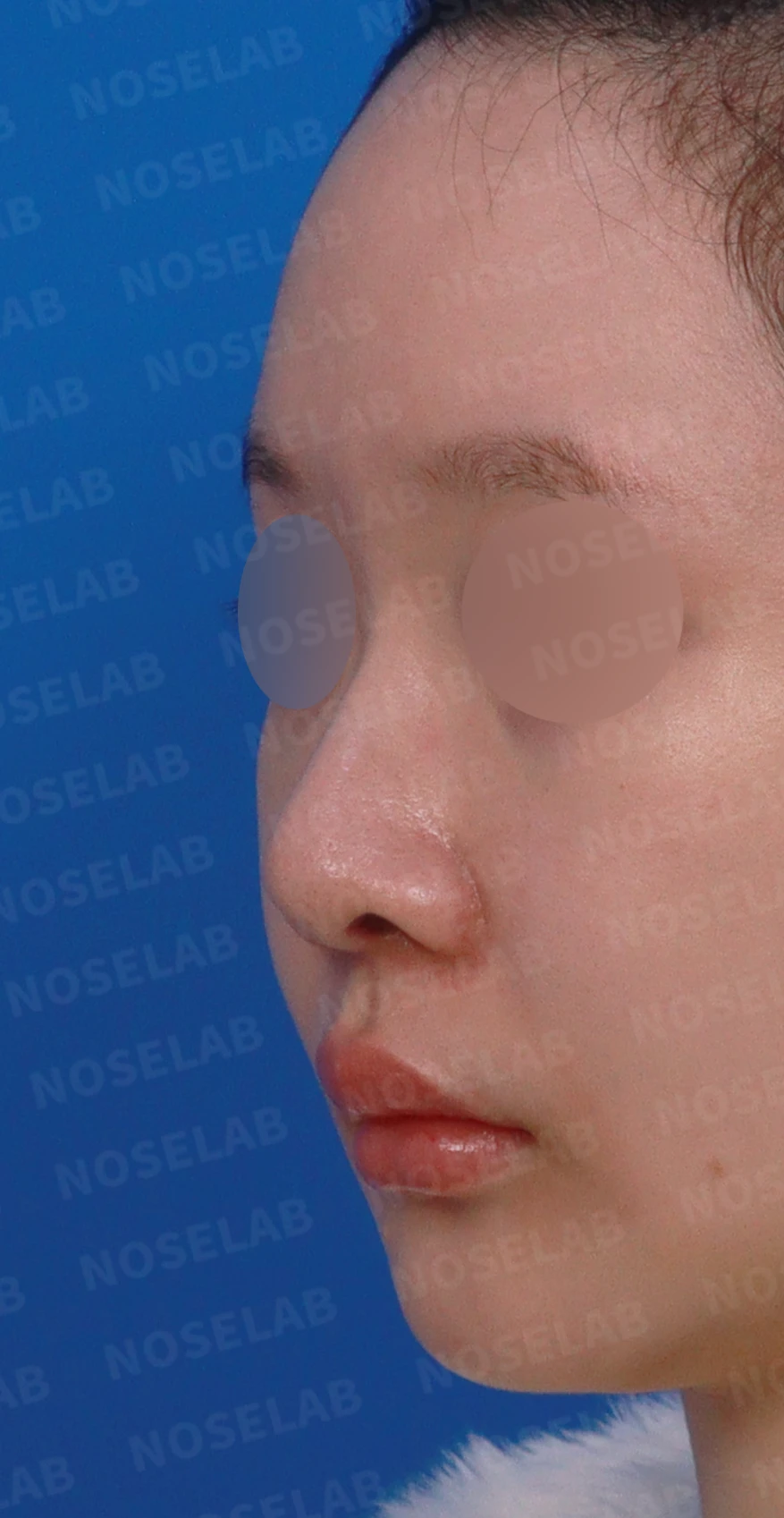
Design consultation photos: front, left profile, and oblique views
In this type of case, the patient had undergone dorsal hump reduction, osteotomy, and rhinoplasty using ear cartilage about 3 years ago. Over time, however, issues such as a crooked nose and a bulbous nasal tip developed, leading the patient to consider revision rhinoplasty.
💉 Patient requests
When the patient came to NOSELAB for a consultation, the concerns were as follows:
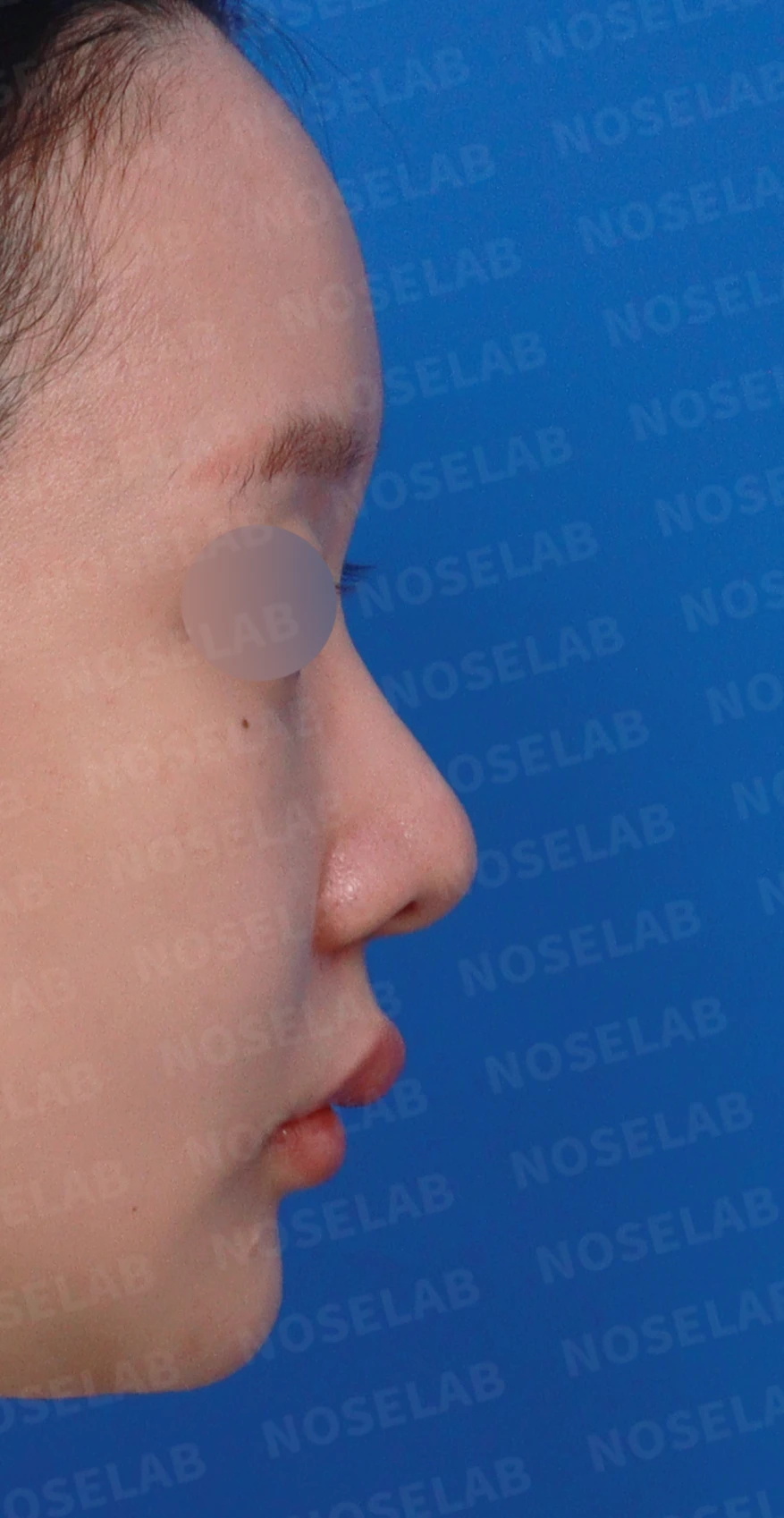
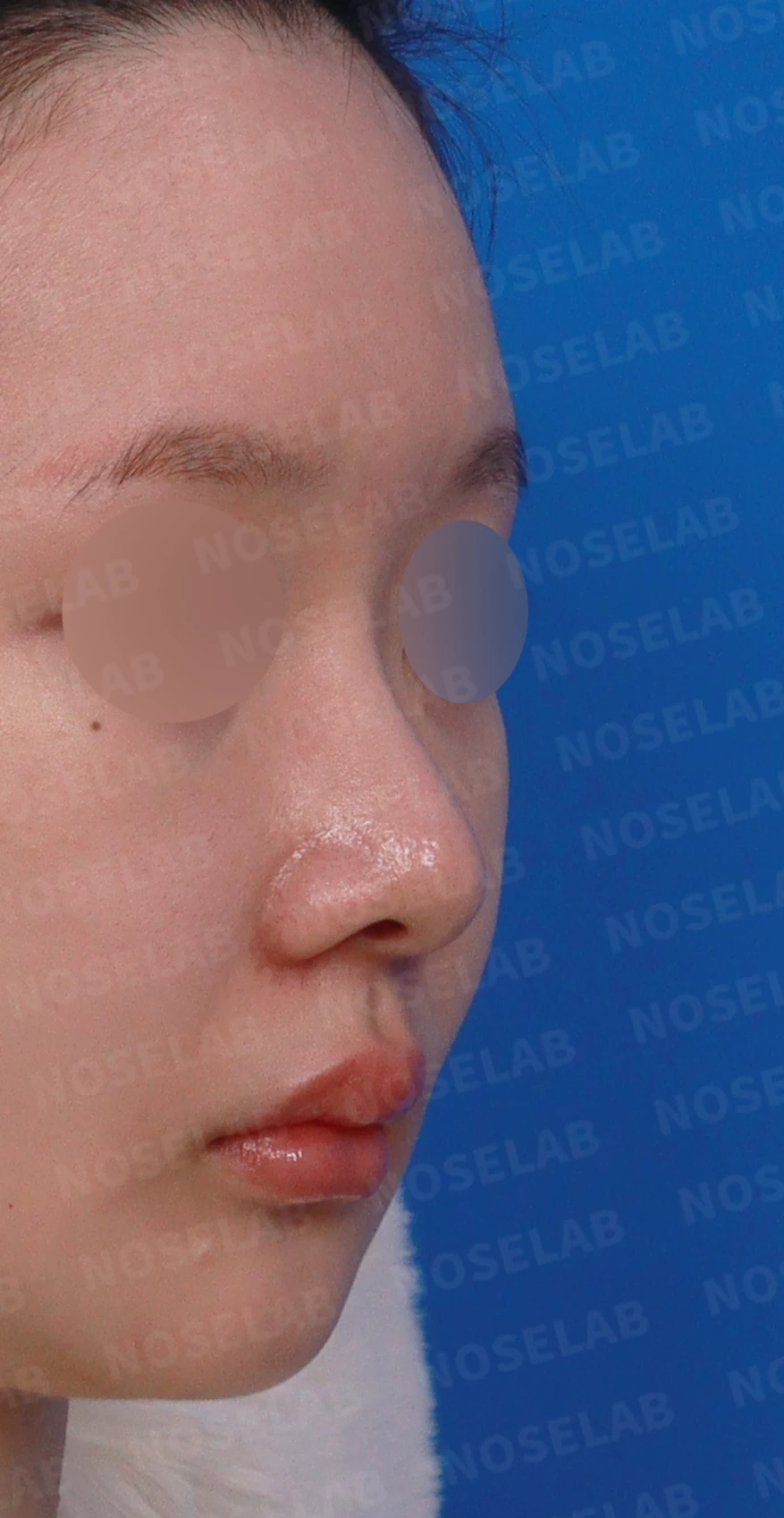
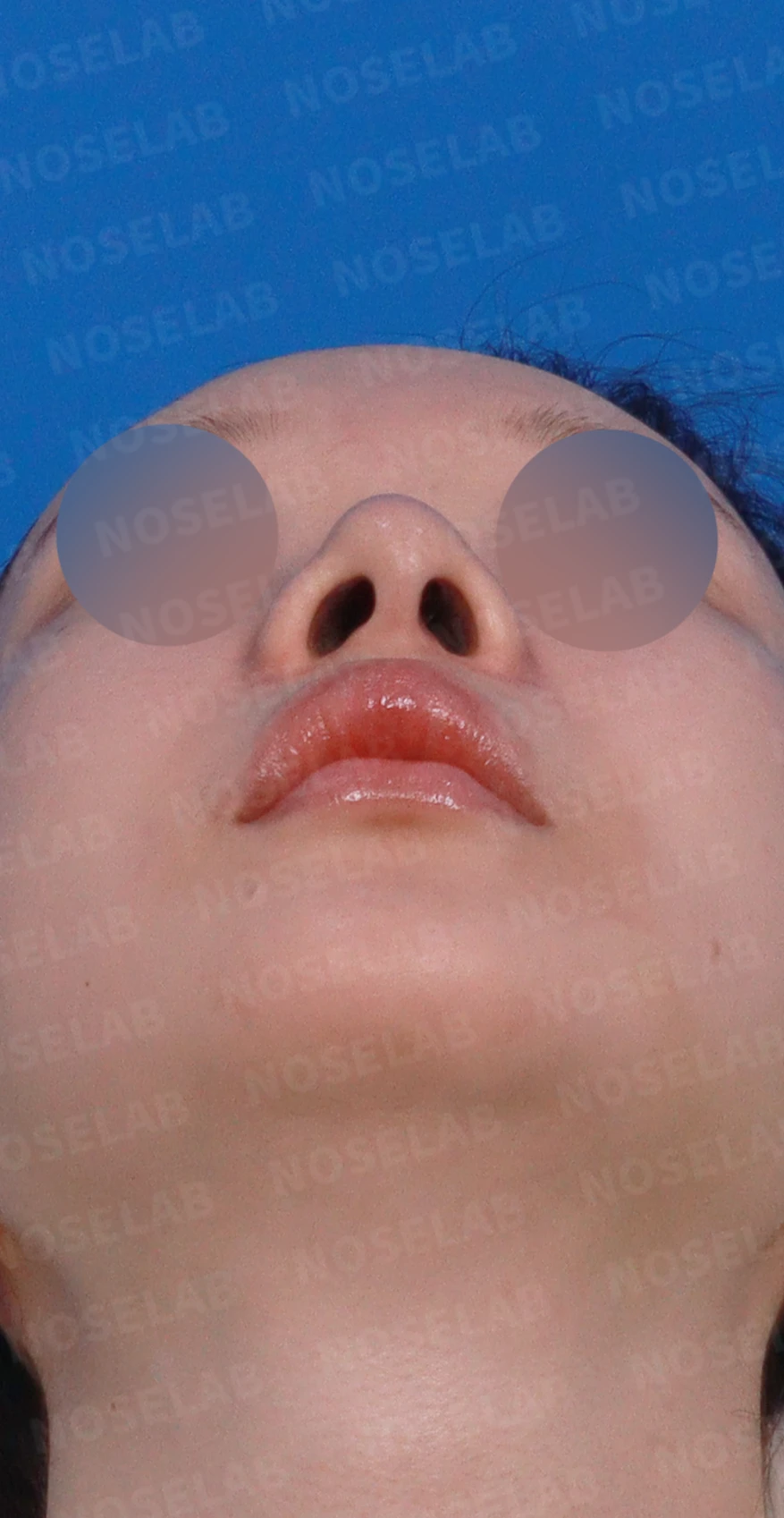
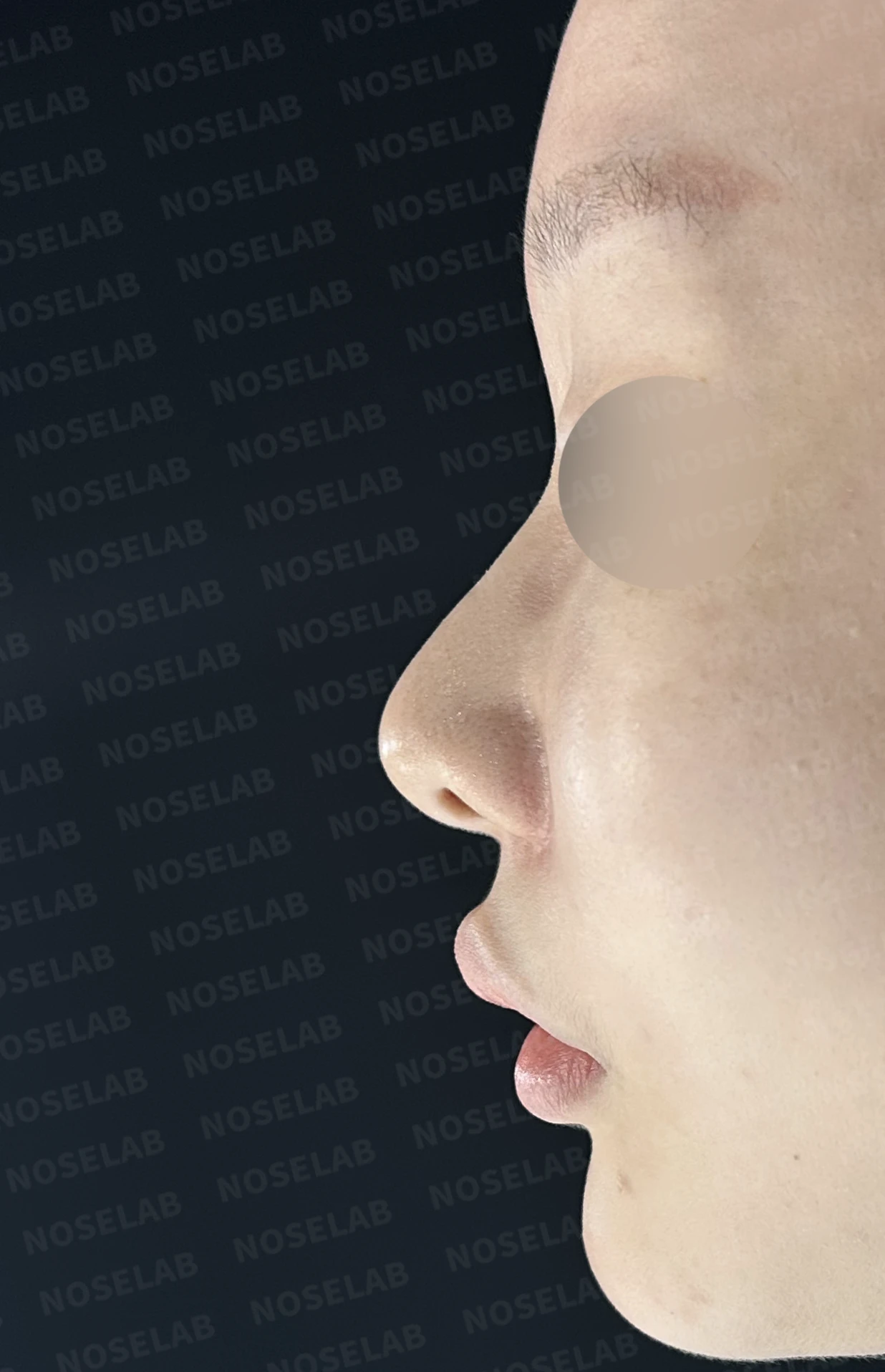
Right profile, oblique, and nostril views during design consultation.
Correction of deviated nose
Correction of the bulbous nasal tip
Reduced nostril show on the front view
Open to using a silicone implant if necessary
The patient was particularly concerned about the crooked appearance of the nose and the bulbous nasal tip.
🔧 Surgical plan and procedure
After a thorough analysis of the patient's condition, the previous osteotomy site was found to be over-resected, requiring nasal bone restoration. A surgical plan was established to perform tip rhinoplasty and nasal bone restoration simultaneously.
1. Septal extension using autologous rib cartilage
Harvesting autologous rib cartilage to reinforce tip support
Extending the septum to elevate the nasal tip
Refining the bulbous nasal tip for a sleeker contour
2. Restoration of the left nasal bone
Restoring the over-resected left nasal bone region
Correction of the deviated nasal bridge
Achieving bilateral symmetry
3. Custom-carved silicone implant
Silicone implant precisely carved to match the patient's nasal bone contours
Carving the implant meticulously to naturally fit the restored nasal bone line
Smoothly connecting the nasal bridge line
4. Correction of nasolabial angle
Adjustment of the angle between the nose and the lips
Minimizing nostril show from the front view
Improvement of the profile silhouette
🌟 Surgical results
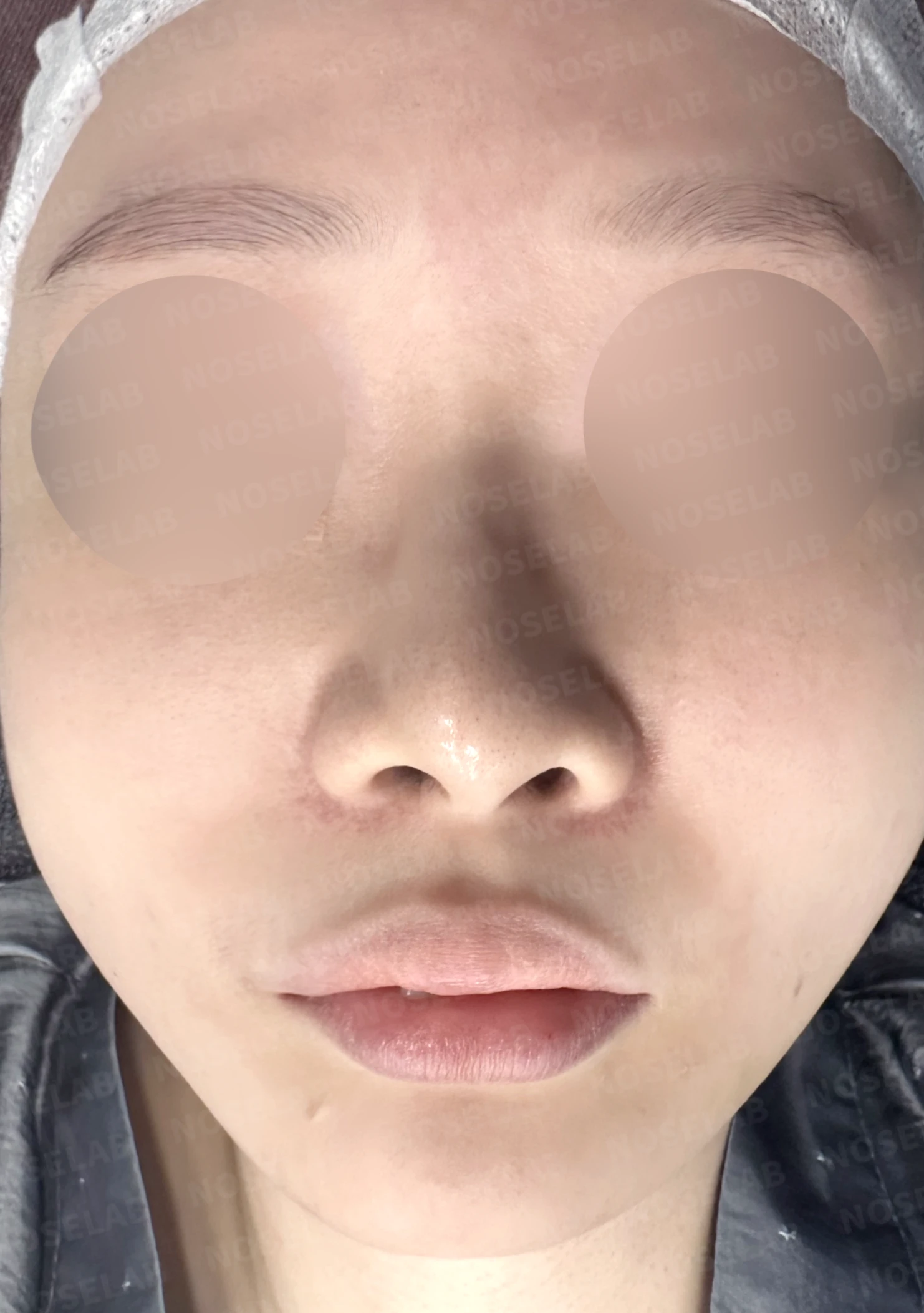
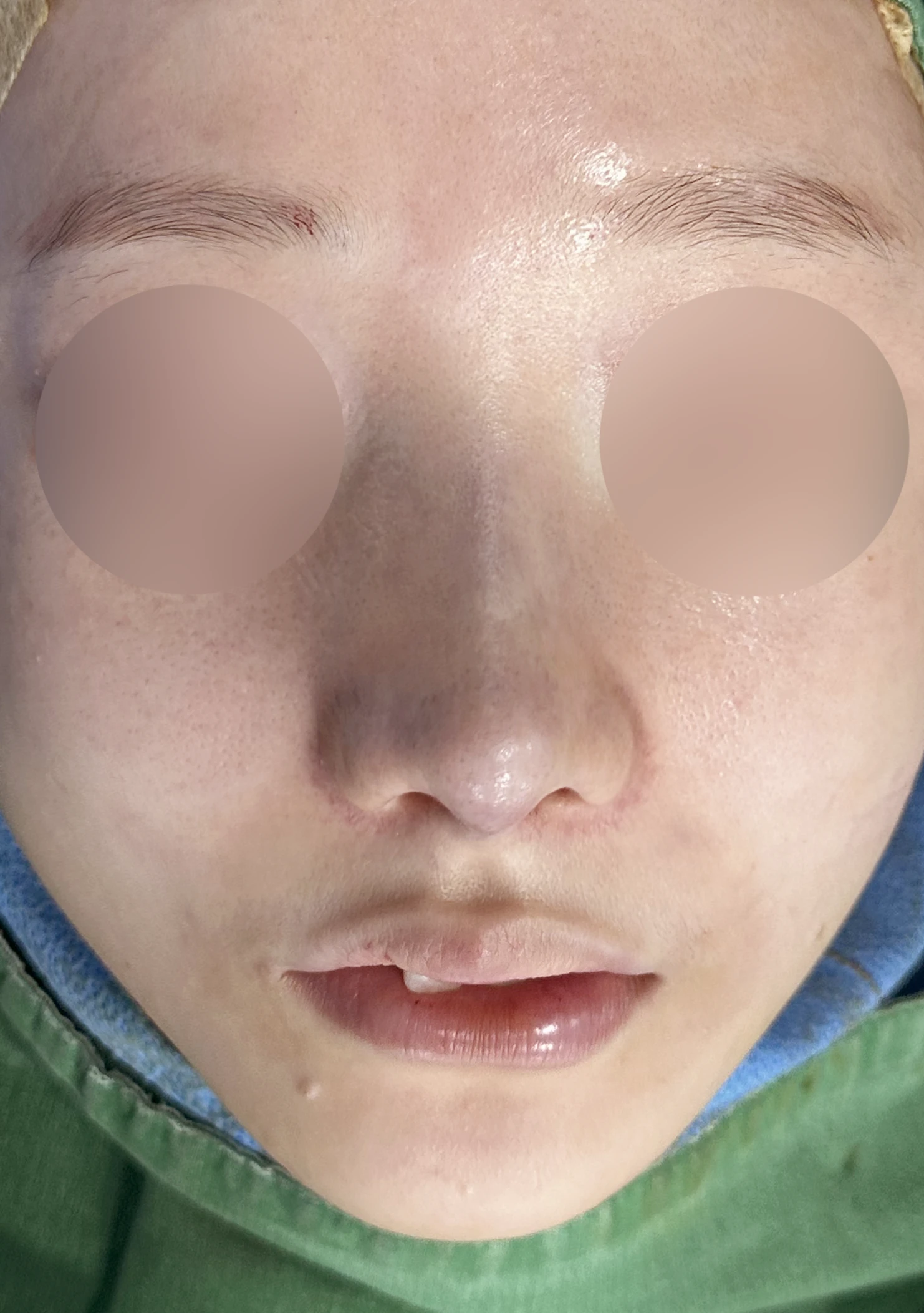
Before surgery / Day 0 immediately after surgery Photos taken immediately after surgery show swelling and may differ from the final result.
Front view changes:
The nose that deviated to the left has been straightened
The bulbous nasal tip has been refined into a sleek contour
Nostril show has naturally decreased
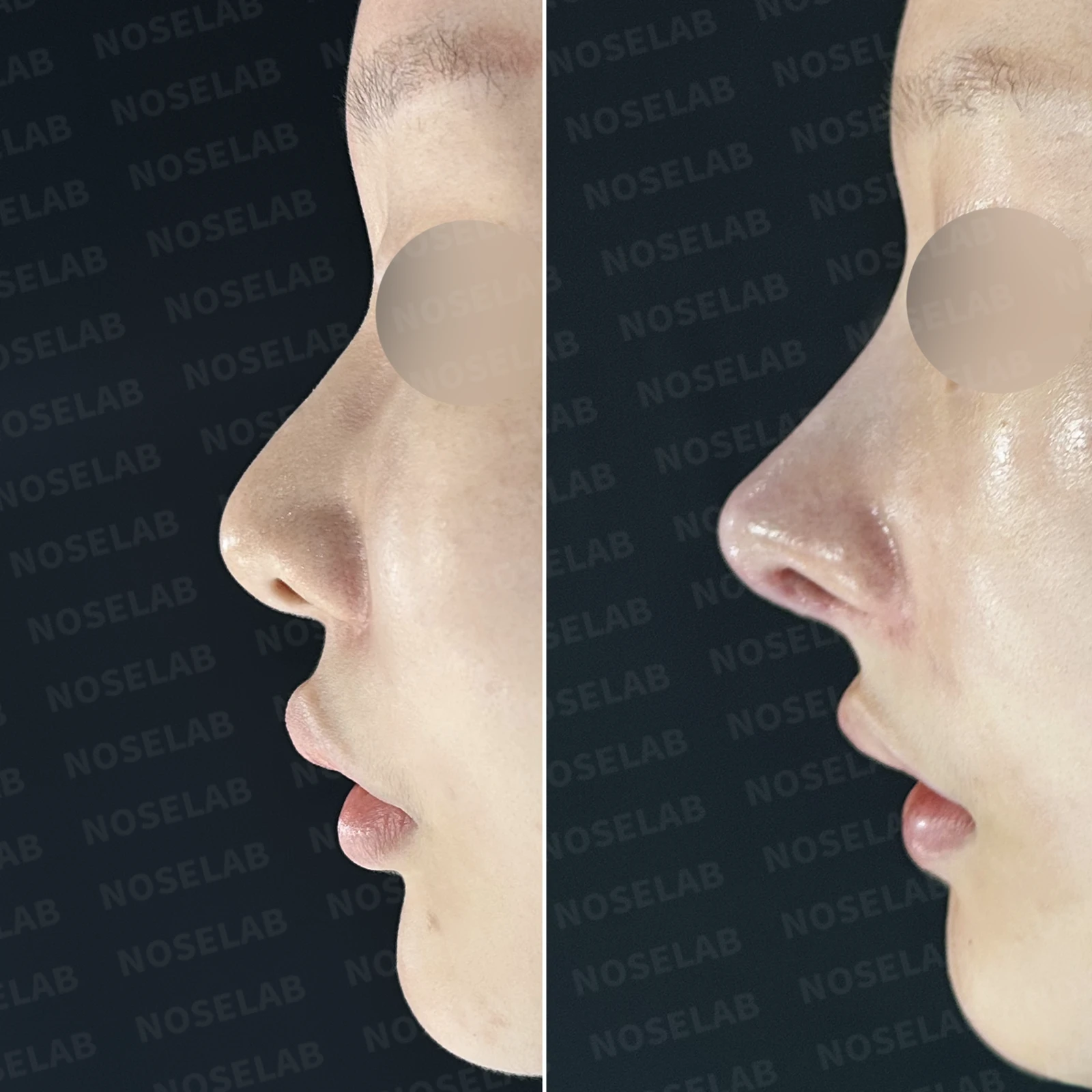
Before surgery / Day 0 immediately after surgery Photos taken immediately after surgery show swelling and may differ from the final result.
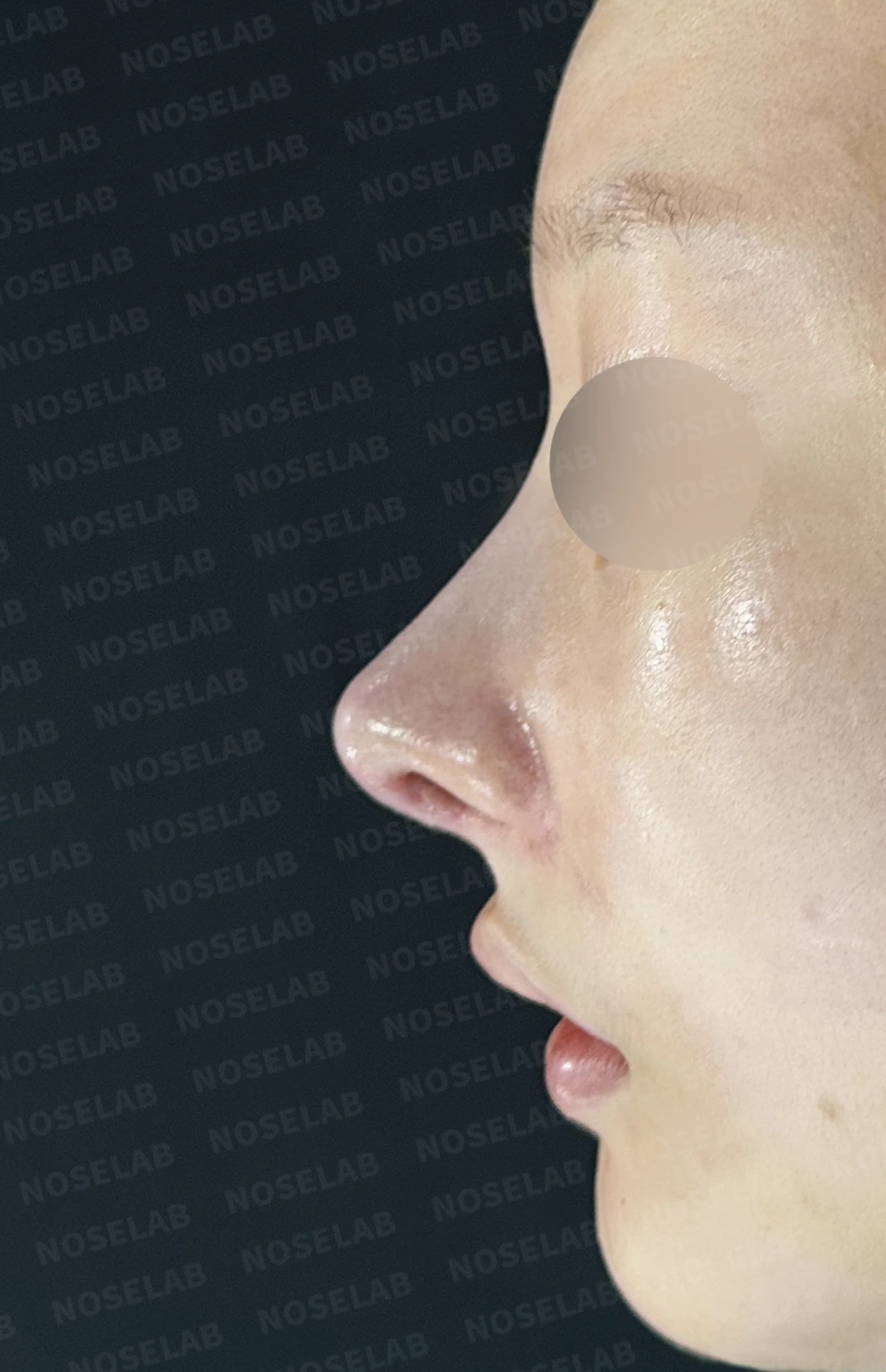
Profile view changes:
Smooth and natural nasal bridge line achieved
A refined profile through nasolabial angle correction
The nasal tip was appropriately elevated, improving overall balance
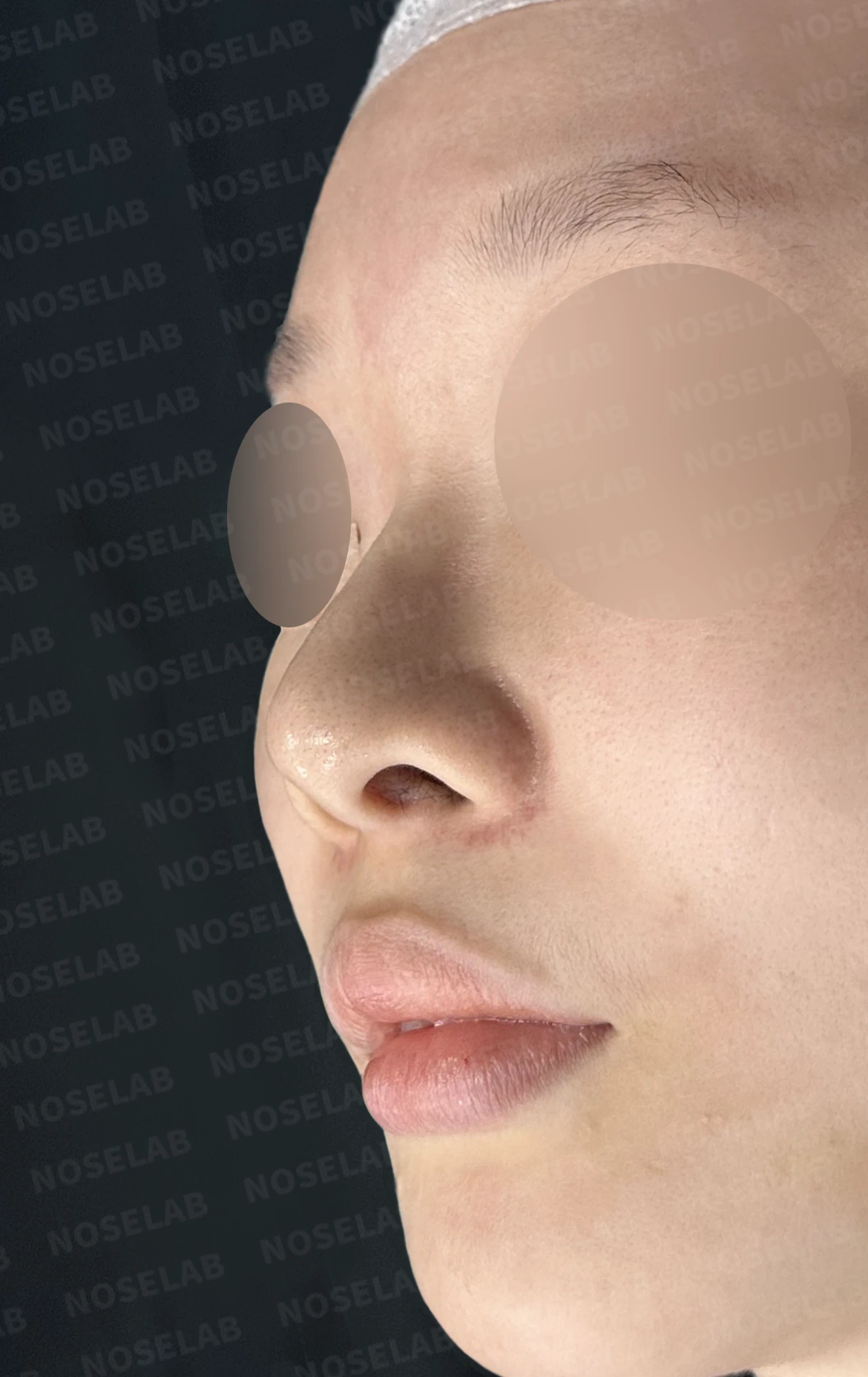
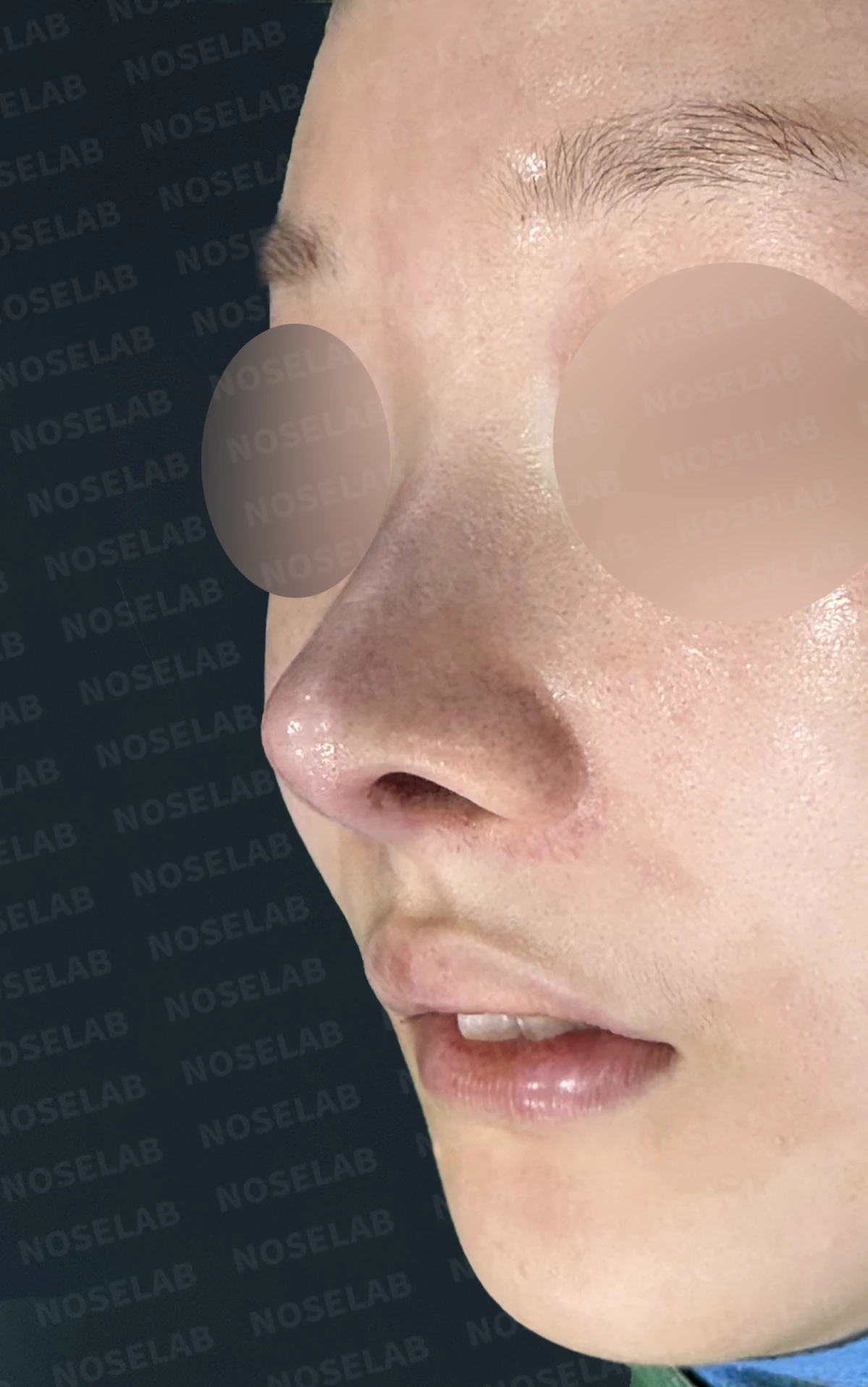
Before surgery / Day 0 immediately after surgery Photos taken immediately after surgery show swelling and may differ from the final result.
Changes in the nasal bone:
The over-resected area has been naturally restored
The silicone implant sits stably along the nasal bone contour
Symmetric nasal bridge line
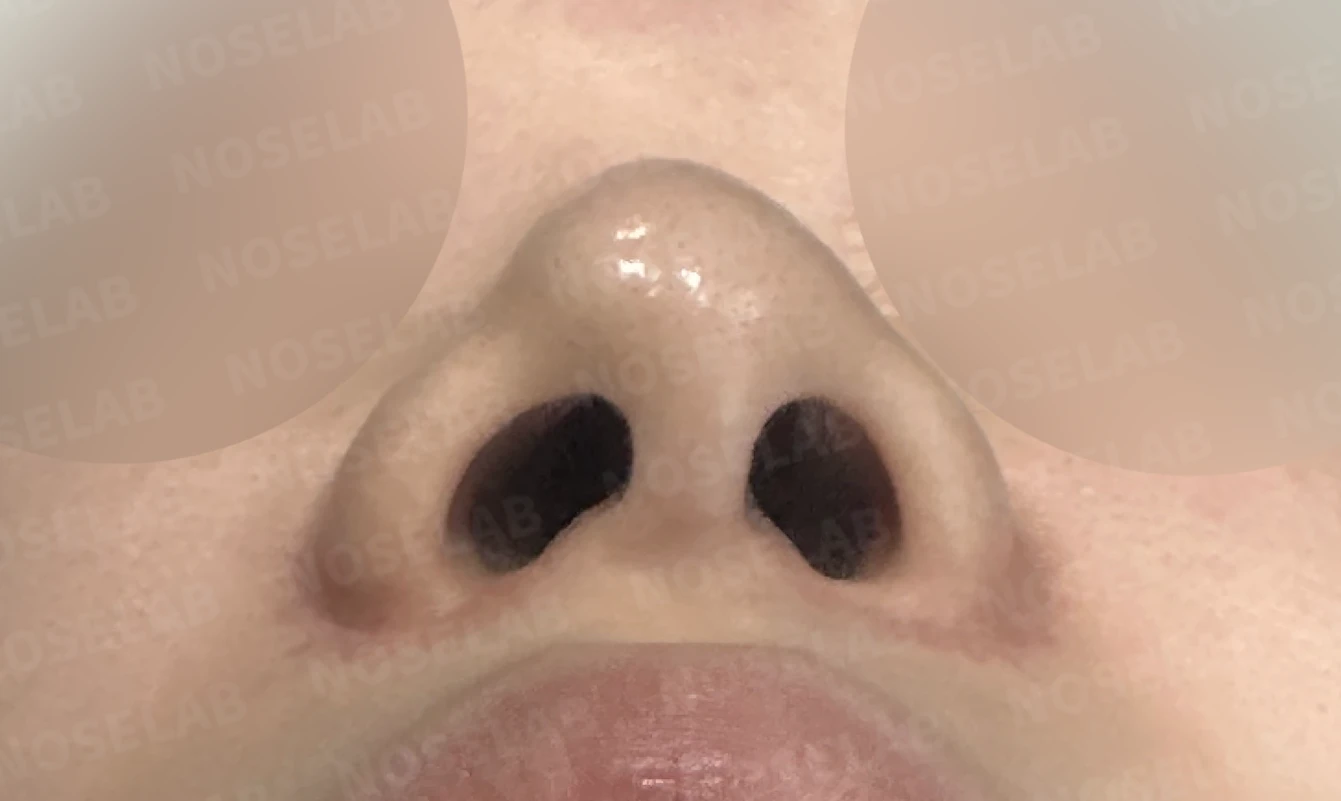
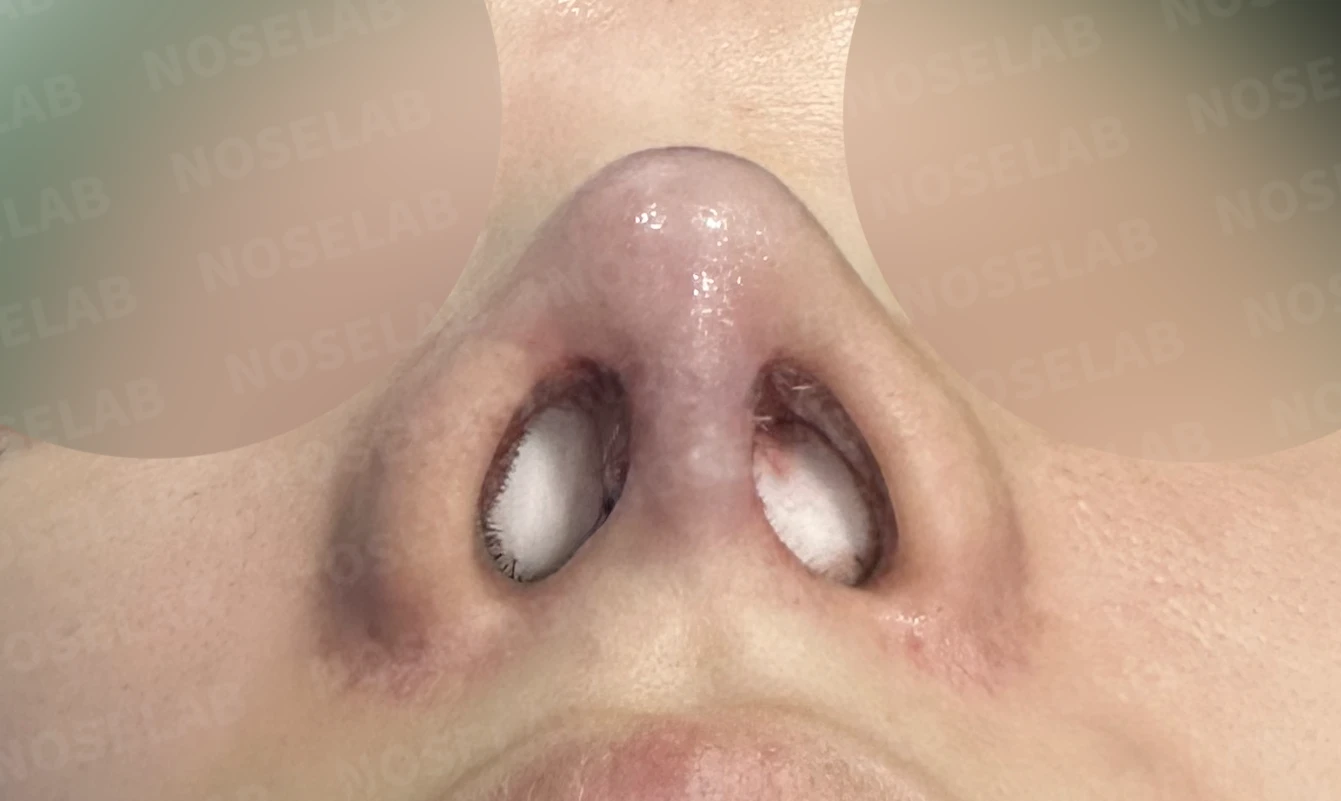
Before surgery / Day 0 immediately after surgery Photos taken immediately after surgery show swelling and may differ from the final result.
💡 Specialist opinion
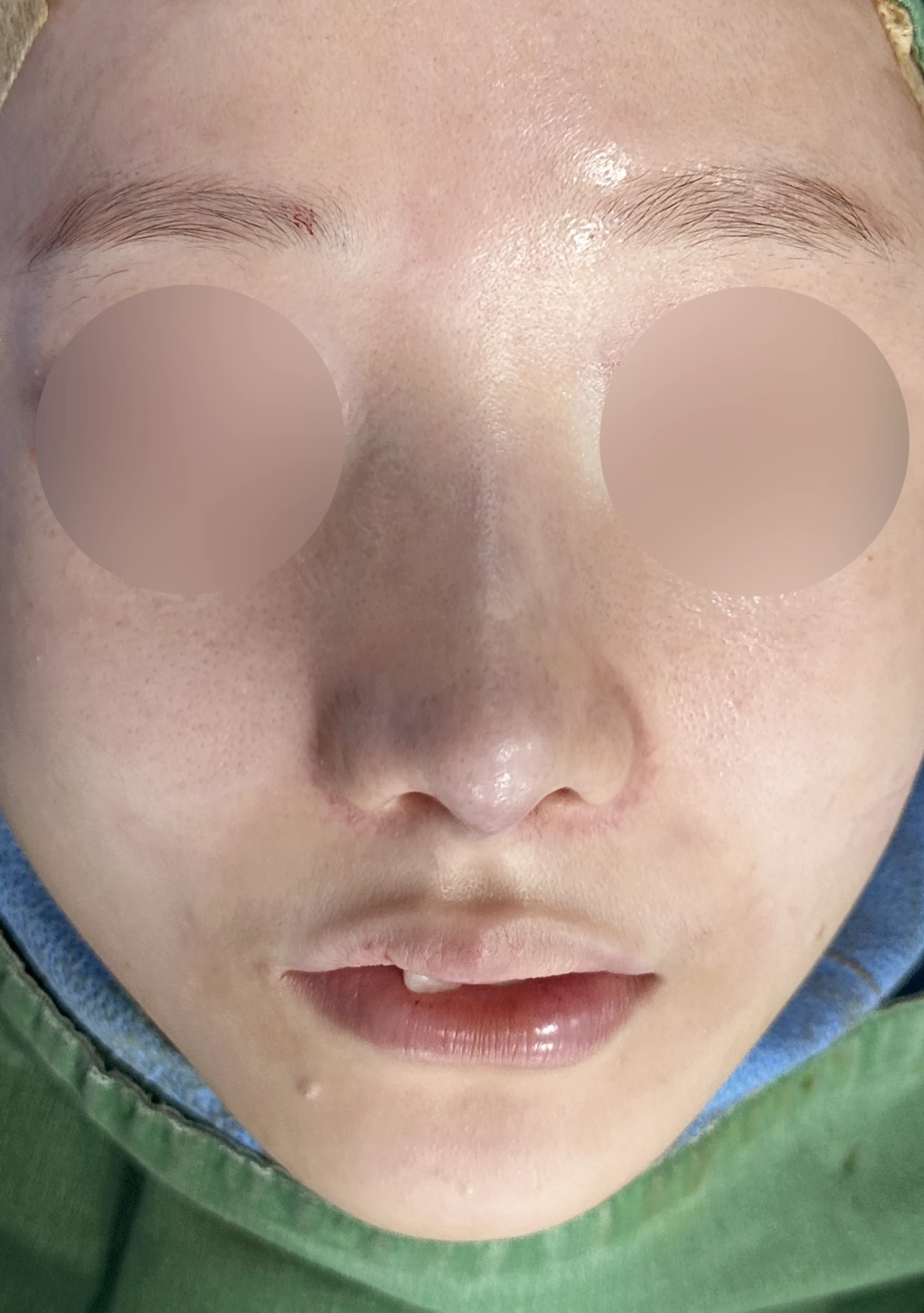
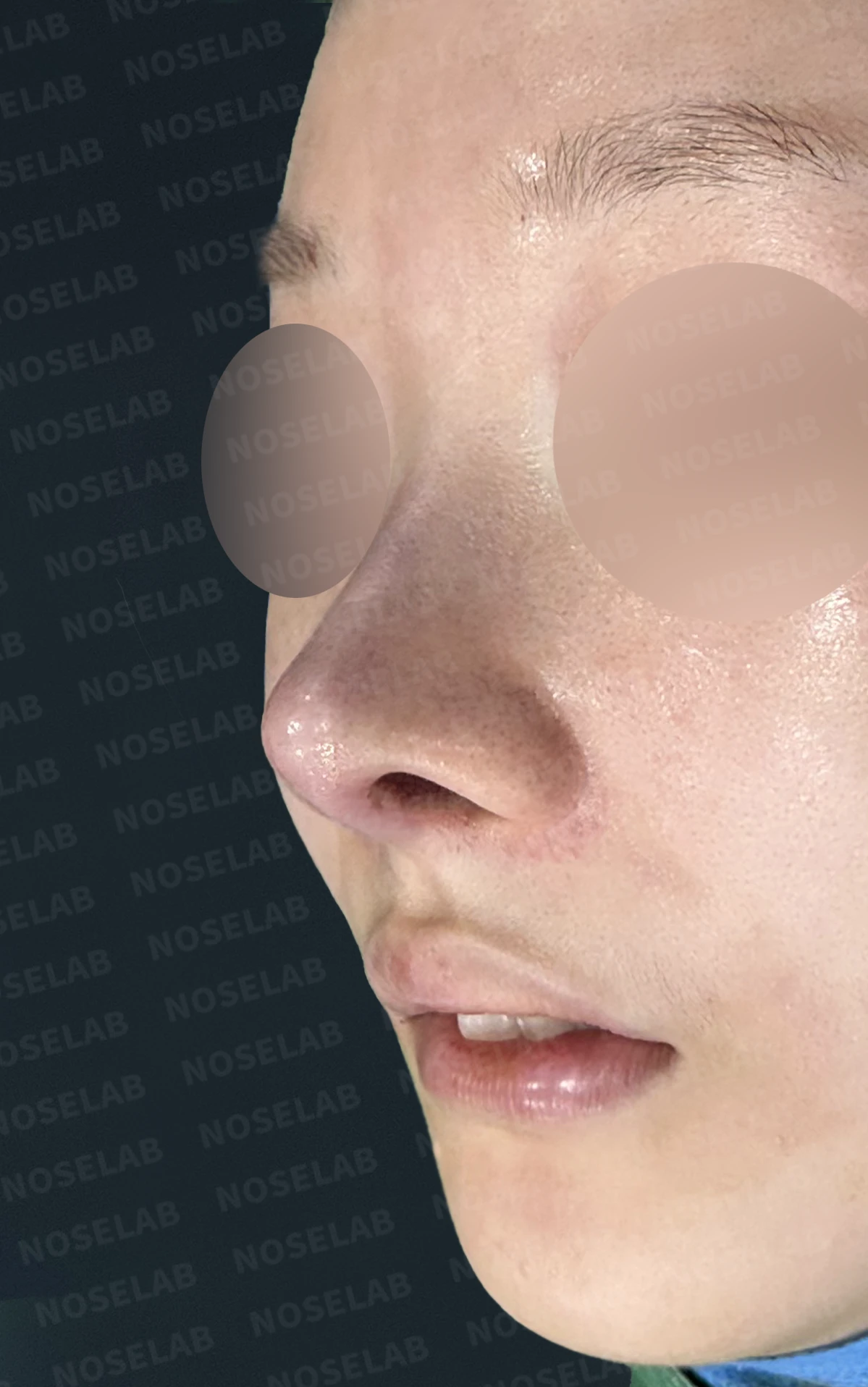
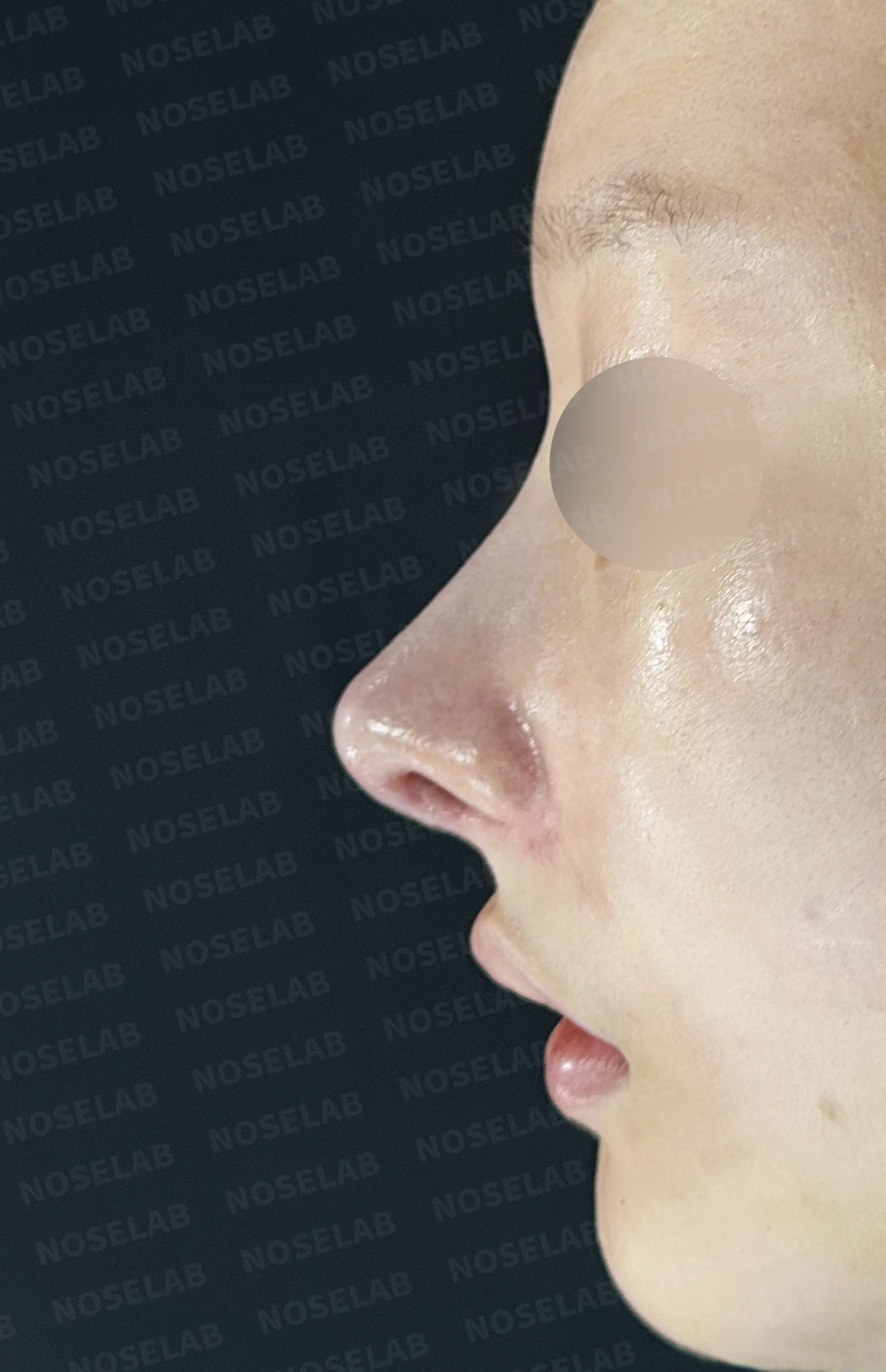
Day 0 immediately after surgery: front, oblique, and profile viewsPhotos taken immediately after surgery show swelling and may differ from the final result.
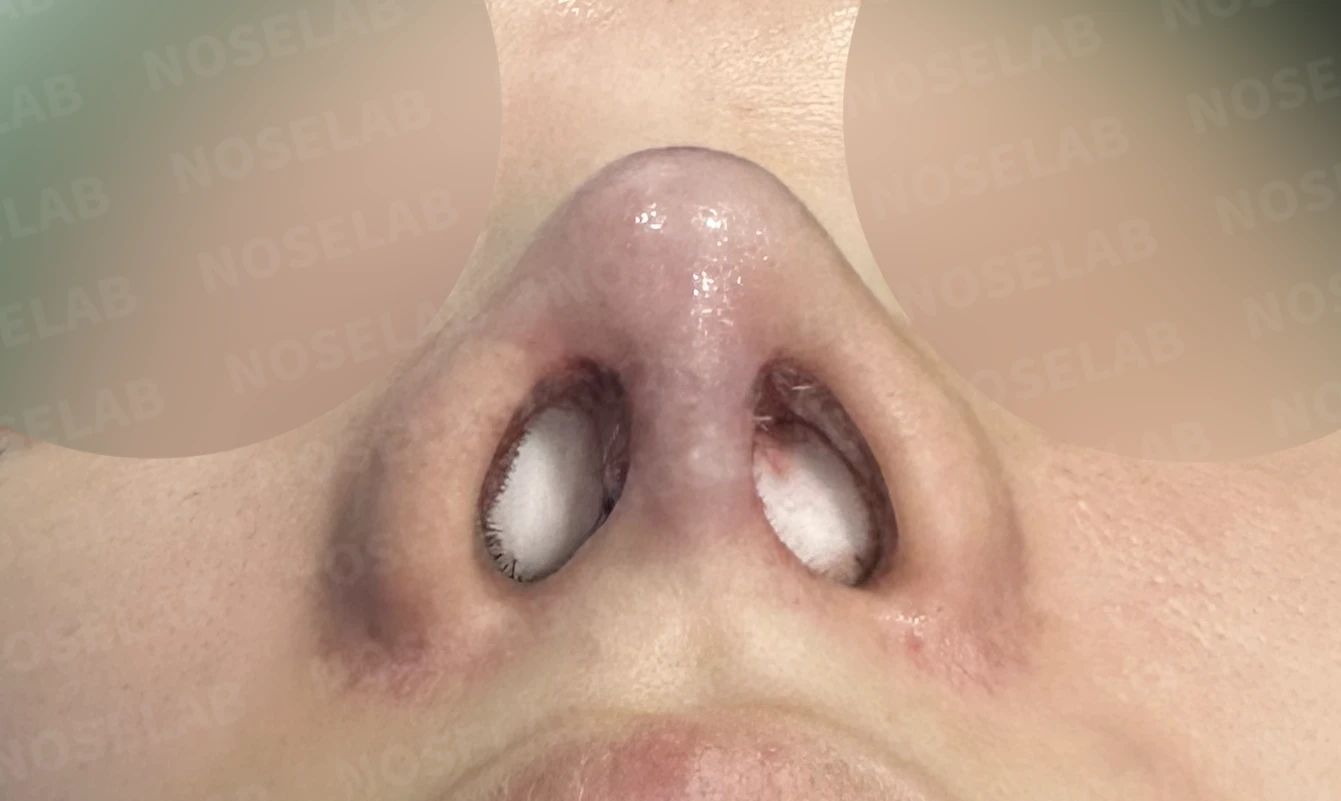
Day 0 immediately after surgery: nostril viewPhotos taken immediately after surgery show swelling and may differ from the final result.
In revision rhinoplasty, restoring an over-resected nasal bone while simultaneously performing tip rhinoplasty is a highly complex procedure. This is because both issues must be addressed individually while still achieving overall harmony.
In this type of case, autologous rib cartilage was used to reinforce the structural support of the nasal tip, and the silicone implant was meticulously carved to fit the patient's nasal bone contour, creating a natural nasal bridge line. In particular, when restoring an over-resected area, one must carefully evaluate the condition of the remaining bone and surrounding tissues and approach the procedure with great caution.
Revision rhinoplasty requires more meticulous planning and technique than primary rhinoplasty because it must account for tissue alterations and scar tissue from previous surgeries. Accurately assessing the patient's current condition and selecting the most appropriate method accordingly is key to achieving a successful outcome.
I will continue to provide customized surgical care tailored to each patient. I hope this case helps those with similar concerns. This has been Dr. Peter C. Kang, Medical Director. Thank you.
#closedrhinoplasty #closedrevisionrhinoplasty #nasalbonerestoration #overresectioncorrection #autologousribcartilagerhinoplasty #crookednosecorrection #revisionrhinoplasty #bulboustip #nasolabialanglecorrection

Limitations and risks
When autologous rib cartilage is used, scarring and pain may remain at the donor site on the chest, and pneumothorax (pleural injury) can occur rarely. Over time, the grafted cartilage may warp or undergo partial resorption.
When the septum is corrected at the same time, nasal obstruction may persist or recur, and in rare cases, septal perforation or changes in smell may occur.
Common potential risks include infection, bleeding, asymmetry, scarring, skin necrosis, and insufficient improvement; results vary depending on individual skin condition and previous surgical history.