Hello, I am Dr. Peter C. Kang.
Today, I would like to introduce a rhinoplasty case of a patient who traveled to our clinic from overseas. In this case, we replaced the existing silicone implant and performed septal extension using autologous rib cartilage to achieve a more natural and stable nasal line.
🔍 Surgical history
8 years ago: surgery with silicone implant and ear cartilage
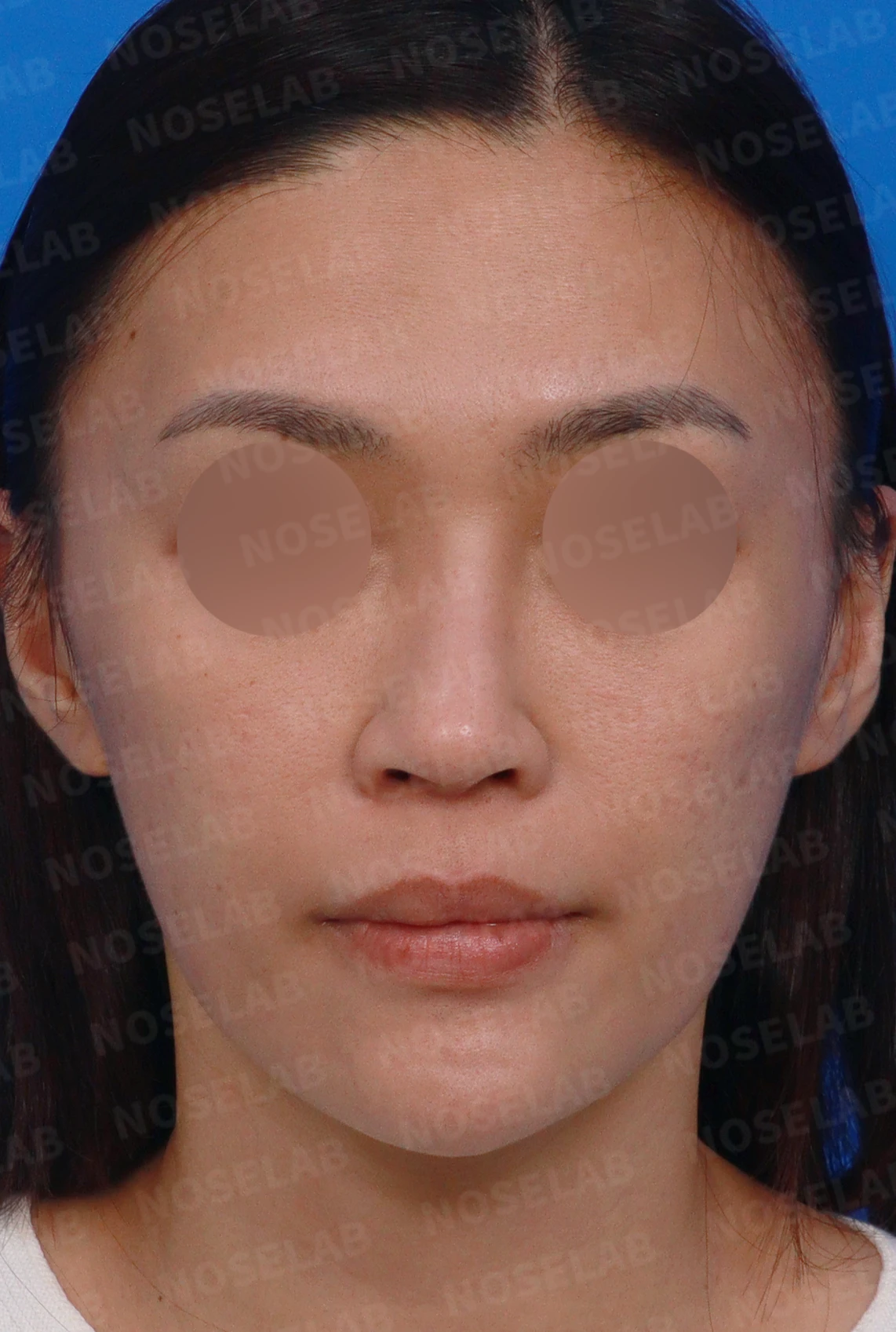
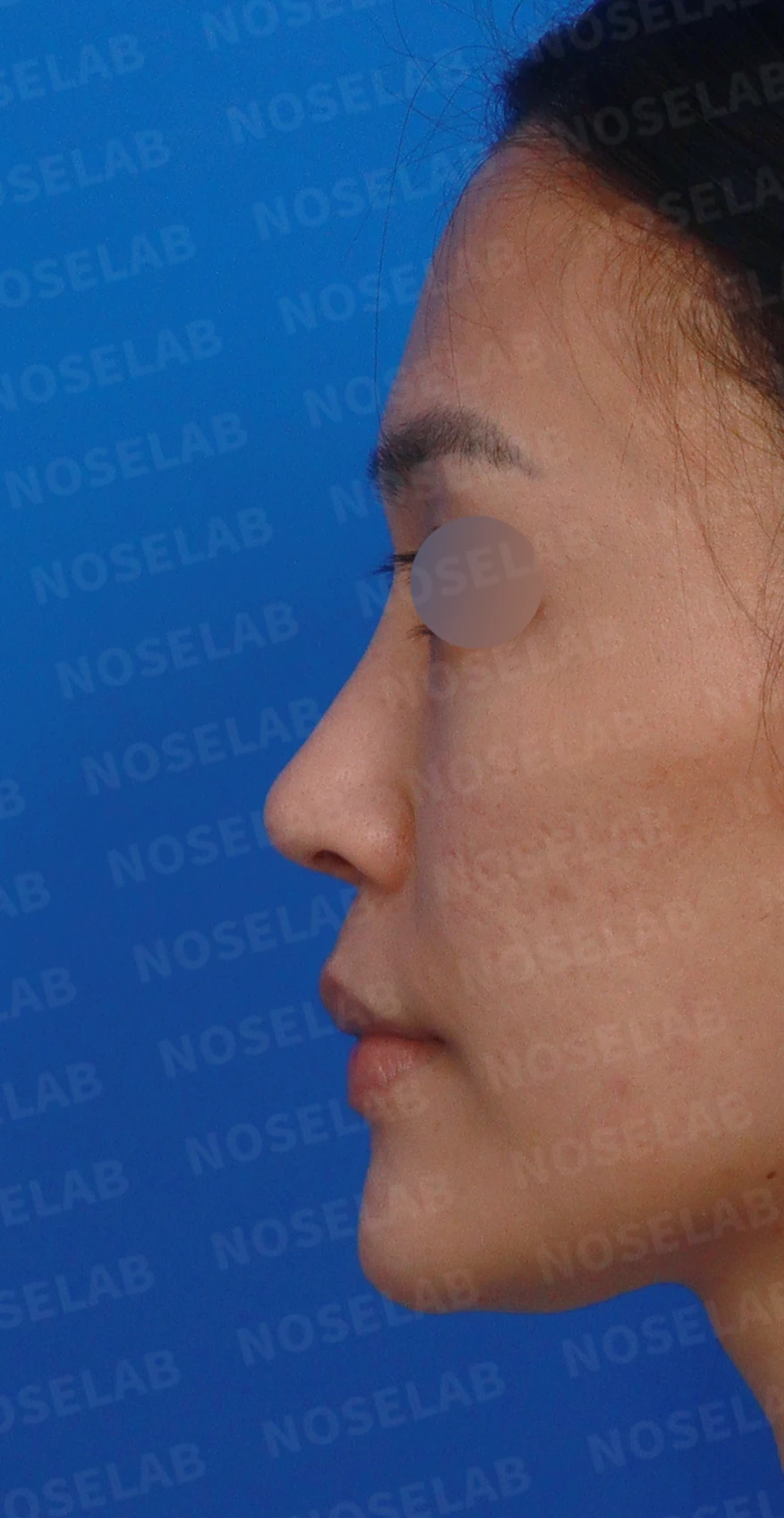
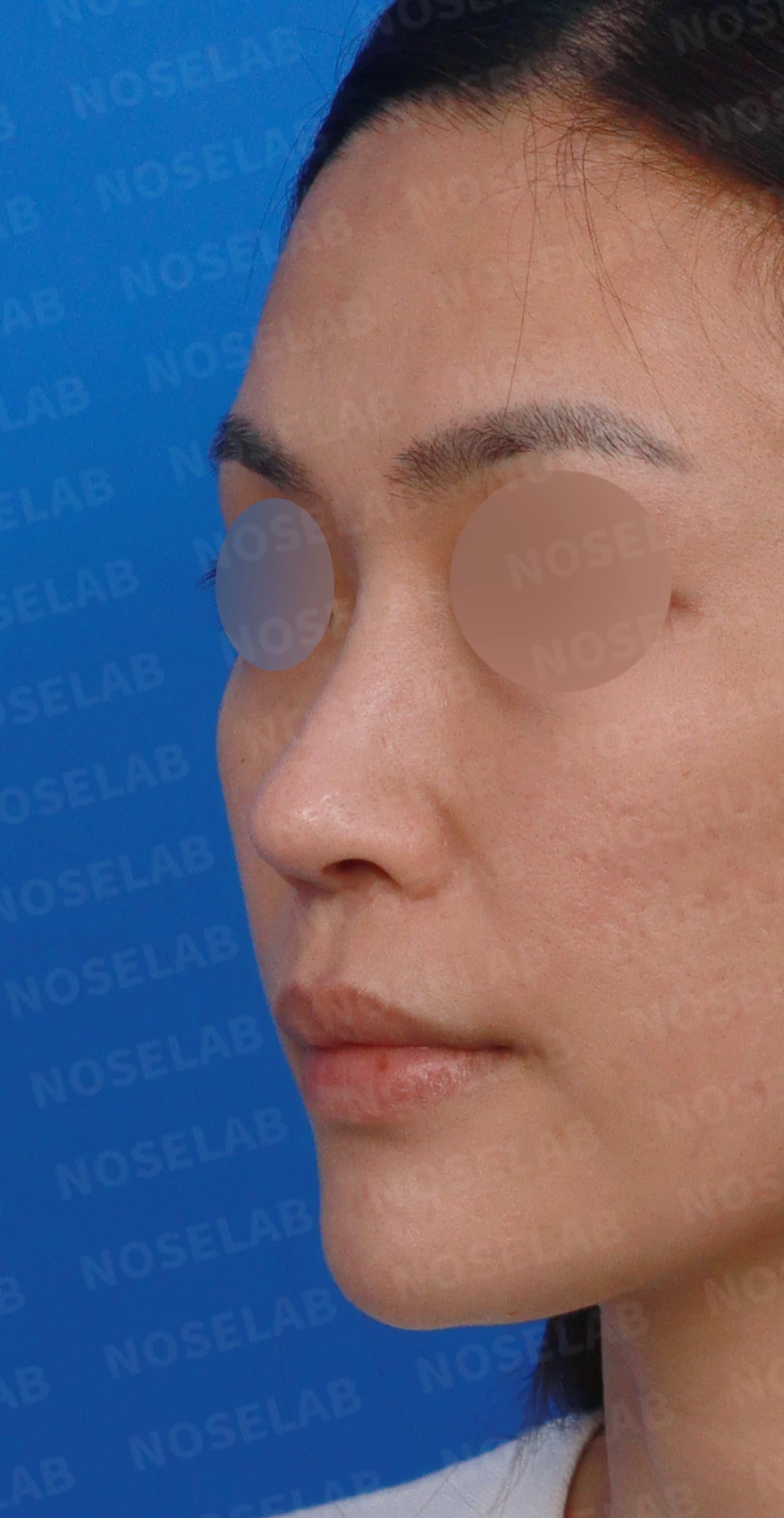
Front, left profile, and oblique views during design consultation.
💉 Patient requests
The patient had previously undergone rhinoplasty with a silicone implant at another clinic. Over time, however, the patient felt that the contour of the implant looked unnatural and had concerns that the structural support of the nasal tip had weakened.
Main requests:
Replacement of the existing silicone implant
Improvement of nasal tip height and structural support
Formation of a natural bridge line
Long-term stable outcome
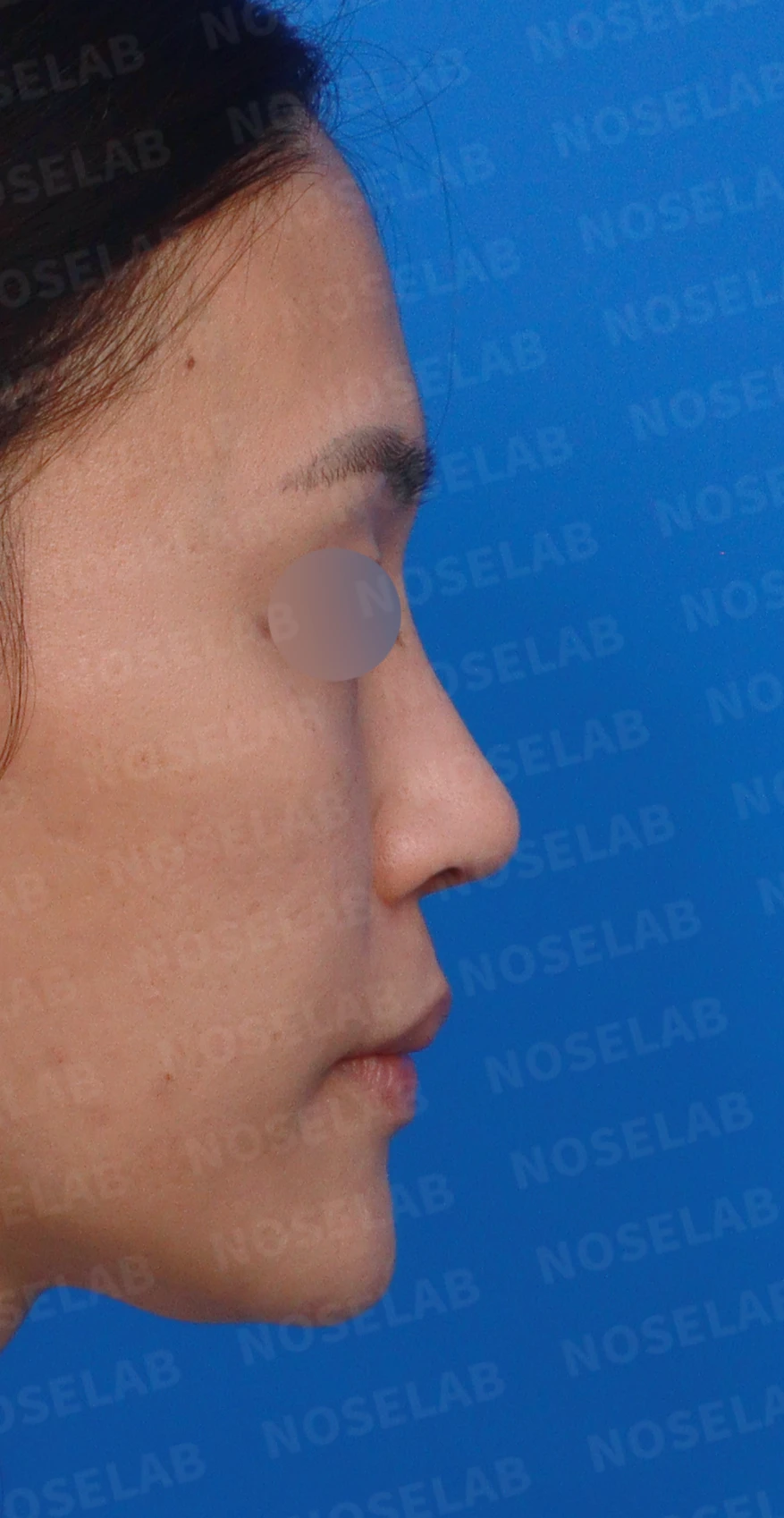
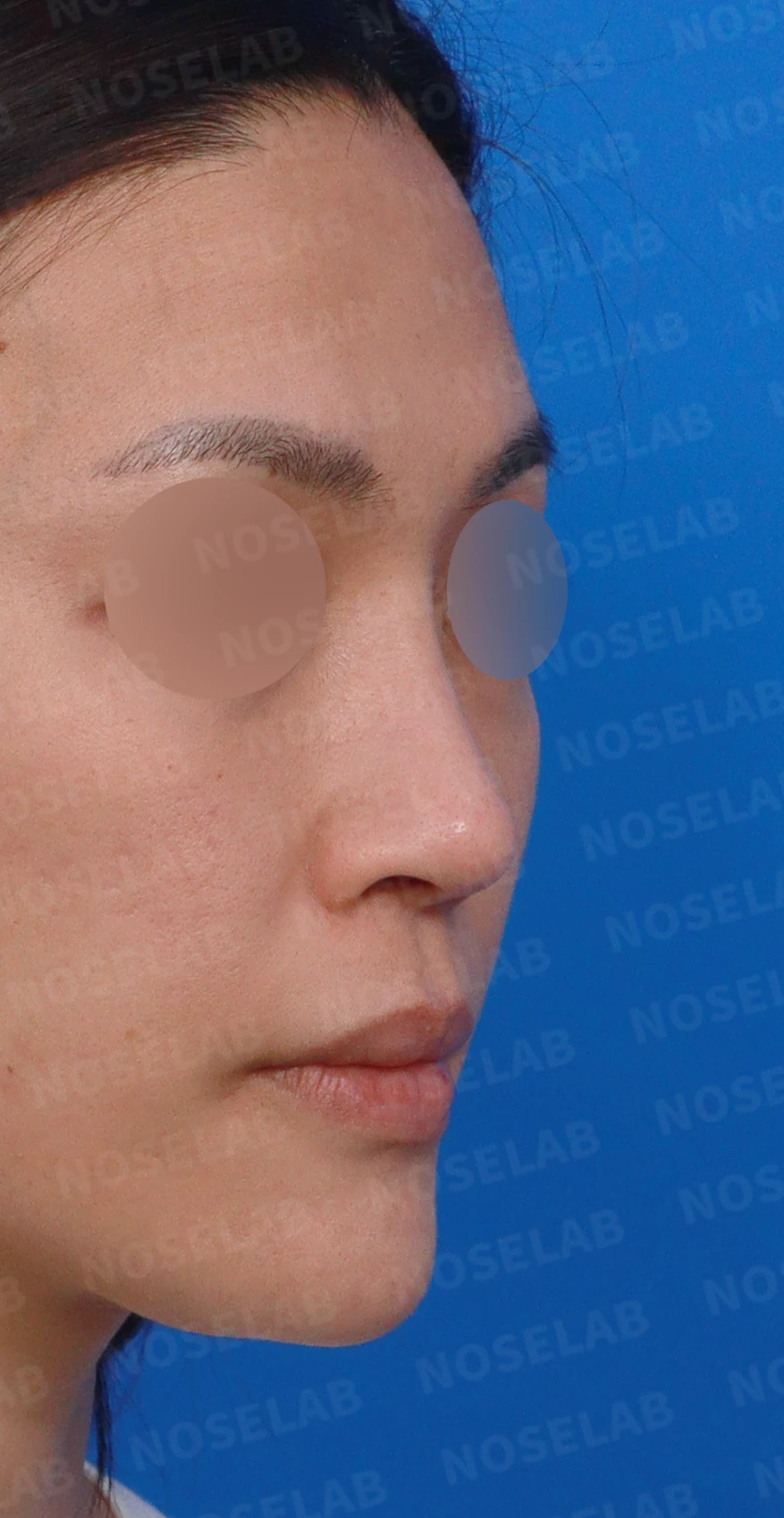
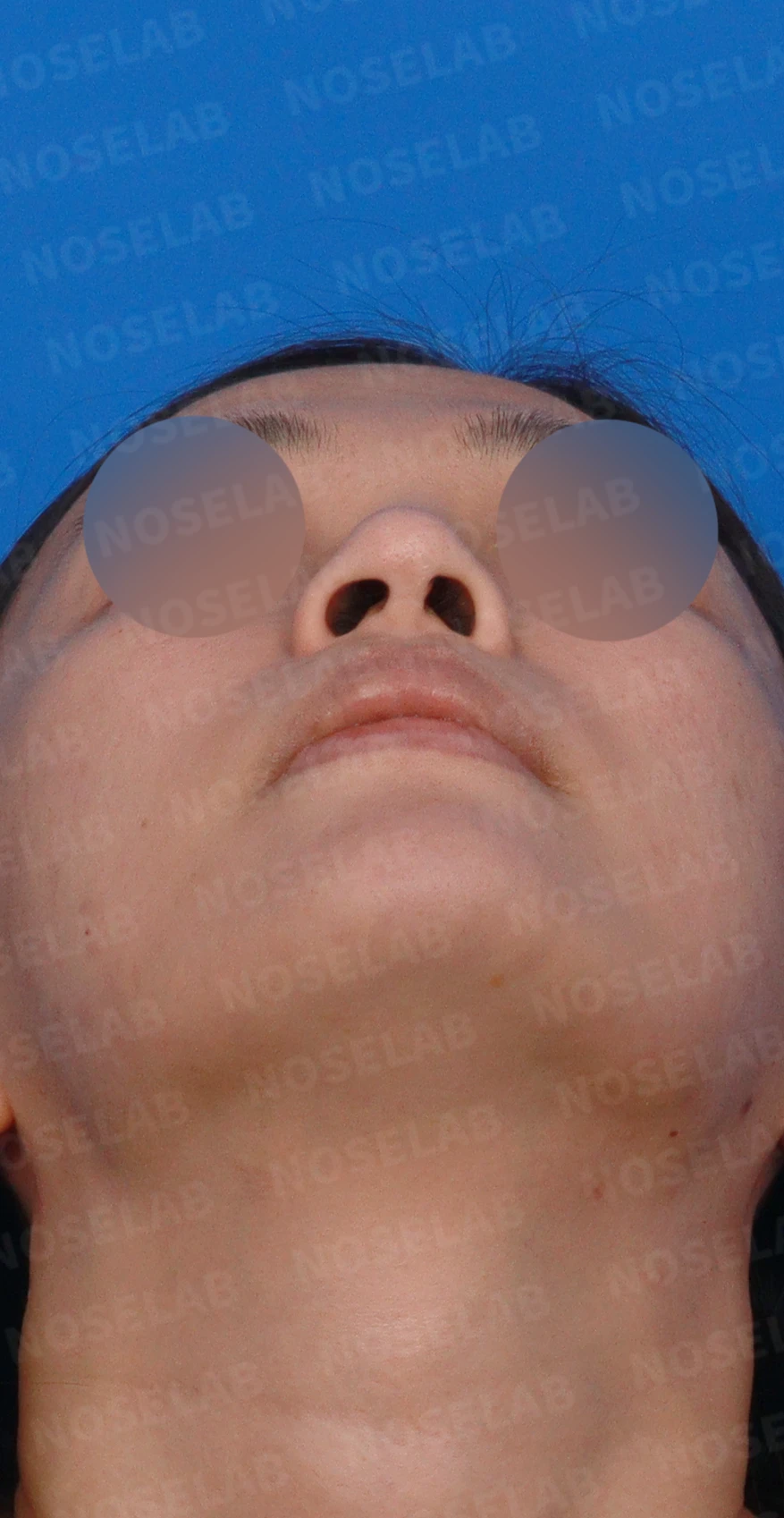
Right profile, oblique, and nostril views during design consultation.
🔧 Surgical plan and procedure
1. Removal and replacement of the existing silicone implant
After safely removing the existing implant, a new silicone implant was customized and inserted to suit the patient's nasal framework and skin condition. The implant was meticulously carved and prepared, taking into account the patient's facial proportions and desired bridge height.
2. Septal extension using autologous rib cartilage
To fundamentally reinforce structural support at the nasal tip, autologous rib cartilage was harvested and septal extension was performed.
Advantages of autologous rib cartilage:
No tissue rejection because it is autologous tissue
Maintaining tip shape with firm structural support
Long-term stable outcome
Minimizing the risk of contracture
By extending the septum downward, the height and shape of the nasal tip were naturally improved.
3. Tip plasty
An additional cartilage graft was placed over the extended septum to complete a refined yet natural nasal tip. The shape and projection of the tip were determined considering the overall balance of the patient's face.
🌟 Surgical results
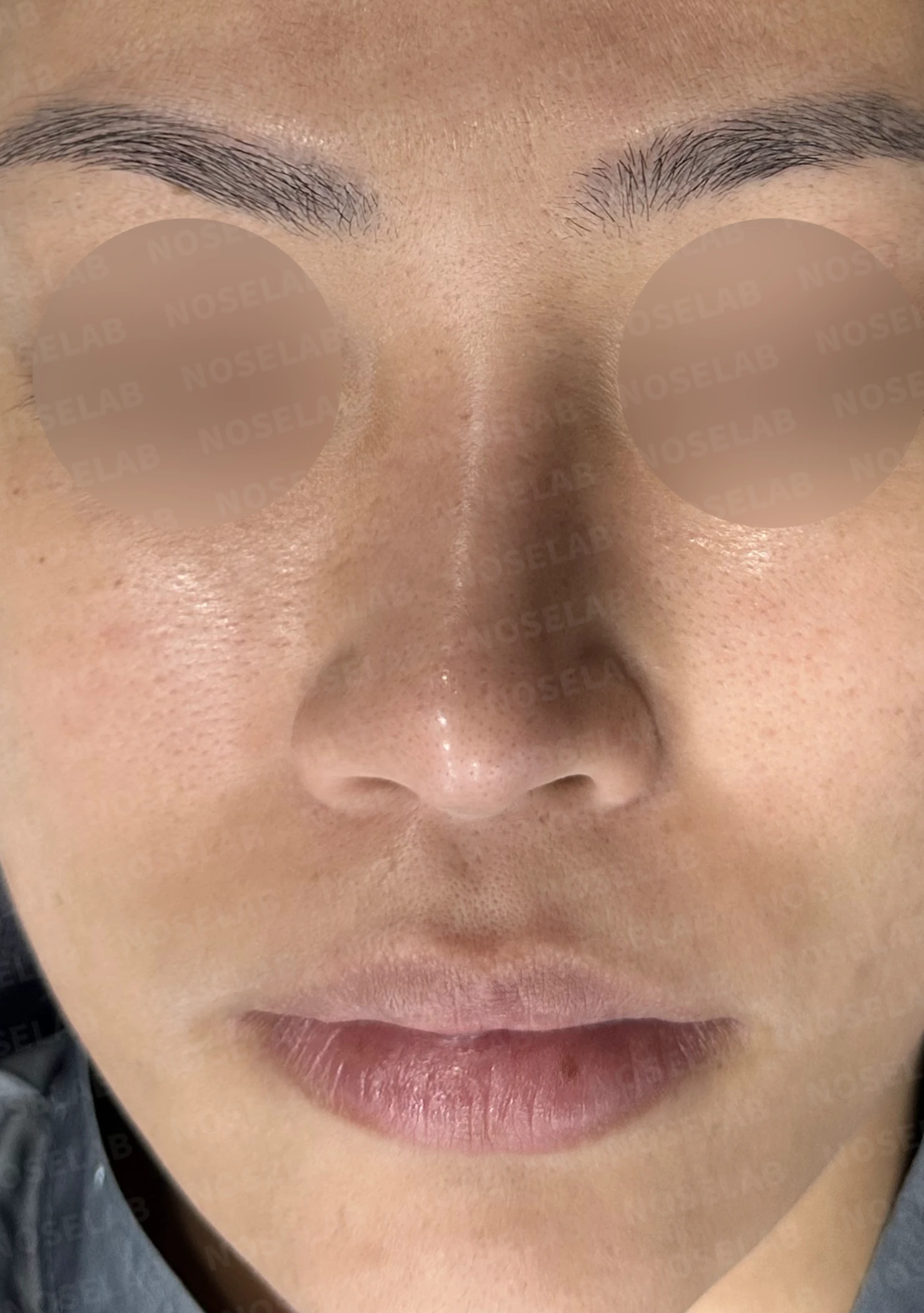
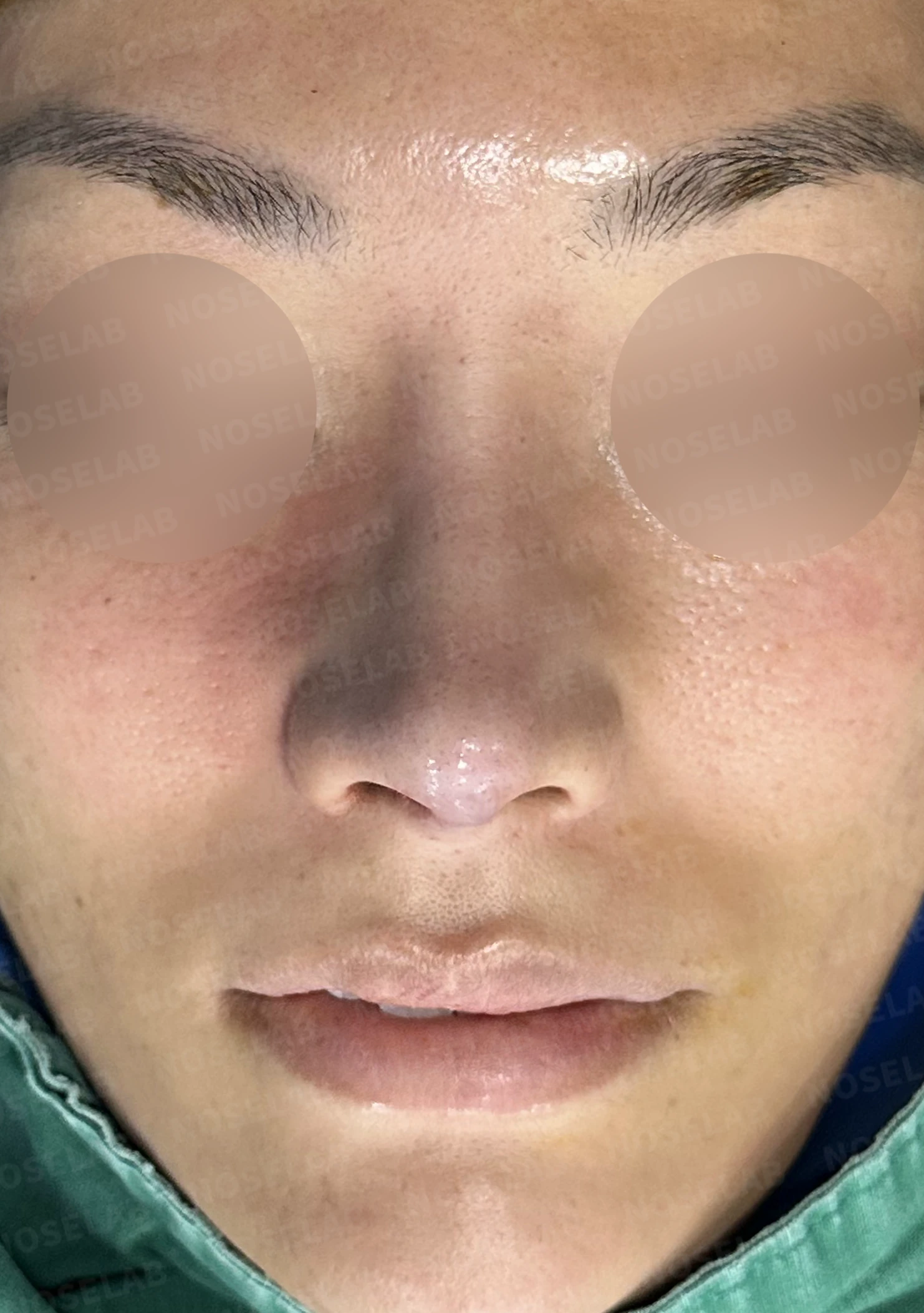
Before surgery / Day 0 immediately after surgery Photos taken immediately after surgery show swelling and may differ from the final result.
Front view changes:
Nasal bridge line became more natural and smooth
Nasal tip repositioned to an appropriate height
Improved overall nasal balance
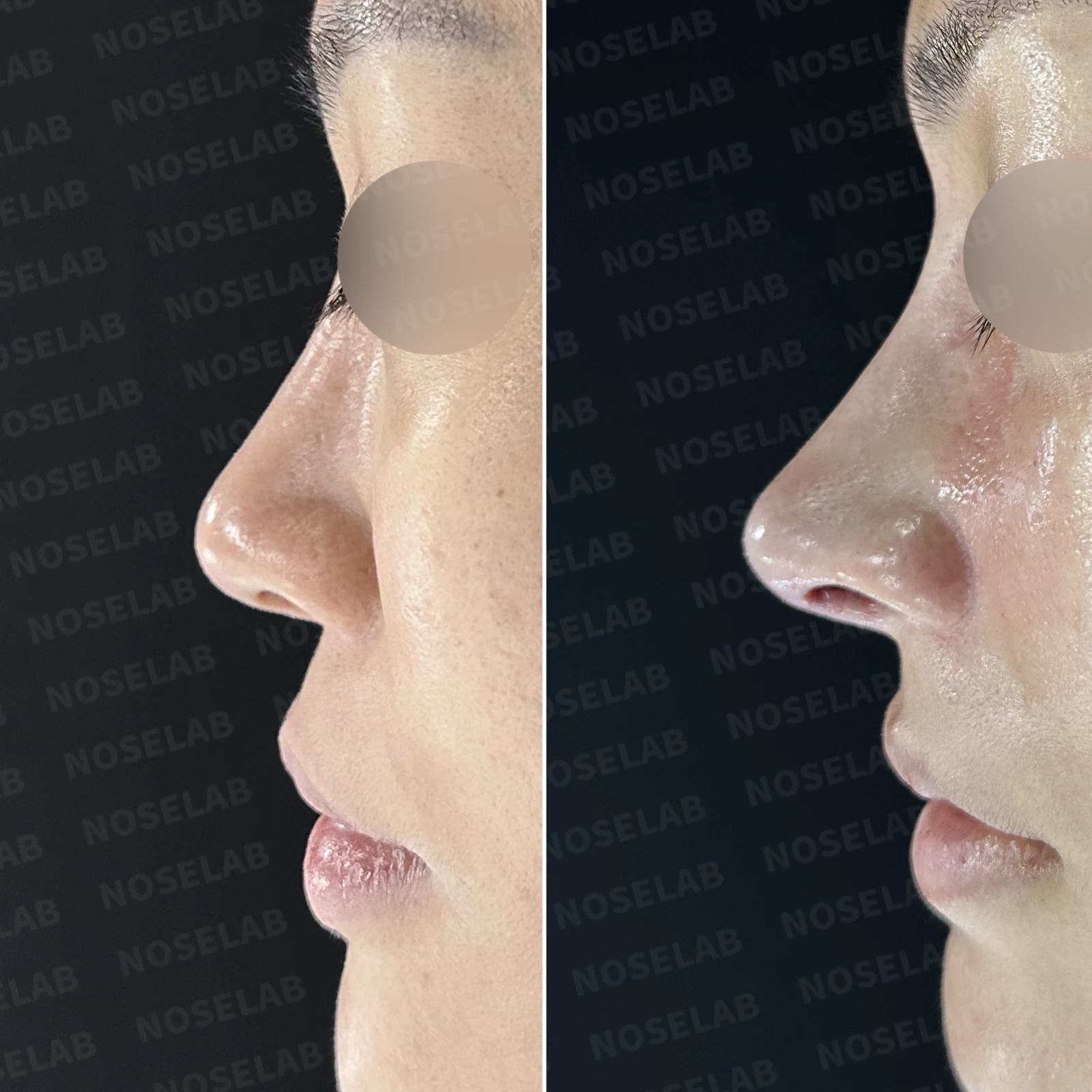
Before surgery / Day 0 immediately after surgery Photos taken immediately after surgery show swelling and may differ from the final result.
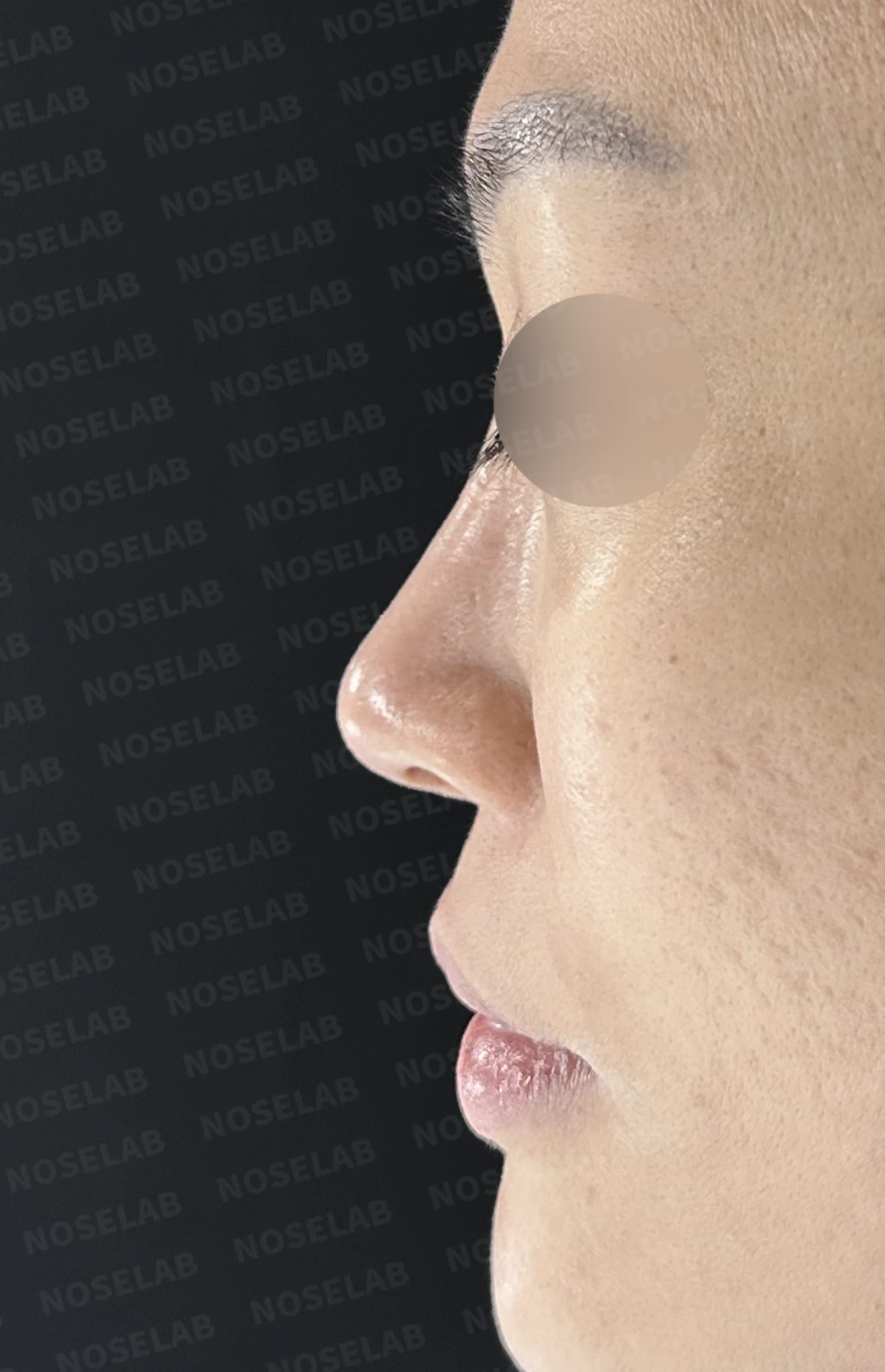
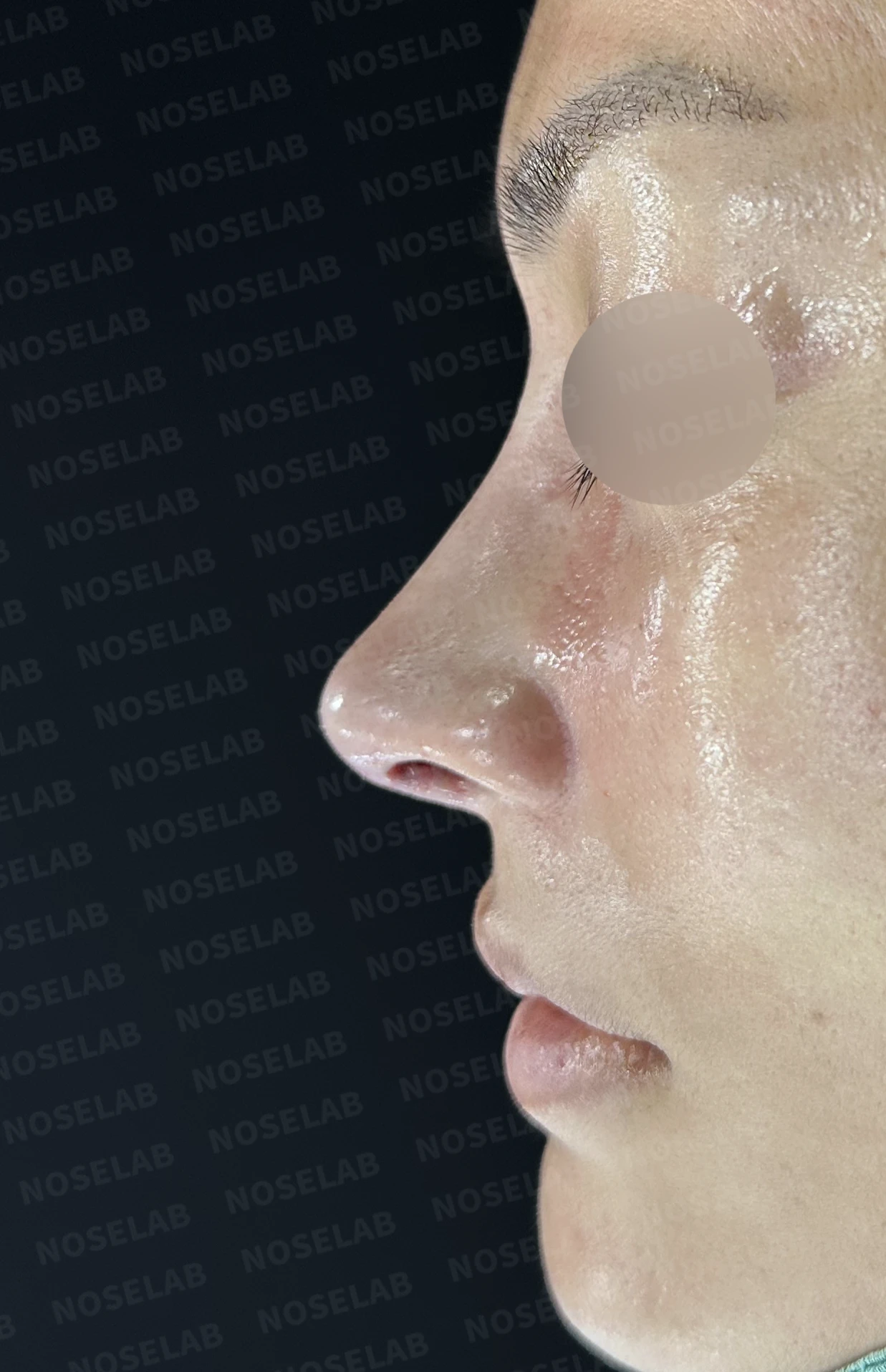
Profile view changes:
Nasal bridge connects with a natural curve
Nasal tip is appropriately elevated to form a refined line
Natural improvement of the nasolabial angle (angle between nose and upper lip)
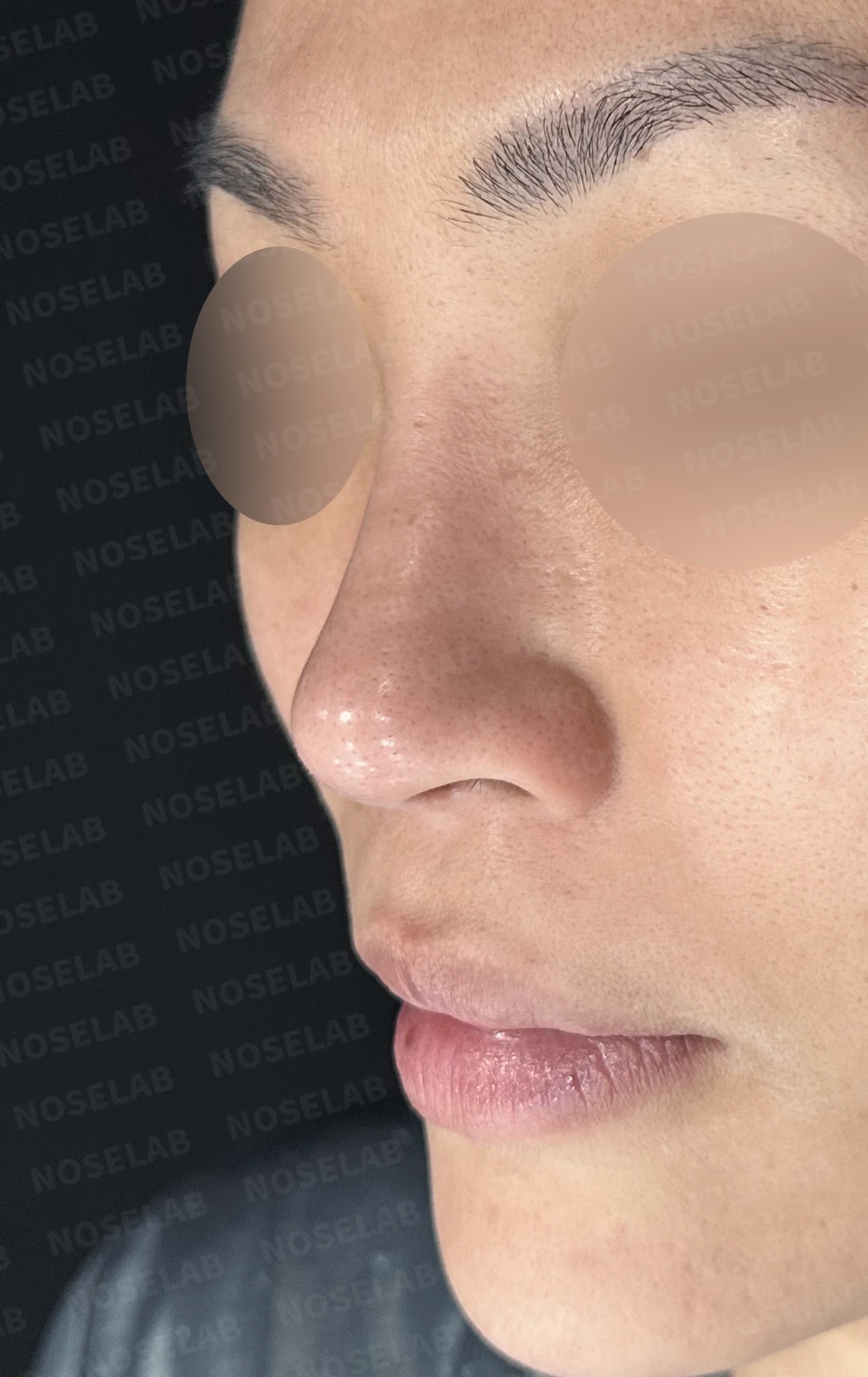
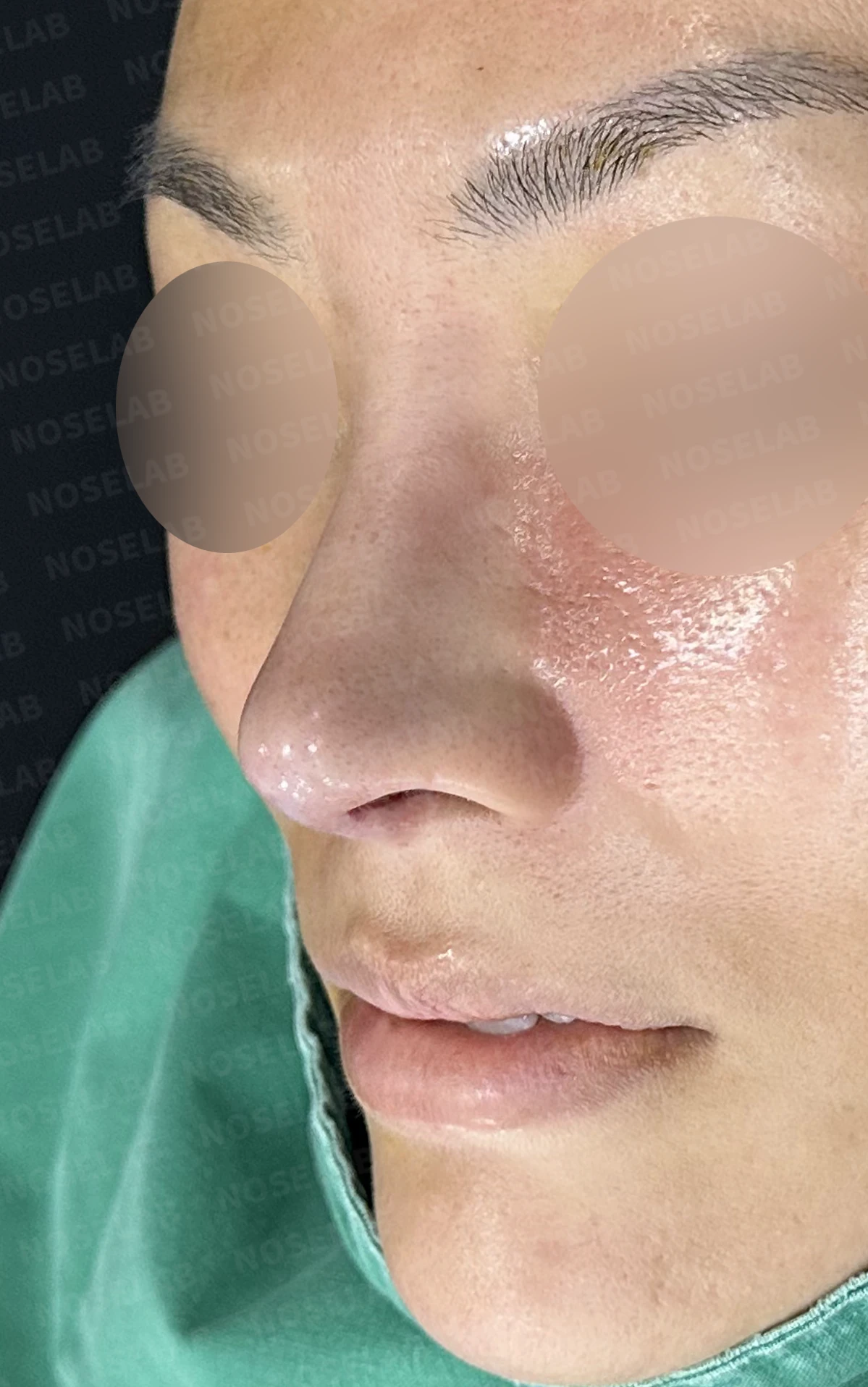
Before surgery / Day 0 immediately after surgery Photos taken immediately after surgery show swelling and may differ from the final result.
Nostril view changes:
Maintaining stable shape by reinforcing tip support
Nostril shape naturally refined
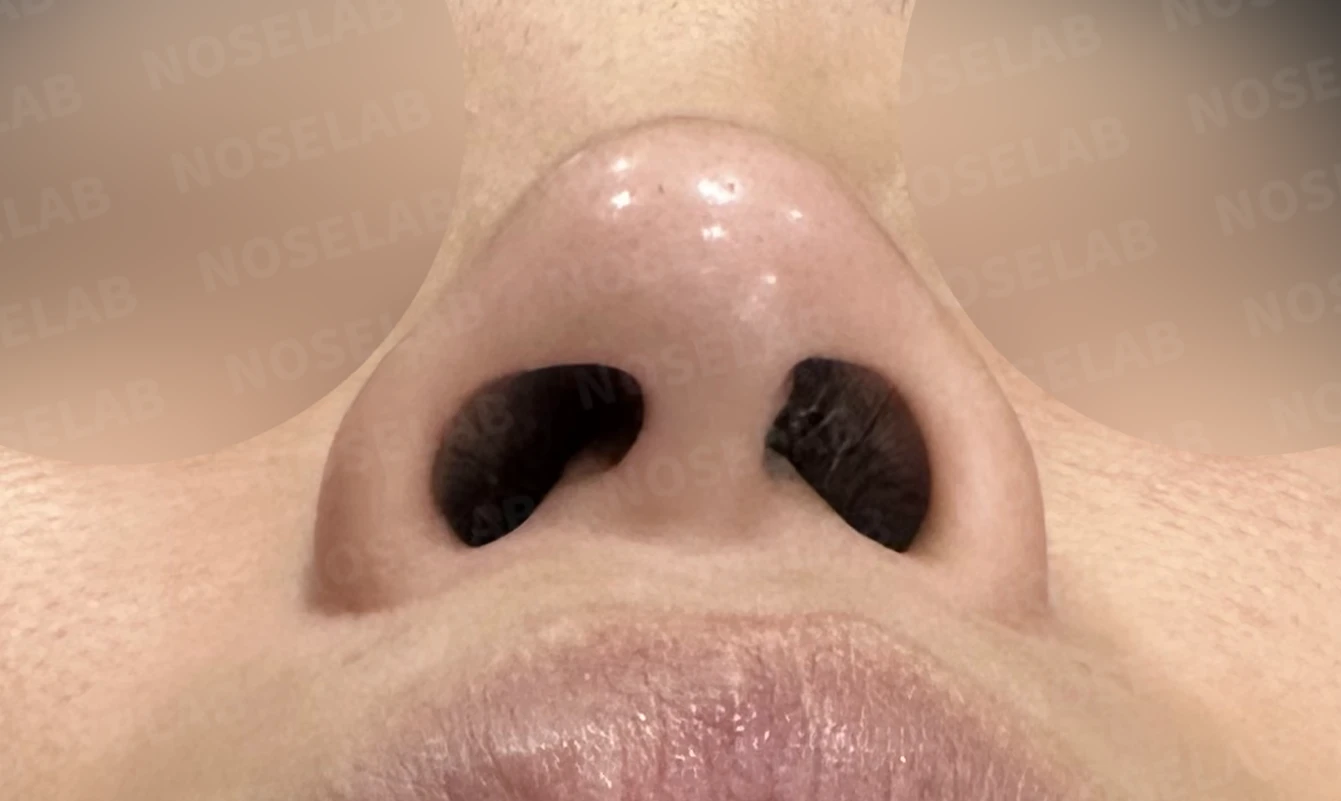
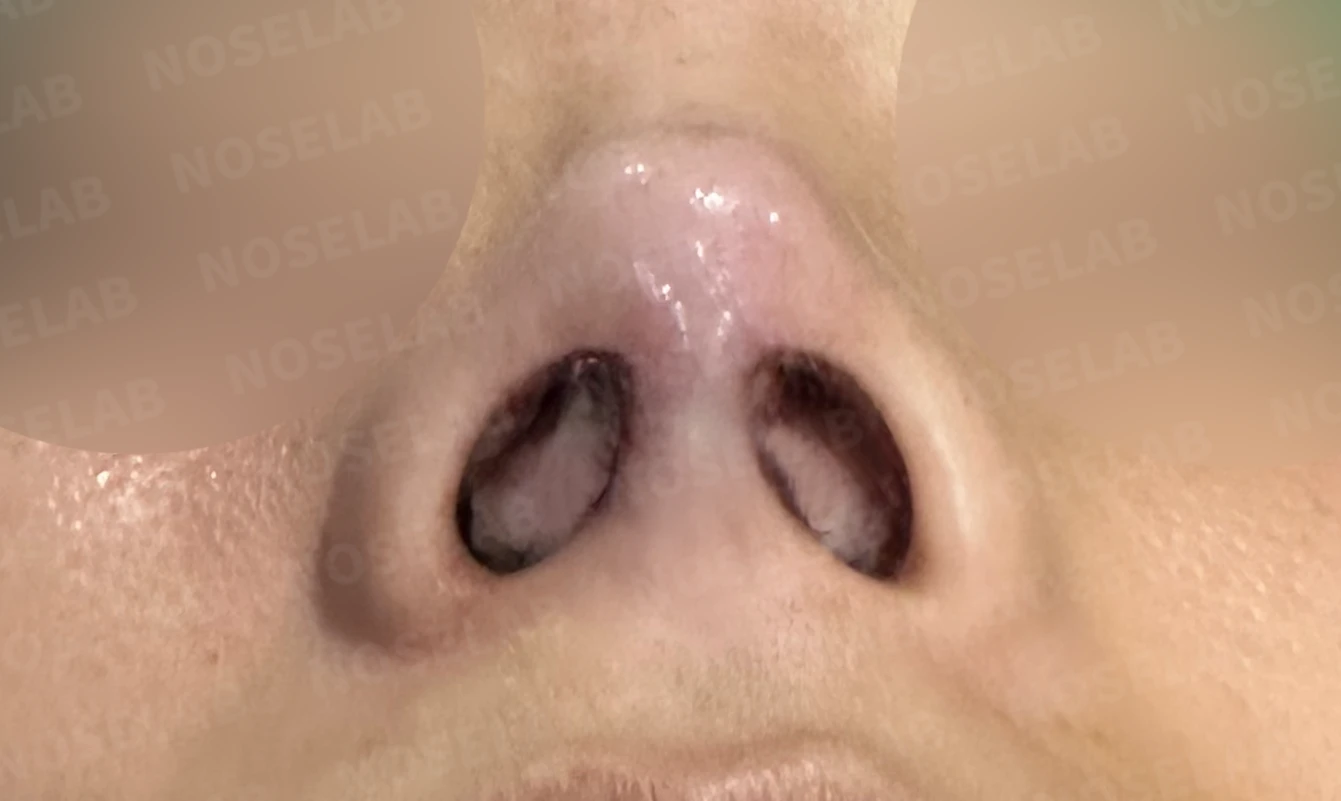
Before surgery / Day 0 immediately after surgery Photos taken immediately after surgery show swelling and may differ from the final result.
💡 Specialist opinion
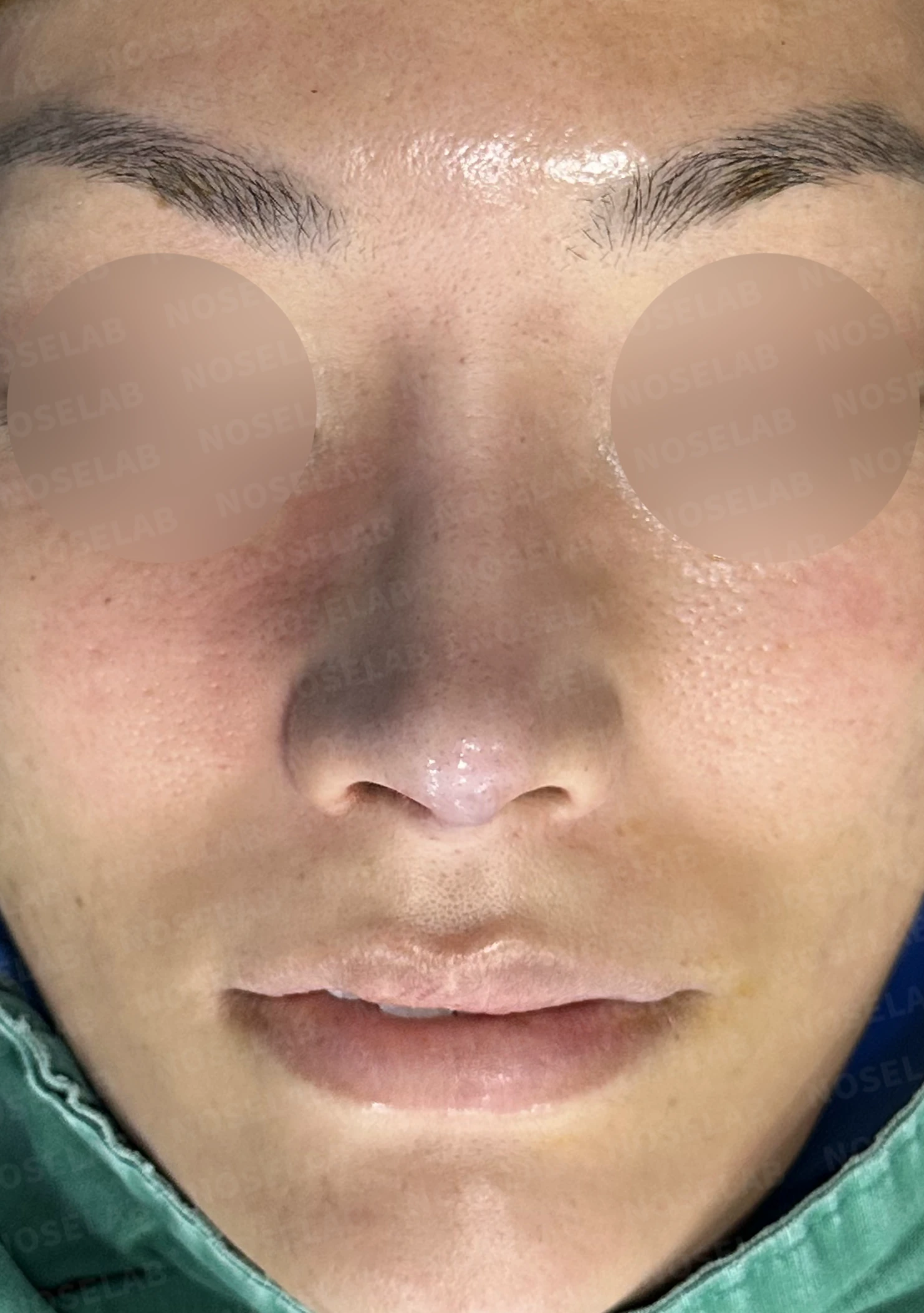
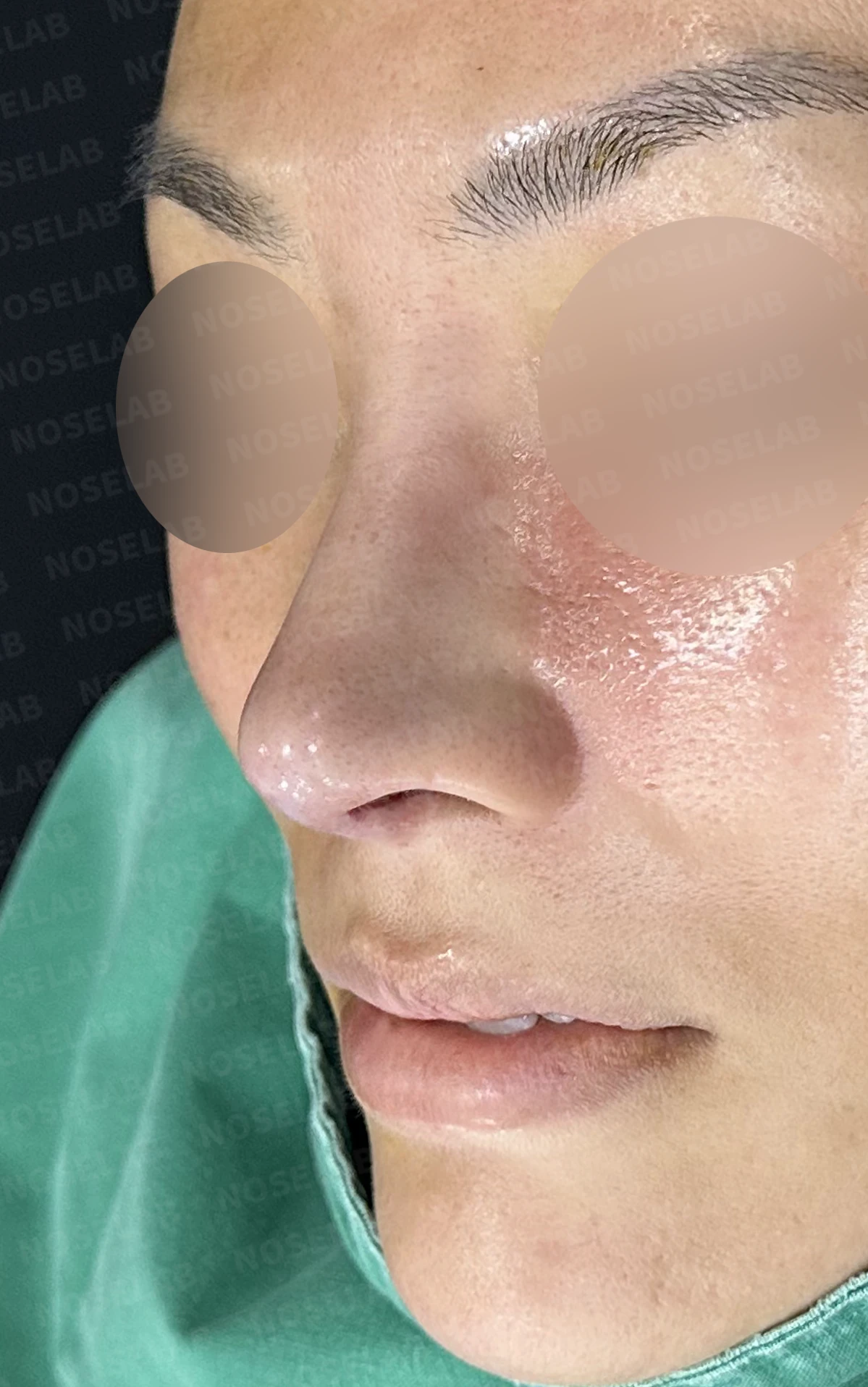
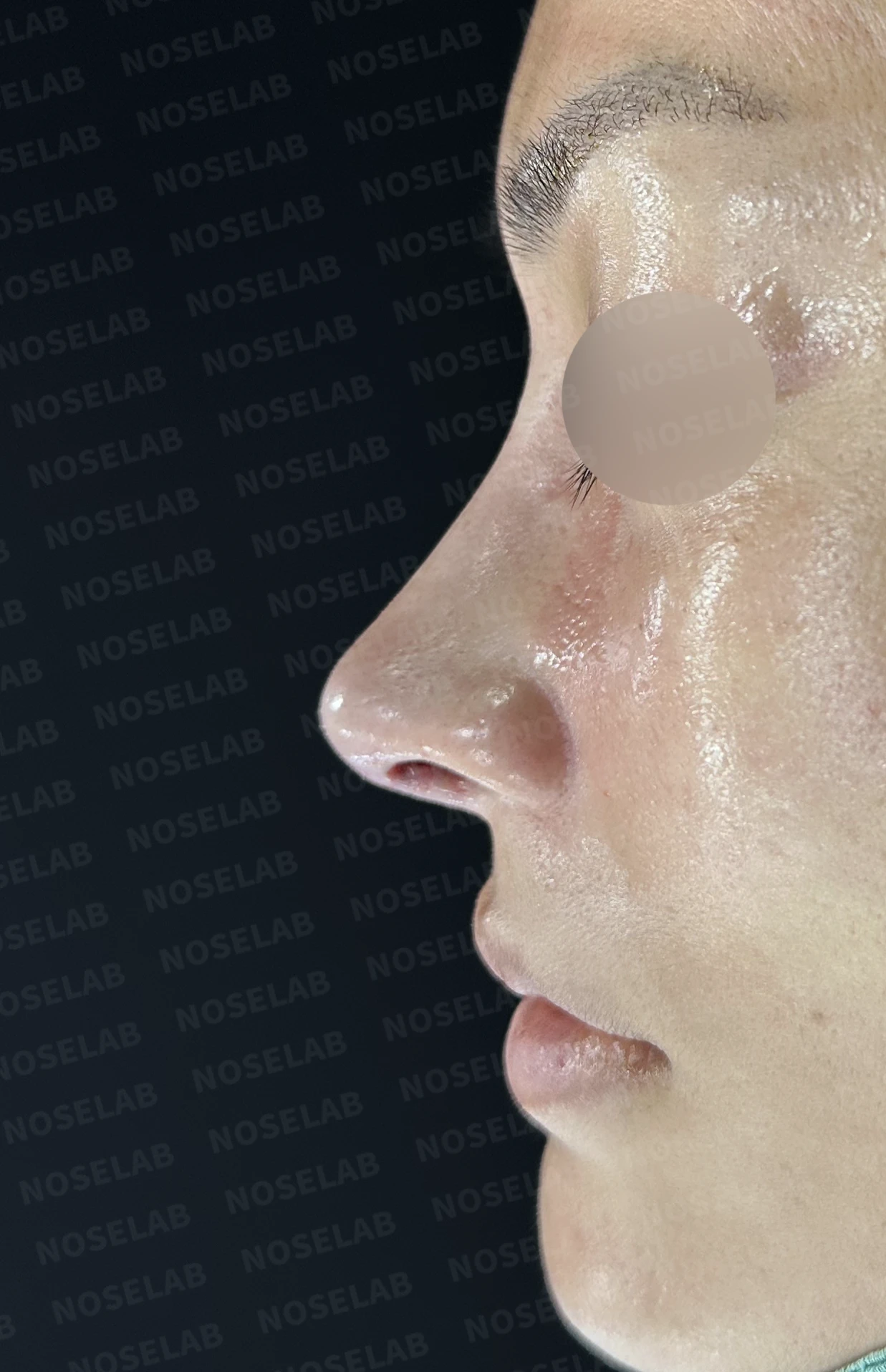
Front, oblique, and profile views on day 0 immediately after surgery. Photos taken immediately after surgery show swelling and may differ from the final result.
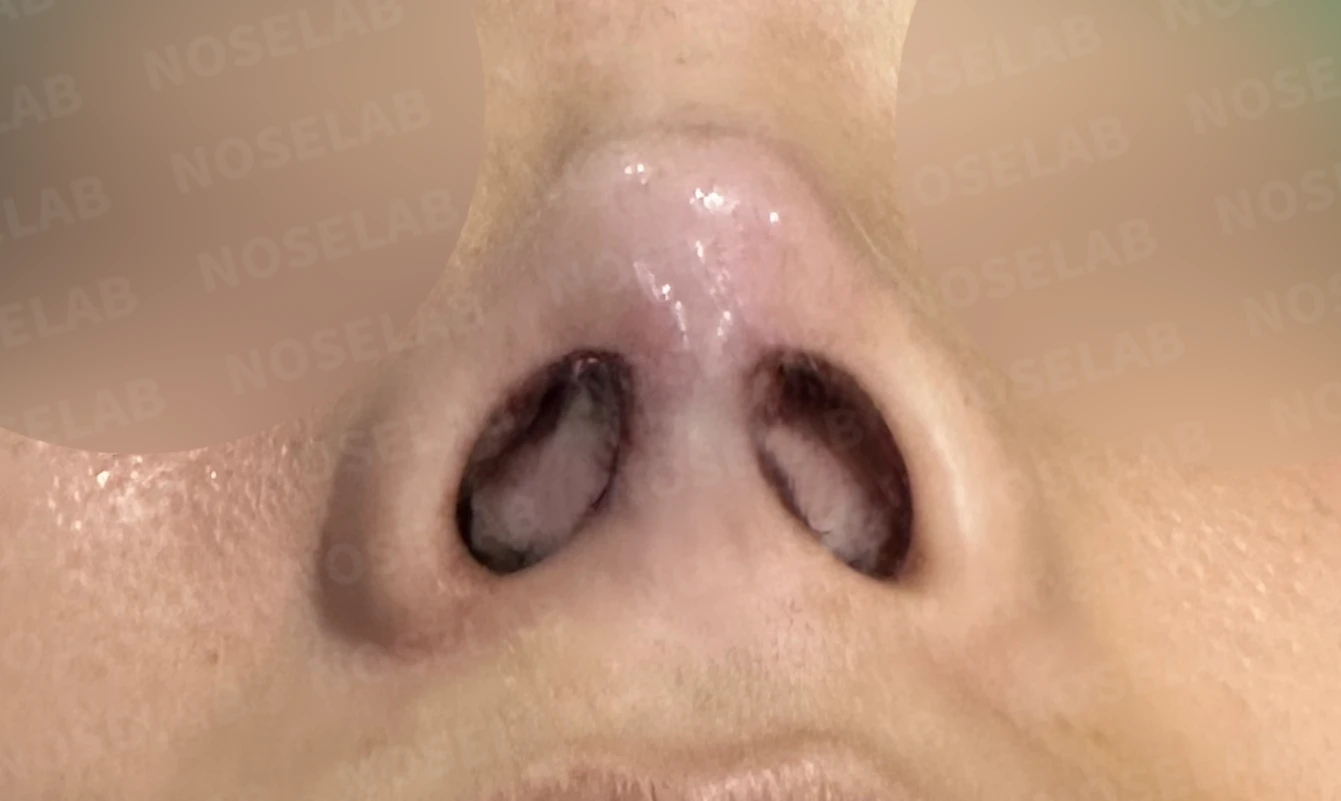
Nostril view on day 0 immediately after surgery. Photos taken immediately after surgery show swelling and may differ from the final result.
In revision rhinoplasty, replacing an existing implant while simultaneously providing structural reinforcement with autologous tissue is a very important approach. In particular, when previous surgery was performed using only synthetic implants, the surrounding tissues can weaken or contracture can occur over time.
In this surgery, structural support of the nasal tip was fundamentally reinforced through septal extension using autologous rib cartilage. Autologous tissue maintains its shape over time, and when used alongside a synthetic implant, it supports more stable and natural long-term results.
As this patient chose NOSELAB from overseas, the surgery was performed meticulously to achieve the intended outcome. I hope this serves as helpful information for those with similar concerns. This has been Medical Director Dr. Peter C. Kang. Thank you.
#closedrhinoplasty #closedrevisionrhinoplasty #autologousribcartilage #septalextension #revisionrhinoplasty #naturalnose #rhinoplasty #Rhinoplasty #ClosedRhinoplasty

Limitations and risks
When autologous rib cartilage is used, scarring and pain may remain at the donor site on the chest, and pneumothorax (pleural injury) can occur rarely. Over time, the grafted cartilage may warp or undergo partial resorption.
When revising after implant removal, contracture may progress again after removal, the nasal height and length may decrease, and staged surgery may be necessary depending on the skin condition.
When the septum is corrected at the same time, nasal obstruction may persist or recur, and in rare cases, septal perforation or changes in smell may occur.
Common potential risks include infection, bleeding, asymmetry, scarring, skin necrosis, and insufficient improvement; results vary depending on individual skin condition and previous surgical history.