Hello, I am Dr. Peter C. Kang.
Today, I would like to share the case of a patient who had undergone multiple surgeries for an upturned nose and nostril asymmetry without achieving satisfactory results. Excessive nostril show and a pinched appearance on one side had been long-standing concerns.
🔍 Surgical history
12 years ago: Cartilage tying surgery → nose became pinched and upturned
7 to 8 years ago: Filler injection at the radix
2 years ago: Ear cartilage surgery (nasal tip)
10 months ago: Nostril-lowering surgery (artificial dermis)
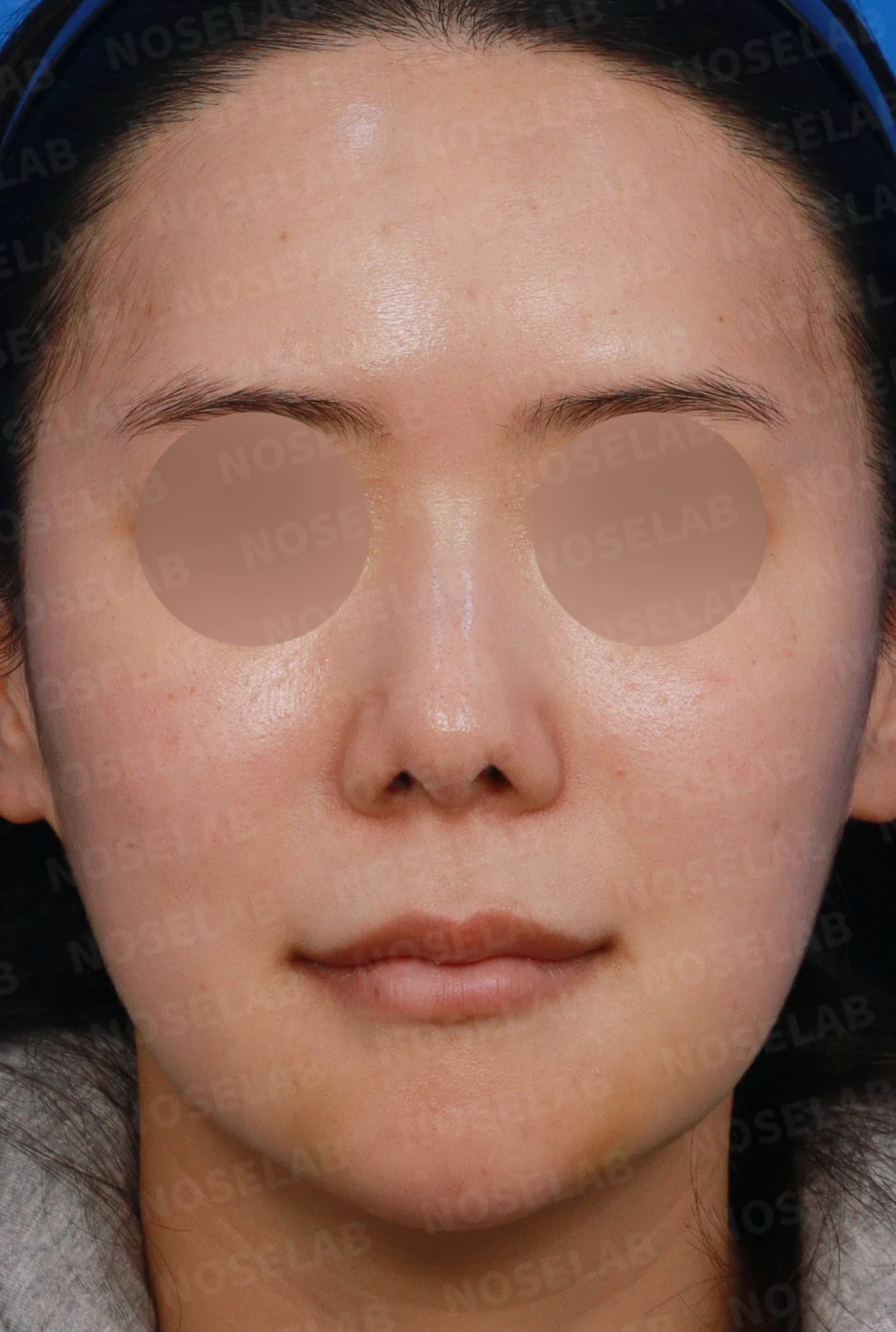
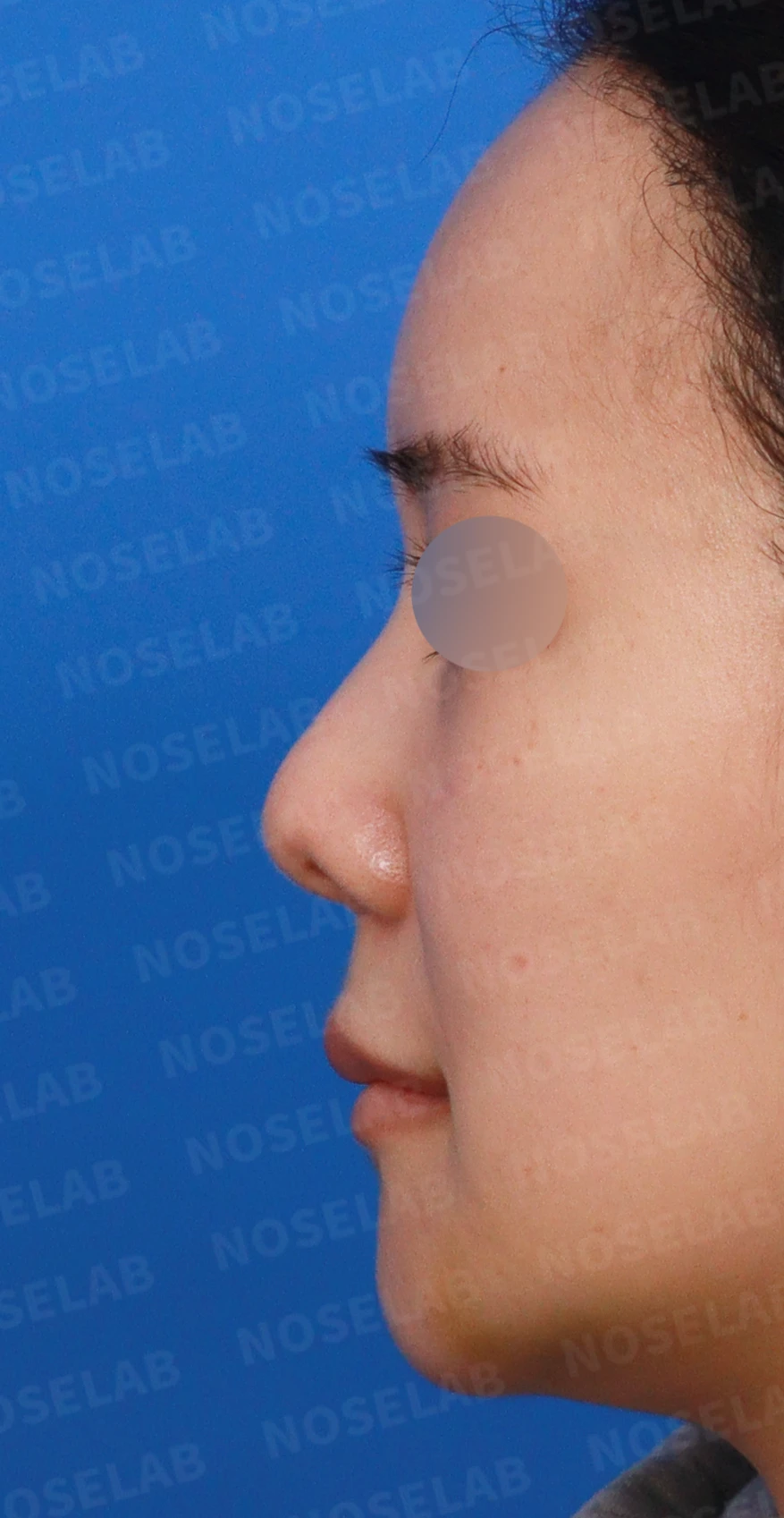
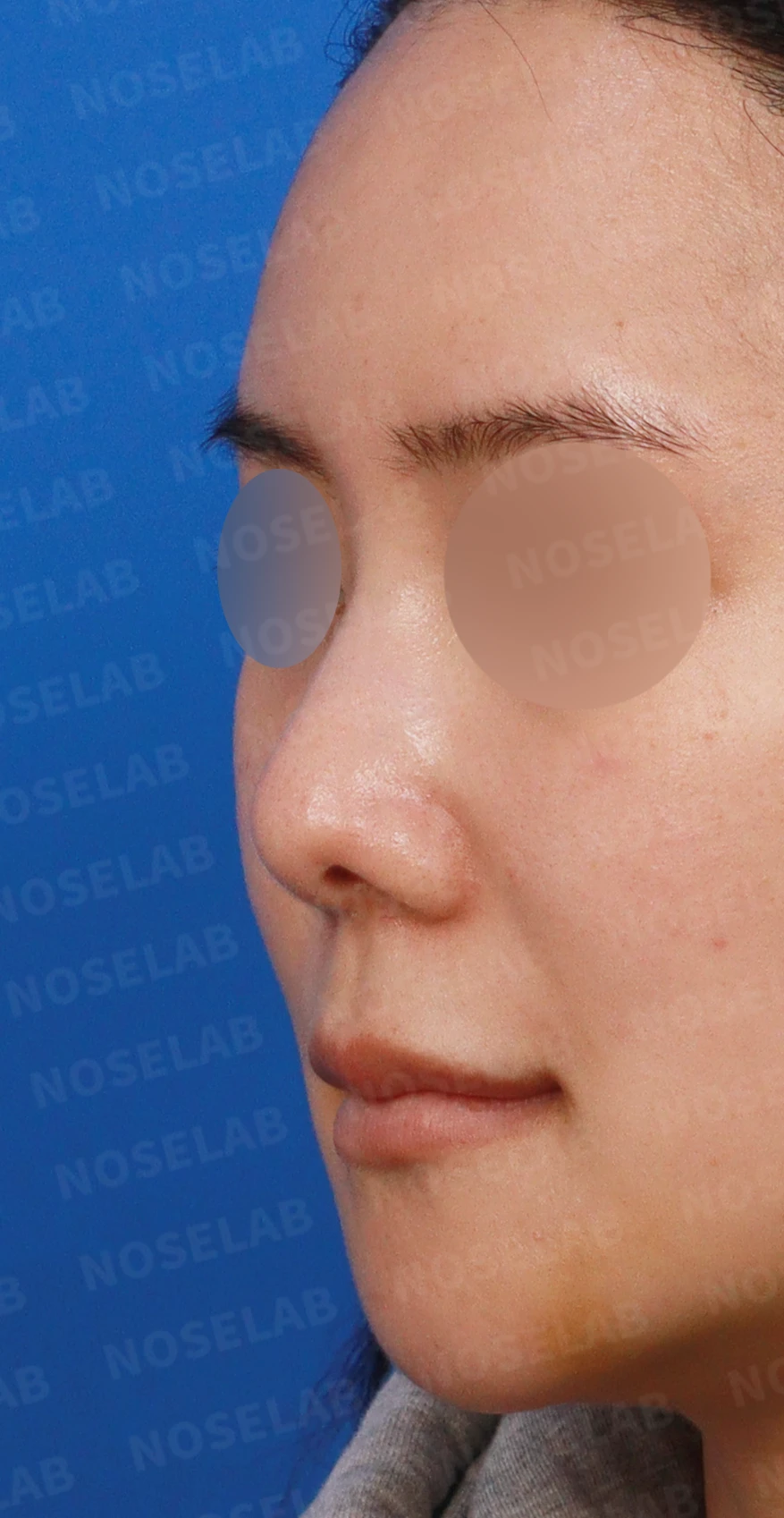
Front, left profile, and oblique views during design consultation.
💉 Patient requests
Correction of upturned nose
Reduction of excessive nostril show
Softening pointed nostrils into a rounder shape
Improvement of the pinched appearance
Desire for natural materials without implants
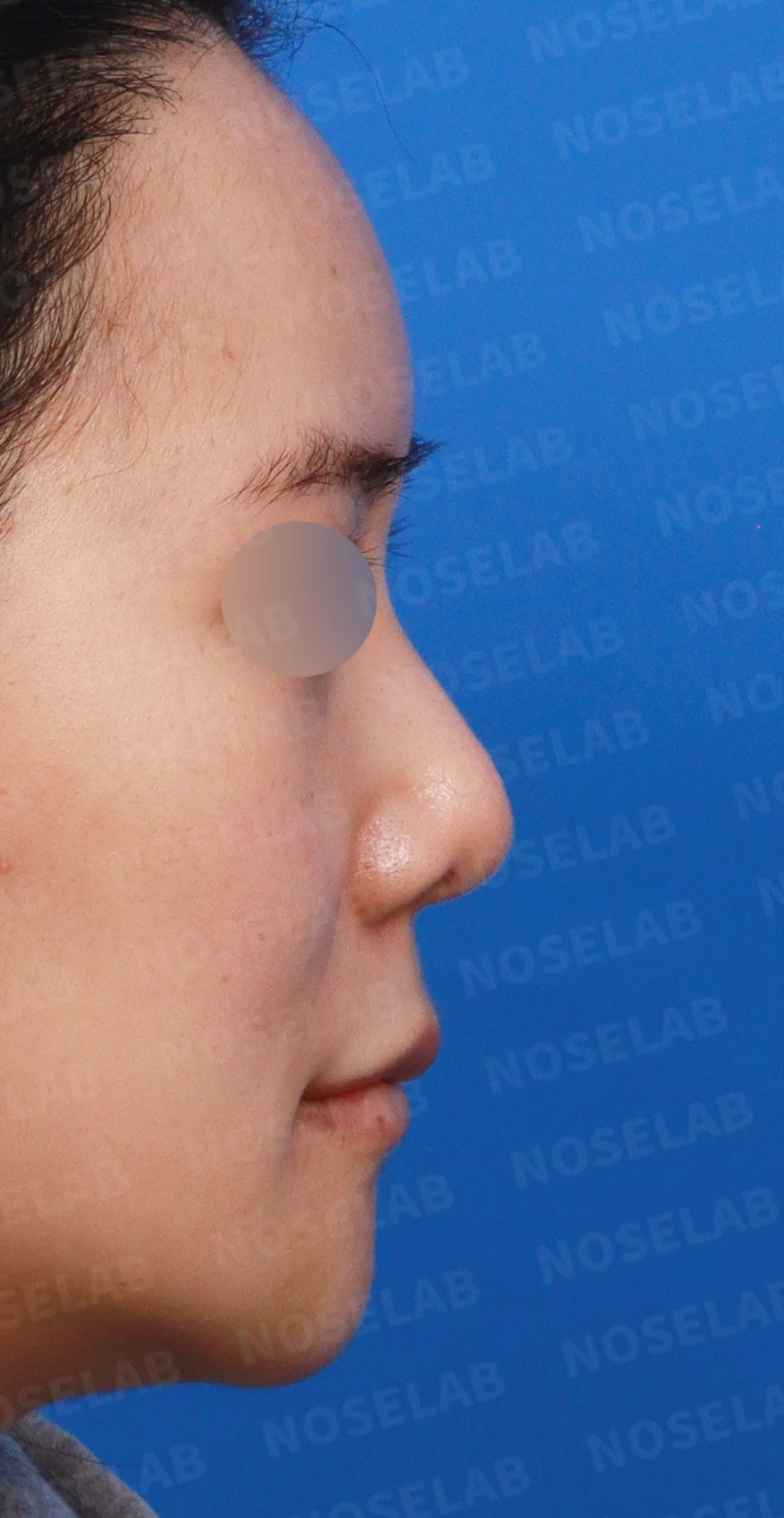
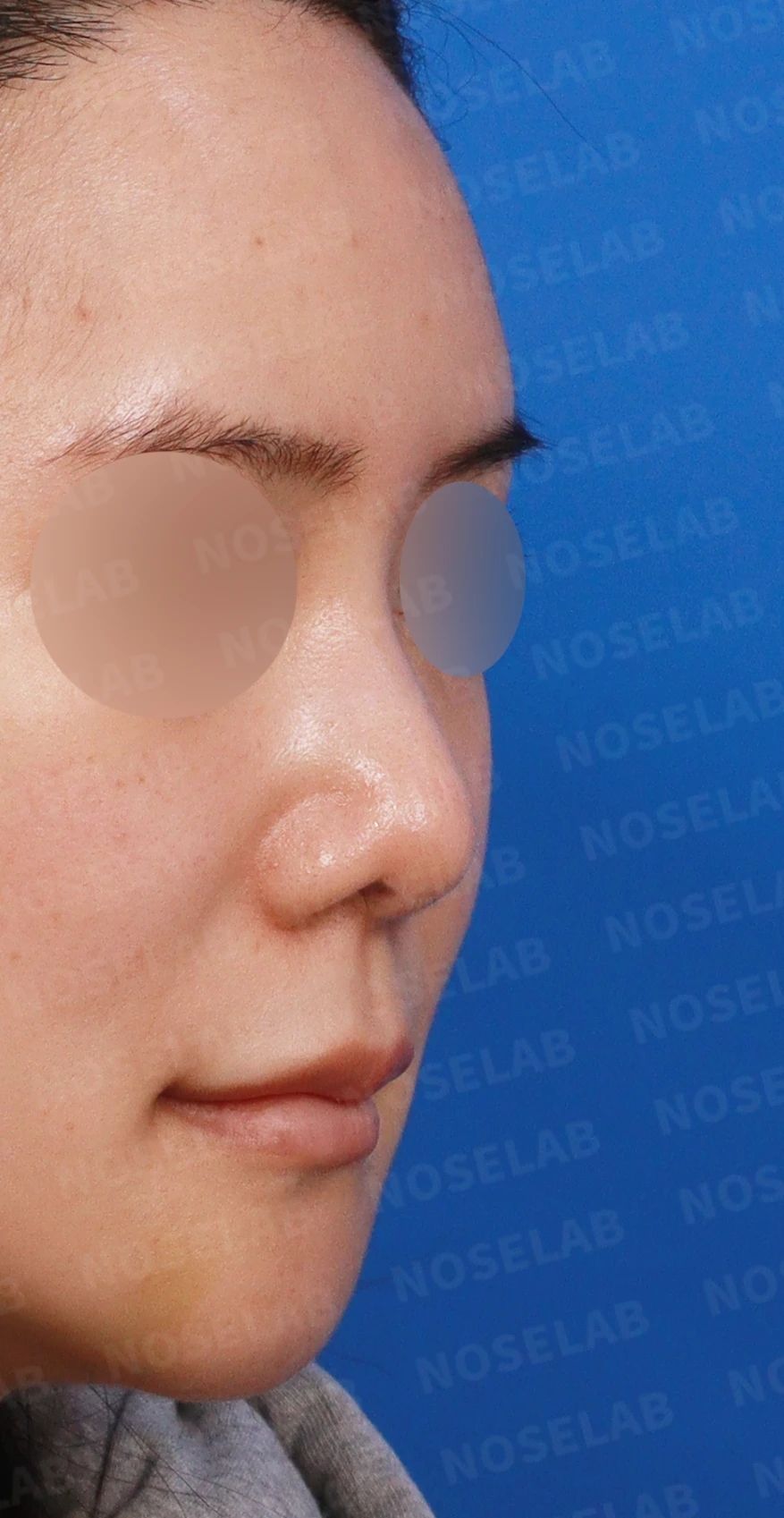
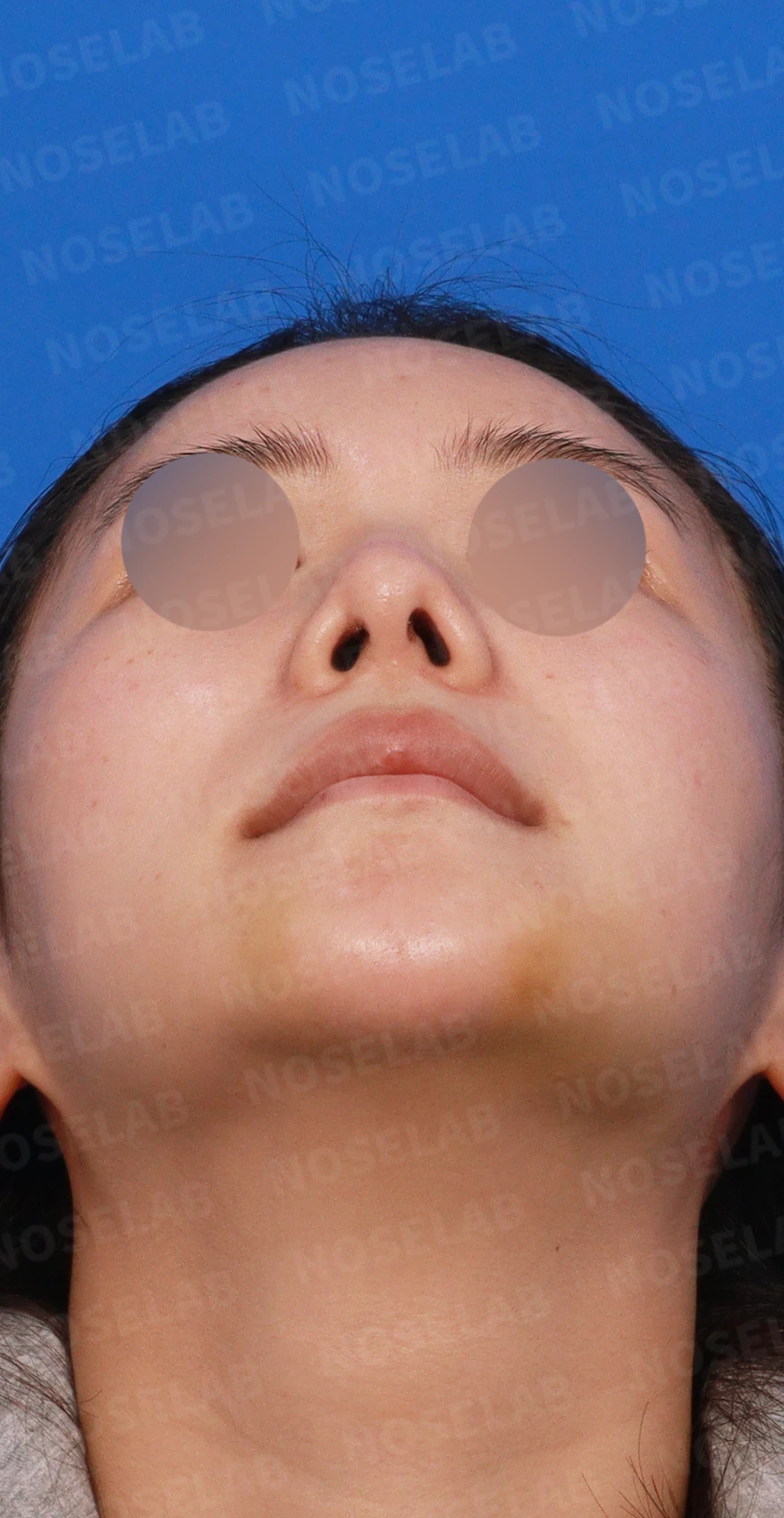
Right profile, oblique, and nostril views during design consultation.
🔧 Surgical plan and procedure
1. Implant-free nasal bridge augmentation using donor rib cartilage and septum
Utilizing donor rib cartilage and septal cartilage fragments
Creating a natural bridge line without implants
Material selection made to relieve the patient's concern regarding donor-site scarring
2. Correction of the upturned nose
Repositioning the nasal tip
Improving the upturned appearance by adjusting the nasolabial angle
Reducing nostril show on the front view
3. Right nostril composite graft
Performing a composite graft transplanting both skin and cartilage
Lowering the pinched right nostril rim
Correction of nostril asymmetry
4. Removal of existing foreign materials
Removing artificial dermis and other foreign materials used in previous surgeries
Building a new structure on a clean foundation
🌟 Surgical results
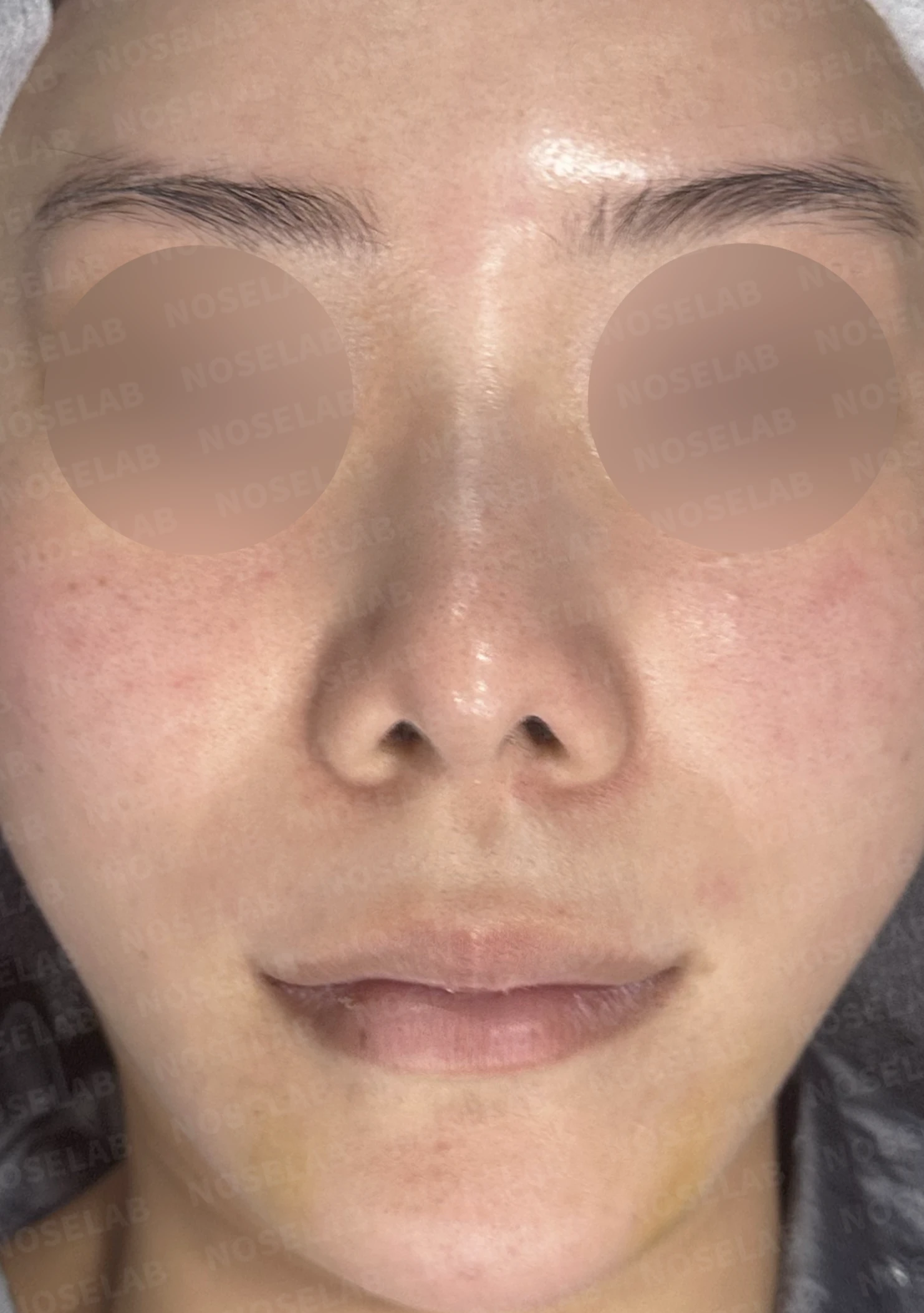
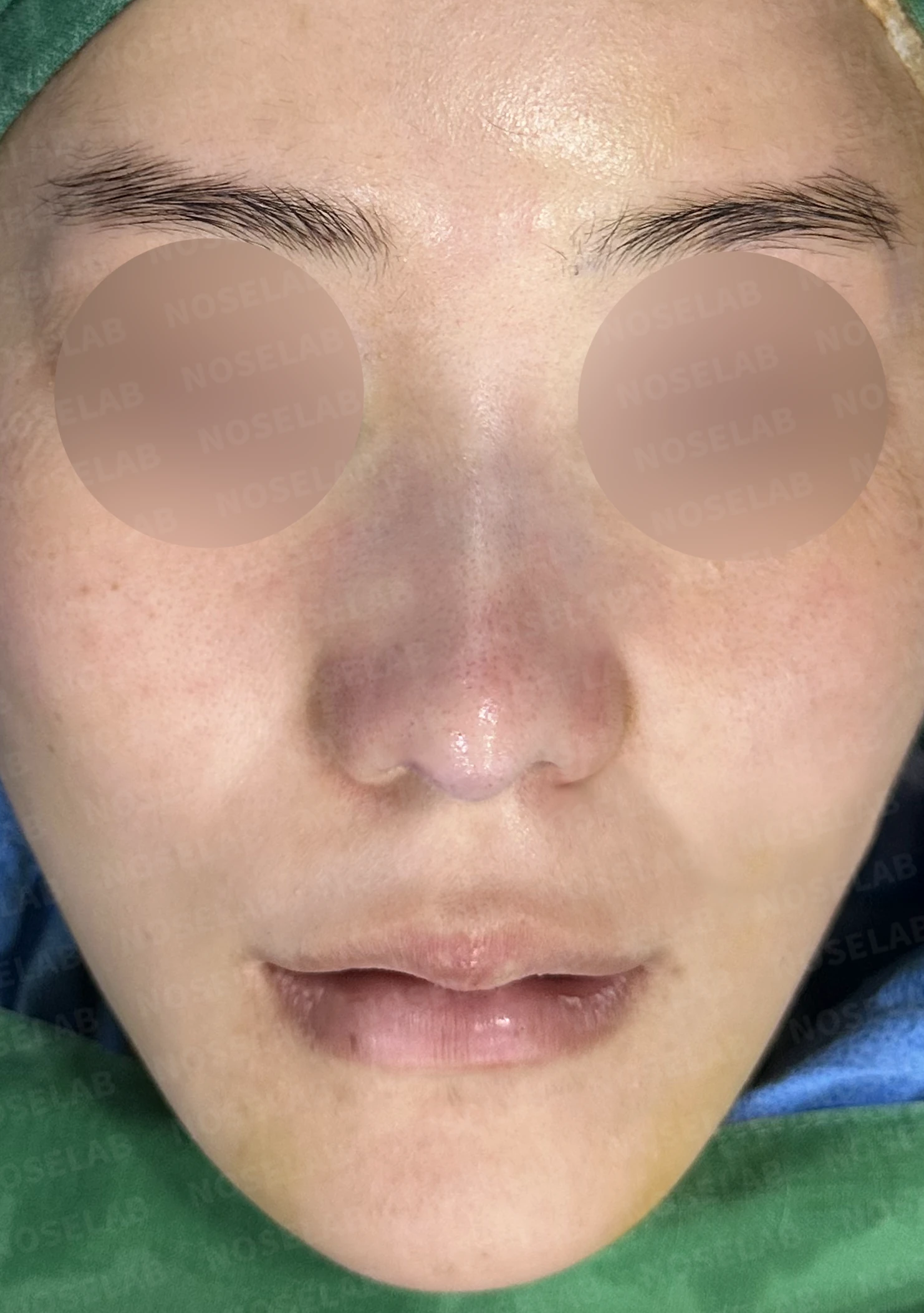
Before surgery / Day 0 immediately after surgery Photos taken immediately after surgery show swelling and may differ from the final result.
1. Frontal changes
The upturned tip was naturally lowered
Nostril show was noticeably reduced
Pointed nostrils softened into a smoother shape
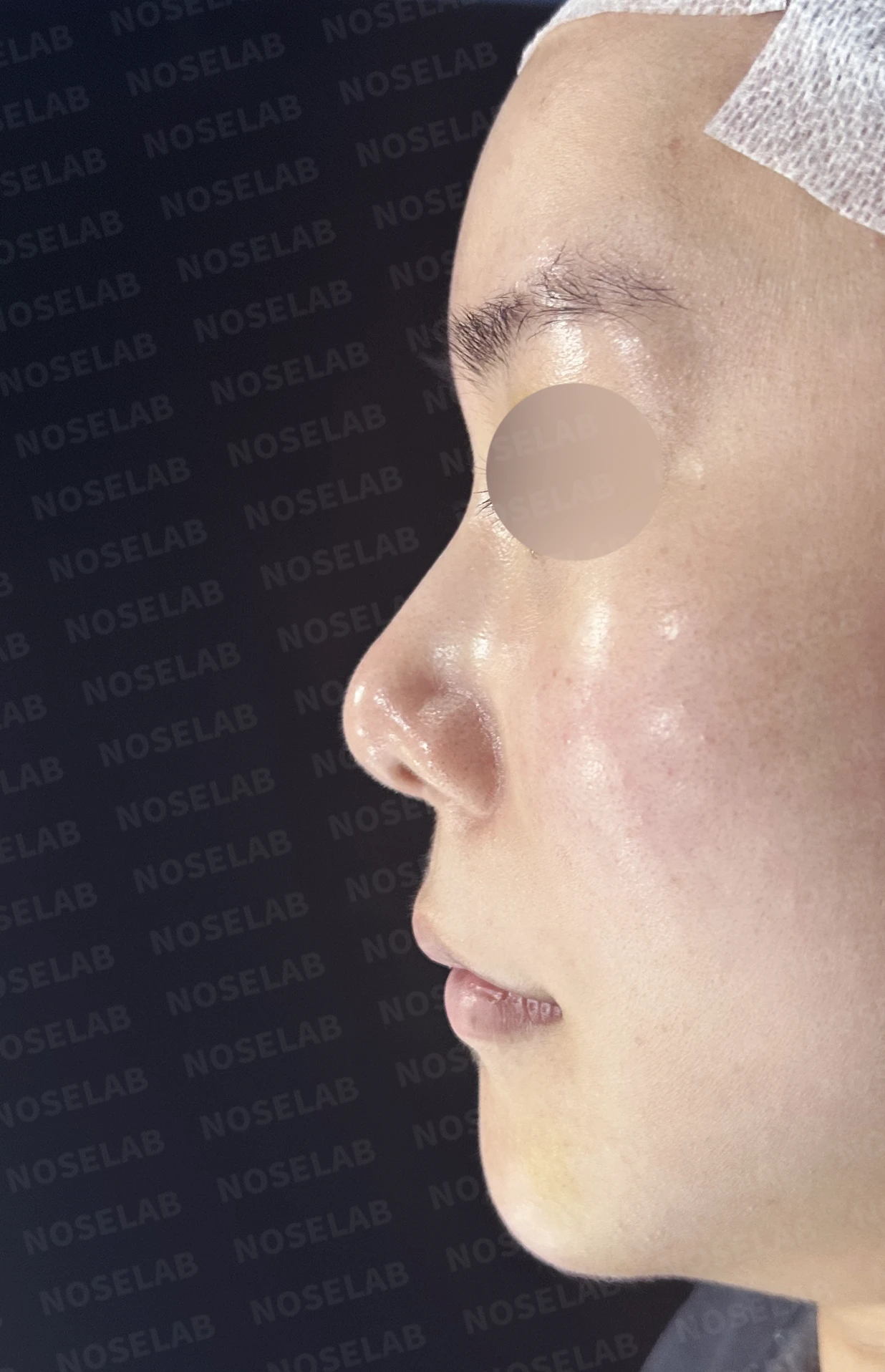
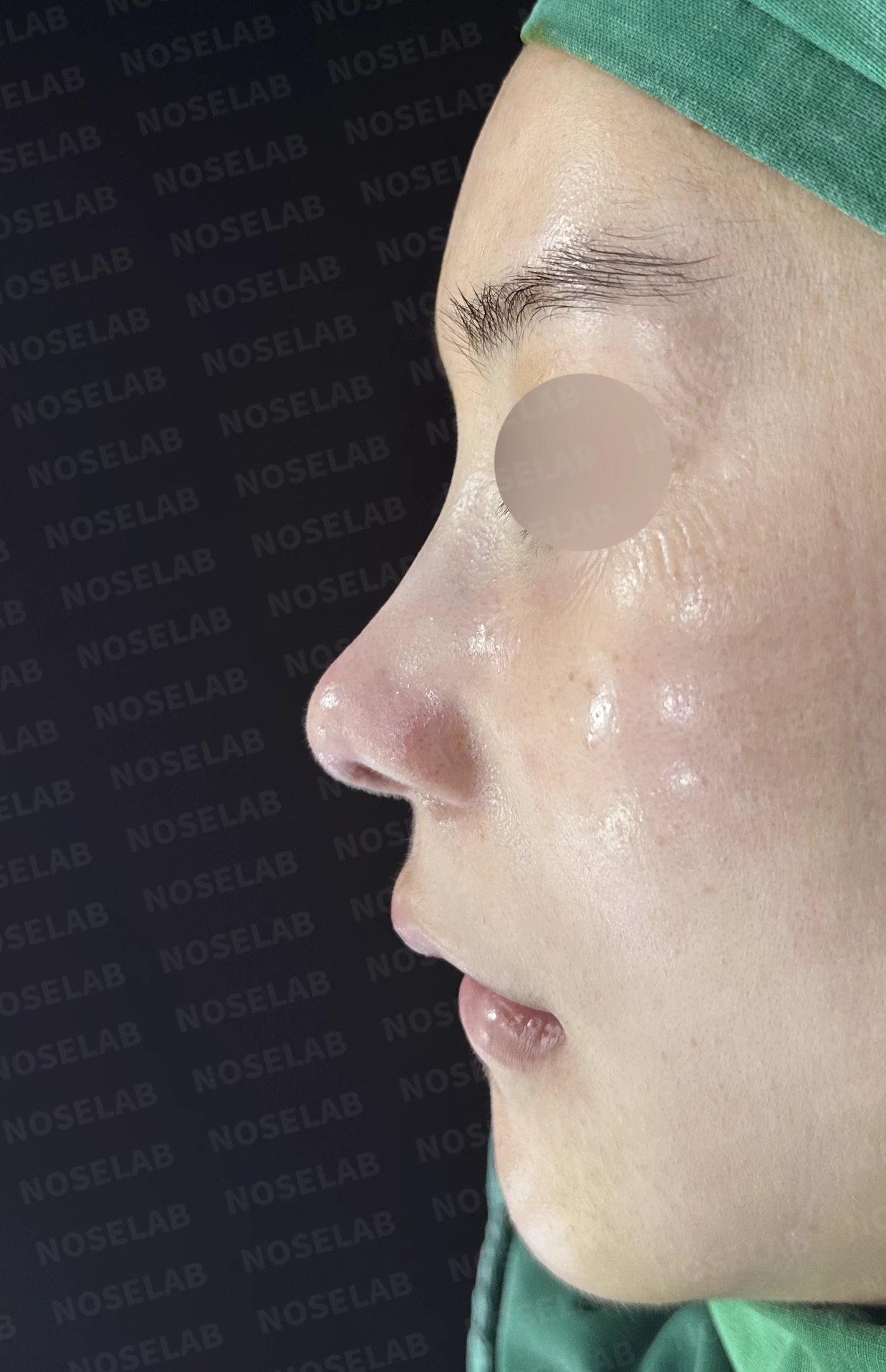
Before surgery / Day 0 immediately after surgery Photos taken immediately after surgery show swelling and may differ from the final result.
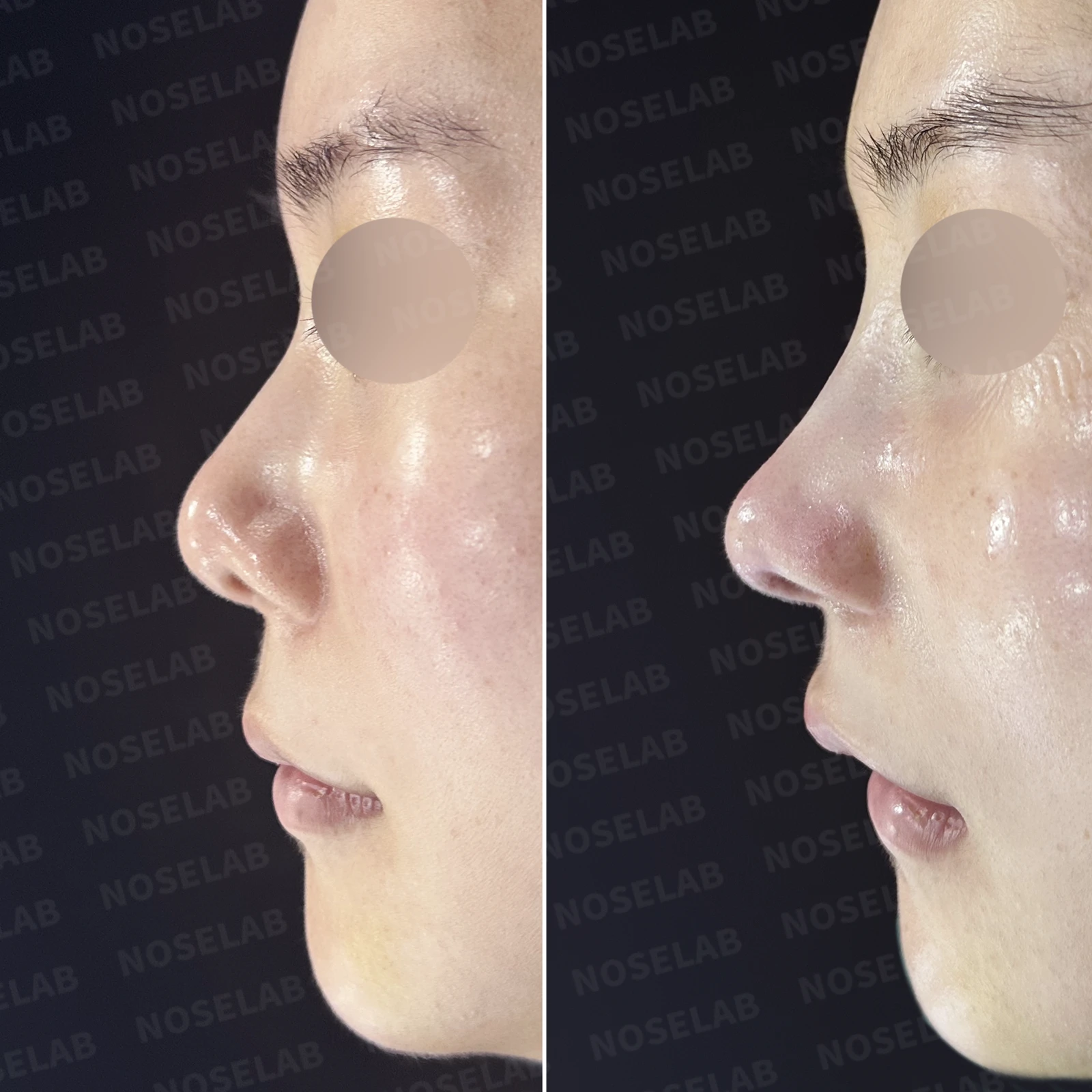
2. Profile changes
A natural bridge line achieved even without implants
The upturned appearance was corrected, creating a refined profile silhouette
Overall facial balance improved through adjustment of the nasolabial angle
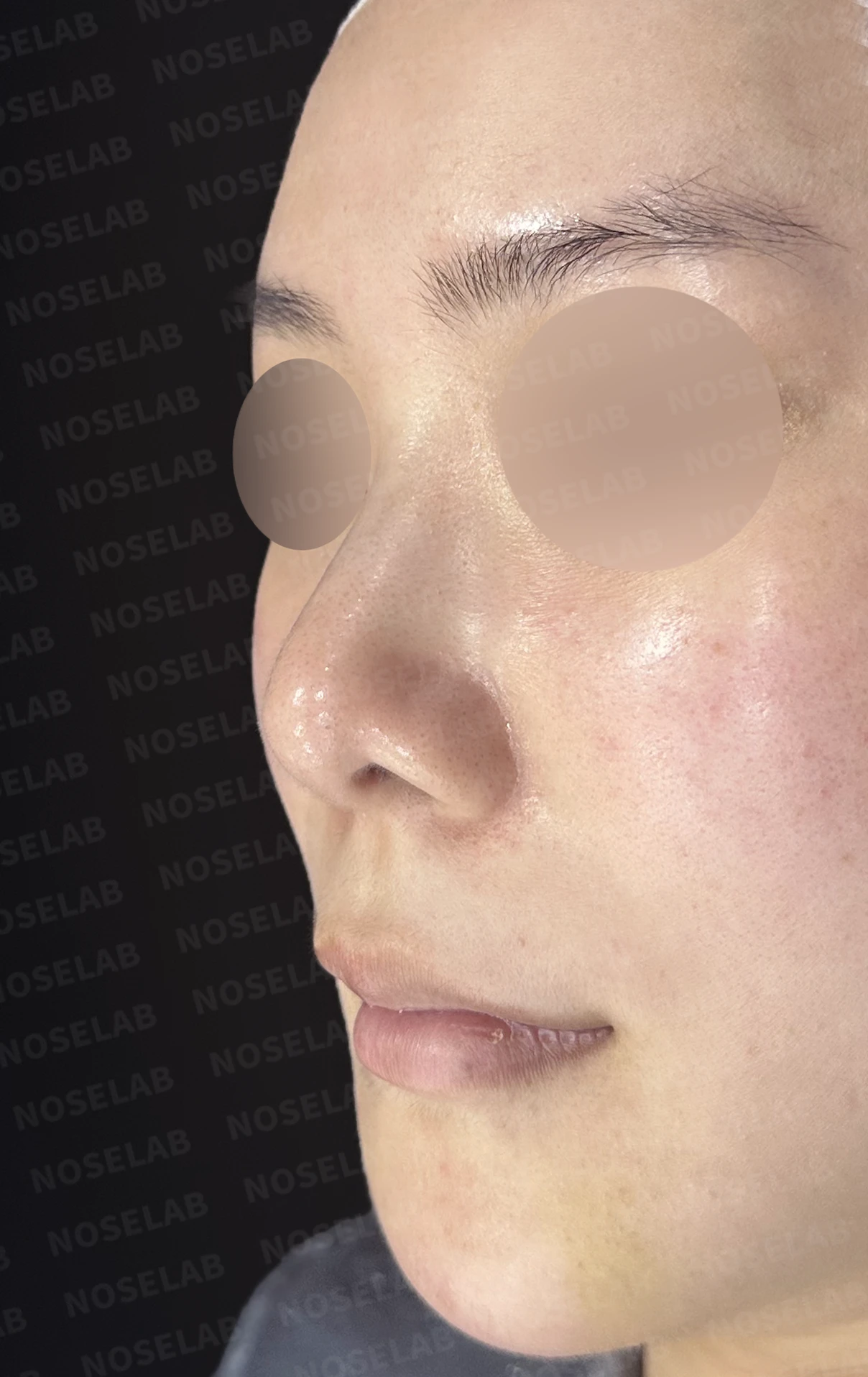
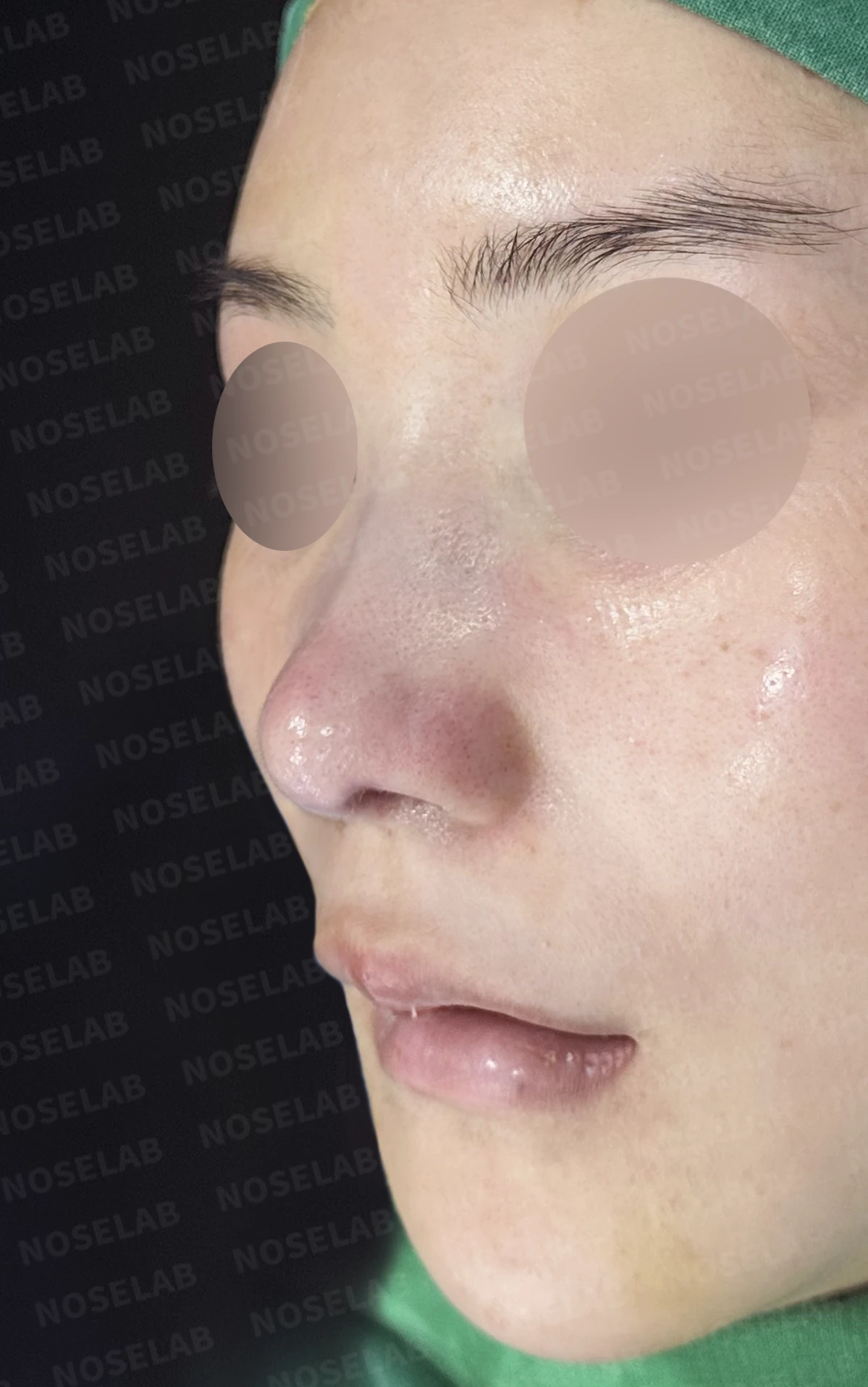
Before surgery / Day 0 immediately after surgery Photos taken immediately after surgery show swelling and may differ from the final result.
3. Nostril changes
The pinched right nostril rim was lowered naturally
Improvement of nostril asymmetry
Better balance achieved between both nostrils
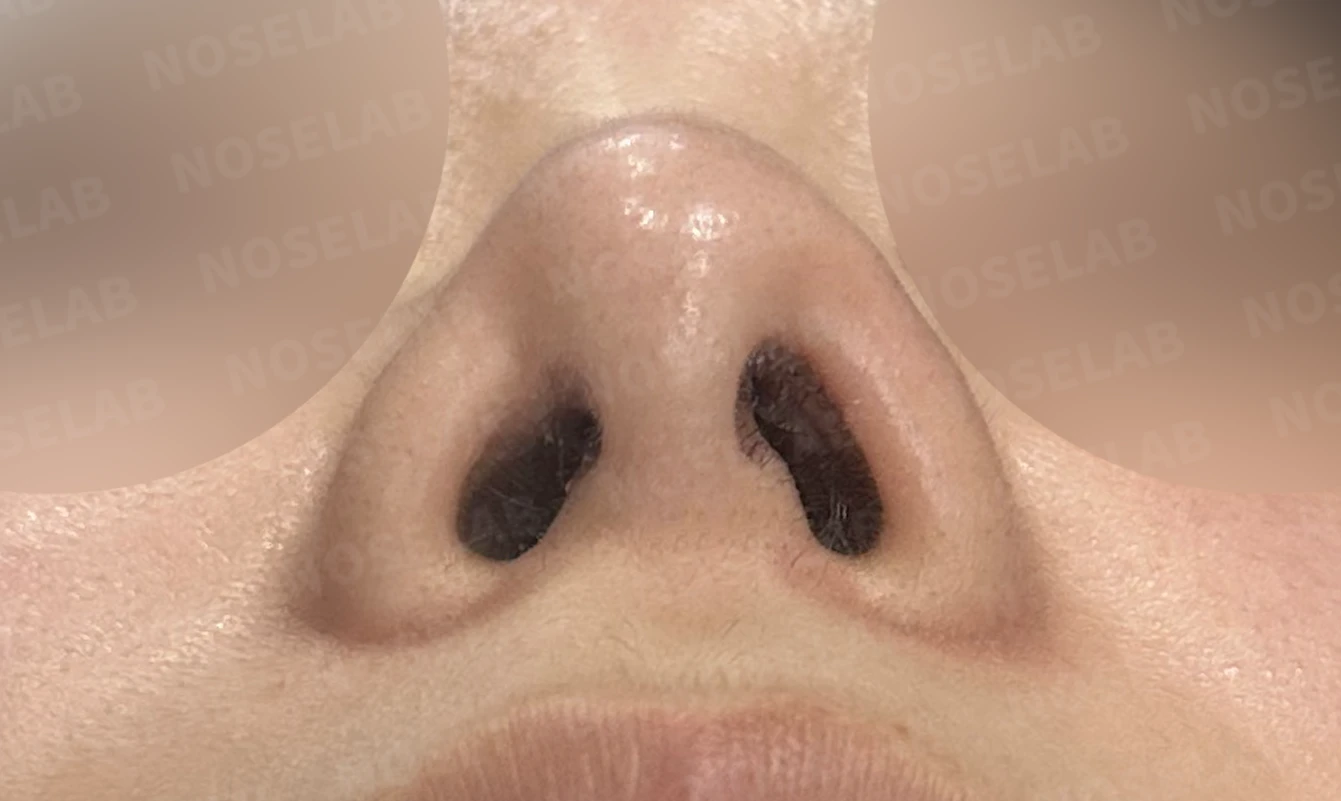
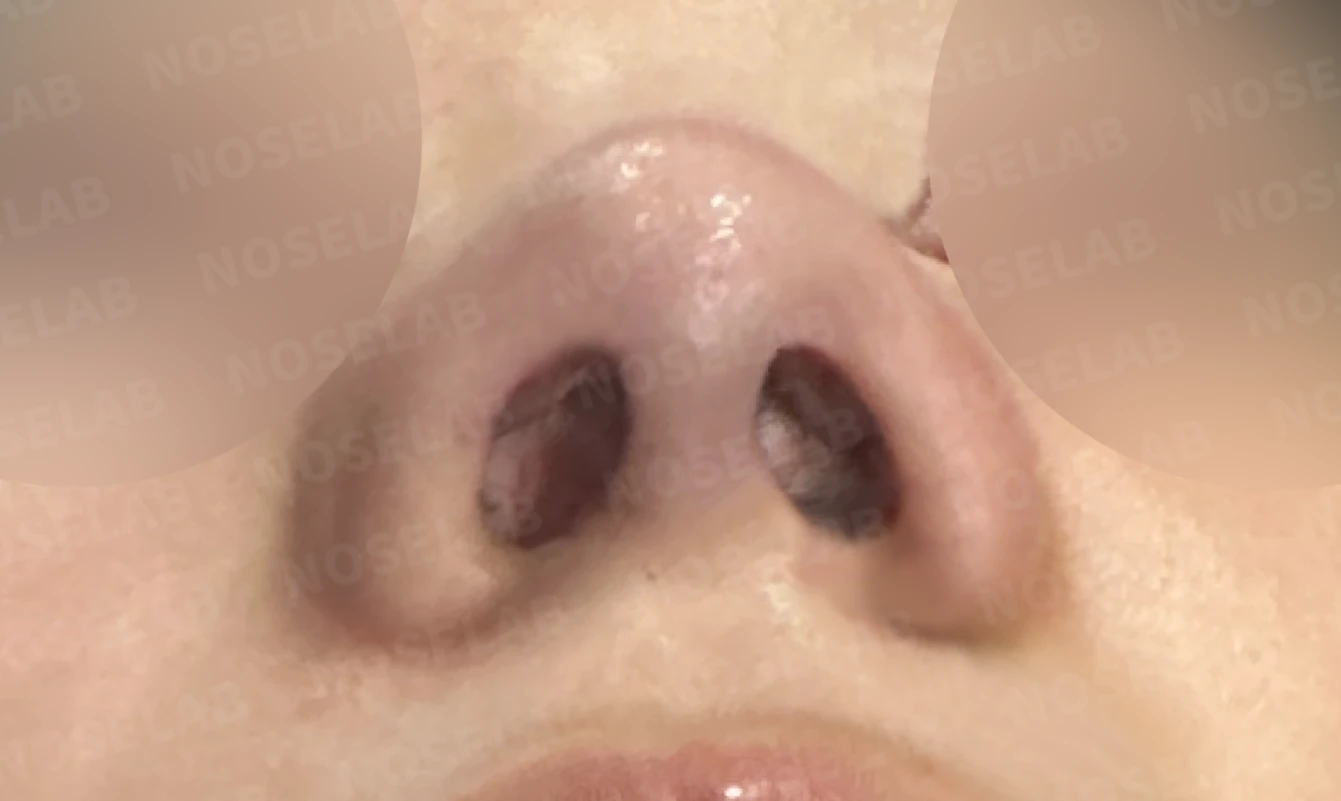
Before surgery / Day 0 immediately after surgery Photos taken immediately after surgery show swelling and may differ from the final result.
💡 Specialist opinion
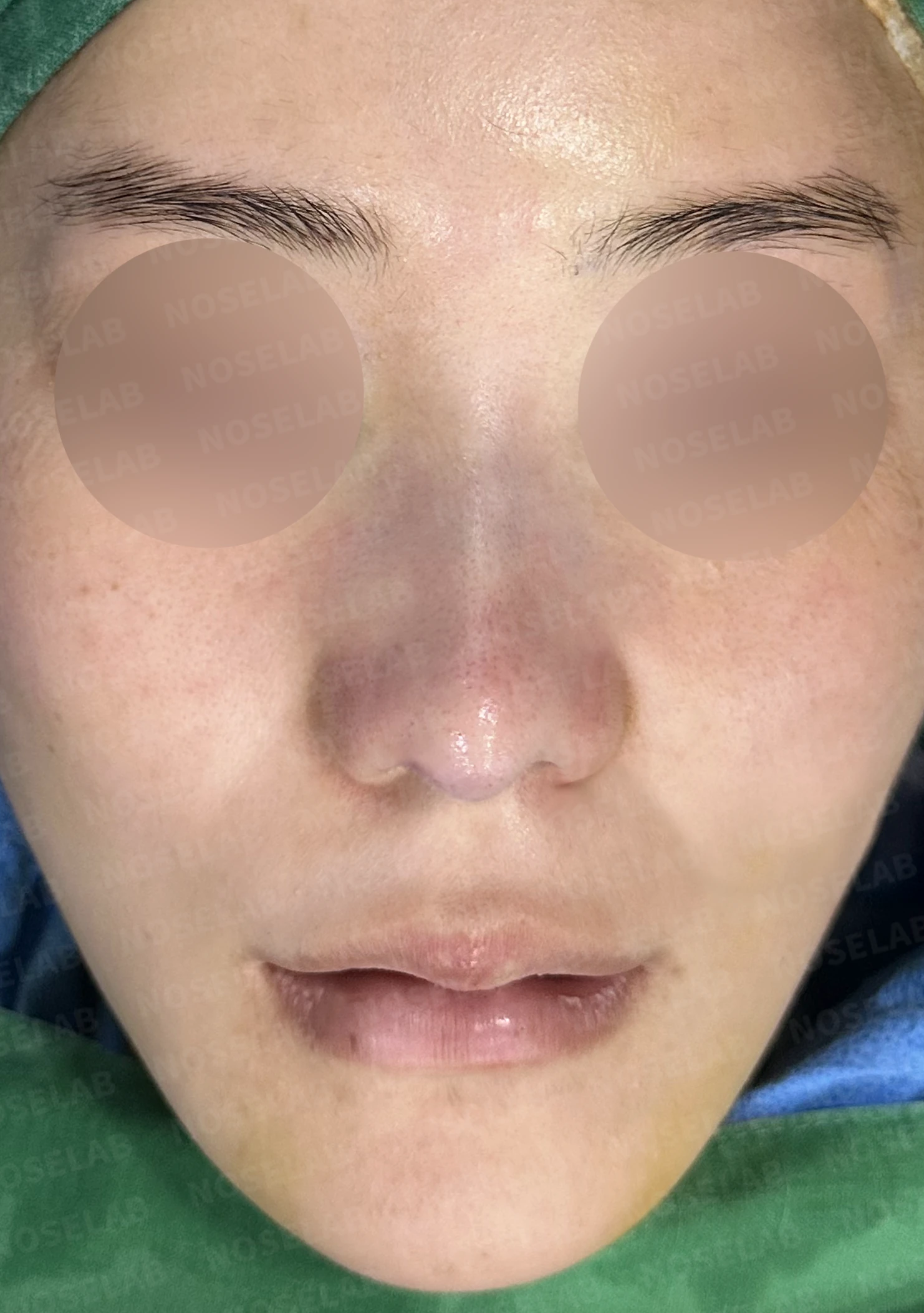
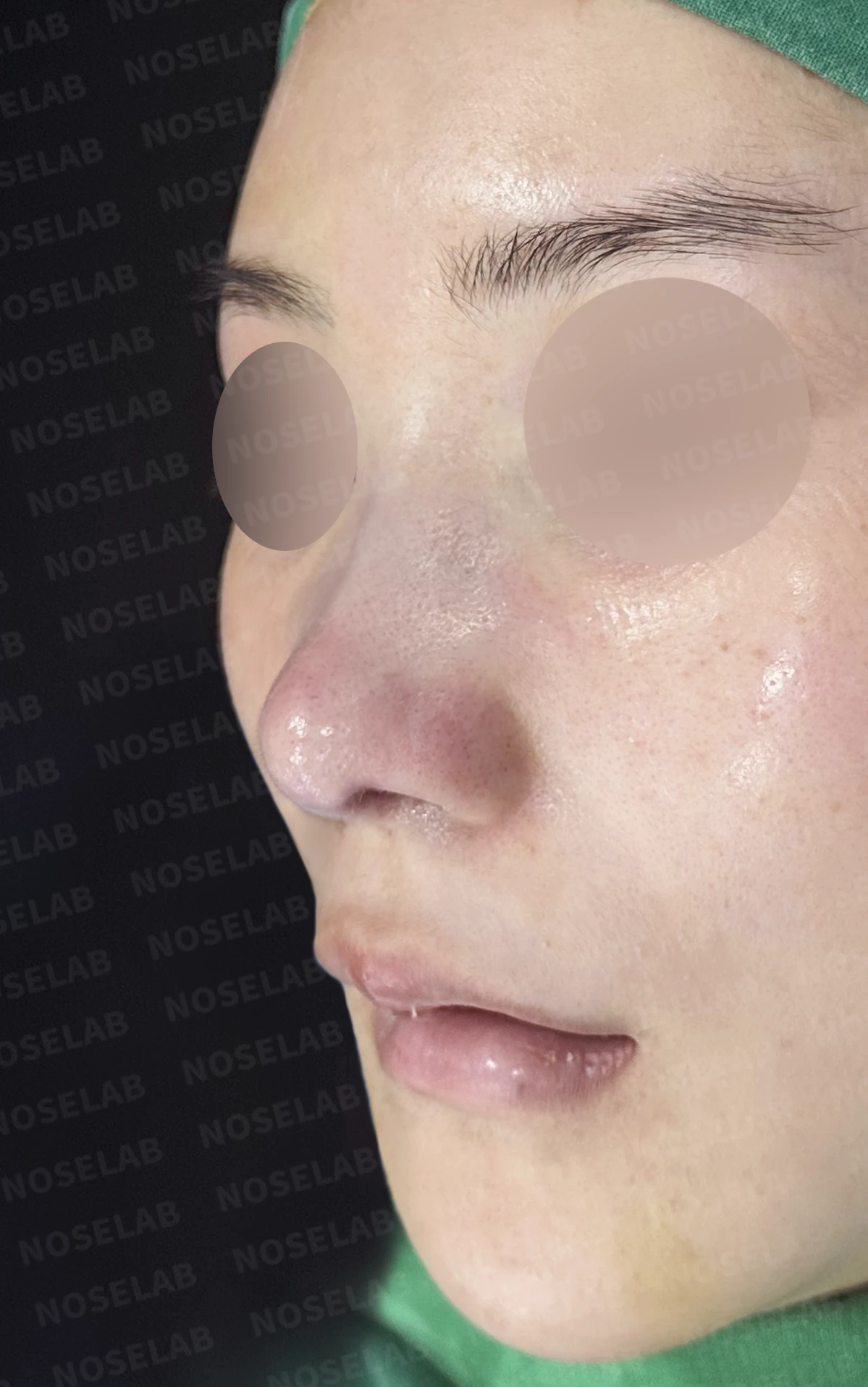
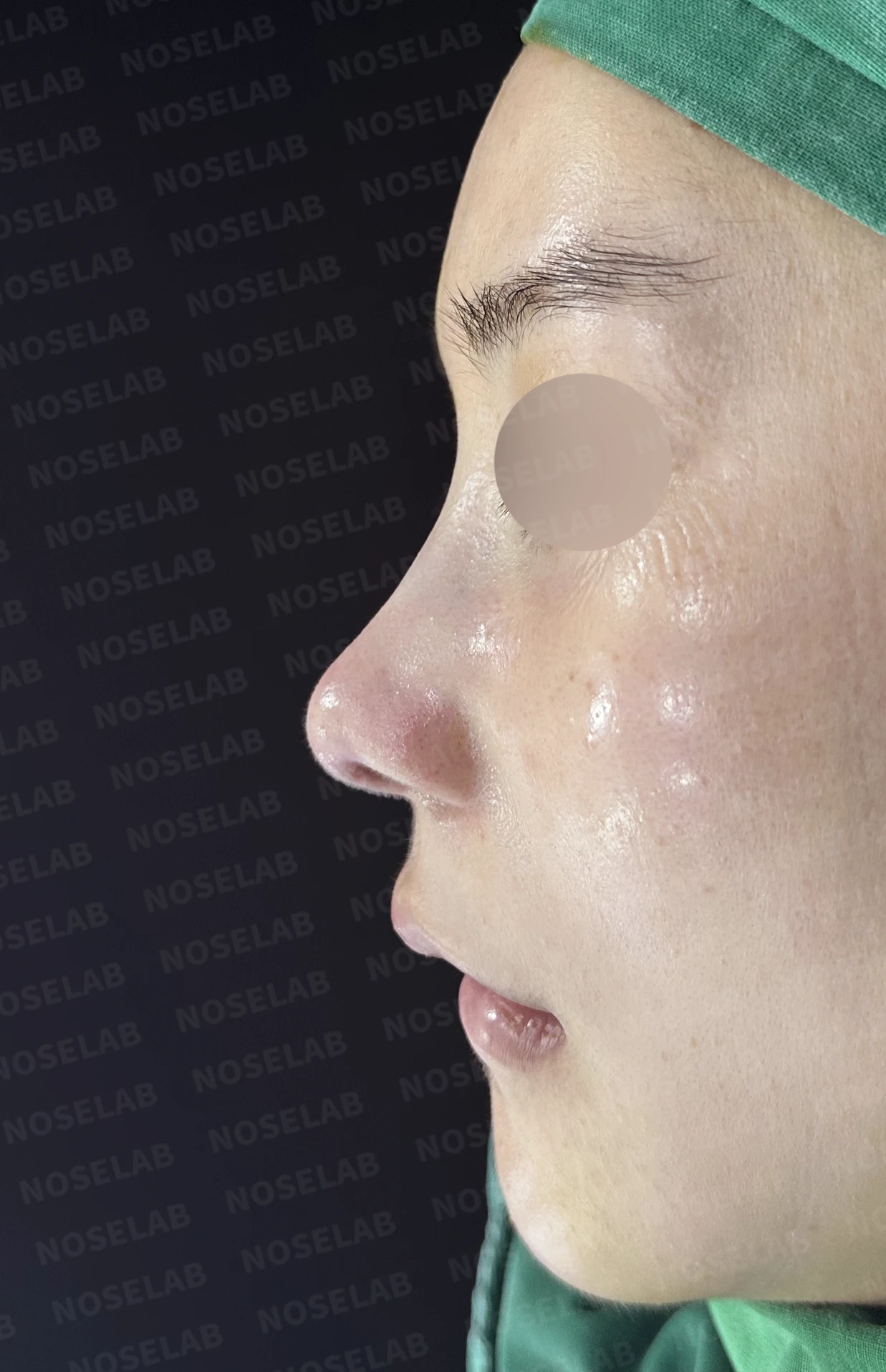
Front, oblique, and profile views on day 0 immediately after surgery. Photos taken immediately after surgery show swelling and may differ from the final result.
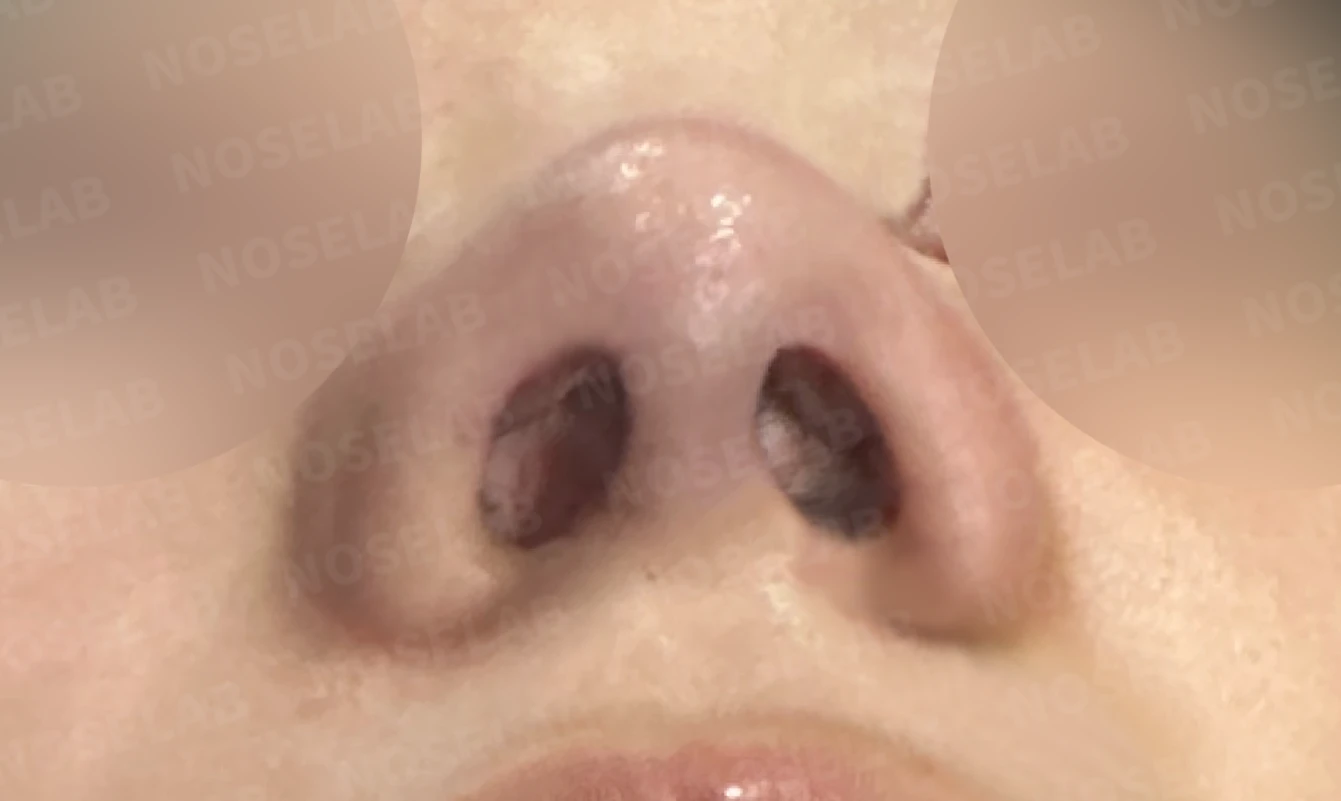
Nostril view on day 0 immediately after surgery. Photos taken immediately after surgery show swelling and may differ from the final result.
This patient was deeply troubled because multiple surgeries had failed to improve the upturned nose and nostril asymmetry. In particular, one nostril was visibly pinched, making the asymmetry prominent.
In this surgery, per the patient's request, I augmented the nasal bridge without artificial implants, using only donor rib cartilage and septal cartilage fragments. Implant-free surgery offers the advantage of achieving natural results without concerns regarding foreign body reactions.
In particular, the pinched right nostril was corrected using a composite graft containing both skin and cartilage. When lowering the nostril rim, transplanting skin along with cartilage provides a more stable and natural result than grafting cartilage alone. This also explains why the previous attempt using artificial dermis did not achieve adequate improvement.
In cases of multiple revision surgeries, tissue quality may be compromised, necessitating an even more meticulous approach. I removed the existing foreign materials and re-established the structural framework in a clean surgical field. I hope this case serves as a helpful reference for those struggling with unsatisfied outcomes from repeated surgeries for an upturned nose and nostril asymmetry.
This was Dr. Peter C. Kang. Thank you.
#closedrhinoplasty #closedrevisionrhinoplasty #upturnednosecorrection #nostrilasymmetry #implantfreerhinoplasty #donorribcartilage #compositegraft #nostrilcorrection #multiplerevisionrhinoplasty

Limitations and risks
When using donor rib cartilage, long-term follow-up is necessary because the grafted cartilage may resorb or warp.
When revising after implant removal, contracture may progress again after removal, the nasal height and length may decrease, and staged surgery may be necessary depending on the skin condition.
When foreign materials such as injected fillers are removed and reconstructed, contracture may recur, nasal height and length may decrease, and staged surgery may be necessary depending on the skin condition.
When the septum is corrected at the same time, nasal obstruction may persist or recur, and in rare cases, septal perforation or changes in smell may occur.
Common potential risks include infection, bleeding, asymmetry, scarring, skin necrosis, and insufficient improvement; results vary depending on individual skin condition and previous surgical history.