Hello, I am Dr. Peter C. Kang.
Today, I would like to introduce the case of a patient who visited our clinic troubled by an elongated-looking nose and nostril asymmetry. Let us take a look at how this patient, who desired a feminine yet defined nasal contour, achieved a satisfying outcome.
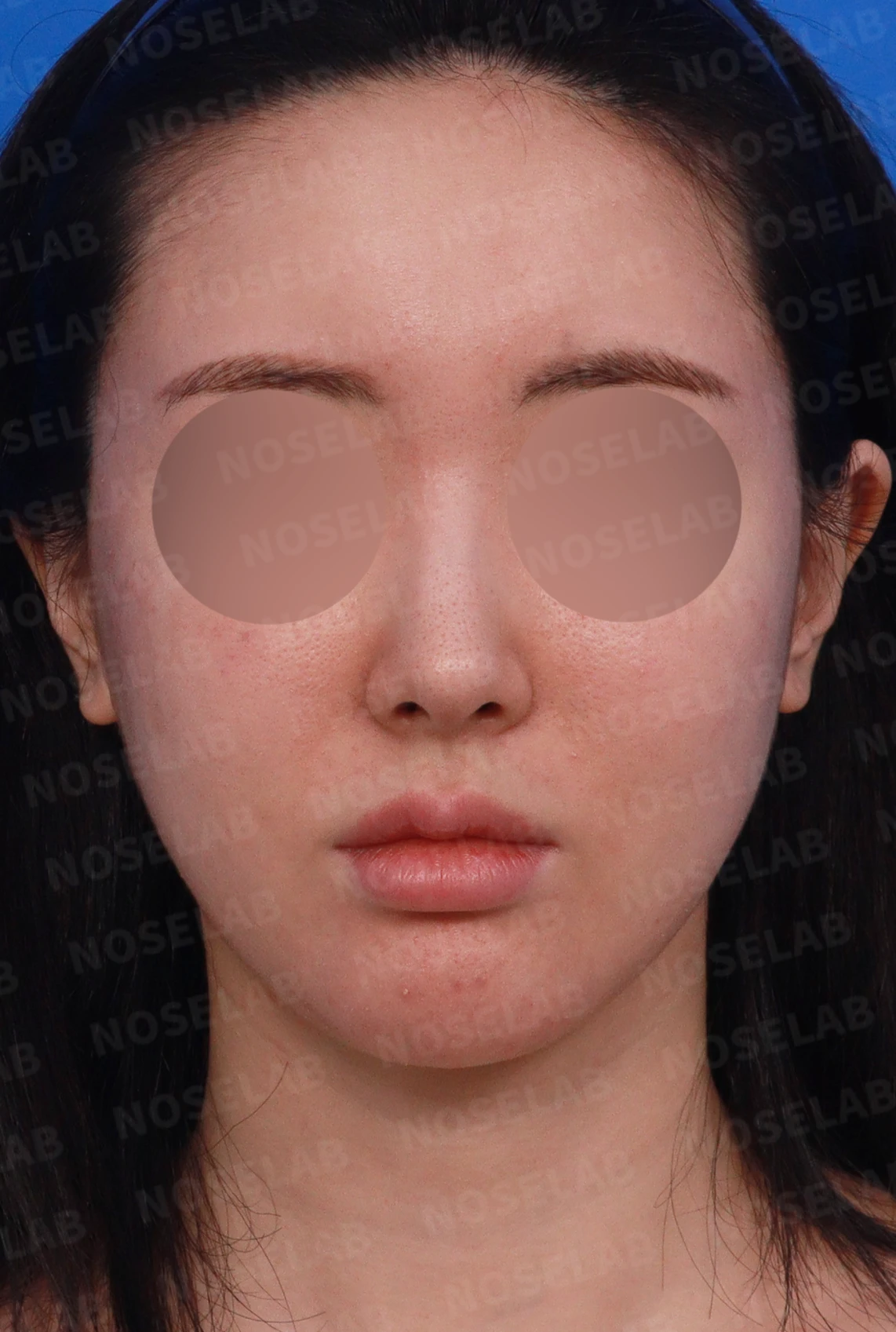
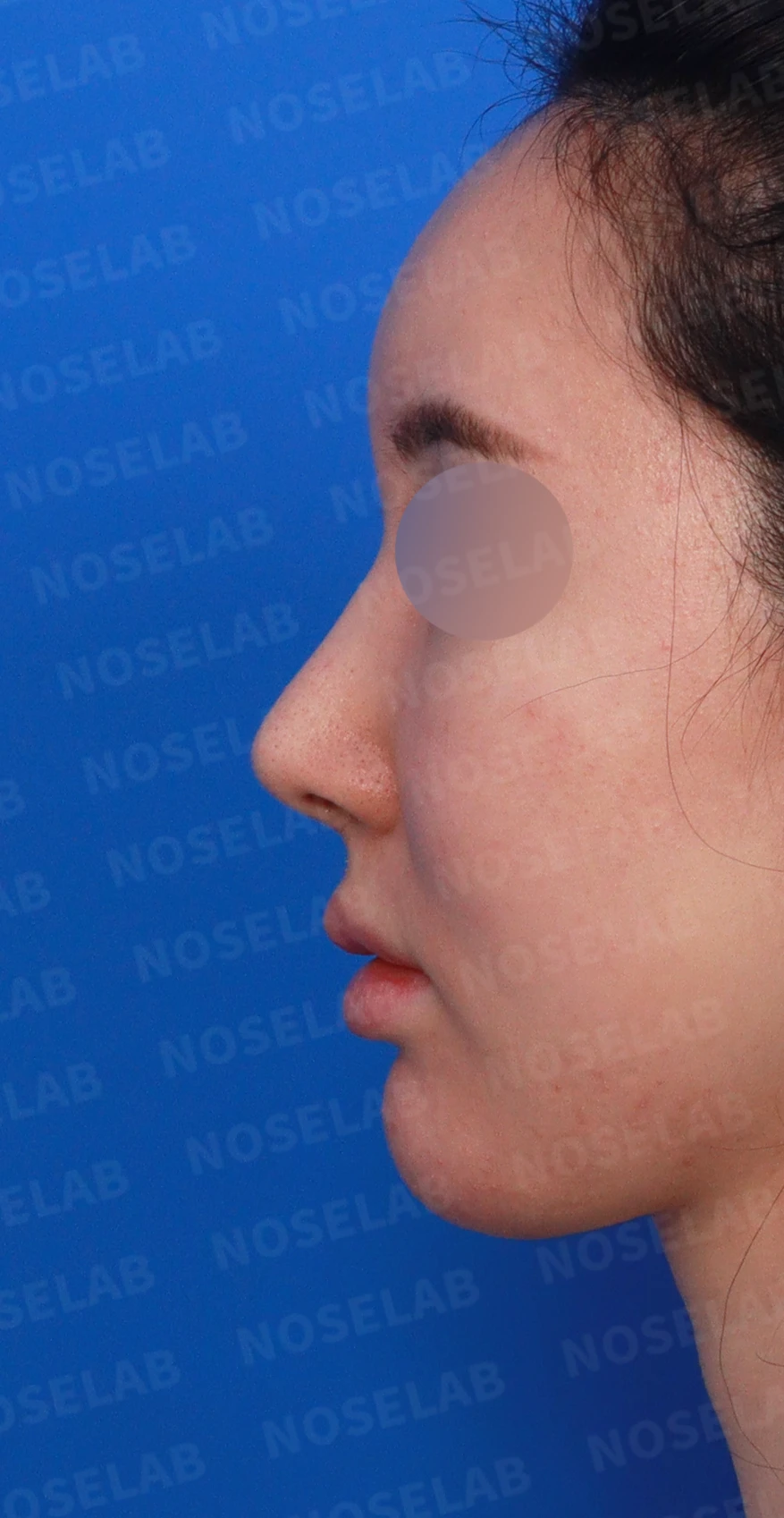
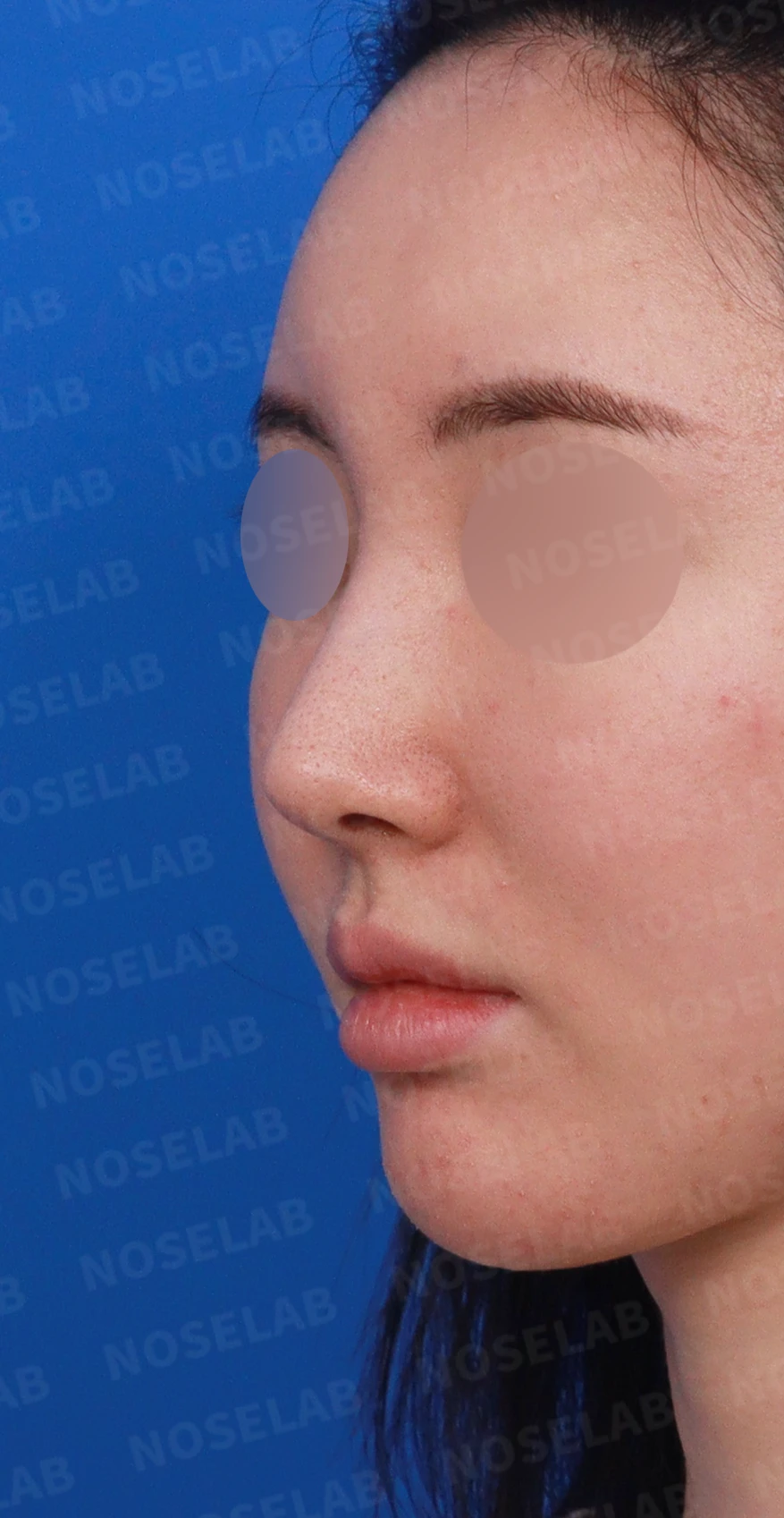
Front, left profile, and oblique views during design consultation
🔍 Surgical history
The patient had previously undergone nasal procedures elsewhere, and at this stage, a reconstruction-focused approach was necessary for more fundamental improvement.
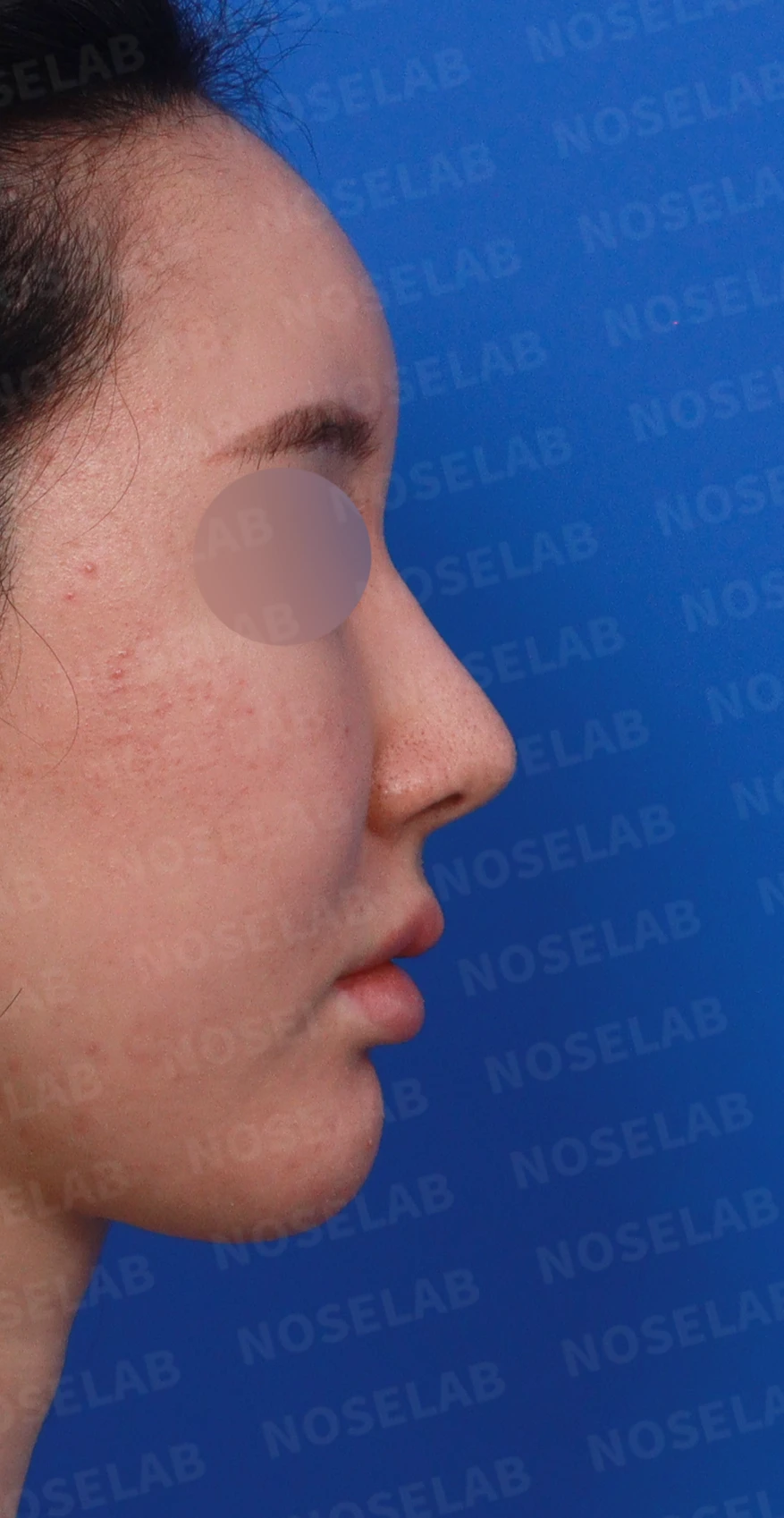
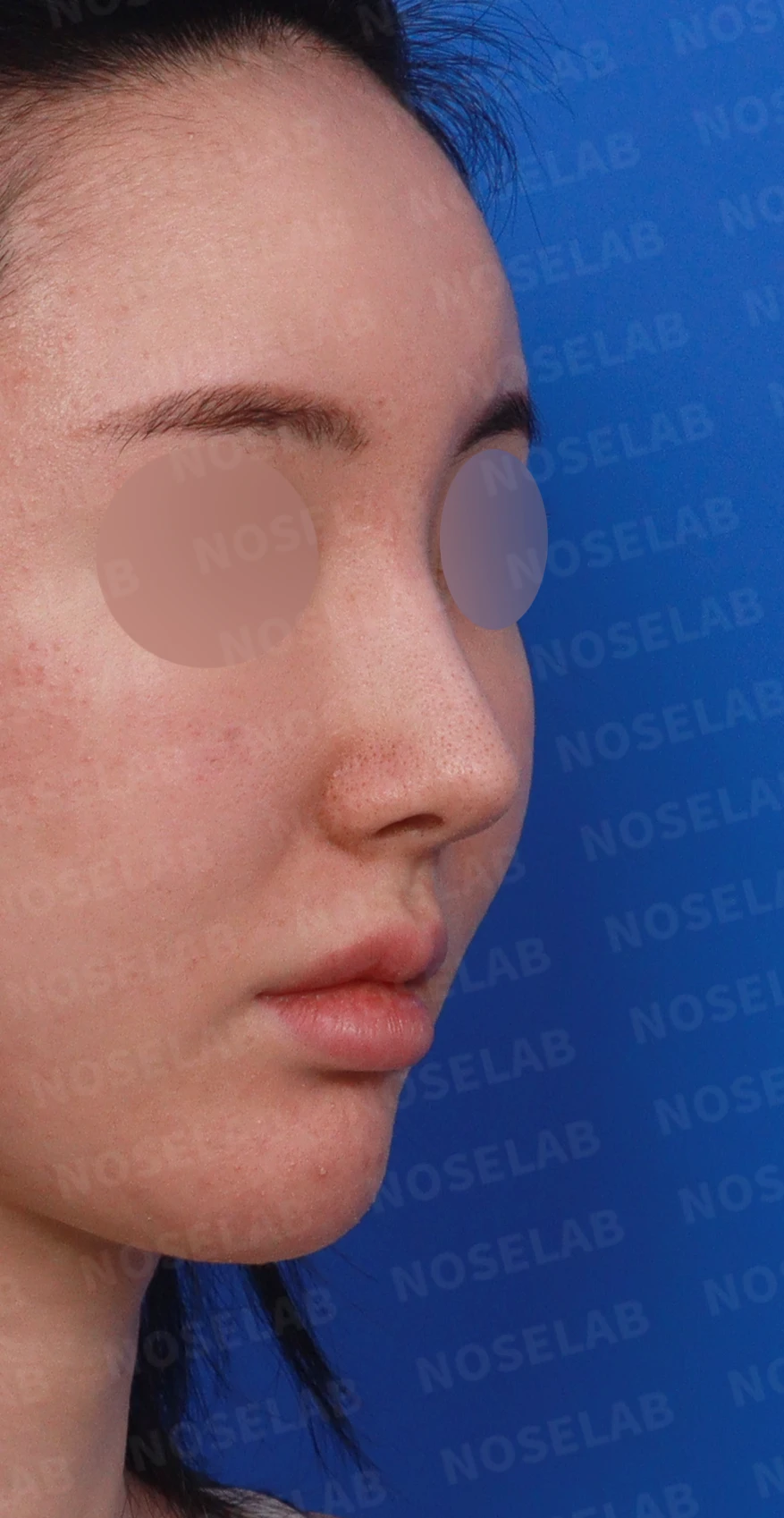
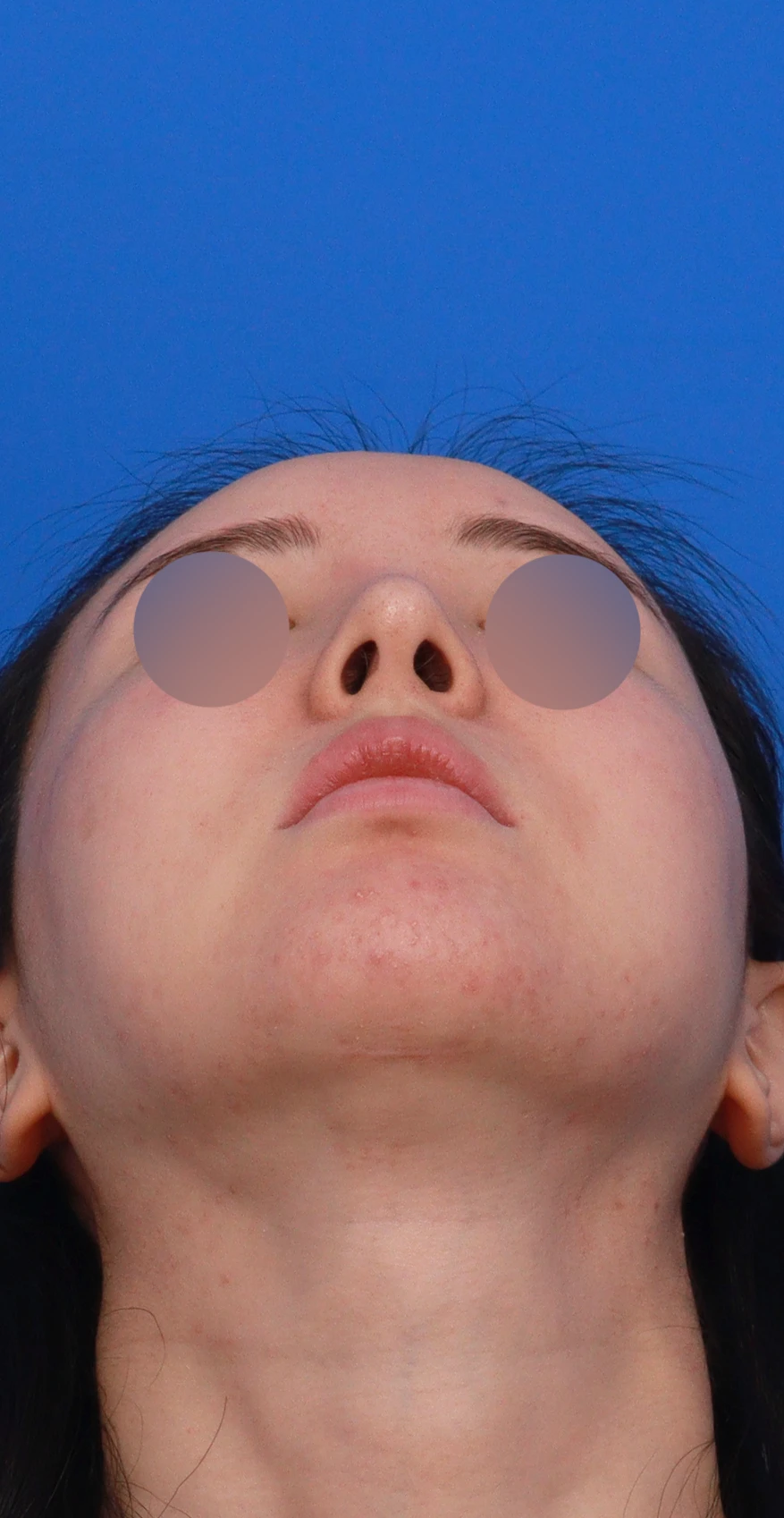
Right profile, oblique, and nostril views during design consultation
💉 Patient requests
The primary improvements requested by the patient:
Changing an elongated-looking nose into a shorter, more refined appearance
Resolving nostril asymmetry
Straightening a deviated columella
A slightly more feminine, defined nasal contour
A natural yet sophisticated impression
🔧 Surgical plan and procedure
In this type of case, the key was not simply addressing superficial concerns, but fundamentally correcting the underlying structural issues of the nose.
1. Septal extension using autologous rib cartilage
As the most critical foundational step, the patient's own rib cartilage was harvested to perform septal extension. This is an essential procedure to reinforce support for the nasal tip and obtain a stable long-term result. Because autologous tissue is used, there is no concern about foreign body reactions or contracture, and natural movement of the nose can be preserved.
2. Correcting the deviated columella through septal reconstruction
A crooked columella is not simply a superficial cosmetic issue, but stems from an imbalance within the internal structures. By accurately reconstructing the septum, the midline was realigned, naturally straightening the columella as well. This requires very delicate work with precision down to 1 mm.
3. Resolving nostril asymmetry by correcting alar base width
Nostril asymmetry is a concern experienced by many patients. In this case, the width of the alar base was meticulously adjusted to balance both sides. Rather than simply reducing size, taking a three-dimensional approach that considered overall harmony was essential.
4. Creating a feminine contour through nasolabial angle correction
We adjusted the angle between the nose and the upper lip seen on profile, known as the nasolabial angle. This produced an effect where the previously long-looking nose appeared shorter and more feminine. In addition, the appearance of a protruding mouth was improved, completing a refined overall profile line.
5. Finishing with skin Botox
Skin Botox was performed concurrently on the face and neck to improve overall skin tone and texture, completing a brighter impression.
🌟 Surgical results
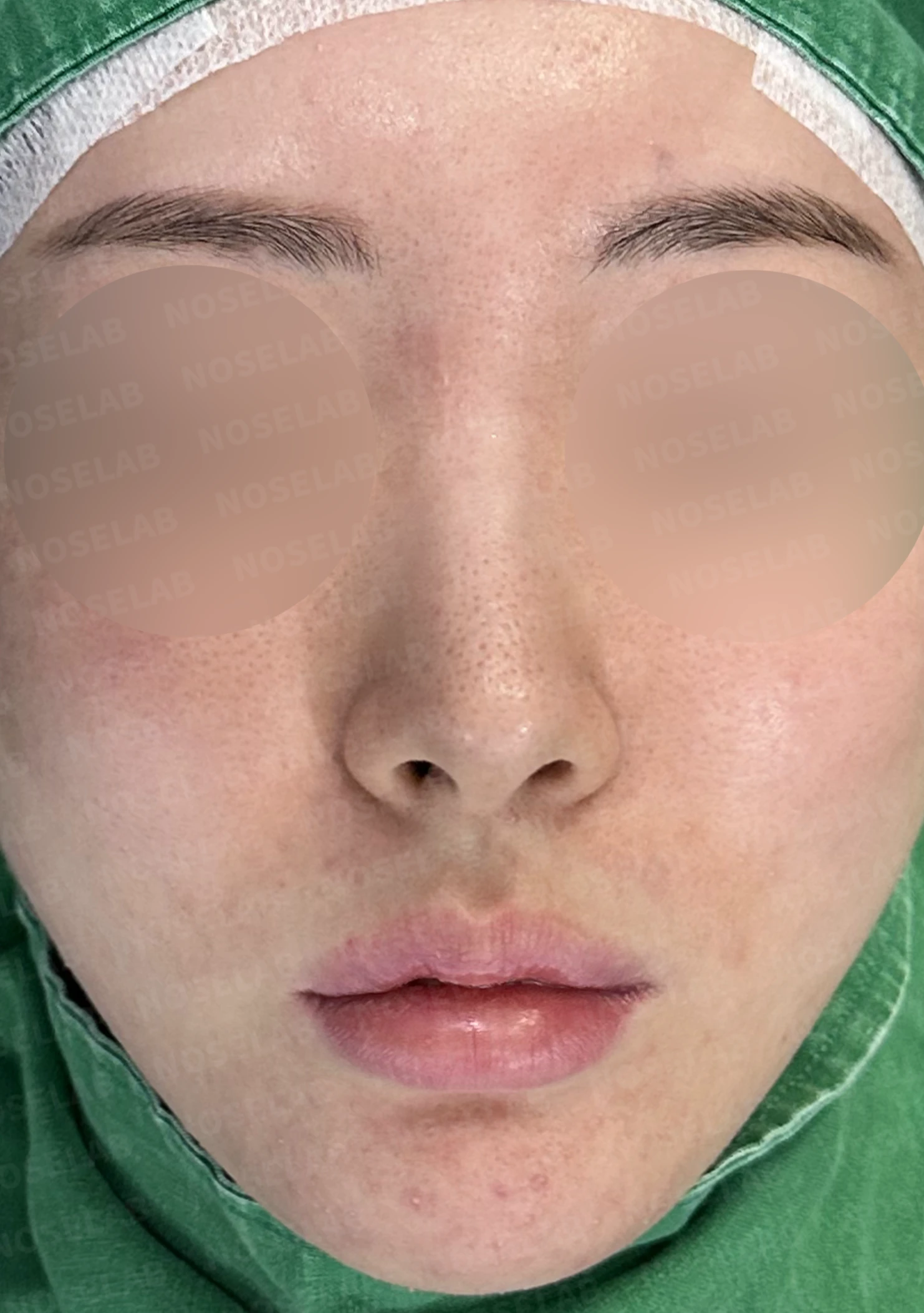
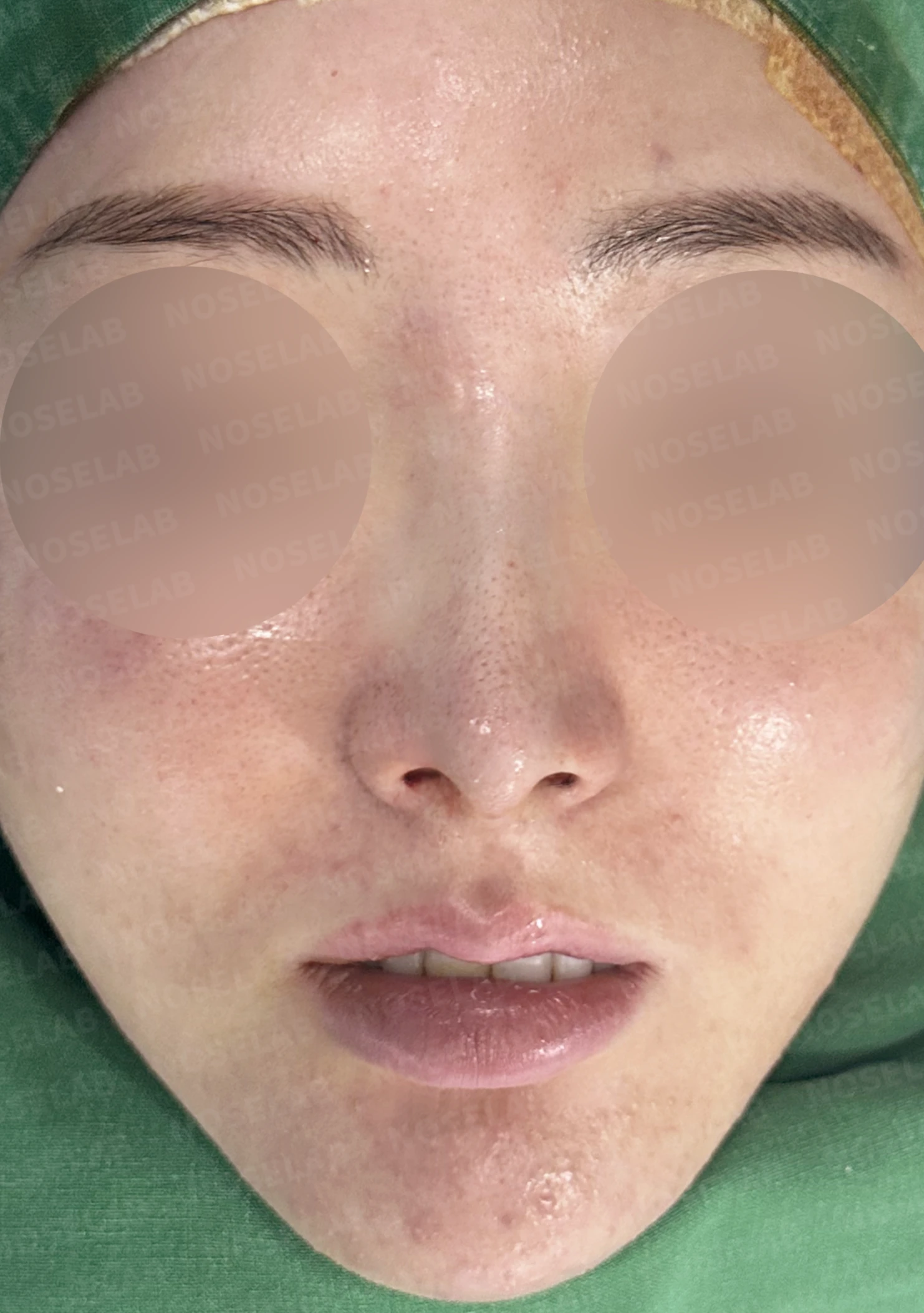
Before surgery / Day 0 immediately after surgery Photos taken immediately after surgery show swelling and may differ from the final result.
Frontal changes:
The deviated columella is straightened
Nostril asymmetry was significantly improved
An overall balanced impression
Before surgery / Day 0 immediately after surgery Photos taken immediately after surgery show swelling and may differ from the final result.
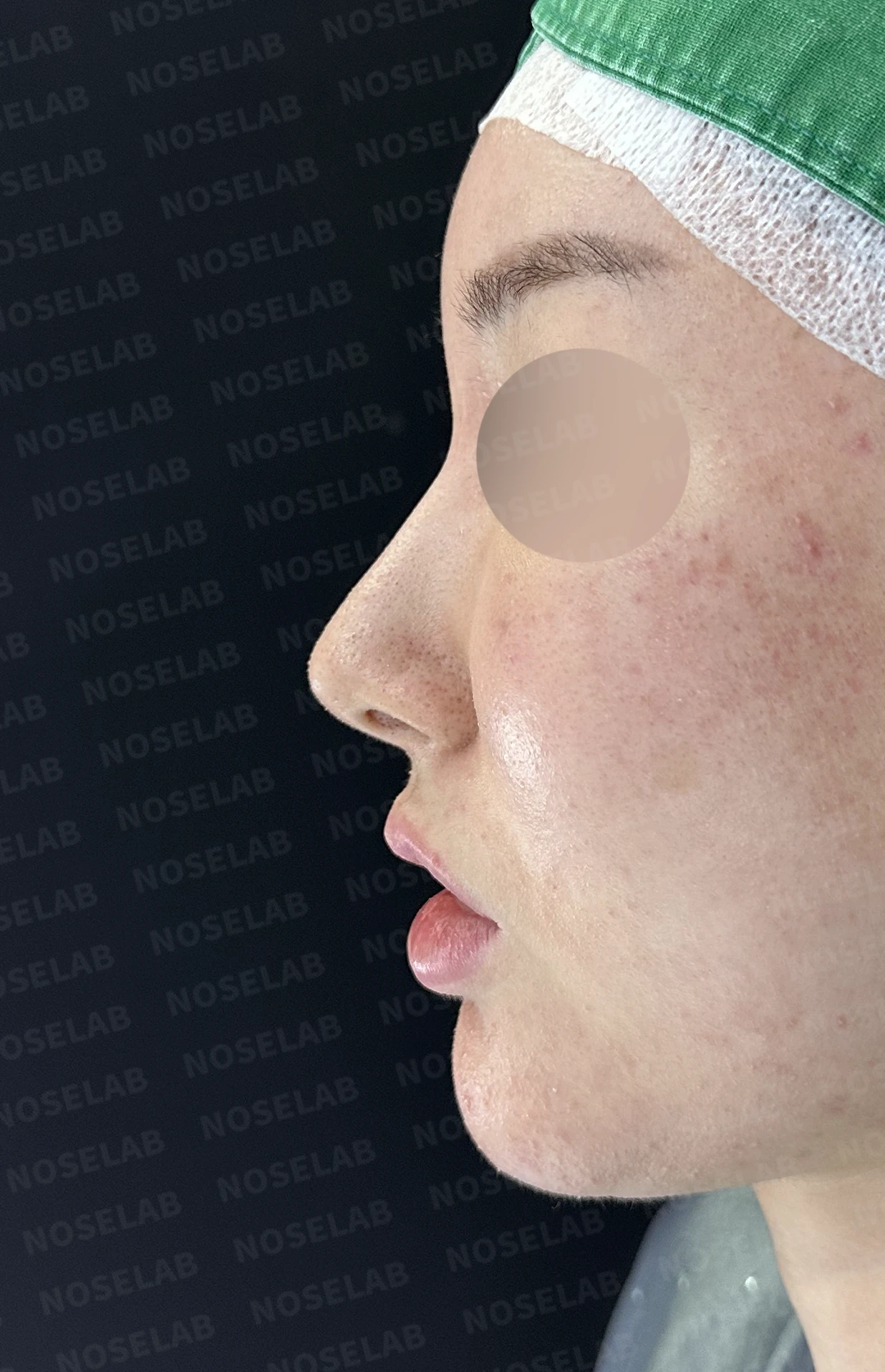
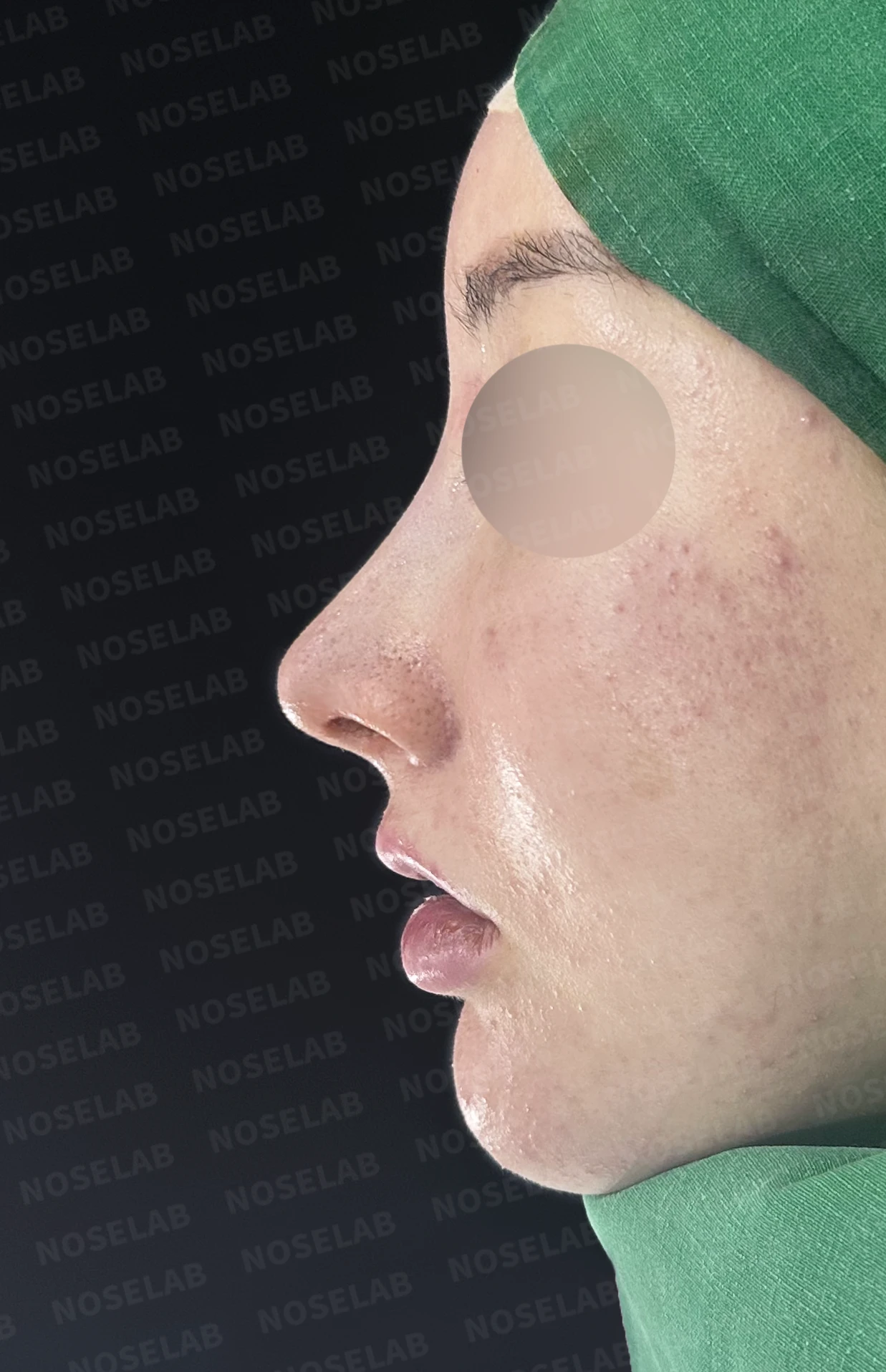
Profile changes:
The previously long-looking nose changed into a shorter, refined contour
A feminine line achieved through nasolabial angle improvement
A defined yet natural nasal tip
A refined profile with reduced appearance of a protruding mouth
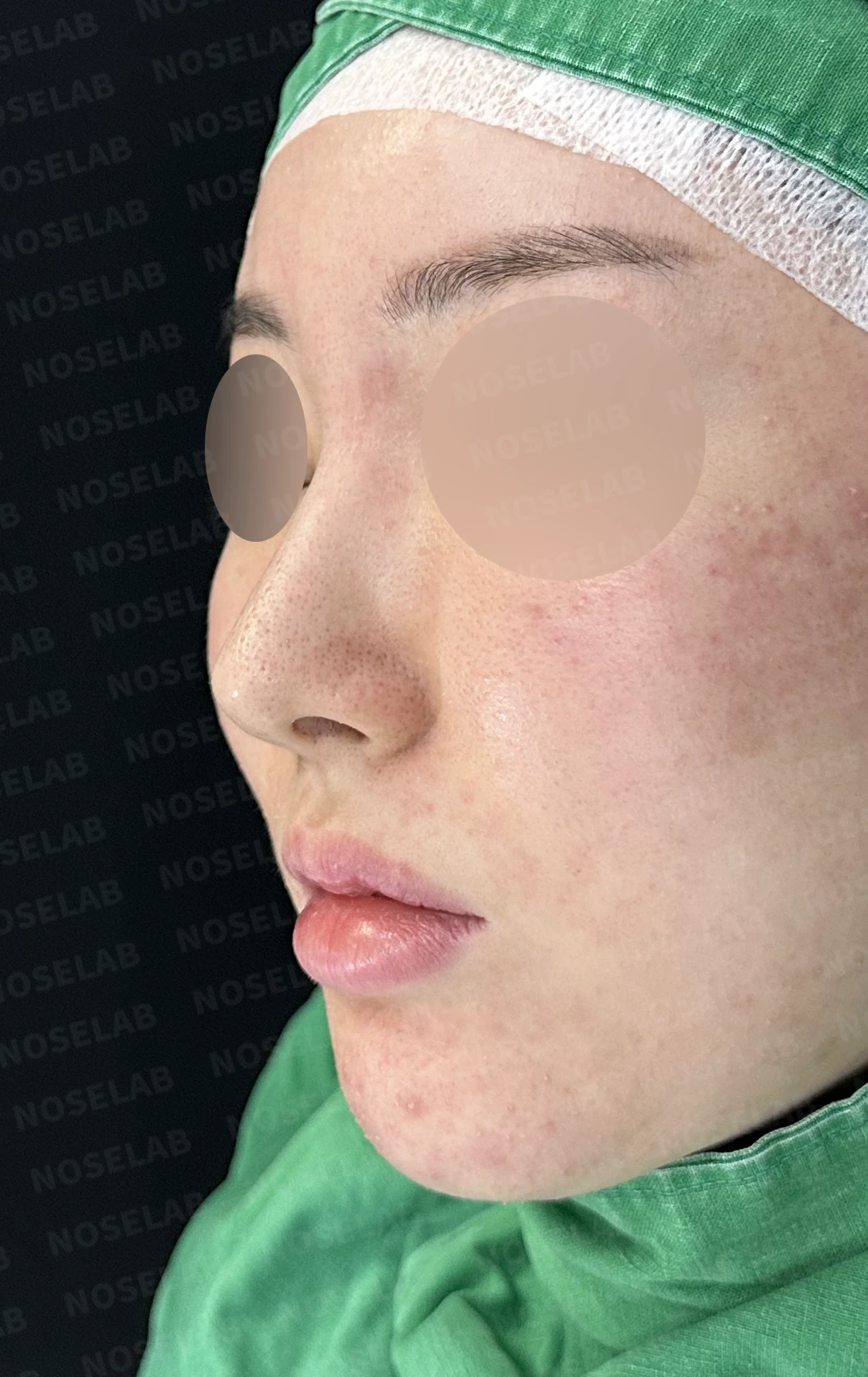
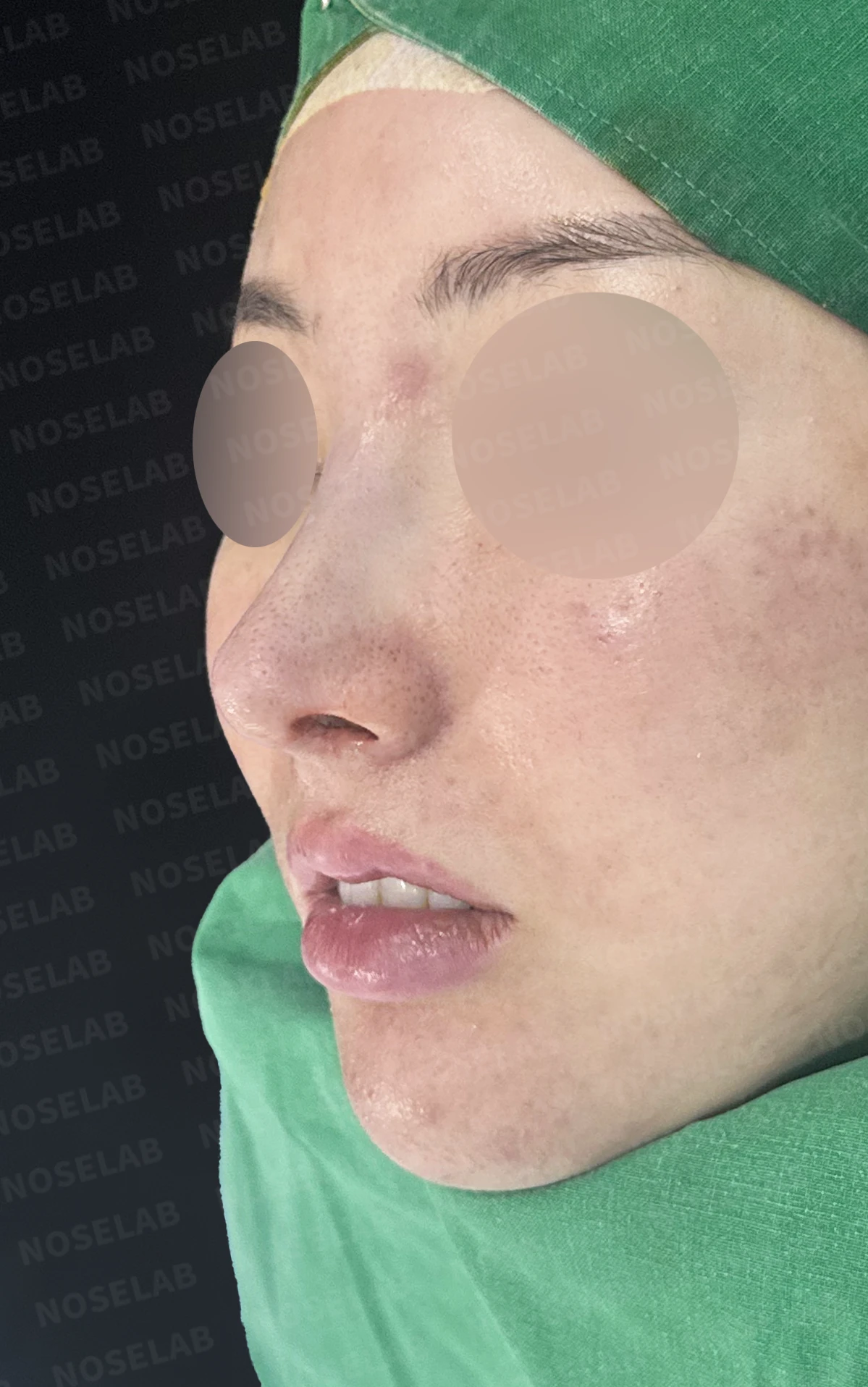
Before surgery / Day 0 immediately after surgery Photos taken immediately after surgery show swelling and may differ from the final result.
Nostril changes:
Correction of left-right asymmetry
The deviated columella is aligned to the midline
A balanced shape through adjustment of the alar base width
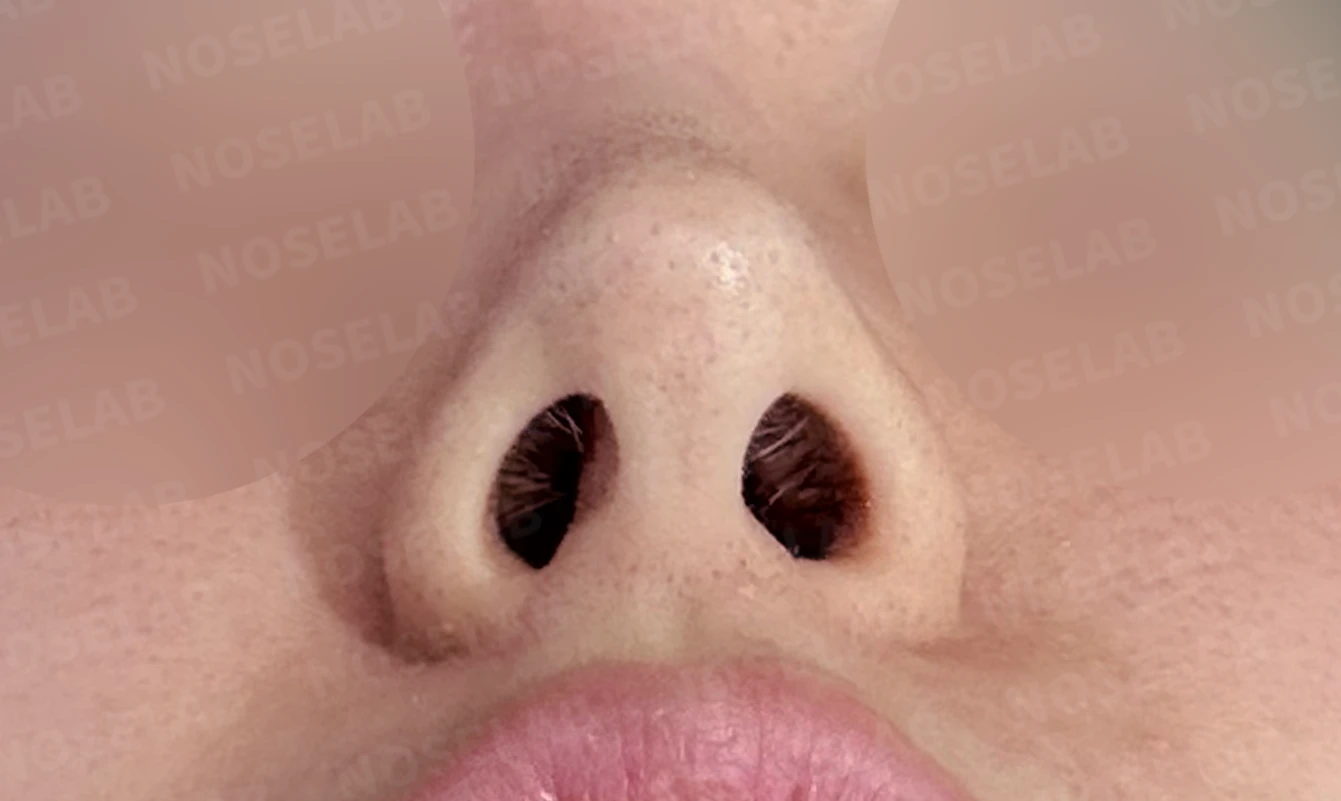
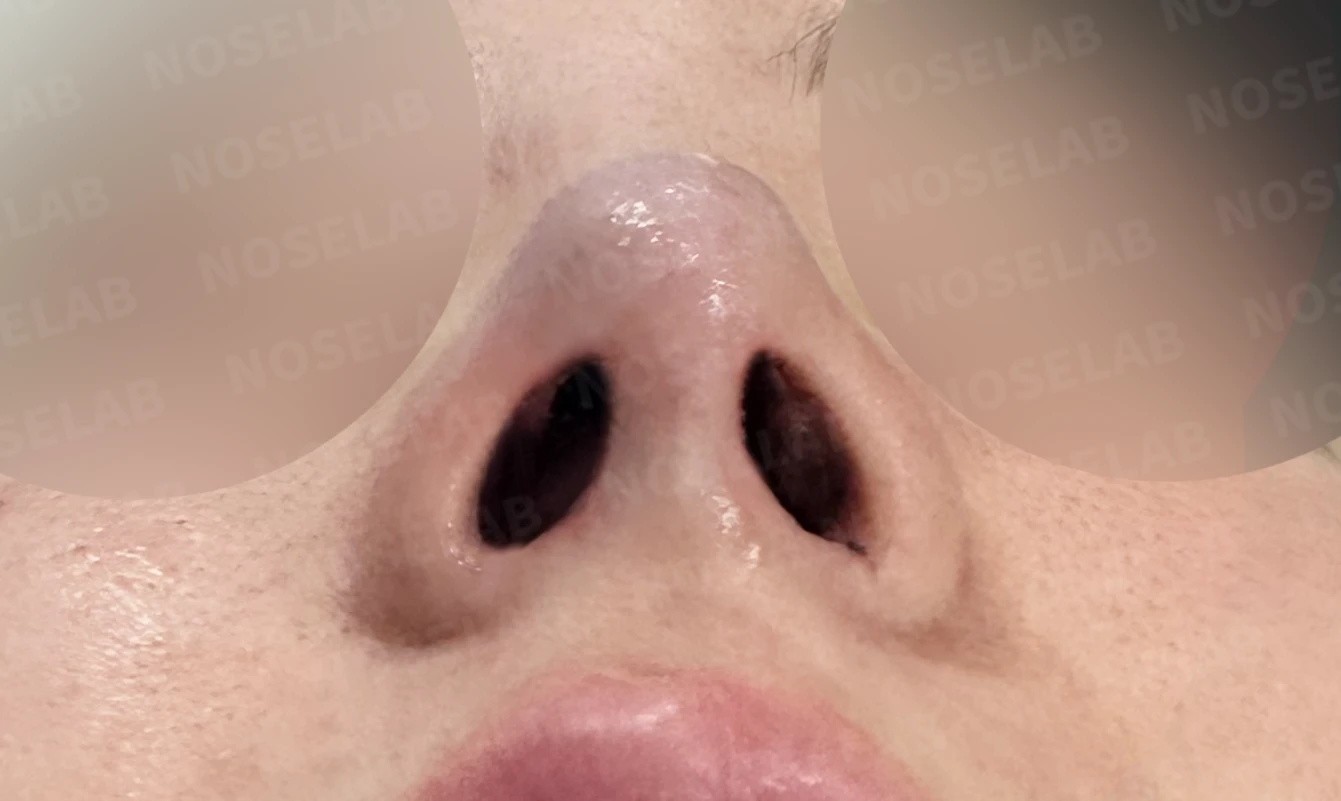
Before surgery / Day 0 immediately after surgery Photos taken immediately after surgery show swelling and may differ from the final result.
💡 Specialist opinion
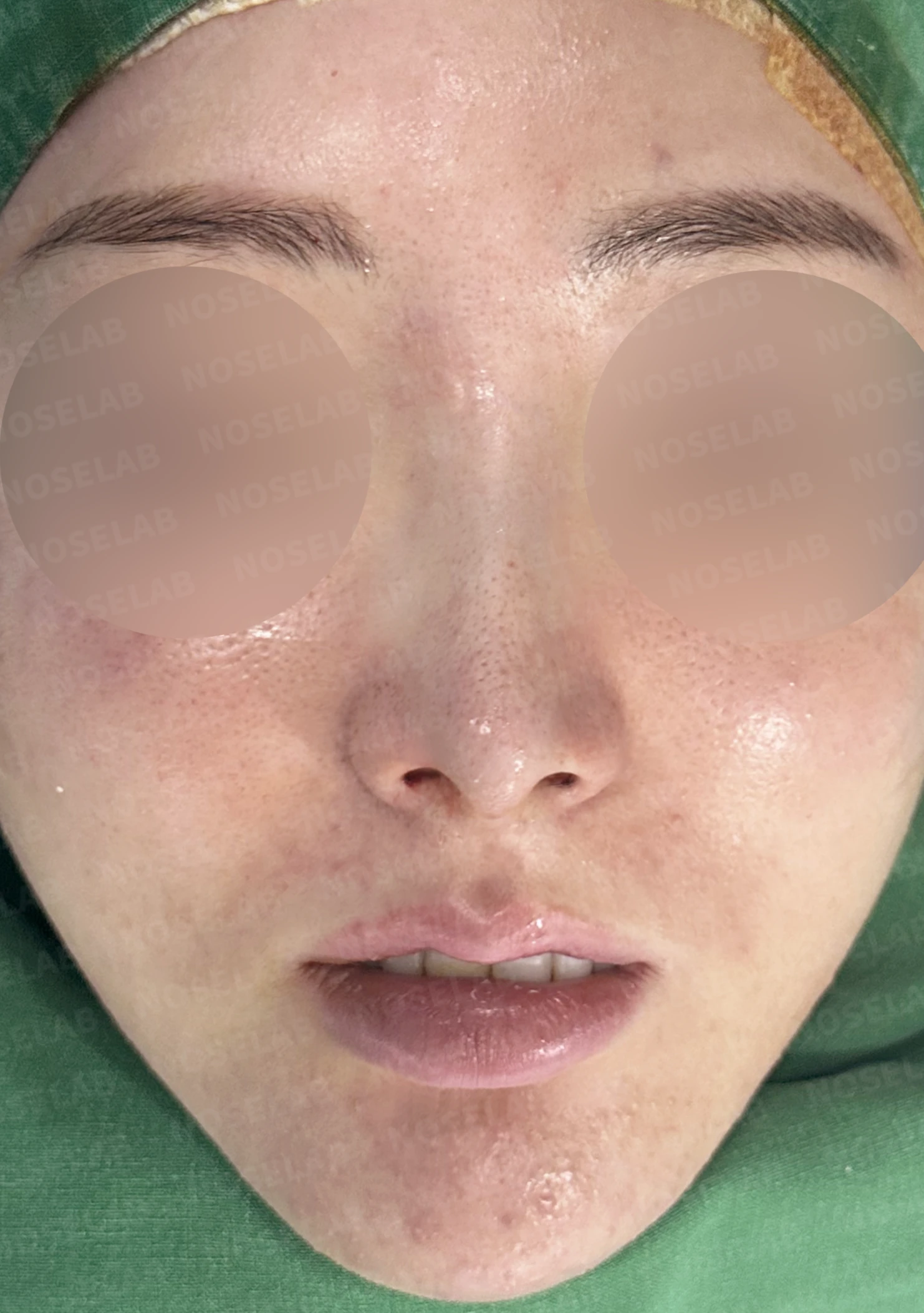
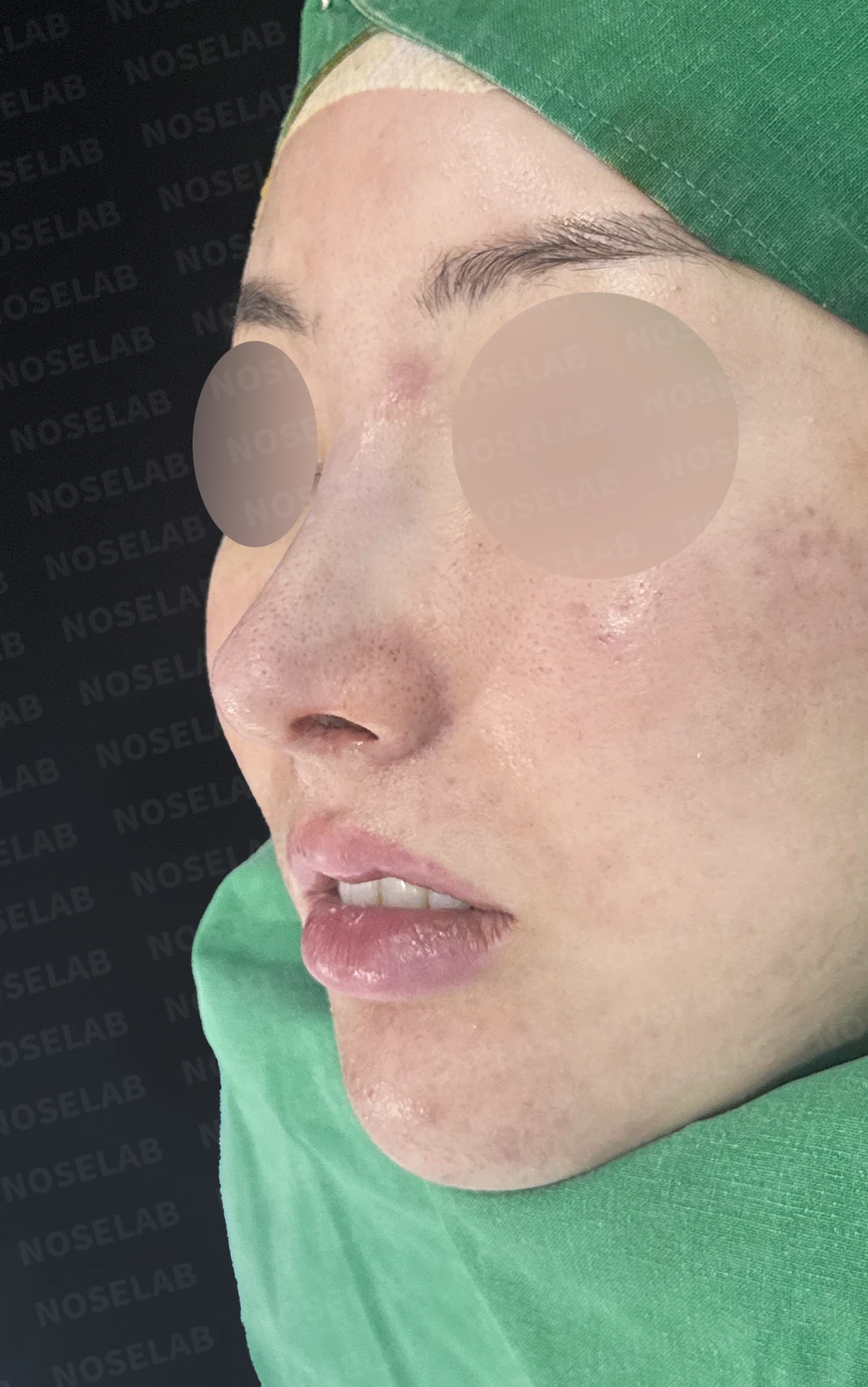
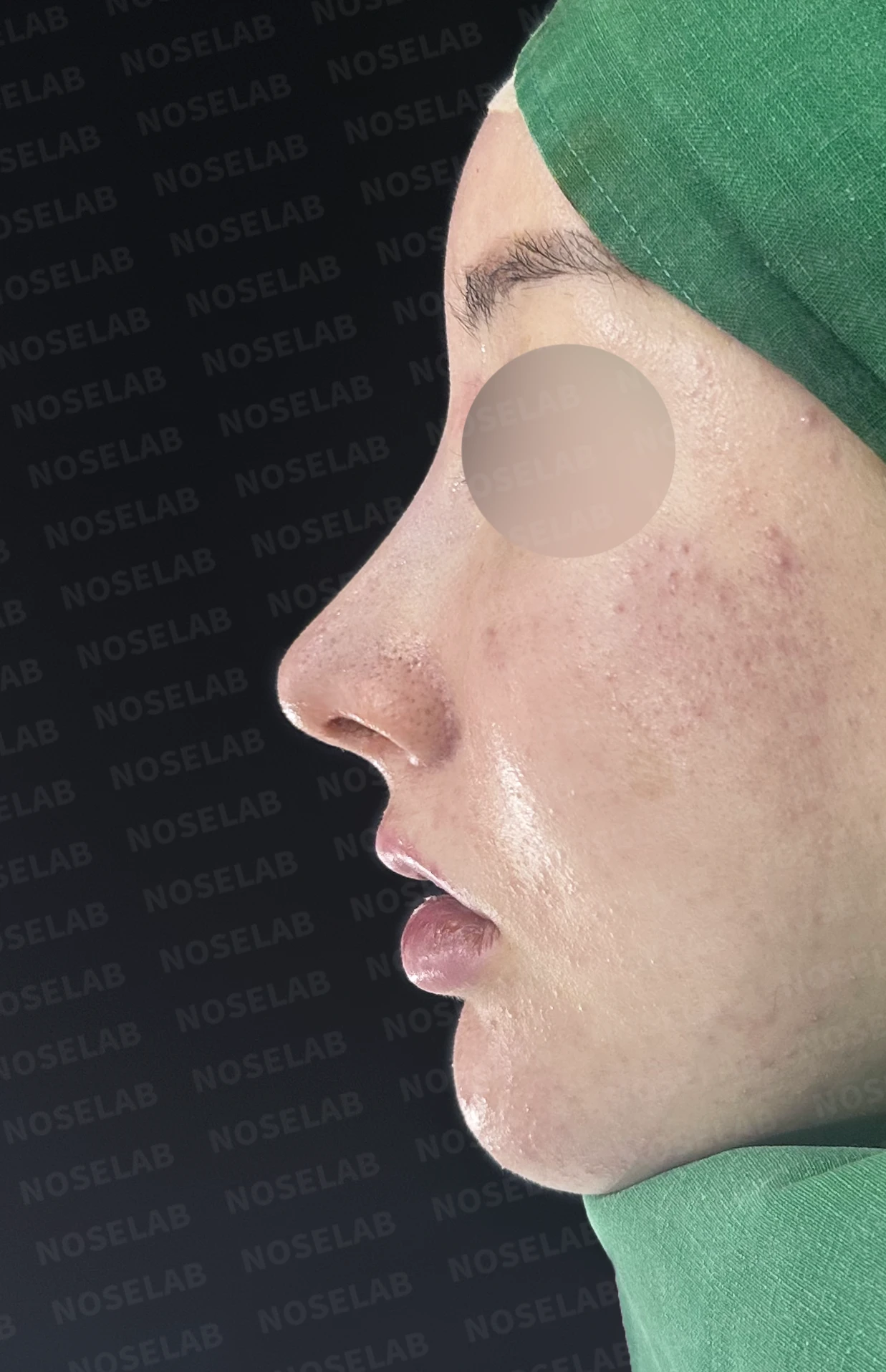
Front, oblique, and profile views on day 0 immediately after surgery Photos taken immediately after surgery show swelling and may differ from the final result.
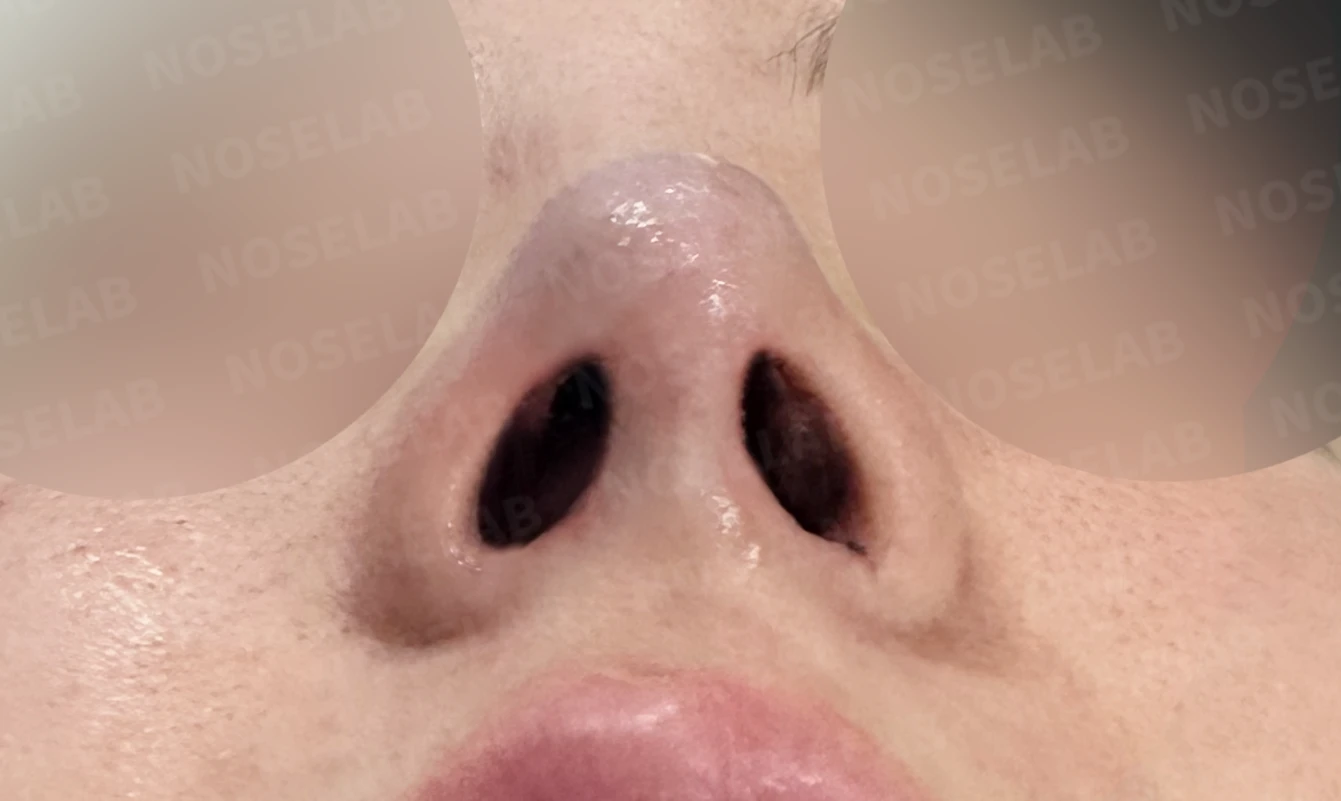
Nostril view on day 0 immediately after surgery Photos taken immediately after surgery show swelling and may differ from the final result.
In this case, the goal was not merely pursuing superficial aesthetic enhancement, but applying a reconstruction-focused approach that took structural stability and nasal function into account together.
The importance of septal extension using autologous rib cartilage
Many patients wish to elevate the nasal tip or adjust its angle. However, attempting to change external appearance without sufficient supporting framework can lead to deformities or unintended results over time. Septal extension using autologous rib cartilage is the most reliable method to resolve these issues fundamentally. Although it involves a more complex procedure, it supports a stable, natural result over the long term.
Precise correction through septal reconstruction
To straighten a deviated columella, one cannot merely address what is visible on the outside; the internal septum must be accurately reconstructed first. This is akin to straightening the supporting pillars of a building; only when the foundation is sound can the entire framework remain stable. In this case as well, by precisely reconstructing the septum, the columella was repositioned naturally along the midline.
The delicacy of alar base width correction
Nostril asymmetry is a very common concern, yet it can be challenging to resolve. Simply modifying one side can look unnatural, so carefully balancing both sides is critical. In this case, the width of the alar base was precisely adjusted to achieve natural symmetry.
Feminine beauty completed by nasolabial angle correction
The nasolabial angle significantly influences one's impression in profile view. Adjusting it to a suitable angle not only makes the nose look shorter and well-proportioned, but also imparts an overall feminine and refined feel. In this case, adjusting the nasolabial angle transformed the elongated-looking nose into a shorter, defined contour, while also improving the impression of a protruding mouth.
The importance of a structural approach
The most vital element in nasal reconstruction is framework structure. No matter how attractive the exterior appears, if the internal framework is not solid, issues can develop over time. Conversely, when the structural framework is properly established, a natural and stable result is maintained over the long term. In this case, through septal extension using autologous rib cartilage and septal reconstruction, we built a sound foundation and added delicate adjustments to achieve the feminine, defined nose the patient desired.
We will continue to provide customized reconstructions that reflect each patient's individuality and requests through this structural and detailed approach. I hope this case serves as a helpful reference for those with similar concerns.
This was Dr. Peter C. Kang. Thank you.
#closedrhinoplasty #closedrevisionrhinoplasty #femininenose #shortnose #nasolabialanglecorrection #nostrilasymmetry #autologousribcartilage #septalextension #columellacorrection

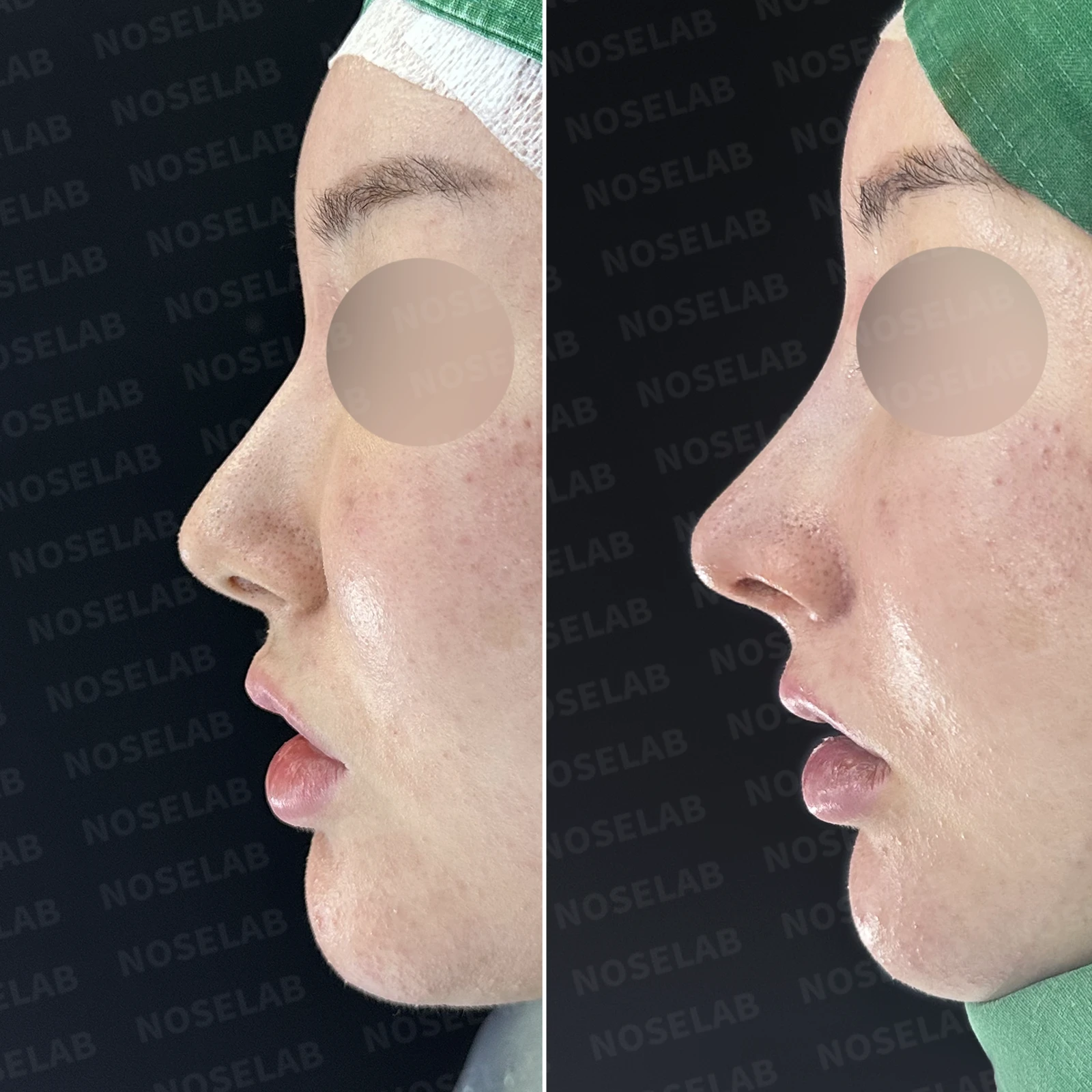
Limitations and risks
When autologous rib cartilage is used, scarring and pain may remain at the donor site on the chest, and pneumothorax (pleural injury) can occur rarely. Over time, the grafted cartilage may warp or undergo partial resorption.
When the septum is corrected at the same time, nasal obstruction may persist or recur, and in rare cases, septal perforation or changes in smell may occur.
Common potential risks include infection, bleeding, asymmetry, scarring, skin necrosis, and insufficient improvement; results vary depending on individual skin condition and previous surgical history.