Hello, I am Dr. Peter C. Kang.
Today, I would like to share a complex reconstruction case of a patient with congenital asymmetry from cleft lip and palate and a history of multiple previous reconstructive surgeries.
Correcting congenital asymmetry is considered one of the most demanding procedures in plastic and reconstructive surgery, requiring a meticulous approach that addresses both function and aesthetics.
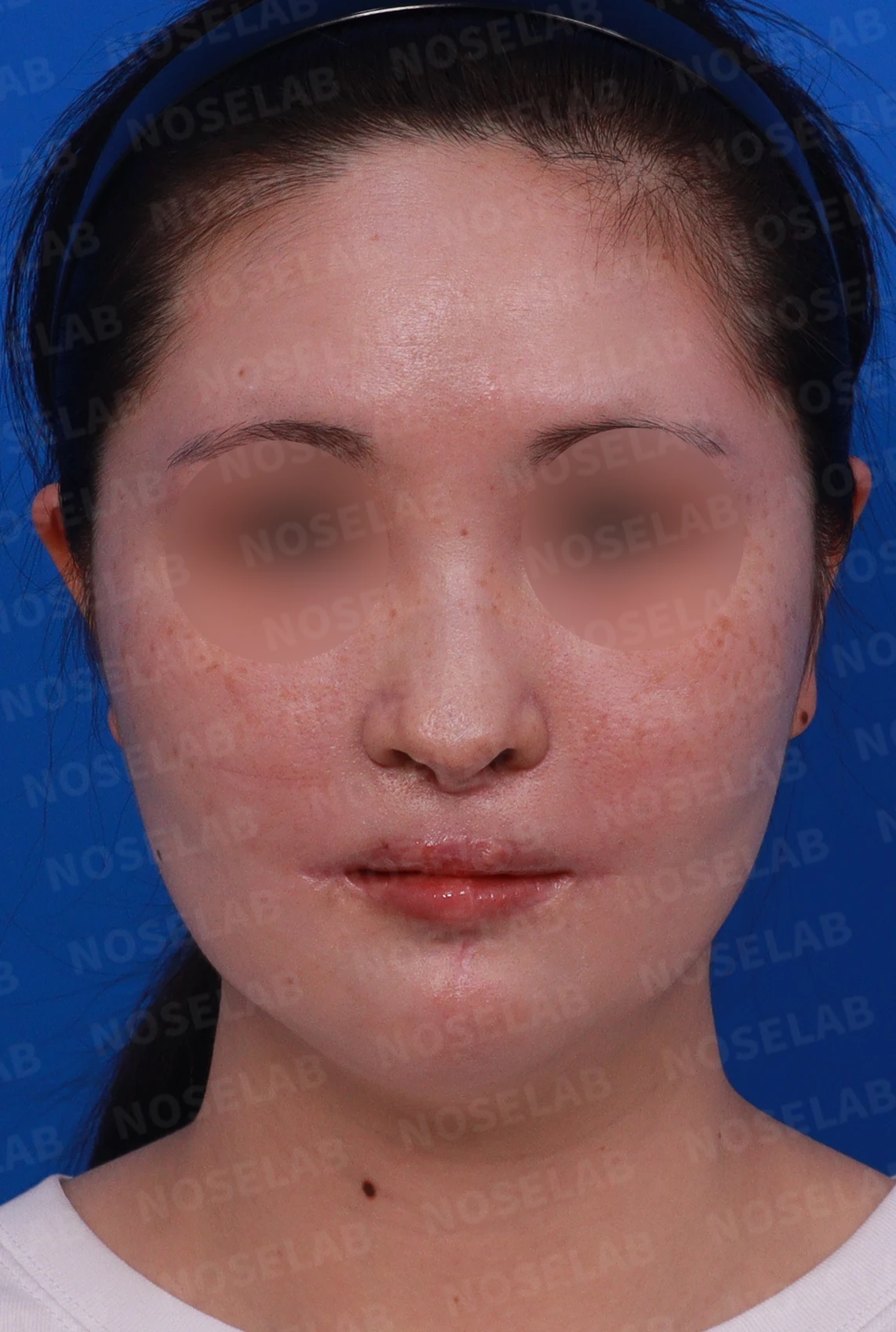
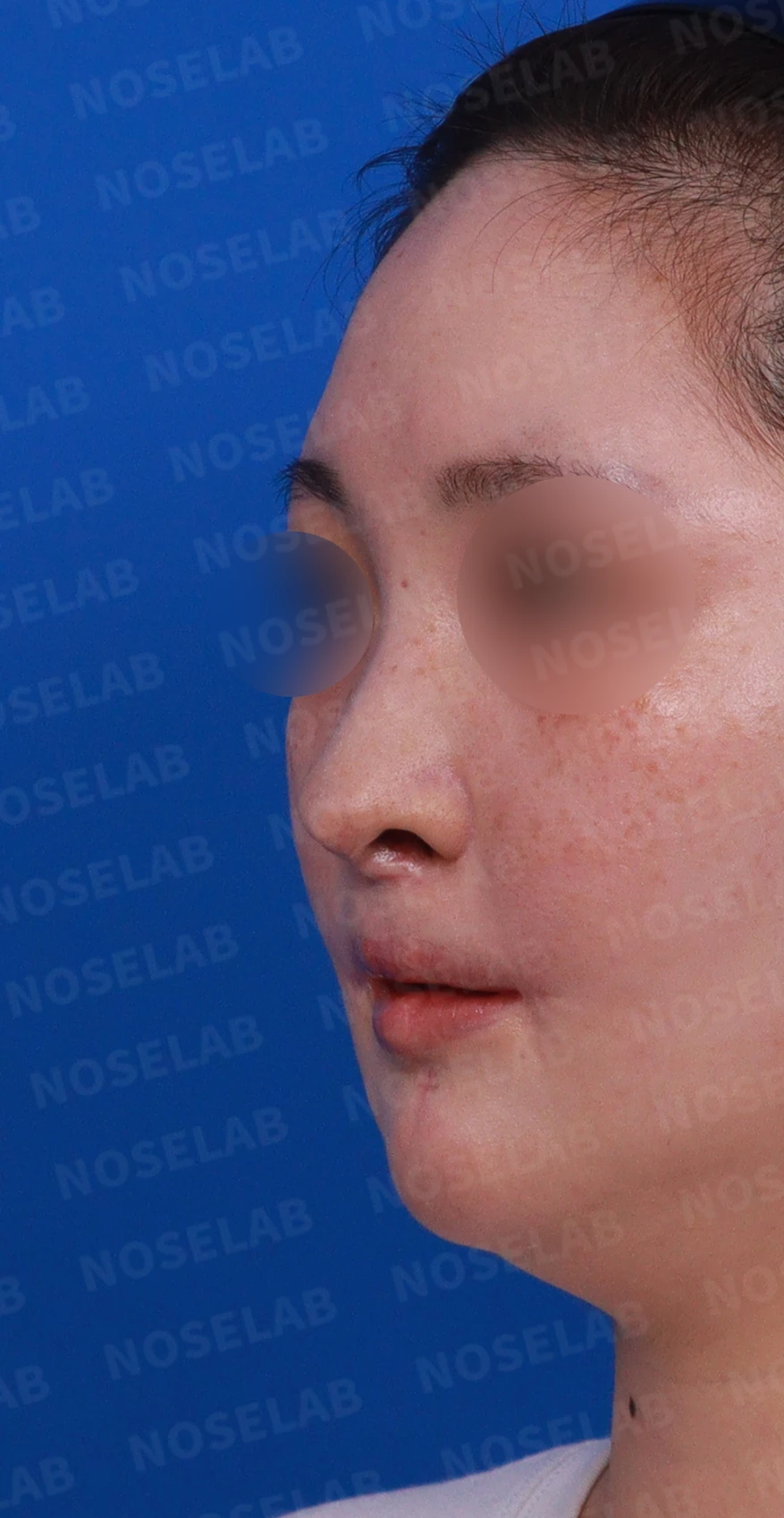
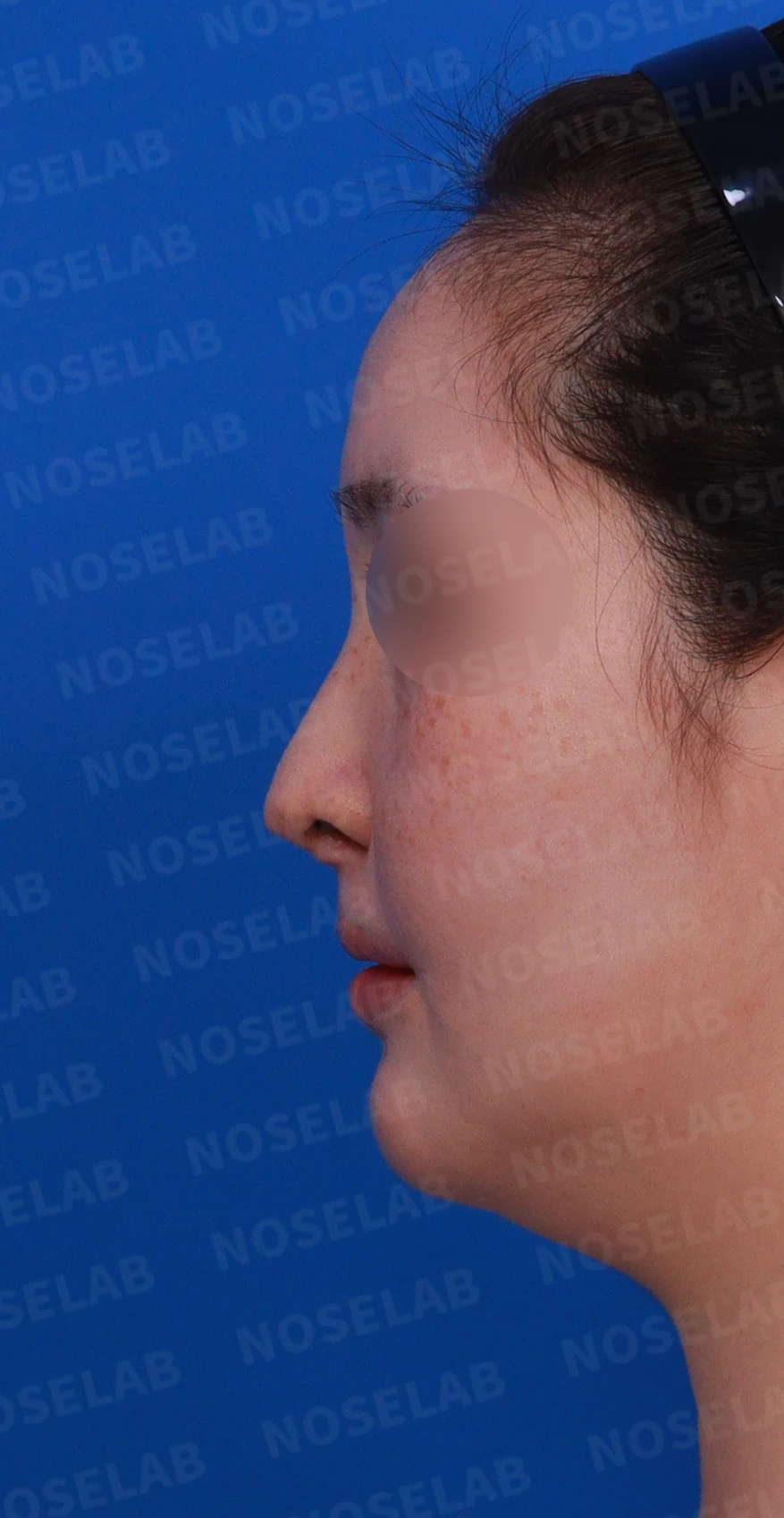
Design consultation: front, left oblique, and profile views.
🔍 Surgical history
Surgical history for congenital malformation:
- Infancy: Bilateral cleft lip and palate repair (palate and philtrum closure)
- Elementary school: Iliac bone graft to the alveolus + septal reconstruction
- 1st grade of middle school (approx. age 13): Lip shape reconstruction
- 4 years ago: Columellar reconstruction (ear cartilage + skin graft) + lip flap surgery
- 2 years ago: Lip reconstruction
- Afterward: 2 additional procedures for oral commissure closure
- Nasal surgeries: 2 in total
Other surgical history:
- 5 years ago: Double-jaw (orthognathic) surgery
Current medical condition:
- Currently using a nebulizer for asthma
- Tendency toward hypertension (typically 130–140 mmHg, up to 150 mmHg when nervous)
- Rhinitis symptoms with excessive rhinorrhea
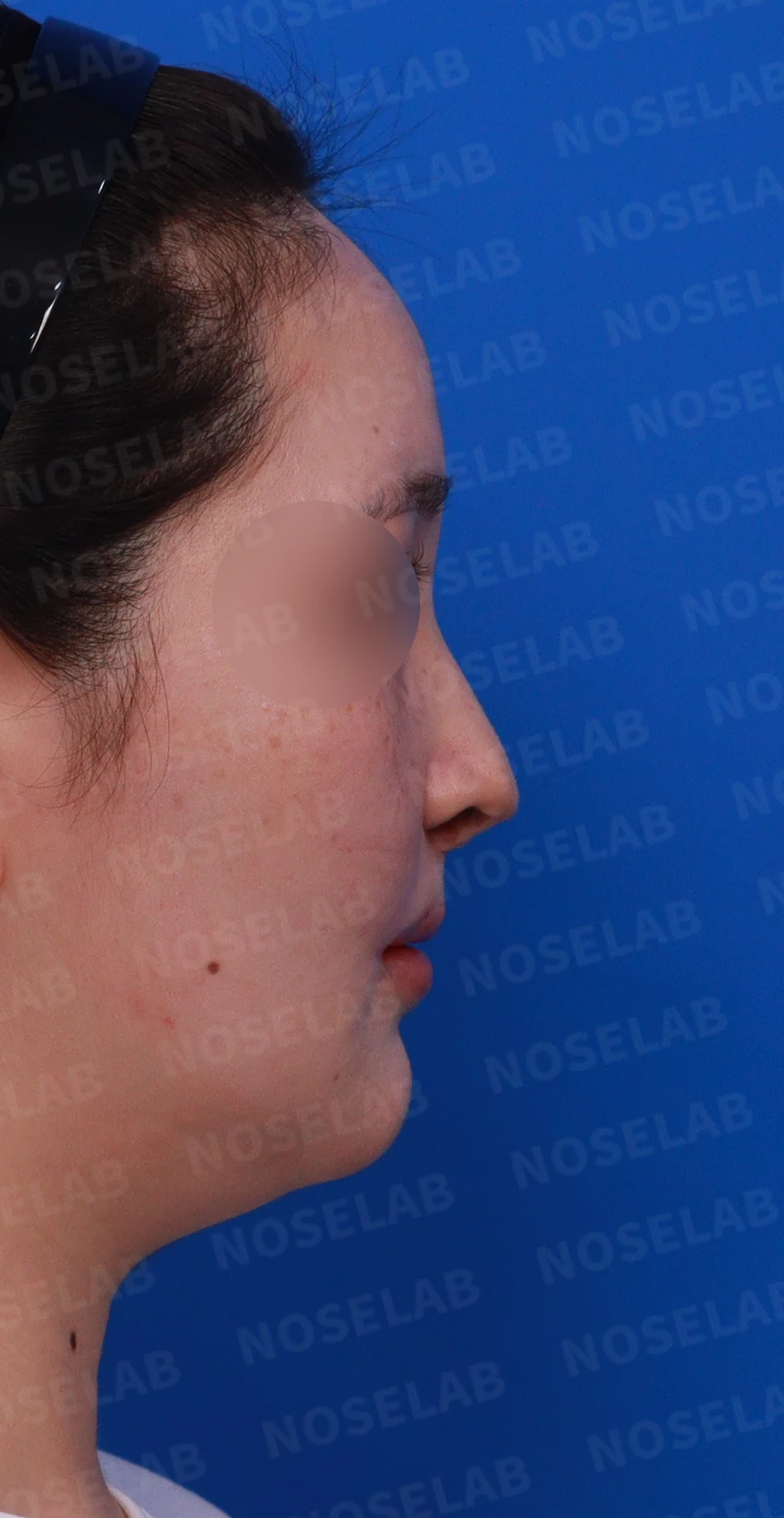
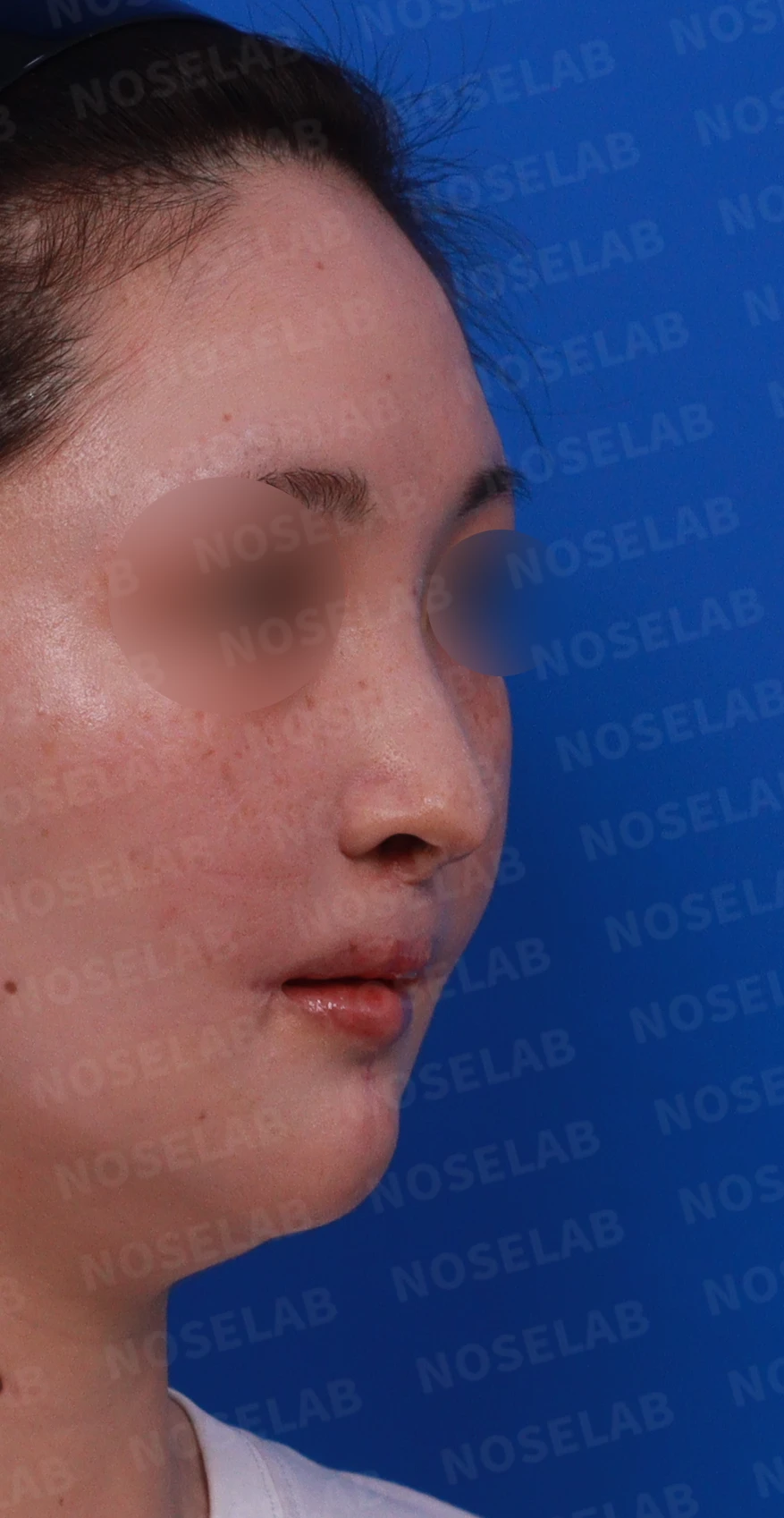
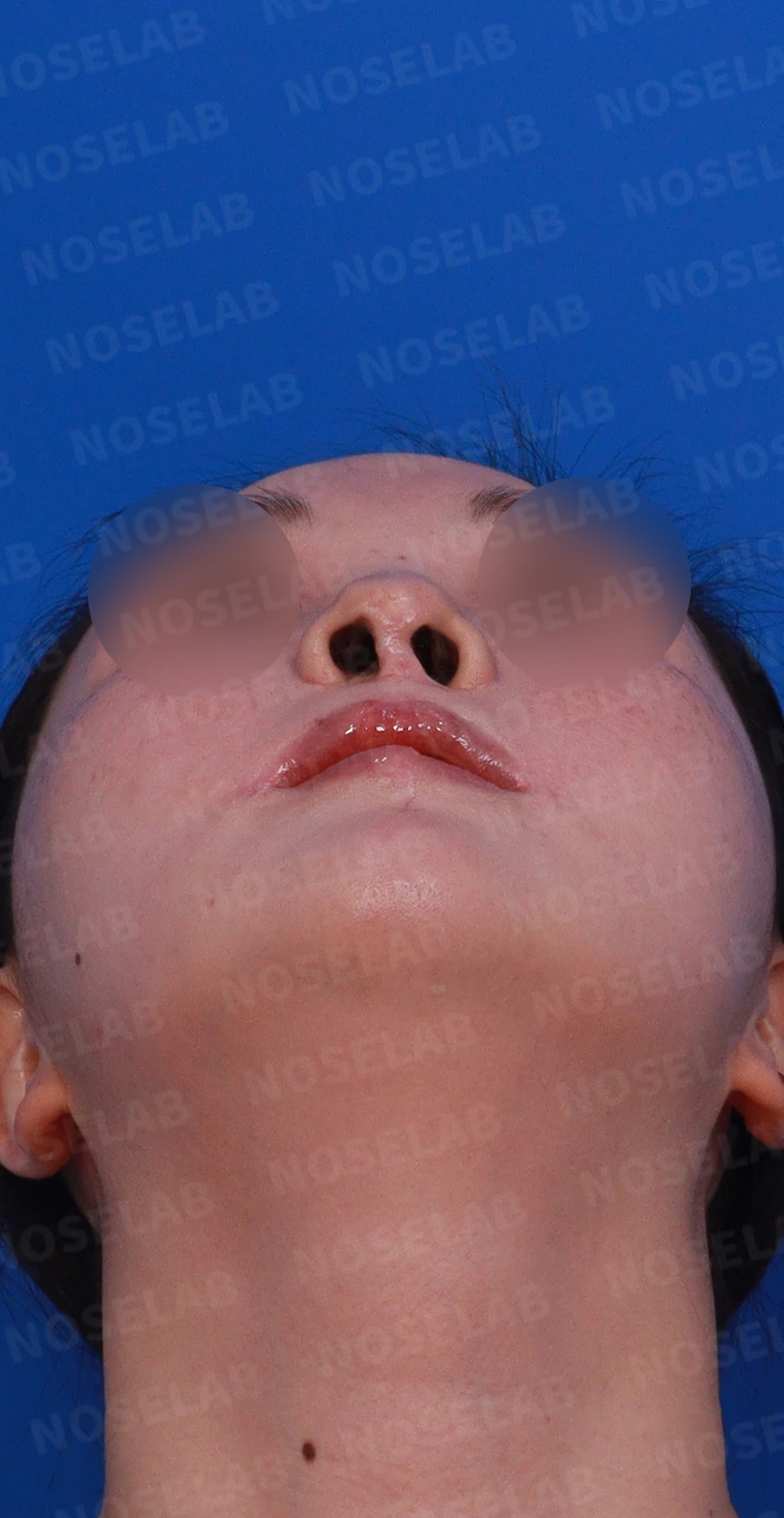
Design consultation: right profile, oblique, and nostril views.
Patient's requests
1. Improvement of nasal width – desire for a slimmer nasal line
2. Improvement of columellar shape – natural columellar contour
3. Reduction in nostril show – desire for less nostril visibility on profile view
4. Correction of dorsal hump – smooth and natural dorsal line
5. Correction of congenital asymmetry – balancing left and right
🔧 Surgical plan and procedure
Performing complex multi-step reconstruction:
1. Septal reconstruction using autologous rib cartilage
- Harvest and precise carving of the 7th rib cartilage
- Complete reconstruction of the deficient septum
- Establishing stable structural support
2. Nasal bridge augmentation using autologous rib cartilage
- Creating bridge height with precisely sculpted rib cartilage
- Achieving a smooth nasal dorsum line
- Dorsal hump reduction and creation of a natural curve
3. Alar reconstruction using ear cartilage
- Intricately designing the ear cartilage harvested from previous surgery
- Reinforcing the alar framework and improving contour
- Adjusting nostril size and shape
4. Lateral osteotomy
- Repositioning the nasal bones
- Correcting congenital asymmetry
- Narrowing nasal width and securing symmetry
5. Columellar adjustment and nasolabial angle correction
- Meticulously refining the columellar contour
- Naturally adjusting the nasolabial angle
- Improving the profile view
6. Functional improvement
- Securing patent breathing airways
- Structural improvement to relieve rhinitis symptoms
- Alleviating excessive rhinorrhea
🌟 Surgical results
Structural improvements:
- Complete, stable septal reconstruction using autologous rib cartilage
- Naturally elevated nasal bridge
- Marked improvement in congenital asymmetry
Functional improvements:
- Significant enhancement in breathing function
- Relief from excessive rhinorrhea symptoms
- Improvement of rhinitis symptoms
Aesthetic improvements:
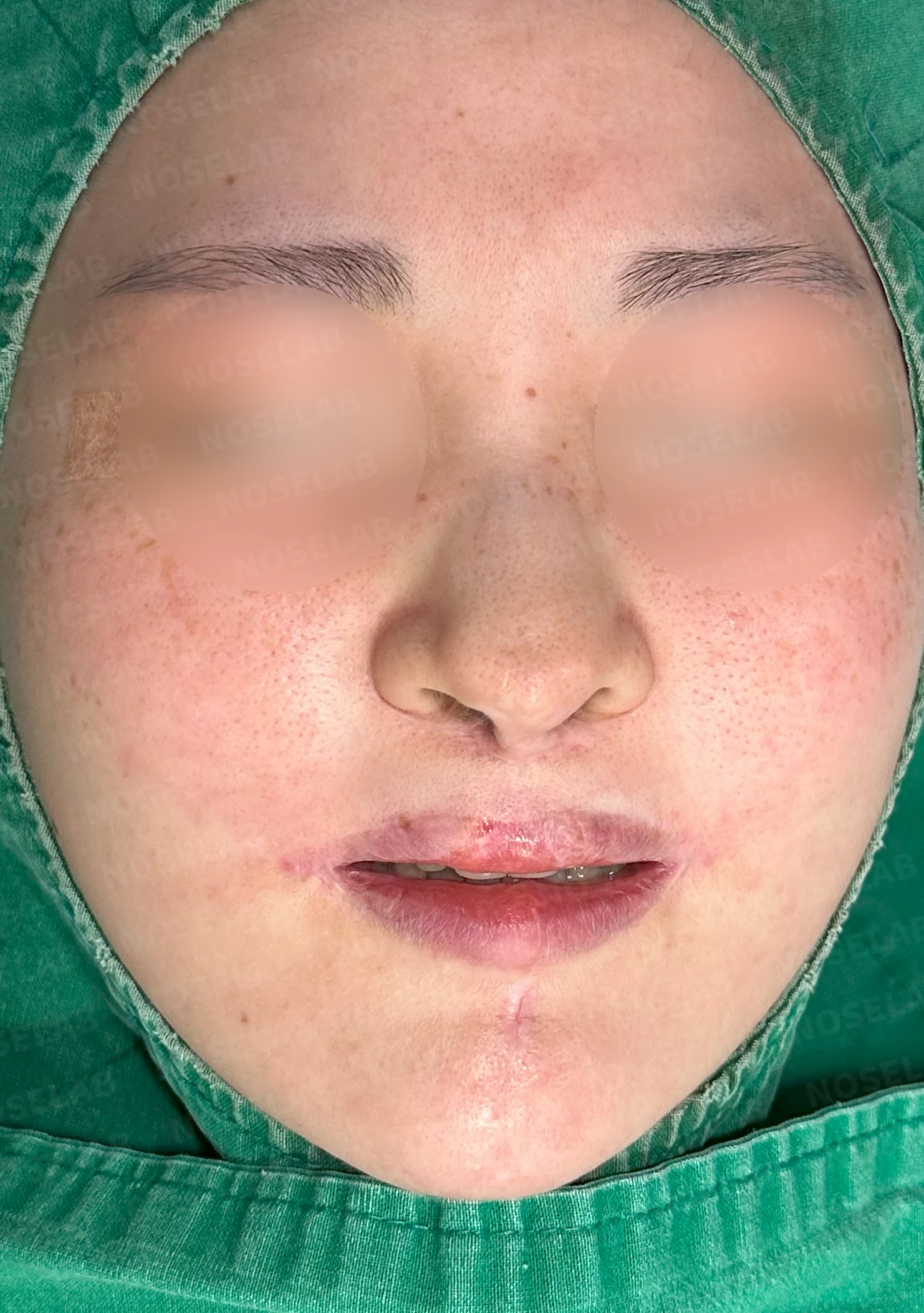
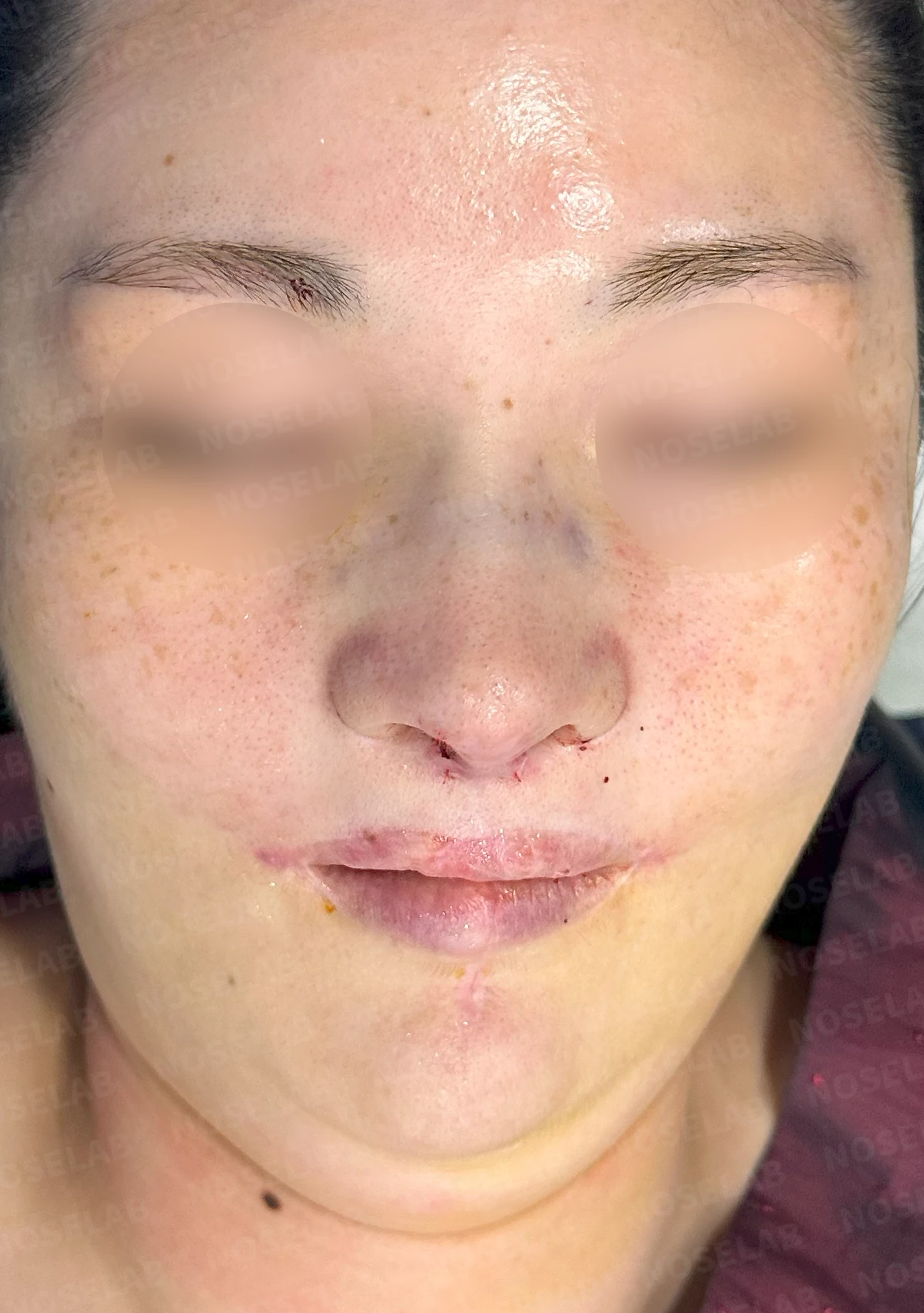
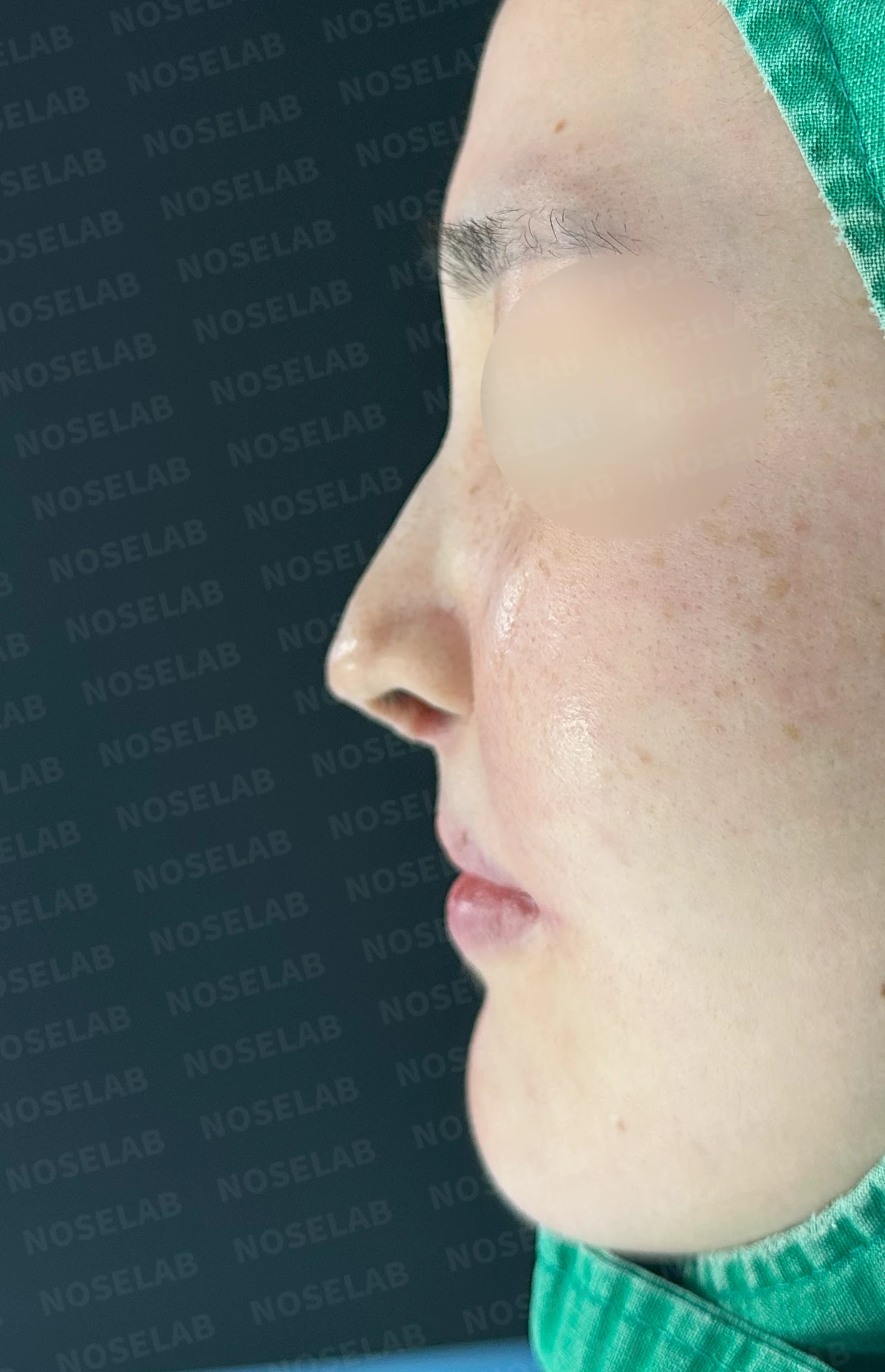
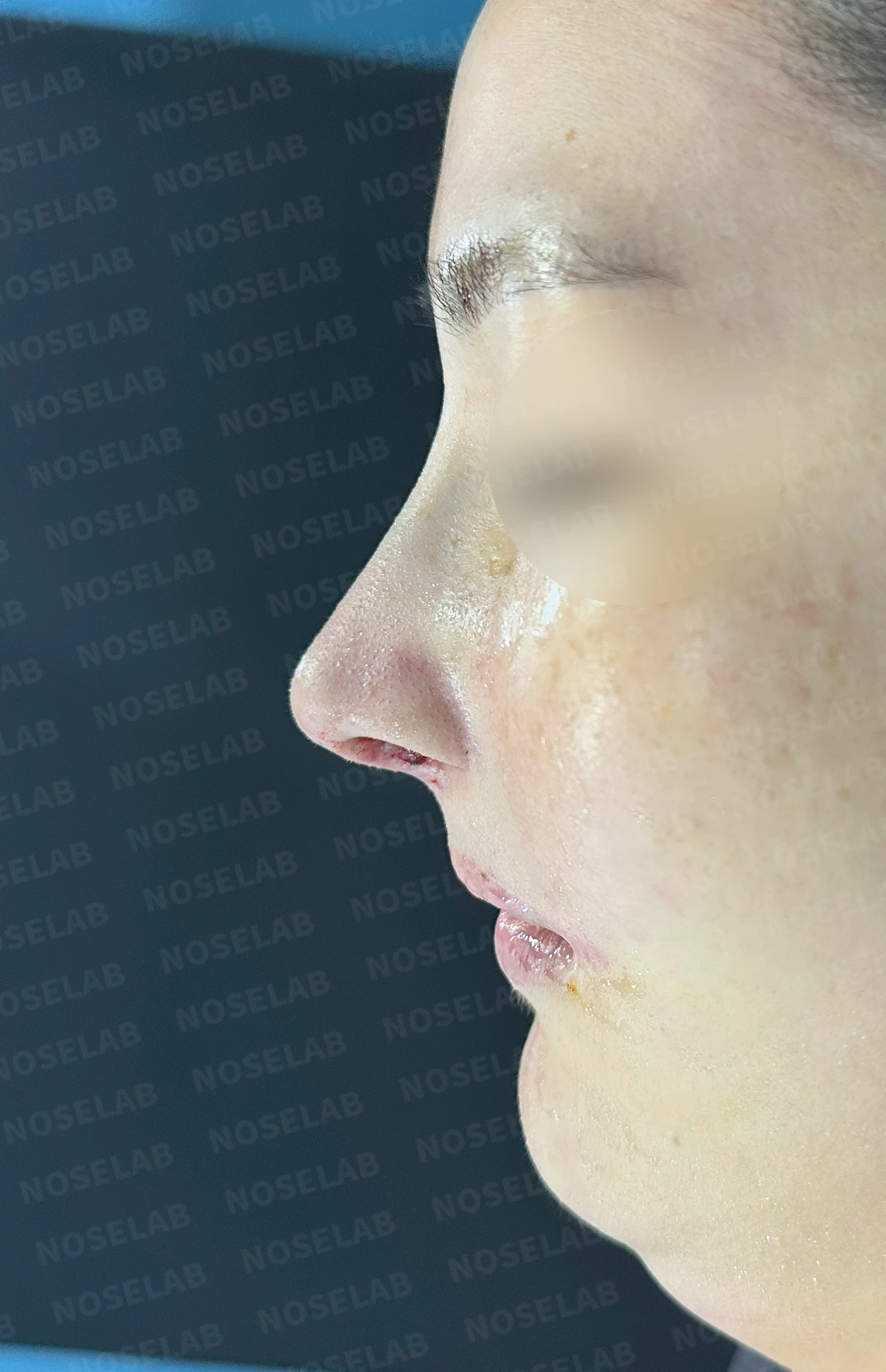
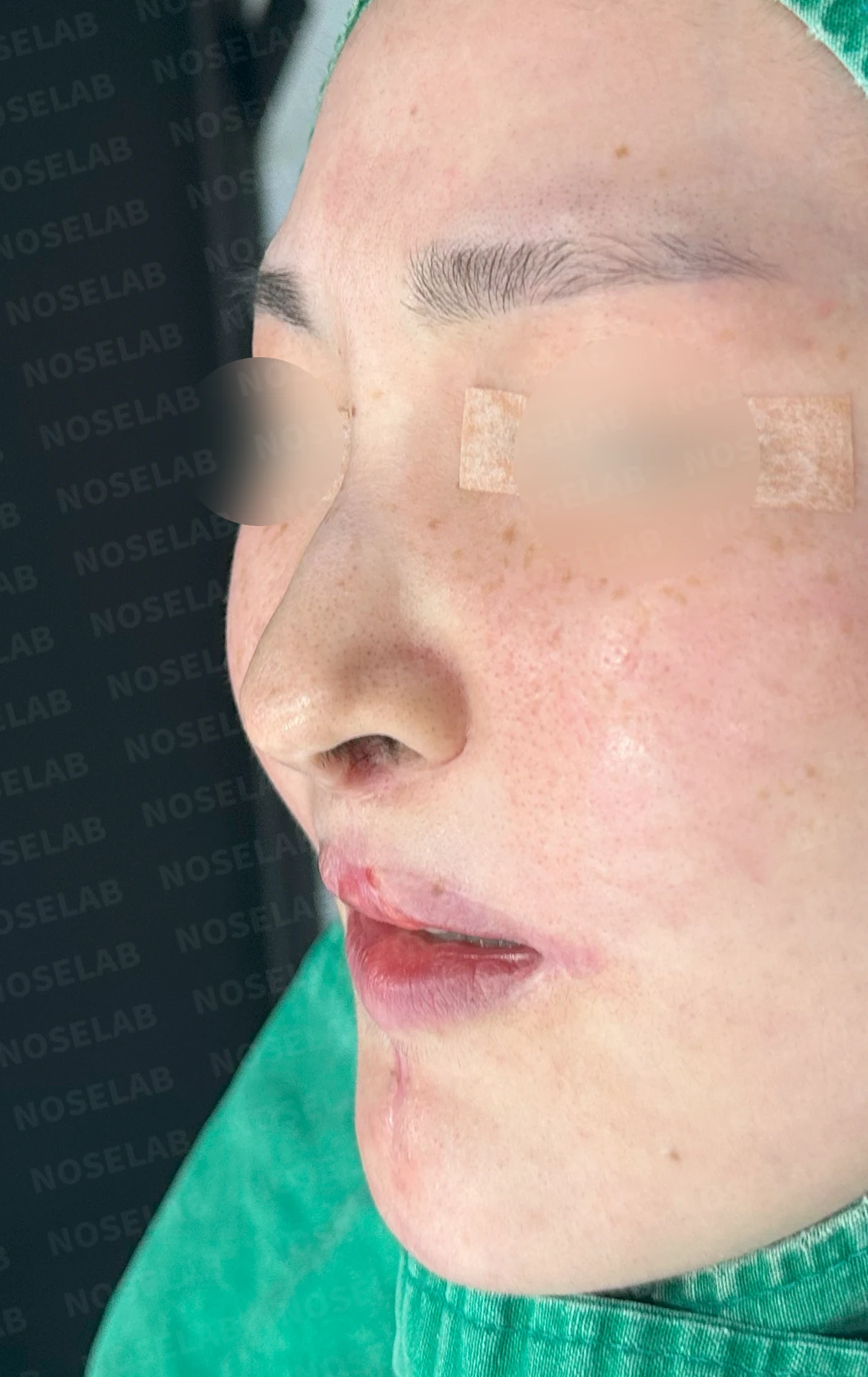
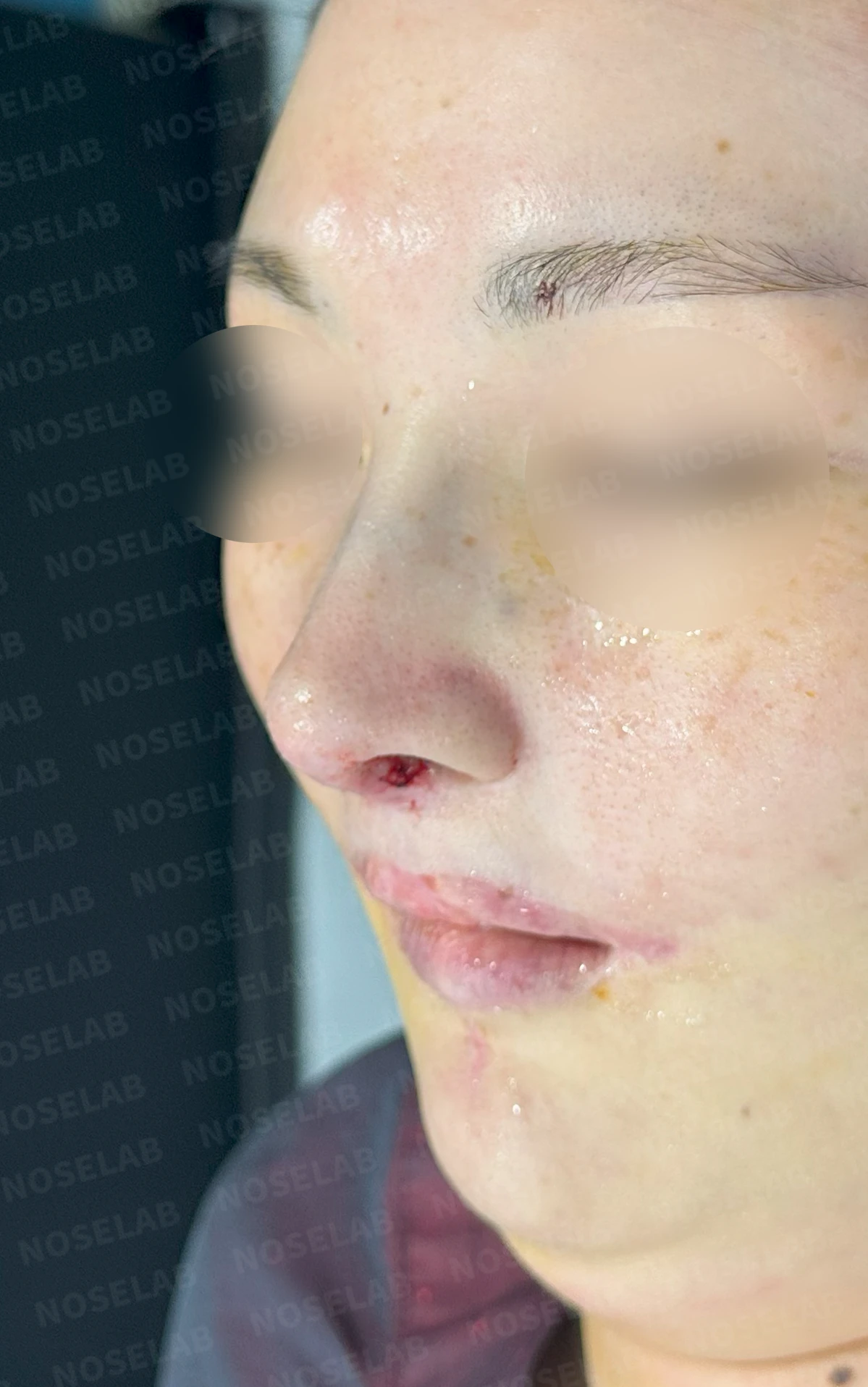
Before surgery / Day 0 immediately after surgery Photos taken immediately after surgery show swelling and may differ from the final result.
1. Frontal changes
- Lateral osteotomy appropriately reduced nasal width and straightened the deviated appearance
- Correction of congenital asymmetry resulting in a balanced appearance
- Natural refinement of the columellar shape
Before surgery / Day 0 immediately after surgery Photos taken immediately after surgery show swelling and may differ from the final result.
2. Profile changes
- Nasal bridge augmented with autologous rib cartilage forms a natural line
- Refined profile achieved through nasolabial angle correction
- Marked reduction in nostril show
Before surgery / Day 0 immediately after surgery Photos taken immediately after surgery show swelling and may differ from the final result.
3. Alae and nostrils
- Ear cartilage reconstruction improved the alar contour
- Attainment of bilateral symmetry
- Natural nostril shape
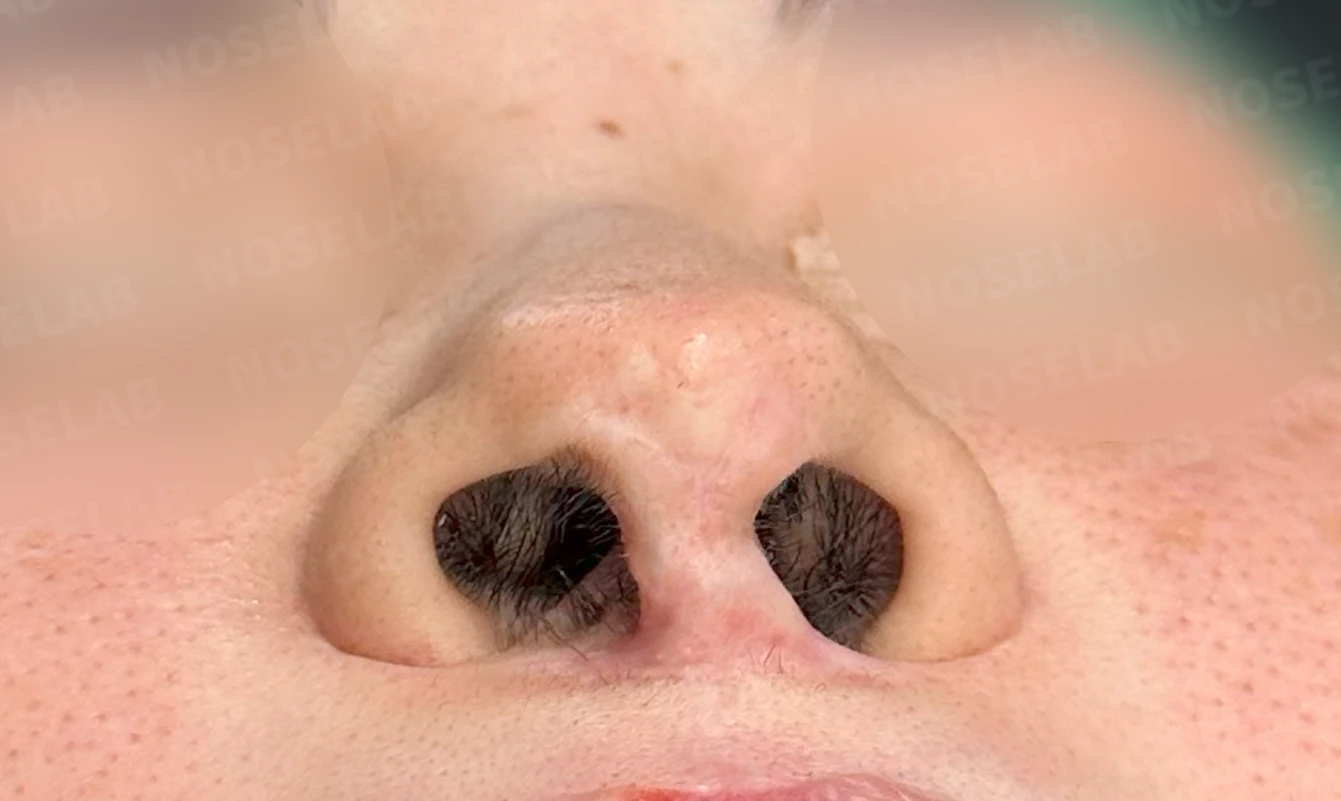
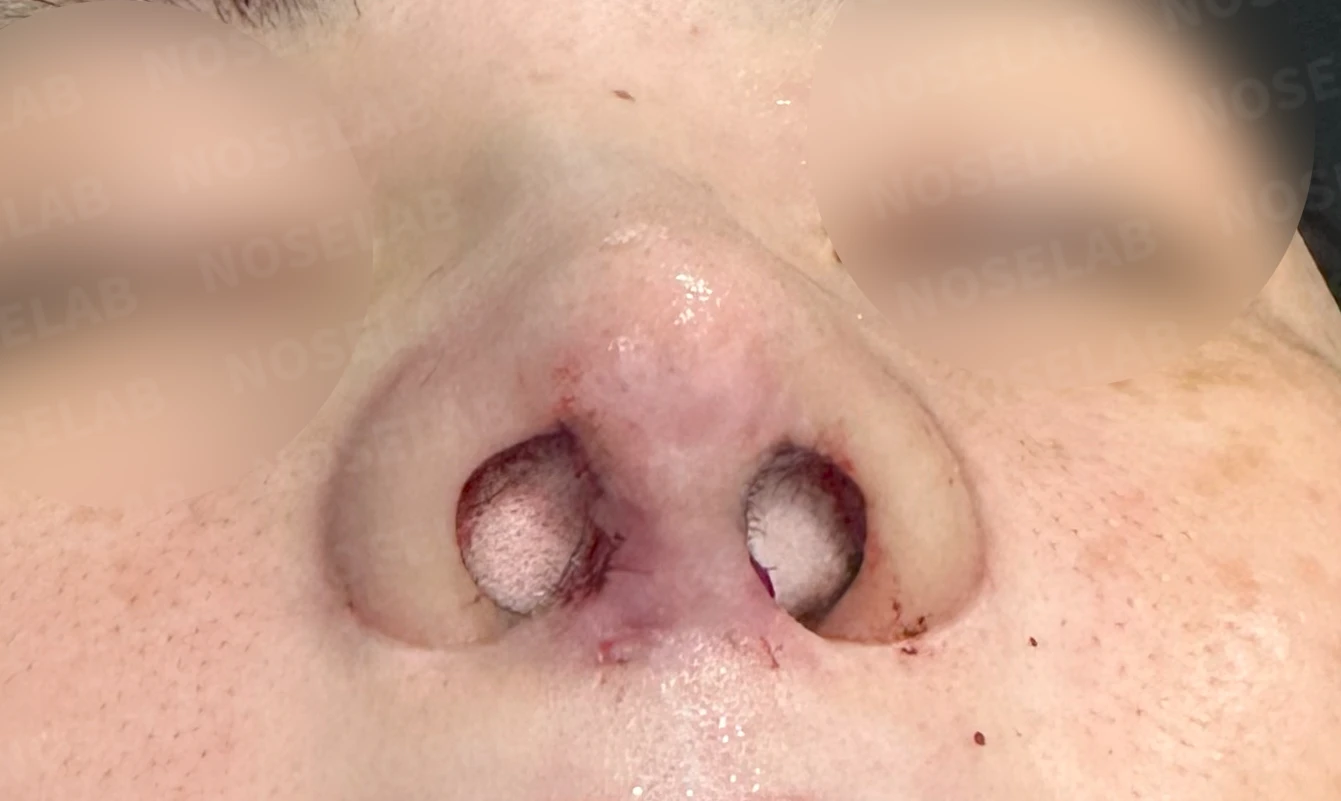
Before surgery / Day 0 immediately after surgery Photos taken immediately after surgery show swelling and may differ from the final result.
💡 Specialist opinion
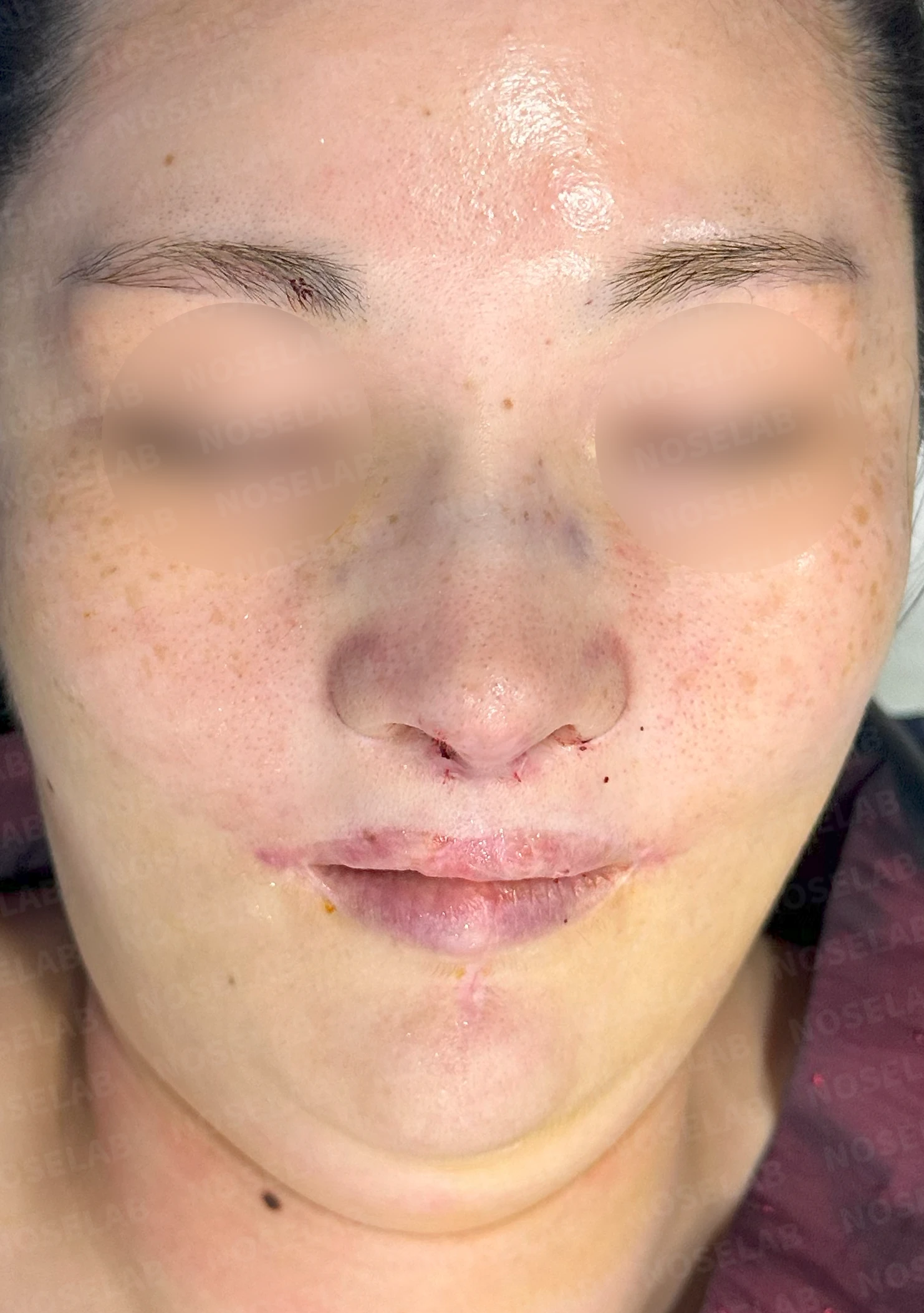
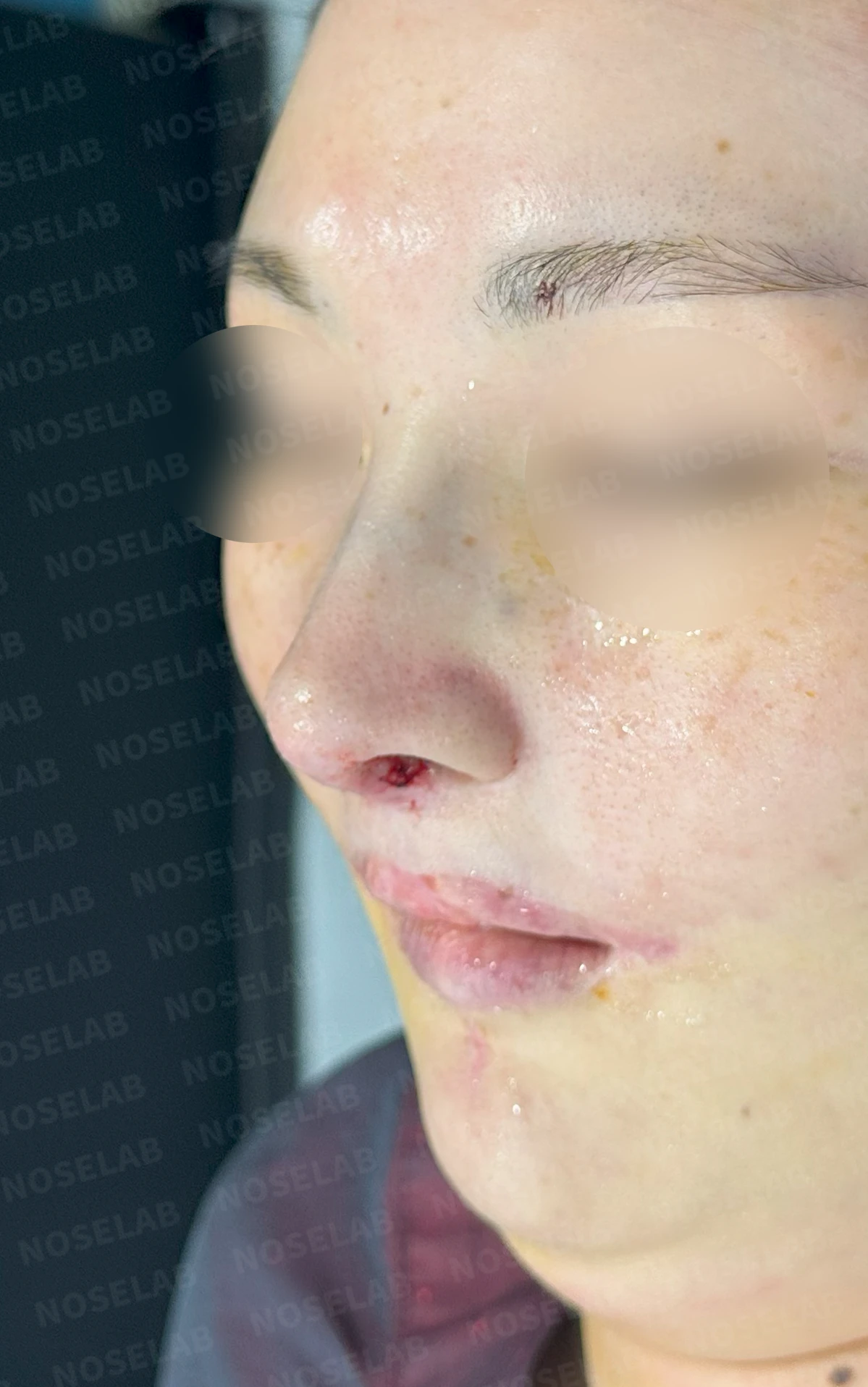
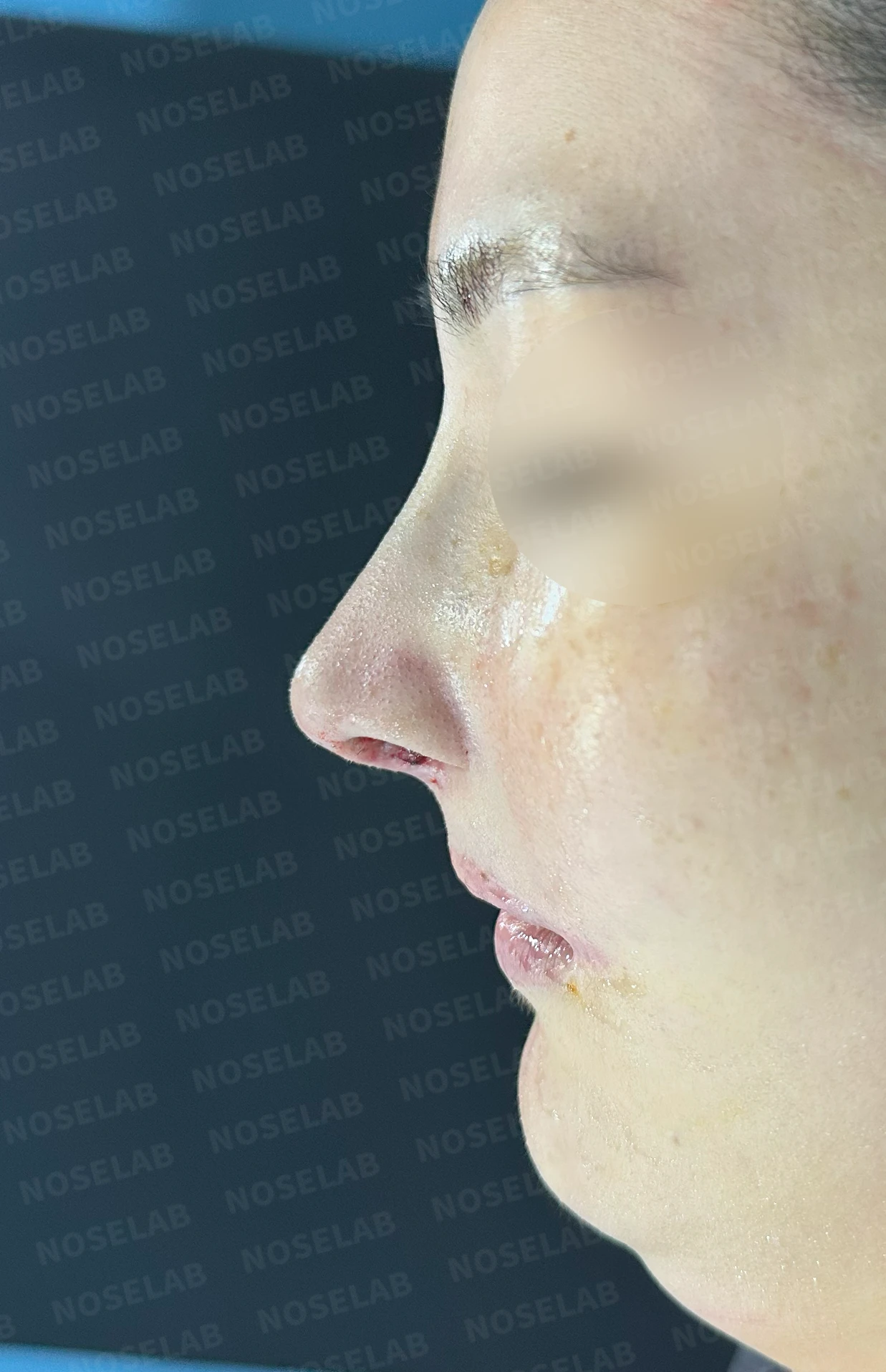
Immediately after surgery (day 0): front, oblique, and profile views. Immediate postoperative photos show swelling and may differ from the final result.
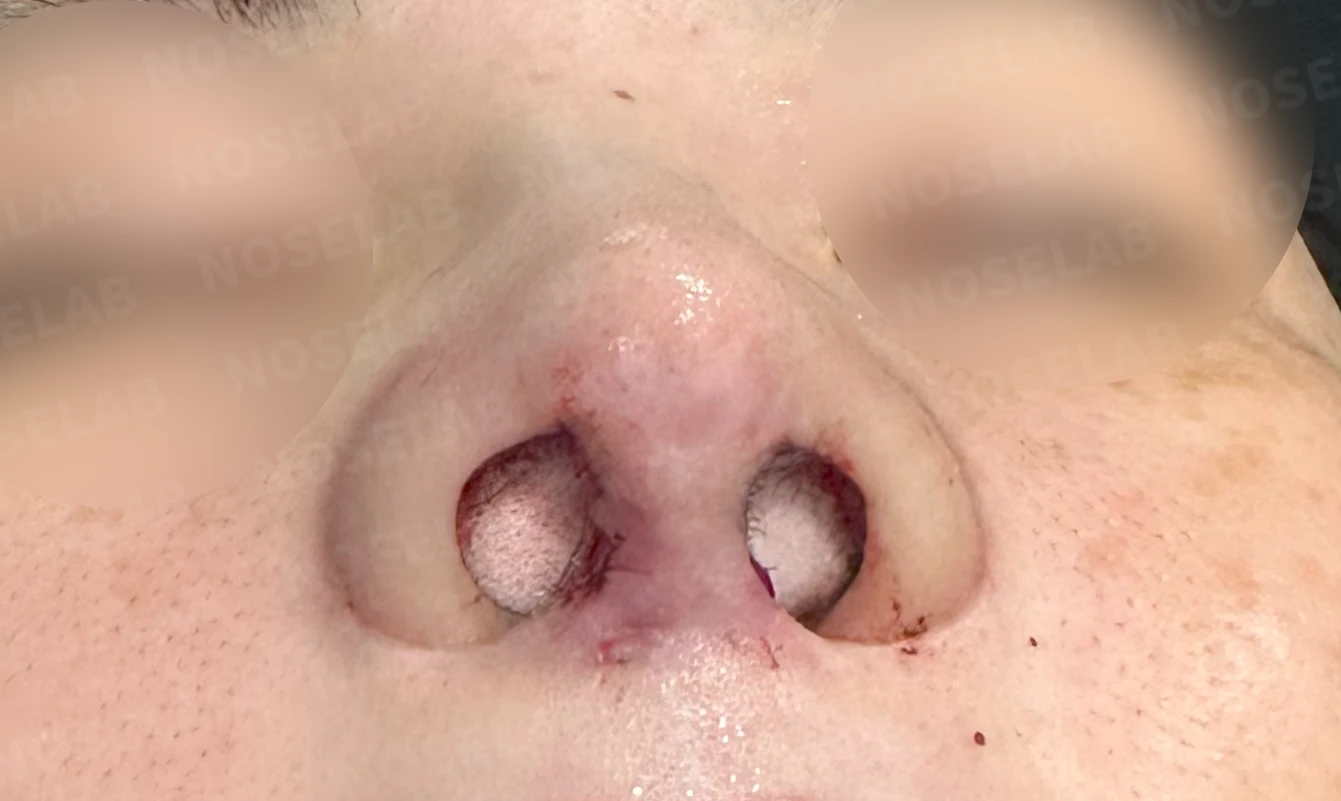
Nostril view on day 0 immediately after surgery. Photos taken immediately after surgery show swelling and may differ from the final result.
Correcting congenital asymmetry is among the most demanding surgeries in plastic and reconstructive surgery. In particular, asymmetry resulting from congenital deformities such as cleft lip and palate requires complex reconstruction that goes beyond simple aesthetic correction.
In this type of case, the strategic use of autologous rib cartilage and ear cartilage was key. Autologous rib cartilage was used for septal reconstruction and bridge augmentation to provide structural stability and height, while ear cartilage was used for alar reconstruction to achieve delicate contouring. The proper application of these autologous tissues supports long-term stability and natural results.
Through lateral osteotomy, the congenitally asymmetrical nasal bones were repositioned to secure symmetry, and adjustments to the columella and nasolabial angle established a natural profile line. Every step requires millimeter-level precision in high-difficulty surgery.
A particularly noteworthy challenge was operating on tissues that had already undergone multiple reconstructive surgeries. Reconstructing within extensive scar tissue and altered anatomical structures presents a level of difficulty entirely different from standard rhinoplasty. It demands the experience and skill to evaluate tissue status accurately intraoperatively and modify the plan on the spot.
Taking into account the patient's underlying conditions of asthma and a tendency toward hypertension, we coordinated closely with the anesthesiology team and paid special attention to postoperative management. Through this comprehensive approach, satisfactory results were achieved in both function and aesthetics.
I hope this case brings encouragement to those concerned about congenital asymmetry and complex malformations. NOSELAB will continue to make every effort to deliver reliable results in the field of advanced nasal reconstruction.
This was Dr. Peter C. Kang. Thank you.
#closedrhinoplasty #closedrevisionrhinoplasty #cleftlipandpalatereconstruction #autologousribcartilage #earcartilagereconstruction #septalreconstruction #congenitalasymmetrycorrection #complexnasalreconstruction #lateralosteotomy #nasolabialanglecorrection

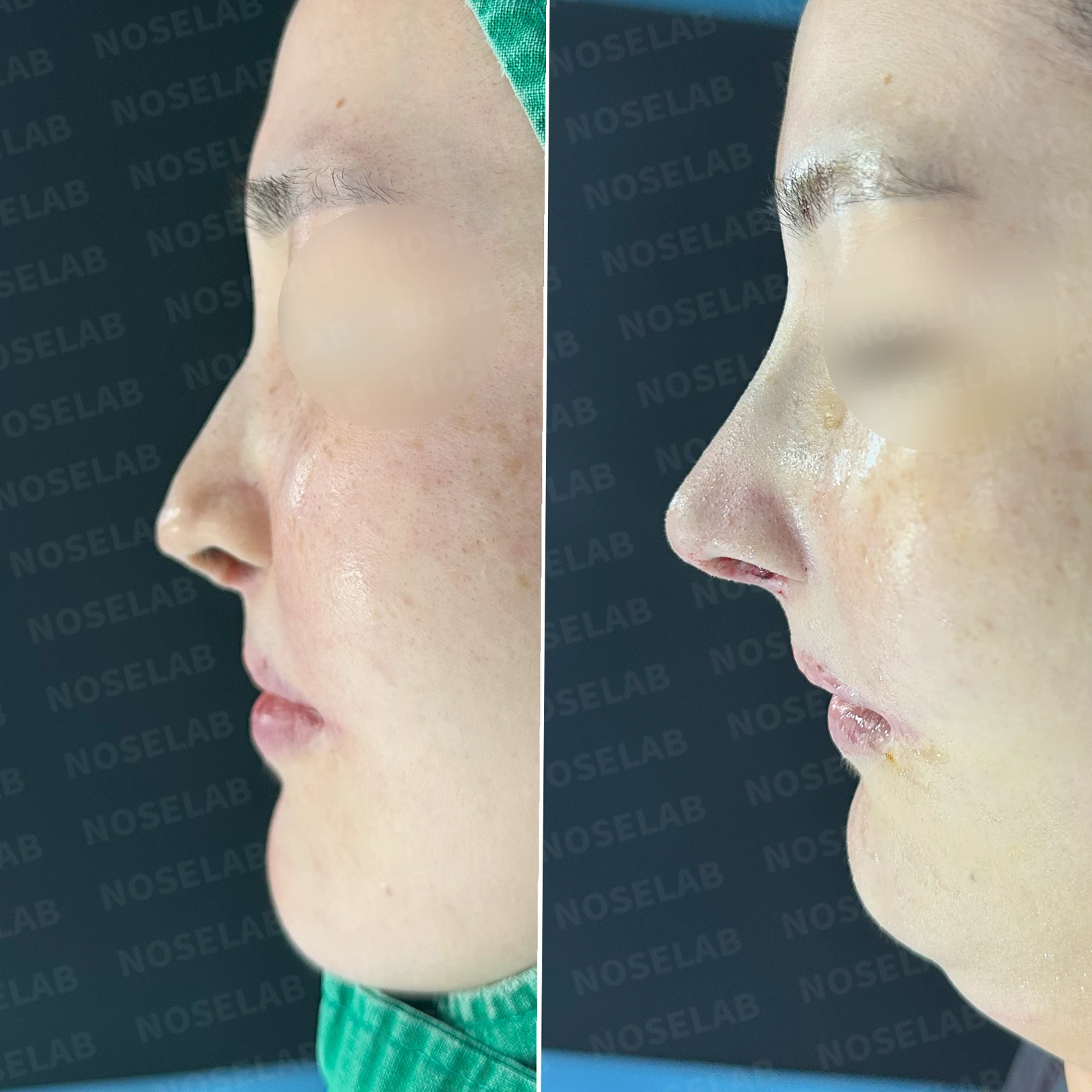
Before surgery / Day 0 immediately after surgery Photos taken immediately after surgery show swelling and may differ from the final result.
Limitations and risks
When autologous rib cartilage is used, scarring and pain may remain at the donor site on the chest, and pneumothorax (pleural injury) can occur rarely. Over time, the grafted cartilage may warp or undergo partial resorption.
When the septum is corrected at the same time, nasal obstruction may persist or recur, and in rare cases, septal perforation or changes in smell may occur.
Common potential risks include infection, bleeding, asymmetry, scarring, skin necrosis, and insufficient improvement; results vary depending on individual skin condition and previous surgical history.