Hello, I am Dr. Peter C. Kang.
Today, I would like to share the case of a patient who experienced nasal deformity due to trauma that occurred during everyday life after giving birth.
📍 Surgical history
Beginning with nasal filler treatments 20 years ago, the patient had undergone several nose surgeries.
17 years ago, she had surgery using only a silicone implant, but because she had frequent nosebleeds and felt anxious, the silicone implant was removed 16 years ago.
She then underwent another surgery approximately 2 to 3 years ago using a silicone implant and cartilage, though she did not remember the exact graft materials used.
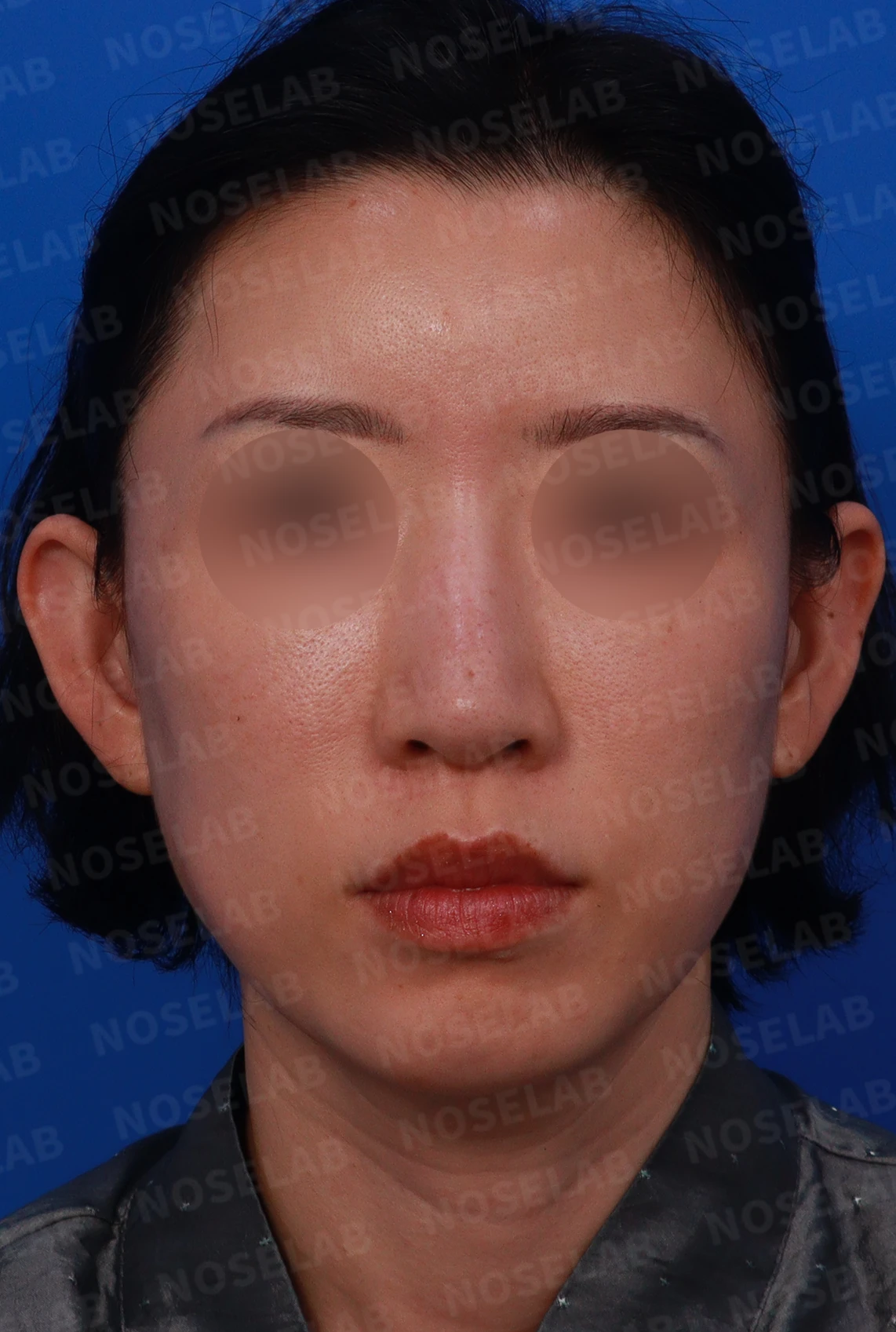
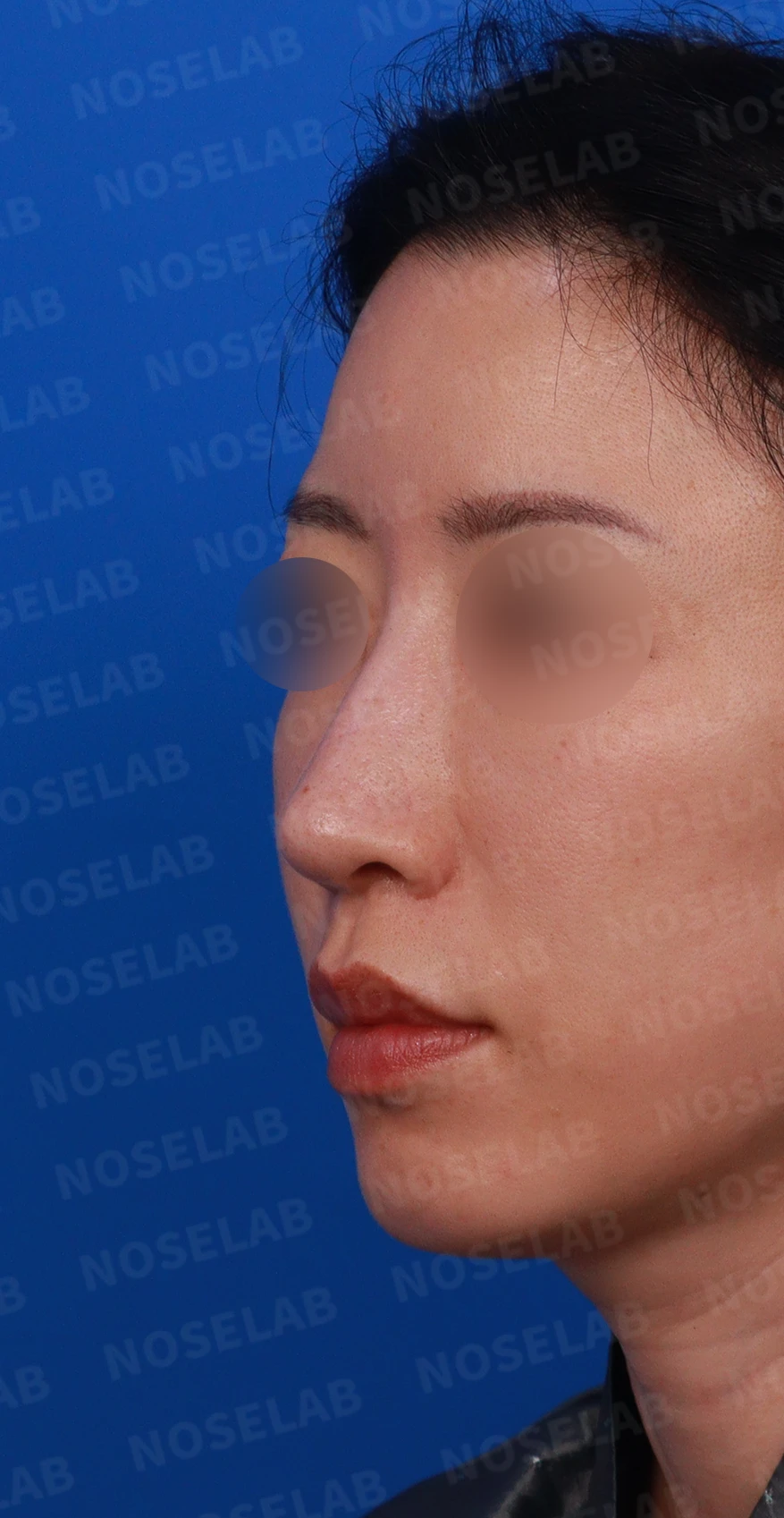
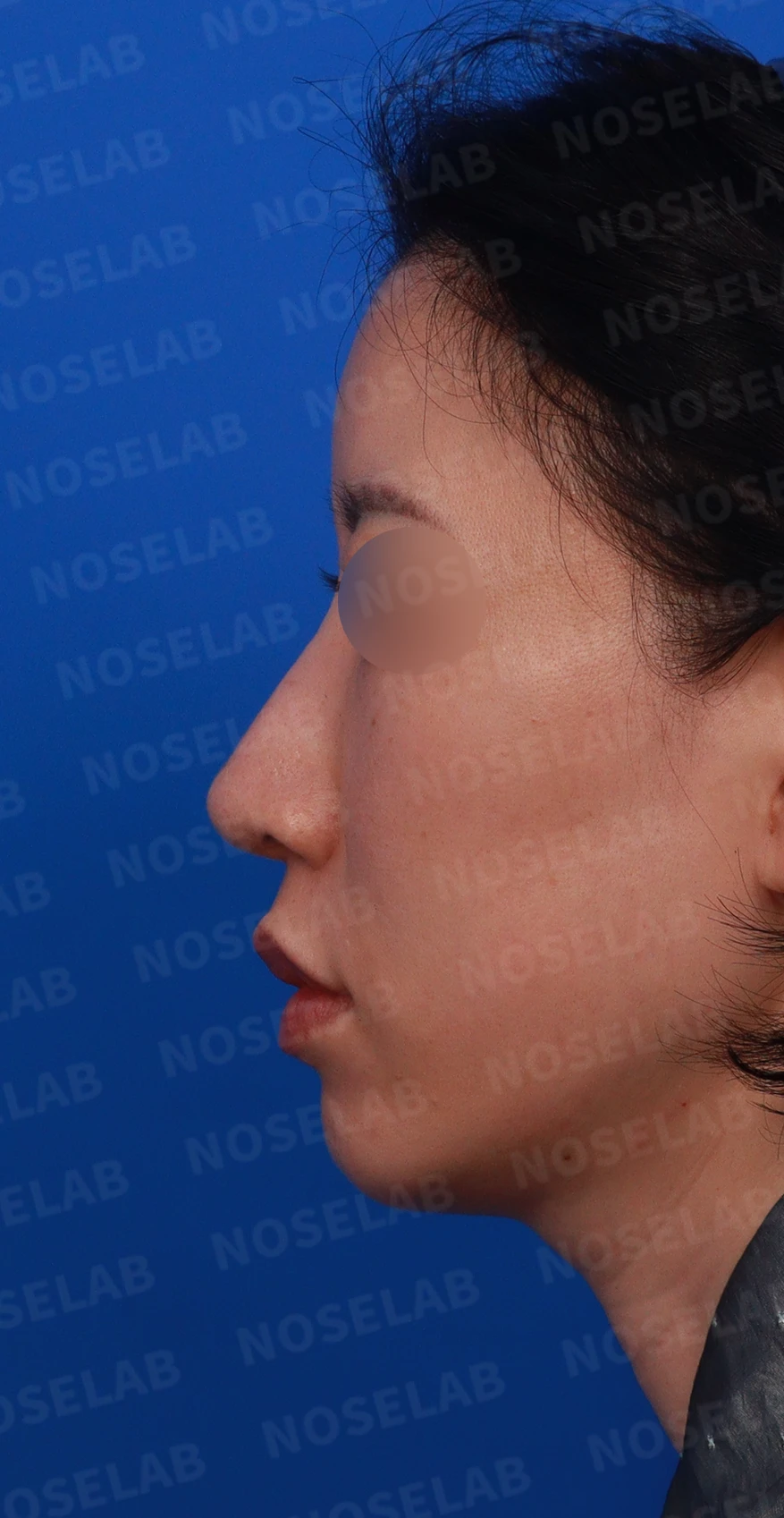
Design consultation: front, left oblique, and profile views.
🔎 Initial consultation findings
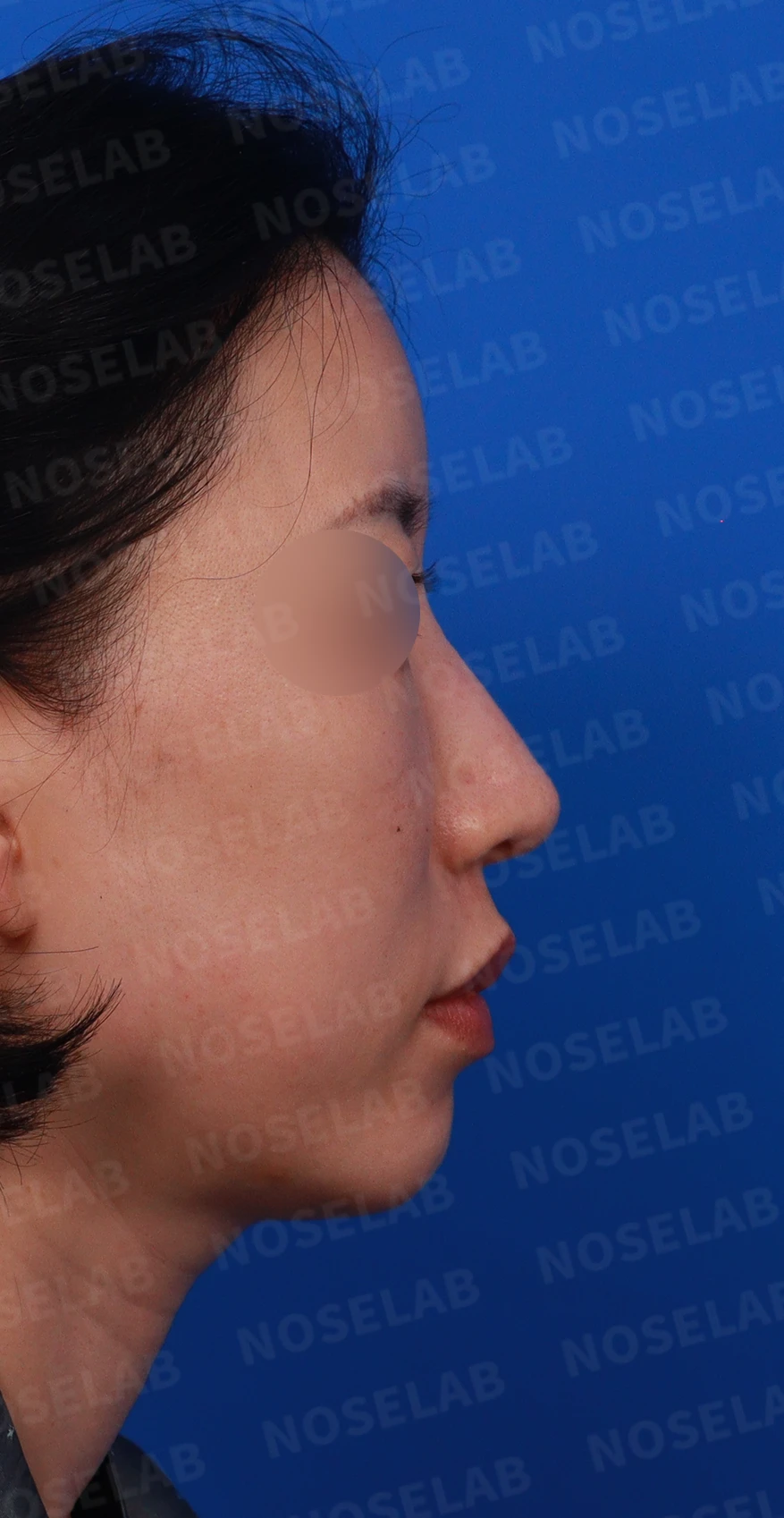
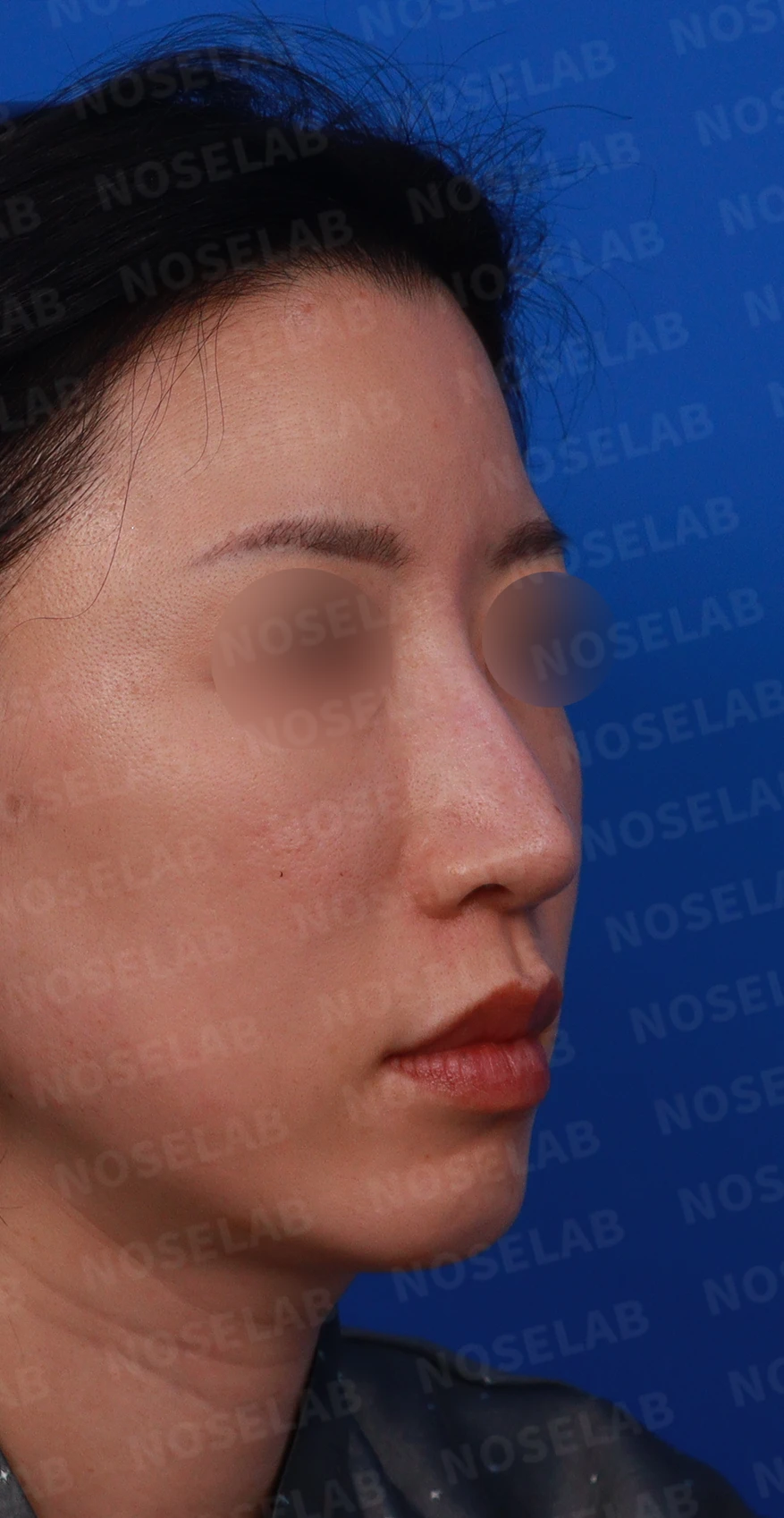
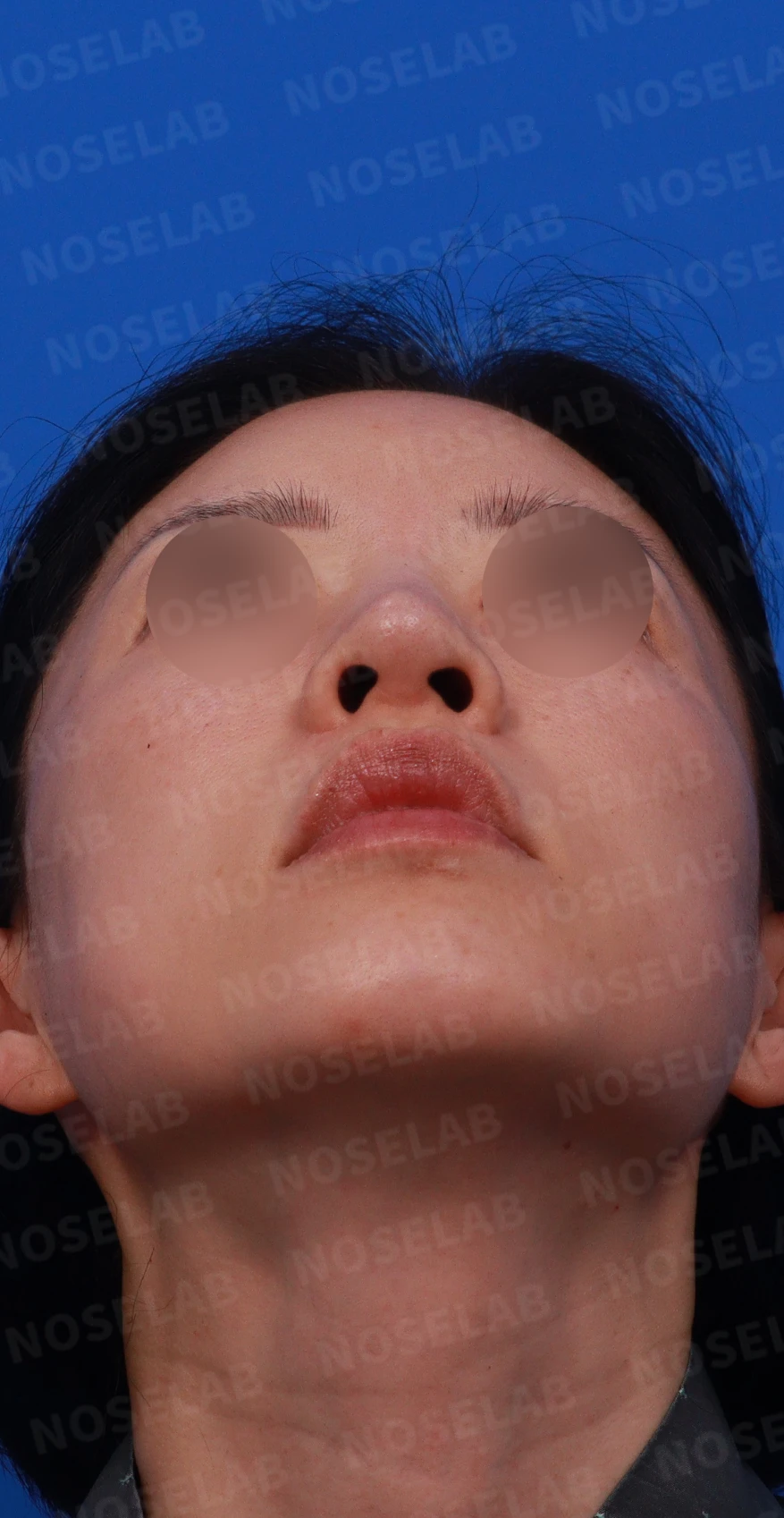
Design consultation: right profile, oblique, and nostril views.
Initially, she was satisfied with the surgical result, but after giving birth, she experienced accidental collisions with her baby and with her pet dog.
After that, she began hearing clicking sounds from the nasal tip and noticed changes in its shape. Fortunately, there were no functional issues.
Examination revealed asymmetry of the nasal bones and asymmetry of the nostrils, along with congenital nostril asymmetry.
The position of the nasal tip was slightly altered, and the overall balance of the nose had collapsed.
The patient's goals
The patient mentioned that the visible demarcation along the nasal bridge bothered her, and she wished for a nose that harmonized naturally with her face.
In particular, she requested that her nose not appear long.
💉 Surgical procedure details
In this surgery, autologous rib cartilage was used to perform a stable reconstruction.
First, the position of the nasal tip was corrected so that it would not look long, and a lateral osteotomy was performed to address the asymmetry of the nasal bones.
Nostril asymmetry was also corrected as much as possible.
However, because the patient had congenital nostril asymmetry, achieving complete symmetry had its limitations, but we aligned them as closely as possible within realistic limits.
✅ Surgical results
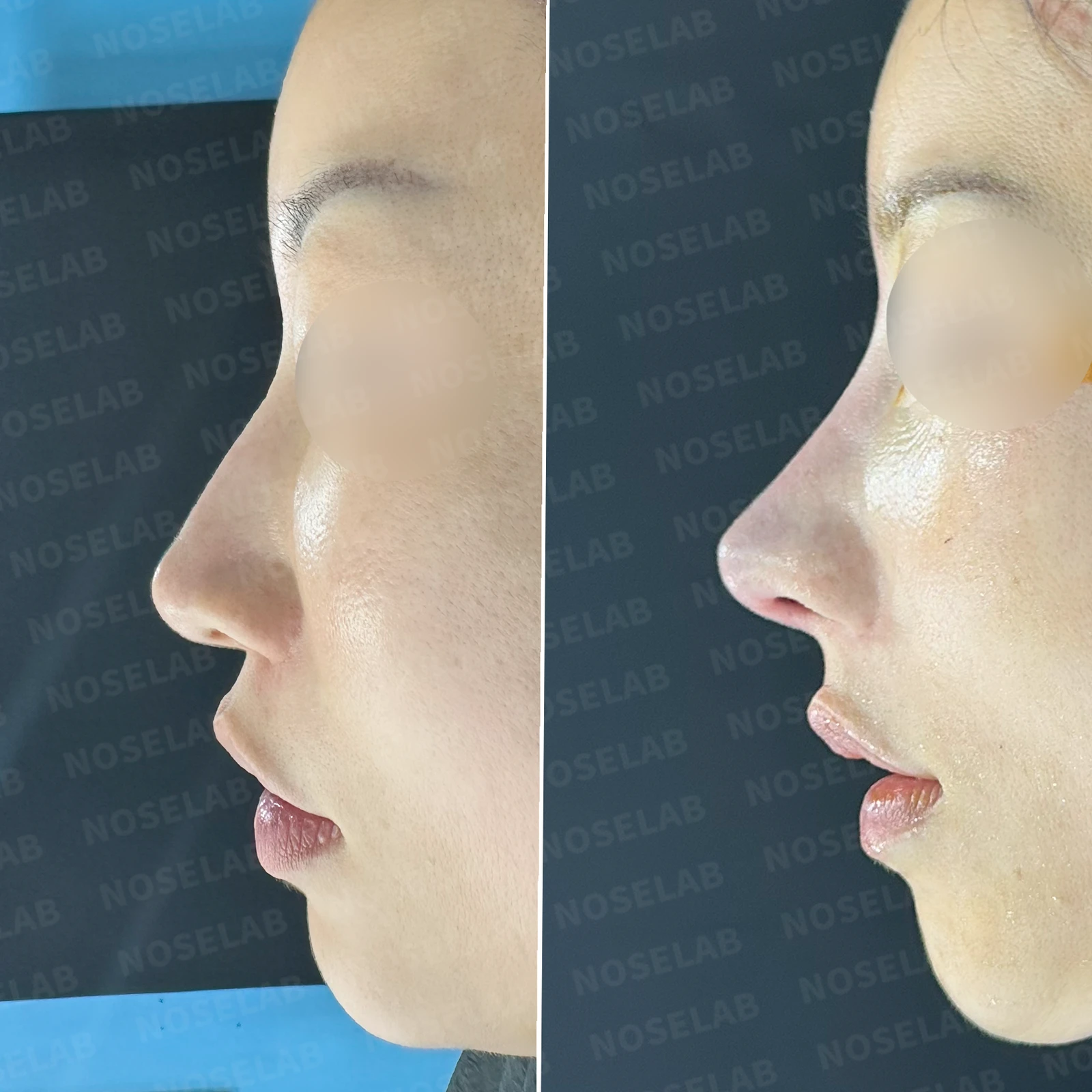
After surgery, the patient achieved a nasal contour that harmonized naturally with her face, just as she had hoped. The step-off along the bridge was smoothly contoured, and the nasal length was appropriately adjusted so that the nose did not look long. The nasal bone asymmetry was significantly improved, and the nostril asymmetry was corrected within the achievable range.
Most importantly, by using autologous rib cartilage, the nose acquired a stable framework capable of withstanding minor impacts that may occur in daily life going forward.
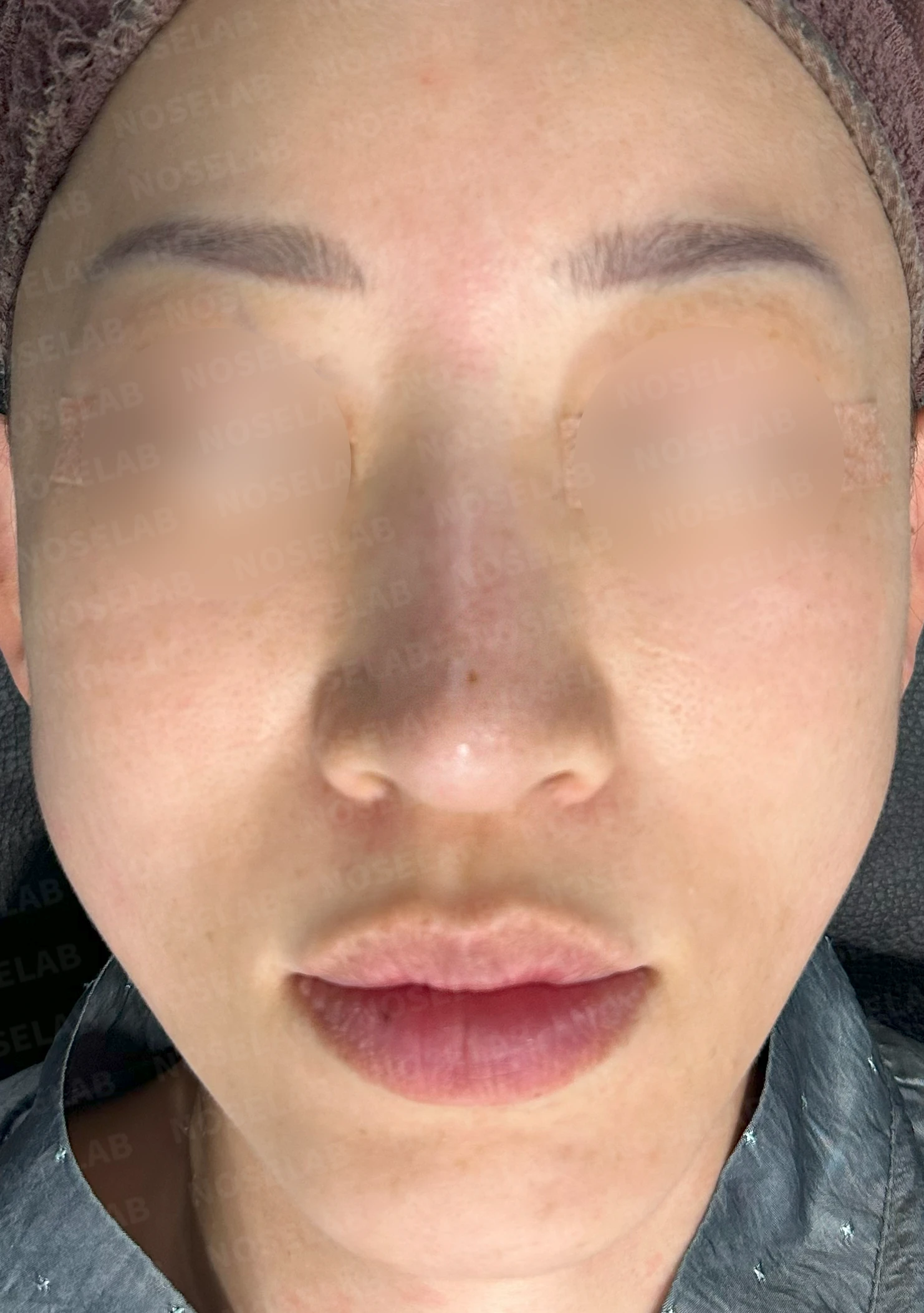
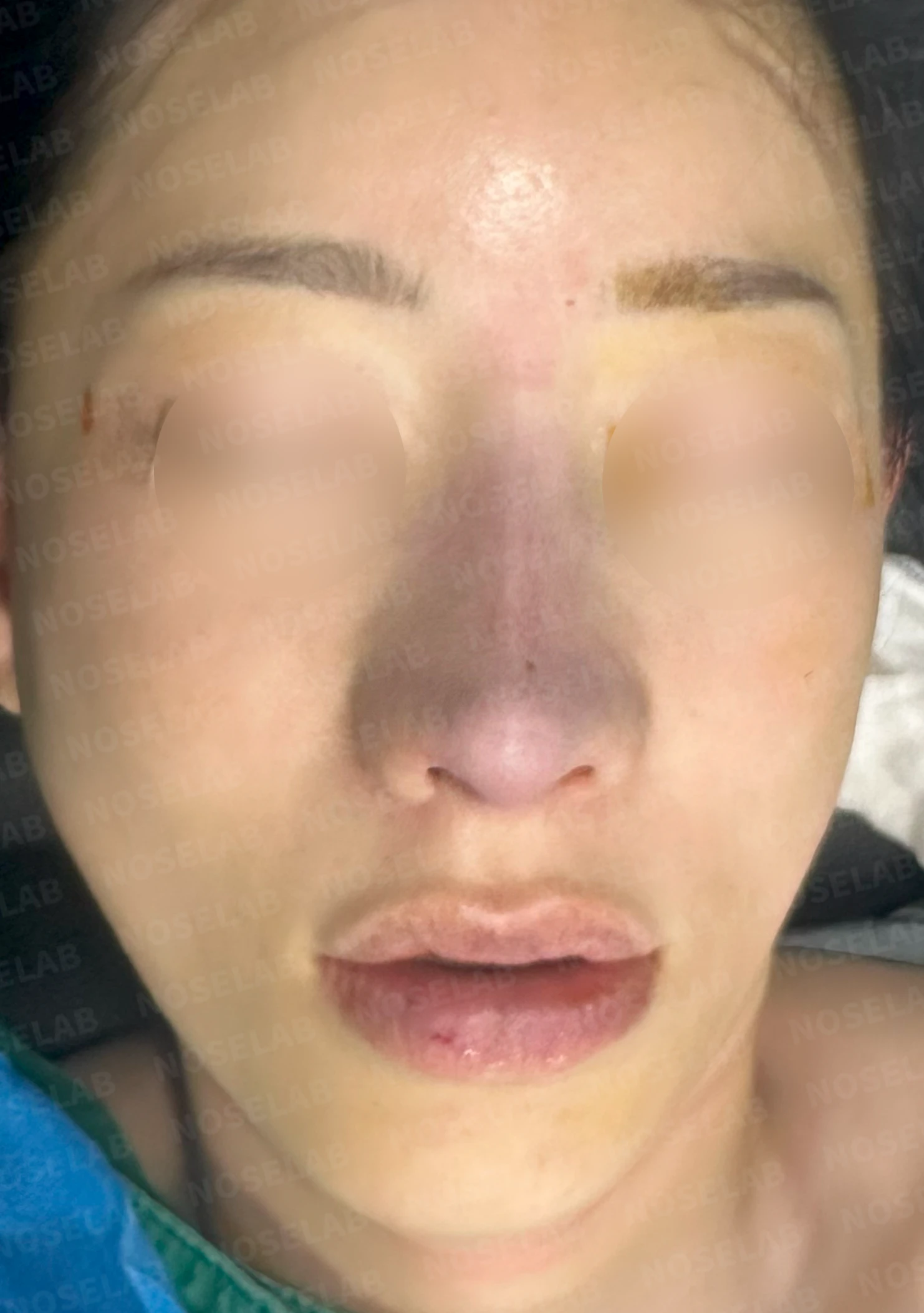
Before surgery / Day 0 immediately after surgery Photos taken immediately after surgery show swelling and may differ from the final result.
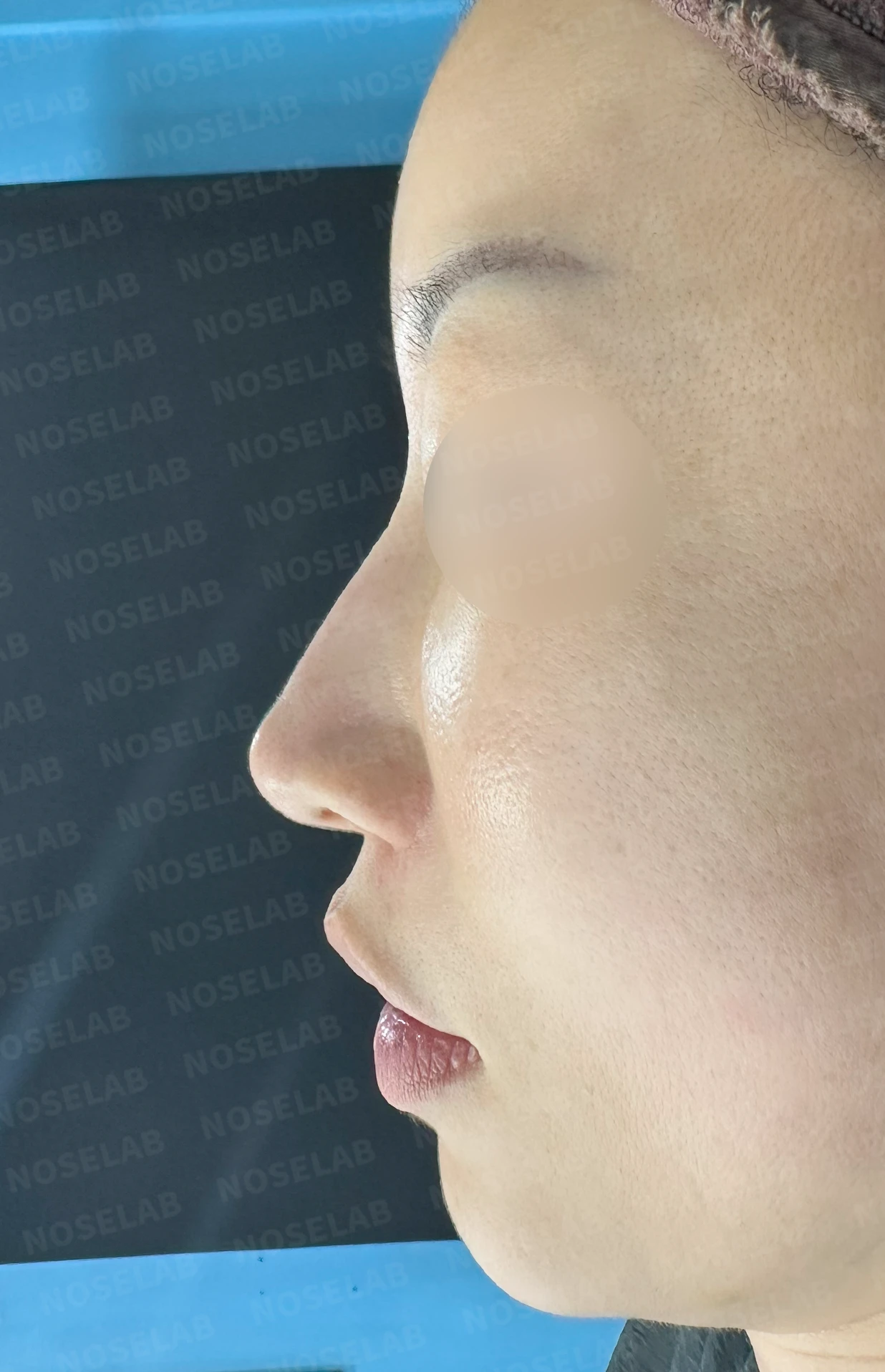
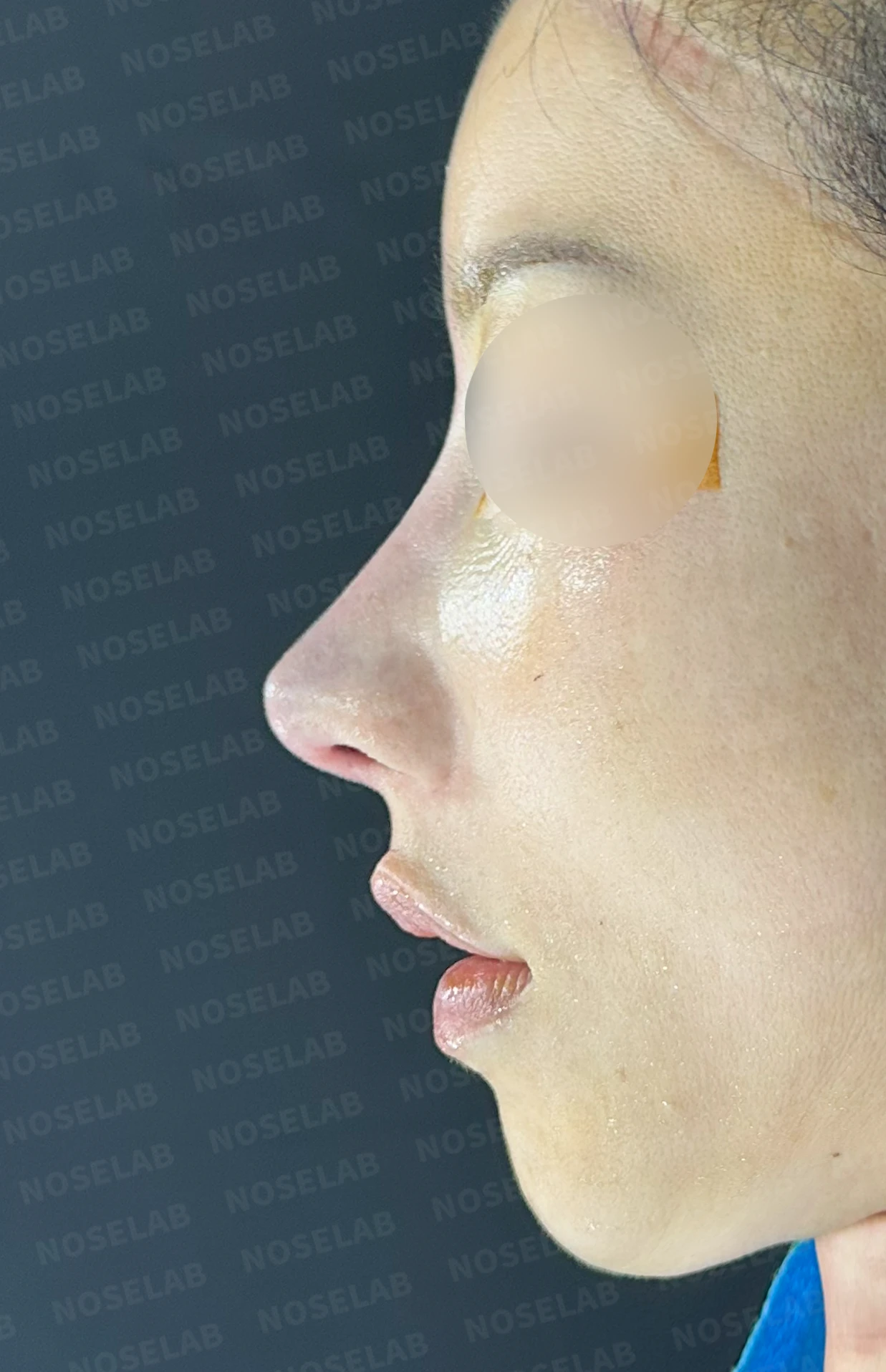
Before surgery / Day 0 immediately after surgery Photos taken immediately after surgery show swelling and may differ from the final result.
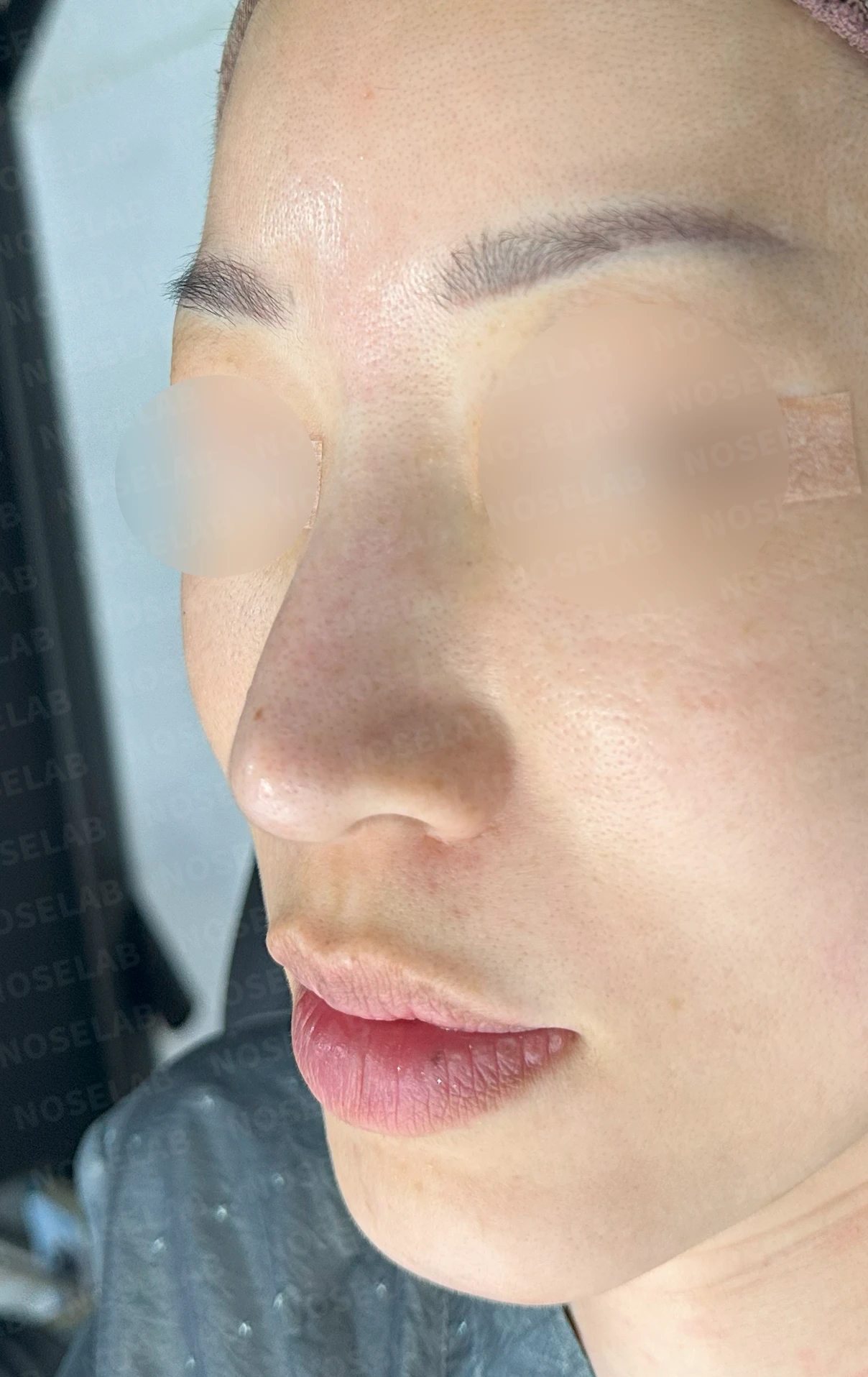
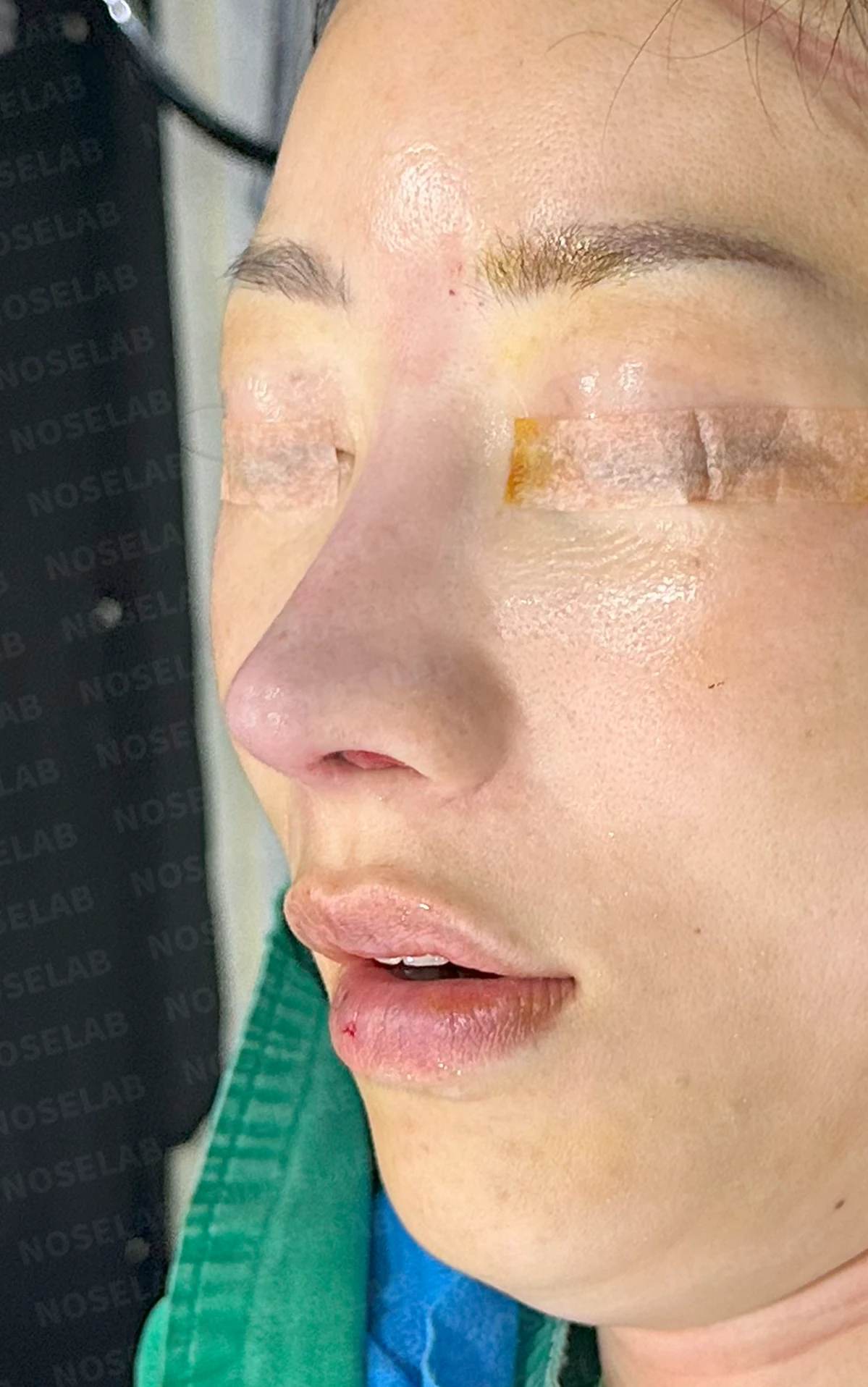
Before surgery / Day 0 immediately after surgery Photos taken immediately after surgery show swelling and may differ from the final result.
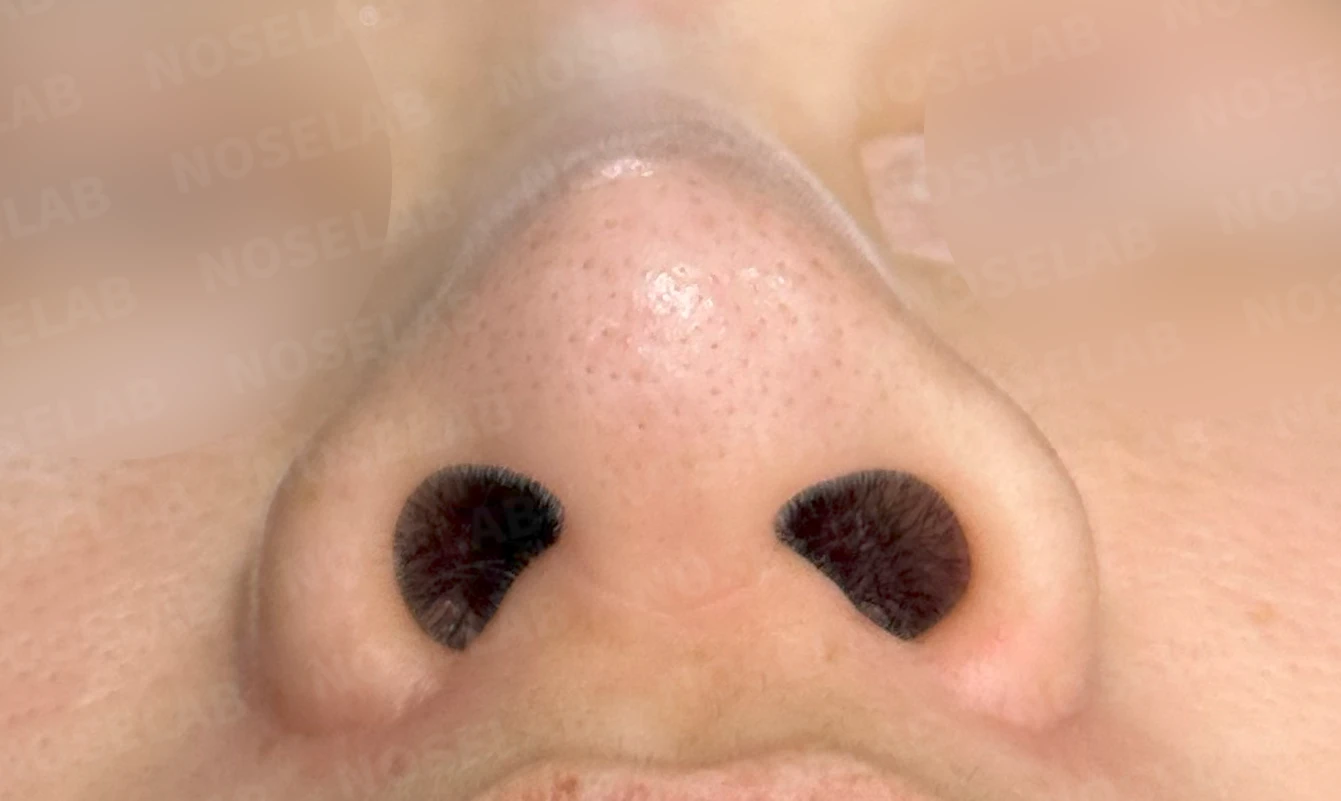
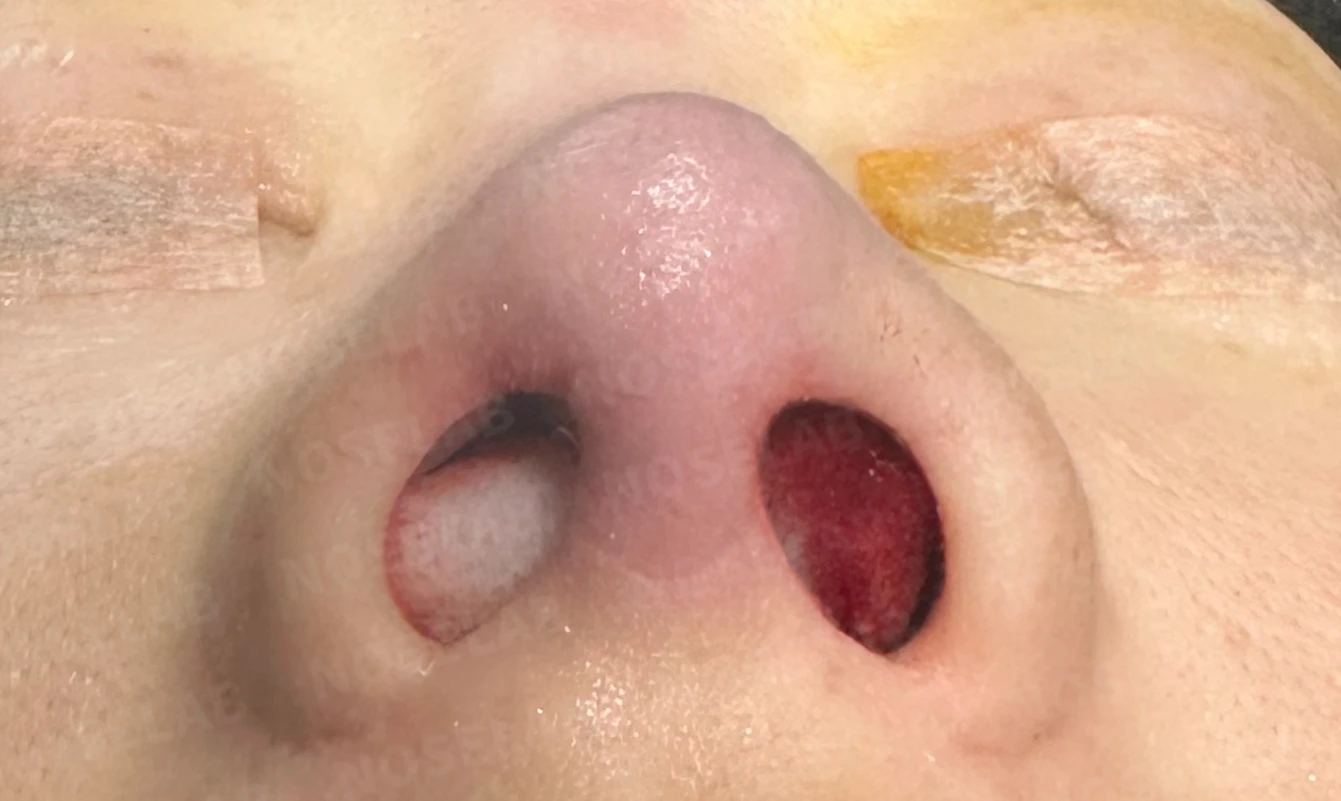
Before surgery / Day 0 immediately after surgery Photos taken immediately after surgery show swelling and may differ from the final result.
👨⚕️ Specialist's assessment
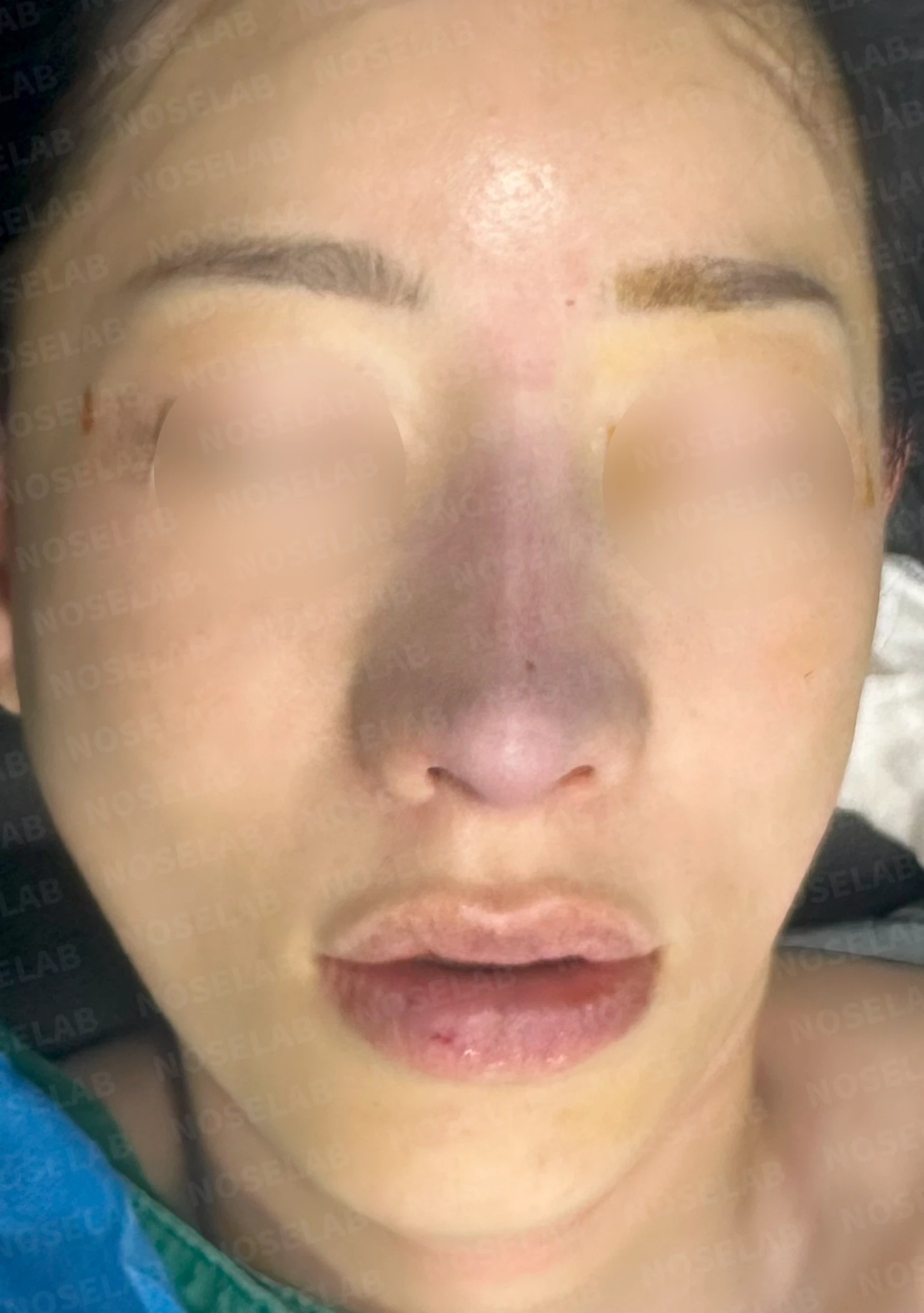
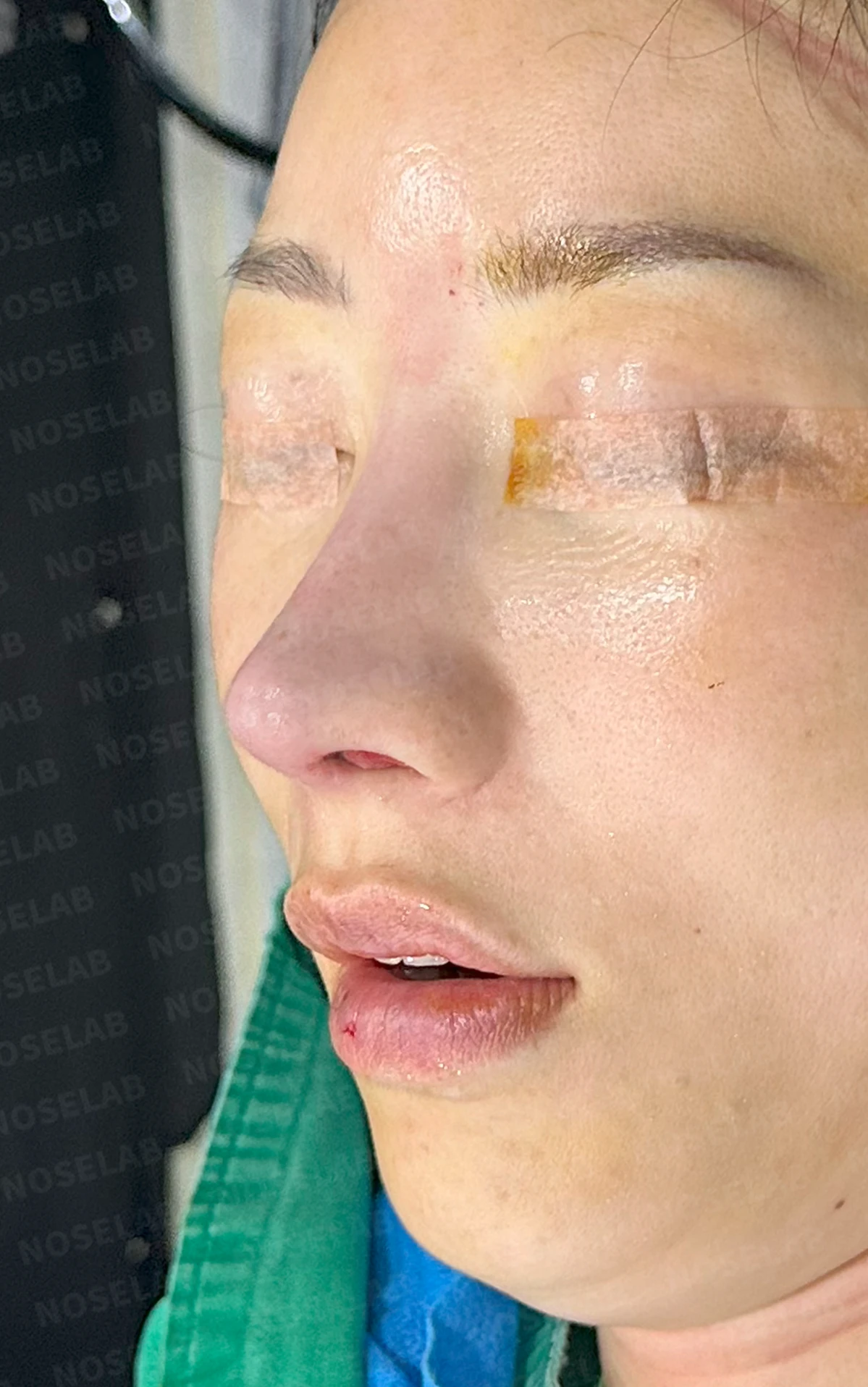
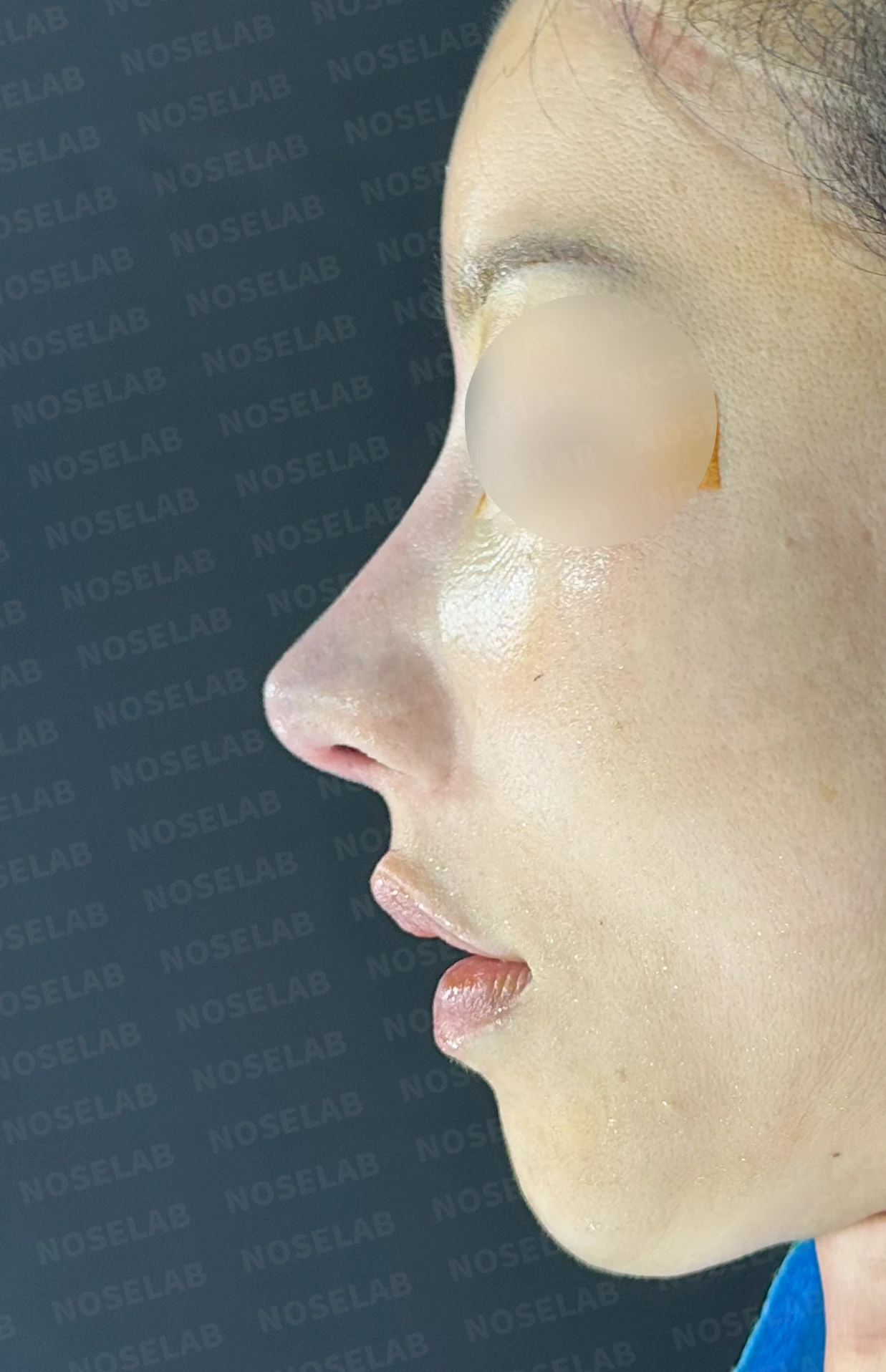
Immediately after surgery (day 0): front, oblique, and profile views. Immediate postoperative photos show swelling and may differ from the final result.
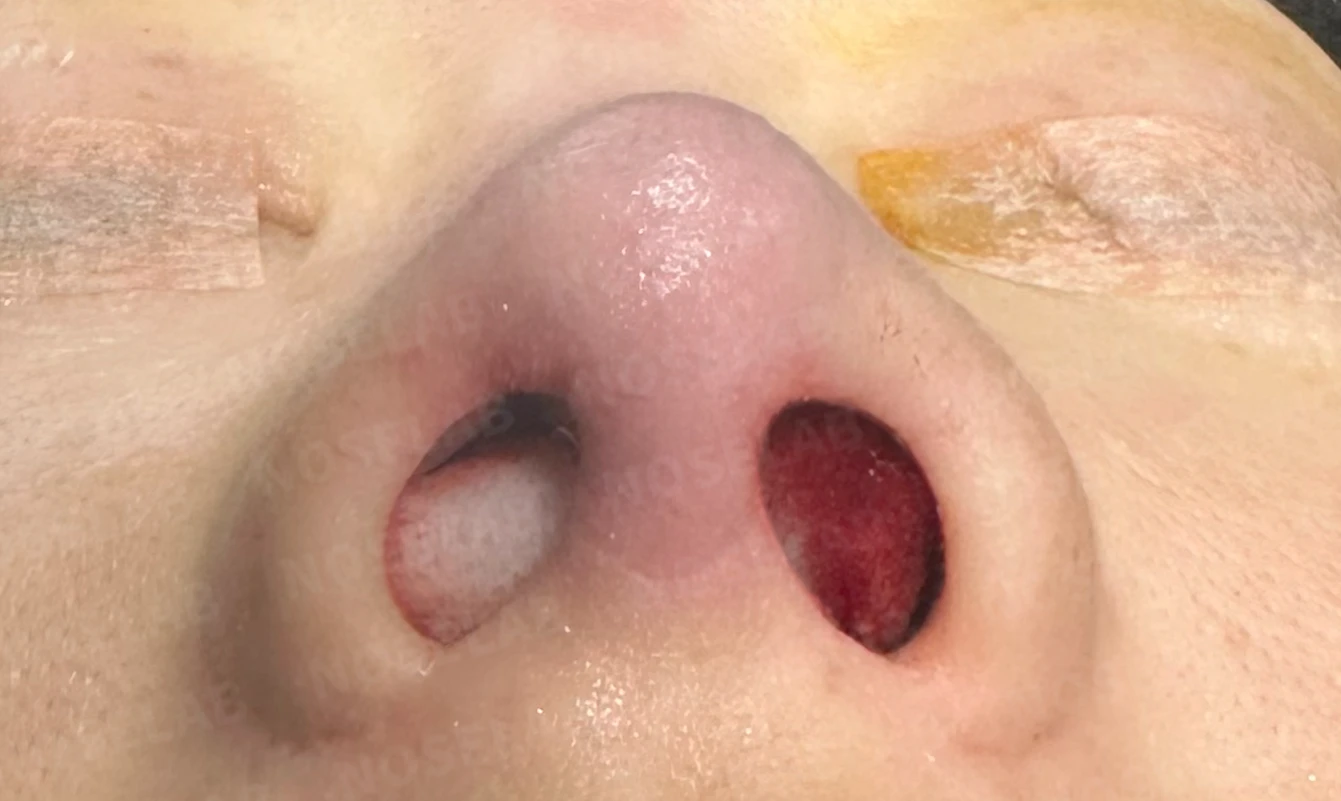
Nostril view on day 0 immediately after surgery. Photos taken immediately after surgery show swelling and may differ from the final result.
Collisions with a child during childcare or contact with pets after childbirth are difficult to avoid. In these situations, implants such as silicone carry risks of displacement or deformity; therefore, reconstruction using autologous rib cartilage offers a more reliable and stable solution.
When congenital asymmetry is present, achieving complete symmetry is difficult, but balancing the overall facial harmony is sufficient to deliver natural and pleasing results.
The most important focus was reconstructing a stable nasal framework so that the patient could go about her daily life with peace of mind.
If you have any questions, please feel free to reach out at any time.
#closedrhinoplasty #closedrevisionrhinoplasty #closedautologousribrhinoplasty

Limitations and risks
When autologous rib cartilage is used, scarring and pain may remain at the donor site on the chest, and pneumothorax (pleural injury) can occur rarely. Over time, the grafted cartilage may warp or undergo partial resorption.
When revising after implant removal, contracture may progress again after removal, the nasal height and length may decrease, and staged surgery may be necessary depending on the skin condition.
Common potential risks include infection, bleeding, asymmetry, scarring, skin necrosis, and insufficient improvement; results vary depending on individual skin condition and previous surgical history.