Hello, I am Dr. Peter C. Kang.
Today, I would like to share the case of a patient who underwent urgent revision rhinoplasty due to the risk of silicone extrusion.
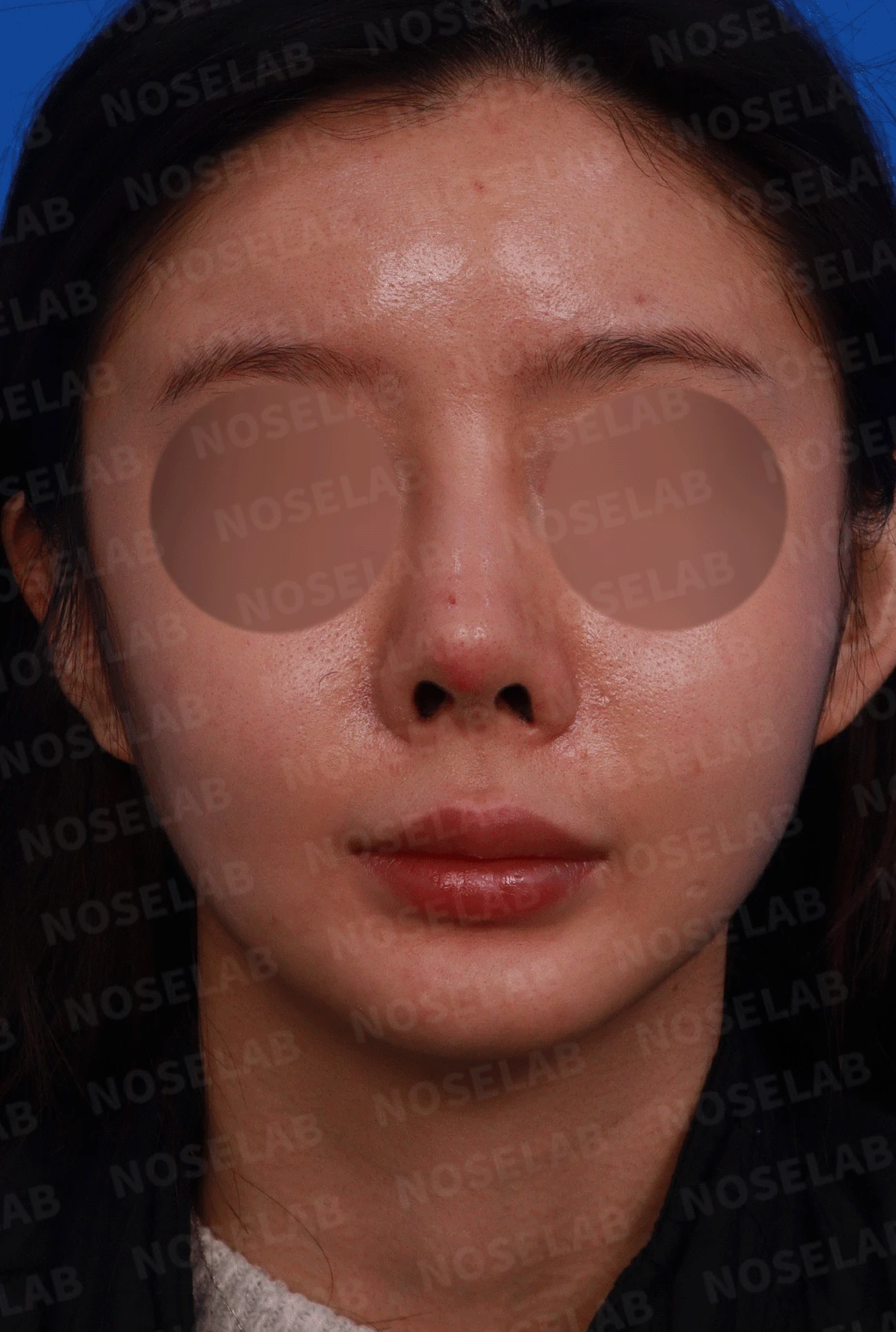
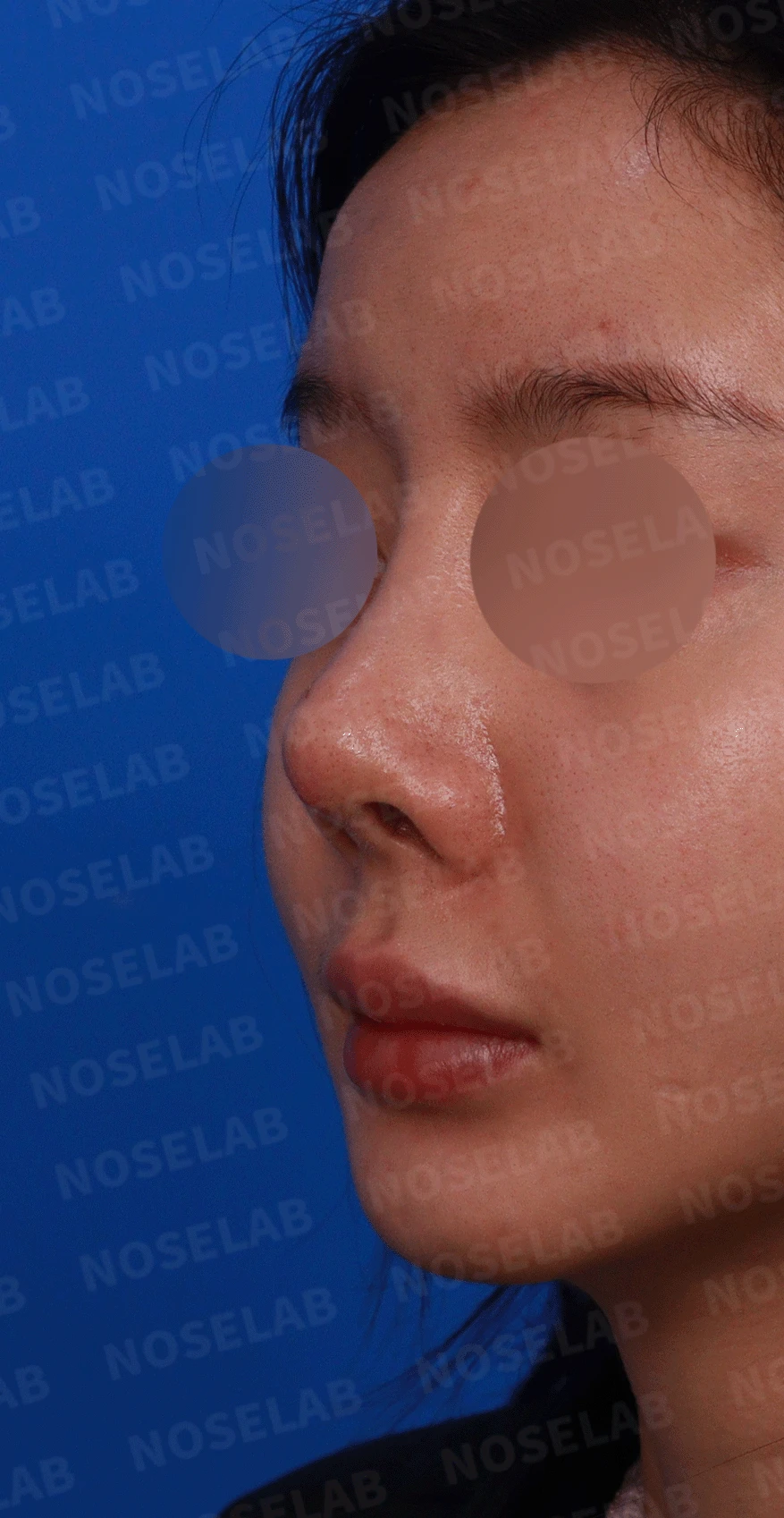
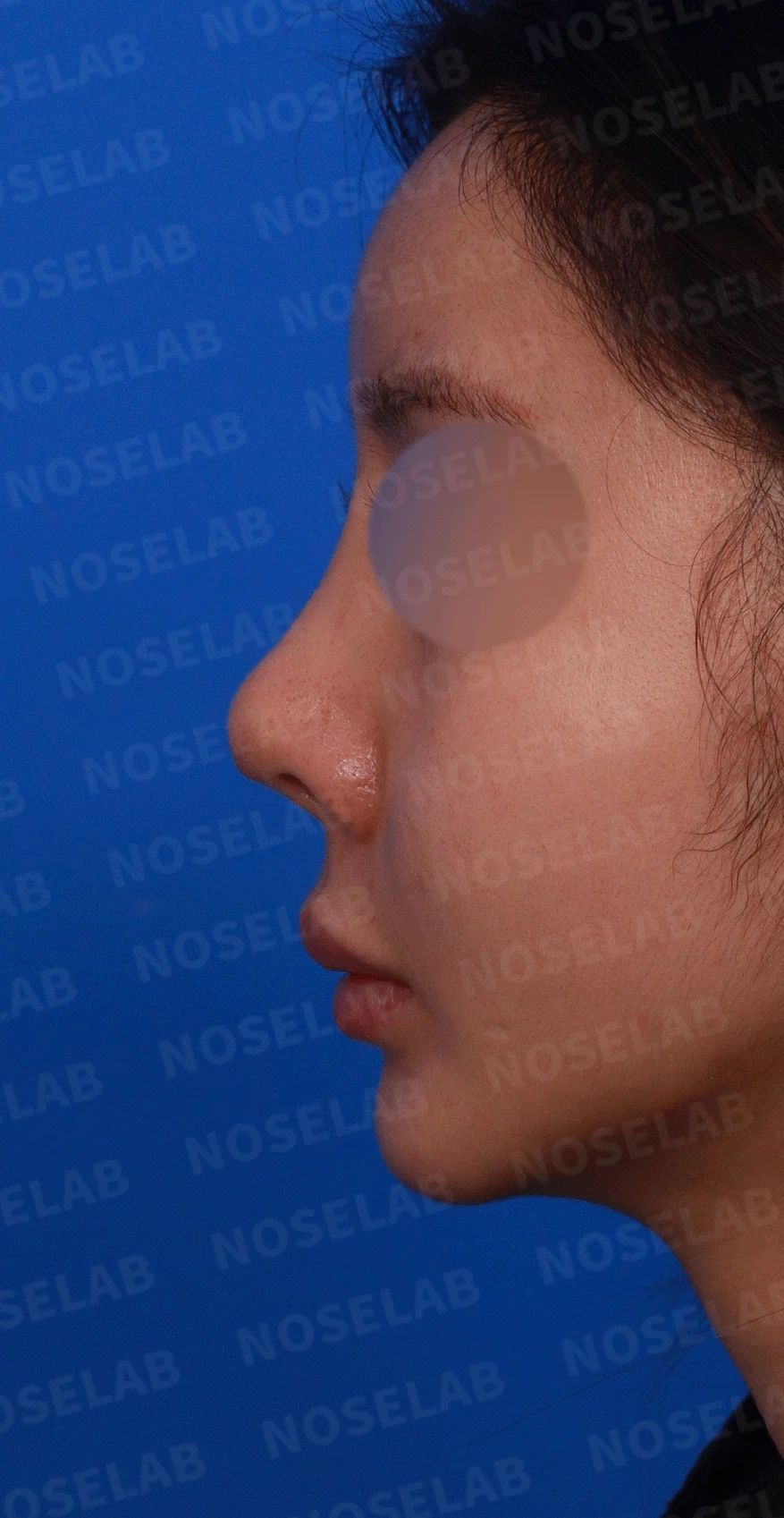
Front, left profile, and oblique views during design consultation
📍 Surgical history
3 years ago: Dissolvable filler injection
2 years ago: Rhinoplasty with septal cartilage and a silicone implant
8 months after surgery: Medical treatment for suspected symptoms of inflammation
🔎 Initial consultation findings
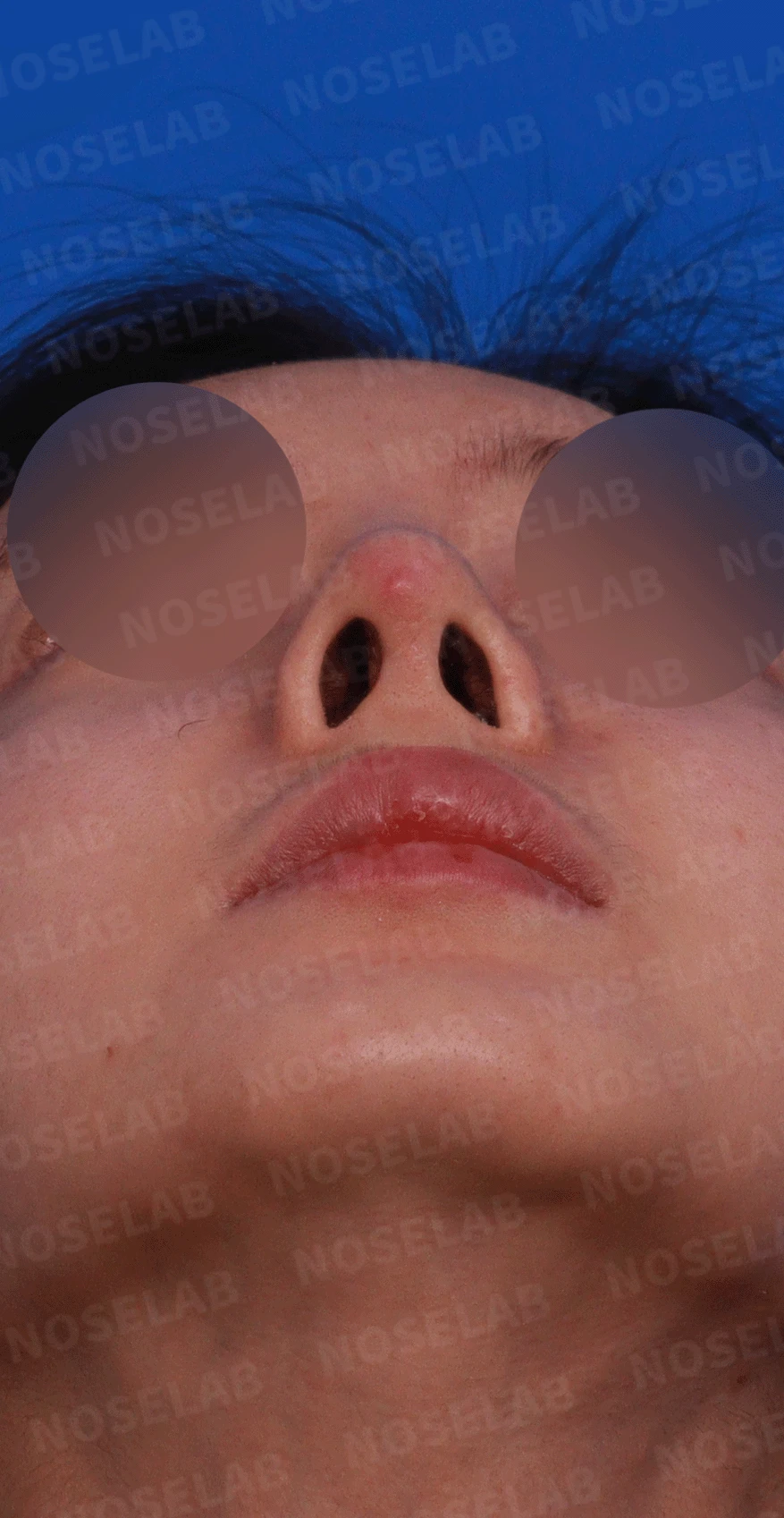
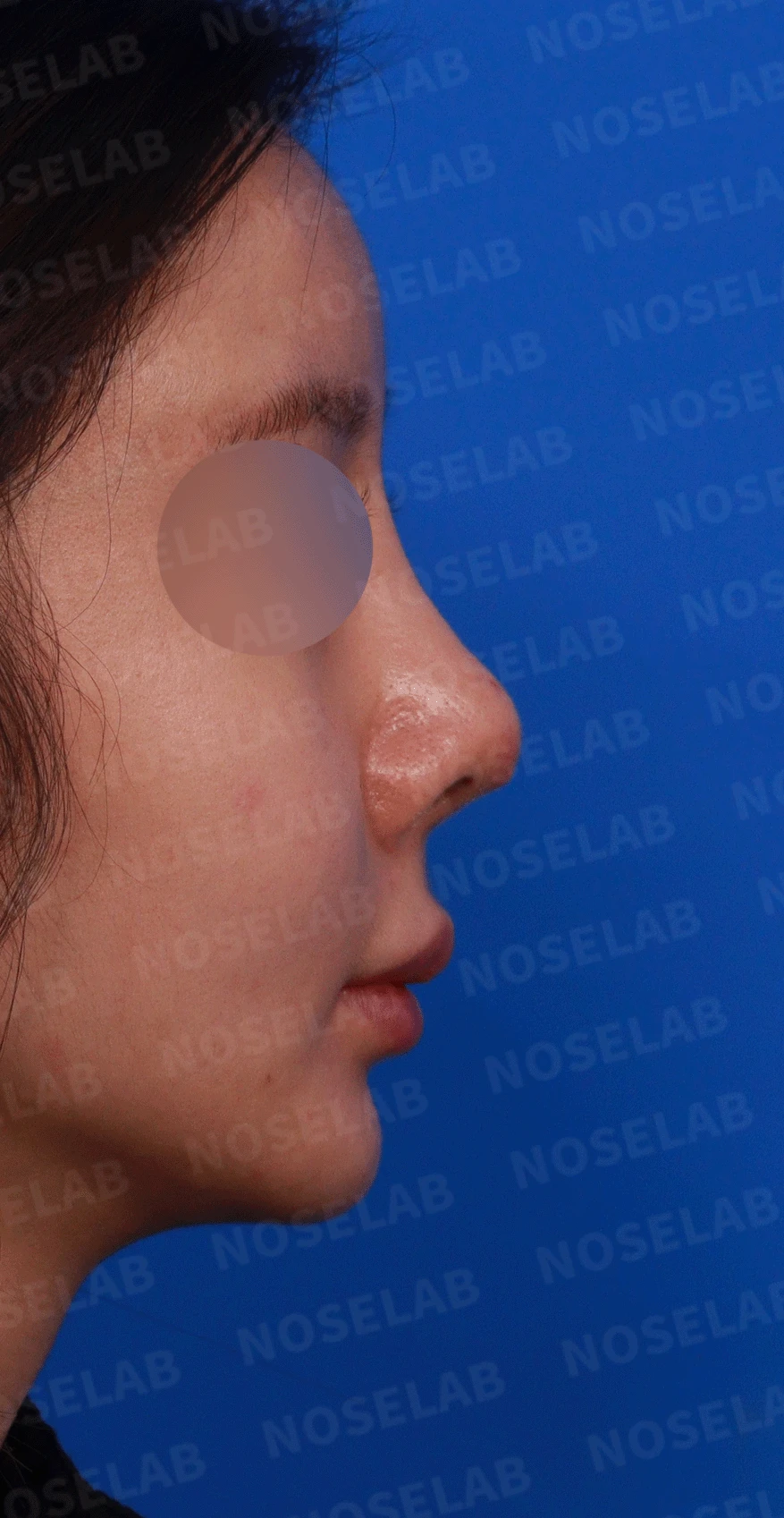
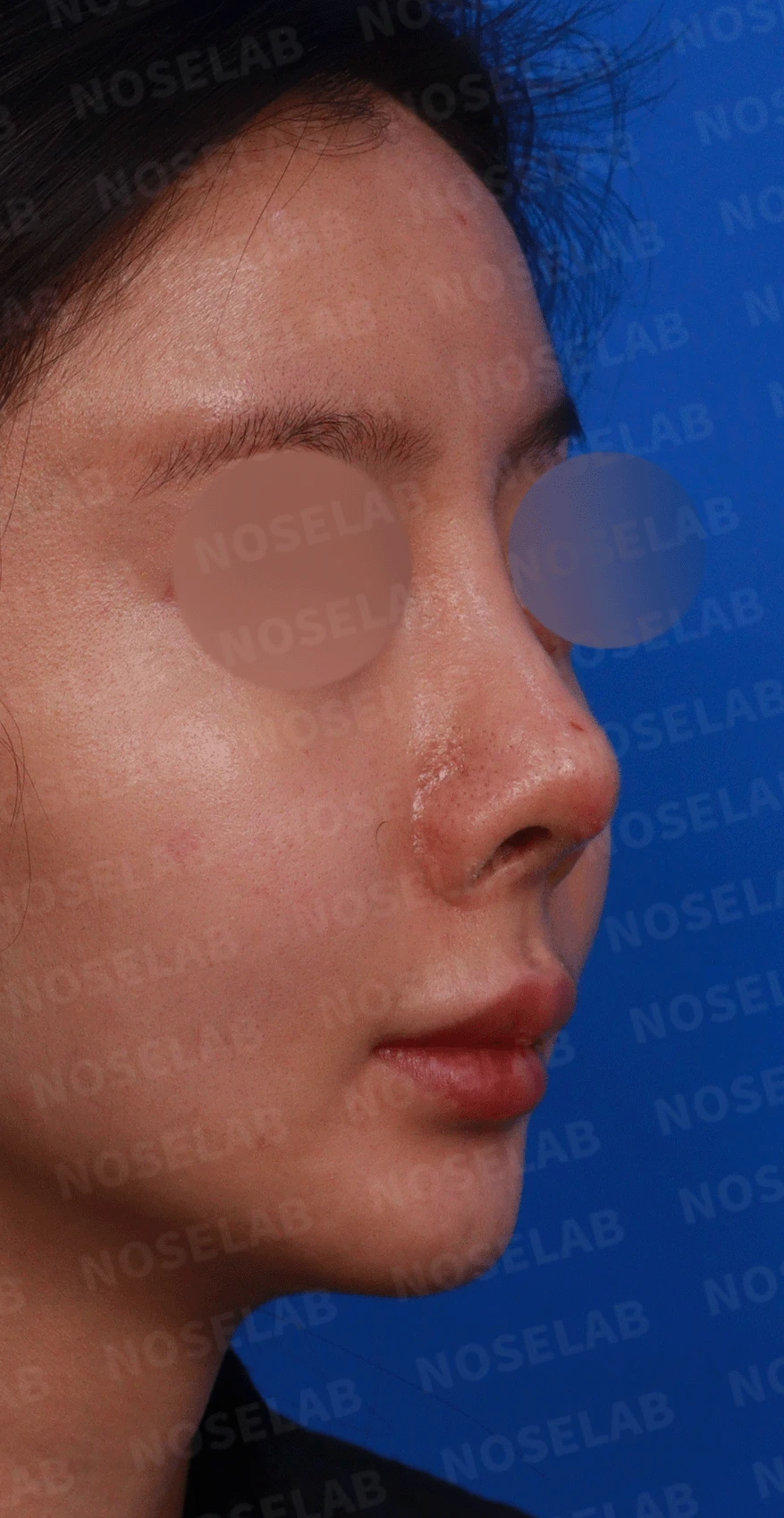
Design consultation photos: nostril, right profile, and oblique views
Skin condition
Redness at the nasal tip
Imminent silicone implant extrusion
Thinned skin
2. External appearance
Excessive nostril show from the front view
High glabella
Upturned nasal tip
Nostril asymmetry
3. Endoscopic examination
Left septal deviation
Bilateral inferior turbinate hypertrophy
Left nasal mucosal synechia (adhesion)
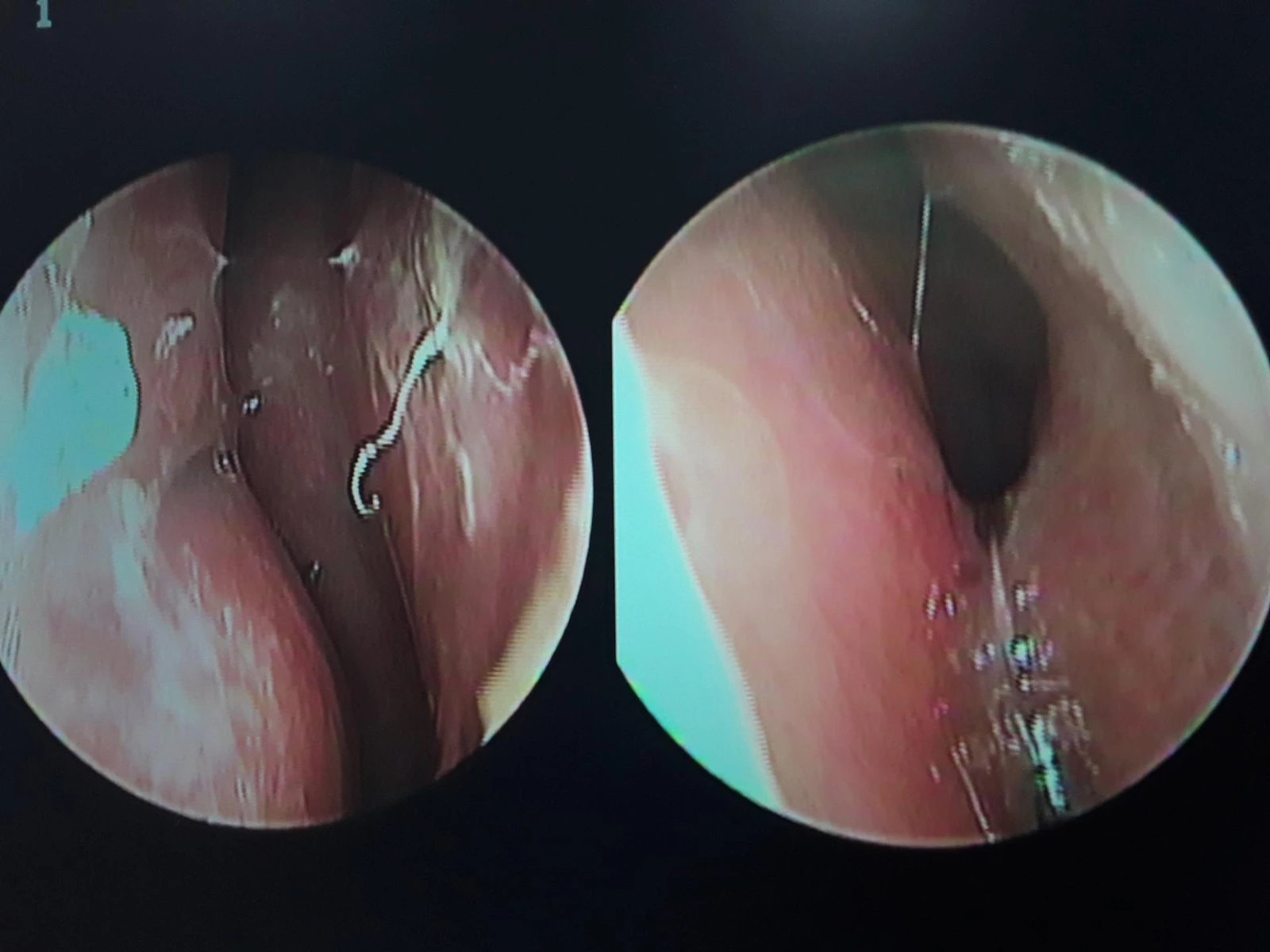
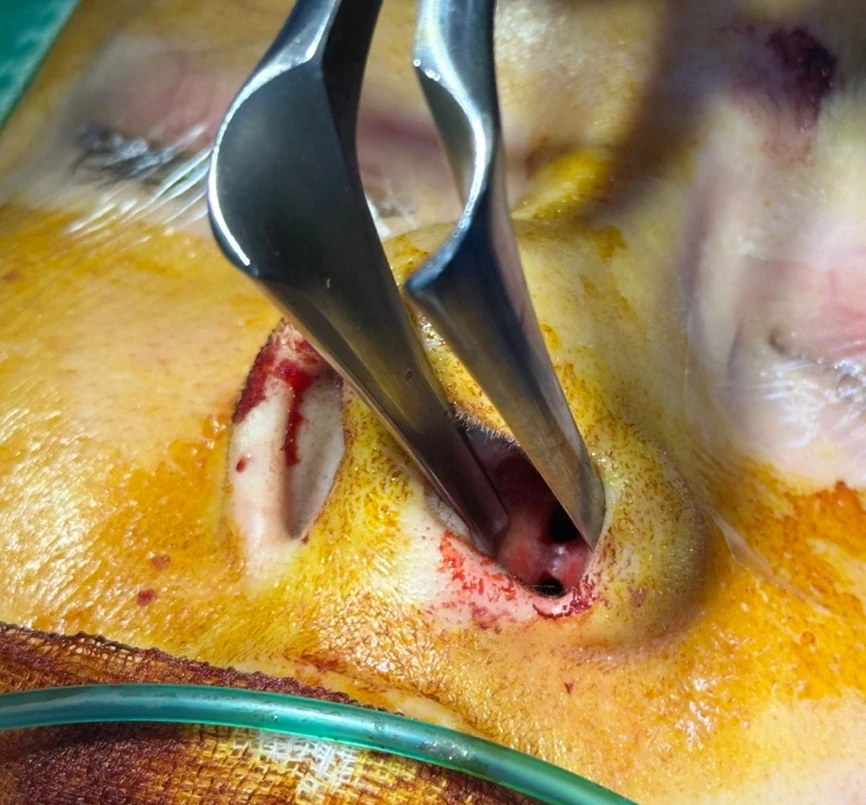
Nasal endoscopy (left) and intraoperative view showing the mucosal adhesion in the left nasal cavity (right)
✨ Patient's requests

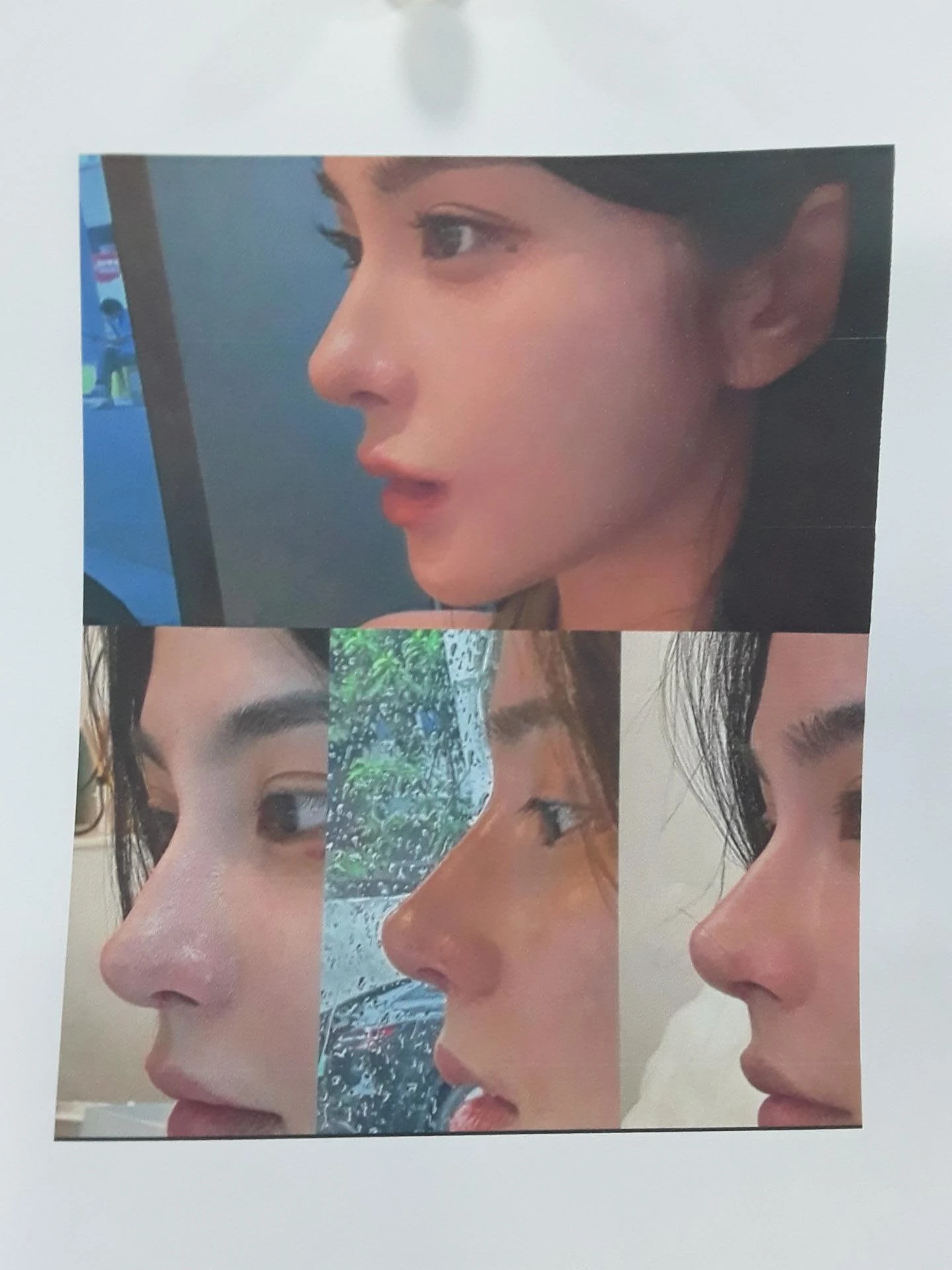
💉 Surgical procedure details
Before surgery / Day 0 immediately after surgery Photos taken immediately after surgery show swelling and may differ from the final result.
Emergency intervention
Complete removal of the existing silicone implant
Irrigation of the inflamed area
Debridement of damaged tissue
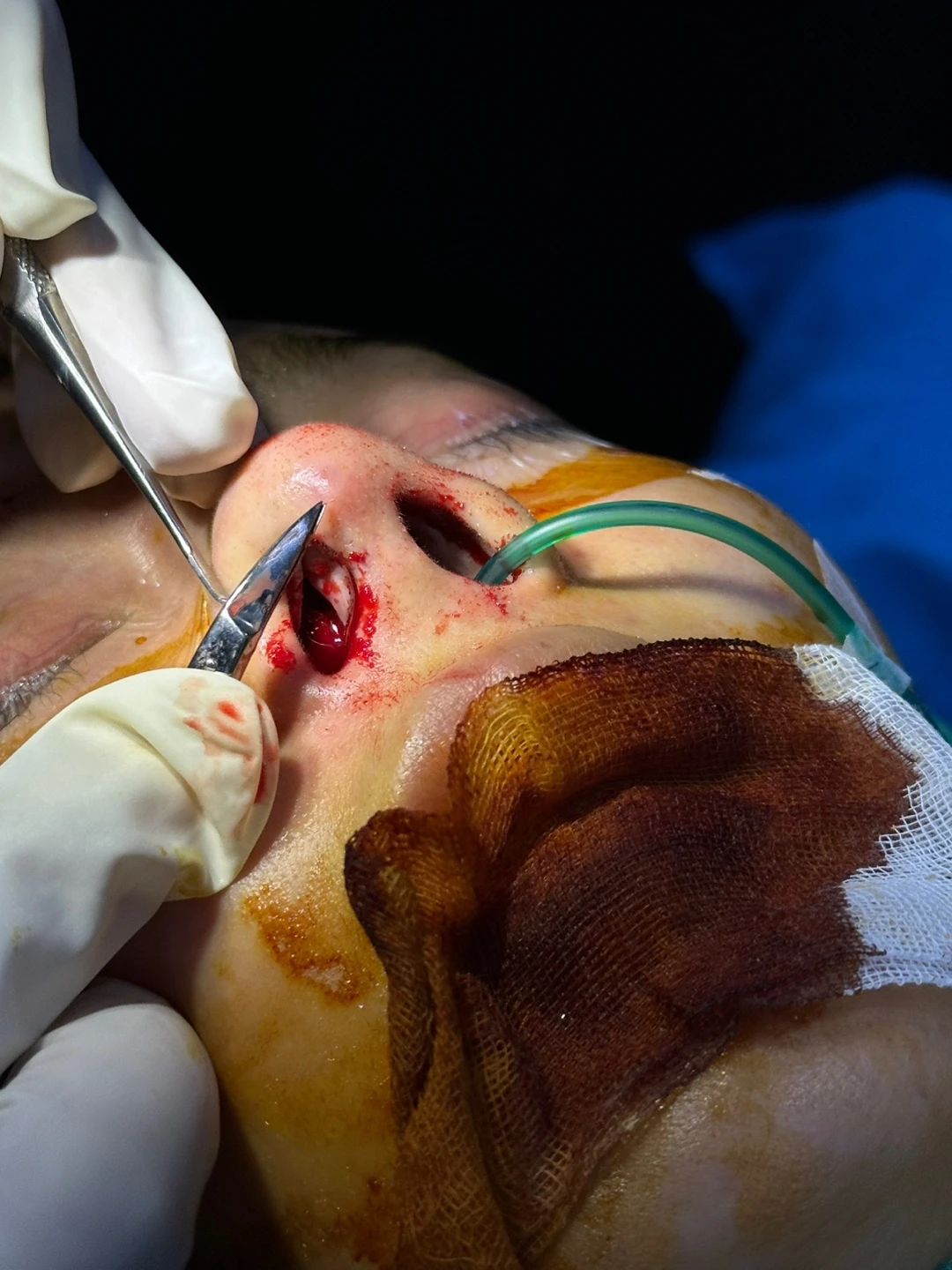
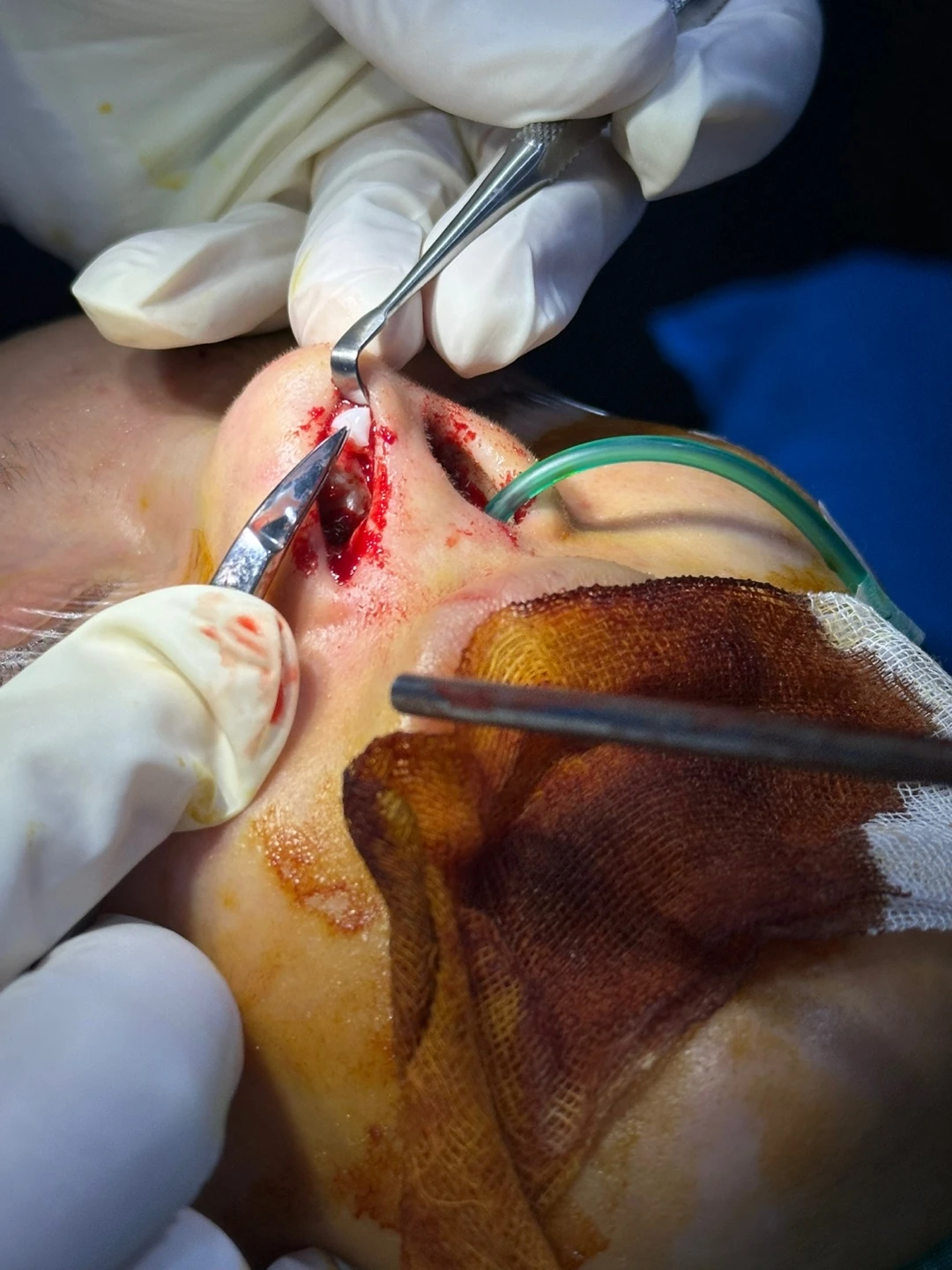
A photo showing how the silicone implant had descended directly beneath the nasal tip skin, just on the verge of puncturing through.
2. Reconstruction surgery
Nasal tip reconstruction using autologous rib cartilage
Reinforcing thinned skin with a dermal graft
Establishing an active antibiotic treatment protocol
3. Shape improvement
Correction of upturned nose
Natural contour between the eyebrows (glabella)
Improved nostril shape
✅ Surgical results
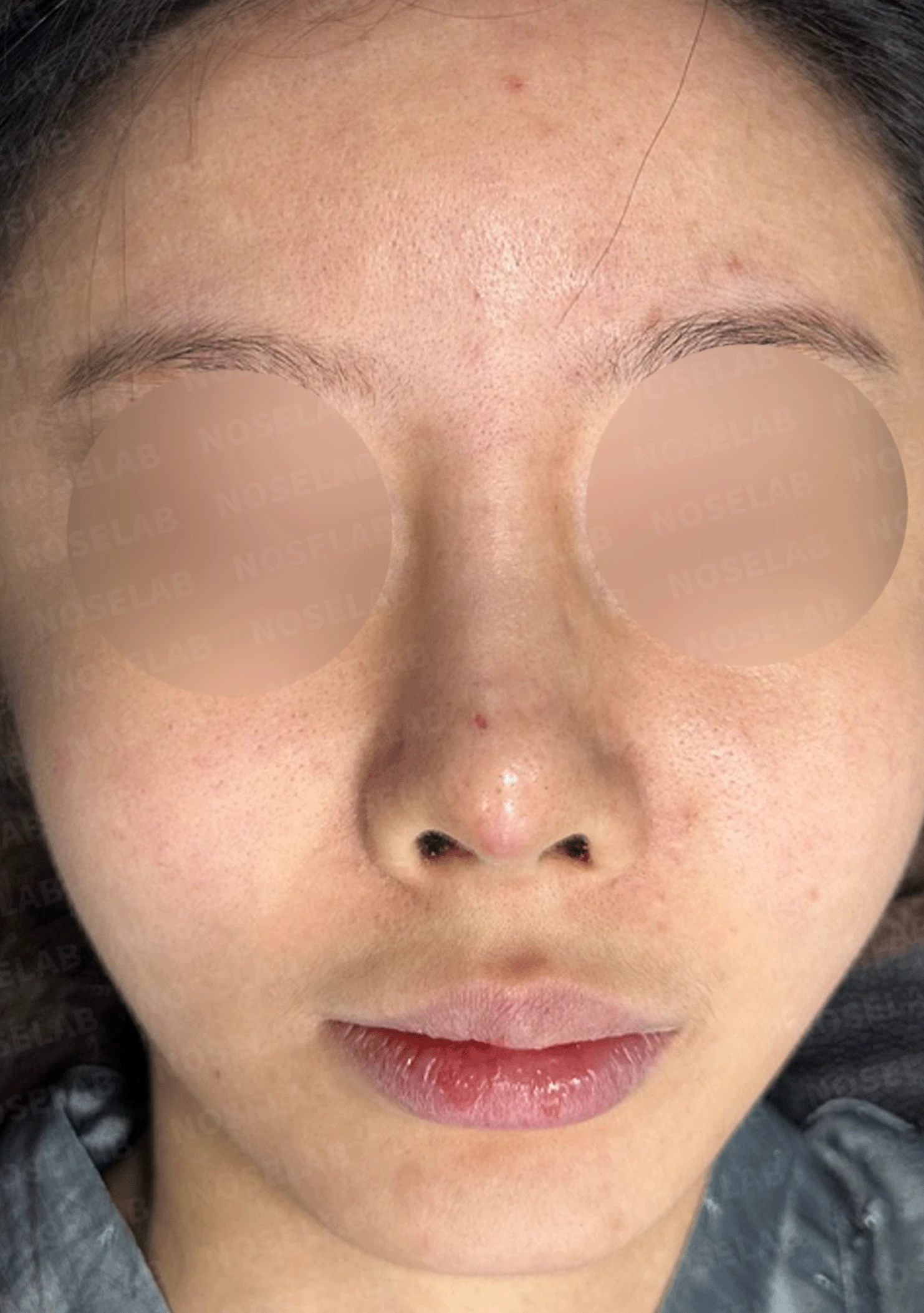
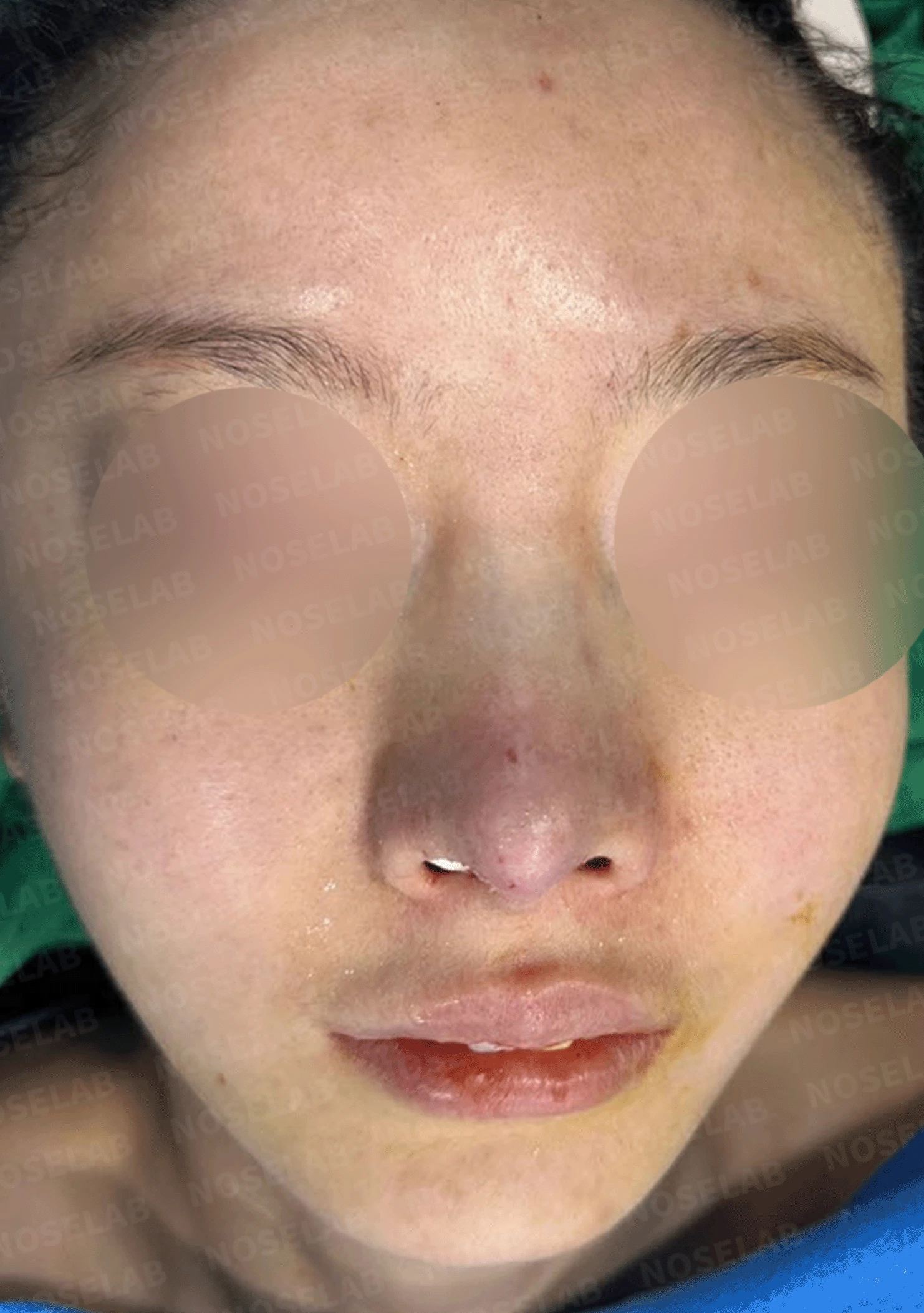
Before surgery / Day 0 immediately after surgery Photos taken immediately after surgery show swelling and may differ from the final result.
Front view
Excessive nostril show was improved
Natural glabellar height
Stable nasal tip position
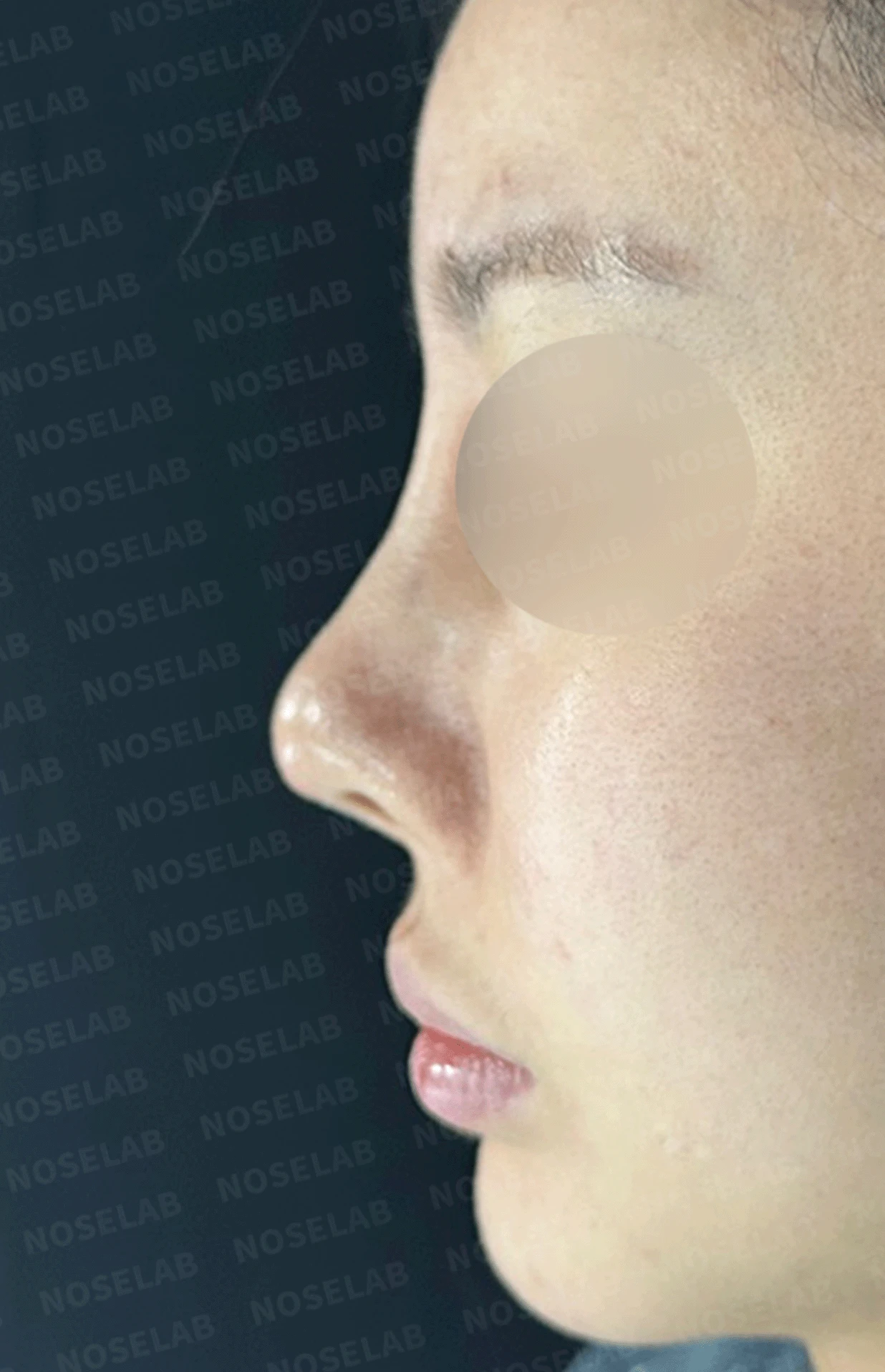
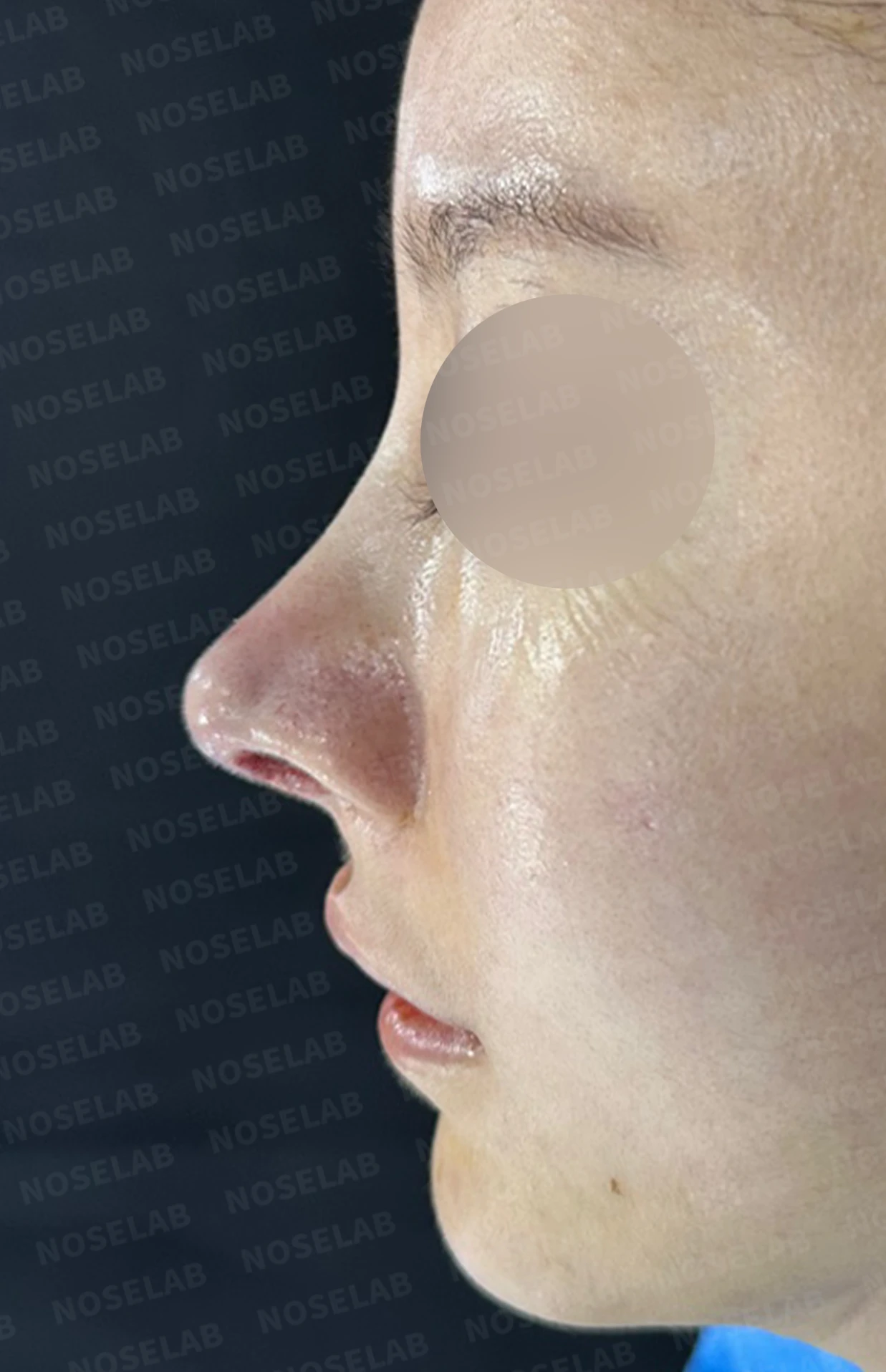
Before surgery / Day 0 immediately after surgery Photos taken immediately after surgery show swelling and may differ from the final result.
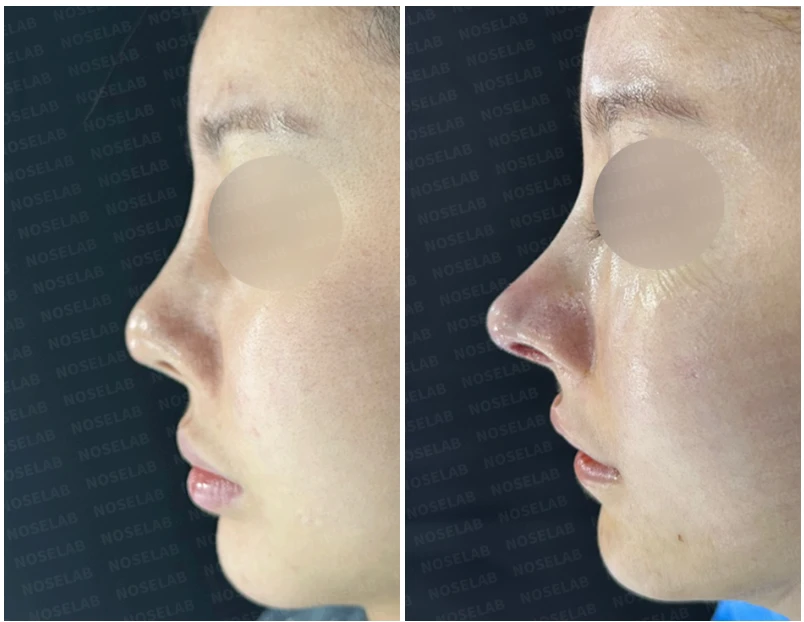
2. Profile view
More natural radix
Well-defined nasal tip line
Smooth profile line
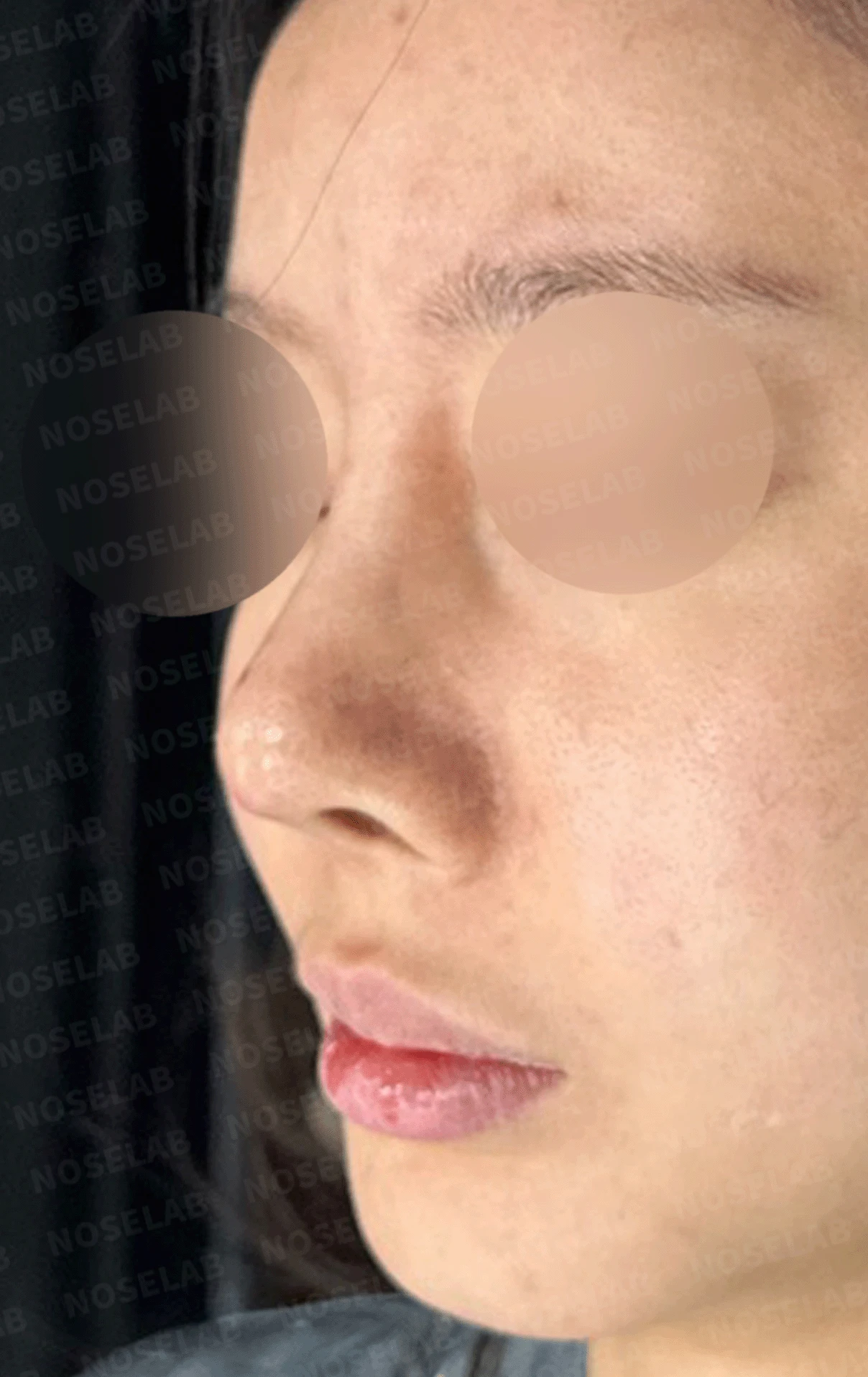
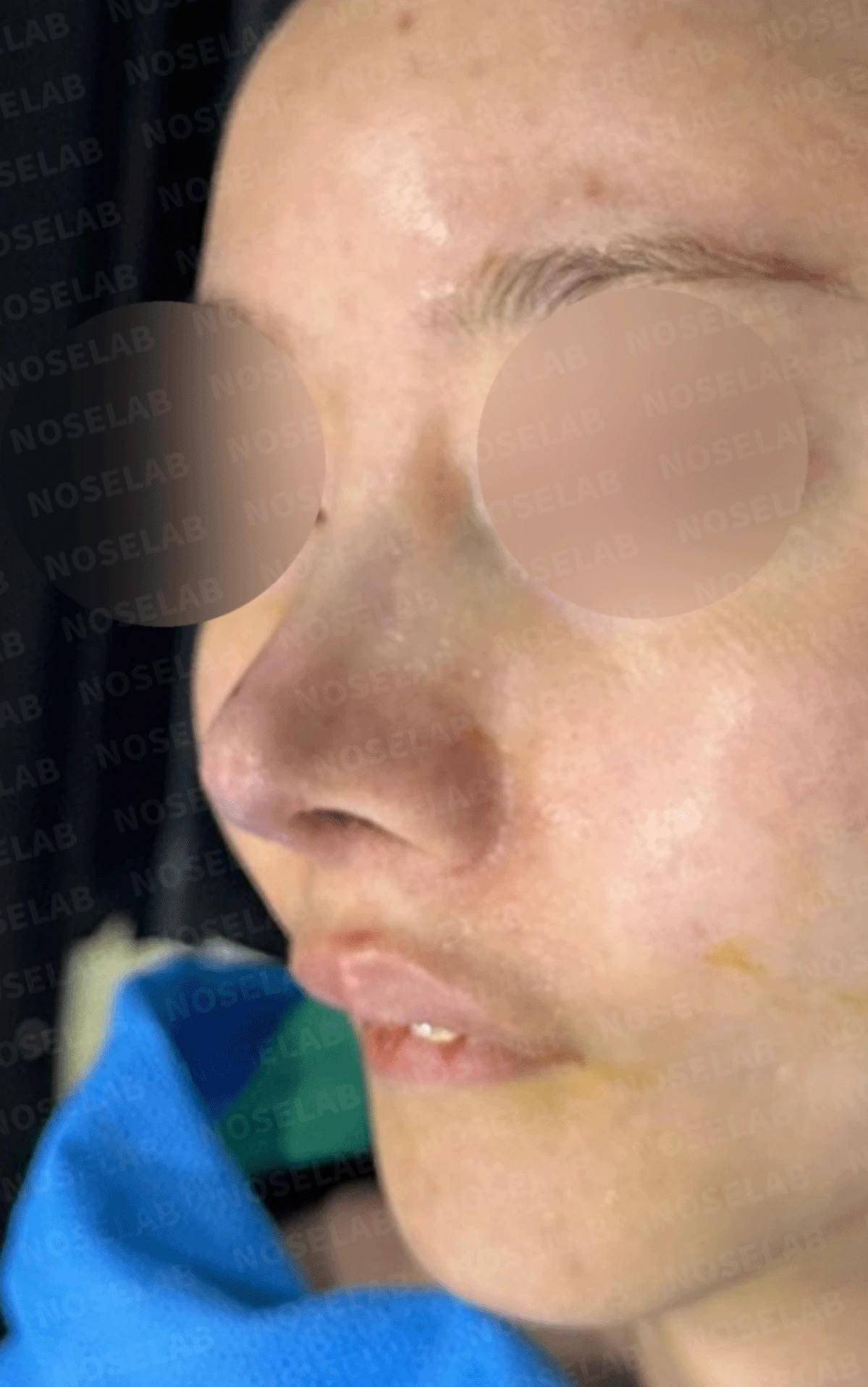
Before surgery / Day 0 immediately after surgery Photos taken immediately after surgery show swelling and may differ from the final result.
3. Skin condition
Improvement of thinned nasal tip skin through dermal reinforcement
Resolution of skin redness
Stabilized tissue condition
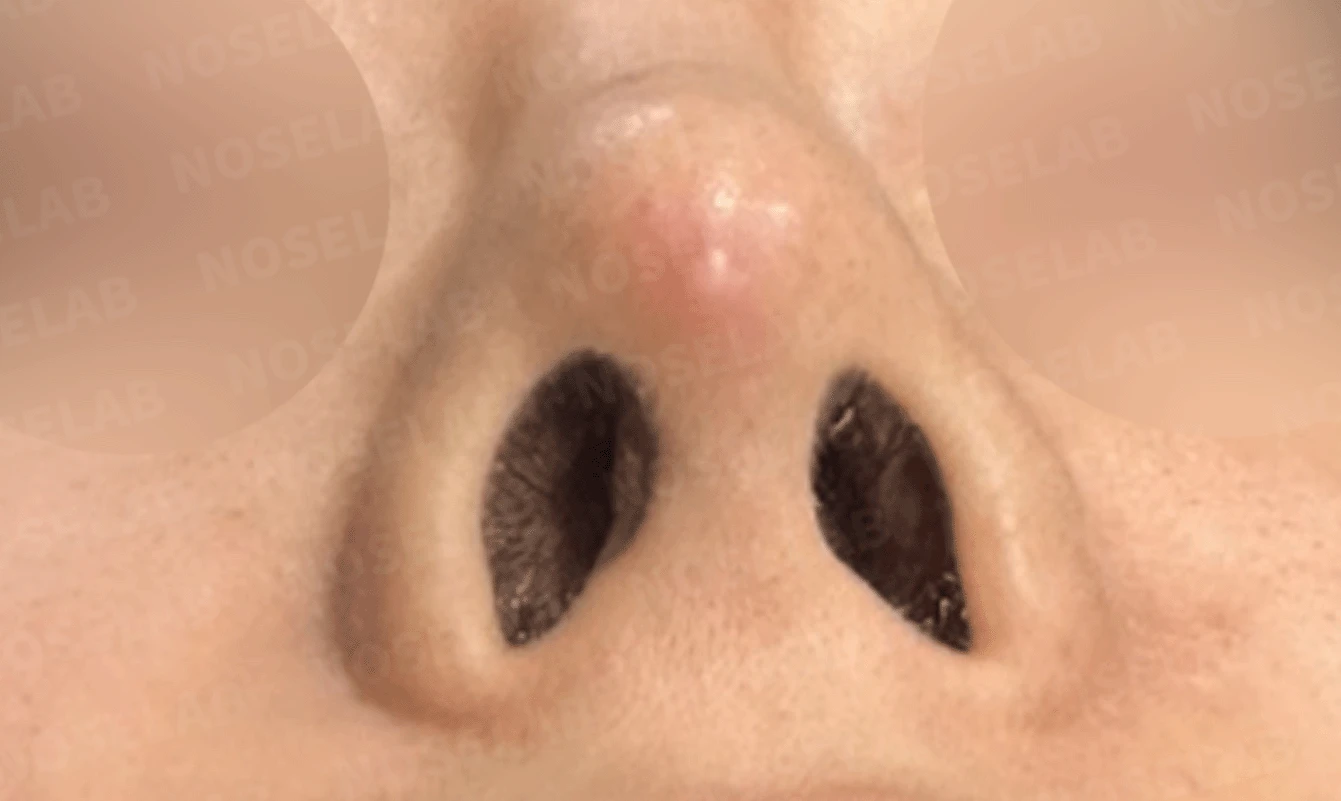
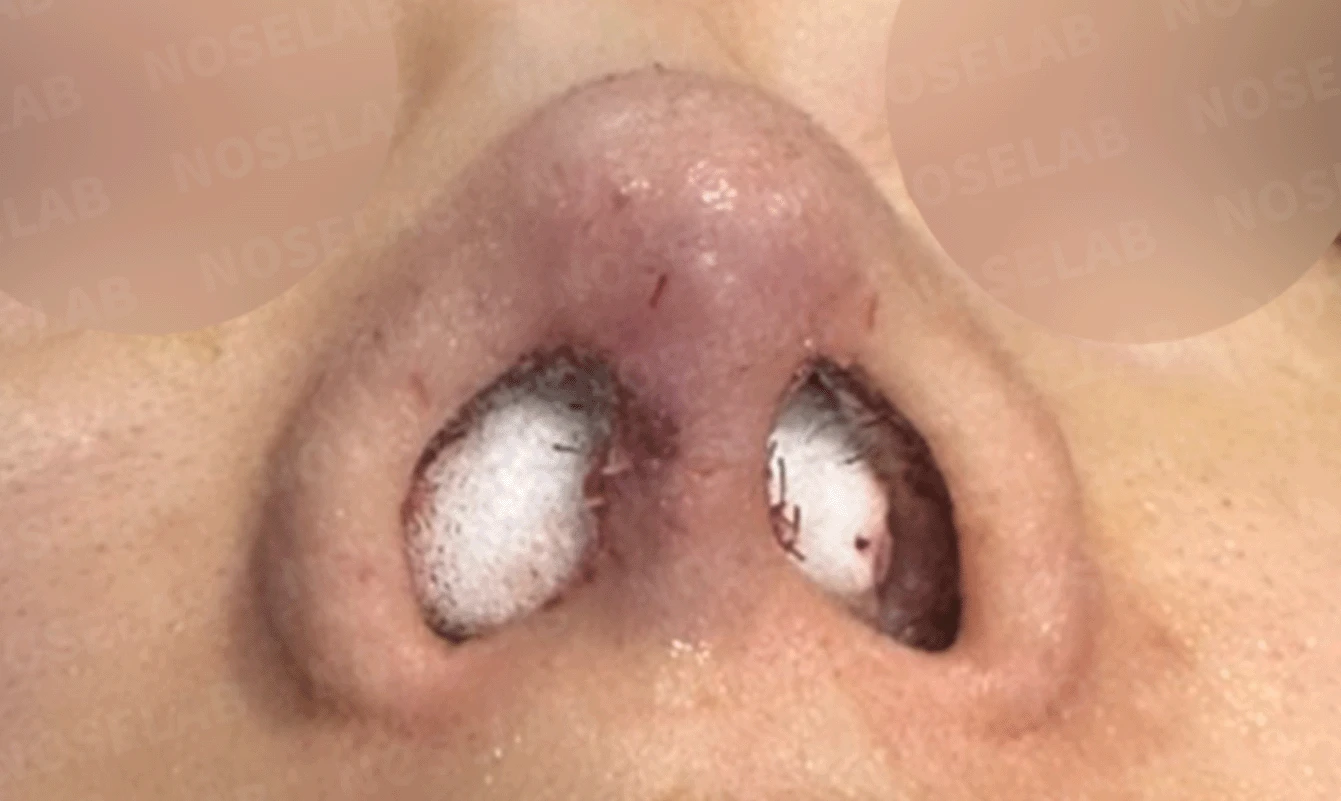
Before surgery / Day 0 immediately after surgery Photos taken immediately after surgery show swelling and may differ from the final result.
👨⚕️ Specialist's assessment
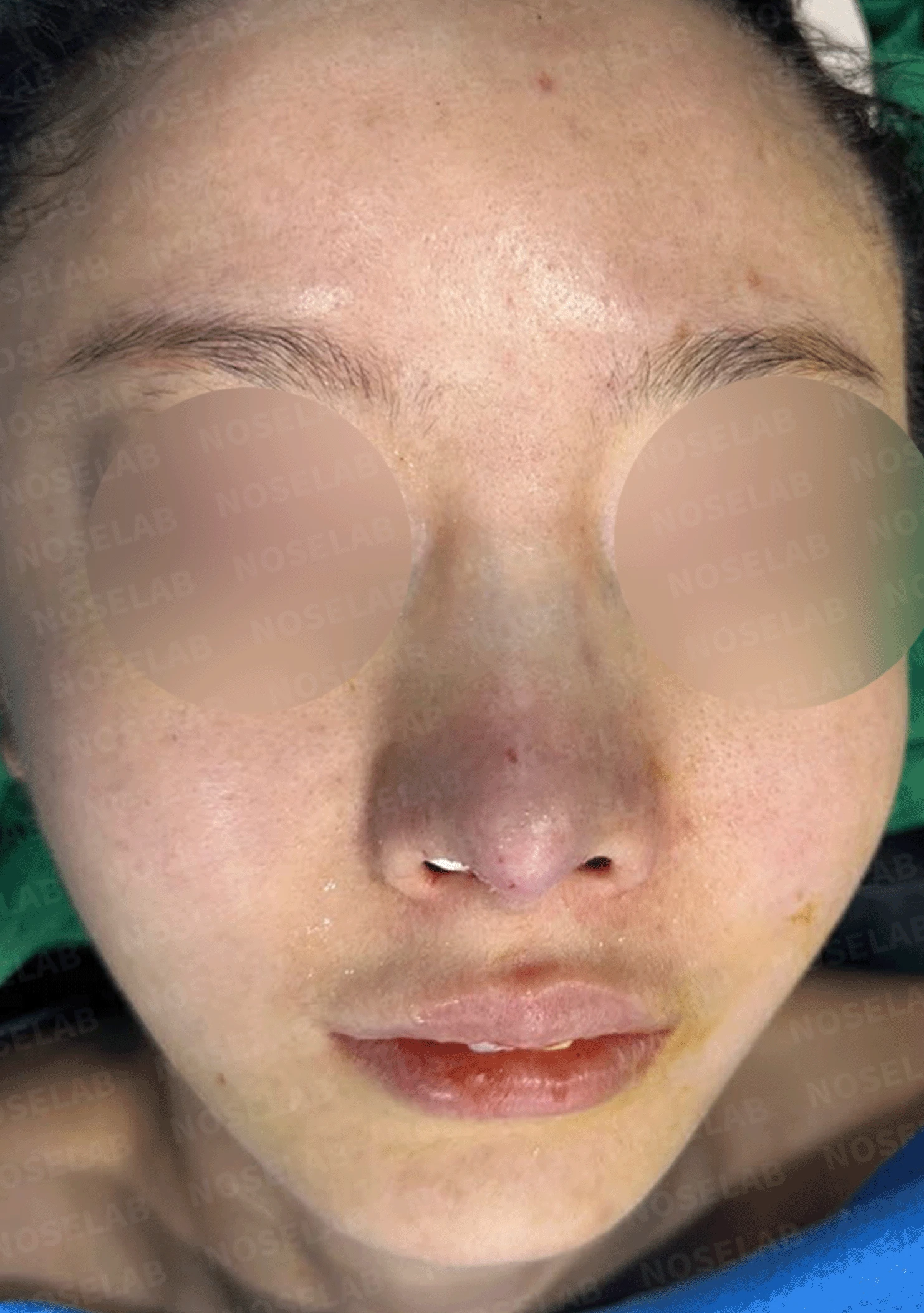
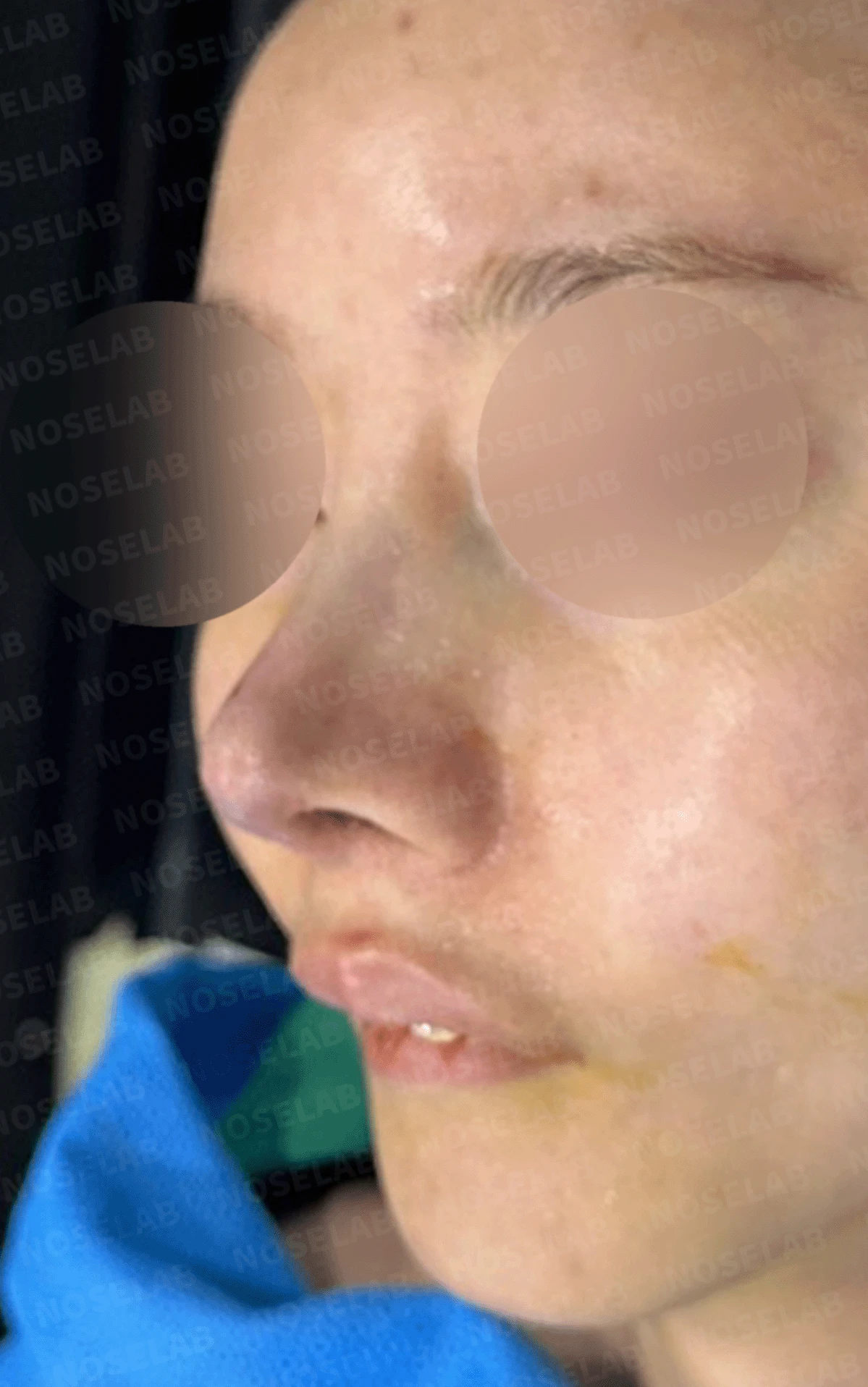
Front, profile, and oblique views immediately after surgery on day 0 Photos taken immediately after surgery show swelling and may differ from the final result.
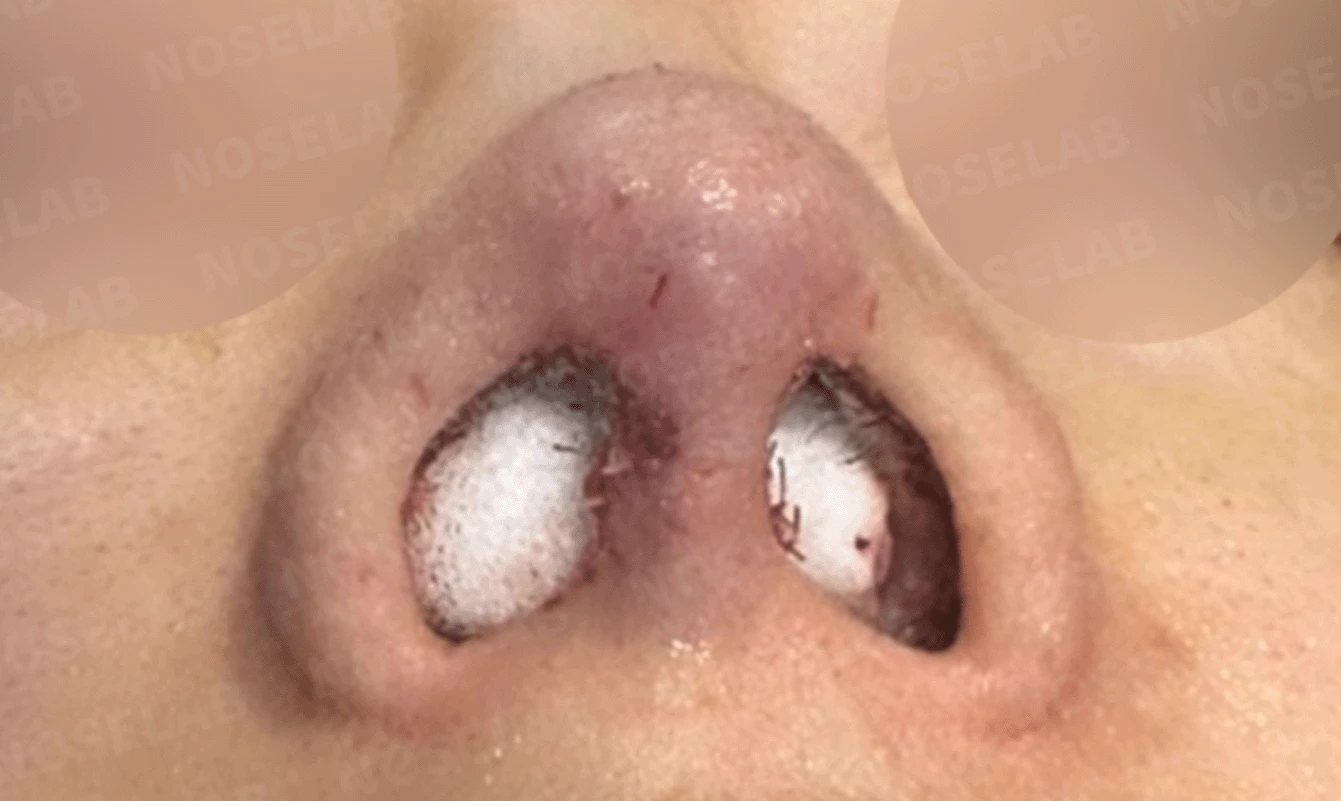
Nostril view on day 0 immediately after surgery Photos taken immediately after surgery show swelling and may differ from the final result.
This was an urgent situation where silicone extrusion was imminent. Prompt silicone removal combined with reconstruction using autologous rib cartilage and skin reinforcement with a dermal graft resolved the risk factors. In particular, alongside the recovery of the thinned skin tissues, an aesthetically pleasing result was achieved.
This was Dr. Peter C. Kang. Thank you.
Thank you.
#closedrhinoplasty #revisionrhinoplasty #autologousribcartilage #siliconeremoval #customrhinoplasty

Limitations and risks
When autologous rib cartilage is used, scarring and pain may remain at the donor site on the chest, and pneumothorax (pleural injury) can occur rarely. Over time, the grafted cartilage may warp or undergo partial resorption.
When revising after implant removal, contracture may progress again after removal, the nasal height and length may decrease, and staged surgery may be necessary depending on the skin condition.
When the septum is corrected at the same time, nasal obstruction may persist or recur, and in rare cases, septal perforation or changes in smell may occur.
Common potential risks include infection, bleeding, asymmetry, scarring, skin necrosis, and insufficient improvement; results vary depending on individual skin condition and previous surgical history.