Hello, I am Dr. Peter C. Kang.
Today, I would like to introduce the case of a patient who visited us with concerns regarding an elongated-looking philtrum and nasal asymmetry.
🔍 Previous surgical and procedural history
6 months ago: Radiesse filler (less than 0.5 cc on the nasal bridge)
💉 Patient's requests
Improvement of alar and nostril asymmetry
Improvement of a wide nasal tip
Improvement of a long philtrum
🔧 Preoperative analysis
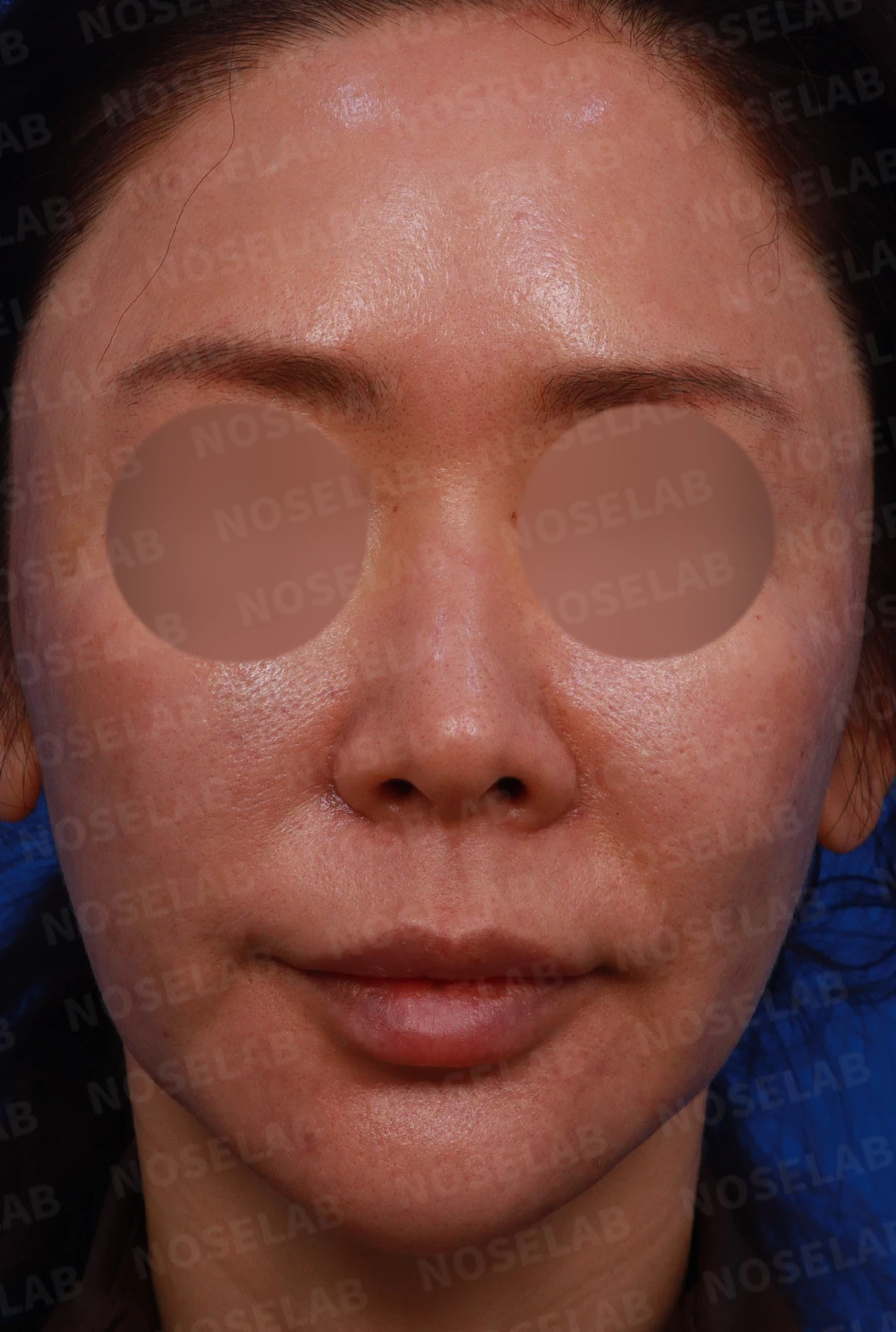
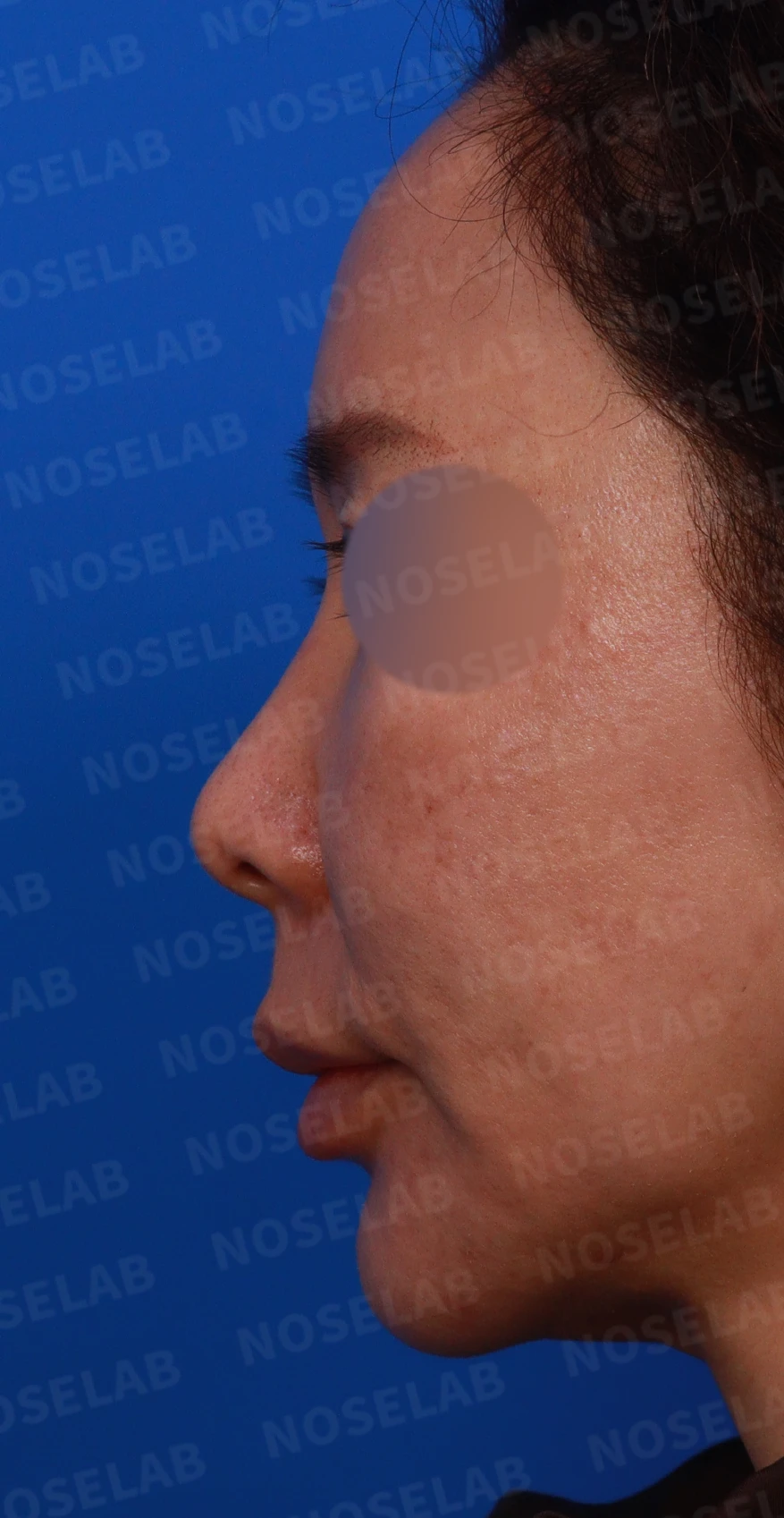
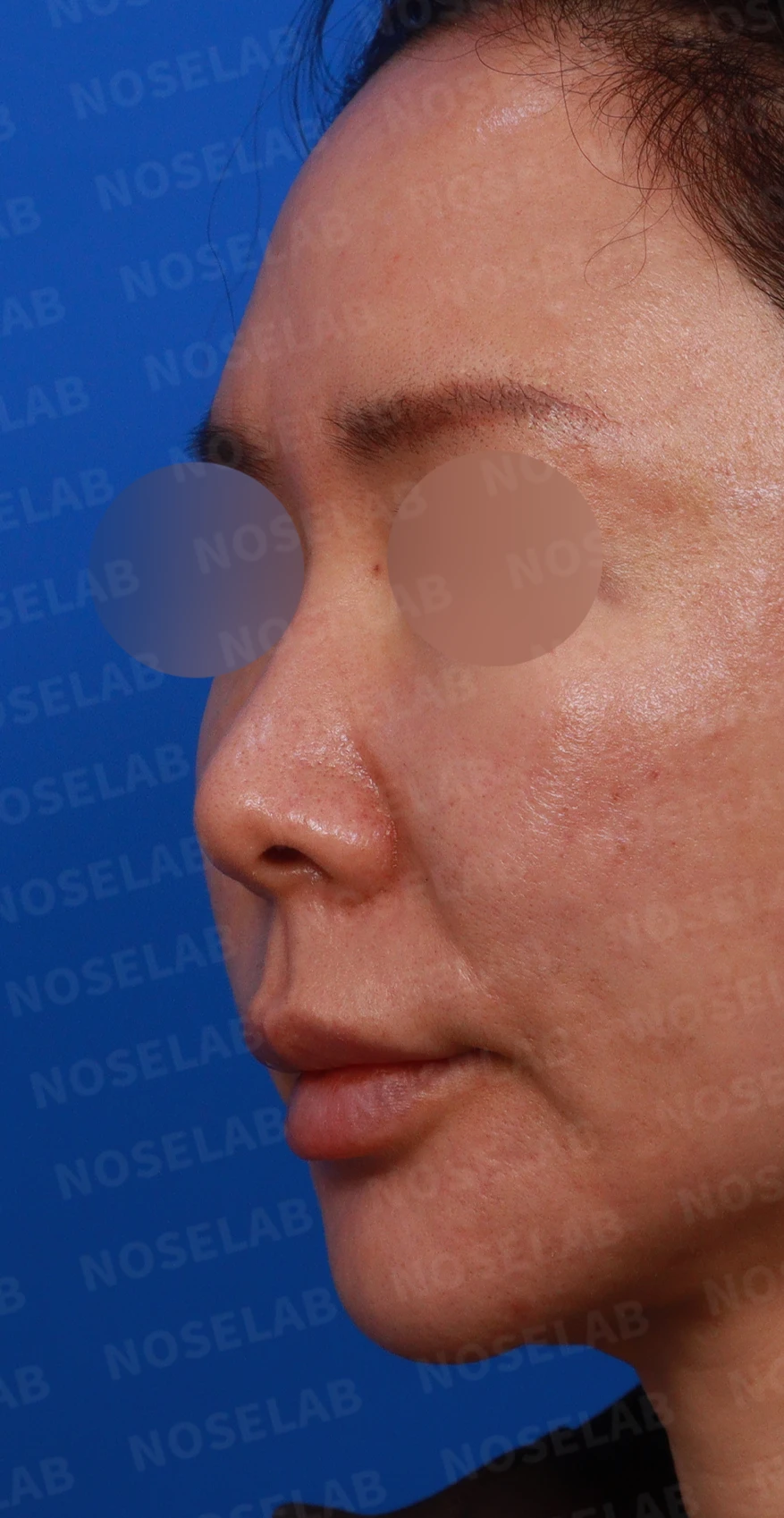
Front, left profile, and oblique views during design consultation.
Front view
Flared nasal tip
Asymmetry of the alae and nostrils
Long philtrum
2. Profile view
Upturned nose
Protruding mouth findings
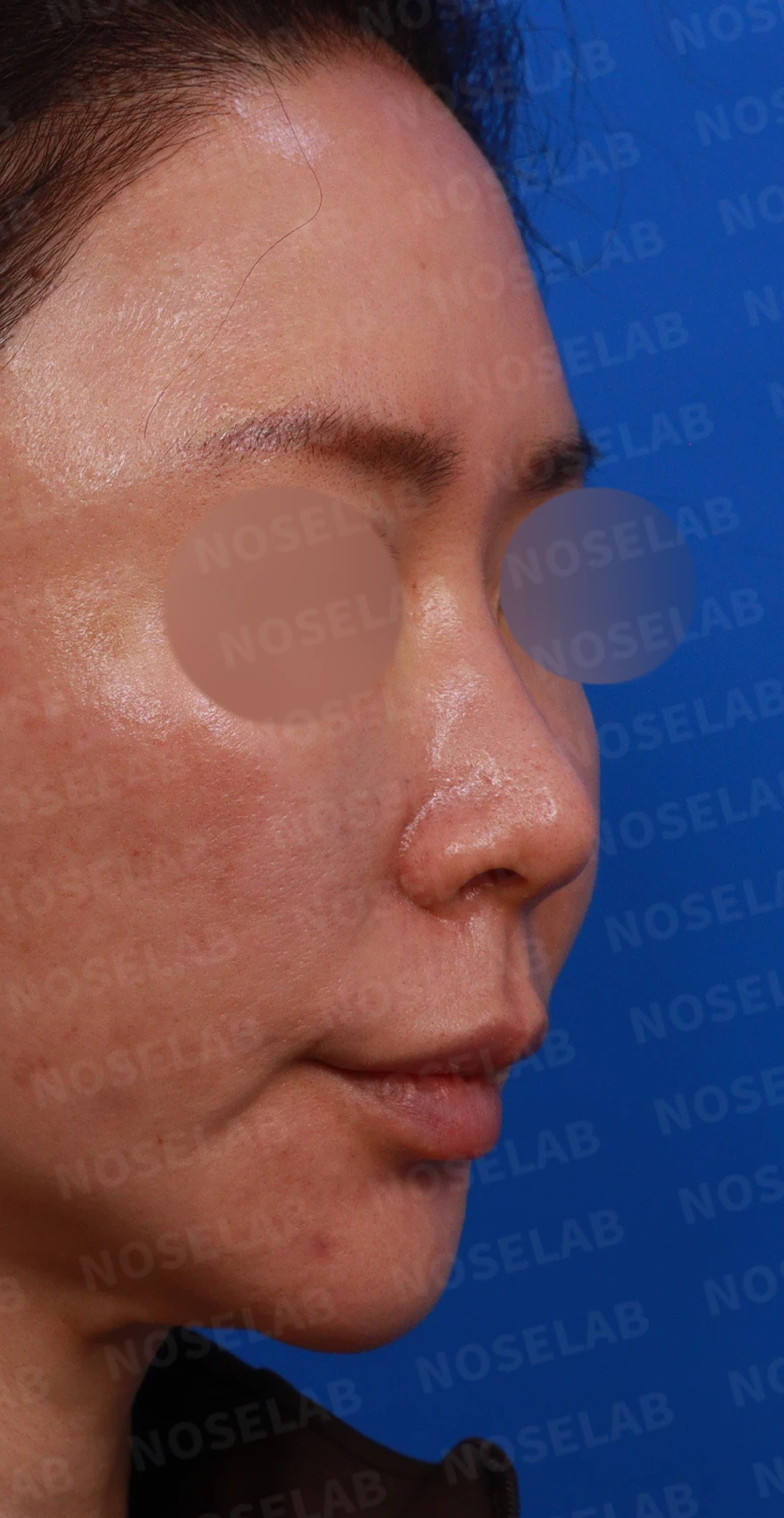
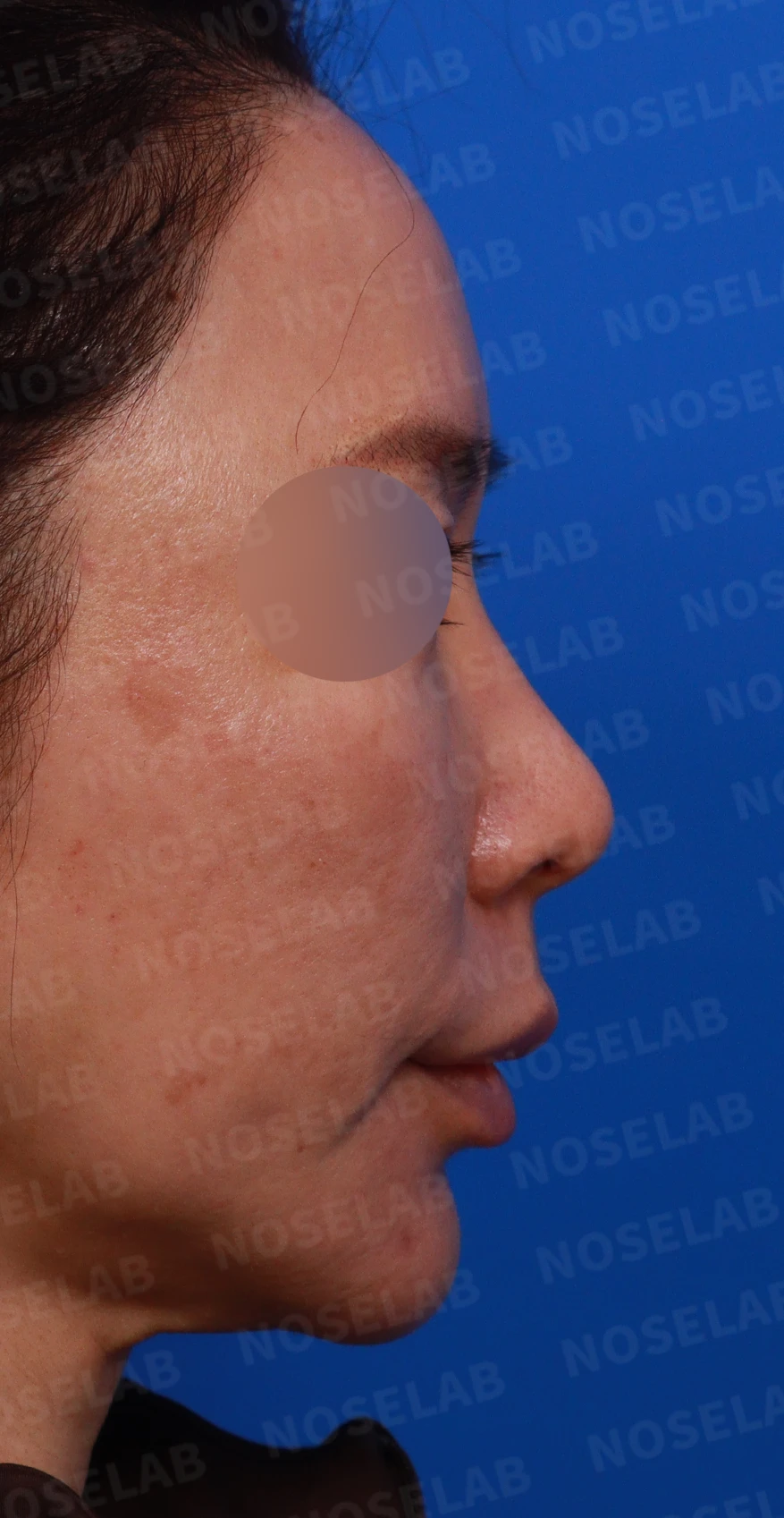
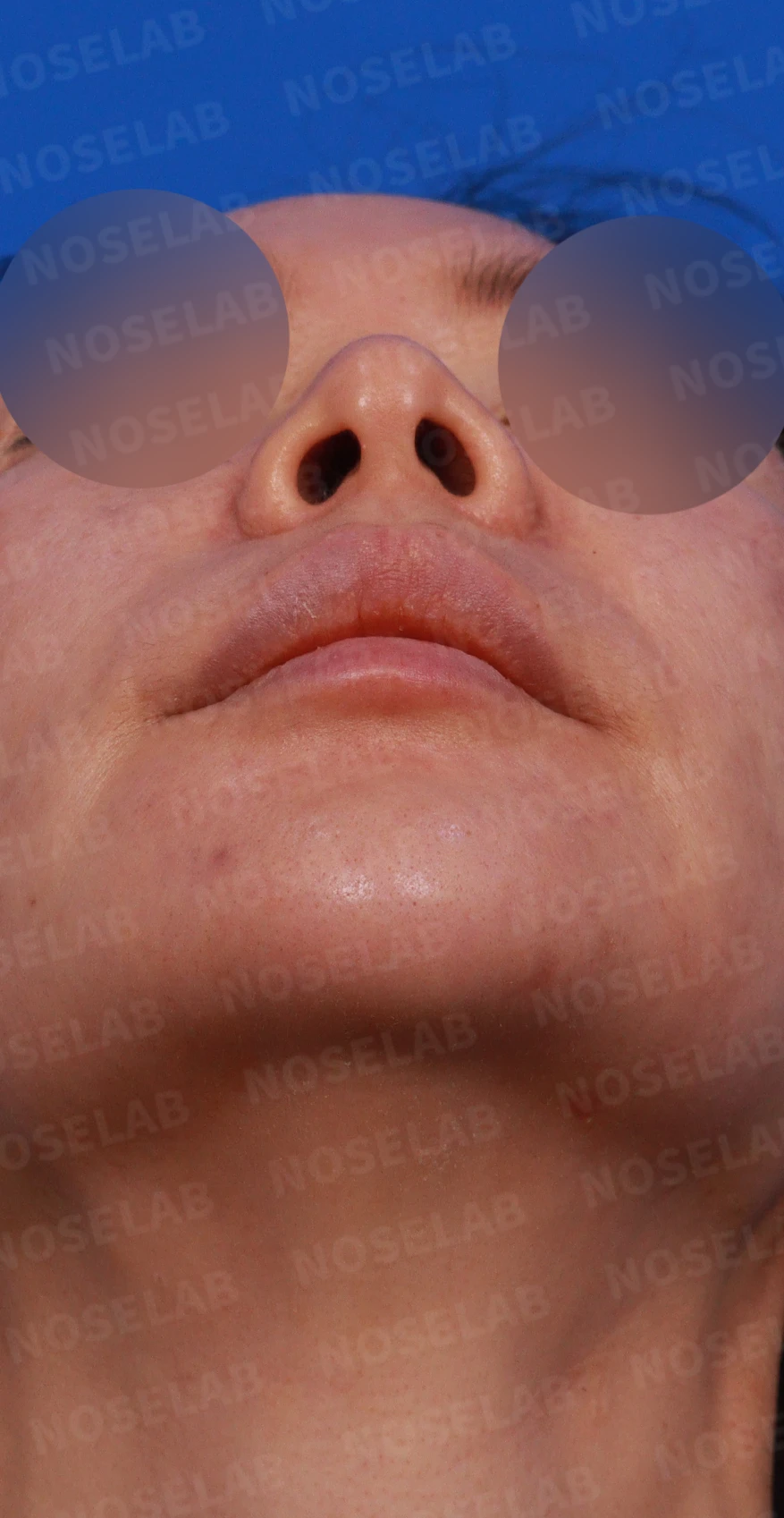
Design consultation photos: right oblique, profile, and nostril (submental) views.
3. Nostrils
Left-right asymmetry
Columella tilted to the right
💉 Surgical procedure details
Basic structural improvement
Complete removal of foreign material
Septal extension using autologous rib cartilage
2. Functional improvement
Correction of deviated septum
Hypertrophic rhinitis surgery
3. Cosmetic improvement
Nasal sill reduction
Correction of alar symmetry
Creation of a straight bridge line
Improvement of protruding mouth through nasolabial angle correction
🌟 Surgical results
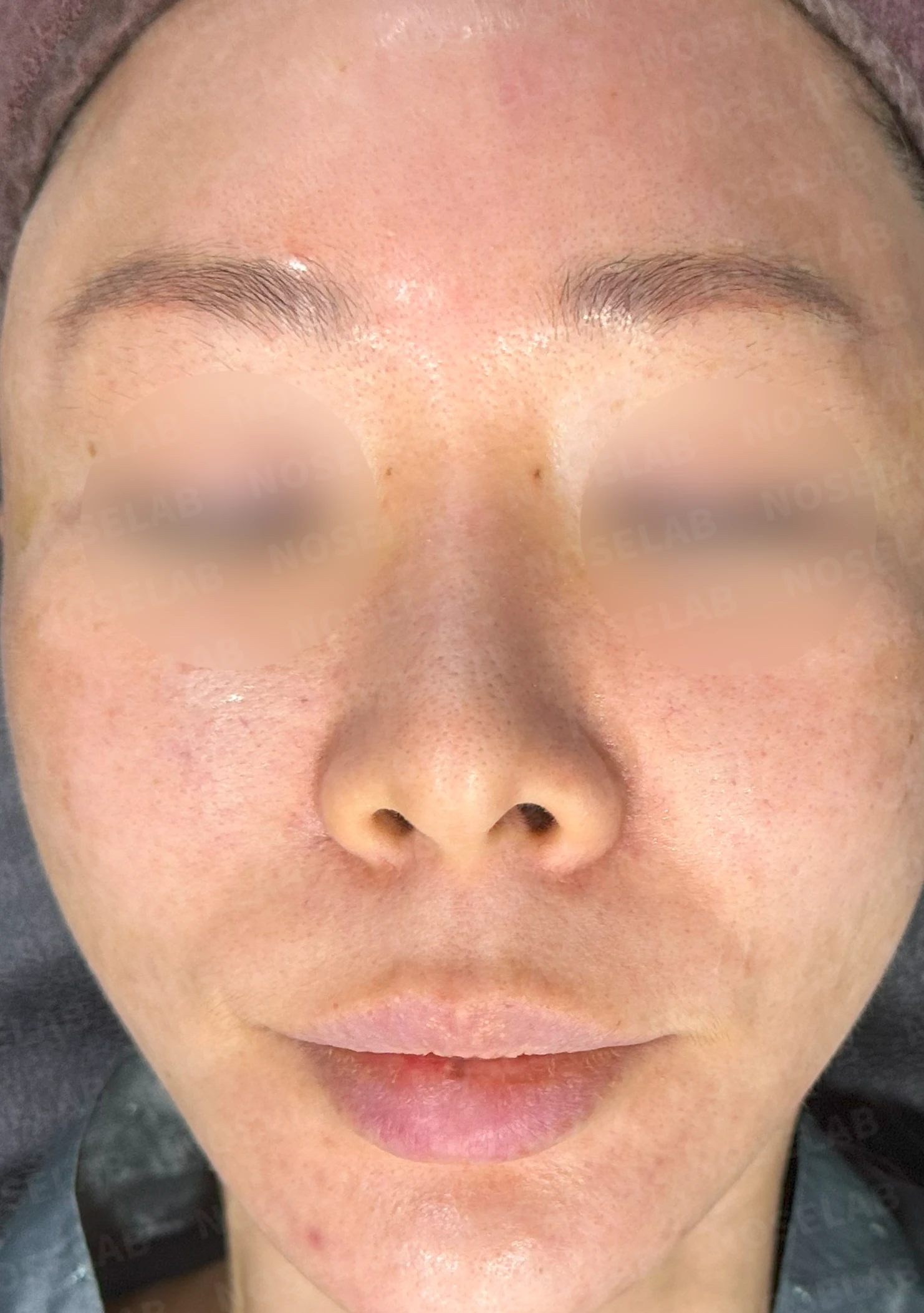
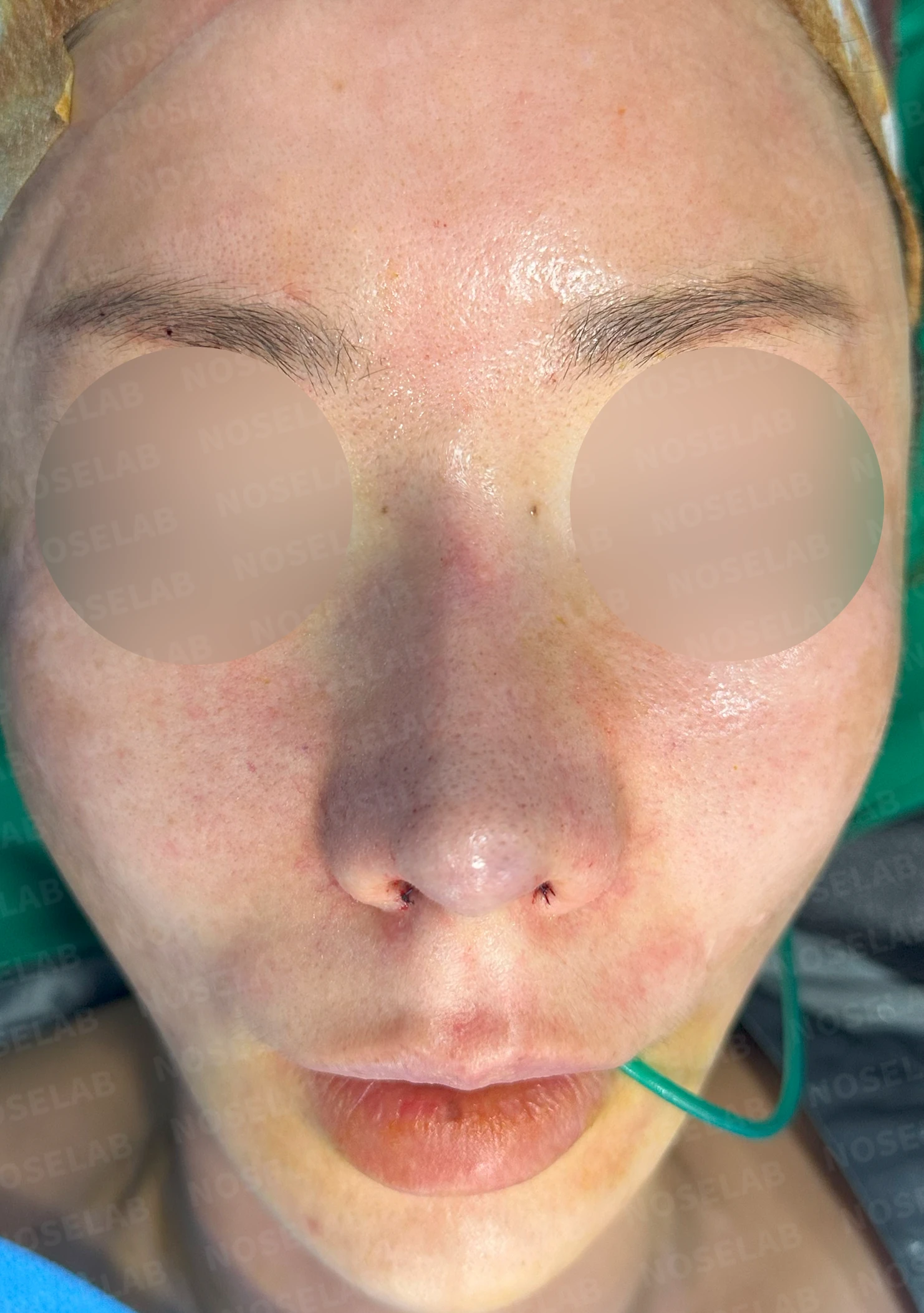
Before surgery / Day 0 immediately after surgery Photos taken immediately after surgery show swelling and may differ from the final result.
Front view improvement
The previously widened nasal tip is neatly refined
Asymmetry of the alae and nostrils naturally corrected
The elongated-looking philtrum adjusted to an appropriate length
Improved overall balance
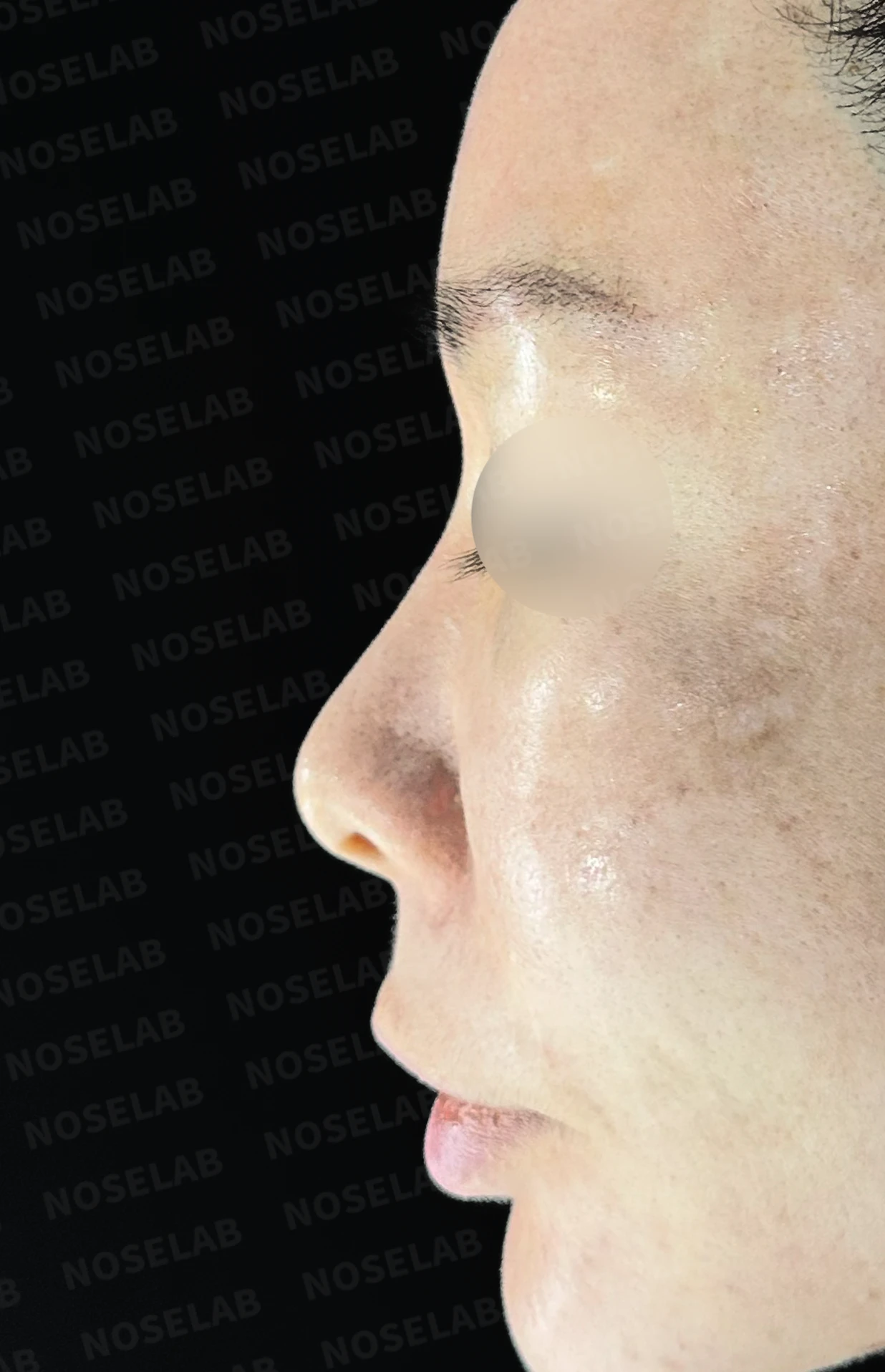
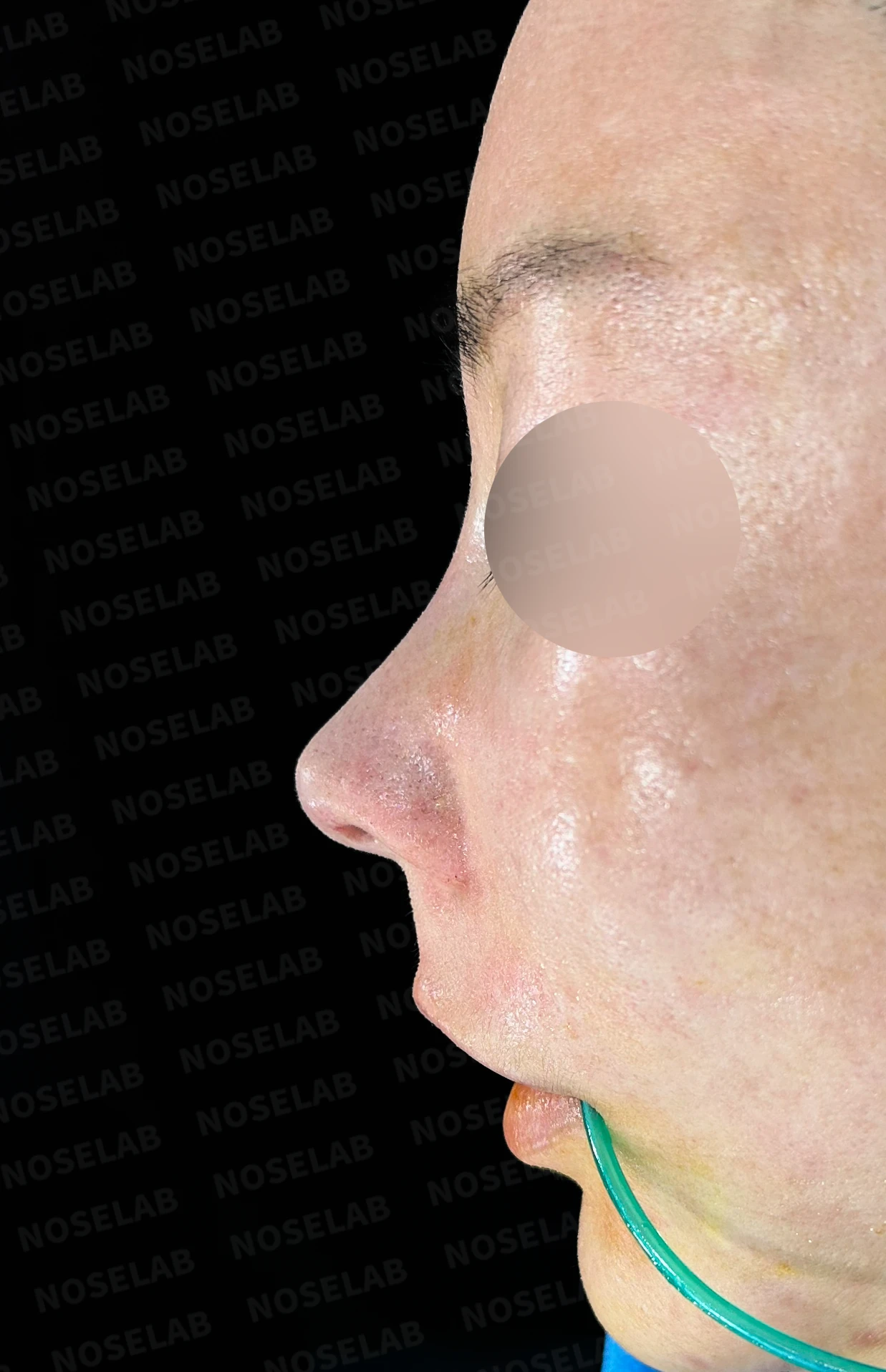
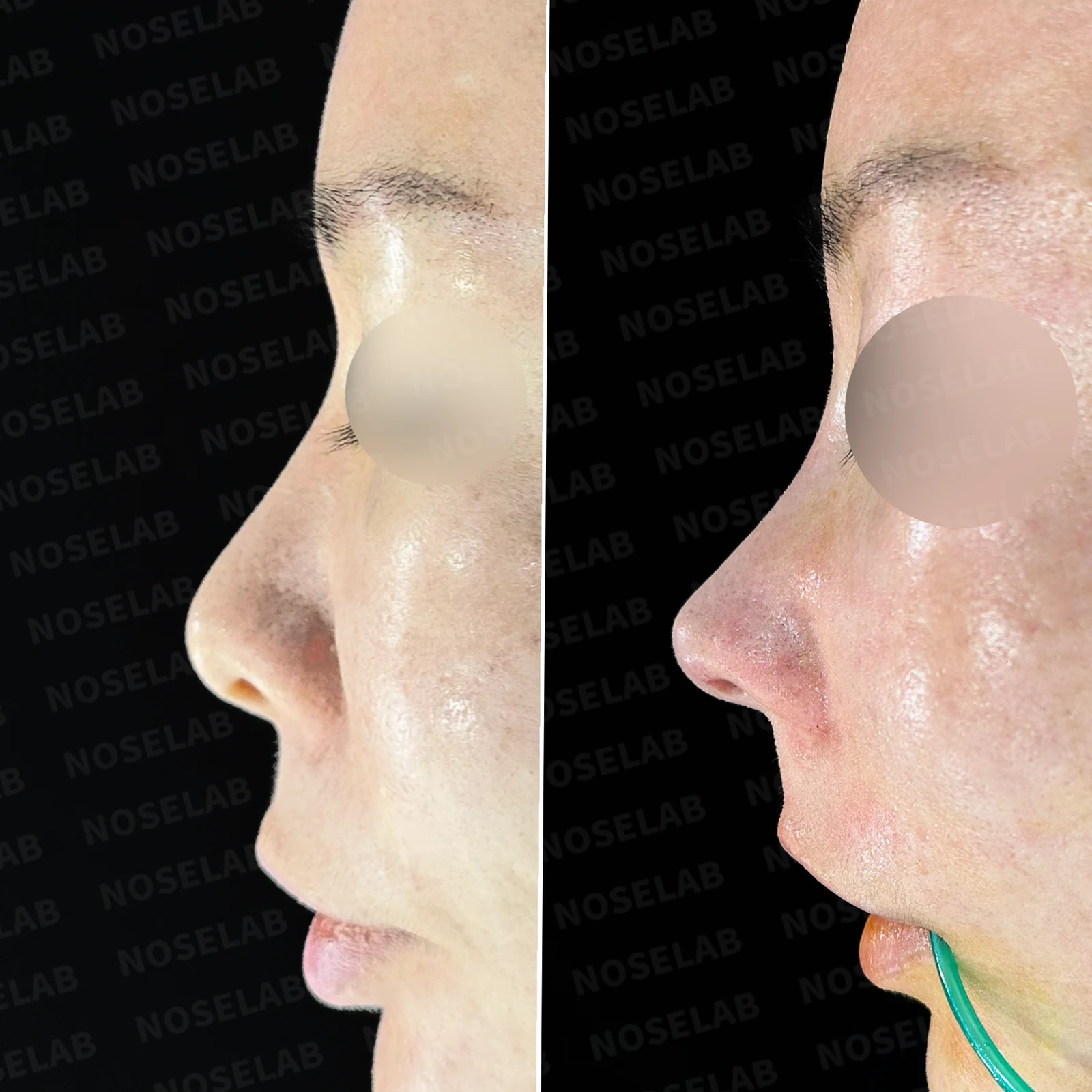
Before surgery / Day 0 immediately after surgery Photos taken immediately after surgery show swelling and may differ from the final result.
2. Profile view improvement
The upturned nasal tip naturally lowered
Soft profile silhouette achieved by improving the appearance of a protruding mouth
Formation of a refined nasal bridge with a straight bridge line
Formation of a natural nasolabial angle
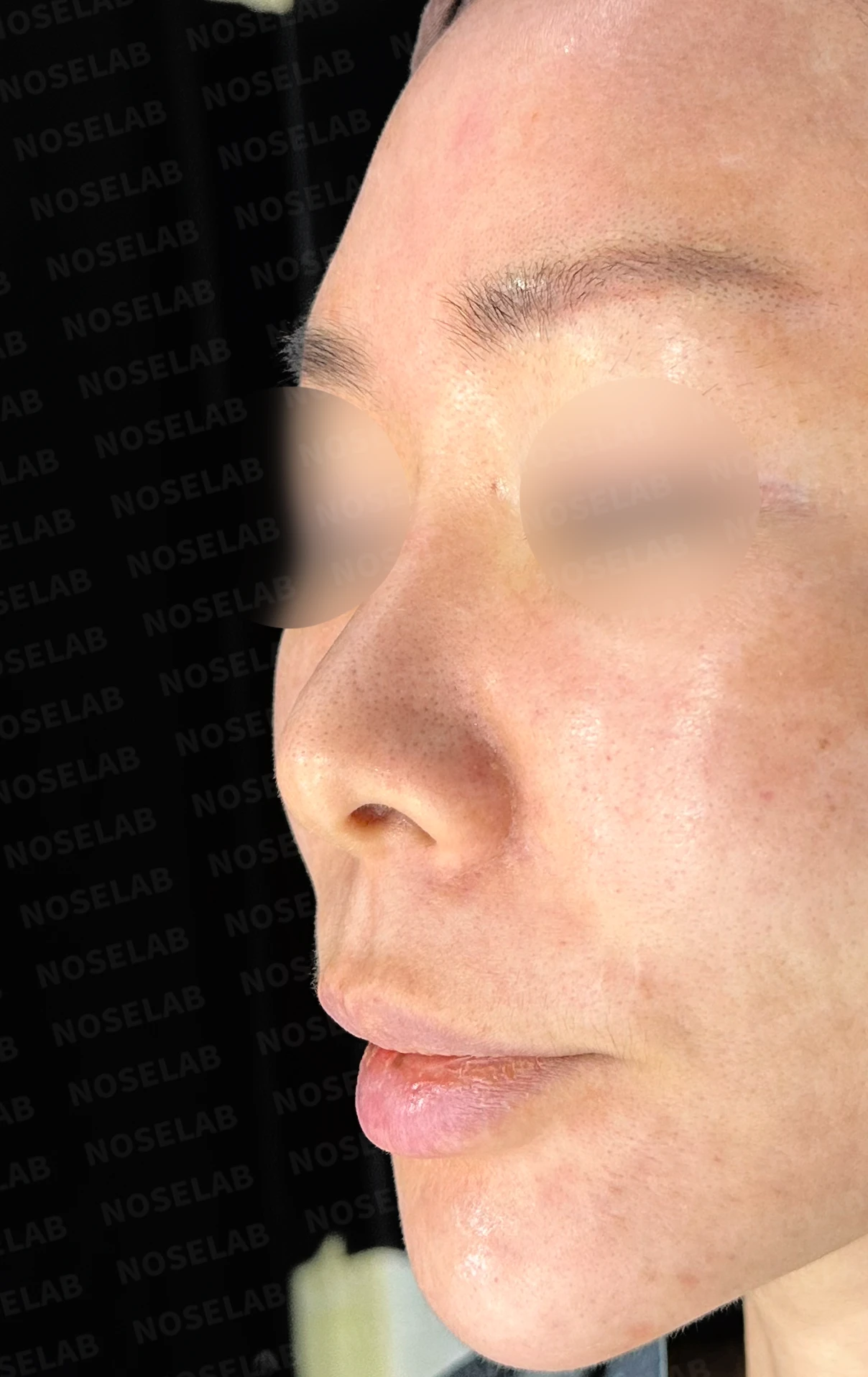
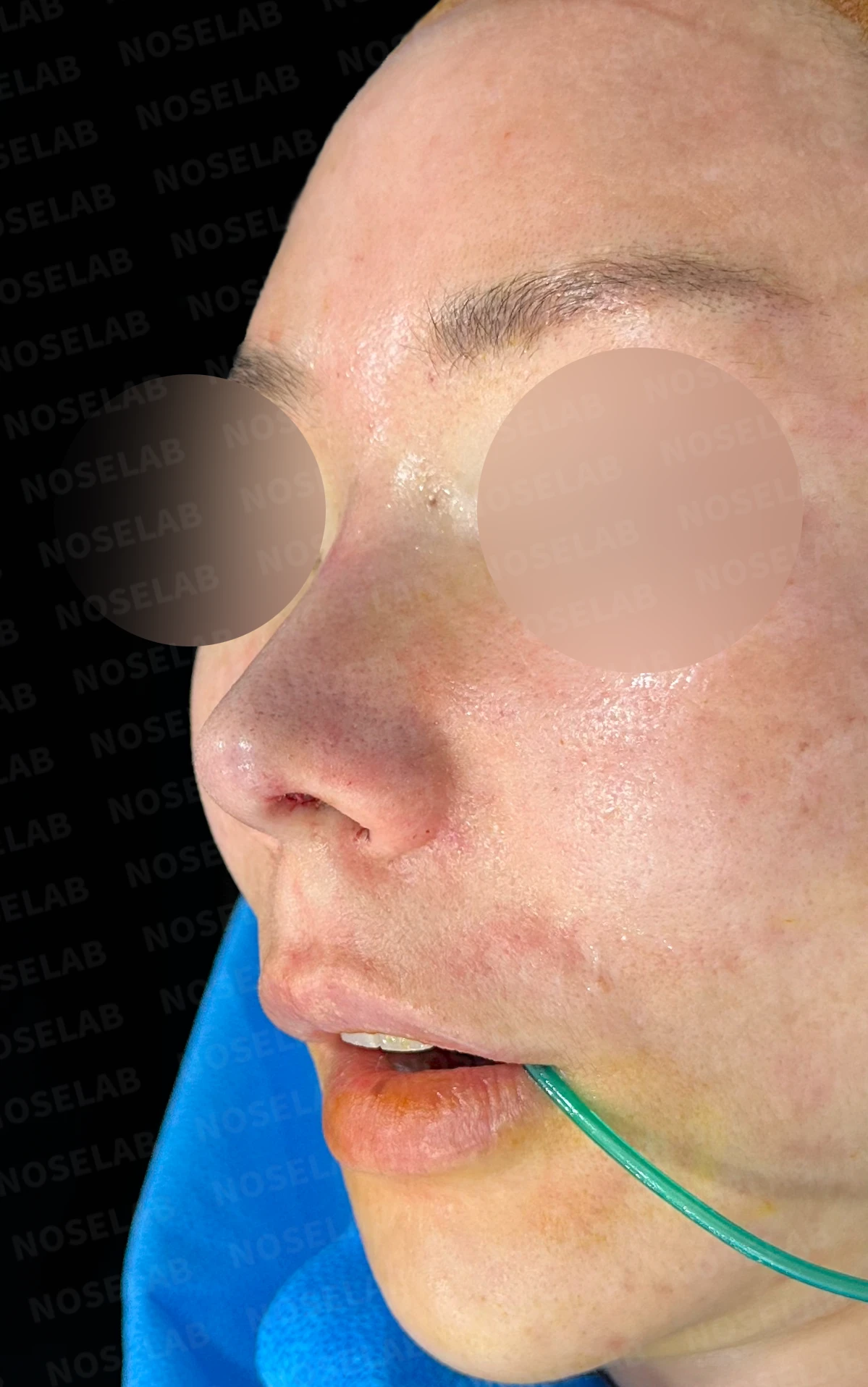
Before surgery / Day 0 immediately after surgery Photos taken immediately after surgery show swelling and may differ from the final result.
3. Nostril improvement
Columella tilted to the right corrected to the center
Correction of left-right asymmetry
Appropriate nostril size established through nasal sill reduction
Overall balanced nostril shape achieved
Improved philtrum length
Natural straight bridge line
A distinct yet harmonious nasal shape
Improved asymmetry
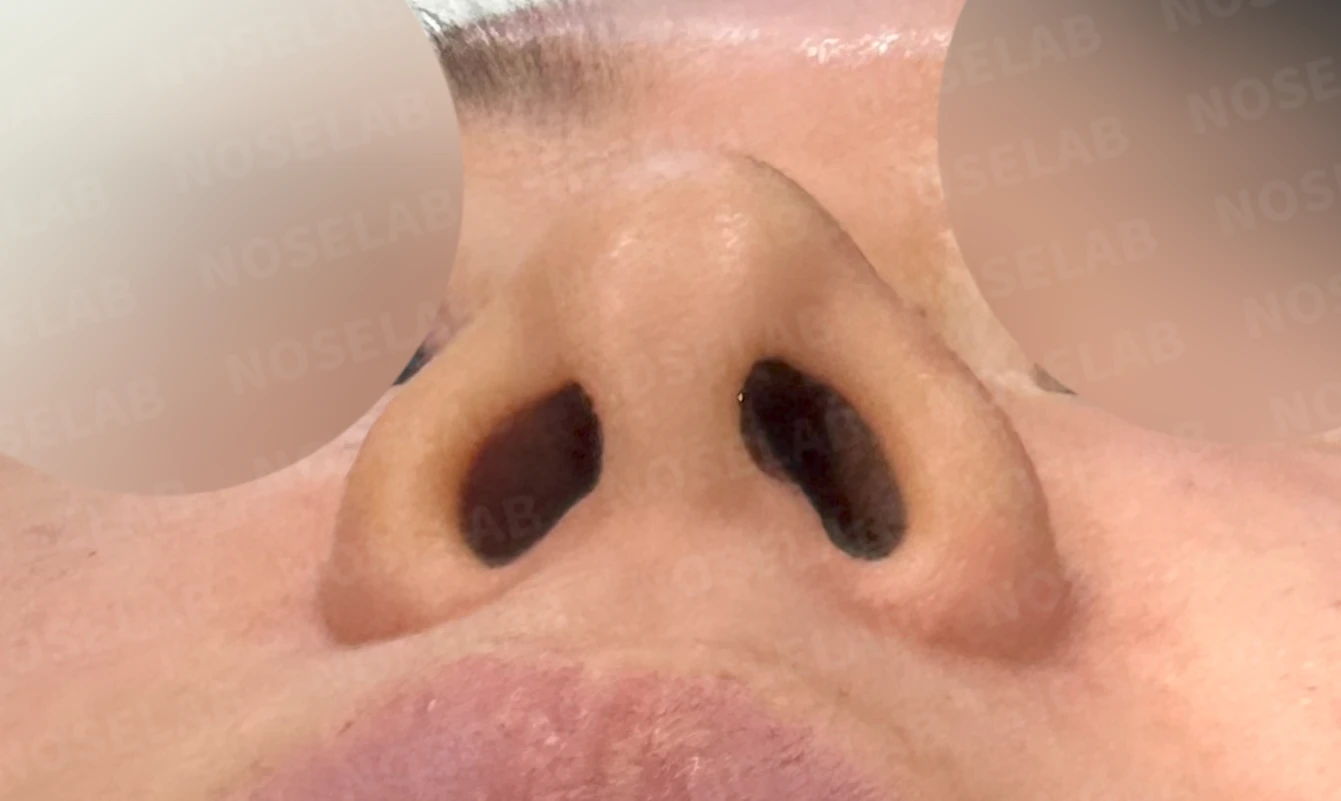
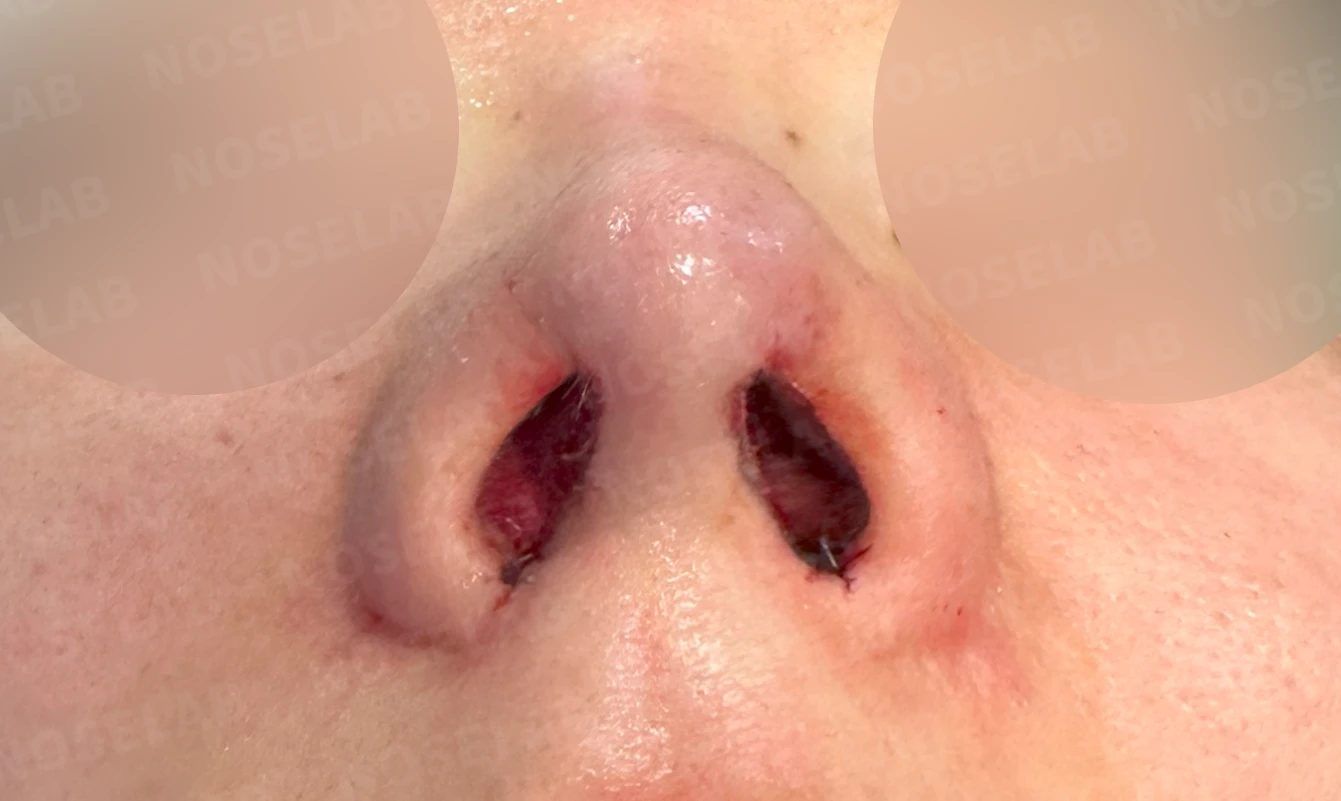
Before surgery / Day 0 immediately after surgery Photos taken immediately after surgery show swelling and may differ from the final result.
💡 Specialist's opinion
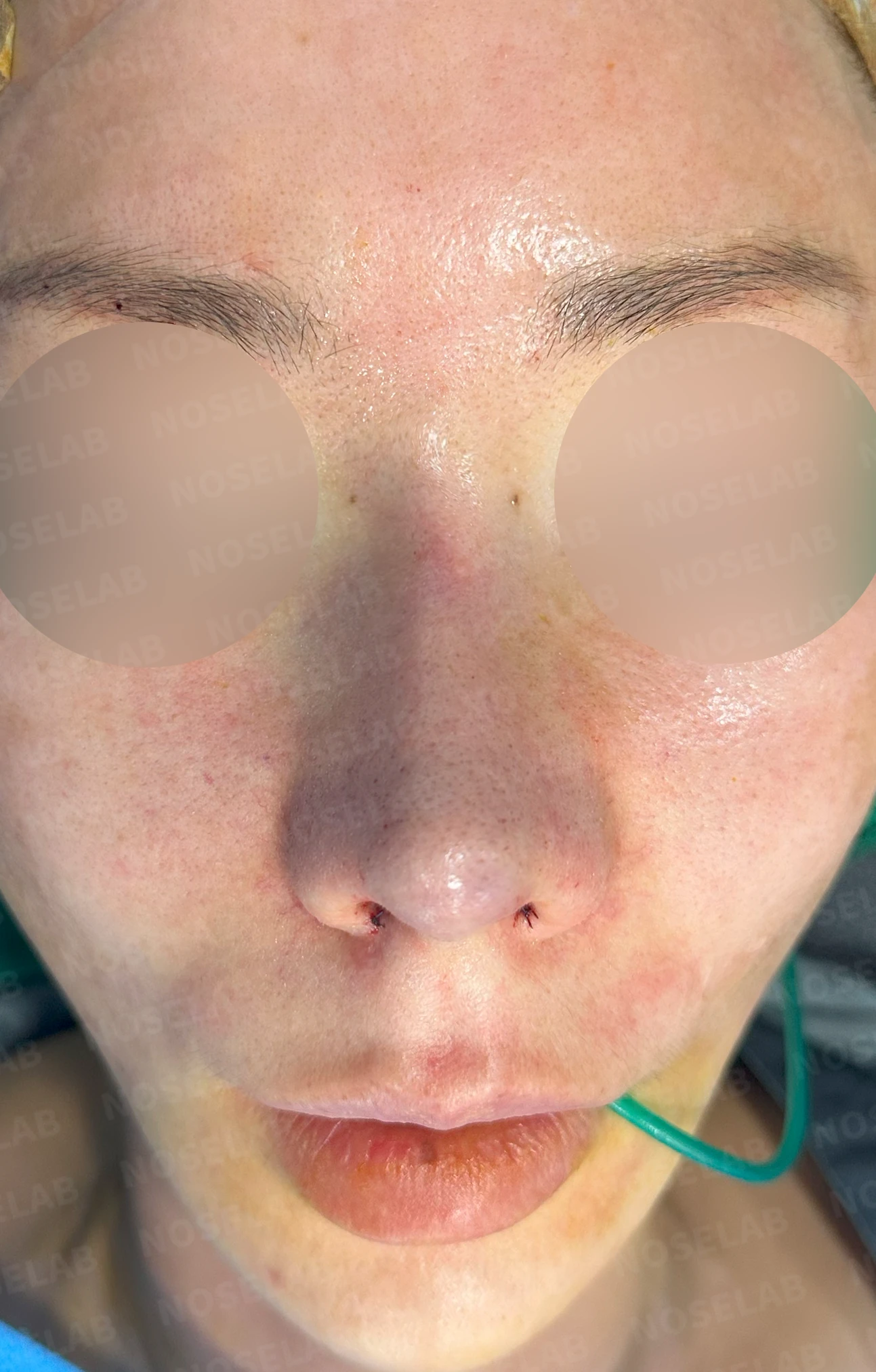
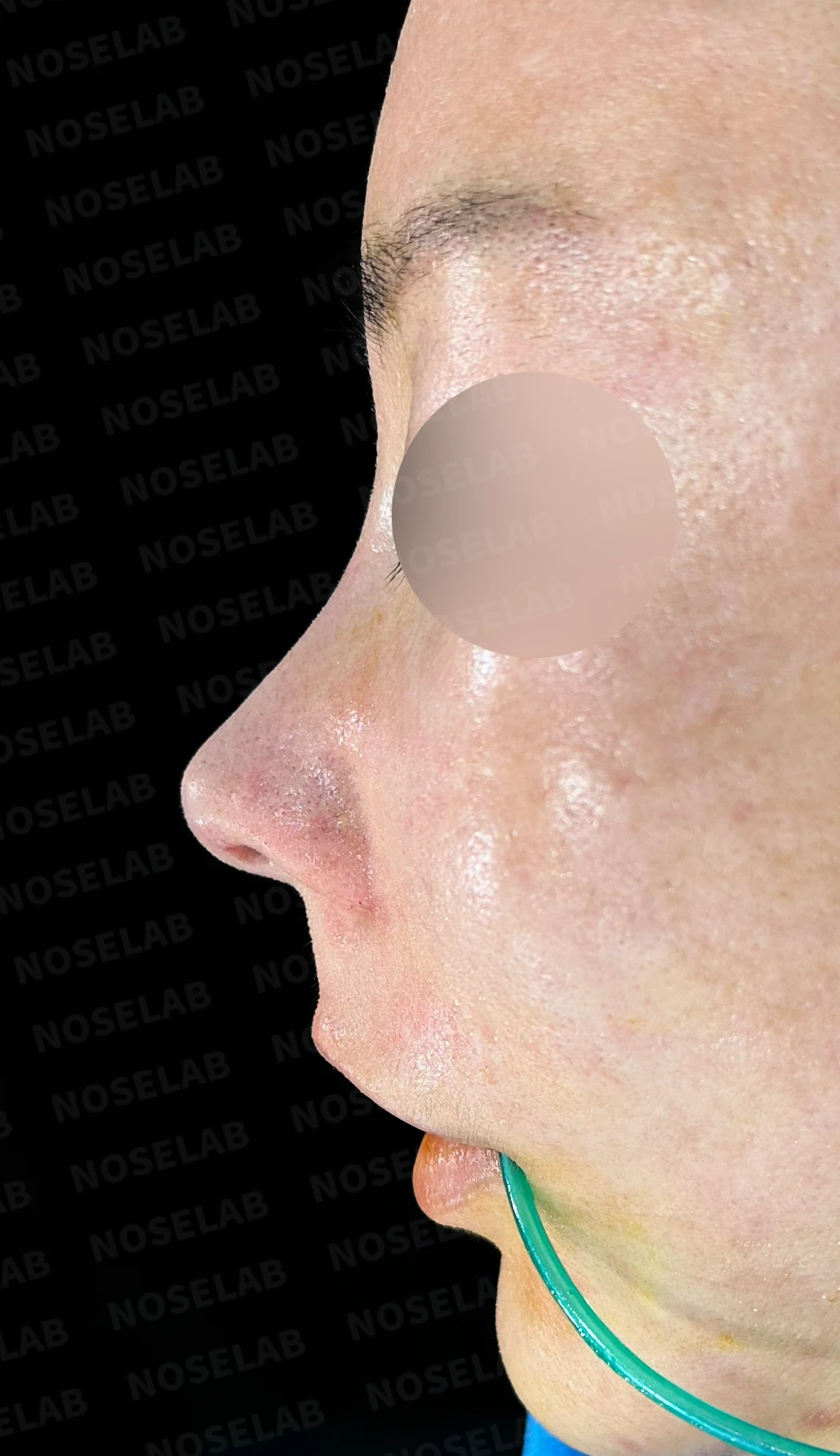
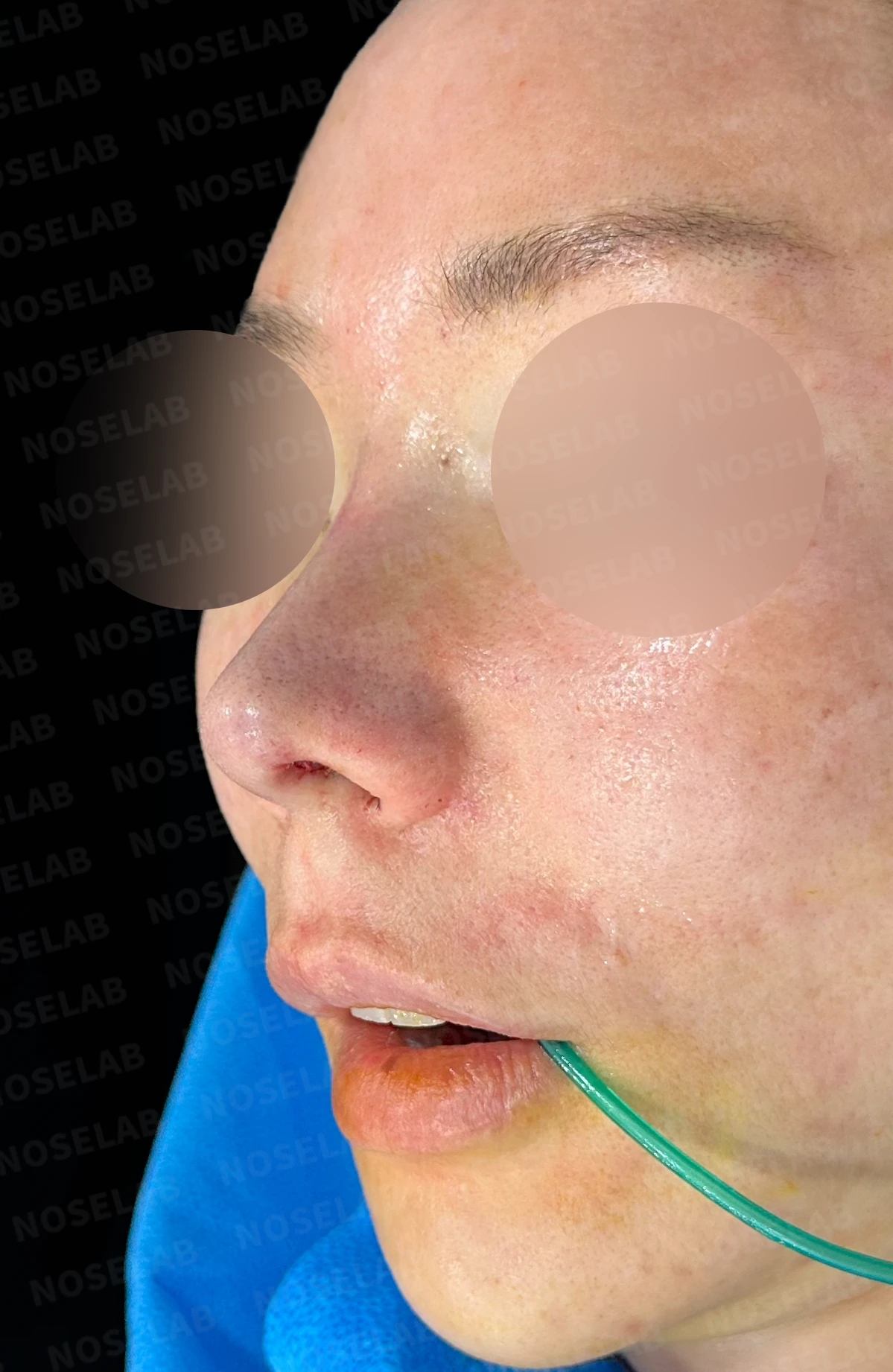
Front, profile, and oblique views taken immediately after surgery (day 0).Immediate postoperative photos show swelling and may differ from the final result.
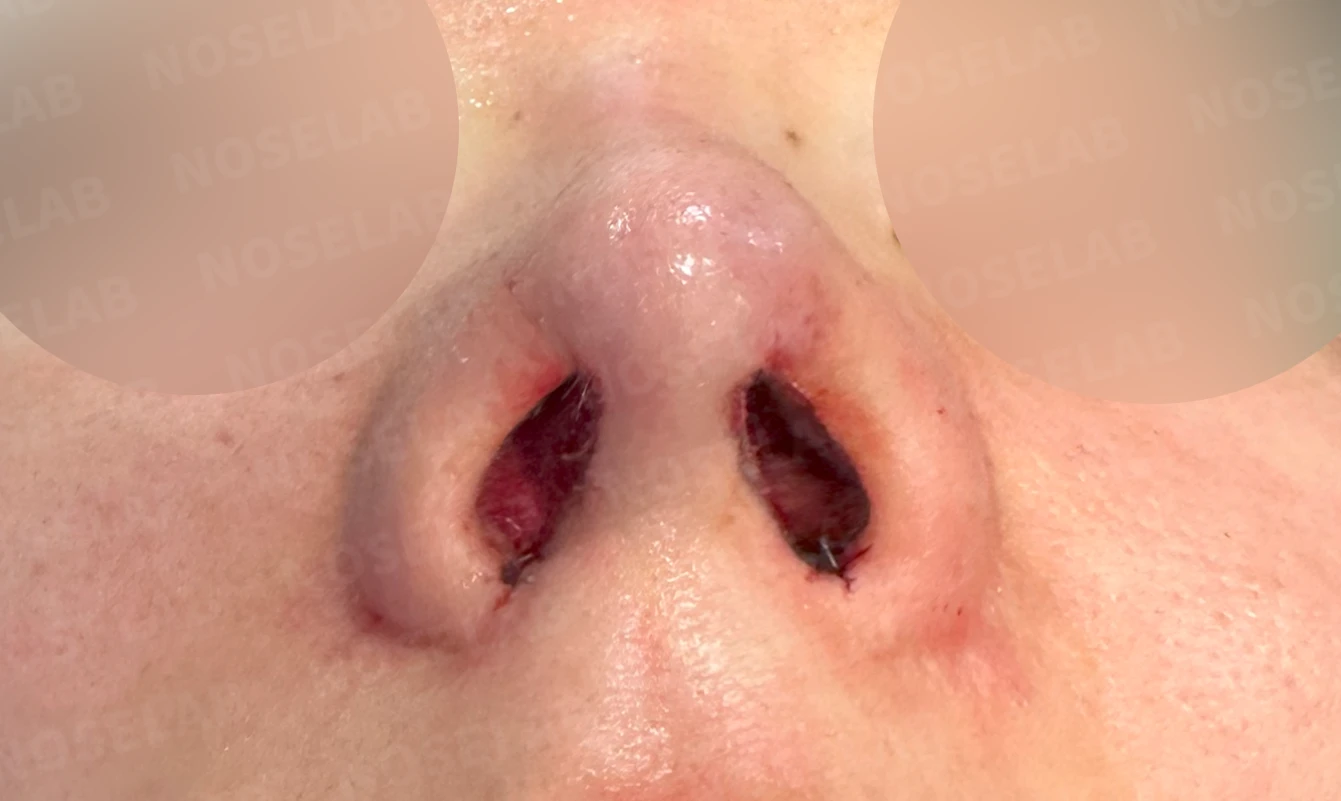
Basal (nostril) view taken immediately after surgery (day 0).Immediate postoperative photos show swelling and may differ from the final result.
This type of case is a good example of customized surgery that goes beyond simple reshaping of the nose to consider the proportions and harmony of the entire face. In particular, while resolving the complex issues of a long philtrum and asymmetry, a natural yet defined result was achieved.
Most importantly, a customized approach was taken that considered the patient's unique facial features. While avoiding overcorrection and creating a natural line, we were able to deliver the refined image the patient desired.
Every step was carried out meticulously, starting with foreign material removal prior to surgery, reconstruction using autologous rib cartilage, and delicate adjustments to the nasal sill. In particular, through the correction of the deviated septum and hypertrophic rhinitis, a satisfactory outcome was also achieved functionally.
Rhinoplasty is not merely about changing the shape of the nose; it is a procedure that transforms the image of the entire face.
As seen in this case, improving philtrum length and asymmetry significantly influences overall facial proportions, ultimately creating a more harmonious and sophisticated impression.
I will continue to listen closely to each patient's detailed concerns and do my best to deliver safe and satisfactory results.
This was Dr. Peter C. Kang. Thank you.
Thank you.
#rhinoplasty #philtrumcorrection #asymmetrycorrection #autologousribcartilage #straightbridgeline #alarcorrection #naturalnose #glamorousnose #customrhinoplasty

Limitations and risks
When autologous rib cartilage is used, scarring and pain may remain at the donor site on the chest, and pneumothorax (pleural injury) can occur rarely. Over time, the grafted cartilage may warp or undergo partial resorption.
When foreign materials such as injected fillers are removed and reconstructed, contracture may recur, nasal height and length may decrease, and staged surgery may be necessary depending on the skin condition.
When the septum is corrected at the same time, nasal obstruction may persist or recur, and in rare cases, septal perforation or changes in smell may occur.
Common potential risks include infection, bleeding, asymmetry, scarring, skin necrosis, and insufficient improvement; results vary depending on individual skin condition and previous surgical history.