Hello, I am Dr. Peter C. Kang.
Today, I would like to introduce a revision rhinoplasty case that resolved a long nose and asymmetry issues resulting from multiple prior nasal surgeries.
🔍 Surgical history
2015: Silicone implant + nasal bone reduction + donor rib cartilage
2019: Alar reduction
May 2023: Silicone implant + nasal bone reduction + donor rib cartilage
October 2023: Revision rhinoplasty due to deviation
March 2024: Implant-free septal reconstruction (SR) + alar base elevation + foreign material removal
18 perioperative stem cell therapy sessions
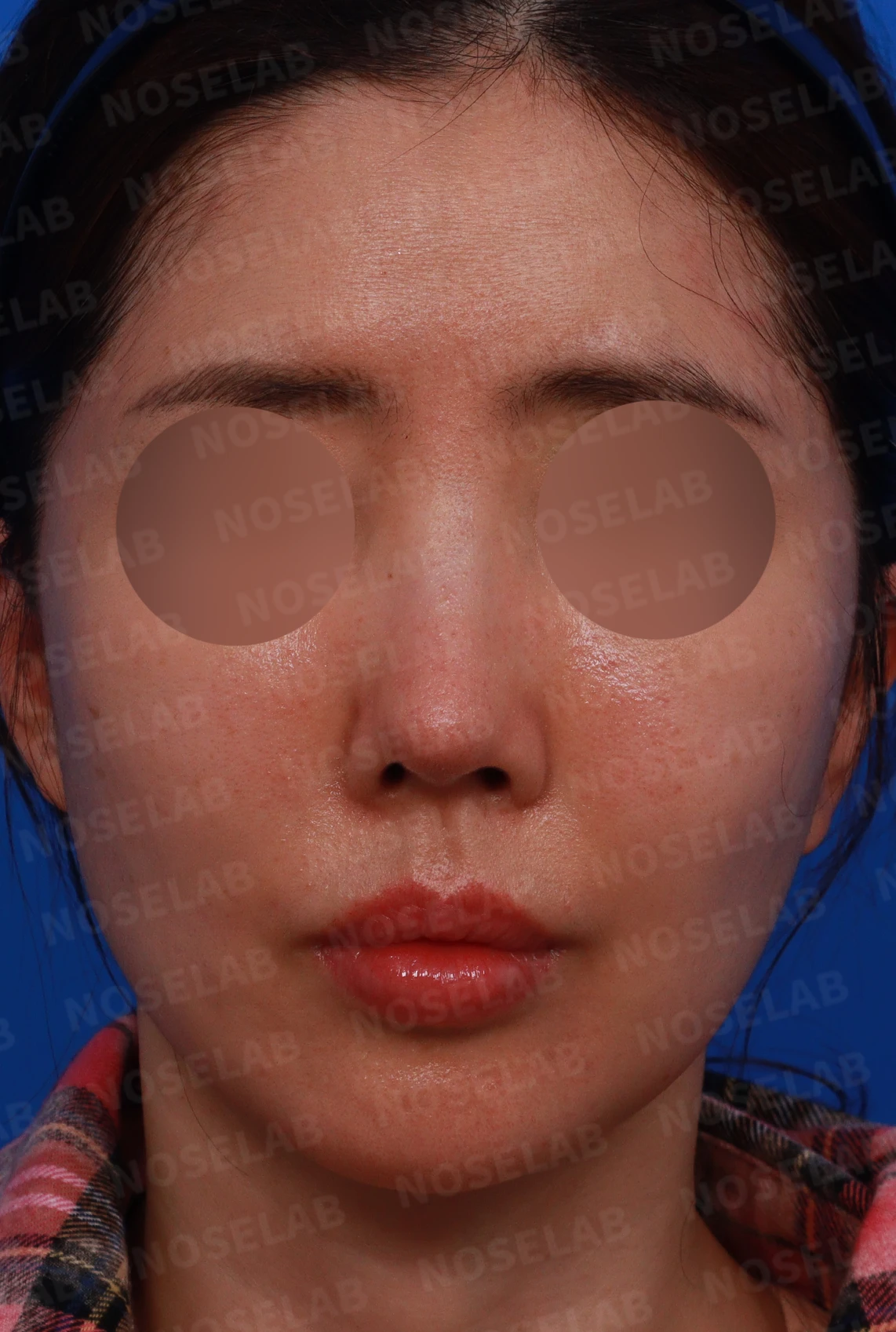
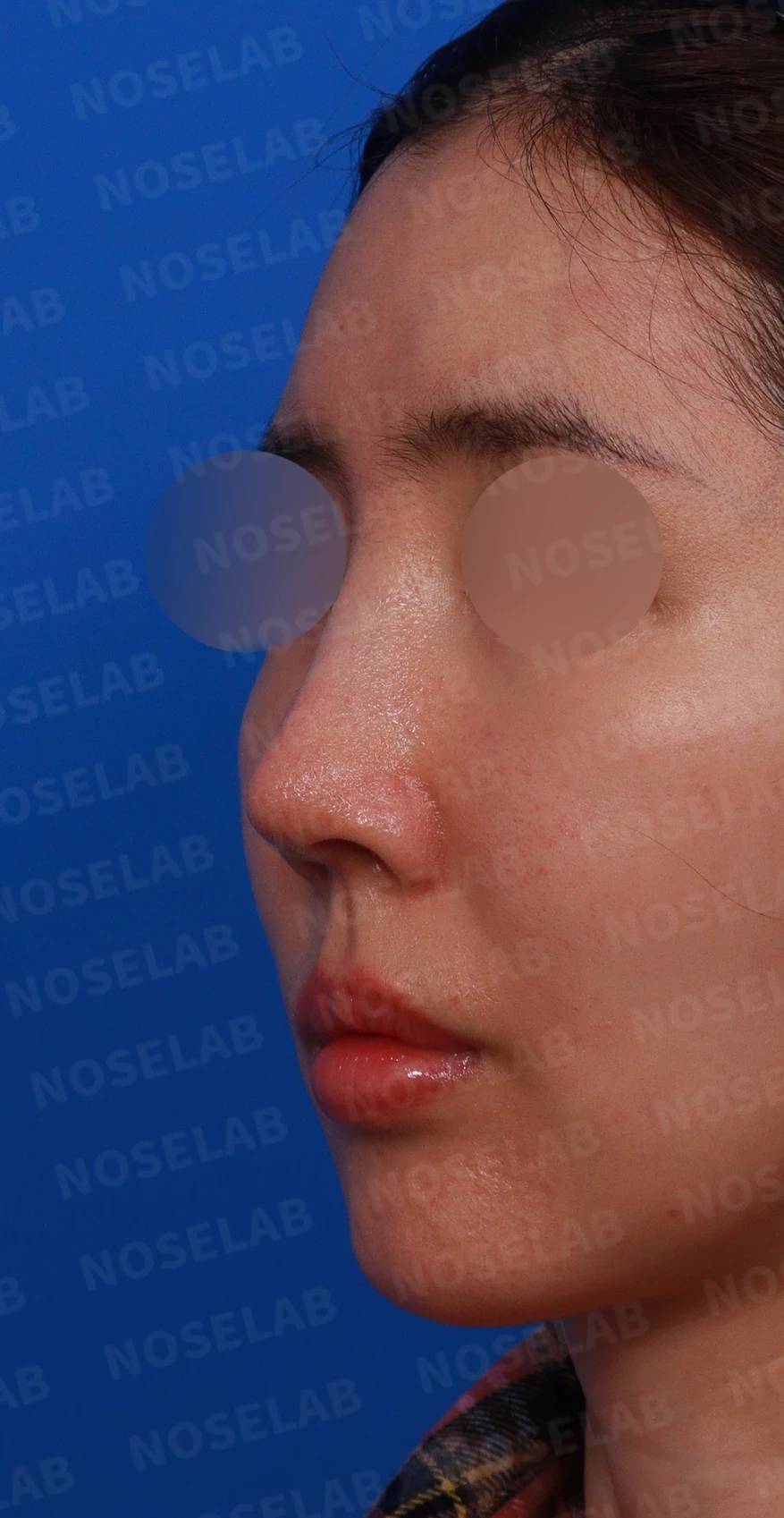
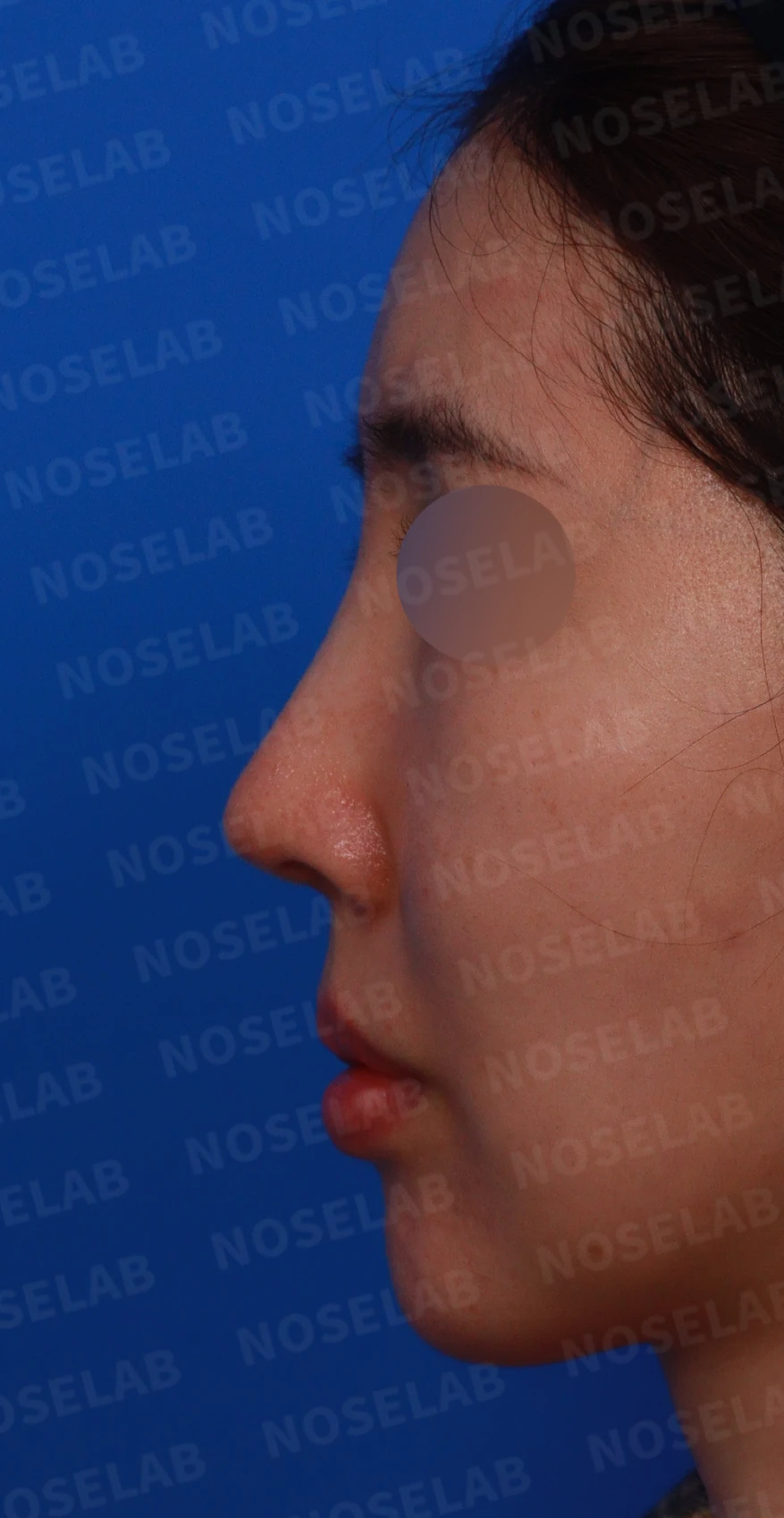
Design consultation: front, left oblique, and profile views
📊 Preoperative analysis
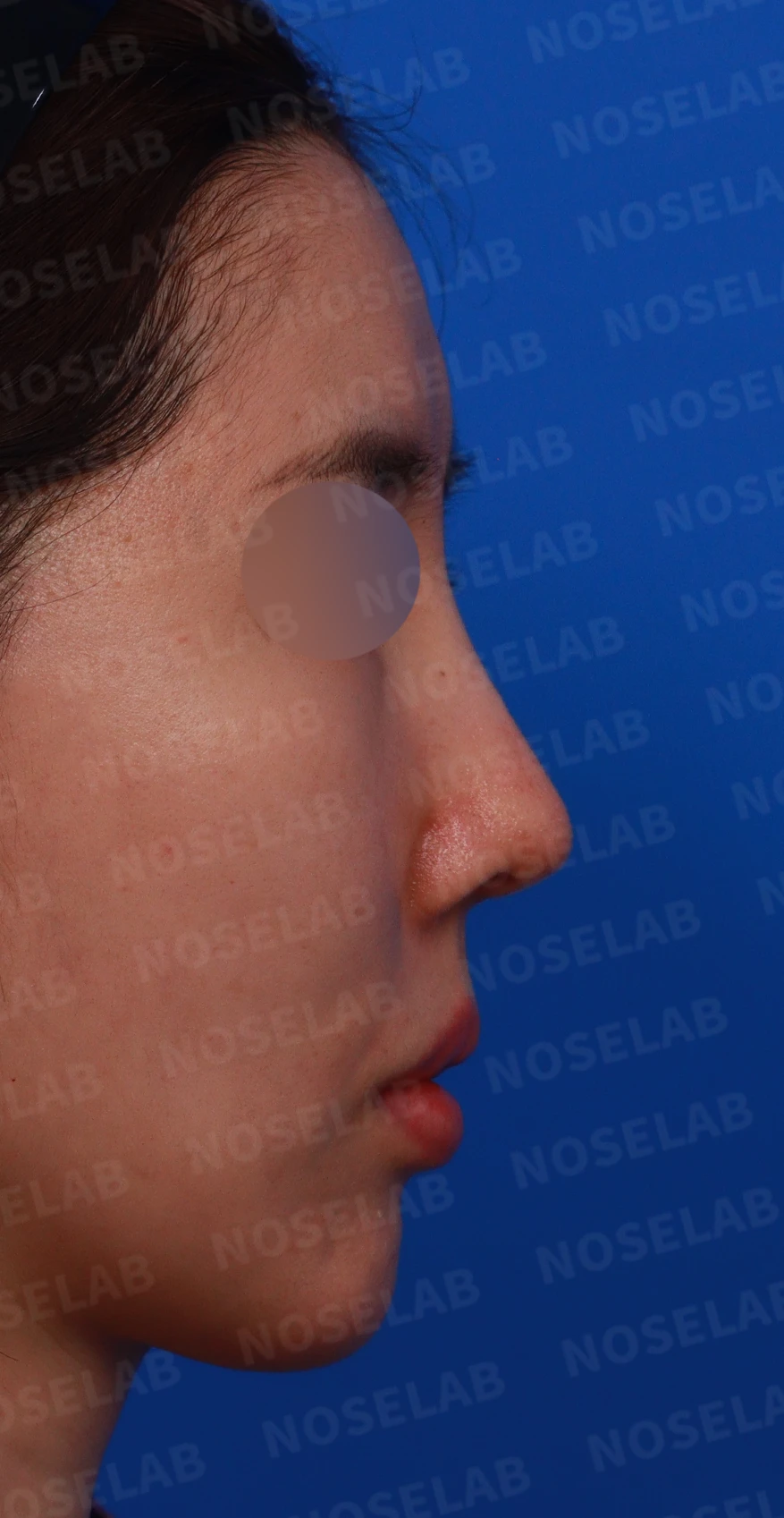
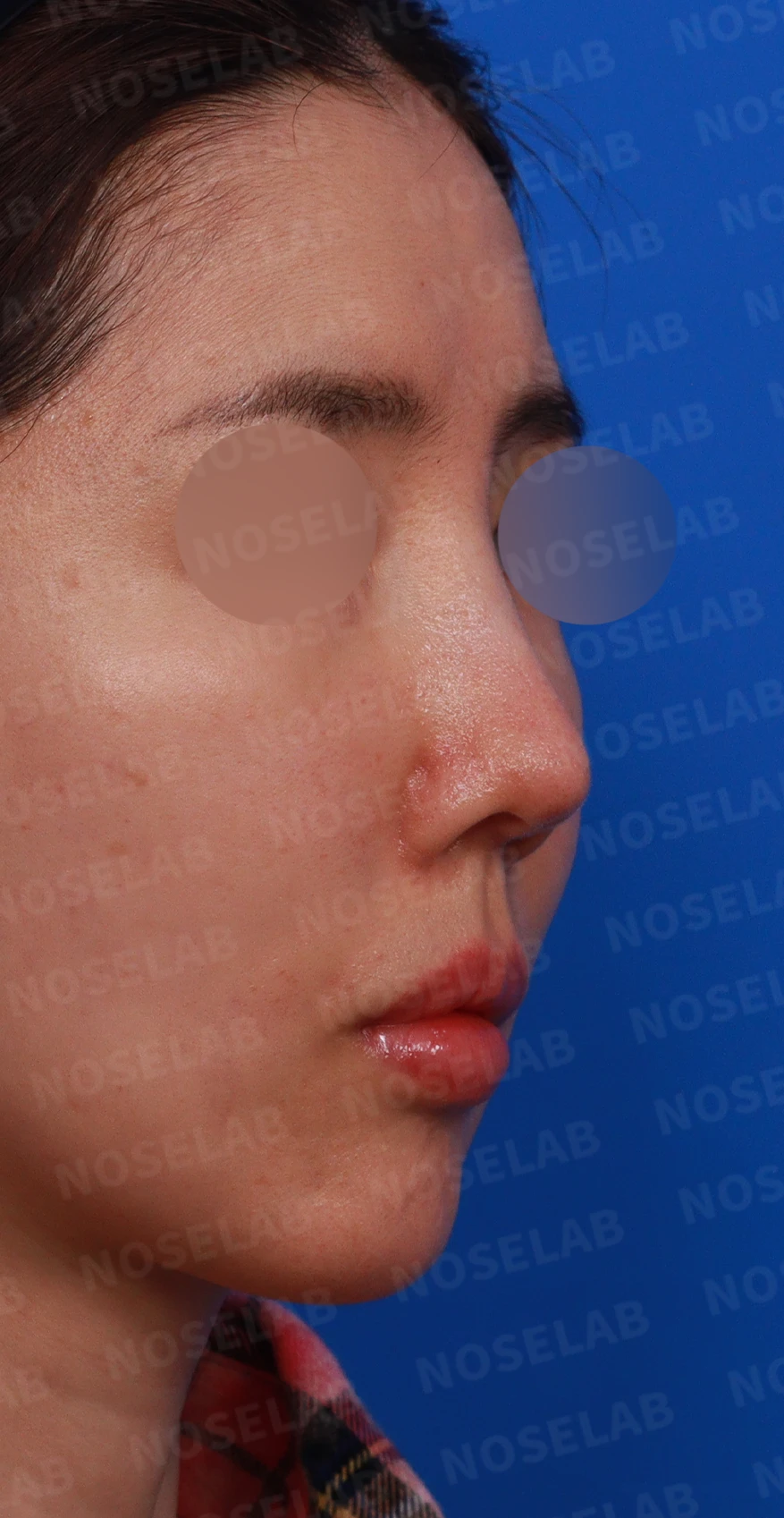
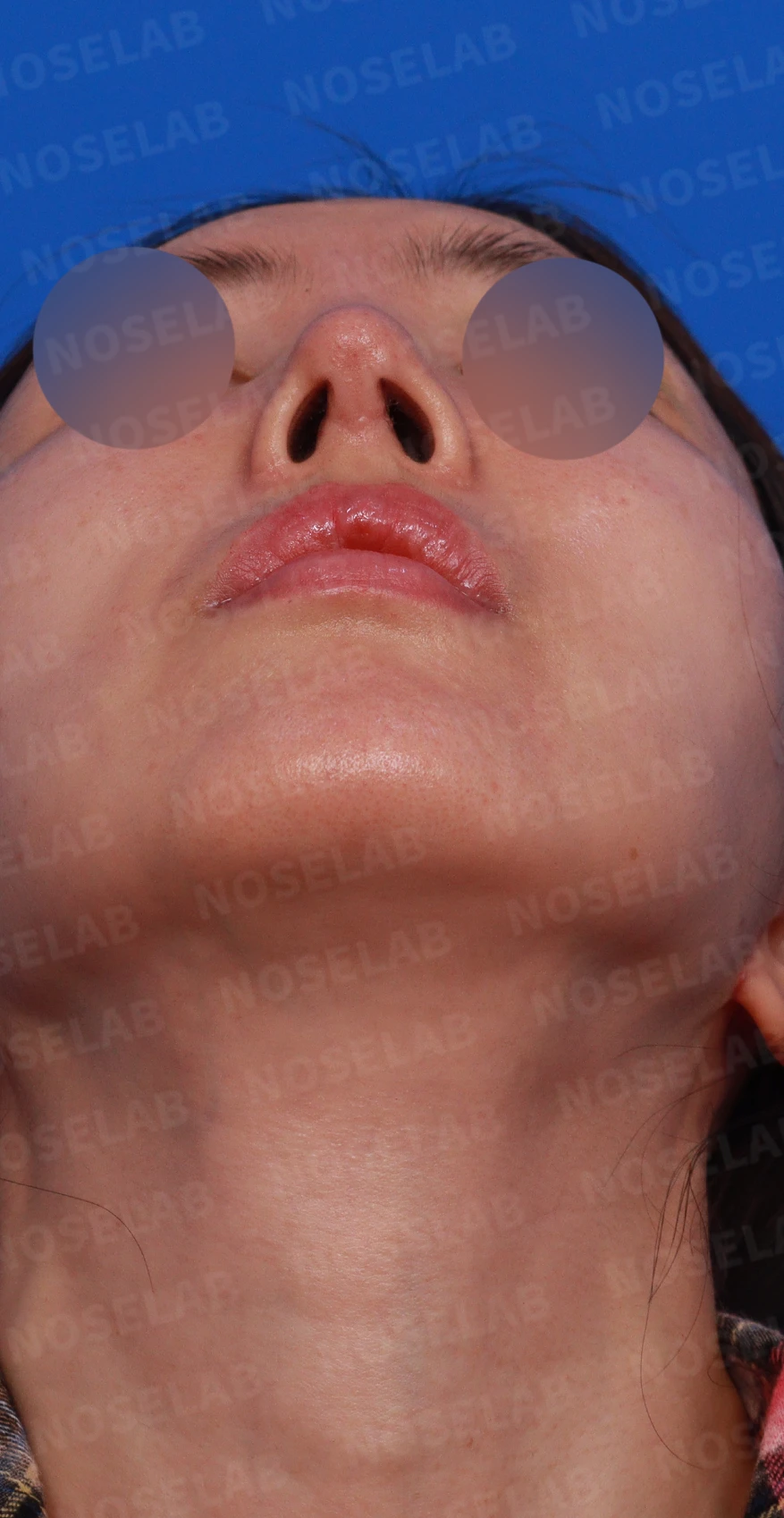
Right profile, oblique, and nostril views during design consultation
Front view
Broad nasal bridge
Alar and nostril asymmetry
Nasal tip deviated to the right
Profile view
High radix starting point
Elongated nose
Sharp nasal tip
Retracted columella
Nostrils
Columella deviated to the right
Nostril asymmetry
🔧 Surgical plan and details
Structural reconstruction
Septal extension using autologous rib cartilage (to improve nasal tip deviation)
Correction of deviated septum
Right alar reconstruction and cartilage graft
Asymmetry correction
Nostril lowering via right nostril skin graft
Correction of alar asymmetry through right alar elevation
Management of preexisting foreign material
Removal of autologous rib cartilage particles from the nasal bridge and alae
Glabellar refinement
Bone rasping in the glabellar area
Lowering the radix by adjusting skin thickness
Final contouring
Placement of a thinly carved silicone implant (improving bridge widening and irregularities)
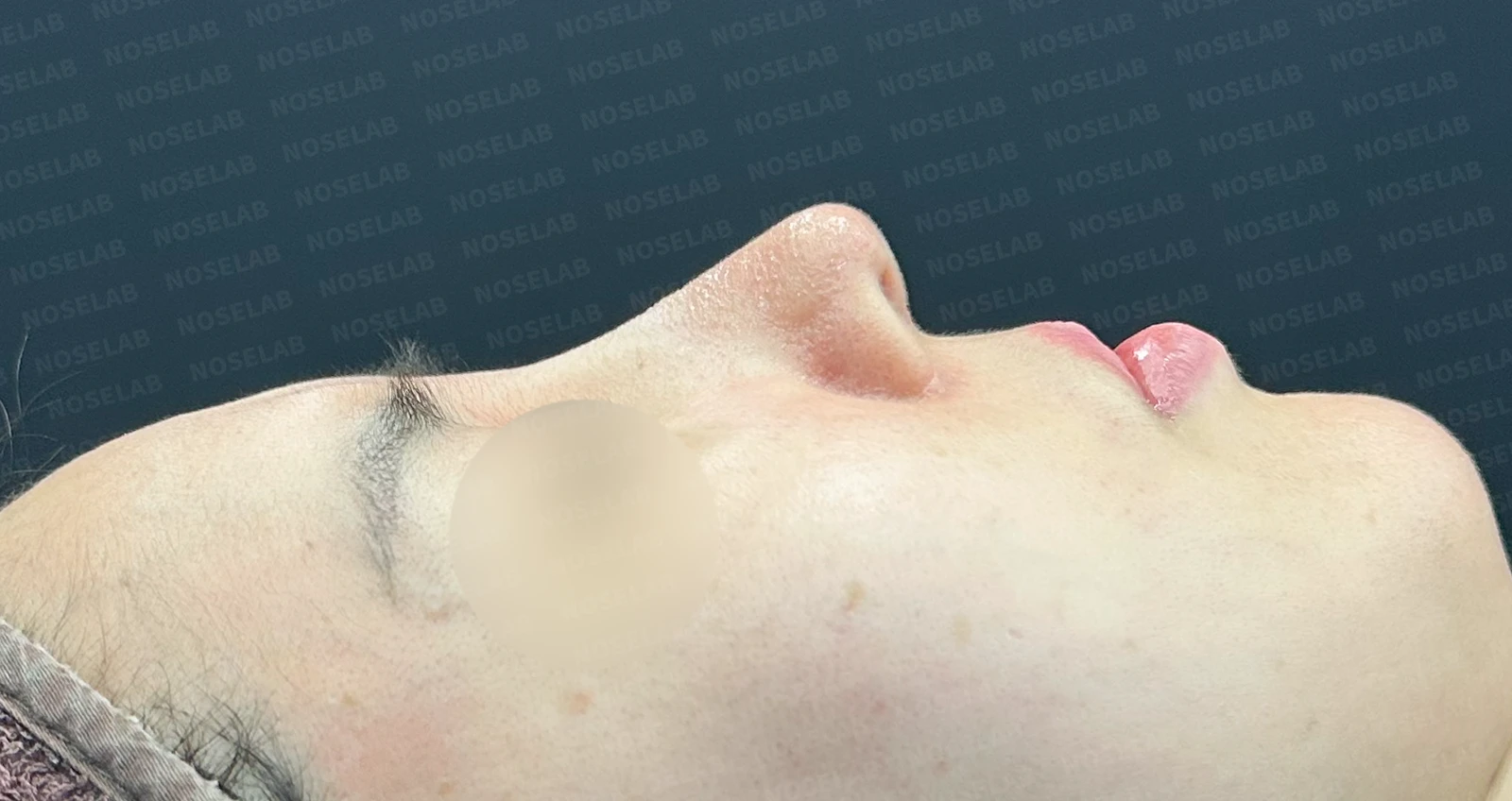
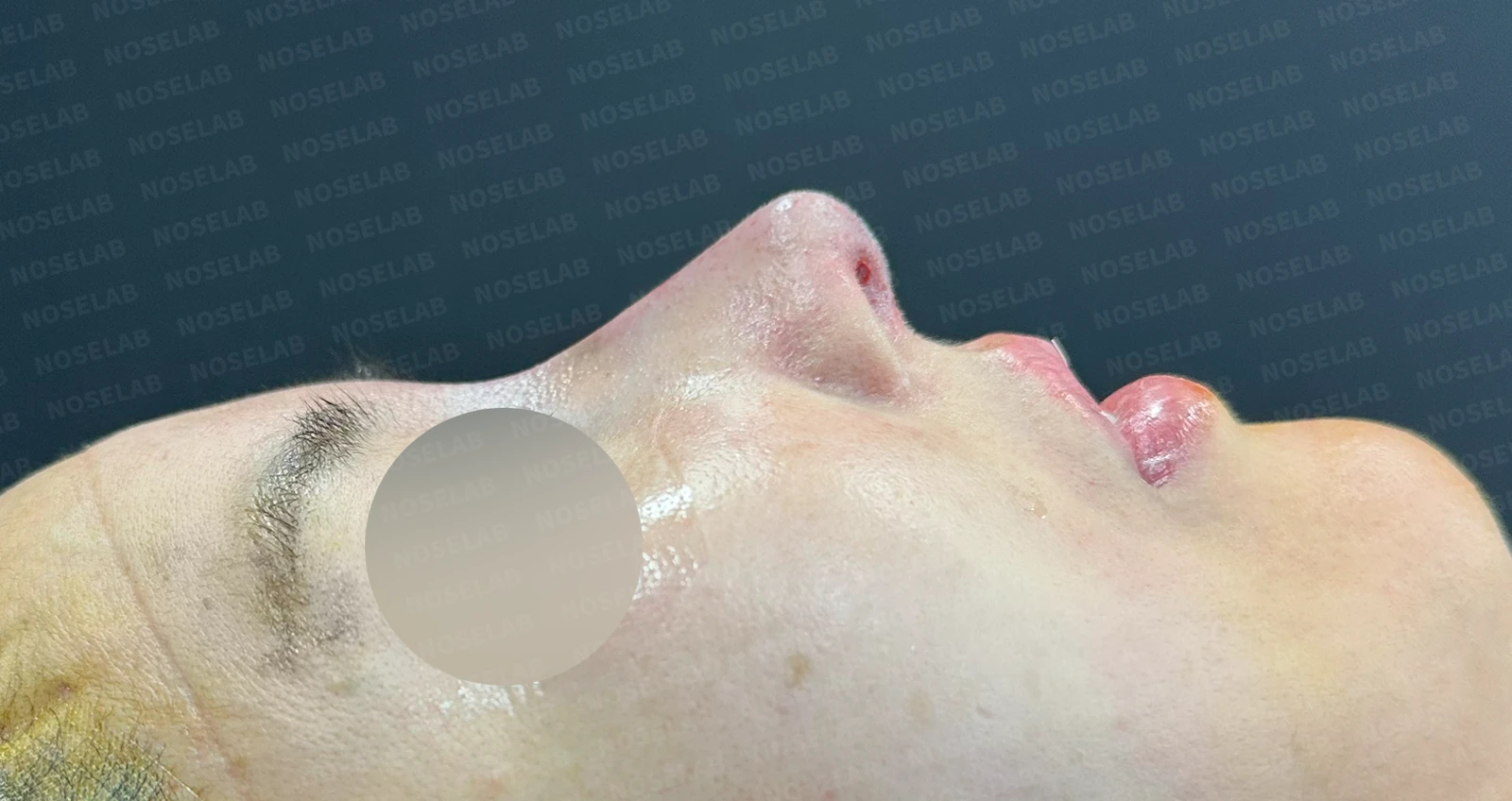
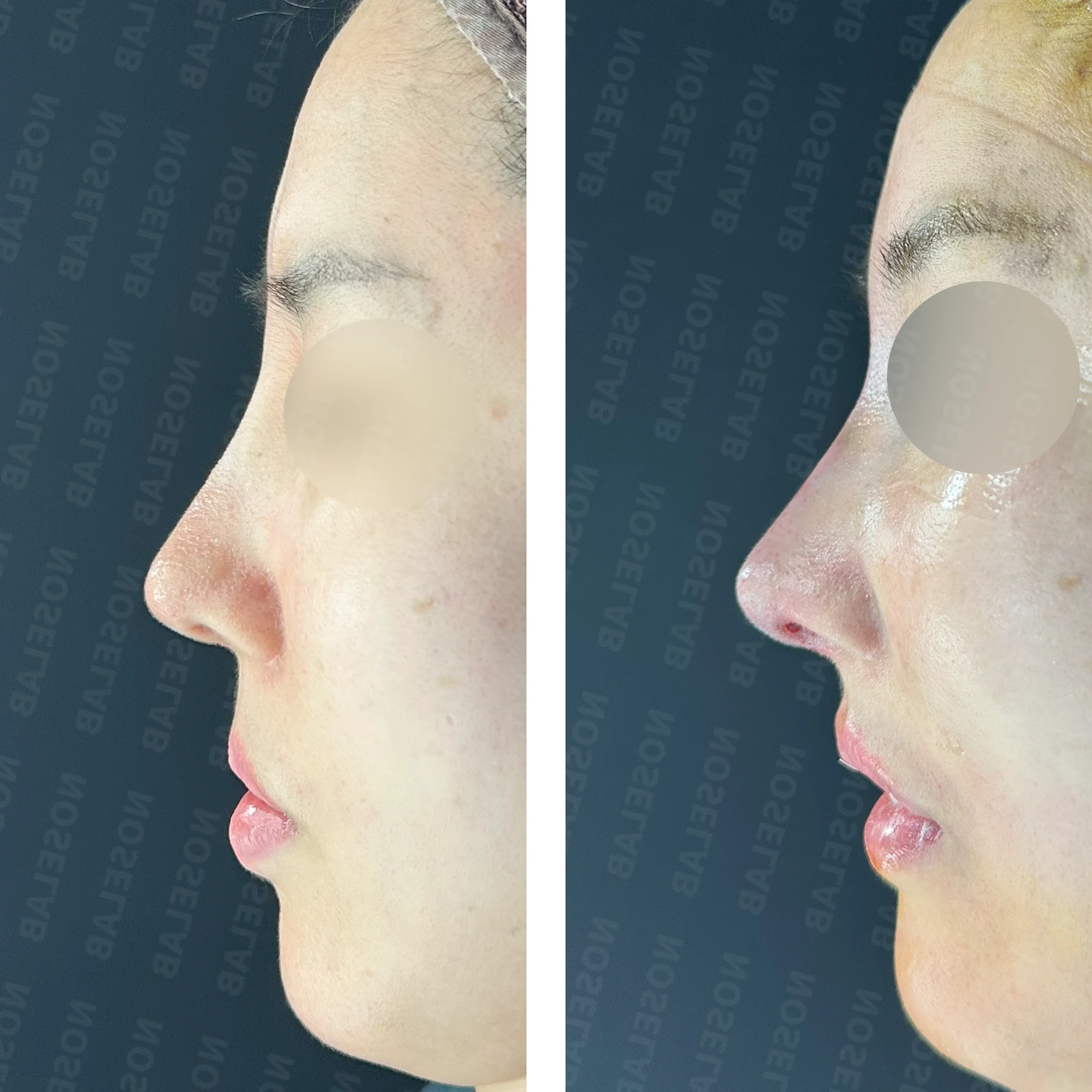
Before surgery / Day 0 immediately after surgery Photos taken immediately after surgery show swelling and may differ from the final result.
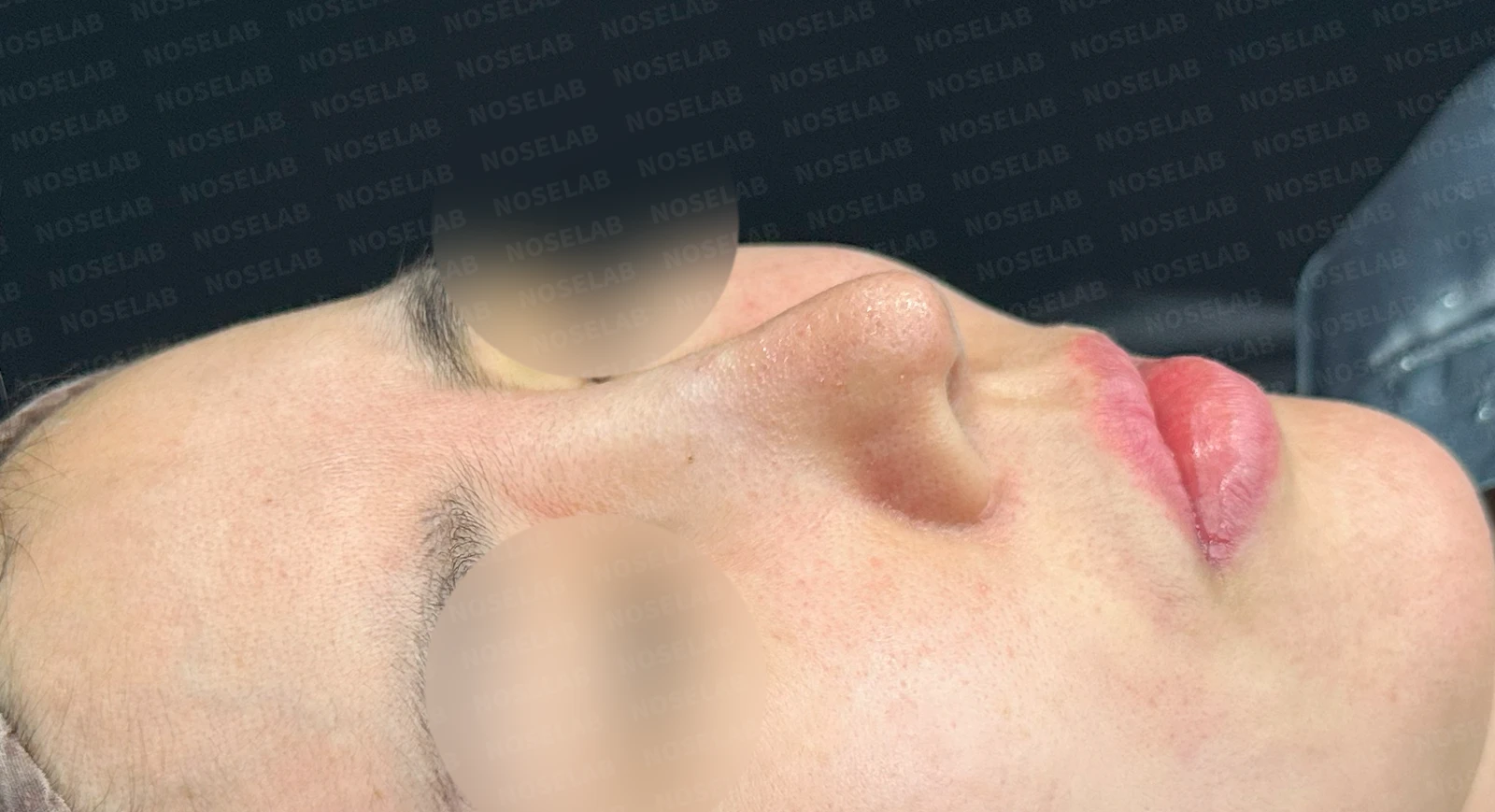
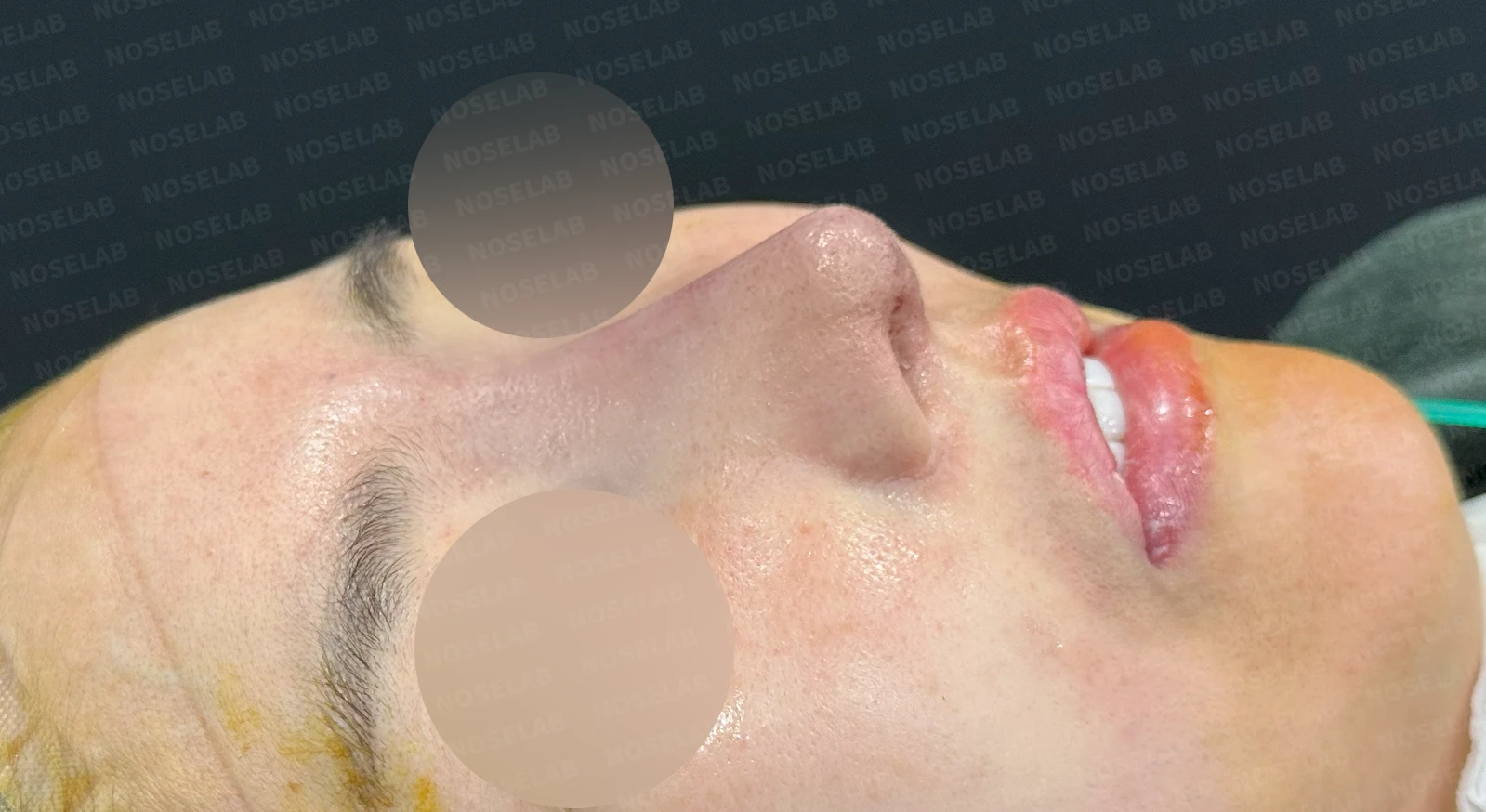
Before surgery / Day 0 immediately after surgery Photos taken immediately after surgery show swelling and may differ from the final result.
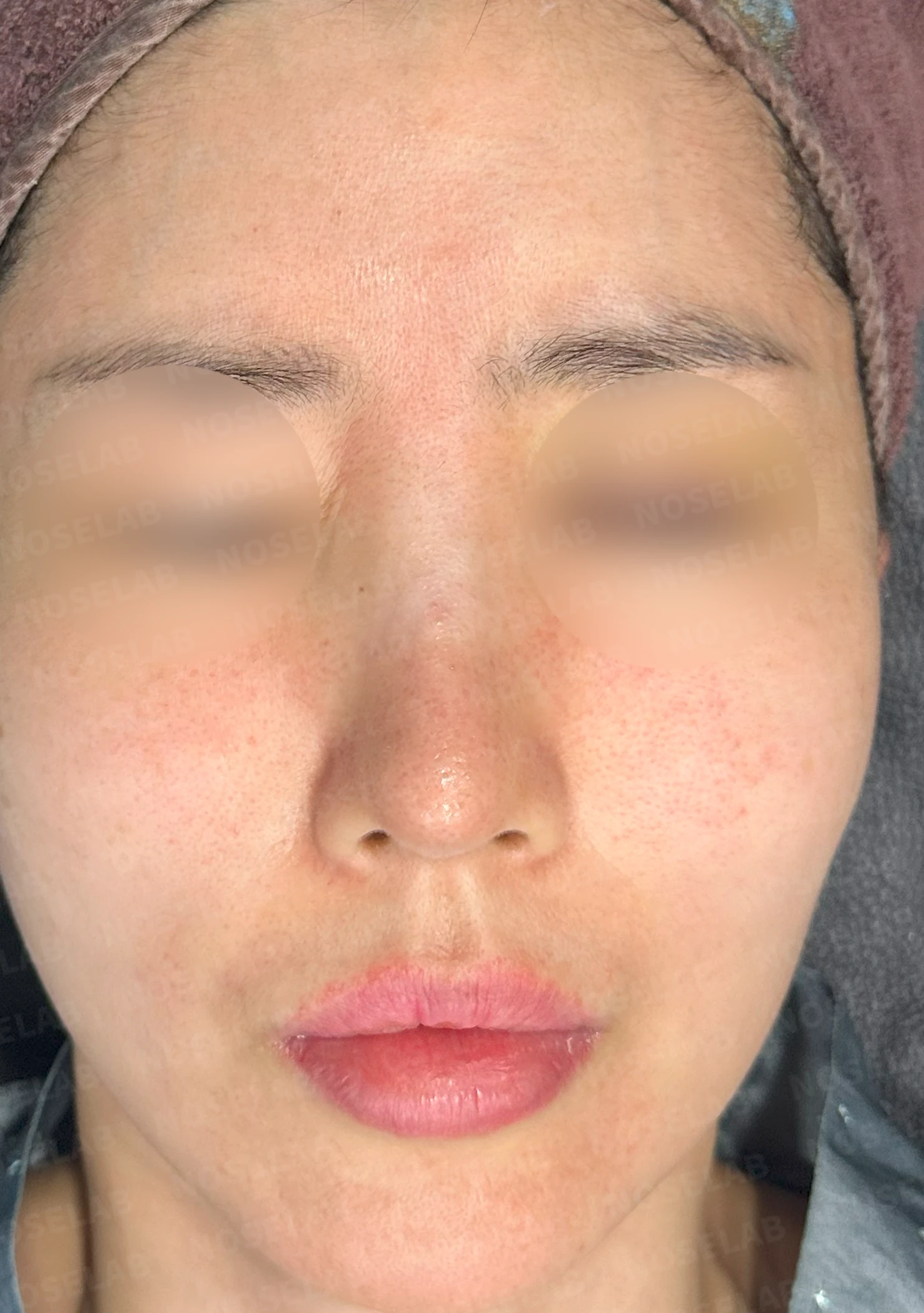
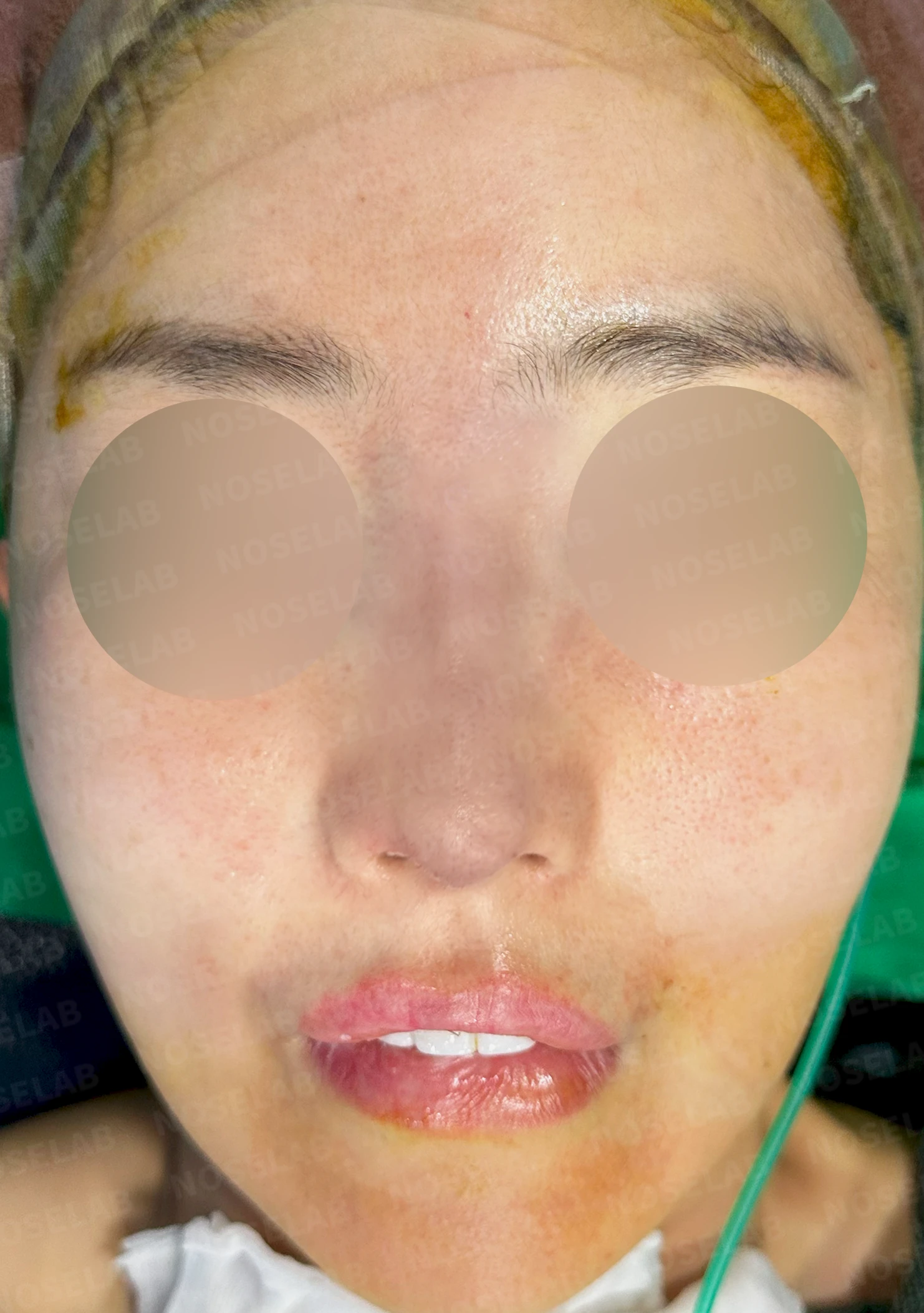
Before surgery / Day 0 immediately after surgery Photos taken immediately after surgery show swelling and may differ from the final result.
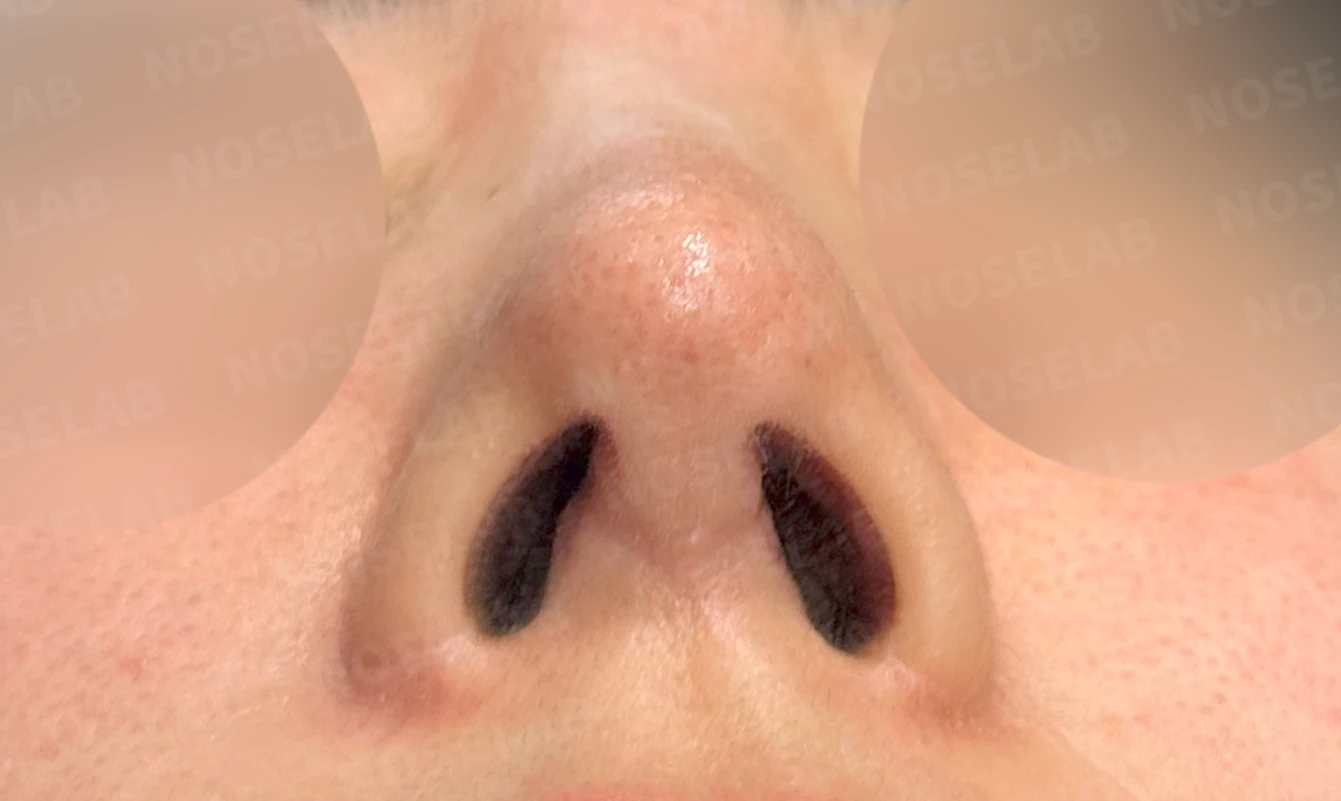
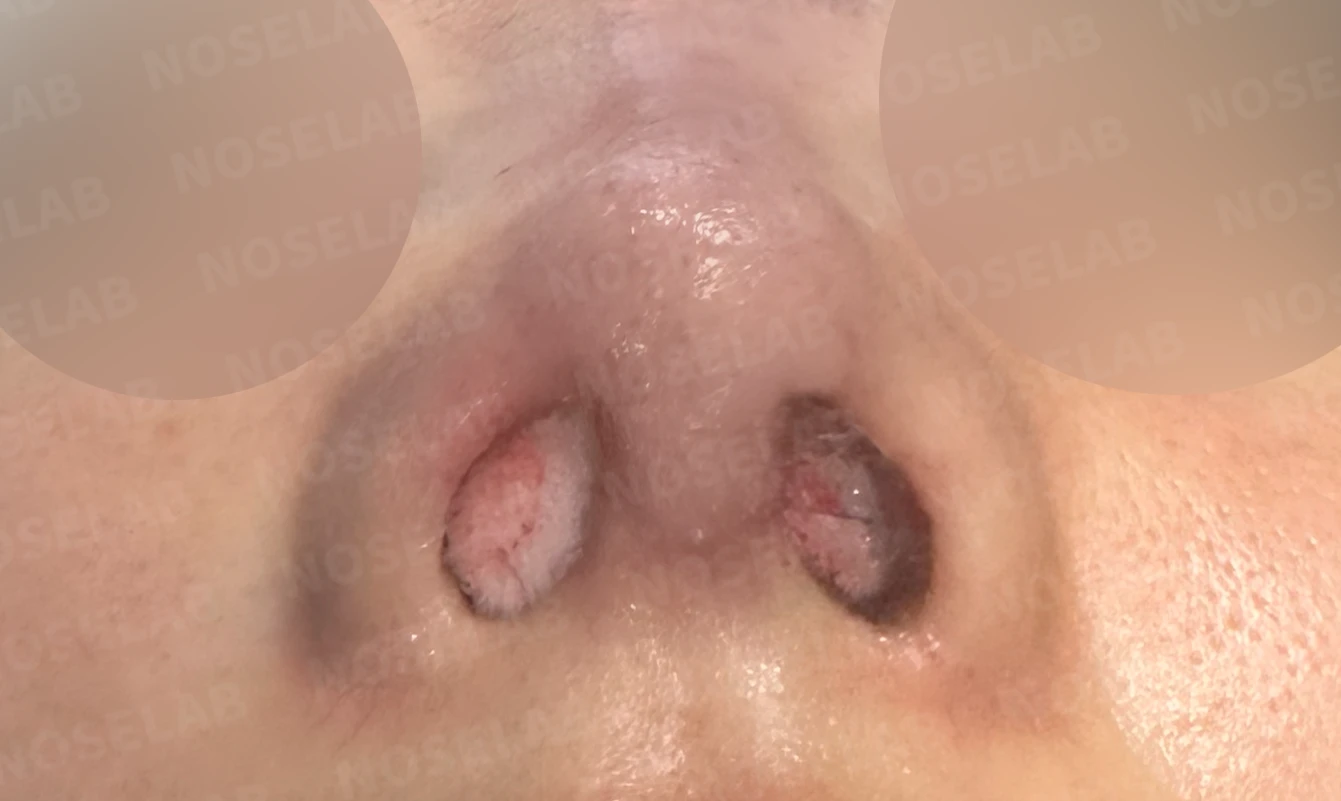
Before surgery / Day 0 immediately after surgery Photos taken immediately after surgery show swelling and may differ from the final result.
🌟 Surgical results
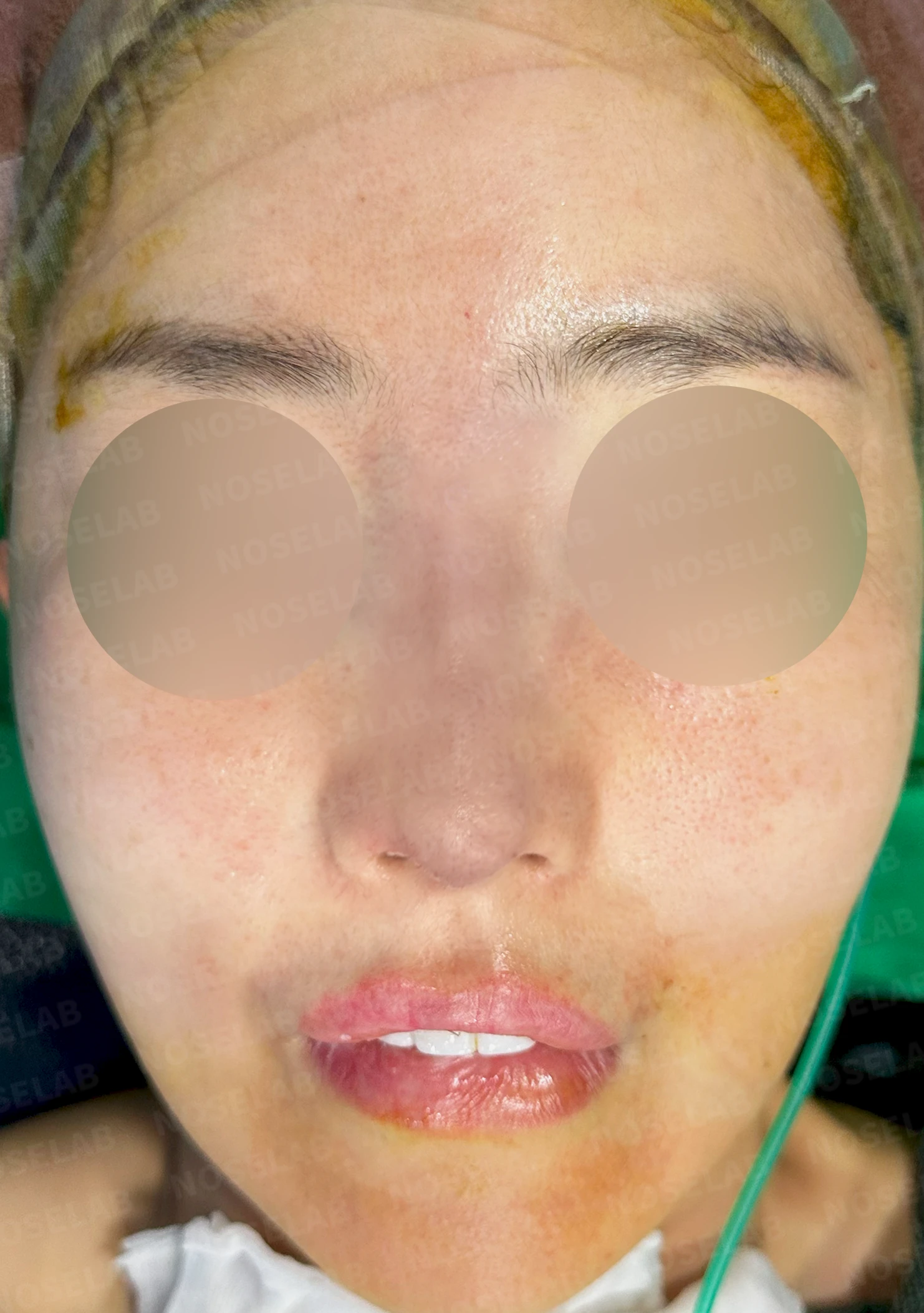
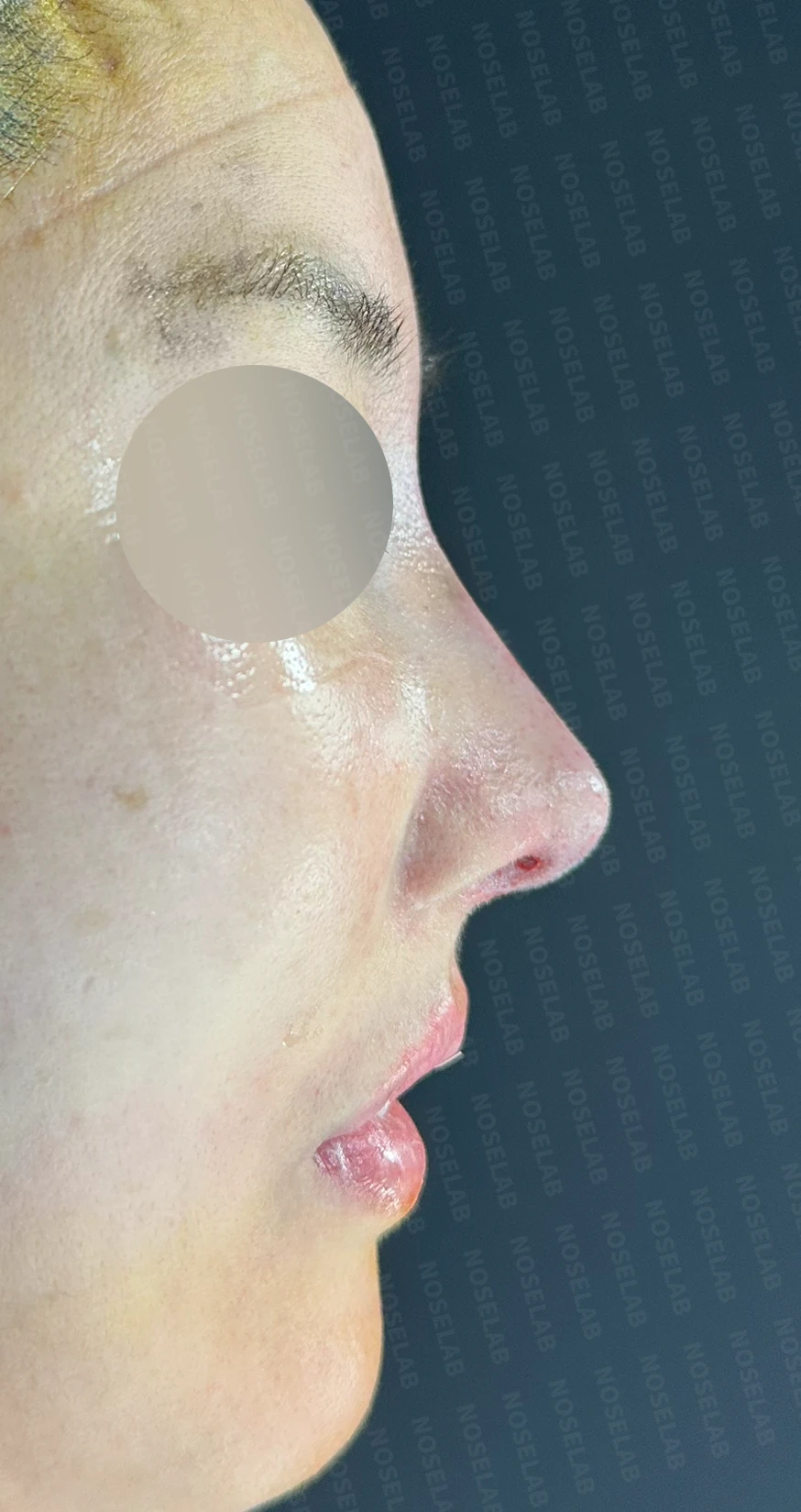
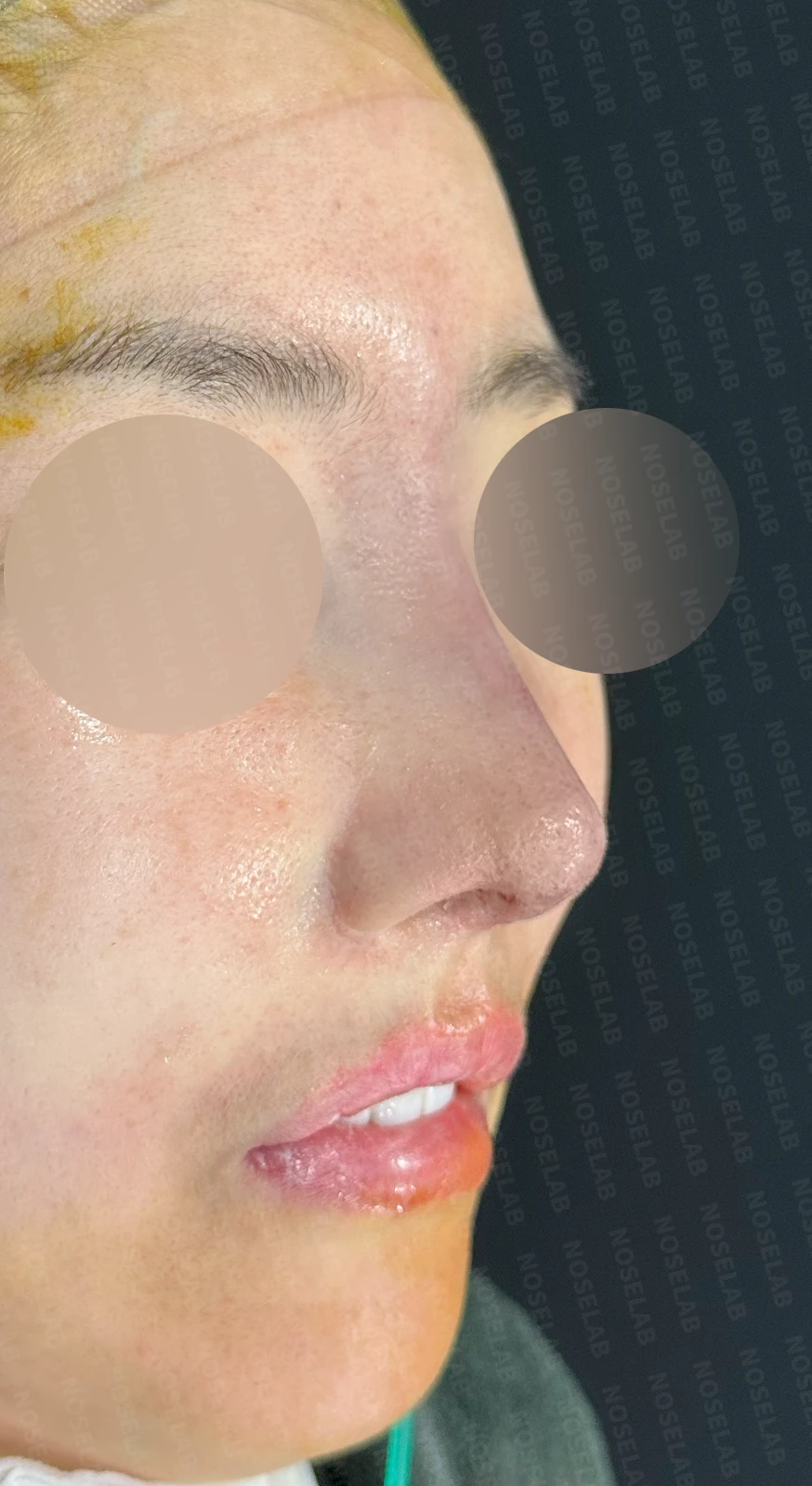
Front, profile, and oblique views immediately after surgery on day 0 Photos taken immediately after surgery show swelling and may differ from the final result.
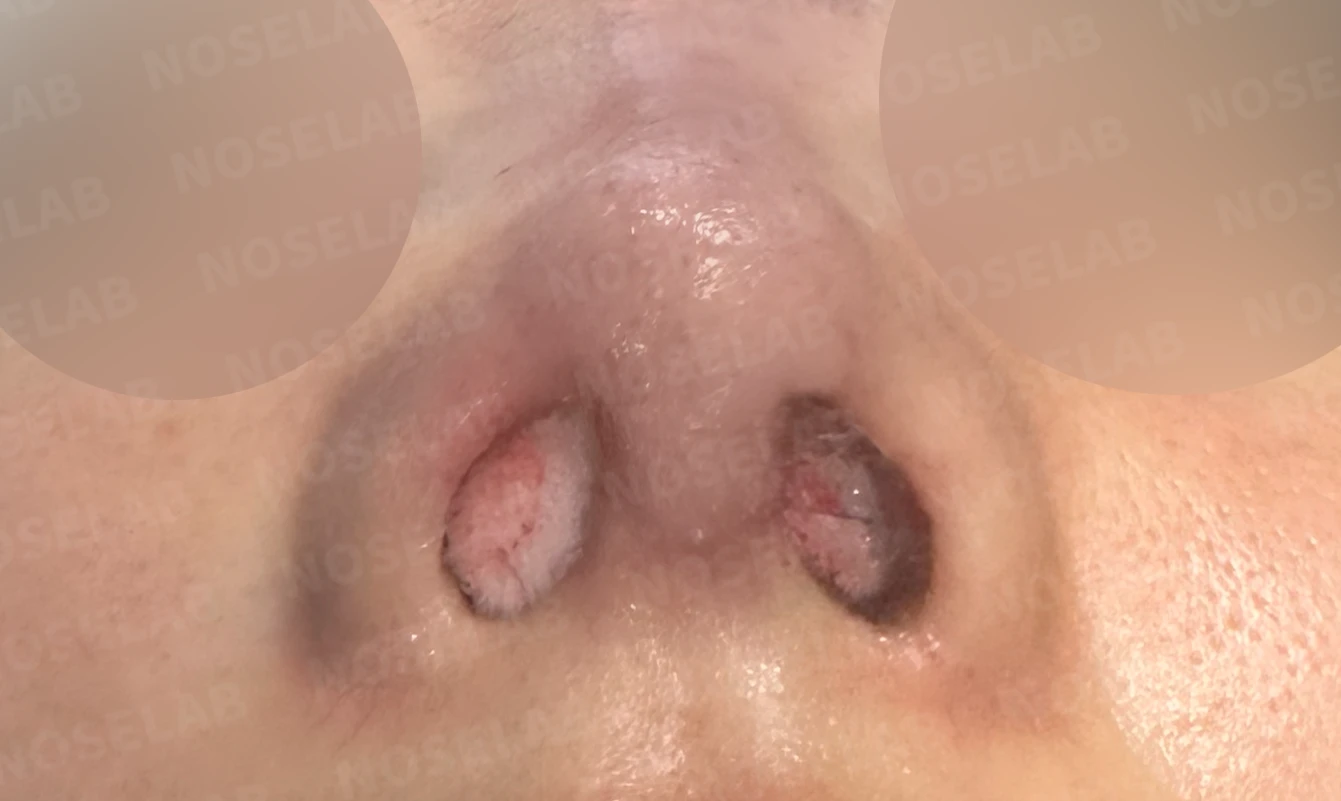
Nostril view on day 0 immediately after surgery Photos taken immediately after surgery show swelling and may differ from the final result.
💡 Key improvements
Correction of nostril asymmetry
Correction of deviated nasal tip
Natural-looking refinement of a widened nasal bridge
Reduction of nostril show
Natural columellar line
Lowering the glabellar radix starting point
Particularly noteworthy is the correction of the glabellar radix starting point. Because of the patient's existing bridge height, lowering the starting point was technically demanding; however, by suitably rasping the glabellar bone and partially debulking subcutaneous tissue, a natural profile line was achieved.
💡 Closing remarks
Many patients face distress over a nose that has become elongated and markedly asymmetrical following repeated rhinoplasties. In such cases, rather than a routine revision rhinoplasty, a tailored approach that considers the overall balance of the face is necessary.
I hope this case offers reassurance to those experiencing similar concerns. Rhinoplasty requires meticulous planning that takes into account both individual facial characteristics and prior surgical history. NOSELAB will always remain committed to helping patients resolve their nasal concerns.
This was Dr. Peter C. Kang. Thank you.
Thank you.
#revisionrhinoplasty #longnosecorrection #asymmetrycorrection #secondaryrhinoplasty #radixlowering #naturalnose #nostrilcorrection #closedrhinoplasty #tipplasty #customrhinoplasty

Limitations and risks
When autologous rib cartilage is used, scarring and pain may remain at the donor site on the chest, and pneumothorax (pleural injury) can occur rarely. Over time, the grafted cartilage may warp or undergo partial resorption.
When using donor rib cartilage, long-term follow-up is necessary because the grafted cartilage may resorb or warp.
When revising after implant removal, contracture may progress again after removal, the nasal height and length may decrease, and staged surgery may be necessary depending on the skin condition.
When foreign materials such as injected fillers are removed and reconstructed, contracture may recur, nasal height and length may decrease, and staged surgery may be necessary depending on the skin condition.
When the septum is corrected at the same time, nasal obstruction may persist or recur, and in rare cases, septal perforation or changes in smell may occur.
Common potential risks include infection, bleeding, asymmetry, scarring, skin necrosis, and insufficient improvement; results vary depending on individual skin condition and previous surgical history.