Hello, I am Dr. Peter C. Kang.
Today, I would like to present a case of correcting a crooked nose and dorsum depression in a 31-year-old male patient.
Through this case, let us examine a personalized rhinoplasty approach that addresses both functional issues and aesthetic goals simultaneously.
🔍 Patient information
31-year-old male
Surgical history: October 2017 dorsal hump reduction + septal cartilage
📊 Primary symptoms and goals
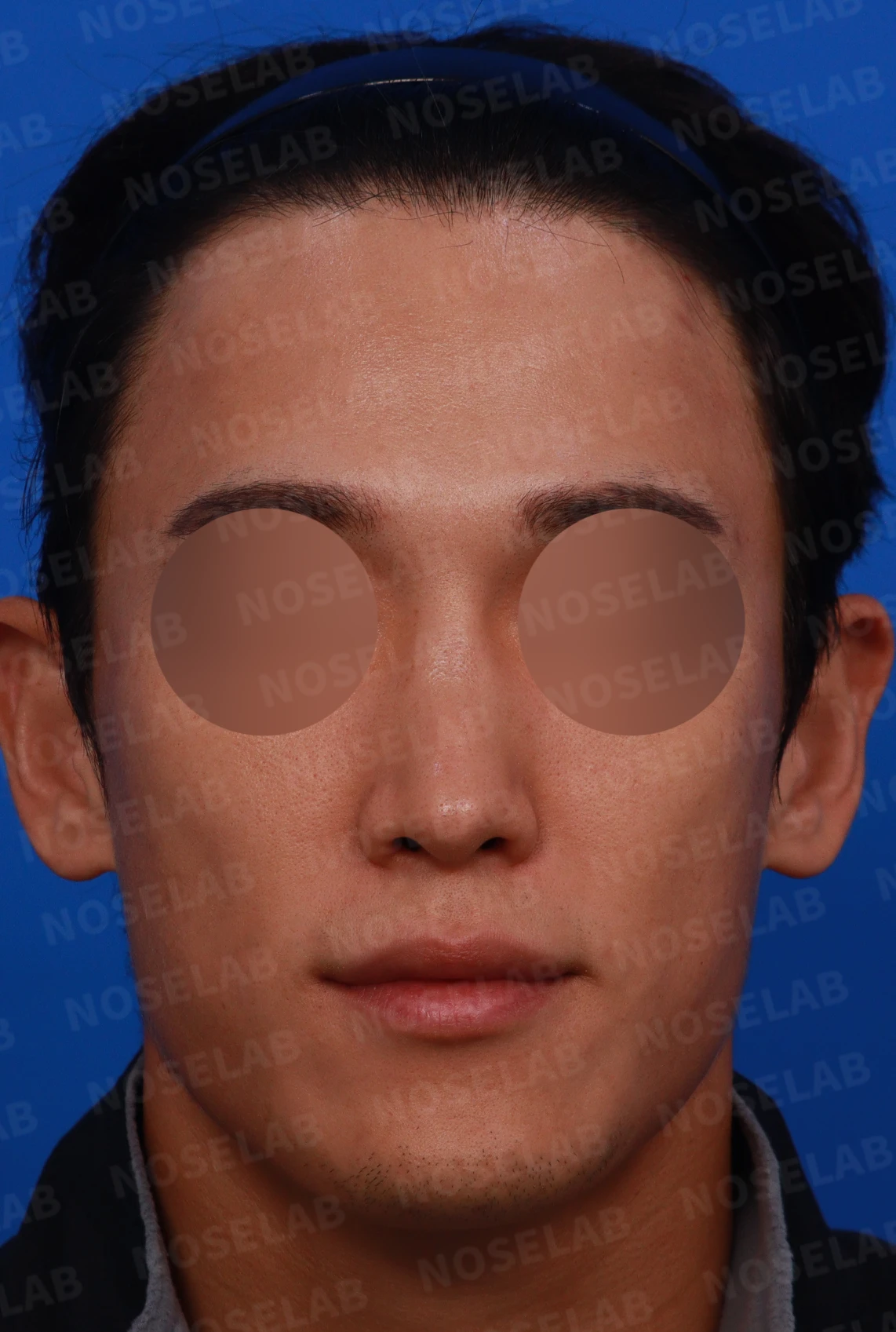
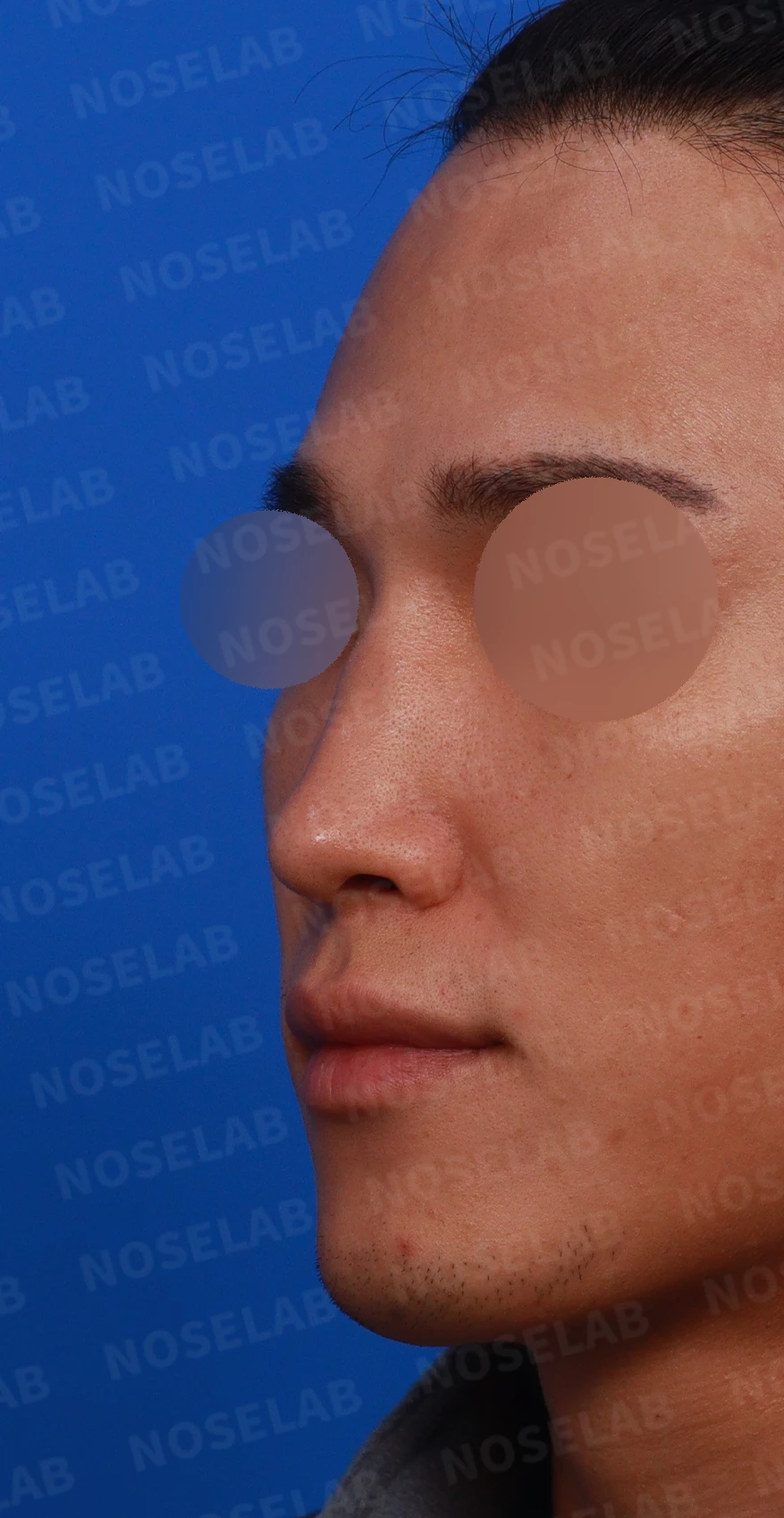
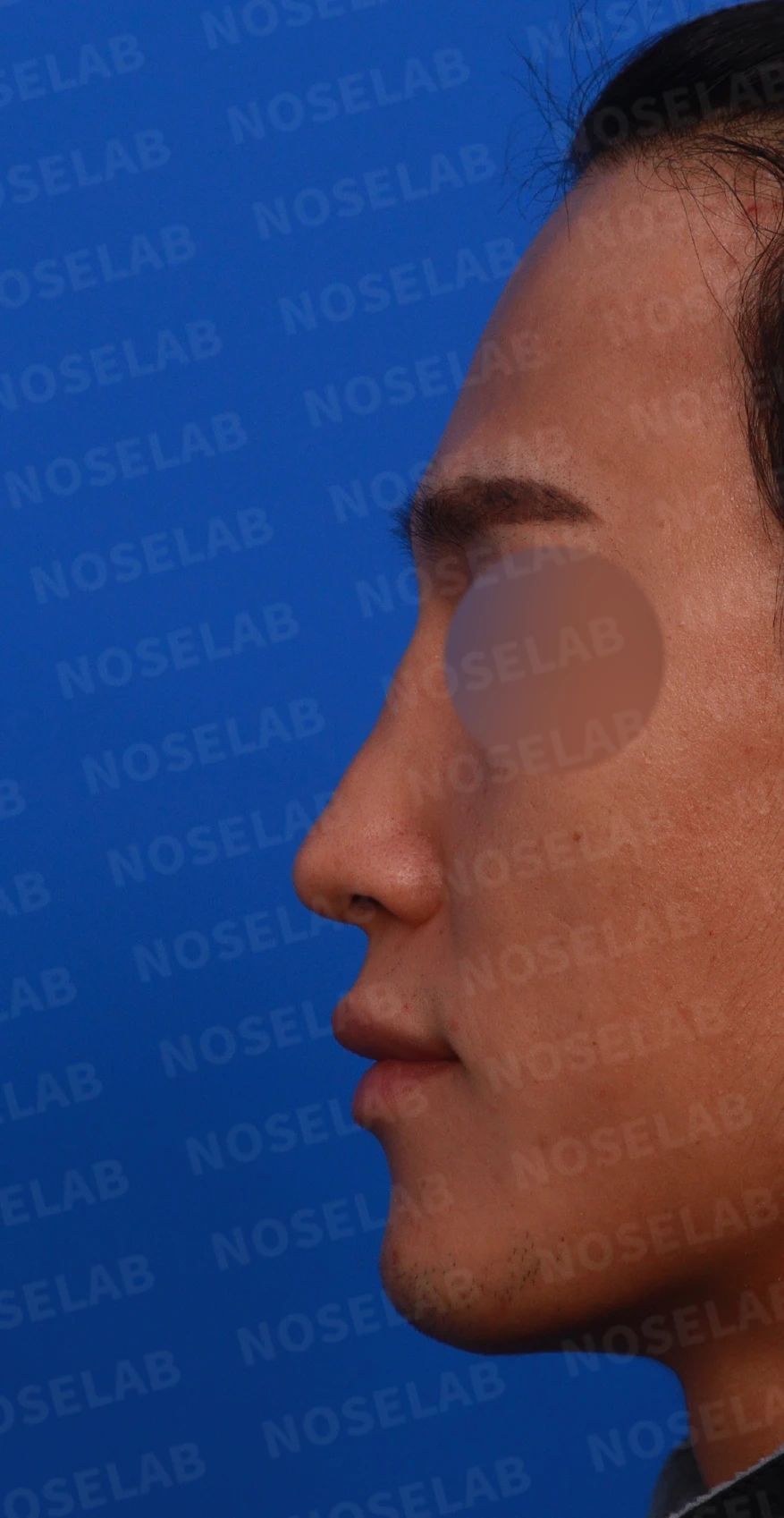
Design consultation: front, left oblique, and profile views
Correction of dorsum depression
Crooked nose
Nostril asymmetry
Relief of rhinitis
Improvement of nasal obstruction
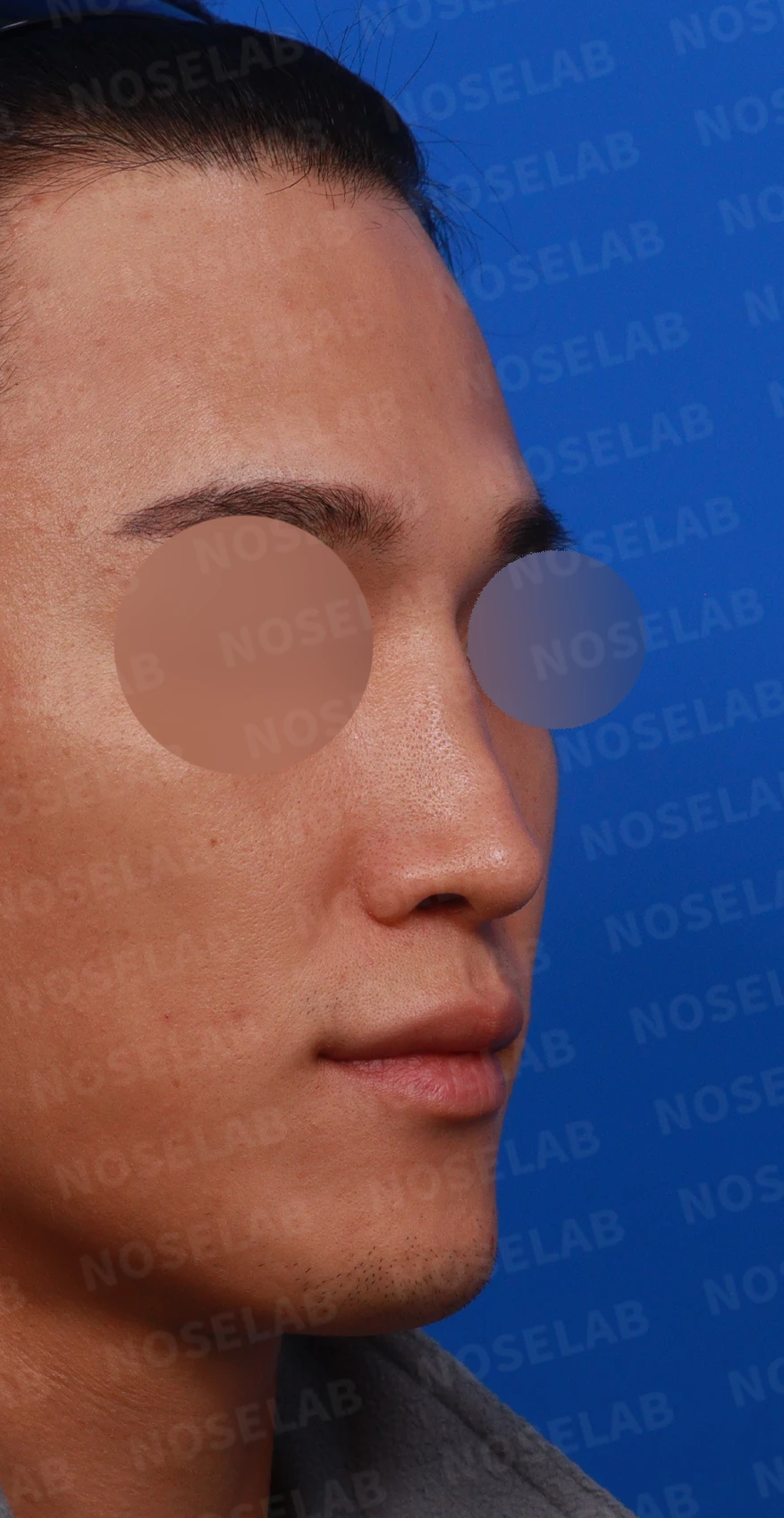
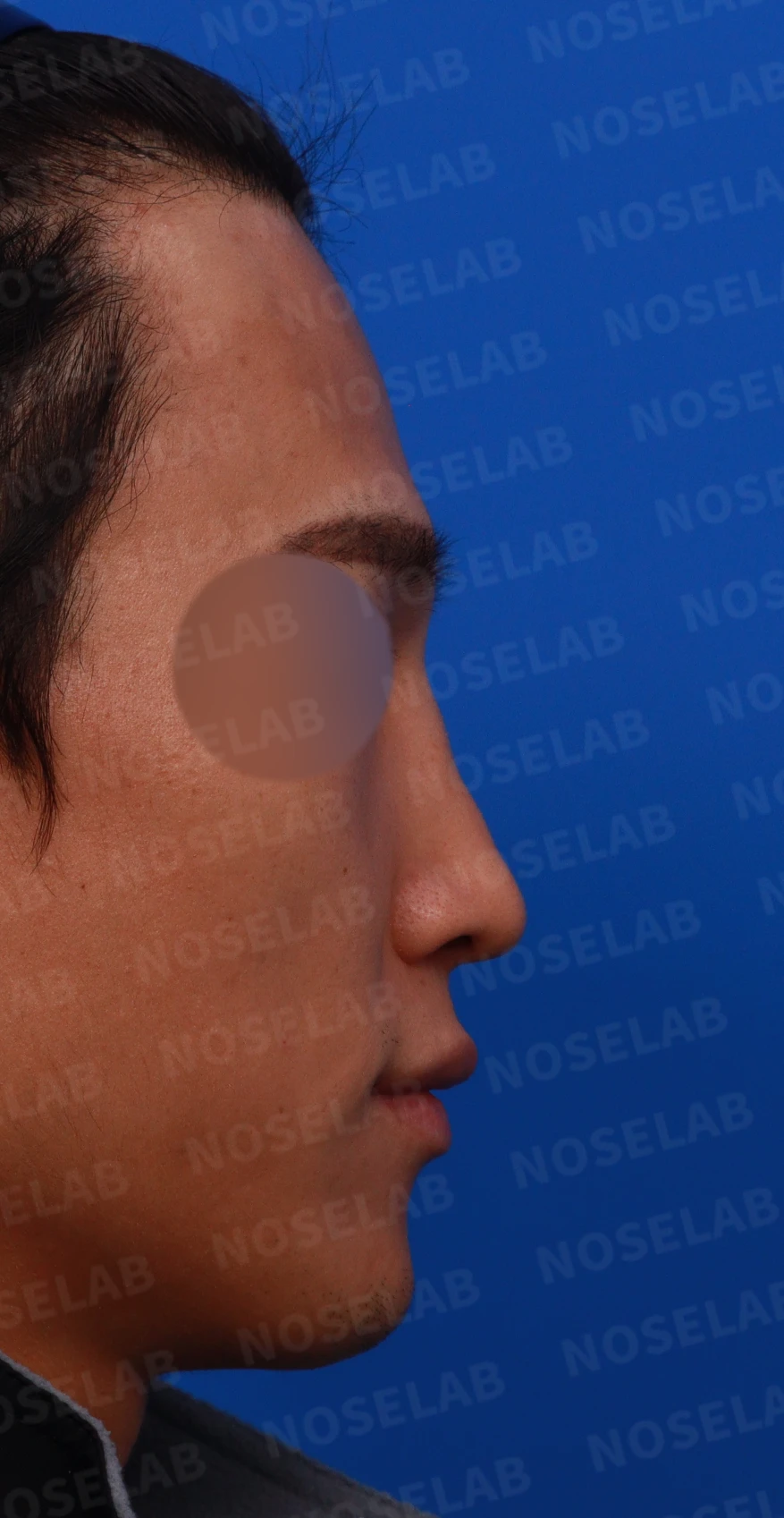
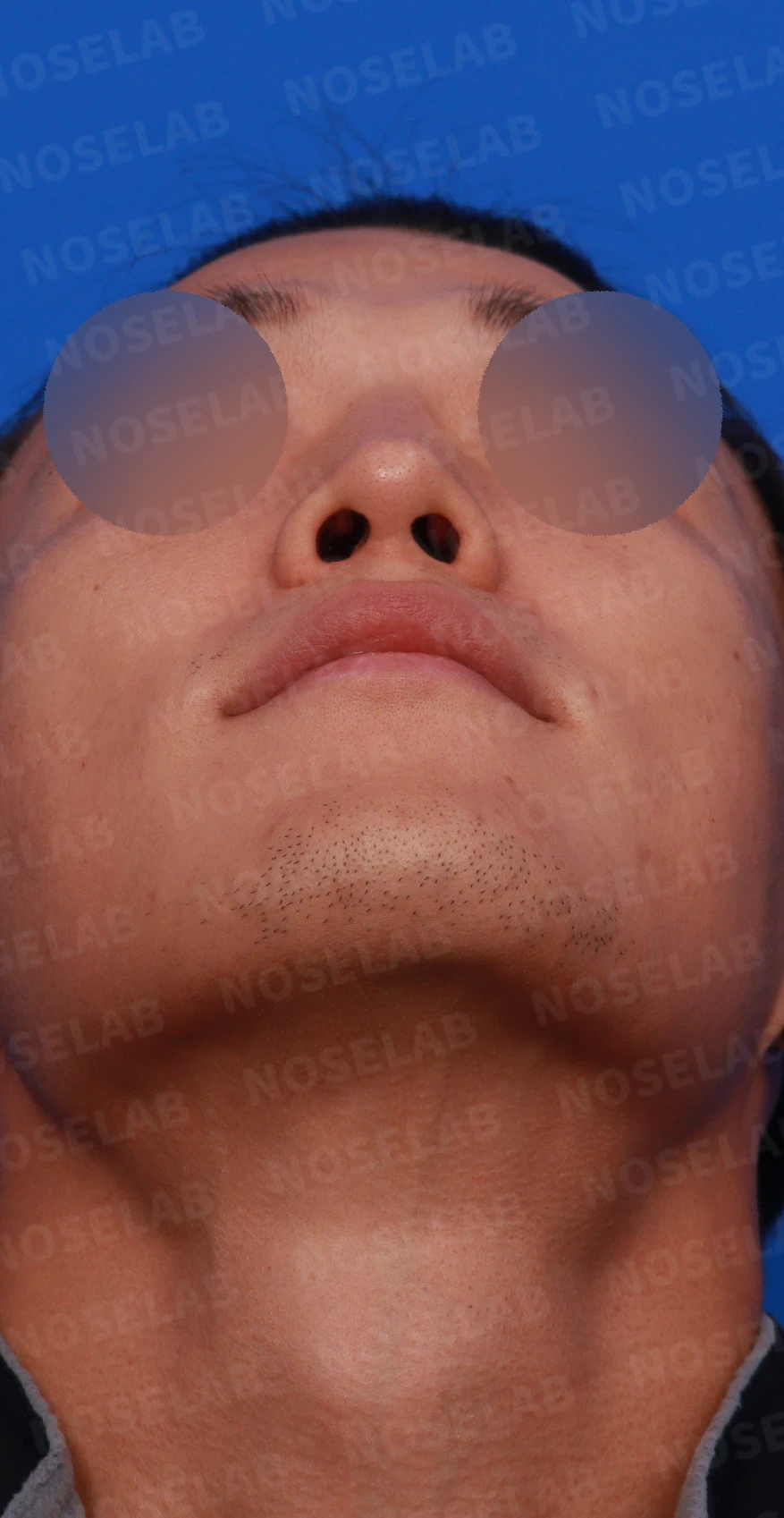
Right oblique, profile, and basal (nostril) views
🔧 Surgical plan and details
Radiofrequency submucosal resection of the inferior turbinate (for rhinitis relief)
Septoplasty (relief of nasal obstruction)
Septal extension using autologous rib cartilage
Lateral osteotomy (correction of the crooked nasal bridge)
Silicone implant placement (bridge correction and improvement of uneven contour)
🌟 Surgical results
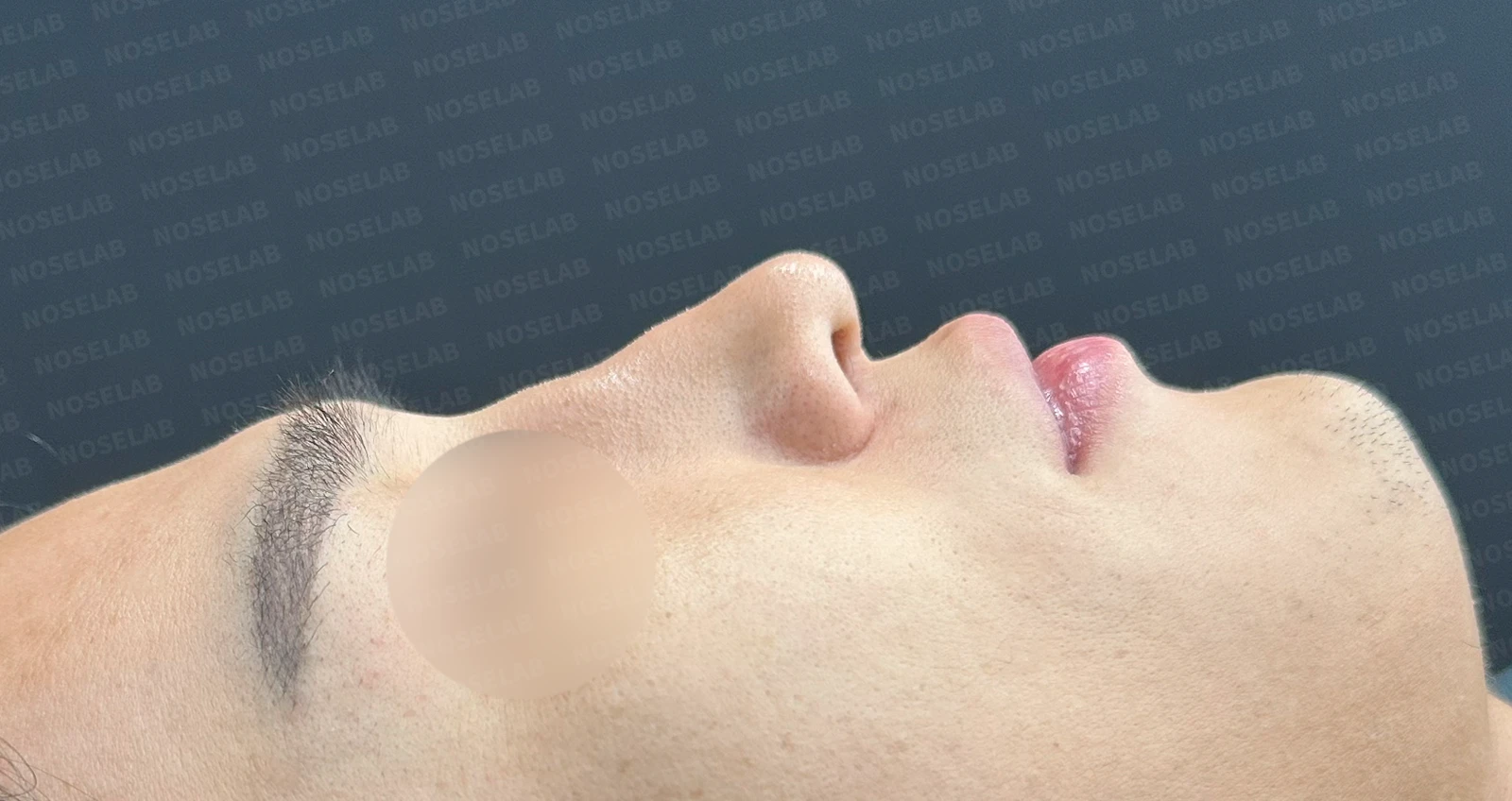
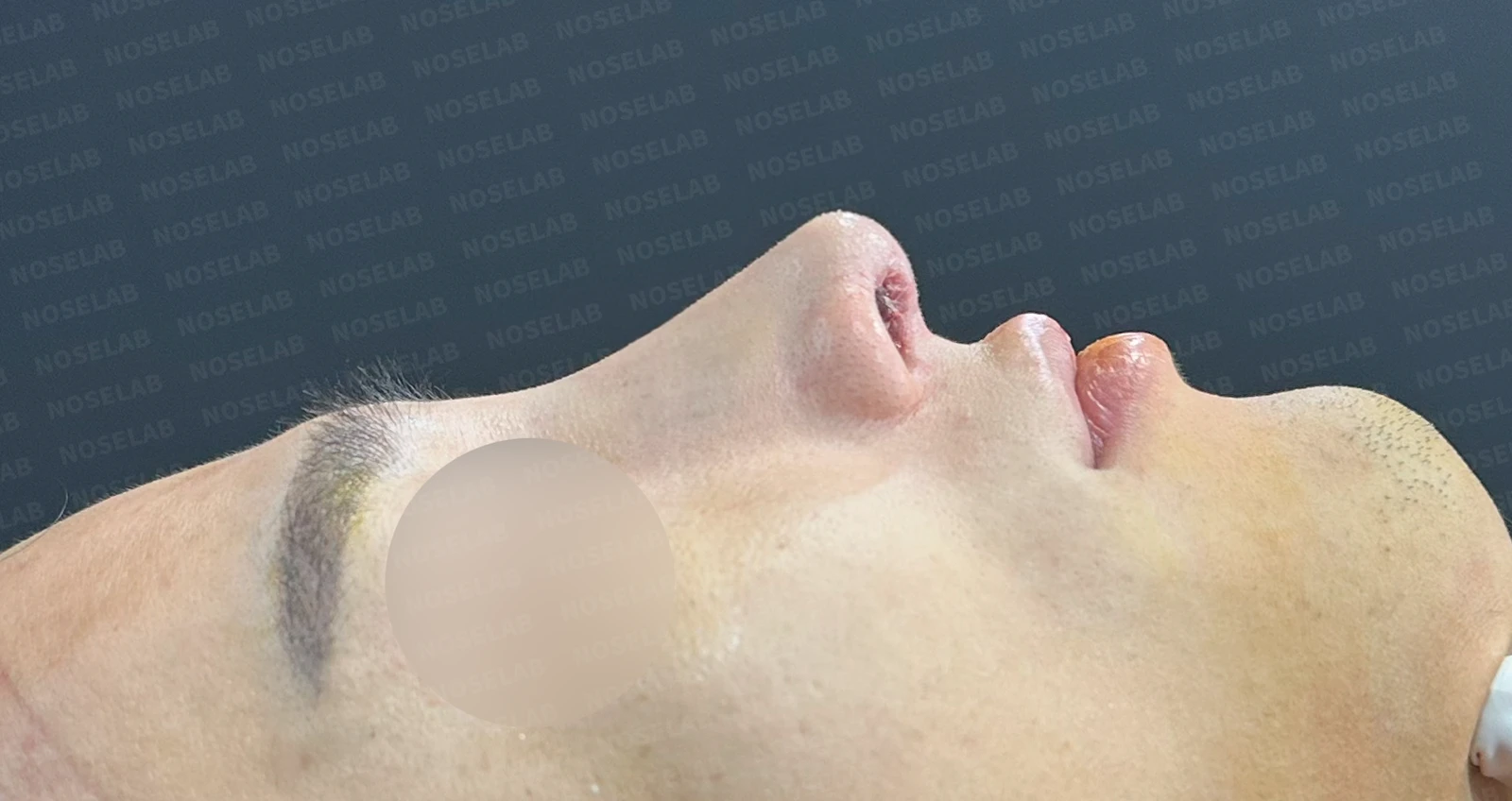
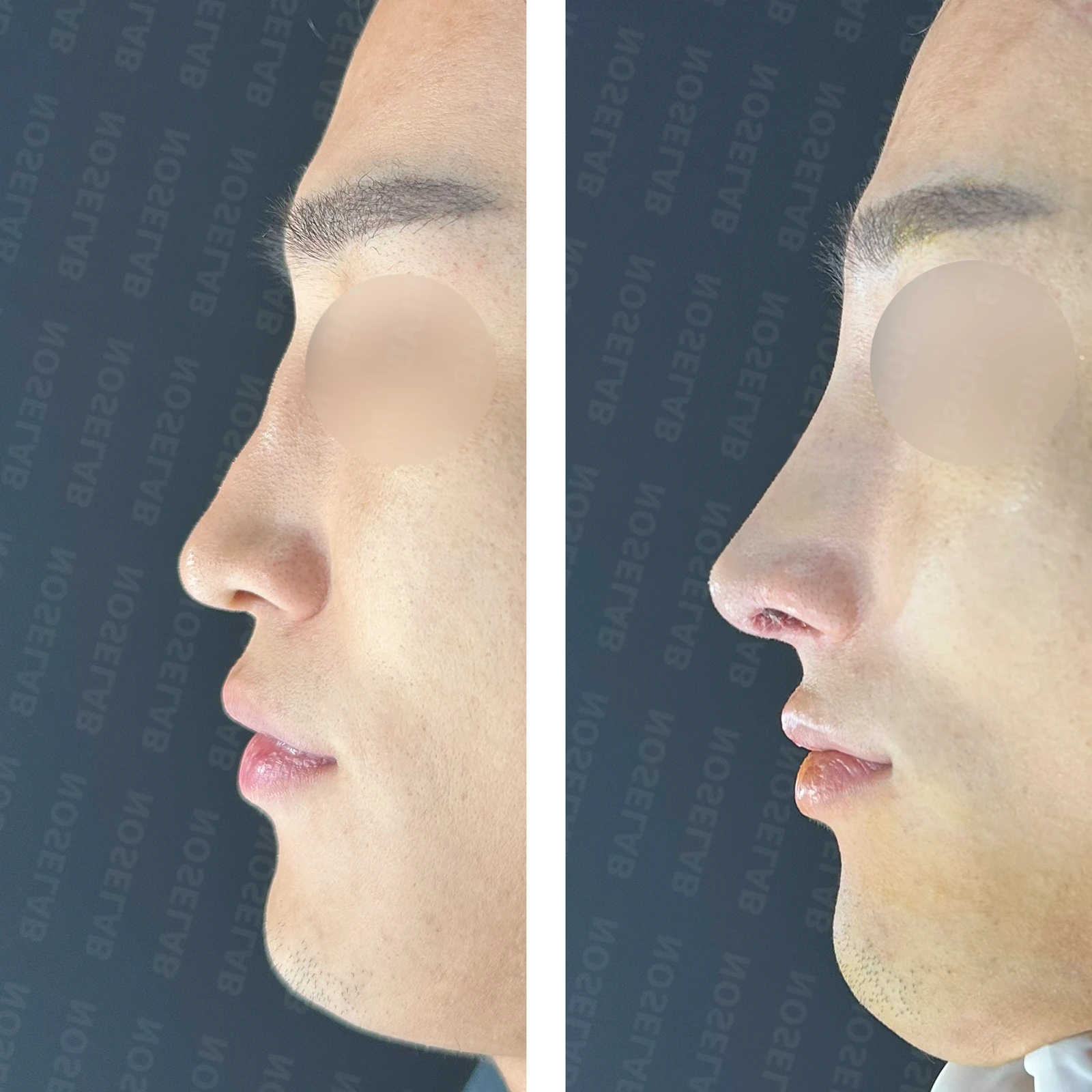
Before surgery / Day 0 immediately after surgery Photos taken immediately after surgery show swelling and may differ from the final result.
Profile view:
The uneven contour of the nasal bridge was smoothed out.
Correction of the nasolabial angle improved the appearance of the protruding mouth.
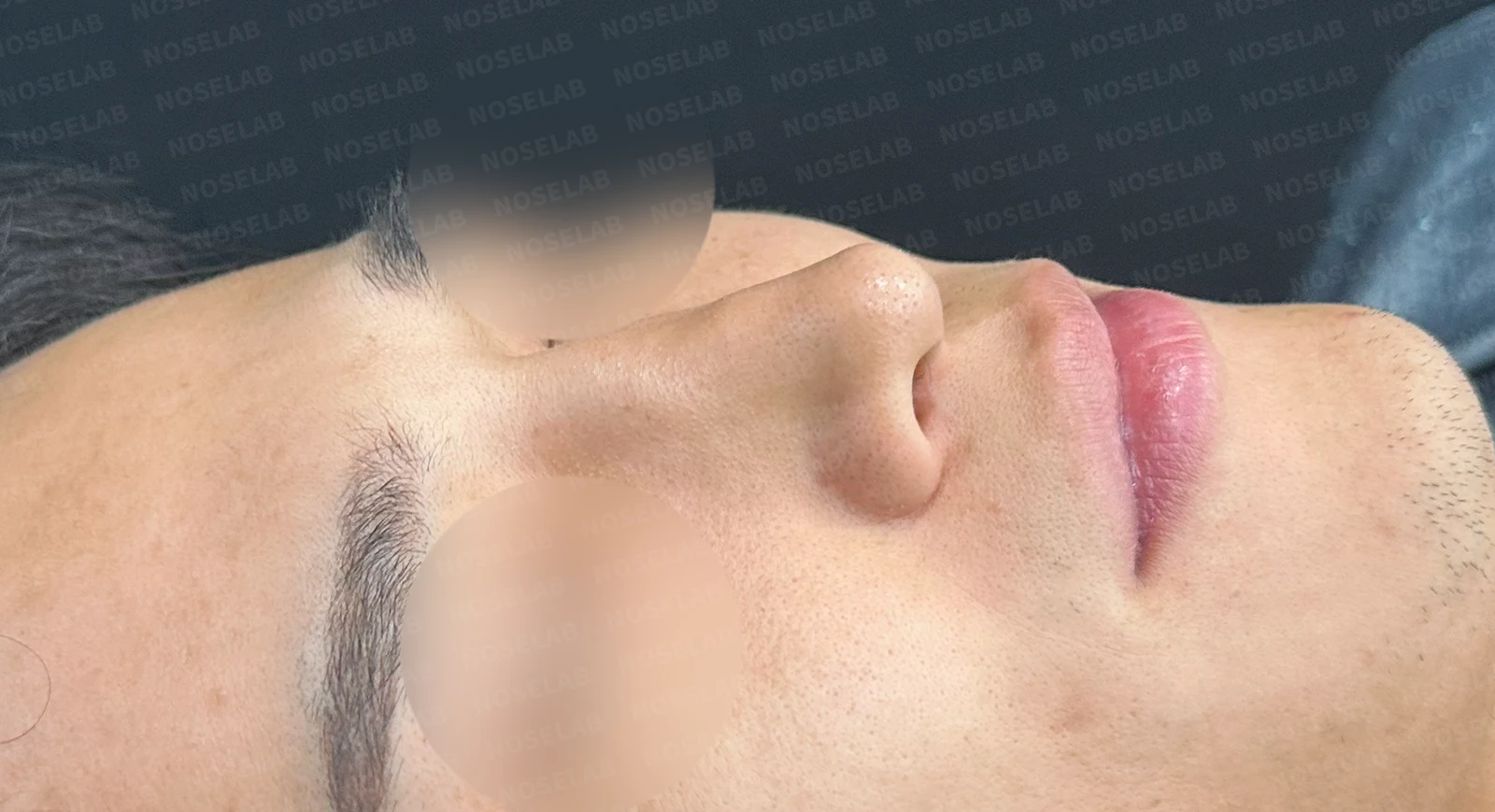
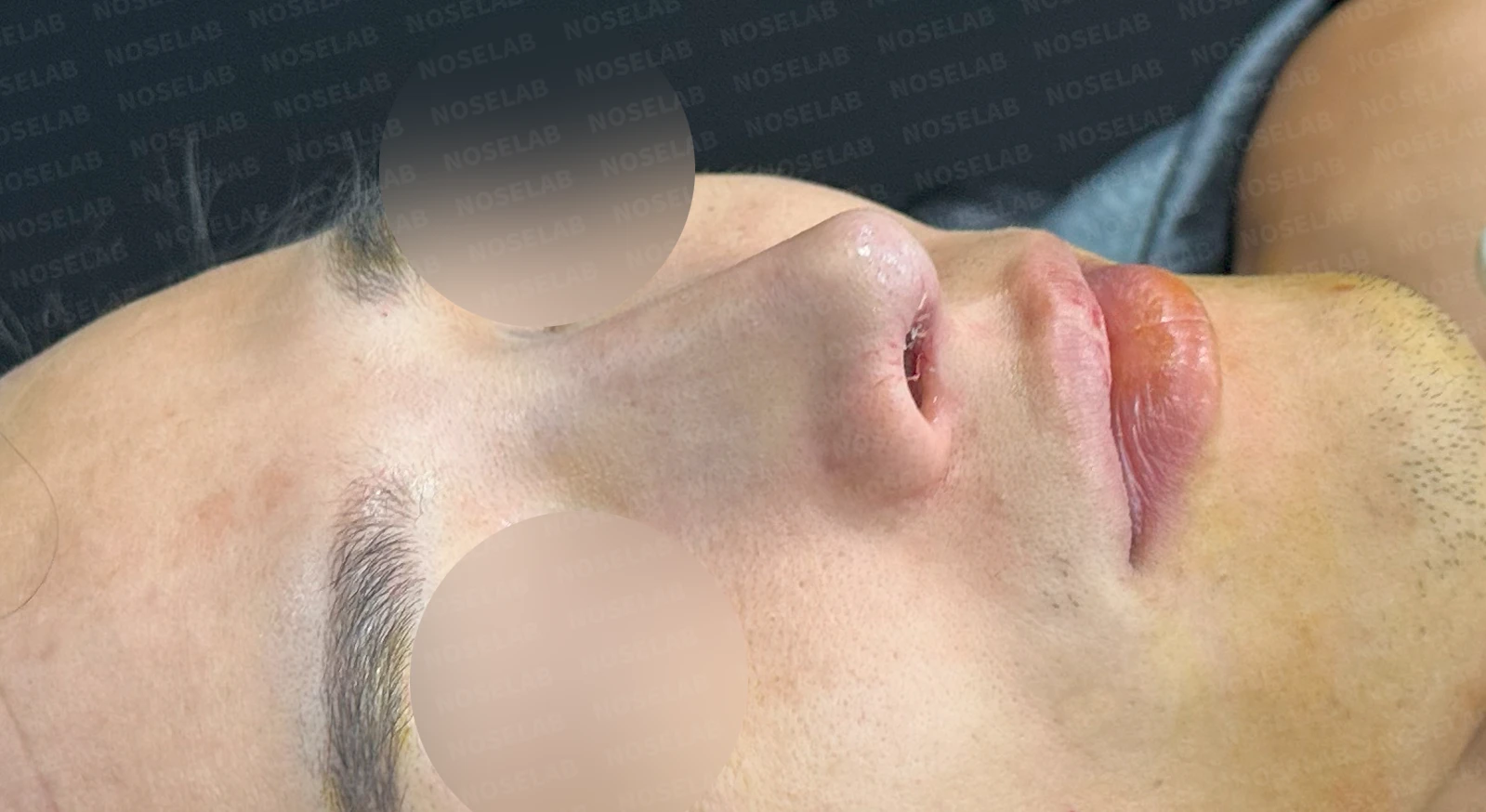
Before surgery / Day 0 immediately after surgery Photos taken immediately after surgery show swelling and may differ from the final result.
Oblique view:
The uneven contour of the nasal bridge was smoothed out.
The drooping nasal tip appearance was corrected.
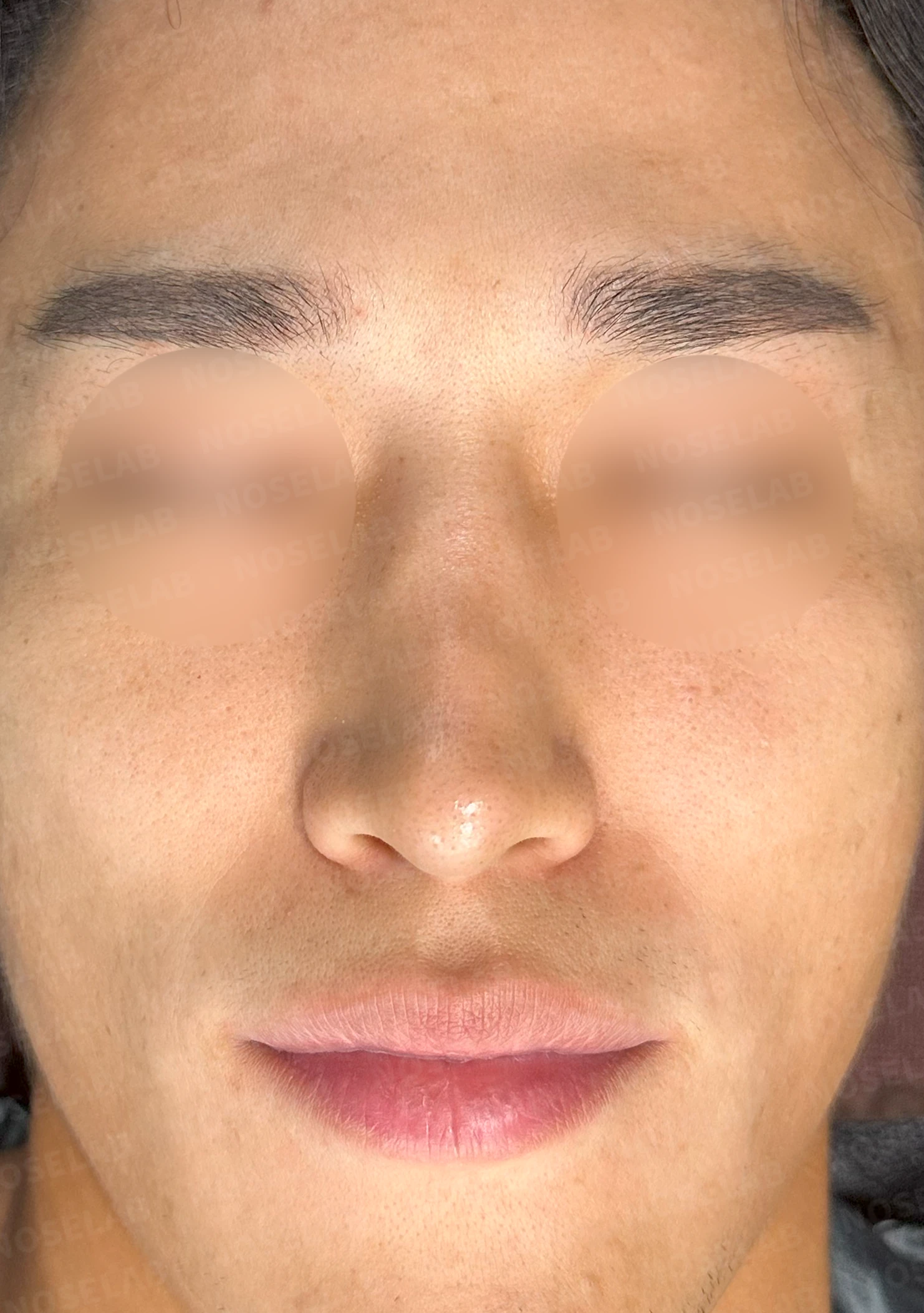
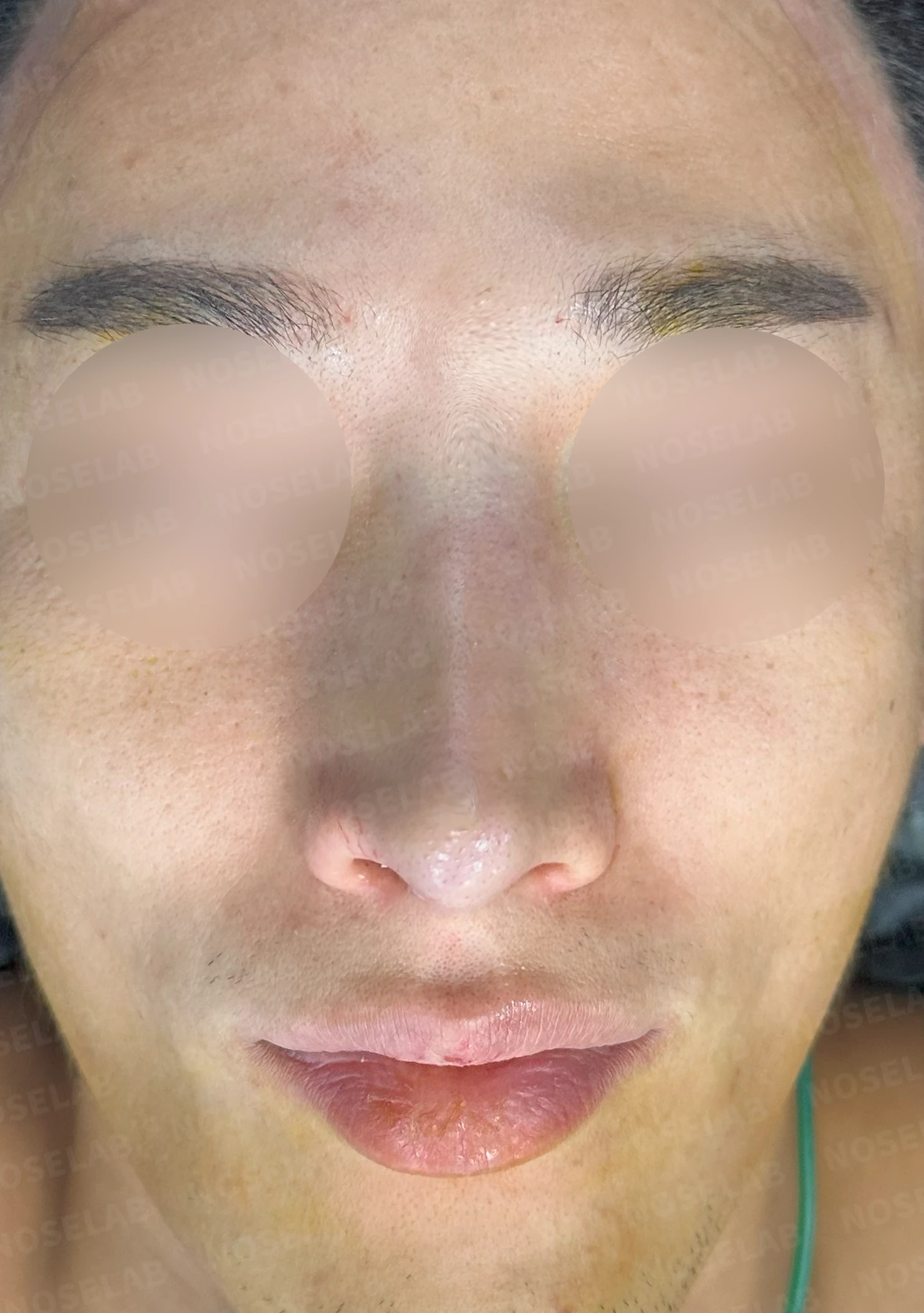
Before surgery / Day 0 immediately after surgery Photos taken immediately after surgery show swelling and may differ from the final result.
Front view:
The crooked nasal bridge was straightened.
The hanging appearance of the columella was improved.
Nostril asymmetry was corrected.
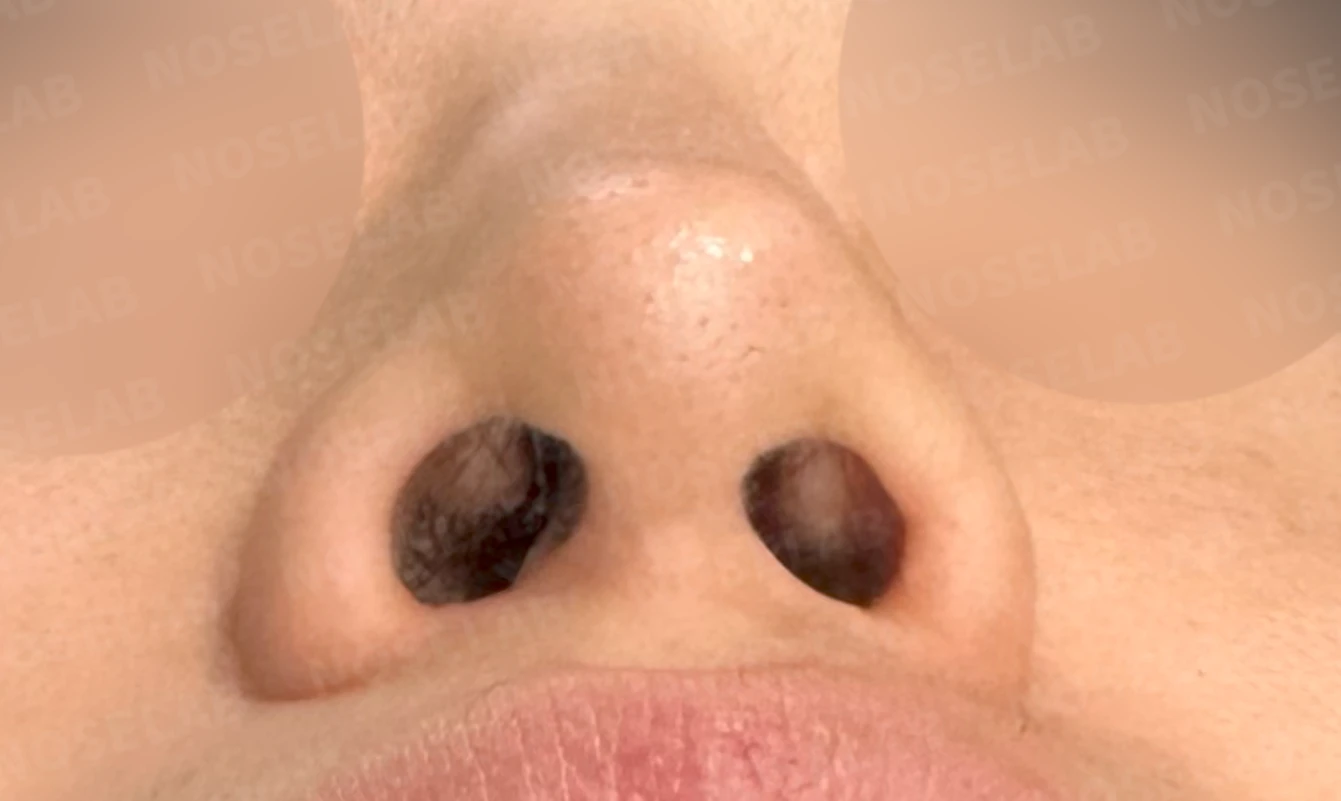
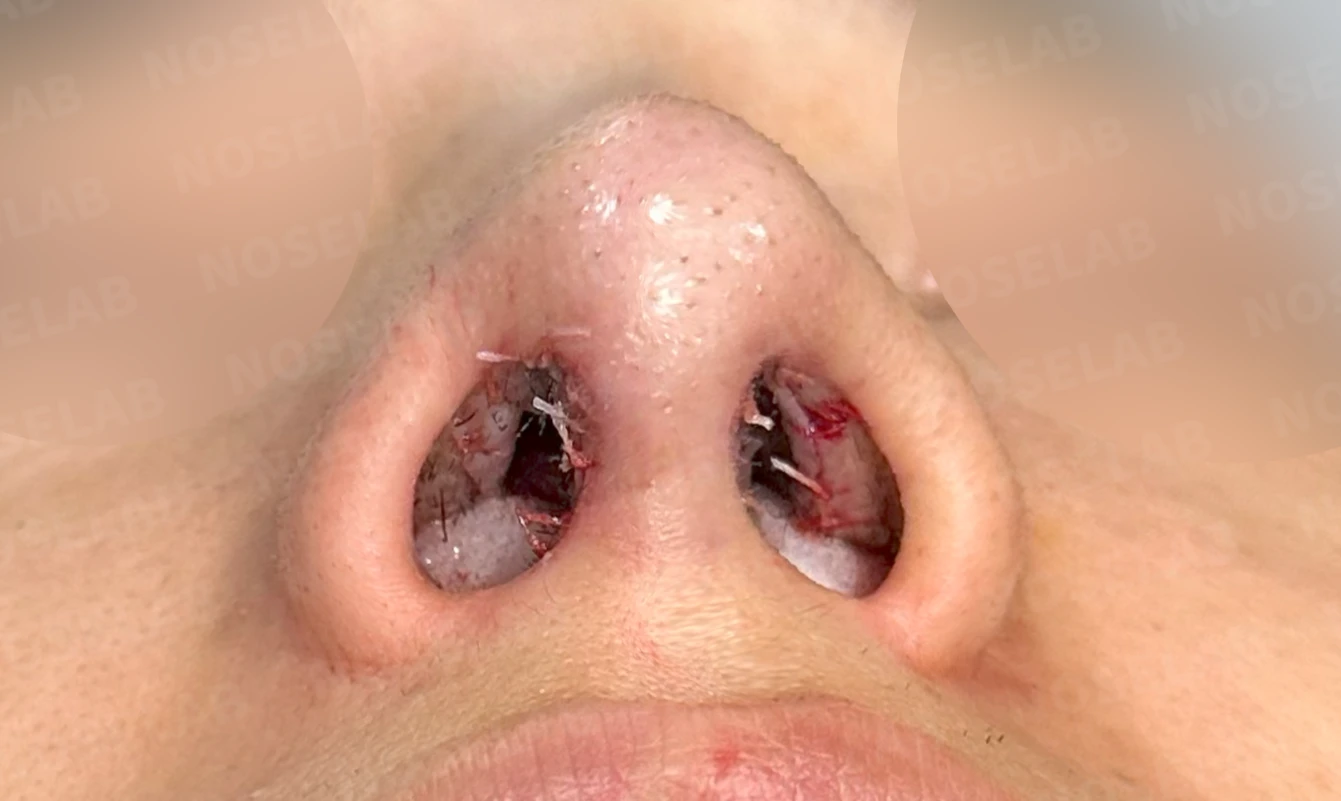
Before surgery / Day 0 immediately after surgery Photos taken immediately after surgery show swelling and may differ from the final result.
Nostrils:
Nostril asymmetry was corrected.
The protruding area caused by an elevated right tip was corrected.
Collection of immediate postoperative photos
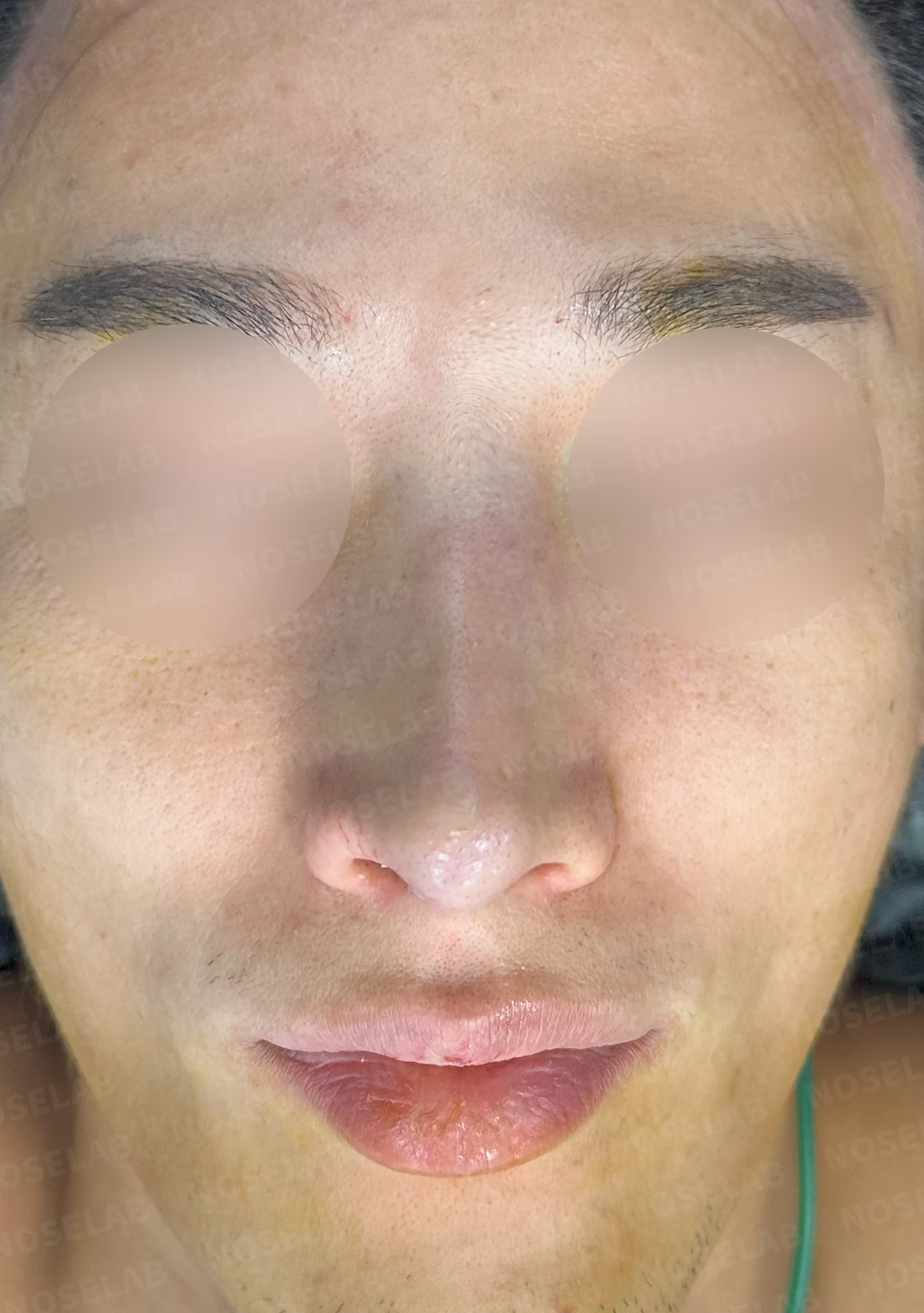
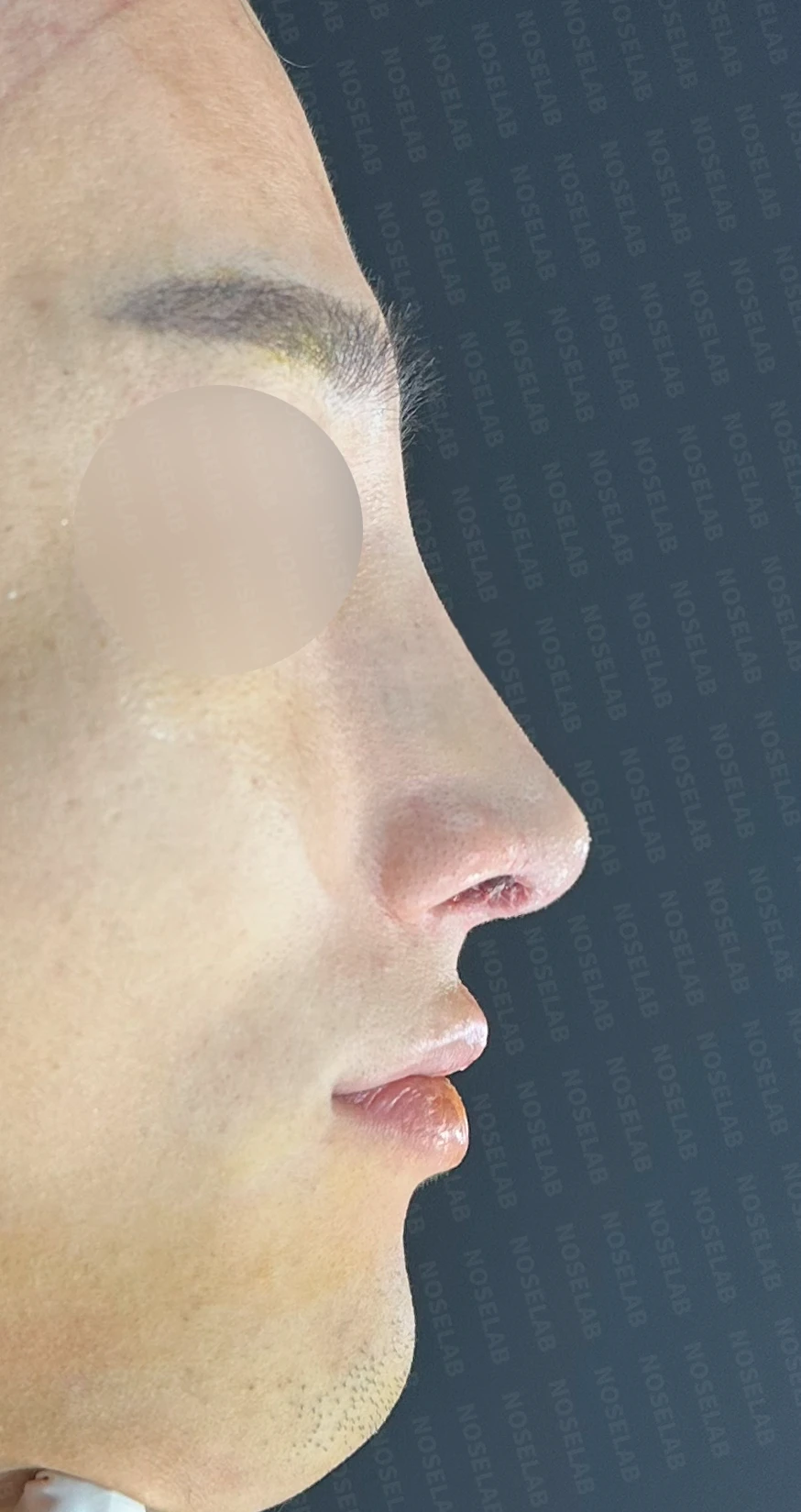
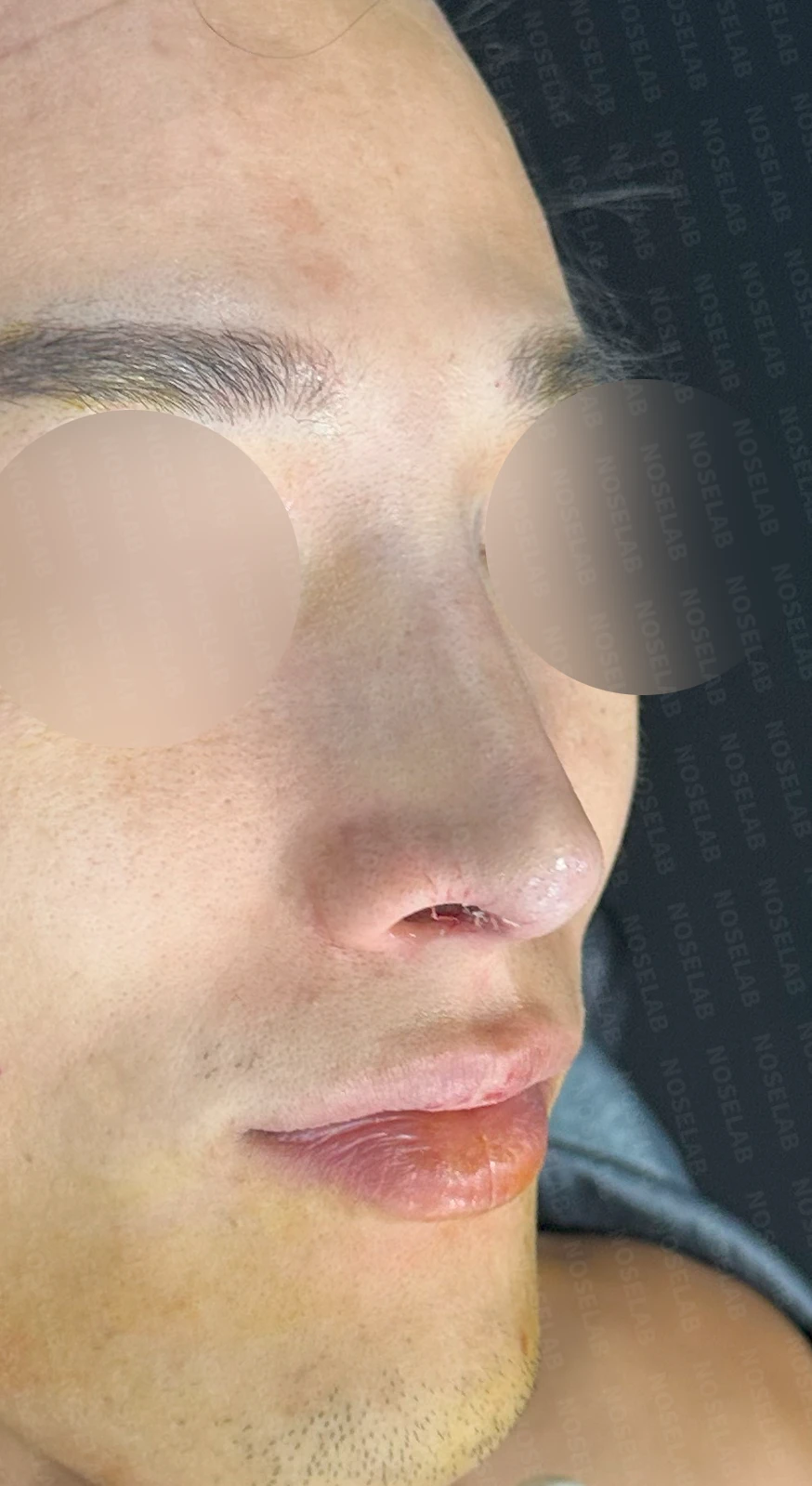
Immediately after surgery (Day 0) front, profile, and oblique viewsImmediate postoperative photos show swelling and may differ from the final result.
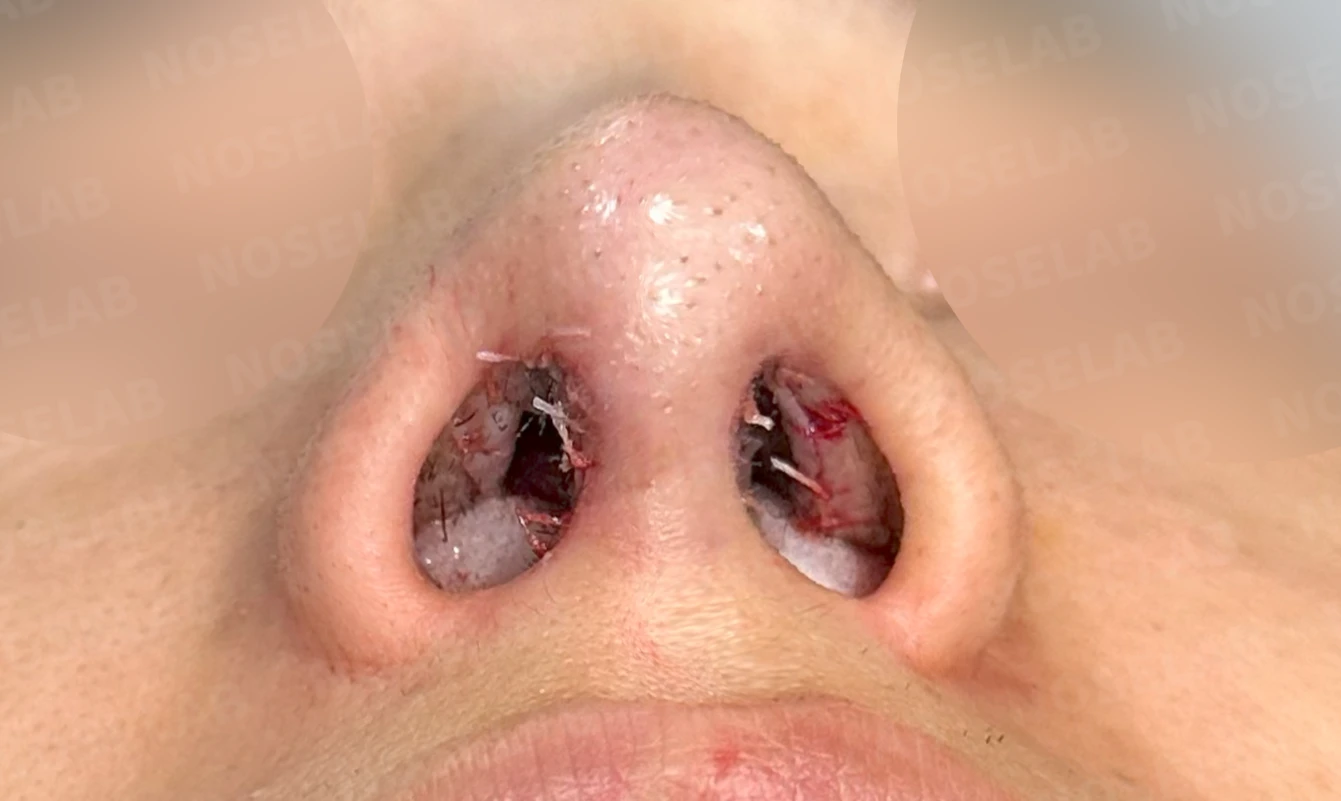
Base view (nostril) photo
💡 Closing remarks
Today, I presented a revision case where an implant was used due to an unsatisfactory result after an implant-free rhinoplasty. Although implant-free surgery has the advantage of lowering the risk of inflammation and contracture, it can have limitations from an aesthetic standpoint.
In particular, achieving sufficient improvement when correcting deviation or asymmetry can be challenging without an implant. Therefore, the surgical method for rhinoplasty must be chosen carefully according to each patient's individual condition and goals.
In this type of case, placing a silicone implant was chosen to effectively resolve the patient's dorsum depression and crooked nose.
If you are considering rhinoplasty, please consult thoroughly with a specialist to select the surgical approach that best suits your condition.
I always place patient safety and satisfaction first, striving to provide personalized rhinoplasty solutions tailored to each individual.
This was Dr. Peter C. Kang. Thank you.
Thank you.

#malerhinoplasty #crookednosecorrection #dorsumdepressioncorrection #rhinitissurgery #nasalobstructionrelief #autologousribcartilagegraft #siliconerhinoplasty #customrhinoplasty #closedrhinoplasty #tipplasty #septoplasty #implantfree
Limitations and risks
When autologous rib cartilage is used, scarring and pain may remain at the donor site on the chest, and pneumothorax (pleural injury) can occur rarely. Over time, the grafted cartilage may warp or undergo partial resorption.
When the septum is corrected at the same time, nasal obstruction may persist or recur, and in rare cases, septal perforation or changes in smell may occur.
Common potential risks include infection, bleeding, asymmetry, scarring, skin necrosis, and insufficient improvement; results vary depending on individual skin condition and previous surgical history.