Title: Transforming an upturned, curved nose into a defined straight profile - a customized male rhinoplasty case
Hello, I am Dr. Peter C. Kang.
Today, I would like to share a rhinoplasty case of a male patient with an upturned, curved nose.
Patients with this presentation visit our clinic to correct right-sided nasal obstruction and noticeable nostril show on the front view.
Addressing the patient's request for a masculine straight bridge line
while simultaneously resolving functional issues made this an intriguing case.
1. Preoperative consultation and analysis
The patient's surgical history:
In 2014, the patient had undergone septoplasty, functional nasal surgery (correction of a deviated septum), silicone implant placement, and alar reduction at a plastic surgery clinic.
Chief complaints:
- Significant right nasal obstruction causing labored breathing
- Noticeable nostril show on the front view
Patient's requests:
- Correction to a straight bridge line
- Reduction of nostril show on the front view
Analysis of preoperative design consultation photos:
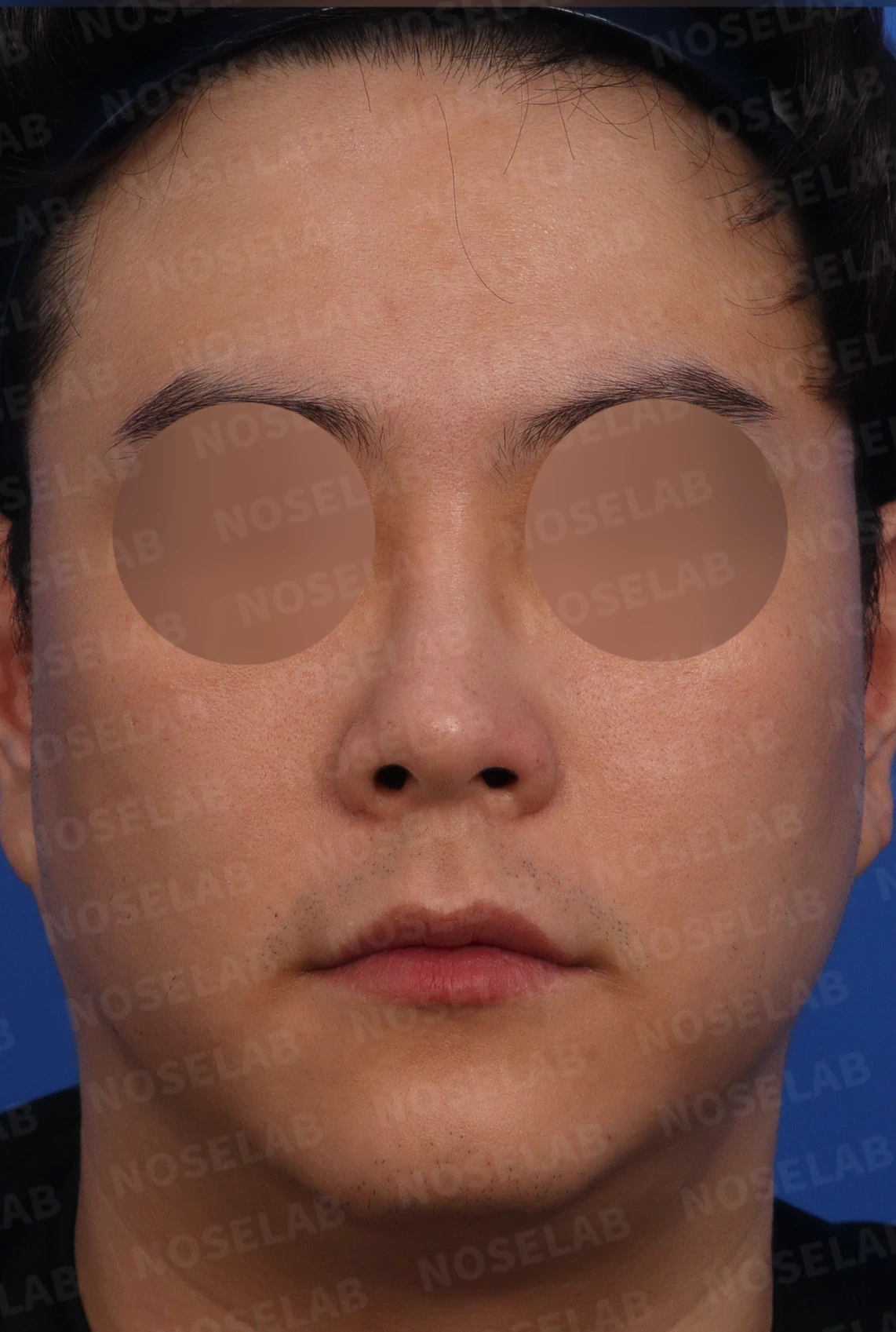
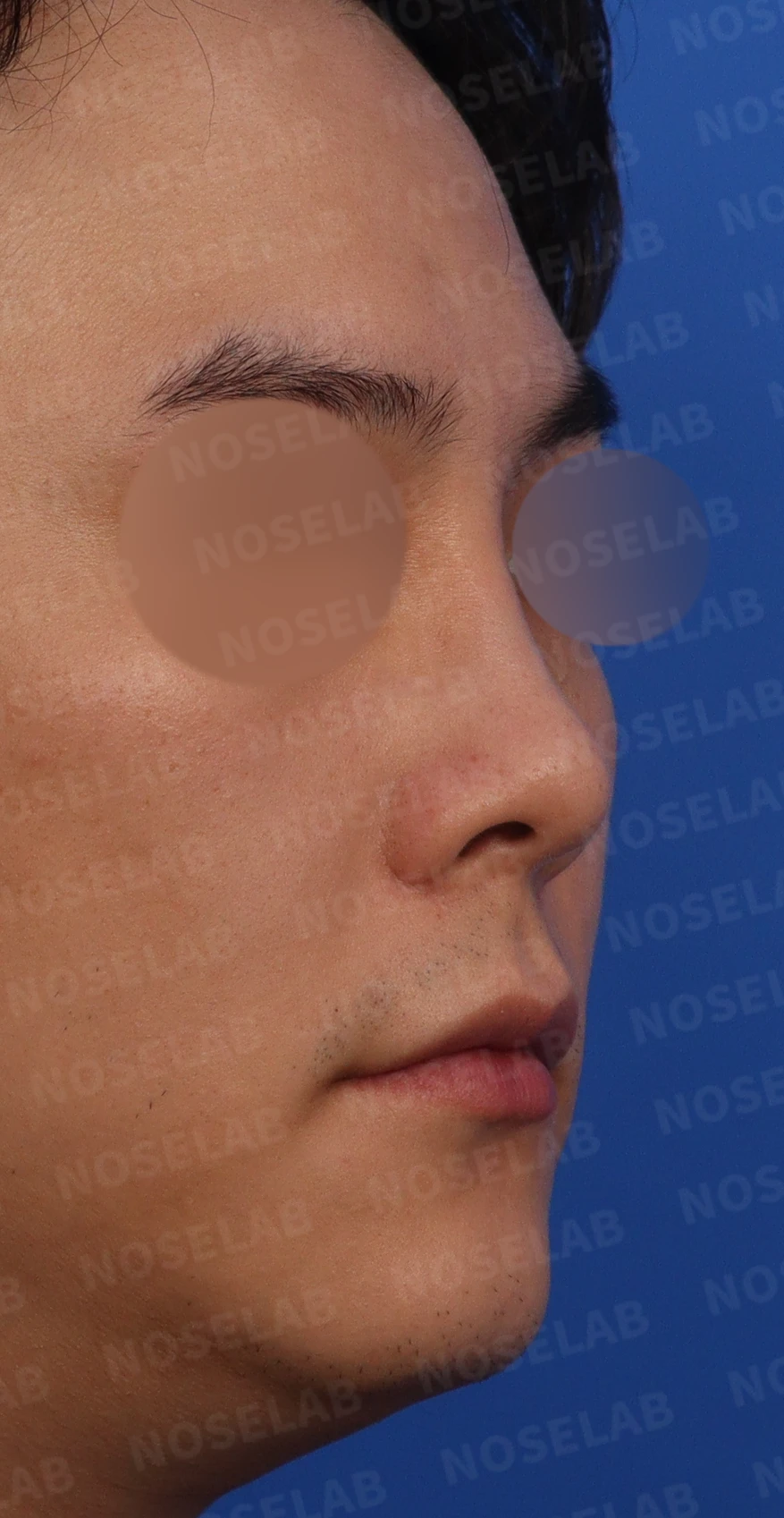
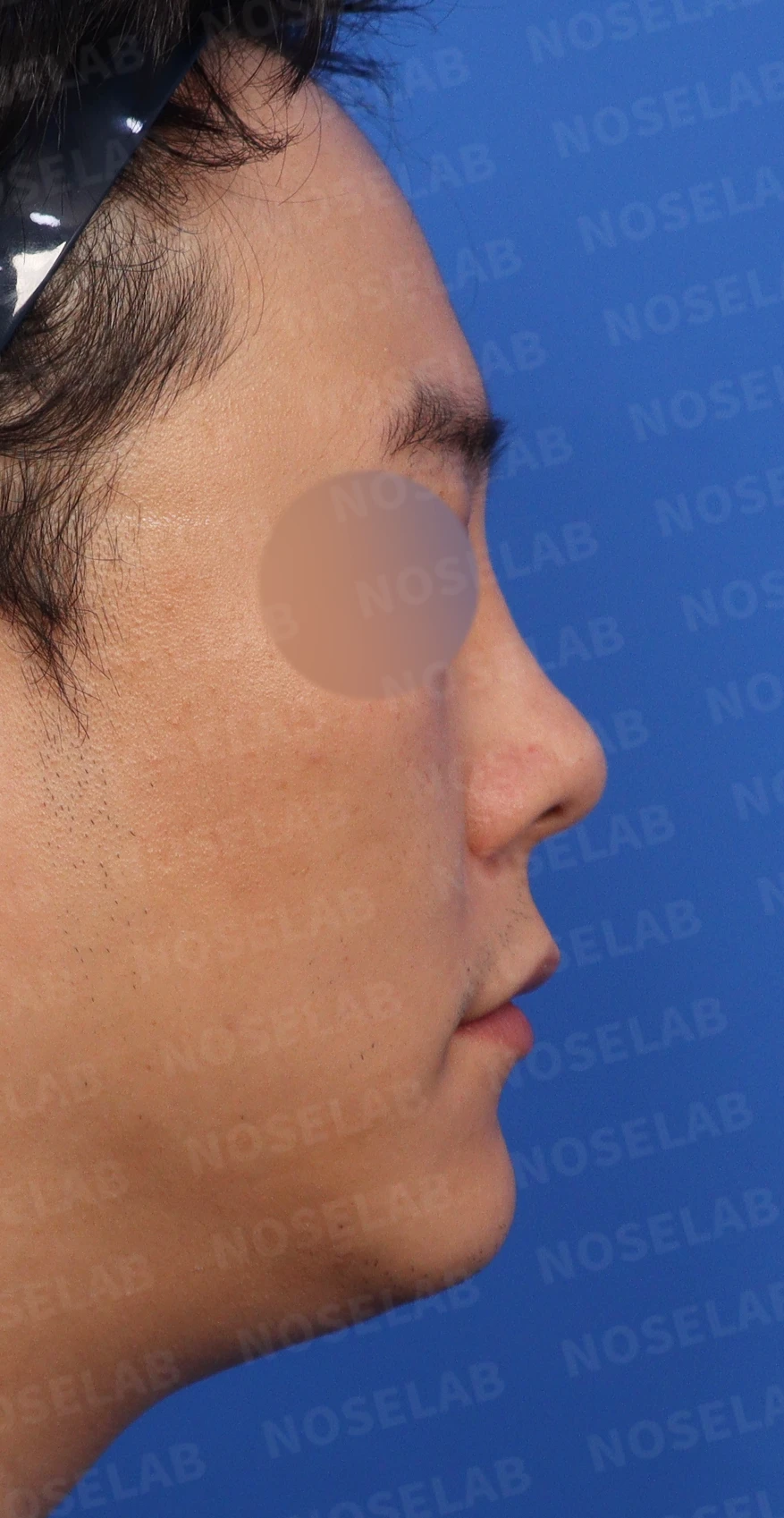
Front, right oblique, and right profile views from the preoperative design consultation.
Front view:
- Excessive nostril show
- The nose appears crooked
Oblique view:
- The nasal bridge is uneven
- The nasal tip appears upturned
Profile view:
- A depressed nasal dorsum
- A high radix
- The nasal tip appears upturned
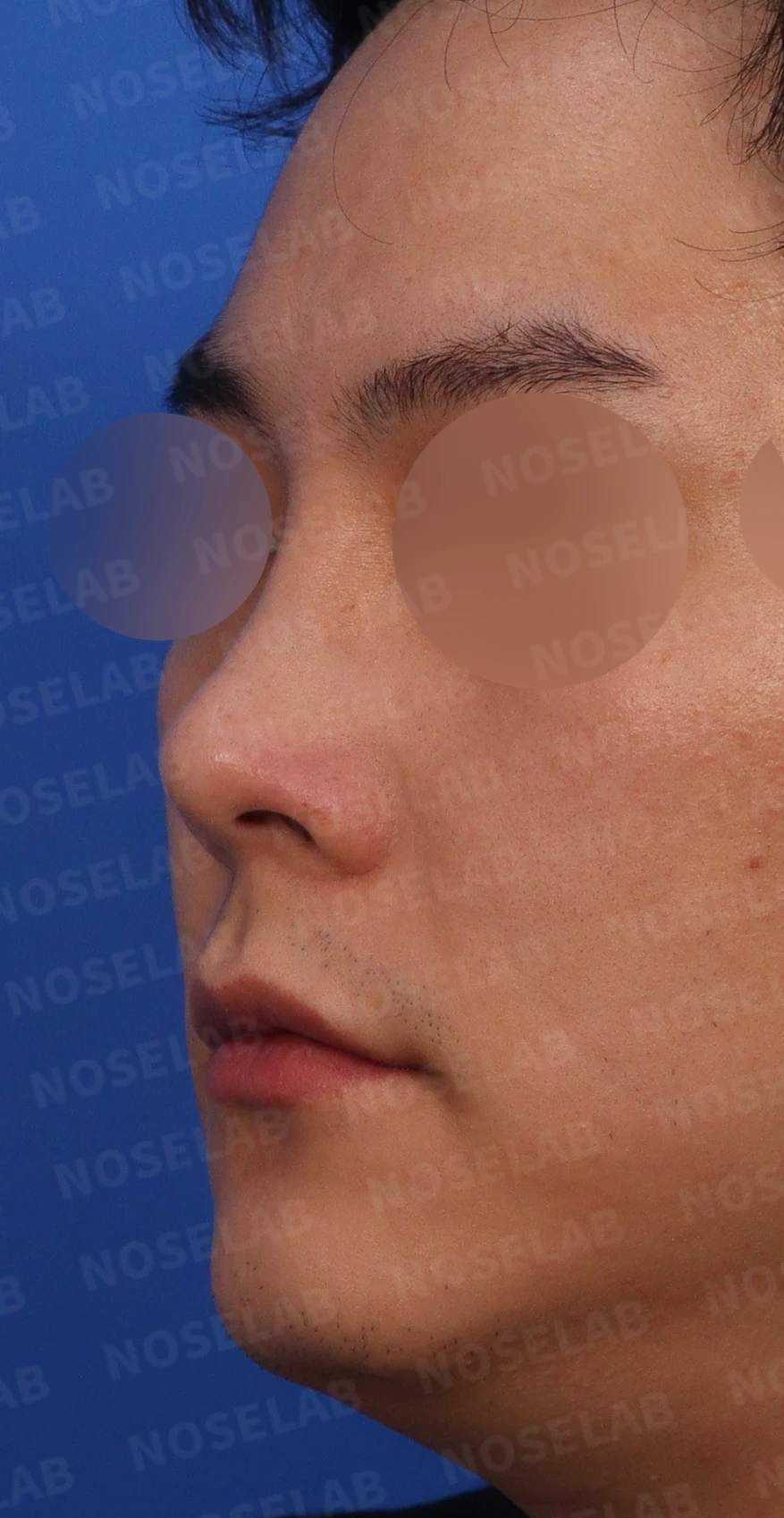
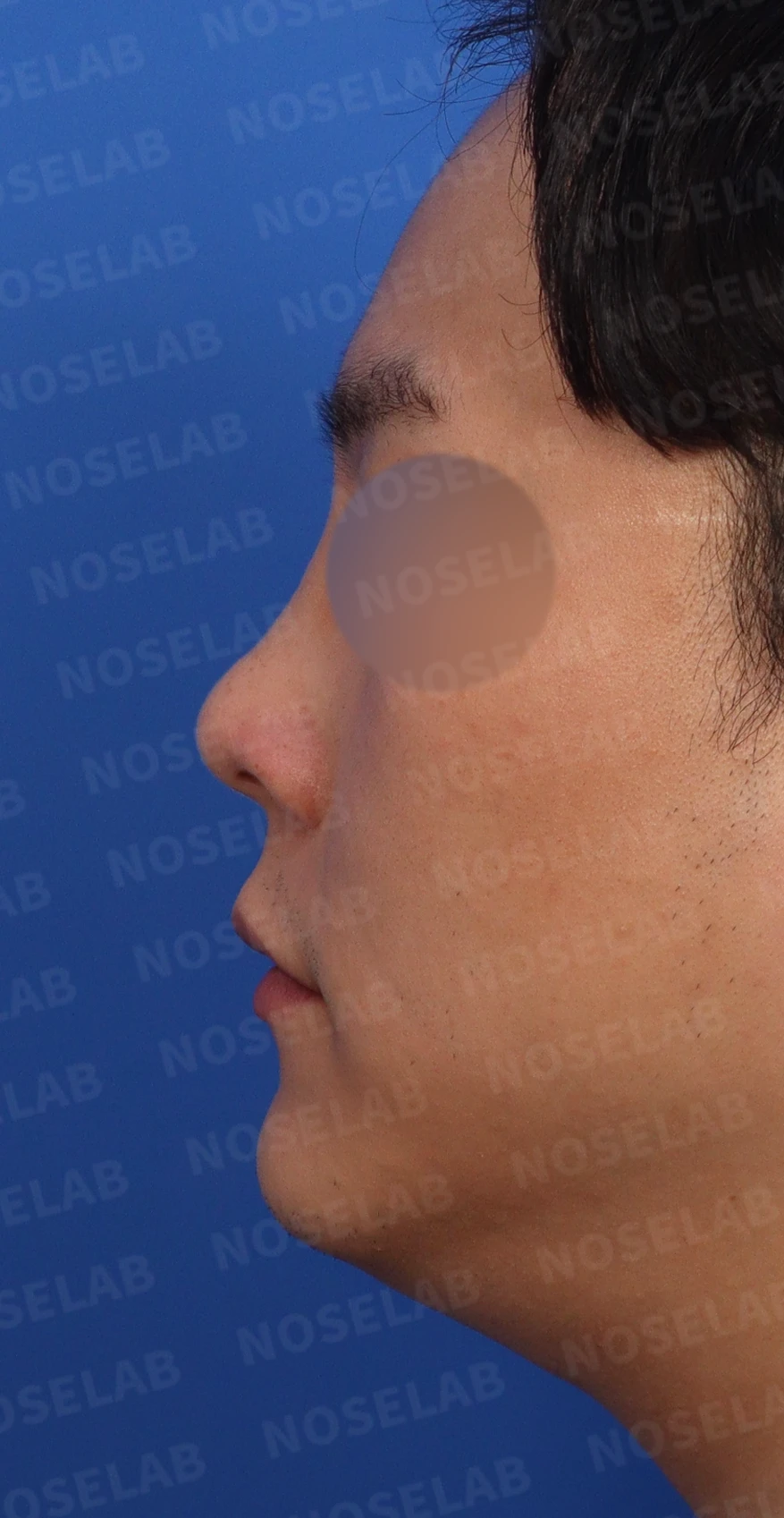
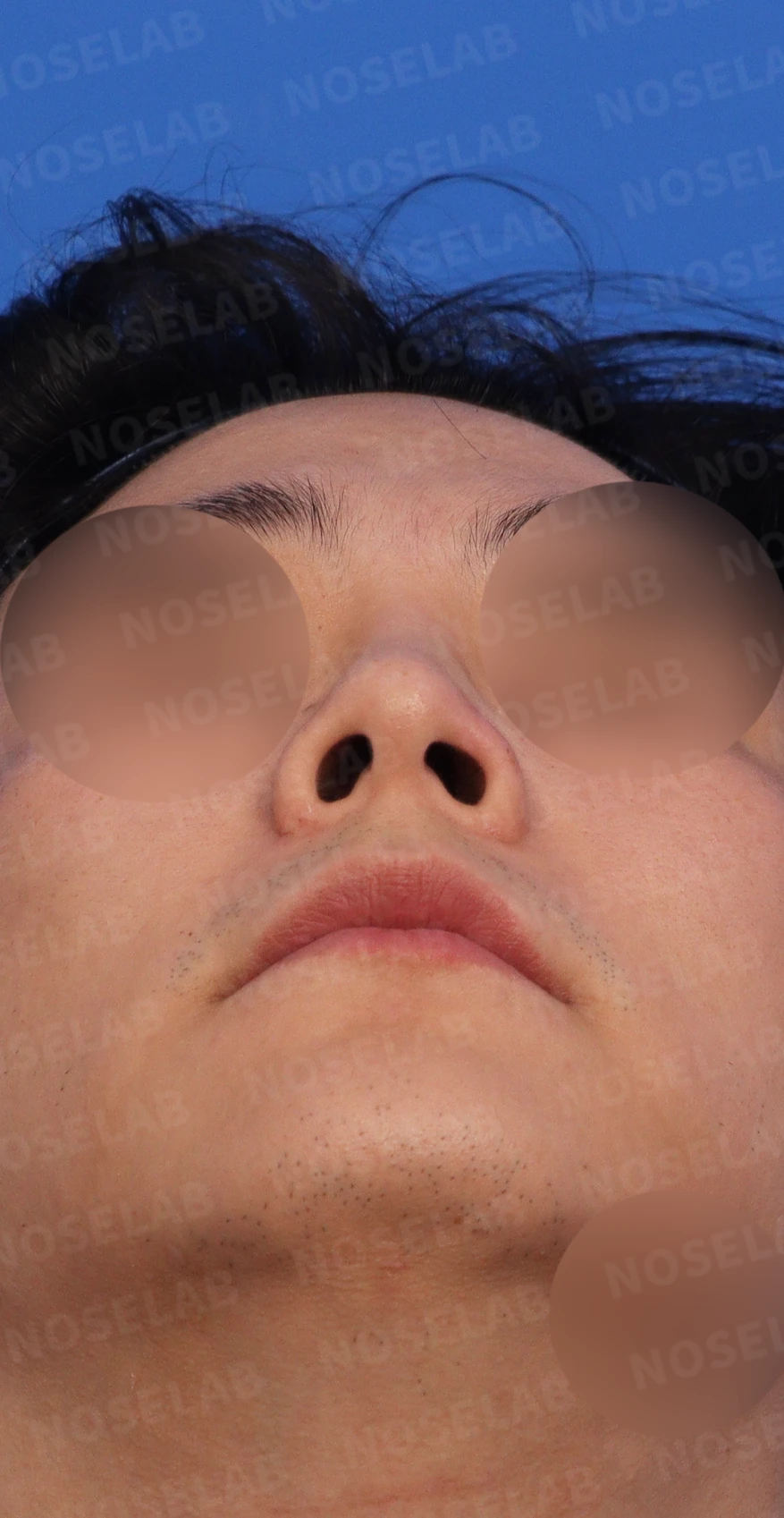
Left oblique, left profile, and basal (nostril) views from the preoperative design consultation.
Nostrils:
- Observed asymmetry
2. Surgical plan
Taking into account the patient's condition and requests, the following surgical plan was established:
a) Surgery to improve nasal obstruction
- Septoplasty
- Submucosal resection of the inferior turbinates using radiofrequency laser
b) Septal extension using autologous rib cartilage
- Correction of nostril asymmetry
- Correction of the upturned nose
- Correction of the deviated nasal tip
c) Nasal bridge implant exchange
- Removal of pre-existing implant
- Insertion of a new implant (lowering the radix to raise the nasal dorsum)
3. Surgical procedure
The following procedures were performed using a closed approach:
a) Surgery for nasal obstruction improvement:
- The deviated septum was straightened through septoplasty to alleviate right-sided nasal obstruction.
- Submucosal resection of the inferior turbinate using radiofrequency laser opened up the nasal airway for smoother breathing.
b) Septal extension using autologous rib cartilage:
- Autologous rib cartilage was harvested and used to correct the septal deviation.
- Septal extension grafting corrected the nostril asymmetry, while realigning the upturned nose and deviated nasal tip.
c) Nasal bridge implant exchange:
- The existing uneven implant was removed.
- A new implant was placed with a lower radix to create a natural dorsal line.
- The curved line was revised to a straight bridge line to emphasize a masculine appearance.
d) Nasal tip correction:
- The upturned nasal tip was lowered to create a natural male tip shape.
- The nasolabial angle was adjusted close to 90 degrees to reinforce a masculine look.
All procedures were performed using a closed approach, completing the surgery without external scars.
4. Comparison of before-and-after photos
Comparing photos taken immediately after surgery on day 0 shows the following improvements: Photos taken immediately after surgery show swelling and may differ from the final result.
Front view:
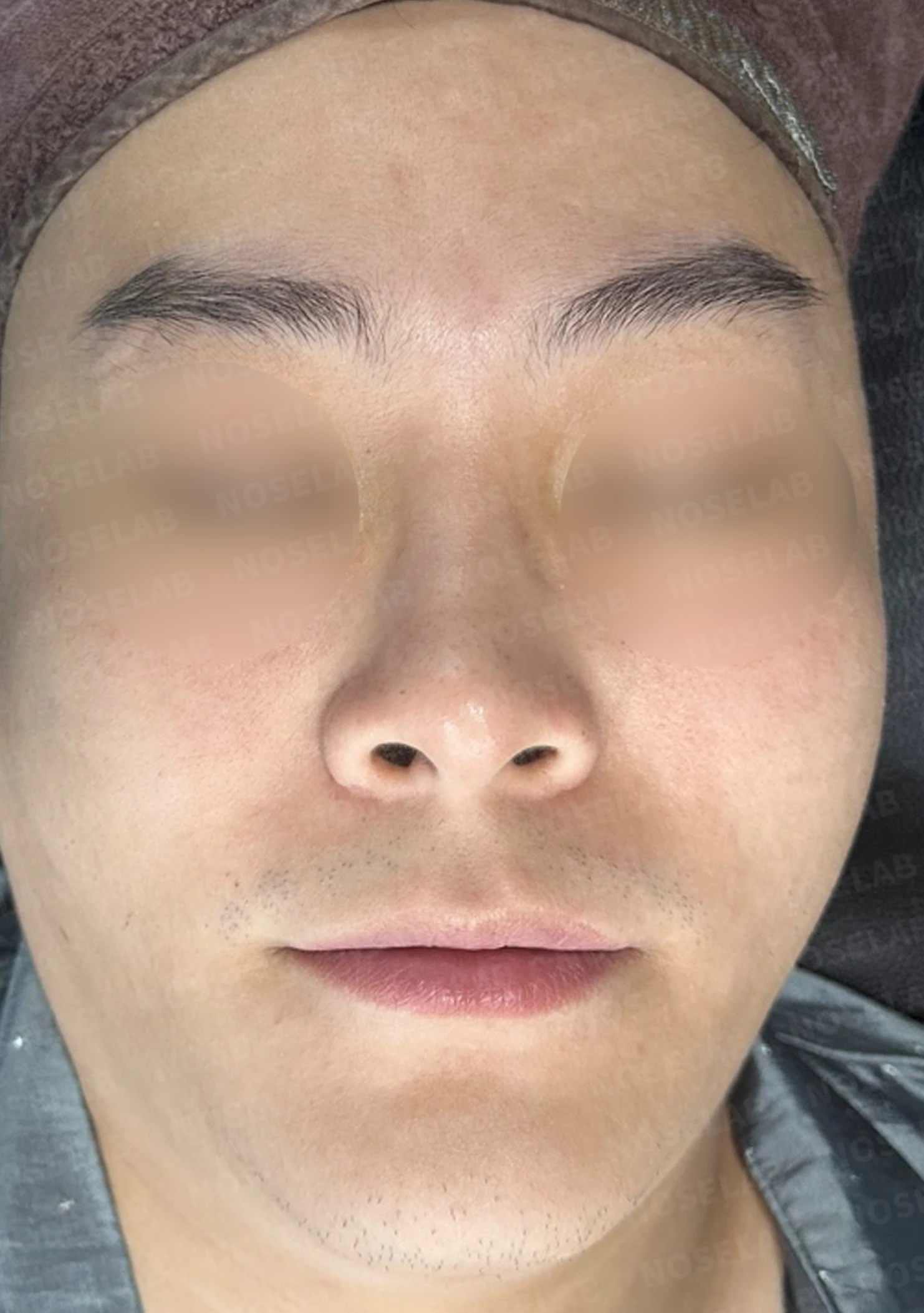
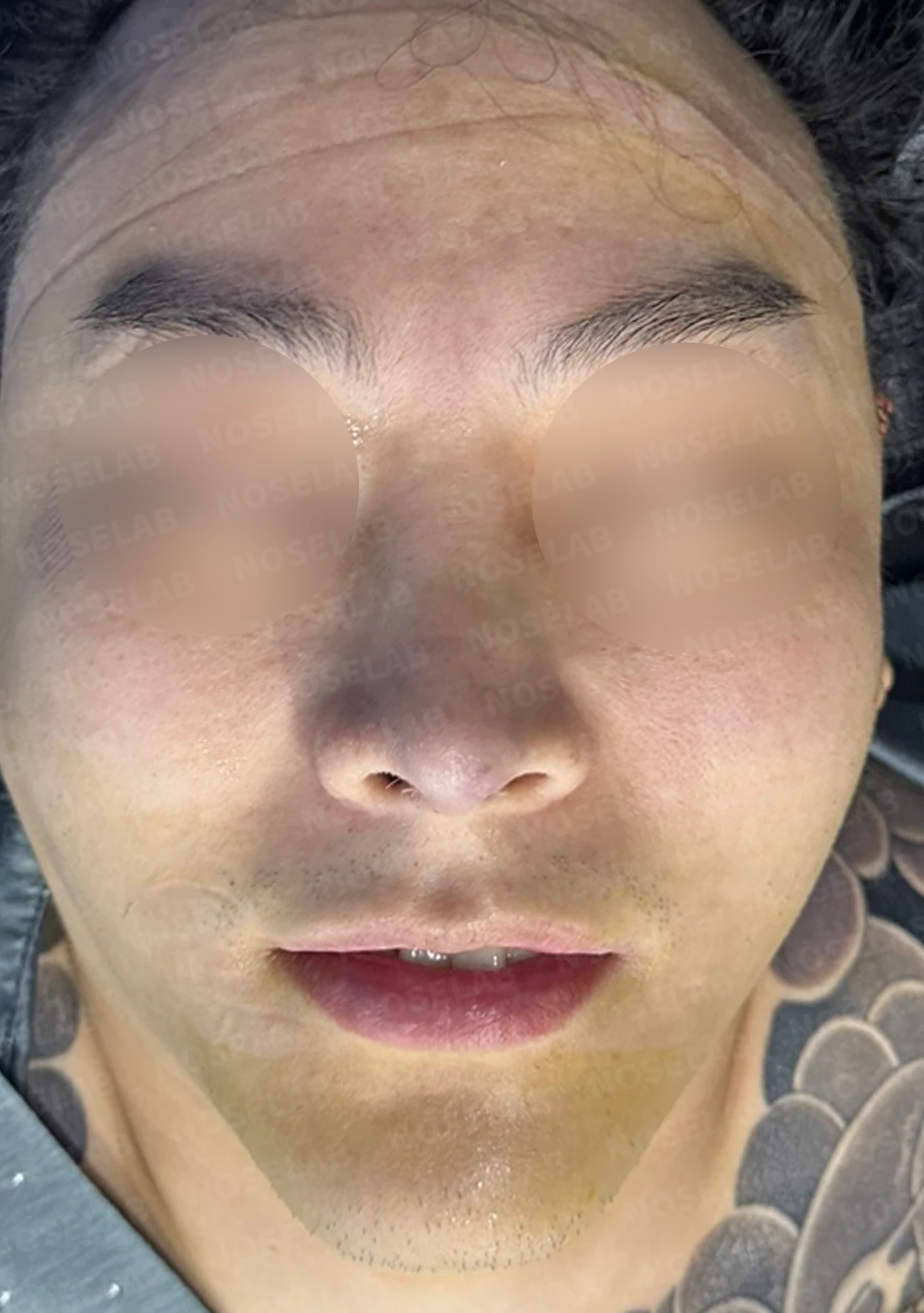
Before surgery / Day 0 immediately after surgery Photos taken immediately after surgery show swelling and may differ from the final result.
- Excessive nostril show has been significantly reduced.
- The crooked nose was straightened.
Oblique view:
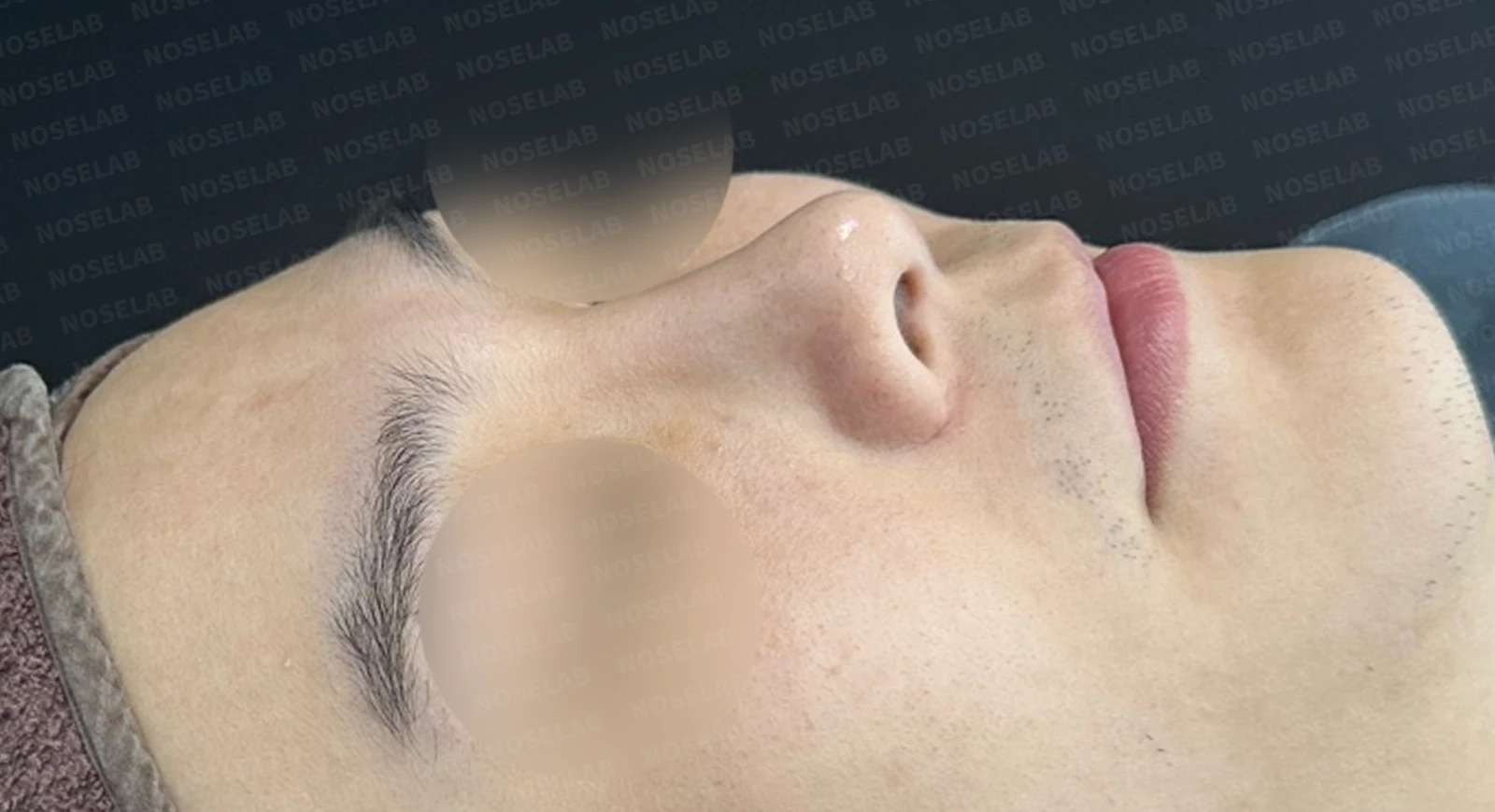
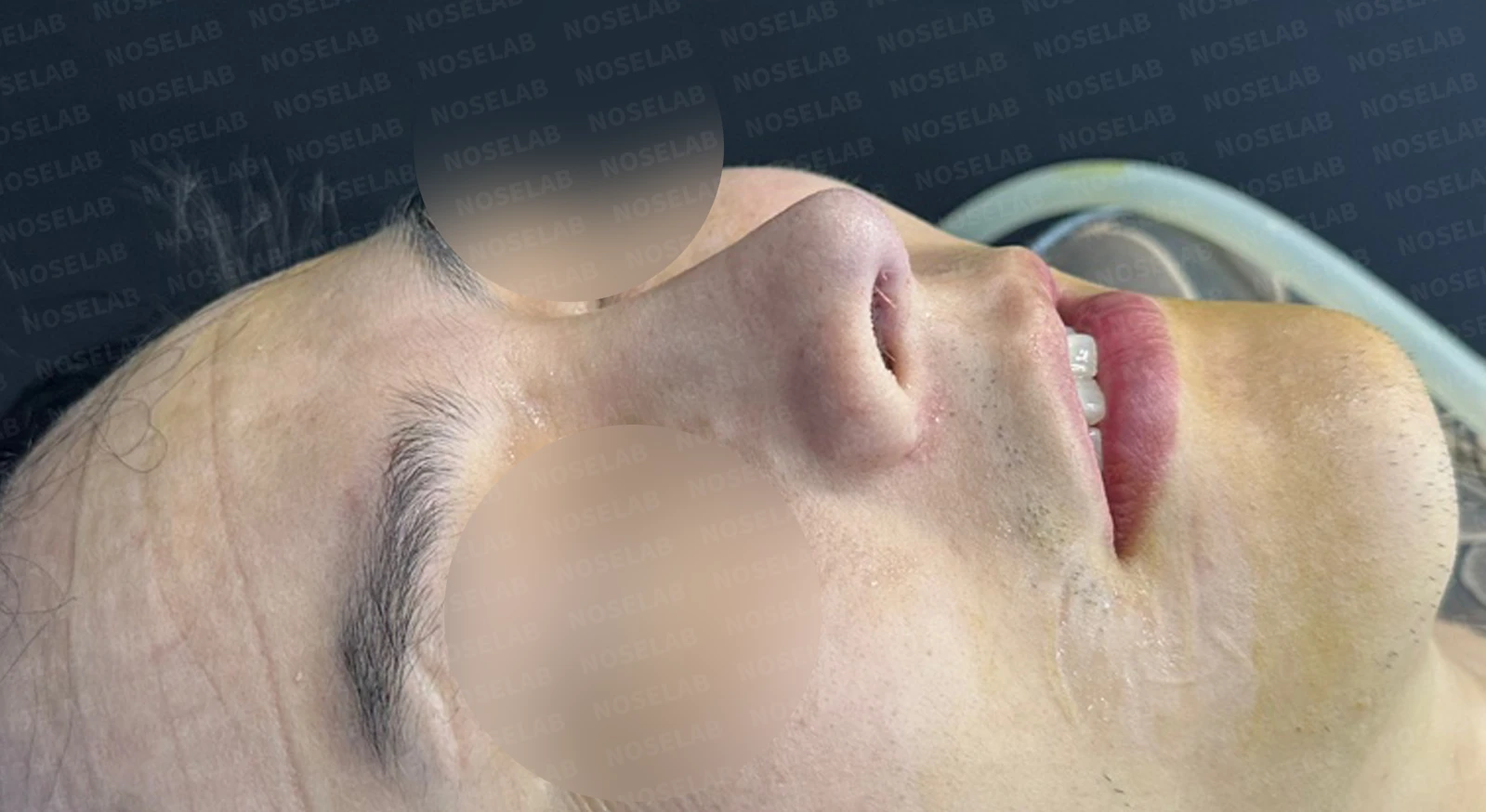
Before surgery / Day 0 immediately after surgery Photos taken immediately after surgery show swelling and may differ from the final result.
- The uneven nasal bridge was refined into a smooth, straight line.
- The previously upturned tip was naturally corrected.
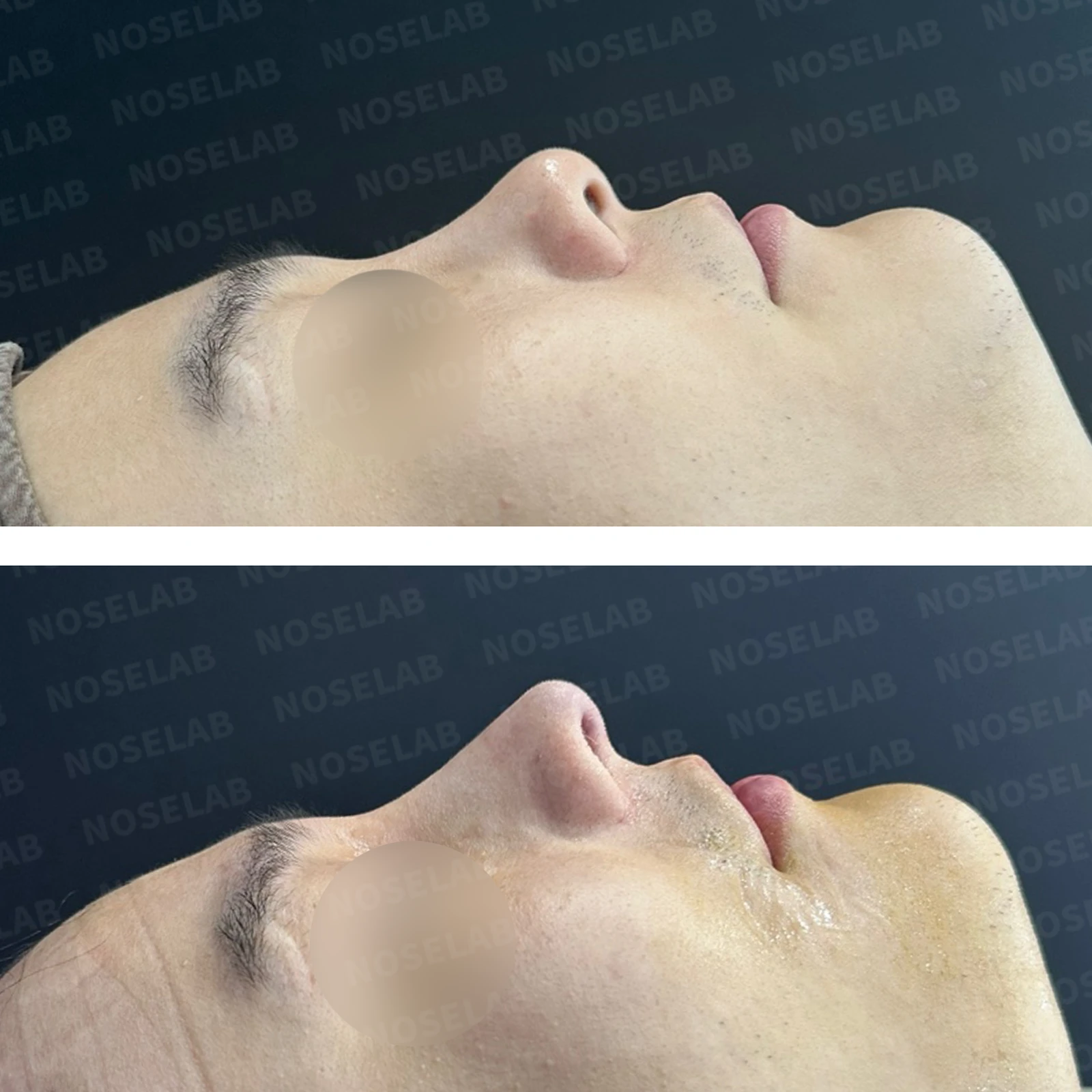
Profile view:
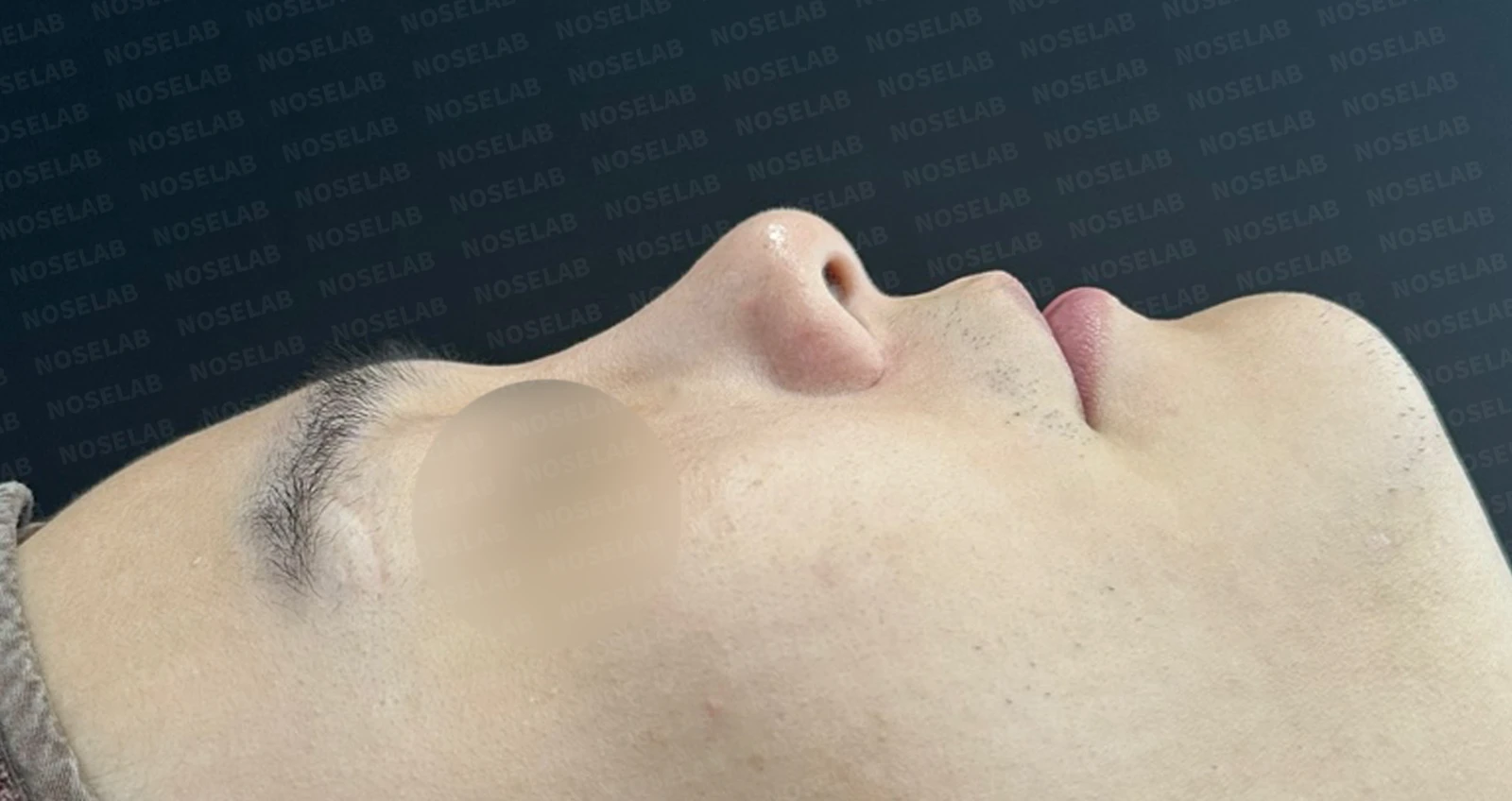
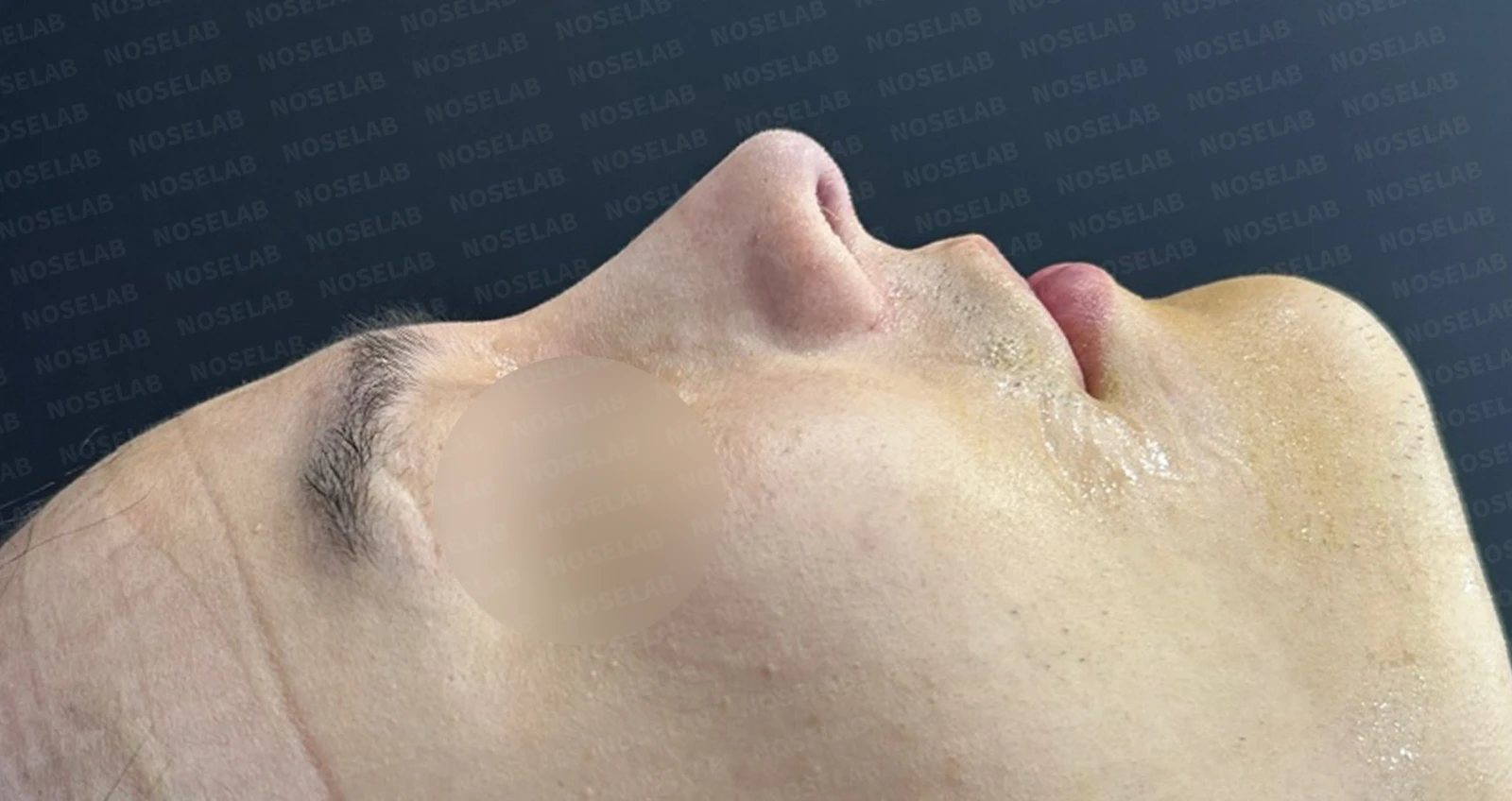
Before surgery / Day 0 immediately after surgery Photos taken immediately after surgery show swelling and may differ from the final result.
- The depressed dorsum was adequately elevated to establish a masculine straight line.
- The excessively high radix was lowered, producing a natural transition from the forehead to the nose.
- The upturned nasal tip was lowered to achieve a masculine nasolabial angle.
Nostrils:
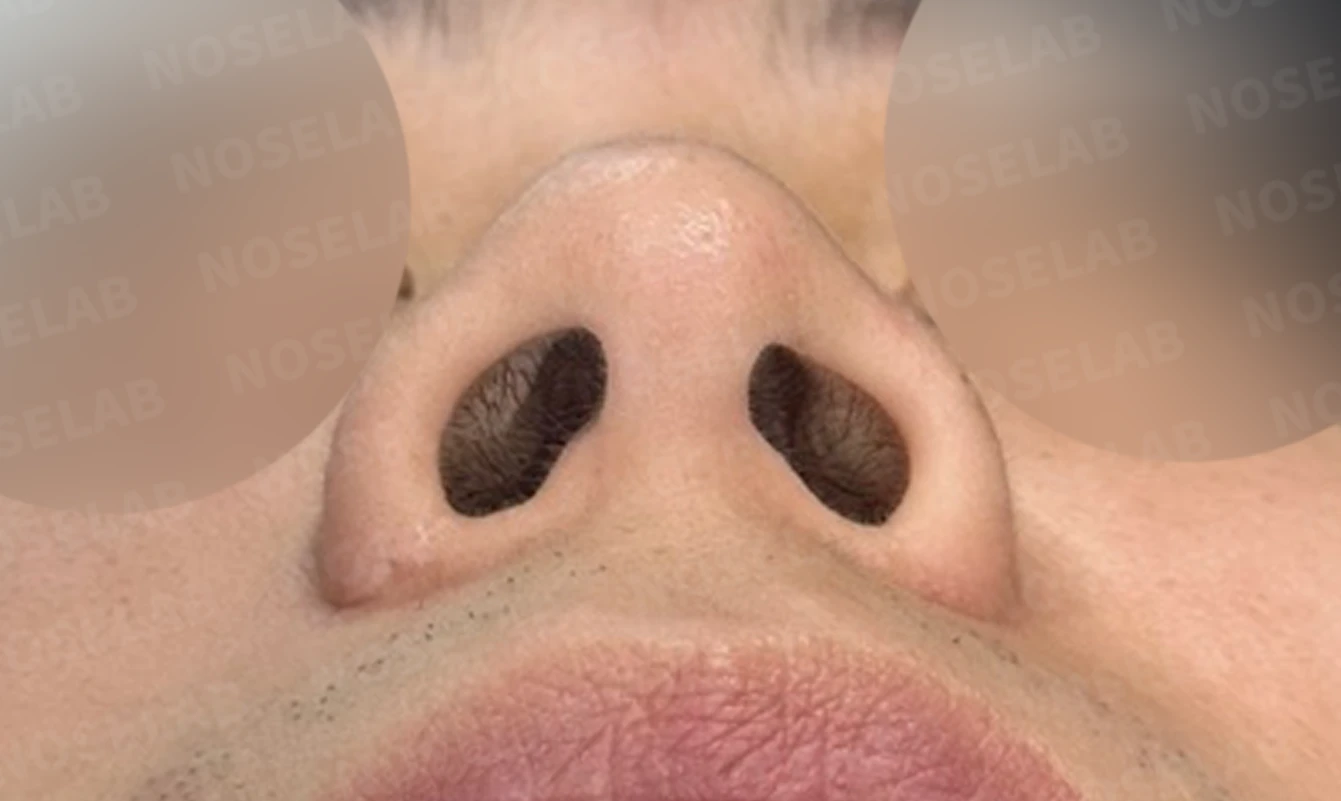
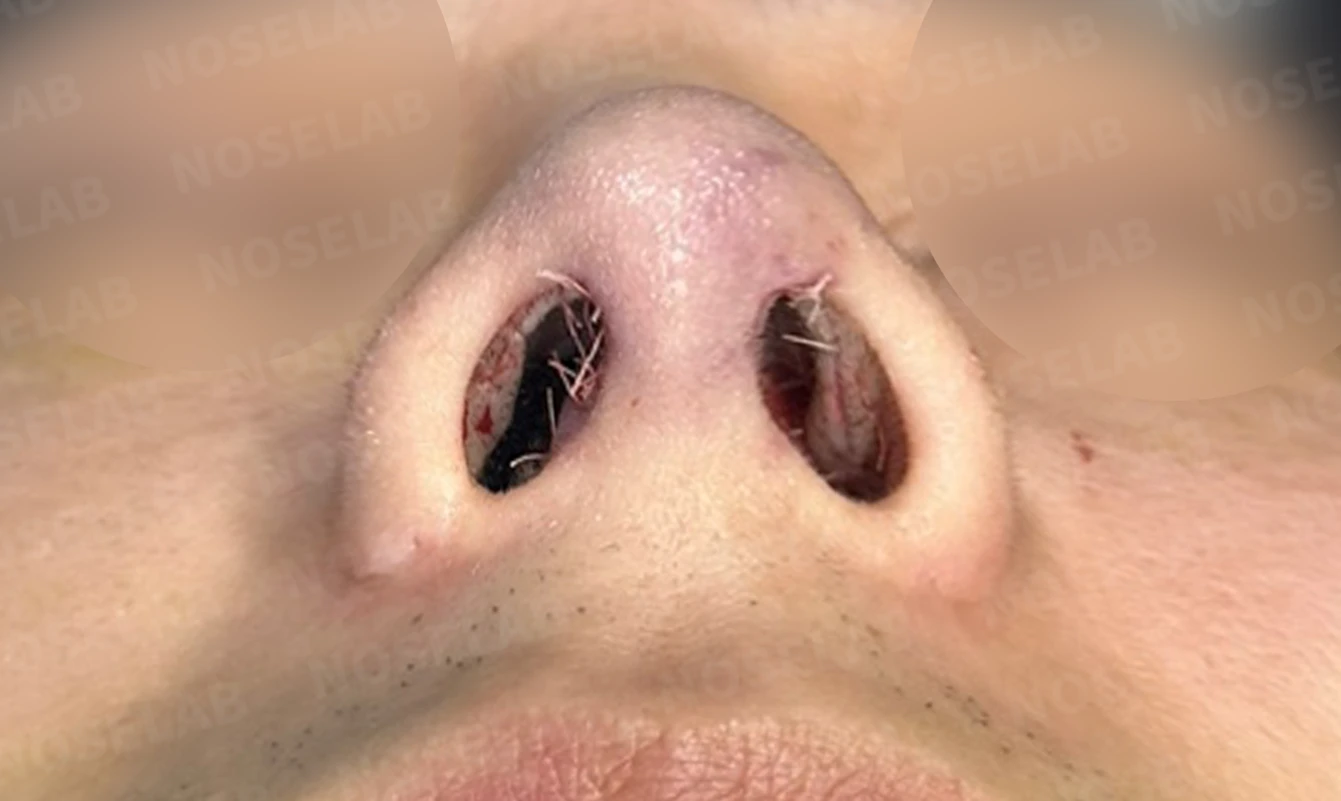
Before surgery / Day 0 immediately after surgery Photos taken immediately after surgery show swelling and may differ from the final result.
- Asymmetry improved significantly, achieving a balanced appearance.
5. Photos immediately after surgery on day 0 Photos taken immediately after surgery show swelling and may differ from the final result.
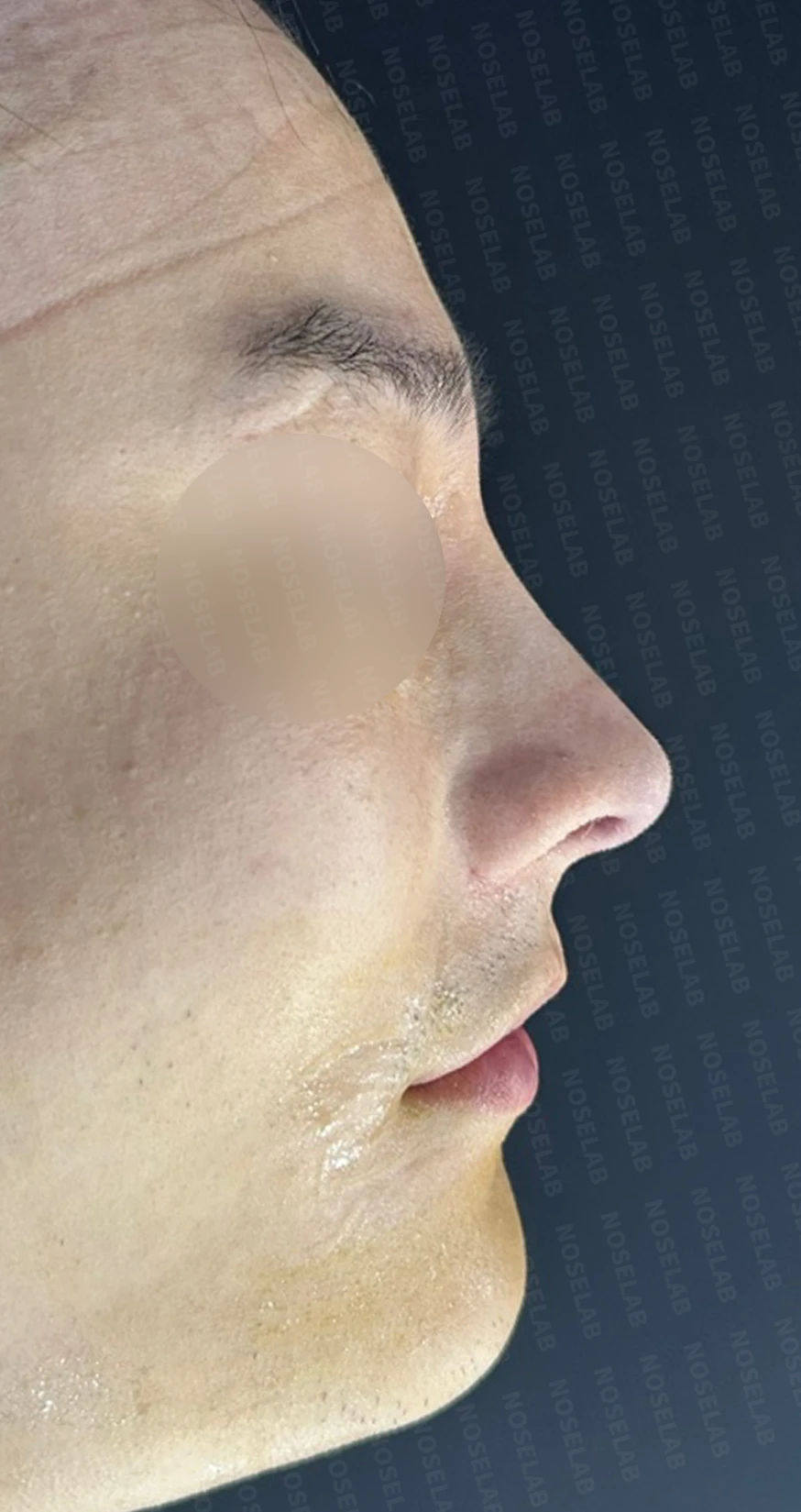
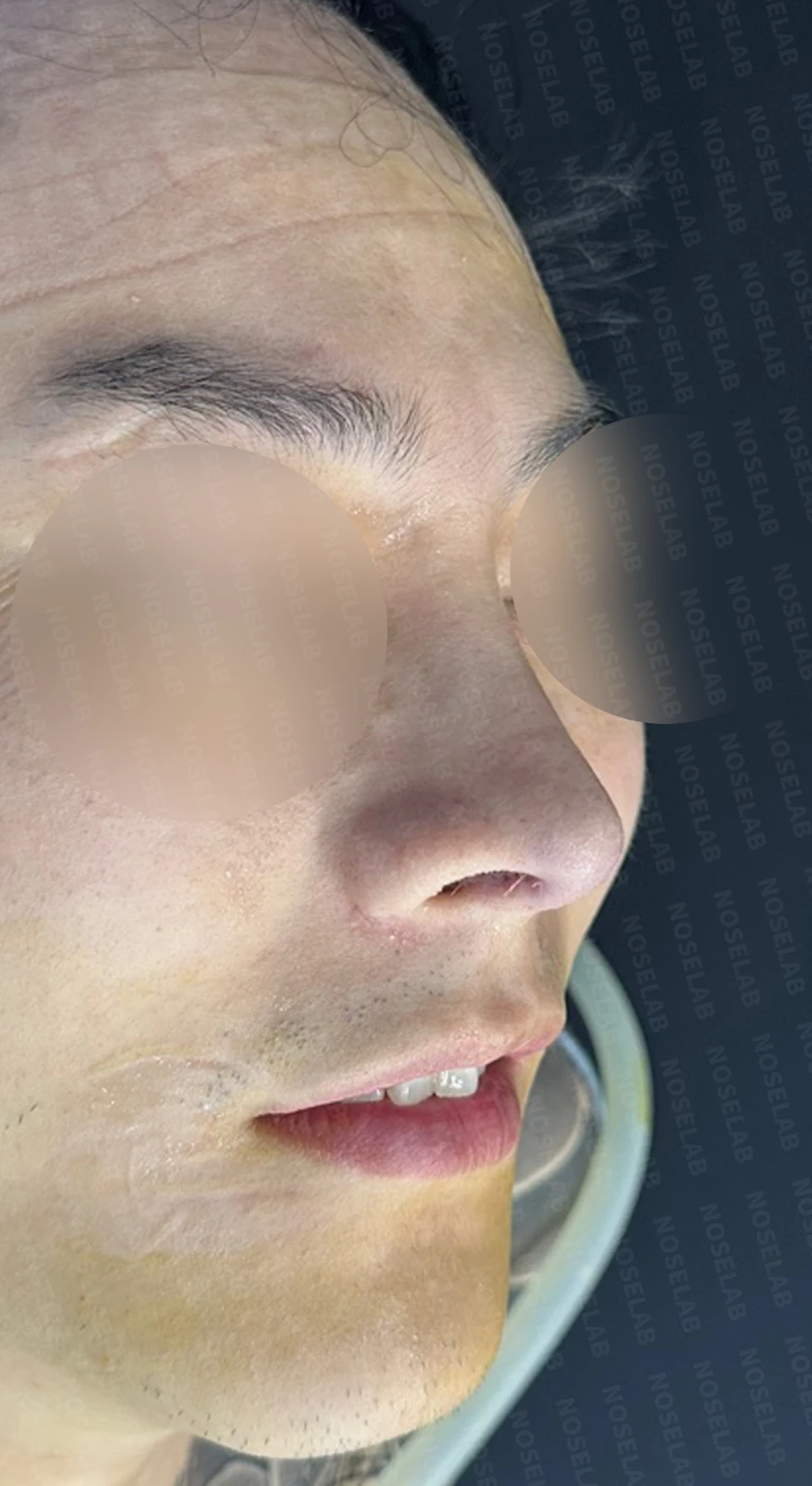
Front, profile, and oblique views taken immediately after surgery (day 0).Immediate postoperative photos show swelling and may differ from the final result.
This is the basal (nostril) view.
6. Overall evaluation
This was a complex rhinoplasty case that resolved both functional issues and aesthetic concerns at the same time. Particular focus was placed on creating a straight, defined nasal profile tailored to the characteristics of a male patient.
Nasal obstruction was addressed through septoplasty and turbinate surgery. This was an essential step that went beyond cosmetic refinement to improve the patient's quality of life.
Septal extension using autologous rib cartilage played a vital role in addressing multiple issues simultaneously, including nostril asymmetry, an upturned nose, and a deviated nasal tip. Utilizing autologous tissue supports a stable long-term result.
During the bridge implant exchange, the main objective was creating a masculine straight profile. By revising the existing curve and lowering the high radix, we achieved a strong, masculine look.
Nasal tip correction and adjusting the nasolabial angle were critical in defining the ideal male nasal shape. A nasolabial angle close to 90 degrees proved effective in emphasizing a masculine aesthetic.
7. Conclusion
The ideal contours for male and female noses differ noticeably, especially along the bridge line. In general, men prefer a straight nasal bridge, whereas a gentle curve along the dorsum often suits women better. In addition, the degree of tip elevation is typically smaller in male noses than in female noses.
The ideal nasolabial angle is generally considered to be around 90 degrees for men and 95 degrees for women. In this case, despite being a male patient, there was a curve in the dorsum and the nasolabial angle was greater than 95 degrees, giving the nose an upturned, curved appearance. This shape looked somewhat unnatural for a male nose.
Accordingly, we corrected the degree of tip elevation and removed the curve along the bridge to transition it into a straight line. We also adjusted the nasolabial angle closer to 90 degrees to produce a masculine profile.
As demonstrated here, rhinoplasty is not merely about altering size or shape; it demands a meticulous approach that accounts for gender and individual facial characteristics. In male rhinoplasty in particular, maintaining a strong, masculine appearance while preserving natural harmony is paramount.
For male patients considering rhinoplasty, I encourage consulting with a specialist to identify the nose shape that best complements your facial features. Based on extensive experience and clinical expertise, NOSELAB provides tailored rhinoplasty that reflects your unique individuality and preferences.
NOSELAB is here to help you achieve a healthy, aesthetically pleasing nose. Thank you.
#malerhinoplasty #upturnednosecorrection #curvednosecorrection #deviatednosecorrection #closedrhinoplasty #autologousribcartilagegraft #nasalobstructionrelief #ENTspecialistrhinoplasty #malestraightnose #nasalbridgecorrection #tipplasty #nasolabialanglecorrection

Limitations and risks
When autologous rib cartilage is used, scarring and pain may remain at the donor site on the chest, and pneumothorax (pleural injury) can occur rarely. Over time, the grafted cartilage may warp or undergo partial resorption.
When revising after implant removal, contracture may progress again after removal, the nasal height and length may decrease, and staged surgery may be necessary depending on the skin condition.
When the septum is corrected at the same time, nasal obstruction may persist or recur, and in rare cases, septal perforation or changes in smell may occur.
Common potential risks include infection, bleeding, asymmetry, scarring, skin necrosis, and insufficient improvement; results vary depending on individual skin condition and previous surgical history.