Hello.
I am Dr. Peter C. Kang, medical director.
Today, I would like to talk about corrective surgery for a bulbous, drooping nose.
A bulbous and drooping nose can be a source of cosmetic concern. Many patients desire a more refined and slender nose.
Let us look at the photos taken during the preoperative design consultation.
Preoperative design consultation
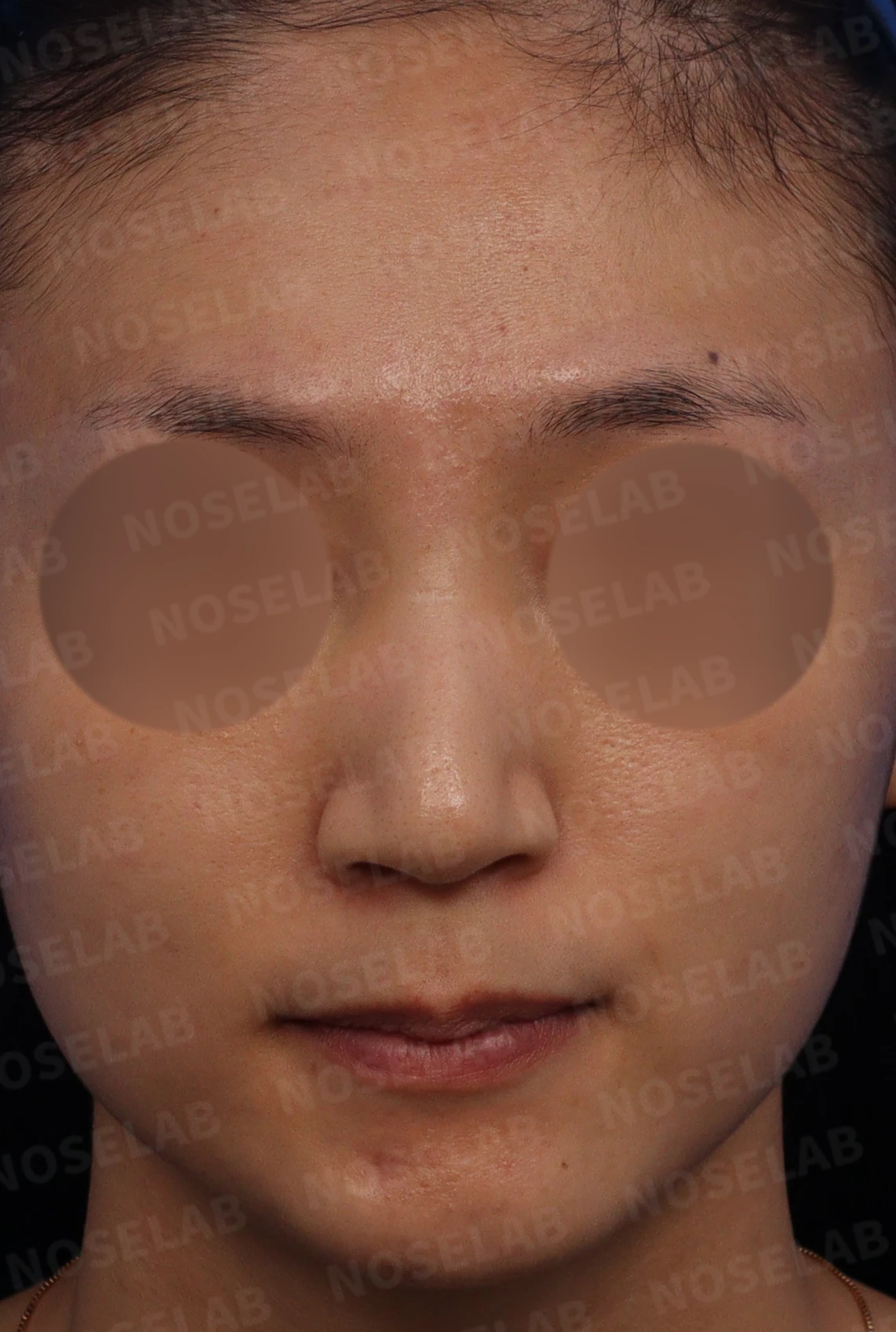
Preoperative design front view
On the front view, the presence of filler between the eyebrows causes spreading, and due to nasal bone asymmetry, the nose as a whole appears crooked and wide. The nasal tip looks bulbous and depressed, with a distinctly pinched appearance on the left ala and observable nostril asymmetry.
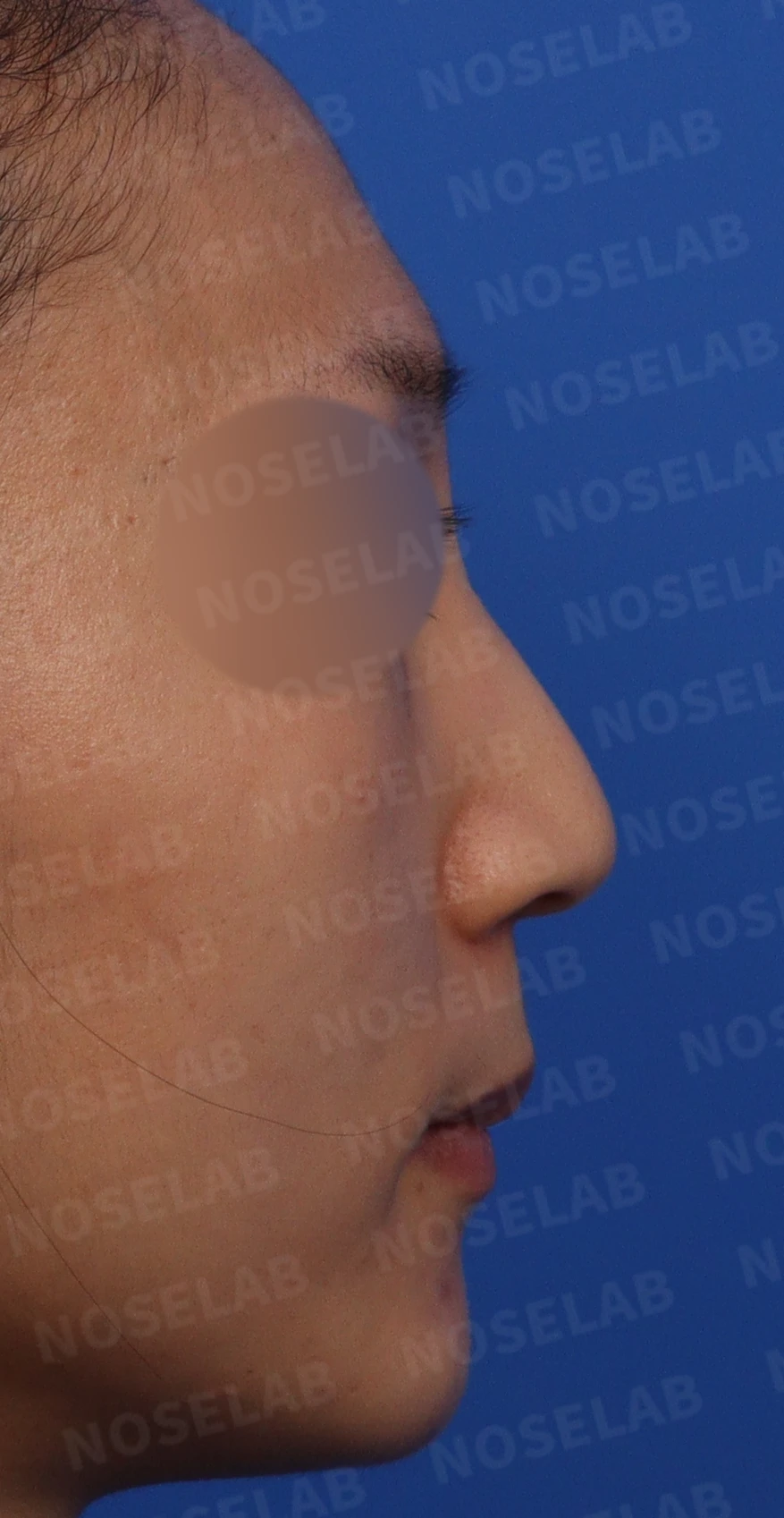
Preoperative design profile view
On the profile view, the radix starts unnaturally high, a small dorsal hump curvature is visible, and the nasal tip appears drooping.
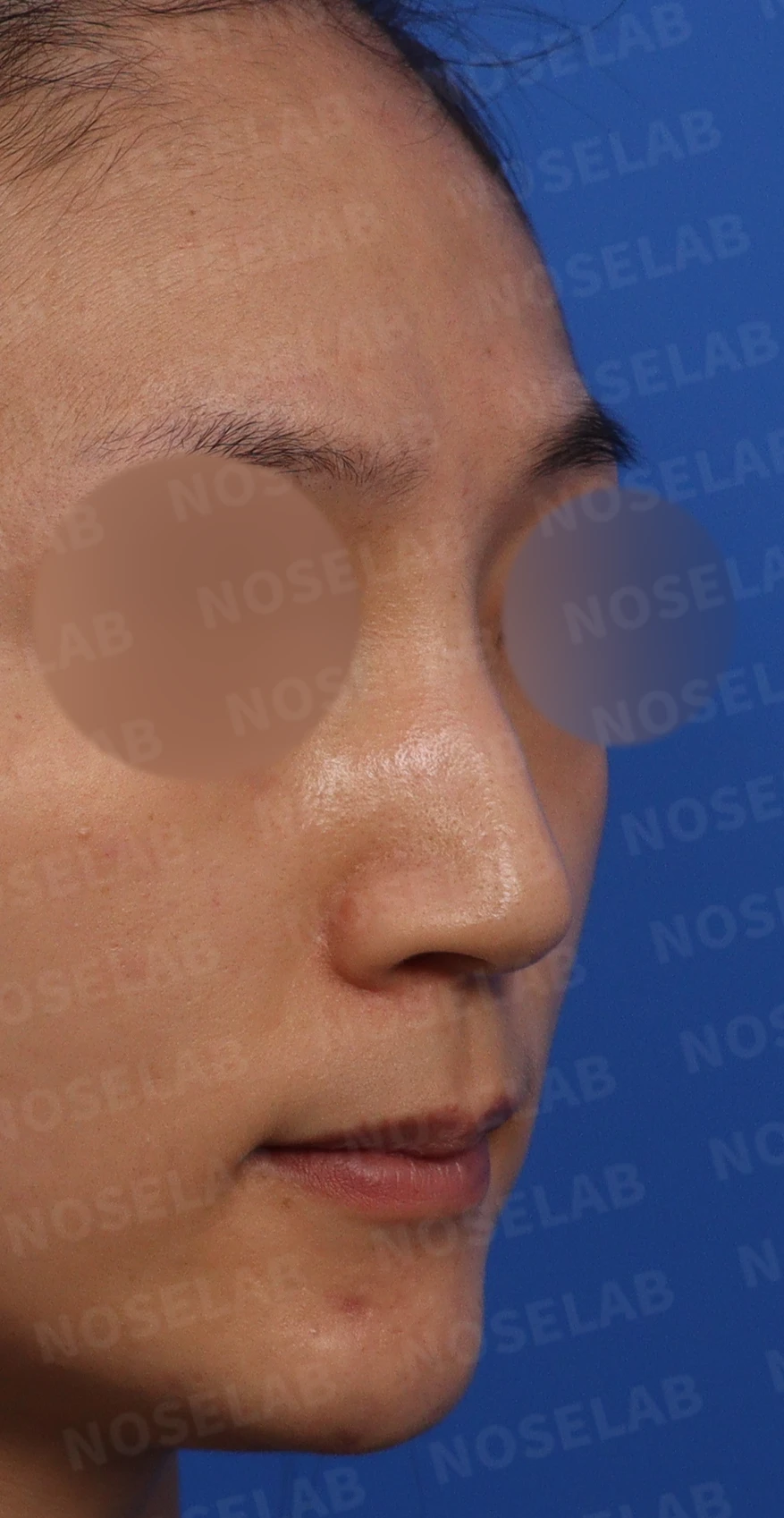
Preoperative design oblique view
On the oblique view, there was not much height difference between the nasal tip and the glabella, making the nose appear overall long and flat, with a slight dorsal hump visible.
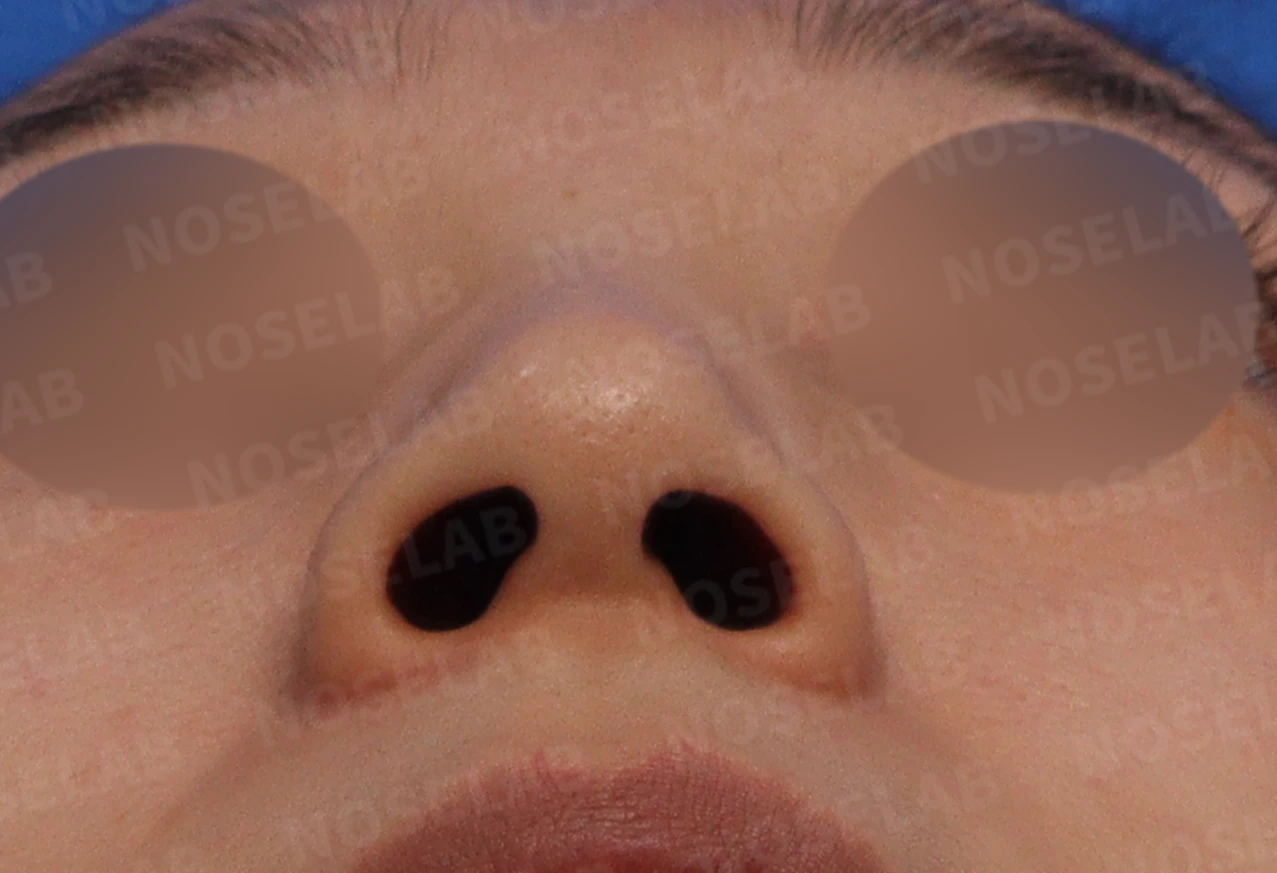
Preoperative design basal (nostril) view
Photos of the nostrils are important for evaluating symmetry and balance. The left nostril was larger than the right, showing asymmetry.
To summarize, due to filler, this patient had a high radix, a small dorsal hump, and a crooked appearance from nasal bone asymmetry. The nasal tip looked bulbous and depressed, the left ala appeared pinched, and nostril asymmetry was also observed.
Surgical plan
1. Design consultation: A nasal design that harmonizes with the facial shape is determined through consultation.
2. Nasal tip surgery: The nasal tip cartilage is reshaped for natural correction.
3. Filler removal and lateral osteotomy: The filler in the nasal bridge is completely removed, and nasal bone asymmetry is corrected using lateral osteotomy.
4. Silicone implant placement: A thin silicone implant is placed in the nasal bridge to elevate the bridge.
5. Septal extension: A portion of the septal cartilage is harvested to correct the nasal tip. If the septal cartilage is insufficient, donor rib cartilage is used to reinforce the nasal tip.
6. Partial subcutaneous tissue removal and alar cartilage suturing: Correction is achieved by reducing the thickness of the nasal tip skin.
7. Aftercare: Ongoing monitoring and consultations are provided to manage swelling and inflammation after correction.
Before surgery vs. immediately after surgery
Let us compare the before-and-after photos.
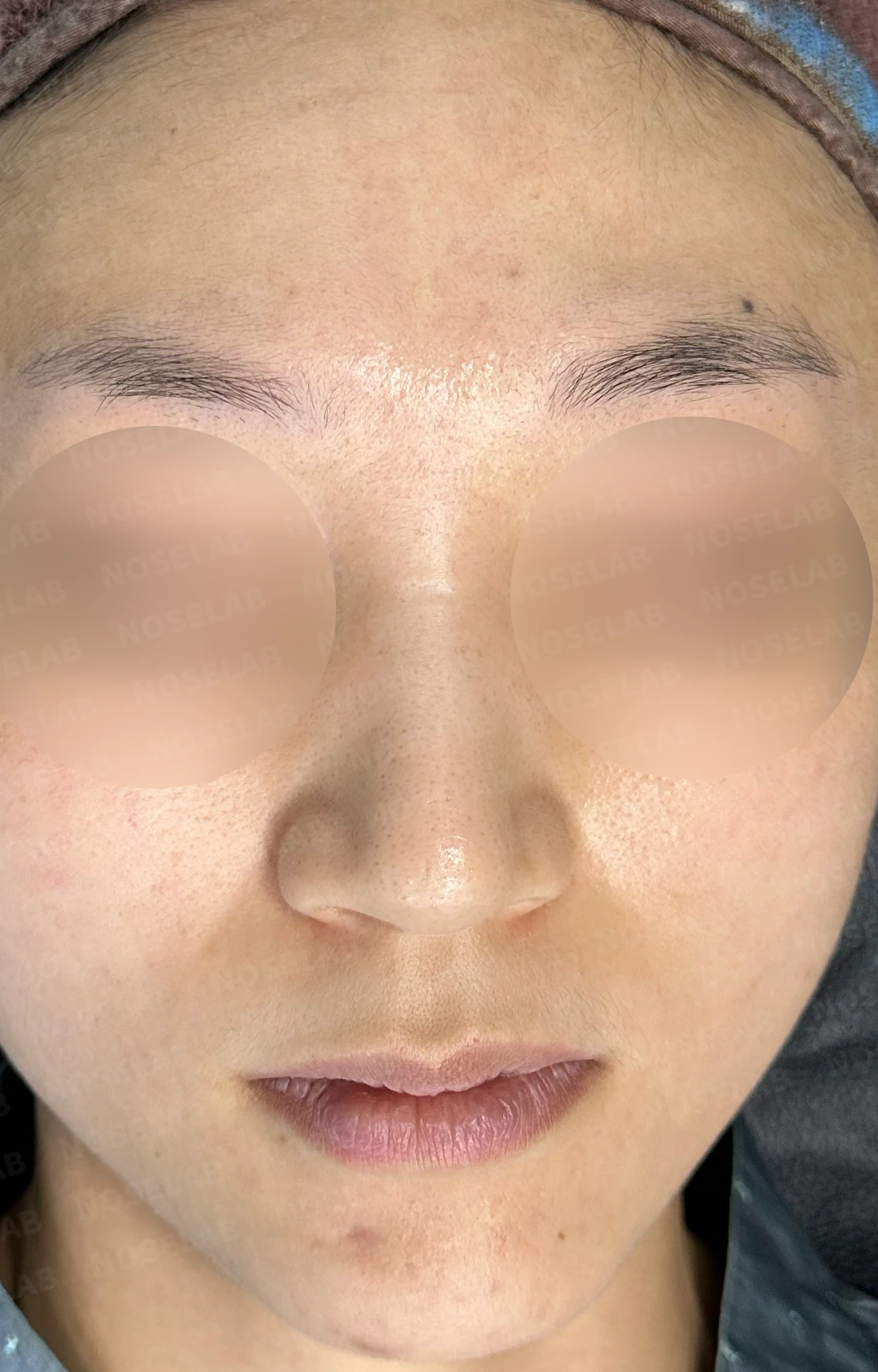
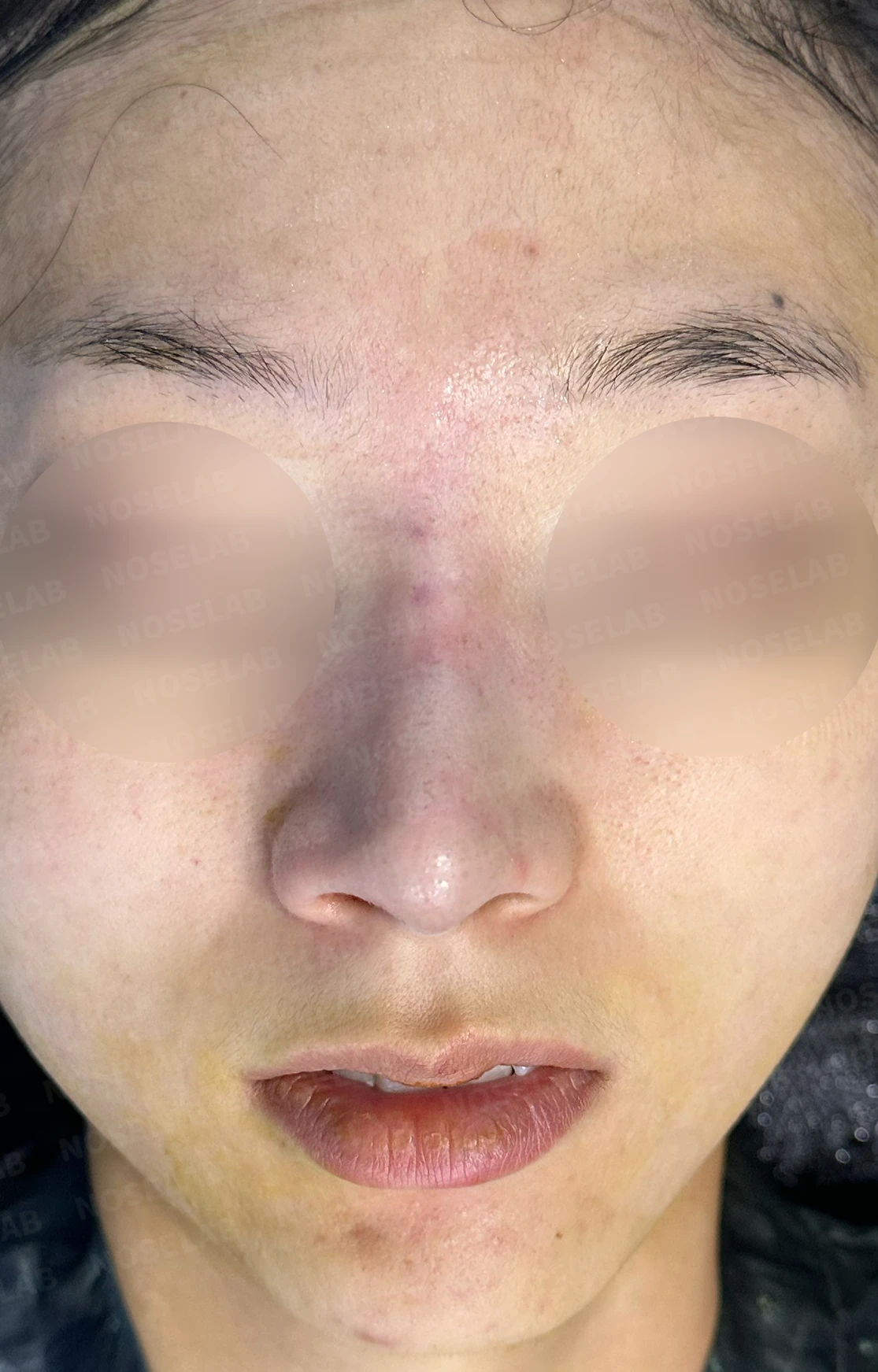
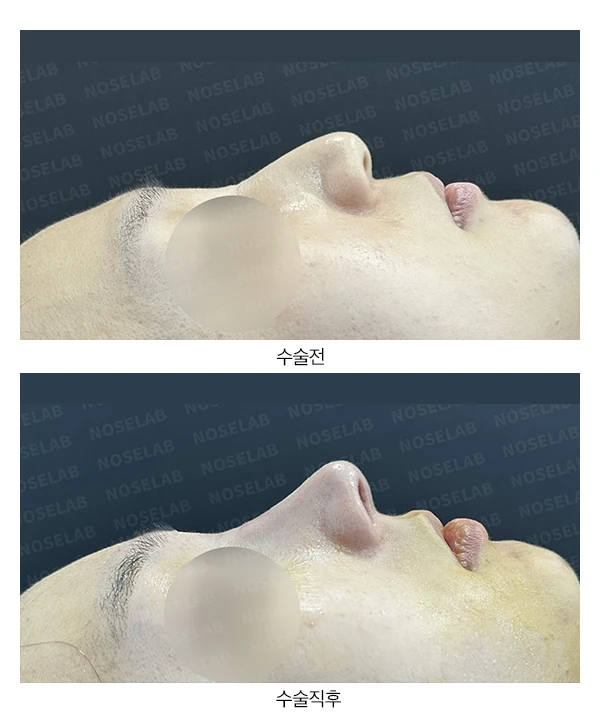
In the preoperative photos, a bulbous and drooping nasal tip, asymmetrical nostrils, and a crooked nasal bone were clearly visible. In the photo taken immediately after surgery, the bridge is elevated, the nasal tip is naturally projected, and nostril symmetry is aligned, resulting in an overall balanced appearance.
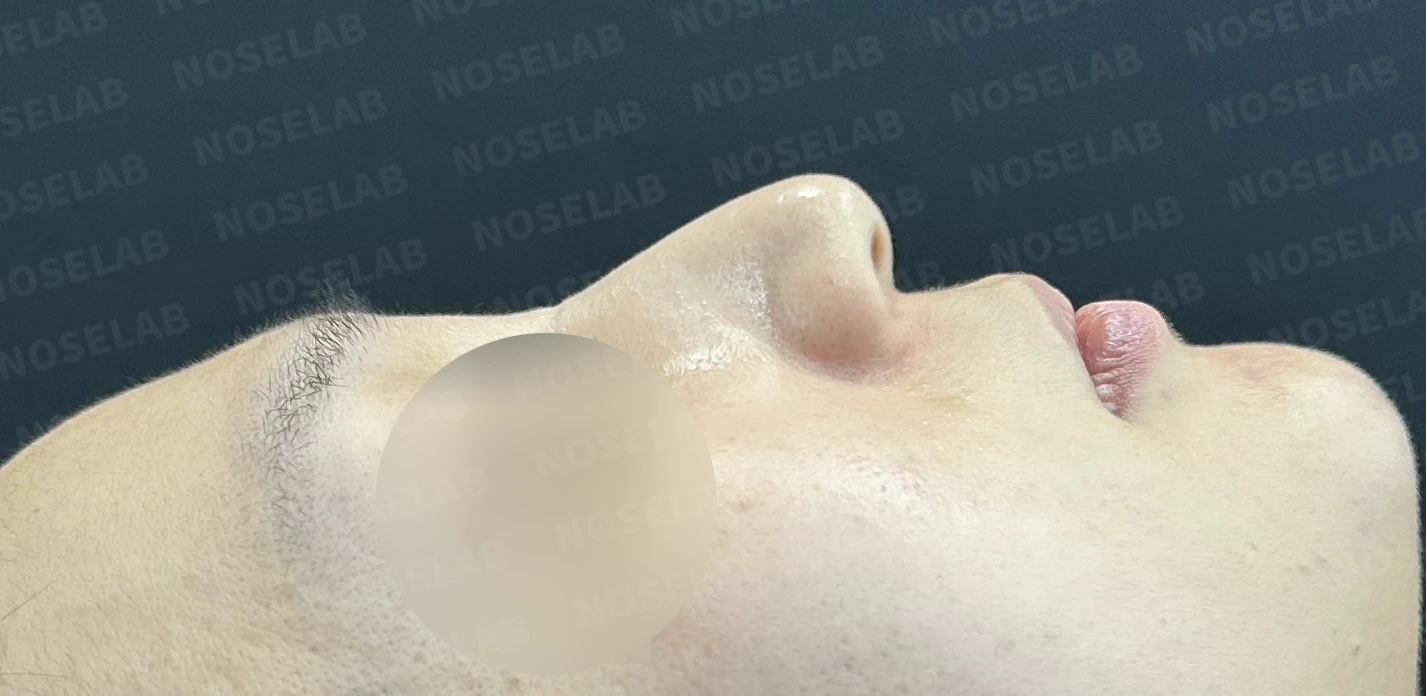
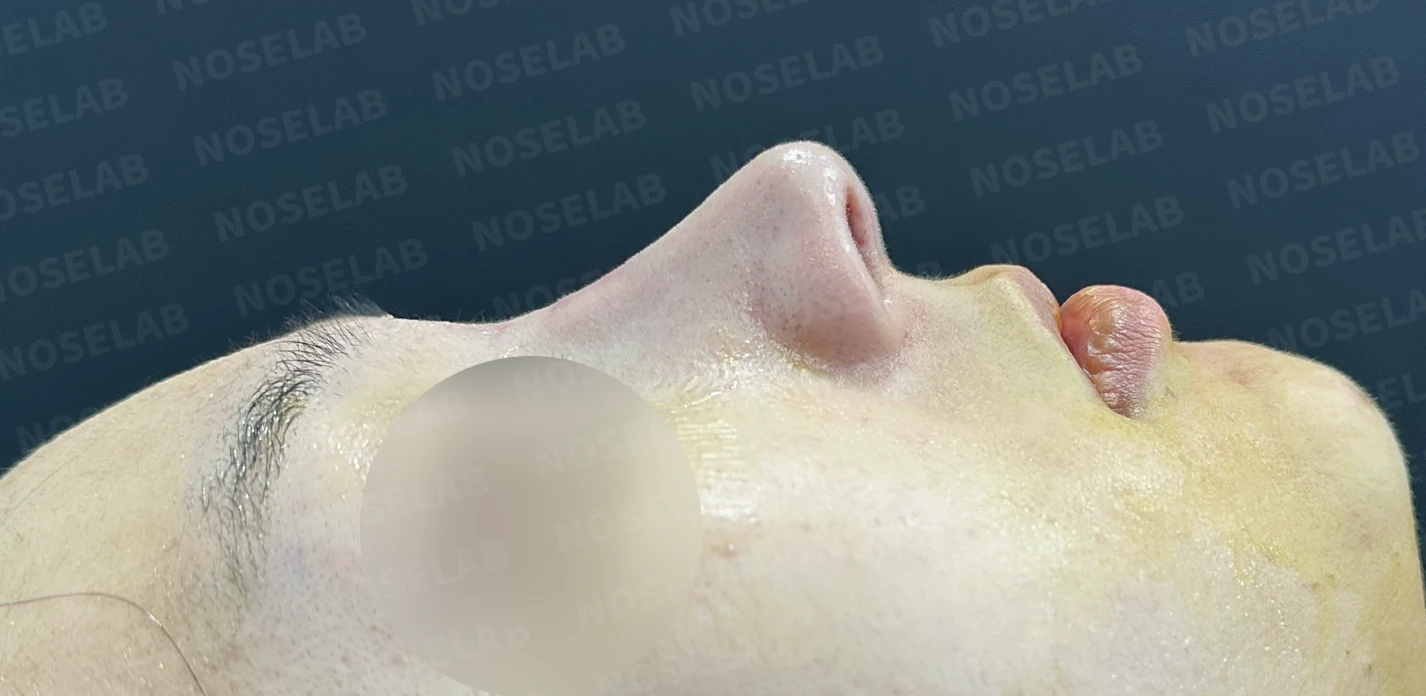
Before surgery / Day 0 immediately after surgery Photos taken immediately after surgery show swelling and may differ from the final result.
In particular, the bridge line, which previously drooped along a long profile, was improved so that the nasal tip looks smoothly, naturally defined and projected.
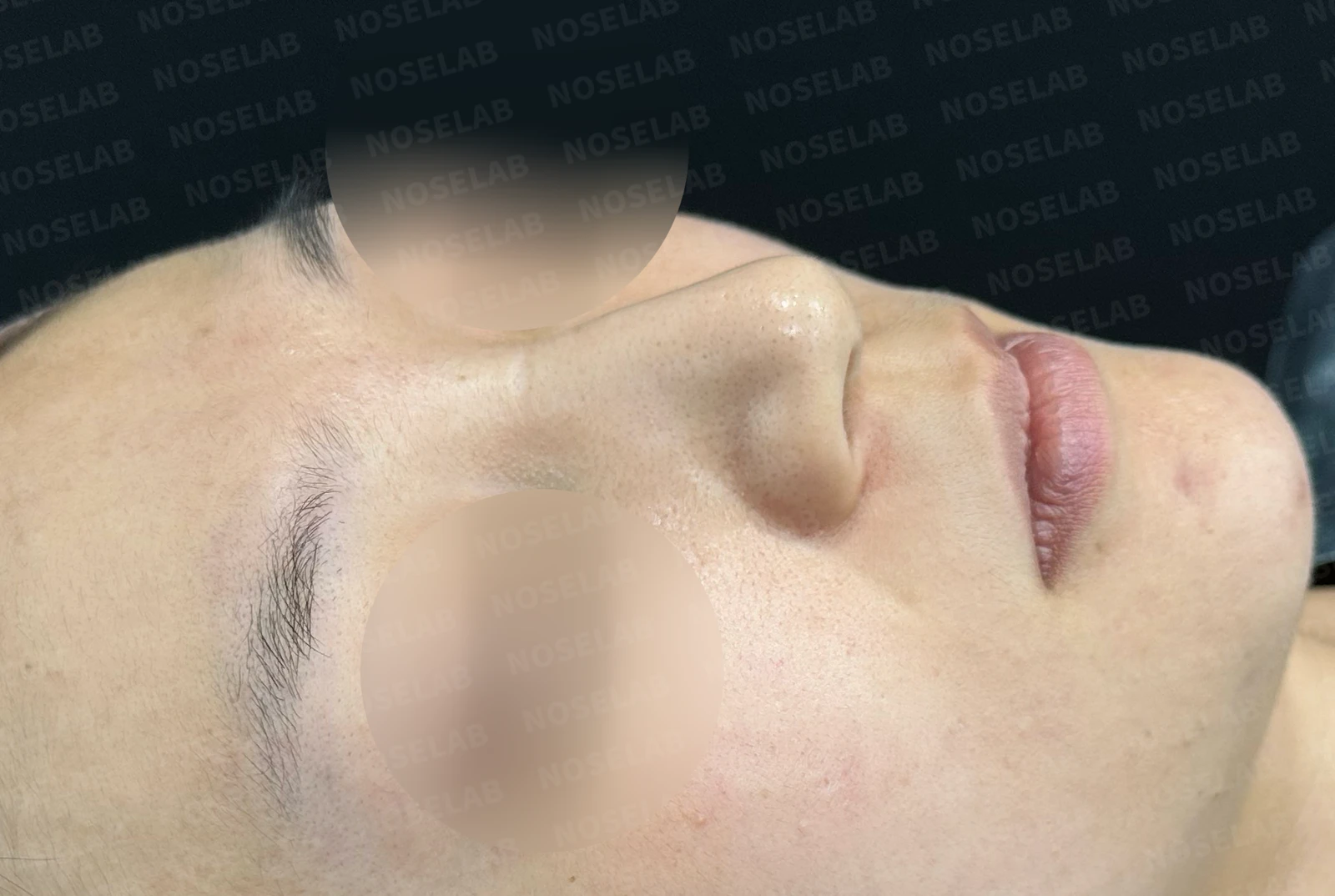
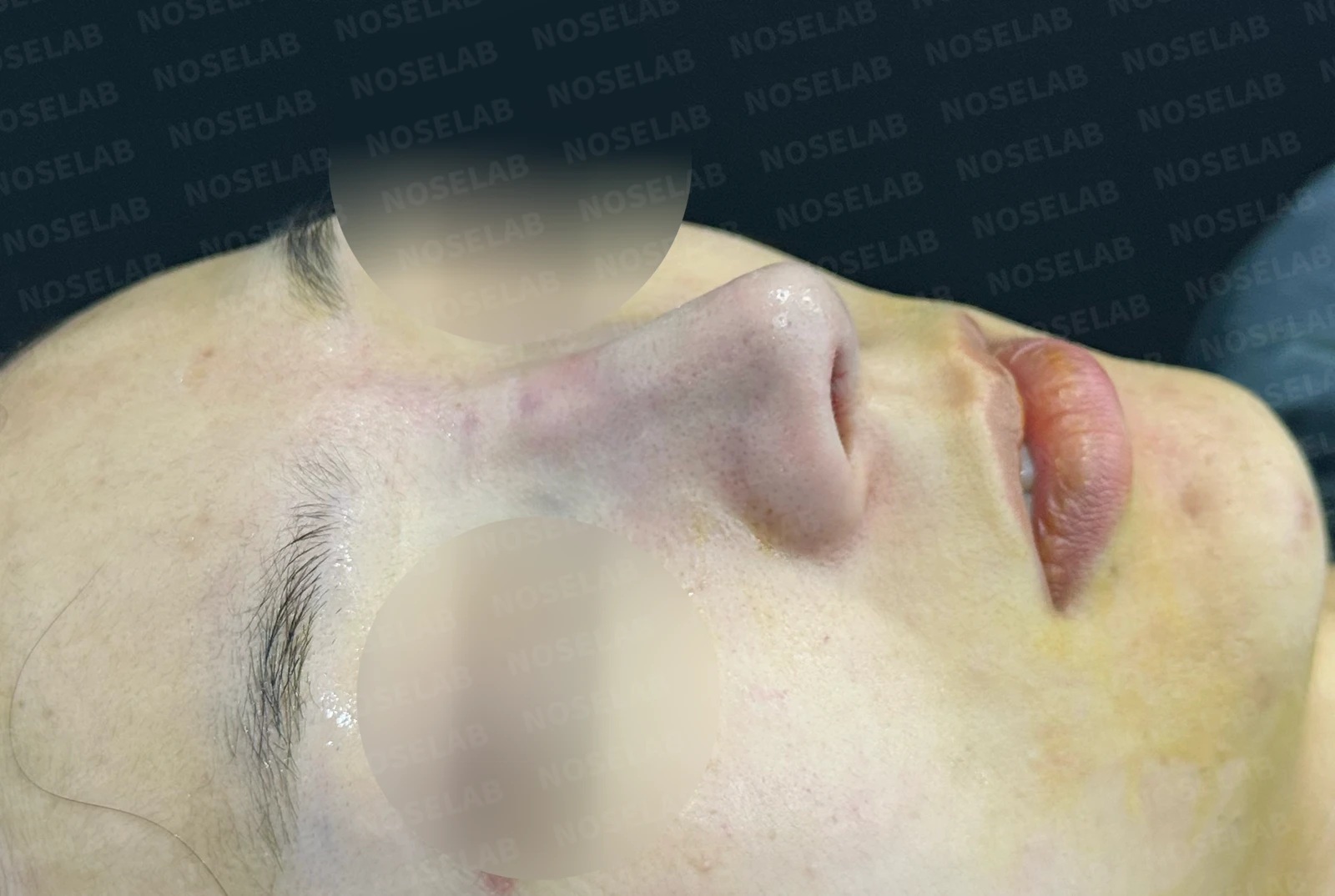
Before surgery / Day 0 immediately after surgery Photos taken immediately after surgery show swelling and may differ from the final result.
On the oblique view, the area where the nasal dorsum appeared elevated due to the dorsal hump was naturally corrected.
Before surgery / Day 0 immediately after surgery Photos taken immediately after surgery show swelling and may differ from the final result.
On the front view, the widened and elongated appearance was corrected, and the nose no longer looks crooked. The nasal tip shape has also changed much more naturally.
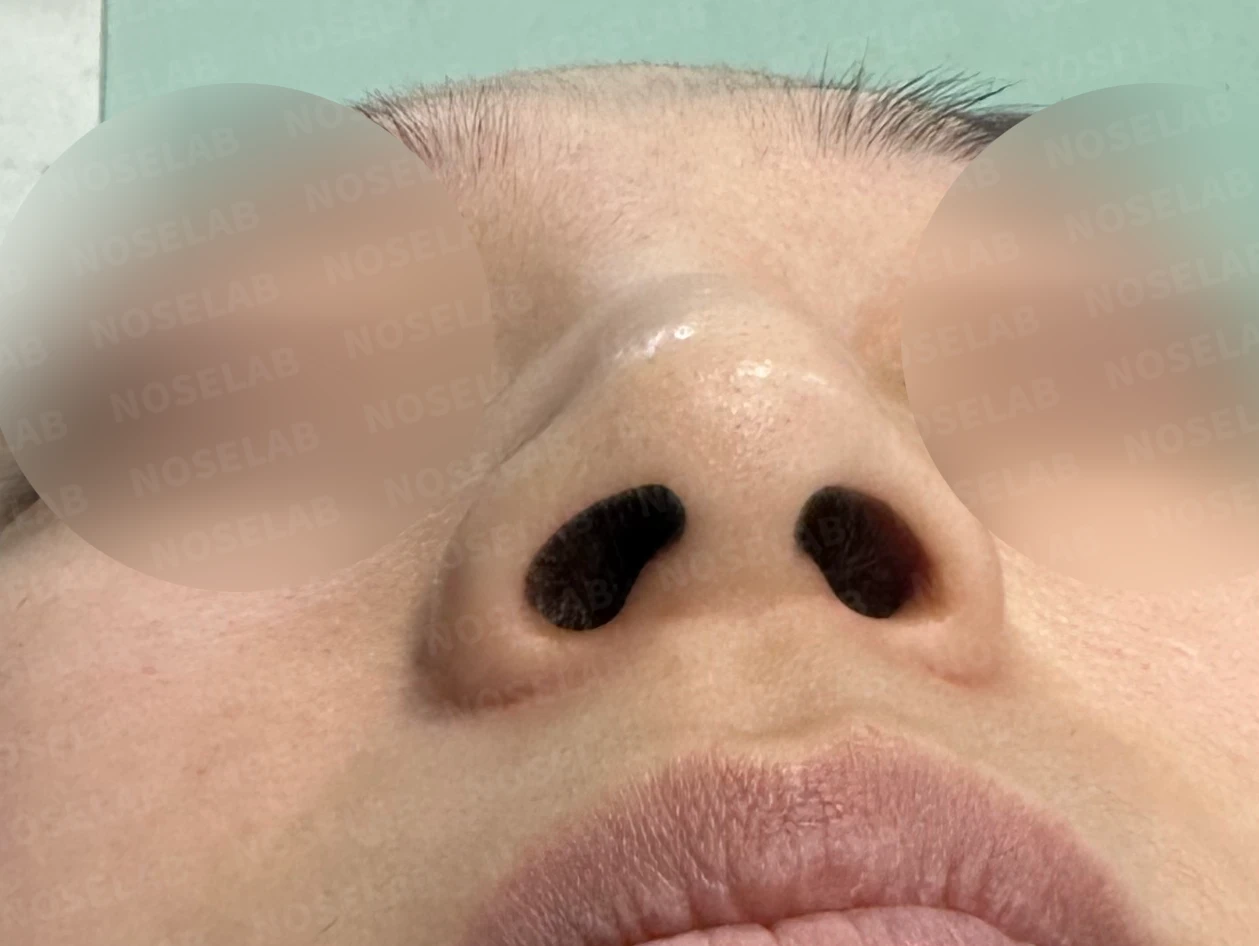
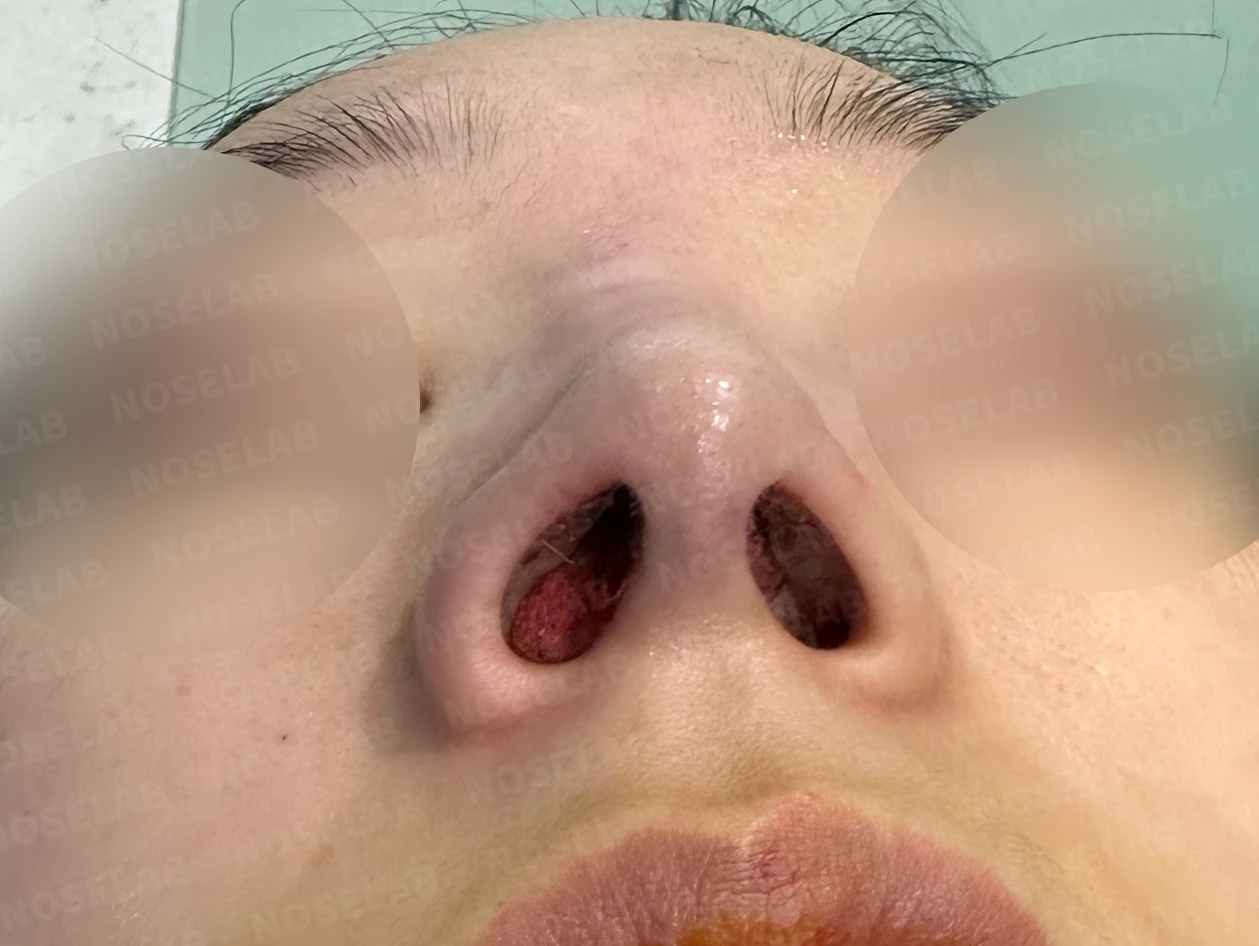
Before surgery / Day 0 immediately after surgery Photos taken immediately after surgery show swelling and may differ from the final result.
The nostril asymmetry has improved to the point where it is barely noticeable.
Photos immediately after surgery
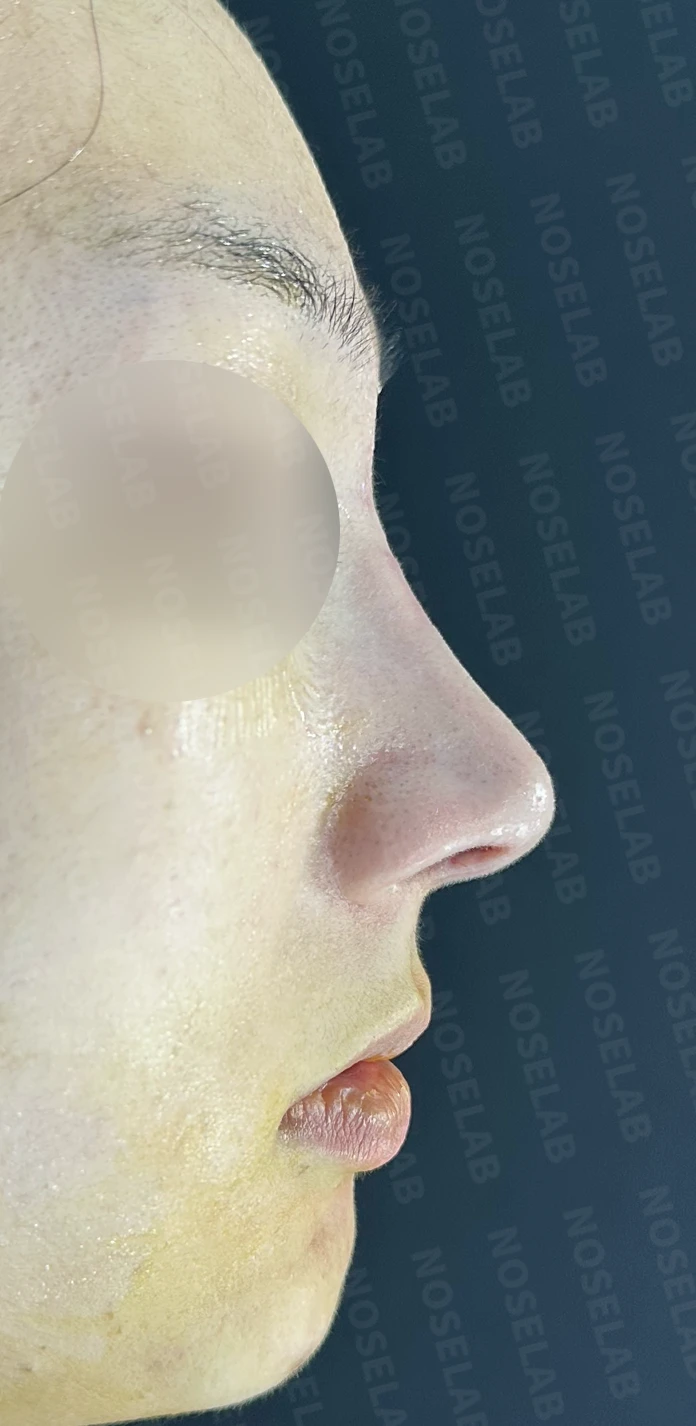
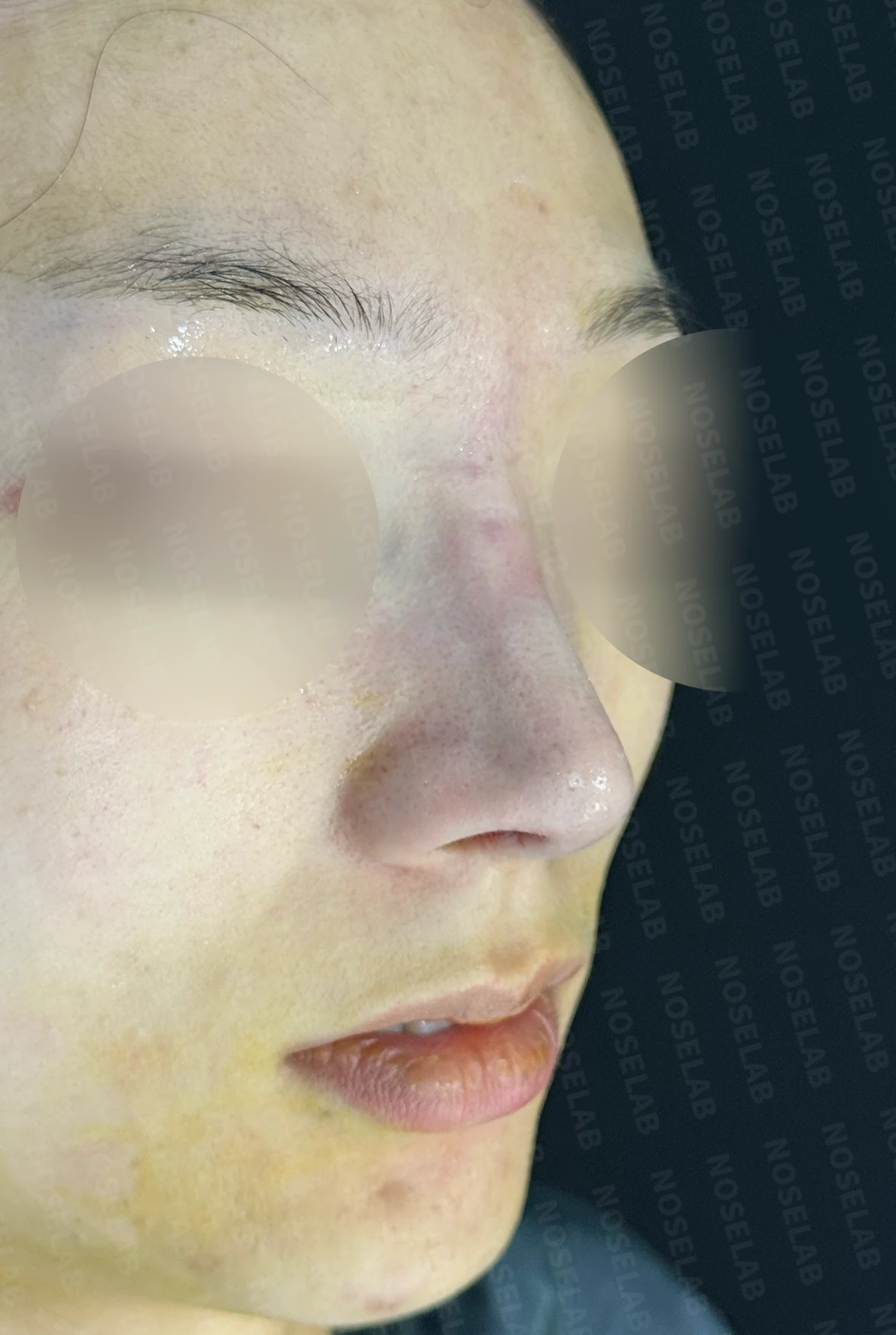
Immediately after surgery (Day 0): 90-degree profile, 45-degree oblique, and front viewImmediate postoperative photos show swelling and may differ from the final result.
Basal (nostril) view immediately after surgery (Day 0)Immediate postoperative photos show swelling and may differ from the final result.
Conclusion
Through this corrective case, concerns regarding a bulbous and drooping nose were addressed, achieving a natural and balanced nasal shape. In particular, the improvement in the asymmetry of the nasal tip and nostrils brought out better facial three-dimensionality and harmony. I hope many patients can regain their confidence through satisfying corrective outcomes. I hope this provides helpful insight for those concerned about a bulbous and drooping nose.
This was Dr. Peter C. Kang. Thank you.

Limitations and risks
When using donor rib cartilage, long-term follow-up is necessary because the grafted cartilage may resorb or warp.
When foreign materials such as injected fillers are removed and reconstructed, contracture may recur, nasal height and length may decrease, and staged surgery may be necessary depending on the skin condition.
When the septum is corrected at the same time, nasal obstruction may persist or recur, and in rare cases, septal perforation or changes in smell may occur.
Common potential risks include infection, bleeding, asymmetry, scarring, skin necrosis, and insufficient improvement; results vary depending on individual skin condition and previous surgical history.