Hello.
I am Dr. Peter C. Kang, medical director.
Today, I will discuss surgery to transform a small, short, upturned nose into a well-proportioned, appealing shape.
Preoperative design
Today's patient had a short, upturned nose. It was also a small nose, which I always consider one of the most challenging types to operate on. The patient visited NOSELAB after seeing someone who had surgery here, and wanted a higher, more aesthetic result within a safe and realistic limit.
Surgical plan
Using autologous rib cartilage, I sufficiently lowered the upturned nose and carefully mobilized the surrounding skin toward the nasal tip in increments so that the tip skin could withstand the tension as safely as possible. A silicone implant was inserted into the nasal bridge to create a natural, smooth transition between the nasal tip and the forehead line.
Comparison: before surgery vs. immediately after surgery
Let us compare the before-and-after photos.
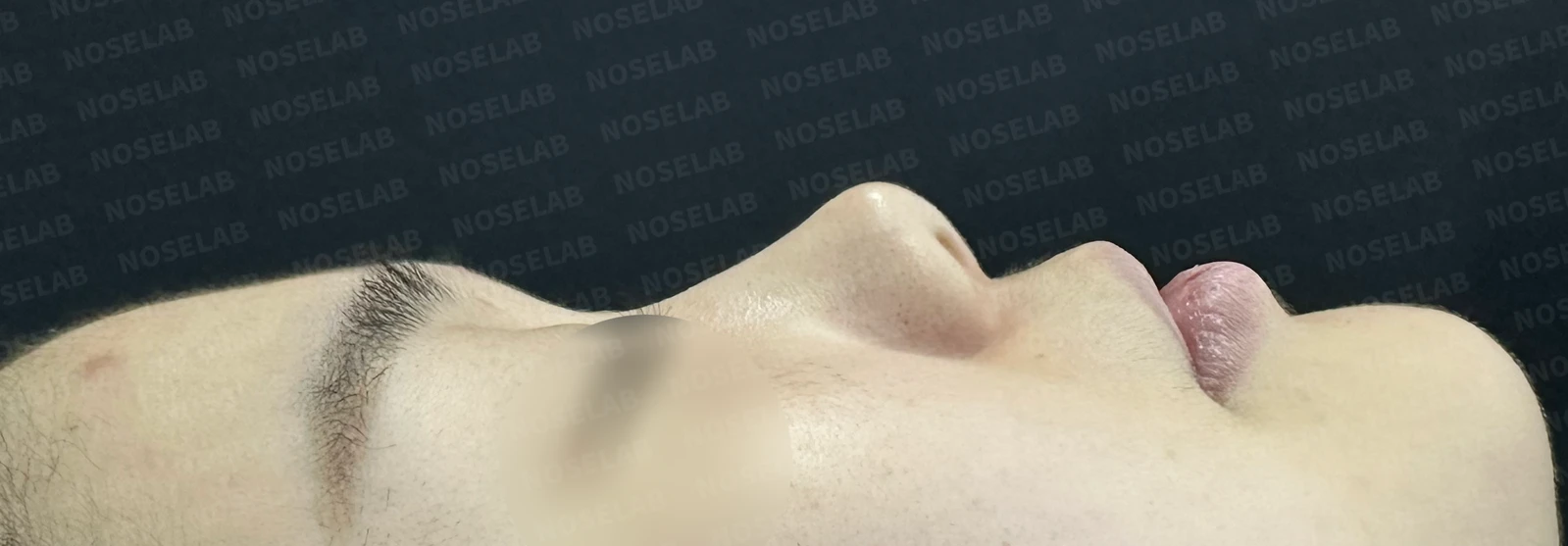
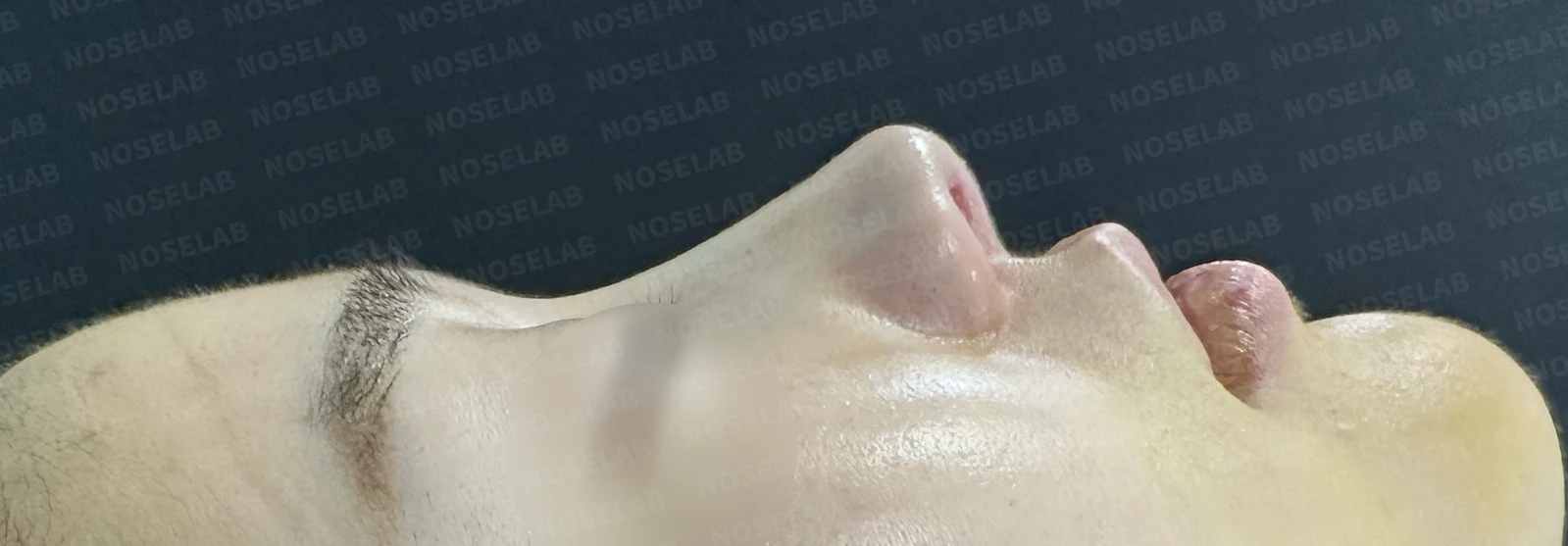
Before surgery / Day 0 immediately after surgery Photos taken immediately after surgery show swelling and may differ from the final result.
In the profile view, you can see that the nasal tip has been lowered considerably and elevated naturally. You can also observe that the nasal dorsum, which previously appeared quite low, has been smoothly and naturally heightened.
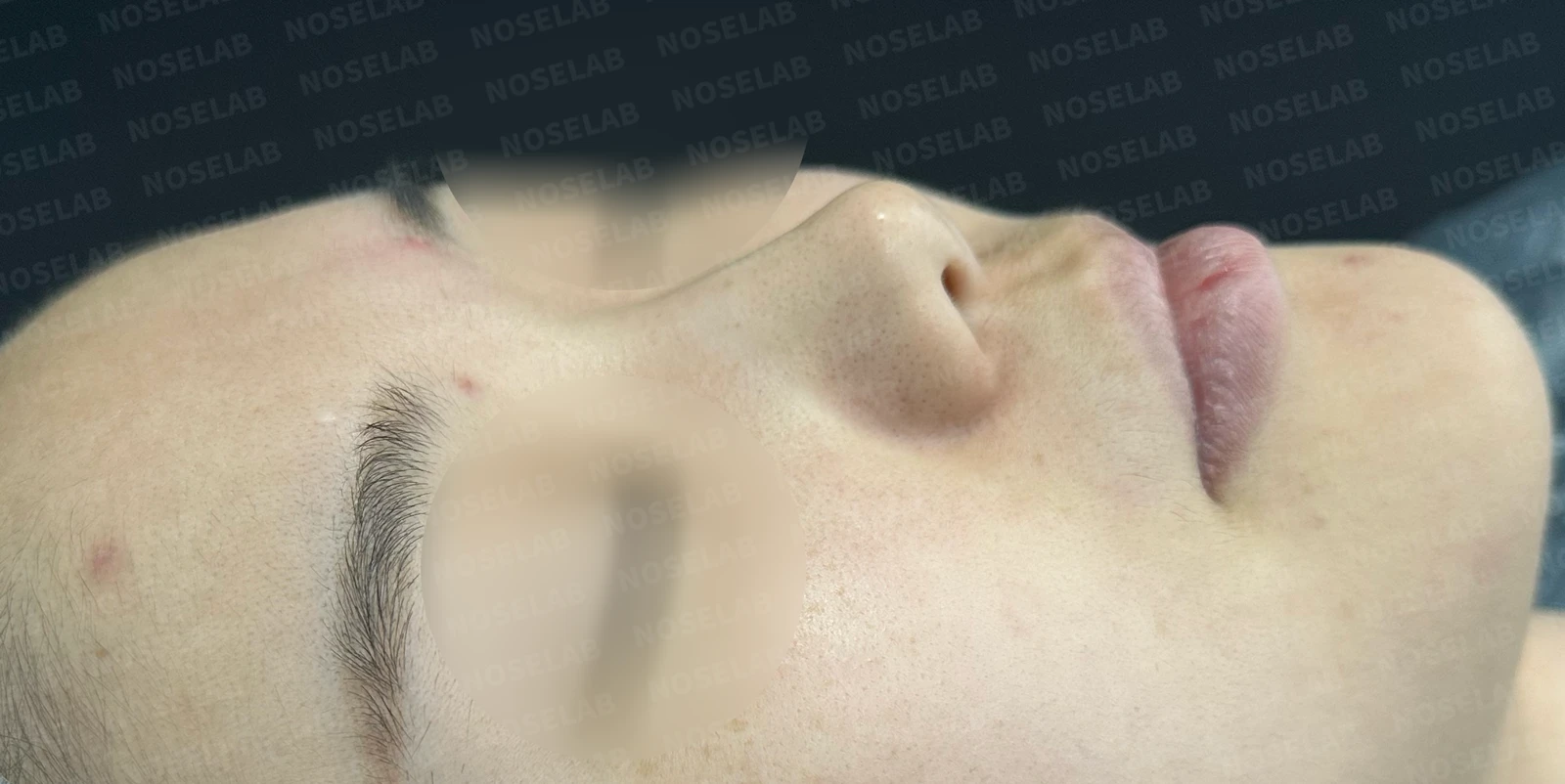
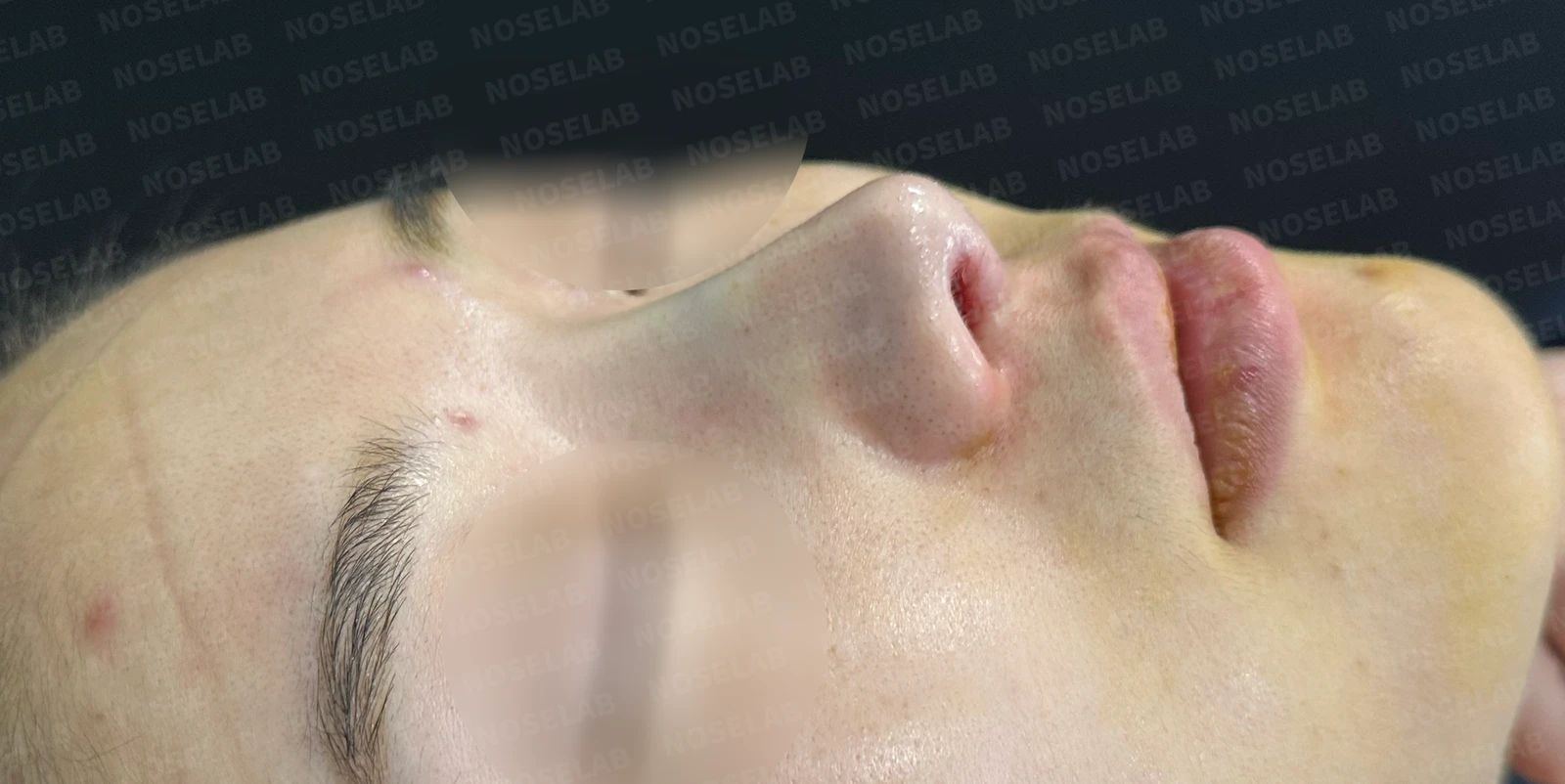
Before surgery / Day 0 immediately after surgery Photos taken immediately after surgery show swelling and may differ from the final result.
In the oblique view, the nasal tip has gained sufficient projection, and you can also see that the appearance of a protruding mouth has improved.
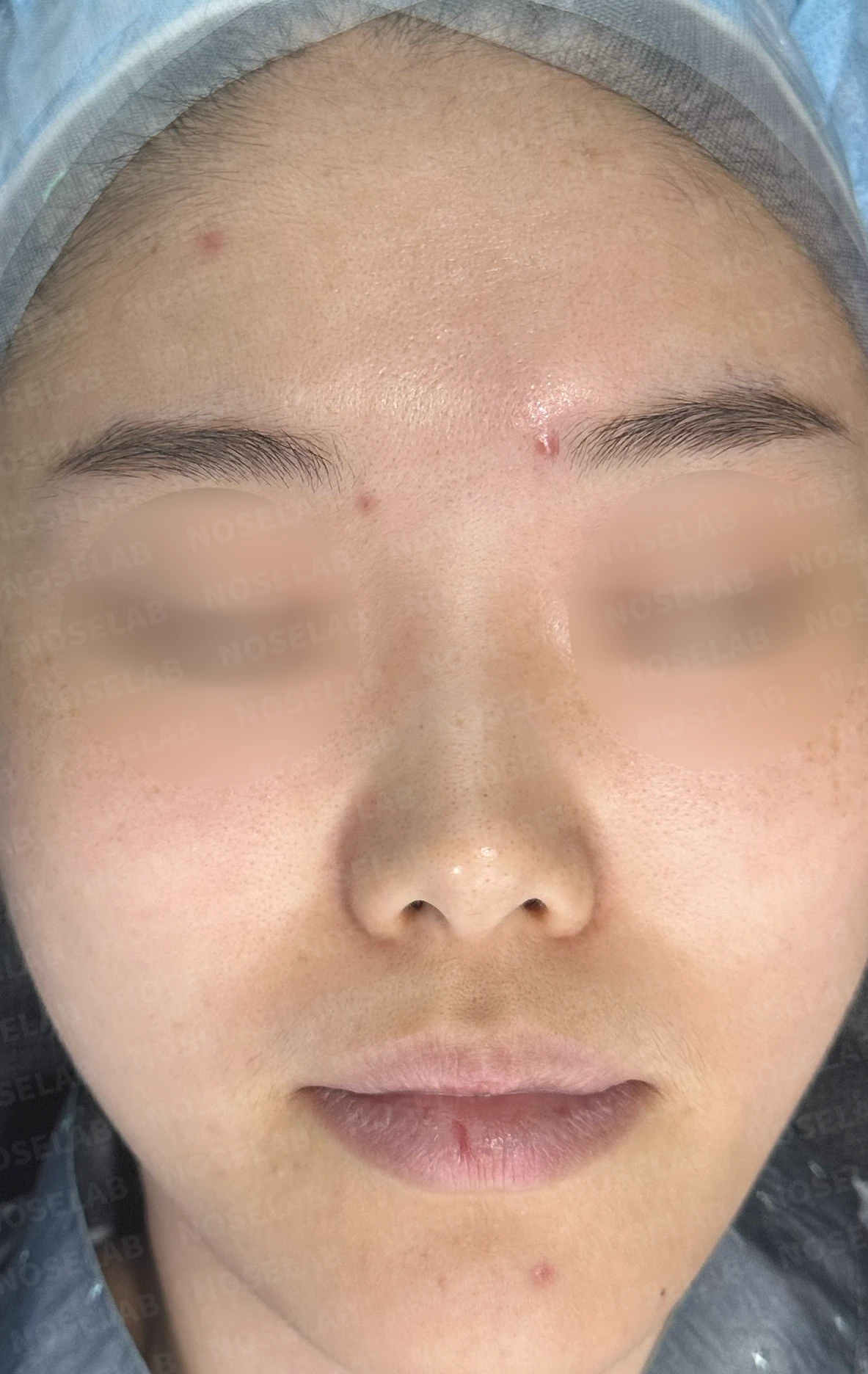
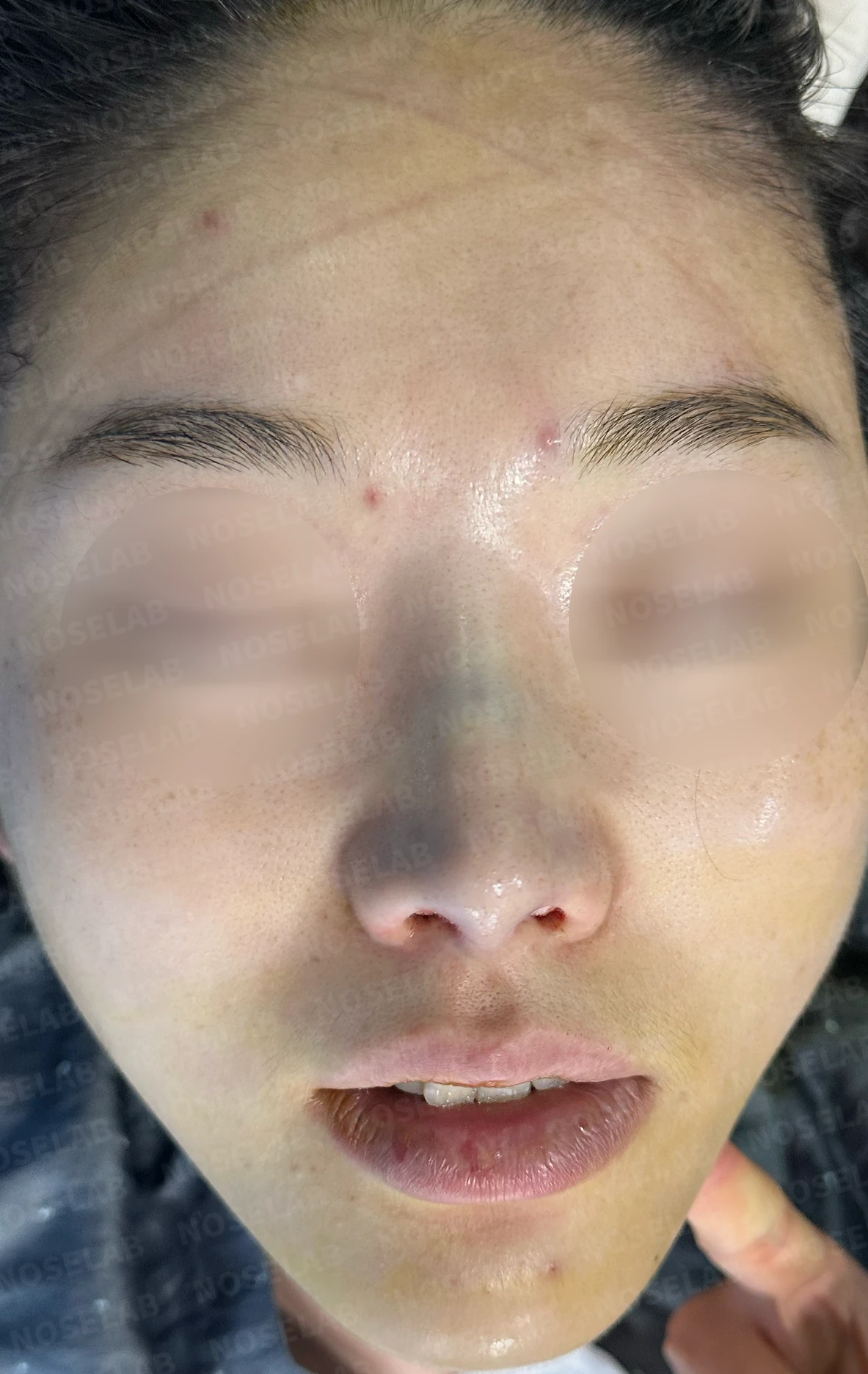
Before surgery / Day 0 immediately after surgery Photos taken immediately after surgery show swelling and may differ from the final result.
From the front, the nasal bridge, which had looked broad and slightly deviated, has also been corrected.
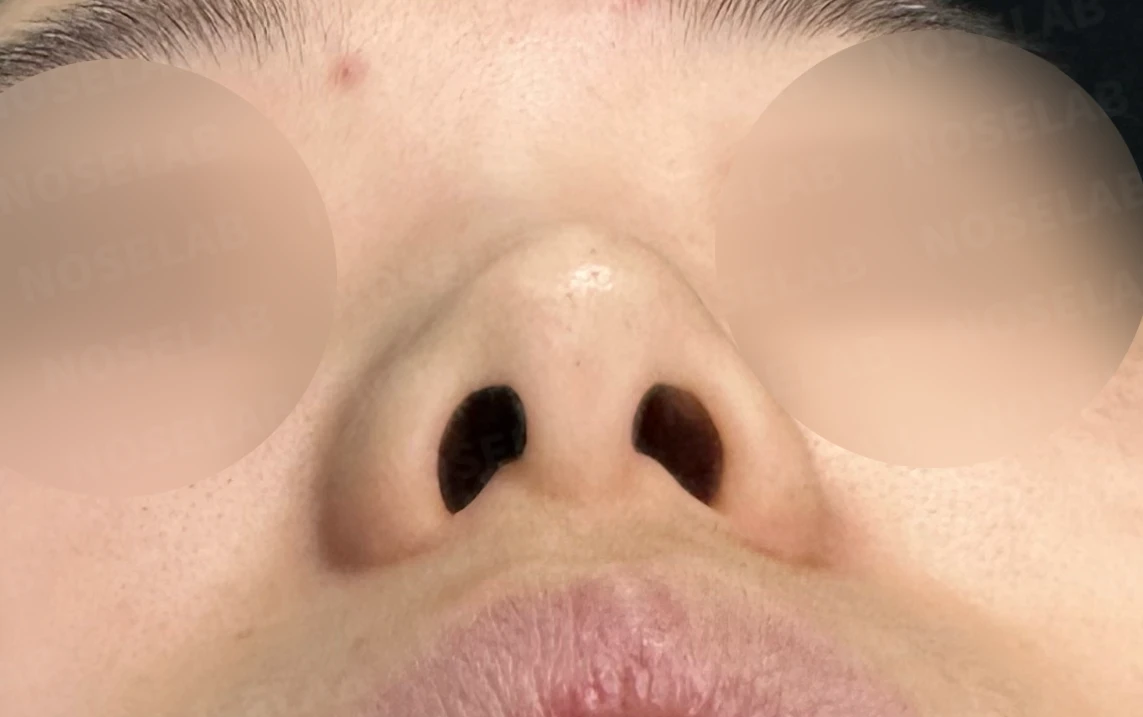
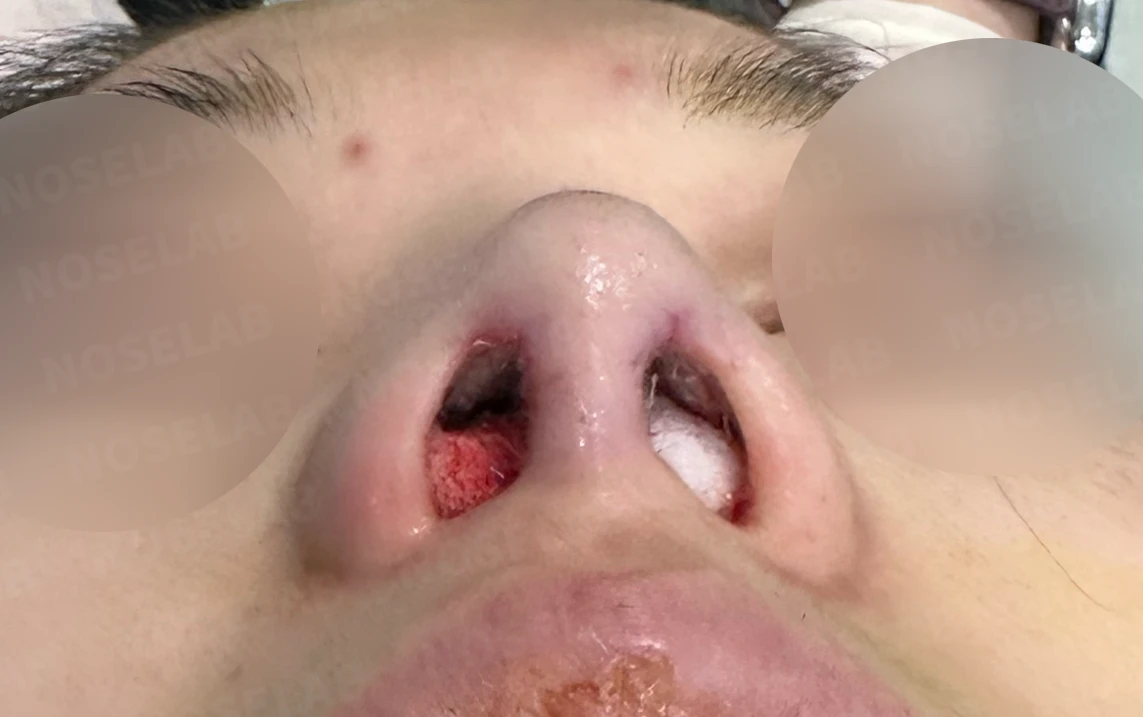
Before surgery / Day 0 immediately after surgery Photos taken immediately after surgery show swelling and may differ from the final result.
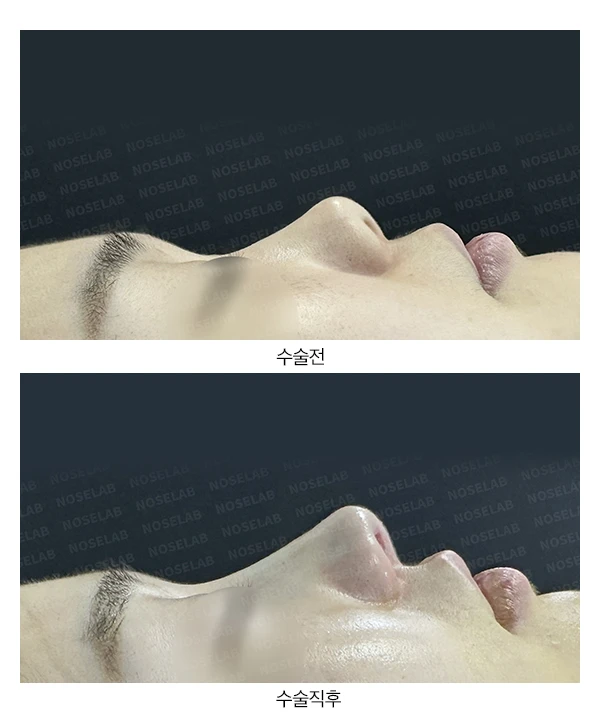
Looking at the basal view of the nostrils, you can observe that as the nasal tip was raised, the nostrils, which previously appeared wide and spread out, naturally took on a longer, more refined shape.
Photos immediately after surgery
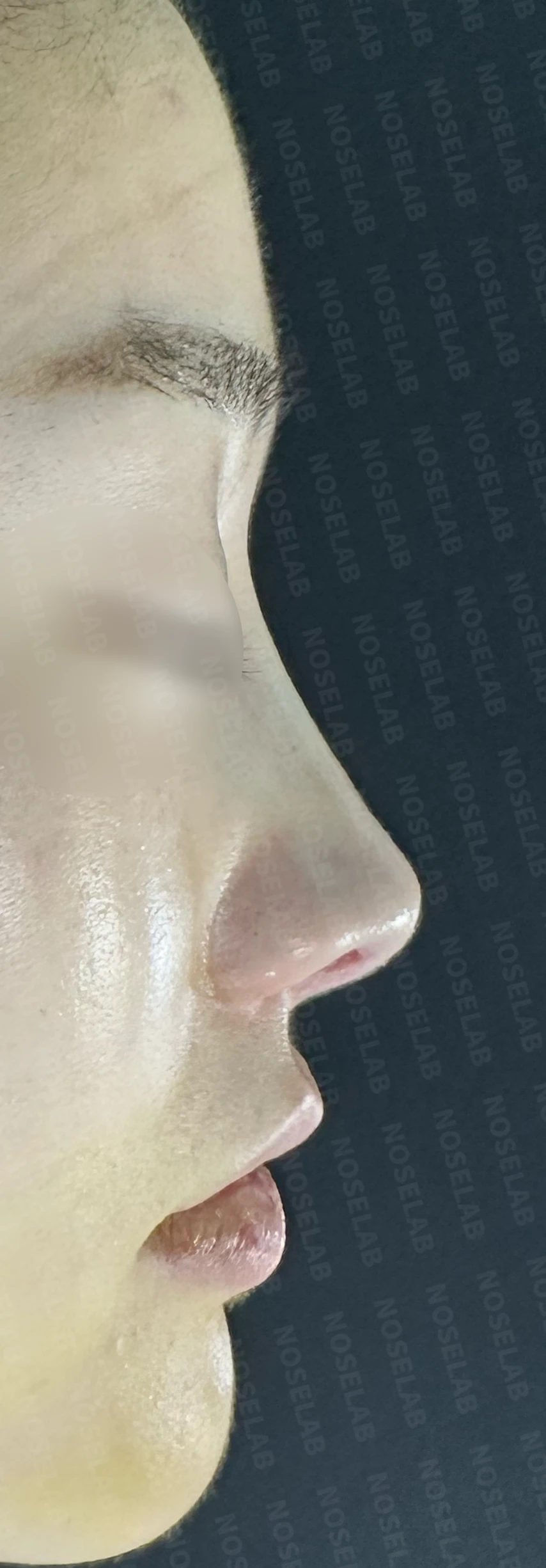
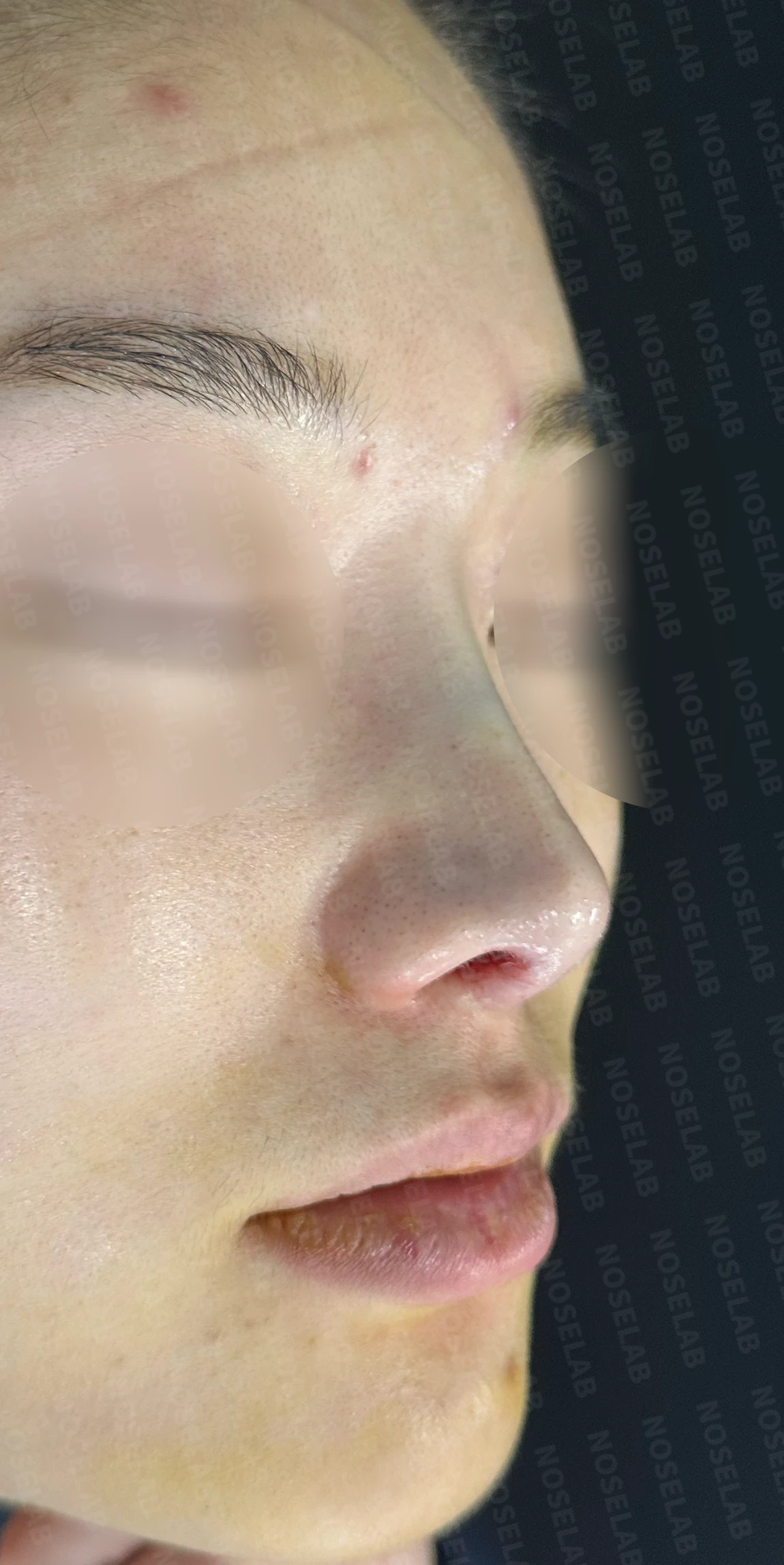
Photos immediately after surgery (Day 0): 90-degree profile, 45-degree oblique, and front view.Immediate postoperative photos show swelling and may differ from the final result.
Basal (nostril) view immediately after surgery (Day 0).Immediate postoperative photos show swelling and may differ from the final result.
Conclusion
Whenever I near the end of a surgery for a short, small nose, I always find myself debating: "Should I raise it just a little bit more, or finish here?" I contemplate this every time. There is an old saying that too much is as bad as too little, yet the urge to achieve more is always there. However, for this type of nose, I created the highest possible contour while prioritizing safety and remaining within what the patient's anatomical conditions could comfortably support.
Correcting a small nose is essentially a battle against limited skin. Because the baseline skin envelope is small and deficient, I believe the most important step is mobilizing surrounding skin as much as safely possible toward the nasal tip to reduce tension on the tip skin.
Today, I shared a case on correcting a small, short, upturned nose. I hope this helps those who are considering correction for a similar nasal shape.
This was Dr. Peter C. Kang. Thank you.

Limitations and risks
When autologous rib cartilage is used, scarring and pain may remain at the donor site on the chest, and pneumothorax (pleural injury) can occur rarely. Over time, the grafted cartilage may warp or undergo partial resorption.
Common potential risks include infection, bleeding, asymmetry, scarring, skin necrosis, and insufficient improvement; results vary depending on individual skin condition and previous surgical history.