Hello, I am Dr. Peter C. Kang.
Today, I would like to discuss revision rhinoplasty using autologous rib cartilage for a patient whose nose began drooping and deviating due to the resorption of previously placed donor rib cartilage.
Revision rhinoplasty using donor rib cartilage
In this case, the patient had undergone nasal tip surgery using donor rib cartilage. Starting about 1 to 2 years ago, the shape of the nasal tip deformed, becoming drooped and deviated to the left, which the patient wished to correct. Because the patient had also undergone philtrum reduction after rhinoplasty, the nostril asymmetry had become more pronounced. Having had several prior rhinoplasties, including alar reduction, the internal nasal cartilage was severely damaged; donor rib cartilage had been used for everything from cartilage reconstruction to septal extension. It was judged that rapid structural changes occurred as the donor rib cartilage underwent partial resorption.
Therefore, we planned internal nasal cartilage reconstruction and septal extension using autologous rib cartilage.
Comparison: before surgery vs. immediately after surgery
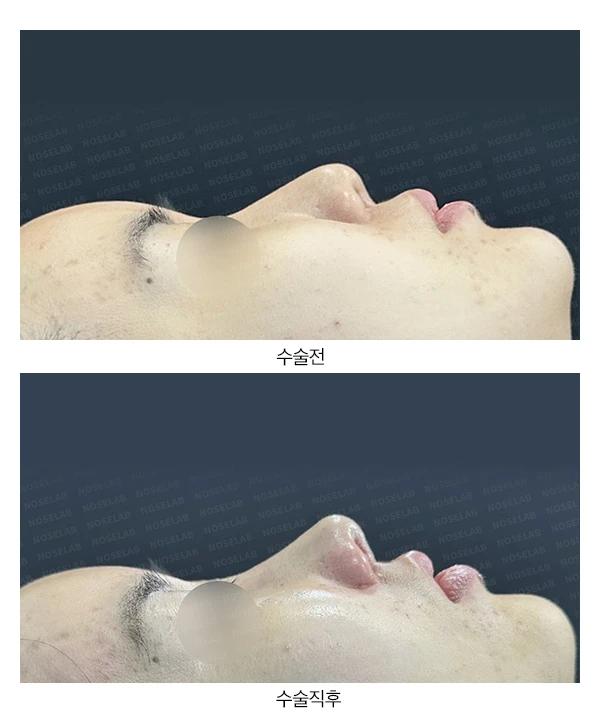
Let us examine the preoperative photos and the day 0 immediate postoperative photos. Immediate postoperative photos show swelling and may differ from the final result.
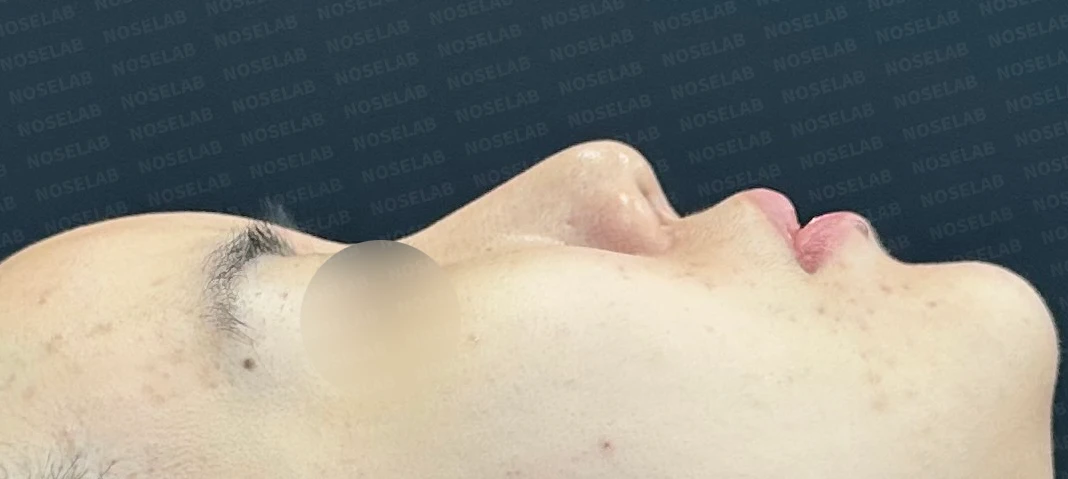
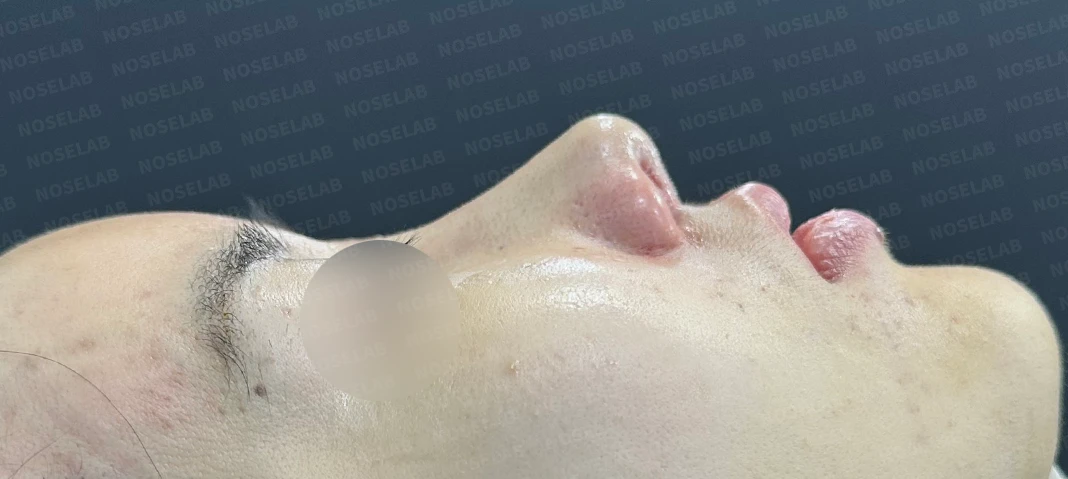
Before surgery / Day 0 immediately after surgery Photos taken immediately after surgery show swelling and may differ from the final result.
Looking at the profile view, the compressed appearance of the nasal tip and the decreased nasolabial angle show significant improvement.
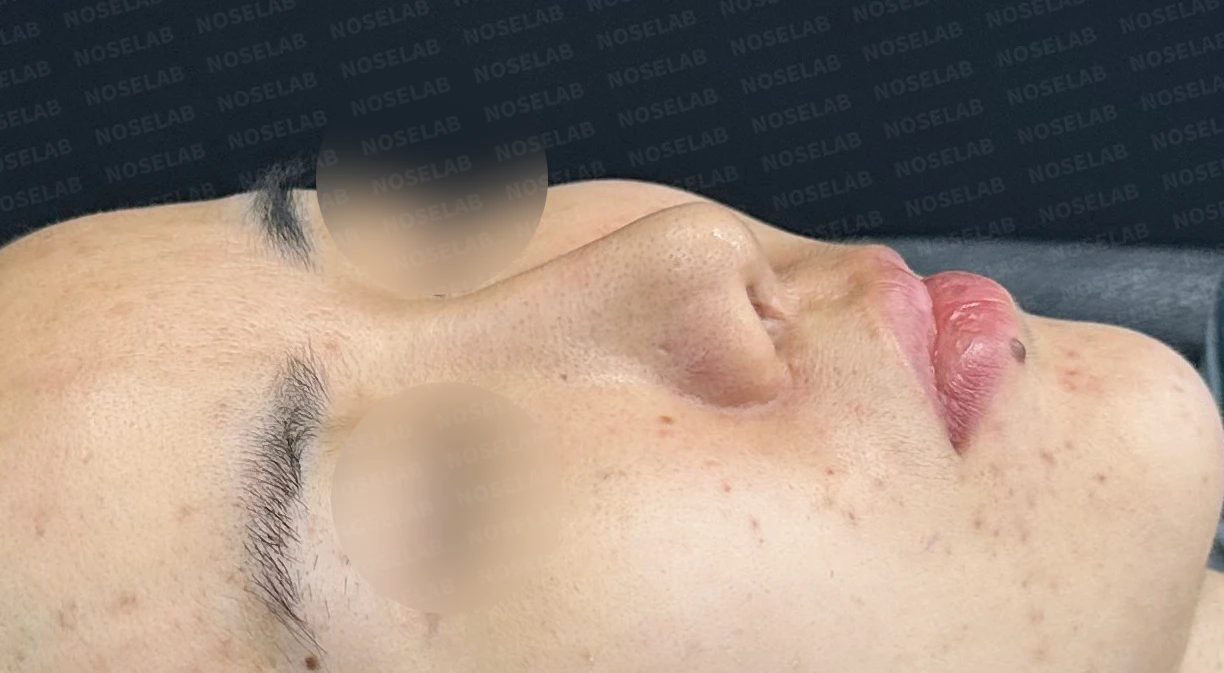
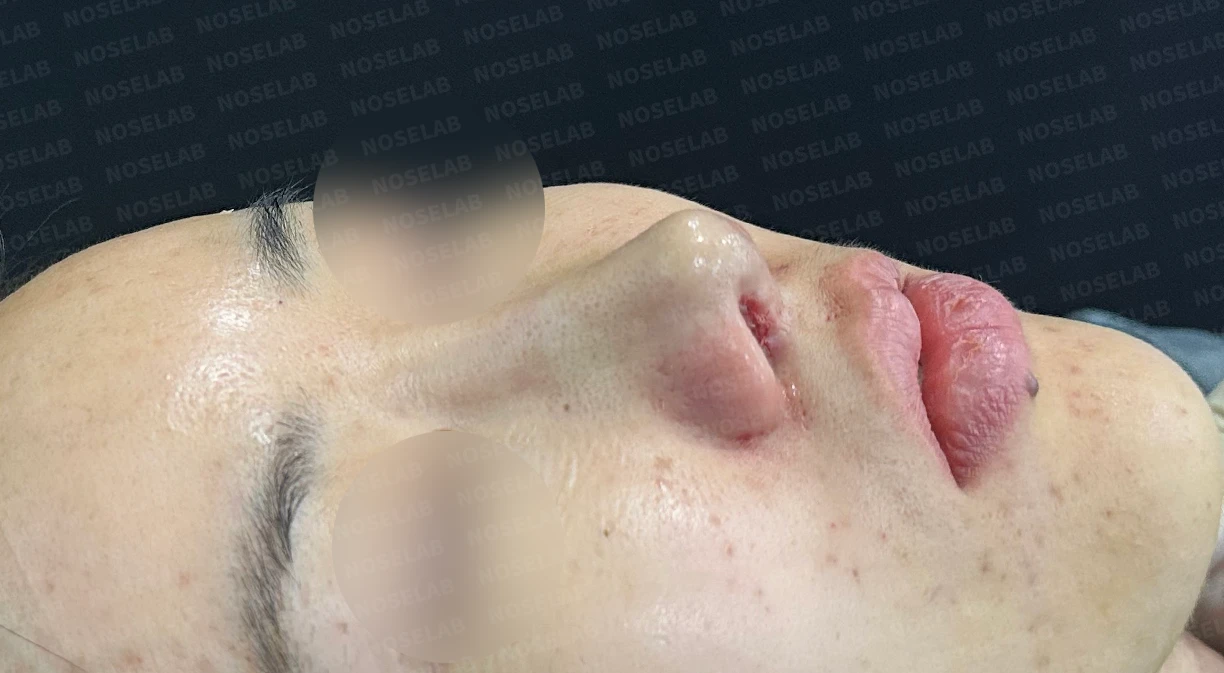
Before surgery / Day 0 immediately after surgery Photos taken immediately after surgery show swelling and may differ from the final result.
In the oblique view, you can confirm that the shape of the nasal tip has changed substantially.
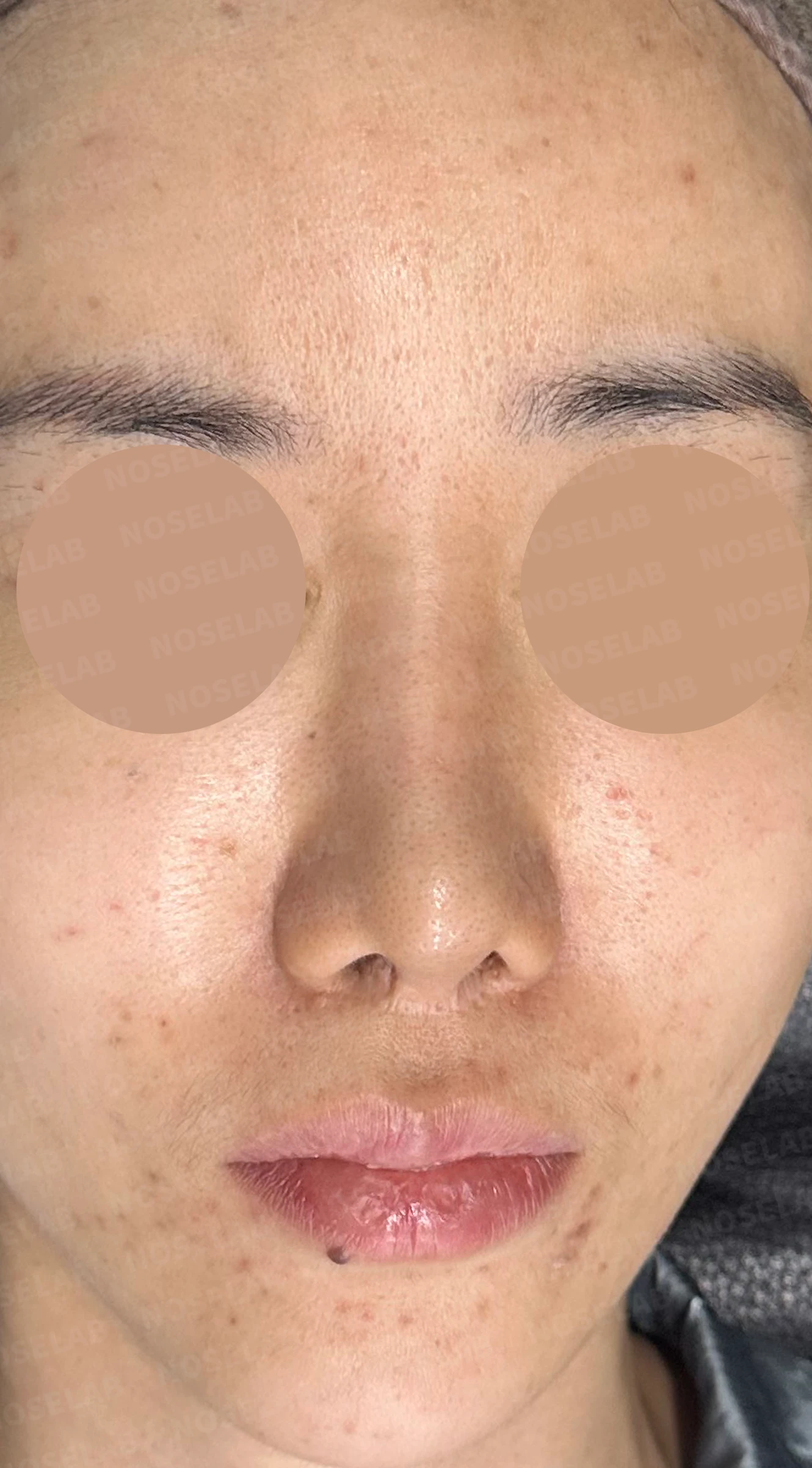
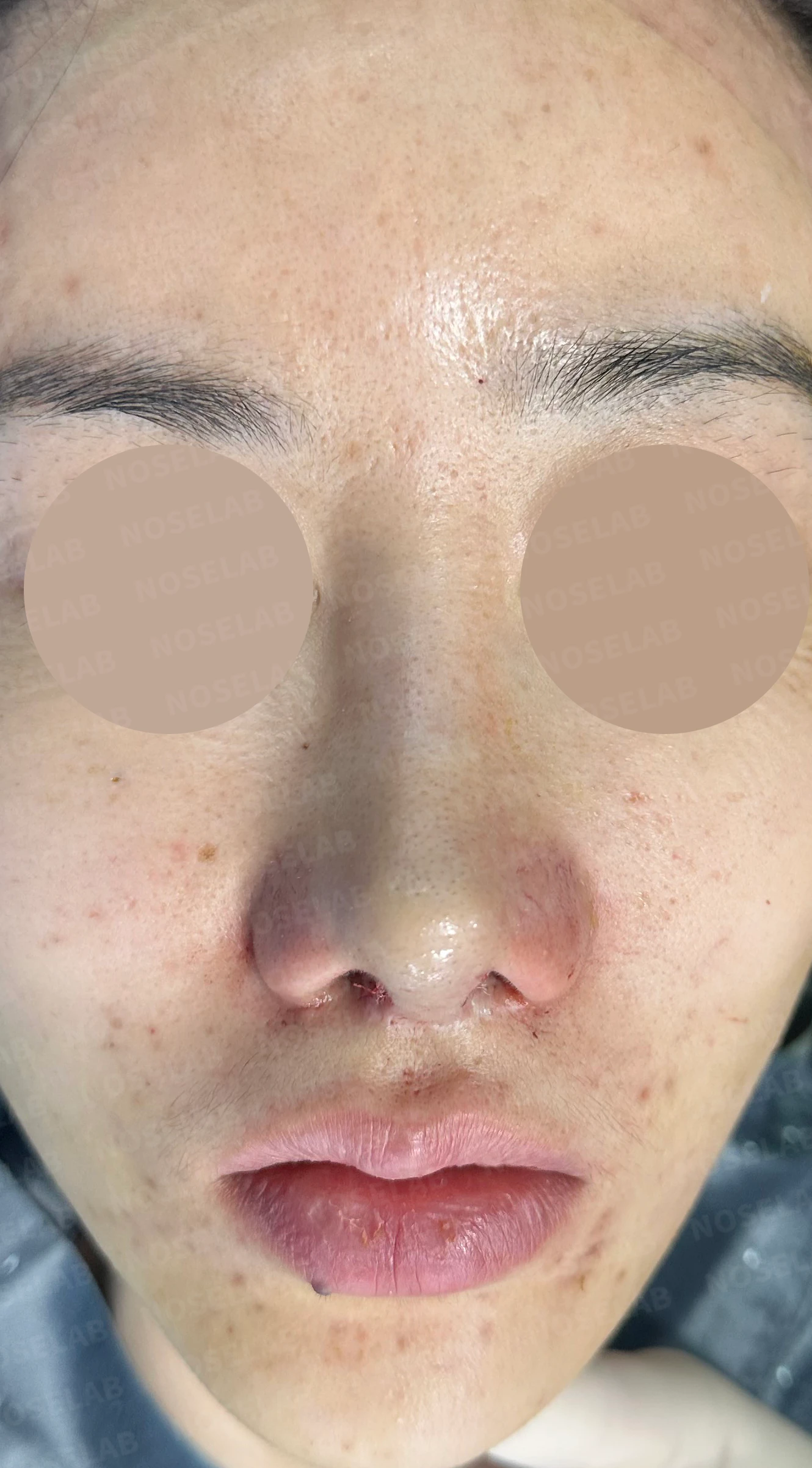
Before surgery / Day 0 immediately after surgery Photos taken immediately after surgery show swelling and may differ from the final result.
From the front view, the noticeable crookedness caused by the nasal tip tilting significantly to the left has improved considerably.
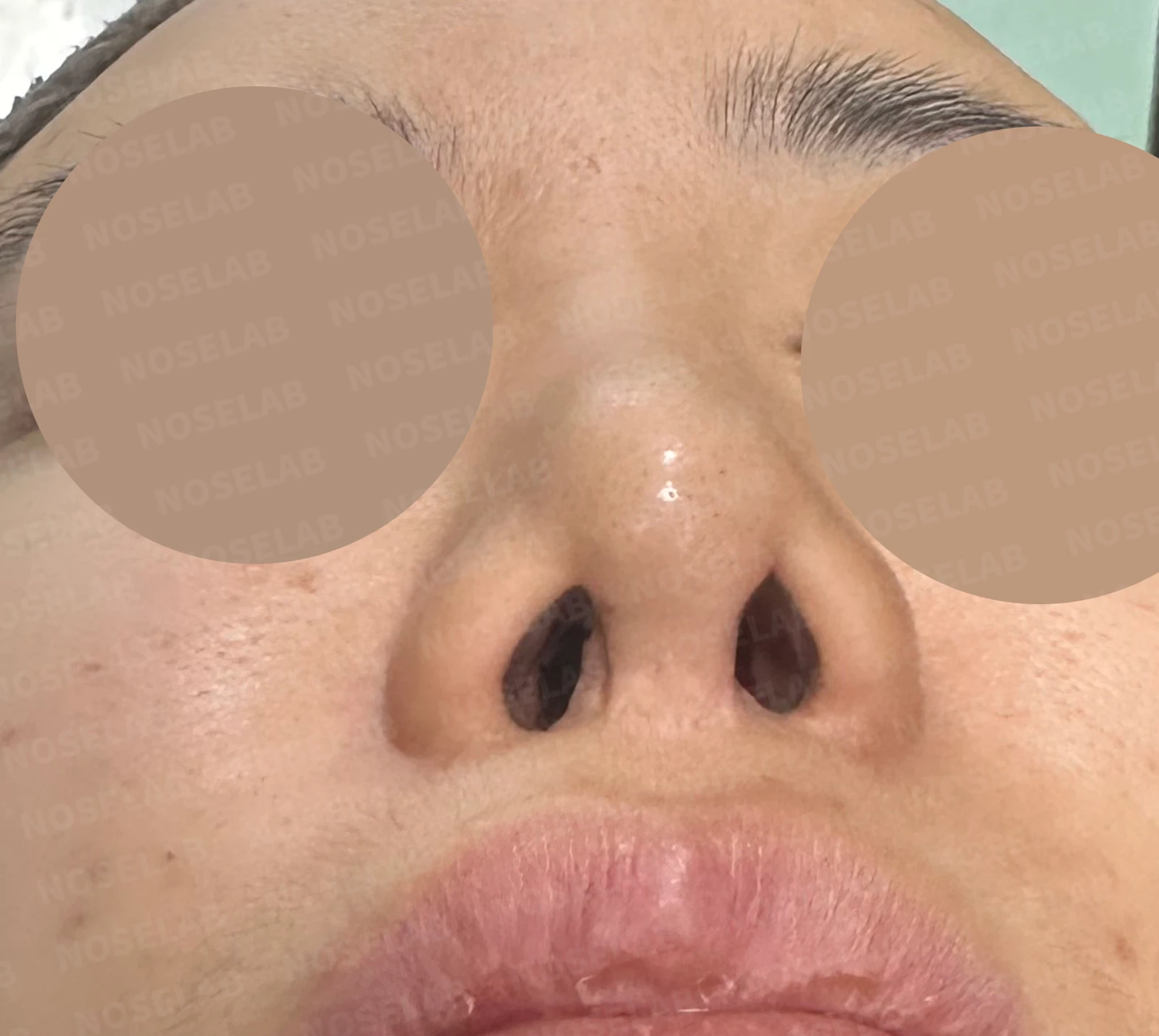
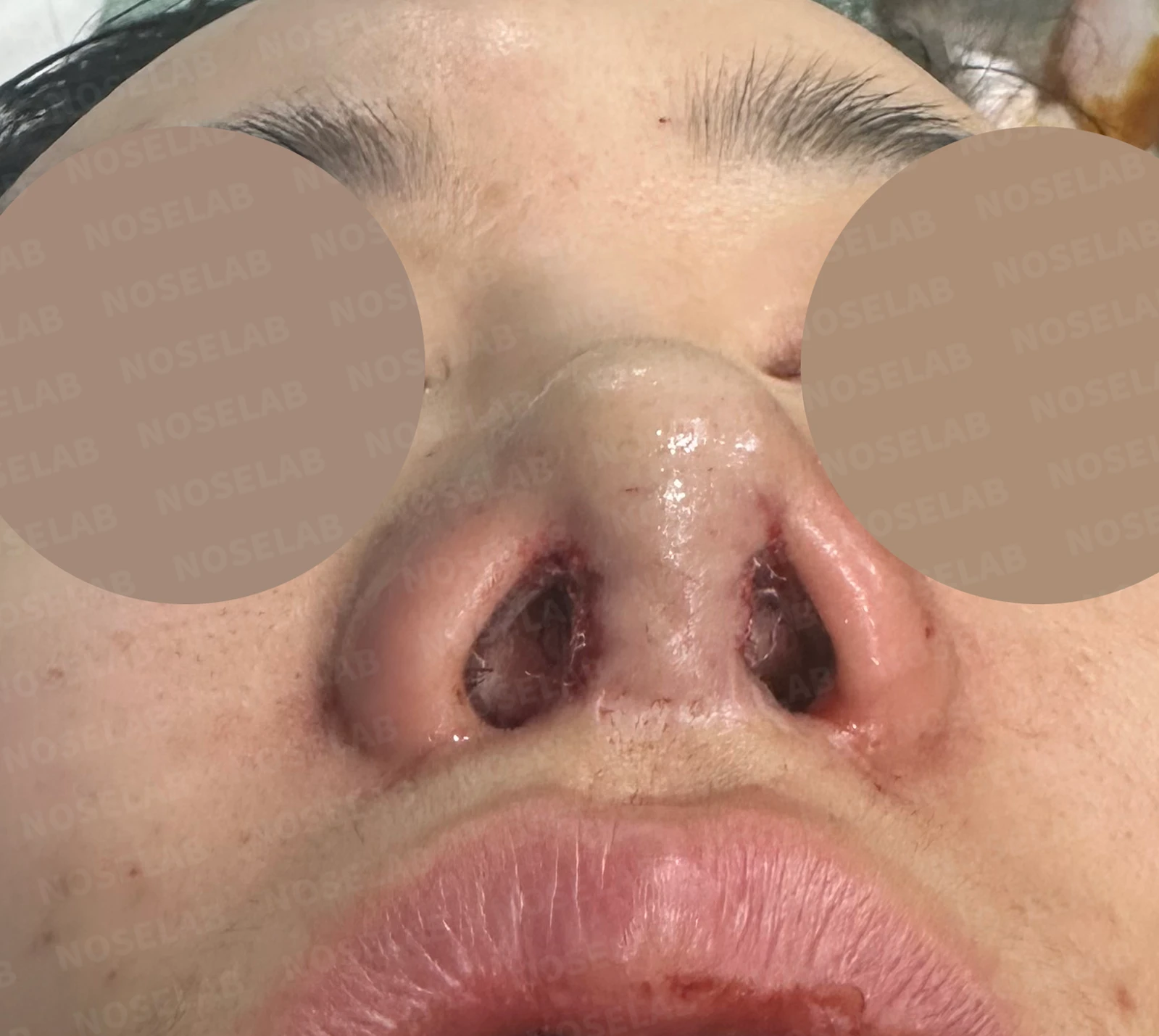
Before surgery / Day 0 immediately after surgery Photos taken immediately after surgery show swelling and may differ from the final result.
Looking at the nostril view, although there were limits to correcting the nostril asymmetry due to alar asymmetry resulting from the prior alar reduction and philtrum reduction, you can see that it has improved considerably.
Photos immediately after surgery
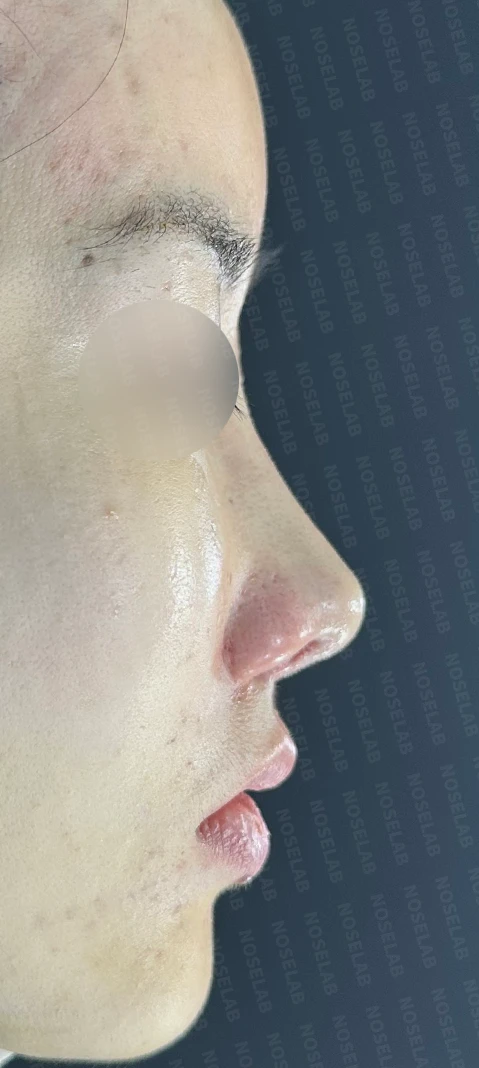
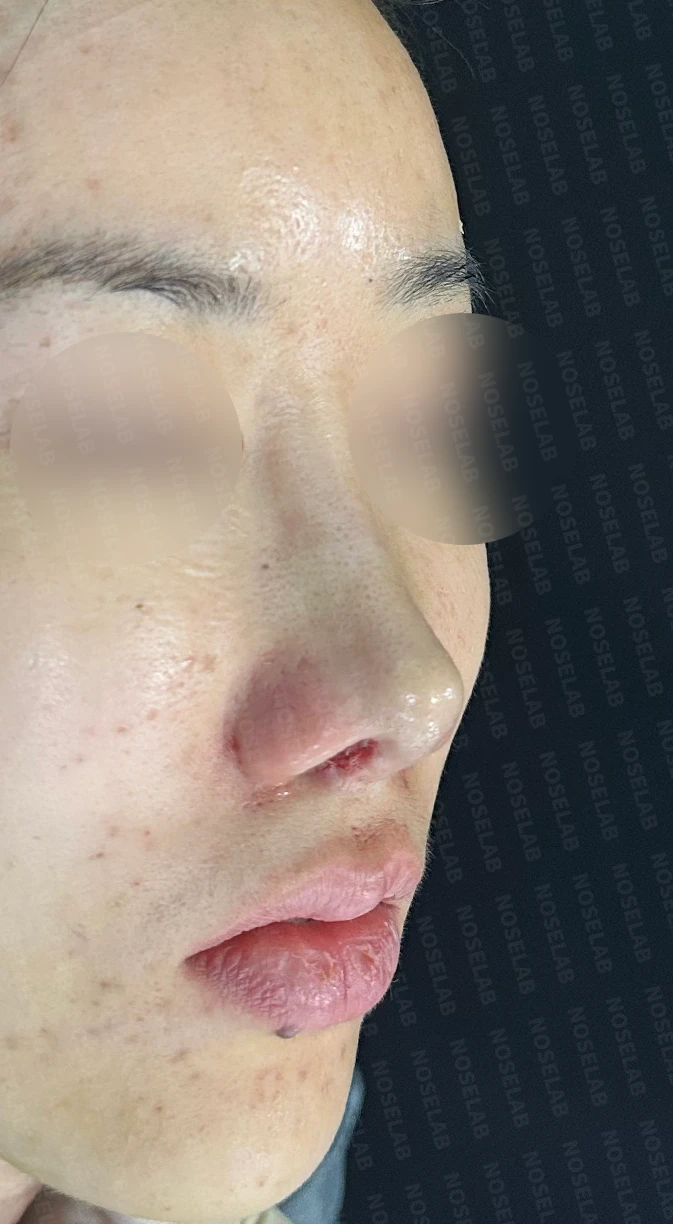
These are day 0 immediate postoperative photos: 90-degree profile, 45-degree oblique, and front views. Immediate postoperative photos show swelling and may differ from the final result.
Basal (nostril) view immediately after surgery (Day 0).Immediate postoperative photos show swelling and may differ from the final result.
My thoughts on donor rib cartilage rhinoplasty vs. autologous rib cartilage rhinoplasty
Both donor rib cartilage and autologous rib cartilage are excellent rhinoplasty materials. However, their advantages and disadvantages are clearly distinct.
Donor rib cartilage is very convenient to use because it is readily accessible. However, the circumstances in which it can be used are limited. In other words, it cannot be used in settings associated with inflammation, and the resorption rate varies widely depending on the patient's immune sensitivity. This means that the resorption rate can differ even when the same donor rib cartilage is used in different patients.
While donor rib cartilage is certainly a good rhinoplasty material, when compared directly with autologous rib cartilage, differences exist in resorption rates and durability. For this reason, when cartilage resorption and resulting deformity are strongly suspected in patients who previously underwent surgery with donor rib cartilage, I actively advise using autologous rib cartilage.
Today, we briefly discussed donor rib cartilage and autologous rib cartilage. I hope this provides helpful information for those contemplating the choice of rhinoplasty materials.
This was Dr. Peter C. Kang. Thank you.

Limitations and risks
When autologous rib cartilage is used, scarring and pain may remain at the donor site on the chest, and pneumothorax (pleural injury) can occur rarely. Over time, the grafted cartilage may warp or undergo partial resorption.
When using donor rib cartilage, long-term follow-up is necessary because the grafted cartilage may resorb or warp.
When the septum is corrected at the same time, nasal obstruction may persist or recur, and in rare cases, septal perforation or changes in smell may occur.
Common potential risks include infection, bleeding, asymmetry, scarring, skin necrosis, and insufficient improvement; results vary depending on individual skin condition and previous surgical history.