Hello.
I am Dr. Peter C. Kang, medical director.
Among the patients who visit our clinic, around 30 to 40% wish to correct a bulbous nose. In published studies analyzing Asian nasal anatomy, the typical Asian nose, compared to Western noses, is characterized by thicker skin, smaller and thinner cartilages, and less developed nasal bones. In short, compared to Westerners, the nose is generally smaller and more blunt. When the nasal tip is particularly large and blunt, that is what we commonly call a bulbous nose.
The patient I am discussing today also presented with a nasal tip that appeared large, blunt, and drooping.
Preoperative design consultation
On the front view, the area between the eyebrows was low, the nasal bones were small yet wide, and the nasal tip looked blunt and wide. There was asymmetry in the nasal bones, and the nose had an overall flat, wide bulbous appearance.
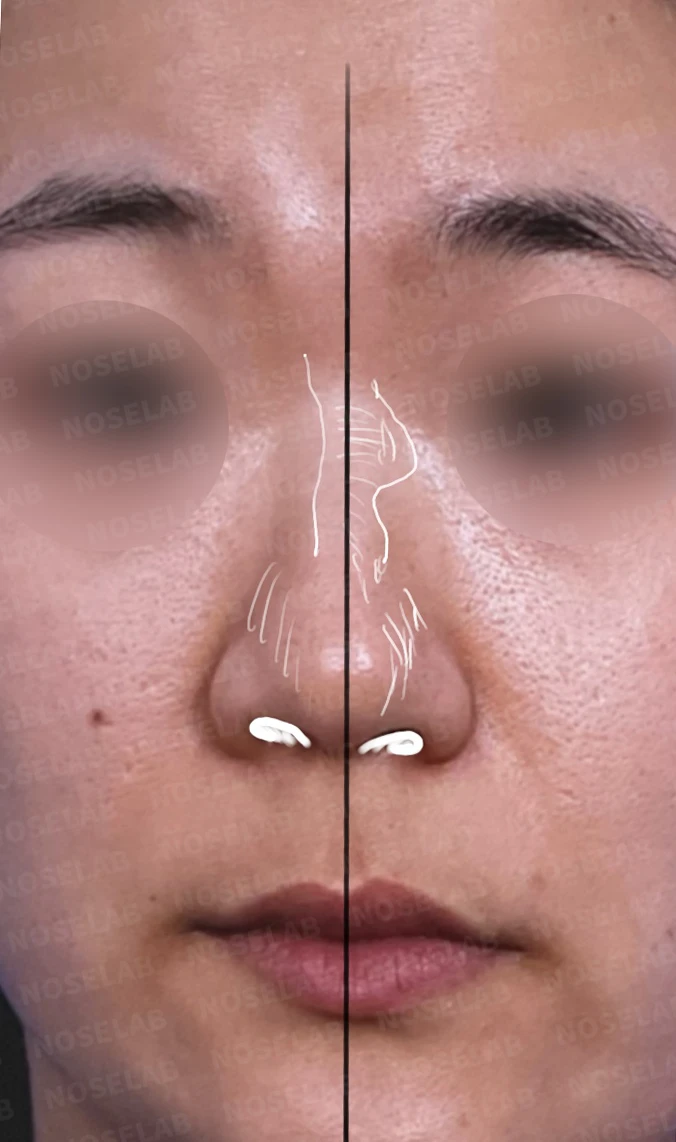
Front view taken during the preoperative design consultation.
On the left profile view, the blunt and drooping appearance of the nose was most prominent. Because the glabella was low, it looked flat, and the alae appeared relatively large.
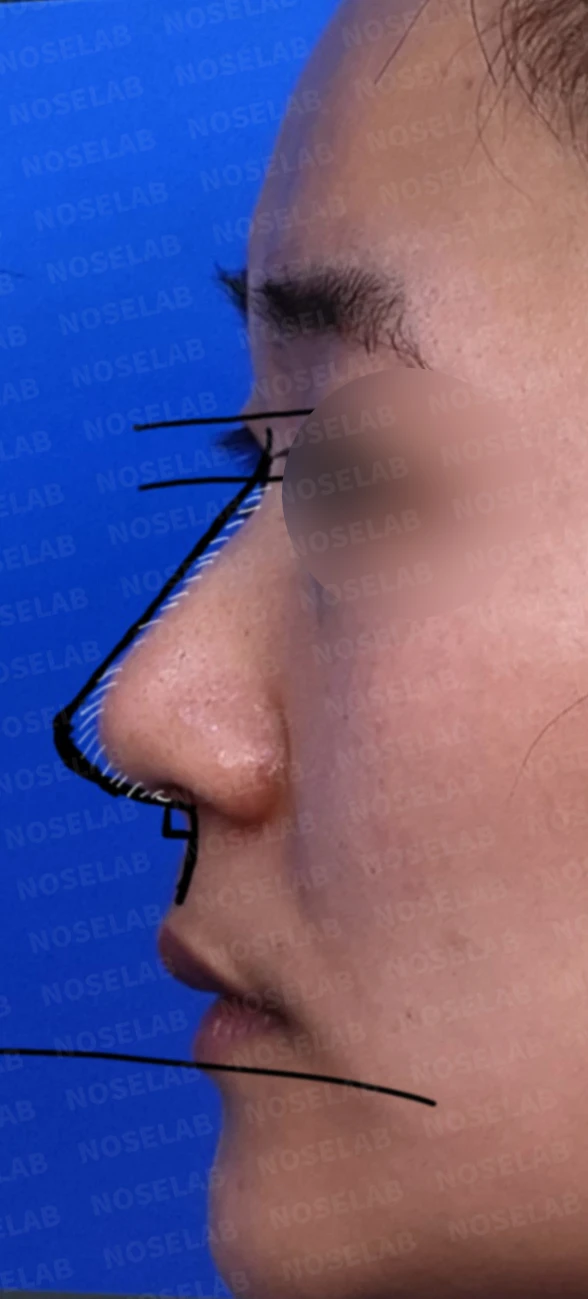
Profile view taken during the preoperative design consultation.
Looking at the basal view of the nostrils, nostril asymmetry was noticeable, and the tip was slightly deviated to the left, making the columella appear tilted to the left.
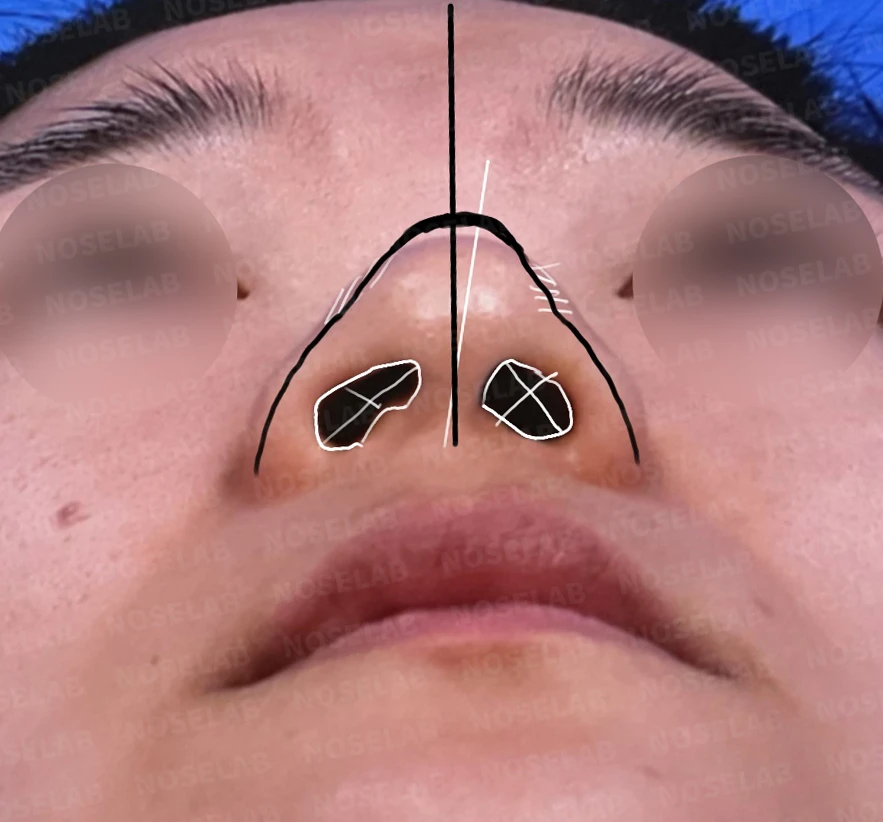
Basal view of the nostrils taken during the preoperative design consultation.
Surgical plan
This was a classic bulbous nose rhinoplasty. To thin the thick skin envelope, a portion of the subcutaneous tissue was excised, the lower lateral cartilages were crisply sutured, and the nasal tip was sturdily projected. Additionally, so that the nasal tip would not look disproportionately elevated, the nasal bridge was naturally augmented to match the tip, creating overall three-dimensional contour.
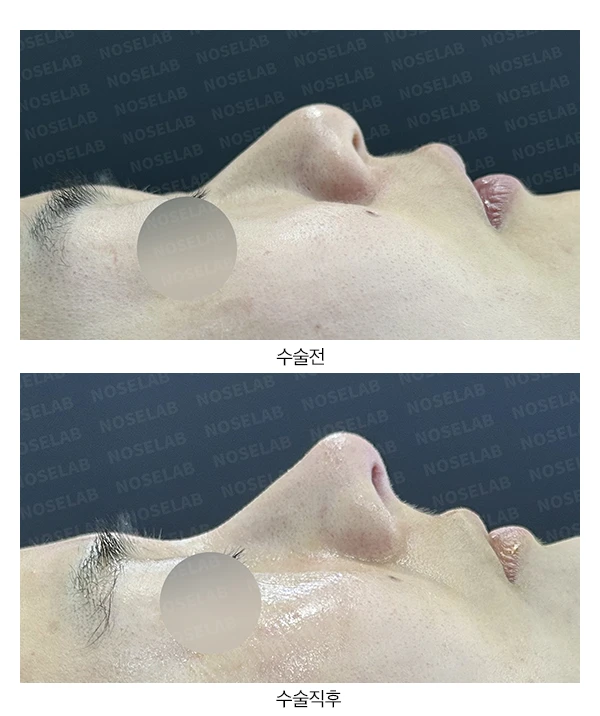
Before surgery vs. immediately after surgery
Immediately after surgery, a refined contour that was not visible before surgery can be seen at the nasal tip. The tip height increased, and the nasolabial angle became wider, showing a much more refined tip shape compared to the preoperative appearance.
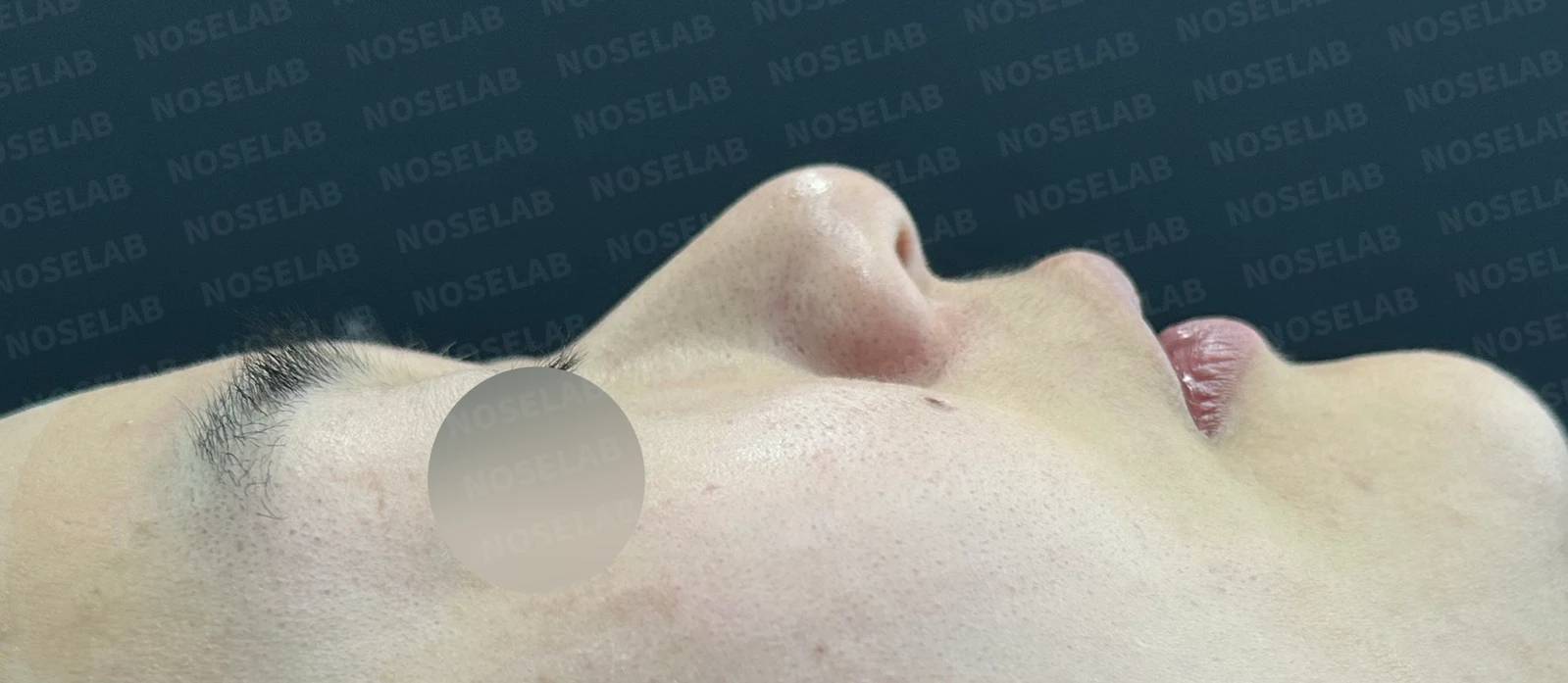
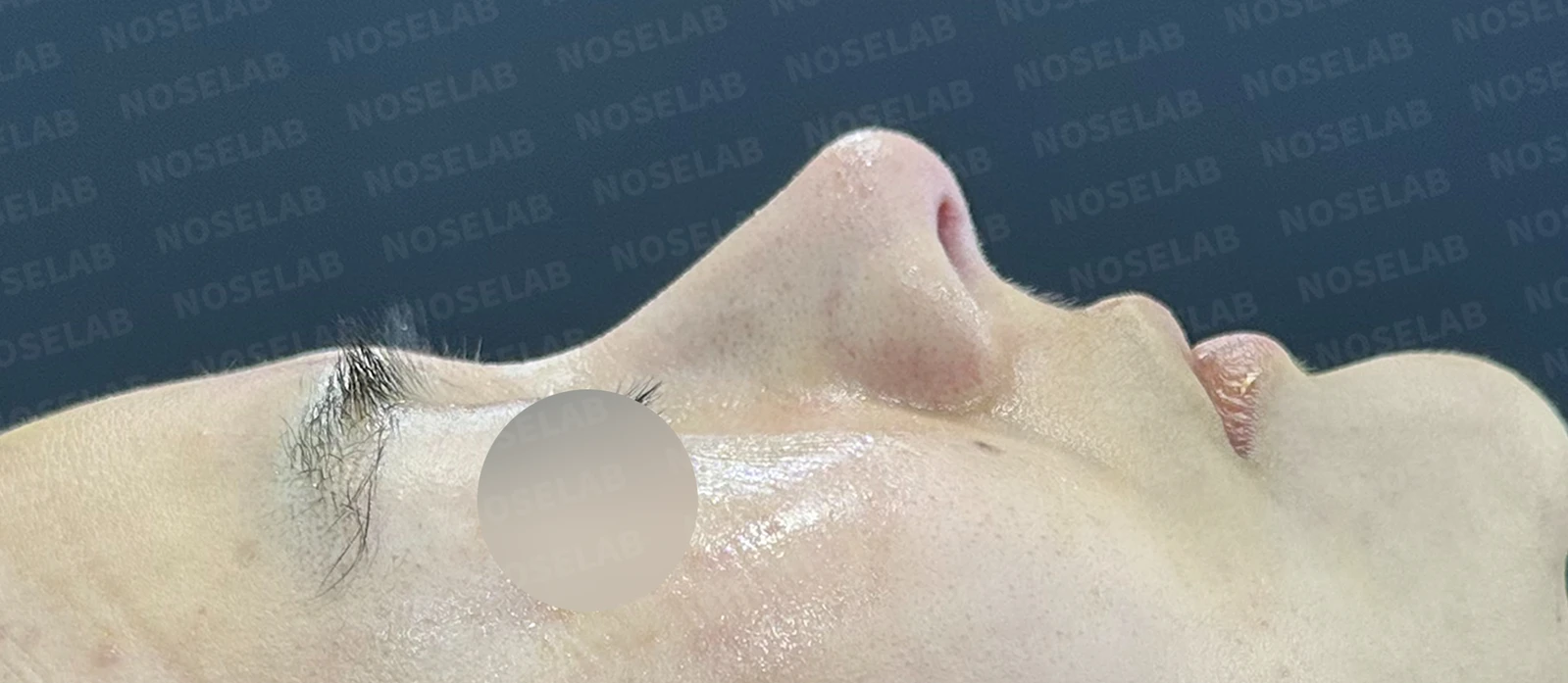
Before surgery / Day 0 immediately after surgery Photos taken immediately after surgery show swelling and may differ from the final result.
In the 45-degree oblique view, you can see that the nose appears much slimmer.
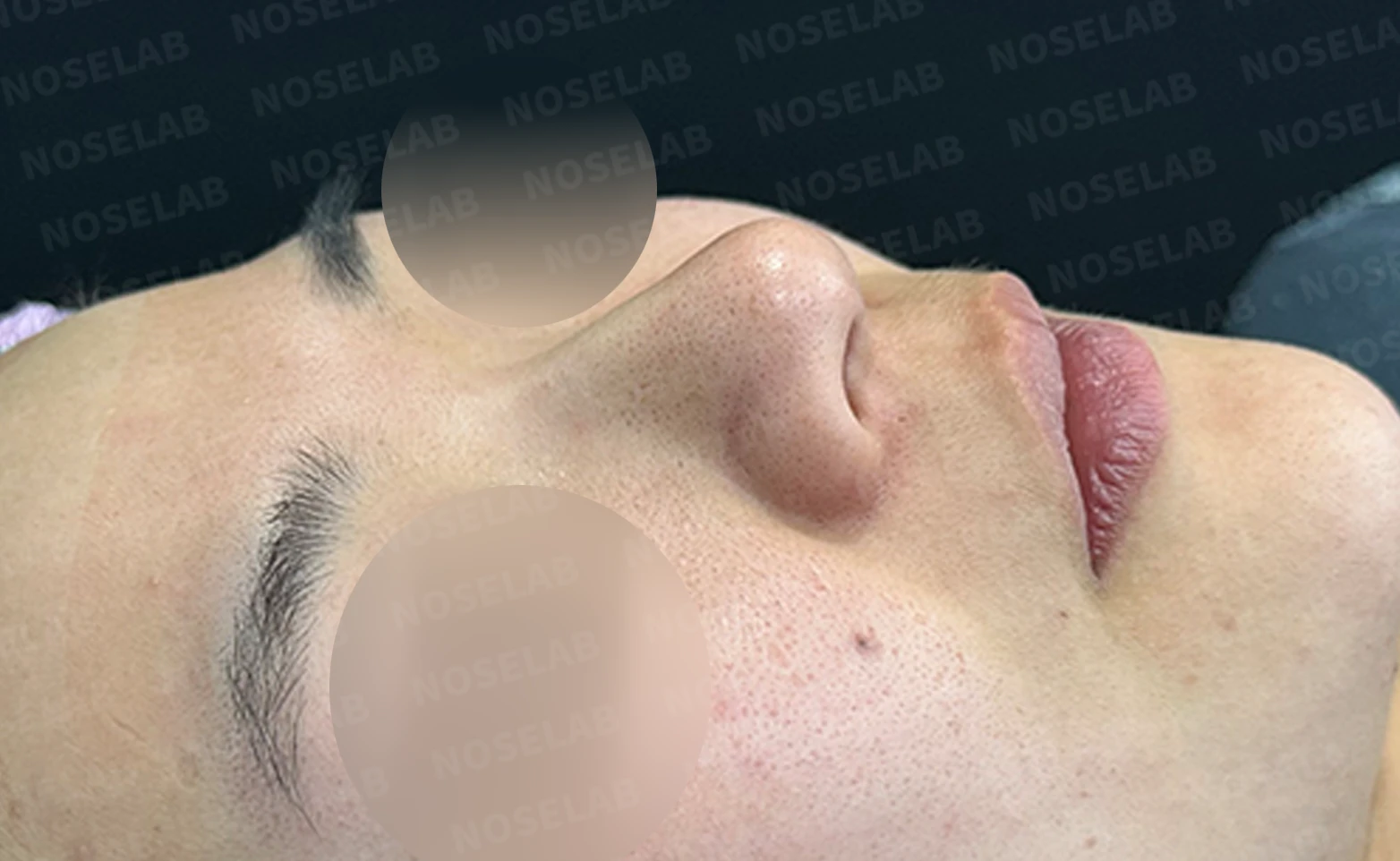
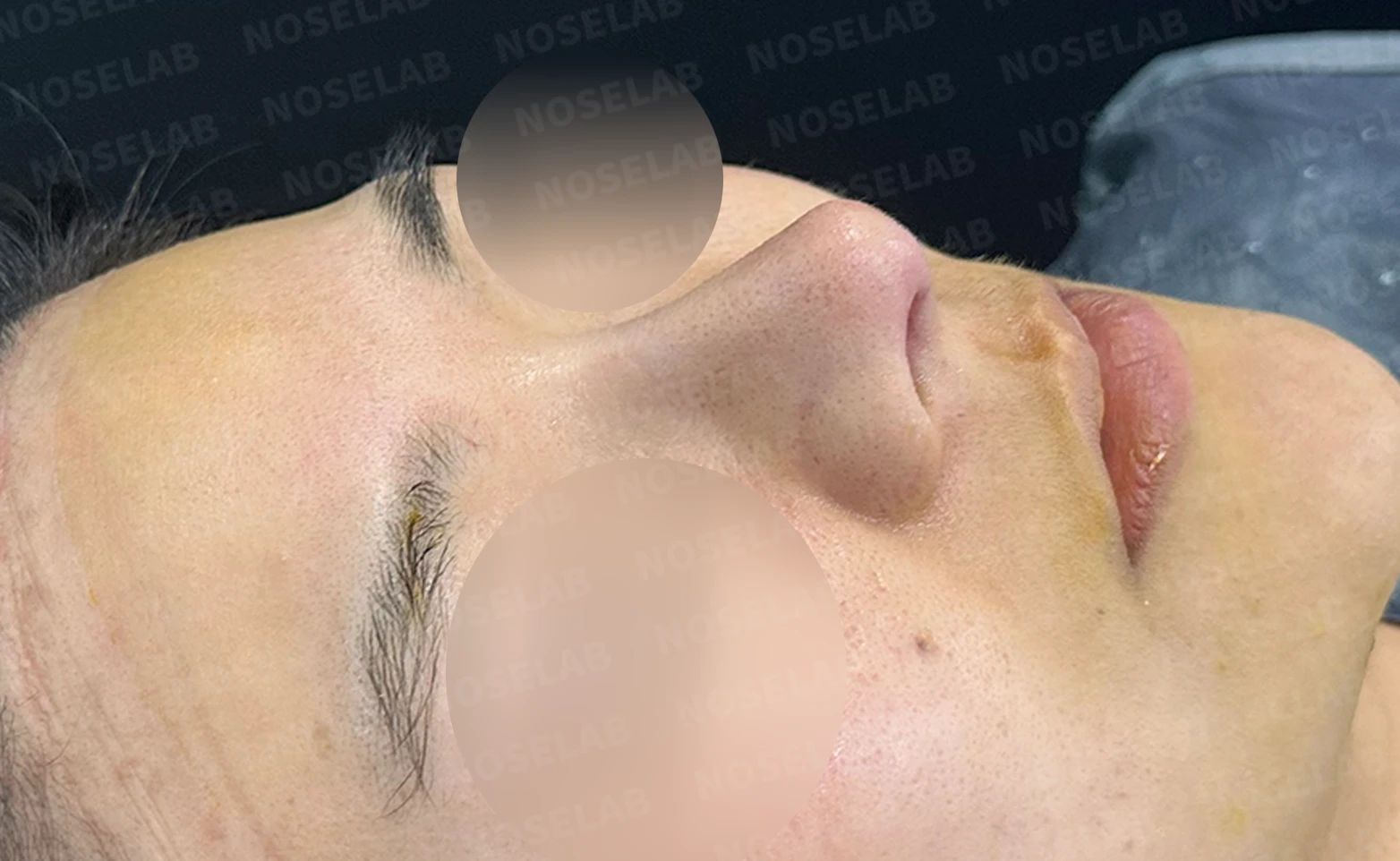
Before surgery / Day 0 immediately after surgery Photos taken immediately after surgery show swelling and may differ from the final result.
On the front view, the deviated appearance was improved. While the highest defining point of the tip was not clearly defined before surgery, the establishment of a distinct tip defining point immediately after surgery is the most significant change, and the nostril show also looks much more natural.
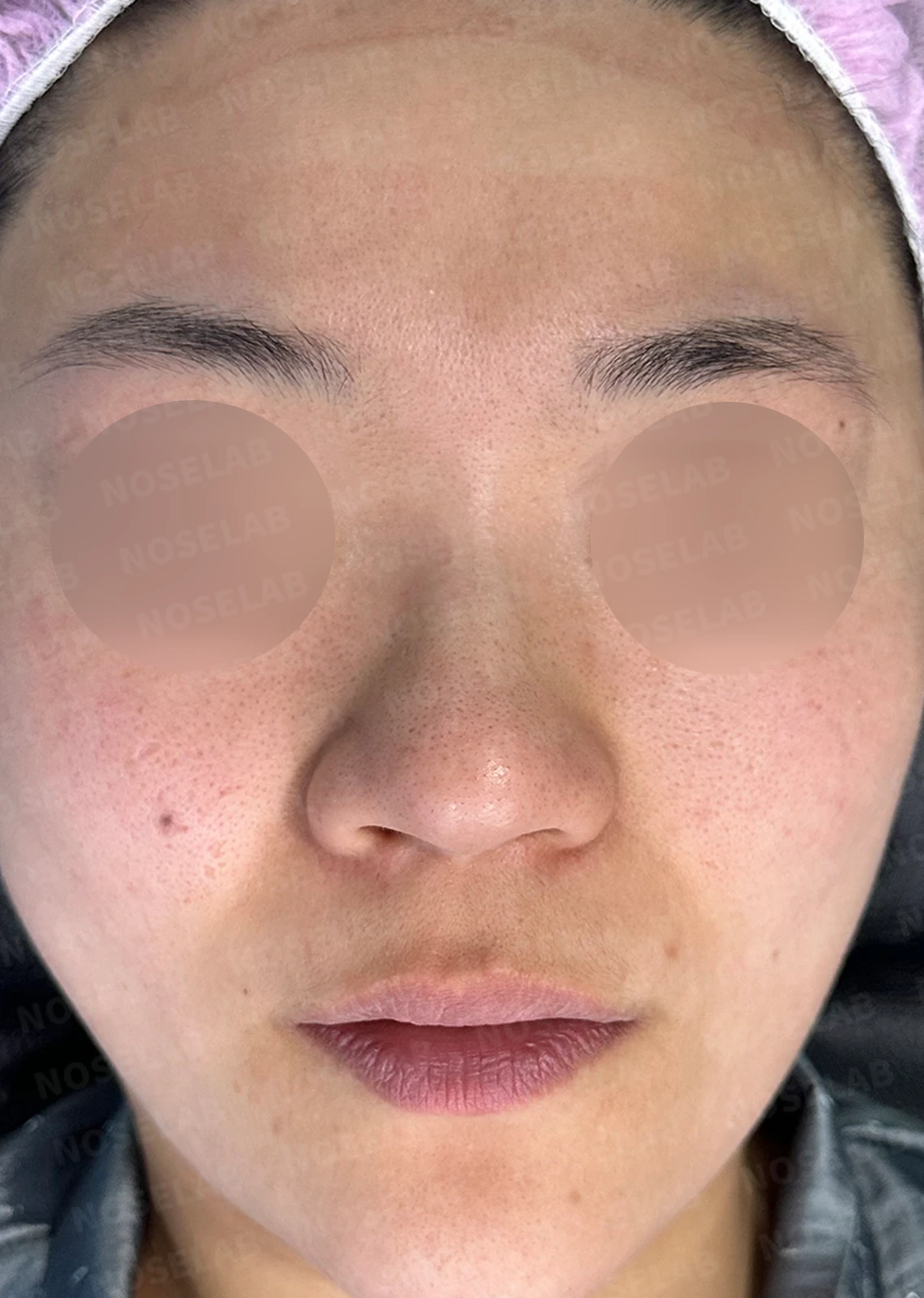
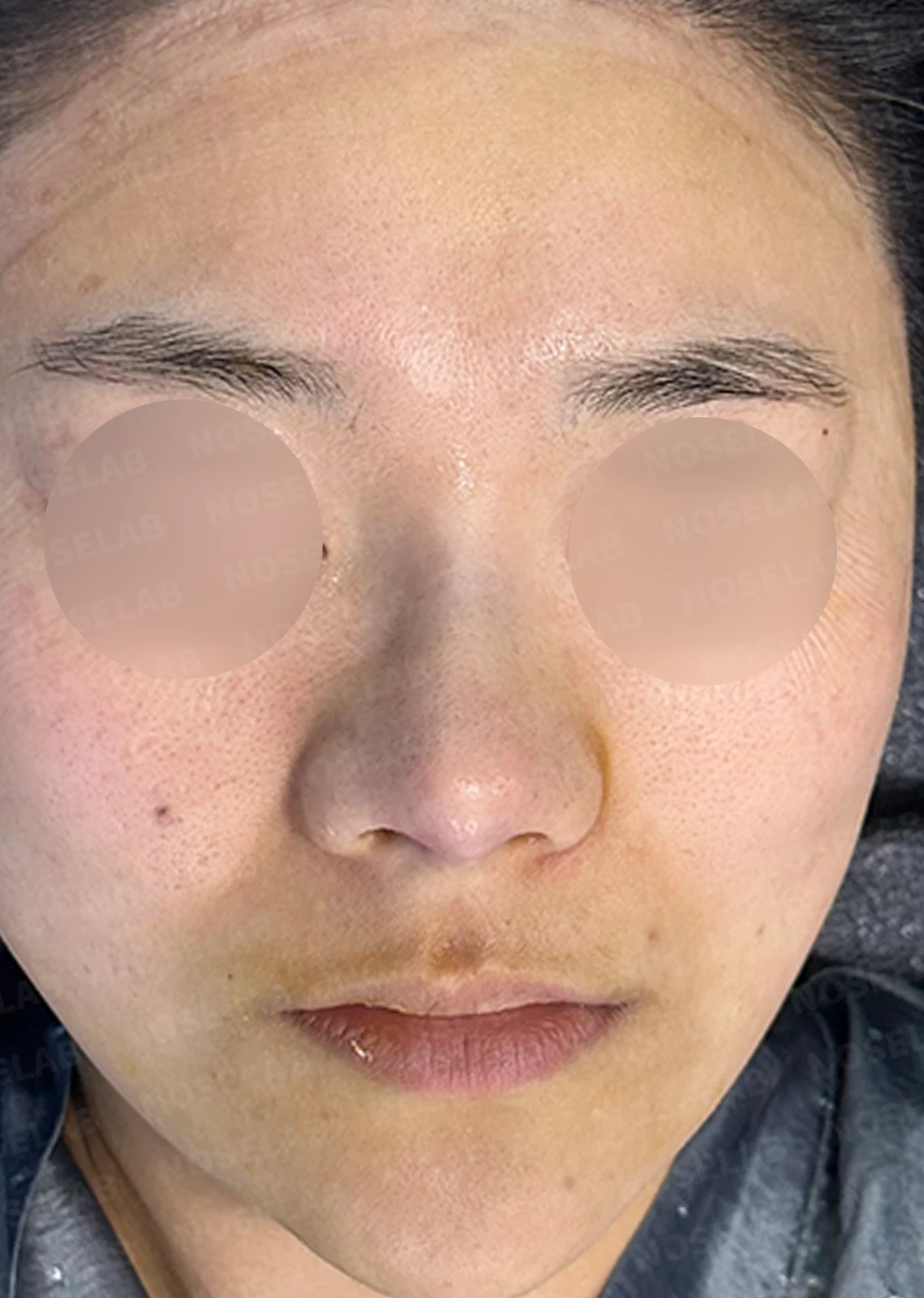
Before surgery / Day 0 immediately after surgery Photos taken immediately after surgery show swelling and may differ from the final result.
Looking at the basal view, the nostril asymmetry has improved, the proportion between the nostrils and the tip skin has been balanced, and the width of the nasal tip has visibly decreased.
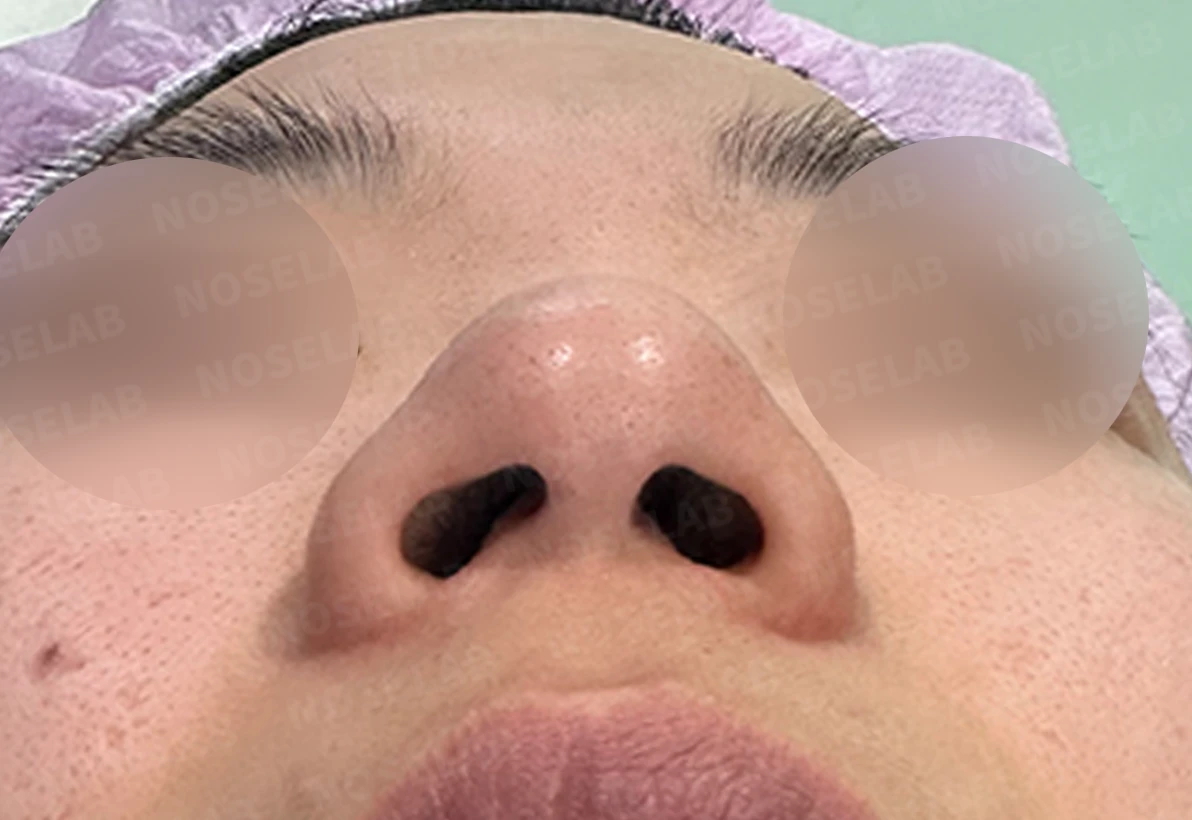
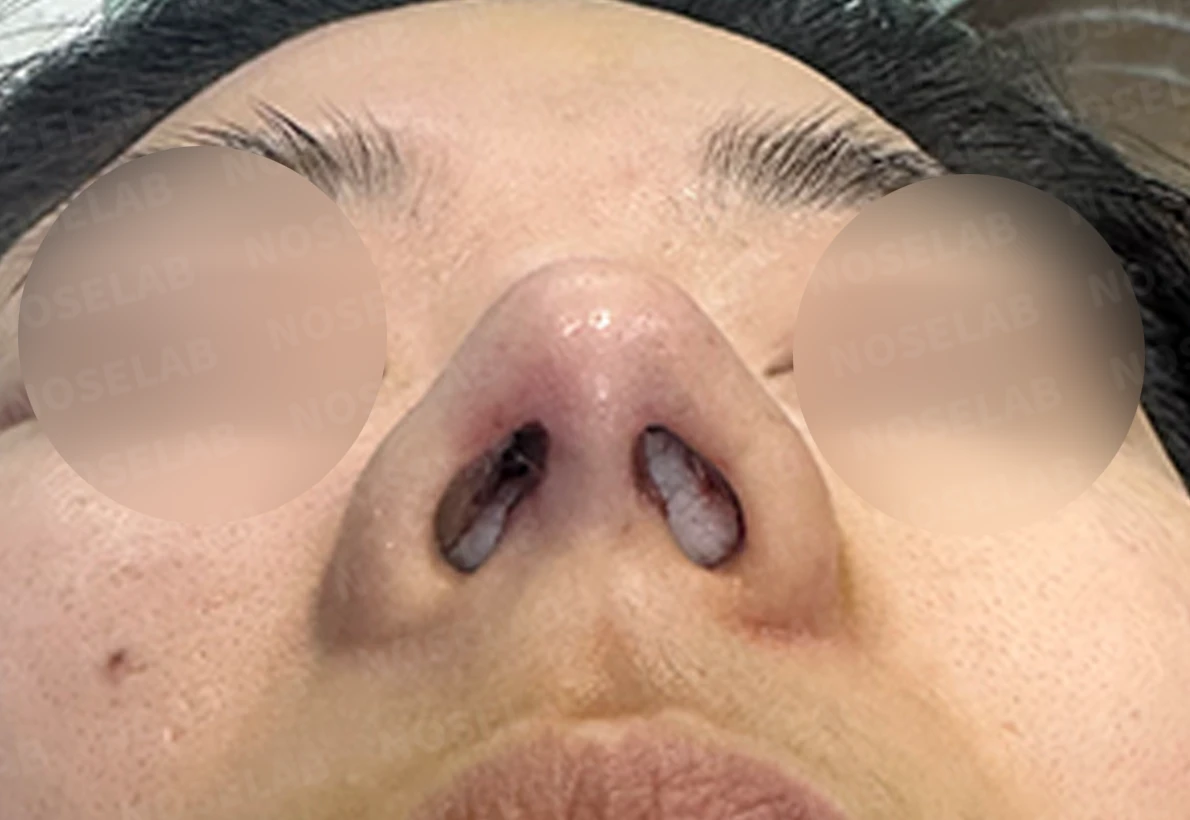
Before surgery / Day 0 immediately after surgery Photos taken immediately after surgery show swelling and may differ from the final result.
Photos taken immediately after surgery.
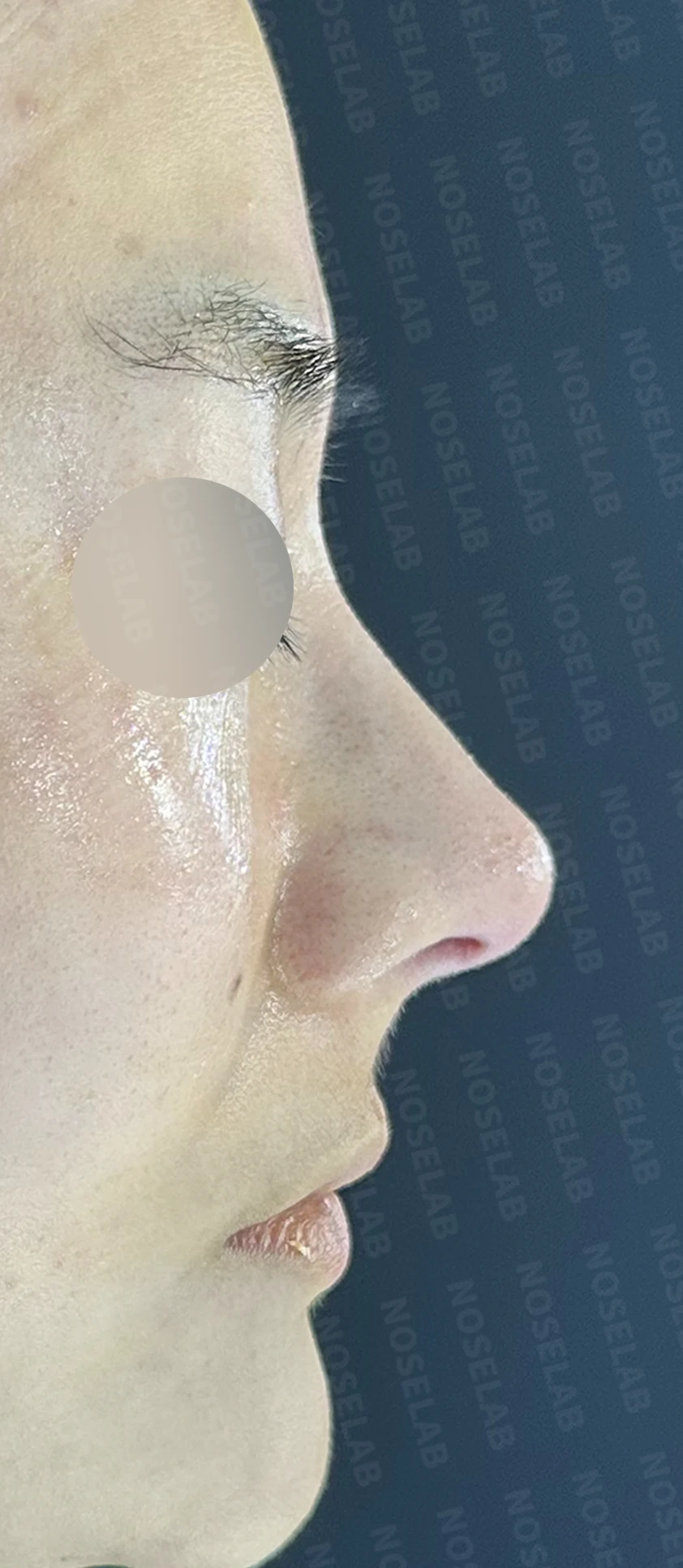
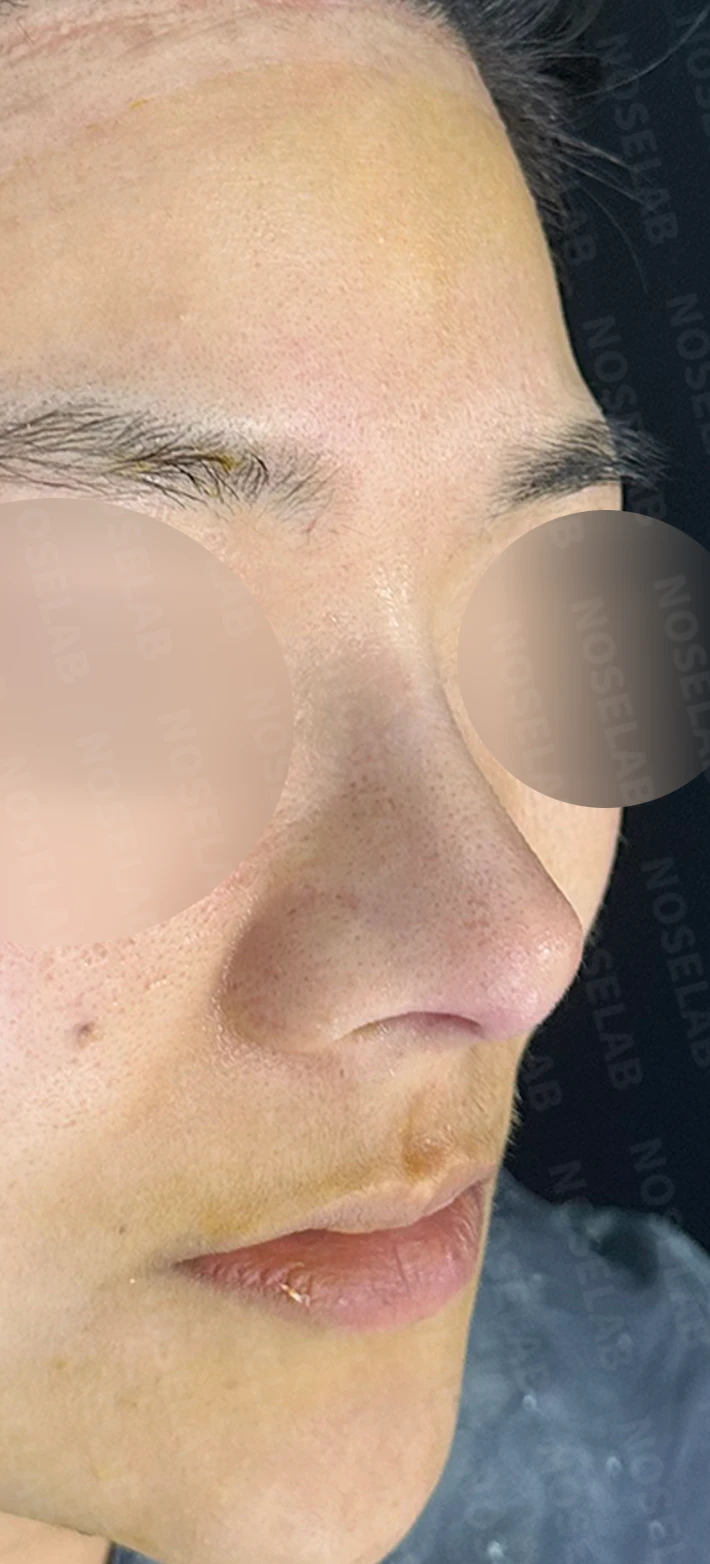
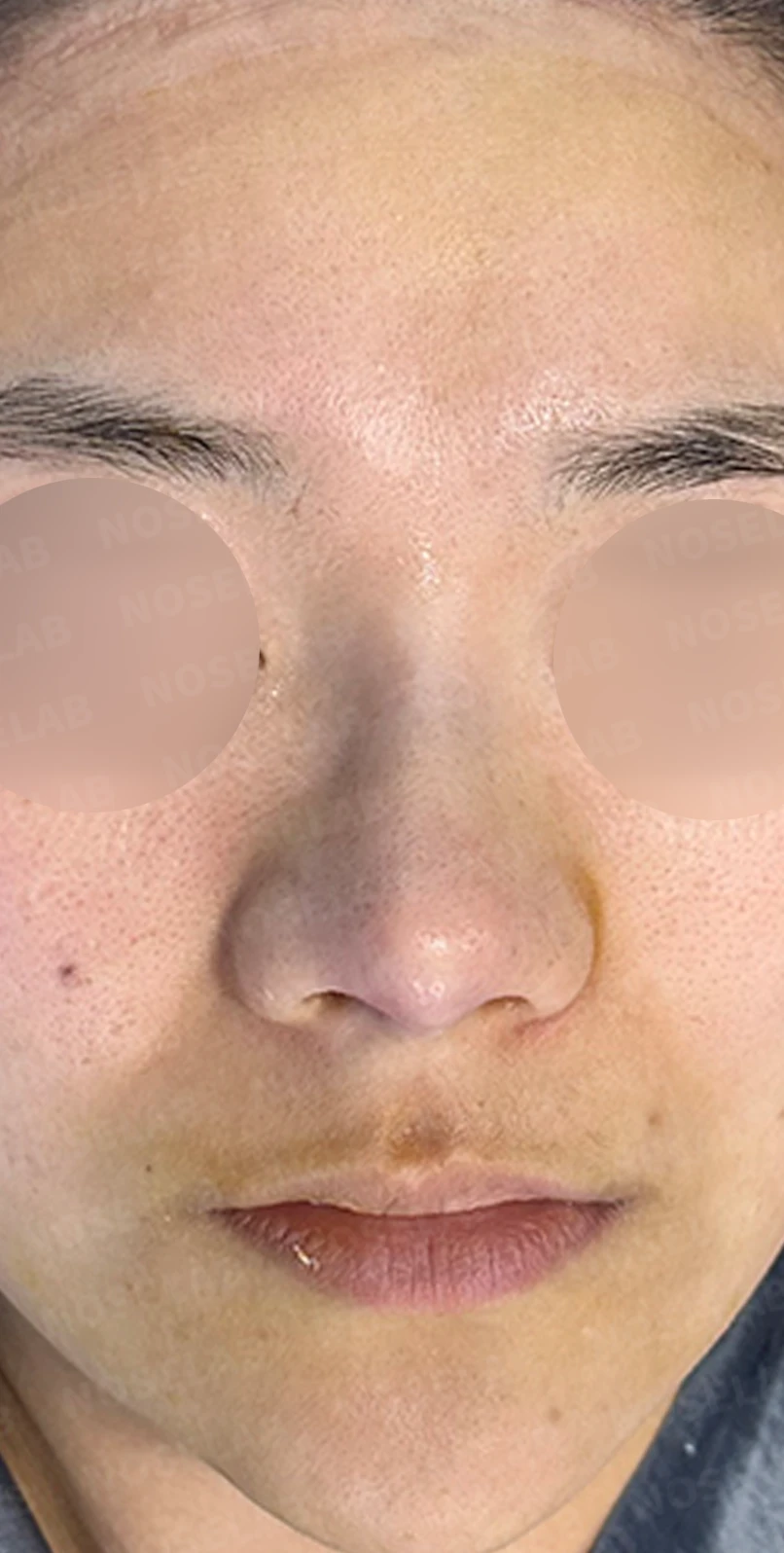
Photos on day 0 immediately after surgery: 90-degree profile, 45-degree oblique, and front view Immediate postoperative photos show swelling and may differ from the final result.
This is the basal (nostril) view.
My thoughts on bulbous nose surgery
When speaking with bulbous nose patients in the consultation room, I often hear what previous surgeons have told them about bulbous nose surgery. I generally understand where those surgeons were coming from, because as a young surgeon, I had many of the same concerns. I recall one patient who came for a consultation with a look of despair after being told by another surgeon that a bulbous nose never improves and that they should just live with it without surgery.
There was also a time in my career when I believed the biggest issue with a bulbous nose was simply thick skin, and I tried every method to reduce skin thickness. Focusing solely on that led to inconsistent results, which caused me a great deal of concern. When subcutaneous tissue is removed, scar tissue inevitably forms in that space; depending on the skin type, that scar tissue can be minimal or very extensive, leading me to conclude that results could not be uniform. Therefore, I shifted my approach to minimize subcutaneous tissue removal and instead project the nasal tip to provide three-dimensional definition, correcting the bulbous impression. Since then, the surgical results for bulbous noses have become stable.
This is why I advise patients seeking bulbous nose correction to adjust their perspective. While you may want an extremely thin nose, chasing that carries a high risk of dissatisfaction. Instead, I suggest aiming for an attractive nose that no longer looks bulbous. Having a balanced, well-shaped nose is the ultimate goal, as a bulbous nose inherently lacks refinement. In other words, rather than aiming for an unnatural nose with simply thinned skin, the goal is to create a nose that is natural, adequately elevated, and balanced, even if the skin itself is not paper-thin.
Today, I discussed bulbous nose rhinoplasty. I hope this was helpful to many of you who are concerned about a bulbous nose.
This was Dr. Peter C. Kang. Thank you.

Limitations and risks
Common potential risks include infection, bleeding, asymmetry, scarring, skin necrosis, and insufficient improvement; results vary depending on individual skin condition and previous surgical history.