Hello, I am Dr. Peter C. Kang.
Today, I would like to share the case of a patient who visited our clinic concerned about a high radix and a crooked nose.
🔍 Surgical history
Previous surgical history:
- Around 2013: silicone implant, presumed septal cartilage, dorsal hump reduction
The patient noticed one day that the nasal tip had become upturned after the previous surgery and visited our clinic wondering if this was a sign of contracture. Her main concerns also included an unnatural look because the radix started too close to the eye line, along with a crooked nose.
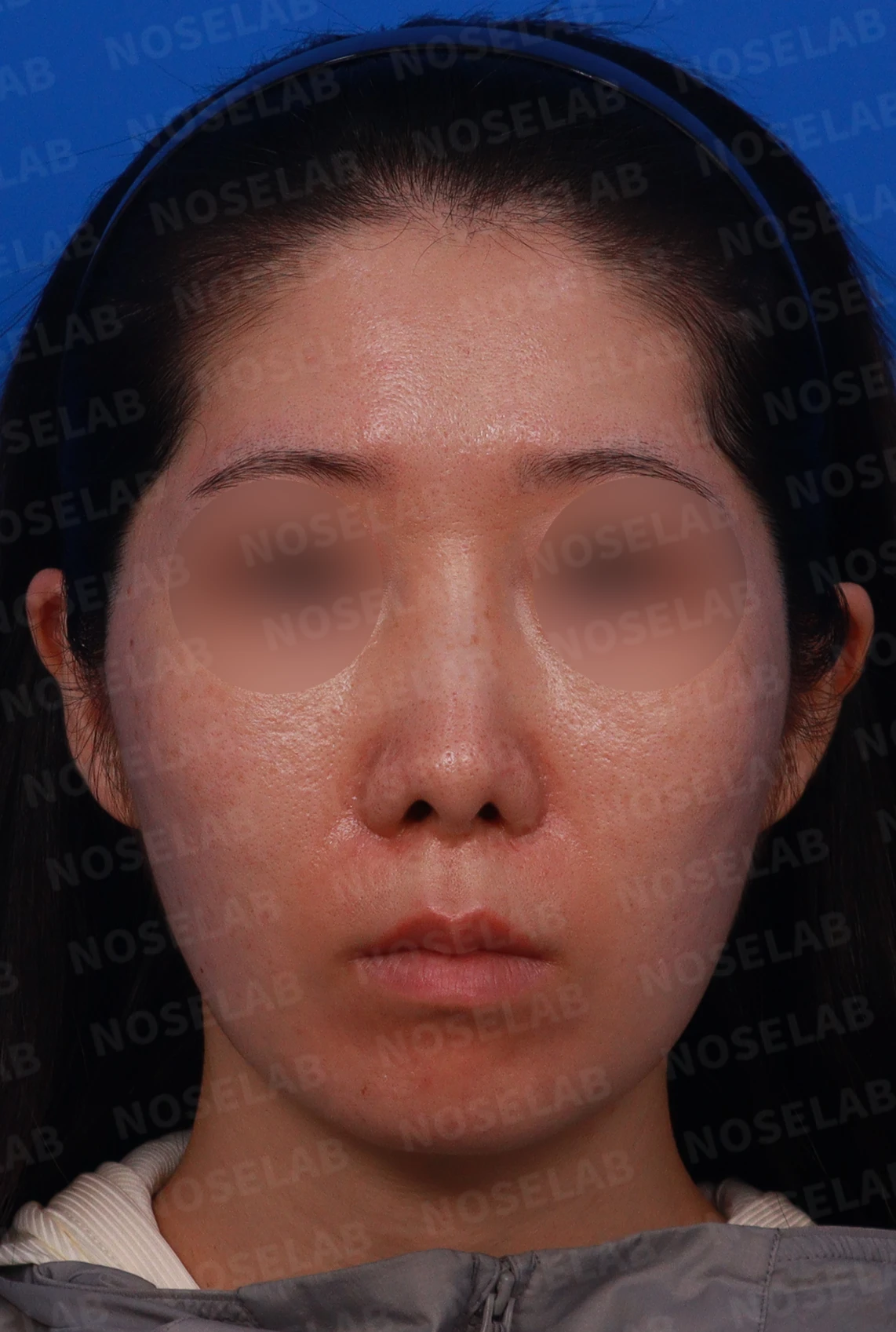
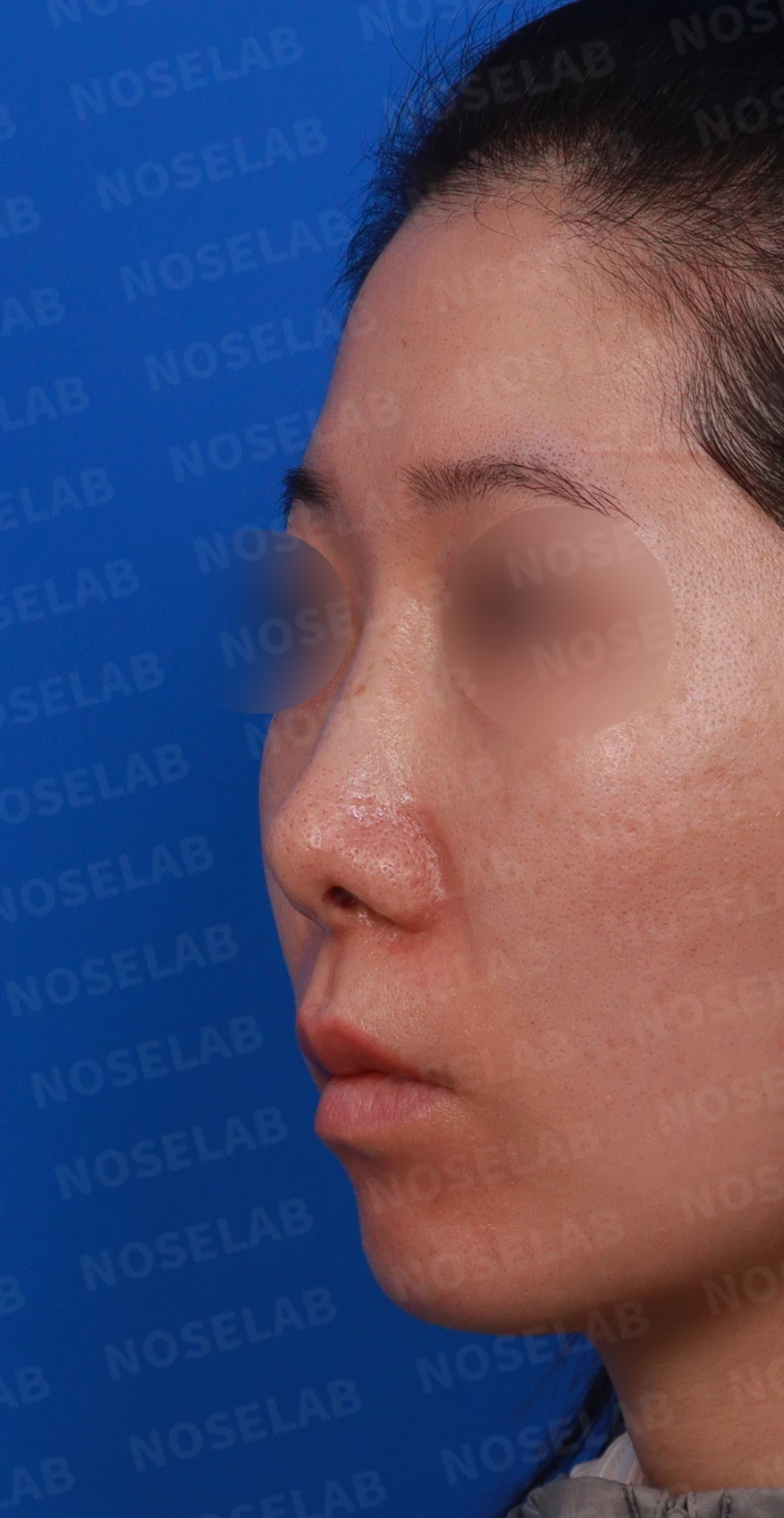
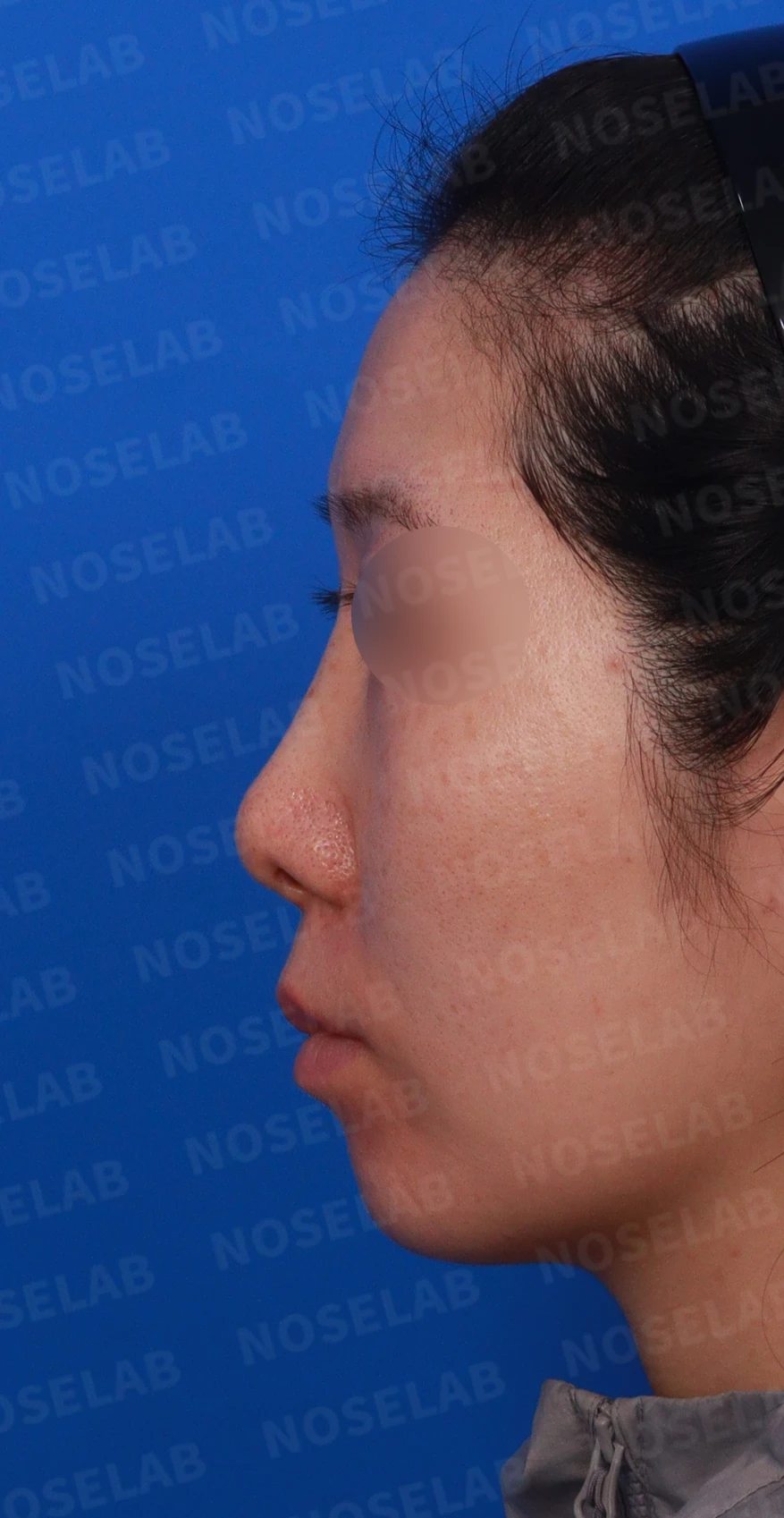
Design consultation photos: front, oblique, and profile views
Patient's requests
Points for improvement
- Dislikes the high radix (glabella) start point
- Dislikes prominent nostril show
- Dislikes the artificial 'chalk-like' straight bridge and long nose appearance
- Dislikes the triangular appearance of the alar contours
- Wishes to lower and redefine the upturned nasal tip
- Currently feels too masculine and wants a feminine contour
- Prefers a soft, rounded nasal tip over a sharp one
- Wants to adjust the nasolabial angle to visually correct the long philtrum
In particular, while correcting the crooked nose and high radix, the patient wanted a natural and feminine nasal shape.
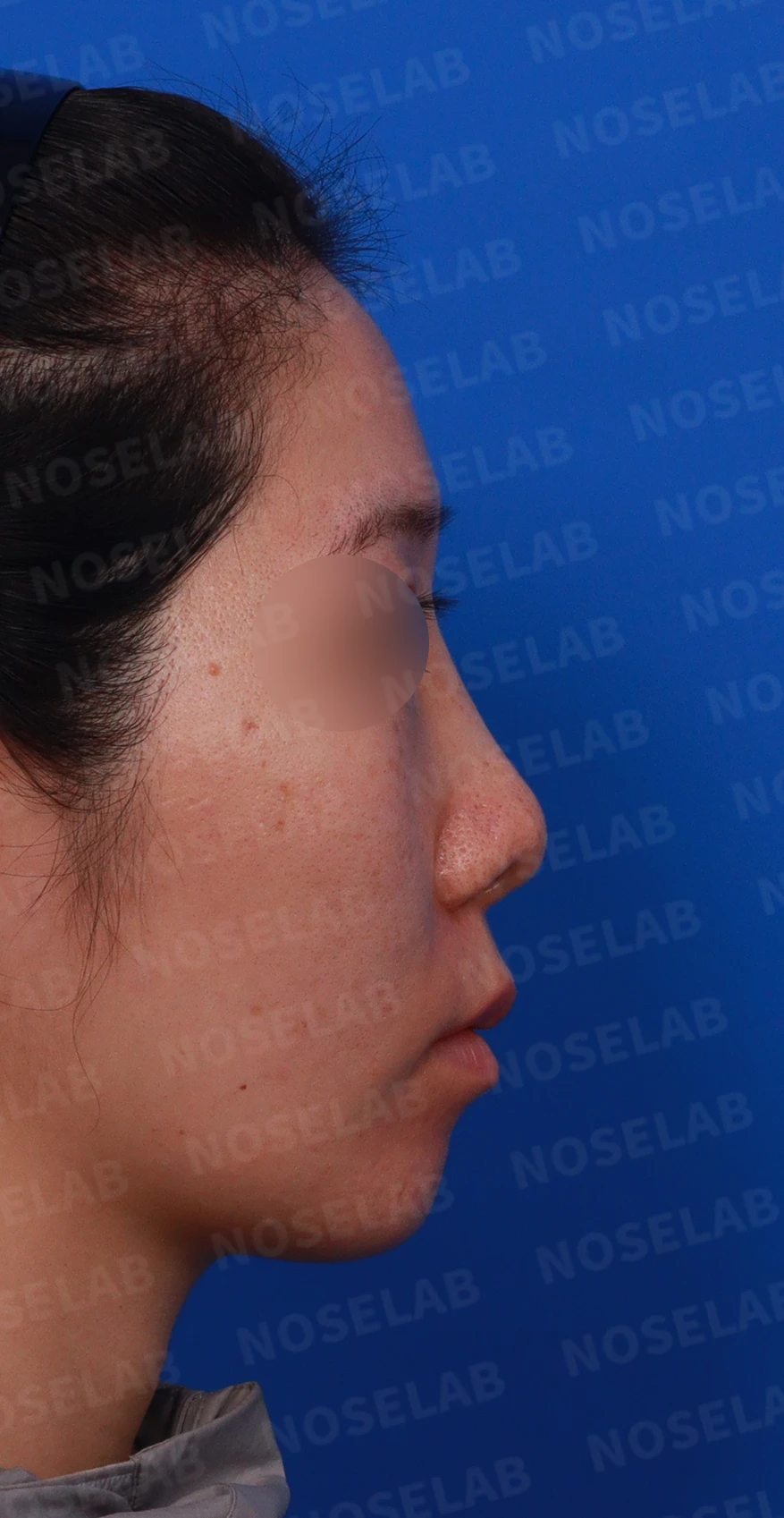
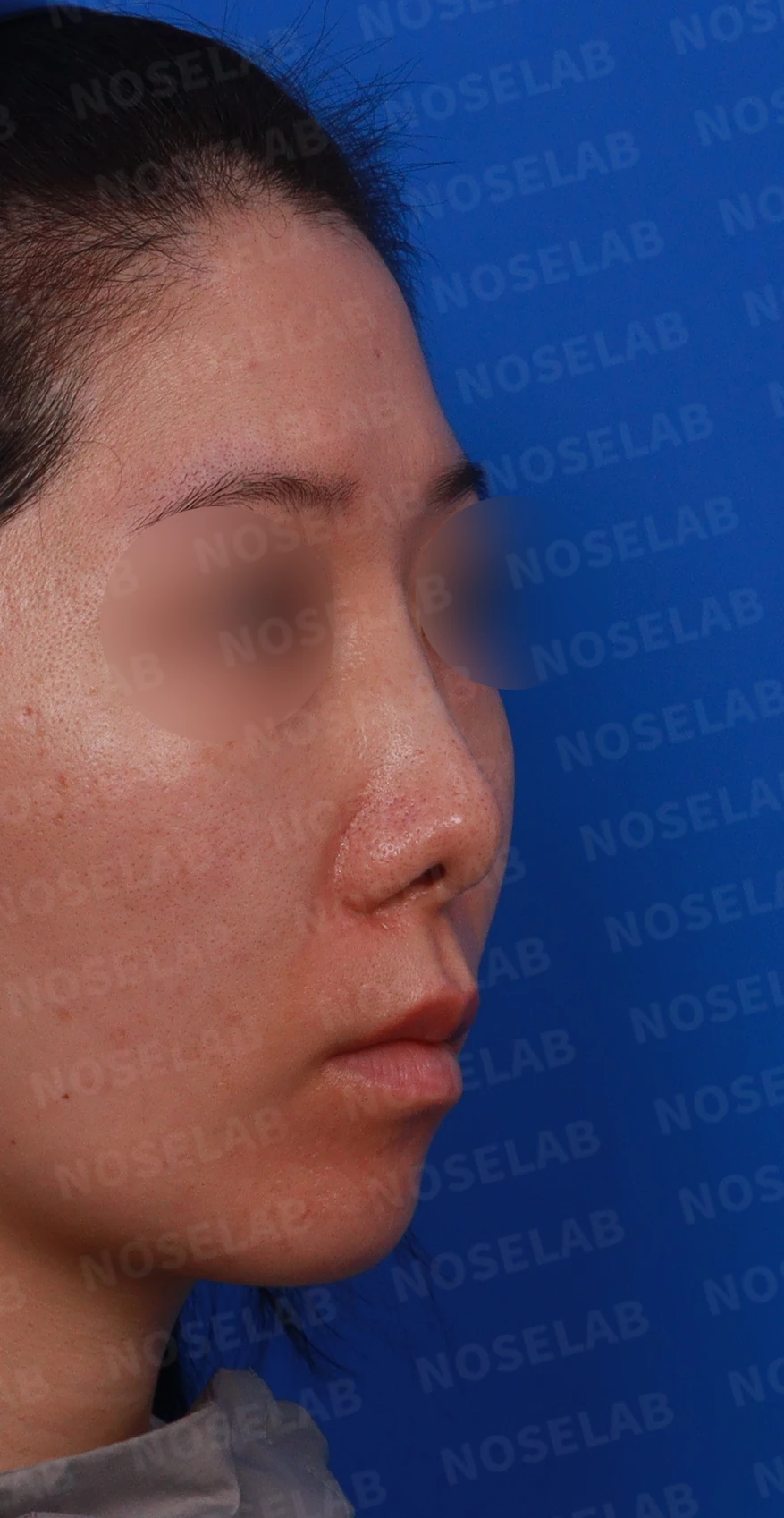
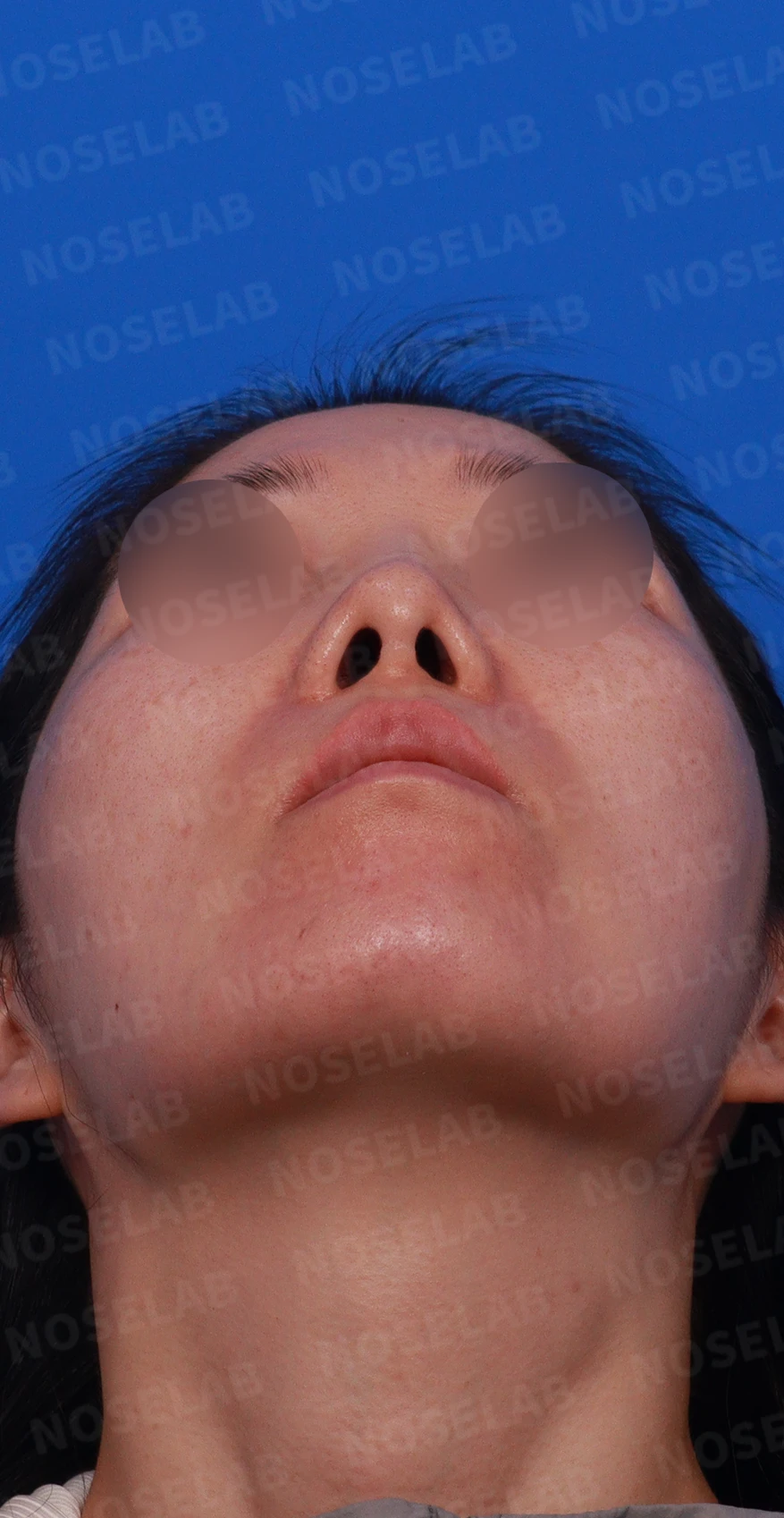
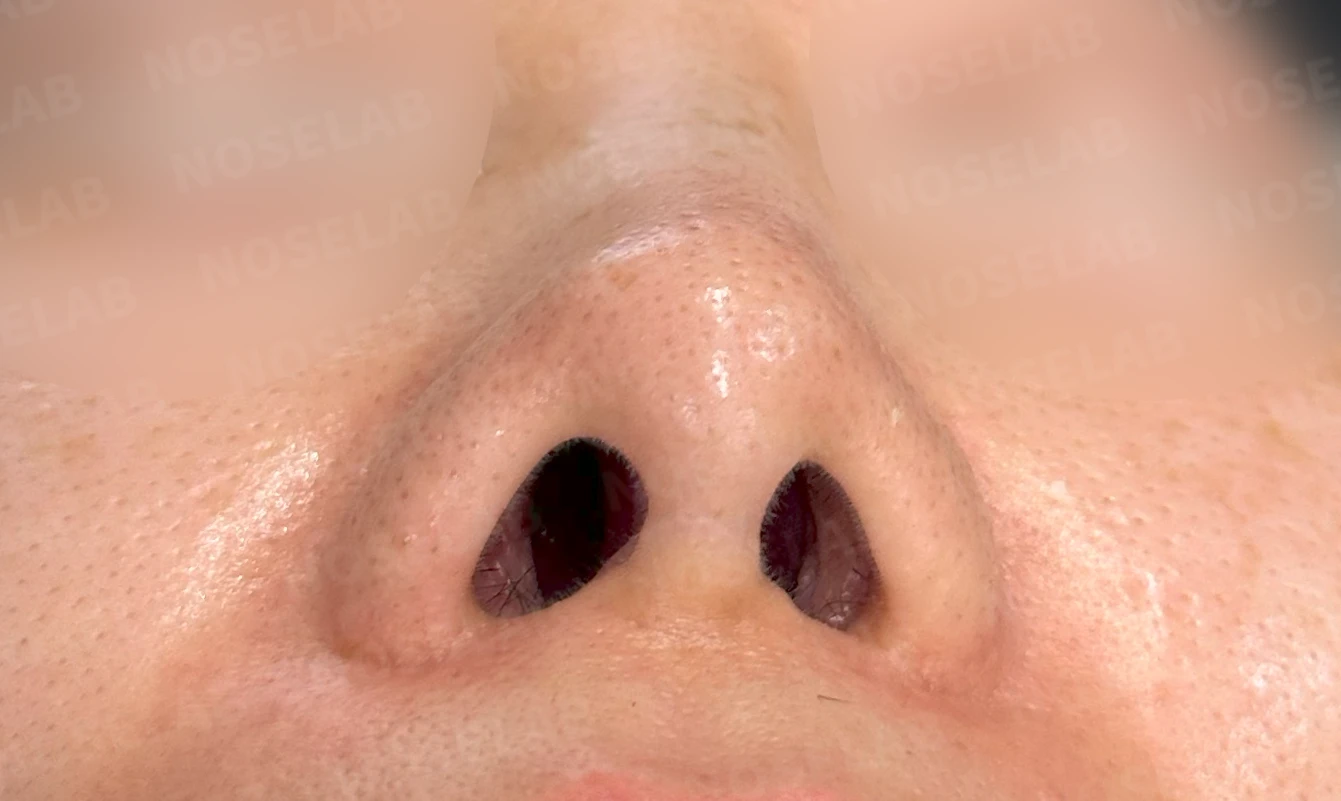
Design consultation: right profile, oblique, and nostril views.
🔧 Surgical plan and procedure
1. Septal extension using autologous rib cartilage
- Correction of the upturned nasal tip
- Reconstruction of tissue with potential contracture
- Establishing a stable support structure
2. Correction of the radix
- Naturally lowering the high glabella start point
- Creating a smooth profile line
3. Correction of crooked nose
- Straightening the crooked nasal bridge with lateral osteotomy
- Restoring symmetry
- Creating a straight bridge line
4. Correction of nasolabial angle
- Appropriately lowering the upturned nasal tip
- Visually improving the long philtrum
- Creating a feminine angle
5. Improving the nasal tip shape
- Softening the sharp, triangular tip into a rounded contour
- Creating a feminine nasal tip
- Natural adjustment of projection
6. Functional improvement (inferior turbinate reduction)
- Relief of rhinitis symptoms
- Improvement of respiratory function
🌟 Surgical results
1. Frontal changes
- Crooked nose straightened
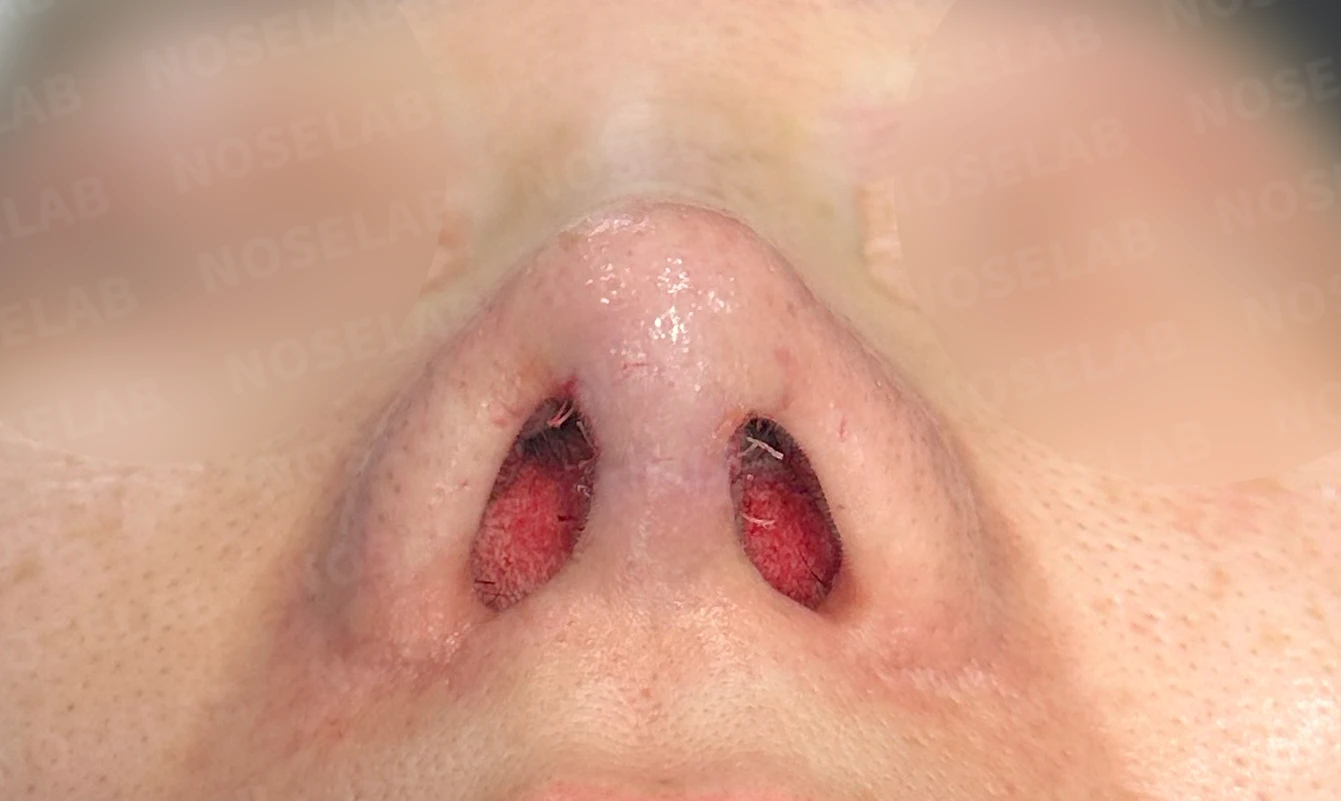
- Reduction of nostril show
- Feminine nasal line created
- Triangular tip softened and rounded
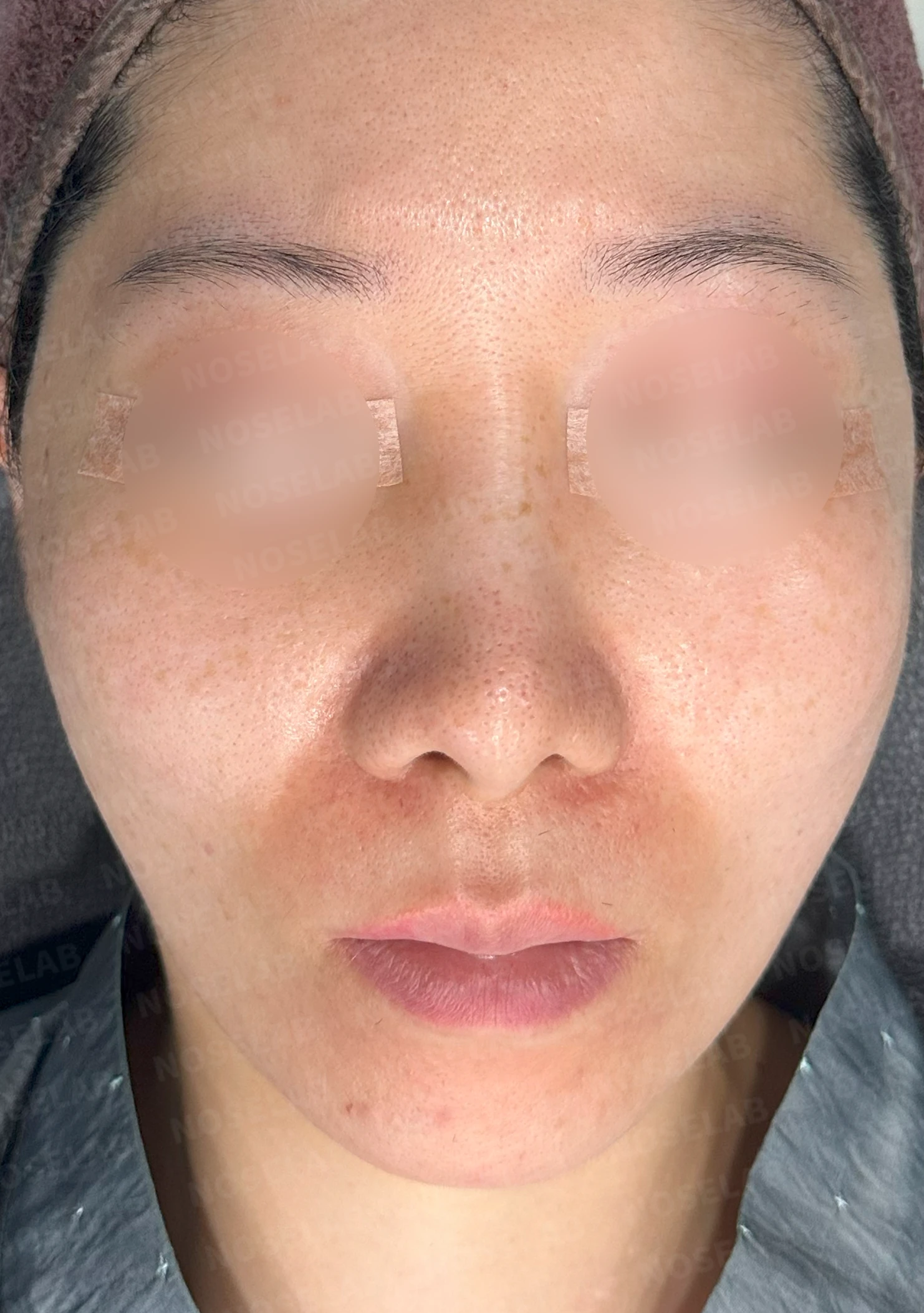
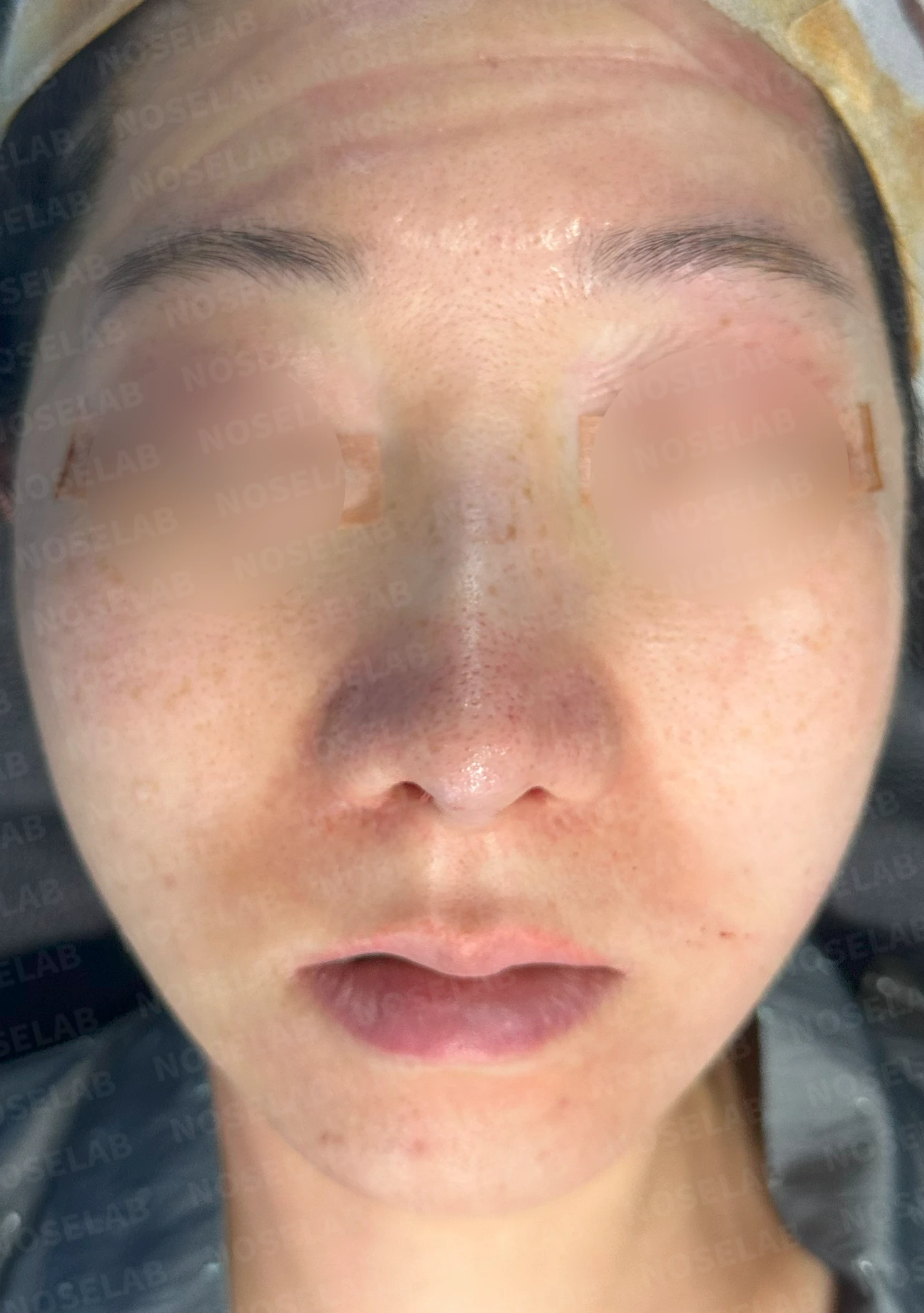
Before surgery / Day 0 immediately after surgery Photos taken immediately after surgery show swelling and may differ from the final result.
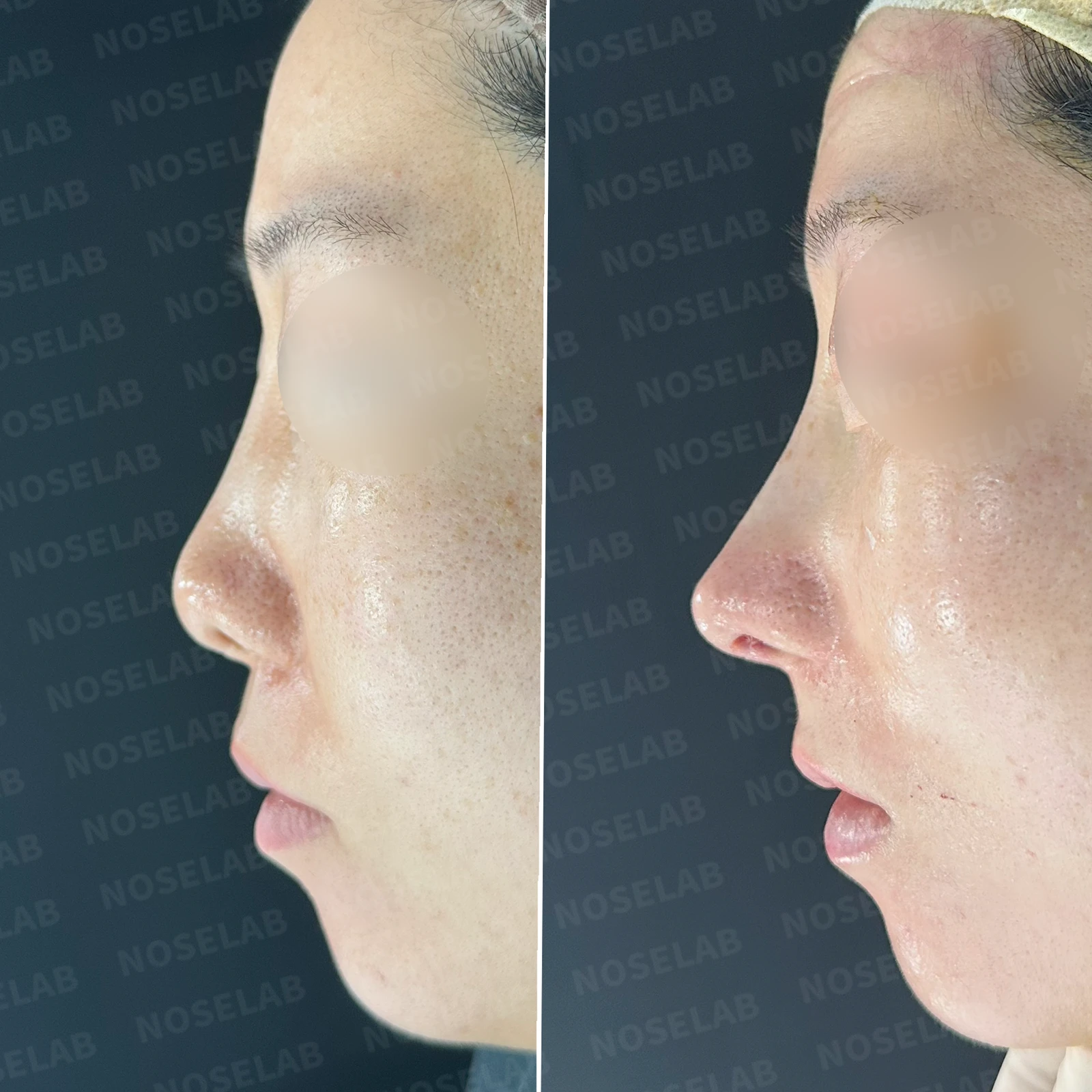
2. Profile changes
- High radix naturally lowered
- Upturned nasal tip lowered appropriately
- Philtrum length visually improved through nasolabial angle correction
- Changed from a rigid, chalk-like bridge to a soft curve
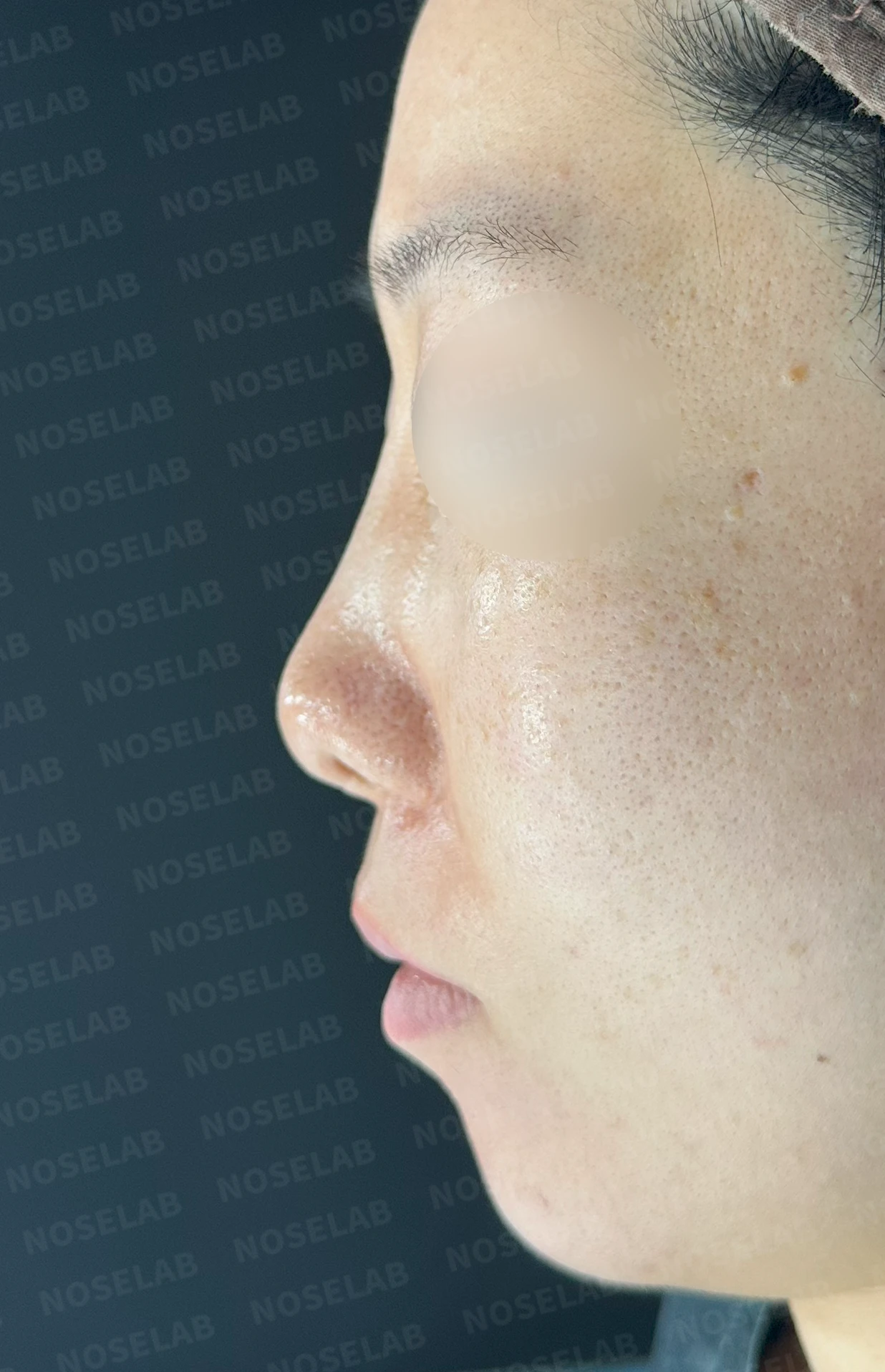
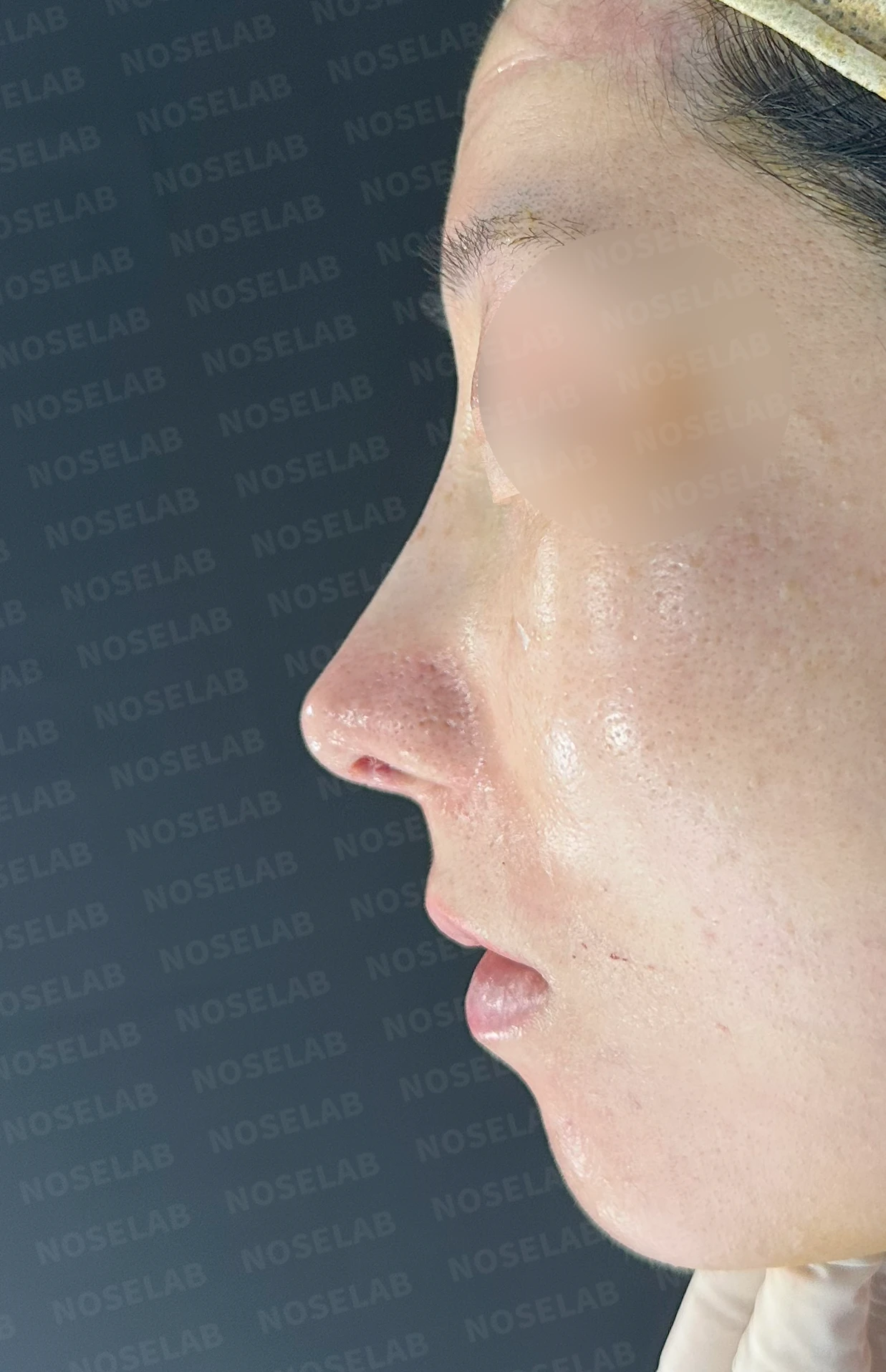
Before surgery / Day 0 immediately after surgery Photos taken immediately after surgery show swelling and may differ from the final result.
3. Overall change in impression
- Shifted from a masculine feel to a feminine impression
- Natural nasal shape
- Balanced harmony with the facial features
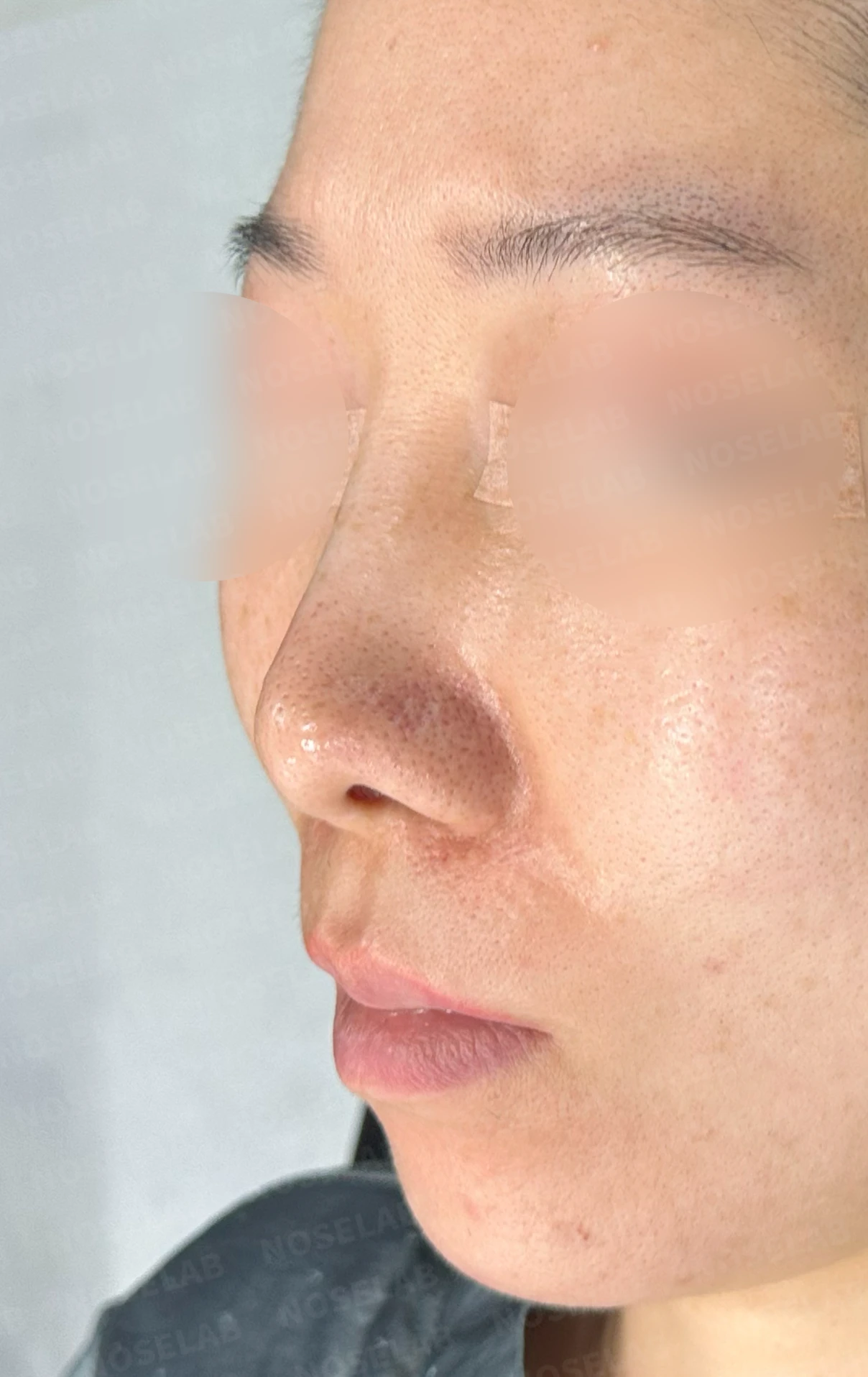
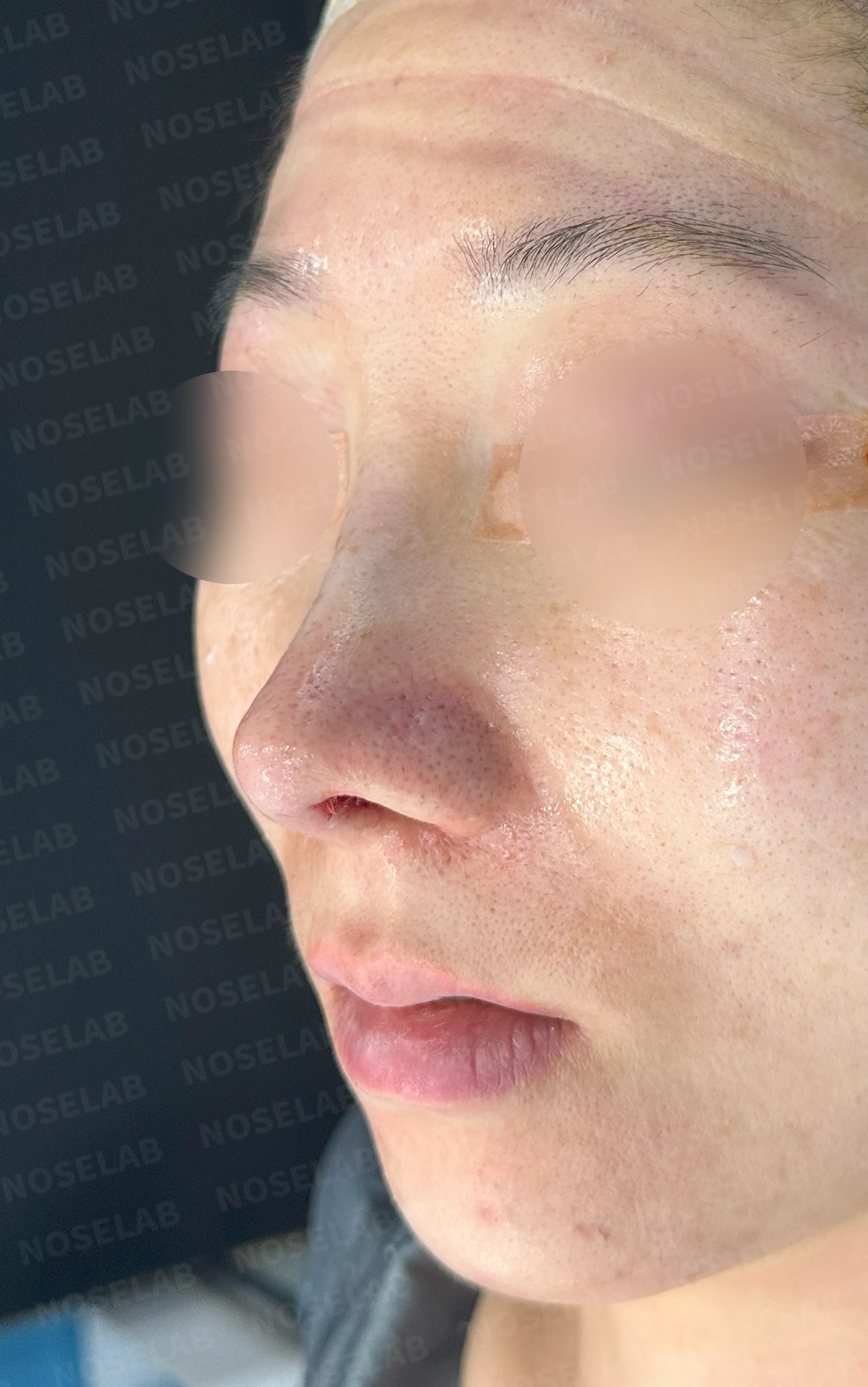
Before surgery / Day 0 immediately after surgery Photos taken immediately after surgery show swelling and may differ from the final result.
Before surgery / Day 0 immediately after surgery Photos taken immediately after surgery show swelling and may differ from the final result.
💡 Specialist opinion
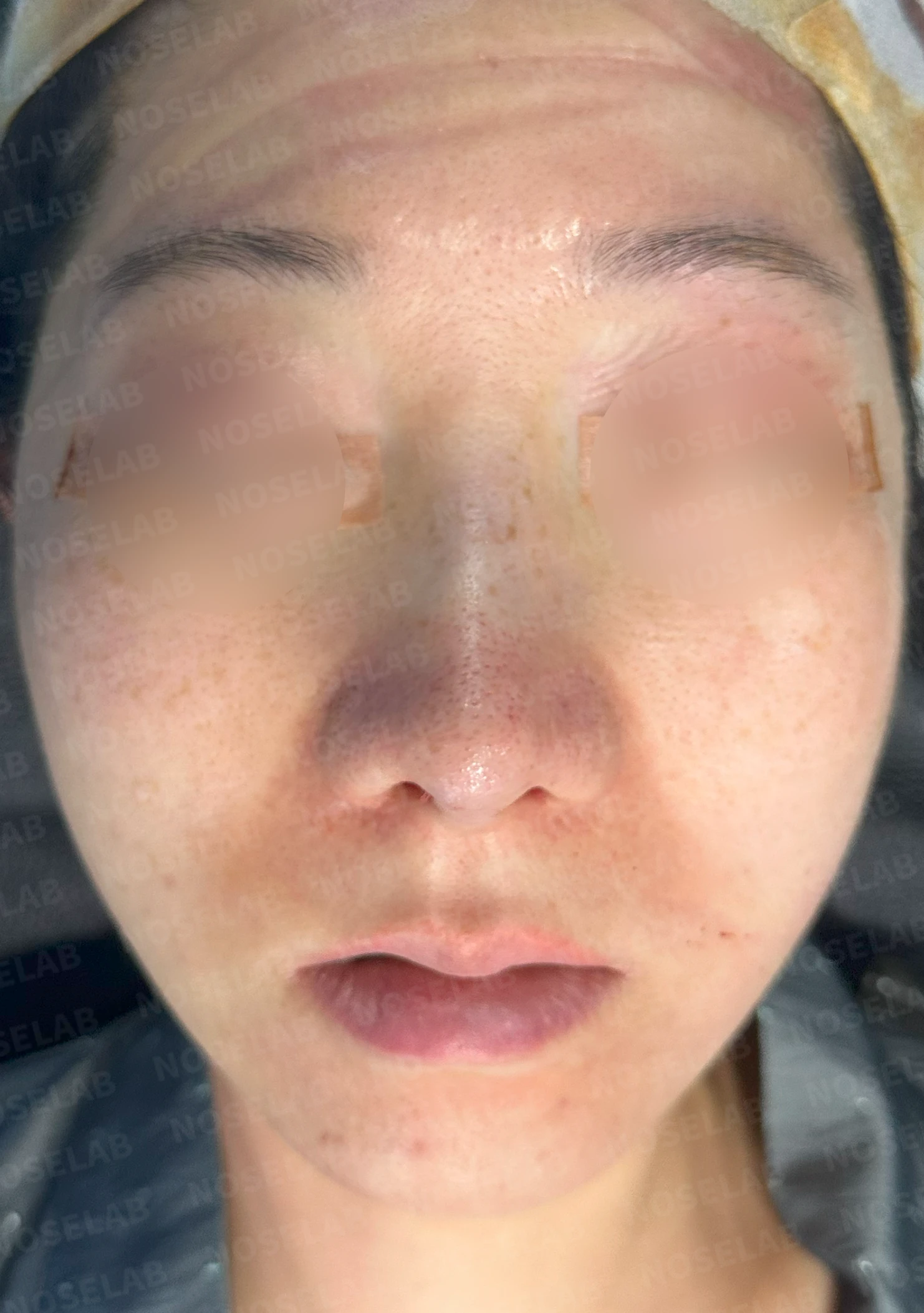
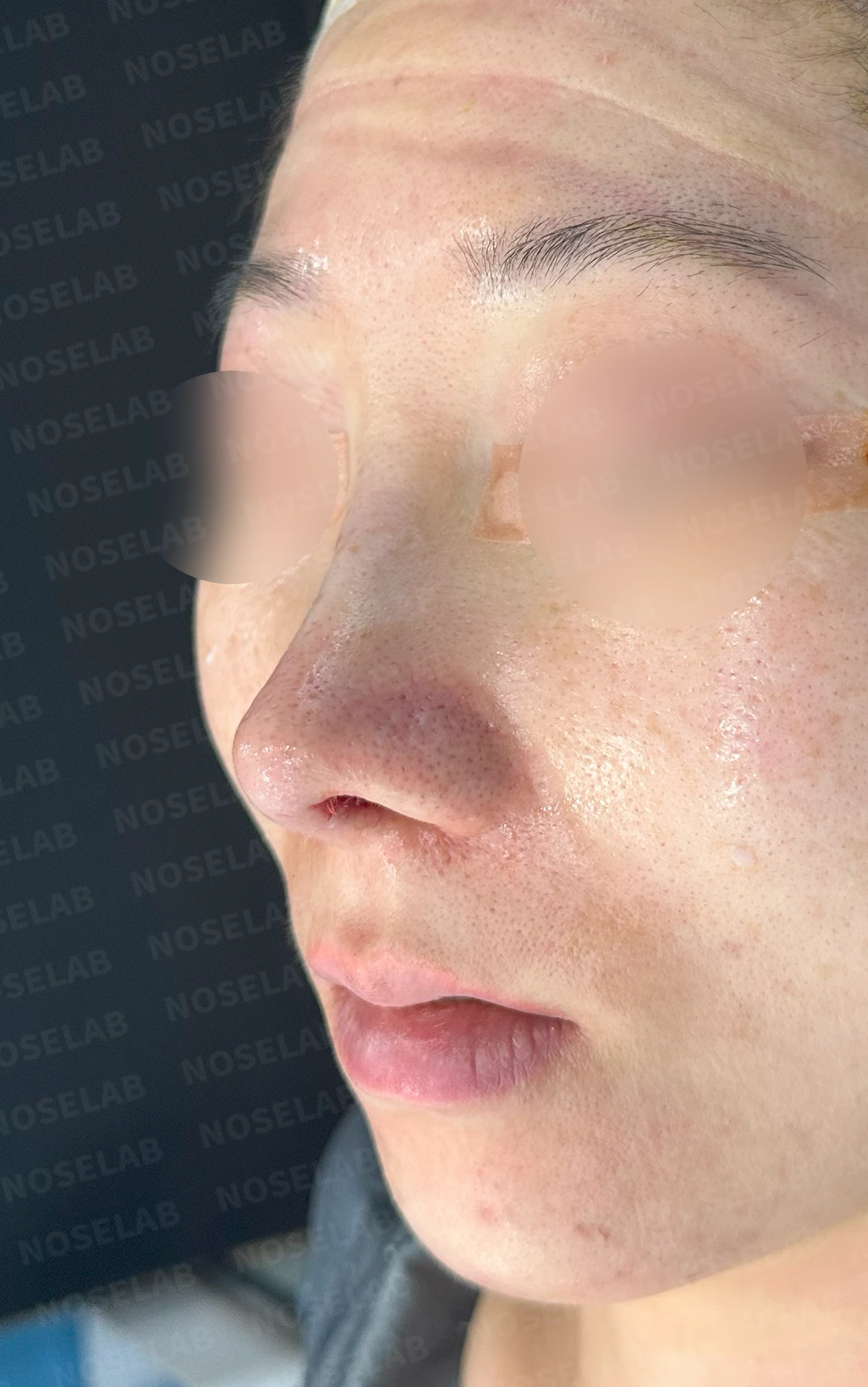
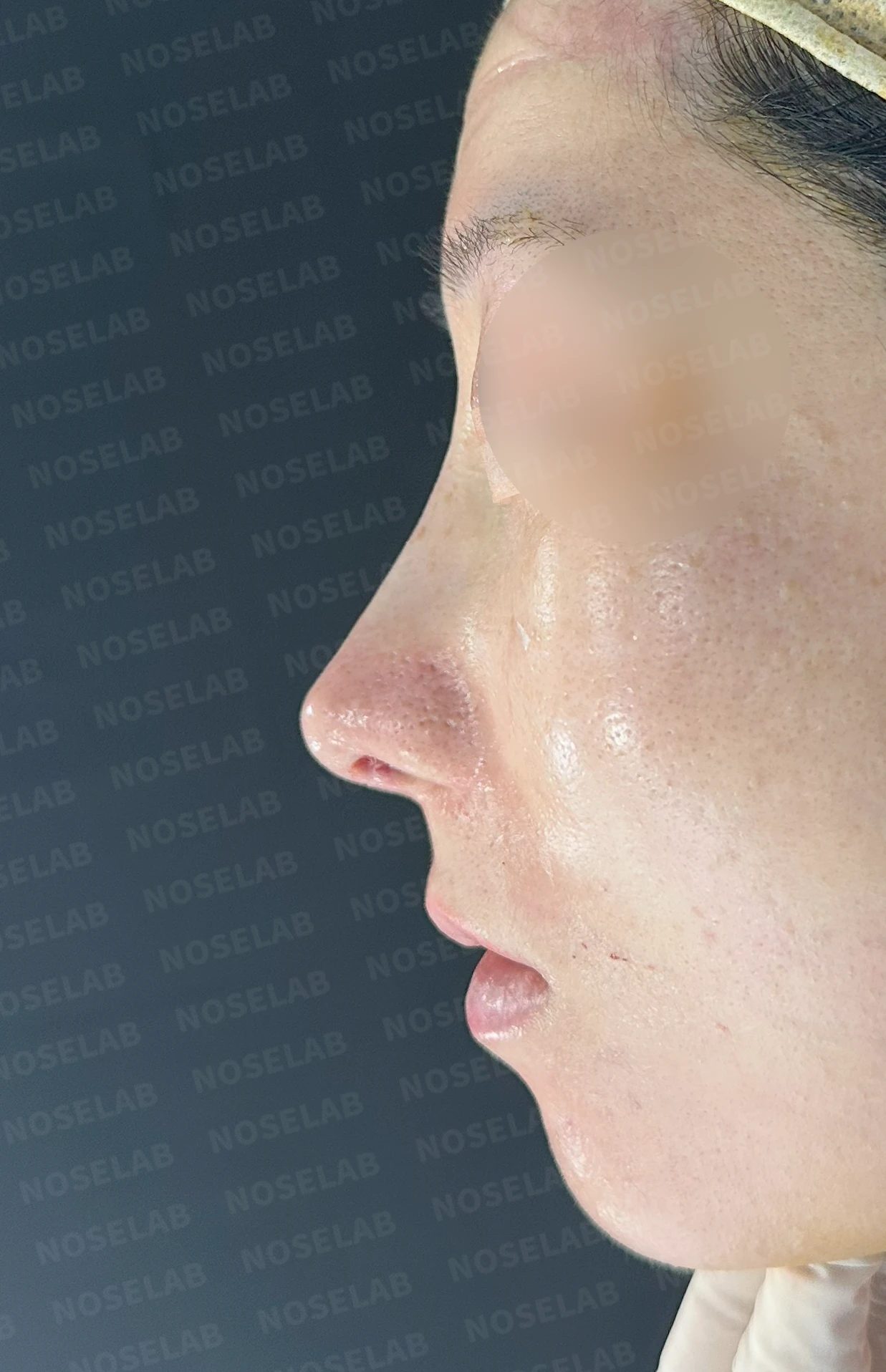
Immediately after surgery (day 0): front, oblique, and profile views. Immediate postoperative photos show swelling and may differ from the final result.
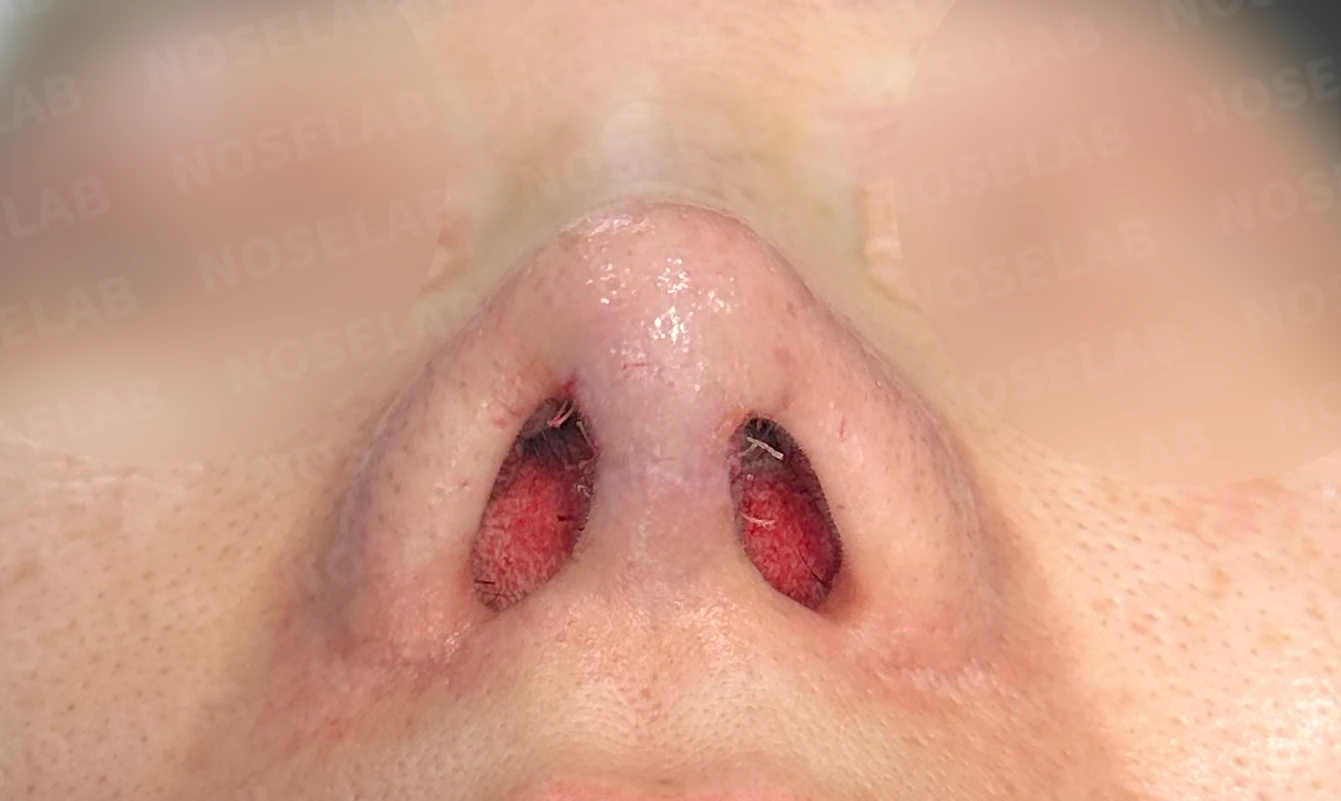
Nostril view on day 0 immediately after surgery. Photos taken immediately after surgery show swelling and may differ from the final result.
This revision rhinoplasty case carried suspected contracture, requiring a particularly meticulous approach. We needed to address simultaneously the unnatural appearance caused by a high radix, the crooked nose, and the upturned tip.
The key was using autologous rib cartilage to build a stable framework while achieving the feminine appearance the patient desired. Lowering a high radix while producing a natural curve requires delicate surgical technique.
By adjusting the nasolabial angle, the upturned tip was lowered without overcorrection, also creating the visual effect of shortening a long philtrum. In addition, the sharp nasal tip was rounded, achieving the soft, feminine look the patient wanted.
In revision rhinoplasty, it is critical to accurately evaluate the scar tissue and altered anatomy from previous surgery, correcting these issues without creating new ones. A cautious approach is especially vital when contracture is suspected, and reconstruction using autologous tissue supports a stable long-term result.
I will continue to carefully analyze each patient's individual condition and goals to provide a tailored surgical plan that fits them best.
This was Dr. Peter C. Kang. Thank you.
#closedrhinoplasty #closedrevisionrhinoplasty #crookednosecorrection #radixcorrection #autologousribcartilage #contractednoserevision #nasolabialanglecorrection #femininenose #revisionrhinoplastyspecialist

Limitations and risks
When autologous rib cartilage is used, scarring and pain may remain at the donor site on the chest, and pneumothorax (pleural injury) can occur rarely. Over time, the grafted cartilage may warp or undergo partial resorption.
When revising after implant removal, contracture may progress again after removal, the nasal height and length may decrease, and staged surgery may be necessary depending on the skin condition.
When the septum is corrected at the same time, nasal obstruction may persist or recur, and in rare cases, septal perforation or changes in smell may occur.
Common potential risks include infection, bleeding, asymmetry, scarring, skin necrosis, and insufficient improvement; results vary depending on individual skin condition and previous surgical history.