Hello, I am Dr. Peter C. Kang.
Today, I would like to introduce a rhinoplasty case of a patient who was concerned about a wide nose. The patient wanted to improve this type of wide nose.
Preoperative design consultation
Let us analyze the patient's preoperative condition in detail:
Front view:
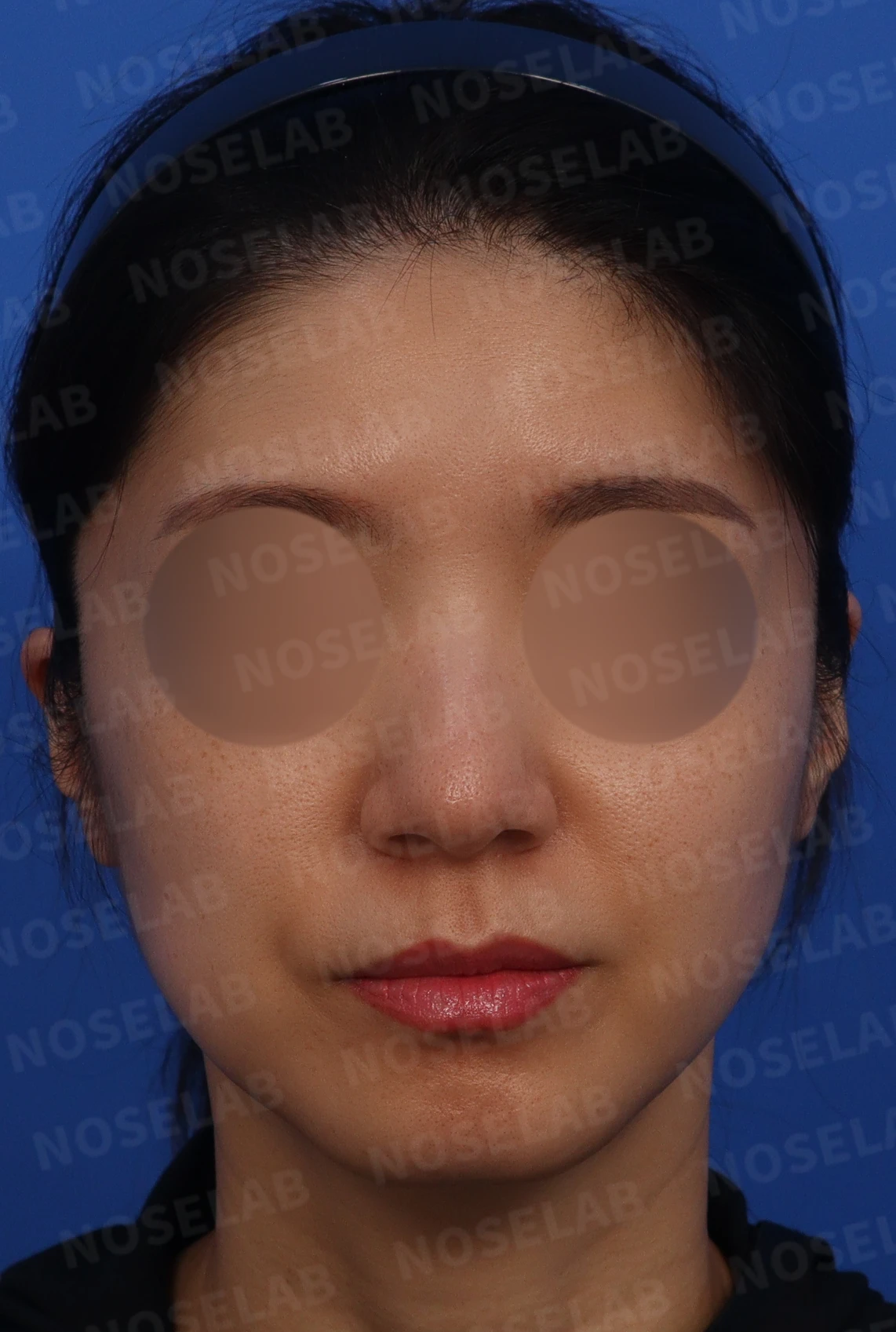
Front view
- Overall large and wide bulbous nose shape
- Nasal tip appears wide and spread out
- Nasal bridge is also wide
Profile view:
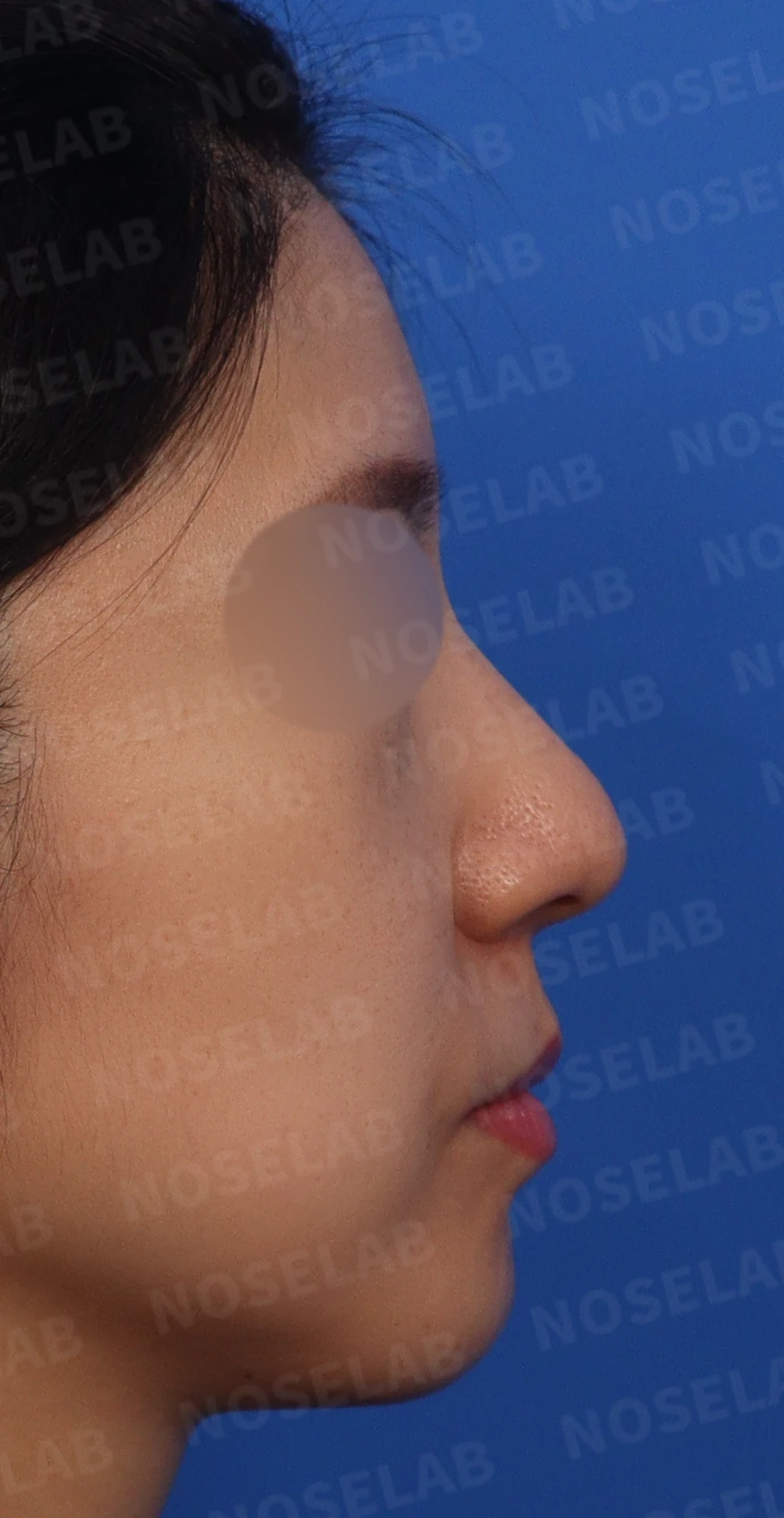
Profile view
- Nasal tip appears slightly drooped (expected to be more noticeable when smiling)
- Acute nasolabial angle, giving the appearance of a protruding mouth
Oblique view:
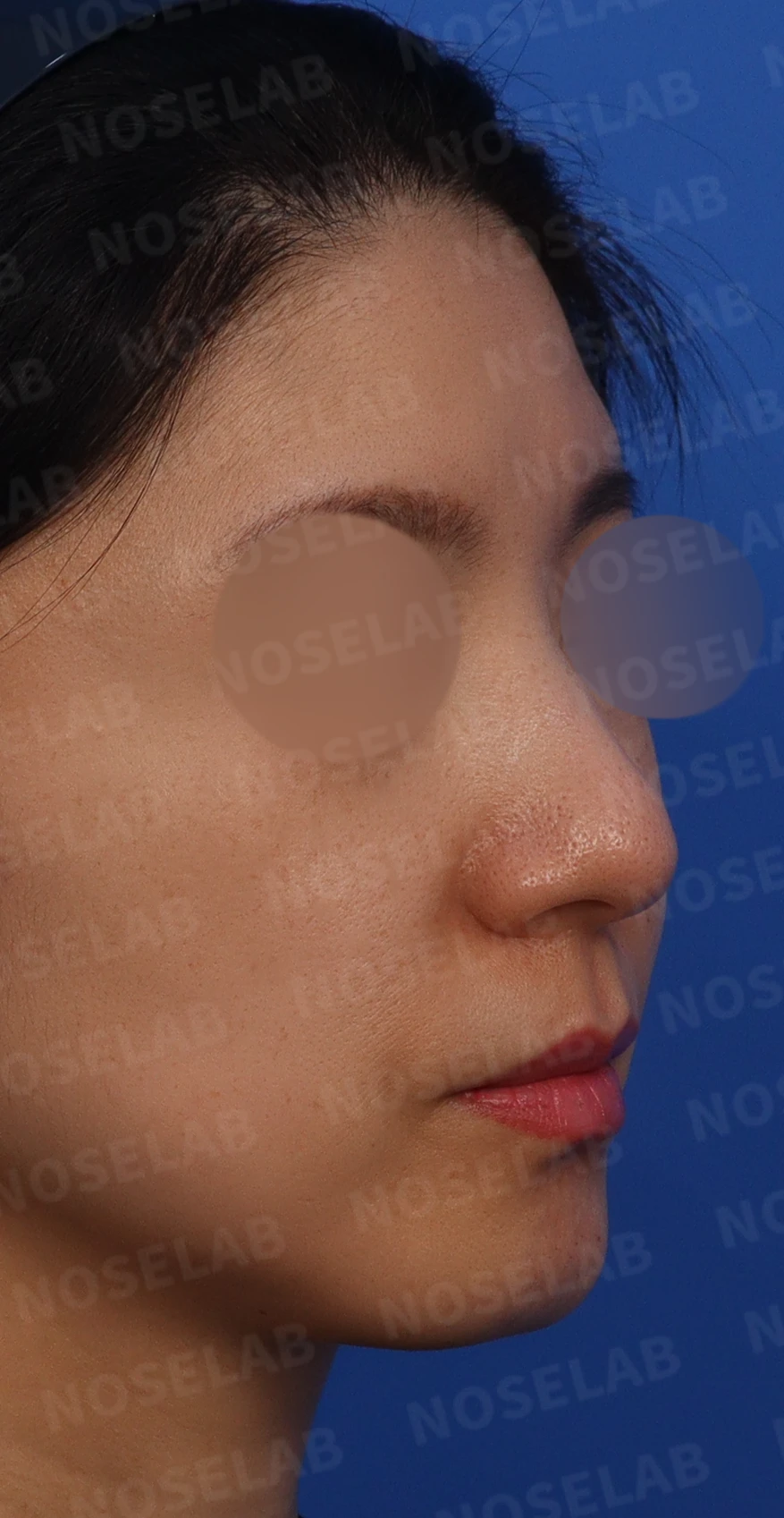
Oblique view
- The widened shape of the nose is more pronounced
- Drooping of the nasal tip is clearly visible
Nostrils:
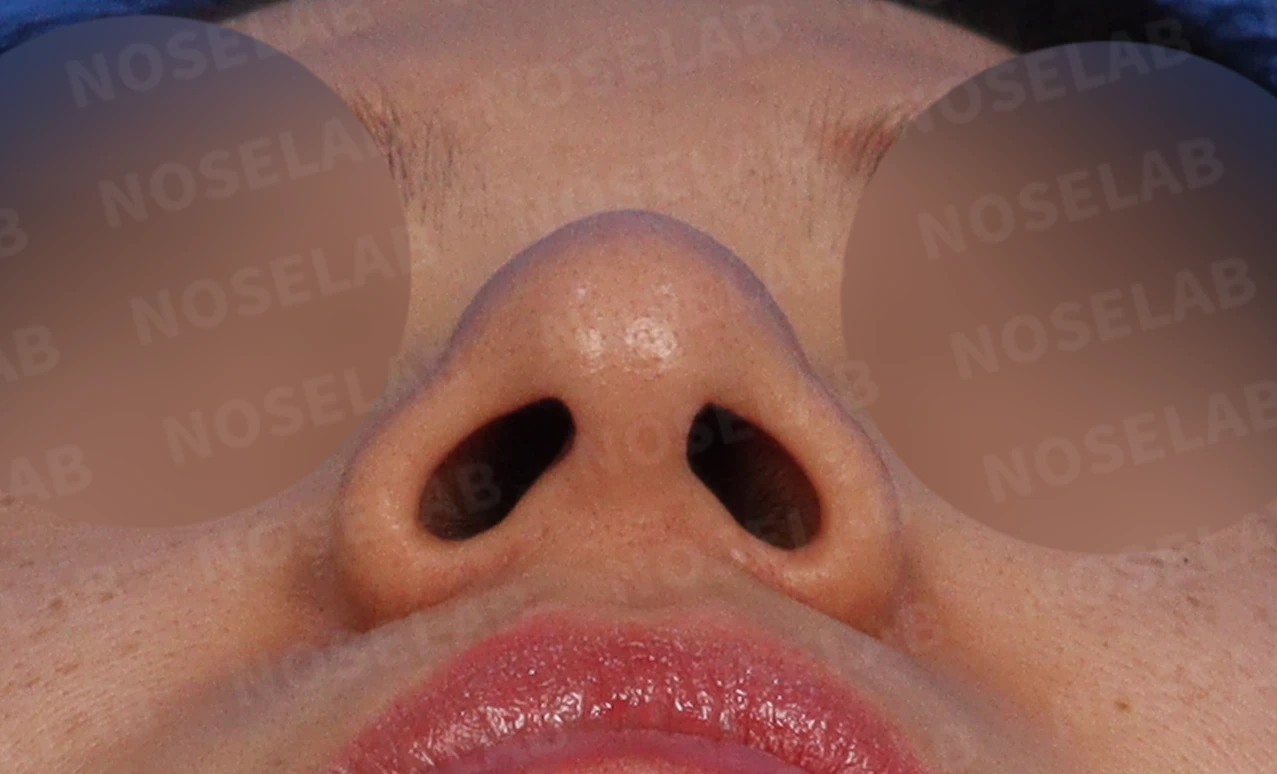
This is the basal (nostril) view.
- Nostrils appear wide
- The shape of the lower lateral cartilages appears indistinct
Surgical plan
Taking into account the patient's condition and requests, the following surgical plan was established:
a) Bulbous nose correction
b) Lateral osteotomy of the nasal bones
c) Nasolabial angle correction
d) Nasal obstruction correction (nasal valve reconstruction)
Surgical procedure
The following procedures were performed using a closed approach:
a) Bulbous nose correction:
- Partial resection of subcutaneous tissue: Skin thickness was reduced by partially removing subcutaneous tissue from both sides of the nasal tip.
- Cartilage suturing: The shape of the nose was improved by repositioning and suturing the lower lateral cartilages.
- Nasal tip surgery: The nasal tip was raised to add three-dimensional projection.
b) Lateral nasal osteotomy:
- Lateral osteotomy was performed to correct the wide nasal bones.
c) Nasolabial angle correction:
- The nasolabial angle was corrected to help improve the appearance of the protruding mouth.
d) Nasal valve reconstruction:
- Because internal nasal valve stenosis was suspected during nasal obstruction examinations, nasal valve reconstruction was performed.
Additional surgical details:
- Because the lower lateral cartilages were thin and small, they were reinforced using septal cartilage.
All procedures were performed using a closed approach, completing the surgery without external scars.
Before-and-after photo comparison
Comparing photos taken immediately after surgery on day 0 shows the following improvements: Photos taken immediately after surgery show swelling and may differ from the final result.
Front view:
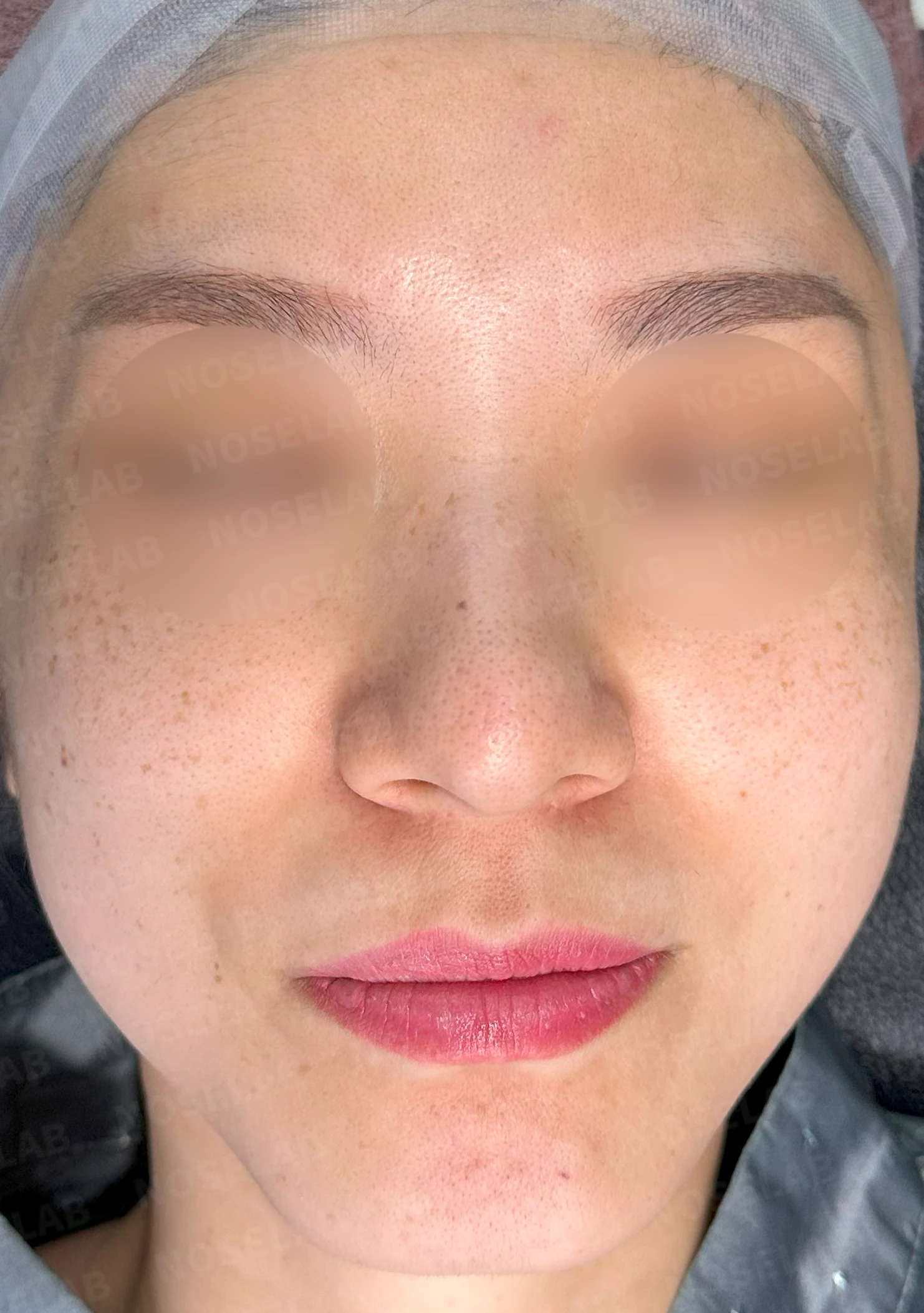
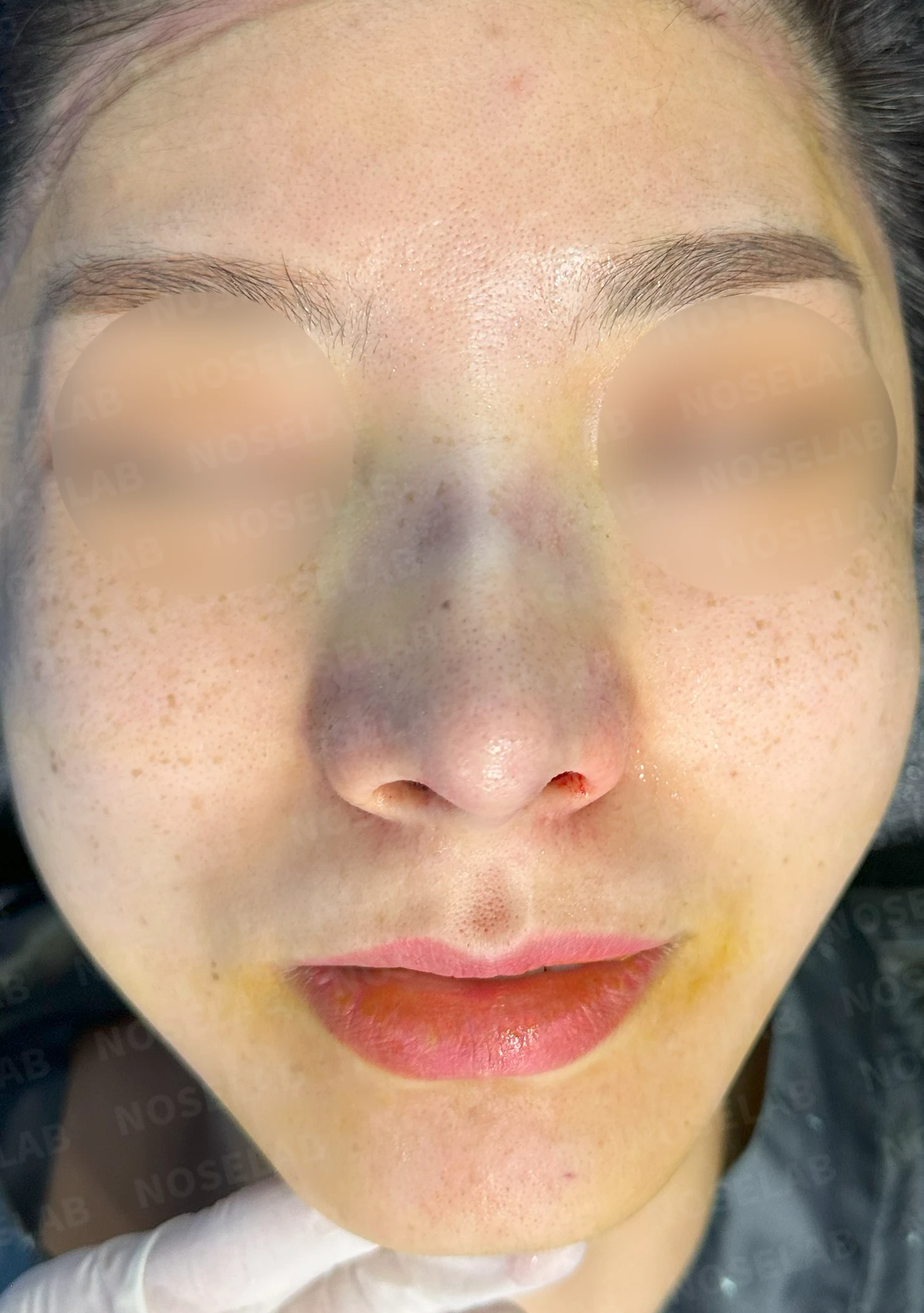
Before surgery / Day 0 immediately after surgery Photos taken immediately after surgery show swelling and may differ from the final result.
- The nose, which previously appeared wide overall, changed to a slimmer and well-balanced appearance.
- The wide and spread-out nasal tip was suitably narrowed and gained projection.
- The wide feeling of the nasal bridge was improved, giving a refined overall impression.
Profile view:
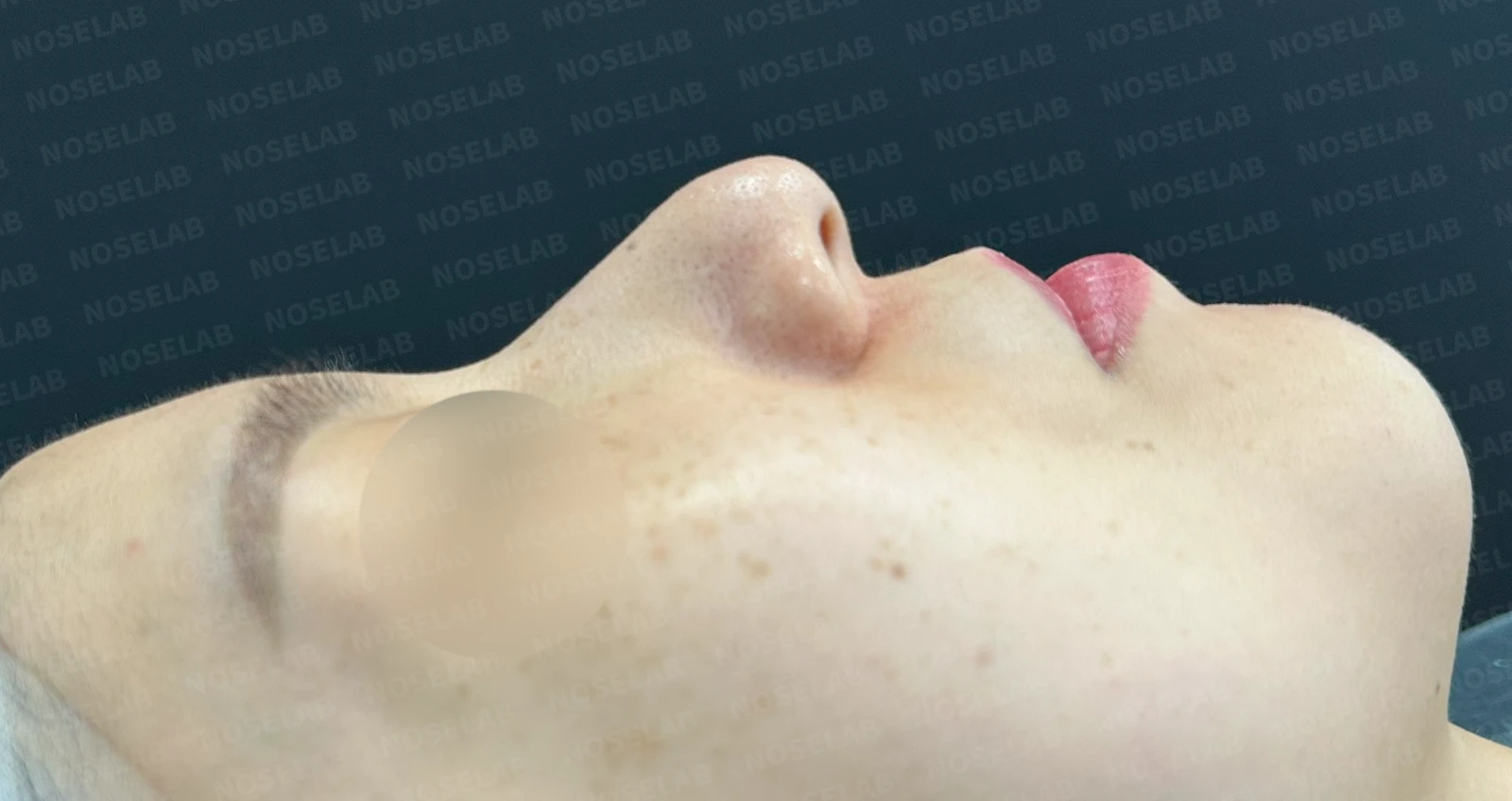
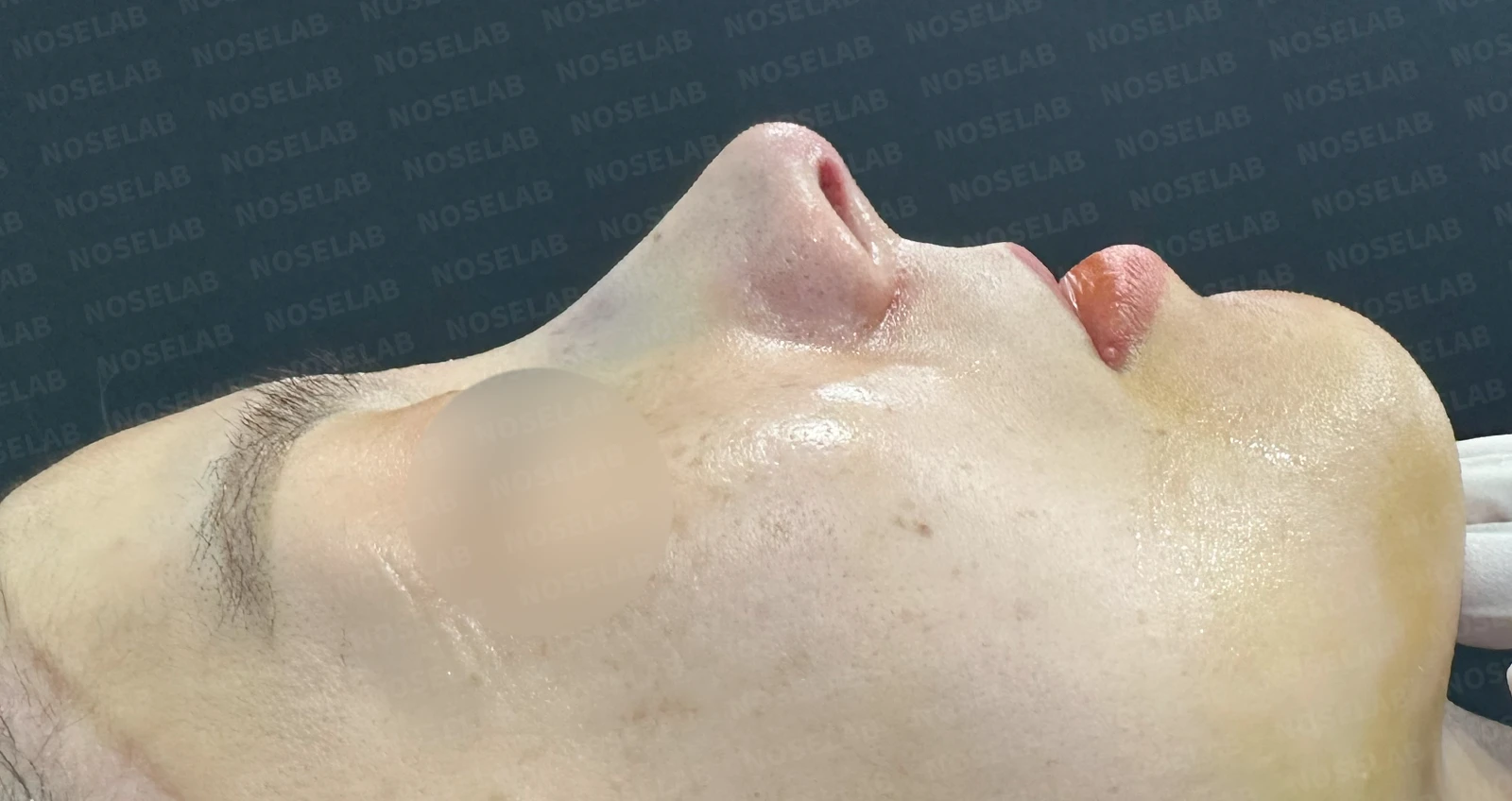
Before surgery / Day 0 immediately after surgery Photos taken immediately after surgery show swelling and may differ from the final result.
- The slightly drooping nasal tip was appropriately elevated, improving overall facial balance.
- The nasolabial angle was corrected, improving the harmony between the nose and lips.
- The overall line of the nose became smoother and more natural.
Oblique view:
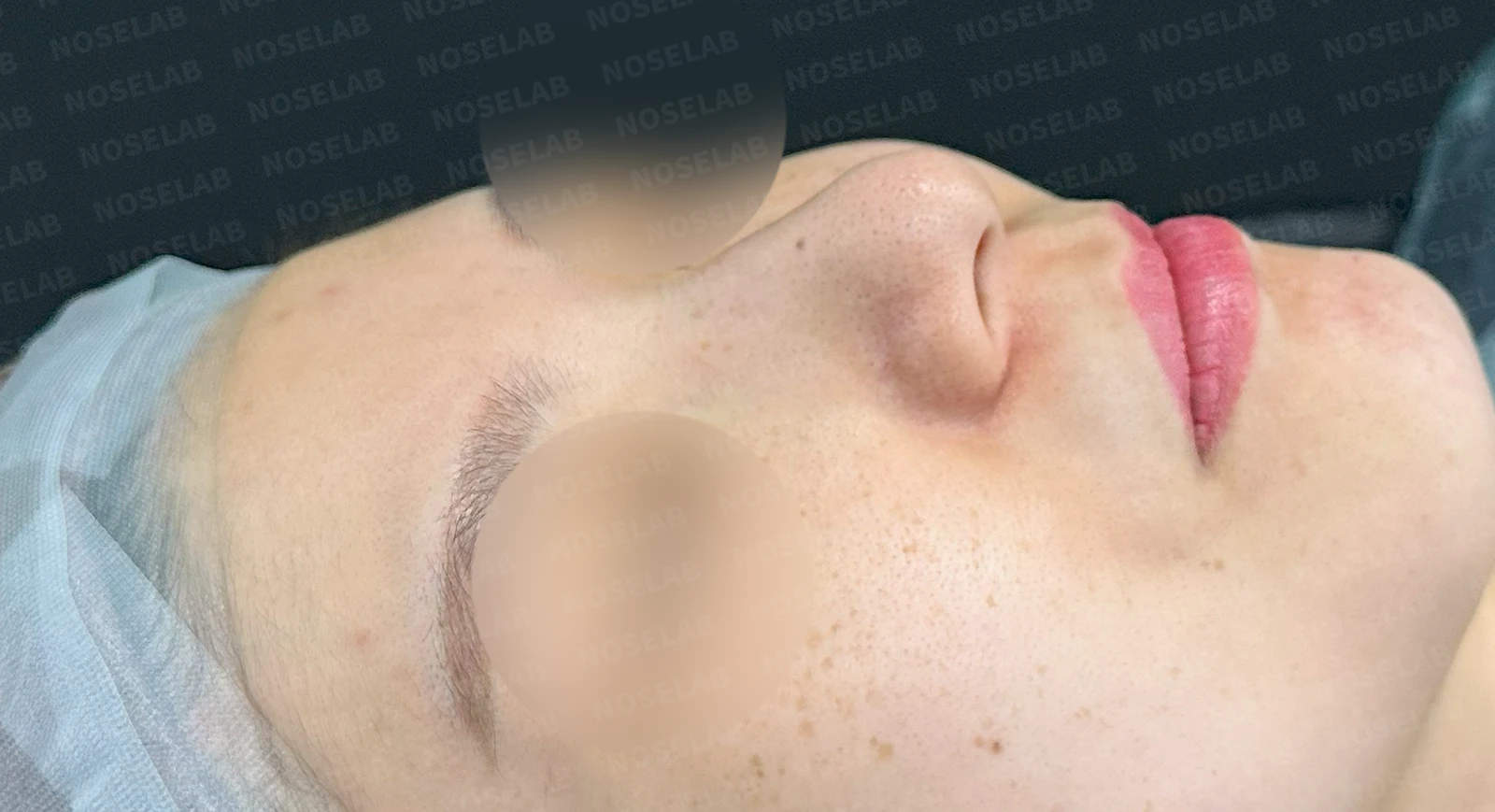
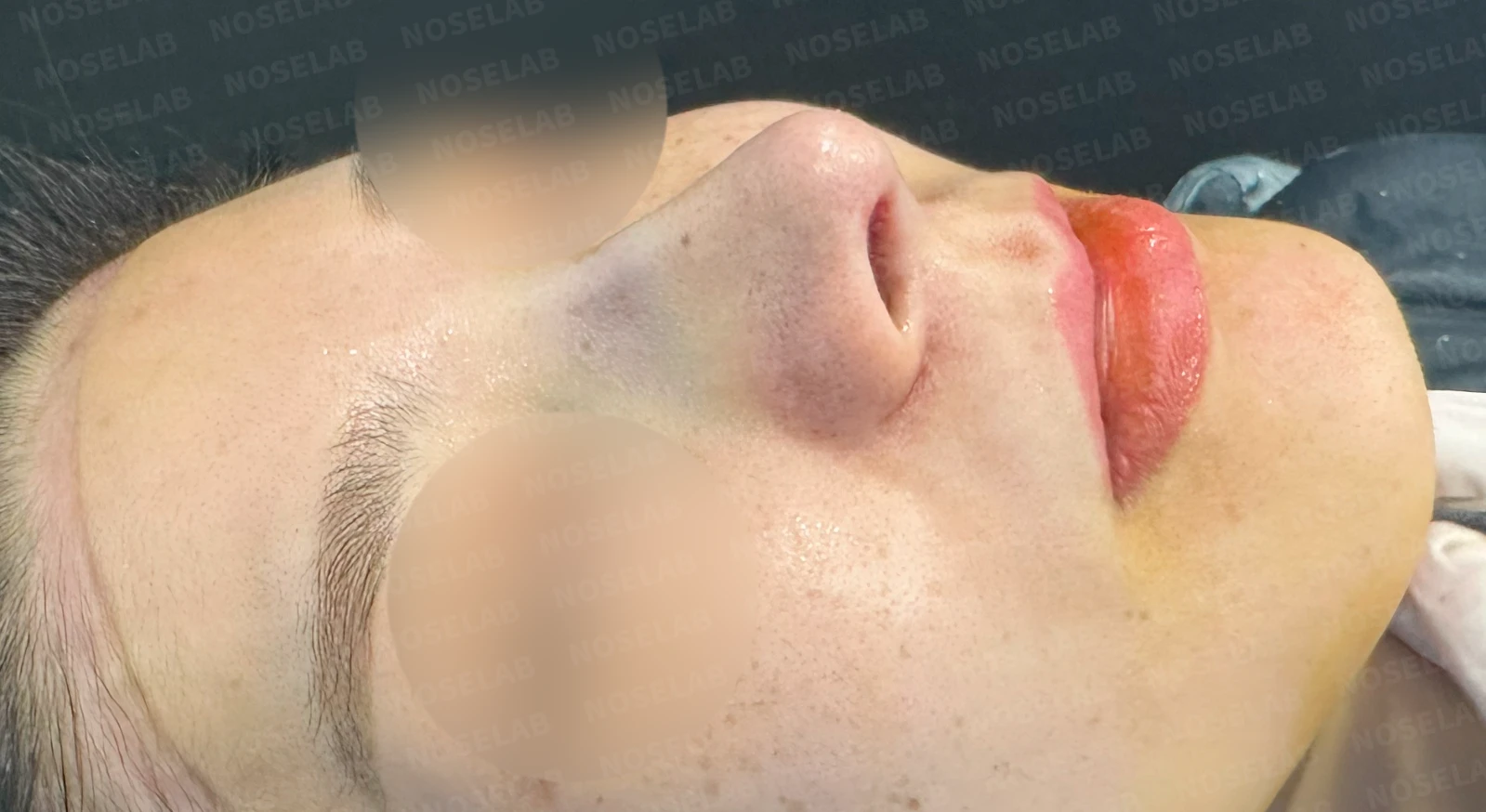
Before surgery / Day 0 immediately after surgery Photos taken immediately after surgery show swelling and may differ from the final result.
- The contour of the wide nose was improved, showing a more refined appearance.
- Nasal tip projection improved, enhancing overall facial harmony.
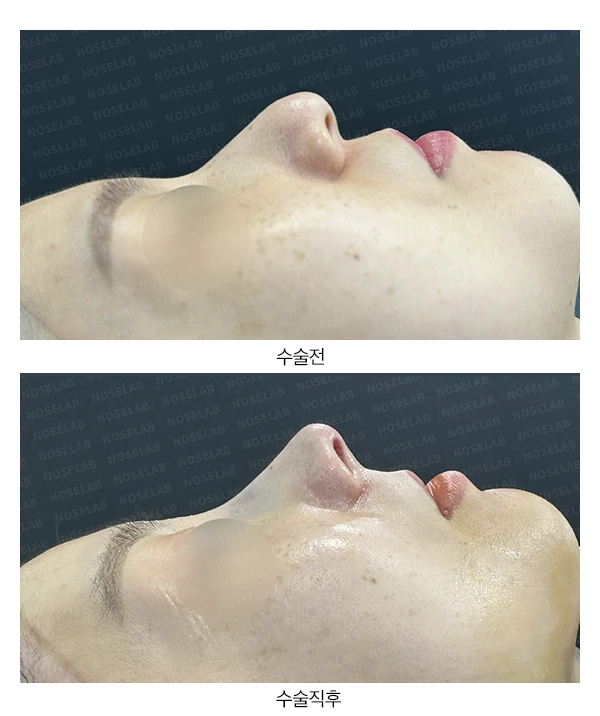
Nostrils:
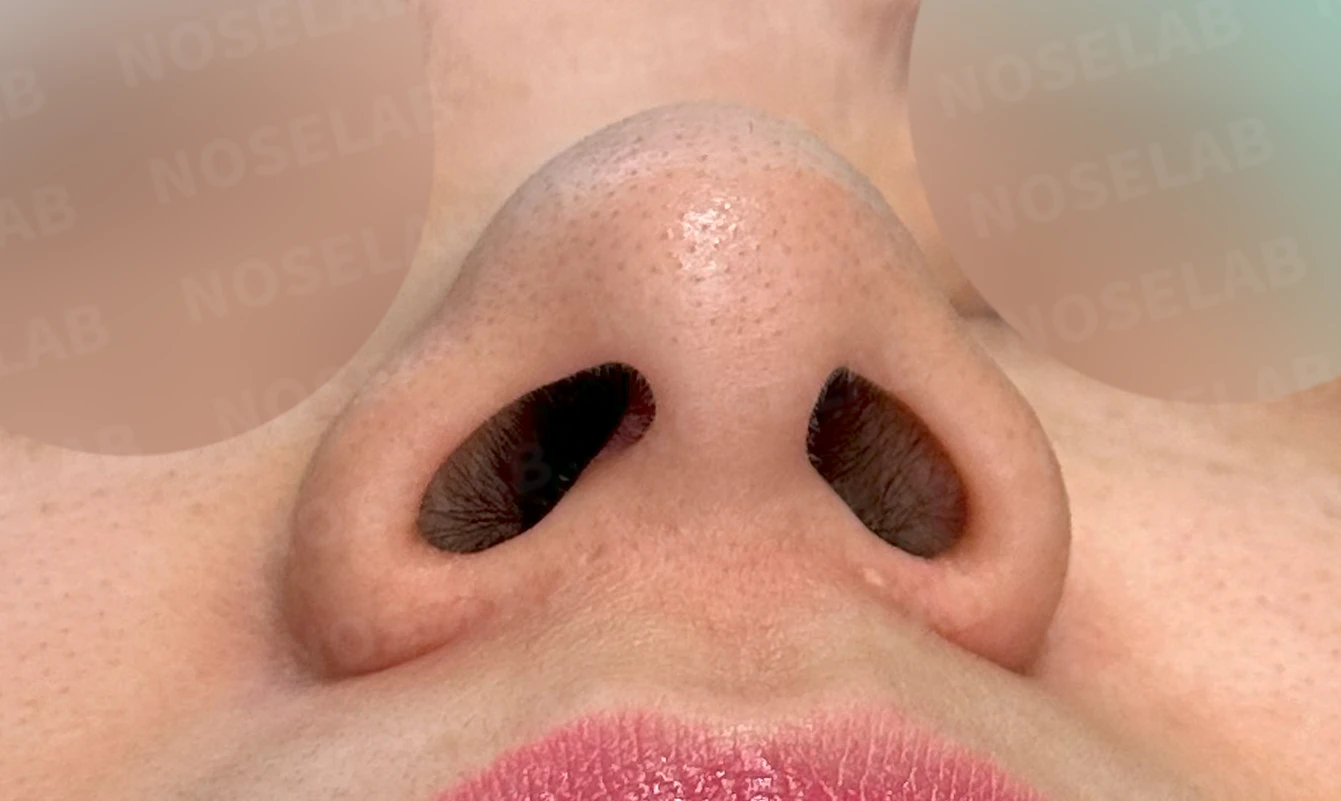
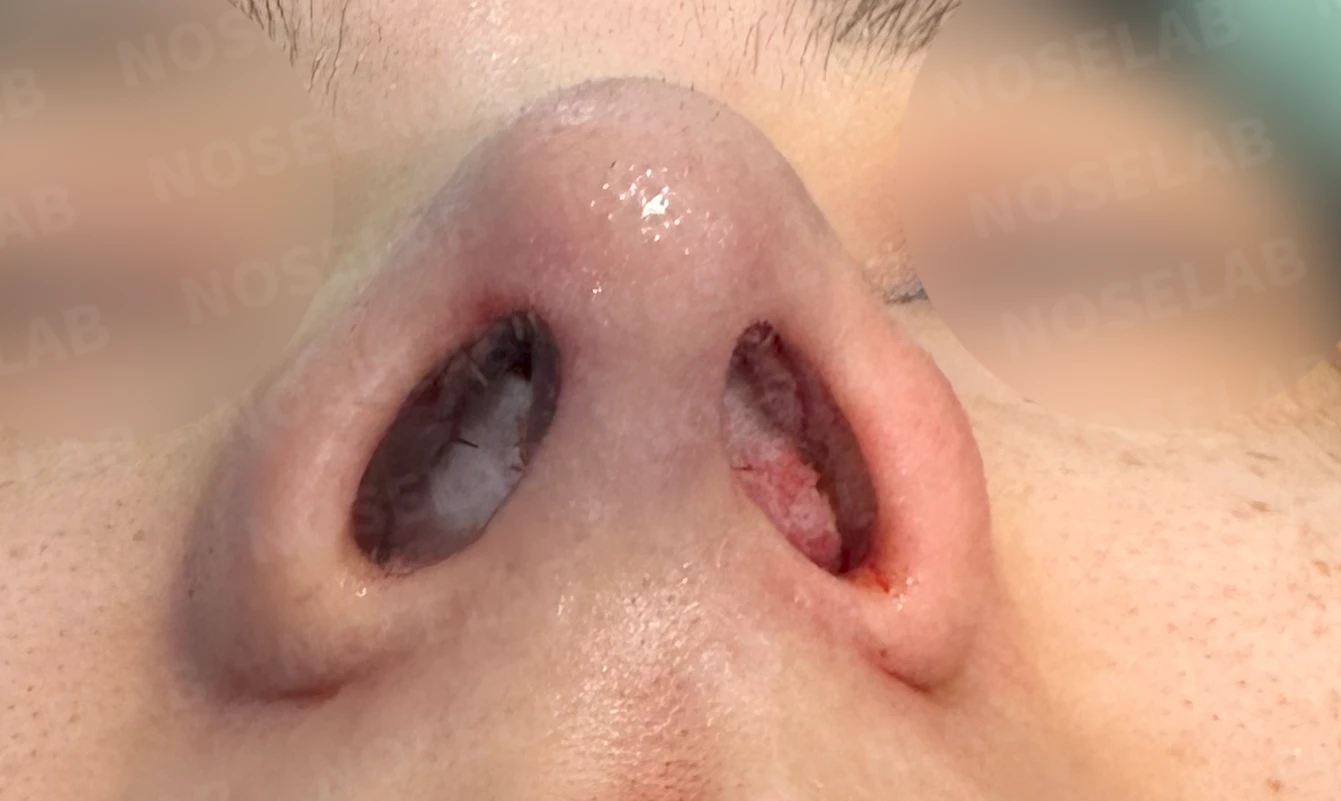
Before surgery / Day 0 immediately after surgery Photos taken immediately after surgery show swelling and may differ from the final result.
- The size of the nostrils, which appeared wide, was appropriately reduced.
- The definition of the lower lateral cartilages became clearer, resulting in a more aesthetically pleasing appearance.
- Overall symmetry was improved.
5. Photos immediately after surgery on day 0 Photos taken immediately after surgery show swelling and may differ from the final result.
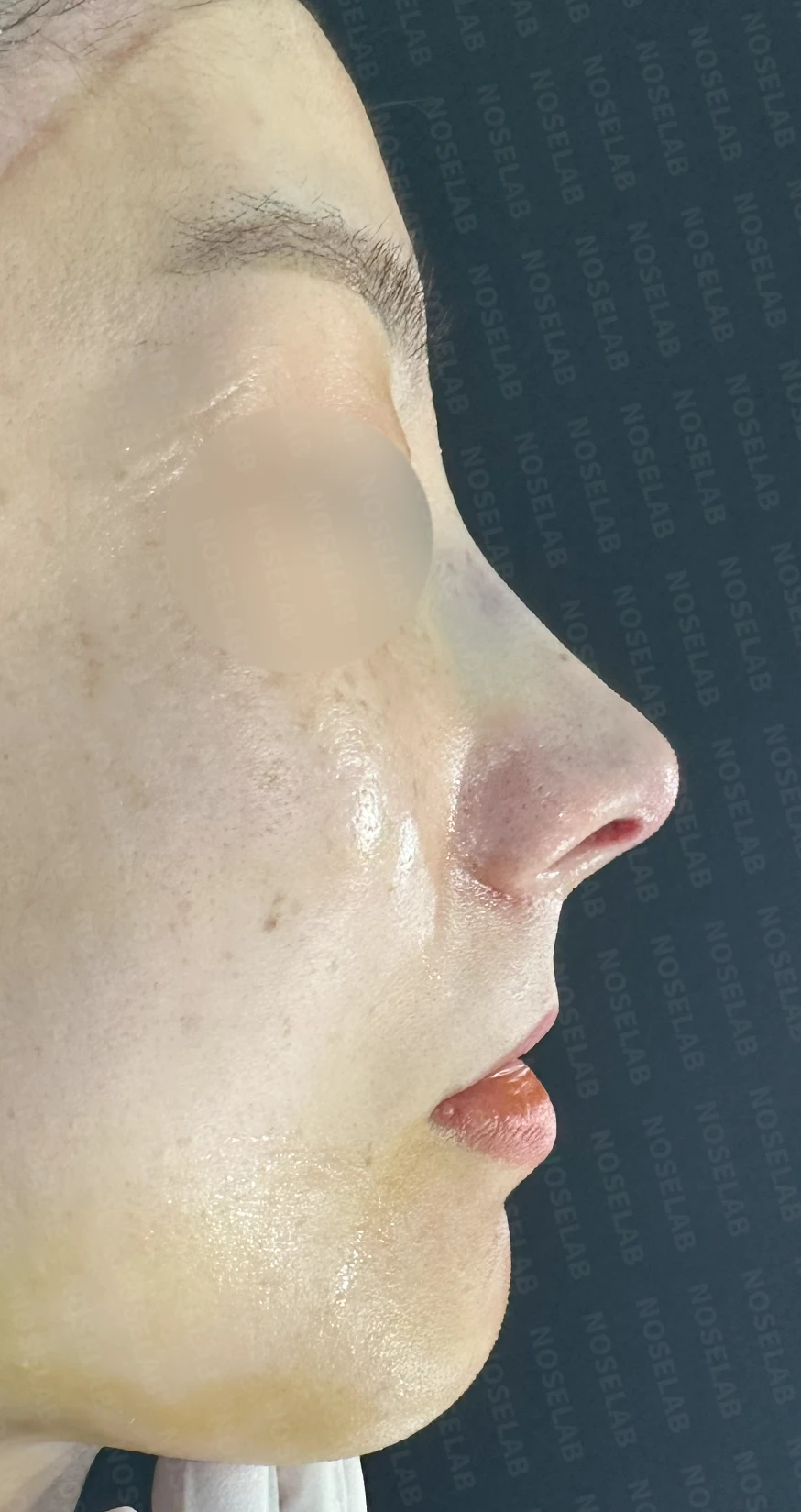
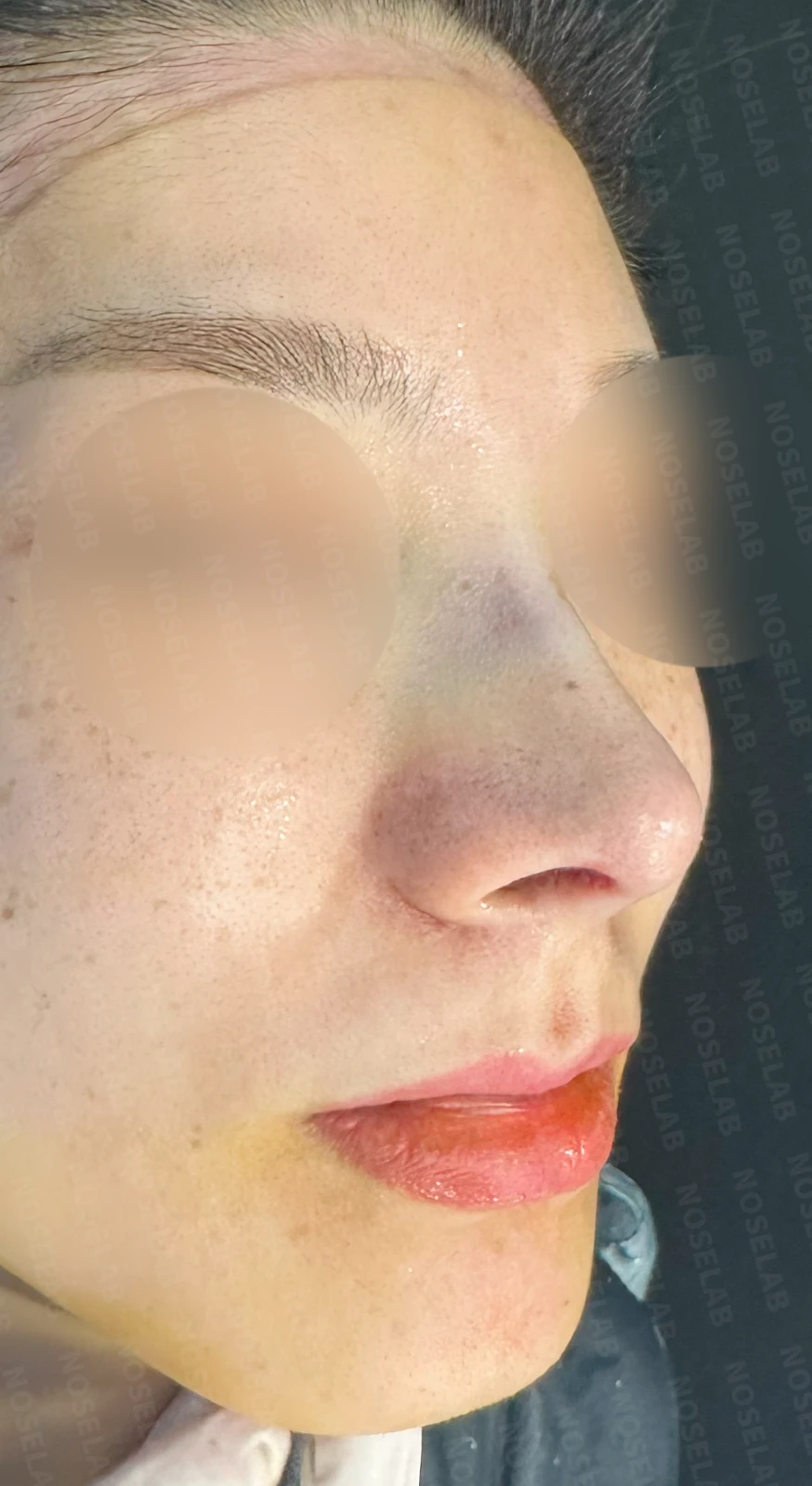
Front, profile, and oblique views immediately after surgery on day 0 Photos taken immediately after surgery show swelling and may differ from the final result.
Basal (nostril) view immediately after surgery (Day 0)Immediate postoperative photos show swelling and may differ from the final result.
Conclusion
This is an example of a successful correction for a patient with a wide, bulbous nose. Correcting a bulbous nose is not simply about reducing the size of the nose, but about considering overall facial balance to create a natural and harmonious result.
In this surgery, complex techniques such as partial resection of subcutaneous tissue, cartilage suturing, and nasal tip surgery were used to correct the wide nose. In particular, when the lower lateral cartilages are thin and small, it is difficult to achieve good results simply by reducing volume. Therefore, reinforcing them with septal cartilage ensured structural stability while shaping an aesthetically pleasing contour.
Correcting the wide nasal bones through lateral osteotomy and improving the harmony between the nose and lips through nasolabial angle correction also played a major role in enhancing overall facial balance.
Furthermore, in this case, functional improvements were achieved alongside cosmetic refinement. By concurrently performing nasal valve reconstruction to correct the internal nasal valve stenosis identified during the nasal obstruction evaluation, the patient's breathing function was also improved.
Performing this entire process through a closed approach was very helpful in shortening the recovery period and minimizing visible scarring.
Closing remarks
I hope this case offers helpful insight to those concerned about a wide or bulbous nose. Correcting a bulbous nose requires a delicate approach that considers overall facial harmony rather than just size reduction. In addition, addressing both cosmetic and functional improvements is essential to achieve the intended result.
NOSELAB provides customized surgical plans for each patient based on up-to-date medical techniques and extensive clinical experience. If you are considering rhinoplasty, we encourage you to consult with a specialist to find the approach best suited to you.
NOSELAB is here to help you achieve a healthy, aesthetically pleasing nose. Thank you.
FAQ
Q1: Is complex bulbous nose correction possible through a closed approach?
A1: Yes, it is possible. For an experienced specialist, complex bulbous nose corrections can be performed using a closed approach. This method offers the advantages of a faster recovery and no external visible scarring.
Q2: Can the nose widen again after bulbous nose correction?
A2: With appropriate surgical techniques and post-operative care, the results can be maintained for a long time. However, natural changes, such as decreased skin elasticity with aging, may occur.
Q3: When can I return to daily activities after surgery?
A3: Although results vary by individual, daily activities are generally possible after 1 to 2 weeks. It takes approximately 3 to 6 months to see full recovery and the final result.
#rhinoplasty #bulbousnosecorrection #widenosecorrection #tiprhinoplasty #nasalvalvereconstruction #closedrhinoplasty #nasalobstructionrelief #ENTspecialistrhinoplasty #naturalnose #bridgerhinoplasty #nasolabialanglecorrection

Limitations and risks
When the septum is corrected at the same time, nasal obstruction may persist or recur, and in rare cases, septal perforation or changes in smell may occur.
Common potential risks include infection, bleeding, asymmetry, scarring, skin necrosis, and insufficient improvement; results vary depending on individual skin condition and previous surgical history.