Hello.
I am Dr. Peter C. Kang, medical director.
Today, I would like to talk about surgery to correct a drooping nasal tip.
Preoperative design consultation
On the front view, the nasal tip looks wide and nostril show is excessive. On the profile view, the nasal tip appears drooping, and the patient presents with a protruding mouth.
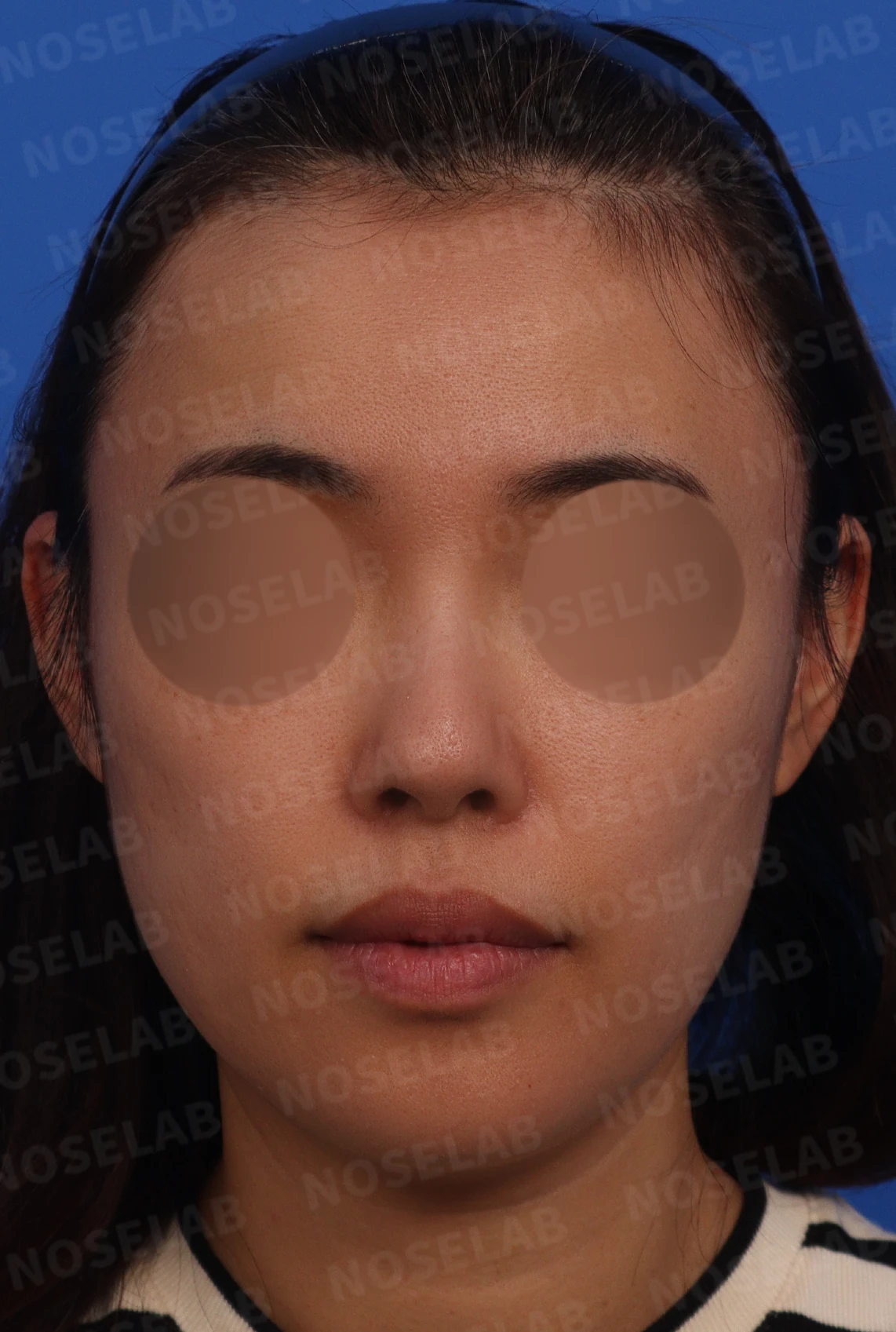
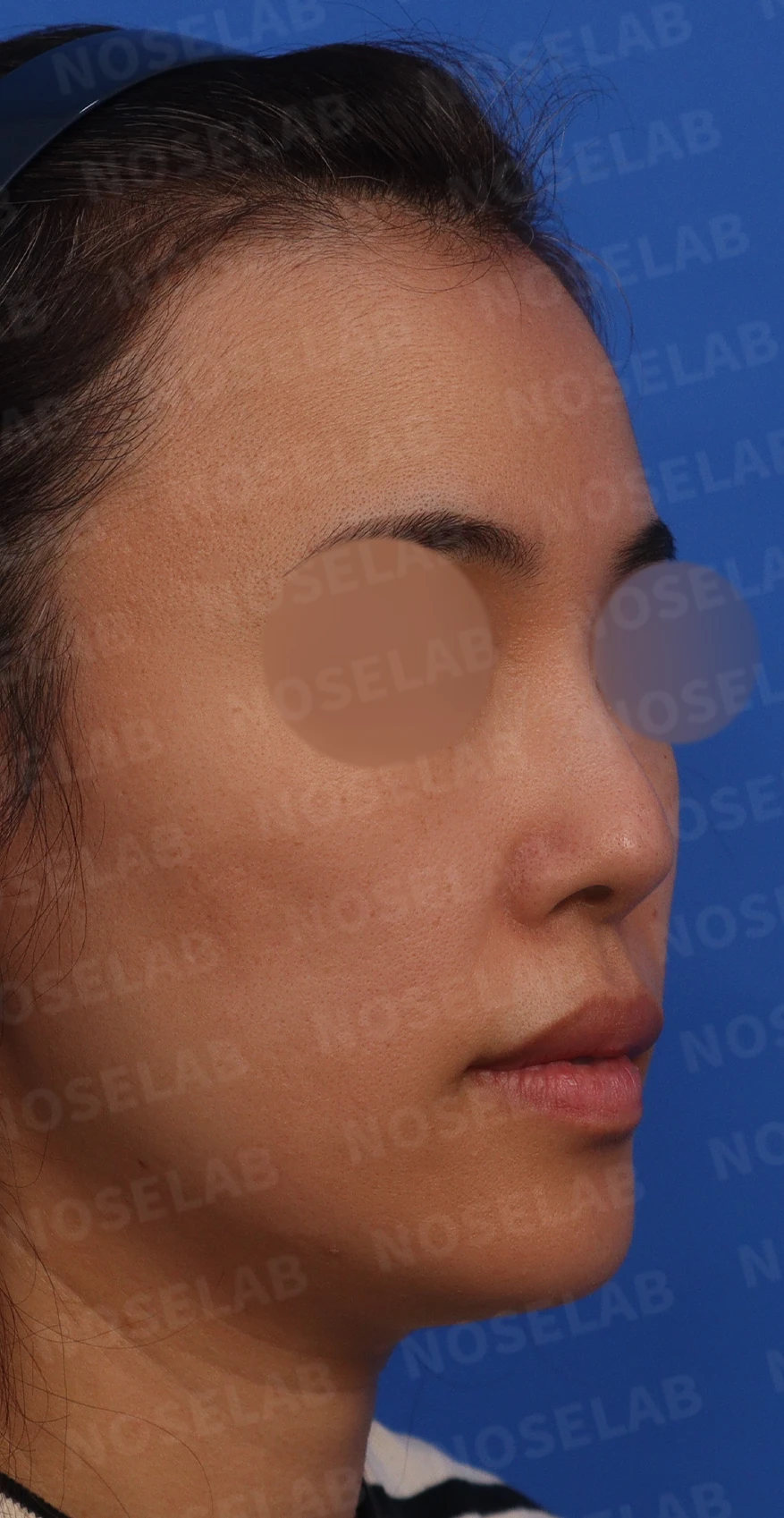
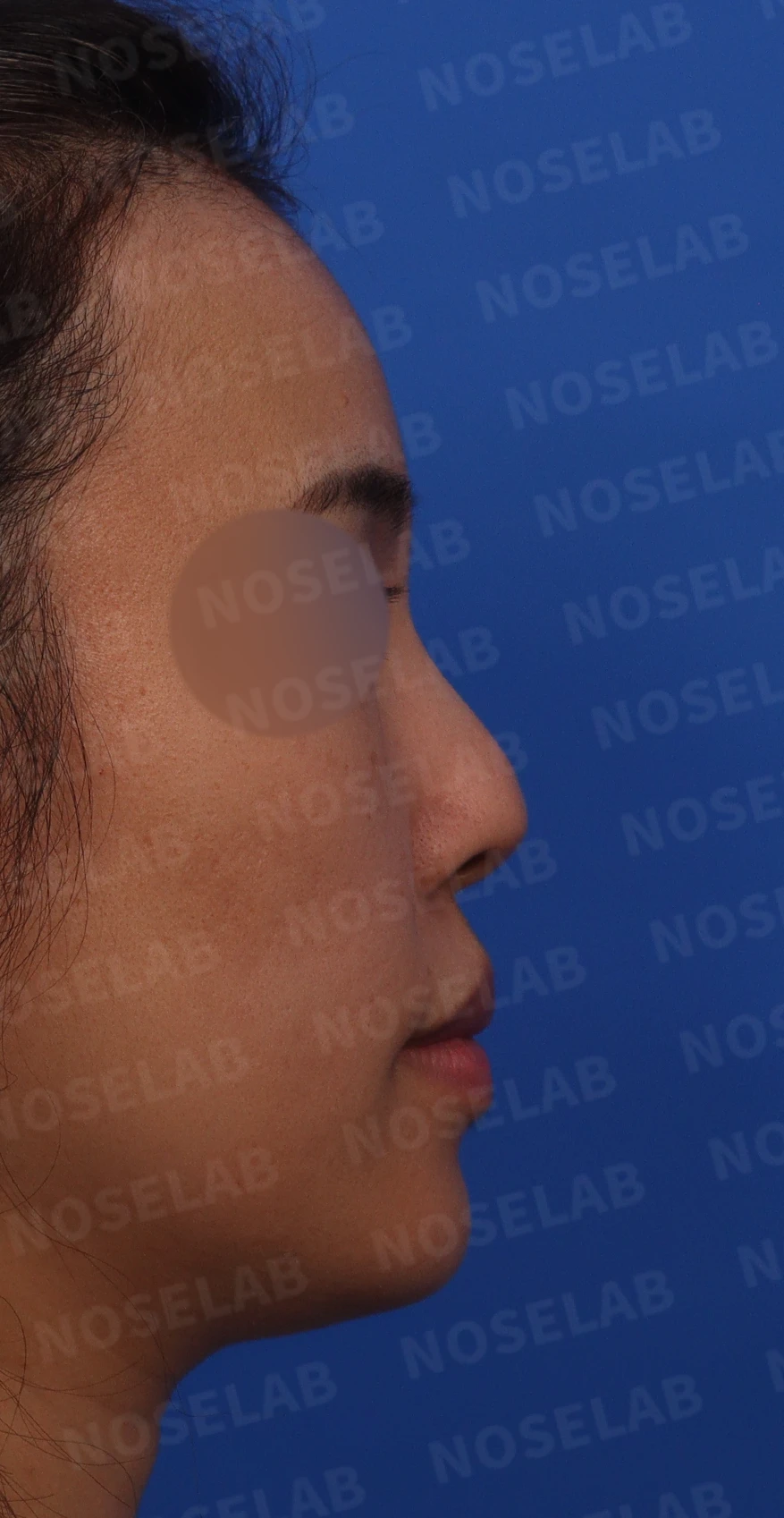
Pre-operative design consultation photos: front, 45-degree, and 90-degree views
Looking at the basal view of the nostrils, the right nostril is larger, the nasal tip appears blunt, and nostril asymmetry is visible.
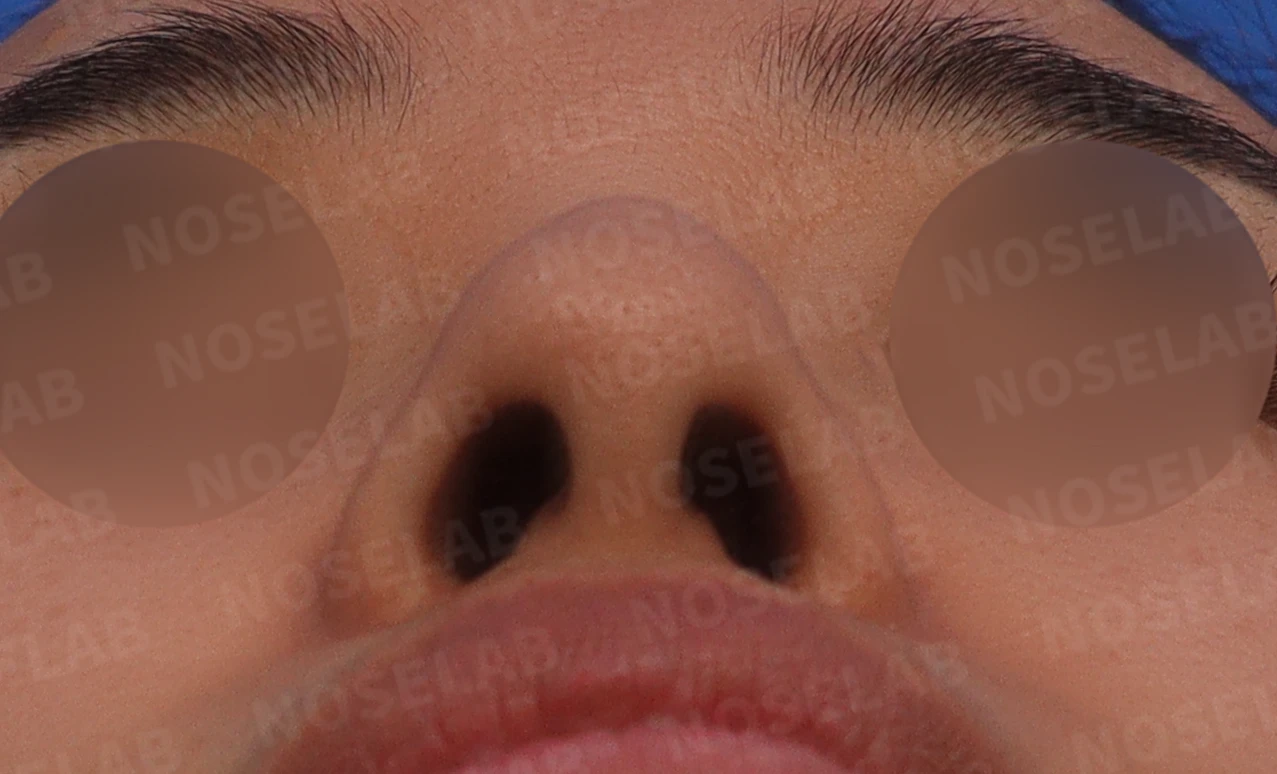
Pre-operative design consultation: nostril view
Surgical plan
1. We plan to remove the existing bridge implant, perform lateral osteotomy to correct the wide appearance of the nasal bridge, and place a new implant.
2. To correct the blunt nasal tip, we plan to harvest autologous rib cartilage to elevate the tip into a well-defined projection.
3. To correct nostril asymmetry, we plan to reposition the alar cartilages to create a more balanced nostril shape.
Before surgery vs. immediately after surgery
Let us compare the pre-operative photos with those taken immediately after surgery on Day 0. Photos taken immediately after surgery include swelling and may differ from the final result.
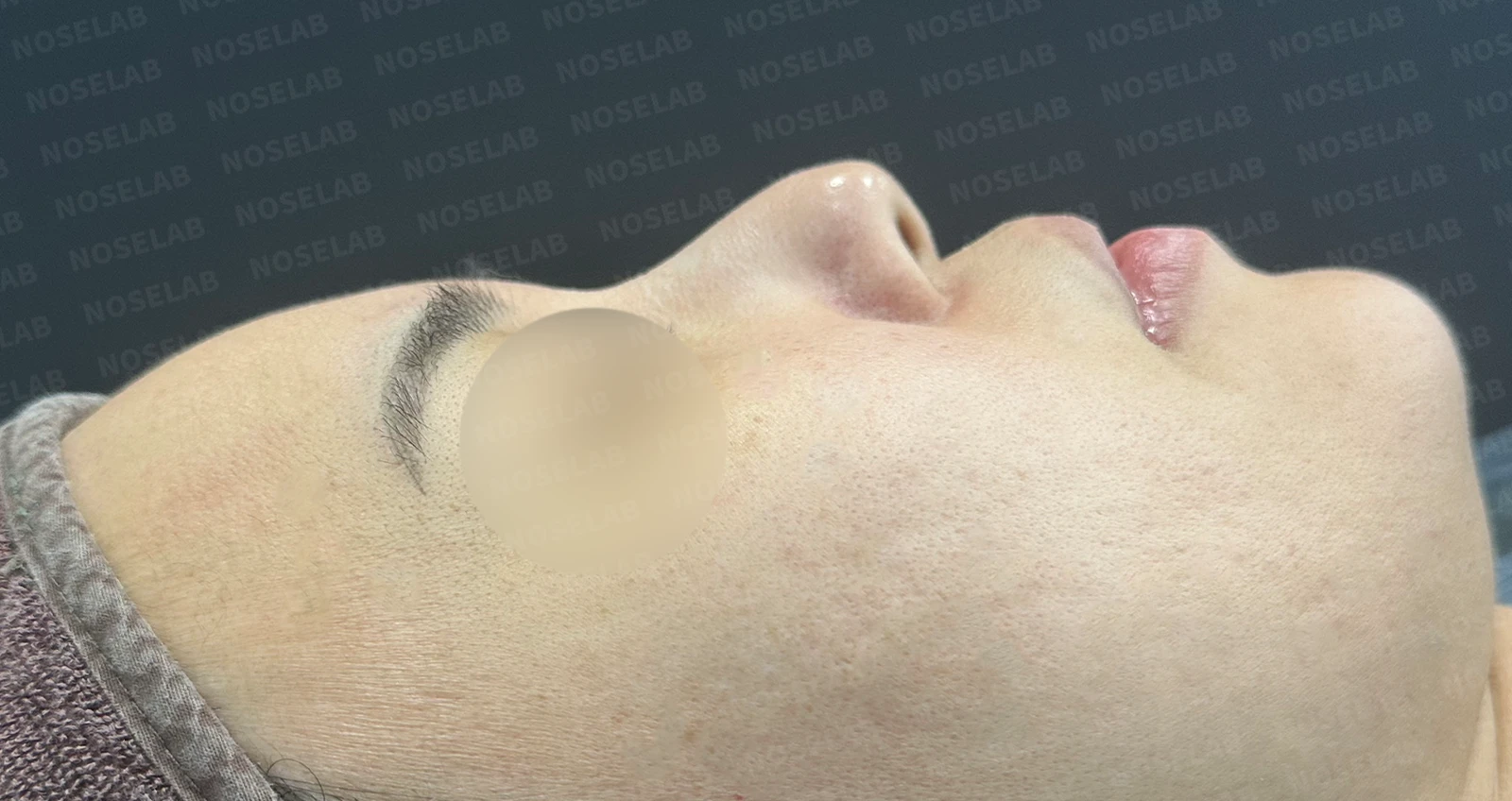
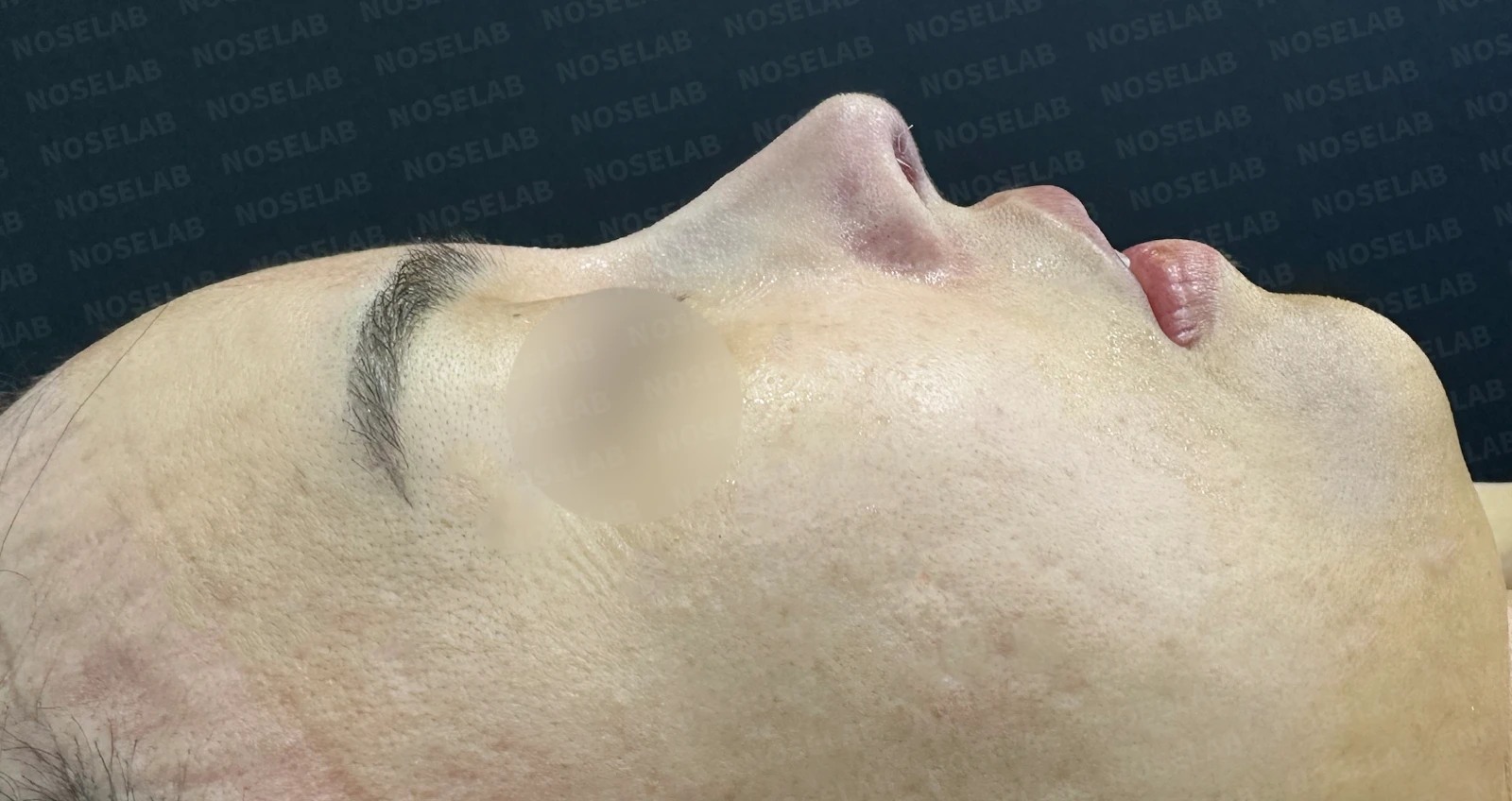
Before surgery / Day 0 immediately after surgery Photos taken immediately after surgery show swelling and may differ from the final result.
On the profile view, the previously drooping nasal tip has improved, and correcting the nasolabial angle helped reduce the appearance of the protruding mouth.
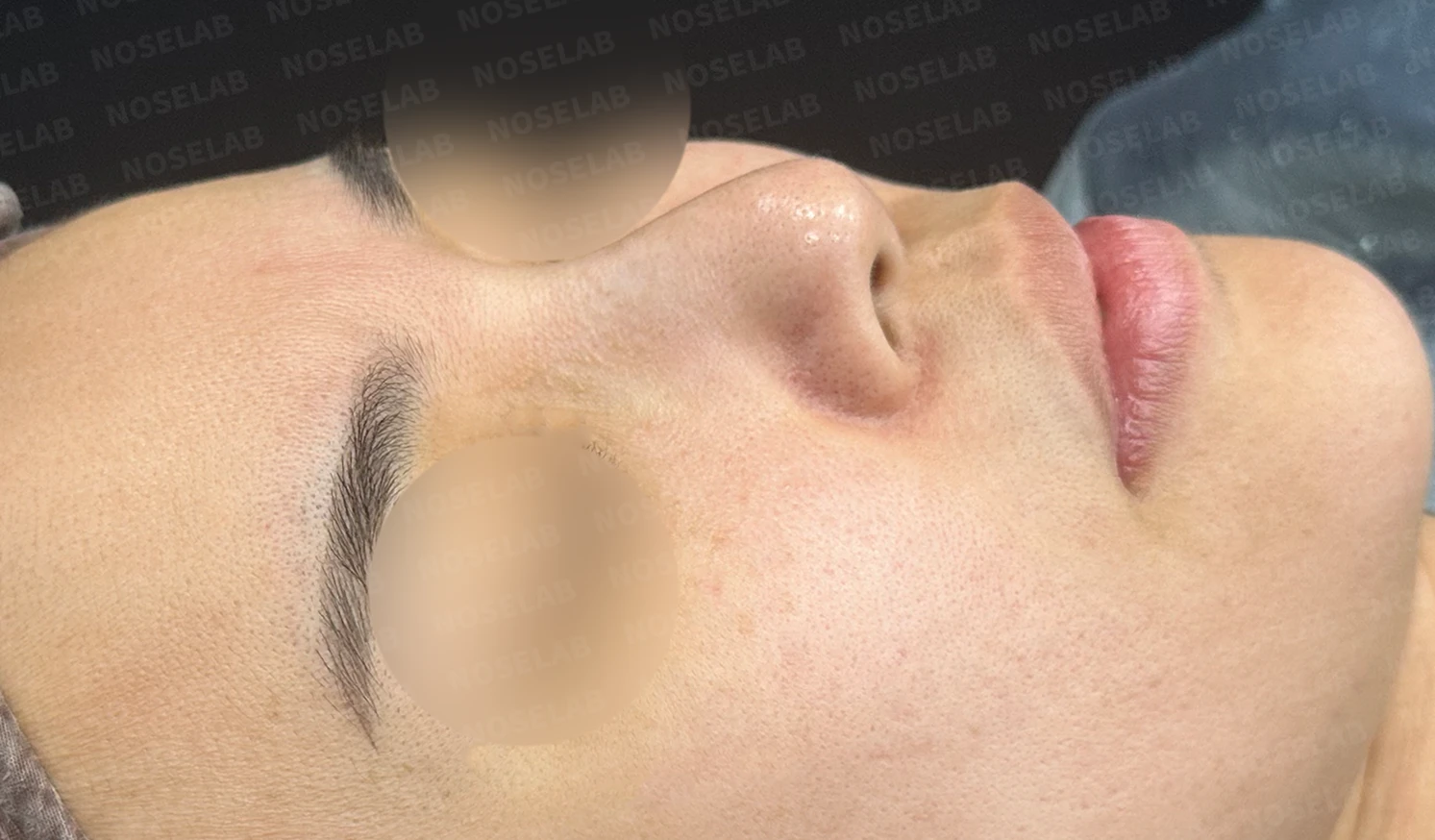
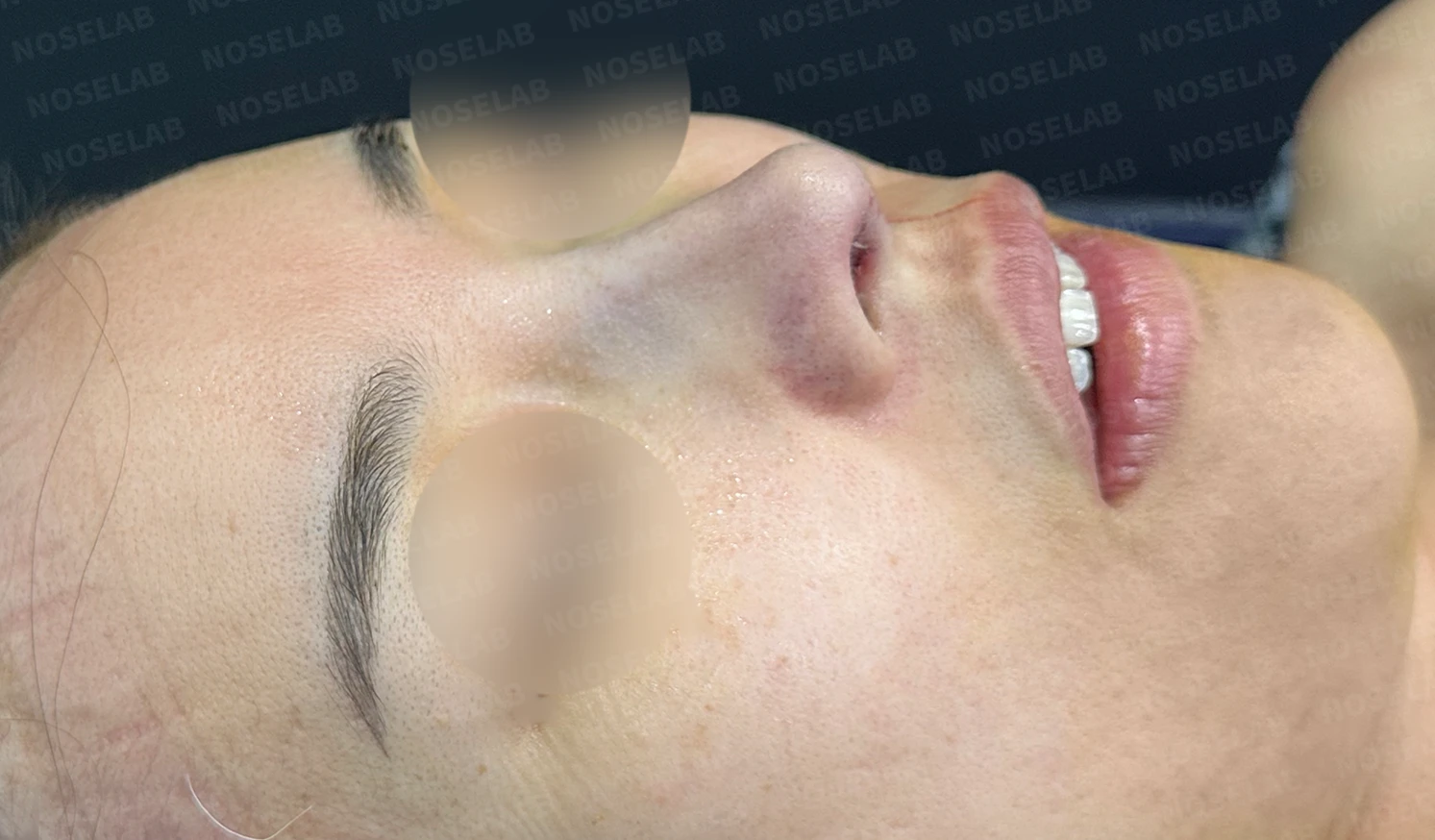
Before surgery / Day 0 immediately after surgery Photos taken immediately after surgery show swelling and may differ from the final result.
On the oblique view, the radix starting point between the eyebrows appears more natural.
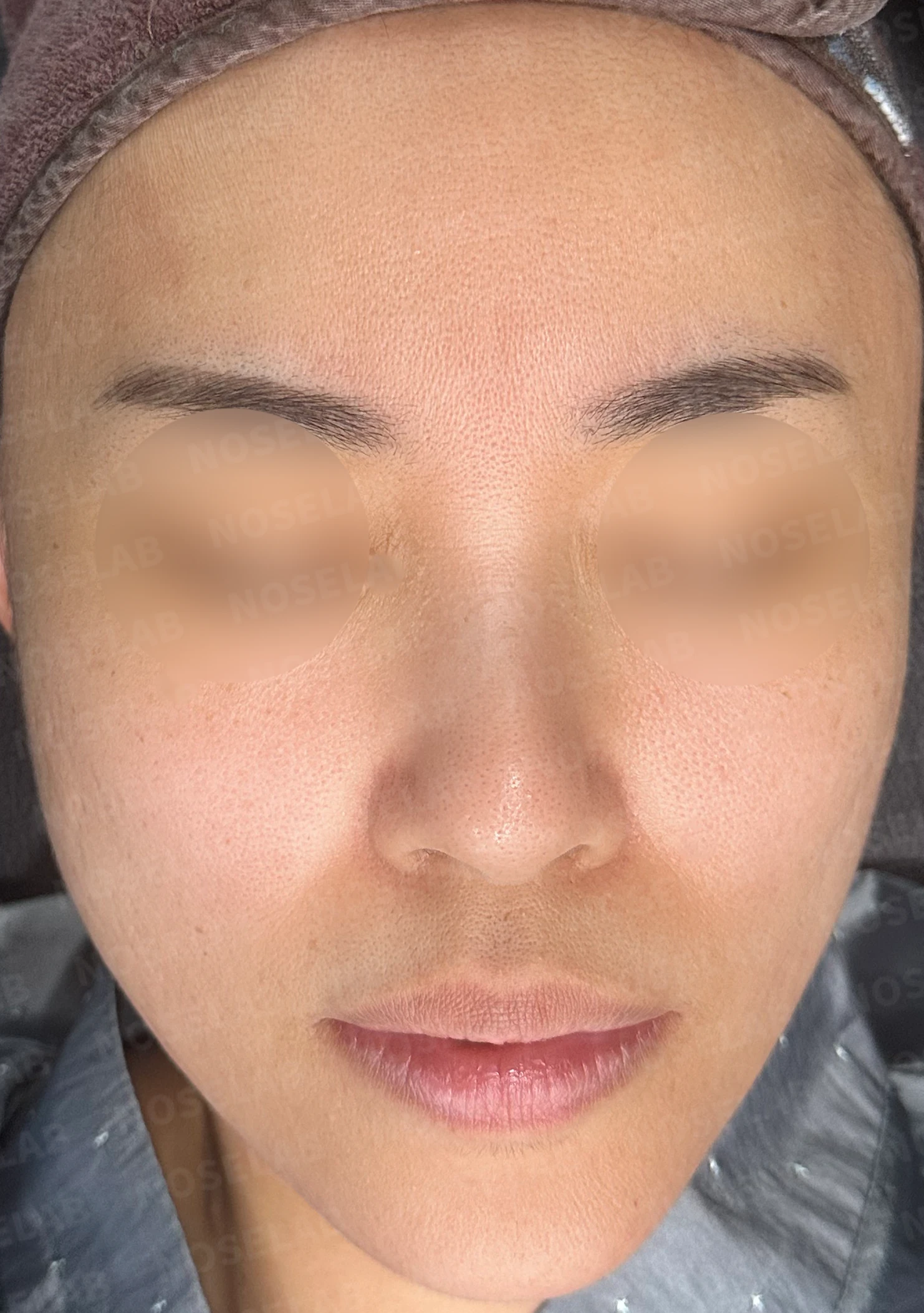
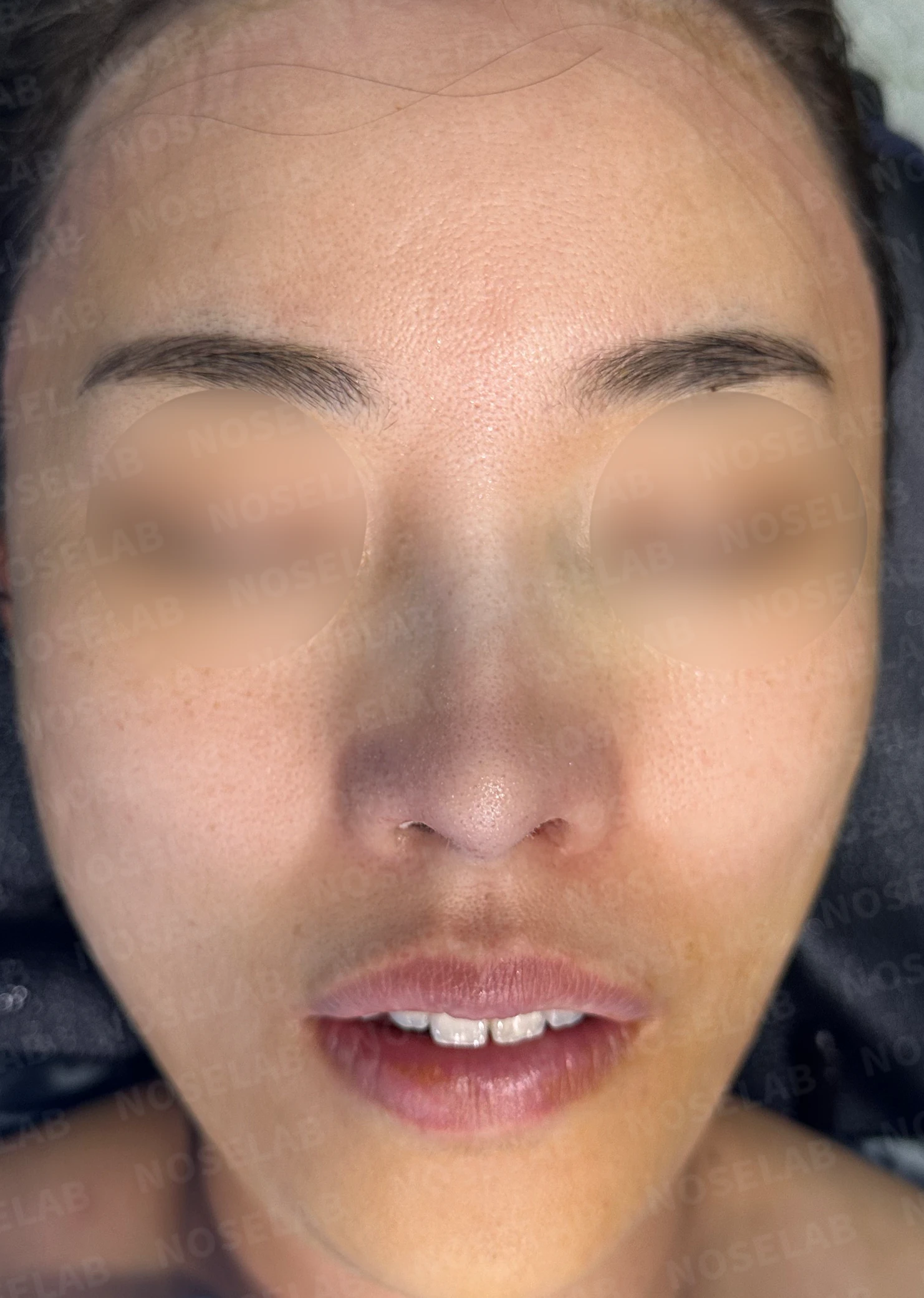
Before surgery / Day 0 immediately after surgery Photos taken immediately after surgery show swelling and may differ from the final result.
On the front view, the wide appearance of both the nasal bridge and nasal tip has improved noticeably.
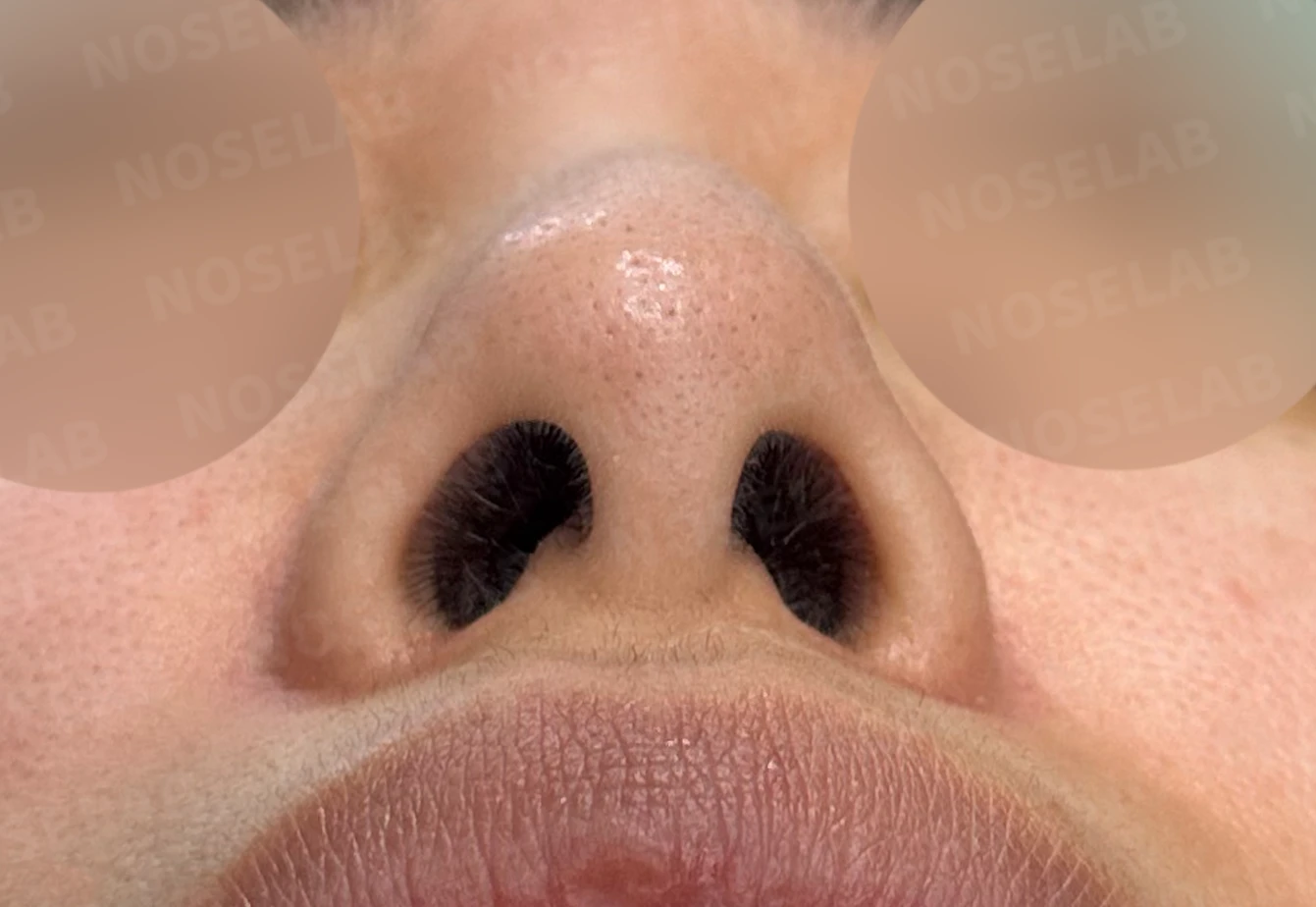
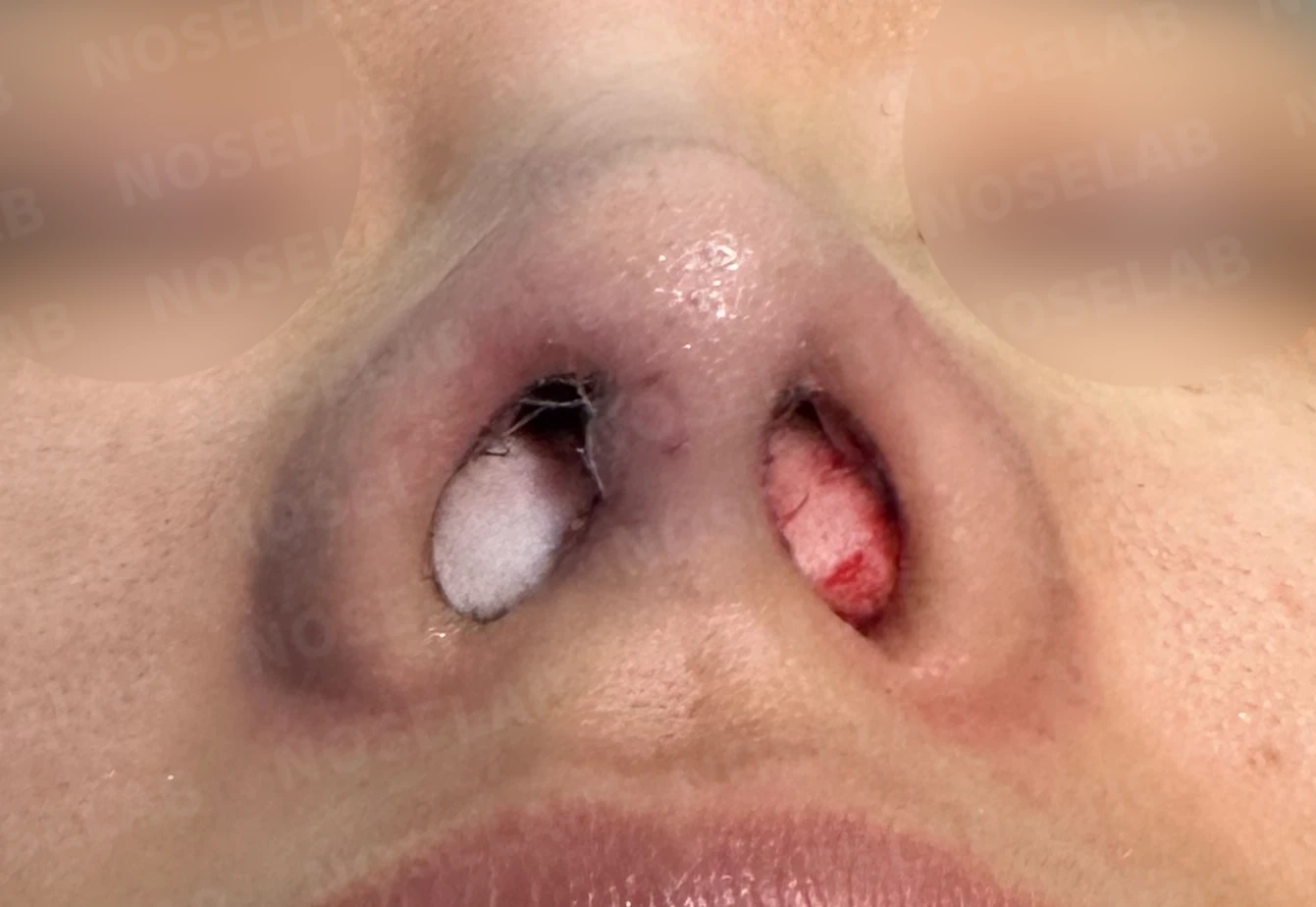
Before surgery / Day 0 immediately after surgery Photos taken immediately after surgery show swelling and may differ from the final result.
On the nostril view, the asymmetry between both nostrils has been corrected.
Photos immediately after surgery
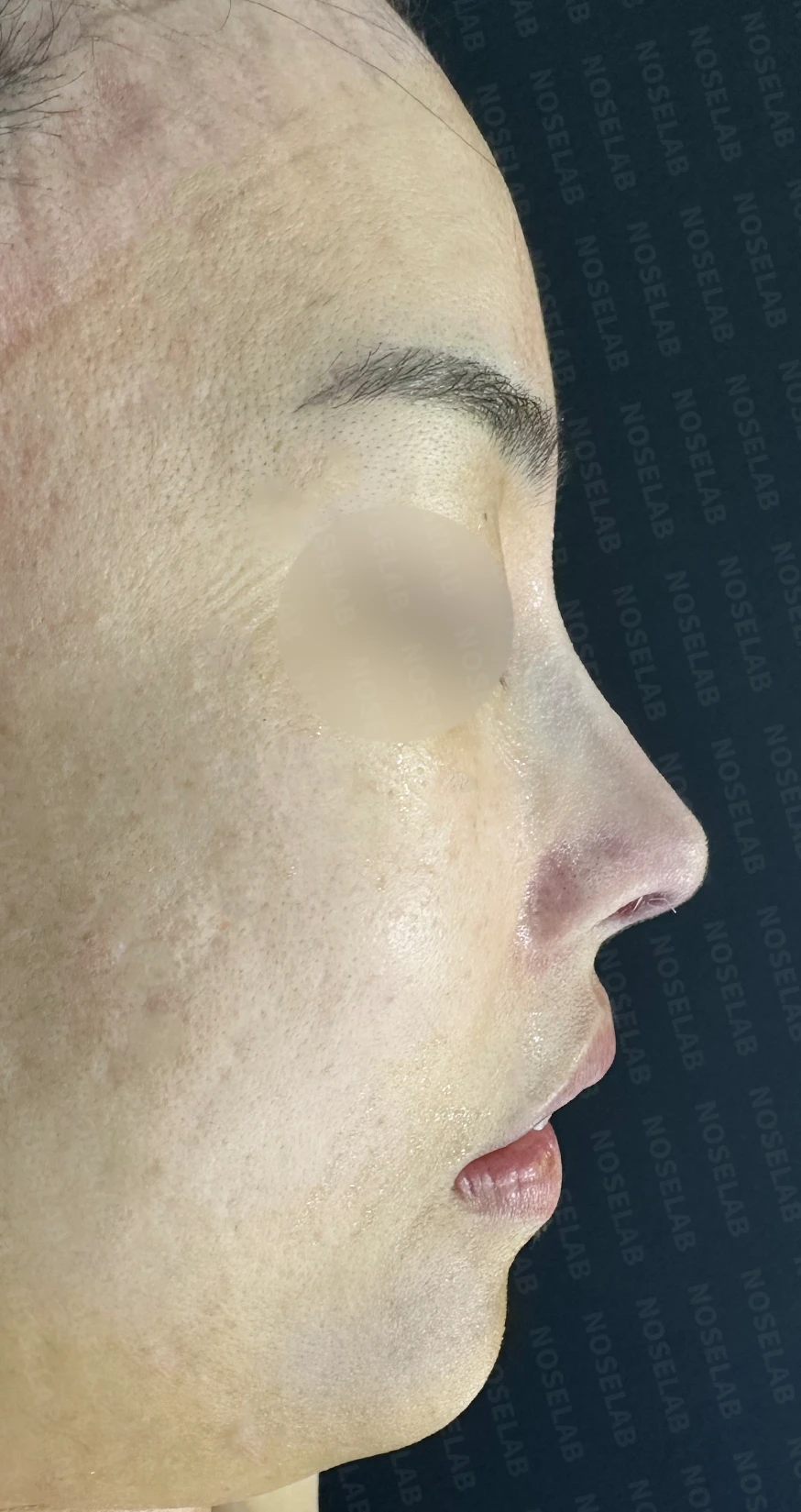
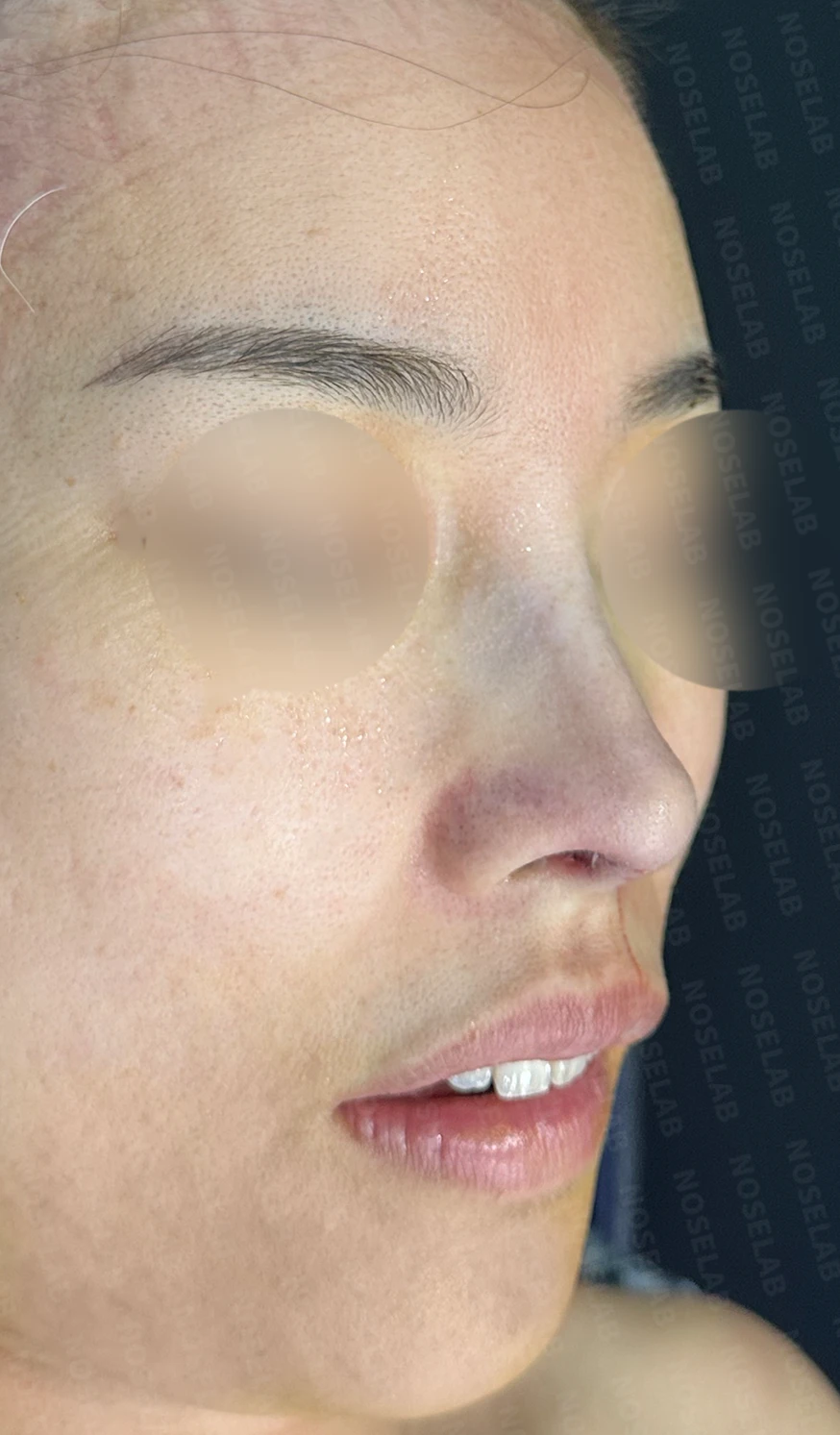
Photos immediately after surgery (Day 0): 90-degree profile, 45-degree oblique, and front view.Immediate postoperative photos show swelling and may differ from the final result.
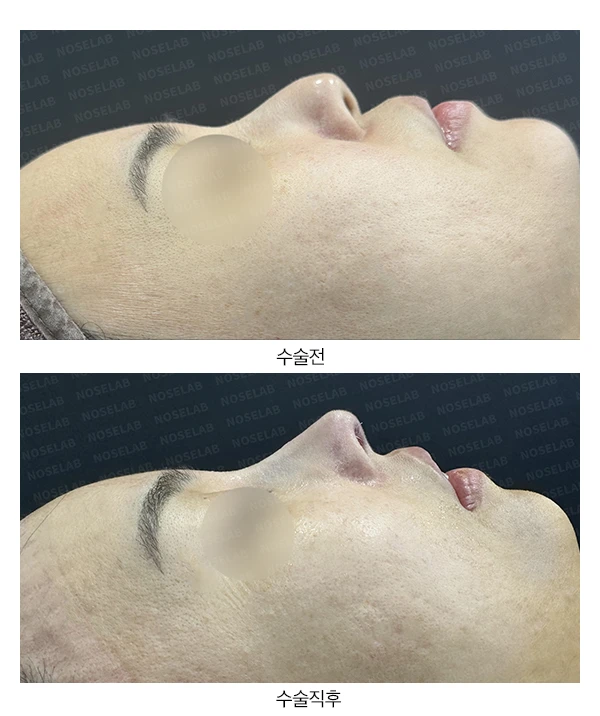
Basal (nostril) view immediately after surgery (Day 0).Immediate postoperative photos show swelling and may differ from the final result.
Conclusion
The nasal tip tends to droop as we age; this is part of the natural aging process. However, a previously operated nose behaves somewhat differently. While the tip can settle slightly lower after 6 months compared to immediately after surgery, significant drooping is not a normal outcome. Although there are various causes for a drooping tip, it ultimately happens when the tip structure was not built sturdily. When the tip droops, the boundary between the nasal tip and the bridge becomes noticeably unnatural.
The patient who underwent surgery today also decided to have revision rhinoplasty because the nasal tip drooped, making the lower edge of the dorsal silicone implant noticeably visible.
To build a strong nasal tip, choosing the right material is paramount, and the foundation anchoring the tip must be sturdy. In other words, autologous rib cartilage is the strongest cartilage material for structuring the nasal tip. In addition, the structure that supports and anchors the tip is the septal cartilage. If the septal cartilage was damaged or severely deviated during a previous surgery, reinforcing it must come first. This is why septoplasty or septal reconstruction may be necessary.
Today, we discussed surgery for a drooping nasal tip. I hope this information is helpful to those who are concerned about a drooping tip.
This was Dr. Peter C. Kang. Thank you.

Limitations and risks
When autologous rib cartilage is used, scarring and pain may remain at the donor site on the chest, and pneumothorax (pleural injury) can occur rarely. Over time, the grafted cartilage may warp or undergo partial resorption.
When revising after implant removal, contracture may progress again after removal, the nasal height and length may decrease, and staged surgery may be necessary depending on the skin condition.
When the septum is corrected at the same time, nasal obstruction may persist or recur, and in rare cases, septal perforation or changes in smell may occur.
Common potential risks include infection, bleeding, asymmetry, scarring, skin necrosis, and insufficient improvement; results vary depending on individual skin condition and previous surgical history.