Hello, I am Dr. Peter C. Kang.
Today, I would like to share the case of a patient who visited our clinic seeking help for concerns following multiple prior rhinoplasties, including a long nose, a flat and wide nasal bridge, and nasal obstruction.
🔍 Previous surgical and procedural history
19 years ago: Nasal filler (fully dissolved)
20 years ago: Ear cartilage grafting, dorsal hump reduction, no implant
10 years ago: Nasal tip surgery (using septal cartilage)
💉 Primary symptoms
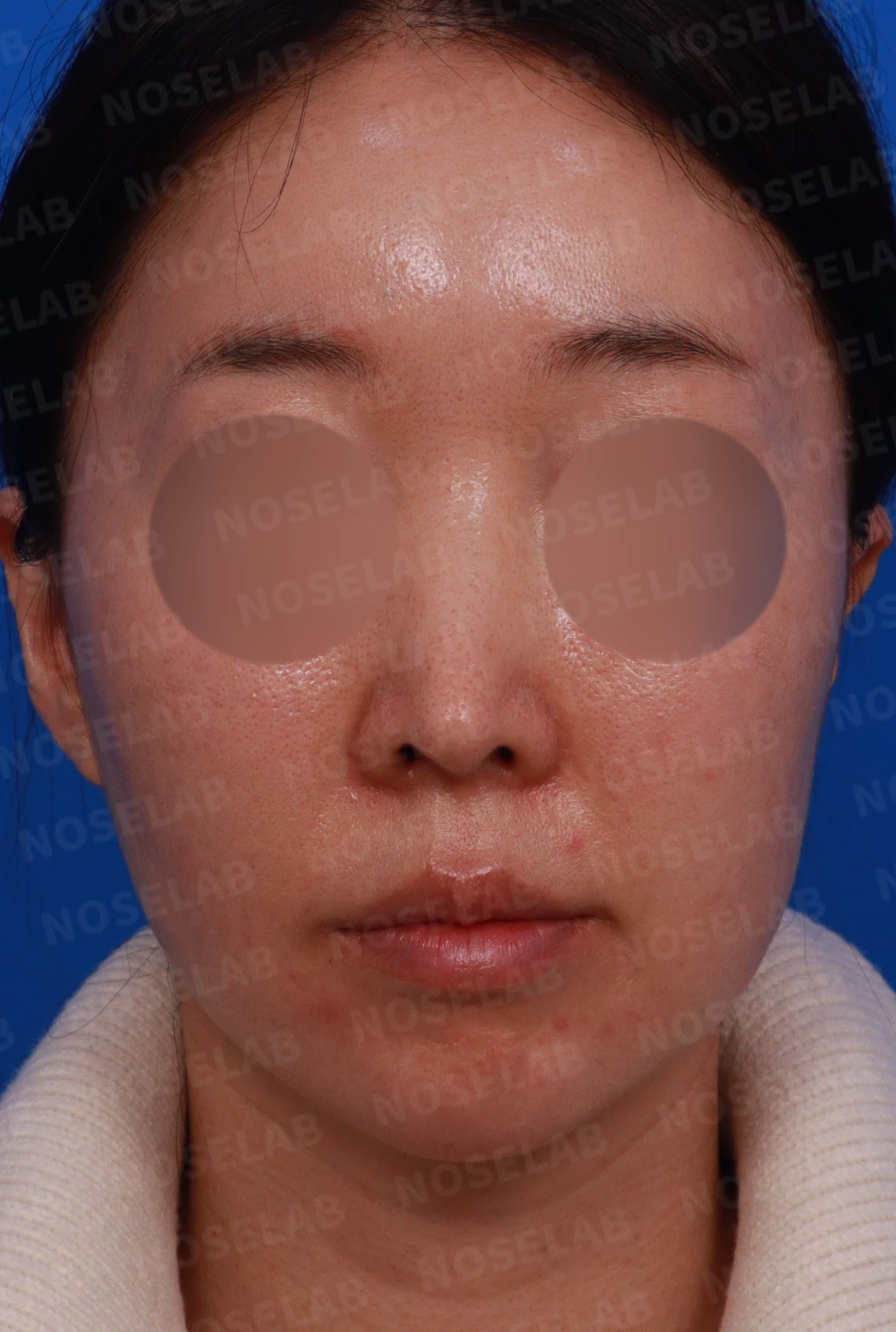
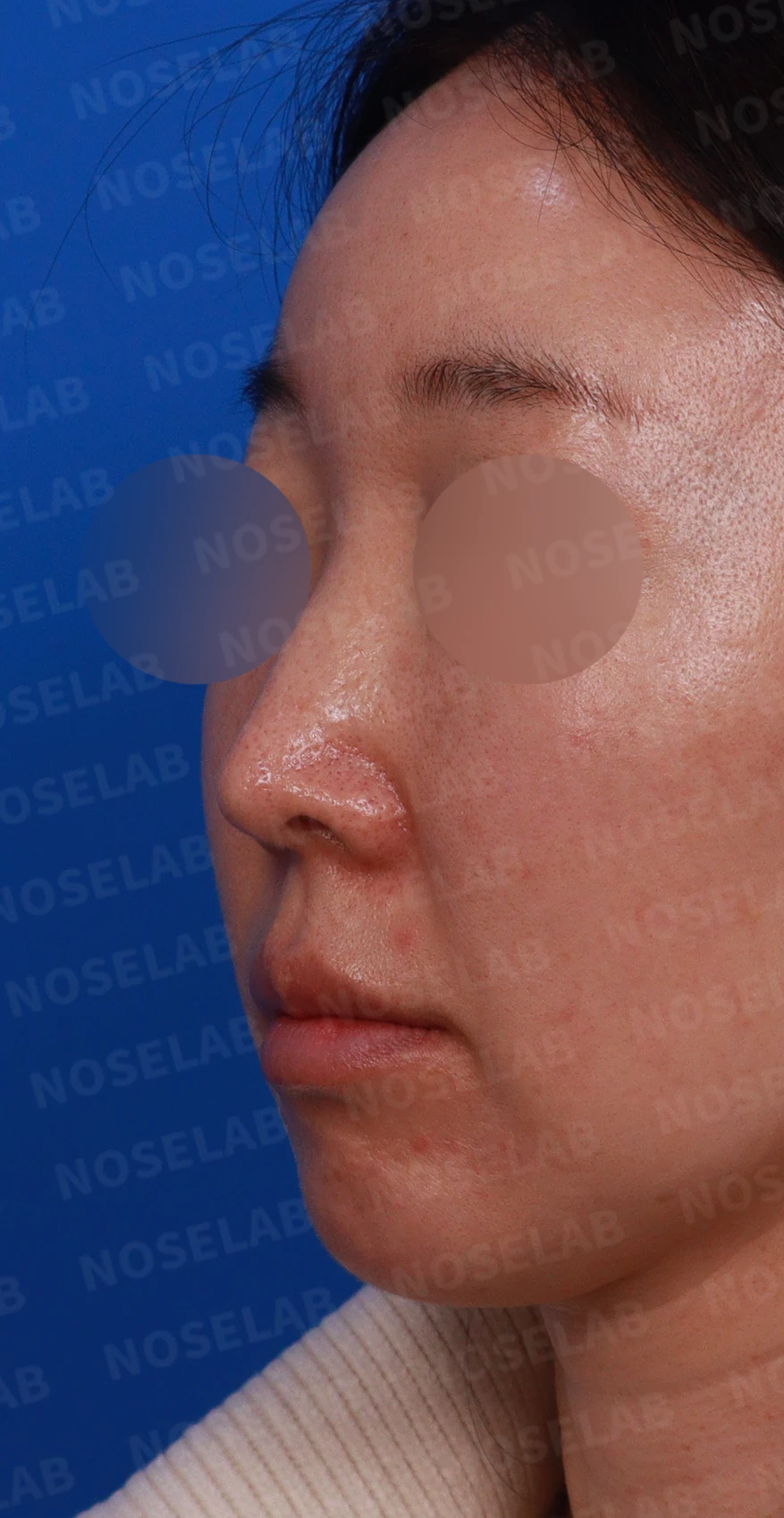
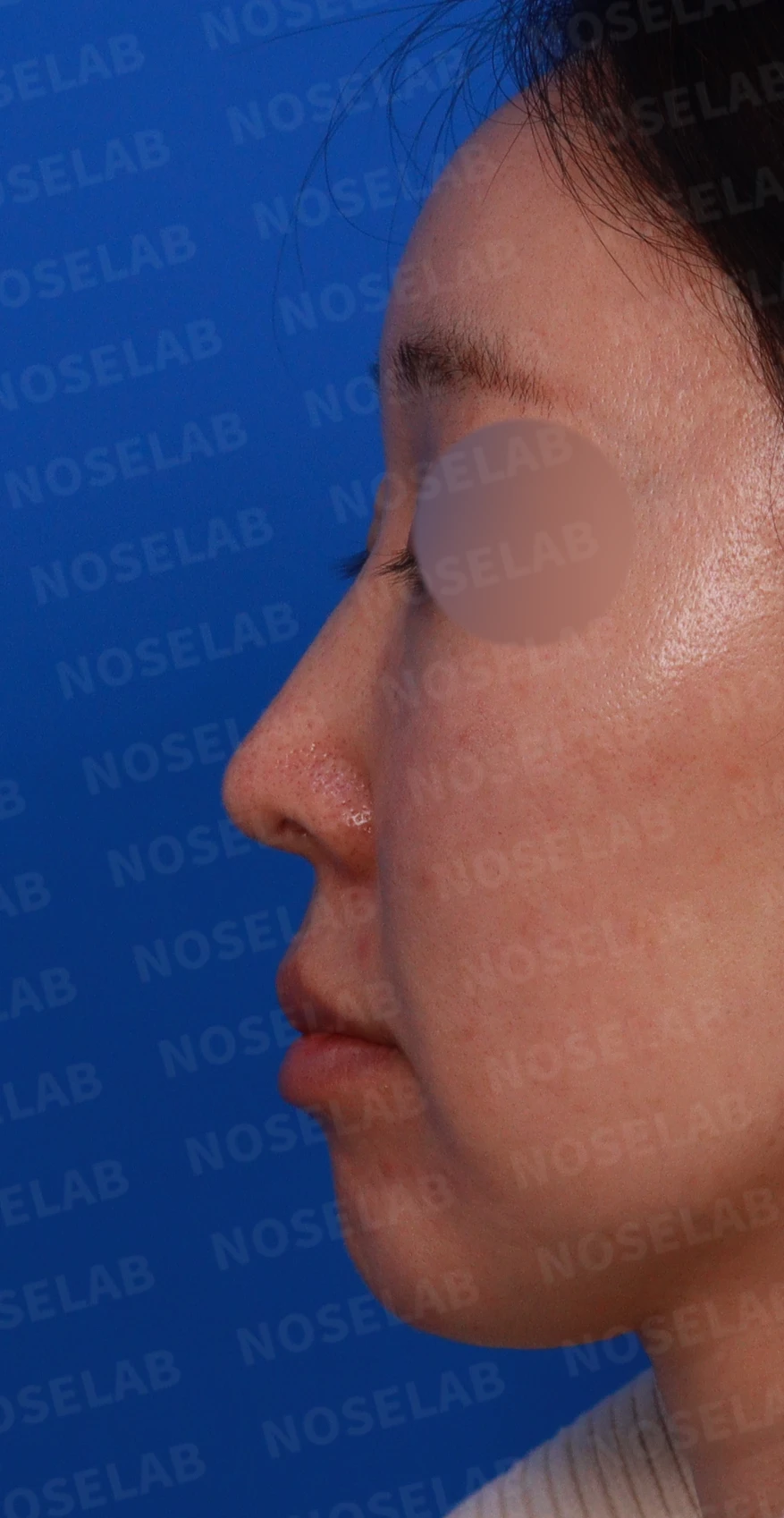
Design consultation: front, left oblique, and profile views
Mucus pooling caused by a mucosal scar on the left side
Seasonal nasal obstruction
Deviated nose
Flat, wide nasal bridge
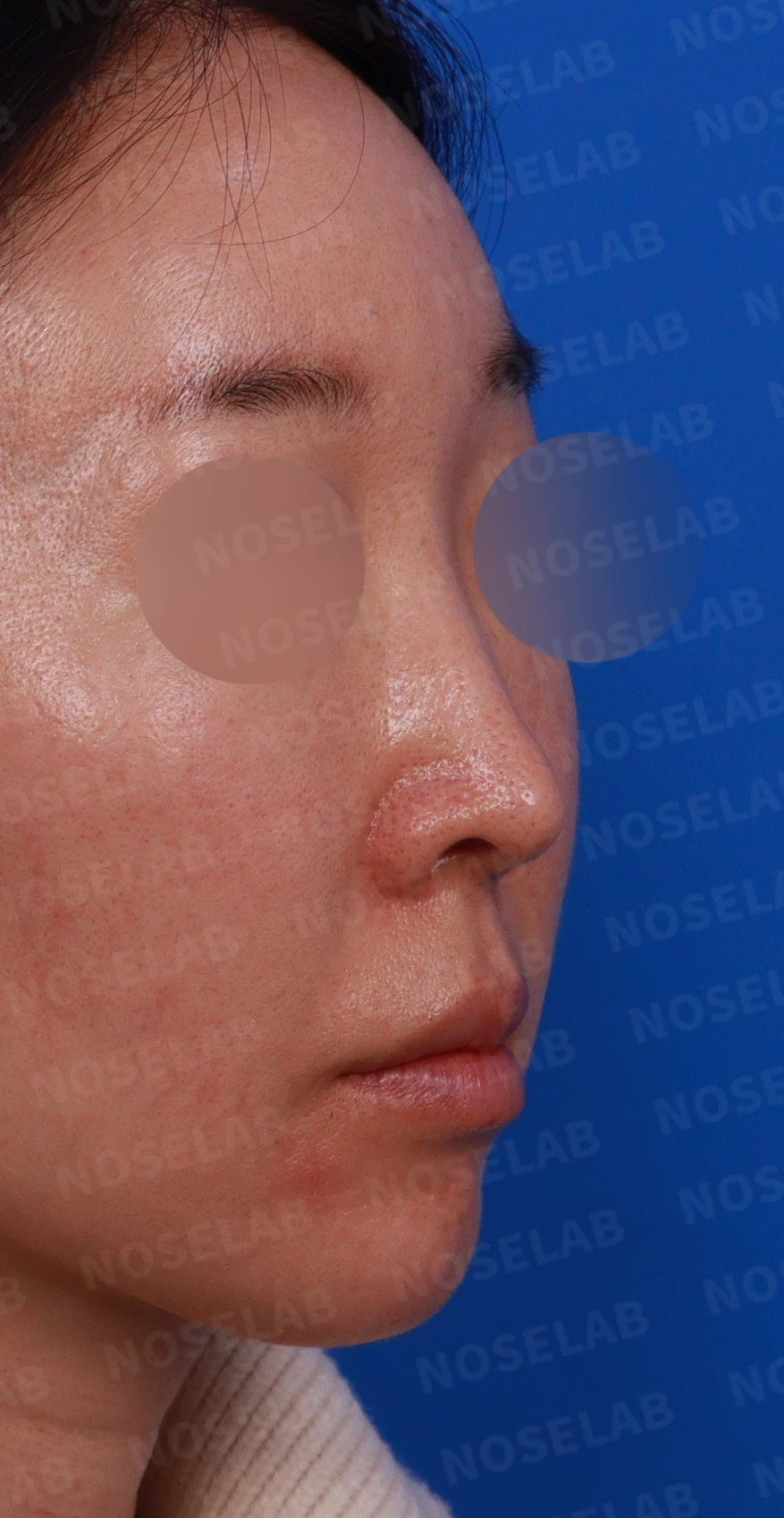
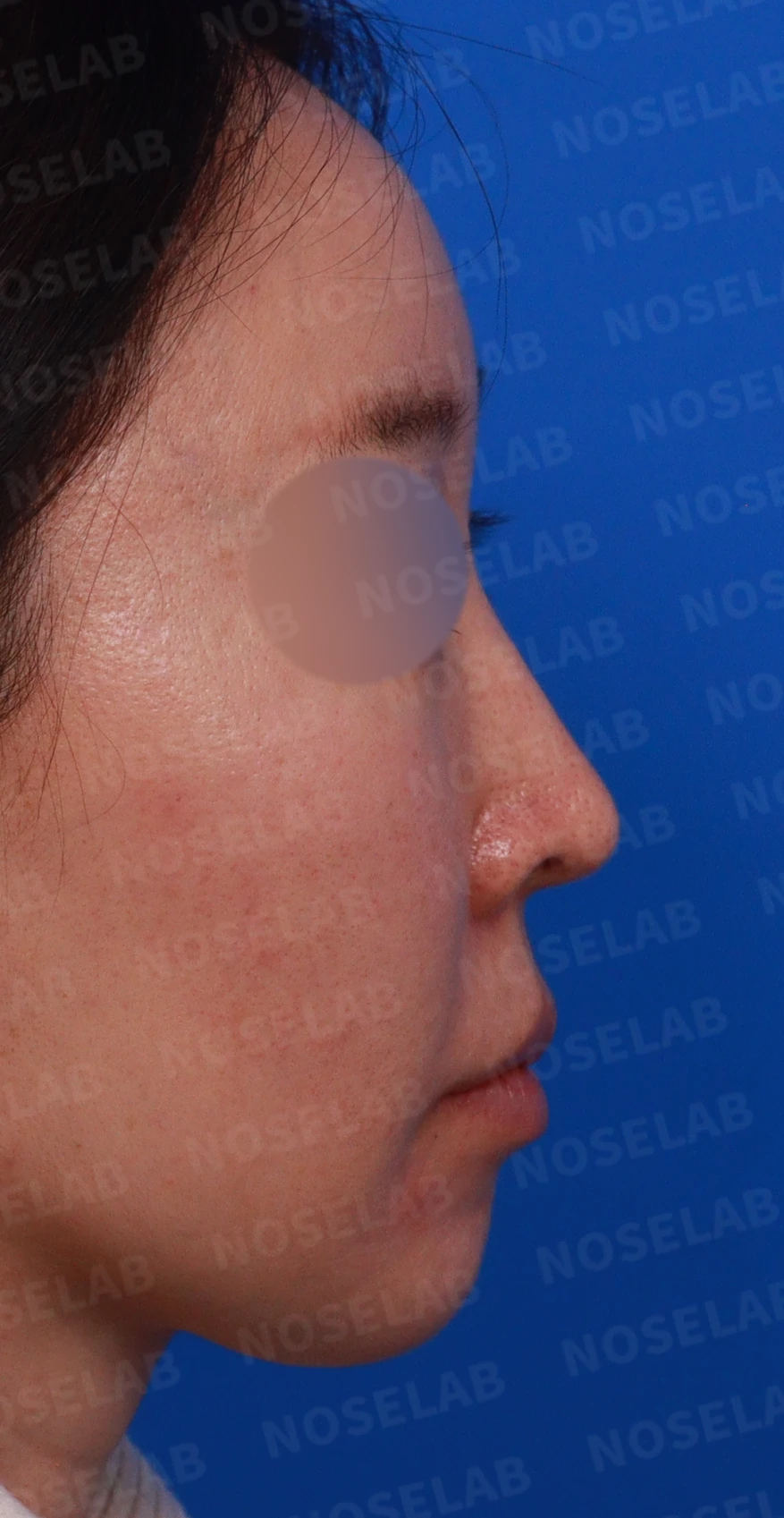
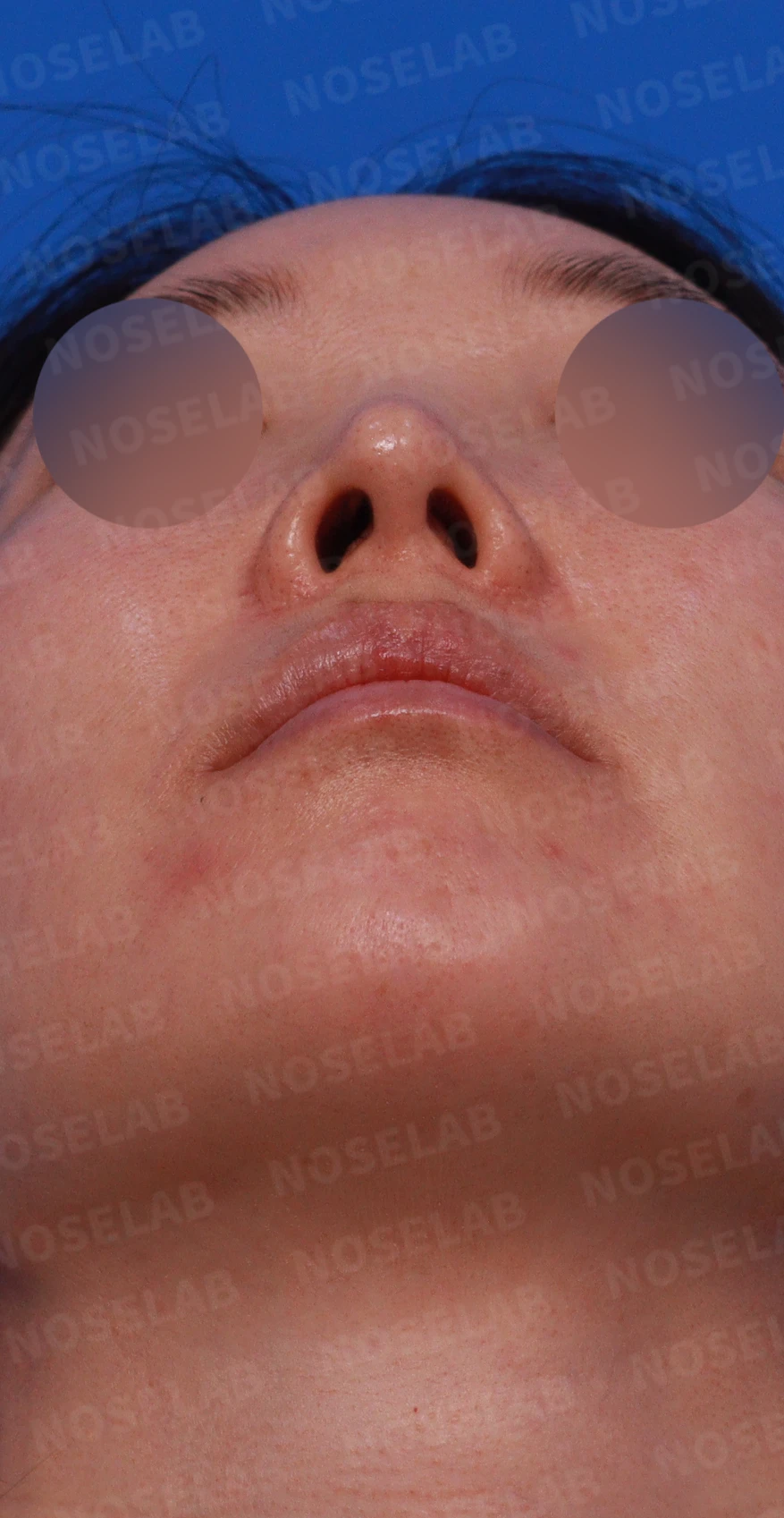
Design consultation: right oblique, profile, and basal (nostril) views
🔧 Surgical plan
Refinement of the nasal bridge and nasal tip via lateral osteotomy
Autologous rib cartilage grafting
Alar rim lowering
Functional improvement
Correction of deviated septum
Radiofrequency submucosal resection of the inferior turbinates
The patient desired a natural yet well-defined, refined look, specifically wishing to correct the elongated facial impression and the flat, wide nasal bridge. Although surgery without an implant was initially considered, the patient decided during the consultation process to proceed with an implant.
💉 Preoperative analysis
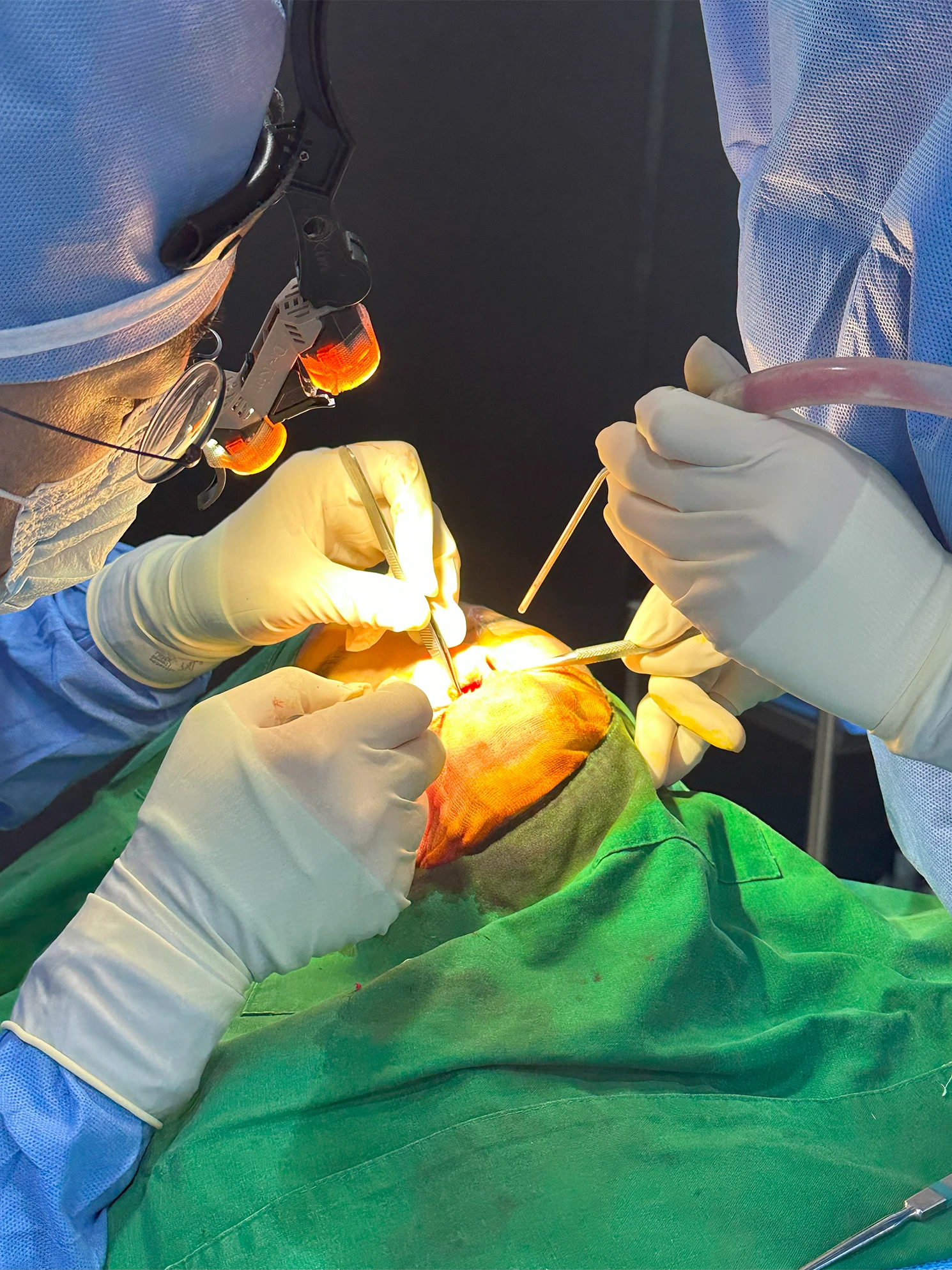
Intraoperative view
Front view
Flat and wide nasal bridge
Crooked nasal bridge
Thin and small nasal tip
Nostril asymmetry
2. Profile view
Overall elongated nose
Drooping appearance
Pointed nasal tip
3. Nostrils
Nostril asymmetry with a larger right nostril
🌟 Surgical results
Front view improvement
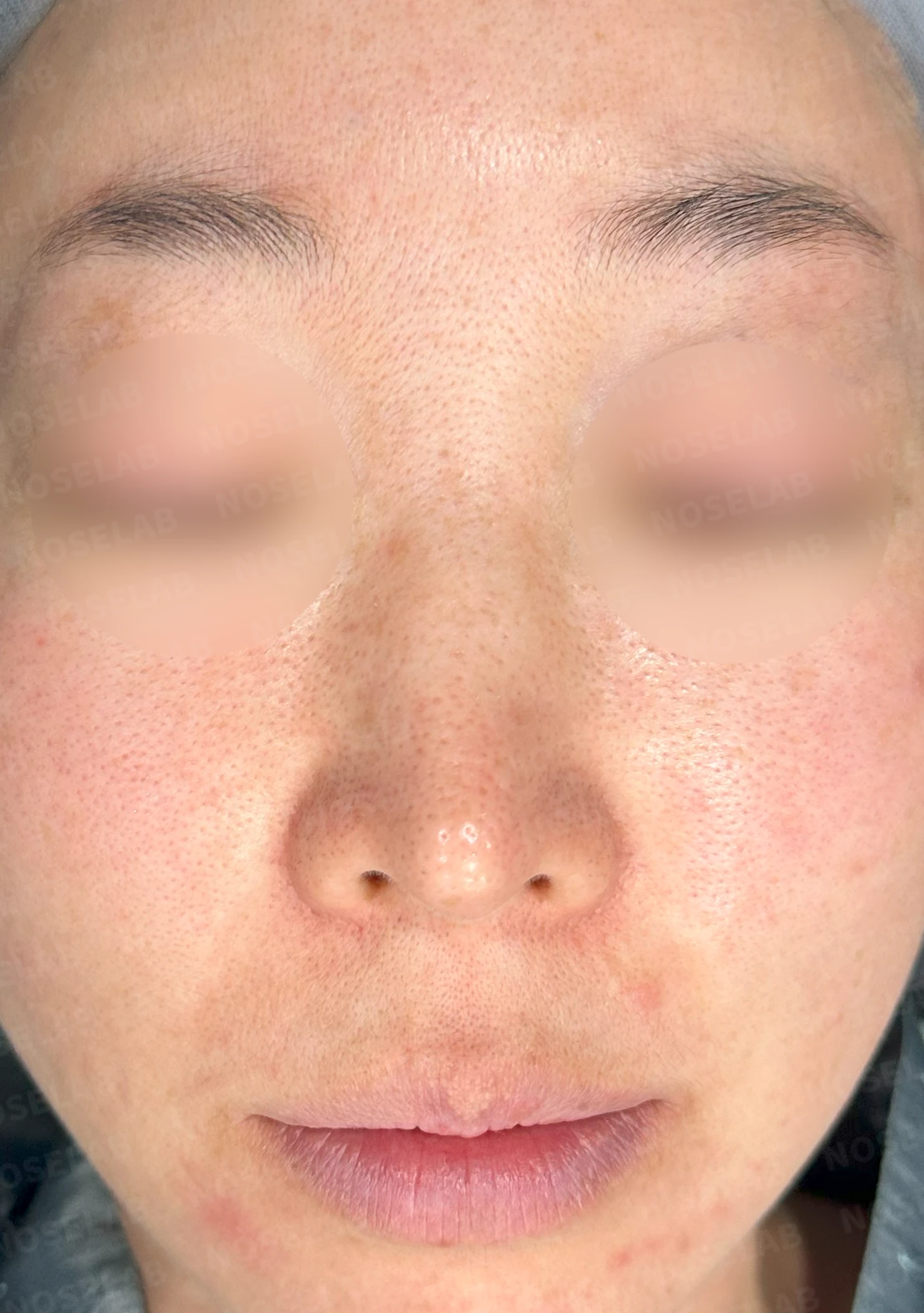
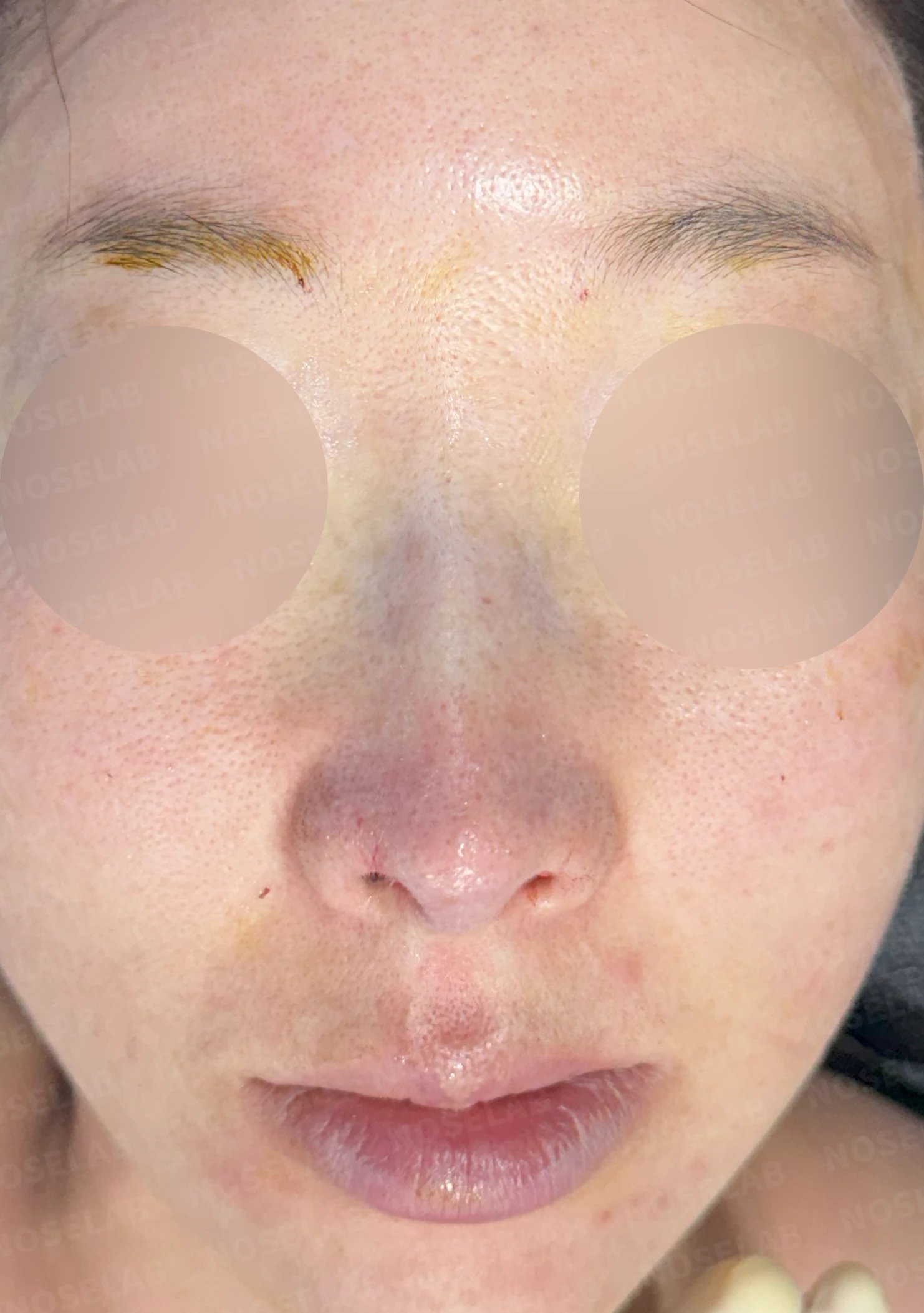
Before surgery / Day 0 immediately after surgery Photos taken immediately after surgery show swelling and may differ from the final result.
Three-dimensional definition restored to the previously flat, wide nasal bridge
Correction of crooked nose
Improvement of asymmetry
Natural nasal tip contour established
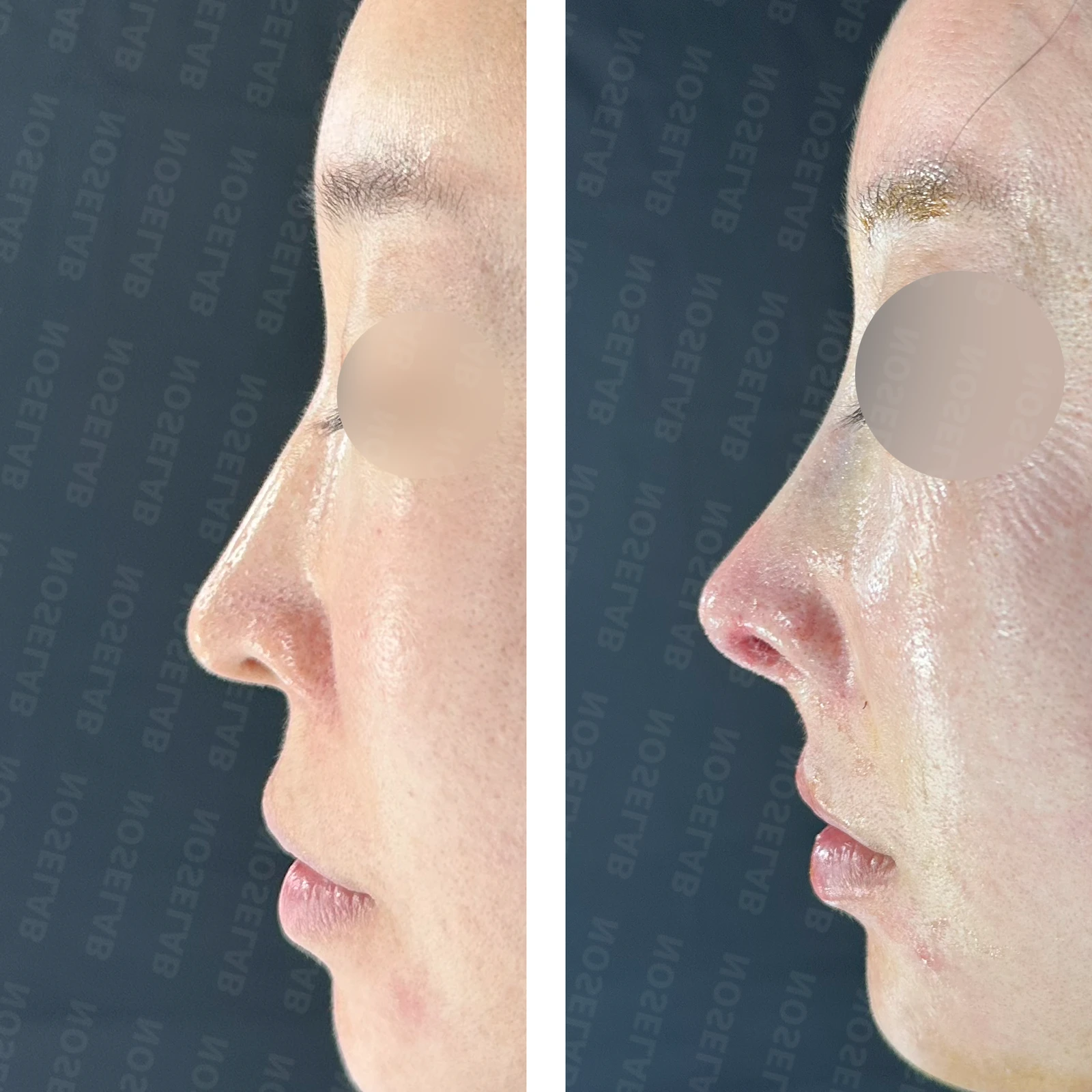
2. Profile view improvement
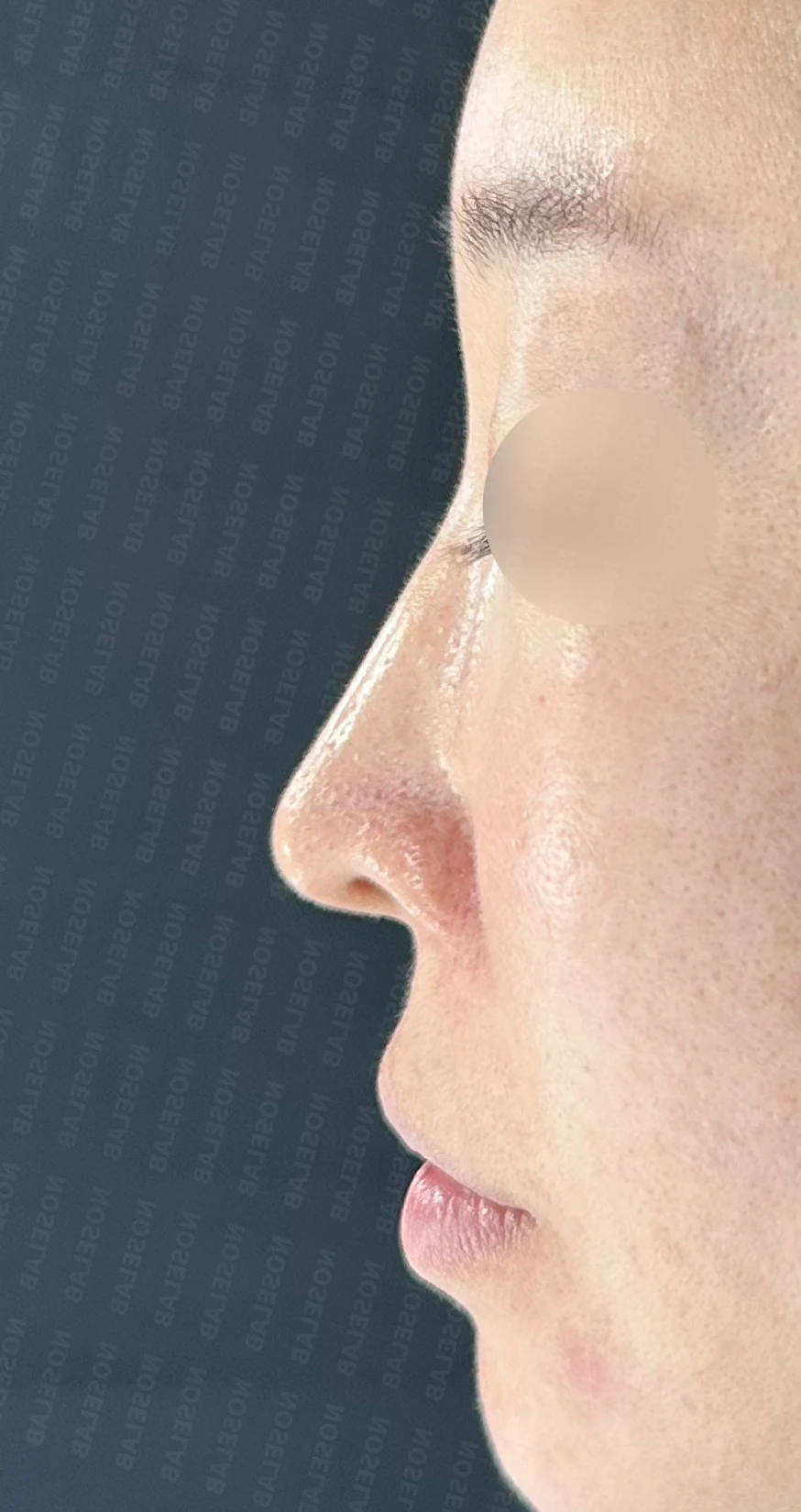
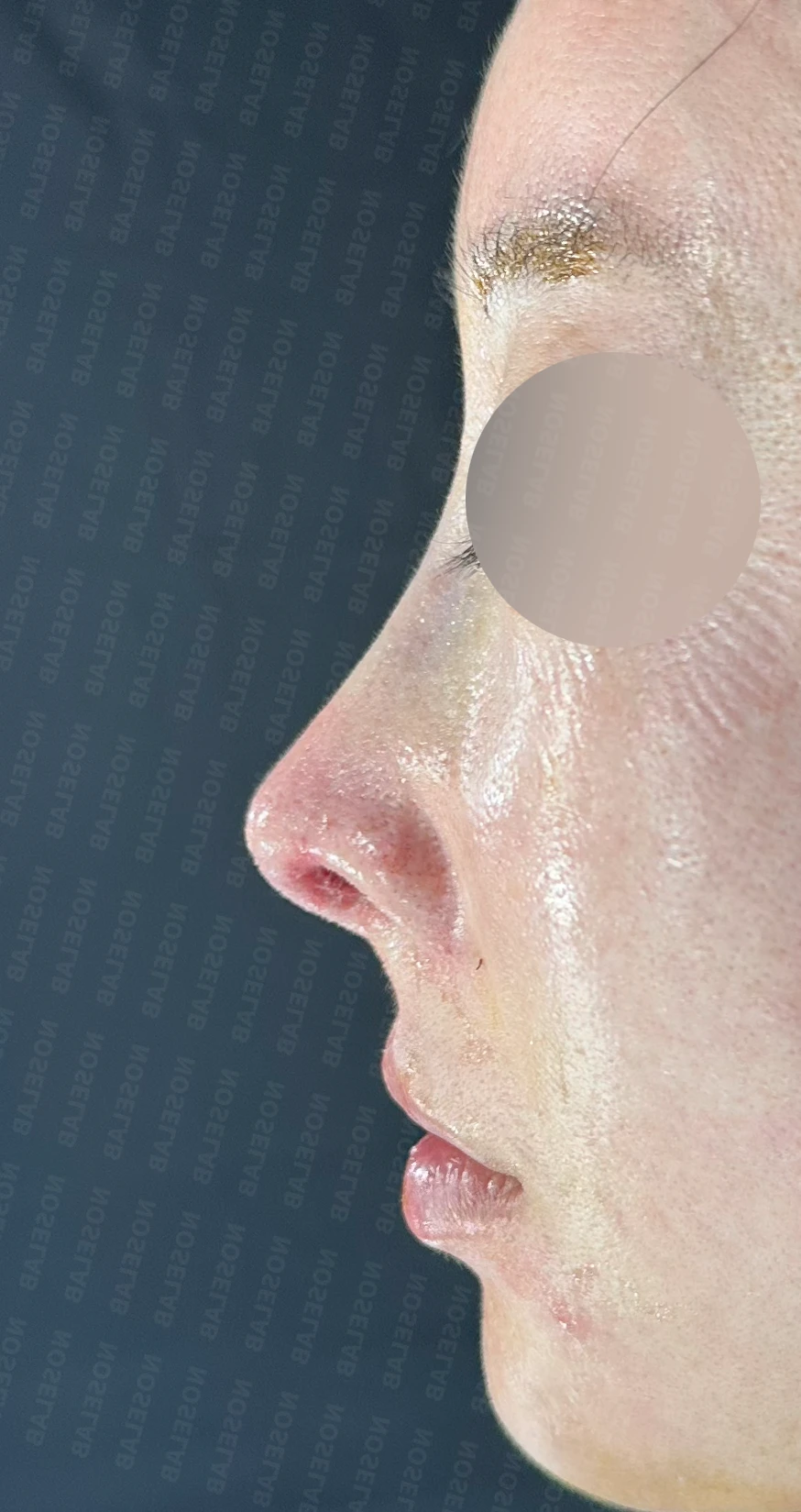
Before surgery / Day 0 immediately after surgery Photos taken immediately after surgery show swelling and may differ from the final result.
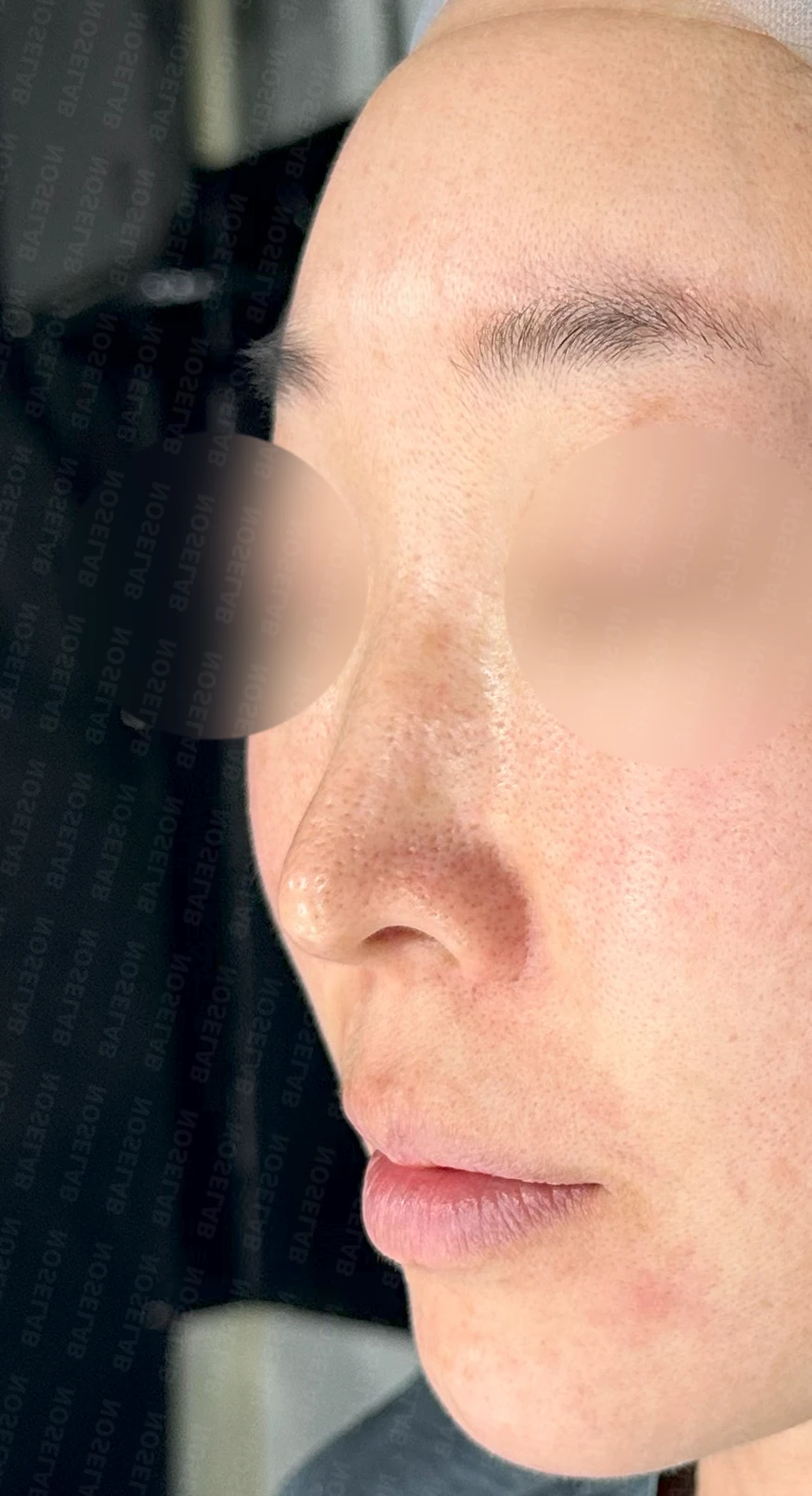
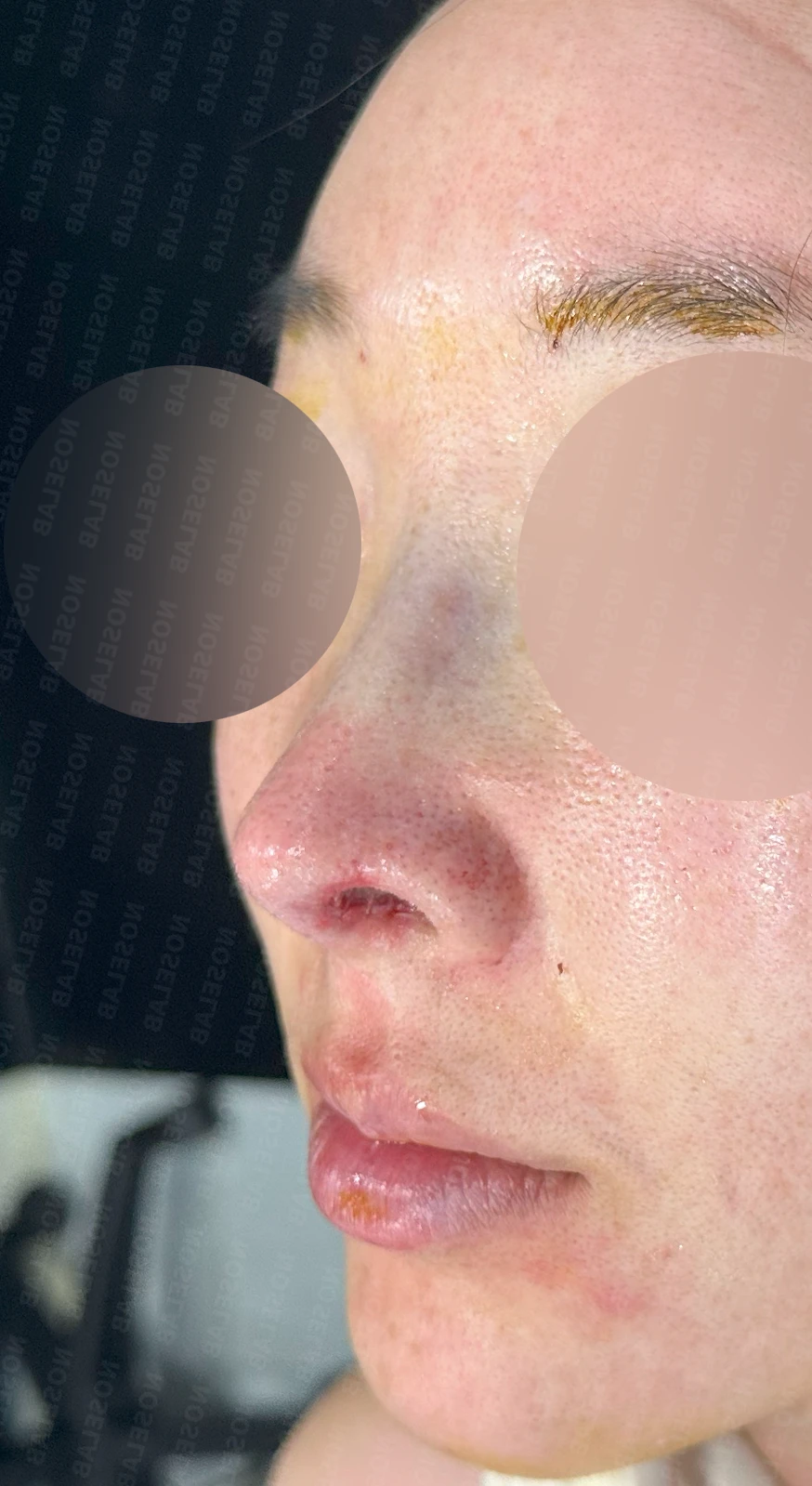
Before surgery / Day 0 immediately after surgery Photos taken immediately after surgery show swelling and may differ from the final result.
Improved proportions for the previously elongated nose
Correction of the drooping nasal tip
Achieved a natural nasal tip shape
3. Nostril improvement
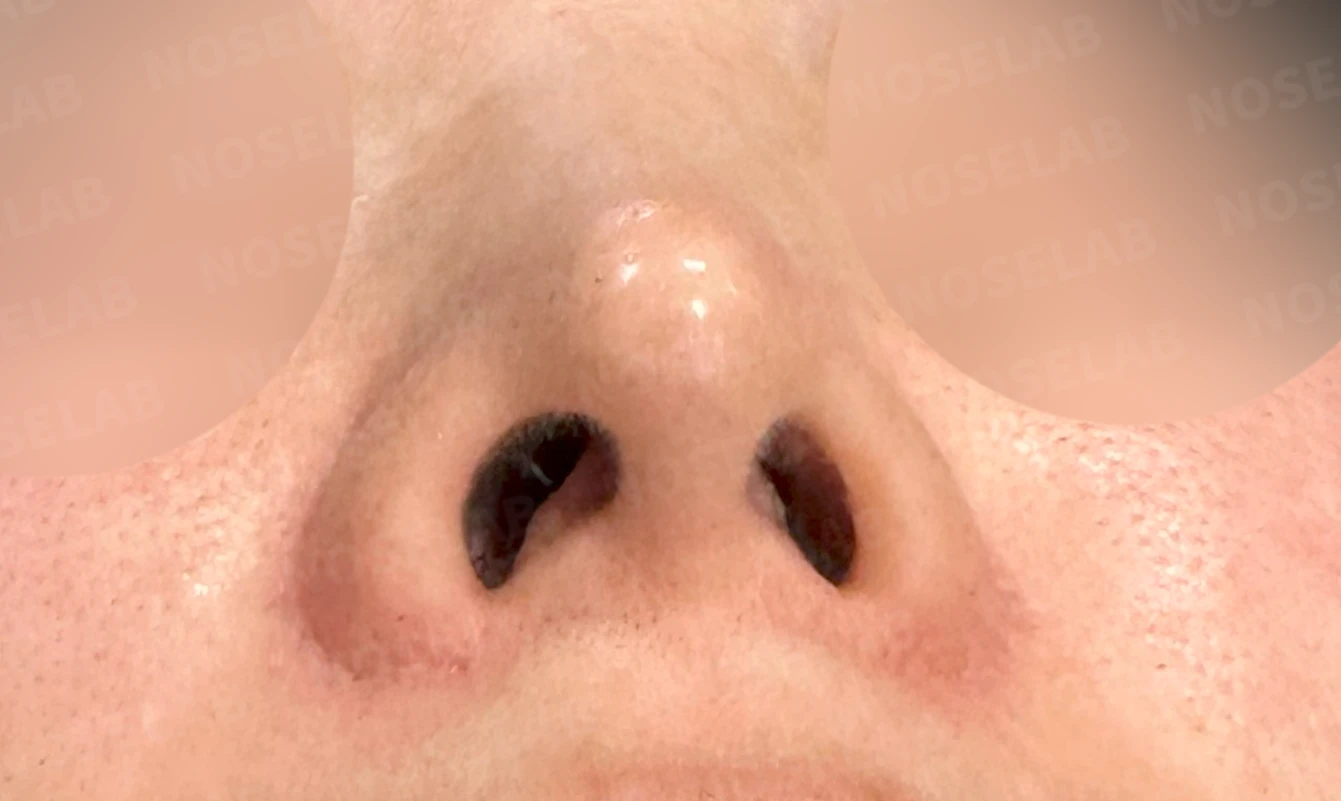
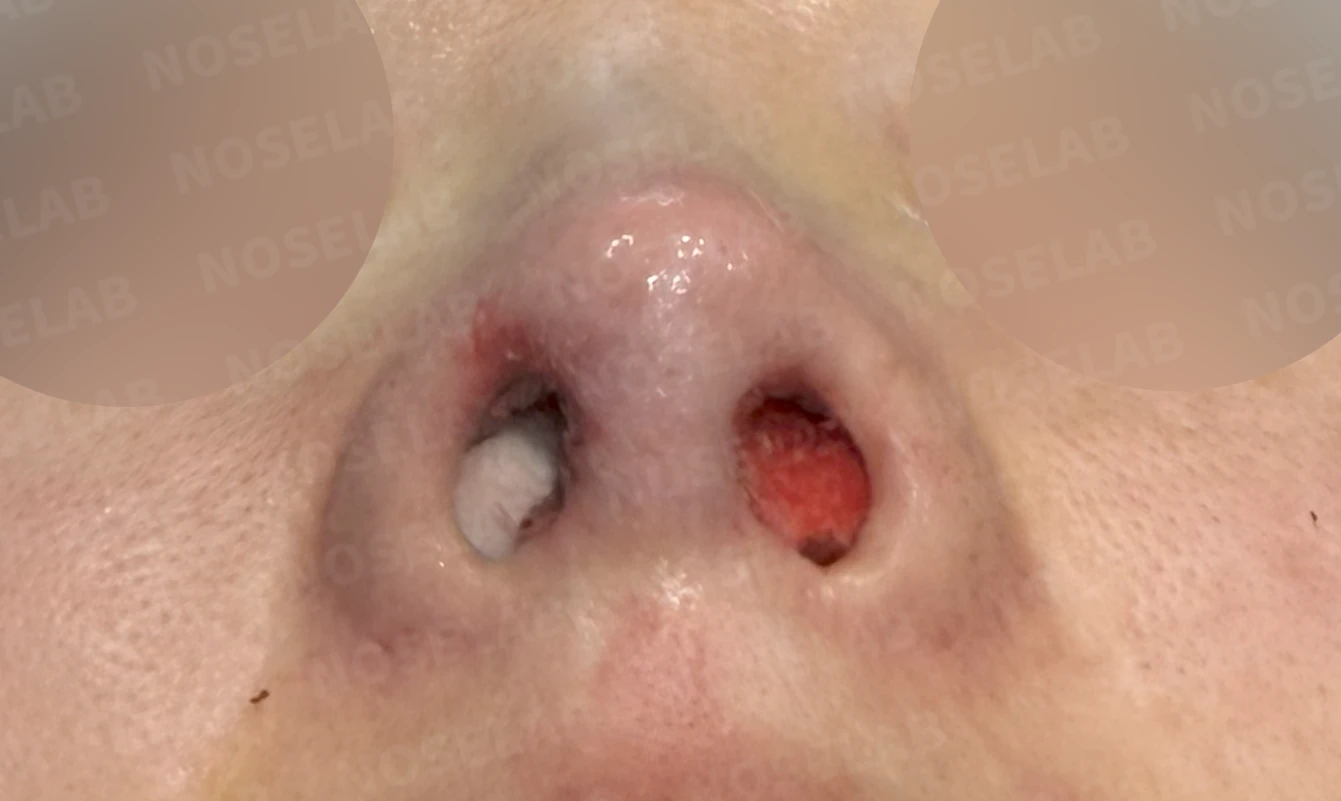
Before surgery / Day 0 immediately after surgery Photos taken immediately after surgery show swelling and may differ from the final result.
Adjustment of the right nostril size
Improved bilateral symmetry
💡 Conclusion
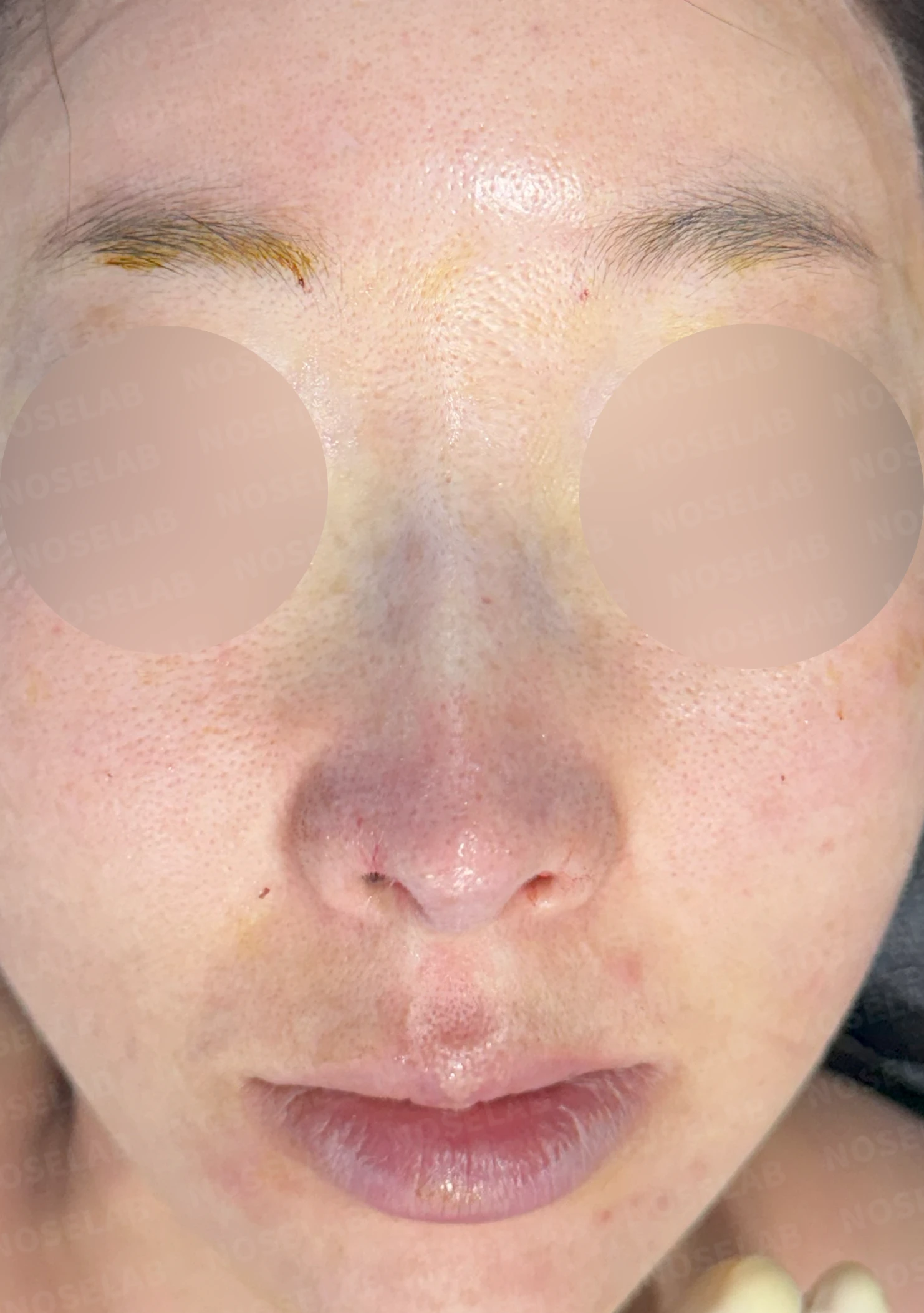
Immediately after surgery (Day 0) front, profile, and oblique viewsImmediate postoperative photos show swelling and may differ from the final result.
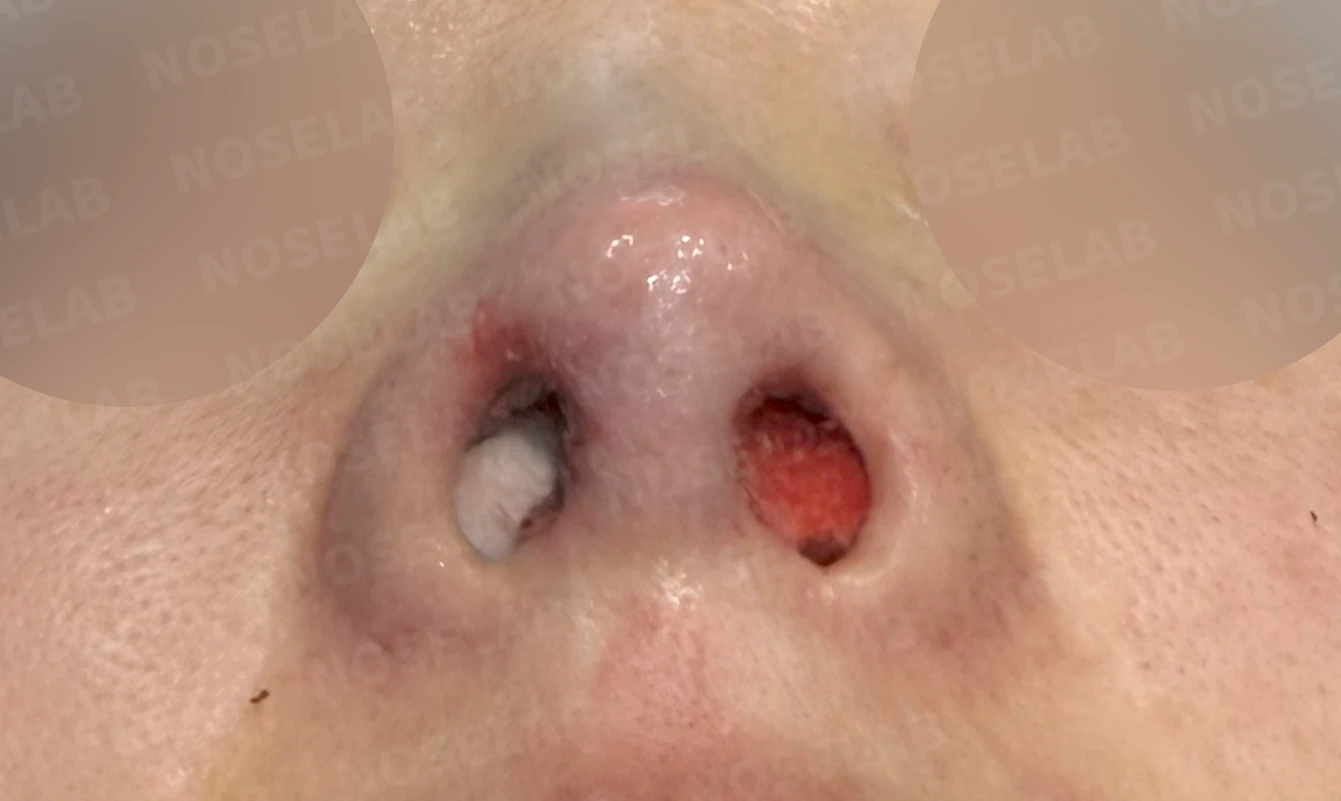
Immediately after surgery (Day 0) nostrilsImmediate postoperative photos show swelling and may differ from the final result.
Through this procedure, all of the patient's concerns were addressed. By creating a refined nasal shape that is natural yet appropriately defined, the patient's overall satisfaction was elevated.
As demonstrated here, NOSELAB pursues customized rhinoplasty that considers each individual patient's facial balance and desired aesthetic goals.
I hope this case proves helpful to anyone experiencing similar concerns.
This was Dr. Peter C. Kang. Thank you.
Thank you.
#closedrhinoplasty #closedrevisionrhinoplasty #revisionrhinoplasty #customrhinoplasty #nasalobstructionrelief #crookednosecorrection #nostrilasymmetry #widenasalbridgecorrection #naturalnose #refinednose

Limitations and risks
When autologous rib cartilage is used, scarring and pain may remain at the donor site on the chest, and pneumothorax (pleural injury) can occur rarely. Over time, the grafted cartilage may warp or undergo partial resorption.
When the septum is corrected at the same time, nasal obstruction may persist or recur, and in rare cases, septal perforation or changes in smell may occur.
Common potential risks include infection, bleeding, asymmetry, scarring, skin necrosis, and insufficient improvement; results vary depending on individual skin condition and previous surgical history.