Hello, I am Dr. Peter C. Kang.
Today, I would like to share a special case with you.
This is the story of a male patient in his 30s who had undergone multiple procedures in pursuit of a high, dramatic nose, but was dissatisfied with the outcome and visited our clinic wishing to return to a more natural look.
Surgical history:
8 years ago: Alar reduction + silicone implant + cartilage (exact details not recalled)
6 years ago: Silicone implant + donor rib cartilage
5 years ago: Silicone implant + donor rib cartilage (due to dissatisfaction with shape)
In cases like this, patients often start with an aggressive alar reduction to create a dramatic nasal shape, followed by repeated surgeries to lower it again. Now, he wanted a natural nose and hoped to improve left-right asymmetry, correct the crooked appearance, and soften the unnatural look caused by over-reduced alae.
For the fourth rhinoplasty, the following surgical plan was established:
Improvement of asymmetry
Replacement of the shifted implant
Improvement of nostril asymmetry by adjusting columellar position
Reduction of nostril show
Adjustment of the nasolabial angle
Lowering the columella
Improvement of cartilage show-through at the tip
Maintenance of the overall height
Analysis of preoperative condition:
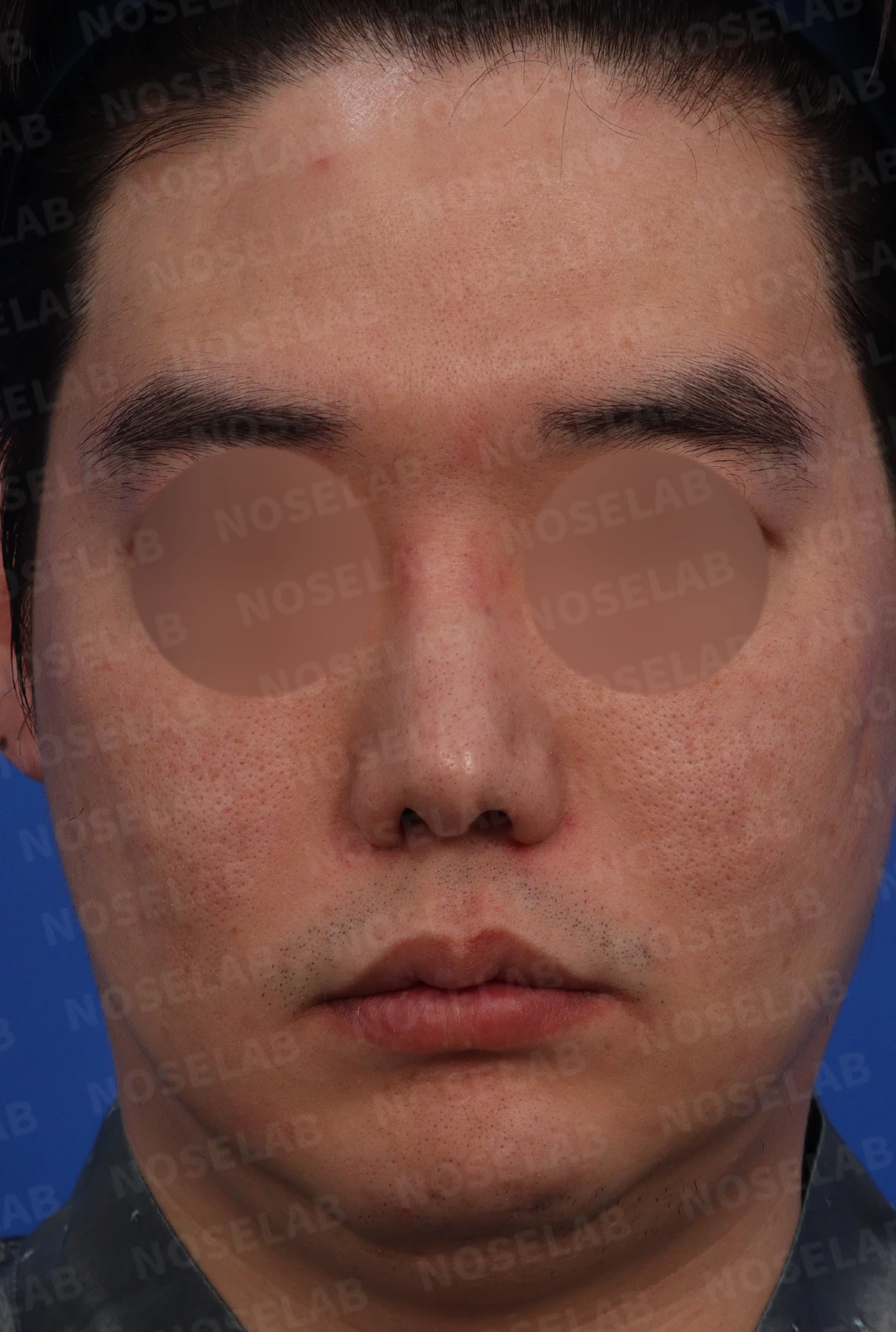
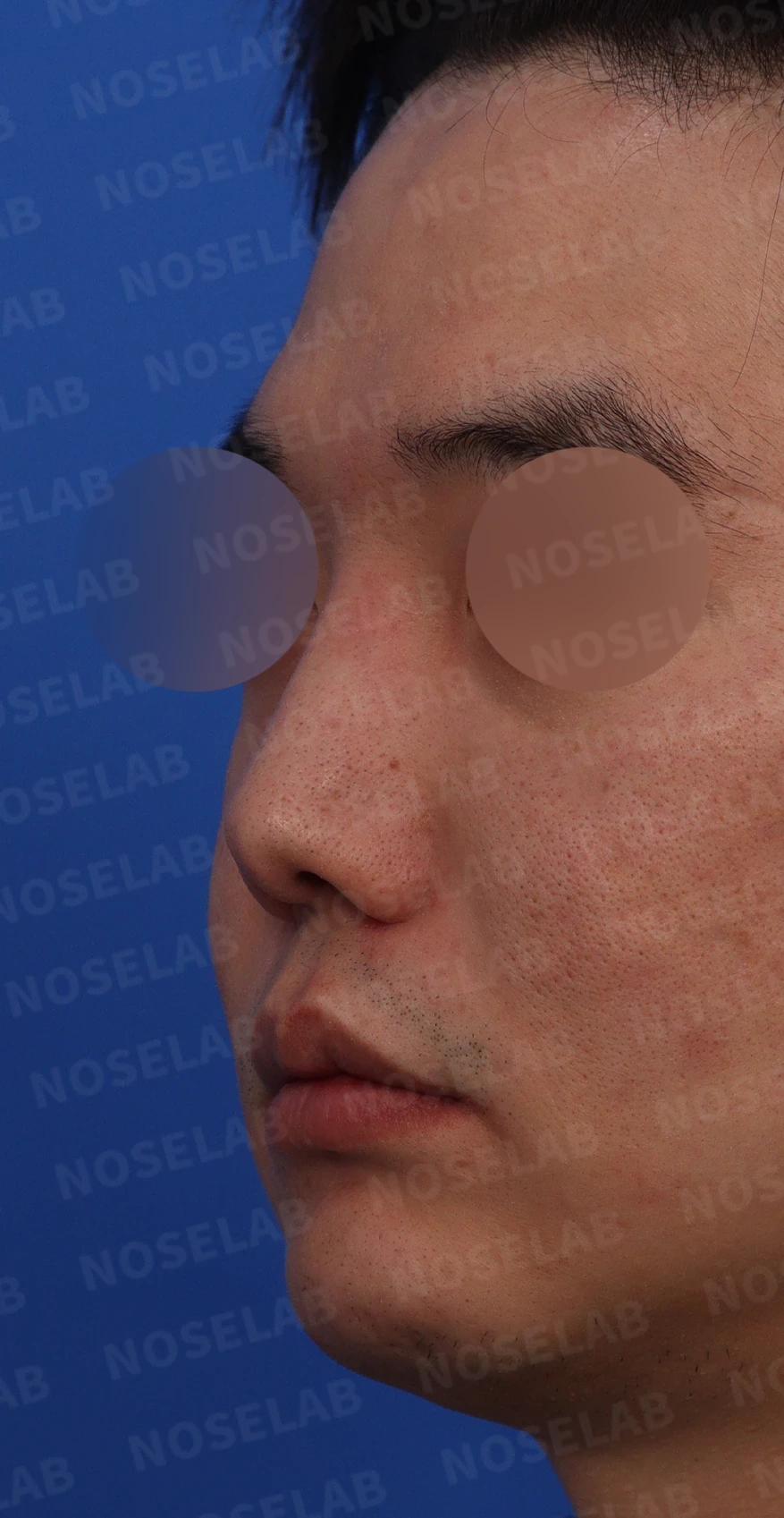
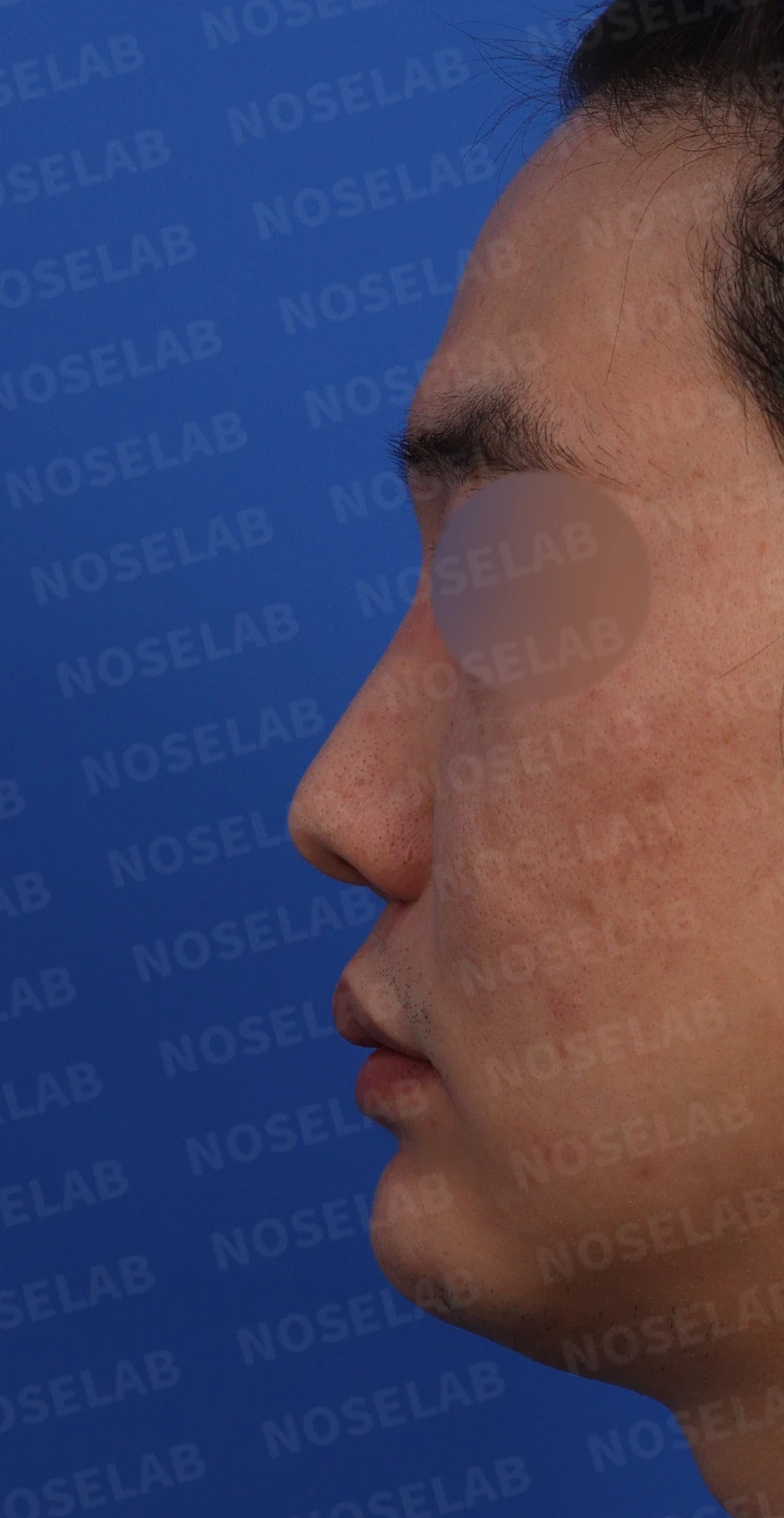
Design consultation photos: front, left profile, and oblique view
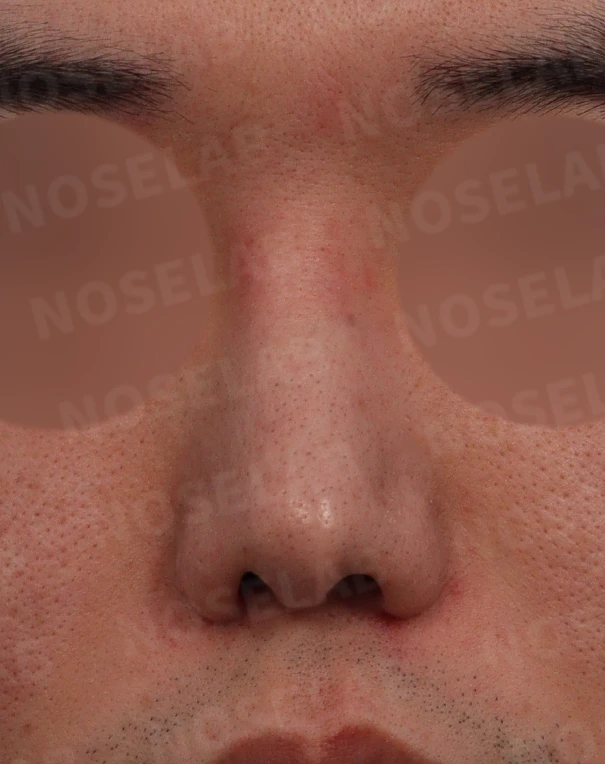
On the front view, the tip shape was very distinctive. Nostril asymmetry was marked, the left nostril appeared pinched, and the columella was retracted. Depressed scarring from tissue adhesion was observed around the alar skin, and the entire nasal bridge appeared crooked. On the profile view, a protruding mouth was noted alongside columellar retraction and an acute nasolabial angle of less than 90 degrees. On the nostril view, the right nostril was small, an open-approach scar across the columella was prominent, and alar reduction scars were also noticeable.
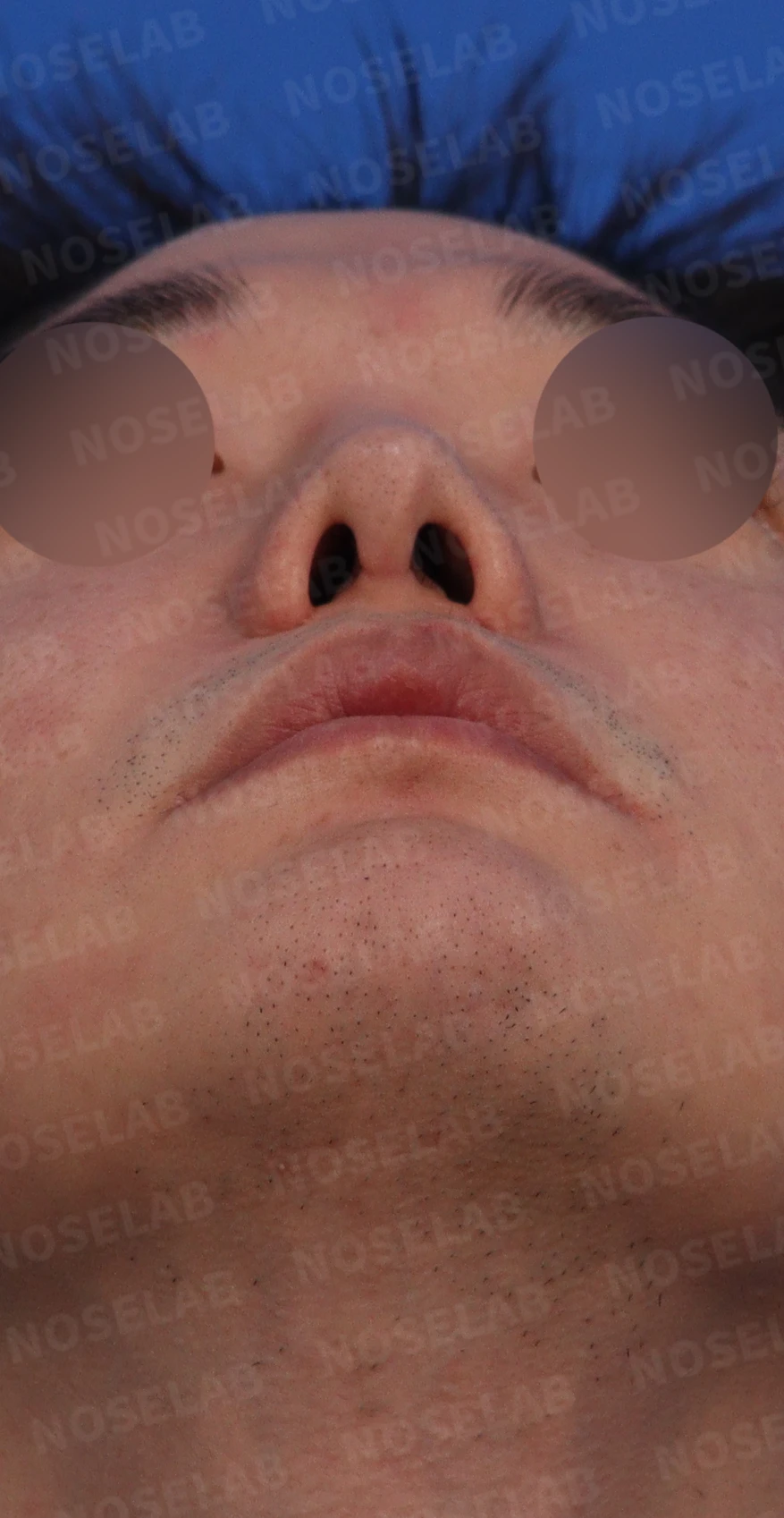
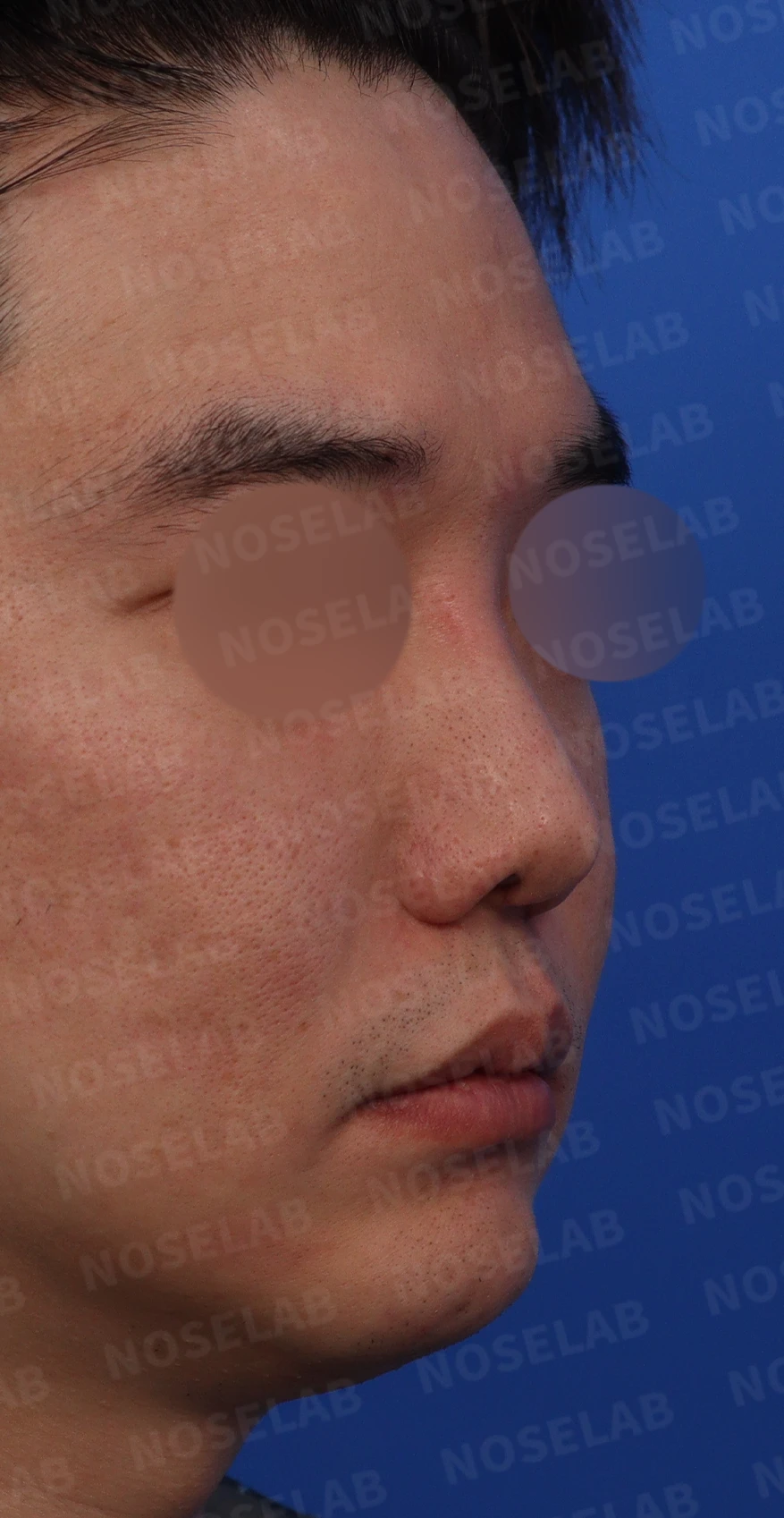
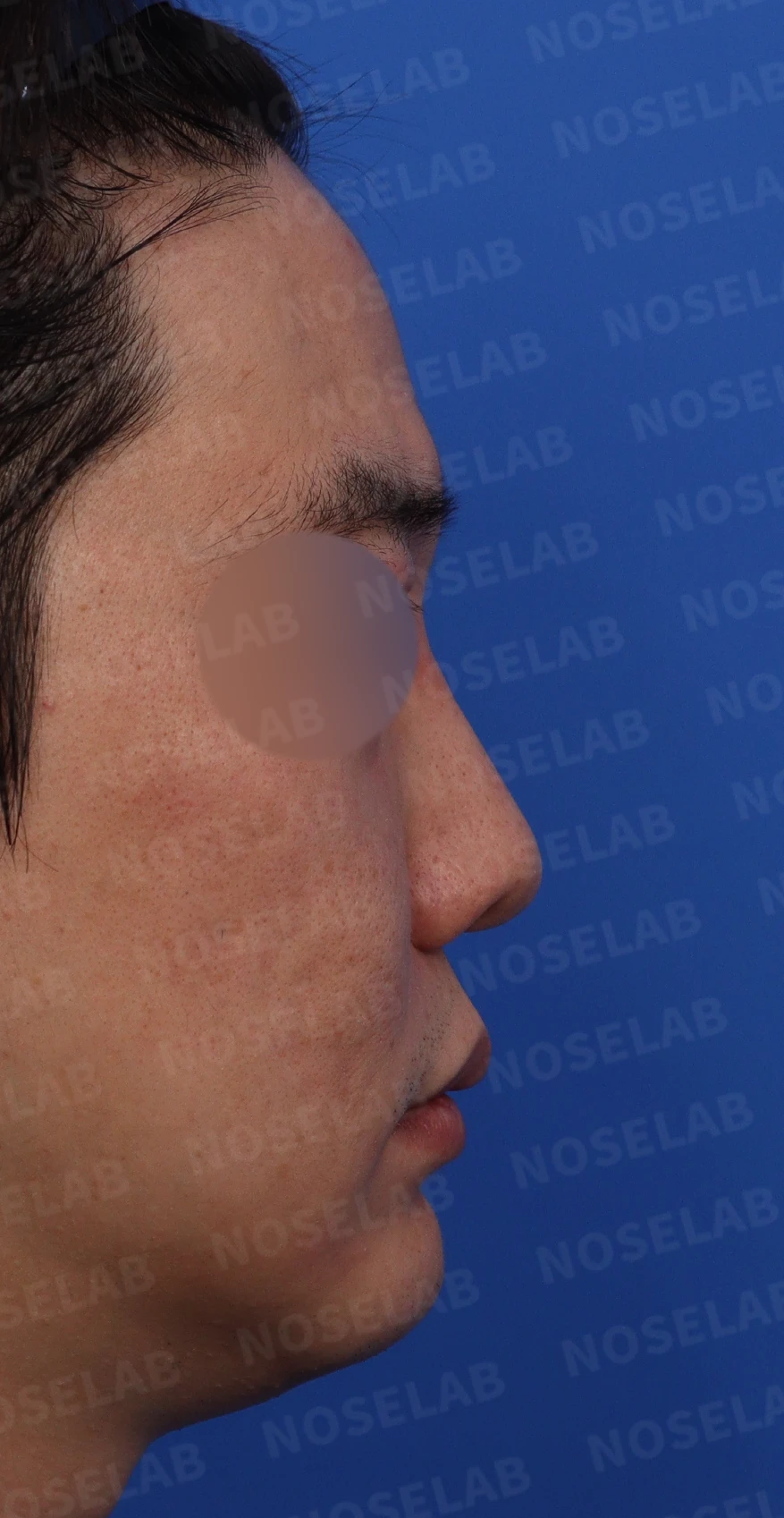
Design consultation photos: nostril, right oblique, and profile view
Surgical plan:
Because excessive alar reduction was expected to limit the degree of nostril asymmetry correction, we decided to shift the columella to the left to achieve the greatest possible correction. For this, septal reconstruction was necessary, and we planned to perform it using autologous rib cartilage. Reconstruction of the lower lateral cartilages was also planned if needed after checking their status. The crooked nasal bridge was to be corrected by removing the existing implant and placing a new implant precisely in the midline, while adjusting the nasolabial angle to approximately 90 degrees.
Surgical results:
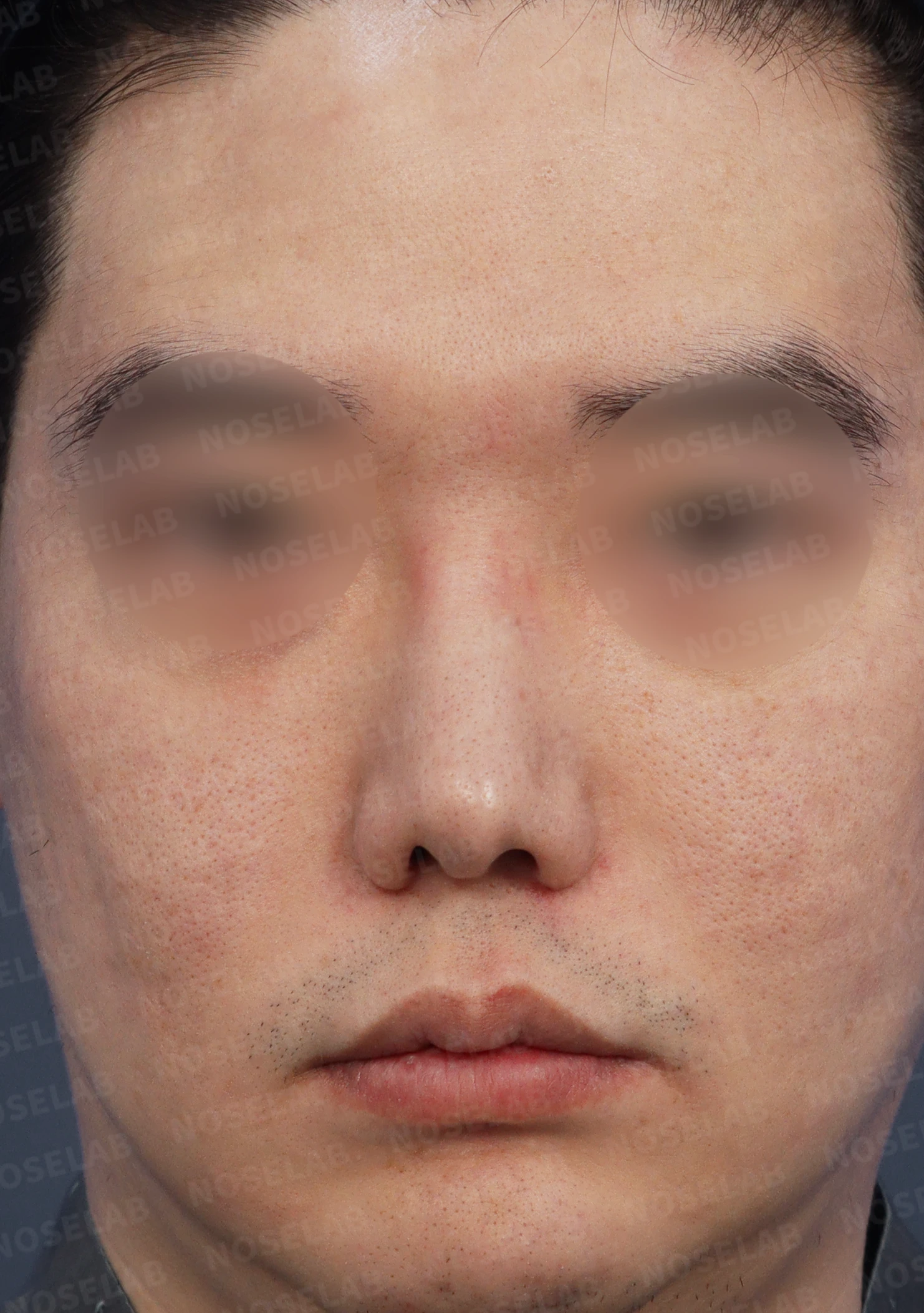
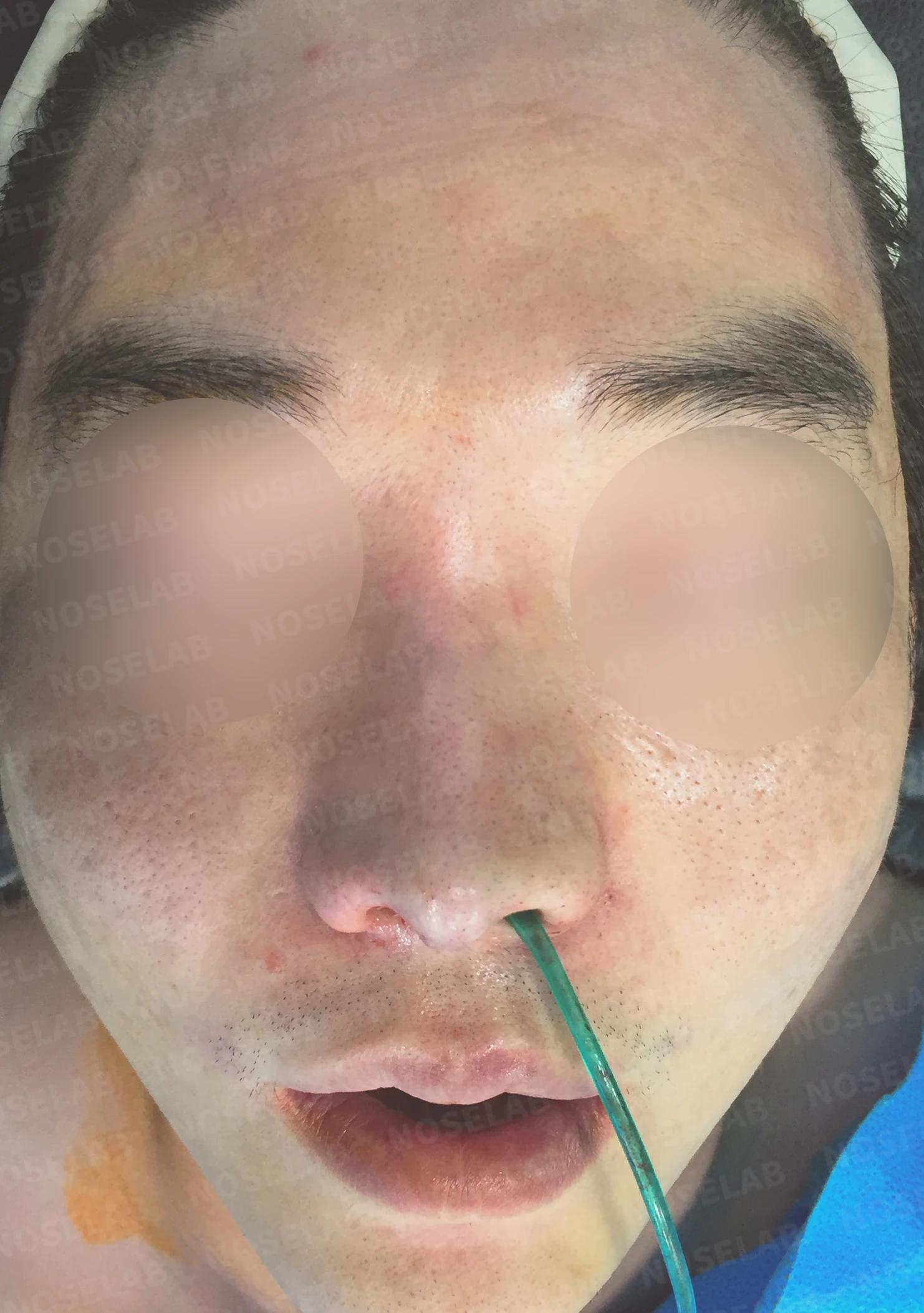
Before surgery / Day 0 immediately after surgery Photos taken immediately after surgery show swelling and may differ from the final result.
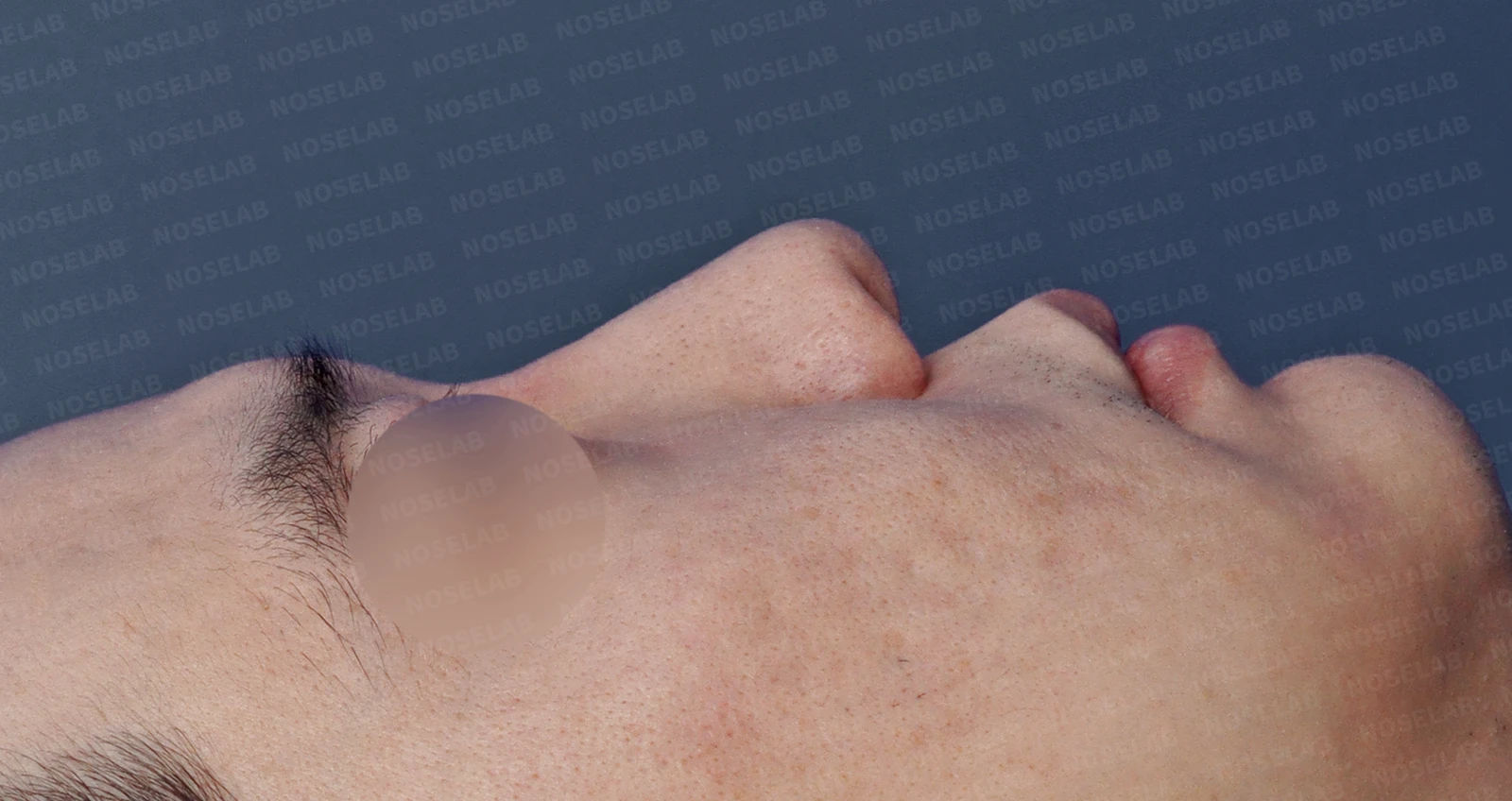
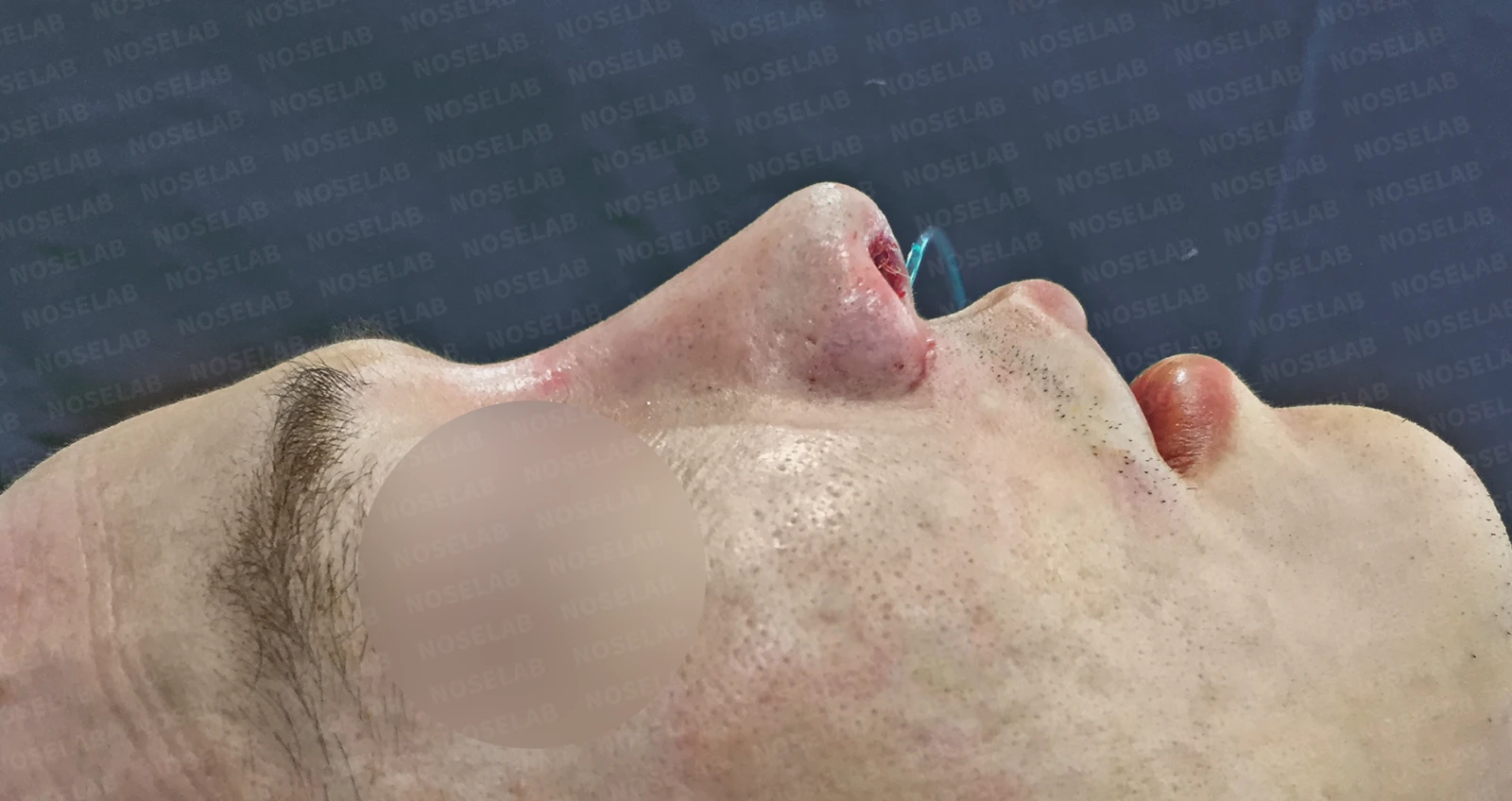
Before surgery / Day 0 immediately after surgery Photos taken immediately after surgery show swelling and may differ from the final result.
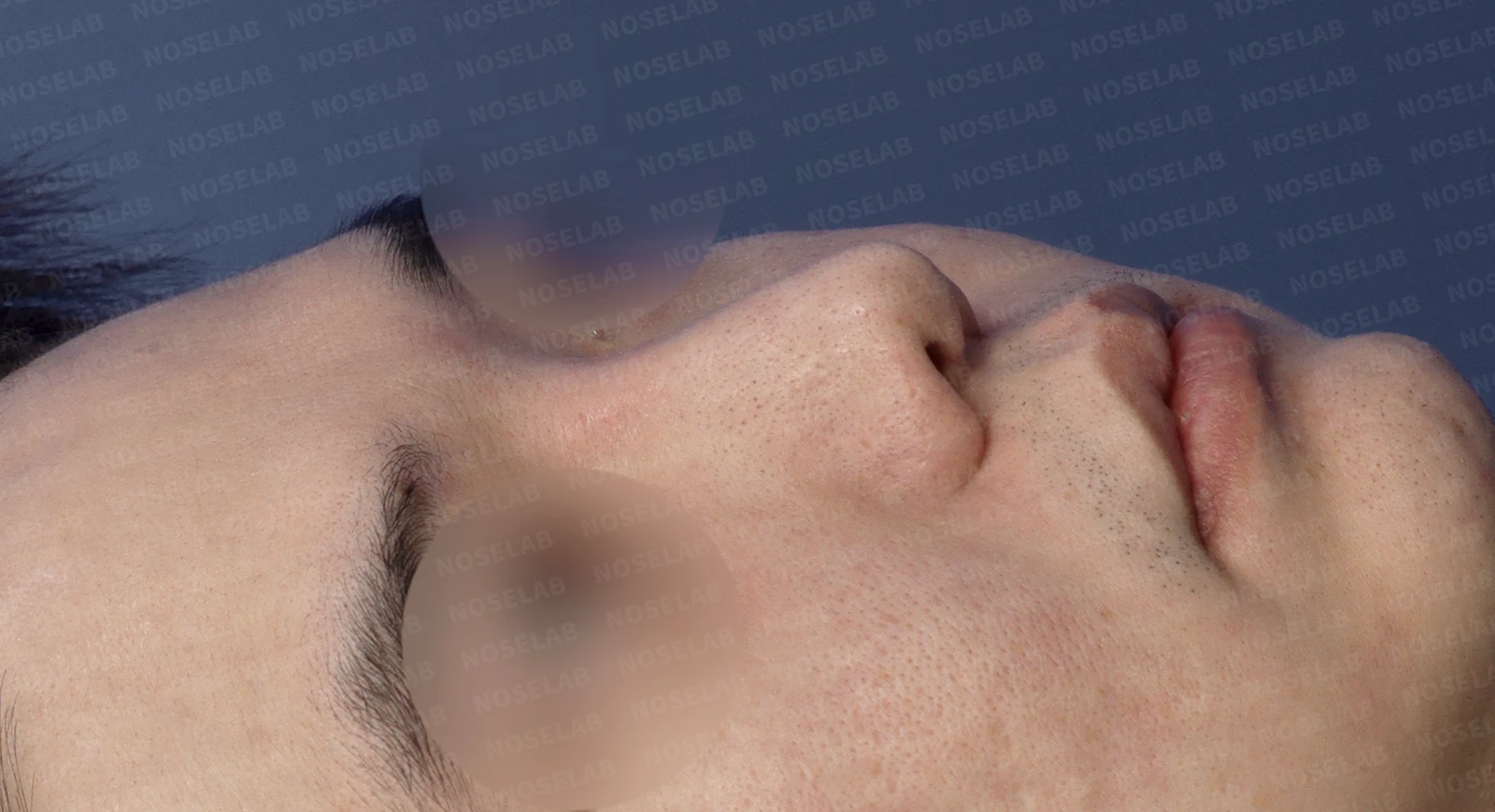
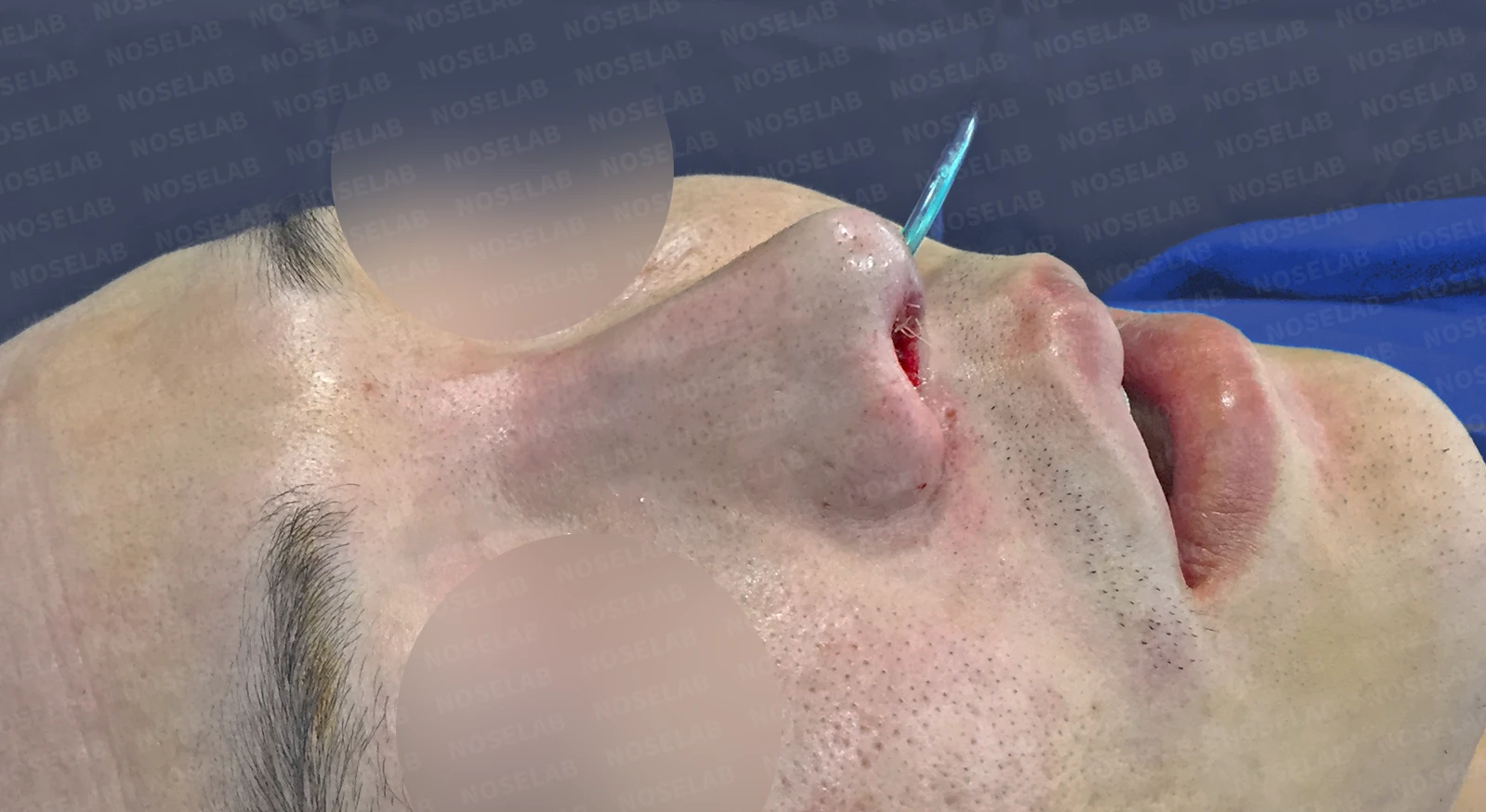
Before surgery / Day 0 immediately after surgery Photos taken immediately after surgery show swelling and may differ from the final result.
Immediately after surgery, nostril show on the front view was reduced by more than half, and asymmetry was substantially improved. The overall crookedness of the nose was corrected, and the depressed adhesions around the alae were visibly softened. On the profile view, the columella came down naturally so that it peeked slightly between the alae, and correcting the nasolabial angle to approximately 90 degrees also helped improve the appearance of the protruding mouth.
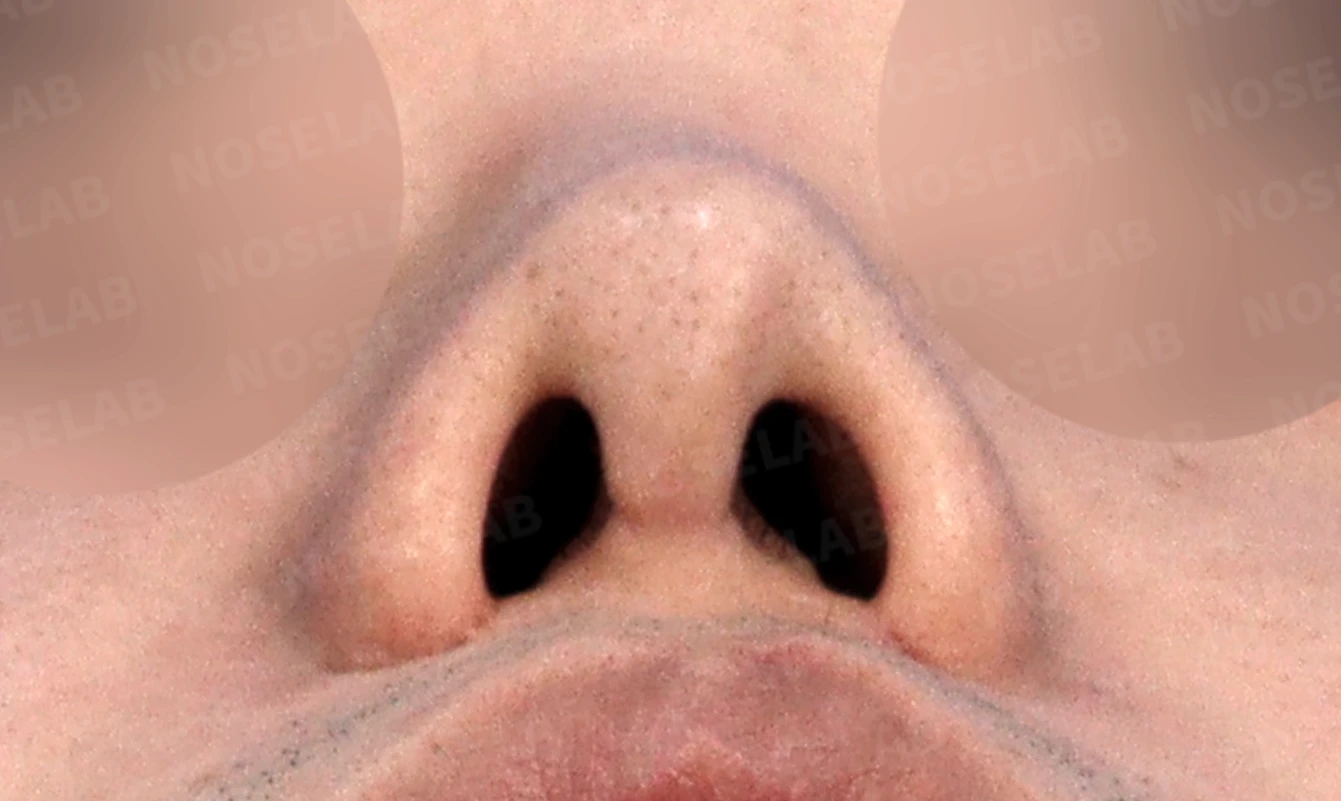
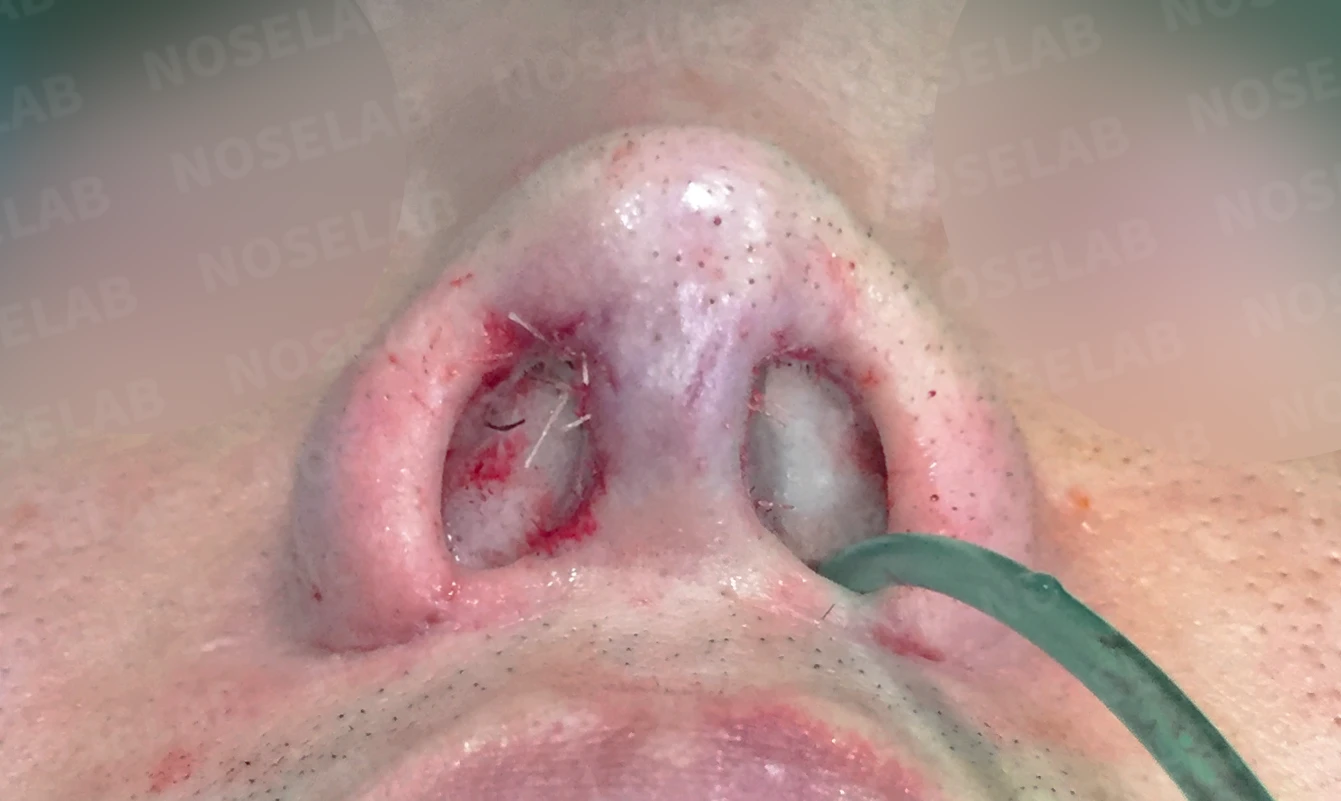
Before surgery / Day 0 immediately after surgery Photos taken immediately after surgery show swelling and may differ from the final result.
The most notable change was the correction of nostril asymmetry. By shifting the septal cartilage to the left, the columellar position was adjusted, and the smaller right nostril was made comparable in size to the left. Through repositioning and suturing the lower lateral cartilages, the nostrils achieved a more symmetric shape, and the pinching of the left nostril was also markedly improved.
Summary and concluding thoughts:
Many people dream of a high, dramatic nose when deciding on cosmetic surgery. However, because each person's baseline anatomy and nasal conditions differ, producing an identical nasal shape is not possible. Chasing excessive height or an exaggerated shape can lead to complications, and can sometimes result in changes that cannot be fully reversed to the original state.
In particular, when procedures that are difficult to undo—such as alar reduction—are carried out too aggressively, reshaping the nose into any other configuration becomes challenging. It is therefore essential to set surgical goals that balance definition with a natural look within reasonable anatomic limits. In this way, you can achieve a nose that is harmonious, healthy, and aesthetically pleasing.
If you are considering rhinoplasty, please make your decision carefully and select the approach best suited to you through a thorough consultation with a specialist. Wishing you a healthy and fulfilling life!
We at NOSELAB will continue to do our best for your healthy and beautiful nose.
This was Dr. Peter C. Kang. Thank you.
Thank you.
#closedrhinoplasty #crookednosecorrection #nostrilasymmetry #columellaretraction #nasolabialanglecorrection #protrudingmouth #rhinoplasty #naturalnose #revisionrhinoplasty #plasticsurgery #nostrilasymmetry

Limitations and risks
When autologous rib cartilage is used, scarring and pain may remain at the donor site on the chest, and pneumothorax (pleural injury) can occur rarely. Over time, the grafted cartilage may warp or undergo partial resorption.
When using donor rib cartilage, long-term follow-up is necessary because the grafted cartilage may resorb or warp.
When revising after implant removal, contracture may progress again after removal, the nasal height and length may decrease, and staged surgery may be necessary depending on the skin condition.
When the septum is corrected at the same time, nasal obstruction may persist or recur, and in rare cases, septal perforation or changes in smell may occur.
Common potential risks include infection, bleeding, asymmetry, scarring, skin necrosis, and insufficient improvement; results vary depending on individual skin condition and previous surgical history.