Hello. I am Dr. Peter C. Kang, medical director.
Today, I would like to share important information about rhinoplasty. This will be especially helpful for those struggling with a crooked nose or an upturned nose.
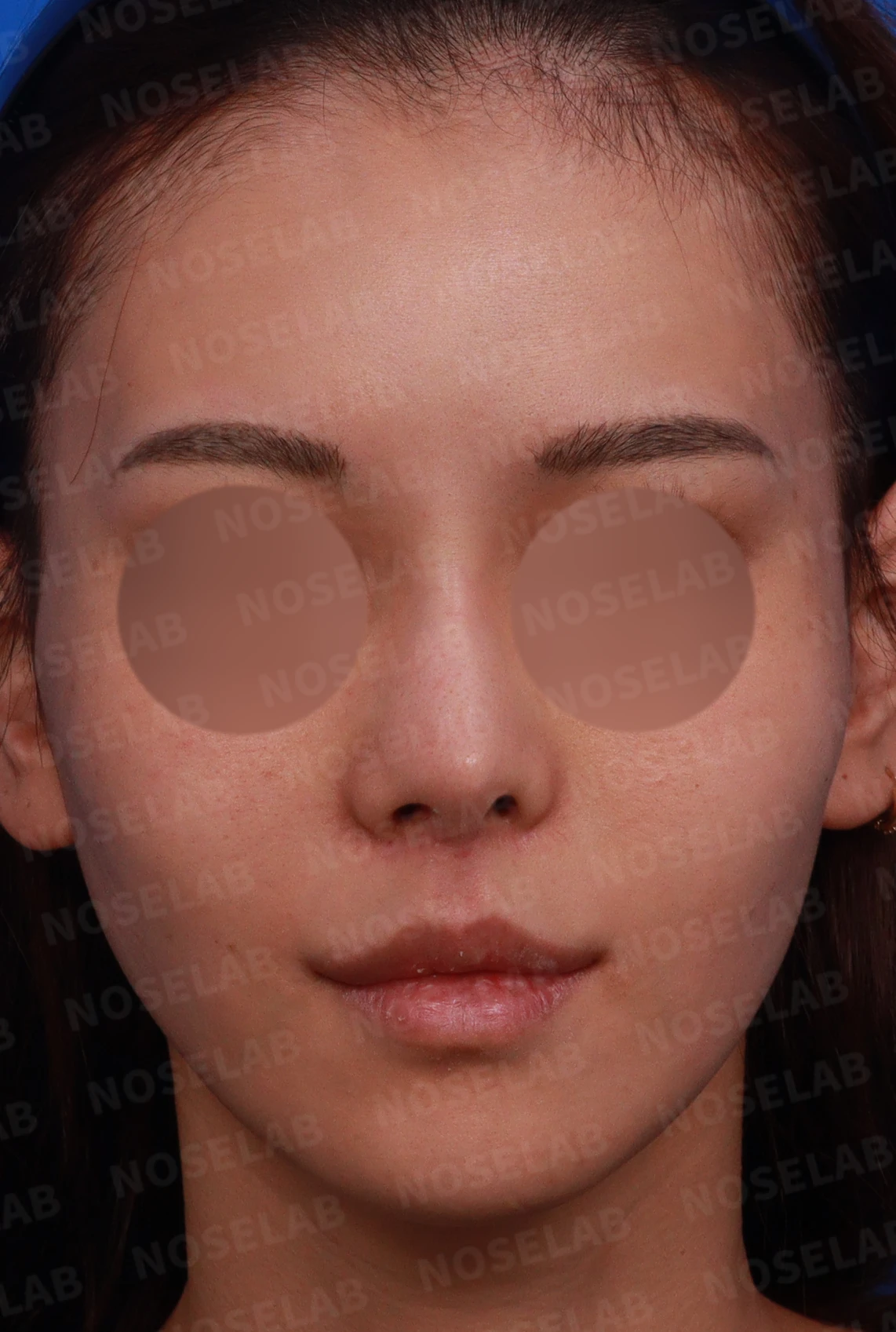
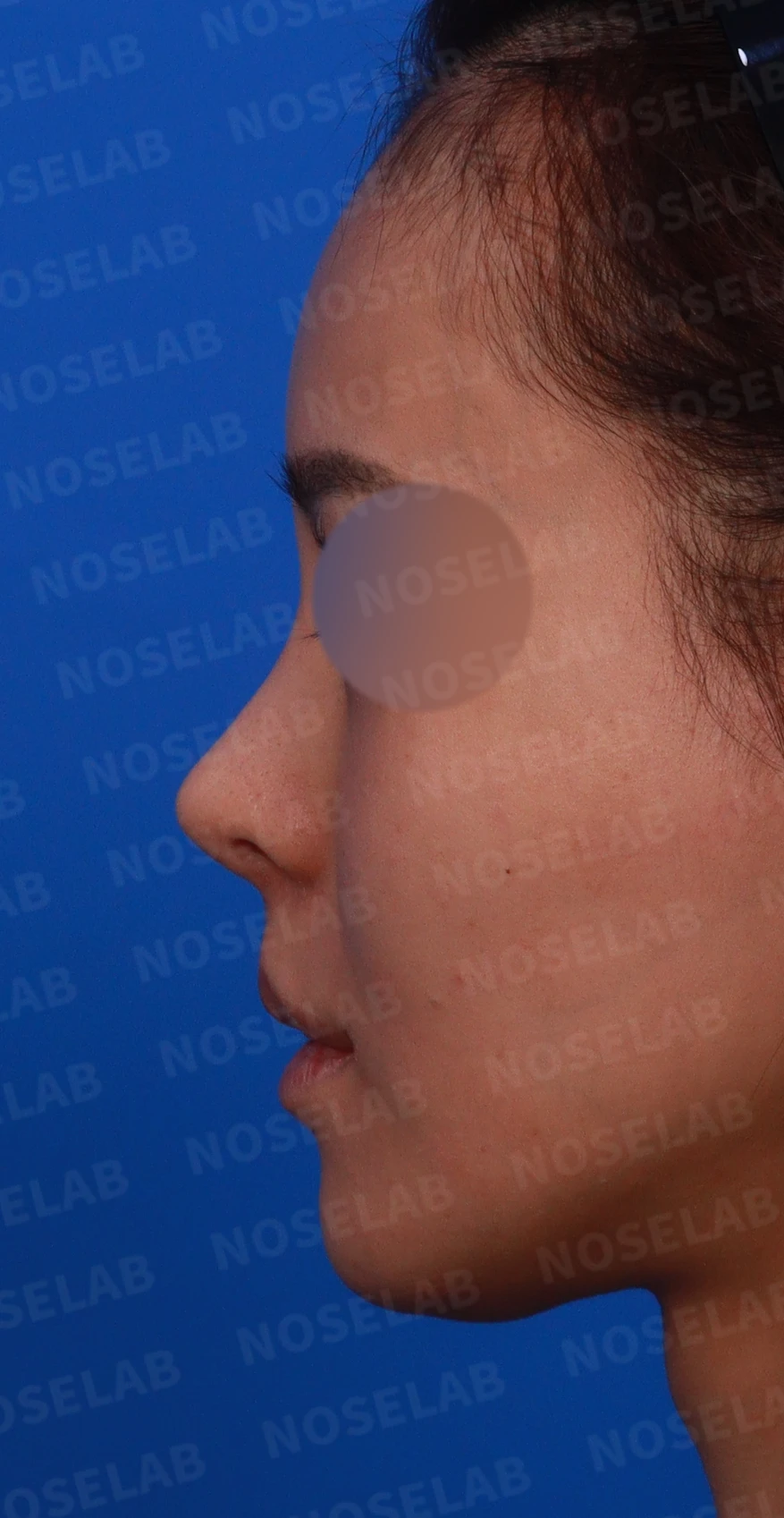
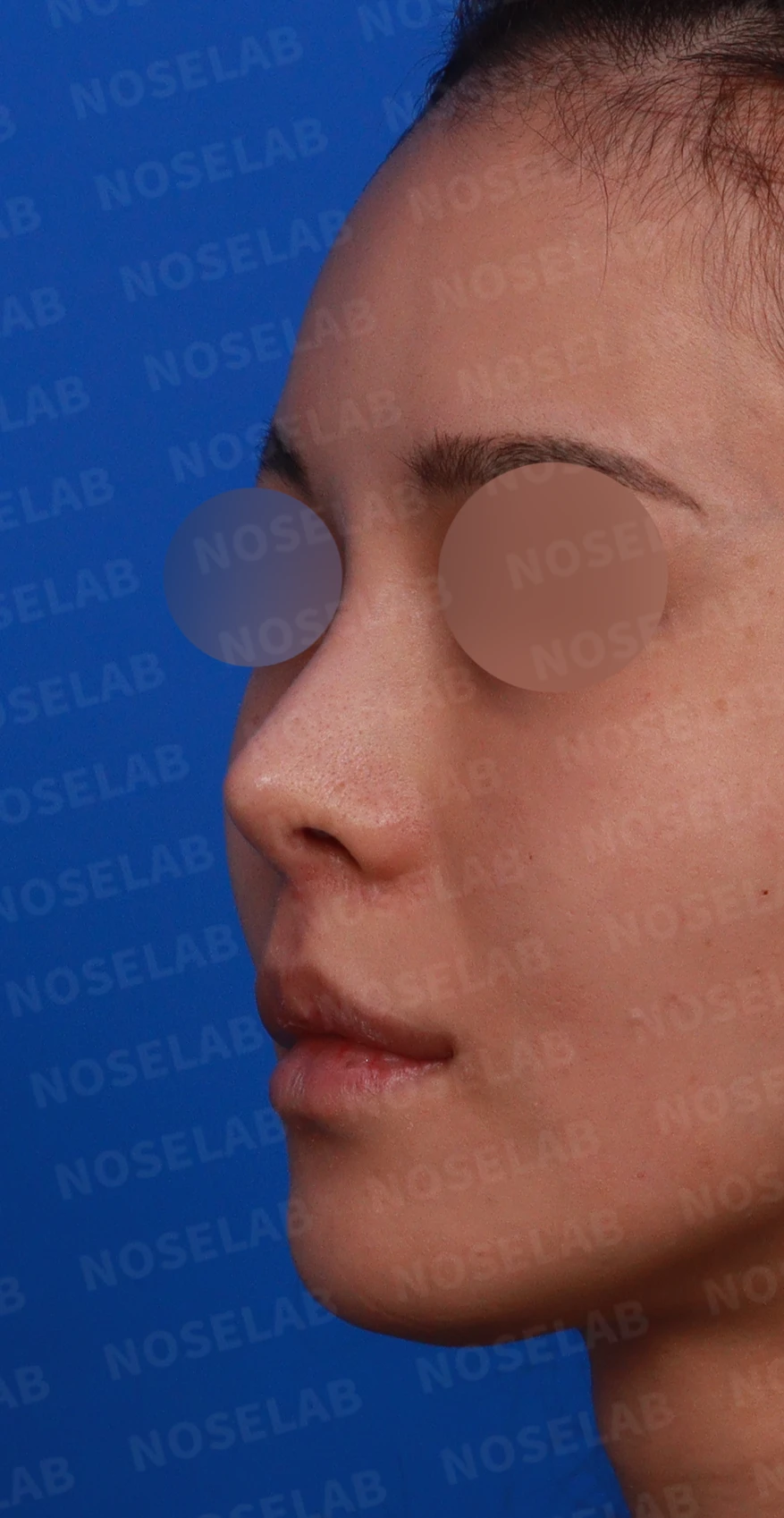
Preoperative design consultation photos
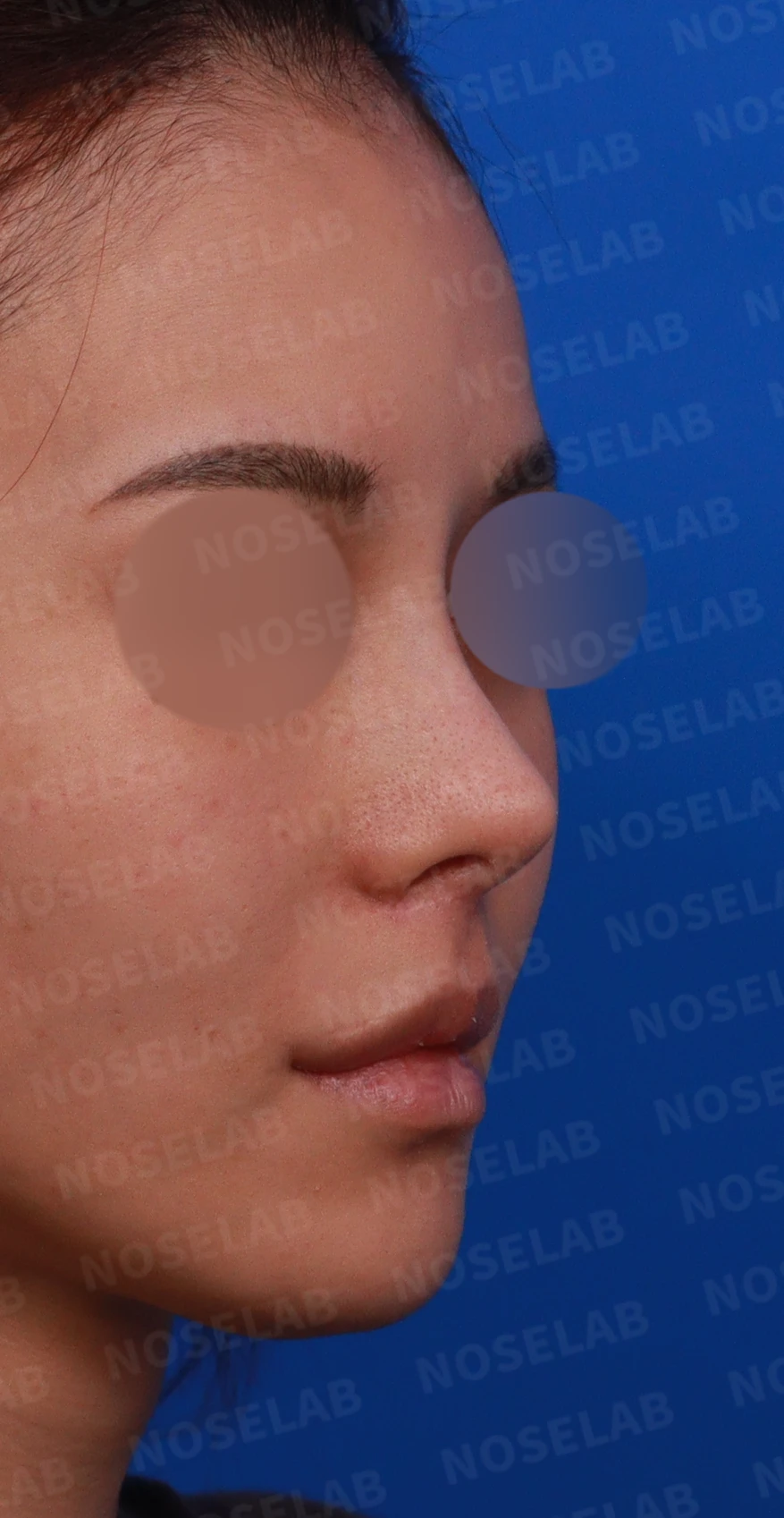
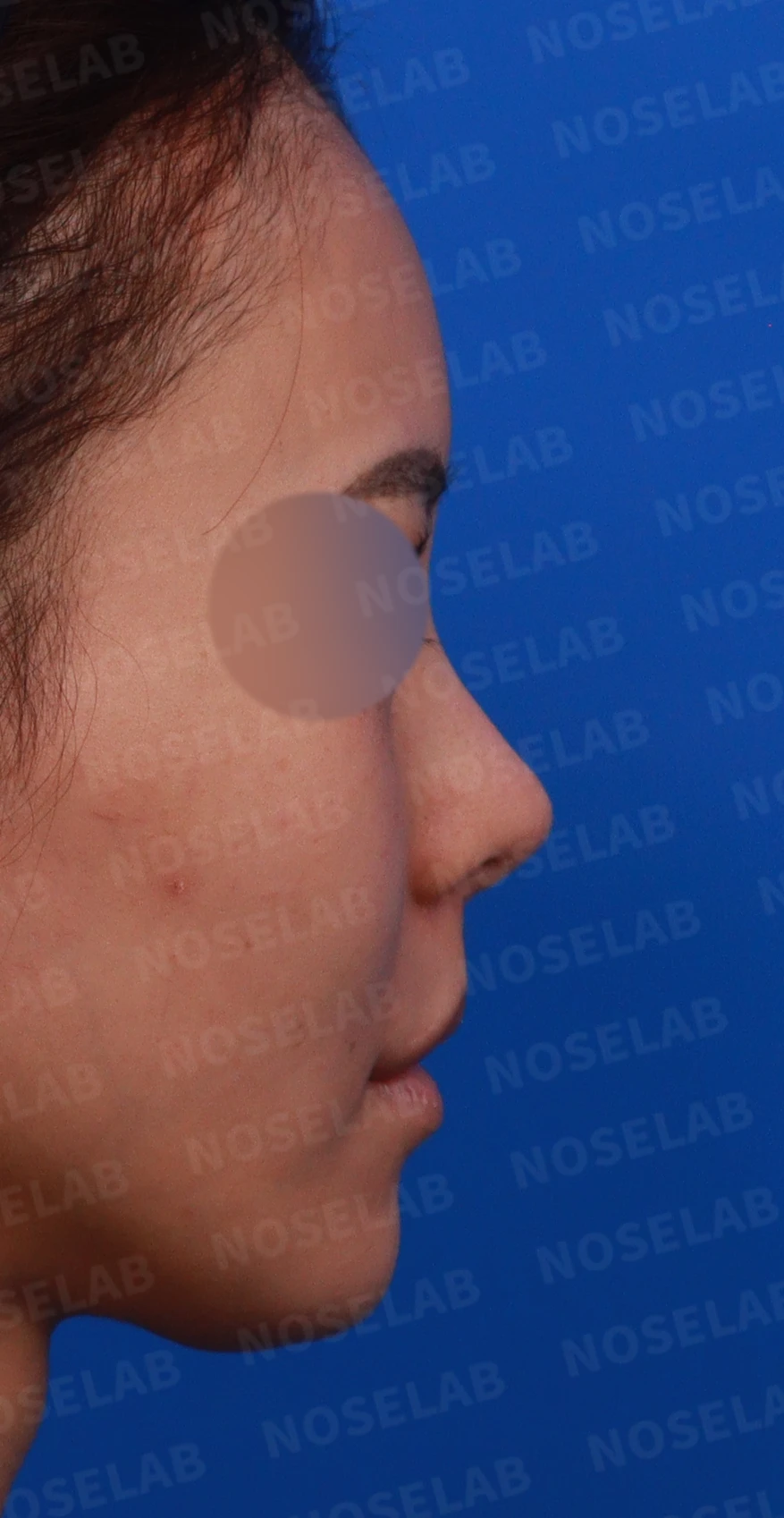
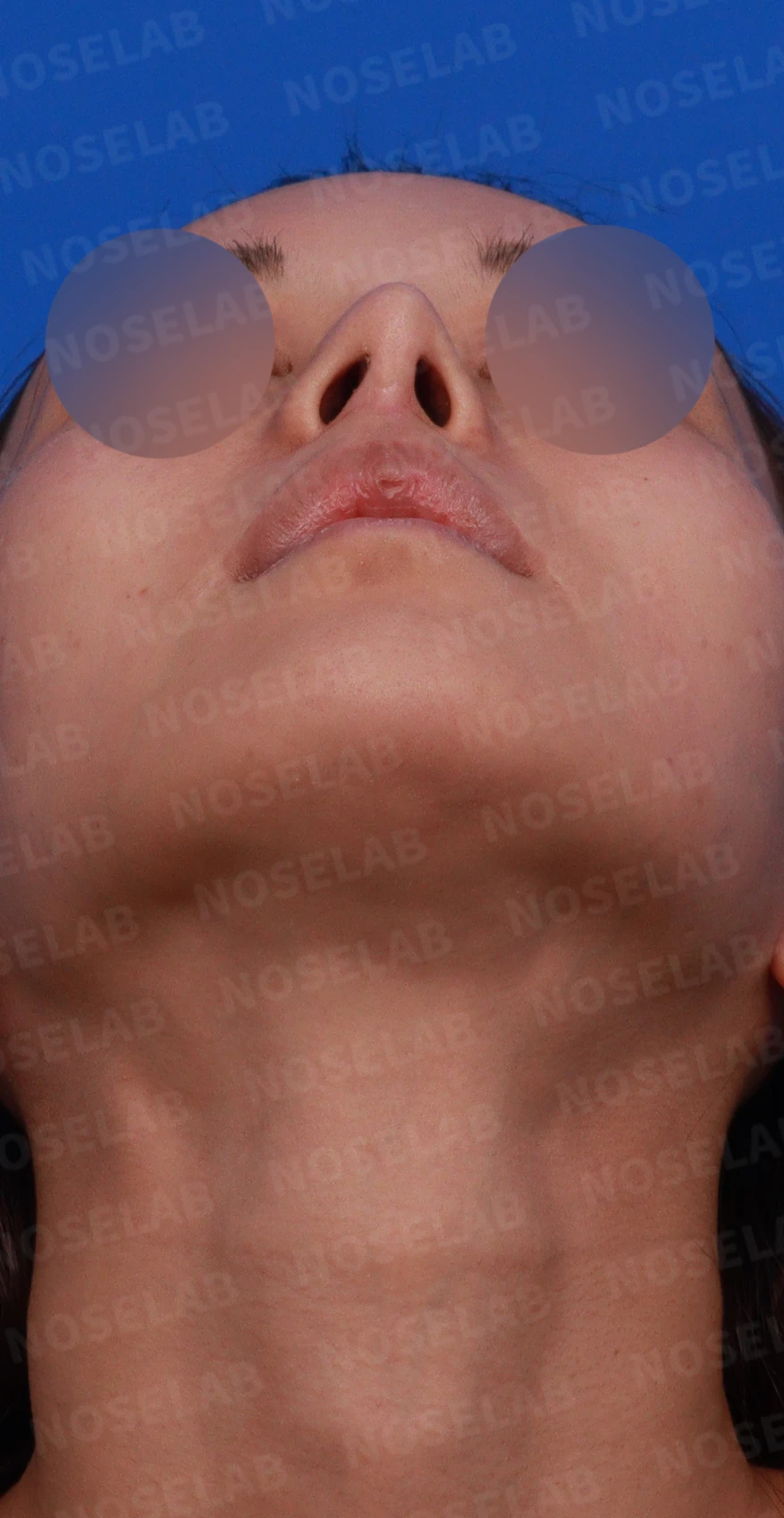
Preoperative design consultation photos
Surgical history and requests:
Surgical history:
- 2020: Crooked nose correction (ear cartilage + silicone implant used)
- 2023: Nasal tip surgery (porcine cartilage used)
Current condition and requests:
Need to improve the crooked nose
Lowering the nasal tip to reduce nostril show
Maintaining current nasal bridge height
Relief of nasal obstruction
Based on these requests, we established the following surgical plan:
Septal extension using donor rib cartilage
Septal reconstruction if necessary
Alar lowering
Correction of the nasolabial angle
Mucosal adhesiolysis
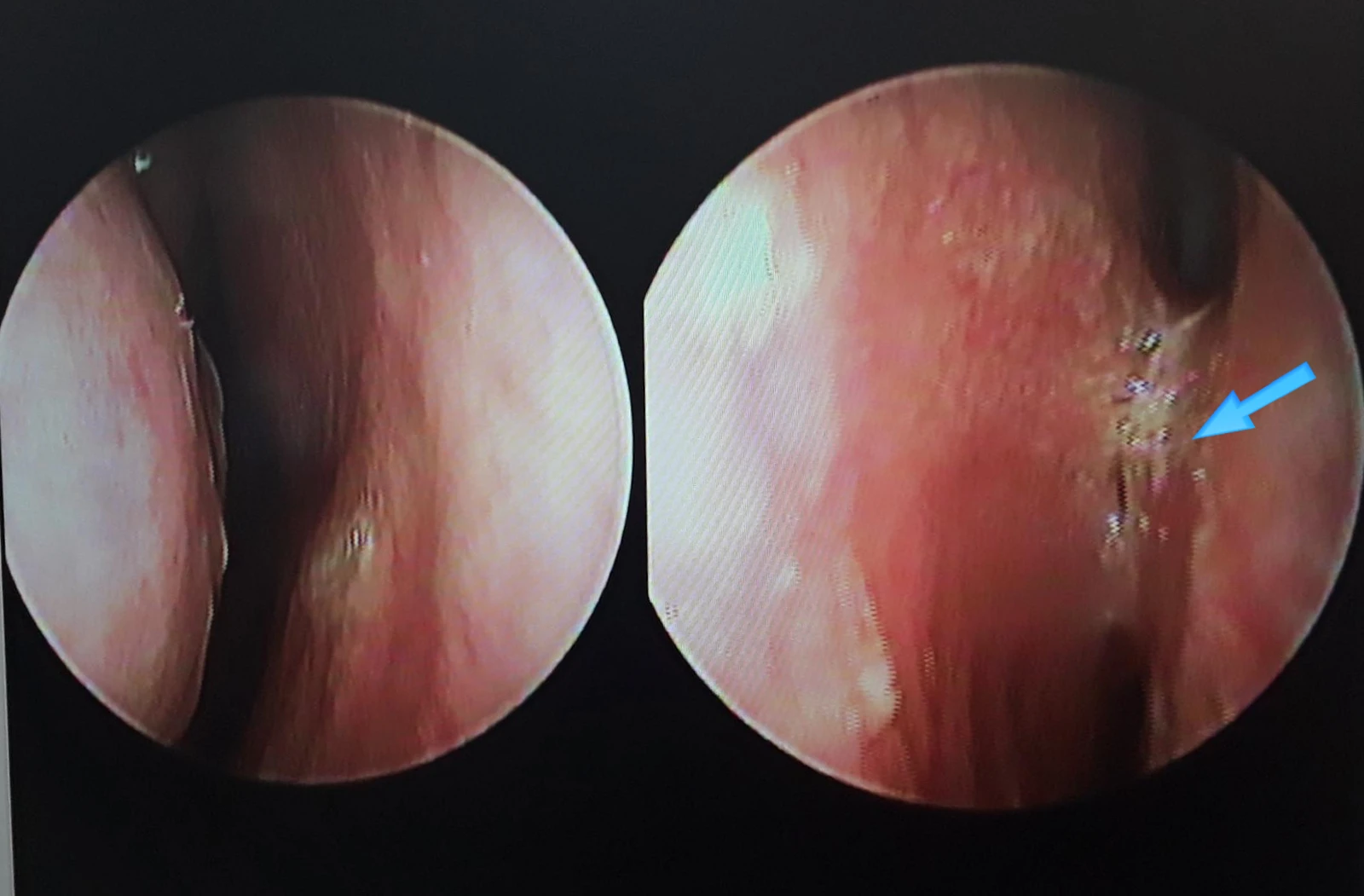
Adhesion (arrow) observed between the left septal mucosa and the inferior turbinate
Preoperative condition:
Front view: The nasal tip is deviated to the left, and nostril asymmetry is observed. In addition, the radix is on the higher side.
Profile view: The nasal tip is upturned, the nasolabial angle (angle between the columella and philtrum) is wide, and the tip looks pointed.
Nostril view: The columella (pillar between the nostrils) is tilted to the left, and the nasal tip is deviated to the left, resulting in distinct nostril asymmetry.
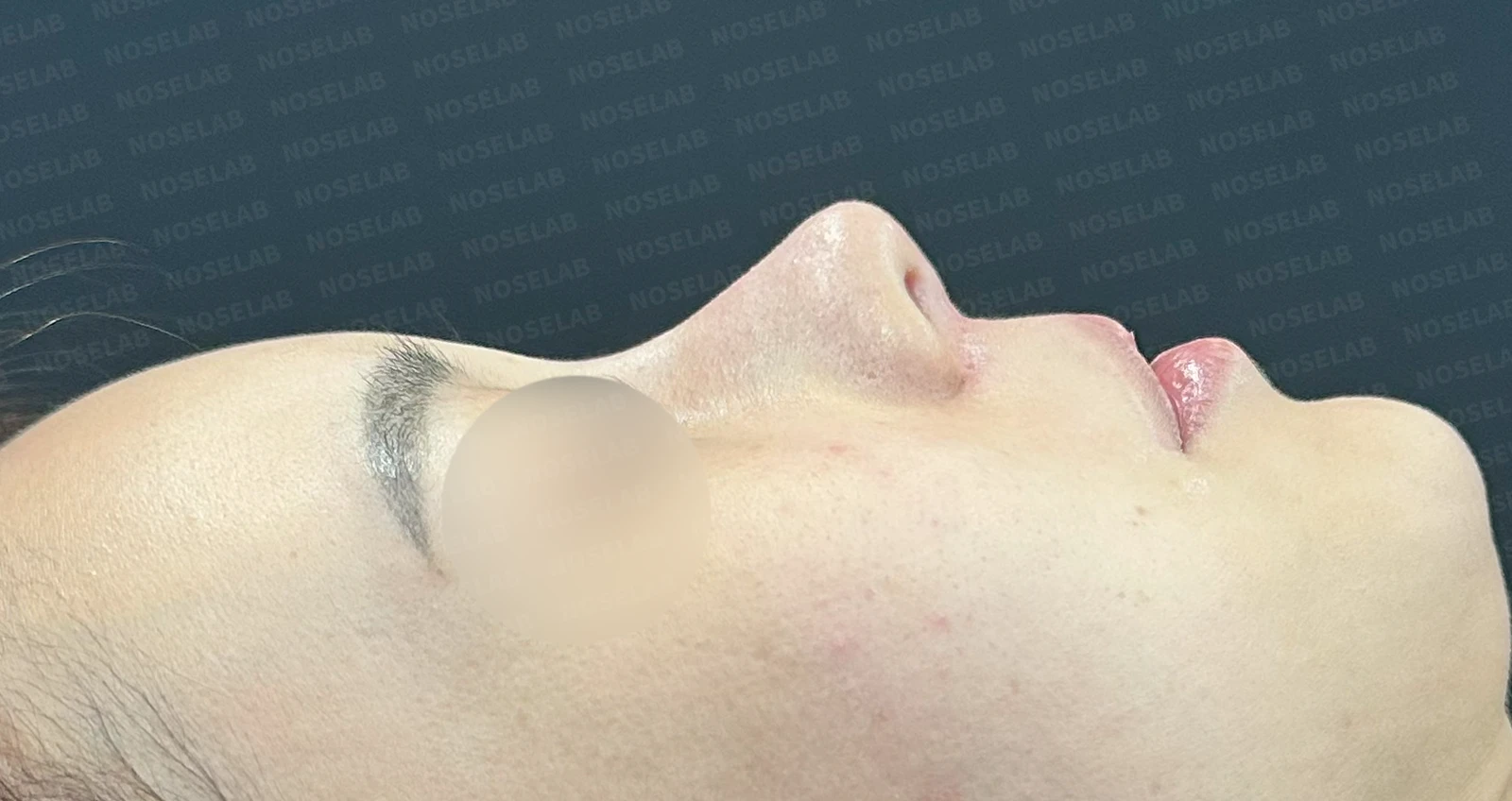
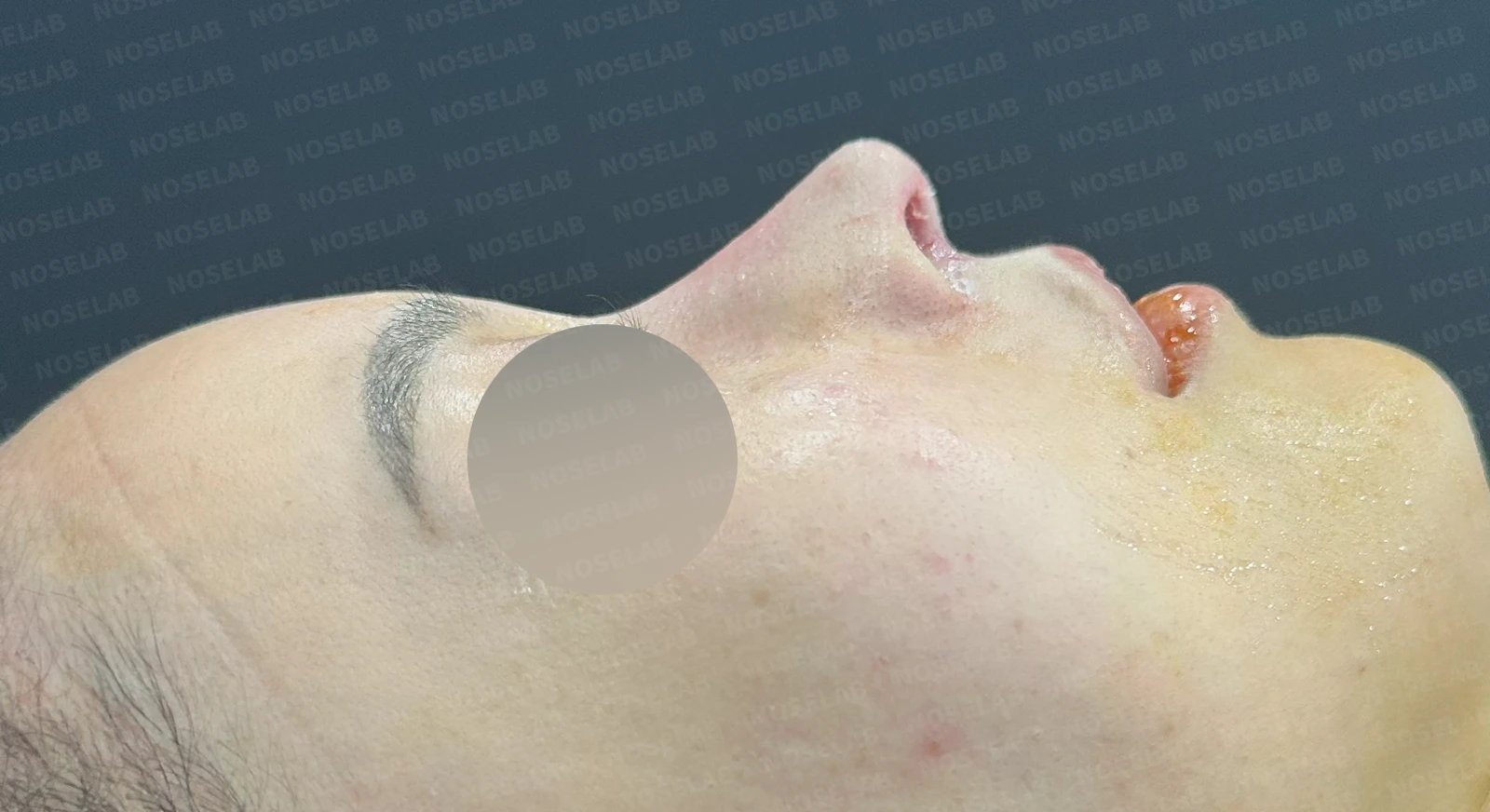
Before surgery / Day 0 immediately after surgery Photos taken immediately after surgery show swelling and may differ from the final result.
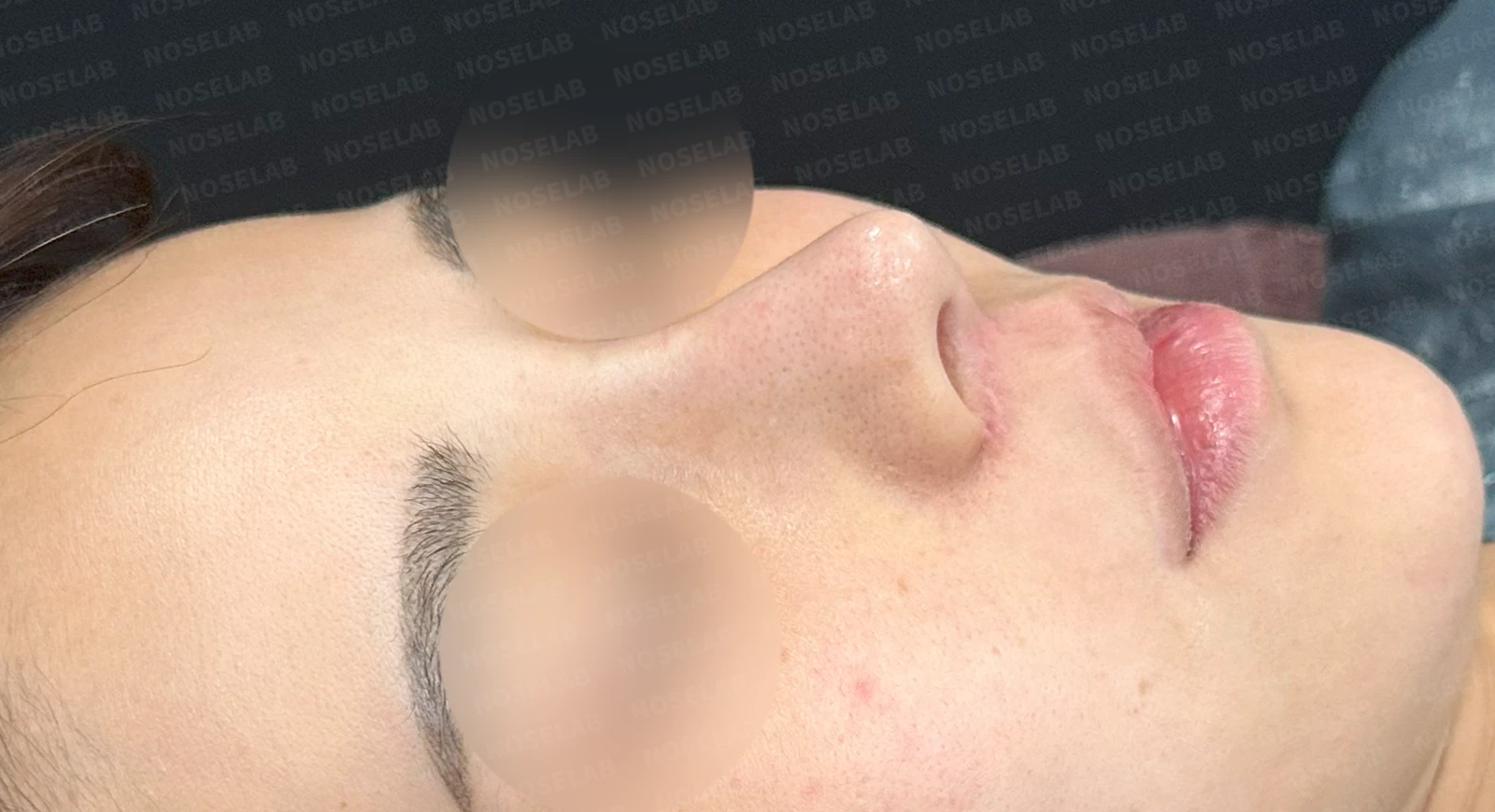
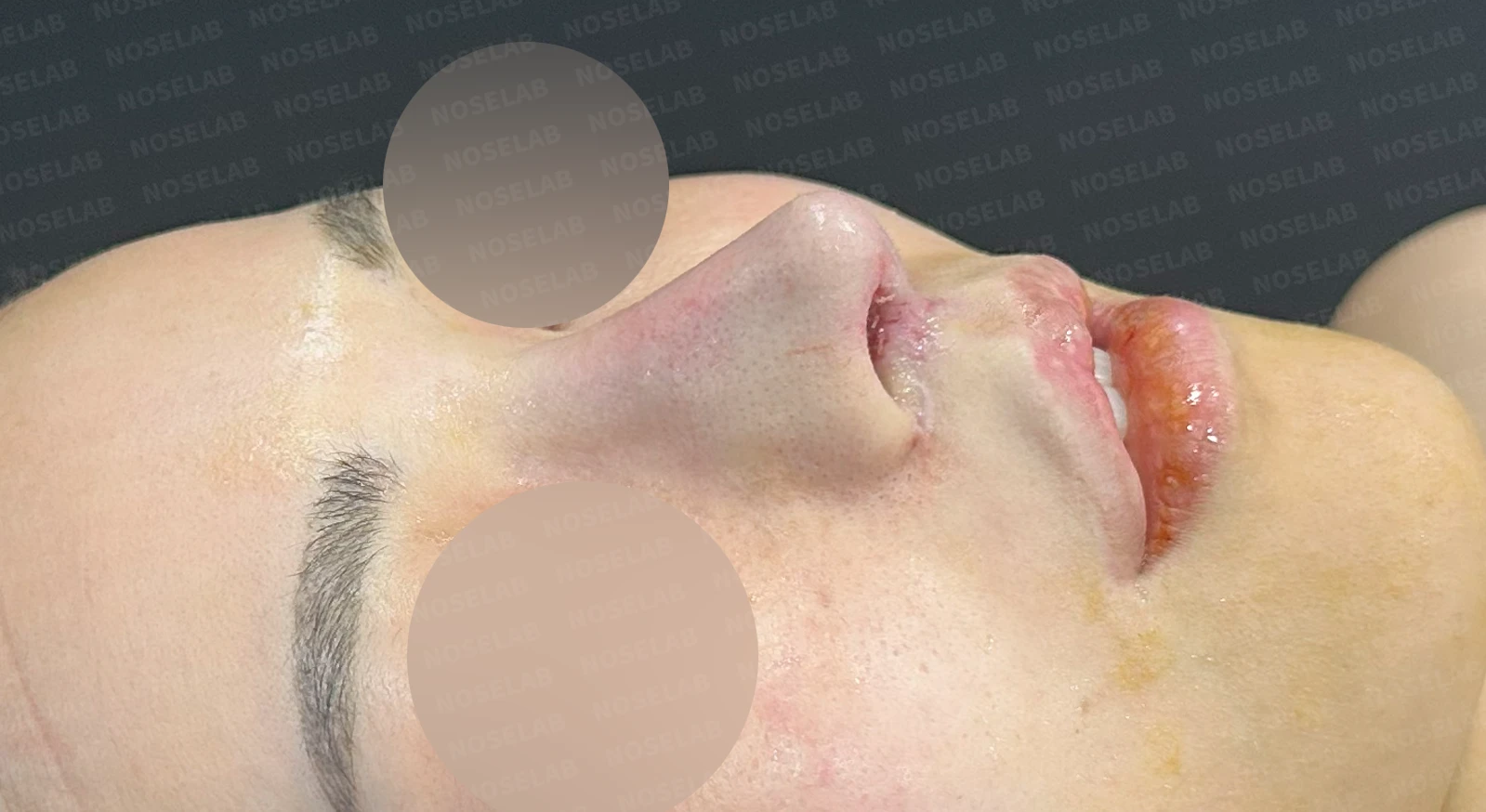
Before surgery / Day 0 immediately after surgery Photos taken immediately after surgery show swelling and may differ from the final result.
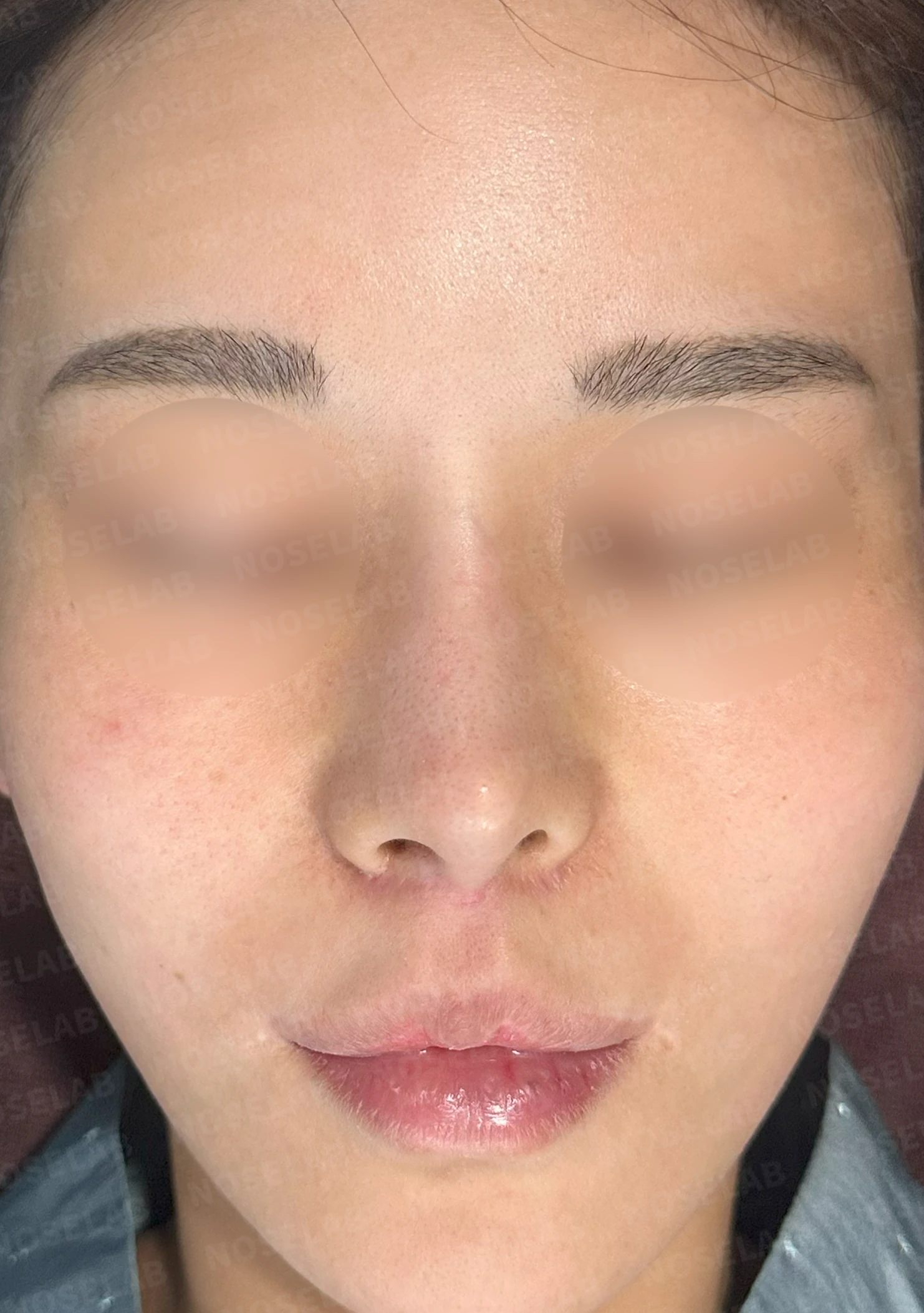
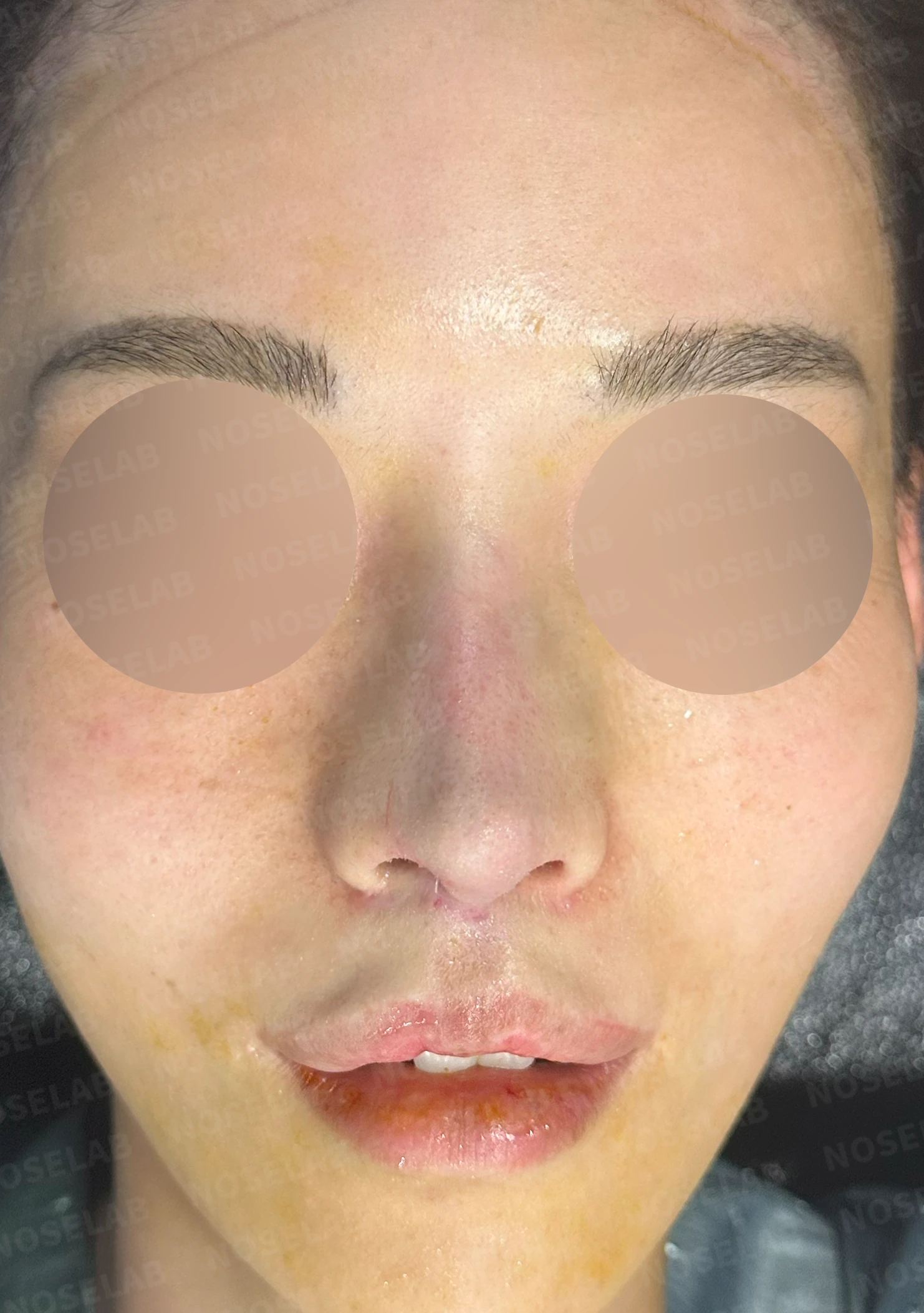
Before surgery / Day 0 immediately after surgery Photos taken immediately after surgery show swelling and may differ from the final result.
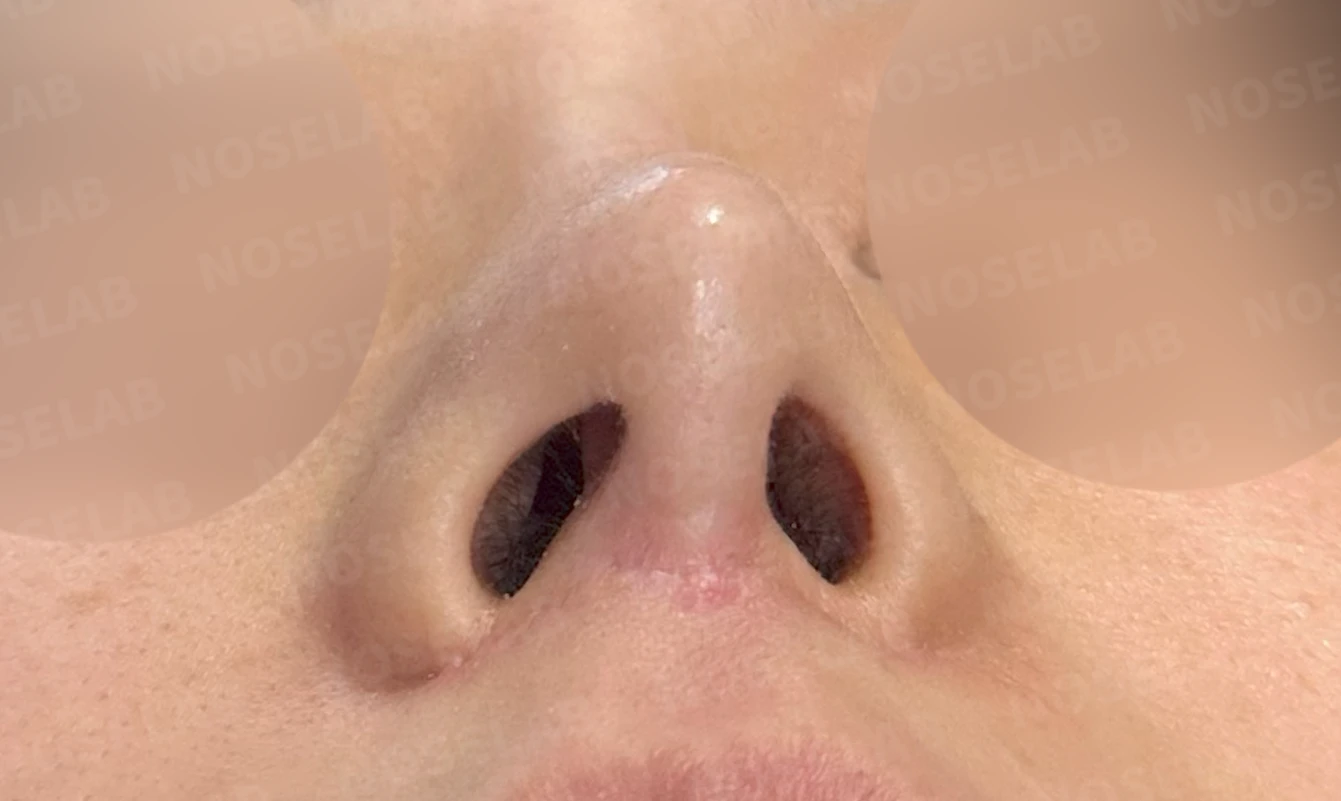
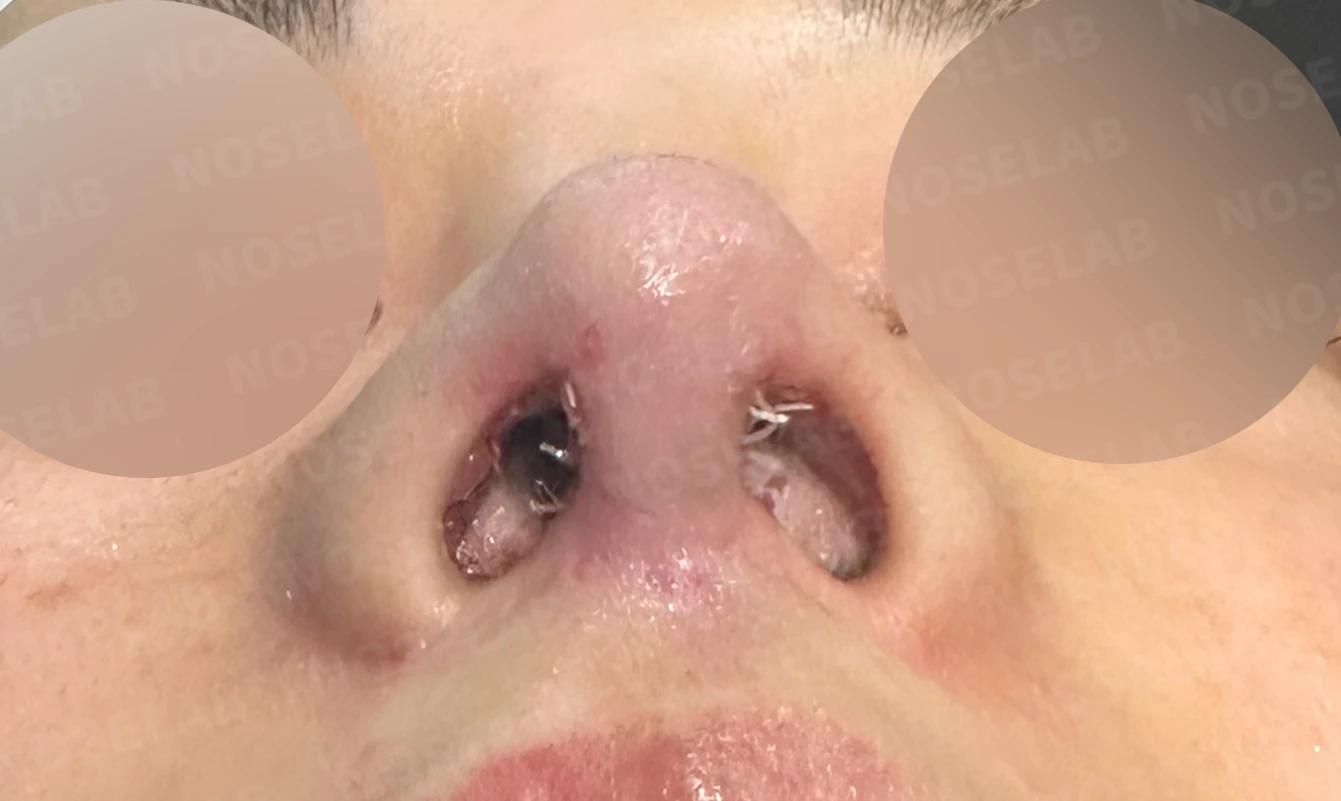
Before surgery / Day 0 immediately after surgery Photos taken immediately after surgery show swelling and may differ from the final result.
Changes immediately after surgery:
Front view: The nasal tip has been straightened, nostril show has decreased, and asymmetry has improved. The radix now looks more natural.
Profile view: The radix was lowered, and the upturned nasal tip was corrected. The nasolabial angle became natural, and the tip contour improved with a softer, rounded appearance.
Nostril view: The columella was straightened, and nostril asymmetry was improved.
Closing remarks
When severe damage to the septal cartilage from prior surgeries causes tip deviation and nostril asymmetry, septal reconstruction is essential. Fundamental correction is possible only by securely positioning the septal cartilage at the true midline of the nose through this procedure. Without performing such reconstruction, tip deviation cannot be corrected no matter how many times surgery is repeated.
Therefore, when septal reconstruction is necessary, surgery should be performed by an experienced board-certified otolaryngologist (ENT specialist). I hope this article has been helpful to those facing similar concerns.
This was Dr. Peter C. Kang. Thank you.
#closedrhinoplasty #crookednosecorrection #upturnednosesurgery #nostrillowering #nasalobstructionrelief #septalreconstruction #rhinoplasty #plasticsurgery

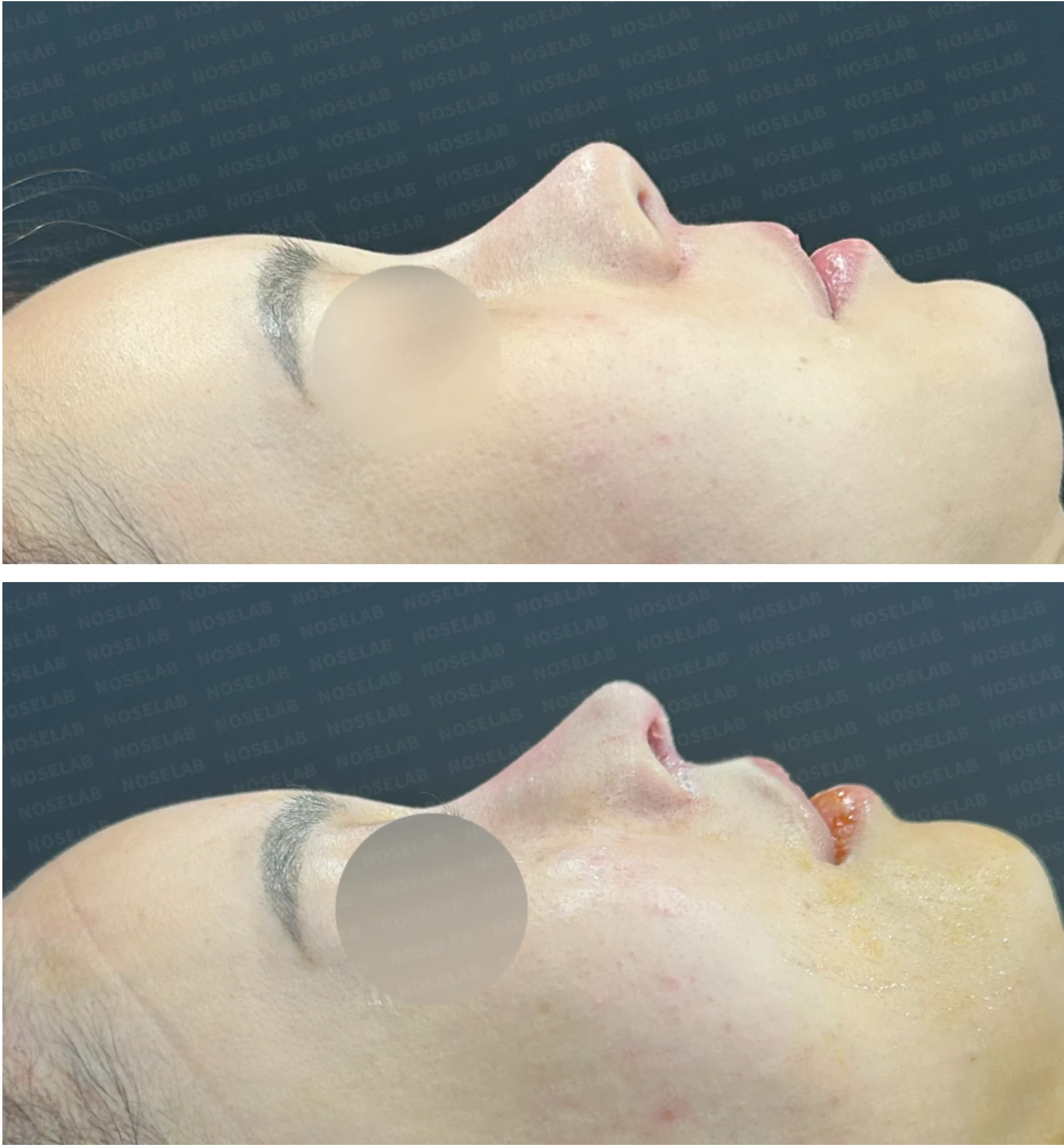
Limitations and risks
When using donor rib cartilage, long-term follow-up is necessary because the grafted cartilage may resorb or warp.
When the septum is corrected at the same time, nasal obstruction may persist or recur, and in rare cases, septal perforation or changes in smell may occur.
Common potential risks include infection, bleeding, asymmetry, scarring, skin necrosis, and insufficient improvement; results vary depending on individual skin condition and previous surgical history.