Introduction
Hello.
I am Dr. Peter C. Kang, Medical Director of NOSELAB, specializing in closed rhinoplasty.
Today, I would like to share a surgical case of a patient whose wide, spread nose and nostril asymmetry were corrected.
I hope this article will be helpful to those who share similar concerns.
Patient background
The patient visited our clinic concerned about a wide nasal bridge and asymmetric nostrils. She felt her nose was out of harmony with her facial features and wanted a more balanced appearance.
Preoperative design consultation
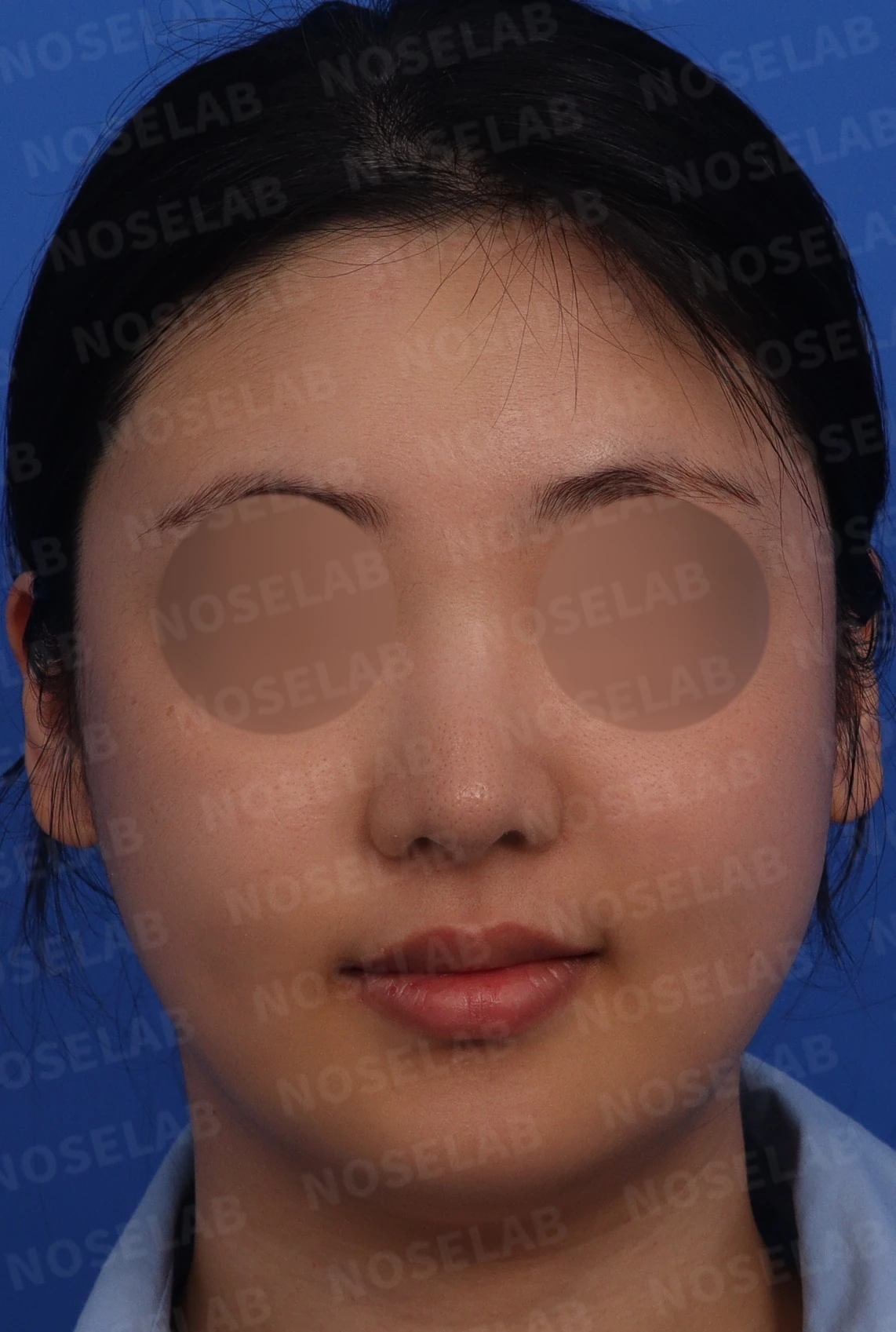
Front view evaluation
Front view evaluation
On the front view, the nasal bridge appeared widened overall from the glabella downward, with a slight deviation. The patient wanted this corrected.
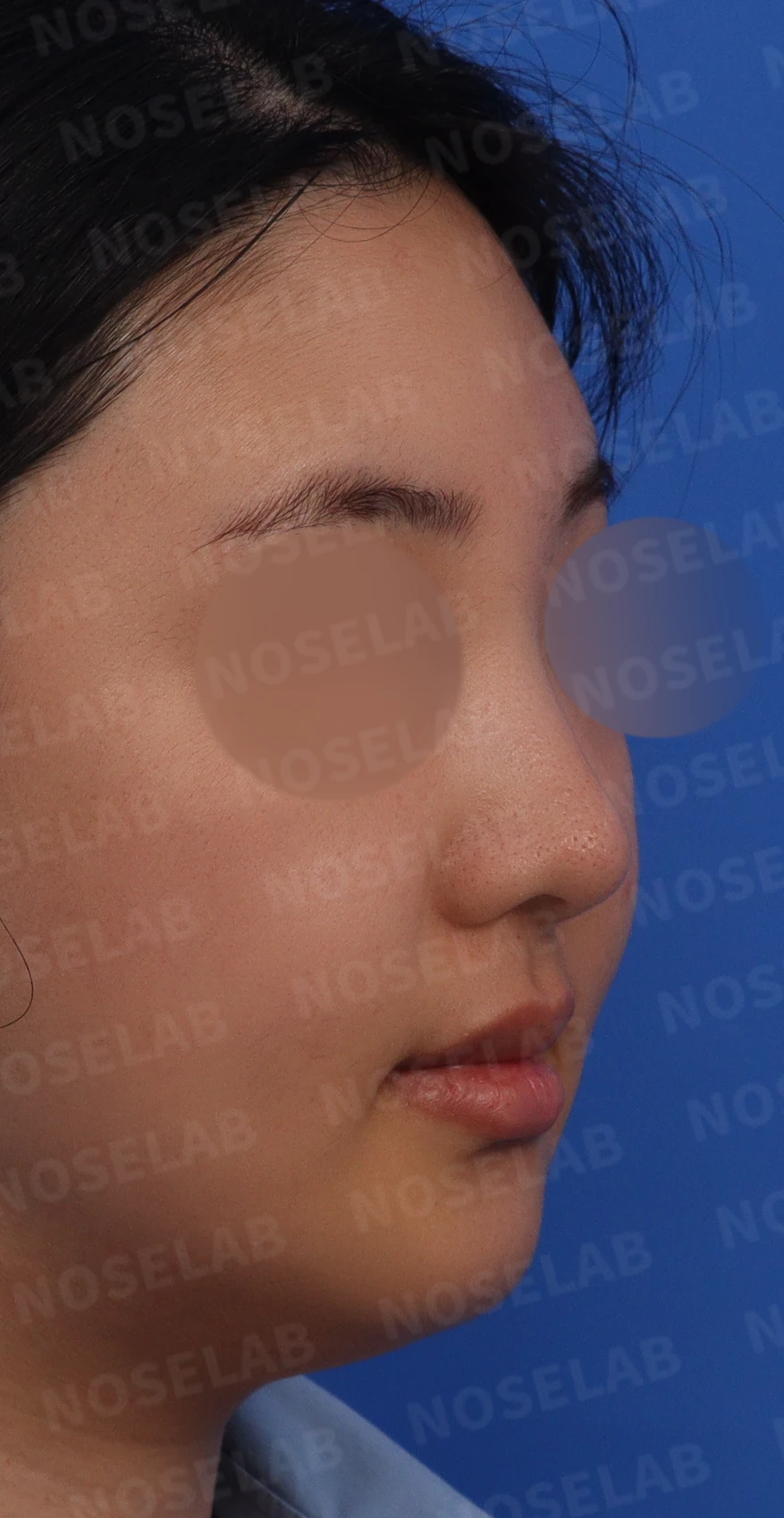
Preoperative design oblique view
Oblique view evaluation
On the oblique view, the overall shape of the nose was not bad, but the patient wished for a subtle increase in height.
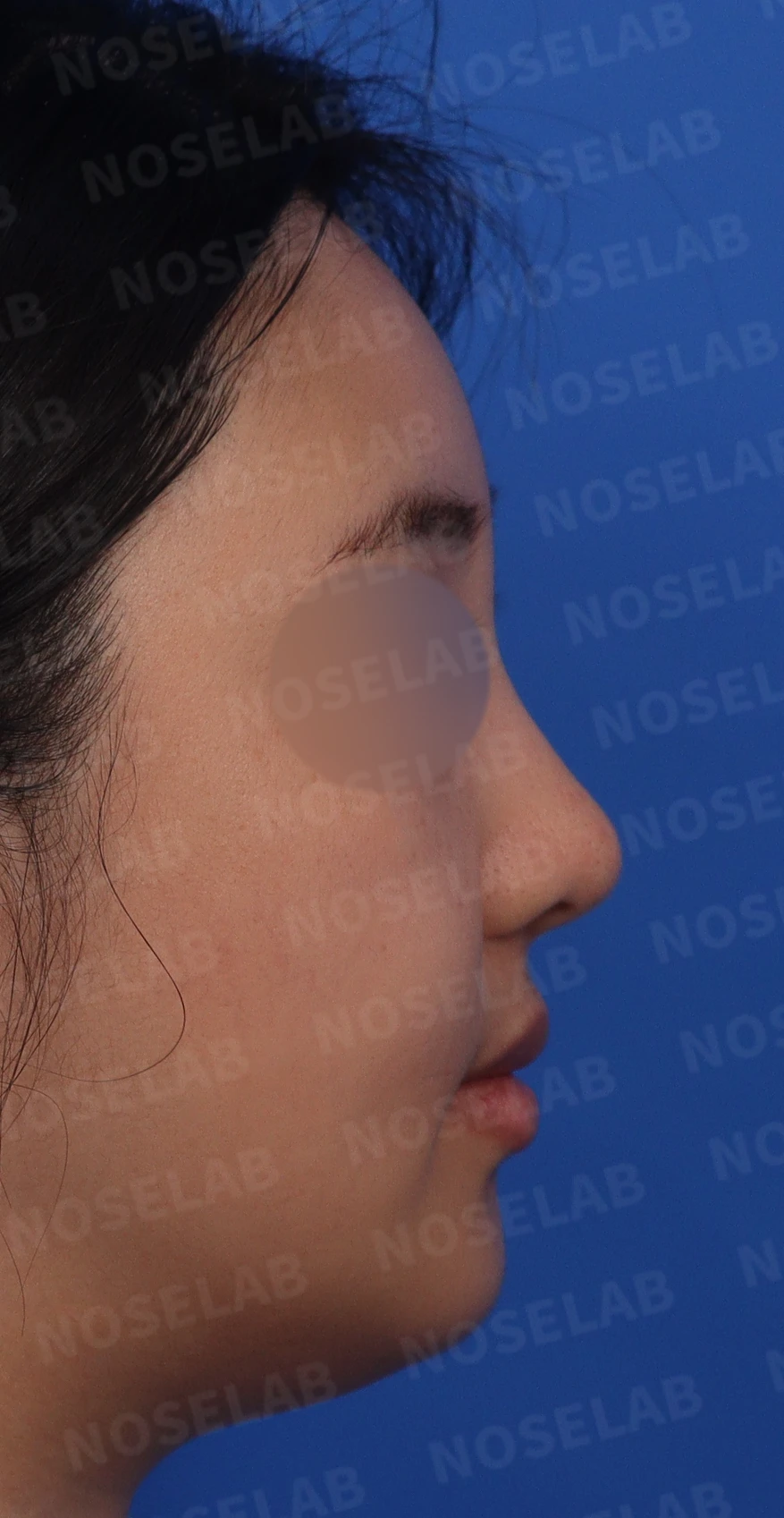
Preoperative design profile view
Profile view evaluation
On the profile view, the overall line was acceptable, but she desired slightly more height.
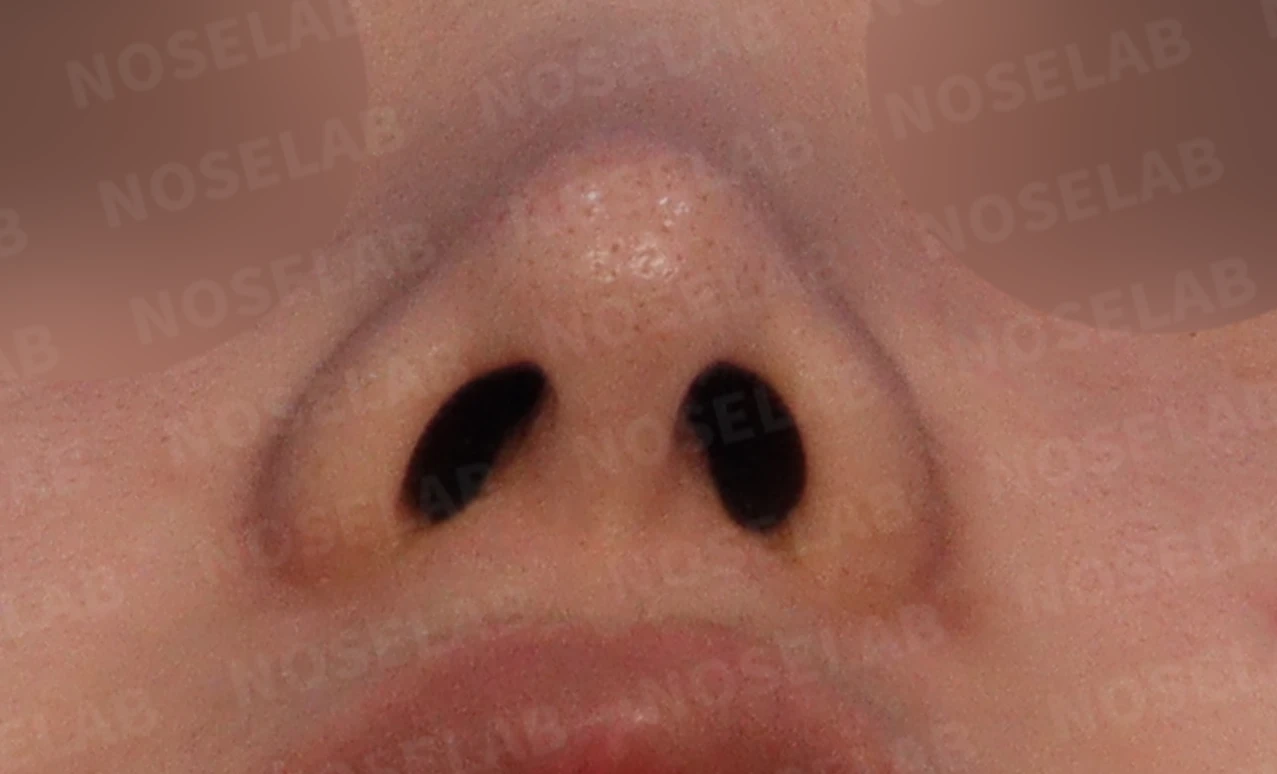
Basal view (nostril) evaluation
The nostrils were asymmetric, and the columella was tilted. The right nostril was elongated and flattened, whereas the left nostril was rounded and flared. This suggested that the nasal tip was deviated to the left, which could be resolved by properly repositioning the tip.
Preoperative plan
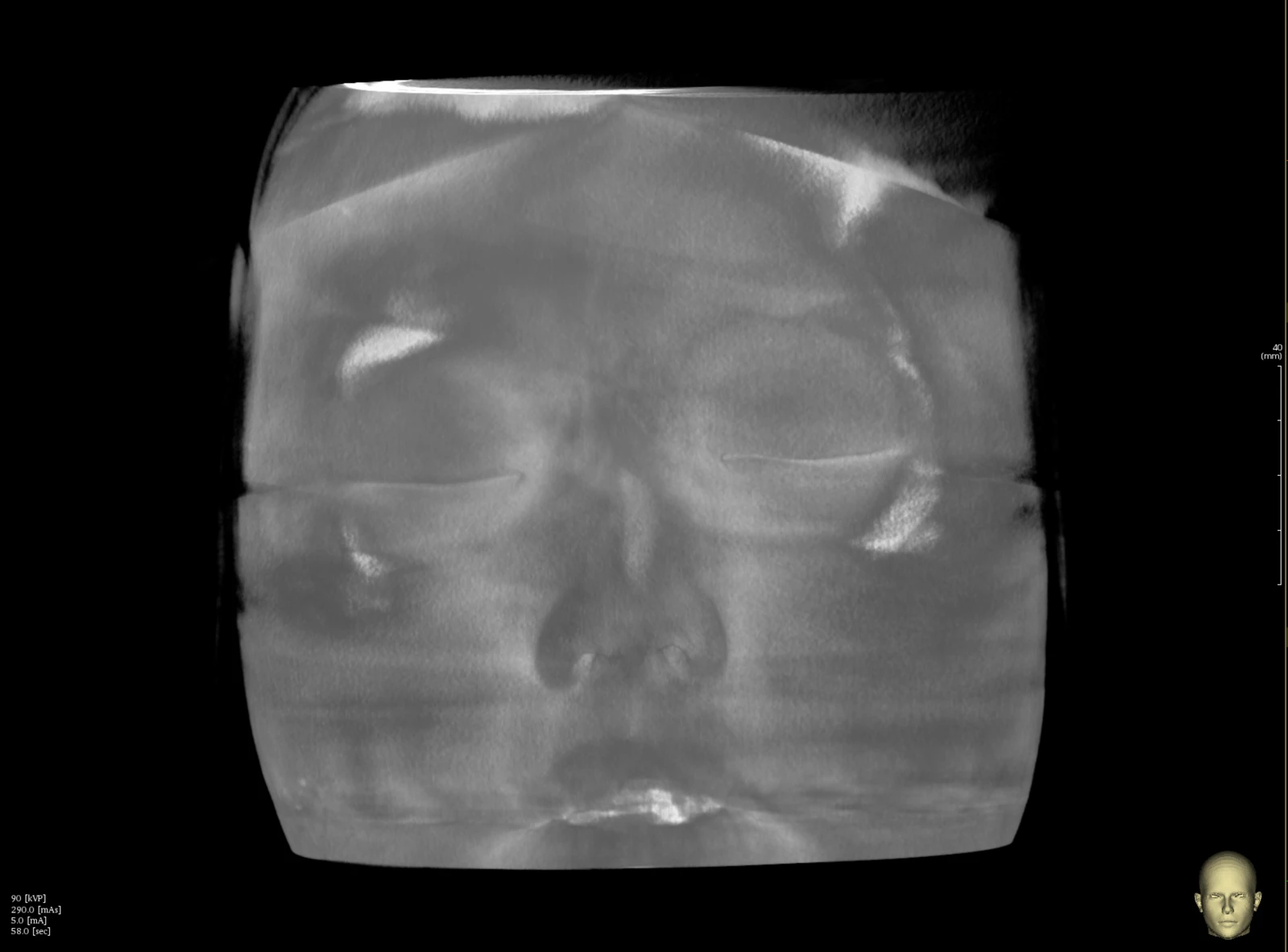
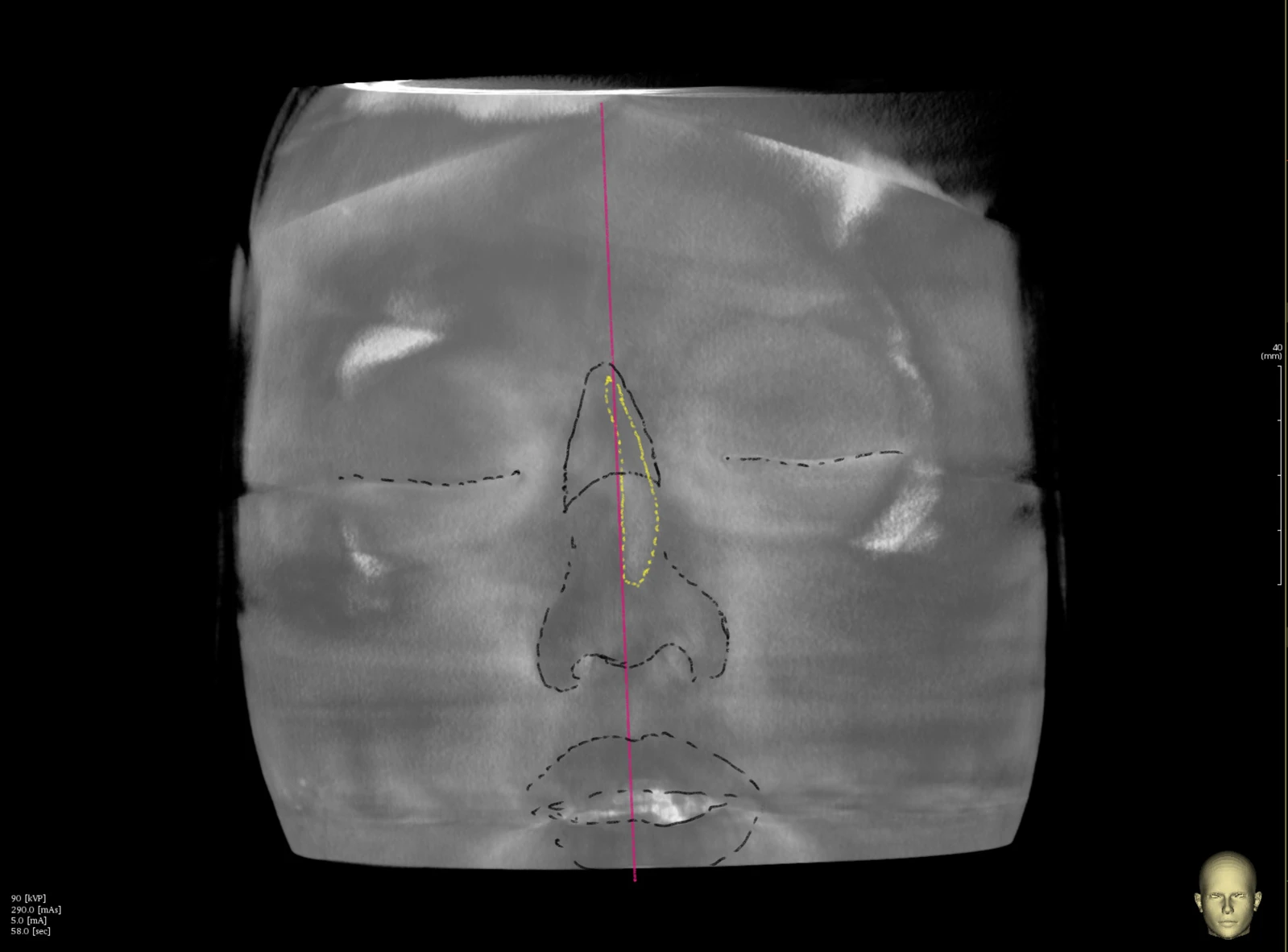
These images show the silicone implant position identified on 3D CT. The left is the original scan, and the right is an annotated image I marked for clarity.
Looking at the right image, I outlined the implant in yellow. The 3D CT confirmed that the implant rested on the left side of the nasal bone. On the axial view, you can see the yellow implant adhering along the left slope of the nasal bone.
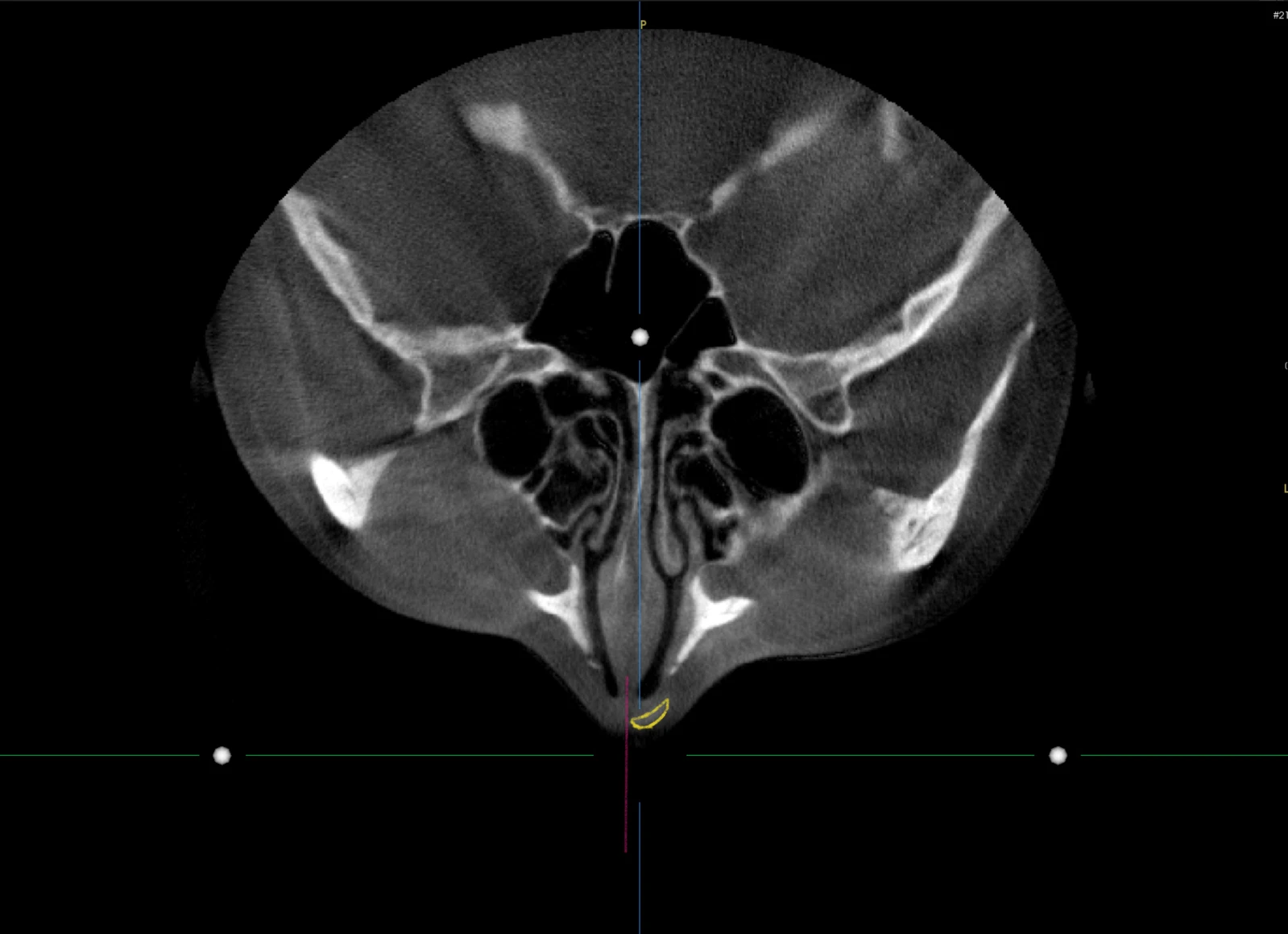
On the CT scan, the solid red line marks the midline of the nasal tip, and the yellow outline marks the cross-section of the silicone implant. You can see it shifted entirely to the left.
CT scan findings
When we performed the preoperative CT scan, the implant was completely displaced to the left, causing the bridge to look crooked and wide. The two CT images clearly showed that the implant was seated with a leftward deviation.
Surgical plan
Lateral osteotomy: Because the nasal bones were asymmetric, lateral osteotomy was planned.
Septal extension graft: For the nasal tip, septal extension was planned.
Lower lateral cartilage repositioning and suturing: To correct nostril asymmetry, lower lateral cartilage repositioning and interdomal suturing were planned.
Surgical findings
Intraoperative findings
I have included a photo showing the lower end of the silicone implant resting over the left lower lateral cartilage during surgery. This verified that what we suspected before surgery was indeed correct.
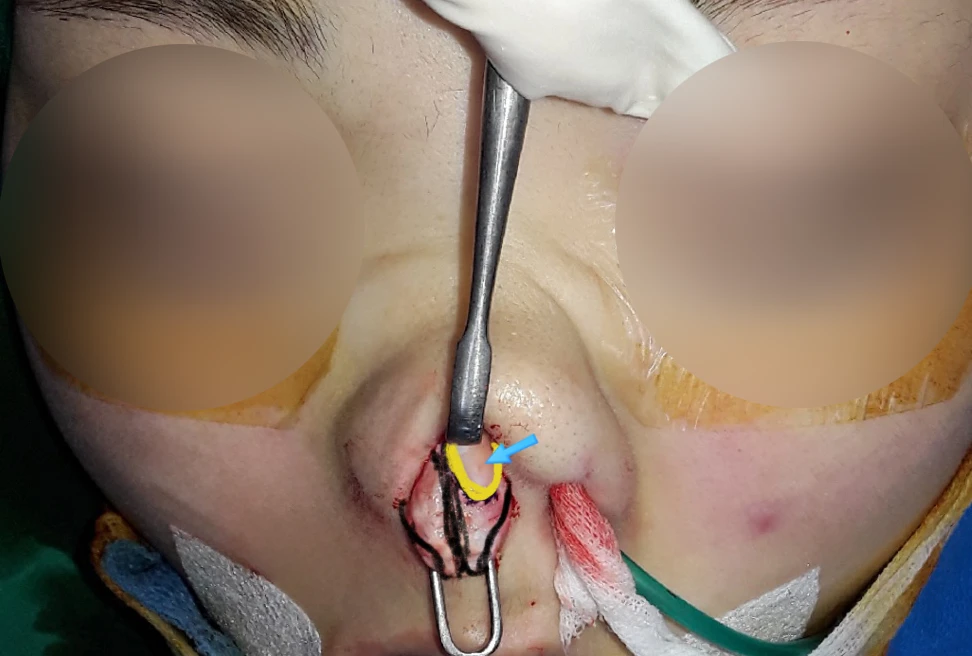
The arrow indicates the silicone implant.
Before-and-after photo comparison
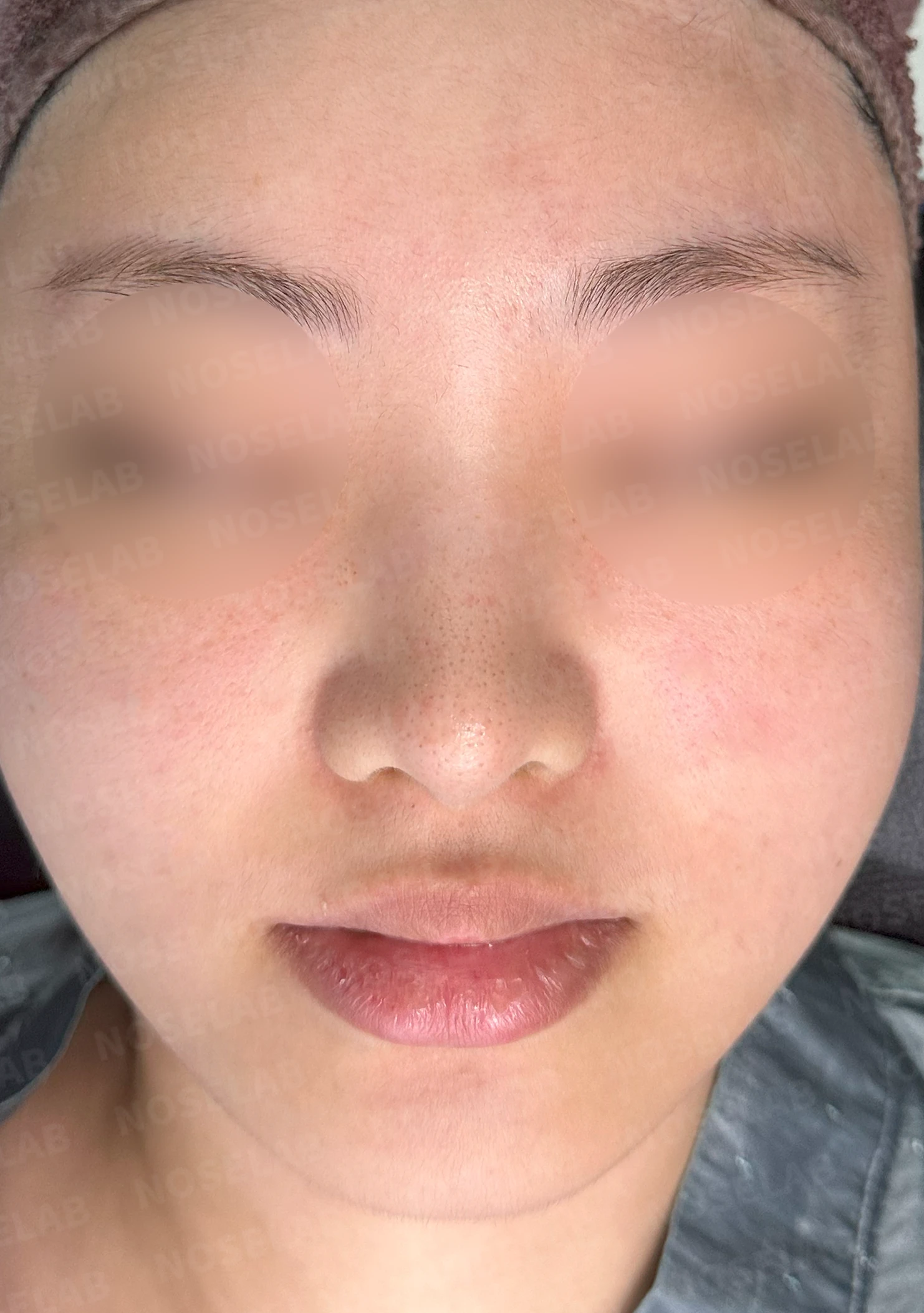
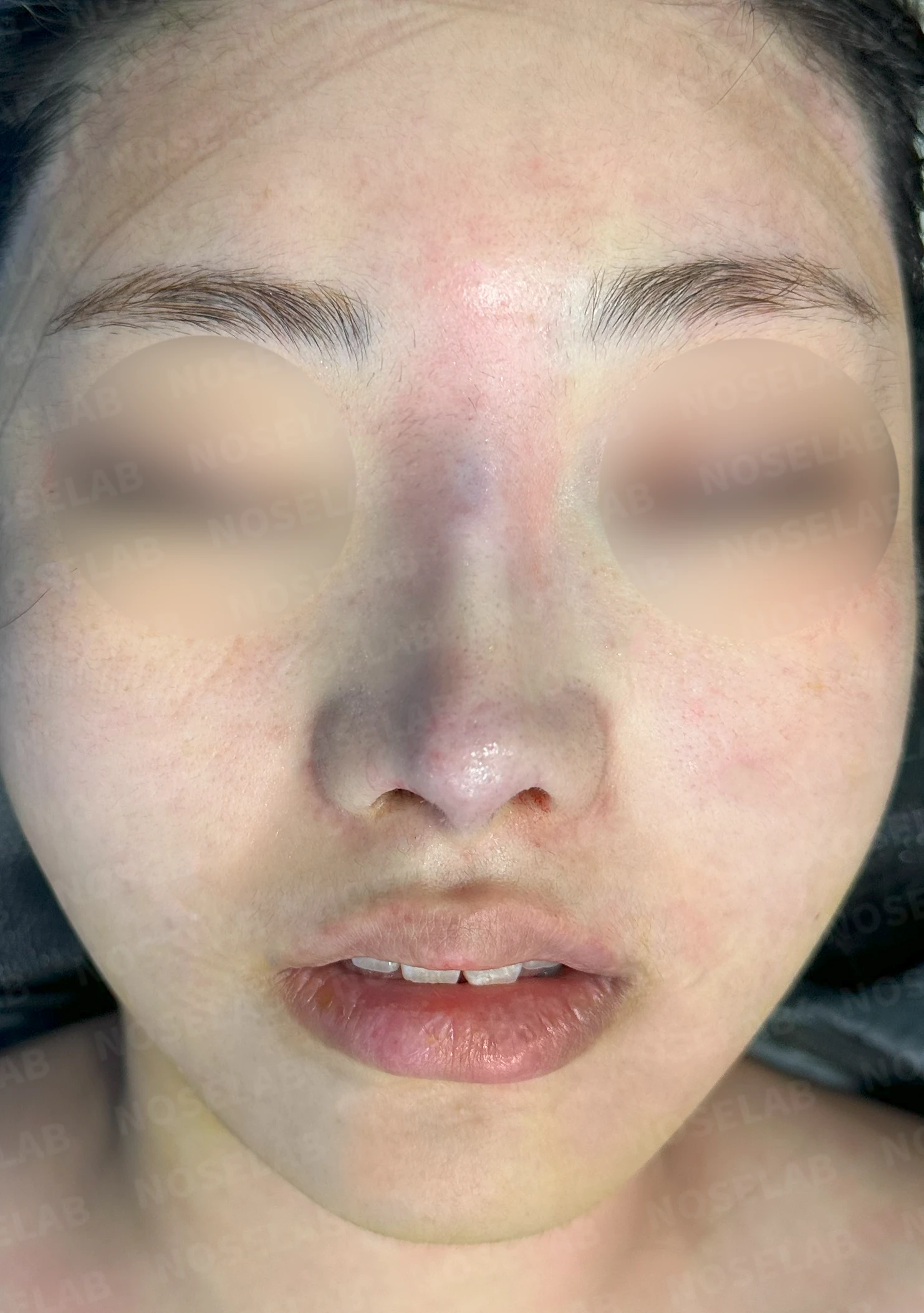
Front view
Comparing the front before-and-after photos, the alignment of the nasal bridge improved substantially, showing a more refined contour.
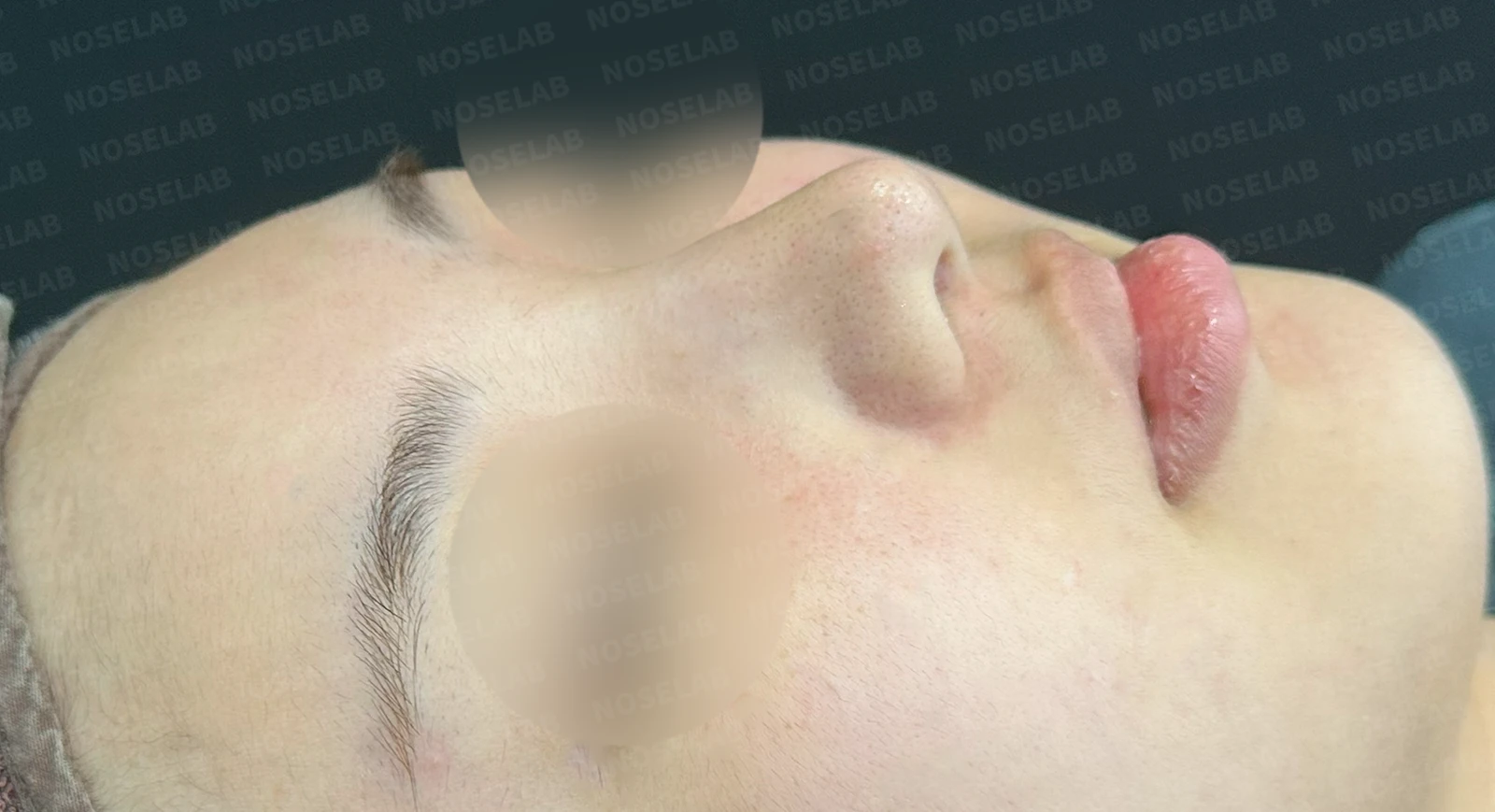
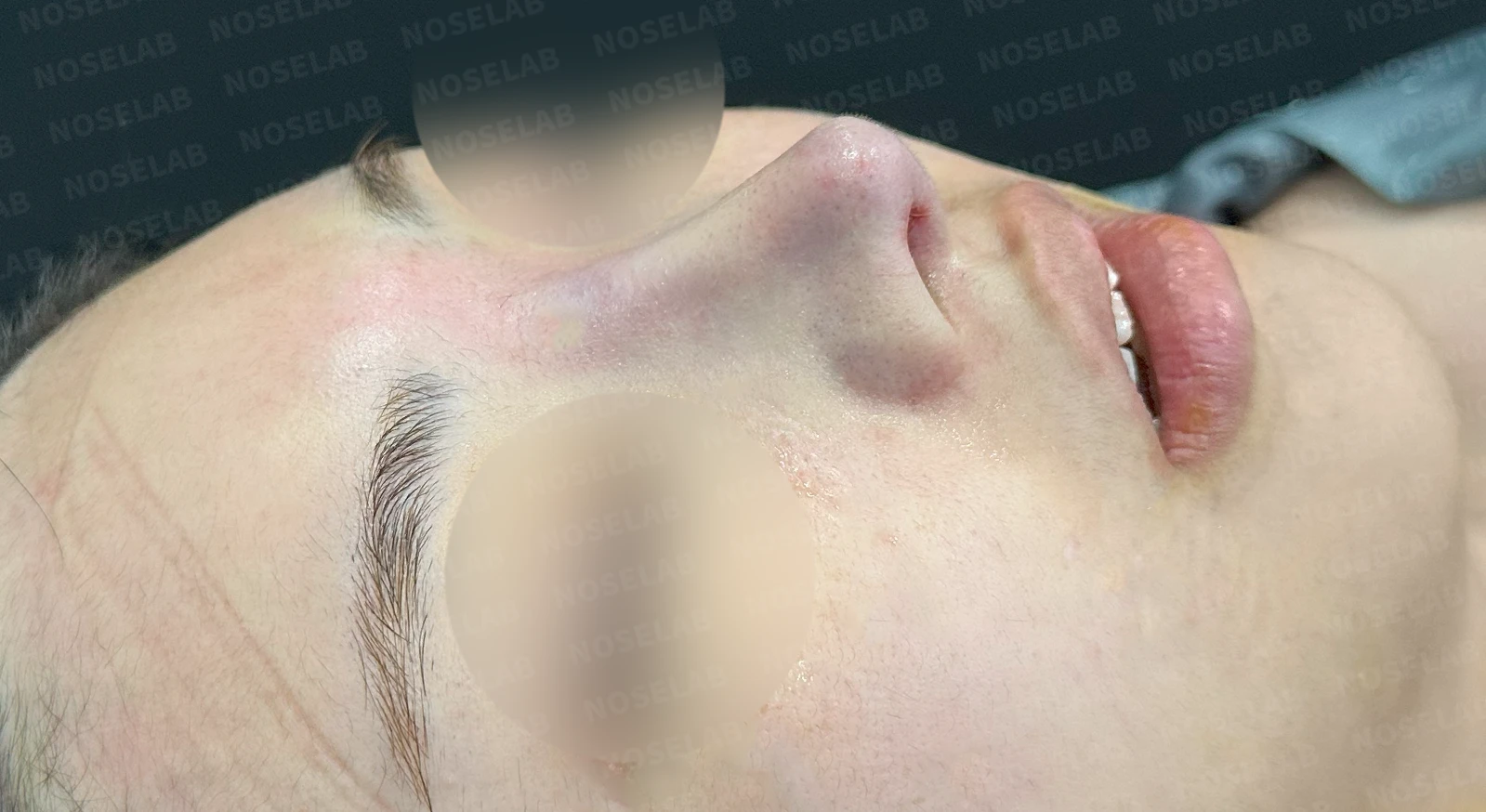
Oblique view
The oblique view shows an improved profile with the additional height the patient desired.
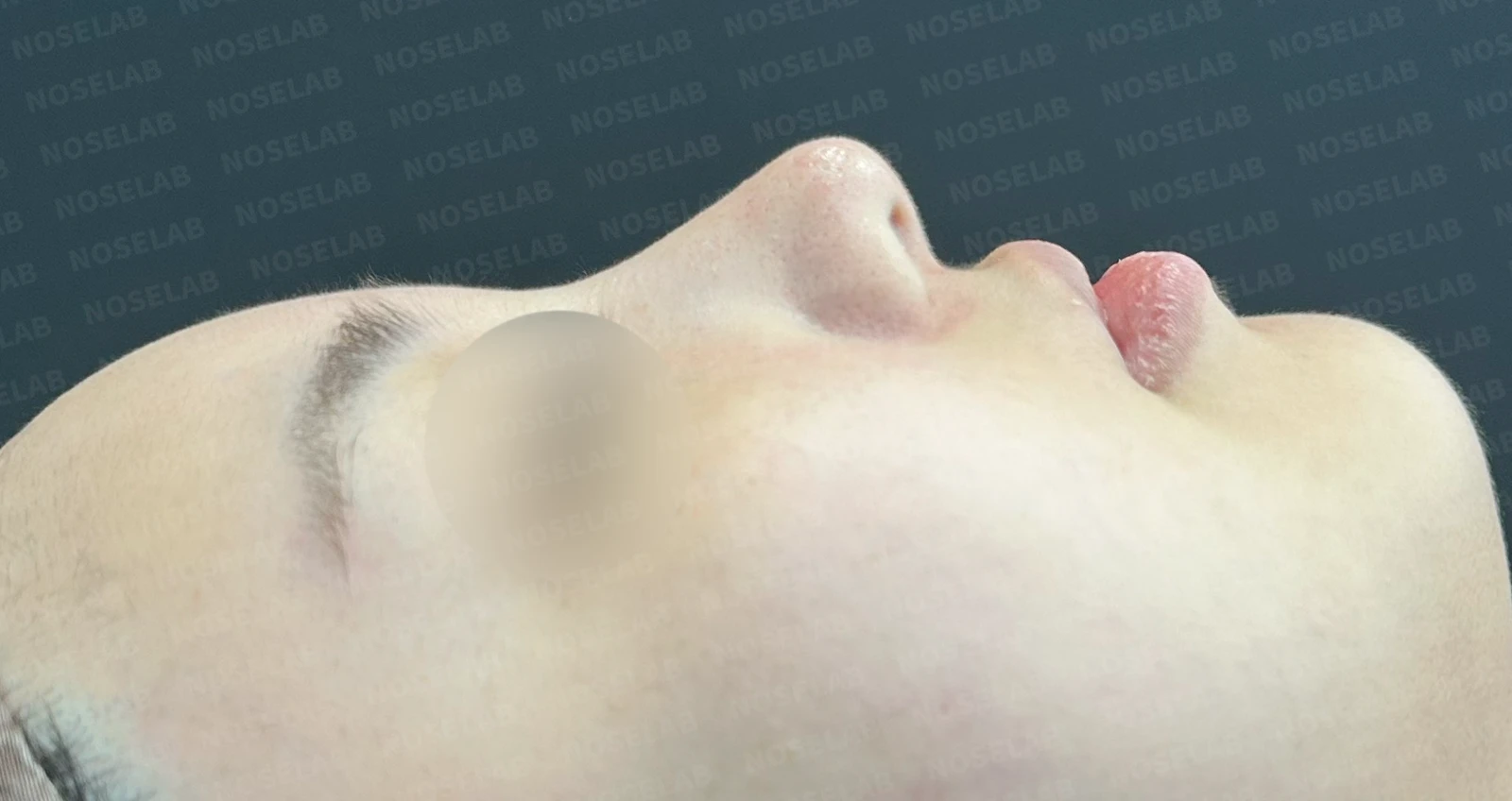
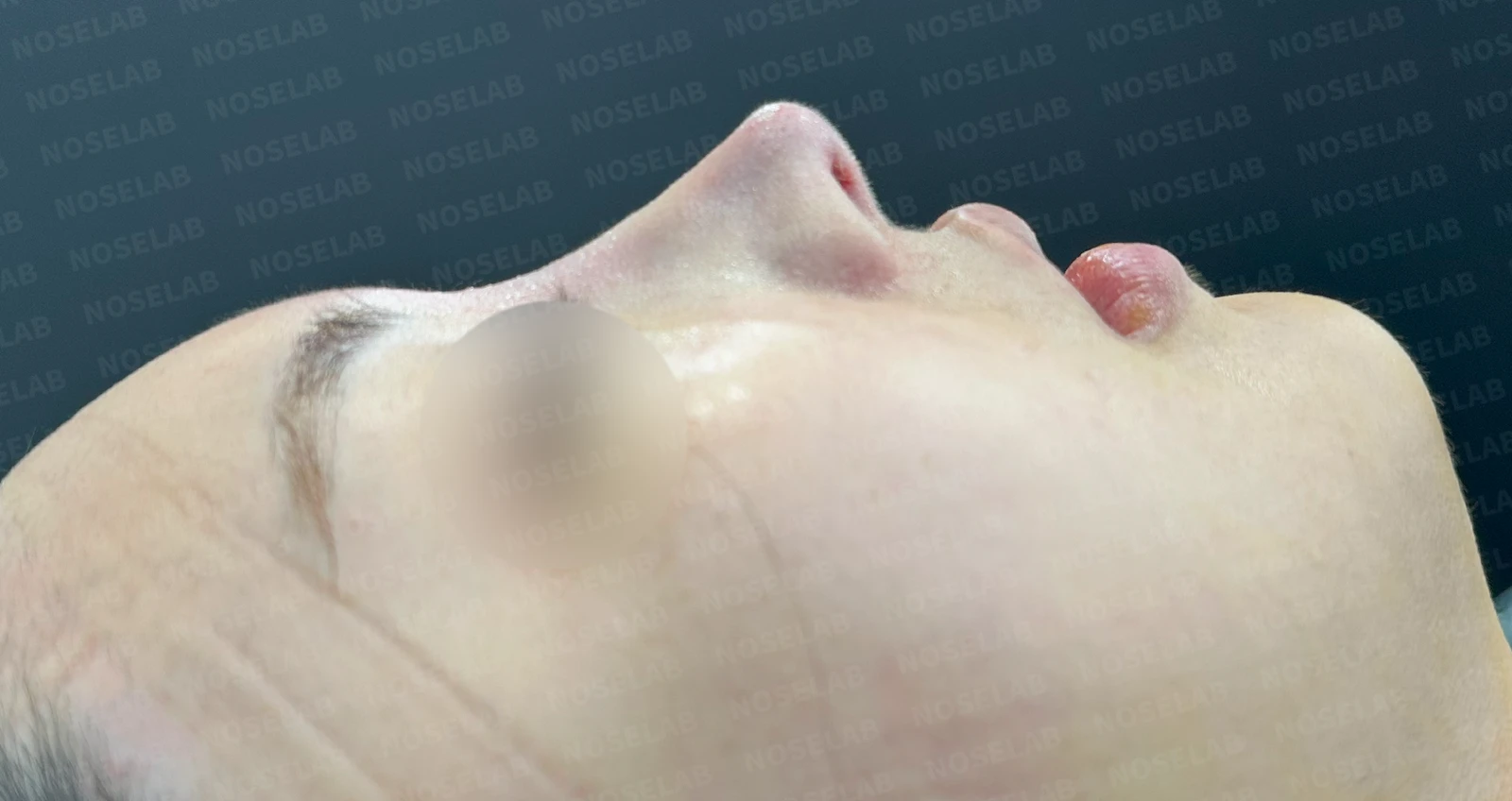
Profile view
On the profile view, the subtle increase in bridge height created a more balanced aesthetic.
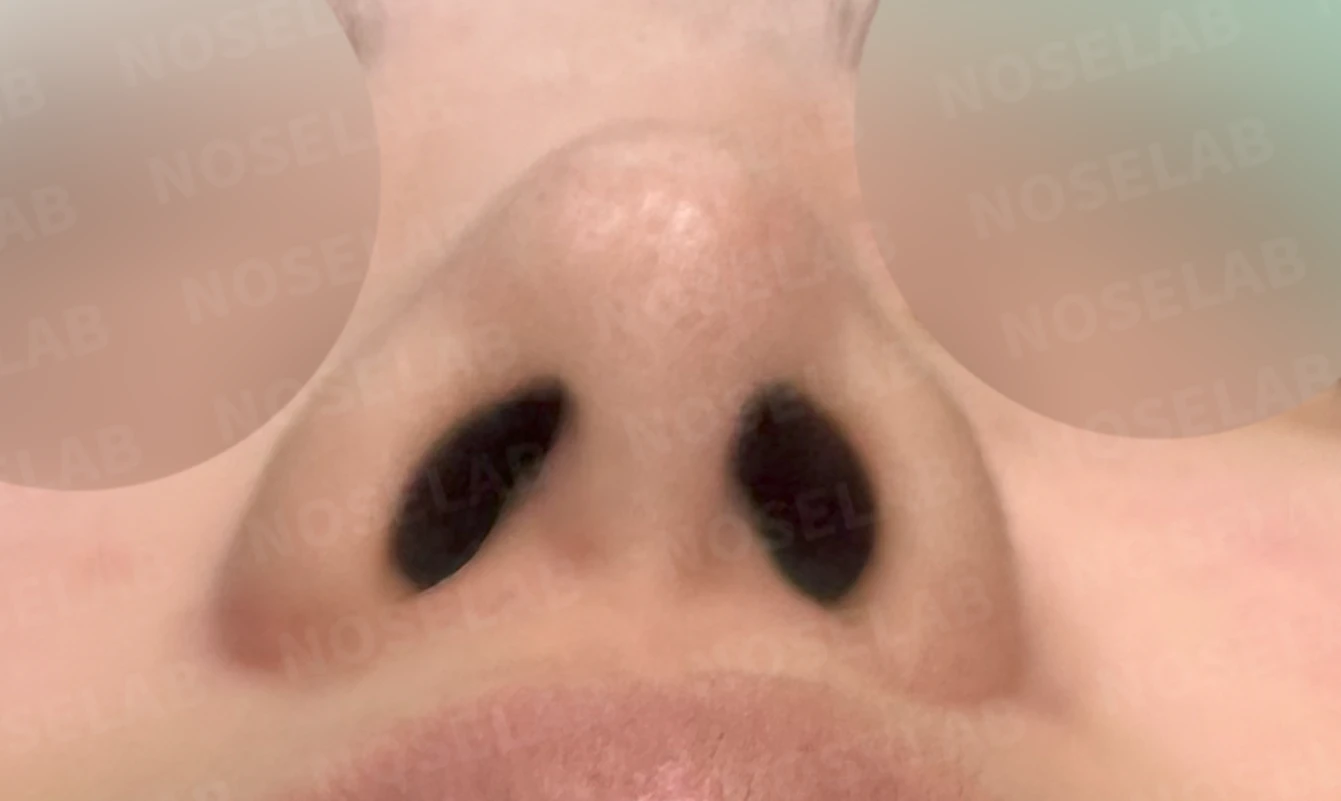
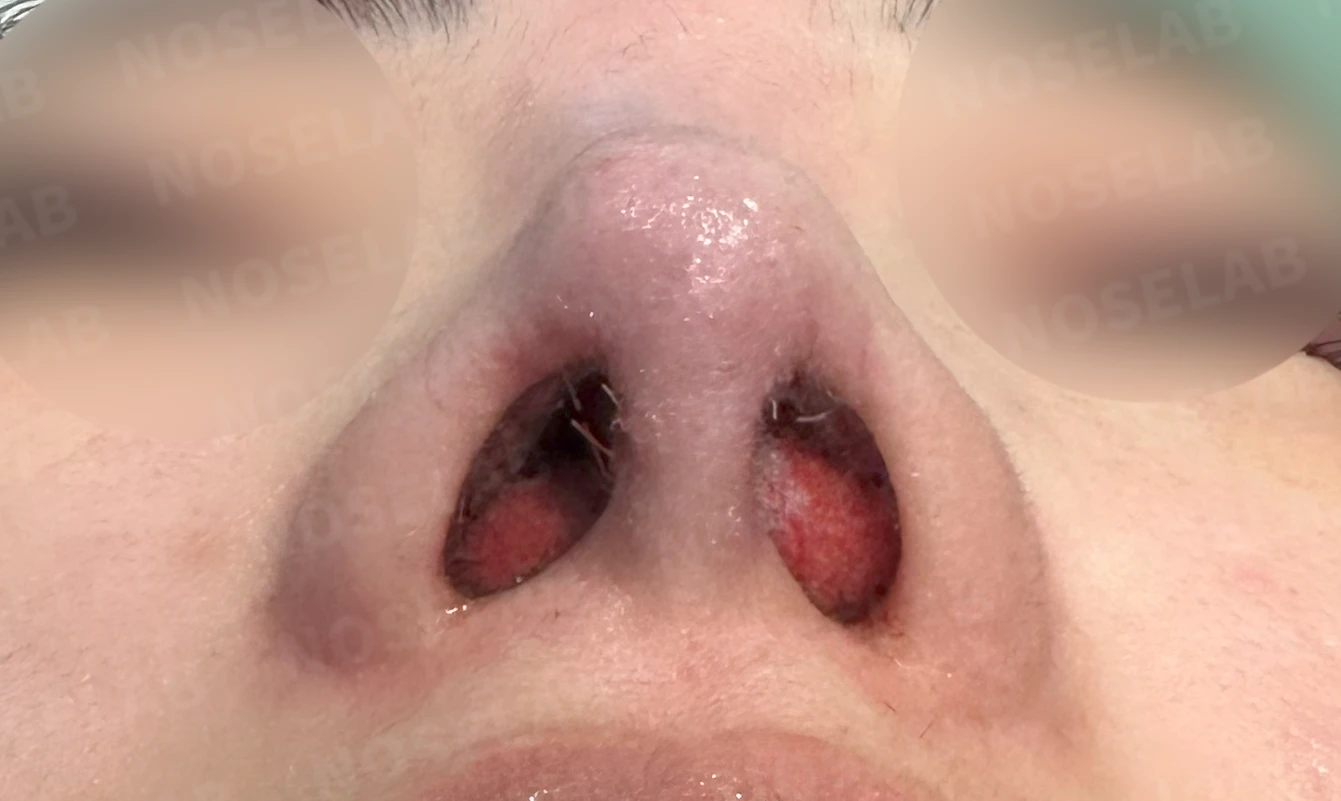
Basal (nostril) view
The nostrils are now symmetric, and with the columella properly aligned, the nostril asymmetry has been corrected.
Collection of photos taken immediately after surgery (day 0) Immediate postoperative photos show swelling and may differ from the final result.
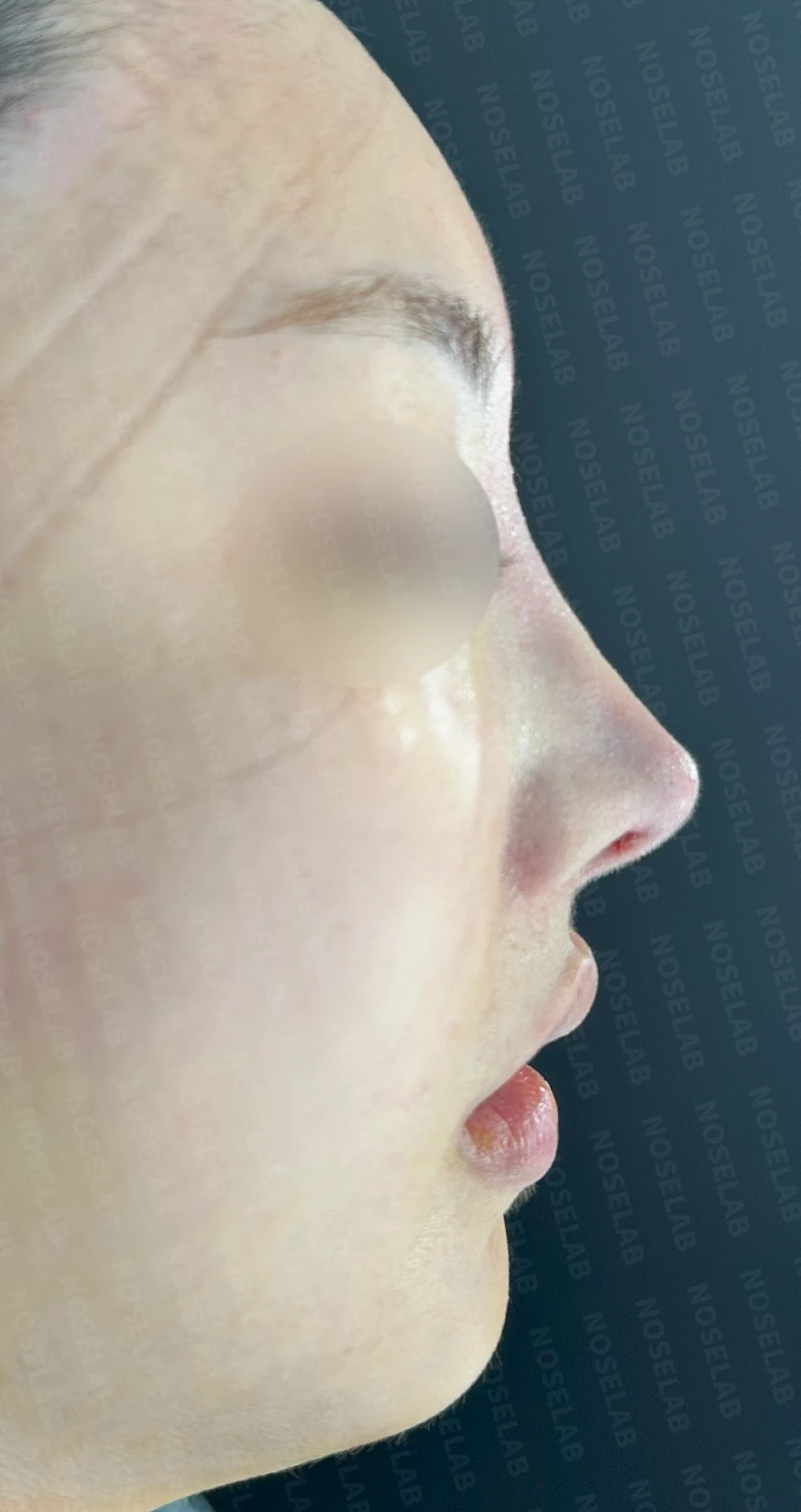
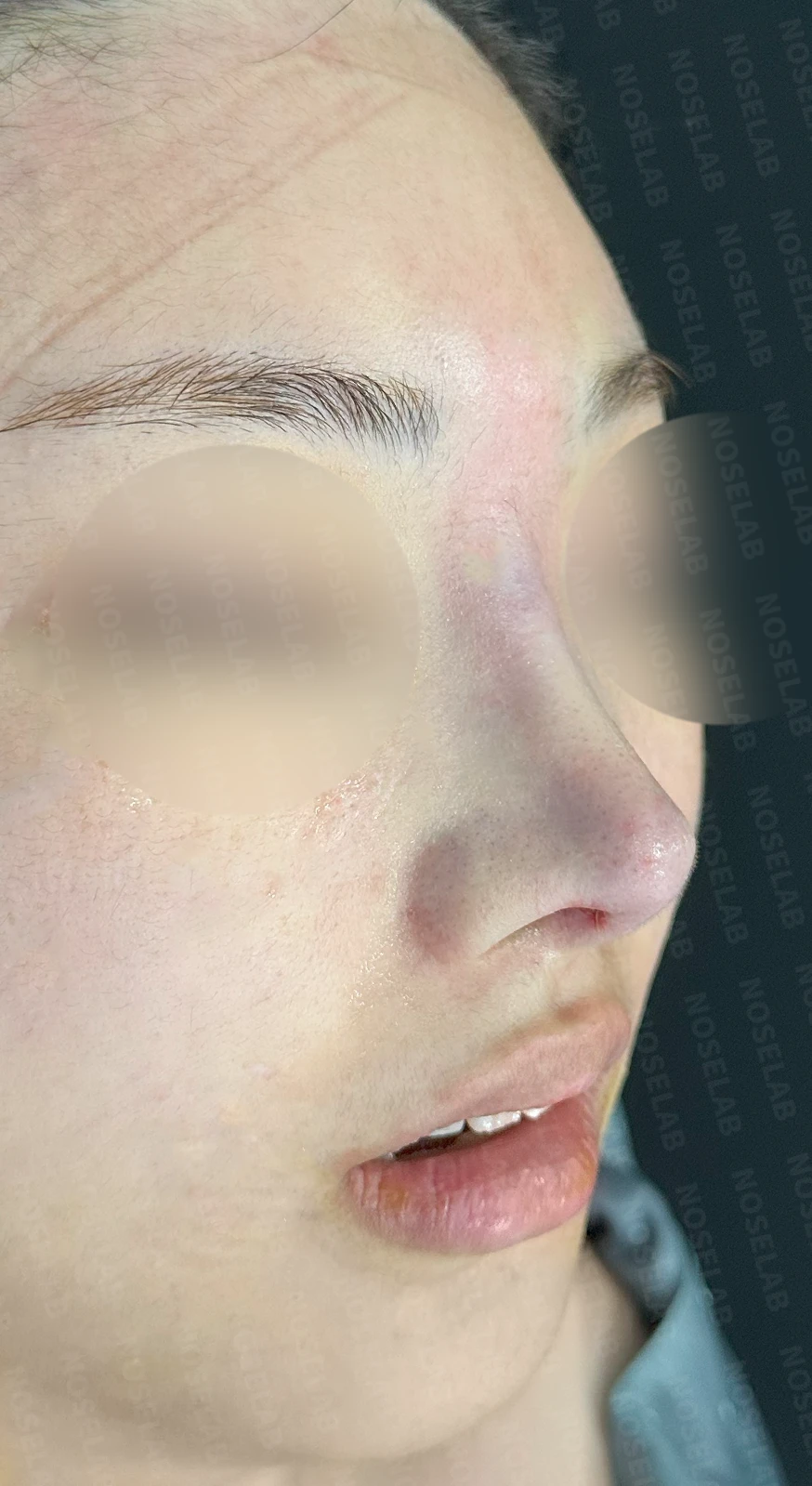
Photos immediately after surgery (Day 0): 90-degree profile, 45-degree oblique, and front view.Immediate postoperative photos show swelling and may differ from the final result.
Basal (nostril) view immediately after surgery (Day 0).Immediate postoperative photos show swelling and may differ from the final result.
Overall evaluation
Summary of surgical success
This surgery successfully achieved the aesthetic outcome the patient desired while correcting the asymmetry. The nasal bridge was narrowed, the nasal tip was realigned, and the nostrils achieved balanced symmetry.
Considerations for prospective patients
Patients with similar concerns should consider the possibility that a silicone implant may be displaced off-center. If your bridge appears wide even without filler injections or over-rasping of the nasal bone, implant displacement should be suspected. Meticulous preoperative planning and skilled surgical technique are essential to achieve the intended result.
Conclusion
Through this case, I would like to emphasize the importance of thorough planning and skilled execution in rhinoplasty. If you are troubled by asymmetry or a wide nasal bridge, a customized solution can be found through consultation with a specialist. This has been Dr. Peter C. Kang, Medical Director. I hope this case serves as a helpful reference for those considering rhinoplasty.
Frequently asked questions (FAQs)
Q1: How long is the recovery period after rhinoplasty?
A1: Initial recovery usually takes about 1 to 2 weeks, and it can take up to 1 year for all swelling to subside and for the final result to appear.
Q2: What risks are associated with rhinoplasty?
A2: As with any surgery, there are risks such as infection, bleeding, and anesthesia complications. However, selecting an experienced surgeon can significantly reduce these risks.
Q3: How long do rhinoplasty results last?
A3: Rhinoplasty results are generally long-lasting, though subtle changes may occur naturally with aging.
Q4: Can rhinoplasty correct breathing problems?
A4: Yes. In addition to aesthetic improvements, rhinoplasty can address functional issues such as a deviated septum.
Q5: How should I prepare for a rhinoplasty consultation?
A5: It is important to research the procedure, understand your goals, and maintain realistic expectations. Prepare reference photos of your desired outcome and be ready to discuss your medical history with your surgeon.
#widenose #rhinoplasty #asymmetrycorrection #rhinoplastycase #nostrilasymmetry #rhinoplastybeforeandafter #nasalsurgery #nasalcorrection #plasticsurgery #rhinoplastyspecialist #bridgecorrection #tipcorrection #plasticsurgerycase
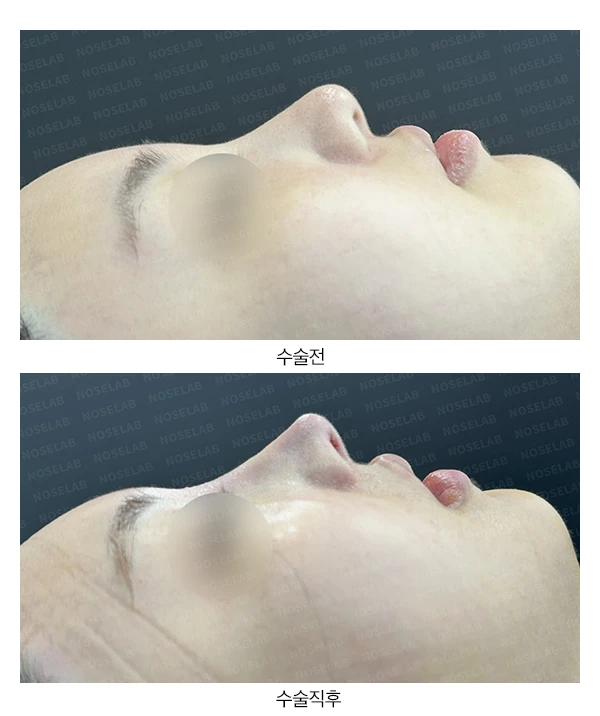

Limitations and risks
When the septum is corrected at the same time, nasal obstruction may persist or recur, and in rare cases, septal perforation or changes in smell may occur.
Common potential risks include infection, bleeding, asymmetry, scarring, skin necrosis, and insufficient improvement; results vary depending on individual skin condition and previous surgical history.